BIOPHARMACEUTICAL
CLASSIFICATION SYSTEM
Jamia Hamdard
Presented to: Dr. K. K.
By: Md Shakeeb
Ahmed
CONTENTS
1.INTRODUCTION
2.SIGNIFICANCE OF BCS
3.INFLUENCE OF BCS ON BIOAVAILABILITY
INTRODUCTION
 Continues to
dominate the
area of drug
delivery
technologies
 Route of
choice for the
formulators
formulated
Drug
product
Kid
Kdd
Solubilized
drug
absorbed drug
dissolution
disintegration permeability
dispersed
Drug
particles
Kp
DRUG DISSOLUTION AND ABSORPTION
BIOPHARMACEUTICAL CLASSIFICATION
SYSTEM
 A scientific framework for classifying drug substances
based on their aqueous solubility and intestinal
permeability
 Established by Gordon Amidon et al.
 BCS has gained importance worldwide as a drug product
regulation tool For scale-up and post-approval changes
 The aim of the BCS is to provide a regulatory tool for the
replacement of certain BE studies by conducting accurate
in vitro dissolution tests.
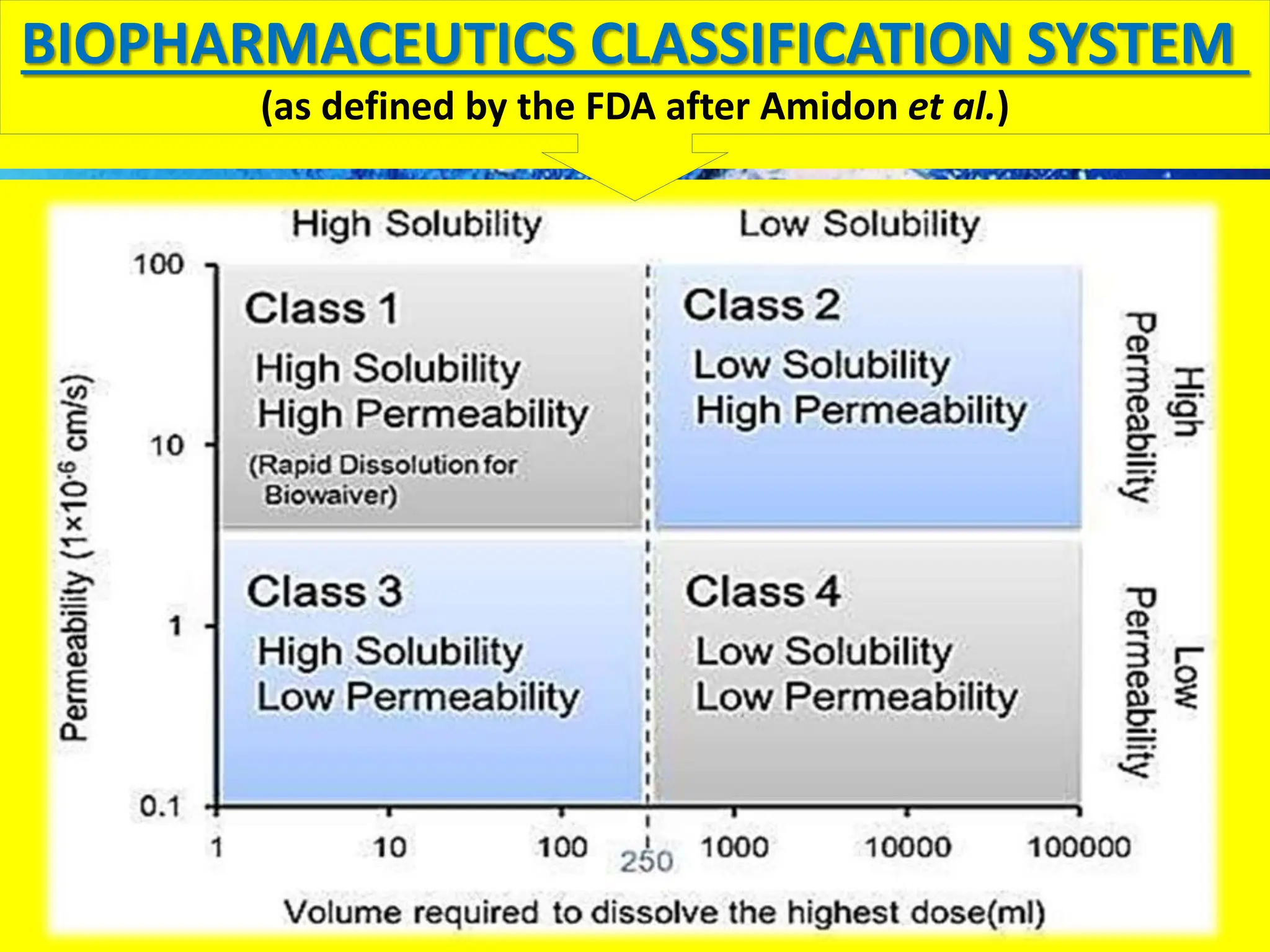
BIOPHARMACEUTICS CLASSIFICATION SYSTEM
(as defined by the FDA after Amidon et al.)
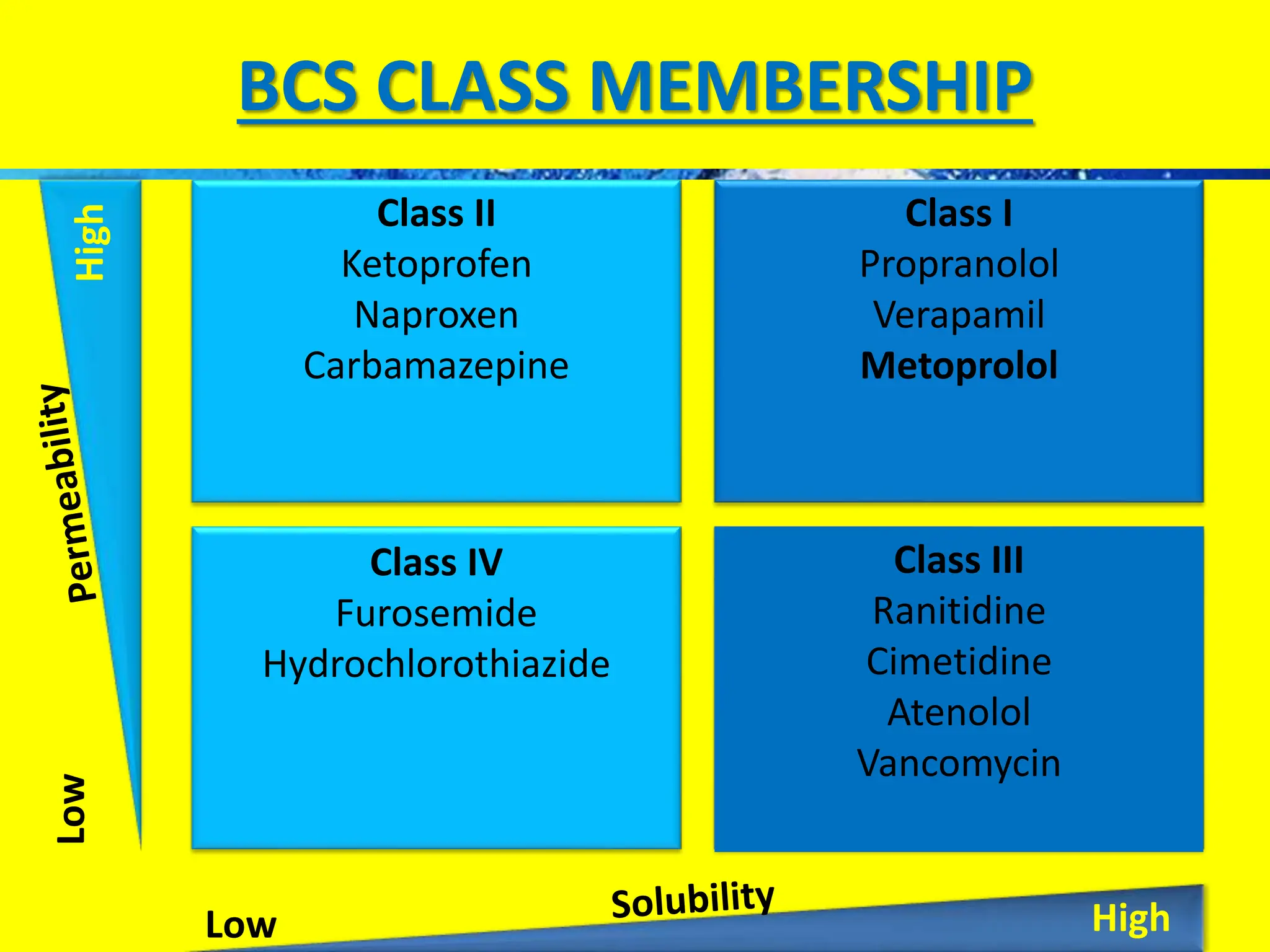
BCS CLASS MEMBERSHIP
Class I
Propranolol
Verapamil
Metoprolol
Class II
Ketoprofen
Naproxen
Carbamazepine
Low
High
Class IV
Furosemide
Hydrochlorothiazide
Class III
Ranitidine
Cimetidine
Atenolol
Vancomycin
High
Low
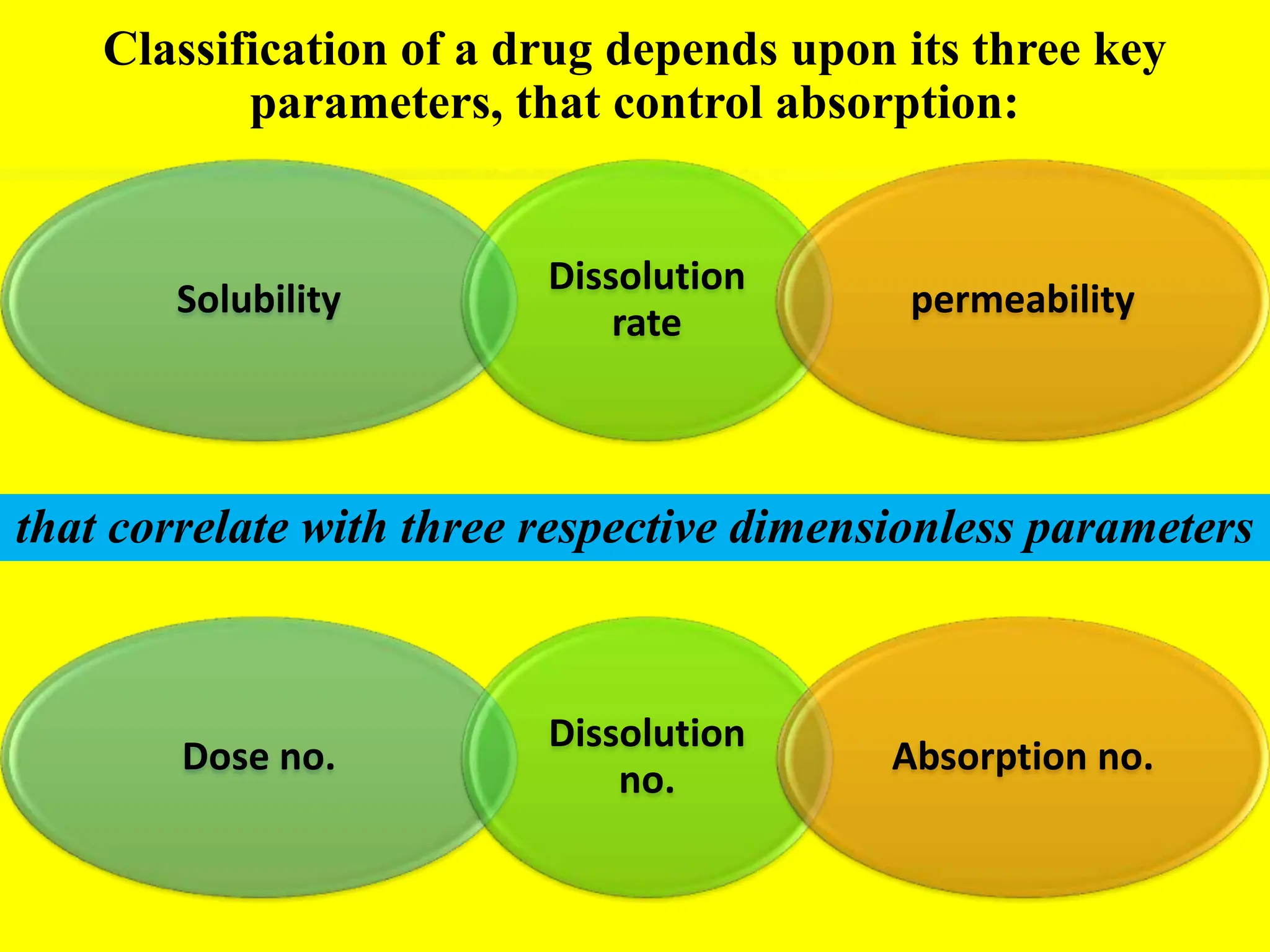
Classification of a drug depends upon its three key
parameters, that control absorption:
Solubility
Dissolution
rate
permeability
Dose no.
Dissolution
no.
Absorption no.
that correlate with three respective dimensionless parameters
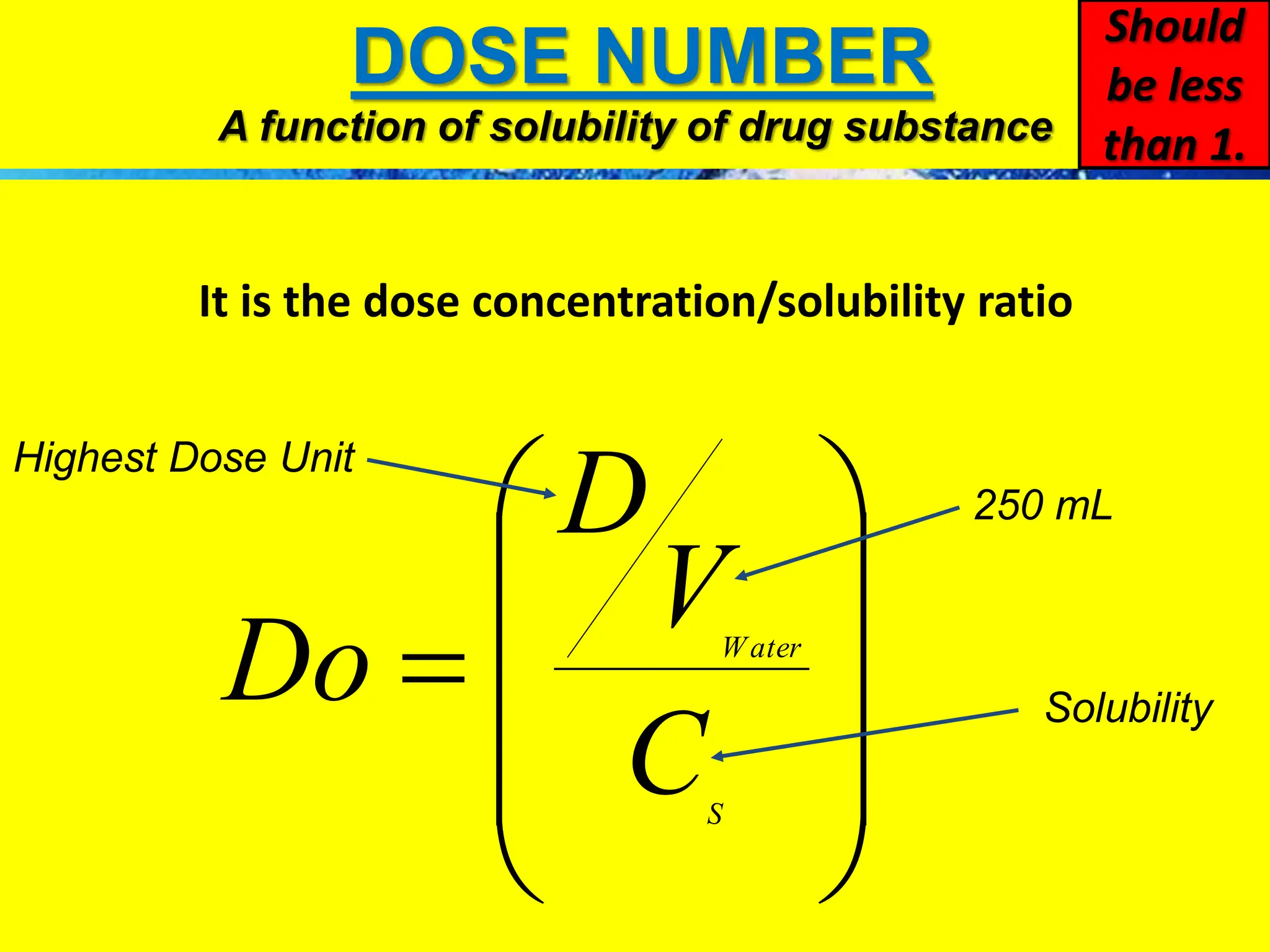
DOSE NUMBER
A function of solubility of drug substance
Should
be less
than 1.











S
Water
C
V
D
Do
Highest Dose Unit
250 mL
Solubility
It is the dose concentration/solubility ratio
DISSOLUTION NUMBER
A function of drug release from formulation
Should exceed 1
• Defined as the ratio of mean residence time to mean
dissolution time
Dn= [TGI/TCD]
TGI = Residence time in GI (approx. 180 min)
TCD= Time required for complete dissolution
ABSORPTION NUMBER
ABS
GI
T
T
An
“A function of GI Permeability to Drug Substance”
TGI = Residence time in GI (approx. 180 min)
TABS = Time required for complete absorption
• Absorption number (An) is the time required to absorb the
administered dose
• It is the ratio of the mean residence time to mean
absorption time.
Should exceed 1
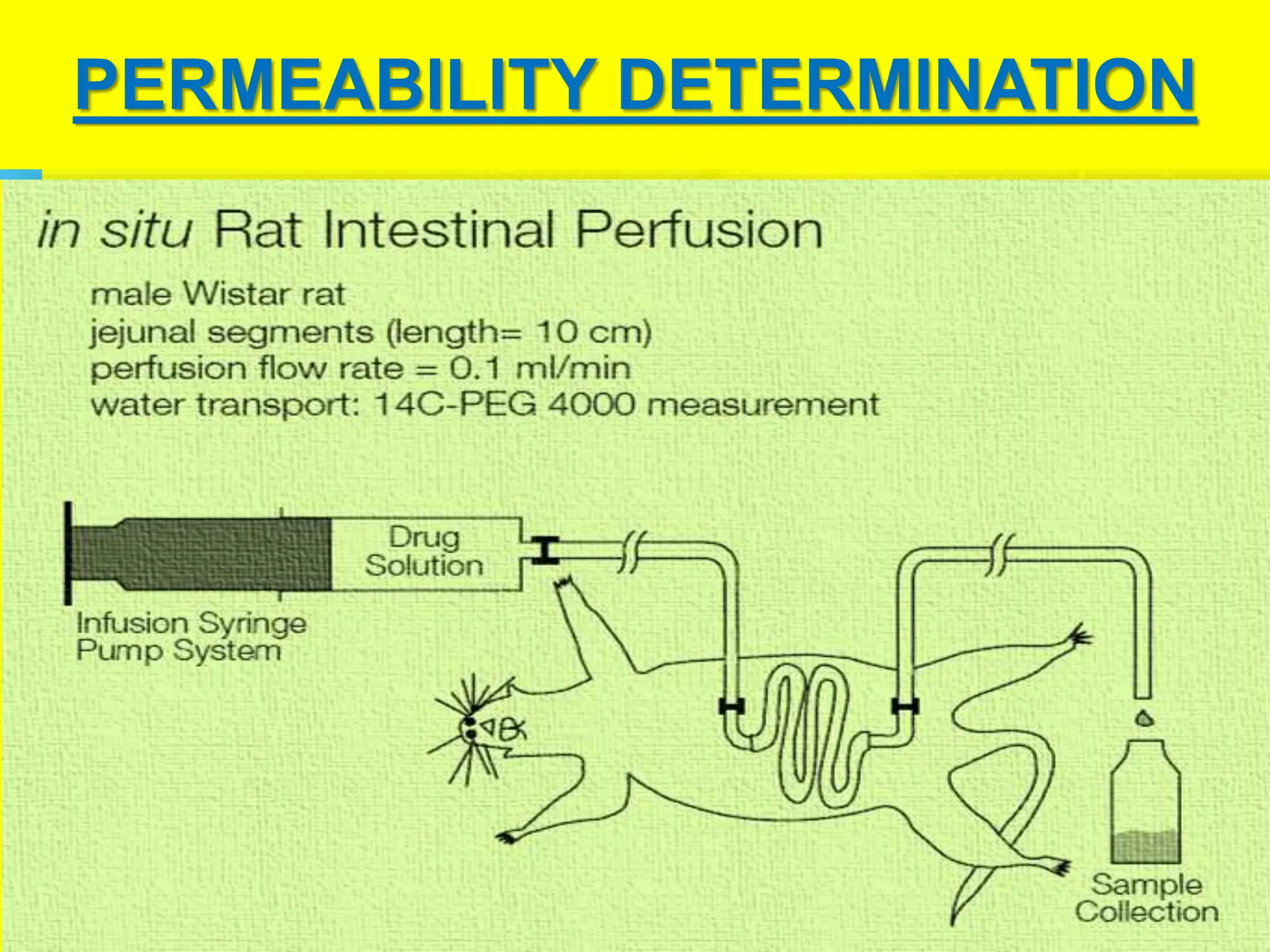
PERMEABILITY DETERMINATION
A. Determination of extent of absorption in humans:
• Mass balance P/K studies
• Absolute bioavailability studies
B. Intestinal permeability methods:
• In vivo intestinal perfusion studies in humans
• In vivo or in situ intestinal perfusion studies in animal
• In vitro permeability methods using excised
human/animal intestinal tissues
• In vitro permeation studies across a monolayer of
cultured epithelial cells. e.g. Caco-2 cells or TC-7 cells
DISSOLUTION DETERMINATION
 USP apparatus I (basket) at 100 rpm or USP apparatus II
(paddle) at 50 rpm.
 Dissolution media (900 ml): 0.1 N HCl or simulated gastric
fluid, pH 4.5 buffer, and pH 6.8 buffer or simulated
intestinal fluid.
 Compare dissolution profiles of test and reference
products using a similarity factor (f2).
N= no. of dissolution time points
Rt = dissolution value of the reference drug product at time t
Tt = dissolution value of the test drug product at time t
If f2= 100 ; dissolution
profiles are identical
SOLUBILITY DETERMINATION
“Shake flask method”
• pH- solubility profile of test drug in aqueous media
within a pH range of 1.0-7.5
• A minimum of three replicate determinations of
solubility in each pH condition
• Methods other than shake flask method (with
Justification). e g. acid or base titration methods
CLASS BOUNDARIES
 HIGHLY SOLUBLE; the highest dose strength should be
soluble in < 250 ml water over a pH range of 1 to 7.5.
(The volume estimate-a glassful i.e. 8 ounce)
 HIGHLY PERMEABLE when the extent of absorption in
humans is determined to be > 90% of an administered
dose
 RAPIDLY DISSOLVING when > 85% of the labeled
amount of drug substance dissolves within 30 minutes
using USP apparatus I or II in a volume of < 900 ml
buffer solutions.
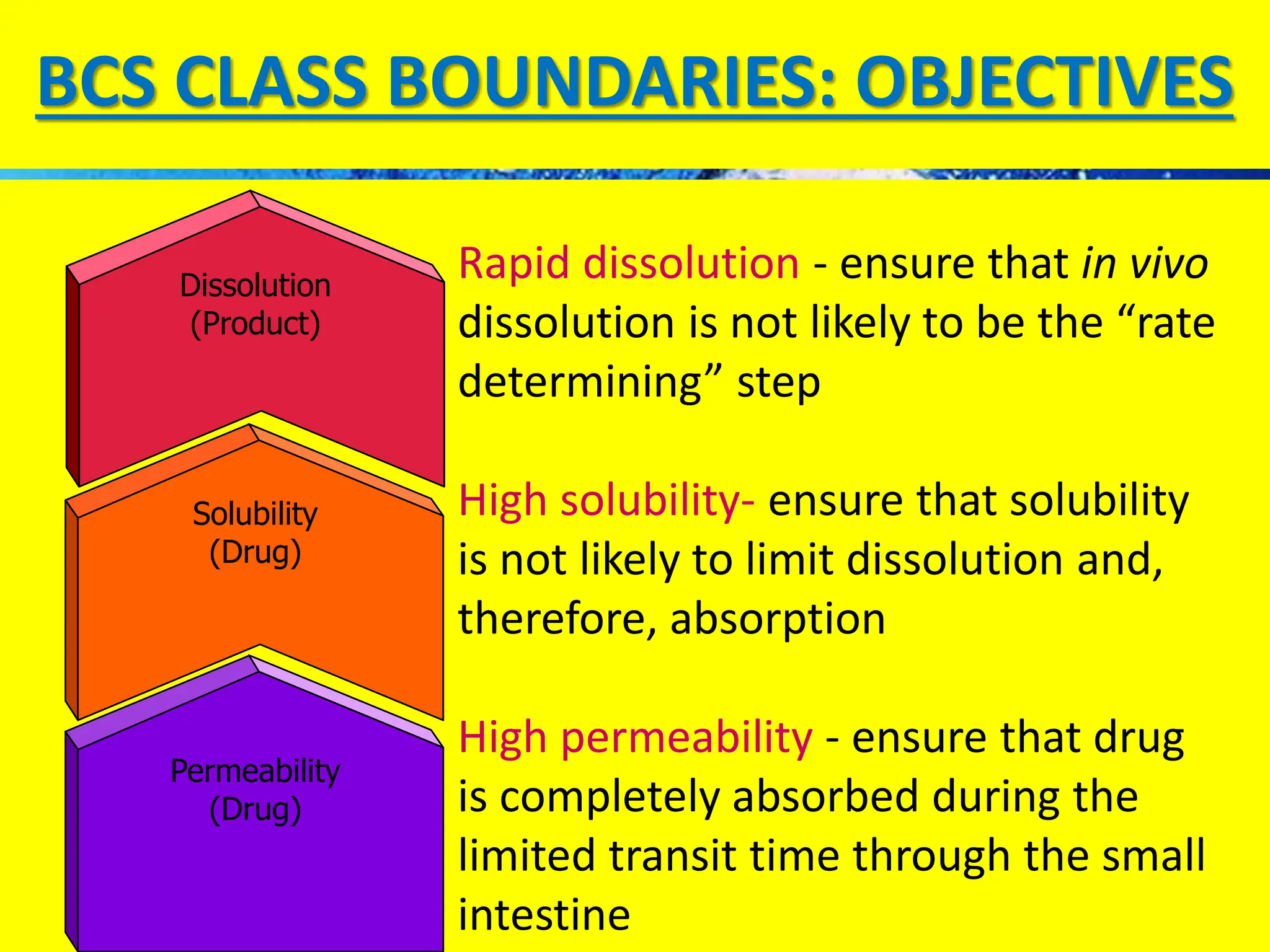
BCS CLASS BOUNDARIES: OBJECTIVES
Dissolution
(Product)
Solubility
(Drug)
Permeability
(Drug)
Rapid dissolution - ensure that in vivo
dissolution is not likely to be the “rate
determining” step
High solubility- ensure that solubility
is not likely to limit dissolution and,
therefore, absorption
High permeability - ensure that drug
is completely absorbed during the
limited transit time through the small
intestine
Class Solubil
ity
Perme
ability
Absorption
rate control
IVIVC expectations for
Immediate release product
I High High Gastric
emptying
IVIVC expected, if dissolution
rate is slower than gastric
emptying rate, otherwise
limited or no correlations
II Low High Dissolution IVIVC expected, if in vitro
dissolution rate is similar to in
vivo dissolution rate, unless
dose is very high.
III High Low Permeability Absorption (permeability) is
rate determining and limited or
no IVIVC with dissolution.
IV Low Low Case by case Limited or no IVIVC is expected.
IVIVC EXPECTATIONS FOR IRP BASED ON BCS
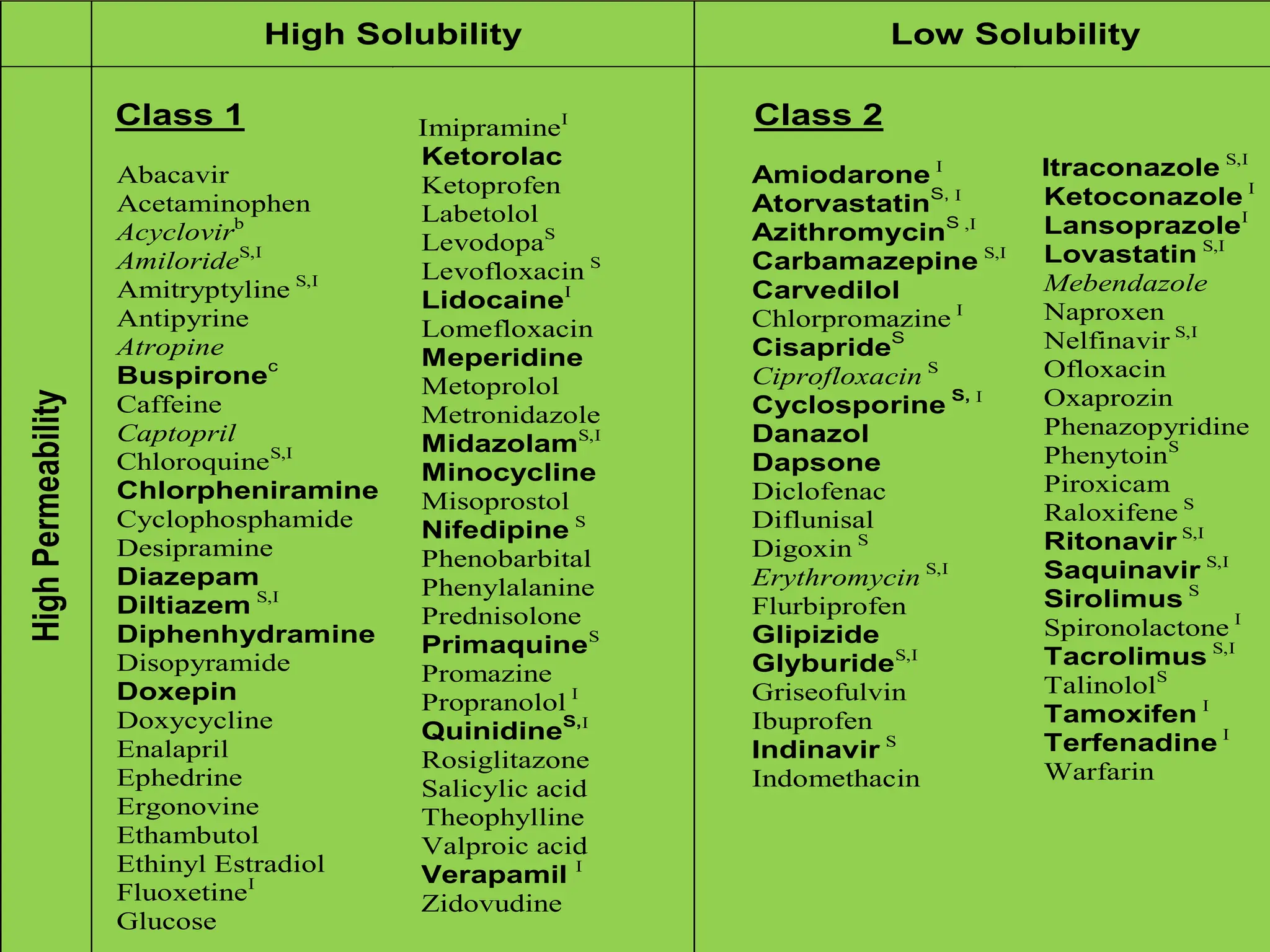
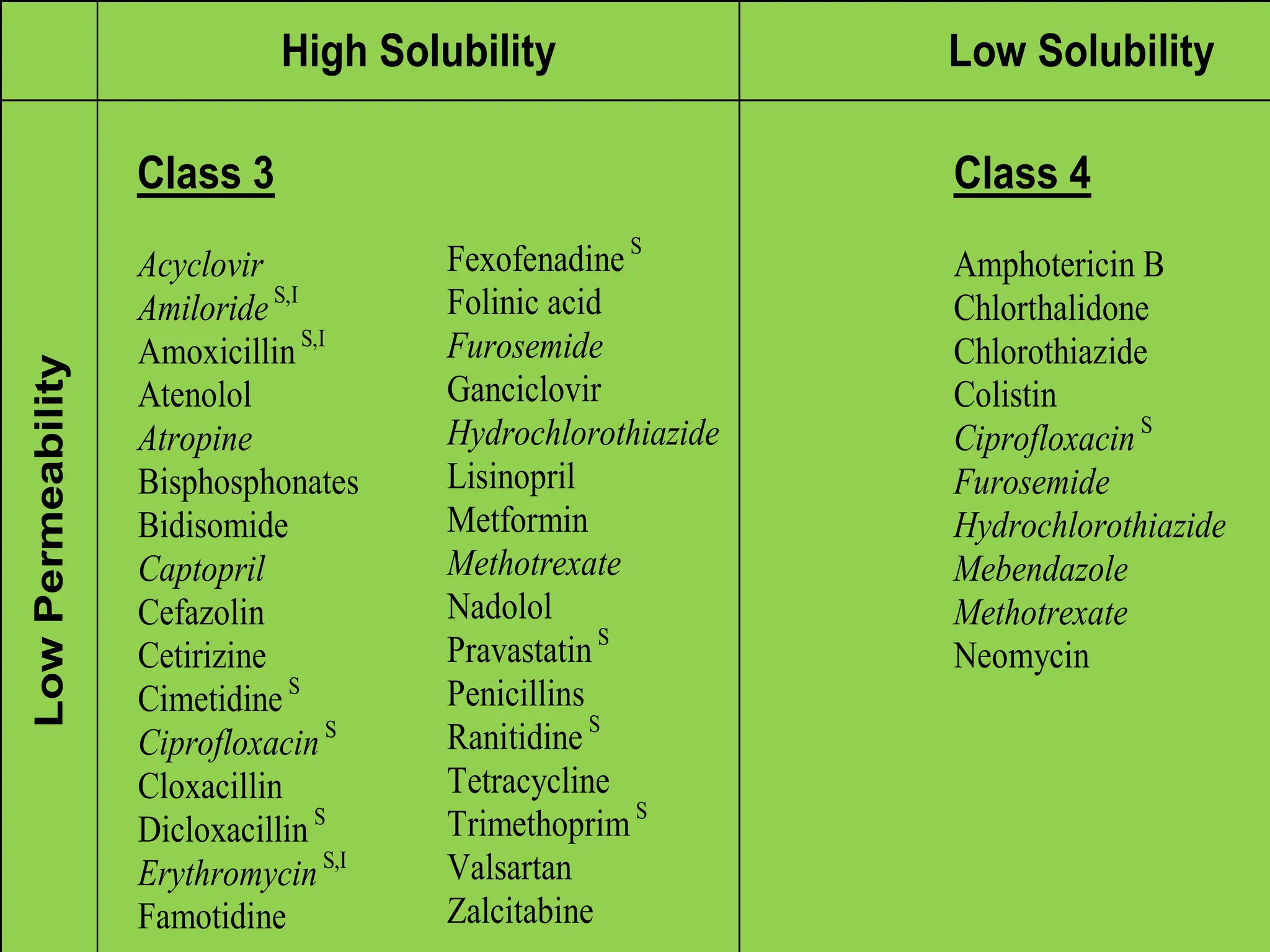
High Solubility Low Solubility
High
Permeability
Class 1
Abacavir
Acetaminophen
Acyclovirb
AmilorideS,I
Amitryptyline S,I
Antipyrine
Atropine
Buspirone
c
Caffeine
Captopril
ChloroquineS,I
Chlorpheniramine
Cyclophosphamide
Desipramine
Diazepam
Diltiazem S,I
Diphenhydramine
Disopyramide
Doxepin
Doxycycline
Enalapril
Ephedrine
Ergonovine
Ethambutol
Ethinyl Estradiol
FluoxetineI
Glucose
ImipramineI
Ketorolac
Ketoprofen
Labetolol
LevodopaS
Levofloxacin S
LidocaineI
Lomefloxacin
Meperidine
Metoprolol
Metronidazole
MidazolamS,I
Minocycline
Misoprostol
Nifedipine S
Phenobarbital
Phenylalanine
Prednisolone
PrimaquineS
Promazine
Propranolol I
Quinidine
S,I
Rosiglitazone
Salicylic acid
Theophylline
Valproic acid
Verapamil I
Zidovudine
Class 2
Amiodarone I
Atorvastatin
S, I
Azithromycin
S ,I
Carbamazepine S,I
Carvedilol
Chlorpromazine I
Cisapride
S
Ciprofloxacin S
Cyclosporine
S, I
Danazol
Dapsone
Diclofenac
Diflunisal
Digoxin S
Erythromycin S,I
Flurbiprofen
Glipizide
GlyburideS,I
Griseofulvin
Ibuprofen
Indinavir S
Indomethacin
Itraconazole S,I
Ketoconazole I
LansoprazoleI
Lovastatin S,I
Mebendazole
Naproxen
Nelfinavir S,I
Ofloxacin
Oxaprozin
Phenazopyridine
PhenytoinS
Piroxicam
Raloxifene S
Ritonavir S,I
Saquinavir S,I
Sirolimus S
Spironolactone I
Tacrolimus S,I
TalinololS
Tamoxifen I
Terfenadine I
Warfarin
High Solubility Low Solubility
Low
Permeability
Class 3
Acyclovir
AmilorideS,I
AmoxicillinS,I
Atenolol
Atropine
Bisphosphonates
Bidisomide
Captopril
Cefazolin
Cetirizine
Cimetidine S
Ciprofloxacin S
Cloxacillin
Dicloxacillin S
Erythromycin S,I
Famotidine
Fexofenadine S
Folinic acid
Furosemide
Ganciclovir
Hydrochlorothiazide
Lisinopril
Metformin
Methotrexate
Nadolol
PravastatinS
Penicillins
Ranitidine S
Tetracycline
TrimethoprimS
Valsartan
Zalcitabine
Class 4
Amphotericin B
Chlorthalidone
Chlorothiazide
Colistin
Ciprofloxacin S
Furosemide
Hydrochlorothiazide
Mebendazole
Methotrexate
Neomycin
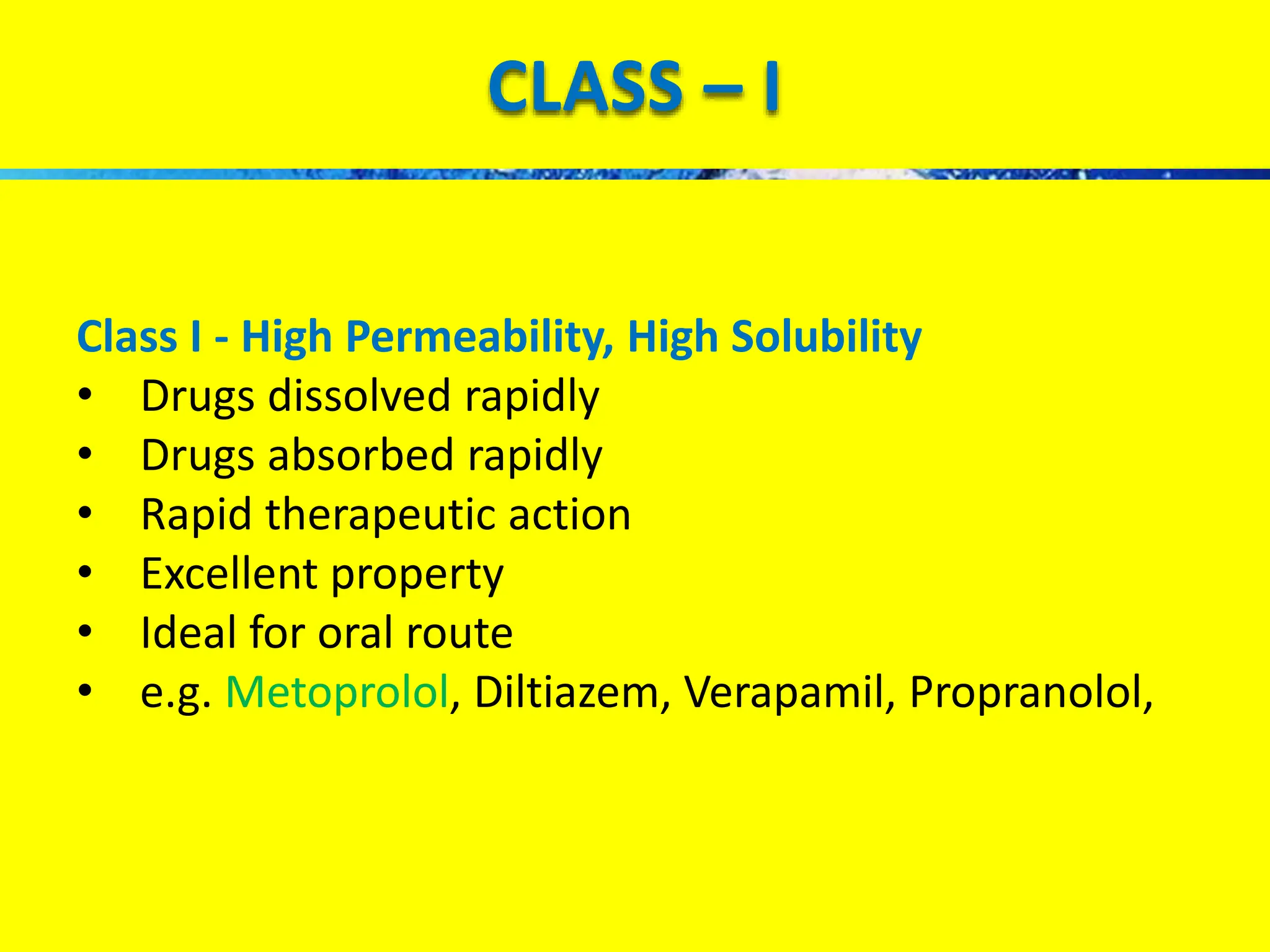
Class I - High Permeability, High Solubility
• Drugs dissolved rapidly
• Drugs absorbed rapidly
• Rapid therapeutic action
• Excellent property
• Ideal for oral route
• e.g. Metoprolol, Diltiazem, Verapamil, Propranolol,
CLASS – I
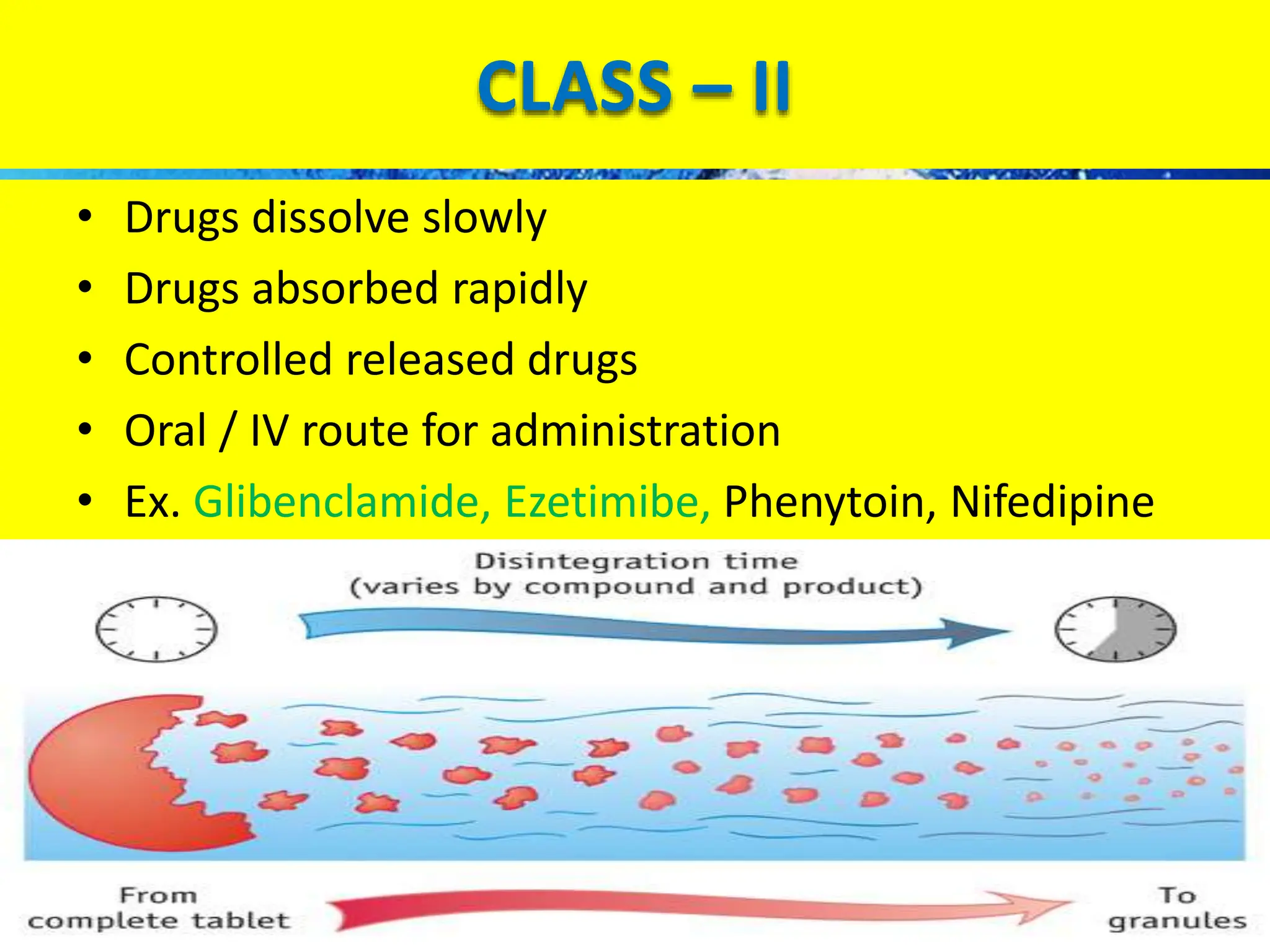
• Drugs dissolve slowly
• Drugs absorbed rapidly
• Controlled released drugs
• Oral / IV route for administration
• Ex. Glibenclamide, Ezetimibe, Phenytoin, Nifedipine
CLASS – II
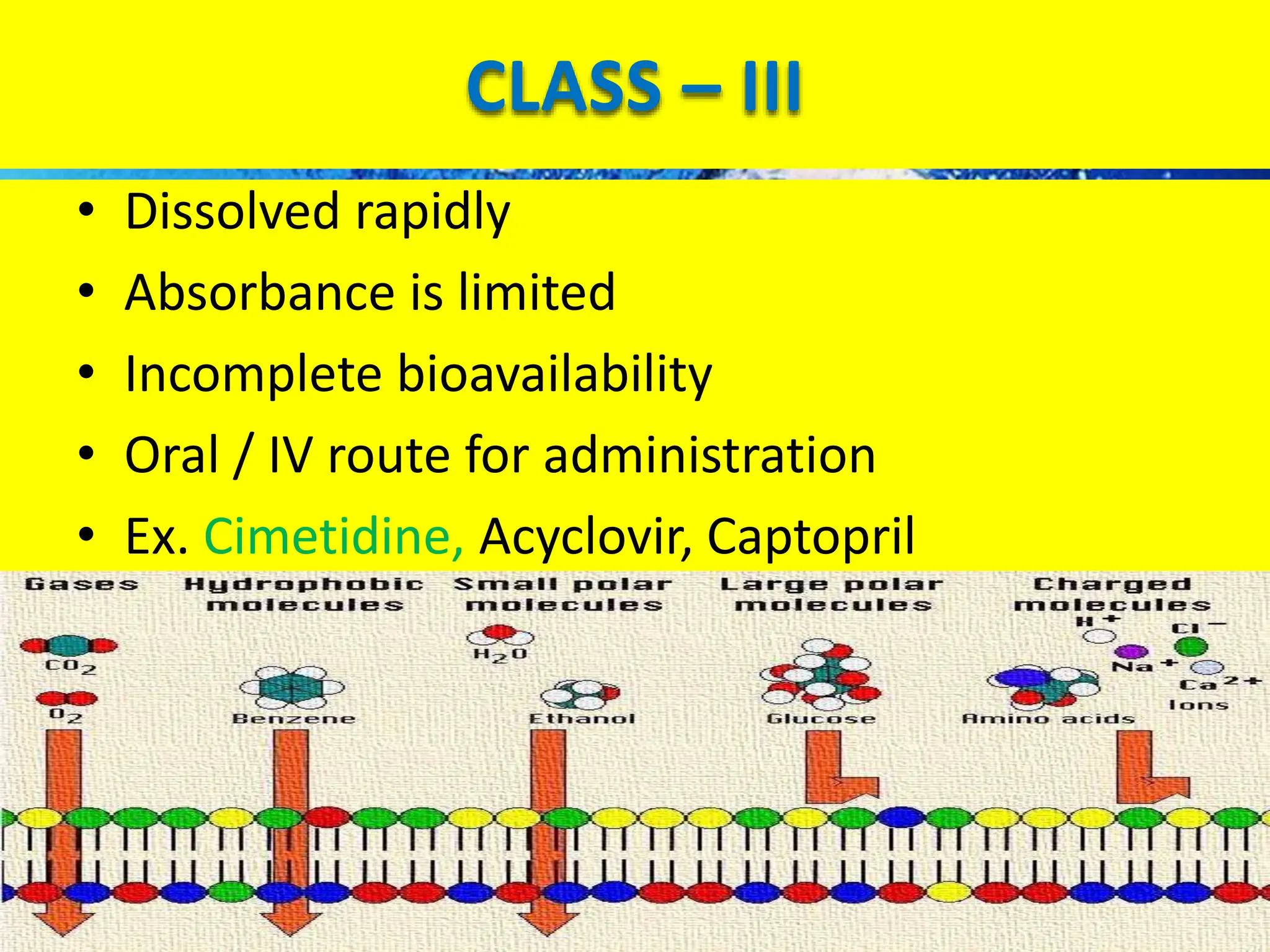
• Dissolved rapidly
• Absorbance is limited
• Incomplete bioavailability
• Oral / IV route for administration
• Ex. Cimetidine, Acyclovir, Captopril
CLASS – III
• Low dissolution rate
• Low permeability property
• Slow or low therapeutic action
• IV or other routes are required
• Ex. Hydrochlorothiazide
CLASS – IV
Background: About biowaivers
BCS BASED BIOWAIVER
A biowaiver is an exemption from conducting human
bioequivalence studies
Criteria for Biowaiver
Immediate-release solid oral dosage form
Rapid and similar dissolution.
High solubility &High permeability.
Wide therapeutic window.
Excipients used in dosage form are same as those
present in approved drug product
• Companies can potentially save thousands of dollars in
costs, and several months of time in development, if
bioequivalence studies are avoided
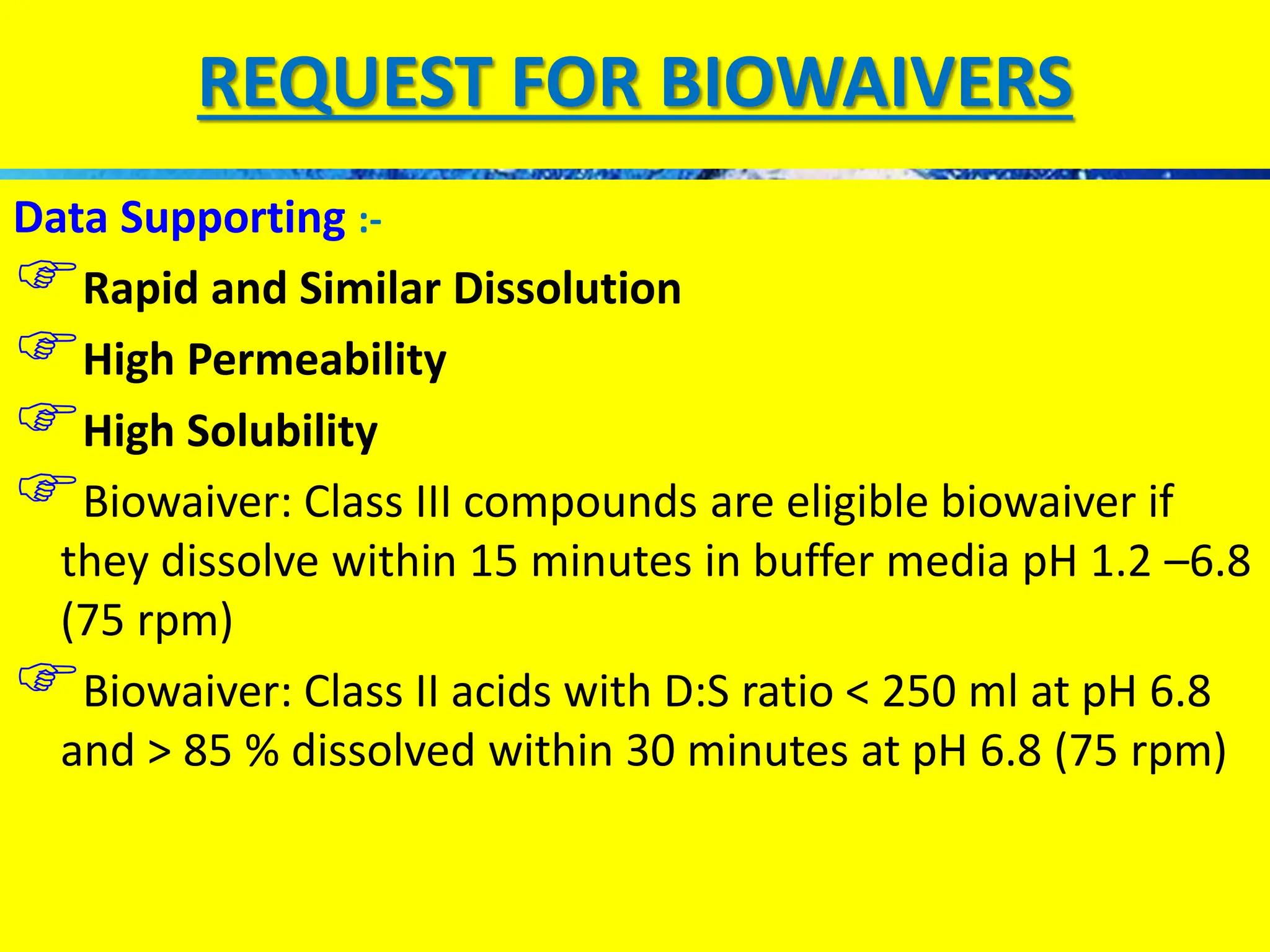
REQUEST FOR BIOWAIVERS
Data Supporting :-
Rapid and Similar Dissolution
High Permeability
High Solubility
Biowaiver: Class III compounds are eligible biowaiver if
they dissolve within 15 minutes in buffer media pH 1.2 –6.8
(75 rpm)
Biowaiver: Class II acids with D:S ratio < 250 ml at pH 6.8
and > 85 % dissolved within 30 minutes at pH 6.8 (75 rpm)
NO BIOWAIVER FOR:
As the BCS is only applicable to APIs which are absorbed
from the small intestine; drugs absorbed from other
sites (e.g. from the oral cavity) are not eligible for a
biowaiver
non-oral immediate release forms with systemic action
modified release products
transdermal products
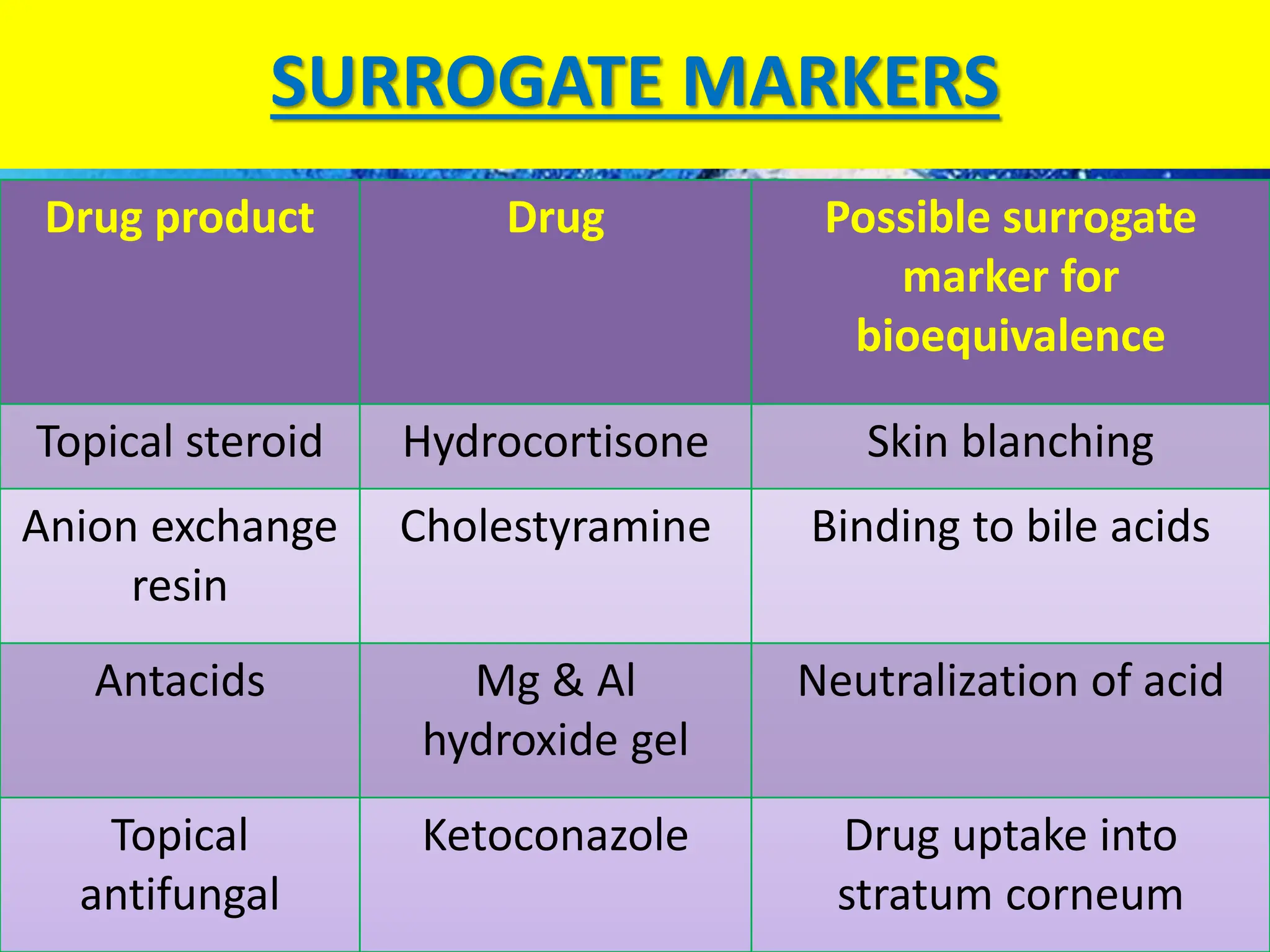
SURROGATE MARKERS
Drug product Drug Possible surrogate
marker for
bioequivalence
Topical steroid Hydrocortisone Skin blanching
Anion exchange
resin
Cholestyramine Binding to bile acids
Antacids Mg & Al
hydroxide gel
Neutralization of acid
Topical
antifungal
Ketoconazole Drug uptake into
stratum corneum
SIGNIFICANCE OF BCS
Regulatory toll for replacement of certain BE studies.
It can save both time and money—if the immediate -release,
orally administered drug meets specific criteria, the FDA will
grant a waiver for expensive and time-consuming bio-
equivalence studies.
Valuable tool for formulation scientist for selection of design
of formulated drug substance.
When integrated with other information provide a
tremendous tool for efficient drug development.
Reduces cost and time of approving Scale- up and post
approval challenges.
Applicable in both pre-clinical and clinical drug development
process.
Works as a guiding tool in development of various oral drug
delivery systems.
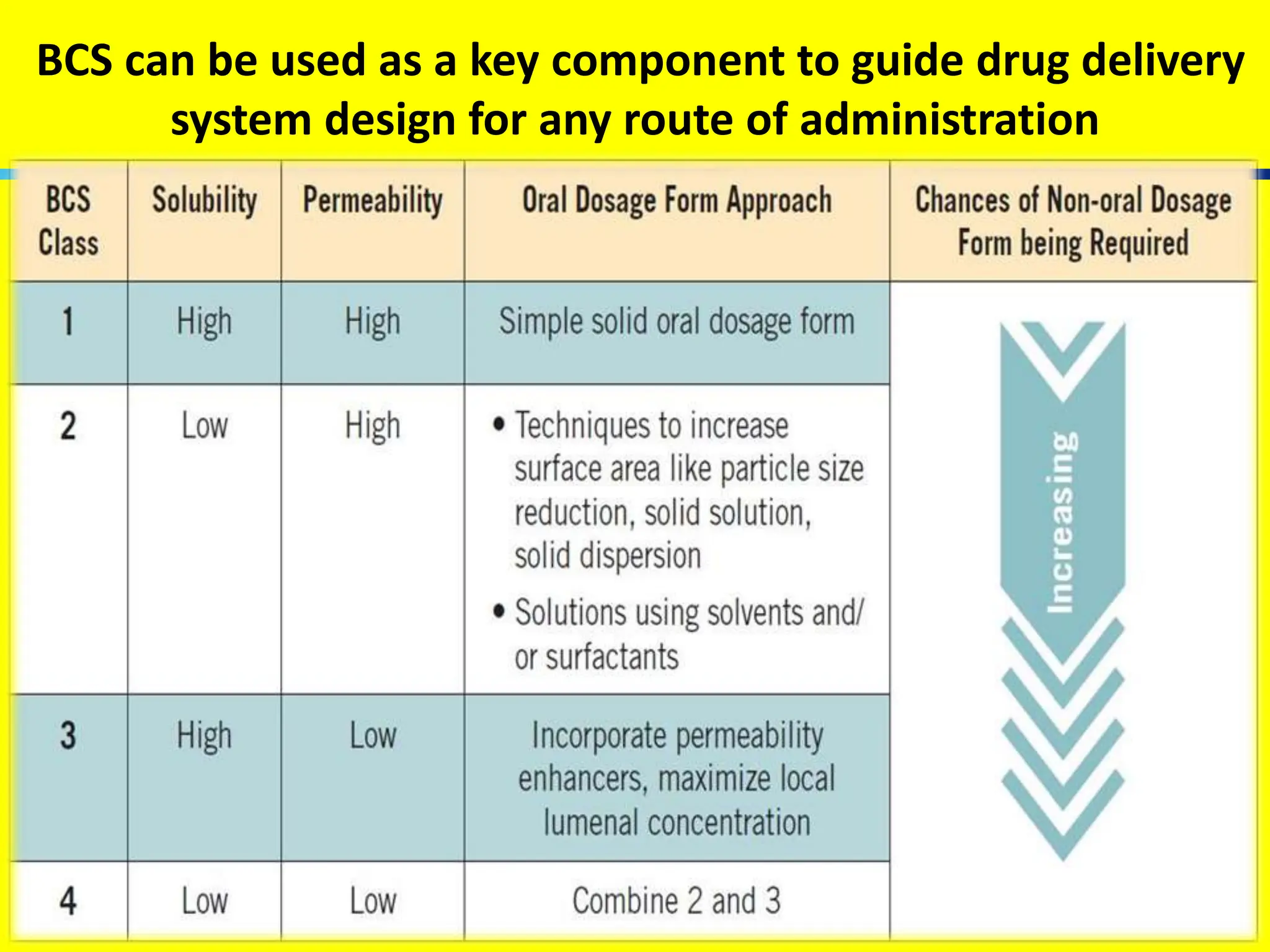
BCS can be used as a key component to guide drug delivery
system design for any route of administration
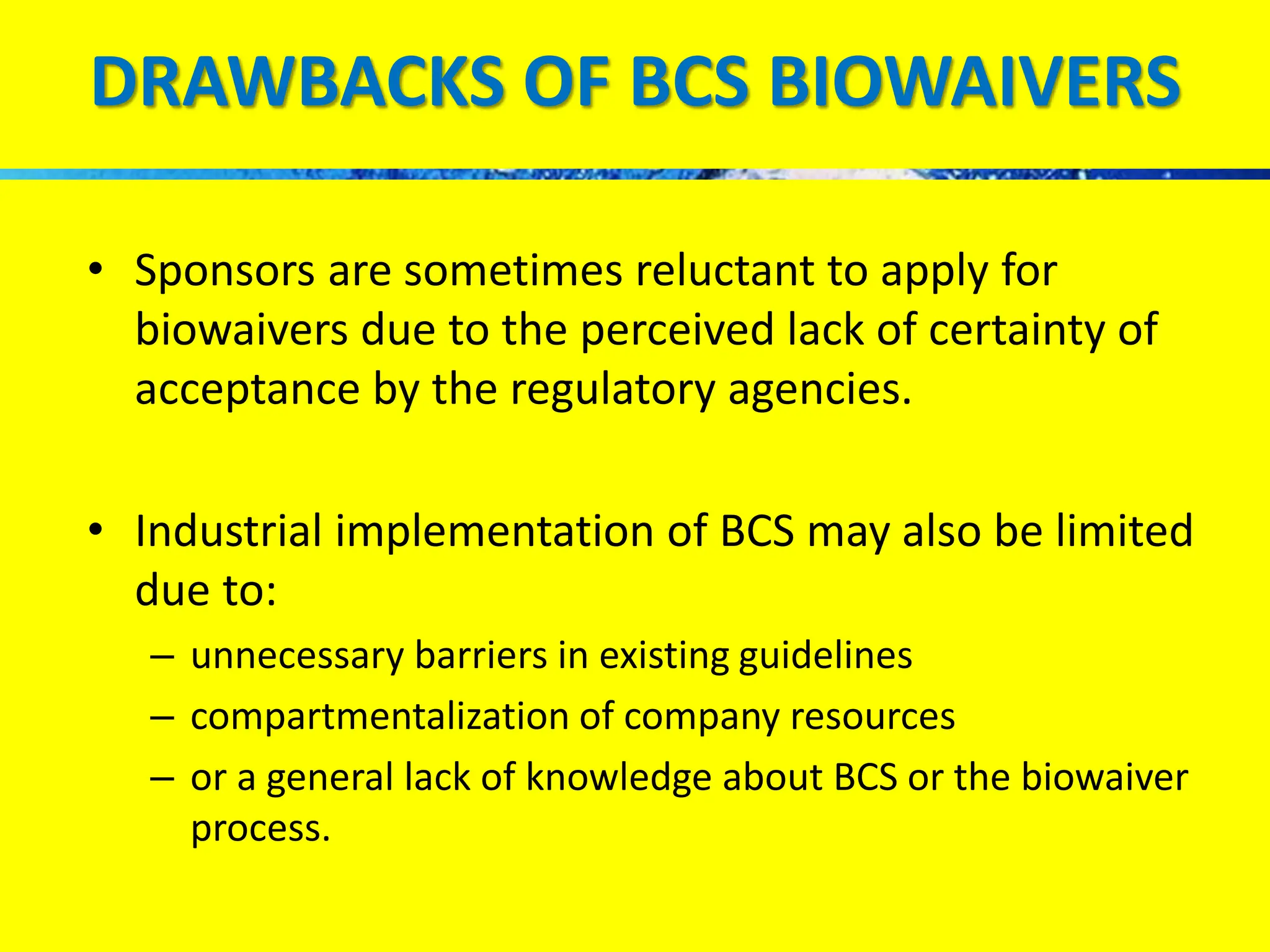
DRAWBACKS OF BCS BIOWAIVERS
• Sponsors are sometimes reluctant to apply for
biowaivers due to the perceived lack of certainty of
acceptance by the regulatory agencies.
• Industrial implementation of BCS may also be limited
due to:
– unnecessary barriers in existing guidelines
– compartmentalization of company resources
– or a general lack of knowledge about BCS or the biowaiver
process.
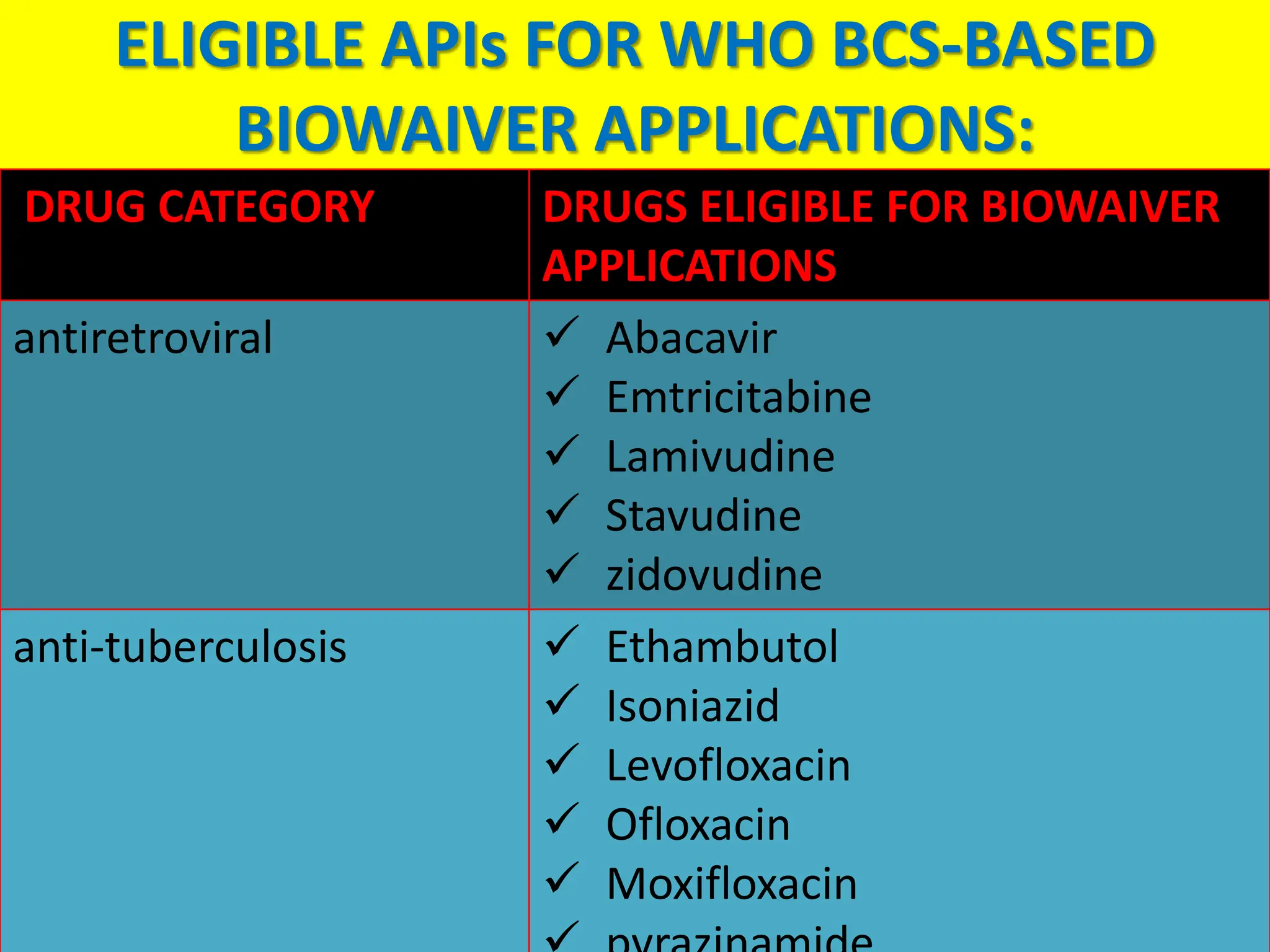
ELIGIBLE APIs FOR WHO BCS-BASED
BIOWAIVER APPLICATIONS:
DRUG CATEGORY DRUGS ELIGIBLE FOR BIOWAIVER
APPLICATIONS
antiretroviral  Abacavir
 Emtricitabine
 Lamivudine
 Stavudine
 zidovudine
anti-tuberculosis  Ethambutol
 Isoniazid
 Levofloxacin
 Ofloxacin
 Moxifloxacin
REFERNCES
 Draft guidance for industry, waiver of in vivo bioavailability and
bioequivalence studies for immediate release solid oral dosage forms
containing certain active moieties/ active ingredients based on a
biopharmaceutics classification system, February 1999, CDER/FDA.
 Amidon G.L., Lennernas H., Shah V.P., Crison J.R.A., A theoretical
basis for a biopharmaceutics drug classification: the correlation of in
vitro drug product dissolution and in vivo bioavailability. Pharm. Res.
12: 413-420 (1995).
 Guidance for industry, immediate release solid oral dosage forms:
scale up and post approval changes, November 1995, CDER/FDA.
 Medicamento generico from website http://www.Anvisa.Go/.
 Particle size; Drug development services; Technical Brief 2011 Volume
9
REFERNCES
 Devane J., Oral drug delivery technology: addressing the solubility/
permeability paradigm, pharm. Technol. 68-74, November 1998
 Amidon, G. L.,Lennernäs H., Shah V. P., And Crisonj. R., A theoretical
basis for a biopharmaceutics drug classification: the correlation of in
vitro drug product dissolution and in vivo bioavailability,
Pharmaceutical research, 12: 413-420 (1995)
 Guidance for Industry: Dissolution Testing of Immediate Release Solid
Oral Dosage Forms, FDA CDER, 1997
http://www.fda.gov/cder/guidance/1713bp1.pdf
 Guidance for Industry: Waiver of In Vivo Bioavailability and
Bioequivalence Studies for Immediate Release Solid Oral Dosage
Forms Based on a Biopharmaceutics Classification System, FDA CDER,
August 2000 http://www.fda.gov/cder/guidance/3618fnl.htm
 WHO Prequalification of Medicines Programme; General notes on
Biopharmaceutics Classification System (BCS)-based biowaiver
applications; Guidance Document October 2012
REFERNCES
 Chi-Yuan Wu and Leslie Z. Benet, (2005); “Predicting Drug Disposition
via Application of BCS: Transport/Absorption/Elimination Interplay
and Development of a Biopharmaceutics Drug Disposition
Classification System” ; Pharmaceutical Research, Vol. 22, No. 1,
January
If you’re not
part of the
solution…..
you’re part of
the precipitate
©

Bio Pharmaceutical Classification BCS.pptx

  • 1.
  • 2.
  • 3.
    INTRODUCTION  Continues to dominatethe area of drug delivery technologies  Route of choice for the formulators
  • 4.
  • 5.
    BIOPHARMACEUTICAL CLASSIFICATION SYSTEM  Ascientific framework for classifying drug substances based on their aqueous solubility and intestinal permeability  Established by Gordon Amidon et al.  BCS has gained importance worldwide as a drug product regulation tool For scale-up and post-approval changes  The aim of the BCS is to provide a regulatory tool for the replacement of certain BE studies by conducting accurate in vitro dissolution tests.
  • 6.
    BIOPHARMACEUTICS CLASSIFICATION SYSTEM (asdefined by the FDA after Amidon et al.)
  • 7.
    BCS CLASS MEMBERSHIP ClassI Propranolol Verapamil Metoprolol Class II Ketoprofen Naproxen Carbamazepine Low High Class IV Furosemide Hydrochlorothiazide Class III Ranitidine Cimetidine Atenolol Vancomycin High Low
  • 8.
    Classification of adrug depends upon its three key parameters, that control absorption: Solubility Dissolution rate permeability Dose no. Dissolution no. Absorption no. that correlate with three respective dimensionless parameters
  • 9.
    DOSE NUMBER A functionof solubility of drug substance Should be less than 1.            S Water C V D Do Highest Dose Unit 250 mL Solubility It is the dose concentration/solubility ratio
  • 10.
    DISSOLUTION NUMBER A functionof drug release from formulation Should exceed 1 • Defined as the ratio of mean residence time to mean dissolution time Dn= [TGI/TCD] TGI = Residence time in GI (approx. 180 min) TCD= Time required for complete dissolution
  • 11.
    ABSORPTION NUMBER ABS GI T T An “A functionof GI Permeability to Drug Substance” TGI = Residence time in GI (approx. 180 min) TABS = Time required for complete absorption • Absorption number (An) is the time required to absorb the administered dose • It is the ratio of the mean residence time to mean absorption time. Should exceed 1
  • 12.
    PERMEABILITY DETERMINATION A. Determinationof extent of absorption in humans: • Mass balance P/K studies • Absolute bioavailability studies B. Intestinal permeability methods: • In vivo intestinal perfusion studies in humans • In vivo or in situ intestinal perfusion studies in animal • In vitro permeability methods using excised human/animal intestinal tissues • In vitro permeation studies across a monolayer of cultured epithelial cells. e.g. Caco-2 cells or TC-7 cells
  • 13.
    DISSOLUTION DETERMINATION  USPapparatus I (basket) at 100 rpm or USP apparatus II (paddle) at 50 rpm.  Dissolution media (900 ml): 0.1 N HCl or simulated gastric fluid, pH 4.5 buffer, and pH 6.8 buffer or simulated intestinal fluid.  Compare dissolution profiles of test and reference products using a similarity factor (f2). N= no. of dissolution time points Rt = dissolution value of the reference drug product at time t Tt = dissolution value of the test drug product at time t If f2= 100 ; dissolution profiles are identical
  • 14.
    SOLUBILITY DETERMINATION “Shake flaskmethod” • pH- solubility profile of test drug in aqueous media within a pH range of 1.0-7.5 • A minimum of three replicate determinations of solubility in each pH condition • Methods other than shake flask method (with Justification). e g. acid or base titration methods
  • 15.
    CLASS BOUNDARIES  HIGHLYSOLUBLE; the highest dose strength should be soluble in < 250 ml water over a pH range of 1 to 7.5. (The volume estimate-a glassful i.e. 8 ounce)  HIGHLY PERMEABLE when the extent of absorption in humans is determined to be > 90% of an administered dose  RAPIDLY DISSOLVING when > 85% of the labeled amount of drug substance dissolves within 30 minutes using USP apparatus I or II in a volume of < 900 ml buffer solutions.
  • 16.
    BCS CLASS BOUNDARIES:OBJECTIVES Dissolution (Product) Solubility (Drug) Permeability (Drug) Rapid dissolution - ensure that in vivo dissolution is not likely to be the “rate determining” step High solubility- ensure that solubility is not likely to limit dissolution and, therefore, absorption High permeability - ensure that drug is completely absorbed during the limited transit time through the small intestine
  • 17.
    Class Solubil ity Perme ability Absorption rate control IVIVCexpectations for Immediate release product I High High Gastric emptying IVIVC expected, if dissolution rate is slower than gastric emptying rate, otherwise limited or no correlations II Low High Dissolution IVIVC expected, if in vitro dissolution rate is similar to in vivo dissolution rate, unless dose is very high. III High Low Permeability Absorption (permeability) is rate determining and limited or no IVIVC with dissolution. IV Low Low Case by case Limited or no IVIVC is expected. IVIVC EXPECTATIONS FOR IRP BASED ON BCS
  • 18.
    High Solubility LowSolubility High Permeability Class 1 Abacavir Acetaminophen Acyclovirb AmilorideS,I Amitryptyline S,I Antipyrine Atropine Buspirone c Caffeine Captopril ChloroquineS,I Chlorpheniramine Cyclophosphamide Desipramine Diazepam Diltiazem S,I Diphenhydramine Disopyramide Doxepin Doxycycline Enalapril Ephedrine Ergonovine Ethambutol Ethinyl Estradiol FluoxetineI Glucose ImipramineI Ketorolac Ketoprofen Labetolol LevodopaS Levofloxacin S LidocaineI Lomefloxacin Meperidine Metoprolol Metronidazole MidazolamS,I Minocycline Misoprostol Nifedipine S Phenobarbital Phenylalanine Prednisolone PrimaquineS Promazine Propranolol I Quinidine S,I Rosiglitazone Salicylic acid Theophylline Valproic acid Verapamil I Zidovudine Class 2 Amiodarone I Atorvastatin S, I Azithromycin S ,I Carbamazepine S,I Carvedilol Chlorpromazine I Cisapride S Ciprofloxacin S Cyclosporine S, I Danazol Dapsone Diclofenac Diflunisal Digoxin S Erythromycin S,I Flurbiprofen Glipizide GlyburideS,I Griseofulvin Ibuprofen Indinavir S Indomethacin Itraconazole S,I Ketoconazole I LansoprazoleI Lovastatin S,I Mebendazole Naproxen Nelfinavir S,I Ofloxacin Oxaprozin Phenazopyridine PhenytoinS Piroxicam Raloxifene S Ritonavir S,I Saquinavir S,I Sirolimus S Spironolactone I Tacrolimus S,I TalinololS Tamoxifen I Terfenadine I Warfarin
  • 19.
    High Solubility LowSolubility Low Permeability Class 3 Acyclovir AmilorideS,I AmoxicillinS,I Atenolol Atropine Bisphosphonates Bidisomide Captopril Cefazolin Cetirizine Cimetidine S Ciprofloxacin S Cloxacillin Dicloxacillin S Erythromycin S,I Famotidine Fexofenadine S Folinic acid Furosemide Ganciclovir Hydrochlorothiazide Lisinopril Metformin Methotrexate Nadolol PravastatinS Penicillins Ranitidine S Tetracycline TrimethoprimS Valsartan Zalcitabine Class 4 Amphotericin B Chlorthalidone Chlorothiazide Colistin Ciprofloxacin S Furosemide Hydrochlorothiazide Mebendazole Methotrexate Neomycin
  • 20.
    Class I -High Permeability, High Solubility • Drugs dissolved rapidly • Drugs absorbed rapidly • Rapid therapeutic action • Excellent property • Ideal for oral route • e.g. Metoprolol, Diltiazem, Verapamil, Propranolol, CLASS – I
  • 21.
    • Drugs dissolveslowly • Drugs absorbed rapidly • Controlled released drugs • Oral / IV route for administration • Ex. Glibenclamide, Ezetimibe, Phenytoin, Nifedipine CLASS – II
  • 22.
    • Dissolved rapidly •Absorbance is limited • Incomplete bioavailability • Oral / IV route for administration • Ex. Cimetidine, Acyclovir, Captopril CLASS – III
  • 23.
    • Low dissolutionrate • Low permeability property • Slow or low therapeutic action • IV or other routes are required • Ex. Hydrochlorothiazide CLASS – IV
  • 24.
  • 25.
    BCS BASED BIOWAIVER Abiowaiver is an exemption from conducting human bioequivalence studies Criteria for Biowaiver Immediate-release solid oral dosage form Rapid and similar dissolution. High solubility &High permeability. Wide therapeutic window. Excipients used in dosage form are same as those present in approved drug product • Companies can potentially save thousands of dollars in costs, and several months of time in development, if bioequivalence studies are avoided
  • 26.
    REQUEST FOR BIOWAIVERS DataSupporting :- Rapid and Similar Dissolution High Permeability High Solubility Biowaiver: Class III compounds are eligible biowaiver if they dissolve within 15 minutes in buffer media pH 1.2 –6.8 (75 rpm) Biowaiver: Class II acids with D:S ratio < 250 ml at pH 6.8 and > 85 % dissolved within 30 minutes at pH 6.8 (75 rpm)
  • 27.
    NO BIOWAIVER FOR: Asthe BCS is only applicable to APIs which are absorbed from the small intestine; drugs absorbed from other sites (e.g. from the oral cavity) are not eligible for a biowaiver non-oral immediate release forms with systemic action modified release products transdermal products
  • 28.
    SURROGATE MARKERS Drug productDrug Possible surrogate marker for bioequivalence Topical steroid Hydrocortisone Skin blanching Anion exchange resin Cholestyramine Binding to bile acids Antacids Mg & Al hydroxide gel Neutralization of acid Topical antifungal Ketoconazole Drug uptake into stratum corneum
  • 29.
    SIGNIFICANCE OF BCS Regulatorytoll for replacement of certain BE studies. It can save both time and money—if the immediate -release, orally administered drug meets specific criteria, the FDA will grant a waiver for expensive and time-consuming bio- equivalence studies. Valuable tool for formulation scientist for selection of design of formulated drug substance. When integrated with other information provide a tremendous tool for efficient drug development. Reduces cost and time of approving Scale- up and post approval challenges. Applicable in both pre-clinical and clinical drug development process. Works as a guiding tool in development of various oral drug delivery systems.
  • 30.
    BCS can beused as a key component to guide drug delivery system design for any route of administration
  • 31.
    DRAWBACKS OF BCSBIOWAIVERS • Sponsors are sometimes reluctant to apply for biowaivers due to the perceived lack of certainty of acceptance by the regulatory agencies. • Industrial implementation of BCS may also be limited due to: – unnecessary barriers in existing guidelines – compartmentalization of company resources – or a general lack of knowledge about BCS or the biowaiver process.
  • 32.
    ELIGIBLE APIs FORWHO BCS-BASED BIOWAIVER APPLICATIONS: DRUG CATEGORY DRUGS ELIGIBLE FOR BIOWAIVER APPLICATIONS antiretroviral  Abacavir  Emtricitabine  Lamivudine  Stavudine  zidovudine anti-tuberculosis  Ethambutol  Isoniazid  Levofloxacin  Ofloxacin  Moxifloxacin
  • 33.
    REFERNCES  Draft guidancefor industry, waiver of in vivo bioavailability and bioequivalence studies for immediate release solid oral dosage forms containing certain active moieties/ active ingredients based on a biopharmaceutics classification system, February 1999, CDER/FDA.  Amidon G.L., Lennernas H., Shah V.P., Crison J.R.A., A theoretical basis for a biopharmaceutics drug classification: the correlation of in vitro drug product dissolution and in vivo bioavailability. Pharm. Res. 12: 413-420 (1995).  Guidance for industry, immediate release solid oral dosage forms: scale up and post approval changes, November 1995, CDER/FDA.  Medicamento generico from website http://www.Anvisa.Go/.  Particle size; Drug development services; Technical Brief 2011 Volume 9
  • 34.
    REFERNCES  Devane J.,Oral drug delivery technology: addressing the solubility/ permeability paradigm, pharm. Technol. 68-74, November 1998  Amidon, G. L.,Lennernäs H., Shah V. P., And Crisonj. R., A theoretical basis for a biopharmaceutics drug classification: the correlation of in vitro drug product dissolution and in vivo bioavailability, Pharmaceutical research, 12: 413-420 (1995)  Guidance for Industry: Dissolution Testing of Immediate Release Solid Oral Dosage Forms, FDA CDER, 1997 http://www.fda.gov/cder/guidance/1713bp1.pdf  Guidance for Industry: Waiver of In Vivo Bioavailability and Bioequivalence Studies for Immediate Release Solid Oral Dosage Forms Based on a Biopharmaceutics Classification System, FDA CDER, August 2000 http://www.fda.gov/cder/guidance/3618fnl.htm  WHO Prequalification of Medicines Programme; General notes on Biopharmaceutics Classification System (BCS)-based biowaiver applications; Guidance Document October 2012
  • 35.
    REFERNCES  Chi-Yuan Wuand Leslie Z. Benet, (2005); “Predicting Drug Disposition via Application of BCS: Transport/Absorption/Elimination Interplay and Development of a Biopharmaceutics Drug Disposition Classification System” ; Pharmaceutical Research, Vol. 22, No. 1, January
  • 36.
    If you’re not partof the solution….. you’re part of the precipitate ©

Editor's Notes

  • #4 Whenever a new drug moiety is discovered, one of the 1st questions a pharmaceutical company asks is….whether or not the drug can be effectively administered by the oral route, for its intended use Biopharmaceutical Classification System (BCS) is a scientific framework for classifying drug substances based on their aqueous solubility and intestinal permeability
  • #5 Biopharmaceutical Classification System (BCS) is a scientific framework for classifying drug substances based on their aqueous solubility and intestinal permeability
  • #6 BCS was originally used to grant biowaivers for scale-up and post-approval changes for drug products, but was later extended to the approval of new generic products.
  • #8 FDA suggests as a potential internal standard
  • #13 (Determination in Caco II cells only applicable to passively absorbed substances)
  • #15 A drug substance is considered “highly soluble” when the highest clinical dose strength is soluble in 250 mL or less of aqueous media over a pH range of 1–7.5 at 37 °C
  • #21  when the dissolution rate is much greater than the gastric emptying, dissolution is not likely to be rate-limiting
  • #25 BCS Can be used to obtain a biowaiver
  • #26 It has been estimated that the application of BCS can result in annual savings of $35 million for the pharmaceutical industry
  • #31 Reference: Particle size; Drug development services; Technical Brief 2011 Volume 9