
Biotechnology

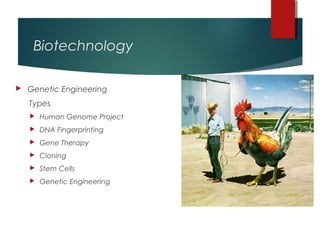
   Genetic Engineering
    Types
       Human Genome Project
       DNA Fingerprinting
       Gene Therapy
       Cloning
       Stem Cells
       Genetic Engineering
Human Genome Project
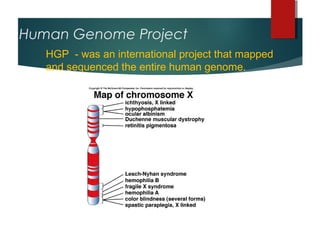
   HGP - was an international project that mapped
   and sequenced the entire human genome.
HGP Advantages


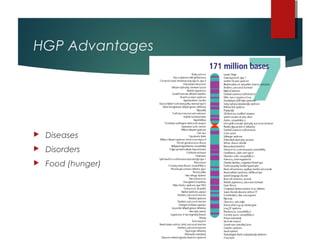
   Diseases
   Disorders
   Food (hunger)
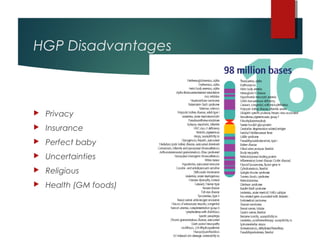
HGP Disadvantages


   Privacy
   Insurance
   Perfect baby
   Uncertainties
   Religious
   Health (GM foods)
How scientists mapped the human
genome

   DNA Sequencing -is a laboratory technique used to determine the exact
    sequence of bases (A, C, G, and T) in a DNA molecule
   The Employment of Restriction Fragment-Length Polymorphisms (RFLP) - DNA
    sequence recognized by restriction enzymes. These are bacterial enzymes
    used by scientists to cut DNA molecules at known locations.
   Yeast Artificial Chromosomes (YAC) - Yeast artificial chromosome (YAC) is a
    human-engineered DNA molecule used to clone DNA sequences in yeast
    cells
   Bacterial Artificial Chromosomes (BAC) - (BAC) is an engineered DNA
    molecule used to clone DNA sequences in bacterial cells
   The Polymerase Chain Reaction (PCR) - (PCR) is a laboratory technique used
    to amplify DNA sequences.
   Electrophoresis - a laboratory technique used to separate DNA, RNA, or
    protein molecules based on their size and electrical charge.
   http://www.pbs.org/wgbh/nova/genome/sequ_flash.html
Genetic Engineering

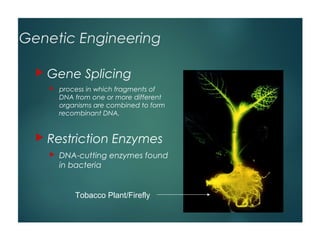
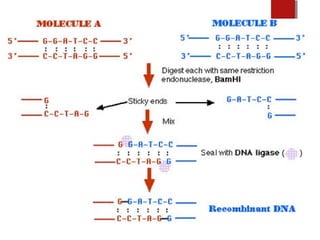
   Gene       Splicing
       process in which fragments of
        DNA from one or more different
        organisms are combined to form
        recombinant DNA.


   Restriction       Enzymes
       DNA-cutting enzymes found
        in bacteria


            Tobacco Plant/Firefly
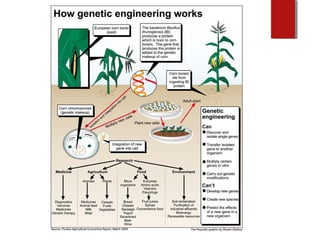
Genetic Engineering
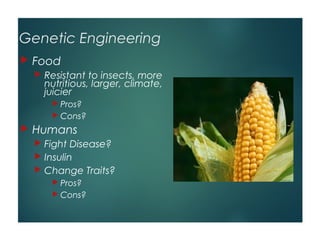
   Food
       Resistant to insects, more
        nutritious, larger, climate,
        juicier
          Pros?
          Cons?

   Humans
     Fight Disease?
     Insulin
     Change Traits?
          Pros?
          Cons?
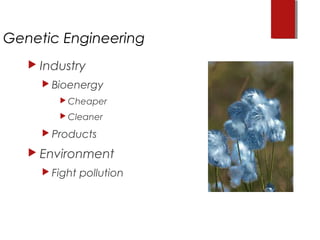
Genetic Engineering
    Industry
      Bioenergy
         Cheaper

         Cleaner

      Products

    Environment
      Fight   pollution
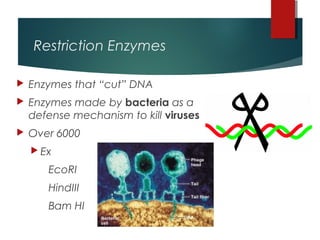
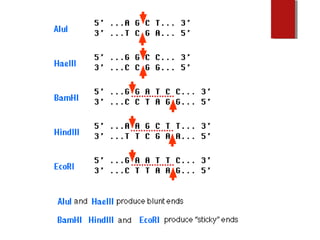
Restriction Enzymes

   Enzymes that “cut” DNA
   Enzymes made by bacteria as a
    defense mechanism to kill viruses
   Over 6000
     Ex

       EcoRI
       HindIII
       Bam HI
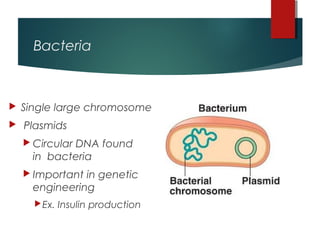
Bacteria


   Single large chromosome
   Plasmids
     Circular
             DNA found
      in bacteria
     Important in genetic
      engineering
       Ex.   Insulin production
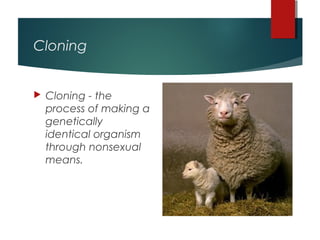
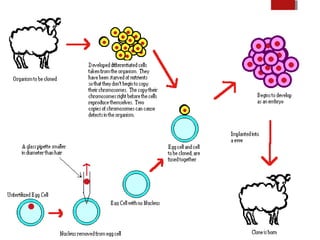
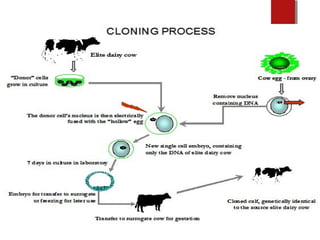
Cloning


   Cloning - the
    process of making a
    genetically
    identical organism
    through nonsexual
    means.
Cloning Advantages


 Multiplicity

 Food

 Extinction   (Jurassic Park)
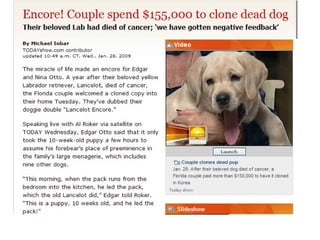
 Cloning   a loved one (Sixth Day)
Disadvantages


Organs    (Island)
Reducing    Biodiversity
Playing   God
Tempting    to clone humans?
Stem Cells


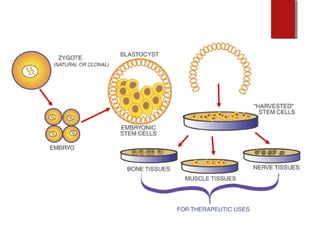
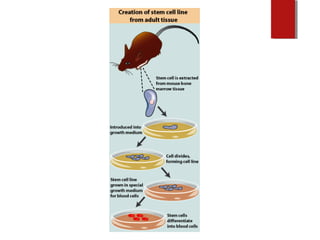
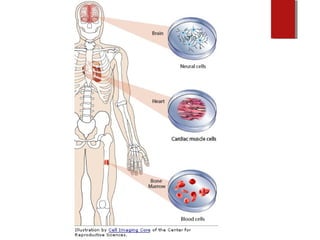
   cells with the potential to develop into many different
    types of cells in the body
   serve as a repair system for the body
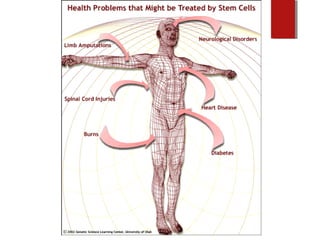
   may one day be used to make cells and tissues for
    therapy of many diseases, including Parkinson's disease,
    Alzheimer's disease, spinal cord injury, heart disease,
    diabetes and arthritis
Stem Cells


Health problems that might be treated
   Paralysis
   Disease
   http://www.youtube.com/watch?v=a9WB_PXjTBo
   http://www.youtube.com/watch?v=OFYSUPlZmcg
   http://www.youtube.com/watch?v=VUaCMIYYTNE
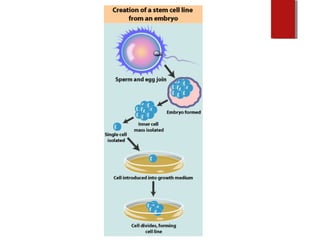
Stem Cell - is a "generic" cell that can
make exact copies of itself indefinitely.
                    
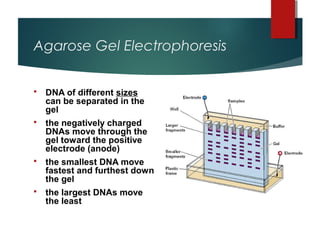
        Agarose Gel Electrophoresis


            DNA of different sizes
             can be separated in the
             gel
            the negatively charged
             DNAs move through the
             gel toward the positive
             electrode (anode)
            the smallest DNA move
             fastest and furthest down
             the gel 
            the largest DNAs move
             the least
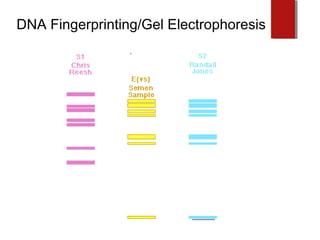
DNA Fingerprinting/Gel Electrophoresis
DNA - Public Knowledge &
    Crime

   DNA Fingerprinting/Gel Electrophoresis
   Privacy ex. employment opportunities
   Insurance
   Crime
   Paternity Tests


http://www.pbs.org/wgbh/nova/sheppard/labwave.html

Biotechnology

  • 1.
    Biotechnology  Genetic Engineering Types  Human Genome Project  DNA Fingerprinting  Gene Therapy  Cloning  Stem Cells  Genetic Engineering
  • 3.
    Human Genome Project HGP - was an international project that mapped and sequenced the entire human genome.
  • 4.
    HGP Advantages  Diseases  Disorders  Food (hunger)
  • 5.
    HGP Disadvantages  Privacy  Insurance  Perfect baby  Uncertainties  Religious  Health (GM foods)
  • 6.
    How scientists mappedthe human genome  DNA Sequencing -is a laboratory technique used to determine the exact sequence of bases (A, C, G, and T) in a DNA molecule  The Employment of Restriction Fragment-Length Polymorphisms (RFLP) - DNA sequence recognized by restriction enzymes. These are bacterial enzymes used by scientists to cut DNA molecules at known locations.  Yeast Artificial Chromosomes (YAC) - Yeast artificial chromosome (YAC) is a human-engineered DNA molecule used to clone DNA sequences in yeast cells  Bacterial Artificial Chromosomes (BAC) - (BAC) is an engineered DNA molecule used to clone DNA sequences in bacterial cells  The Polymerase Chain Reaction (PCR) - (PCR) is a laboratory technique used to amplify DNA sequences.  Electrophoresis - a laboratory technique used to separate DNA, RNA, or protein molecules based on their size and electrical charge.  http://www.pbs.org/wgbh/nova/genome/sequ_flash.html
  • 7.
    Genetic Engineering  Gene Splicing  process in which fragments of DNA from one or more different organisms are combined to form recombinant DNA.  Restriction Enzymes  DNA-cutting enzymes found in bacteria Tobacco Plant/Firefly
  • 12.
    Genetic Engineering  Food  Resistant to insects, more nutritious, larger, climate, juicier  Pros?  Cons?  Humans  Fight Disease?  Insulin  Change Traits?  Pros?  Cons?
  • 13.
    Genetic Engineering  Industry  Bioenergy  Cheaper  Cleaner  Products  Environment  Fight pollution
  • 22.
    Restriction Enzymes  Enzymes that “cut” DNA  Enzymes made by bacteria as a defense mechanism to kill viruses  Over 6000  Ex EcoRI HindIII Bam HI
  • 25.
    Bacteria  Single large chromosome  Plasmids  Circular DNA found in bacteria  Important in genetic engineering  Ex. Insulin production
  • 26.
    Cloning  Cloning - the process of making a genetically identical organism through nonsexual means.
  • 29.
    Cloning Advantages  Multiplicity Food  Extinction (Jurassic Park)  Cloning a loved one (Sixth Day)
  • 33.
    Disadvantages Organs (Island) Reducing Biodiversity Playing God Tempting to clone humans?
  • 34.
    Stem Cells  cells with the potential to develop into many different types of cells in the body  serve as a repair system for the body  may one day be used to make cells and tissues for therapy of many diseases, including Parkinson's disease, Alzheimer's disease, spinal cord injury, heart disease, diabetes and arthritis
  • 35.
    Stem Cells Health problemsthat might be treated  Paralysis  Disease  http://www.youtube.com/watch?v=a9WB_PXjTBo  http://www.youtube.com/watch?v=OFYSUPlZmcg  http://www.youtube.com/watch?v=VUaCMIYYTNE
  • 36.
    Stem Cell -is a "generic" cell that can make exact copies of itself indefinitely.
  • 42.
                           Agarose Gel Electrophoresis       DNA of different sizes can be separated in the gel  the negatively charged DNAs move through the gel toward the positive electrode (anode)  the smallest DNA move fastest and furthest down the gel   the largest DNAs move the least
  • 43.
  • 44.
    DNA - PublicKnowledge & Crime  DNA Fingerprinting/Gel Electrophoresis  Privacy ex. employment opportunities  Insurance  Crime  Paternity Tests http://www.pbs.org/wgbh/nova/sheppard/labwave.html