NANOBIOSENSORNANOBIOSENSOR
SS
Cagri Ozge TopalCagri Ozge Topal
OSU ECEN 5060 NanotechnologyOSU ECEN 5060 Nanotechnology
Abstract
The revolution of nanotechnology in molecular biology gives an
opportunity to detect and manipulate atoms and molecules at the
molecular and cellular level.
 Definition of Nanobiosensor
 History
 Types of Nanobiosensors
 Working Principle and Fabrication of Optical and FET Nanobiosensors
 Application Areas and Current Research
 Future Research
What is a Nanobiosensor?
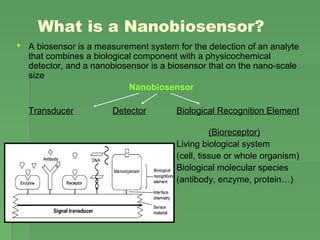
 A biosensor is a measurement system for the detection of an analyte
that combines a biological component with a physicochemical
detector, and a nanobiosensor is a biosensor that on the nano-scale
size
Nanobiosensor
Transducer Detector Biological Recognition Element
(Bioreceptor)
Living biological system
(cell, tissue or whole organism)
Biological molecular species
(antibody, enzyme, protein…)
Biosensor DevelopmentBiosensor Development
 1916 First report on the immobilization of proteins: adsorption of
invertase on activated charcoal.
 1956 Invention of the first oxygen electrode [Leland Clark]
 1962 First description of a biosensor: an amperometric enzyme
electrode for glucose. [Leland Clark, New York Academy of
Sciences Symposium]
 1969 First potentiometric biosensor: urease immobilized on an
ammonia electrode to detect urea. [Guilbault and Montalvo]
 1970 Invention of the Ion-Selective Field-Effect Transistor (ISFET).
 1972/5 First commercial biosensor: Yellow Springs Instruments
glucose biosensor.
 1976 First bedside artificial pancreas [Clemens et al.]
 1980 First fiber optic pH sensor for in vivo blood gases.
 1982 First fiber optic-based biosensor for glucose
 1983 First surface plasmon resonance (SPR) immunosensor.
 1987 Launch of the blood glucose biosensor[ MediSense]
TheoryTheory
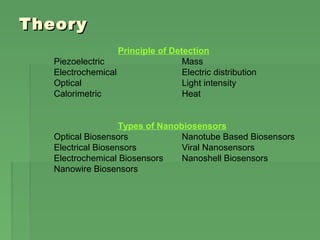
Principle of Detection
Piezoelectric Mass
Electrochemical Electric distribution
Optical Light intensity
Calorimetric Heat
Types of Nanobiosensors
Optical Biosensors Nanotube Based Biosensors
Electrical Biosensors Viral Nanosensors
Electrochemical Biosensors Nanoshell Biosensors
Nanowire Biosensors
TheoryTheory
 Optical Nanobiosensors
A sensor that uses light to detect the effect of a chemical on a
biological system. [Kopelman et al.]. [Kopelman et al.]
The small size of the optical fibers allow sensing intracelular
intercelular physiological and biological parameter in micro-
environment.
Two kind of fabrication
methods for optical fiber tips;
1) Heat and Pull Method
2) Chemical Etching
TheoryTheory
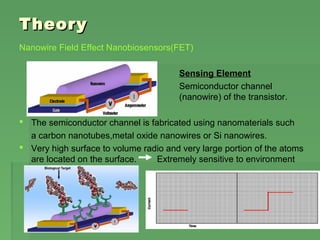
Nanowire Field Effect Nanobiosensors(FET)
Sensing Element
Semiconductor channel
(nanowire) of the transistor.
 The semiconductor channel is fabricated using nanomaterials such
a carbon nanotubes,metal oxide nanowires or Si nanowires.
 Very high surface to volume radio and very large portion of the atoms
are located on the surface. Extremely sensitive to environment
Applications ofApplications of
NanobiosensorsNanobiosensors
Biological Applications
 DNA Sensors; Genetic monitoring, disease
 Immunosensors; HIV, Hepatitis,other viral diseas, drug testing,
environmental monitoring…
 Cell-based Sensors; functional sensors, drug testing…
 Point-of-care sensors; blood, urine, electrolytes, gases, steroids,
drugs, hormones, proteins, other…
 Bacteria Sensors; (E-coli, streptococcus, other): food industry,
medicine, environmental, other.
 Enzyme sensors; diabetics, drug testing, other.
Environmental Applications
 Detection of environmental pollution and toxicity
 Agricultural monitoring
 Ground water screening
 Ocean monitoring
Future ApplicationFuture Application
Cancer Monitoring
 Nanobiosensors play a very important role for early cancer detection in
body fluids.
 The sensor is coated with a cancer-specific antibody or other
biorecognation ligands. The capture of a cancer cell or a target protein
yields electrical, optical or mechanical signal for detection. [Professor
Calum McNeil detection of cancer proteins that cause MRSA]
Identification of Biomarkers
↓
Validation of Cancer Biomarkers
↓
Cancer Biomarkers
↓
Ligands / Probes Developments
↓
Cancer Diagnostics Biosensor ← Detector
↓
Point of Care Cancer Diagnostics
ReferencesReferences
 Cullum, B.(2000). The development of optical nanosensors for
biological measurements. Trends in Biotechnology, Vol 18,388-393.
 Vo-Dihn, T.(2002).Nanobiosensors: Probing the sanctuary of
individual living cells. Journal of Cellular Biochemistry Supplement,
Vol. 39, 154-161
 Pathak, P. et al.(2007). Cancer Research - Nanoparticles,
nanobiosensors and their use in cancer research. Journal of
Nanotechnology Online, Vol.3, 1-14.
 Rogers, K.(2006). Recent advances in biosensor techniques for
environmental monitoring. Analitica Chimica Acta. Vol. 568(1-2),
599-624.
 Li, C. (2005).Complementary Detection of Prostate-Specific Antigen
Using In2O3 Nanowires and Carbon Nanotubes. Journal of the
American Chemical Society, Vol.127(36), 12484-12485.

Biosensor

  • 1.
    NANOBIOSENSORNANOBIOSENSOR SS Cagri Ozge TopalCagriOzge Topal OSU ECEN 5060 NanotechnologyOSU ECEN 5060 Nanotechnology
  • 2.
    Abstract The revolution ofnanotechnology in molecular biology gives an opportunity to detect and manipulate atoms and molecules at the molecular and cellular level.  Definition of Nanobiosensor  History  Types of Nanobiosensors  Working Principle and Fabrication of Optical and FET Nanobiosensors  Application Areas and Current Research  Future Research
  • 3.
    What is aNanobiosensor?  A biosensor is a measurement system for the detection of an analyte that combines a biological component with a physicochemical detector, and a nanobiosensor is a biosensor that on the nano-scale size Nanobiosensor Transducer Detector Biological Recognition Element (Bioreceptor) Living biological system (cell, tissue or whole organism) Biological molecular species (antibody, enzyme, protein…)
  • 4.
    Biosensor DevelopmentBiosensor Development 1916 First report on the immobilization of proteins: adsorption of invertase on activated charcoal.  1956 Invention of the first oxygen electrode [Leland Clark]  1962 First description of a biosensor: an amperometric enzyme electrode for glucose. [Leland Clark, New York Academy of Sciences Symposium]  1969 First potentiometric biosensor: urease immobilized on an ammonia electrode to detect urea. [Guilbault and Montalvo]  1970 Invention of the Ion-Selective Field-Effect Transistor (ISFET).  1972/5 First commercial biosensor: Yellow Springs Instruments glucose biosensor.  1976 First bedside artificial pancreas [Clemens et al.]  1980 First fiber optic pH sensor for in vivo blood gases.  1982 First fiber optic-based biosensor for glucose  1983 First surface plasmon resonance (SPR) immunosensor.  1987 Launch of the blood glucose biosensor[ MediSense]
  • 5.
    TheoryTheory Principle of Detection PiezoelectricMass Electrochemical Electric distribution Optical Light intensity Calorimetric Heat Types of Nanobiosensors Optical Biosensors Nanotube Based Biosensors Electrical Biosensors Viral Nanosensors Electrochemical Biosensors Nanoshell Biosensors Nanowire Biosensors
  • 6.
    TheoryTheory  Optical Nanobiosensors Asensor that uses light to detect the effect of a chemical on a biological system. [Kopelman et al.]. [Kopelman et al.] The small size of the optical fibers allow sensing intracelular intercelular physiological and biological parameter in micro- environment. Two kind of fabrication methods for optical fiber tips; 1) Heat and Pull Method 2) Chemical Etching
  • 7.
    TheoryTheory Nanowire Field EffectNanobiosensors(FET) Sensing Element Semiconductor channel (nanowire) of the transistor.  The semiconductor channel is fabricated using nanomaterials such a carbon nanotubes,metal oxide nanowires or Si nanowires.  Very high surface to volume radio and very large portion of the atoms are located on the surface. Extremely sensitive to environment
  • 8.
    Applications ofApplications of NanobiosensorsNanobiosensors BiologicalApplications  DNA Sensors; Genetic monitoring, disease  Immunosensors; HIV, Hepatitis,other viral diseas, drug testing, environmental monitoring…  Cell-based Sensors; functional sensors, drug testing…  Point-of-care sensors; blood, urine, electrolytes, gases, steroids, drugs, hormones, proteins, other…  Bacteria Sensors; (E-coli, streptococcus, other): food industry, medicine, environmental, other.  Enzyme sensors; diabetics, drug testing, other. Environmental Applications  Detection of environmental pollution and toxicity  Agricultural monitoring  Ground water screening  Ocean monitoring
  • 9.
    Future ApplicationFuture Application CancerMonitoring  Nanobiosensors play a very important role for early cancer detection in body fluids.  The sensor is coated with a cancer-specific antibody or other biorecognation ligands. The capture of a cancer cell or a target protein yields electrical, optical or mechanical signal for detection. [Professor Calum McNeil detection of cancer proteins that cause MRSA] Identification of Biomarkers ↓ Validation of Cancer Biomarkers ↓ Cancer Biomarkers ↓ Ligands / Probes Developments ↓ Cancer Diagnostics Biosensor ← Detector ↓ Point of Care Cancer Diagnostics
  • 10.
    ReferencesReferences  Cullum, B.(2000).The development of optical nanosensors for biological measurements. Trends in Biotechnology, Vol 18,388-393.  Vo-Dihn, T.(2002).Nanobiosensors: Probing the sanctuary of individual living cells. Journal of Cellular Biochemistry Supplement, Vol. 39, 154-161  Pathak, P. et al.(2007). Cancer Research - Nanoparticles, nanobiosensors and their use in cancer research. Journal of Nanotechnology Online, Vol.3, 1-14.  Rogers, K.(2006). Recent advances in biosensor techniques for environmental monitoring. Analitica Chimica Acta. Vol. 568(1-2), 599-624.  Li, C. (2005).Complementary Detection of Prostate-Specific Antigen Using In2O3 Nanowires and Carbon Nanotubes. Journal of the American Chemical Society, Vol.127(36), 12484-12485.