
Presented By-
Deedarul Hyder Sani
Reg. No. – 2014431001
Department of Genetic Engineering & Biotechnology
Shahjalal University Of Science and Technology
Biopharming and Edible Vaccine Production
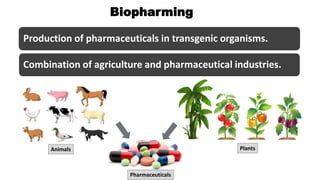
Biopharming
Production of pharmaceuticals in transgenic organisms.
Combination of agriculture and pharmaceutical industries.
Animals Plants
Pharmaceuticals
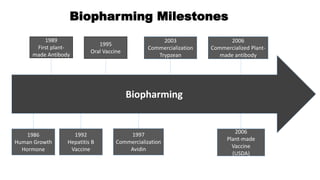
Biopharming Milestones
Biopharming
1989
First plant-
made Antibody
1986
Human Growth
Hormone
1992
Hepatitis B
Vaccine
2006
Commercialized Plant-
made antibody
2003
Commercialization
Trypzean
1995
Oral Vaccine
2006
Plant-made
Vaccine
(USDA)
1997
Commercialization
Avidin
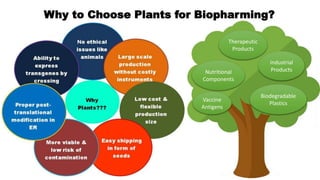
Why to Choose Plants for Biopharming?
Therapeutic
Products
Nutritional
Components
Biodegradable
Plastics
Vaccine
Antigens
Industrial
Products
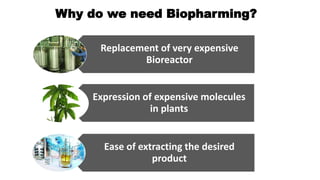
Why do we need Biopharming?
Replacement of very expensive
Bioreactor
Expression of expensive molecules
in plants
Ease of extracting the desired
product
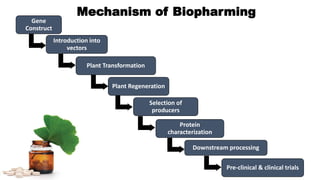
Gene
Construct
Introduction into
vectors
Plant Transformation
Plant Regeneration
Selection of
producers
Protein
characterization
Downstream processing
Pre-clinical & clinical trials
Mechanism of Biopharming
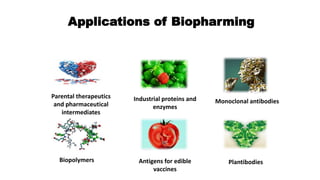
Applications of Biopharming
Parental therapeutics
and pharmaceutical
intermediates
Industrial proteins and
enzymes
Monoclonal antibodies
Biopolymers Antigens for edible
vaccines
Plantibodies
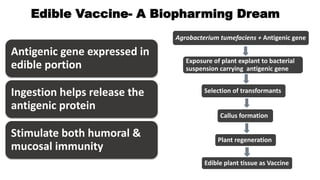
Edible Vaccine- A Biopharming Dream
Agrobacterium tumefaciens + Antigenic gene
Exposure of plant explant to bacterial
suspension carrying antigenic gene
Selection of transformants
Callus formation
Plant regeneration
Edible plant tissue as Vaccine
Antigenic gene expressed in
edible portion
Ingestion helps release the
antigenic protein
Stimulate both humoral &
mucosal immunity
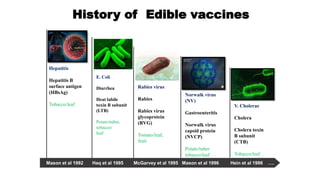
History of Edible vaccines
Mason et al 1992 Haq et al 1995 McGarvey et al 1995 Mason et al 1996 Hein et al 1996 ….
Hepatitis
Hepatitis B
surface antigen
(HBsAg)
Tobacco/leaf
Norwalk virus
(NV)
Gastroenteritis
Norwalk virus
capsid protein
(NVCP)
Potato/tuber
tobacco/leaf
Rabies virus
Rabies
Rabies virus
glycoprotein
(RVG)
Tomato/leaf,
fruit
V. Cholerae
Cholera
Cholera toxin
B subunit
(CTB)
Tobacco/leaf
E. Coli
Diarrhea
Heat labile
toxin B subunit
(LTB)
Potato/tuber,
tobacco/
leaf
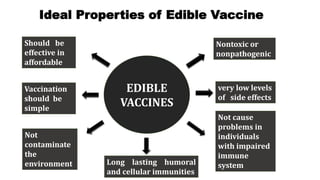
Ideal Properties of Edible Vaccine
EDIBLE
VACCINES
Nontoxic or
nonpathogenic
very low levels
of side effects
Not cause
problems in
individuals
with impaired
immune
systemLong lasting humoral
and cellular immunities
Vaccination
should be
simple
Not
contaminate
the
environment
Should be
effective in
affordable
11
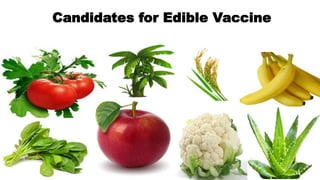
Candidates for Edible Vaccine
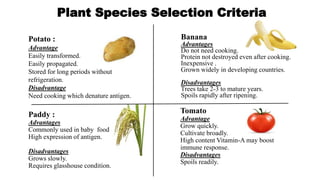
Potato :
Advantage
Easily transformed.
Easily propagated.
Stored for long periods without
refrigeration.
Disadvantage
Need cooking which denature antigen.
Banana
Advantages
Do not need cooking.
Protein not destroyed even after cooking.
Inexpensive .
Grown widely in developing countries.
Disadvantages
Trees take 2-3 to mature years.
Spoils rapidly after ripening.
Paddy :
Advantages
Commonly used in baby food.
High expression of antigen.
Disadvantages
Grows slowly.
Requires glasshouse condition.
Tomato
Advantage
Grow quickly.
Cultivate broadly.
High content Vitamin-A may boost
immune response.
Disadvantages
Spoils readily.
Plant Species Selection Criteria
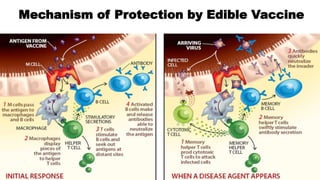
Mechanism of Protection by Edible Vaccine
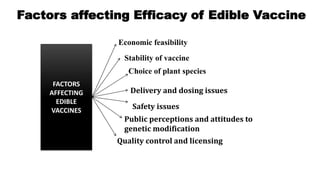
FACTORS
AFFECTING
EDIBLE
VACCINES
Economic feasibility
Stability of vaccine
Choice of plant species
Delivery and dosing issues
Safety issues
Public perceptions and attitudes to
genetic modification
Quality control and licensing
Factors affecting Efficacy of Edible Vaccine
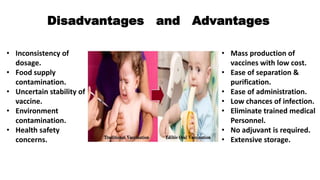
• Mass production of
vaccines with low cost.
• Ease of separation &
purification.
• Ease of administration.
• Low chances of infection.
• Eliminate trained medical
Personnel.
• No adjuvant is required.
• Extensive storage.
• Inconsistency of
dosage.
• Food supply
contamination.
• Uncertain stability of
vaccine.
• Environment
contamination.
• Health safety
concerns.
Disadvantages and Advantages
References-
• Charmi P et al, A Better Way For Immunization, Int J Curr Pharm Res,3(1):53-56
• Hafiz Esmael et al, Review on Edible Vaccine, Acad. J. Nutri, 4 (1): 40-49, 2015.
• Vyas et al, Edible Vaccines: A New Approach to Oral Immunization Ind.J. Biotech.,(7): 283-
294, 2008.
• Sambasiva Rao et al, Green Revolution Vaccines, Edible Vaccines, Afri. J.Biotech. 2(12), 679-
683, 2003.
• Swarnali Dasa et al, advances In Vaccination: A Review, Int.J. App.Pharm, 1(1), 1-21 2009.
• Akhilesh e al, Edible Vaccines: Let Thy Food Be Thy Medicine, Int.J. Pharmacolo Screen. 4(2):
105-108, 2014.
• Waghulkar e al, Fruit Derived Edible Vaccines: Natural Way for the Vaccination, Int.
J.Pharmtech Res.2 (3):2010, 2124-2127.
• Madhumita Naithani et al, Edible Vaccines-A Review, Inter. J. Of Pharmacotherapy, 4(1): 2014,
58-61.
• Chaitanya et al, Edible Vaccines, J. Med.1 (1):2006, 33-34.
• Jacob et al, Edible-Vaccines-Against-Veterinary-Parasitic-Diseases—Current-Status-And-
Future-Prospects, vaccines, 31:2013, 1879_1885
Thank you !! 

Biopharming vaccine

  • 1.
    Presented By- Deedarul HyderSani Reg. No. – 2014431001 Department of Genetic Engineering & Biotechnology Shahjalal University Of Science and Technology Biopharming and Edible Vaccine Production
  • 2.
    Biopharming Production of pharmaceuticalsin transgenic organisms. Combination of agriculture and pharmaceutical industries. Animals Plants Pharmaceuticals
  • 3.
    Biopharming Milestones Biopharming 1989 First plant- madeAntibody 1986 Human Growth Hormone 1992 Hepatitis B Vaccine 2006 Commercialized Plant- made antibody 2003 Commercialization Trypzean 1995 Oral Vaccine 2006 Plant-made Vaccine (USDA) 1997 Commercialization Avidin
  • 4.
    Why to ChoosePlants for Biopharming? Therapeutic Products Nutritional Components Biodegradable Plastics Vaccine Antigens Industrial Products
  • 5.
    Why do weneed Biopharming? Replacement of very expensive Bioreactor Expression of expensive molecules in plants Ease of extracting the desired product
  • 6.
    Gene Construct Introduction into vectors Plant Transformation PlantRegeneration Selection of producers Protein characterization Downstream processing Pre-clinical & clinical trials Mechanism of Biopharming
  • 7.
    Applications of Biopharming Parentaltherapeutics and pharmaceutical intermediates Industrial proteins and enzymes Monoclonal antibodies Biopolymers Antigens for edible vaccines Plantibodies
  • 8.
    Edible Vaccine- ABiopharming Dream Agrobacterium tumefaciens + Antigenic gene Exposure of plant explant to bacterial suspension carrying antigenic gene Selection of transformants Callus formation Plant regeneration Edible plant tissue as Vaccine Antigenic gene expressed in edible portion Ingestion helps release the antigenic protein Stimulate both humoral & mucosal immunity
  • 9.
    History of Ediblevaccines Mason et al 1992 Haq et al 1995 McGarvey et al 1995 Mason et al 1996 Hein et al 1996 …. Hepatitis Hepatitis B surface antigen (HBsAg) Tobacco/leaf Norwalk virus (NV) Gastroenteritis Norwalk virus capsid protein (NVCP) Potato/tuber tobacco/leaf Rabies virus Rabies Rabies virus glycoprotein (RVG) Tomato/leaf, fruit V. Cholerae Cholera Cholera toxin B subunit (CTB) Tobacco/leaf E. Coli Diarrhea Heat labile toxin B subunit (LTB) Potato/tuber, tobacco/ leaf
  • 10.
    Ideal Properties ofEdible Vaccine EDIBLE VACCINES Nontoxic or nonpathogenic very low levels of side effects Not cause problems in individuals with impaired immune systemLong lasting humoral and cellular immunities Vaccination should be simple Not contaminate the environment Should be effective in affordable
  • 11.
  • 12.
    Potato : Advantage Easily transformed. Easilypropagated. Stored for long periods without refrigeration. Disadvantage Need cooking which denature antigen. Banana Advantages Do not need cooking. Protein not destroyed even after cooking. Inexpensive . Grown widely in developing countries. Disadvantages Trees take 2-3 to mature years. Spoils rapidly after ripening. Paddy : Advantages Commonly used in baby food. High expression of antigen. Disadvantages Grows slowly. Requires glasshouse condition. Tomato Advantage Grow quickly. Cultivate broadly. High content Vitamin-A may boost immune response. Disadvantages Spoils readily. Plant Species Selection Criteria
  • 13.
    Mechanism of Protectionby Edible Vaccine
  • 14.
    FACTORS AFFECTING EDIBLE VACCINES Economic feasibility Stability ofvaccine Choice of plant species Delivery and dosing issues Safety issues Public perceptions and attitudes to genetic modification Quality control and licensing Factors affecting Efficacy of Edible Vaccine
  • 15.
    • Mass productionof vaccines with low cost. • Ease of separation & purification. • Ease of administration. • Low chances of infection. • Eliminate trained medical Personnel. • No adjuvant is required. • Extensive storage. • Inconsistency of dosage. • Food supply contamination. • Uncertain stability of vaccine. • Environment contamination. • Health safety concerns. Disadvantages and Advantages
  • 16.
    References- • Charmi Pet al, A Better Way For Immunization, Int J Curr Pharm Res,3(1):53-56 • Hafiz Esmael et al, Review on Edible Vaccine, Acad. J. Nutri, 4 (1): 40-49, 2015. • Vyas et al, Edible Vaccines: A New Approach to Oral Immunization Ind.J. Biotech.,(7): 283- 294, 2008. • Sambasiva Rao et al, Green Revolution Vaccines, Edible Vaccines, Afri. J.Biotech. 2(12), 679- 683, 2003. • Swarnali Dasa et al, advances In Vaccination: A Review, Int.J. App.Pharm, 1(1), 1-21 2009. • Akhilesh e al, Edible Vaccines: Let Thy Food Be Thy Medicine, Int.J. Pharmacolo Screen. 4(2): 105-108, 2014. • Waghulkar e al, Fruit Derived Edible Vaccines: Natural Way for the Vaccination, Int. J.Pharmtech Res.2 (3):2010, 2124-2127. • Madhumita Naithani et al, Edible Vaccines-A Review, Inter. J. Of Pharmacotherapy, 4(1): 2014, 58-61. • Chaitanya et al, Edible Vaccines, J. Med.1 (1):2006, 33-34. • Jacob et al, Edible-Vaccines-Against-Veterinary-Parasitic-Diseases—Current-Status-And- Future-Prospects, vaccines, 31:2013, 1879_1885
  • 17.

Editor's Notes

  • #4 TrypZean ® is recombinant bovine trypsin expressed in corn. Avidin is a tetrameric biotin-binding protein.
  • #8 Plantbodies=mcAb produced in plants.
  • #9 A vaccine is a biological preparation that improves immunity to a particular disease. mucosal immune system is responsible for protecting the mucosal surfaces of the respiratory tract, nasal passages, and the intestines-1st line of defense. Vaccinated crops are consumed, digested, and makes its way into the blood stream. antigens in transgenic plants are delivered through bio-encapsulation to protects them from gastric secretions bio-encapsulation breaks up in the intestines and antigens released taken up by M cells in the intestinal lining that overlie peyer's patches and gut-associated lymphoid tissue (GALT) passed on to macrophages, other antigen-presenting cells; and local lymphocyte populations, generating serum IgG, IgE responses, local IgA response and memory cells promptly neutralizes the attack by the real infectious agent
  • #14 M cells(microfold) are specialized epithelial cells of the mucosa-associated lymphoid tissues. A characteristic of M cells is that they transport antigens from the lumen to cells of the immune system, thereby initiating an immune response. M cells express class II MHC