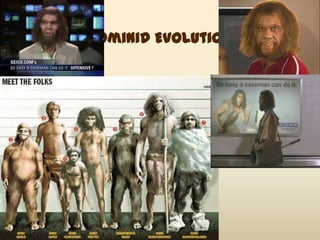
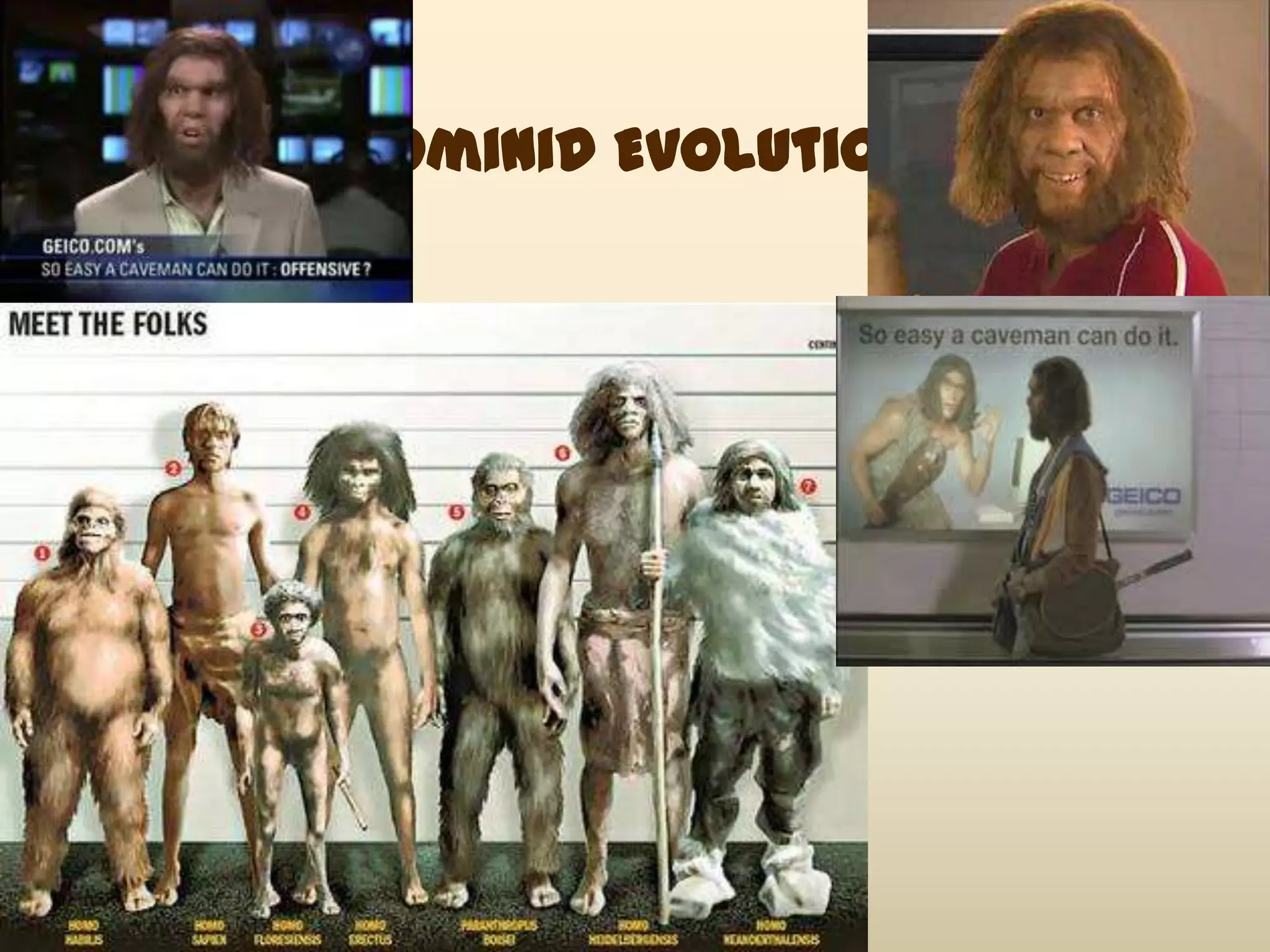
Hominid Evolution
Hominid Evolution
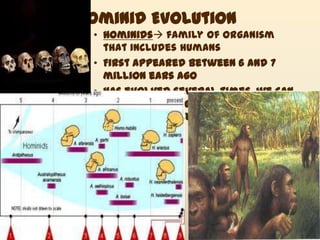
 • Hominids family of organism
   that includes humans
 • First appeared between 6 and 7
   million ears ago
 • Has evolved several times..we can
   tell by looking at fossil
   evidence…Skulls in particular
Hominid Evolution
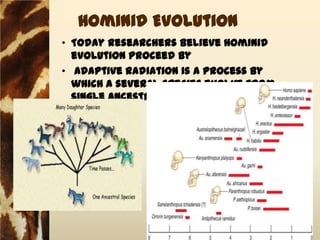
• Today researchers believe Hominid
  evolution proceed by
• Adaptive radiation is a process by
  which a several species evolve from
  single ancestral species.
Hominid Evolution
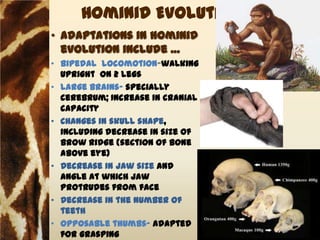
• Adaptations in hominid
  evolution include …
• Bipedal locomotion-walking
  upright on 2 legs
• Large brains- specially
  cerebrum; Increase in cranial
  capacity
• Changes in skull shape,
  including decrease in size of
  brow ridge (section of bone
  above eye)
• Decrease in jaw size and
  angle at which jaw
  protrudes from face
• Decrease in the number of
  teeth
• Opposable thumbs- adapted
  for grasping
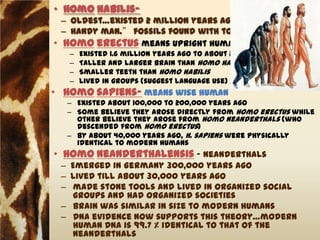
• Homo habilis-
  – Oldest…existed 2 million years ago
  – handy man.” fossils found with tools
• Homo erectus means upright human
   –   Existed 1.6 million years ago to about 200,000 years ago
   –   Taller and larger brain than Homo habilis
   –   Smaller teeth than Homo habilis
   –   Lived in groups (suggest language use) and used fire
• Homo sapiens- means wise human
  – Existed about 100,000 to 200,000 years ago
  – Some believe they arose directly from Homo erectus while
    other believe they arose from Homo Neanderthals (who
    descended from Homo erectus)
  – By about 40,000 years ago, H. sapiens were physically
    identical to modern humans
• Homo neanderthalensis - Neanderthals
 – Emerged in Germany 300,000 years ago
 – Lived till about 30,000 years ago
 – made stone tools and lived in organized social
    groups and had organized societies
 – Brain was similar in size to modern humans
 – DNA evidence now supports this theory…modern
    human DNA is 99.7 % identical to that of the
    Neanderthals
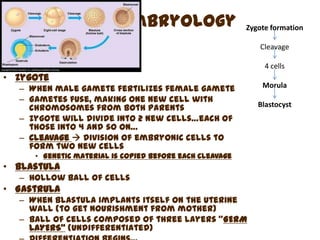
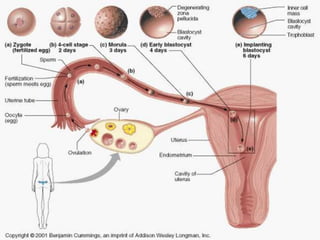
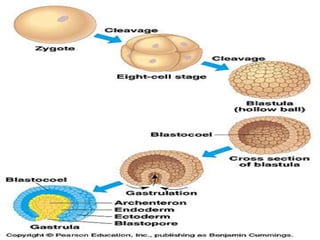
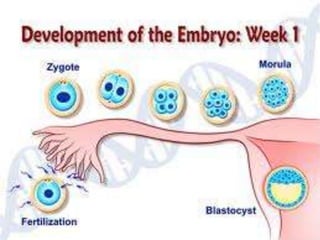
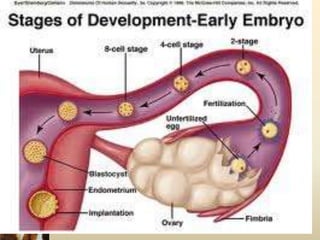
Embryology                     Zygote formation

                                                            Cleavage

                                                              4 cells
• Zygote
  – When male gamete fertilizes female gamete                Morula
  – Gametes fuse, making one new cell with
    chromosomes from both parents                           Blastocyst
  – Zygote will divide into 2 new cells…each of
    those into 4 and so on…
  – Cleavage  division of embryonic cells to
    form two new cells
     • Genetic material is copied before each cleavage
• Blastula
  – Hollow ball of cells
• Gastrula
  – When blastula implants itself on the uterine
    wall (to get nourishment from mother)
  – Ball of cells composed of three layers “GERM
    LAYERS” (undifferentiated)
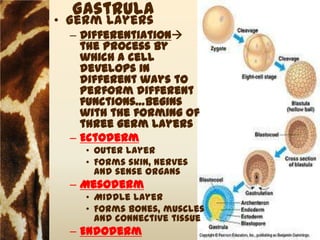
Gastrula
• Germ layers
  – Differentiation
    the process by
    which a cell
    develops in
    different ways to
    perform different
    functions…begins
    with the forming of
    three germ layers
  – Ectoderm
    • Outer layer
    • Forms skin, nerves
      and sense organs
  – Mesoderm
    • Middle layer
    • Forms bones, muscles
      and connective tissue
  – Endoderm
Fetus
• When the structures of the
  developing embryo have
  become distinguished
• Cells have differentiated into
  their permanent role in that
  organism
Evolution part 3
Evolution part 3
Evolution part 3

Evolution part 3

  • 1.
  • 2.
    Hominid Evolution •Hominids family of organism that includes humans • First appeared between 6 and 7 million ears ago • Has evolved several times..we can tell by looking at fossil evidence…Skulls in particular
  • 3.
    Hominid Evolution • Todayresearchers believe Hominid evolution proceed by • Adaptive radiation is a process by which a several species evolve from single ancestral species.
  • 4.
    Hominid Evolution • Adaptationsin hominid evolution include … • Bipedal locomotion-walking upright on 2 legs • Large brains- specially cerebrum; Increase in cranial capacity • Changes in skull shape, including decrease in size of brow ridge (section of bone above eye) • Decrease in jaw size and angle at which jaw protrudes from face • Decrease in the number of teeth • Opposable thumbs- adapted for grasping
  • 6.
    • Homo habilis- – Oldest…existed 2 million years ago – handy man.” fossils found with tools • Homo erectus means upright human – Existed 1.6 million years ago to about 200,000 years ago – Taller and larger brain than Homo habilis – Smaller teeth than Homo habilis – Lived in groups (suggest language use) and used fire • Homo sapiens- means wise human – Existed about 100,000 to 200,000 years ago – Some believe they arose directly from Homo erectus while other believe they arose from Homo Neanderthals (who descended from Homo erectus) – By about 40,000 years ago, H. sapiens were physically identical to modern humans • Homo neanderthalensis - Neanderthals – Emerged in Germany 300,000 years ago – Lived till about 30,000 years ago – made stone tools and lived in organized social groups and had organized societies – Brain was similar in size to modern humans – DNA evidence now supports this theory…modern human DNA is 99.7 % identical to that of the Neanderthals
  • 8.
    Embryology Zygote formation Cleavage 4 cells • Zygote – When male gamete fertilizes female gamete Morula – Gametes fuse, making one new cell with chromosomes from both parents Blastocyst – Zygote will divide into 2 new cells…each of those into 4 and so on… – Cleavage  division of embryonic cells to form two new cells • Genetic material is copied before each cleavage • Blastula – Hollow ball of cells • Gastrula – When blastula implants itself on the uterine wall (to get nourishment from mother) – Ball of cells composed of three layers “GERM LAYERS” (undifferentiated)
  • 10.
    Gastrula • Germ layers – Differentiation the process by which a cell develops in different ways to perform different functions…begins with the forming of three germ layers – Ectoderm • Outer layer • Forms skin, nerves and sense organs – Mesoderm • Middle layer • Forms bones, muscles and connective tissue – Endoderm
  • 11.
    Fetus • When thestructures of the developing embryo have become distinguished • Cells have differentiated into their permanent role in that organism

Editor's Notes

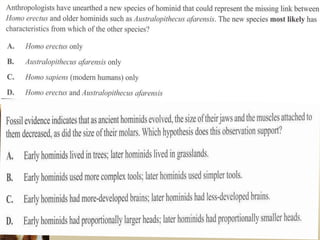
  • #8 Answers:D. Homo erectus and Australopithecus afarensis