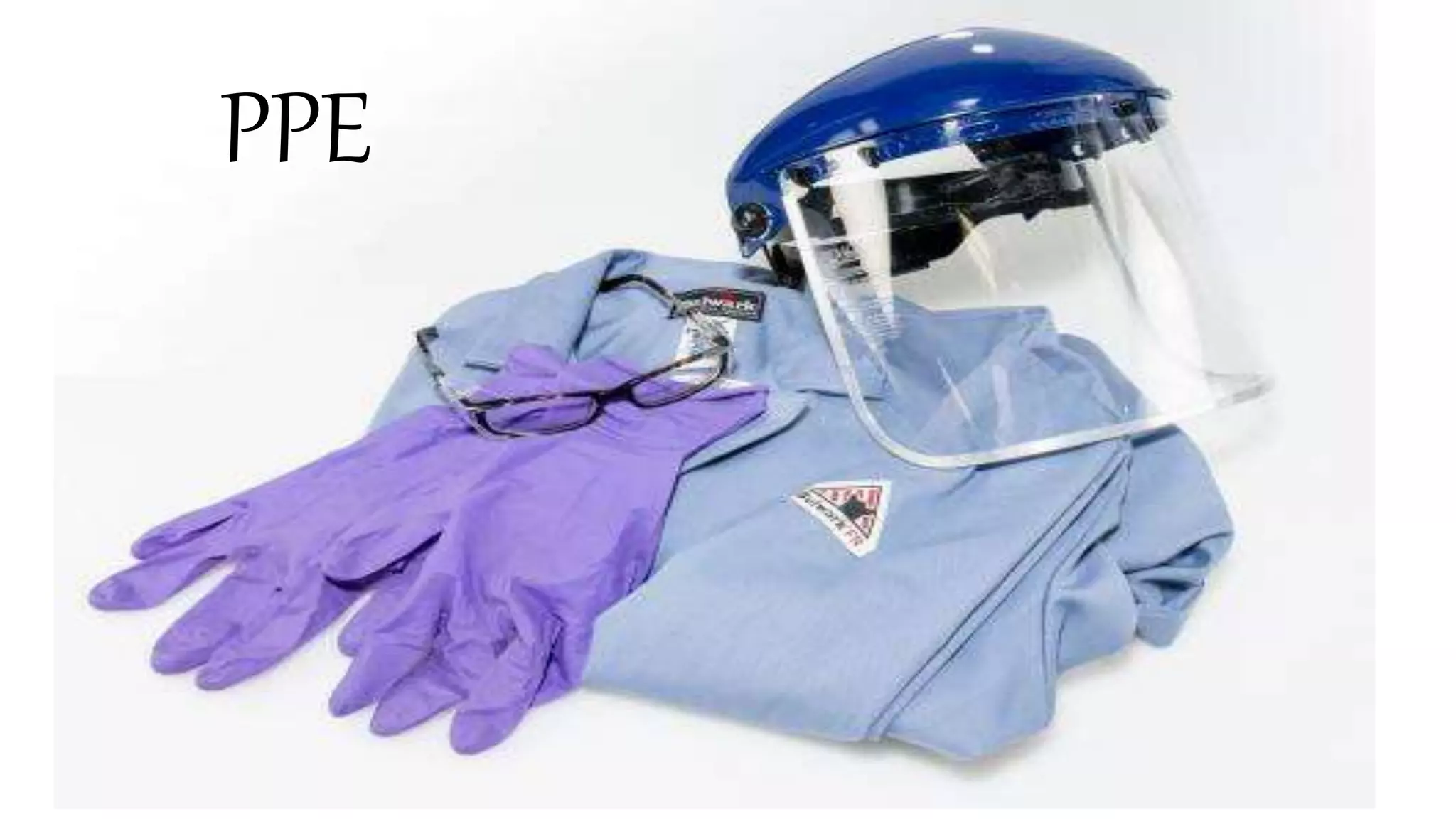
PPE
Personal protective equipment's
Mr.Thangapandi.MMSc (nursing) I ST YEAR
INTRODUCTION:
As a nurse you play a vital role in preventing the
transmission of infection. Most infection control measures
are independent nursing activities. You do not need an
order for them; you do need theoretical knowledge in
medical and surgical aseptic techniques.
DEFINITION:
Personal protective equipment is refers to protective
clothing, goggles or other garments or equipment's designed to
protect that wearer’s body from injury or infection.
Personal protective equipment(PPE) is a specialised
clothing or equipment worn by employees for protection against
health effects & safety hazards. It is designed to protect many
parts ie,.. Eyes, head, face, hand, feet, ear.
PURPOSE:
* TO reduce the risk of transmission of microorganism to
patient.
* To reduce risk of cross infection.
* To reduce the risk of transmission of infectious agent to
oneself.
* To prevent cross infections.
* To prevent wound infection post operatively.
* To prevent dispersal of droplet from wearer to
environment & patient.
* To prevent contamination of sterile field.
* To enhance easy handling of sterile equipment's.
Factorsinfluencingppeselection
1. Durability and appropriateness for the task.
2. Fit
3. Type of exposure anticipation
Splash/spray various touch.
Category of isolation precautions.
TYPES OF PERSONALPROTECTION
> RESPIRATORY PROTECTION.
> EYE PROTECTION.
> SKIN PROTECTION.
> HAND PROTECTION.
> FEET PEOTECTION.
RESPIRATORY
PROTECTION:
 Wear full face protection
(with nose & mouth
covered) spraying of blood
or body fluids.
EYE
PROTECTION;
 Use either special
glasses or goggles
when performing
procedures that
generate splash.
BODY
PROTECTION;
 Use apron to prevent
the transmission of
pathogens by direct &
indirect contact, & it is
to prevent soiling
clothes during contact
with the patient.
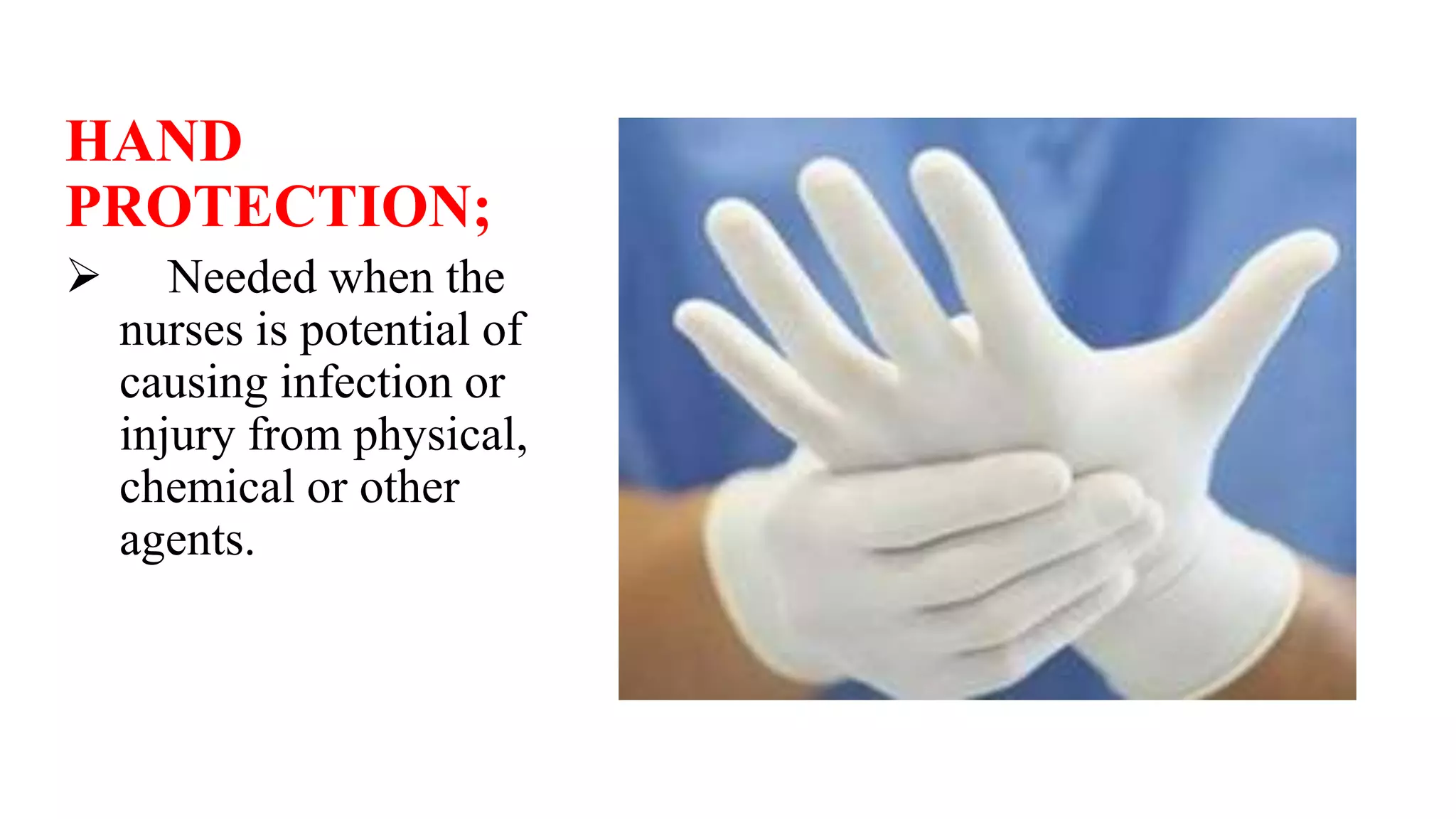
HAND
PROTECTION;
 Needed when the
nurses is potential of
causing infection or
injury from physical,
chemical or other
agents.
FEET
PROTECTION;
 Needed when the
nurse hazards that
have potential
cause a infection or
injury from floor.
PLACETO USE PPE
Role of infection control professional.
Specimen collection.
Bagging trash or linen.
Transporting patients.
Surgical asepsis.
Patient education.
ROLE OF INFECTION CONTROL
PROFFESSIONALS
An infection control professional is a valuable resource
for assisting in controlling HAI’s. These professionals are
specially trained in infection prevention & control.
SPECIMEN COLLECTION
Many laboratory studies are often necessary.
When a patient is suspected of having an infectious or
common disease.
BAGGING TRASH OR LINEN
While bagging contaminated items prevent accidental
exposure of personal & contaminated of the surrounding
environment.
TRANSPORTING PATIENT
Before transferring patients to wheel chairs or stretchers,
give them a clean gown to serve as robes.
SURGICAL ASEPSIS
Surgical asepsis or sterile techniques prevents
contamination of an open wound , serves to isolate the
operative area from unsterile environment , maintain a sterile
field for surgery.
PATIENT EDUCATION
The patient need to learn to use infection prevention &
control practice at home. Preventive technique becomes almost
second nature to the nurse who practices it daily.
Key points about ppe
• Done before contact with the patient, generally before
entering the room
• Use careful don’t spread contamination.
• Remove and discard carefully, either at the doorway or
immediately outside patient room; remove respirator outside
room.
• Immediate perform hand hygiene.
Protective equipment's;
Gloves
Gown
Apron
Face mask
Eye wear
Face shields
GLOVES
ALWAYES WEAR GLOVES WHEN,
• Direct contact with body fluids is anticipated [ nose bleeds,
bleeding, abrasions, et.,,]
• Handling clothes solid by urine ,faeces, vomit, or blood
• Diapering children.
HOW TO DON GLOVES
oGloves last
oSelect correct type & size
oInsert hand into gloves
oExtent gloves over isolation gown cuffs
IT IS ONE OF
One use / reuse
If gloves not immediately available, use barring such as paper
bowels.
When removing peal off hands & roll gloves outside.
Discard gloves in lined trash container
Wash hands after removing gloves.
MASKS / PROTECTIVE EYE WEAR
MUST BE USED WHEN;
• During surgical operations to protect wound from sheaf
breathings
• Masks must be of good quality, property fixed on mouth &
nasal openings.
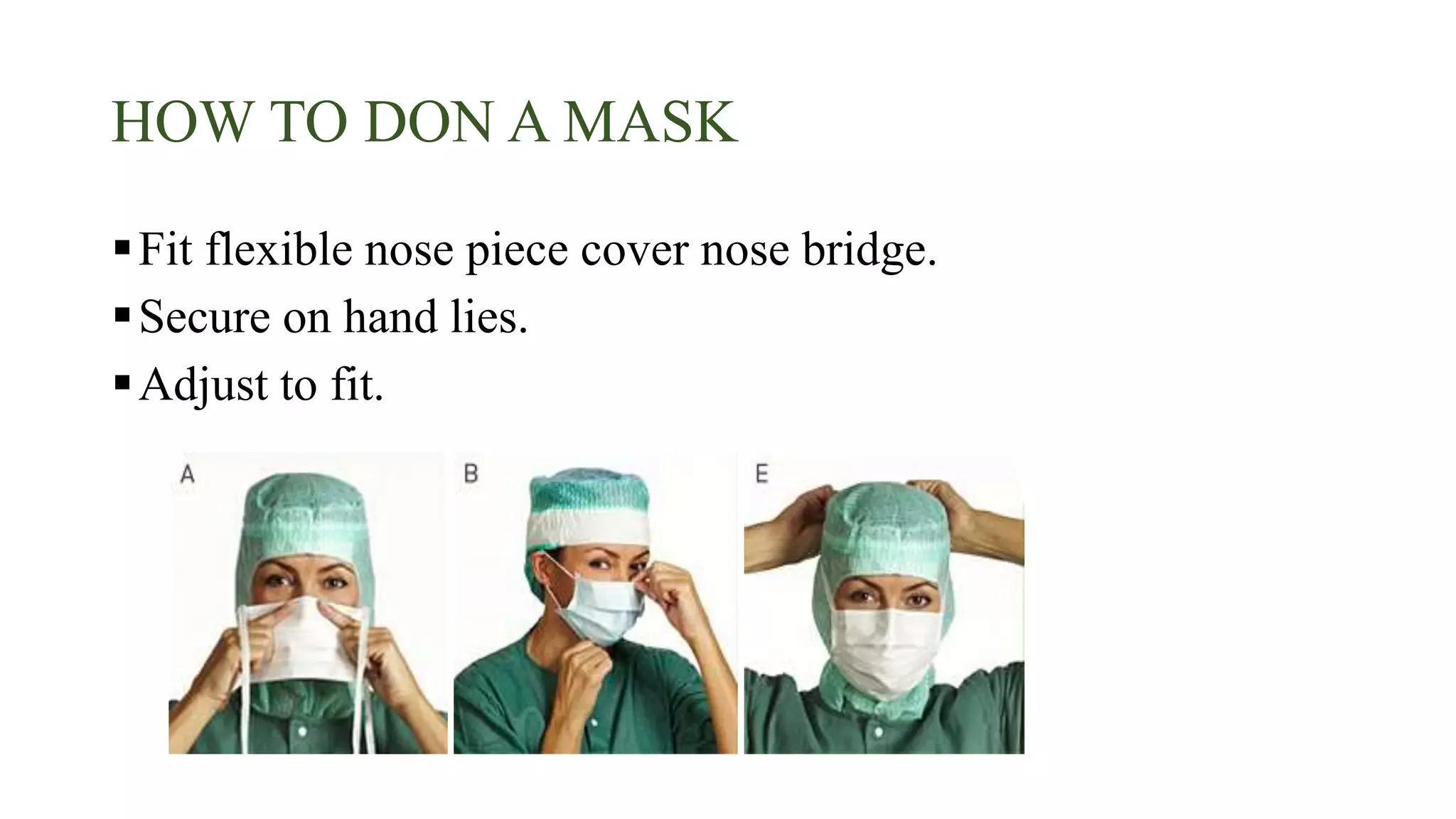
HOW TO DON A MASK
Fit flexible nose piece cover nose bridge.
Secure on hand lies.
Adjust to fit.
HOW TO DON EYE & FACE PROTECTION
Position the goggles over eyes and secure to the head using
the ear piece or headband.
Portion face shield over face & secure on brow headband.
Adjust to fit comfortly.
GOWNS / APRONS
Gowns may be cloth or paper,
cloth gowns are reusable.
paper gowns are disposal.
Some clinical sites provide gowns to clients for physical
examination.
A clean, non sterile gown protest skin & prevent soiling
clothing during procedures.
Follow the procedures on your clinical sits.
HOW TO DON A GOWN
 Select appropriate type & size.
 Open with dry hand.
 Let gown unfold.
 Open to locate sleeve armholes.
 Slip arm into sleeves.
 Hold arms out and slightly up.
 Circulator pulls gown on.
 It gown is too small, to use another gown
one in front
one in back
HOW TO SAFELY USE PPE
Keep gloves hands away from face.
Avoid touching or adjusting other PPE.
Remove gloves it they become lowing perform hand wash
before.
Donning new gloves.
Limit surface & items could be touched.
conclusion
By using PPE we can prevent from infection. PPE is a
standard protocol of infection control.
THANK
YOU

PPE

  • 1.
  • 2.
  • 3.
    INTRODUCTION: As a nurseyou play a vital role in preventing the transmission of infection. Most infection control measures are independent nursing activities. You do not need an order for them; you do need theoretical knowledge in medical and surgical aseptic techniques.
  • 4.
    DEFINITION: Personal protective equipmentis refers to protective clothing, goggles or other garments or equipment's designed to protect that wearer’s body from injury or infection. Personal protective equipment(PPE) is a specialised clothing or equipment worn by employees for protection against health effects & safety hazards. It is designed to protect many parts ie,.. Eyes, head, face, hand, feet, ear.
  • 5.
    PURPOSE: * TO reducethe risk of transmission of microorganism to patient. * To reduce risk of cross infection. * To reduce the risk of transmission of infectious agent to oneself. * To prevent cross infections. * To prevent wound infection post operatively. * To prevent dispersal of droplet from wearer to environment & patient. * To prevent contamination of sterile field. * To enhance easy handling of sterile equipment's.
  • 6.
    Factorsinfluencingppeselection 1. Durability andappropriateness for the task. 2. Fit 3. Type of exposure anticipation Splash/spray various touch. Category of isolation precautions.
  • 7.
    TYPES OF PERSONALPROTECTION >RESPIRATORY PROTECTION. > EYE PROTECTION. > SKIN PROTECTION. > HAND PROTECTION. > FEET PEOTECTION.
  • 8.
    RESPIRATORY PROTECTION:  Wear fullface protection (with nose & mouth covered) spraying of blood or body fluids.
  • 9.
    EYE PROTECTION;  Use eitherspecial glasses or goggles when performing procedures that generate splash.
  • 10.
    BODY PROTECTION;  Use apronto prevent the transmission of pathogens by direct & indirect contact, & it is to prevent soiling clothes during contact with the patient.
  • 11.
    HAND PROTECTION;  Needed whenthe nurses is potential of causing infection or injury from physical, chemical or other agents.
  • 12.
    FEET PROTECTION;  Needed whenthe nurse hazards that have potential cause a infection or injury from floor.
  • 13.
    PLACETO USE PPE Roleof infection control professional. Specimen collection. Bagging trash or linen. Transporting patients. Surgical asepsis. Patient education.
  • 14.
    ROLE OF INFECTIONCONTROL PROFFESSIONALS An infection control professional is a valuable resource for assisting in controlling HAI’s. These professionals are specially trained in infection prevention & control.
  • 15.
    SPECIMEN COLLECTION Many laboratorystudies are often necessary. When a patient is suspected of having an infectious or common disease.
  • 16.
    BAGGING TRASH ORLINEN While bagging contaminated items prevent accidental exposure of personal & contaminated of the surrounding environment.
  • 17.
    TRANSPORTING PATIENT Before transferringpatients to wheel chairs or stretchers, give them a clean gown to serve as robes.
  • 18.
    SURGICAL ASEPSIS Surgical asepsisor sterile techniques prevents contamination of an open wound , serves to isolate the operative area from unsterile environment , maintain a sterile field for surgery.
  • 19.
    PATIENT EDUCATION The patientneed to learn to use infection prevention & control practice at home. Preventive technique becomes almost second nature to the nurse who practices it daily.
  • 20.
    Key points aboutppe • Done before contact with the patient, generally before entering the room • Use careful don’t spread contamination. • Remove and discard carefully, either at the doorway or immediately outside patient room; remove respirator outside room. • Immediate perform hand hygiene.
  • 21.
  • 22.
    GLOVES ALWAYES WEAR GLOVESWHEN, • Direct contact with body fluids is anticipated [ nose bleeds, bleeding, abrasions, et.,,] • Handling clothes solid by urine ,faeces, vomit, or blood • Diapering children.
  • 23.
    HOW TO DONGLOVES oGloves last oSelect correct type & size oInsert hand into gloves oExtent gloves over isolation gown cuffs
  • 24.
    IT IS ONEOF One use / reuse If gloves not immediately available, use barring such as paper bowels. When removing peal off hands & roll gloves outside. Discard gloves in lined trash container Wash hands after removing gloves.
  • 25.
    MASKS / PROTECTIVEEYE WEAR MUST BE USED WHEN; • During surgical operations to protect wound from sheaf breathings • Masks must be of good quality, property fixed on mouth & nasal openings.
  • 26.
    HOW TO DONA MASK Fit flexible nose piece cover nose bridge. Secure on hand lies. Adjust to fit.
  • 27.
    HOW TO DONEYE & FACE PROTECTION Position the goggles over eyes and secure to the head using the ear piece or headband. Portion face shield over face & secure on brow headband. Adjust to fit comfortly.
  • 28.
    GOWNS / APRONS Gownsmay be cloth or paper, cloth gowns are reusable. paper gowns are disposal. Some clinical sites provide gowns to clients for physical examination. A clean, non sterile gown protest skin & prevent soiling clothing during procedures. Follow the procedures on your clinical sits.
  • 29.
    HOW TO DONA GOWN  Select appropriate type & size.  Open with dry hand.  Let gown unfold.  Open to locate sleeve armholes.  Slip arm into sleeves.  Hold arms out and slightly up.  Circulator pulls gown on.  It gown is too small, to use another gown one in front one in back
  • 31.
    HOW TO SAFELYUSE PPE Keep gloves hands away from face. Avoid touching or adjusting other PPE. Remove gloves it they become lowing perform hand wash before. Donning new gloves. Limit surface & items could be touched.
  • 32.
    conclusion By using PPEwe can prevent from infection. PPE is a standard protocol of infection control.
  • 33.