Bioenergetics.
• The qualitative study of energy transformation
in living system is called bioenergetics.
• The organism needs energy for their
physiological activities. In these activities
number of chemical reactions takes place.
• In all these energy is utilized or generated.
Hence transformation of energy in living
system follows the law of thermodynamics.
Light is the source of energy:
• Light is the source of energy for all living
organisms.
• The green plants captures light energy and
converts in to chemical energy.
• This energy is conserved in organic molecules
like glucose.
Adenosine tri phosphate (ATP).
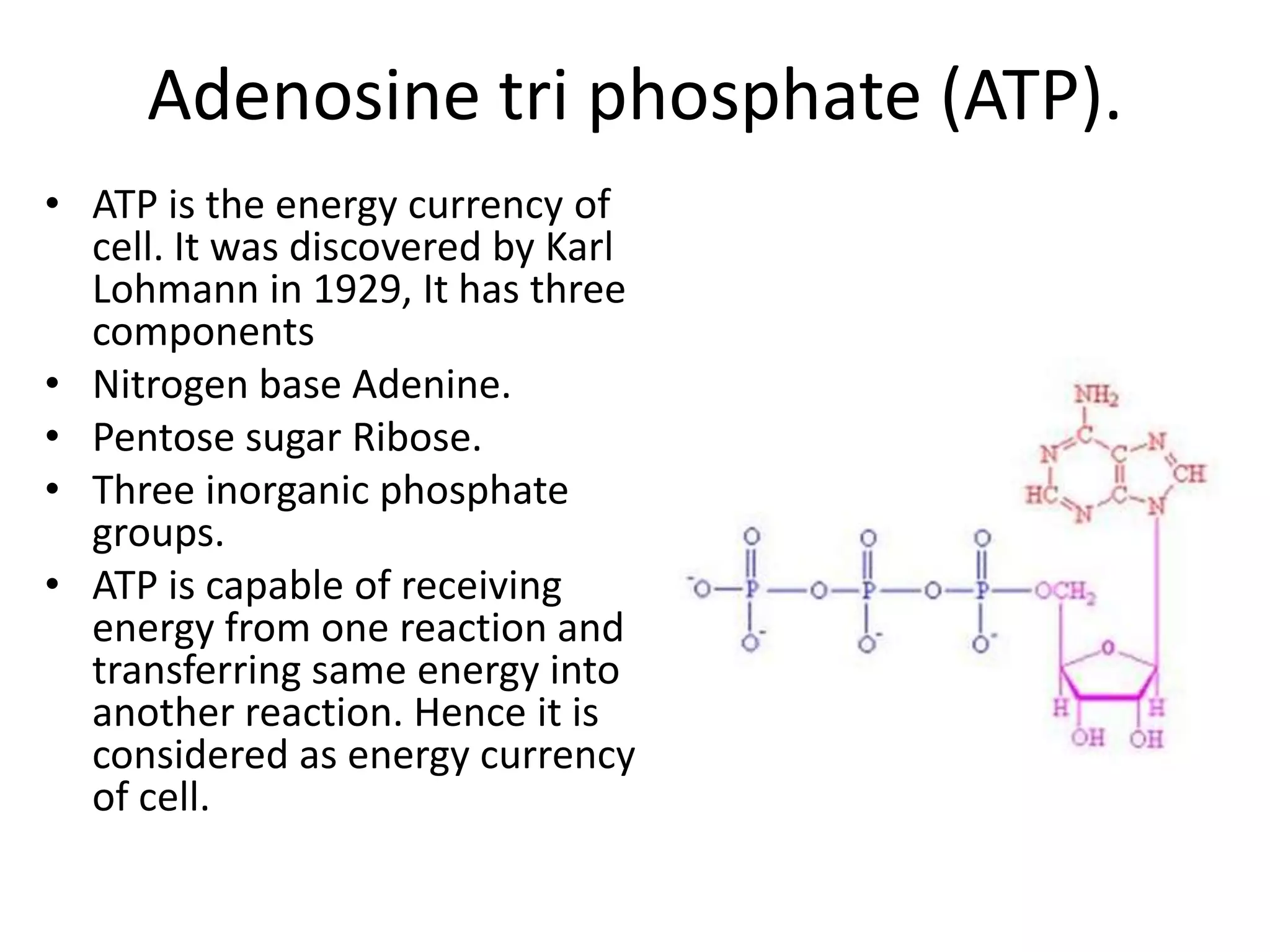
• ATP is the energy currency of
cell. It was discovered by Karl
Lohmann in 1929, It has three
components
• Nitrogen base Adenine.
• Pentose sugar Ribose.
• Three inorganic phosphate
groups.
• ATP is capable of receiving
energy from one reaction and
transferring same energy into
another reaction. Hence it is
considered as energy currency
of cell.
• ATP acts as an
intermediate compound
between energy
releasing and energy
consuming reaction.
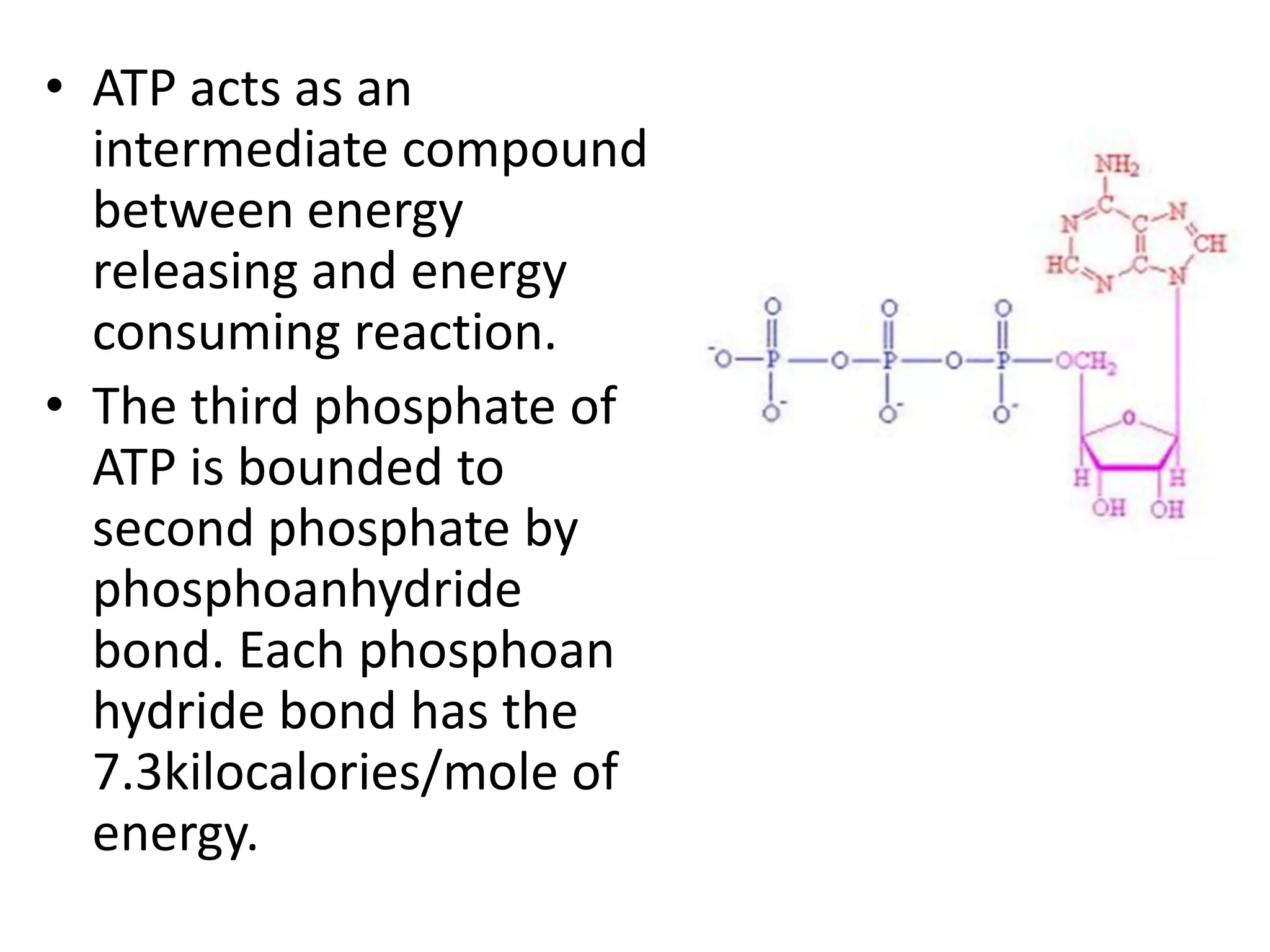
• The third phosphate of
ATP is bounded to
second phosphate by
phosphoanhydride
bond. Each phosphoan
hydride bond has the
7.3kilocalories/mole of
energy.
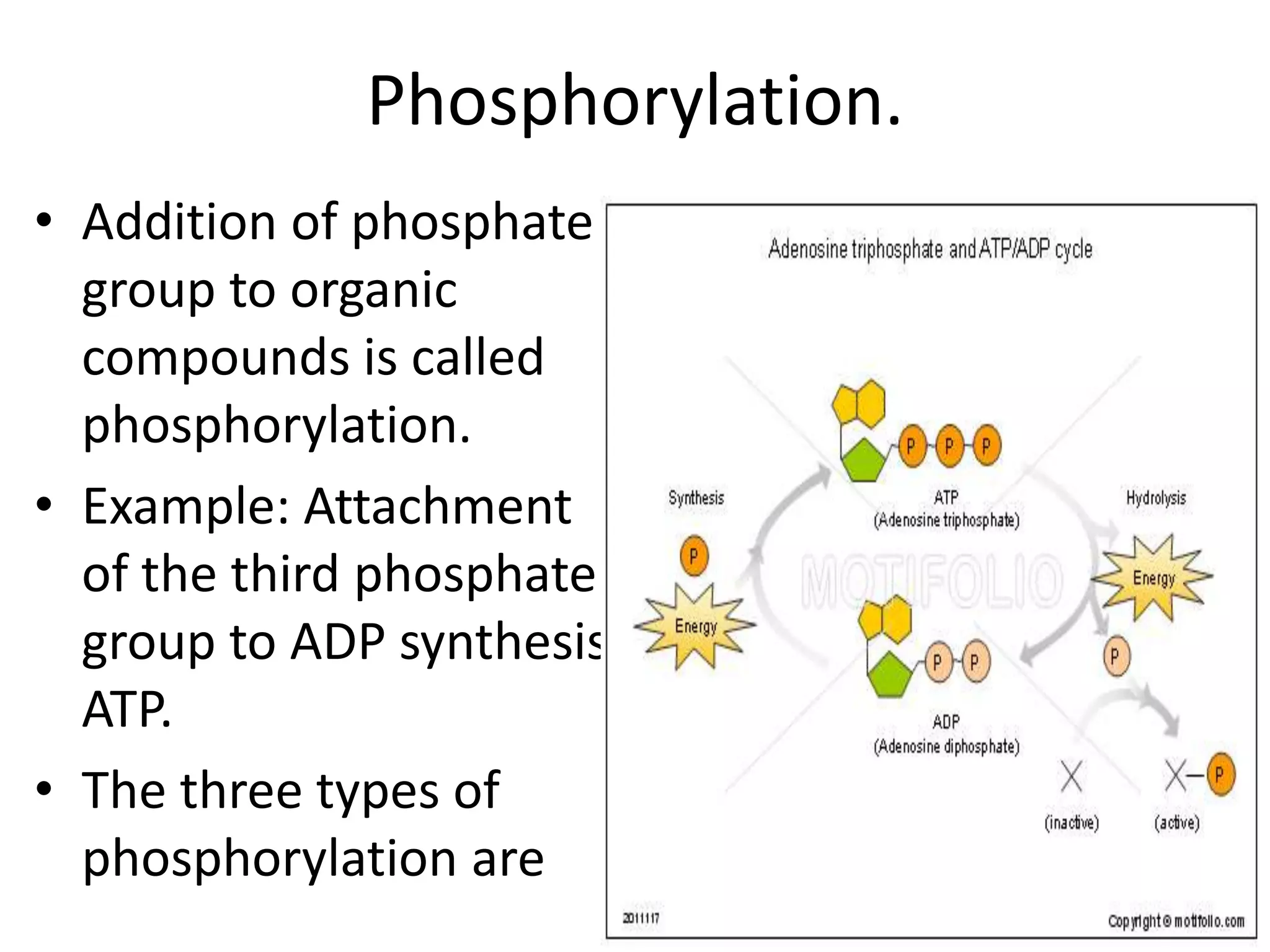
Phosphorylation.
• Addition of phosphate
group to organic
compounds is called
phosphorylation.
• Example: Attachment
of the third phosphate
group to ADP synthesis
ATP.
• The three types of
phosphorylation are
• Photo phosphorylation: Process of ATP synthesis
from ADP and inorganic phosphate using
sunlight is known as photophosphorylation
• Oxidative phosphorylation: Process of ATP
synthesis from ADP and inorganic phosphate
using energy released by the oxidation of energy
rich molecules NADH2 and FADH2. These are
formed in glycolysis, fatty acid oxidation, and the
citric acid cycle.
• Substrate phosphorylation: Process of ATP
synthesis from ADP and inorganic phosphate
using energy released by hydrolysis of substrate
like glucose.
Energy rich compounds other than ATP.
• GTP: Guanosine triphosphate
• CTP: Cytosine triphosphate
• UTP: Uridine triphosphate
High energy molecules.
• NADH2: Nicotinamide Adenine Dinucleotide. It
yields three ATP during oxidative
phosphorylation.
• FADH2 : Flavin adenine dinucleotide. It yields
two ATP during oxidative phosphorylation.

Bioenergetics MohanBio

  • 1.
    Bioenergetics. • The qualitativestudy of energy transformation in living system is called bioenergetics. • The organism needs energy for their physiological activities. In these activities number of chemical reactions takes place. • In all these energy is utilized or generated. Hence transformation of energy in living system follows the law of thermodynamics.
  • 2.
    Light is thesource of energy: • Light is the source of energy for all living organisms. • The green plants captures light energy and converts in to chemical energy. • This energy is conserved in organic molecules like glucose.
  • 3.
    Adenosine tri phosphate(ATP). • ATP is the energy currency of cell. It was discovered by Karl Lohmann in 1929, It has three components • Nitrogen base Adenine. • Pentose sugar Ribose. • Three inorganic phosphate groups. • ATP is capable of receiving energy from one reaction and transferring same energy into another reaction. Hence it is considered as energy currency of cell.
  • 4.
    • ATP actsas an intermediate compound between energy releasing and energy consuming reaction. • The third phosphate of ATP is bounded to second phosphate by phosphoanhydride bond. Each phosphoan hydride bond has the 7.3kilocalories/mole of energy.
  • 5.
    Phosphorylation. • Addition ofphosphate group to organic compounds is called phosphorylation. • Example: Attachment of the third phosphate group to ADP synthesis ATP. • The three types of phosphorylation are
  • 6.
    • Photo phosphorylation:Process of ATP synthesis from ADP and inorganic phosphate using sunlight is known as photophosphorylation • Oxidative phosphorylation: Process of ATP synthesis from ADP and inorganic phosphate using energy released by the oxidation of energy rich molecules NADH2 and FADH2. These are formed in glycolysis, fatty acid oxidation, and the citric acid cycle. • Substrate phosphorylation: Process of ATP synthesis from ADP and inorganic phosphate using energy released by hydrolysis of substrate like glucose.
  • 7.
    Energy rich compoundsother than ATP. • GTP: Guanosine triphosphate • CTP: Cytosine triphosphate • UTP: Uridine triphosphate High energy molecules. • NADH2: Nicotinamide Adenine Dinucleotide. It yields three ATP during oxidative phosphorylation. • FADH2 : Flavin adenine dinucleotide. It yields two ATP during oxidative phosphorylation.