Beyond Earth P Squires 2005-2006
Tools of Astronomy Light Radiation Telescope (Refracting and Reflecting) Satellites Probes Spacecraft
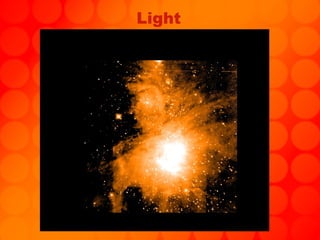
Light
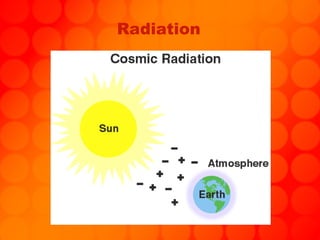
Radiation
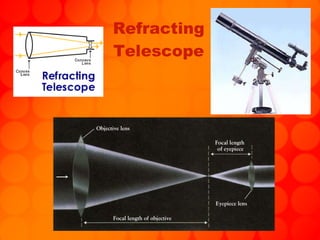
Refracting Telescope
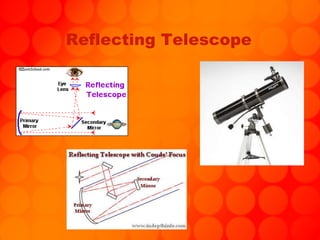
Reflecting Telescope
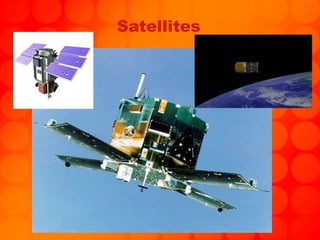
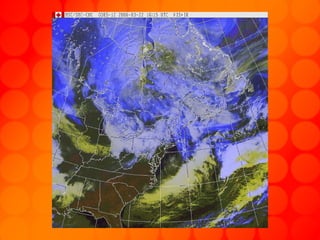
Satellites
 
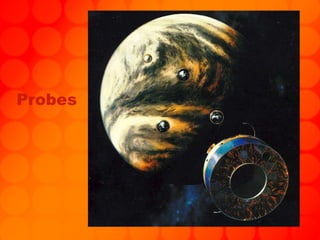
Probes
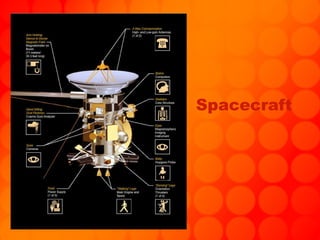
Spacecraft
 
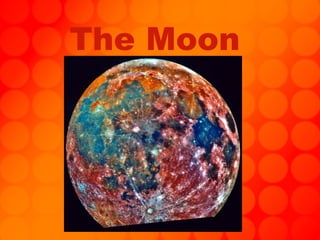
The Moon
Moon Vocabulary Albedo – amount of sunlight the surface reflects Highlands – light in color, mountains Impact craters – craters formed when space objects hit the moon. Rilles – meandering valleys
 
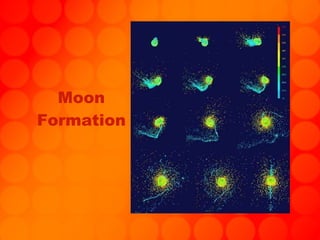
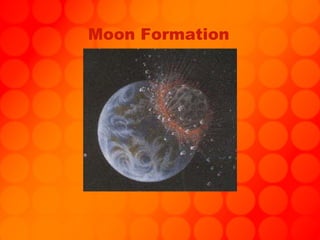
Moon Formation
Moon Formation
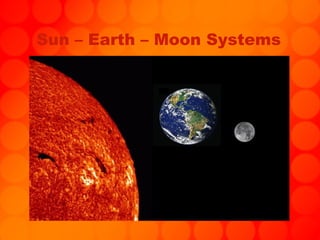
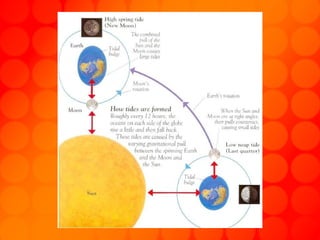
Sun – Earth – Moon Systems
 
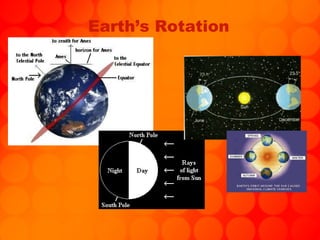
Earth’s Rotation
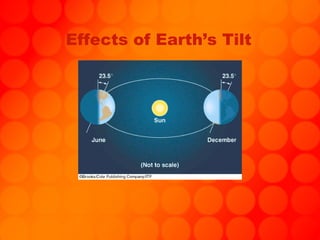
Effects of Earth’s Tilt
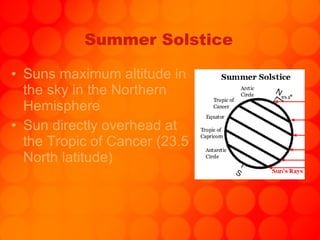
Summer Solstice Suns maximum altitude in the sky in the Northern Hemisphere Sun directly overhead at the Tropic of Cancer (23.5 North latitude)
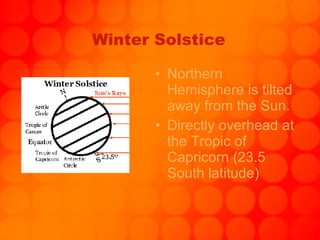
Winter Solstice Northern Hemisphere is tilted away from the Sun. Directly overhead at the Tropic of Capricorn (23.5 South latitude)
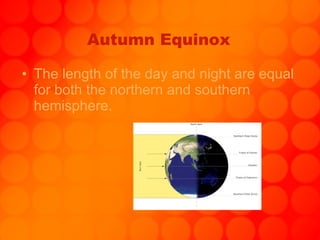
Autumn Equinox The length of the day and night are equal for both the northern and southern hemisphere.
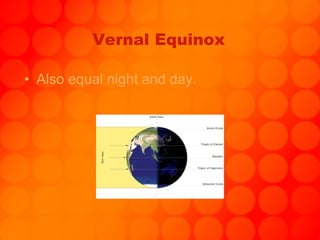
Vernal Equinox Also equal night and day.
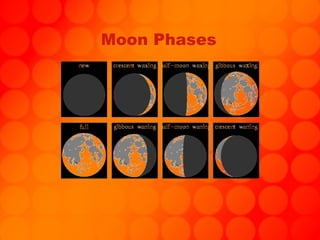
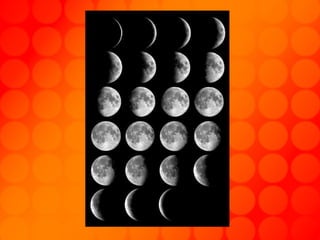
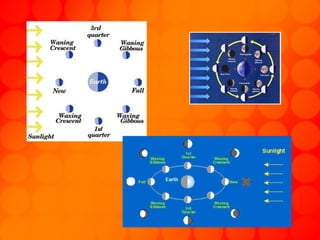
Moon Phases


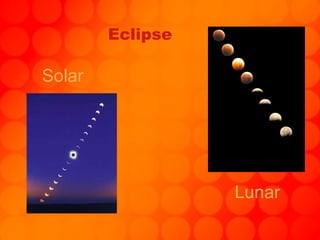
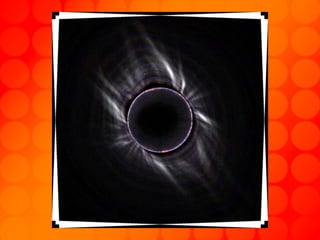
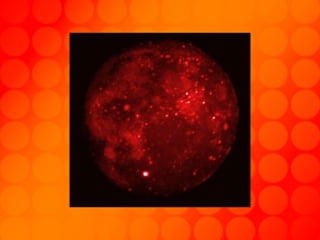
Eclipse Solar Lunar
 
 
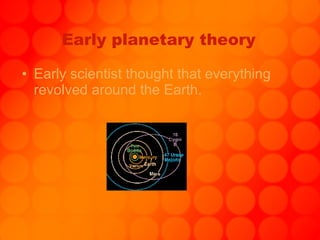
Early planetary theory Early scientist thought that everything revolved around the Earth.
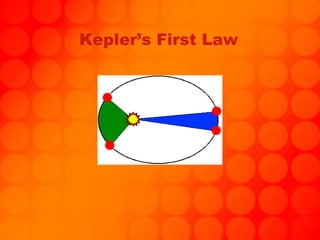
Kepler’s First Law
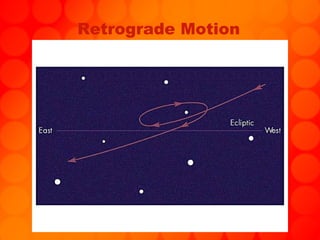
Retrograde Motion
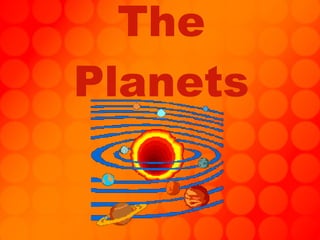
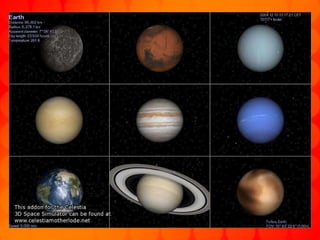
The Planets
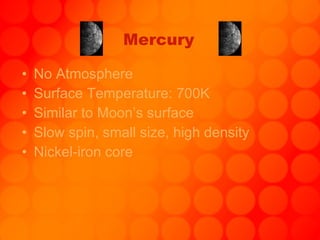
Mercury No Atmosphere Surface Temperature: 700K Similar to Moon’s surface Slow spin, small size, high density Nickel-iron core
 
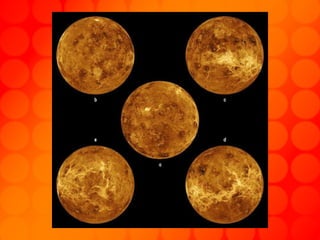
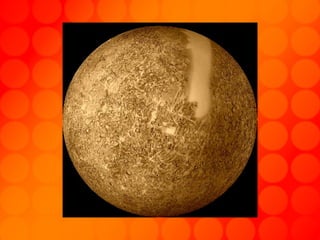
Venus Brightest planet Cloudy One day is 243 Earth days Sun rises in west and set in east  (just opposite of Earth) Similar to earth in physical properties Hottest  planet. Greenhouse gas effect present. Smooth
 
Earth
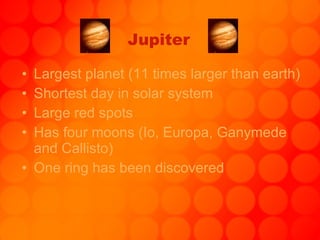
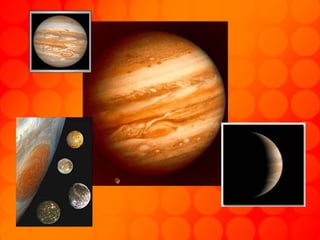
Jupiter Largest planet (11 times larger than earth) Shortest day in solar system Large red spots Has four moons (Io, Europa, Ganymede and Callisto) One ring has been discovered
 
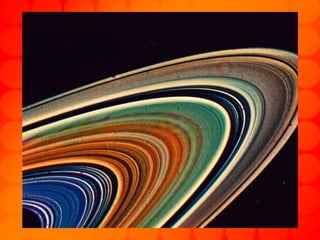
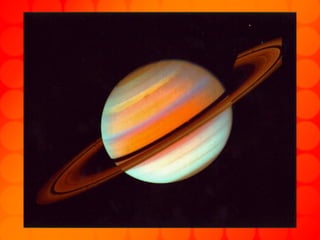
Saturn Second largest Rings composed of rock and ice Several large and small moons (most famous is Titan)
 
 
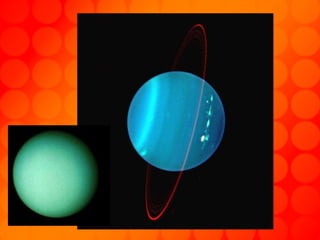
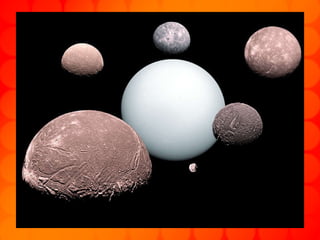
Uranus Discovered accidentally in 1781 Many moons and 10 rings (Titania and Oberon) Fluid except for small solid core Sits on side so long nights and long days
 
 
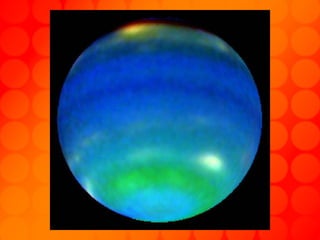
Neptune Predicted to exist before discovered Persistent storm on surface (great dark spot) Many moons (largest Triton)
 
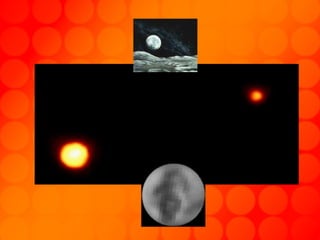
Pluto Small size  Does not have characteristics of any of the other planets North pole points south Satellite (Charon) which orbits around it More like a moon than a planet
 
 
Planets Project Each one of you will be given a planet. We will spend one class in the library researching your planet You will take that information and write a children's book. (Kindergarten to 2 nd  grade level.) Books must be at least 10 pages and must be illustrated. They are due Monday, November 13, 2006.
How was the solar system formed?
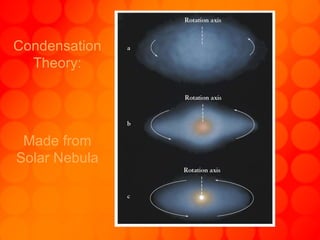
Condensation Theory: Made from Solar Nebula
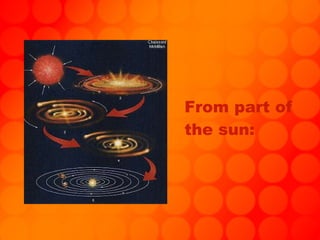
From part of the sun:
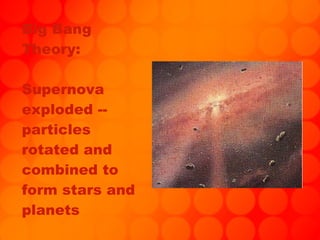
Big Bang Theory: Supernova exploded -- particles rotated and combined to form stars and planets
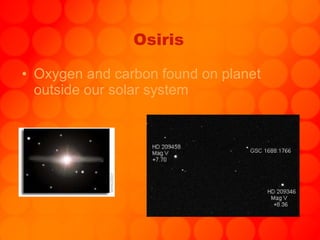
Osiris Oxygen and carbon found on planet outside our solar system
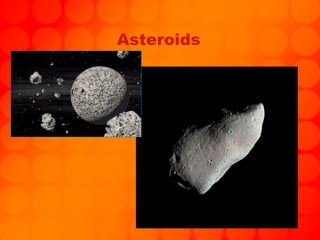
Asteroids
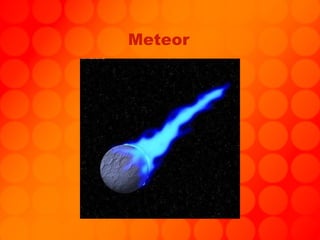
Meteor
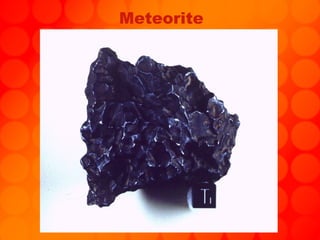
Meteorite
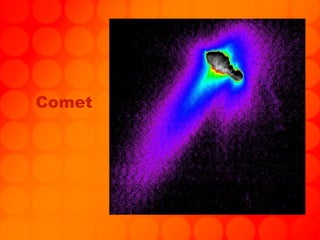
Comet
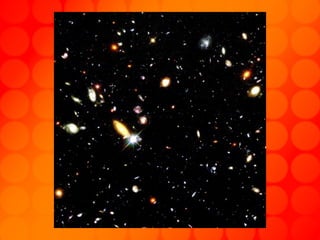
Galaxies and the Universe
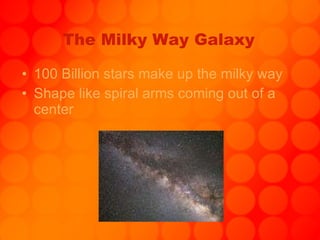
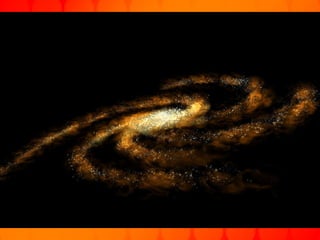
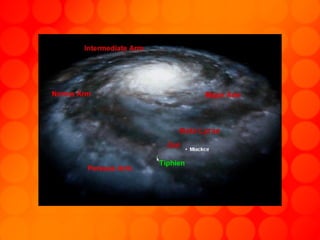
The Milky Way Galaxy 100 Billion stars make up the milky way Shape like spiral arms coming out of a center
 
 
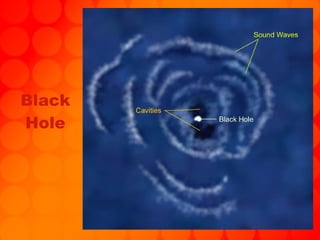
Black Hole
 
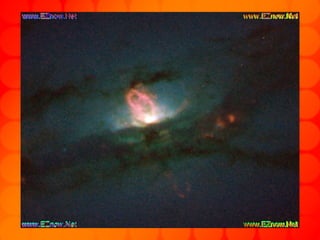
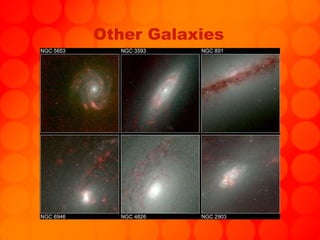
Other Galaxies
 
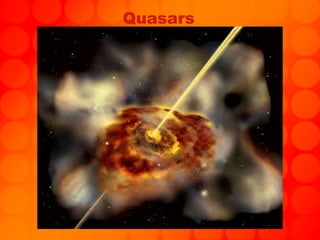
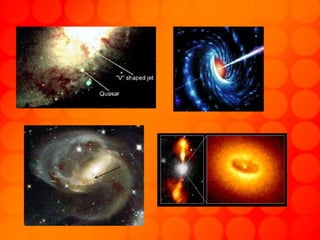
Quasars
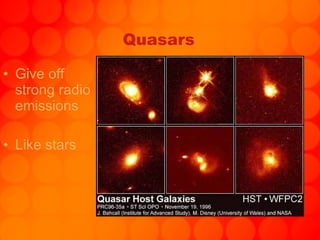
Quasars Give off strong radio emissions Like stars
 
Project Observe
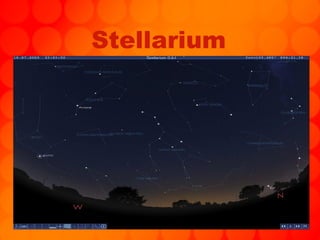
Stellarium
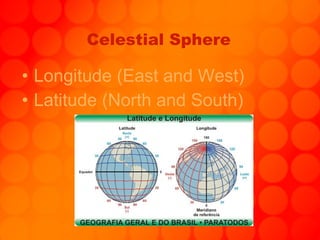
Celestial Sphere Longitude (East and West) Latitude (North and South)
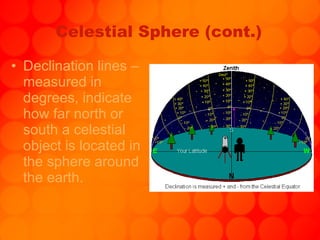
Celestial Sphere (cont.) Declination lines – measured in degrees, indicate how far north or south a celestial object is located in the sphere around the earth.
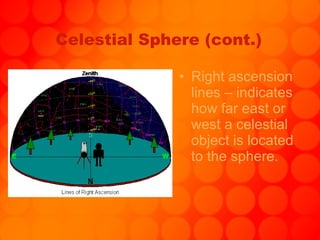
Celestial Sphere (cont.) Right ascension lines – indicates how far east or west a celestial object is located to the sphere.
 
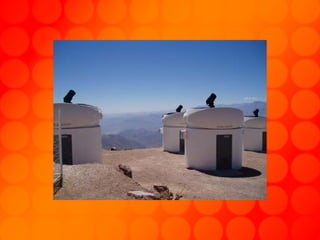
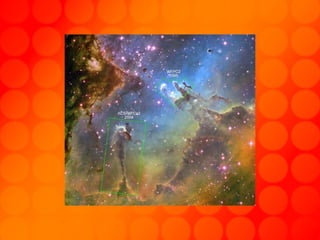
Taking Pictures Pick star, nebula, planet, etc. Log in to Skynet with Username: Password:
Taking Pictures  (cont.)


Beyond Earth