Antimicrobial Susceptibility Testing
Dr. Diganta Dey
Quality Manager
Ashok Laboratory Clinical Testing Centre Pvt. Ltd.
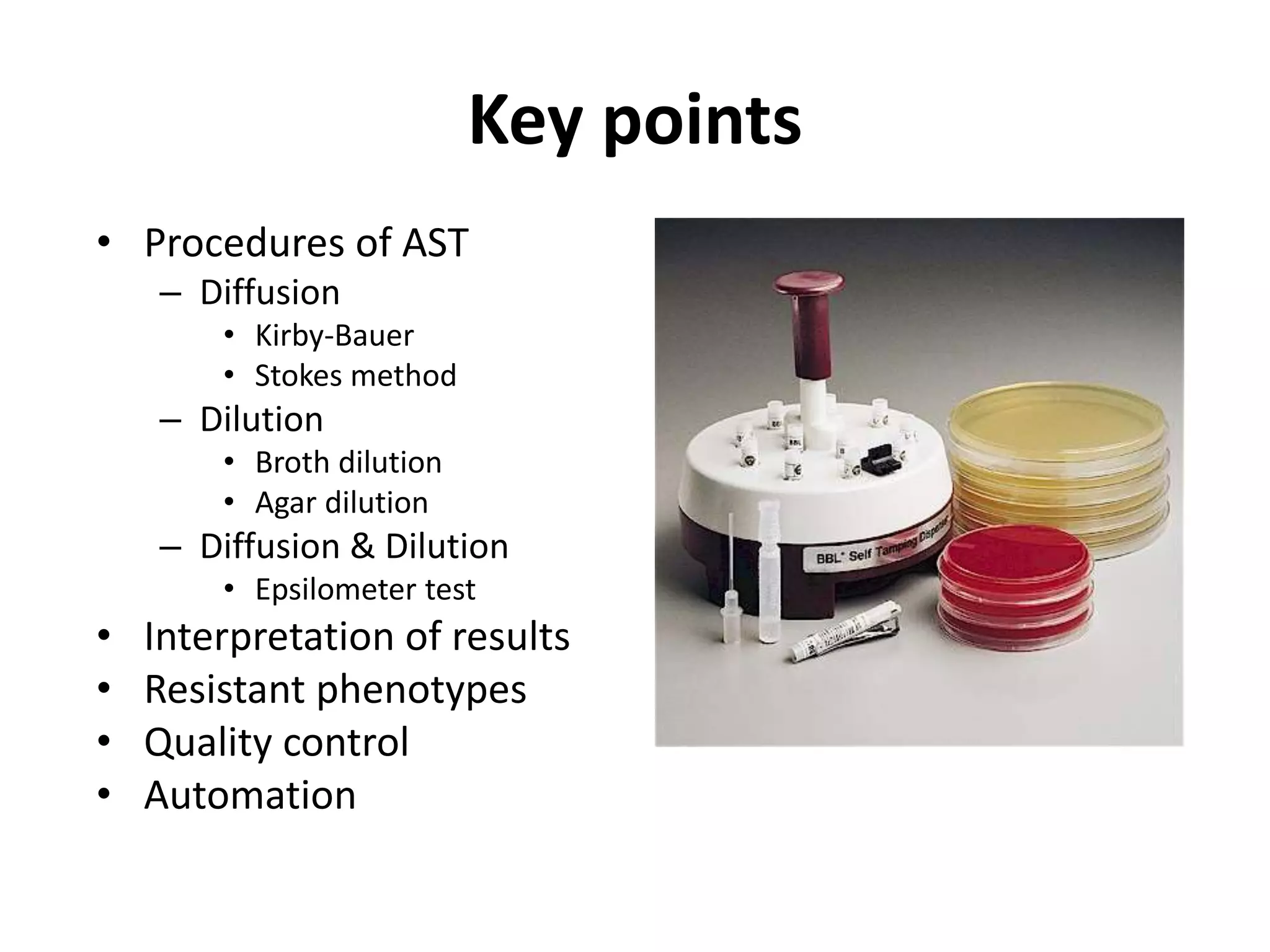
Key points
• Procedures of AST
– Diffusion
• Kirby-Bauer
• Stokes method
– Dilution
• Broth dilution
• Agar dilution
– Diffusion & Dilution
• Epsilometer test
• Interpretation of results
• Resistant phenotypes
• Quality control
• Automation
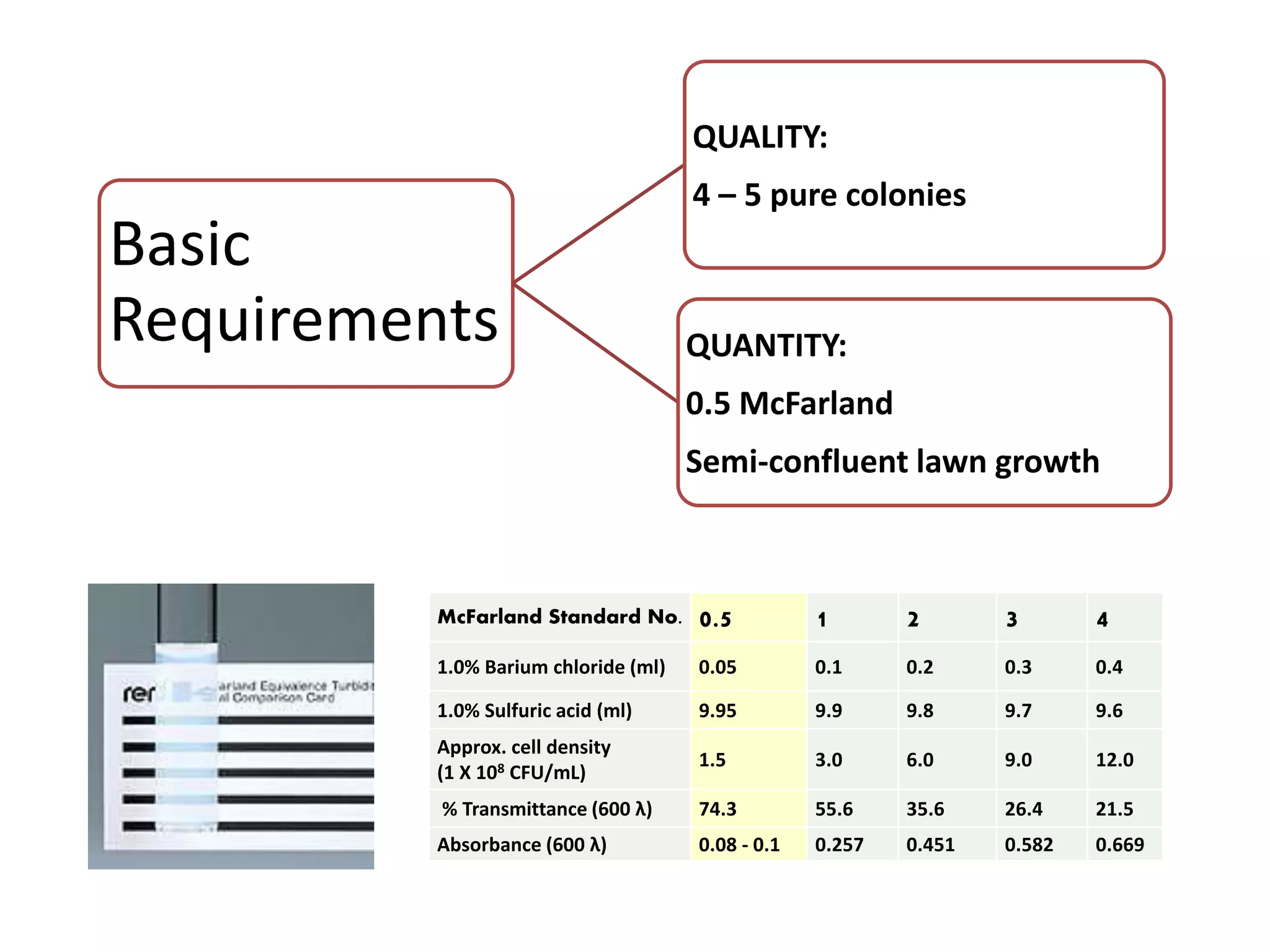
Basic
Requirements
QUALITY:
4 – 5 pure colonies
QUANTITY:
0.5 McFarland
Semi-confluent lawn growth
McFarland Standard No. 0.5 1 2 3 4
1.0% Barium chloride (ml) 0.05 0.1 0.2 0.3 0.4
1.0% Sulfuric acid (ml) 9.95 9.9 9.8 9.7 9.6
Approx. cell density
(1 X 10⁸ CFU/mL)
1.5 3.0 6.0 9.0 12.0
% Transmittance (600 λ) 74.3 55.6 35.6 26.4 21.5
Absorbance (600 λ) 0.08 - 0.1 0.257 0.451 0.582 0.669
Factors Influencing AST Results
• Müller-Hinton agar required for AST
• pH (7.2 and 7.4)
– Low pH: aminoglycosides, quinolones, and macrolides lose
potency, excessive activity for tetracyclines
• Moisture/ inoculum density/No. of discs per plate/
time & temperature of incubation
• Thymidine or Thymine content
– Reverse inhibitory effect of sulfonamides and
trimethoprim
• Variation in Divalent Cations
– aminoglycoside and tetracycline tests with P. aeruginosa
(Excess reduce zone size)
– Excess zinc ions may reduce zone sizes of carbapenems
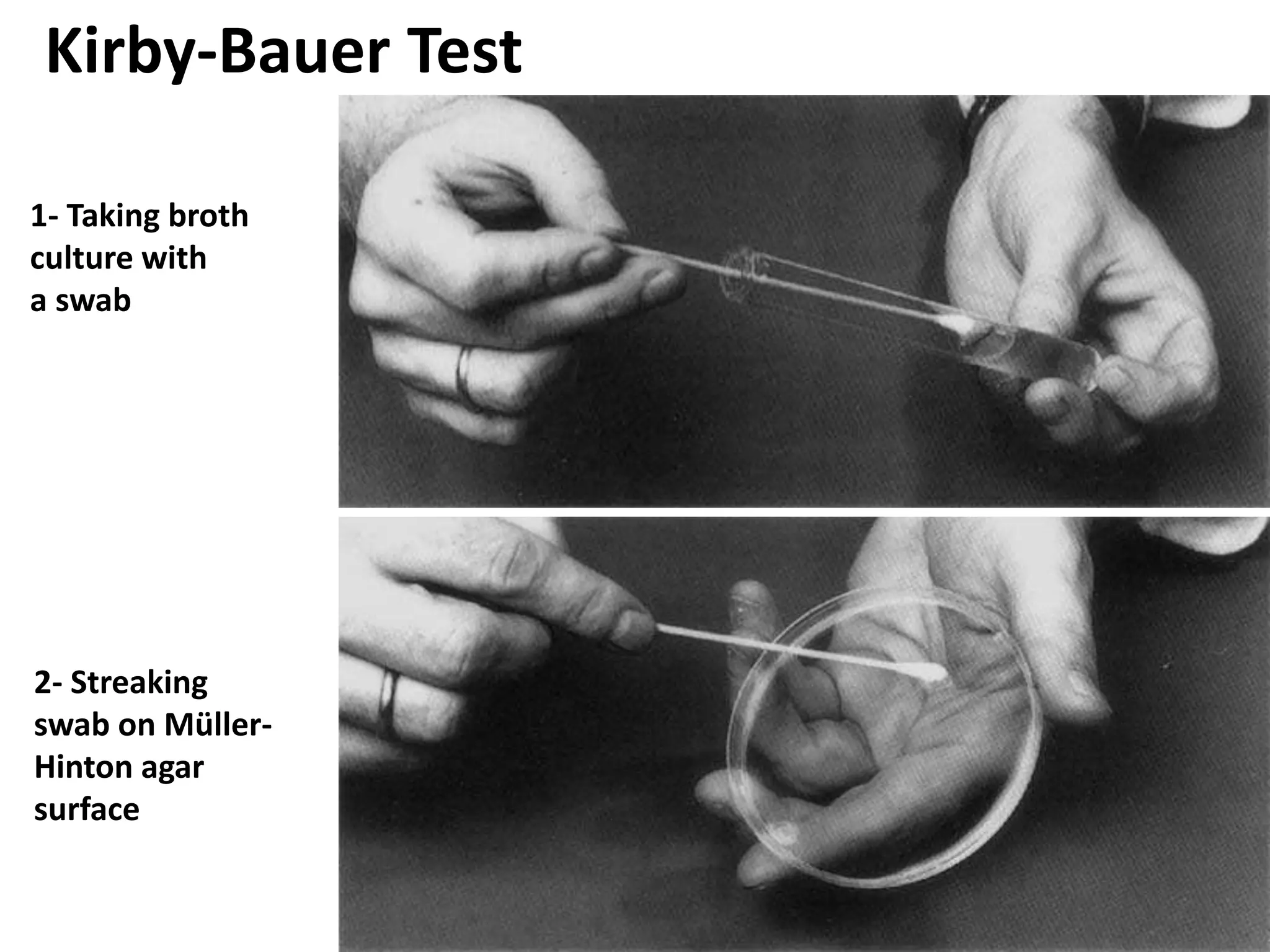
1- Taking broth
culture with
a swab
2- Streaking
swab on Müller-
Hinton agar
surface
Kirby-Bauer Test
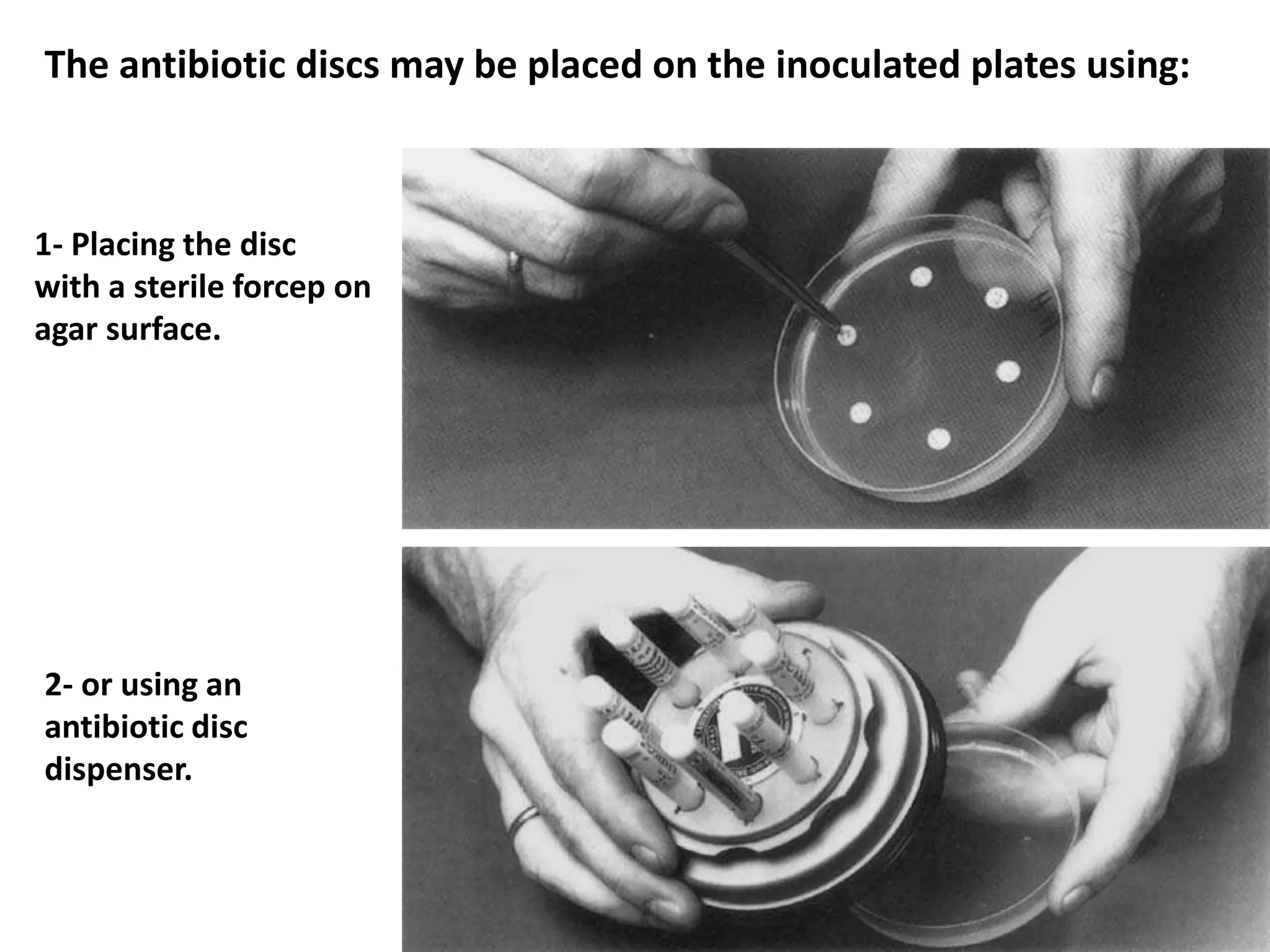
1- Placing the disc
with a sterile forcep on
agar surface.
2- or using an
antibiotic disc
dispenser.
The antibiotic discs may be placed on the inoculated plates using:
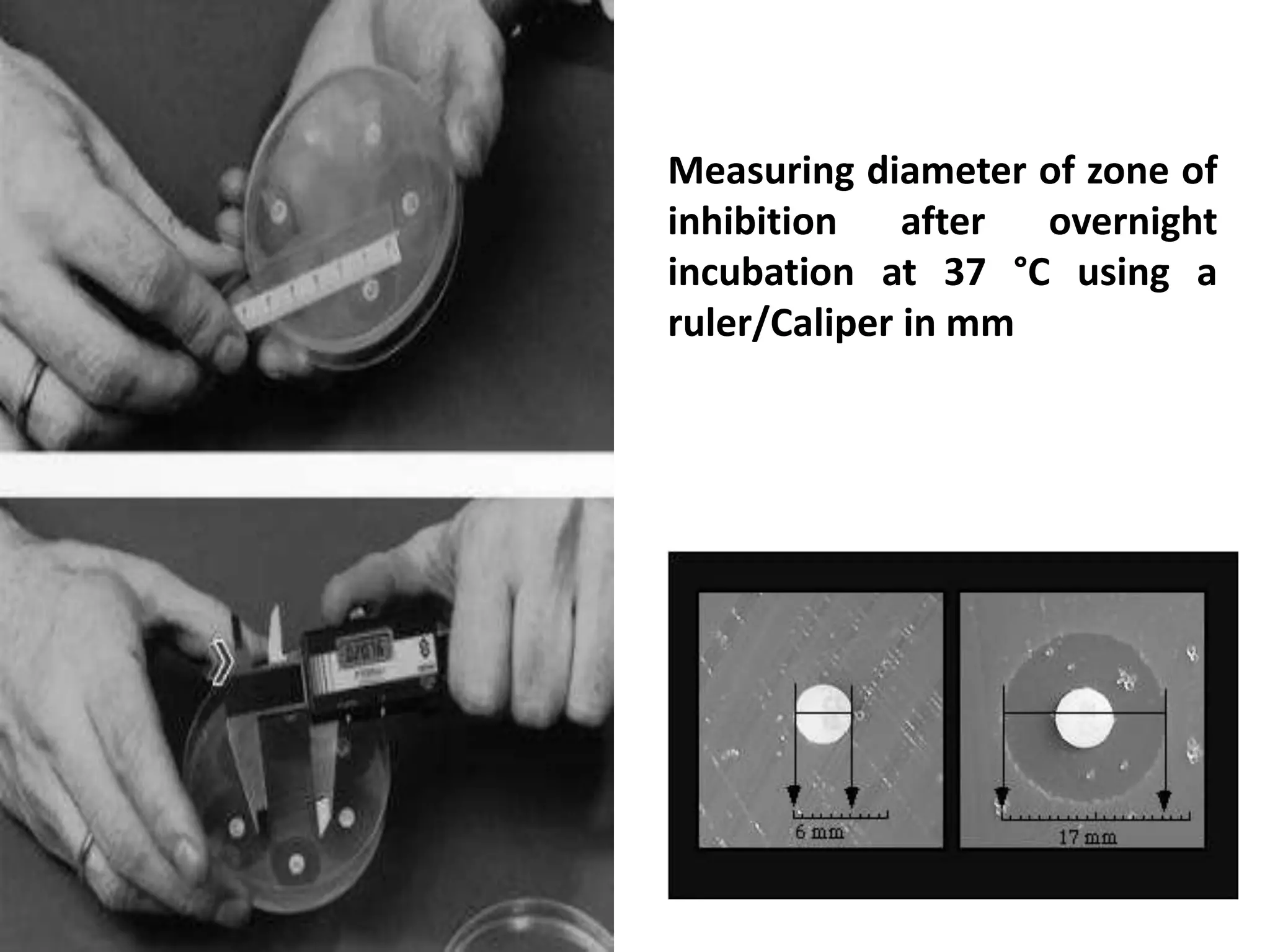
Measuring diameter of zone of
inhibition after overnight
incubation at 37 °C using a
ruler/Caliper in mm
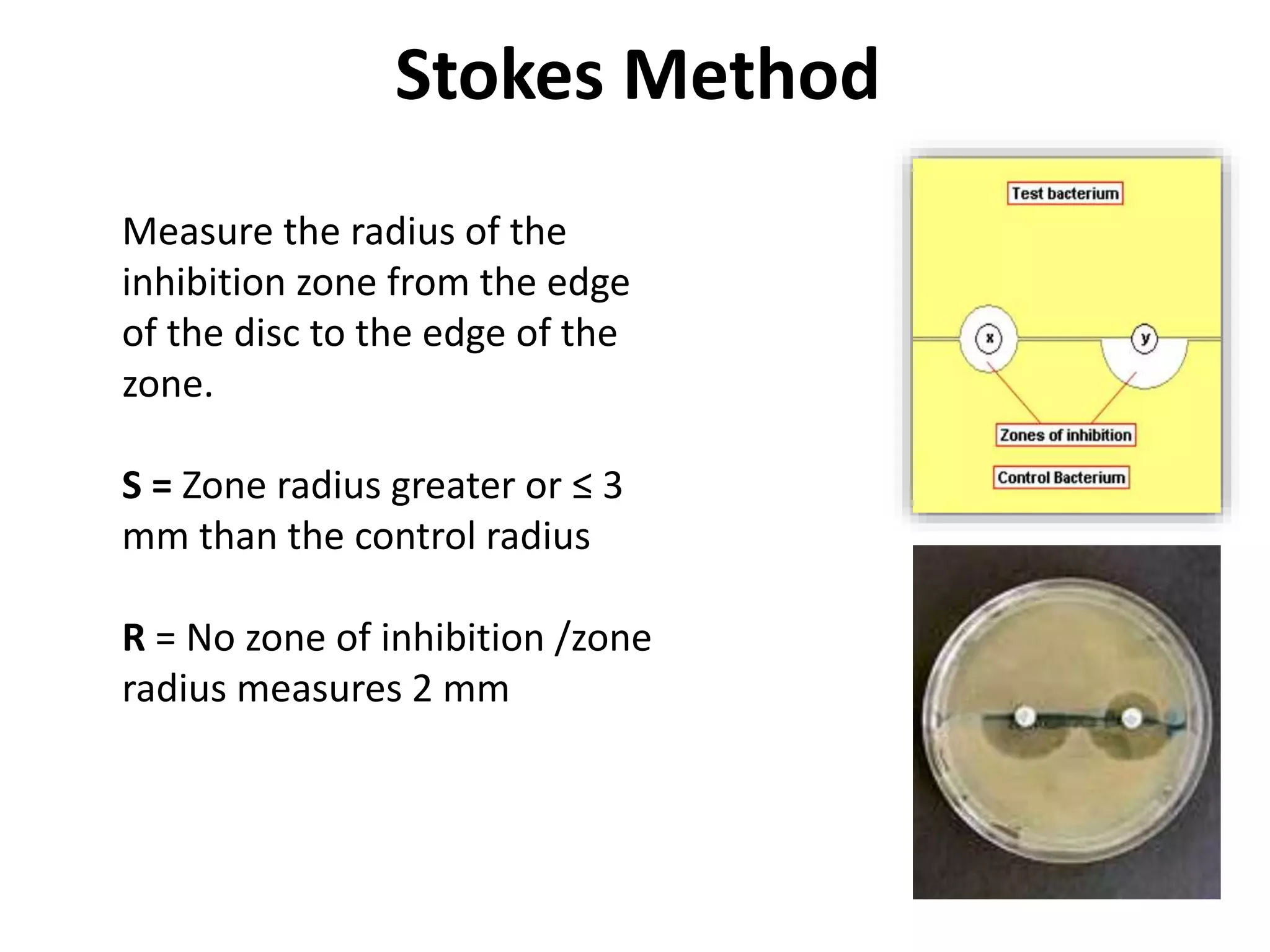
Stokes Method
Measure the radius of the
inhibition zone from the edge
of the disc to the edge of the
zone.
S = Zone radius greater or ≤ 3
mm than the control radius
R = No zone of inhibition /zone
radius measures 2 mm
Disc Diffusion For Fastidious Organisms
• Streptococcus pneumoniae / Streptococcus pyogenes
– MHA supplimented with 5% sheep blood
• Haemophilus spp.
– Haemophilus Test medium [MHA supplemented with
factor V (NAD) and Factor X (hematin)]
– 35C in an atmosphere of 5% CO2 for 16 - 18 hrs
• Neisseria gonorrhoeae
– Thayer-Martin agar [MHA supplemented with 5%
chocolate sheep blood and antibiotics (VCN inhibitor)]
– 35C in an atmosphere of 5% CO2 for 20 - 24 hrs
Broth Dilution Test
• Müeller-Hinton broth is used
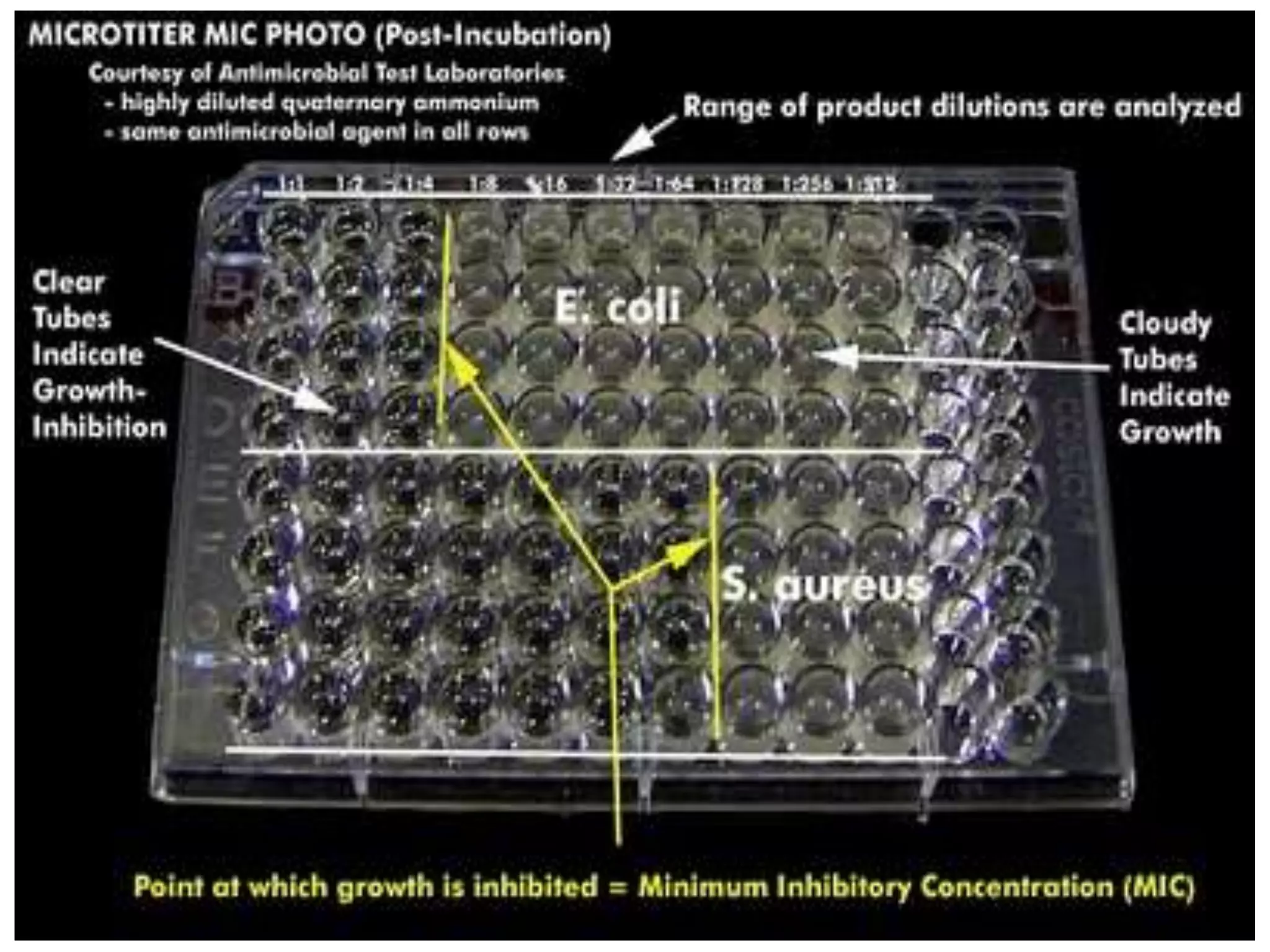
• Broth microdilution: Serial 2-fold dilution of
antibiotics in 96-well microtitre plates
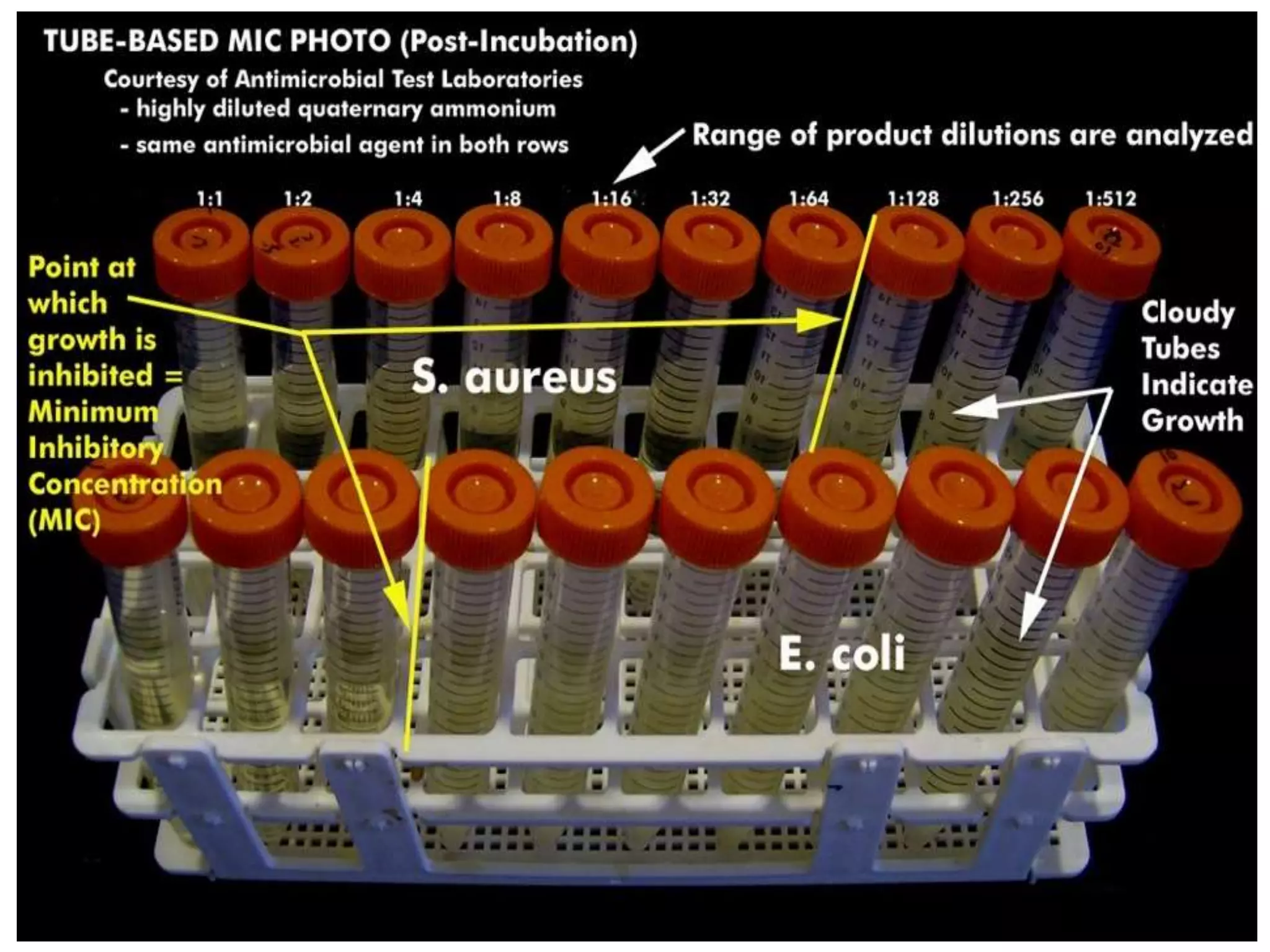
• Broth macrodilution: Serial 2-fold dilution of
antibiotics in test tubes
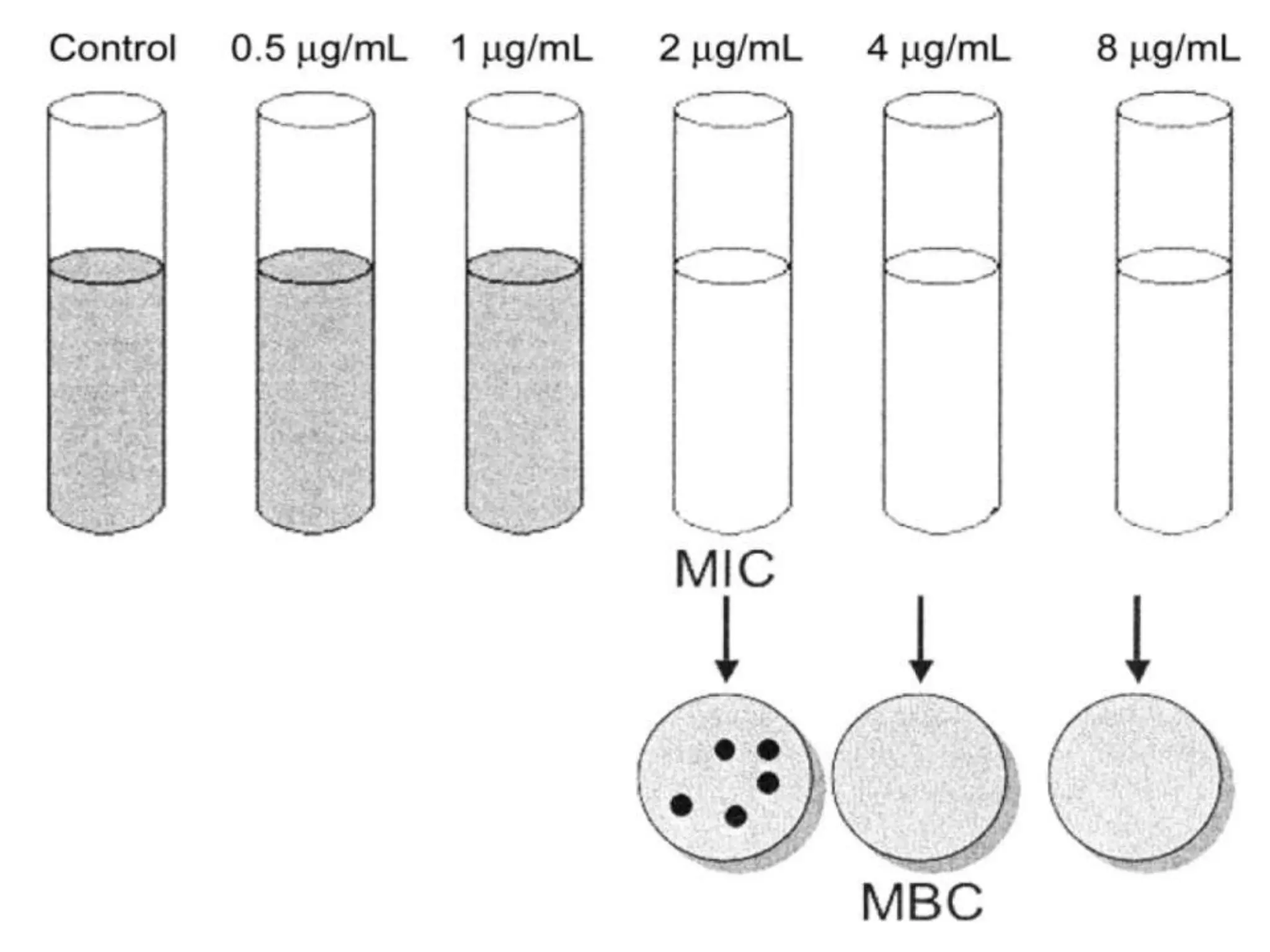
• MIC: Is the lowest concentration of antibiotic
capable of preventing growth of the bacteria
• MBC: the lowest concentration of the antibiotic
that results in no growth on the subcultures
Agar Dilution Method
• Serial dilution of antibiotics are prepared in
agar and poured into plates.
• Useful for:
– Mycobacterium tuberculosis
– Streptococcus pneumoniae
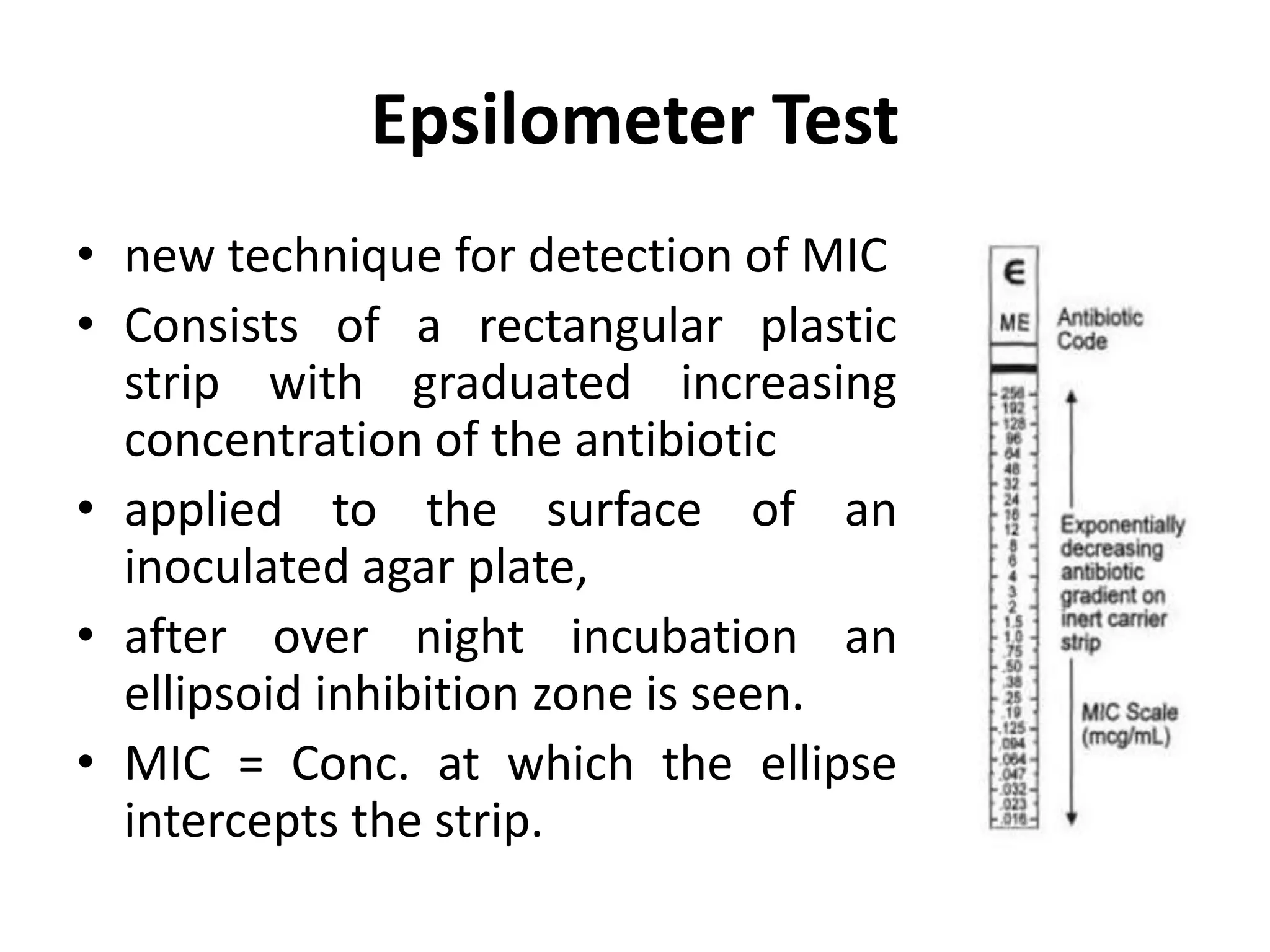
Epsilometer Test
• new technique for detection of MIC
• Consists of a rectangular plastic
strip with graduated increasing
concentration of the antibiotic
• applied to the surface of an
inoculated agar plate,
• after over night incubation an
ellipsoid inhibition zone is seen.
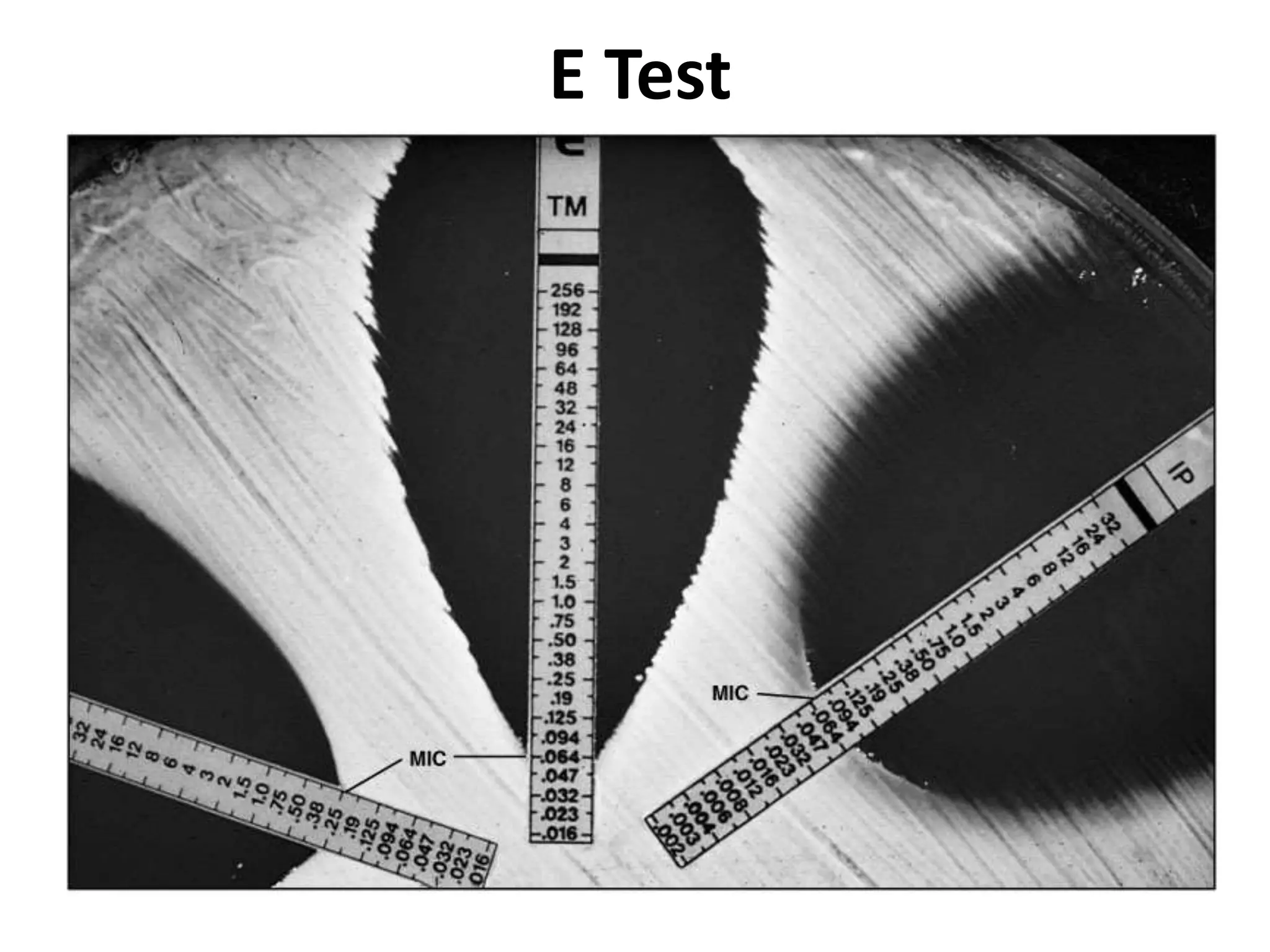
• MIC = Conc. at which the ellipse
intercepts the strip.
E Test
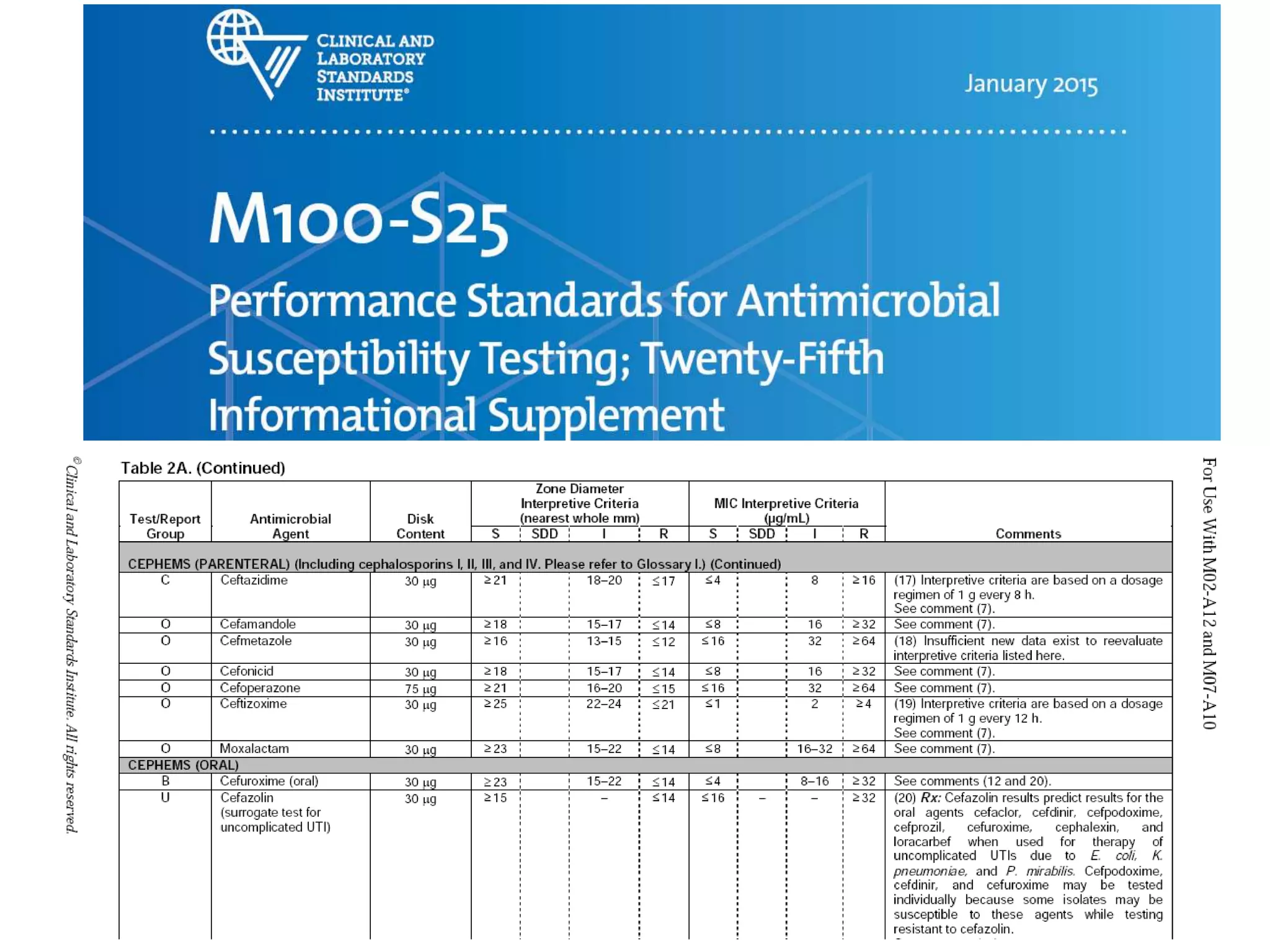
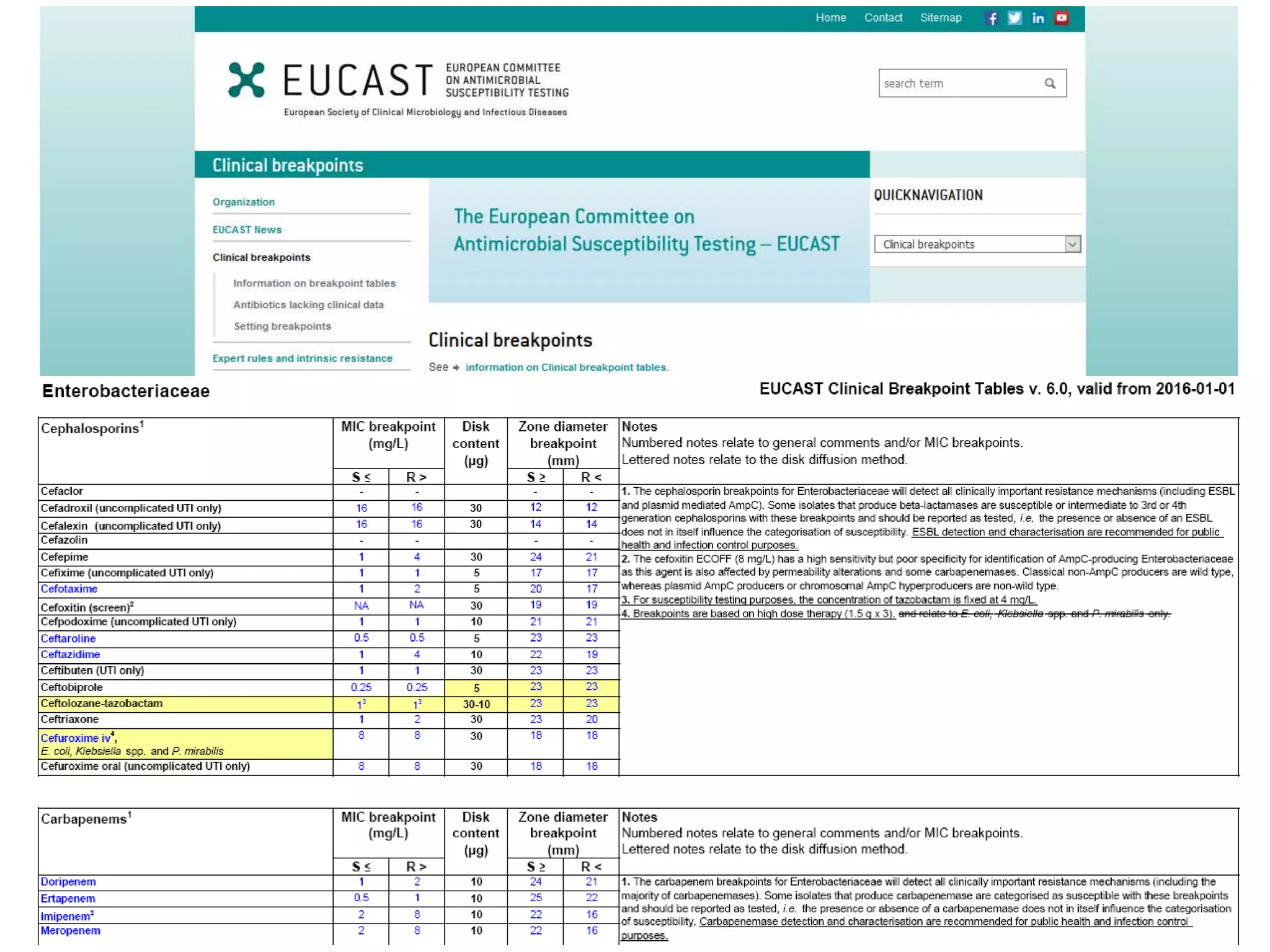
• Breakpoints are discriminatory antimicrobial
concentrations used in the interpretation of AST results
to define isolates as susceptible (S), intermediate (I) or
resistant (R).
• Clinical, pharmacological, microbiological and
pharmacodynamic considerations are important in
setting breakpoints.
• In the USA, the Clinical Laboratory Standards Institute
(CLSI) publishes such guidance Within Europe, there
are six active national breakpoint committees co-
ordinated through the European Committee on
Antimicrobial Susceptibility Testing (EUCAST).
Interpretation of results
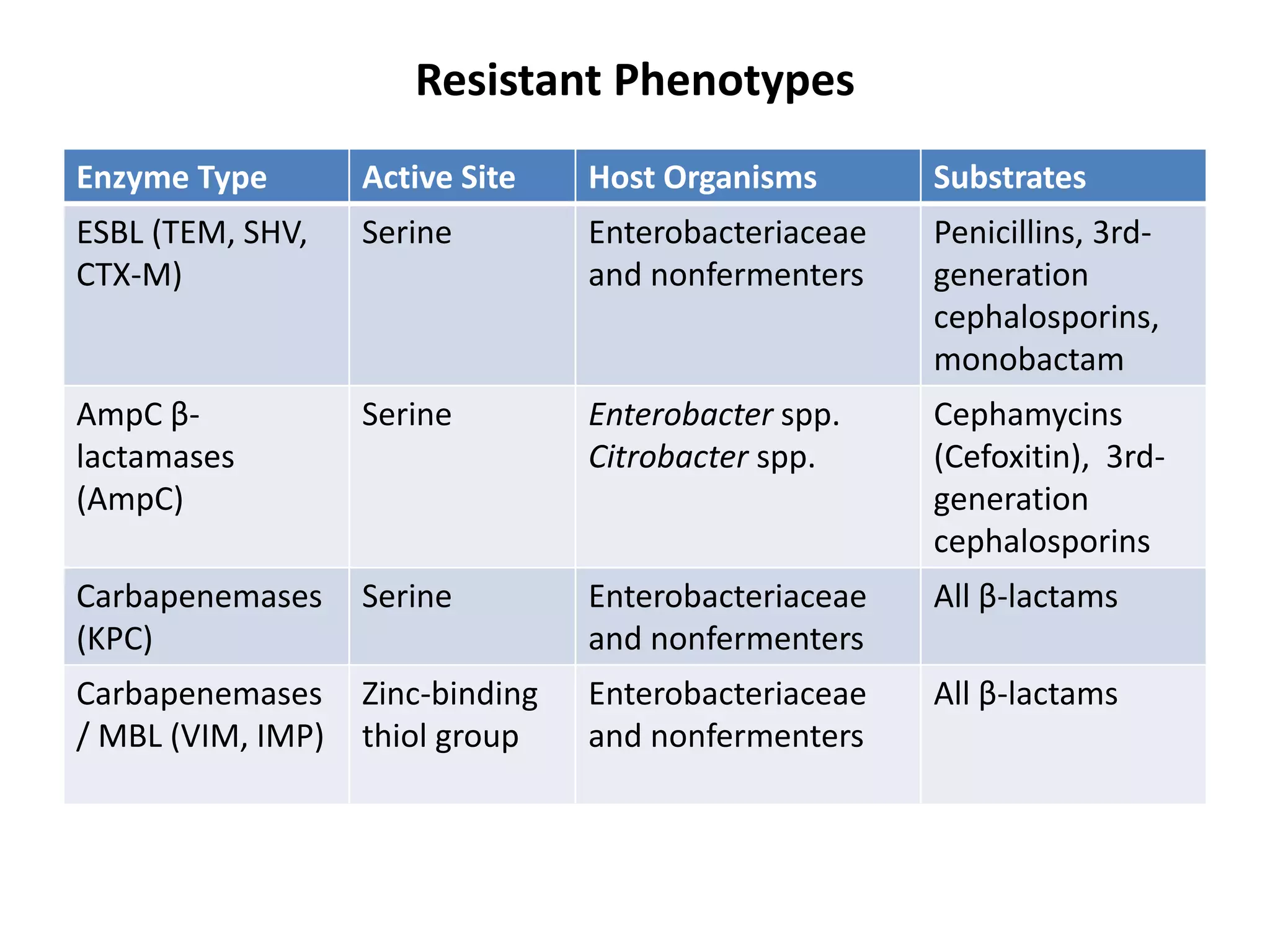
Resistant Phenotypes
Enzyme Type Active Site Host Organisms Substrates
ESBL (TEM, SHV,
CTX-M)
Serine Enterobacteriaceae
and nonfermenters
Penicillins, 3rd-
generation
cephalosporins,
monobactam
AmpC β-
lactamases
(AmpC)
Serine Enterobacter spp.
Citrobacter spp.
Cephamycins
(Cefoxitin), 3rd-
generation
cephalosporins
Carbapenemases
(KPC)
Serine Enterobacteriaceae
and nonfermenters
All β-lactams
Carbapenemases
/ MBL (VIM, IMP)
Zinc-binding
thiol group
Enterobacteriaceae
and nonfermenters
All β-lactams
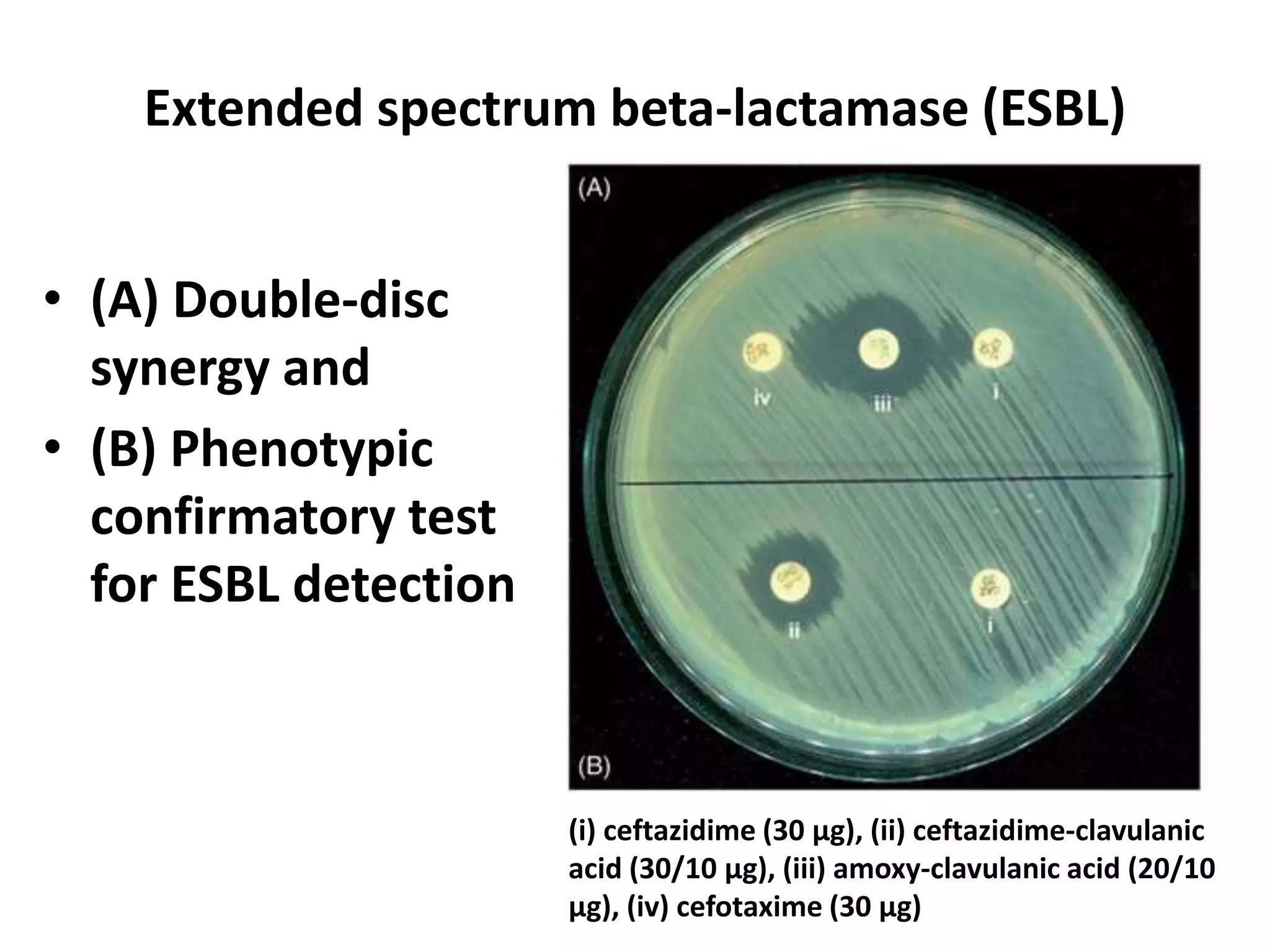
• (A) Double-disc
synergy and
• (B) Phenotypic
confirmatory test
for ESBL detection
Extended spectrum beta-lactamase (ESBL)
(i) ceftazidime (30 μg), (ii) ceftazidime-clavulanic
acid (30/10 μg), (iii) amoxy-clavulanic acid (20/10
μg), (iv) cefotaxime (30 μg)
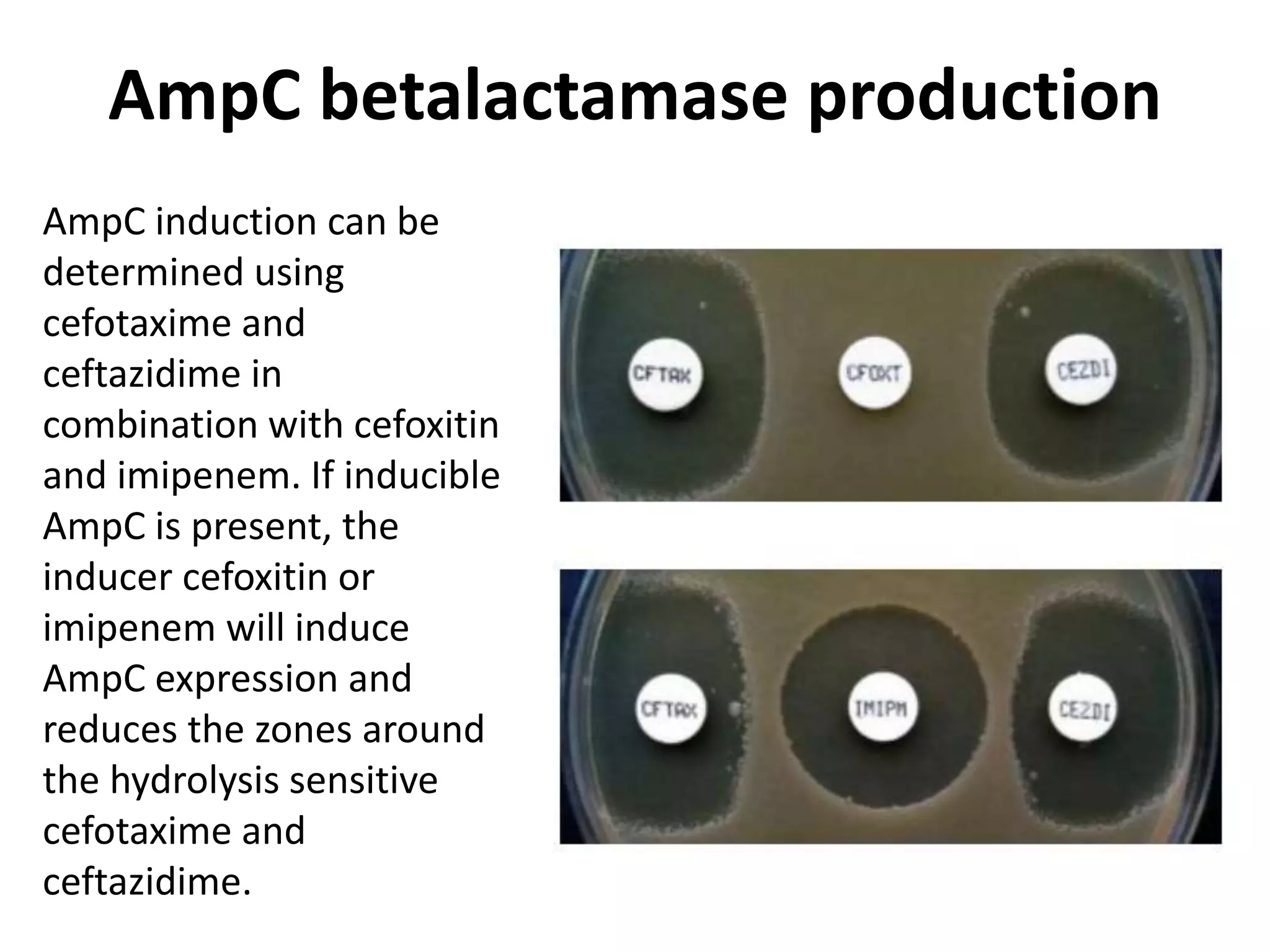
AmpC betalactamase production
AmpC induction can be
determined using
cefotaxime and
ceftazidime in
combination with cefoxitin
and imipenem. If inducible
AmpC is present, the
inducer cefoxitin or
imipenem will induce
AmpC expression and
reduces the zones around
the hydrolysis sensitive
cefotaxime and
ceftazidime.
Carbapenemase production: Modified Hodge Test
Modified Hodge Test of the
four KPC producing K. pneumoniae
isolates and K. pneumoniae (ATCC
700603) as a negative control. All
four KPC producing isolates
produced the characteristic
cloverleaf-like indentation
(indicated by a bracket), except
the negative control. ‘v’ denotes
imipenem disc.
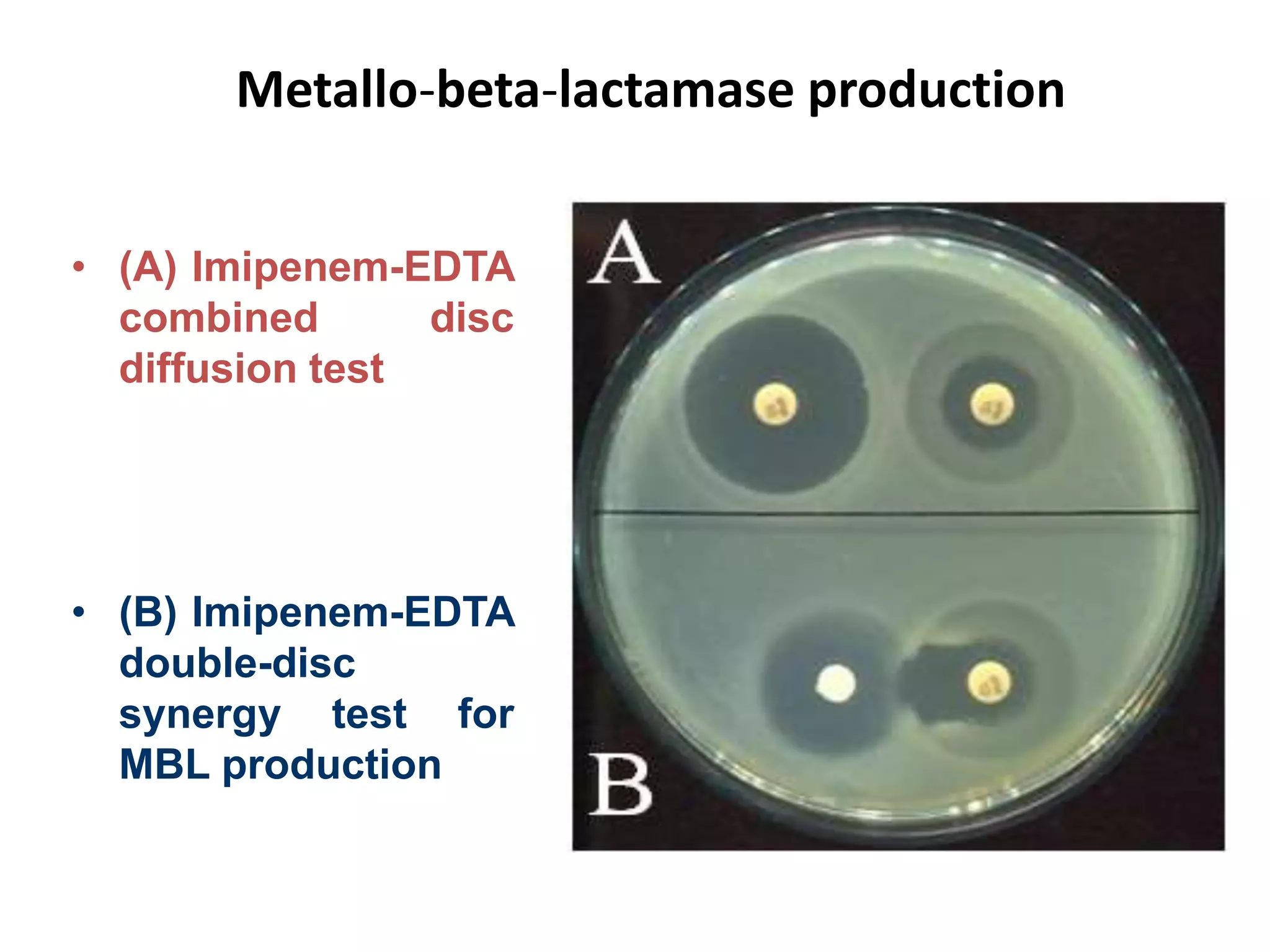
Metallo-beta-lactamase production
• (A) Imipenem-EDTA
combined disc
diffusion test
• (B) Imipenem-EDTA
double-disc
synergy test for
MBL production
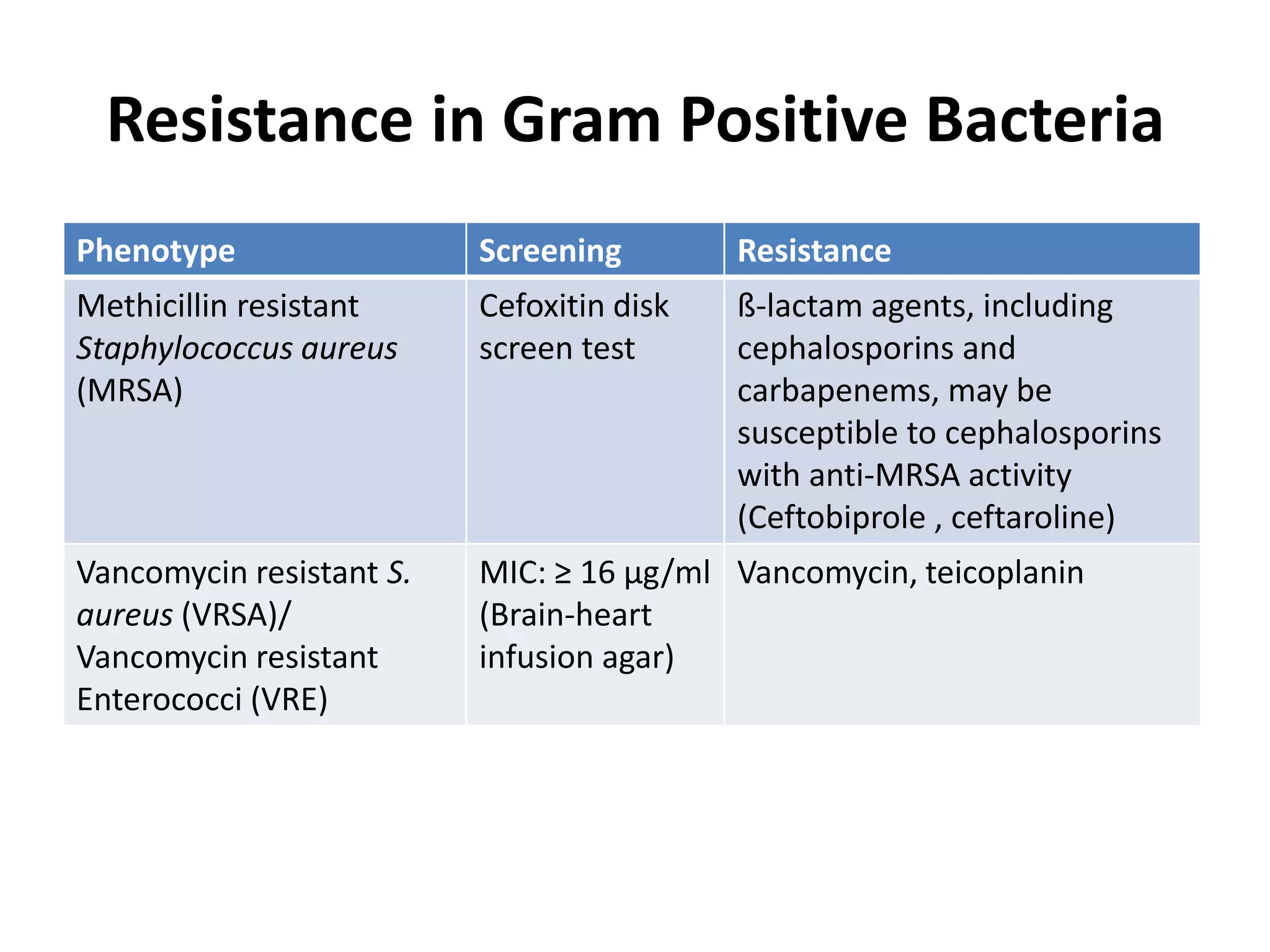
Phenotype Screening Resistance
Methicillin resistant
Staphylococcus aureus
(MRSA)
Cefoxitin disk
screen test
ß-lactam agents, including
cephalosporins and
carbapenems, may be
susceptible to cephalosporins
with anti-MRSA activity
(Ceftobiprole , ceftaroline)
Vancomycin resistant S.
aureus (VRSA)/
Vancomycin resistant
Enterococci (VRE)
MIC: ≥ 16 μg/ml
(Brain-heart
infusion agar)
Vancomycin, teicoplanin
Resistance in Gram Positive Bacteria
Quality Control in Microbiology
• Quality Assurance (QA):-
– all those planned and systematic actions necessary to
provide adequate confidence that a product, process or
service will satisfy given requirements for quality
• Quality:-
– totality of features and characteristic of a
product, process or service that bear on its
ability to satisfy stated or implied needs
• Quality Control (QC):-
– operational techniques and activities that are used to
fulfil given requirements for quality
Reference: Quality management and quality assurance - Vocabulary. ISO 8402. Geneva:
ISO, 1994
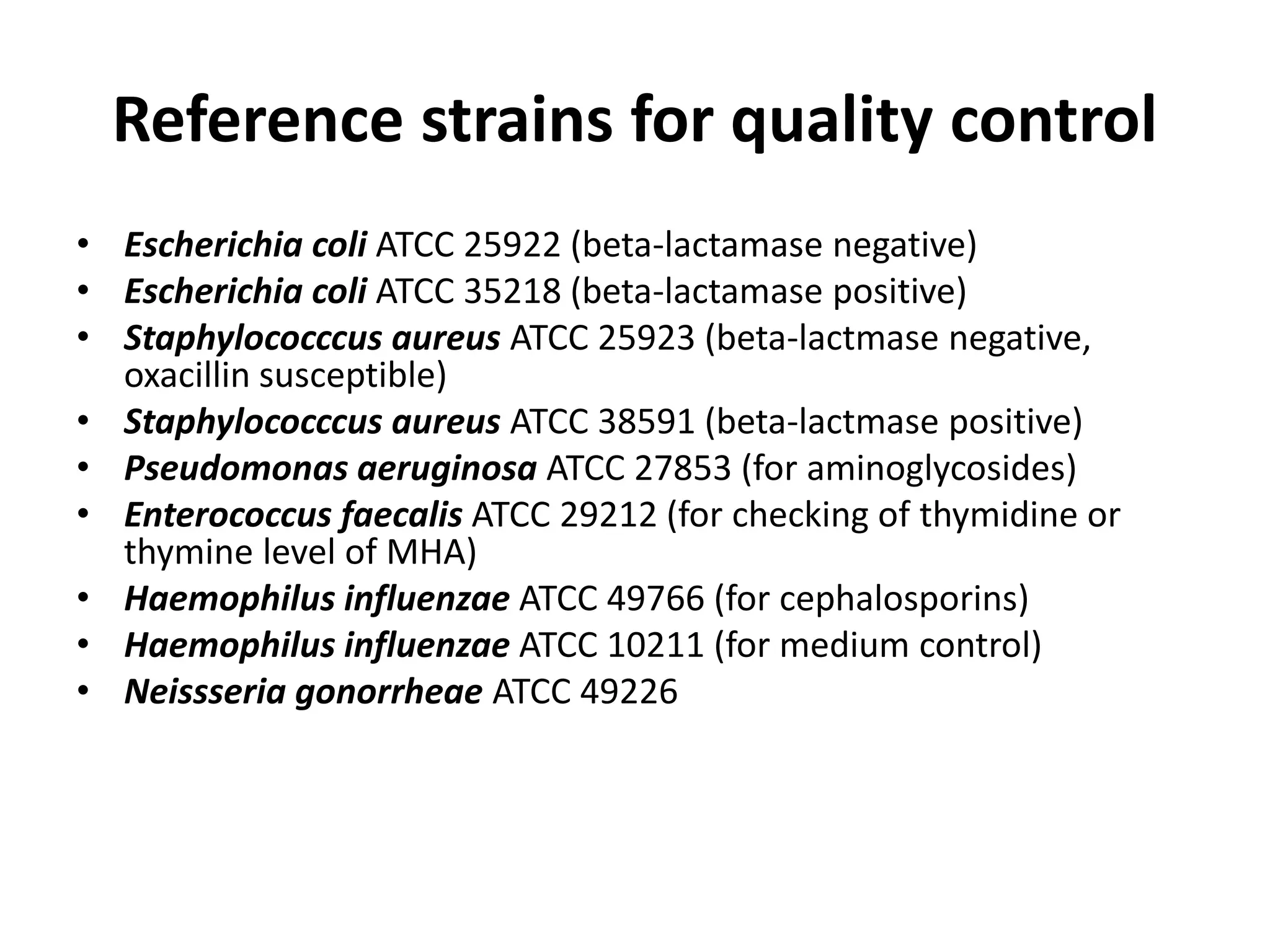
Reference strains for quality control
• Escherichia coli ATCC 25922 (beta-lactamase negative)
• Escherichia coli ATCC 35218 (beta-lactamase positive)
• Staphylococccus aureus ATCC 25923 (beta-lactmase negative,
oxacillin susceptible)
• Staphylococccus aureus ATCC 38591 (beta-lactmase positive)
• Pseudomonas aeruginosa ATCC 27853 (for aminoglycosides)
• Enterococcus faecalis ATCC 29212 (for checking of thymidine or
thymine level of MHA)
• Haemophilus influenzae ATCC 49766 (for cephalosporins)
• Haemophilus influenzae ATCC 10211 (for medium control)
• Neissseria gonorrheae ATCC 49226
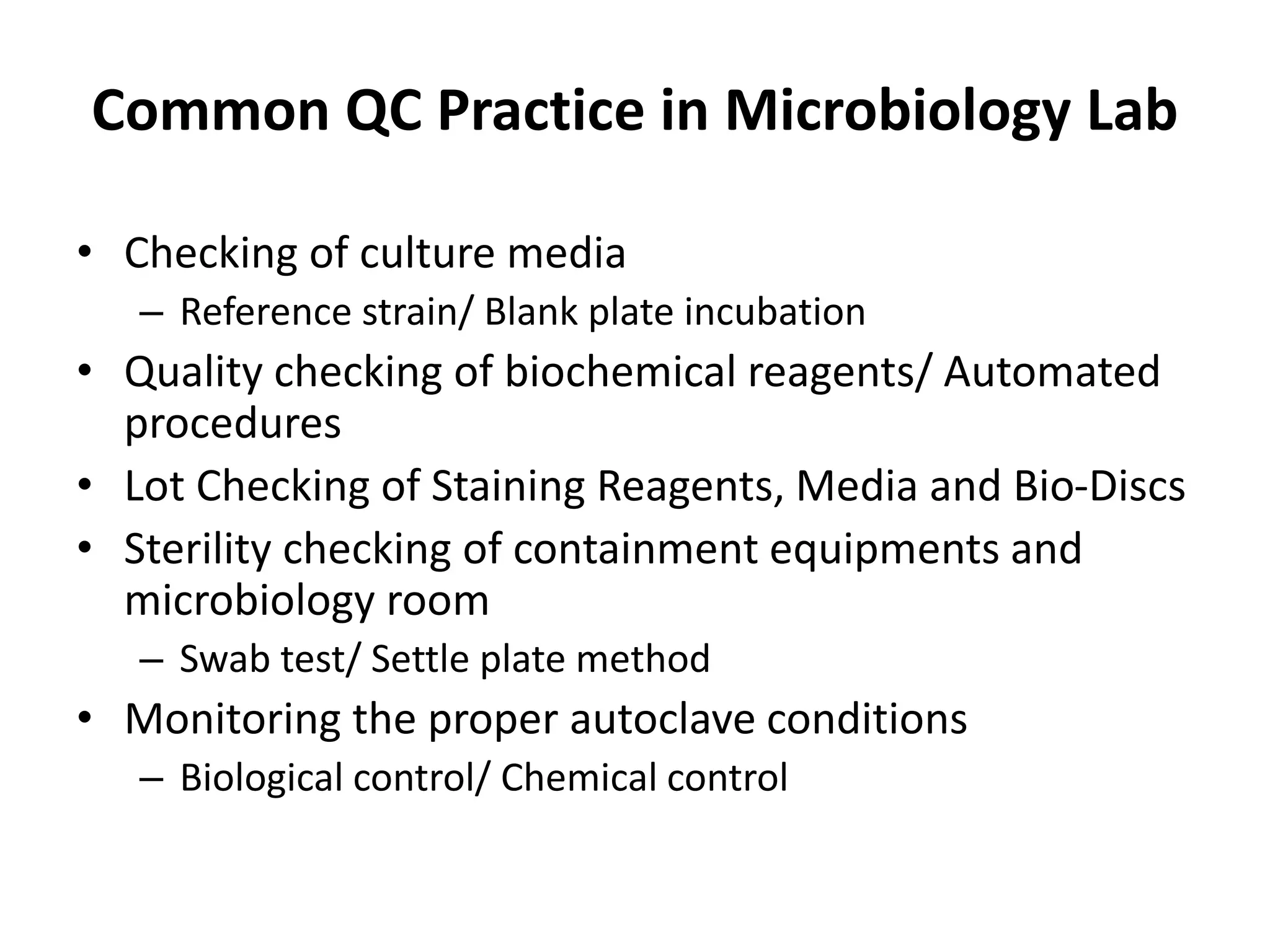
Common QC Practice in Microbiology Lab
• Checking of culture media
– Reference strain/ Blank plate incubation
• Quality checking of biochemical reagents/ Automated
procedures
• Lot Checking of Staining Reagents, Media and Bio-Discs
• Sterility checking of containment equipments and
microbiology room
– Swab test/ Settle plate method
• Monitoring the proper autoclave conditions
– Biological control/ Chemical control
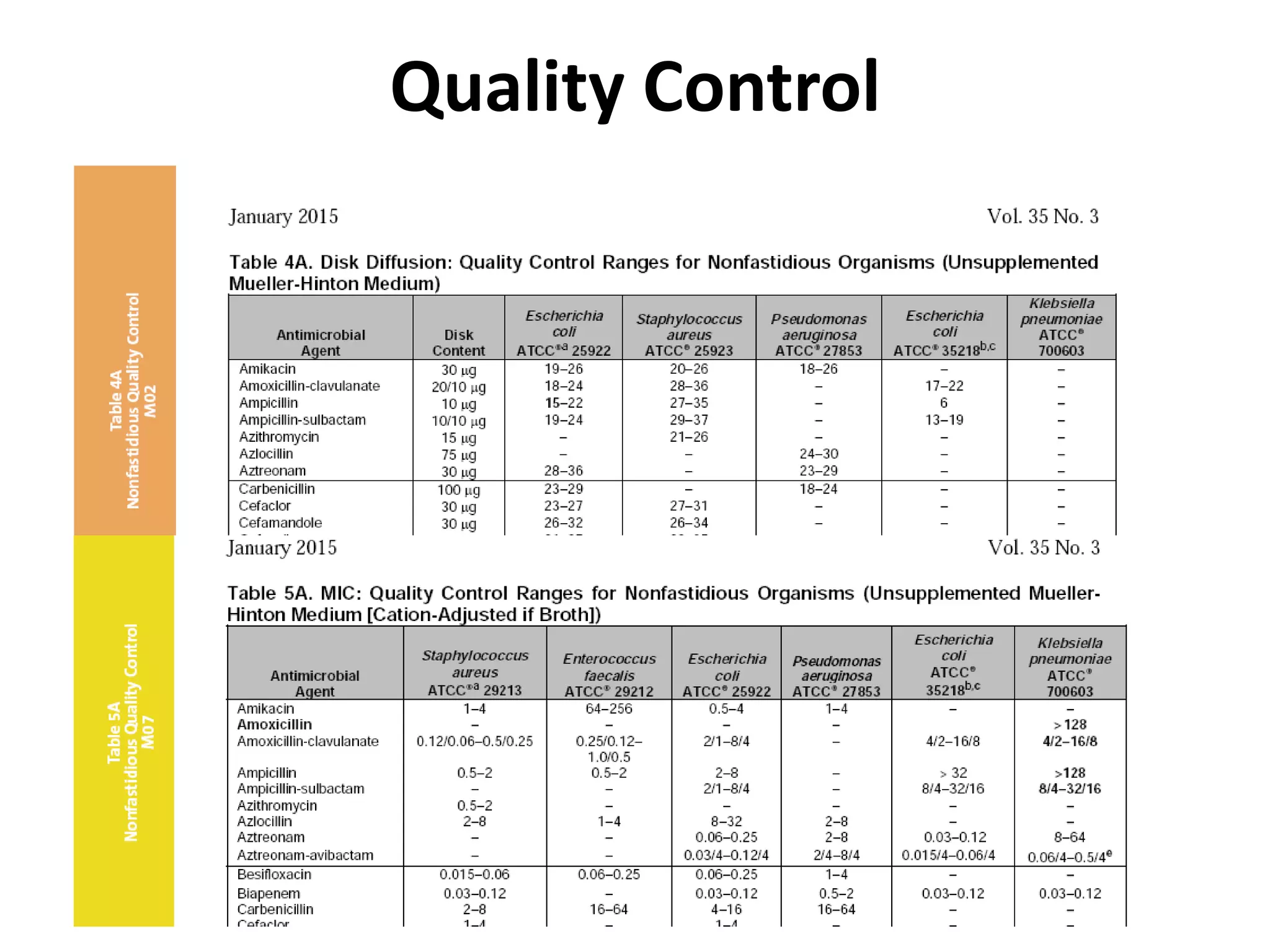
Quality Control
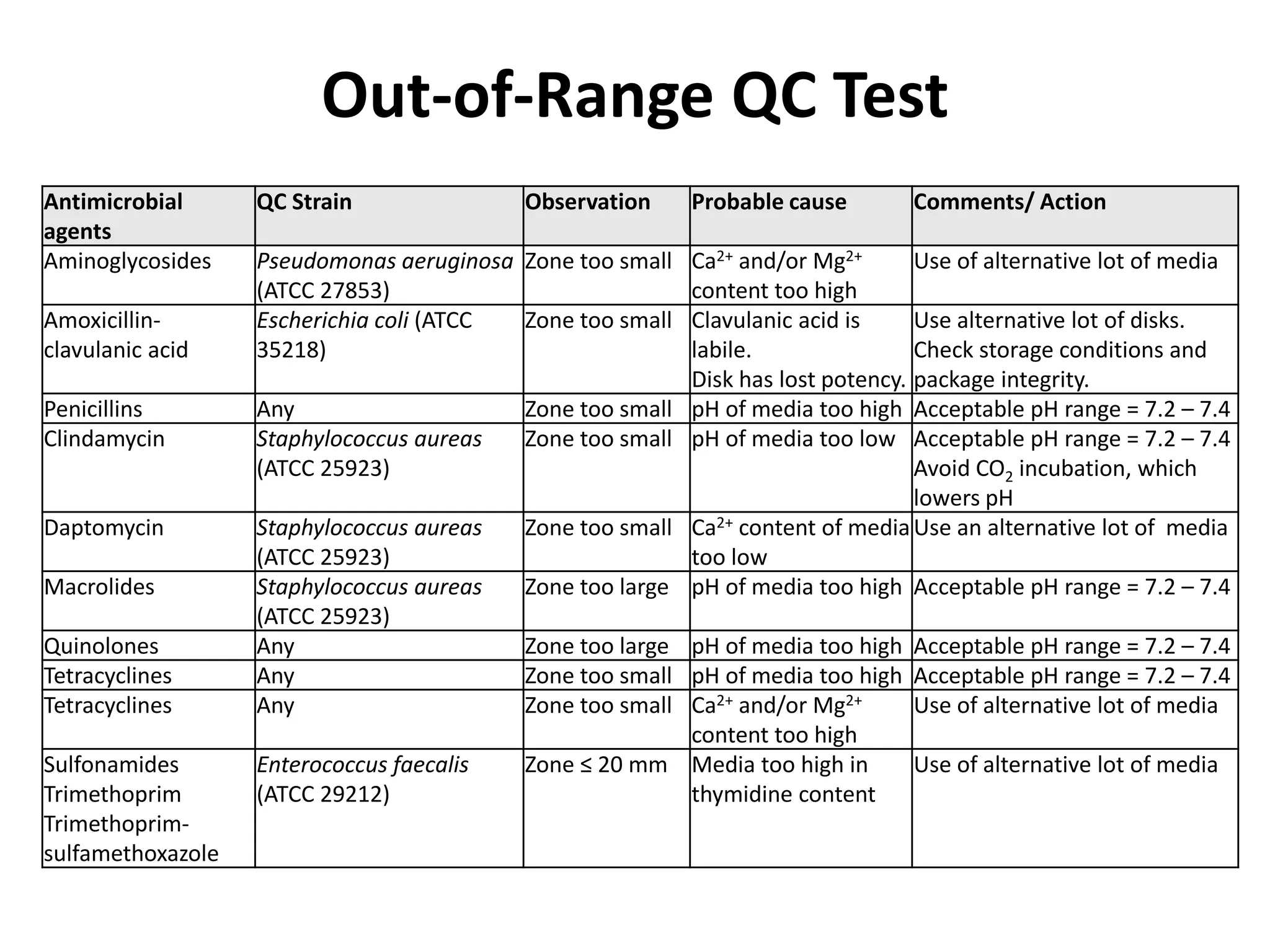
Out-of-Range QC Test
Antimicrobial
agents
QC Strain Observation Probable cause Comments/ Action
Aminoglycosides Pseudomonas aeruginosa
(ATCC 27853)
Zone too small Ca2+ and/or Mg2+
content too high
Use of alternative lot of media
Amoxicillin-
clavulanic acid
Escherichia coli (ATCC
35218)
Zone too small Clavulanic acid is
labile.
Disk has lost potency.
Use alternative lot of disks.
Check storage conditions and
package integrity.
Penicillins Any Zone too small pH of media too high Acceptable pH range = 7.2 – 7.4
Clindamycin Staphylococcus aureas
(ATCC 25923)
Zone too small pH of media too low Acceptable pH range = 7.2 – 7.4
Avoid CO2 incubation, which
lowers pH
Daptomycin Staphylococcus aureas
(ATCC 25923)
Zone too small Ca2+ content of media
too low
Use an alternative lot of media
Macrolides Staphylococcus aureas
(ATCC 25923)
Zone too large pH of media too high Acceptable pH range = 7.2 – 7.4
Quinolones Any Zone too large pH of media too high Acceptable pH range = 7.2 – 7.4
Tetracyclines Any Zone too small pH of media too high Acceptable pH range = 7.2 – 7.4
Tetracyclines Any Zone too small Ca2+ and/or Mg2+
content too high
Use of alternative lot of media
Sulfonamides
Trimethoprim
Trimethoprim-
sulfamethoxazole
Enterococcus faecalis
(ATCC 29212)
Zone ≤ 20 mm Media too high in
thymidine content
Use of alternative lot of media
Automated Methods
• Advantages
– Increased reproducibility
– Decreased labor costs
– Rapid results
– Software
• Detects multi-drug resistances
• Correlates bacterial ID with sensitivity
• Disadvantages
– Cost
Automated Methods
– Detect growth in microvolumes of broth with
various dilutions of antimicrobials
– Detection via photometric, turbidimetric, or
fluorometric methods
– Types
• Microscan Walkaway
• Sensititre ARIS
• BD Phoenix
• Vitek 2
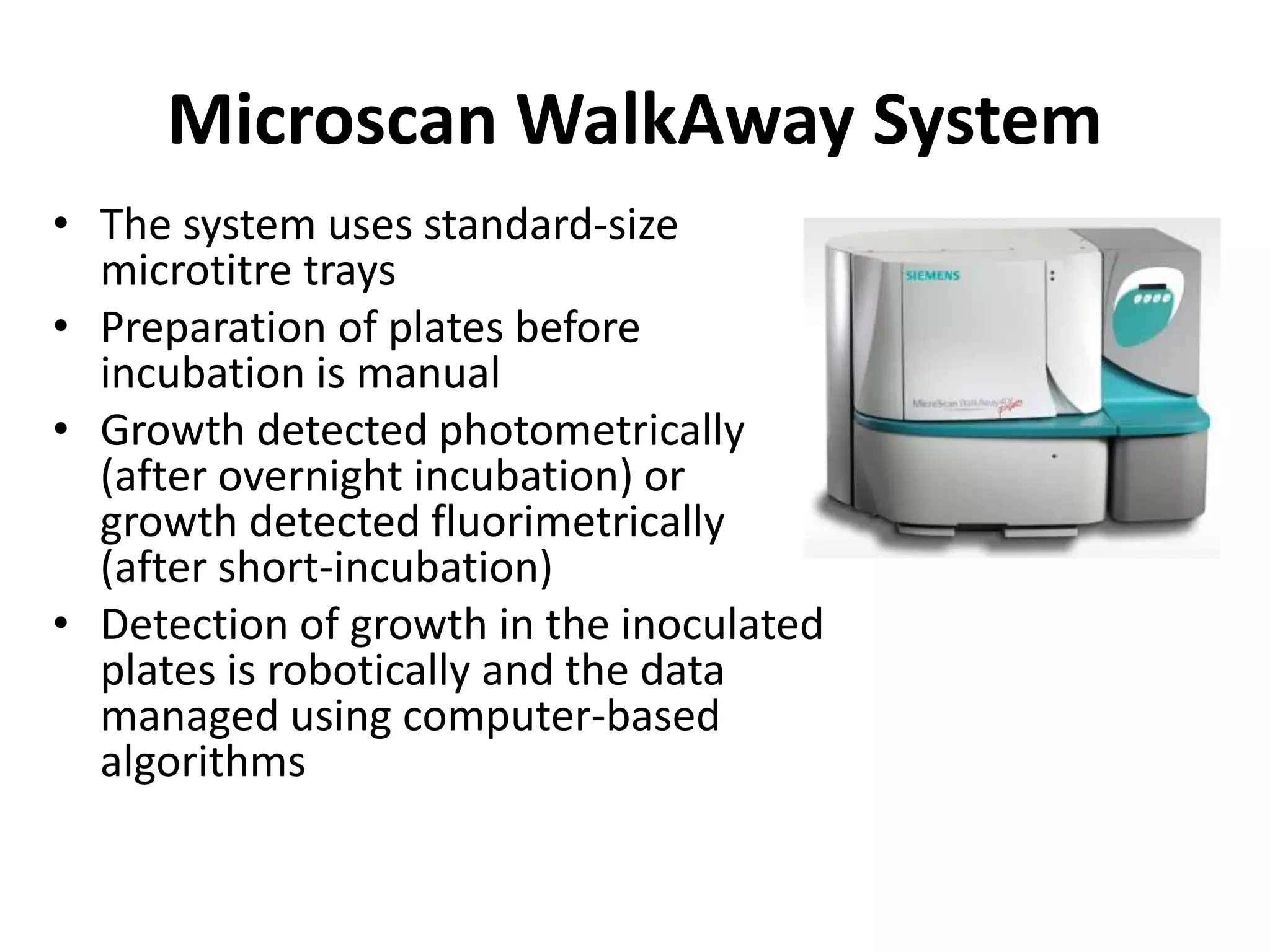
Microscan WalkAway System
• The system uses standard-size
microtitre trays
• Preparation of plates before
incubation is manual
• Growth detected photometrically
(after overnight incubation) or
growth detected fluorimetrically
(after short-incubation)
• Detection of growth in the inoculated
plates is robotically and the data
managed using computer-based
algorithms
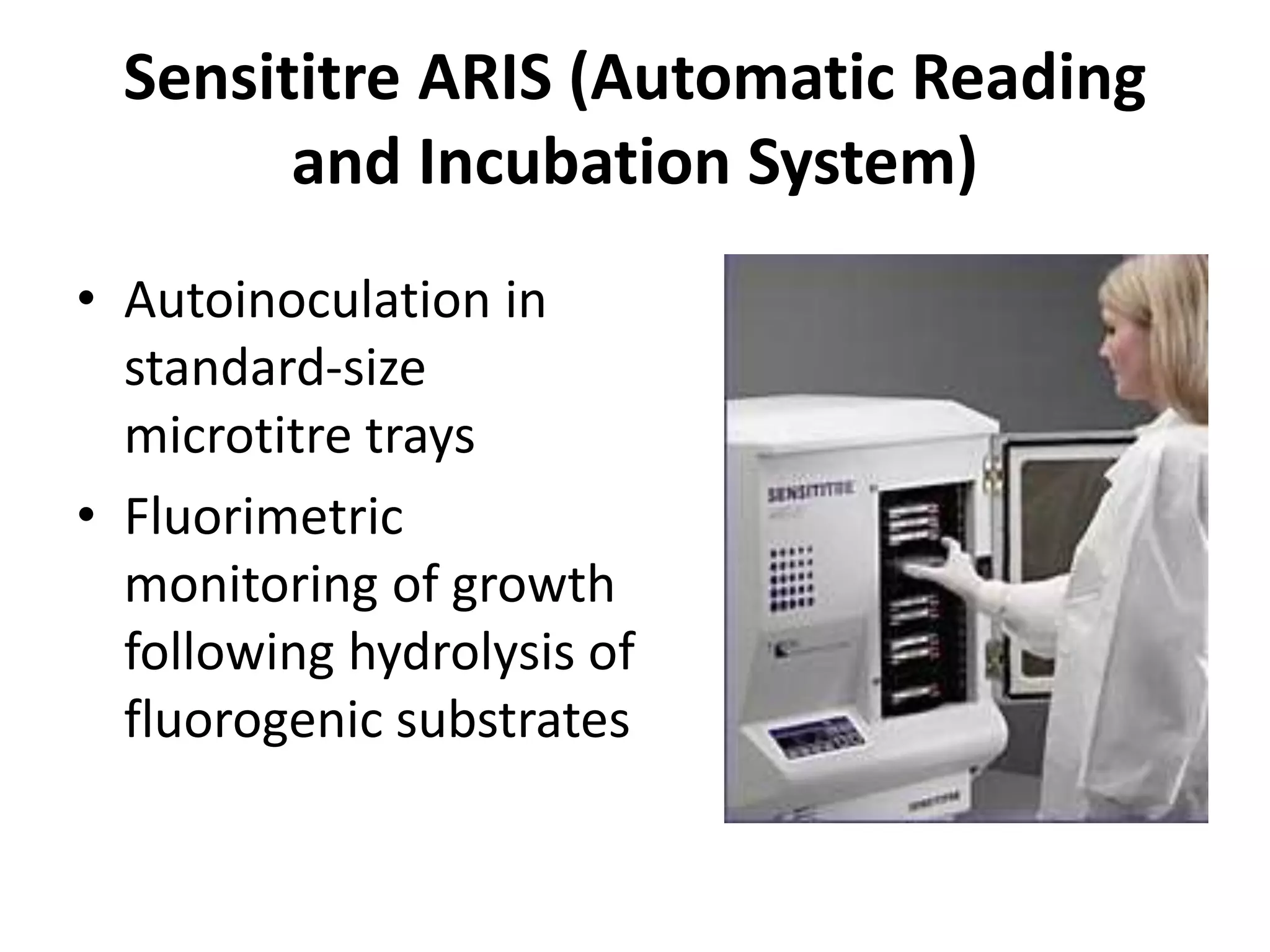
Sensititre ARIS (Automatic Reading
and Incubation System)
• Autoinoculation in
standard-size
microtitre trays
• Fluorimetric
monitoring of growth
following hydrolysis of
fluorogenic substrates
BD Phoenix System
• Provides broth
dilution MIC values
• 45 biochemical test
(including
fluorometric tests)
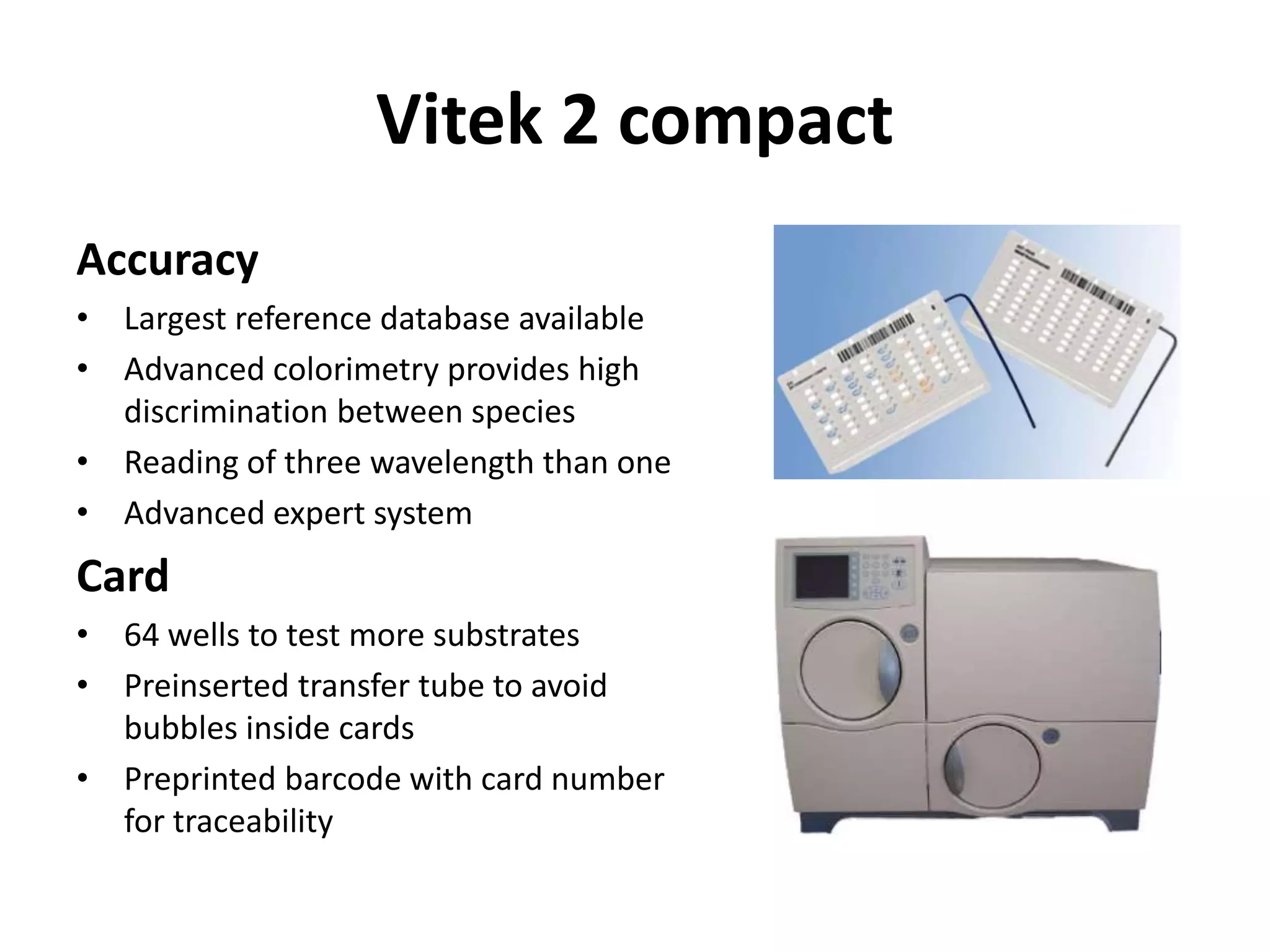
Vitek 2 compact
Accuracy
• Largest reference database available
• Advanced colorimetry provides high
discrimination between species
• Reading of three wavelength than one
• Advanced expert system
Card
• 64 wells to test more substrates
• Preinserted transfer tube to avoid
bubbles inside cards
• Preprinted barcode with card number
for traceability
Thank You

Antimicrobial susceptibility testing

  • 1.
    Antimicrobial Susceptibility Testing Dr.Diganta Dey Quality Manager Ashok Laboratory Clinical Testing Centre Pvt. Ltd.
  • 2.
    Key points • Proceduresof AST – Diffusion • Kirby-Bauer • Stokes method – Dilution • Broth dilution • Agar dilution – Diffusion & Dilution • Epsilometer test • Interpretation of results • Resistant phenotypes • Quality control • Automation
  • 3.
    Basic Requirements QUALITY: 4 – 5pure colonies QUANTITY: 0.5 McFarland Semi-confluent lawn growth McFarland Standard No. 0.5 1 2 3 4 1.0% Barium chloride (ml) 0.05 0.1 0.2 0.3 0.4 1.0% Sulfuric acid (ml) 9.95 9.9 9.8 9.7 9.6 Approx. cell density (1 X 10⁸ CFU/mL) 1.5 3.0 6.0 9.0 12.0 % Transmittance (600 λ) 74.3 55.6 35.6 26.4 21.5 Absorbance (600 λ) 0.08 - 0.1 0.257 0.451 0.582 0.669
  • 4.
    Factors Influencing ASTResults • Müller-Hinton agar required for AST • pH (7.2 and 7.4) – Low pH: aminoglycosides, quinolones, and macrolides lose potency, excessive activity for tetracyclines • Moisture/ inoculum density/No. of discs per plate/ time & temperature of incubation • Thymidine or Thymine content – Reverse inhibitory effect of sulfonamides and trimethoprim • Variation in Divalent Cations – aminoglycoside and tetracycline tests with P. aeruginosa (Excess reduce zone size) – Excess zinc ions may reduce zone sizes of carbapenems
  • 5.
    1- Taking broth culturewith a swab 2- Streaking swab on Müller- Hinton agar surface Kirby-Bauer Test
  • 6.
    1- Placing thedisc with a sterile forcep on agar surface. 2- or using an antibiotic disc dispenser. The antibiotic discs may be placed on the inoculated plates using:
  • 7.
    Measuring diameter ofzone of inhibition after overnight incubation at 37 °C using a ruler/Caliper in mm
  • 8.
    Stokes Method Measure theradius of the inhibition zone from the edge of the disc to the edge of the zone. S = Zone radius greater or ≤ 3 mm than the control radius R = No zone of inhibition /zone radius measures 2 mm
  • 9.
    Disc Diffusion ForFastidious Organisms • Streptococcus pneumoniae / Streptococcus pyogenes – MHA supplimented with 5% sheep blood • Haemophilus spp. – Haemophilus Test medium [MHA supplemented with factor V (NAD) and Factor X (hematin)] – 35C in an atmosphere of 5% CO2 for 16 - 18 hrs • Neisseria gonorrhoeae – Thayer-Martin agar [MHA supplemented with 5% chocolate sheep blood and antibiotics (VCN inhibitor)] – 35C in an atmosphere of 5% CO2 for 20 - 24 hrs
  • 10.
    Broth Dilution Test •Müeller-Hinton broth is used • Broth microdilution: Serial 2-fold dilution of antibiotics in 96-well microtitre plates • Broth macrodilution: Serial 2-fold dilution of antibiotics in test tubes • MIC: Is the lowest concentration of antibiotic capable of preventing growth of the bacteria • MBC: the lowest concentration of the antibiotic that results in no growth on the subcultures
  • 14.
    Agar Dilution Method •Serial dilution of antibiotics are prepared in agar and poured into plates. • Useful for: – Mycobacterium tuberculosis – Streptococcus pneumoniae
  • 15.
    Epsilometer Test • newtechnique for detection of MIC • Consists of a rectangular plastic strip with graduated increasing concentration of the antibiotic • applied to the surface of an inoculated agar plate, • after over night incubation an ellipsoid inhibition zone is seen. • MIC = Conc. at which the ellipse intercepts the strip.
  • 16.
  • 17.
    • Breakpoints arediscriminatory antimicrobial concentrations used in the interpretation of AST results to define isolates as susceptible (S), intermediate (I) or resistant (R). • Clinical, pharmacological, microbiological and pharmacodynamic considerations are important in setting breakpoints. • In the USA, the Clinical Laboratory Standards Institute (CLSI) publishes such guidance Within Europe, there are six active national breakpoint committees co- ordinated through the European Committee on Antimicrobial Susceptibility Testing (EUCAST). Interpretation of results
  • 20.
    Resistant Phenotypes Enzyme TypeActive Site Host Organisms Substrates ESBL (TEM, SHV, CTX-M) Serine Enterobacteriaceae and nonfermenters Penicillins, 3rd- generation cephalosporins, monobactam AmpC β- lactamases (AmpC) Serine Enterobacter spp. Citrobacter spp. Cephamycins (Cefoxitin), 3rd- generation cephalosporins Carbapenemases (KPC) Serine Enterobacteriaceae and nonfermenters All β-lactams Carbapenemases / MBL (VIM, IMP) Zinc-binding thiol group Enterobacteriaceae and nonfermenters All β-lactams
  • 21.
    • (A) Double-disc synergyand • (B) Phenotypic confirmatory test for ESBL detection Extended spectrum beta-lactamase (ESBL) (i) ceftazidime (30 μg), (ii) ceftazidime-clavulanic acid (30/10 μg), (iii) amoxy-clavulanic acid (20/10 μg), (iv) cefotaxime (30 μg)
  • 22.
    AmpC betalactamase production AmpCinduction can be determined using cefotaxime and ceftazidime in combination with cefoxitin and imipenem. If inducible AmpC is present, the inducer cefoxitin or imipenem will induce AmpC expression and reduces the zones around the hydrolysis sensitive cefotaxime and ceftazidime.
  • 23.
    Carbapenemase production: ModifiedHodge Test Modified Hodge Test of the four KPC producing K. pneumoniae isolates and K. pneumoniae (ATCC 700603) as a negative control. All four KPC producing isolates produced the characteristic cloverleaf-like indentation (indicated by a bracket), except the negative control. ‘v’ denotes imipenem disc.
  • 24.
    Metallo-beta-lactamase production • (A)Imipenem-EDTA combined disc diffusion test • (B) Imipenem-EDTA double-disc synergy test for MBL production
  • 25.
    Phenotype Screening Resistance Methicillinresistant Staphylococcus aureus (MRSA) Cefoxitin disk screen test ß-lactam agents, including cephalosporins and carbapenems, may be susceptible to cephalosporins with anti-MRSA activity (Ceftobiprole , ceftaroline) Vancomycin resistant S. aureus (VRSA)/ Vancomycin resistant Enterococci (VRE) MIC: ≥ 16 μg/ml (Brain-heart infusion agar) Vancomycin, teicoplanin Resistance in Gram Positive Bacteria
  • 26.
    Quality Control inMicrobiology • Quality Assurance (QA):- – all those planned and systematic actions necessary to provide adequate confidence that a product, process or service will satisfy given requirements for quality • Quality:- – totality of features and characteristic of a product, process or service that bear on its ability to satisfy stated or implied needs • Quality Control (QC):- – operational techniques and activities that are used to fulfil given requirements for quality Reference: Quality management and quality assurance - Vocabulary. ISO 8402. Geneva: ISO, 1994
  • 27.
    Reference strains forquality control • Escherichia coli ATCC 25922 (beta-lactamase negative) • Escherichia coli ATCC 35218 (beta-lactamase positive) • Staphylococccus aureus ATCC 25923 (beta-lactmase negative, oxacillin susceptible) • Staphylococccus aureus ATCC 38591 (beta-lactmase positive) • Pseudomonas aeruginosa ATCC 27853 (for aminoglycosides) • Enterococcus faecalis ATCC 29212 (for checking of thymidine or thymine level of MHA) • Haemophilus influenzae ATCC 49766 (for cephalosporins) • Haemophilus influenzae ATCC 10211 (for medium control) • Neissseria gonorrheae ATCC 49226
  • 28.
    Common QC Practicein Microbiology Lab • Checking of culture media – Reference strain/ Blank plate incubation • Quality checking of biochemical reagents/ Automated procedures • Lot Checking of Staining Reagents, Media and Bio-Discs • Sterility checking of containment equipments and microbiology room – Swab test/ Settle plate method • Monitoring the proper autoclave conditions – Biological control/ Chemical control
  • 29.
  • 30.
    Out-of-Range QC Test Antimicrobial agents QCStrain Observation Probable cause Comments/ Action Aminoglycosides Pseudomonas aeruginosa (ATCC 27853) Zone too small Ca2+ and/or Mg2+ content too high Use of alternative lot of media Amoxicillin- clavulanic acid Escherichia coli (ATCC 35218) Zone too small Clavulanic acid is labile. Disk has lost potency. Use alternative lot of disks. Check storage conditions and package integrity. Penicillins Any Zone too small pH of media too high Acceptable pH range = 7.2 – 7.4 Clindamycin Staphylococcus aureas (ATCC 25923) Zone too small pH of media too low Acceptable pH range = 7.2 – 7.4 Avoid CO2 incubation, which lowers pH Daptomycin Staphylococcus aureas (ATCC 25923) Zone too small Ca2+ content of media too low Use an alternative lot of media Macrolides Staphylococcus aureas (ATCC 25923) Zone too large pH of media too high Acceptable pH range = 7.2 – 7.4 Quinolones Any Zone too large pH of media too high Acceptable pH range = 7.2 – 7.4 Tetracyclines Any Zone too small pH of media too high Acceptable pH range = 7.2 – 7.4 Tetracyclines Any Zone too small Ca2+ and/or Mg2+ content too high Use of alternative lot of media Sulfonamides Trimethoprim Trimethoprim- sulfamethoxazole Enterococcus faecalis (ATCC 29212) Zone ≤ 20 mm Media too high in thymidine content Use of alternative lot of media
  • 31.
    Automated Methods • Advantages –Increased reproducibility – Decreased labor costs – Rapid results – Software • Detects multi-drug resistances • Correlates bacterial ID with sensitivity • Disadvantages – Cost
  • 32.
    Automated Methods – Detectgrowth in microvolumes of broth with various dilutions of antimicrobials – Detection via photometric, turbidimetric, or fluorometric methods – Types • Microscan Walkaway • Sensititre ARIS • BD Phoenix • Vitek 2
  • 33.
    Microscan WalkAway System •The system uses standard-size microtitre trays • Preparation of plates before incubation is manual • Growth detected photometrically (after overnight incubation) or growth detected fluorimetrically (after short-incubation) • Detection of growth in the inoculated plates is robotically and the data managed using computer-based algorithms
  • 34.
    Sensititre ARIS (AutomaticReading and Incubation System) • Autoinoculation in standard-size microtitre trays • Fluorimetric monitoring of growth following hydrolysis of fluorogenic substrates
  • 35.
    BD Phoenix System •Provides broth dilution MIC values • 45 biochemical test (including fluorometric tests)
  • 36.
    Vitek 2 compact Accuracy •Largest reference database available • Advanced colorimetry provides high discrimination between species • Reading of three wavelength than one • Advanced expert system Card • 64 wells to test more substrates • Preinserted transfer tube to avoid bubbles inside cards • Preprinted barcode with card number for traceability
  • 37.