Dr Tim Baker
tim@winnersatwork.com.au
www.winnersatwork.com.au
Being Assertive, Not
Aggressive or Passive
Unit 1—The Five Approaches to
Dealing with Conflict
Unit 2—Understanding People
& their Personalities
Unit 3—Managing Emotion in
Conflict Situations
Unit 4—Being Assertive, Not
Aggressive or Passive
Unit 5—Essential
Communication Skills for
Conflict Resolution
Unit 6—Giving & Receiving
Constructive Criticism
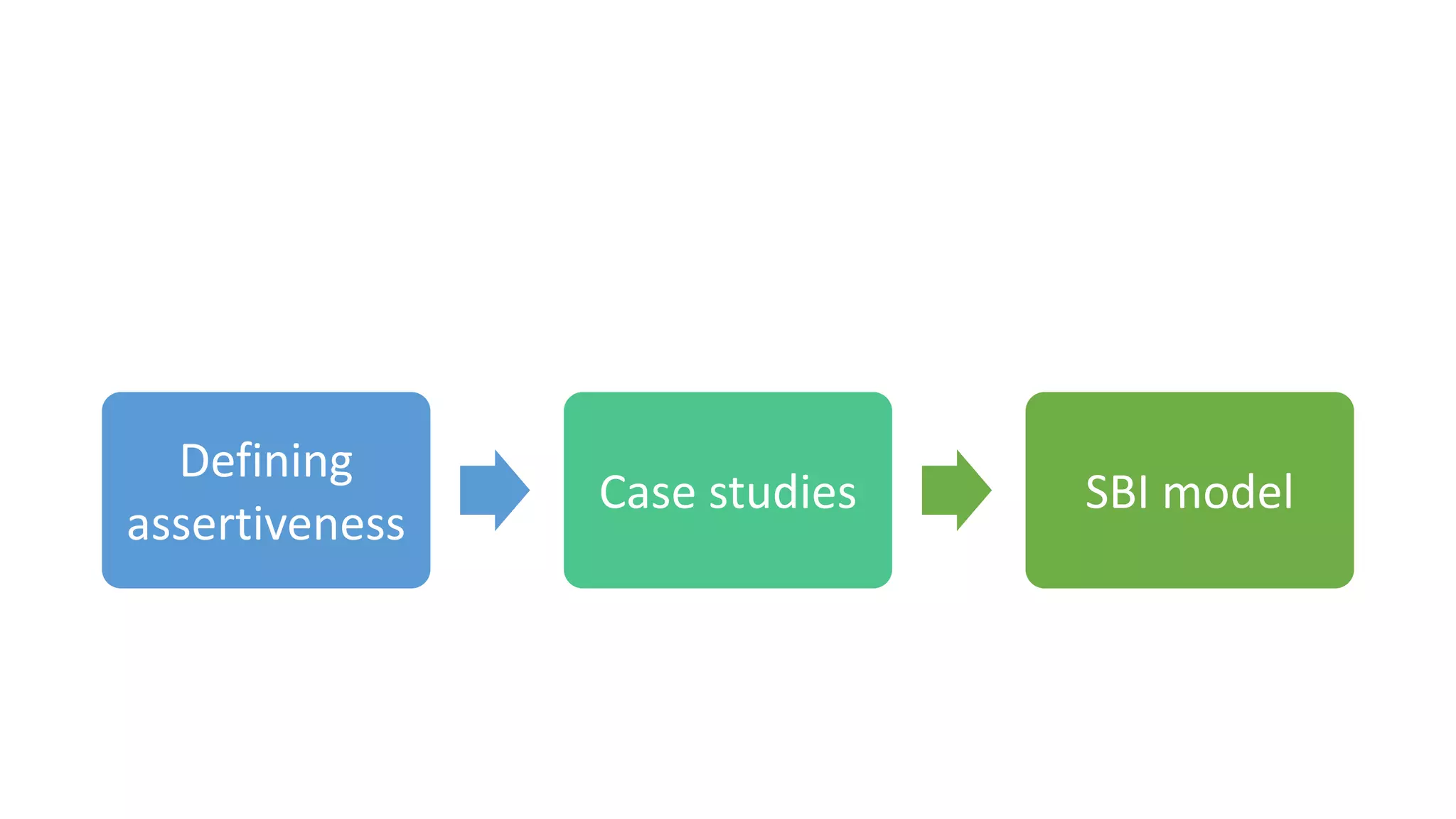
Defining
assertiveness
Case studies SBI model
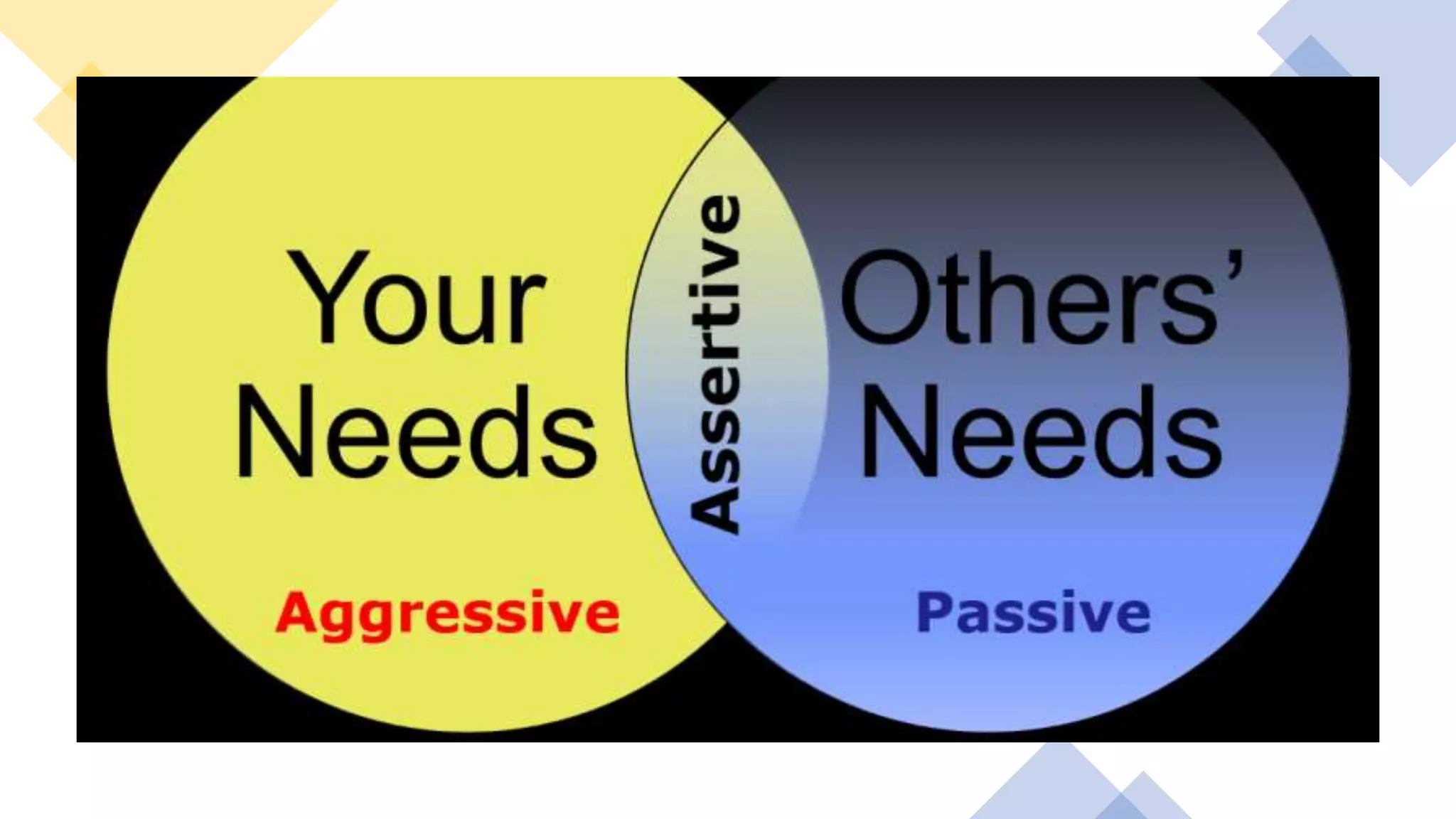
Assertiveness
An honest, direct, and appropriate
expression of one’s feelings,
thoughts, and beliefs.
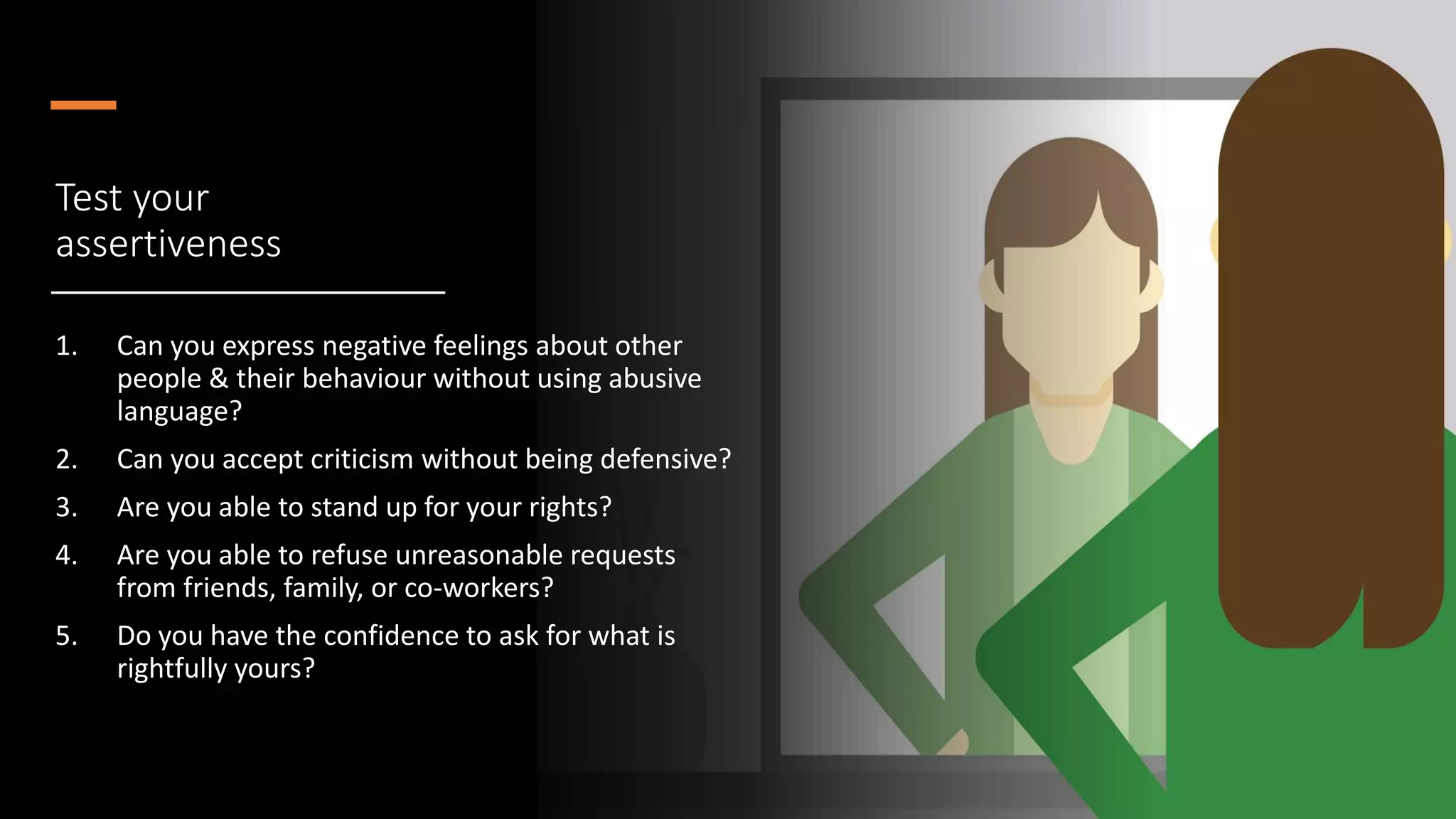
Test your
assertiveness
1. Can you express negative feelings about other
people & their behaviour without using abusive
language?
2. Can you accept criticism without being defensive?
3. Are you able to stand up for your rights?
4. Are you able to refuse unreasonable requests
from friends, family, or co-workers?
5. Do you have the confidence to ask for what is
rightfully yours?
Why assertiveness is
important?
• Effective communication brings about the
achievement of individual & shared goals
• Assertiveness increases your ability to
reach these goals while maintaining your
rights and dignity
Myths About
Assertiveness
• Other people’s feelings & rights are
more important than yours
• You will offend other people by being
assertive
• You are not important enough to
express your feelings & rights
What Keeps You From
Being Assertive?
• Fear of change
• Refusal to admit submissiveness
• Fear of ruining relationships
• Lack of confidence
Assertive Rights
• You have the right to be assertive
• You have the right to request that others change
their behaviour if they are infringing your rights
• You have a right to express your needs, even if
they are illogical
* Be aware that there are responsibilities attached
to all these rights!
What Would You
Say?
Joan is at a meeting where the topic is the viability of the project, she
has been working on for three months straight. She has not said a
word in the last hour. Suddenly she jumps up and accuses you of
cancelling the project based on personal dislike.
How would you response to Joan?
What Would You
Say?
The copier has been broken for two days. Sam asked the Admin
Assistant to call in for repairs several times with no effect. He says
nothing and calls the repairer himself. After all, he thinks, she’s
probably too busy typing up the report he gave her this morning.
How does Sam approach the Admin Assistant?
What Would You
Say?
Judy’s boss asks her to go on an important business trip which will
carry over into the weekend of her sister’s wedding. Judy feels she
can’t refuse her boss and plans on sending her spouse to the wedding
in her place.
How does Judy approach her manager?
Keys to More Power
• Verbal
• Non-verbal
• Deal with the situation immediately
• Listen carefully
• Sort out fact from emotion
• Avoid being defensive
• Be calm & clear
• Ask questions
• Paraphrase
• Maintain eye contact
• Breathe
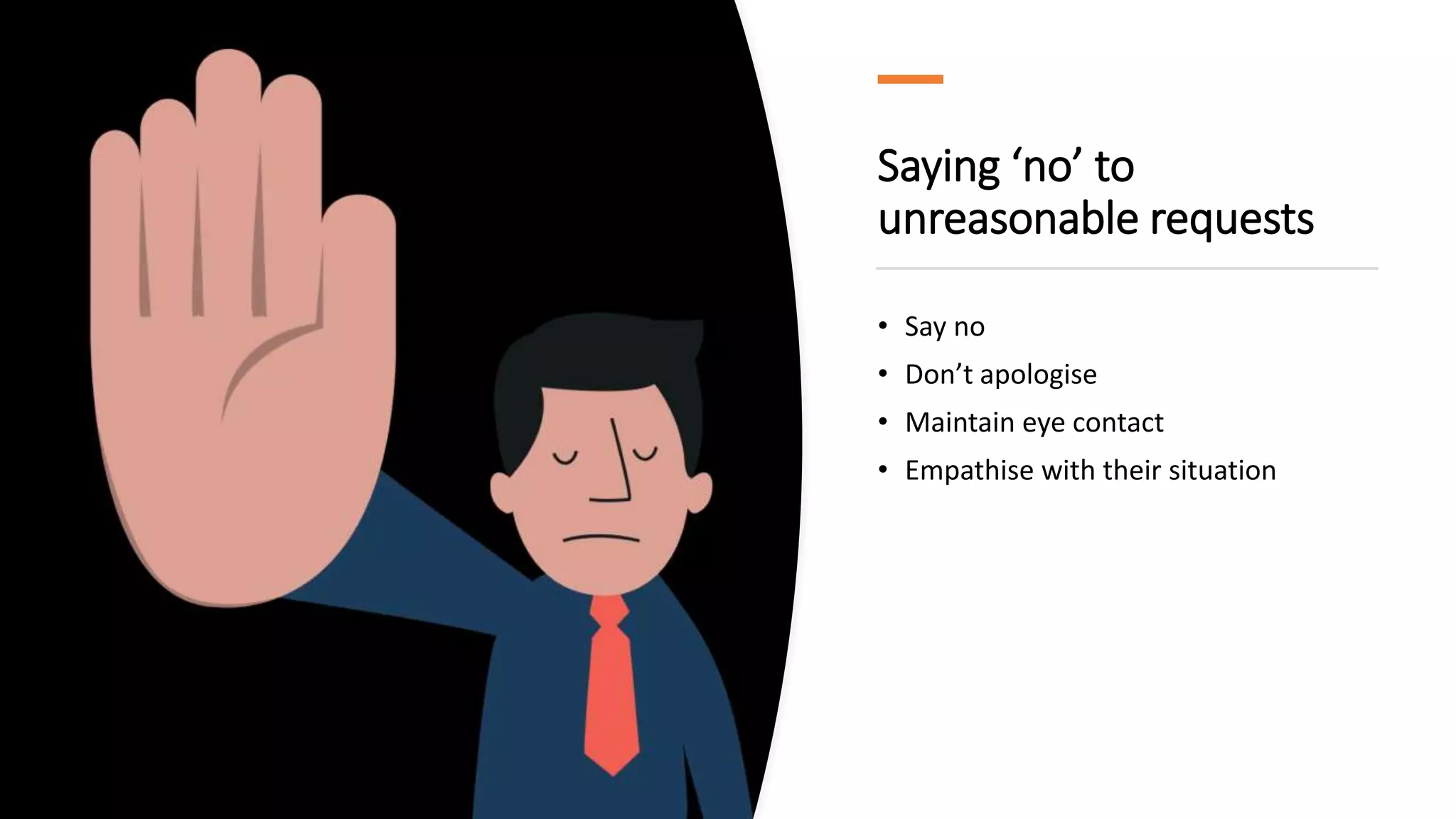
Saying ‘no’ to
unreasonable requests
• Say no
• Don’t apologise
• Maintain eye contact
• Empathise with their situation
Situation-Behavior-Impact (SBI) Model
• Situation: Capture the situation (e.g., in the
meeting with Joe yesterday, in the kitchen this
morning when we were discussing x, or in the
meeting with Mary on Friday).
• Behavior: Describe the behaviour (e.g., you
interrupted, you did not complete your
assignment on time, or you arrived late).
• Impact: Describe the impact (“so what?”) on
you, on co-workers, on an
engagement/program, or on the organisation
(e.g., because you kept interrupting your team
members in the meeting, they all shut down
and we didn’t have a chance to discuss the
ideas of others).
Your homework
Find opportunities to use some of the
skills you have learned today.
Unit 1—The Five Approaches to
Dealing with Conflict
Unit 2—Understanding People
& their Personalities
Unit 3—Managing Emotion in
Conflict Situations
Unit 4—Being Assertive, Not
Aggressive or Passive
Unit 5—Essential
Communication Skills for
Conflict Resolution
Unit 6—Giving & Receiving
Constructive Criticism

Being Assertive, Not aggressive or Passive

  • 1.
  • 2.
    Unit 1—The FiveApproaches to Dealing with Conflict Unit 2—Understanding People & their Personalities Unit 3—Managing Emotion in Conflict Situations Unit 4—Being Assertive, Not Aggressive or Passive Unit 5—Essential Communication Skills for Conflict Resolution Unit 6—Giving & Receiving Constructive Criticism
  • 3.
  • 4.
    Assertiveness An honest, direct,and appropriate expression of one’s feelings, thoughts, and beliefs.
  • 6.
    Test your assertiveness 1. Canyou express negative feelings about other people & their behaviour without using abusive language? 2. Can you accept criticism without being defensive? 3. Are you able to stand up for your rights? 4. Are you able to refuse unreasonable requests from friends, family, or co-workers? 5. Do you have the confidence to ask for what is rightfully yours?
  • 7.
    Why assertiveness is important? •Effective communication brings about the achievement of individual & shared goals • Assertiveness increases your ability to reach these goals while maintaining your rights and dignity
  • 8.
    Myths About Assertiveness • Otherpeople’s feelings & rights are more important than yours • You will offend other people by being assertive • You are not important enough to express your feelings & rights
  • 9.
    What Keeps YouFrom Being Assertive? • Fear of change • Refusal to admit submissiveness • Fear of ruining relationships • Lack of confidence
  • 10.
    Assertive Rights • Youhave the right to be assertive • You have the right to request that others change their behaviour if they are infringing your rights • You have a right to express your needs, even if they are illogical * Be aware that there are responsibilities attached to all these rights!
  • 11.
    What Would You Say? Joanis at a meeting where the topic is the viability of the project, she has been working on for three months straight. She has not said a word in the last hour. Suddenly she jumps up and accuses you of cancelling the project based on personal dislike. How would you response to Joan?
  • 12.
    What Would You Say? Thecopier has been broken for two days. Sam asked the Admin Assistant to call in for repairs several times with no effect. He says nothing and calls the repairer himself. After all, he thinks, she’s probably too busy typing up the report he gave her this morning. How does Sam approach the Admin Assistant?
  • 13.
    What Would You Say? Judy’sboss asks her to go on an important business trip which will carry over into the weekend of her sister’s wedding. Judy feels she can’t refuse her boss and plans on sending her spouse to the wedding in her place. How does Judy approach her manager?
  • 14.
    Keys to MorePower • Verbal • Non-verbal • Deal with the situation immediately • Listen carefully • Sort out fact from emotion • Avoid being defensive • Be calm & clear • Ask questions • Paraphrase • Maintain eye contact • Breathe
  • 15.
    Saying ‘no’ to unreasonablerequests • Say no • Don’t apologise • Maintain eye contact • Empathise with their situation
  • 16.
    Situation-Behavior-Impact (SBI) Model •Situation: Capture the situation (e.g., in the meeting with Joe yesterday, in the kitchen this morning when we were discussing x, or in the meeting with Mary on Friday). • Behavior: Describe the behaviour (e.g., you interrupted, you did not complete your assignment on time, or you arrived late). • Impact: Describe the impact (“so what?”) on you, on co-workers, on an engagement/program, or on the organisation (e.g., because you kept interrupting your team members in the meeting, they all shut down and we didn’t have a chance to discuss the ideas of others).
  • 17.
    Your homework Find opportunitiesto use some of the skills you have learned today.
  • 18.
    Unit 1—The FiveApproaches to Dealing with Conflict Unit 2—Understanding People & their Personalities Unit 3—Managing Emotion in Conflict Situations Unit 4—Being Assertive, Not Aggressive or Passive Unit 5—Essential Communication Skills for Conflict Resolution Unit 6—Giving & Receiving Constructive Criticism