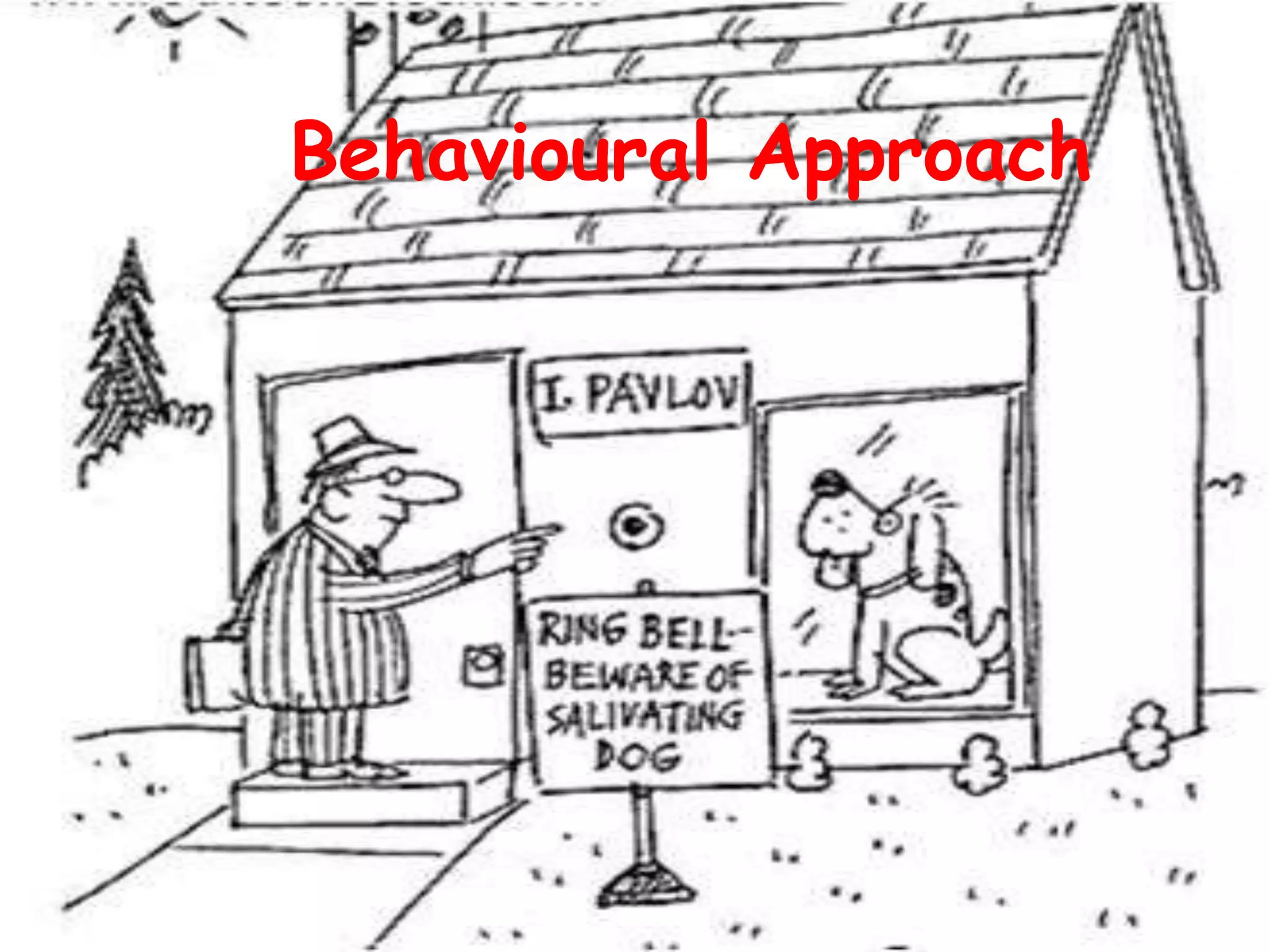
Behavioural Approach
Assumptions
All behaviours (normal and abnormal) are learned


 Learned responses from environmental stimuli


          Study observable behaviour
Causes
    1.Classical Conditioning
    Learning by association

    2. Operant Conditioning
   Learning by reinforcement

       3. Social Learning
Learning by watching others being
             rewarded
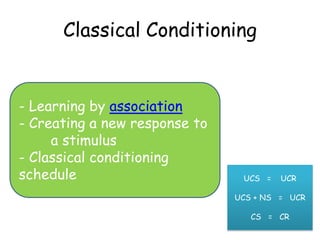
Classical Conditioning


- Learning by association
- Creating a new response to
     a stimulus
- Classical conditioning
schedule                        UCS =   UCR

                               UCS + NS = UCR

                                  CS = CR
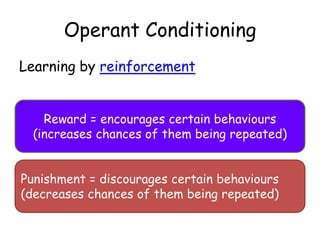
Operant Conditioning
Learning by reinforcement


    Reward = encourages certain behaviours
  (increases chances of them being repeated)


Punishment = discourages certain behaviours
(decreases chances of them being repeated)
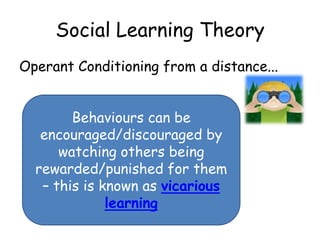
Social Learning Theory
Operant Conditioning from a distance...


        Behaviours can be
   encouraged/discouraged by
      watching others being
  rewarded/punished for them
   – this is known as vicarious
              learning
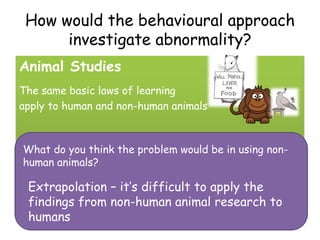
How would the behavioural approach
      investigate abnormality?
Animal Studies
The same basic laws of learning
apply to human and non-human animals


What do you think the problem would be in using non-
human animals?

 Extrapolation – it’s difficult to apply the
 findings from non-human animal research to
 humans
Scientific

 For example, the behavioural approach
   focuses on what is observable and
             measureable

    This is positive because it allows
concepts such as classical conditioning to
be demonstrated scientifically – allowing
  for empirical support for the theory
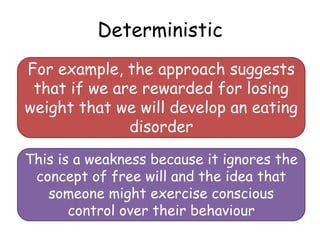
Deterministic
For example, the approach suggests
 that if we are rewarded for losing
weight that we will develop an eating
              disorder

This is a weakness because it ignores the
 concept of free will and the idea that
   someone might exercise conscious
       control over their behaviour
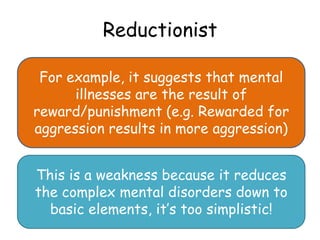
Reductionist

 For example, it suggests that mental
      illnesses are the result of
reward/punishment (e.g. Rewarded for
aggression results in more aggression)


This is a weakness because it reduces
the complex mental disorders down to
  basic elements, it’s too simplistic!
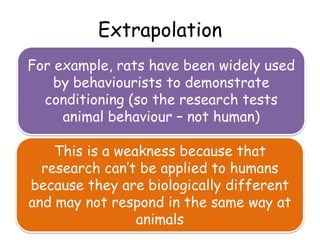
Extrapolation
For example, rats have been widely used
    by behaviourists to demonstrate
  conditioning (so the research tests
     animal behaviour – not human)

    This is a weakness because that
  research can’t be applied to humans
because they are biologically different
and may not respond in the same way at
                 animals
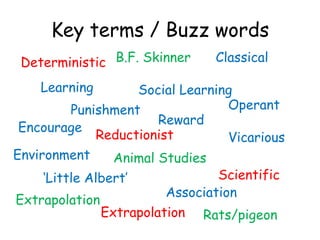
Key terms / Buzz words
 Deterministic B.F. Skinner      Classical

    Learning         Social Learning
          Punishment                Operant
                         Reward
 Encourage
               Reductionist         Vicarious
Environment       Animal Studies
     ‘Little Albert’              Scientific
                          Association
Extrapolation
                Extrapolation Rats/pigeon

Behavioural approach

  • 1.
  • 2.
    Assumptions All behaviours (normaland abnormal) are learned Learned responses from environmental stimuli Study observable behaviour
  • 3.
    Causes 1.Classical Conditioning Learning by association 2. Operant Conditioning Learning by reinforcement 3. Social Learning Learning by watching others being rewarded
  • 4.
    Classical Conditioning - Learningby association - Creating a new response to a stimulus - Classical conditioning schedule UCS = UCR UCS + NS = UCR CS = CR
  • 5.
    Operant Conditioning Learning byreinforcement Reward = encourages certain behaviours (increases chances of them being repeated) Punishment = discourages certain behaviours (decreases chances of them being repeated)
  • 6.
    Social Learning Theory OperantConditioning from a distance... Behaviours can be encouraged/discouraged by watching others being rewarded/punished for them – this is known as vicarious learning
  • 7.
    How would thebehavioural approach investigate abnormality? Animal Studies The same basic laws of learning apply to human and non-human animals What do you think the problem would be in using non- human animals? Extrapolation – it’s difficult to apply the findings from non-human animal research to humans
  • 8.
    Scientific For example,the behavioural approach focuses on what is observable and measureable This is positive because it allows concepts such as classical conditioning to be demonstrated scientifically – allowing for empirical support for the theory
  • 9.
    Deterministic For example, theapproach suggests that if we are rewarded for losing weight that we will develop an eating disorder This is a weakness because it ignores the concept of free will and the idea that someone might exercise conscious control over their behaviour
  • 10.
    Reductionist For example,it suggests that mental illnesses are the result of reward/punishment (e.g. Rewarded for aggression results in more aggression) This is a weakness because it reduces the complex mental disorders down to basic elements, it’s too simplistic!
  • 11.
    Extrapolation For example, ratshave been widely used by behaviourists to demonstrate conditioning (so the research tests animal behaviour – not human) This is a weakness because that research can’t be applied to humans because they are biologically different and may not respond in the same way at animals
  • 12.
    Key terms /Buzz words Deterministic B.F. Skinner Classical Learning Social Learning Punishment Operant Reward Encourage Reductionist Vicarious Environment Animal Studies ‘Little Albert’ Scientific Association Extrapolation Extrapolation Rats/pigeon