Behaviorism
By Samantha Tornese
What is Behaviorism?
Behaviorism is learning theory that focuses on
how behavior is shaped over time.
Behaviorism is a study of observable behavior
only.
The “learner” is responding to the environment
that (usually) the “teacher” created.
Famous Behaviorists
John B. Watson (1878-1958)- American
psychologist who infamously created the
“Little Albert” experiment.
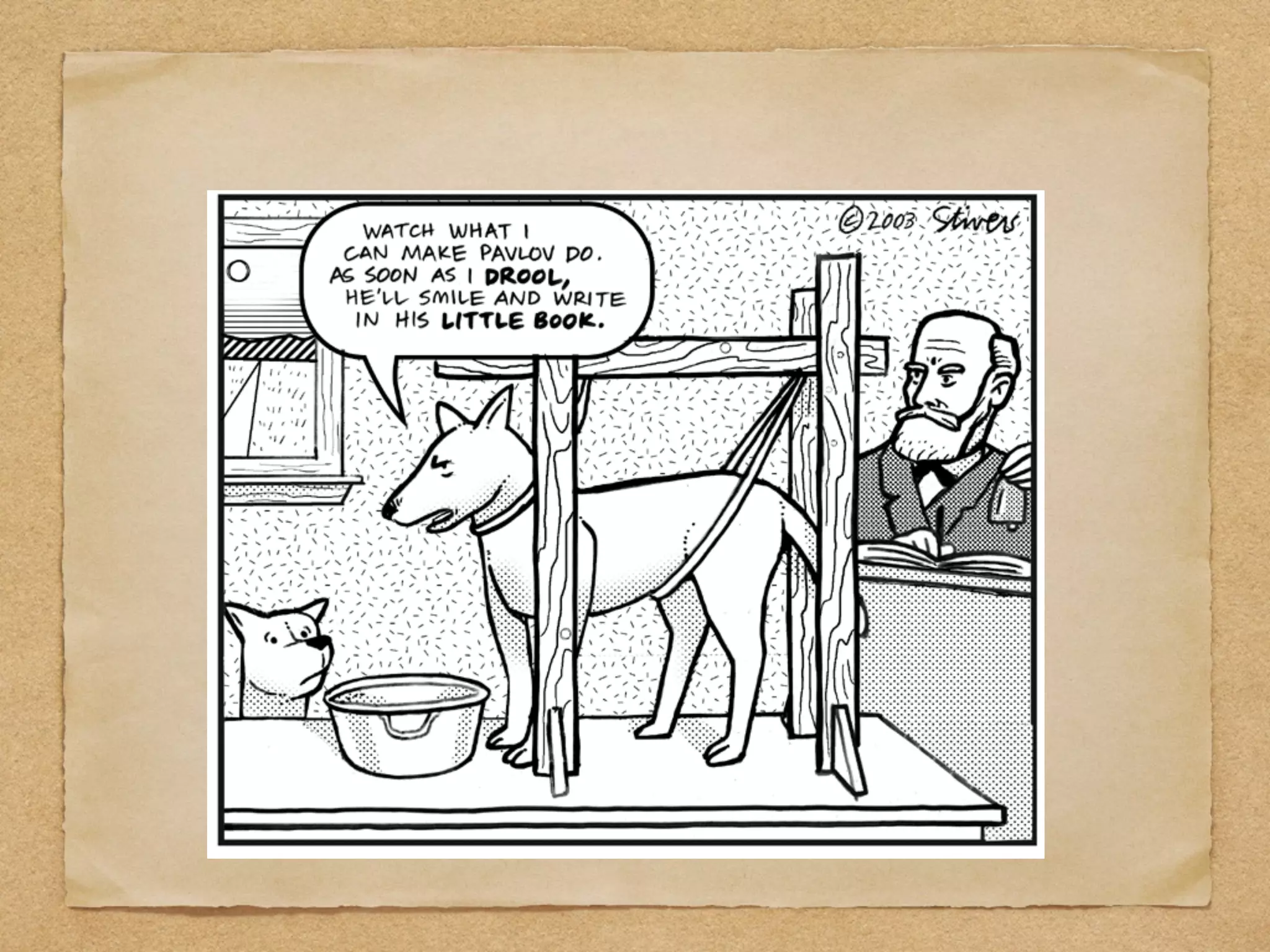
Ivan Pavlov (1849-1936) - Does this name ring a
bell? Pavlov was a Russian psychologist who
worked on classical conditioning
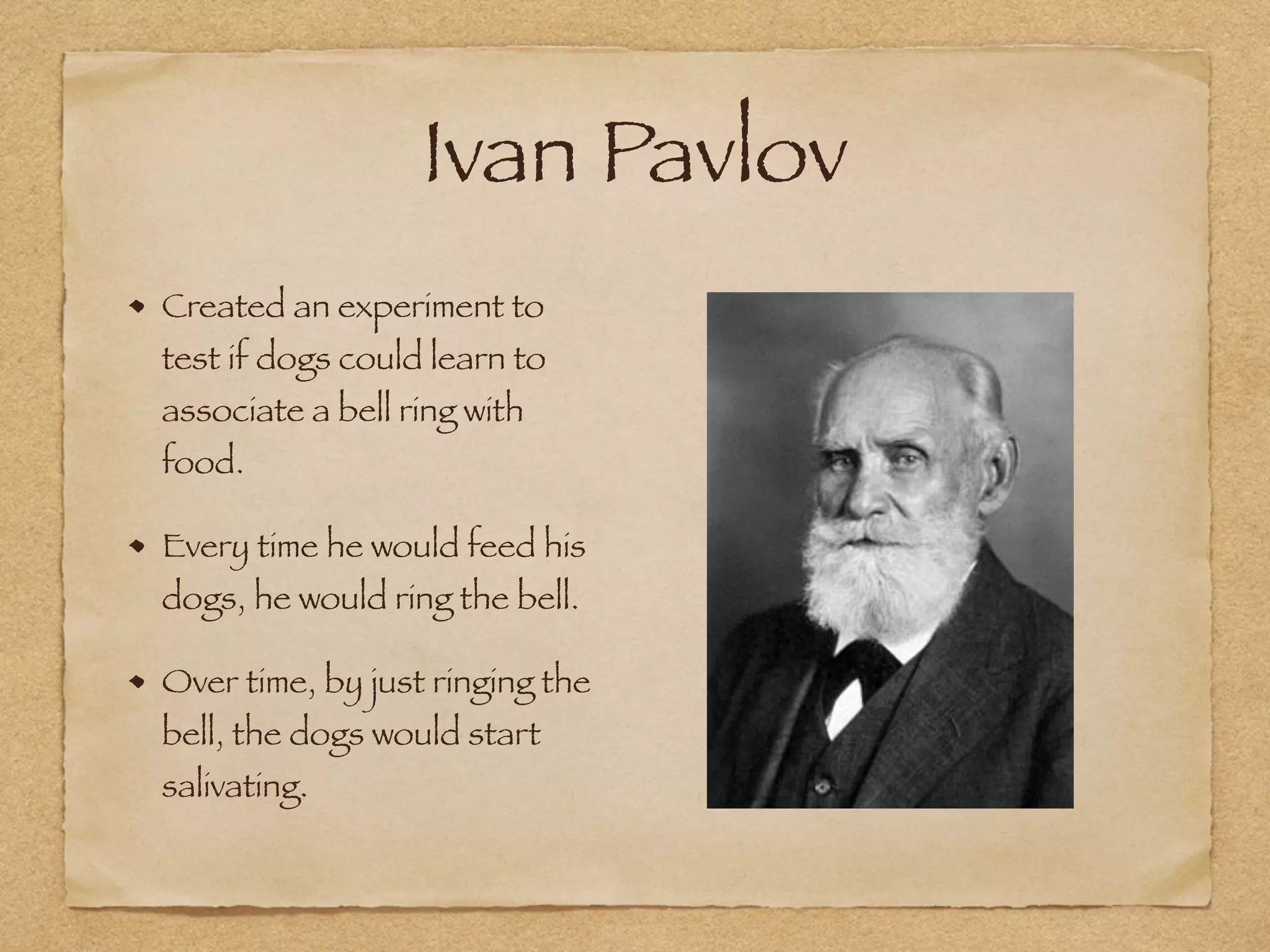
Ivan Pavlov
Created an experiment to
test if dogs could learn to
associate a bell ring with
food.
Every time he would feed his
dogs, he would ring the bell.
Over time, by just ringing the
bell, the dogs would start
salivating.
Classroom Implications
Behaviorism is a learning theory that can be
used in the classroom. Anytime one reinforces
desirable behaviors & punishes undesirable
behaviors, conditioning is occurring and
therefore so is behaviorism.
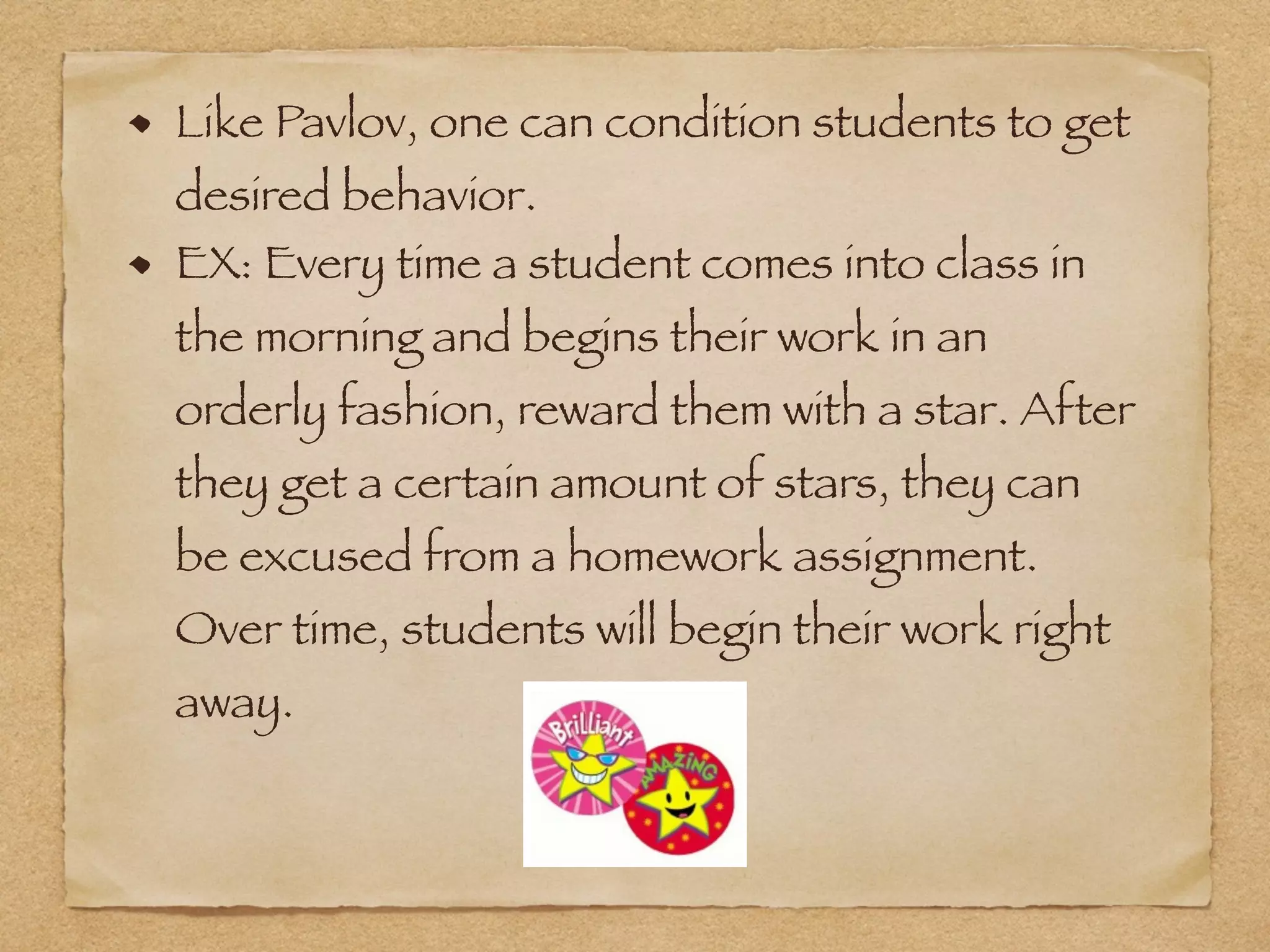
Like Pavlov, one can condition students to get
desired behavior.
EX: Every time a student comes into class in
the morning and begins their work in an
orderly fashion, reward them with a star. After
they get a certain amount of stars, they can
be excused from a homework assignment.
Over time, students will begin their work right
away.
Most students love to play on the computer.
You can use technology as a reinforcer to gain
the desired behavior by rewarding students
with computer time.
Ex: The students with the most organized
note books at the end of the week can have 15
minutes on the computer to play educational
games.
To sum up..
Behaviorism is a powerful tool that can be
very resourceful in the classroom.
With the right reinforcements and
environment, learning will eventually occur.

Behaviorism

  • 1.
  • 2.
    What is Behaviorism? Behaviorismis learning theory that focuses on how behavior is shaped over time. Behaviorism is a study of observable behavior only. The “learner” is responding to the environment that (usually) the “teacher” created.
  • 3.
    Famous Behaviorists John B.Watson (1878-1958)- American psychologist who infamously created the “Little Albert” experiment. Ivan Pavlov (1849-1936) - Does this name ring a bell? Pavlov was a Russian psychologist who worked on classical conditioning
  • 4.
    Ivan Pavlov Created anexperiment to test if dogs could learn to associate a bell ring with food. Every time he would feed his dogs, he would ring the bell. Over time, by just ringing the bell, the dogs would start salivating.
  • 6.
    Classroom Implications Behaviorism isa learning theory that can be used in the classroom. Anytime one reinforces desirable behaviors & punishes undesirable behaviors, conditioning is occurring and therefore so is behaviorism.
  • 7.
    Like Pavlov, onecan condition students to get desired behavior. EX: Every time a student comes into class in the morning and begins their work in an orderly fashion, reward them with a star. After they get a certain amount of stars, they can be excused from a homework assignment. Over time, students will begin their work right away.
  • 8.
    Most students loveto play on the computer. You can use technology as a reinforcer to gain the desired behavior by rewarding students with computer time. Ex: The students with the most organized note books at the end of the week can have 15 minutes on the computer to play educational games.
  • 9.
    To sum up.. Behaviorismis a powerful tool that can be very resourceful in the classroom. With the right reinforcements and environment, learning will eventually occur.