earners
Exceptionalities
with
Prepared by:
Al Francis Galabo
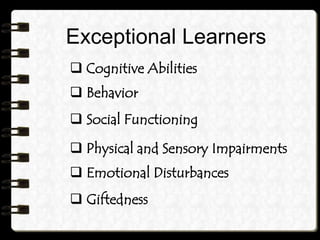
Exceptional Learners
 Cognitive Abilities
 Behavior
 Social Functioning
 Physical and Sensory Impairments
 Emotional Disturbances
 Giftedness
Categories of
Exceptionalities
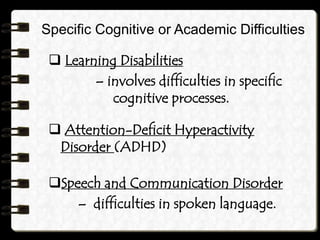
Specific Cognitive or Academic Difficulties
 Learning Disabilities
– involves difficulties in specific
cognitive processes.
 Attention-Deficit Hyperactivity
Disorder (ADHD)
Speech and Communication Disorder
– difficulties in spoken language.
Social/Emotional and Behavioral Difficulties
 Autism
– It is a condition manifested by different levels
of impaired social interaction and communication,
repetitive behaviors and limited interests.
 Mental Retardation
– It refers to significant sub-average
intelligence and deficits in adaptive
behavior.
 Emotional/Conduct Disorder
– This involves the presence of
emotional states.
Physical Disabilities
and Health Impairments
Limited energy and strength
Reduced mental alertness
Little muscle control
 Physical and Health Impairments
-This involves physical or medical
conditions including one or more of these:
Severe and Multiple Disabilities
-This refers to the presence of two
or more different types of disability, at
times at a profound level.
 Sensory Impairments
Visual Impairments
These involves malfunction of
the eyes.
Hearing Impairments
These involves malfunction of
the ear.
 Giftedness
-This involves a significantly high
level of cognitive development.
Learners with exceptionalities

  • 1.
  • 2.
    Exceptional Learners  CognitiveAbilities  Behavior  Social Functioning  Physical and Sensory Impairments  Emotional Disturbances  Giftedness
  • 3.
  • 4.
    Specific Cognitive orAcademic Difficulties  Learning Disabilities – involves difficulties in specific cognitive processes.  Attention-Deficit Hyperactivity Disorder (ADHD) Speech and Communication Disorder – difficulties in spoken language.
  • 5.
    Social/Emotional and BehavioralDifficulties  Autism – It is a condition manifested by different levels of impaired social interaction and communication, repetitive behaviors and limited interests.  Mental Retardation – It refers to significant sub-average intelligence and deficits in adaptive behavior.  Emotional/Conduct Disorder – This involves the presence of emotional states.
  • 6.
  • 7.
    Limited energy andstrength Reduced mental alertness Little muscle control  Physical and Health Impairments -This involves physical or medical conditions including one or more of these: Severe and Multiple Disabilities -This refers to the presence of two or more different types of disability, at times at a profound level.
  • 8.
     Sensory Impairments VisualImpairments These involves malfunction of the eyes. Hearing Impairments These involves malfunction of the ear.  Giftedness -This involves a significantly high level of cognitive development.