Dynamics Of Perception
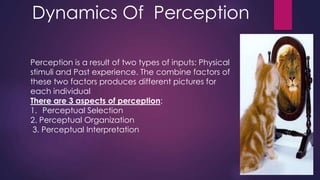
Perception is a result of two types of inputs: Physical
stimuli and Past experience. The combine factors of
these two factors produces different pictures for
each individual
There are 3 aspects of perception:
1. Perceptual Selection
2. Perceptual Organization
3. Perceptual Interpretation
Perceptual Selection
Consumers receive a lot of stimuli from the environment but
they select only some based on their nature


This depends on three major factors

•

Nature of the stimulus

•

Consumer’s previous
experience

•

Consumer’s motives
NATURE OF STIMULI
A STIMULI CAN HAVE A LARGE AMOUNT OF
VARIATIONS DEPENDING ON THE NATURE OF THE
PRODUCT, THE PHYSICAL ATTRIBUTES, THE DESIGN,
THE BRAND NAME , THE TYPE OF ADVERTISEMENT
AND SO ON…
CONSUMER’S PREVIOUS EXPERIENCE

CONSUMER SEE WHAT THEY
EXPECT/WANT TO SEE . WHAT THEY
EXPECT DEPENDS ON THEIR PREVIOUS
EXPERIENCE. THUS, DIFFERENT
CONSUMERS WOULD SEE DIFFERENT
QUALITIES IN THE SAME PRODUCT
DEPENDING ON THEIR NEEDS
CONSUMER’S MOTIVES
PEOPLE TEND TO IGNORE THE STIMULI THAT ARE IRRELAVENT TO
THEIR NEEDS. THIS HELPS A MARKETER DECIDE THE SEGMENTS
TO WHICH THE PRODUCT CAN BE TARGETED. THIS IS HOW WE
CAN SEE A NUMBER OF INNOVATIVE ADVERTISEMETS.
CONCEPTS OF PERCEPTION:

1.SELECTIVE EXPOSURE
2.SELECTIVE ATTENTION
3.PERCEPTUAL DEFENSE
4.PERCEPTUAL BLOCKING
Selective exposure:
PEOPLE TEND TO SELECT SPECIFIC
ASPECTS OF EXPOSED
INFORMATION BASED ON THEIR
PERSPECTIVE, BELIEFS, ATTITUDES
AND DECISIONS. PEOPLE CAN
DETERMINE THE INFORMATION
EXPOSED TO THEM AND SELECT
FAVORABLE EVIDENCE, WHILE
IGNORING THE UNFAVORABLE.
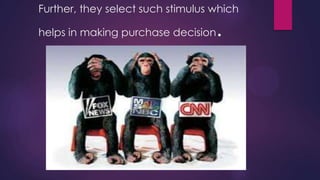
Further, they select such stimulus which

helps in making purchase decision

.
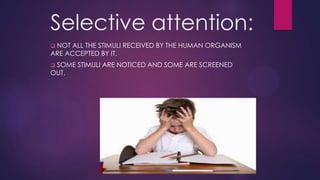
Selective attention:
NOT ALL THE STIMULI RECEIVED BY THE HUMAN ORGANISM
ARE ACCEPTED BY IT.


SOME STIMULI ARE NOTICED AND SOME ARE SCREENED
OUT.

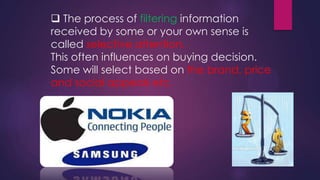
 The process of filtering information
received by some or your own sense is
called selective attention.
This often influences on buying decision.
Some will select based on the brand, price
and social appeals etc.
PERCEPTUAL DEFENSE

Consumers subconsciously screen out
stimuli that they find psychologically
threatening even though the
exposure has already taken place
PERCEPTUAL BLOCKING
This refers to the subconscious “screening out”
of stimuli that is inconsistent with one’s needs,
values, beliefs, or attitudes. In the context of
consumer behaviour it has been found that
consumers protect themselves from being
bombarded with marketing stimuli by simply
“tuning out”—blocking such stimuli from
conscious awareness.
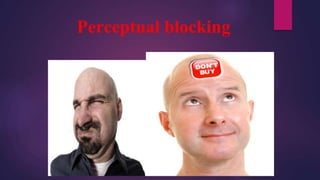
Perceptual blocking
PERPECTUAL SELECTION:

Consumers selects , ignore, turn away some of the stimulus based on
the requirements

1) Nature of the stimulus
Nature of the product, physical attributes, the package design,
brand name and advertisements
2) Expectations:

People see what they want to see, based on previous experience,
familiarity and preconditioned set of expectations.

3) Motives


People perceive the things they need and want – Stronger the need –
Greater tendency to ignore unrelated things.
SELECTIVE PERCEPTION


Selective exposure: People

look for pleasant and sympathetic
messages and avoid painful or threatening ones.



Selective attention: People



look into ads which will satisfy their need.

Perceptual Defense: People

avoid psychologically threatening ones.
Hence constantly change the ad nature. [
Smoking – warning with words, and now with
images ]



Perceptual Blocking: People

block stimuli which is bombarded.
Dynamics of perception

Dynamics of perception

  • 2.
    Dynamics Of Perception Perceptionis a result of two types of inputs: Physical stimuli and Past experience. The combine factors of these two factors produces different pictures for each individual There are 3 aspects of perception: 1. Perceptual Selection 2. Perceptual Organization 3. Perceptual Interpretation
  • 3.
    Perceptual Selection Consumers receivea lot of stimuli from the environment but they select only some based on their nature  This depends on three major factors • Nature of the stimulus • Consumer’s previous experience • Consumer’s motives
  • 4.
    NATURE OF STIMULI ASTIMULI CAN HAVE A LARGE AMOUNT OF VARIATIONS DEPENDING ON THE NATURE OF THE PRODUCT, THE PHYSICAL ATTRIBUTES, THE DESIGN, THE BRAND NAME , THE TYPE OF ADVERTISEMENT AND SO ON…
  • 6.
    CONSUMER’S PREVIOUS EXPERIENCE CONSUMERSEE WHAT THEY EXPECT/WANT TO SEE . WHAT THEY EXPECT DEPENDS ON THEIR PREVIOUS EXPERIENCE. THUS, DIFFERENT CONSUMERS WOULD SEE DIFFERENT QUALITIES IN THE SAME PRODUCT DEPENDING ON THEIR NEEDS
  • 7.
    CONSUMER’S MOTIVES PEOPLE TENDTO IGNORE THE STIMULI THAT ARE IRRELAVENT TO THEIR NEEDS. THIS HELPS A MARKETER DECIDE THE SEGMENTS TO WHICH THE PRODUCT CAN BE TARGETED. THIS IS HOW WE CAN SEE A NUMBER OF INNOVATIVE ADVERTISEMETS.
  • 9.
    CONCEPTS OF PERCEPTION: 1.SELECTIVEEXPOSURE 2.SELECTIVE ATTENTION 3.PERCEPTUAL DEFENSE 4.PERCEPTUAL BLOCKING
  • 10.
    Selective exposure: PEOPLE TENDTO SELECT SPECIFIC ASPECTS OF EXPOSED INFORMATION BASED ON THEIR PERSPECTIVE, BELIEFS, ATTITUDES AND DECISIONS. PEOPLE CAN DETERMINE THE INFORMATION EXPOSED TO THEM AND SELECT FAVORABLE EVIDENCE, WHILE IGNORING THE UNFAVORABLE.
  • 11.
    Further, they selectsuch stimulus which helps in making purchase decision .
  • 12.
    Selective attention: NOT ALLTHE STIMULI RECEIVED BY THE HUMAN ORGANISM ARE ACCEPTED BY IT.  SOME STIMULI ARE NOTICED AND SOME ARE SCREENED OUT. 
  • 13.
     The processof filtering information received by some or your own sense is called selective attention. This often influences on buying decision. Some will select based on the brand, price and social appeals etc.
  • 14.
    PERCEPTUAL DEFENSE Consumers subconsciouslyscreen out stimuli that they find psychologically threatening even though the exposure has already taken place
  • 16.
    PERCEPTUAL BLOCKING This refersto the subconscious “screening out” of stimuli that is inconsistent with one’s needs, values, beliefs, or attitudes. In the context of consumer behaviour it has been found that consumers protect themselves from being bombarded with marketing stimuli by simply “tuning out”—blocking such stimuli from conscious awareness.
  • 17.
  • 19.
    PERPECTUAL SELECTION: Consumers selects, ignore, turn away some of the stimulus based on the requirements 1) Nature of the stimulus Nature of the product, physical attributes, the package design, brand name and advertisements 2) Expectations: People see what they want to see, based on previous experience, familiarity and preconditioned set of expectations. 3) Motives  People perceive the things they need and want – Stronger the need – Greater tendency to ignore unrelated things.
  • 20.
    SELECTIVE PERCEPTION  Selective exposure:People look for pleasant and sympathetic messages and avoid painful or threatening ones.  Selective attention: People  look into ads which will satisfy their need. Perceptual Defense: People avoid psychologically threatening ones. Hence constantly change the ad nature. [ Smoking – warning with words, and now with images ]  Perceptual Blocking: People block stimuli which is bombarded.