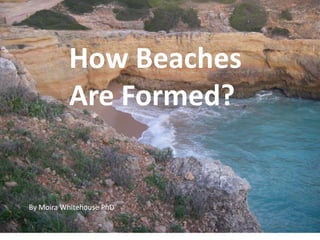
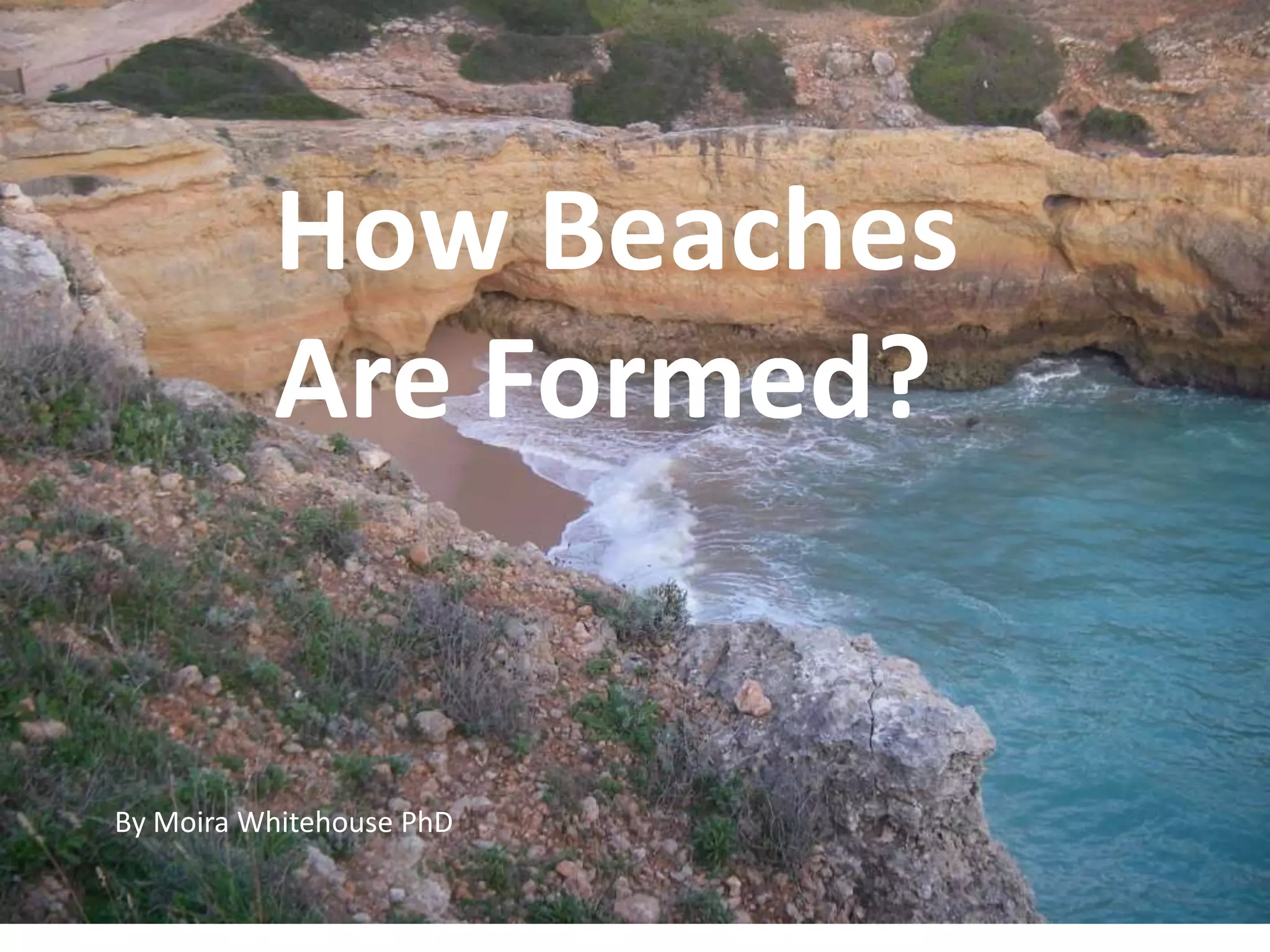

How Beaches
          Are Formed?


By Moira Whitehouse PhD
Before exploring how beaches are
formed let’s talk about the main types
of beaches.

There are two main types of beaches

1. Rocky beaches


2. Sandy beaches
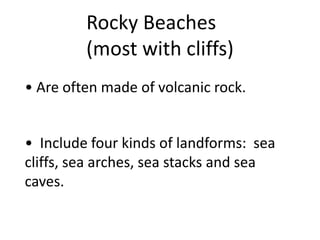
Rocky Beaches
         (most with cliffs)
• Are often made of volcanic rock.


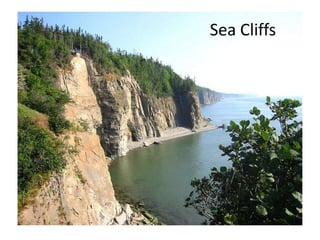
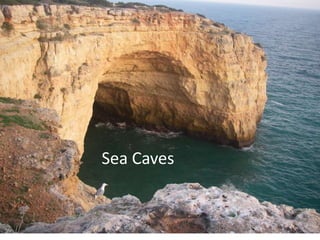
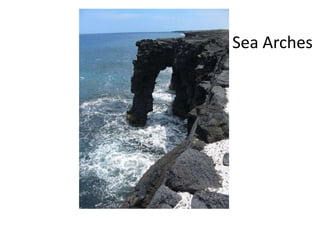
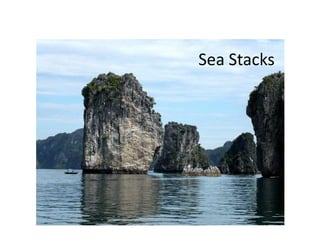
• Include four kinds of landforms: sea
cliffs, sea arches, sea stacks and sea
caves.
Sea Cliffs
Sea Caves
Sea Arches
Sea Stacks
Rocky beaches are shaped by weathering,
erosion and deposition caused by waves
(water) and wind.

The constant beating of the cliffs and sea
stacks weather and erode the rock.

Eroded material is then deposited
becoming available to form sand bars and
barrier islands.
Because of the severe pounding of
both wind and waves, these
formations erode relatively quickly.

Over a long period of time sea stack
sometimes completely weather and erode
away.

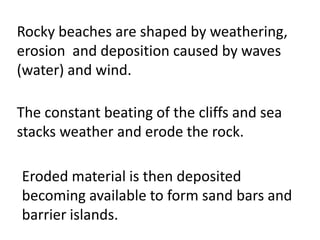
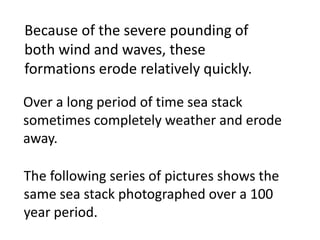
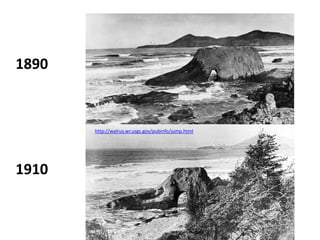
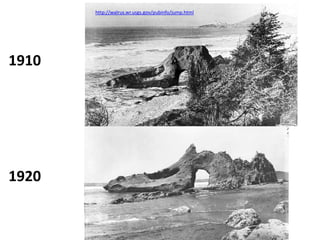
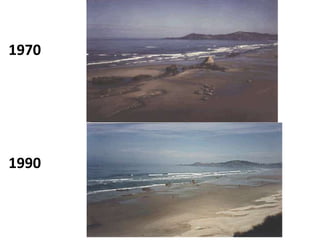
The following series of pictures shows the
same sea stack photographed over a 100
year period.
1890


       http://walrus.wr.usgs.gov/pubinfo/jump.html


1910
http://walrus.wr.usgs.gov/pubinfo/jump.html


1910


1920
1970


1990
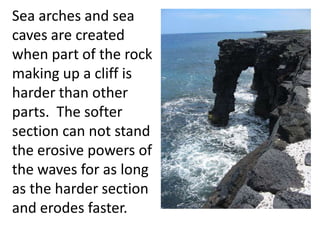
Sea arches and sea
caves are created
when part of the rock
making up a cliff is
harder than other
parts. The softer
section can not stand
the erosive powers of
the waves for as long
as the harder section
and erodes faster.
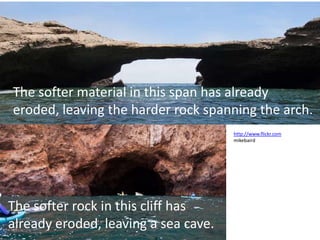
The softer material in this span has already
eroded, leaving the harder rock spanning the arch.
                                      http://www.flickr.com
                                      mikebaird


The softer rock in this cliff has
already eroded, leaving a sea cave.
Sandy Beaches
• Are deposition landforms, meaning
that they are formed by deposits of
sediment.
•The sediments deposited are sand, silt and
pebbles– materials carried by a river or
stream from the inland into the ocean;
•River sediments are the source of most of
the sand on beaches.
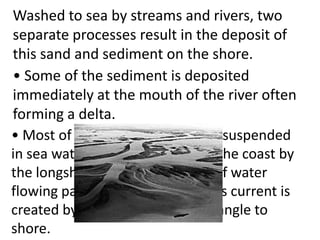
Washed to sea by streams and rivers, two
separate processes result in the deposit of
this sand and sediment on the shore.
• Some of the sediment is deposited
immediately at the mouth of the river often
forming a delta.
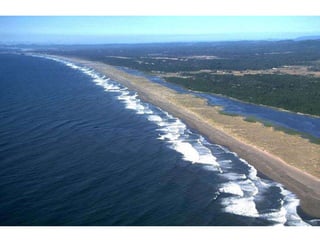
• Most of the sediment becomes suspended
in sea water and is carried along the coast by
the longshore current, a stream of water
flowing parallel to the beach. This current is
created by waves breaking at an angle to
shore.
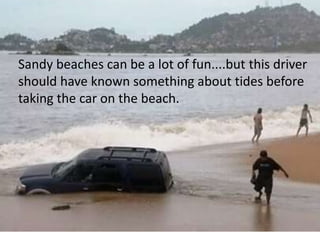
Sandy beaches can be a lot of fun....but this driver
should have known something about tides before
taking the car on the beach.
Rocks and sediment deposited at the foot
of a glacier where the glacier melts create
a landform called a moraine.


             THE END

Beaches (teach)

  • 1.
    How Beaches Are Formed? By Moira Whitehouse PhD
  • 2.
    Before exploring howbeaches are formed let’s talk about the main types of beaches. There are two main types of beaches 1. Rocky beaches 2. Sandy beaches
  • 3.
    Rocky Beaches (most with cliffs) • Are often made of volcanic rock. • Include four kinds of landforms: sea cliffs, sea arches, sea stacks and sea caves.
  • 4.
  • 5.
  • 6.
  • 7.
  • 8.
    Rocky beaches areshaped by weathering, erosion and deposition caused by waves (water) and wind. The constant beating of the cliffs and sea stacks weather and erode the rock. Eroded material is then deposited becoming available to form sand bars and barrier islands.
  • 9.
    Because of thesevere pounding of both wind and waves, these formations erode relatively quickly. Over a long period of time sea stack sometimes completely weather and erode away. The following series of pictures shows the same sea stack photographed over a 100 year period.
  • 10.
    1890 http://walrus.wr.usgs.gov/pubinfo/jump.html 1910
  • 11.
  • 12.
  • 13.
    Sea arches andsea caves are created when part of the rock making up a cliff is harder than other parts. The softer section can not stand the erosive powers of the waves for as long as the harder section and erodes faster.
  • 14.
    The softer materialin this span has already eroded, leaving the harder rock spanning the arch. http://www.flickr.com mikebaird The softer rock in this cliff has already eroded, leaving a sea cave.
  • 15.
    Sandy Beaches • Aredeposition landforms, meaning that they are formed by deposits of sediment. •The sediments deposited are sand, silt and pebbles– materials carried by a river or stream from the inland into the ocean; •River sediments are the source of most of the sand on beaches.
  • 16.
    Washed to seaby streams and rivers, two separate processes result in the deposit of this sand and sediment on the shore. • Some of the sediment is deposited immediately at the mouth of the river often forming a delta. • Most of the sediment becomes suspended in sea water and is carried along the coast by the longshore current, a stream of water flowing parallel to the beach. This current is created by waves breaking at an angle to shore.
  • 18.
    Sandy beaches canbe a lot of fun....but this driver should have known something about tides before taking the car on the beach.
  • 19.
    Rocks and sedimentdeposited at the foot of a glacier where the glacier melts create a landform called a moraine. THE END