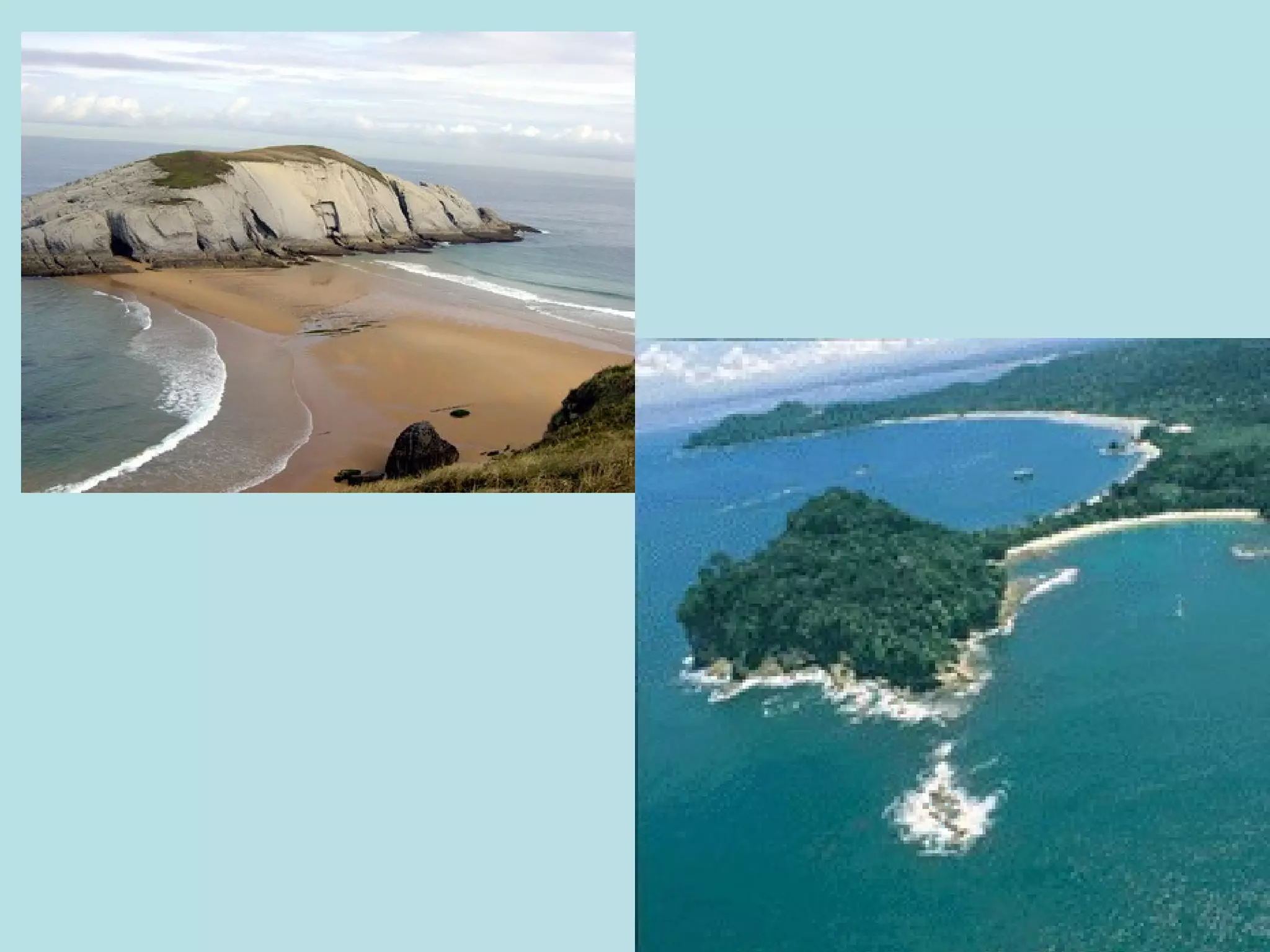
The Work of the Sea
•The sea erodes, transports and deposits material,
thereby changing the shape of coast lines.
Waves erode mainly by:
1.Hydraulic action (power of the water hitting the shore)
2. Abrasion (stones etc. bashed against the shore by the
waves)
3. Solution (when certain rocks e.g. chalk are dissolved
by the water)
4. Attrition – the rocks hitting off each other, becoming
smooth and well rounded.
5. Compressed air – air and water gets trapped in cracks
in rocks, expands and shatters the rock.
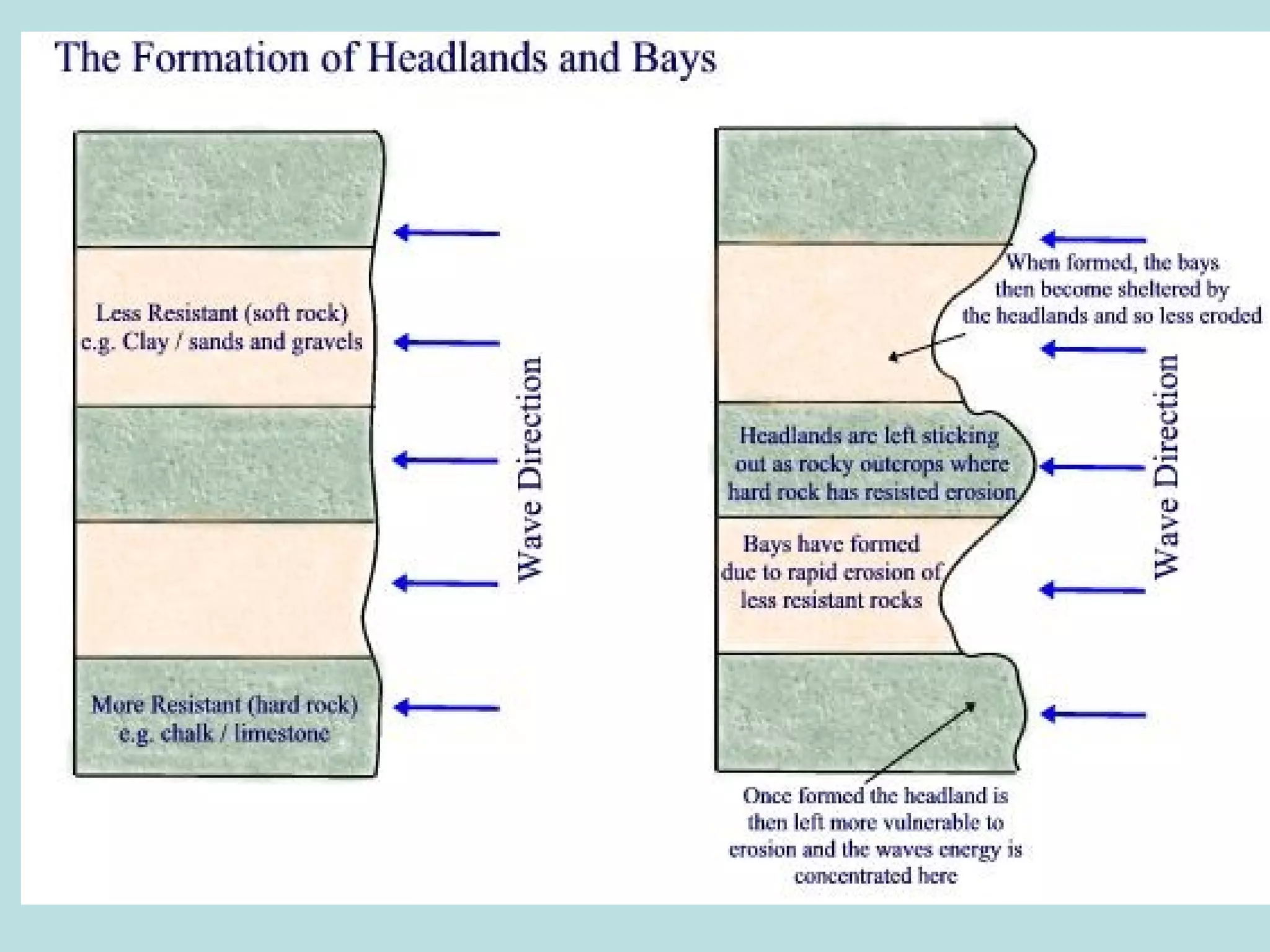
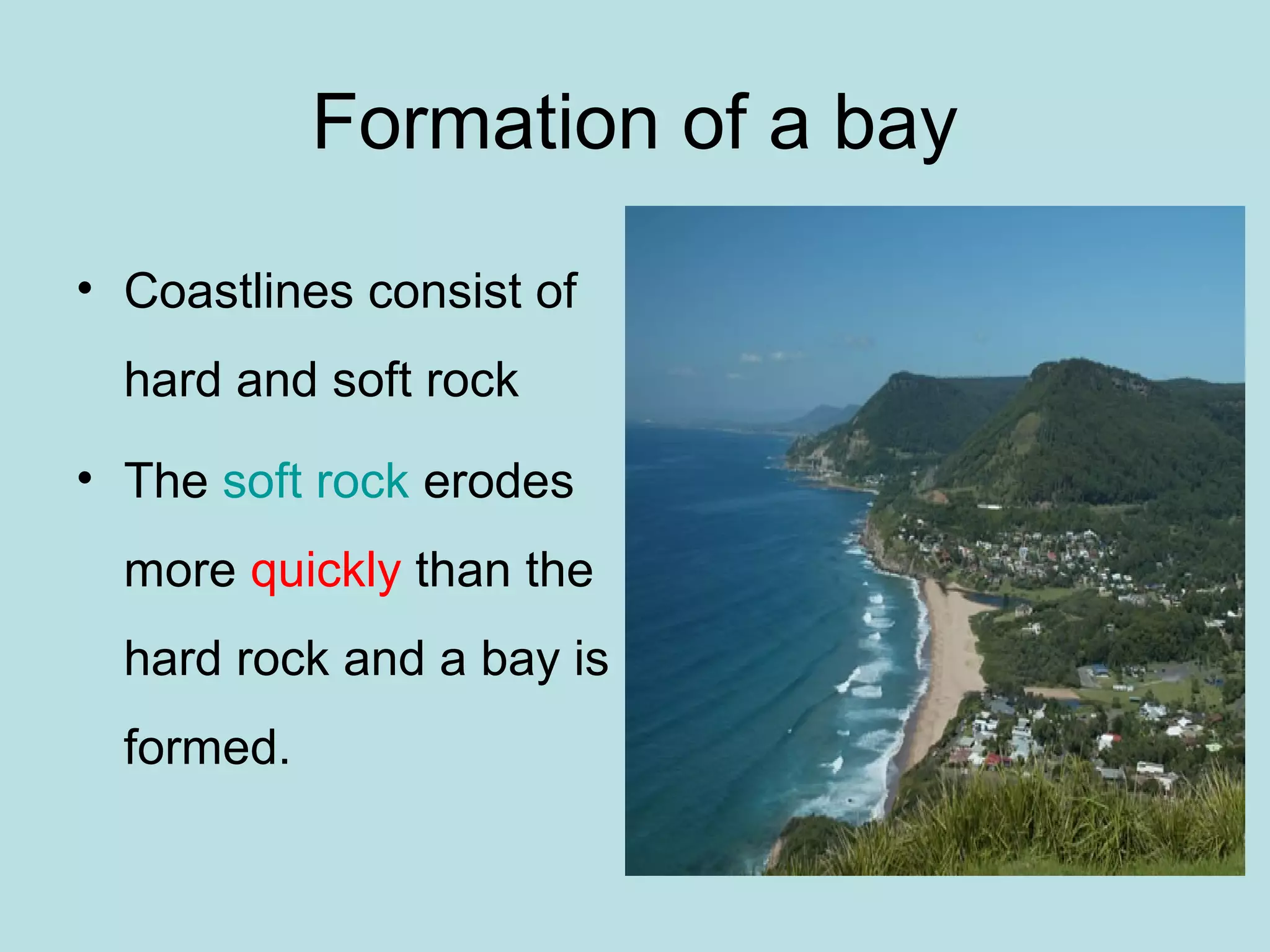
Formation of a bay
• Coastlines consist of
hard and soft rock
• The soft rock erodes
more quickly than the
hard rock and a bay is
formed.
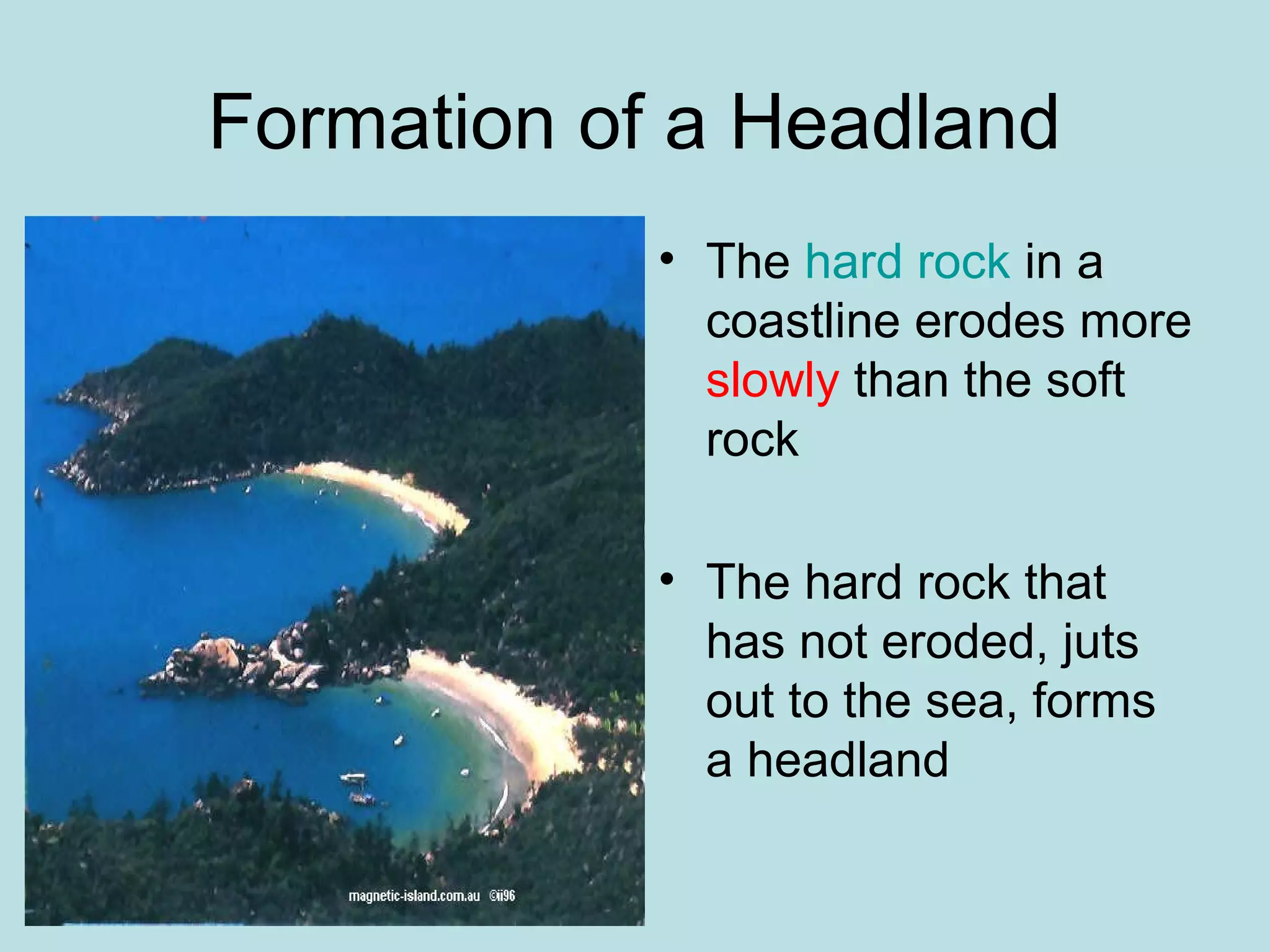
Formation of a Headland
• The hard rock in a
coastline erodes more
slowly than the soft
rock
• The hard rock that
has not eroded, juts
out to the sea, forms
a headland
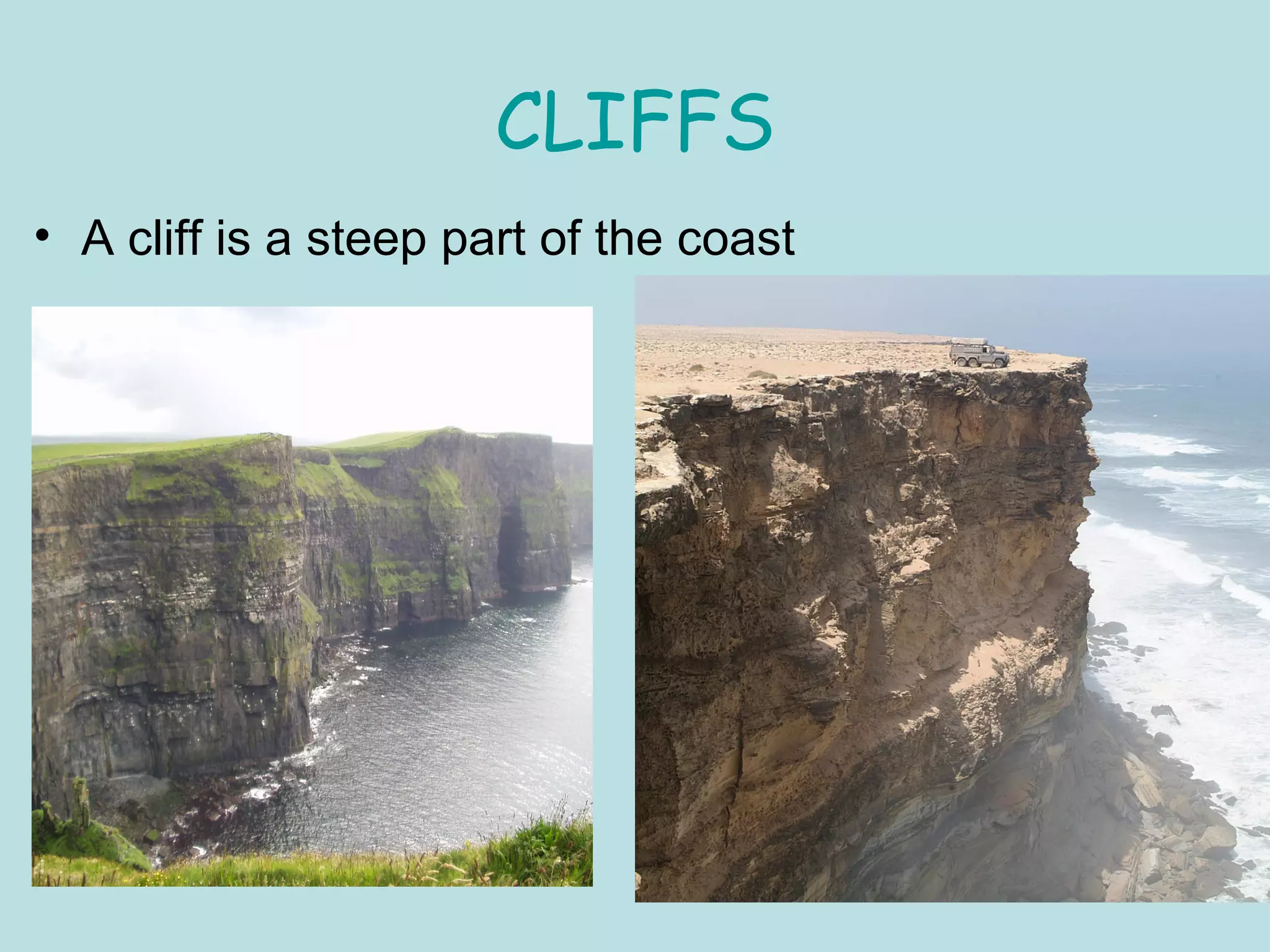
CLIFFS
• A cliff is a steep part of the coast
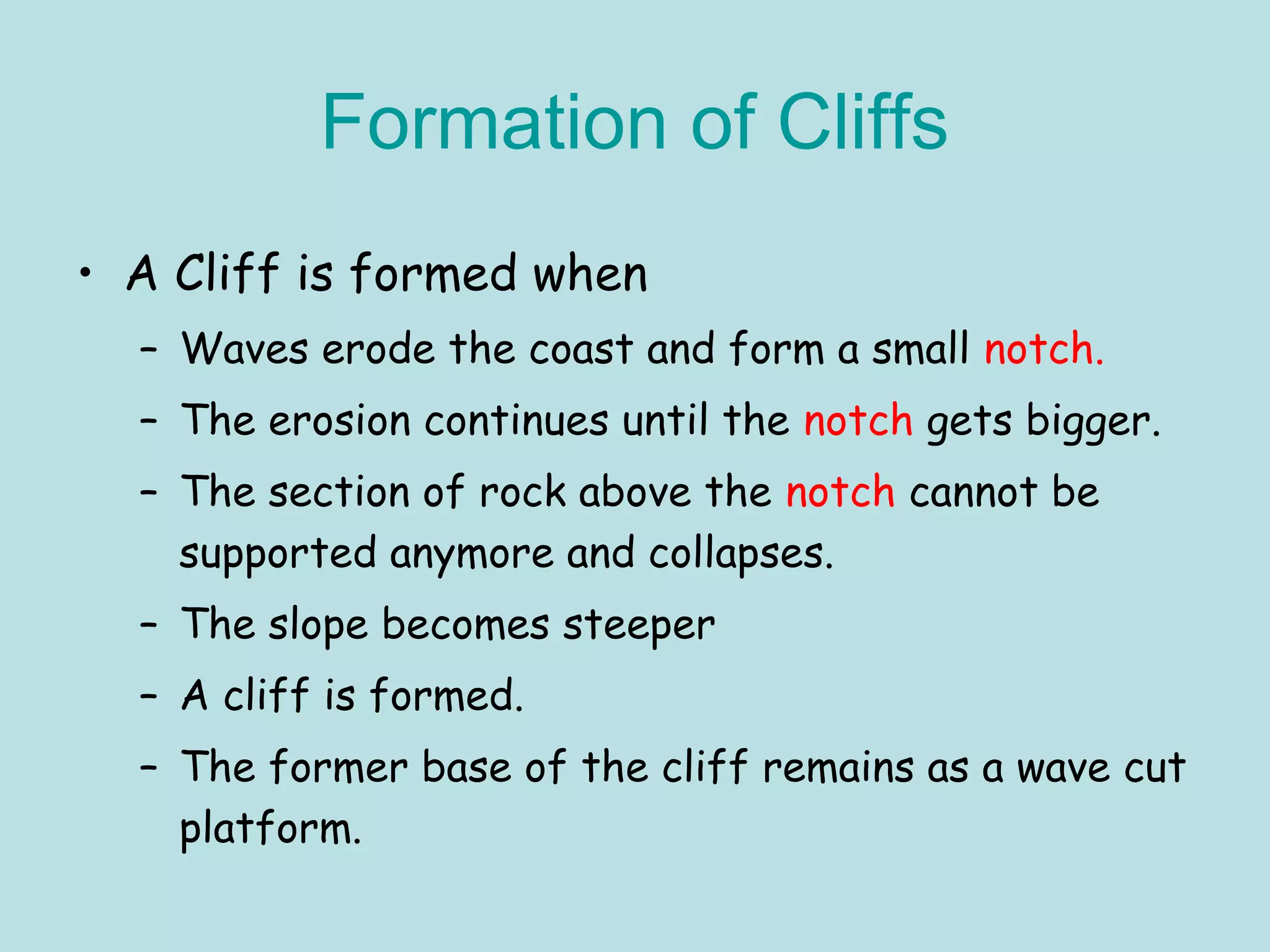
Formation of Cliffs
• A Cliff is formed when
– Waves erode the coast and form a small notch.
– The erosion continues until the notch gets bigger.
– The section of rock above the notch cannot be
supported anymore and collapses.
– The slope becomes steeper
– A cliff is formed.
– The former base of the cliff remains as a wave cut
platform.
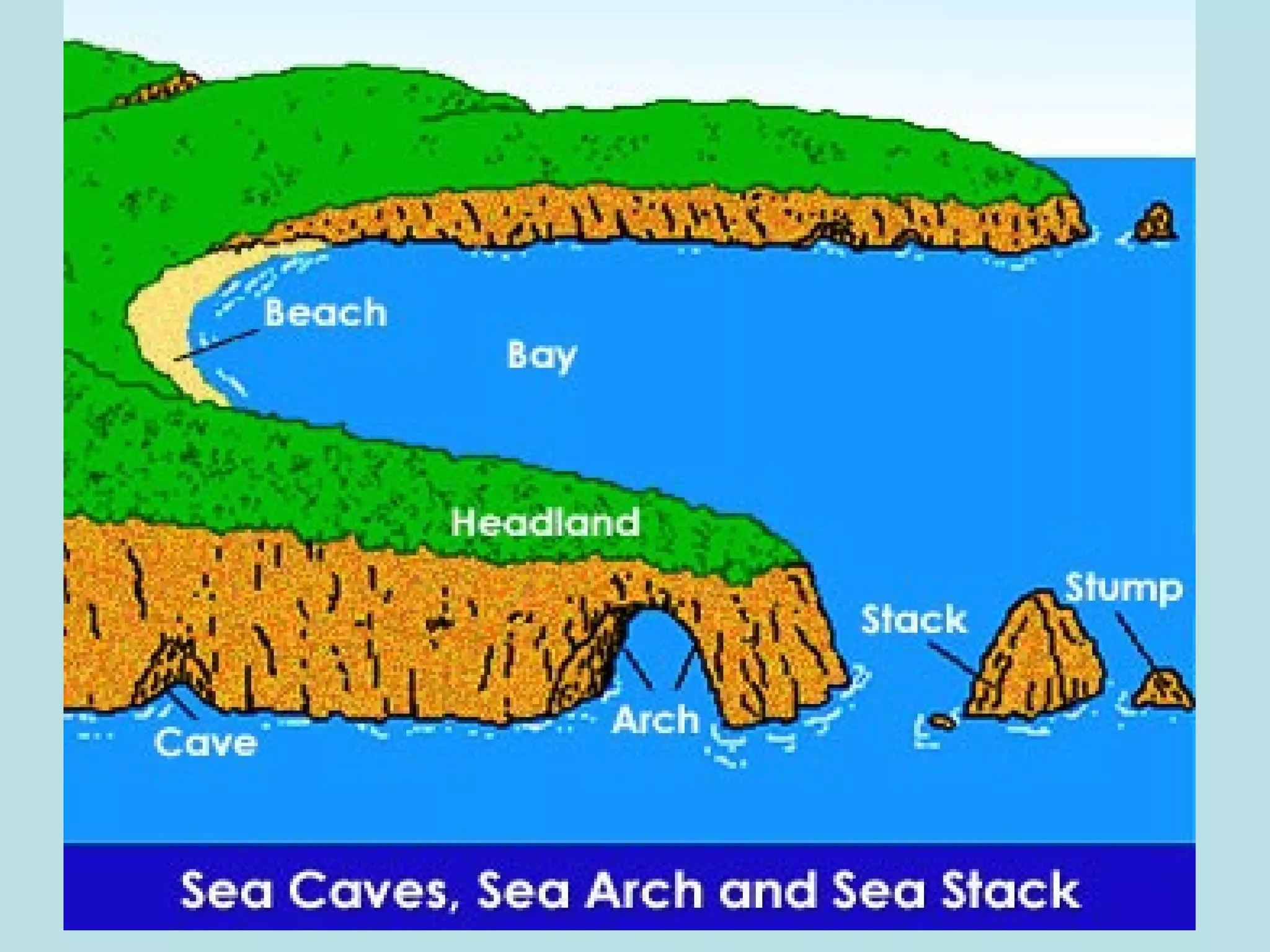
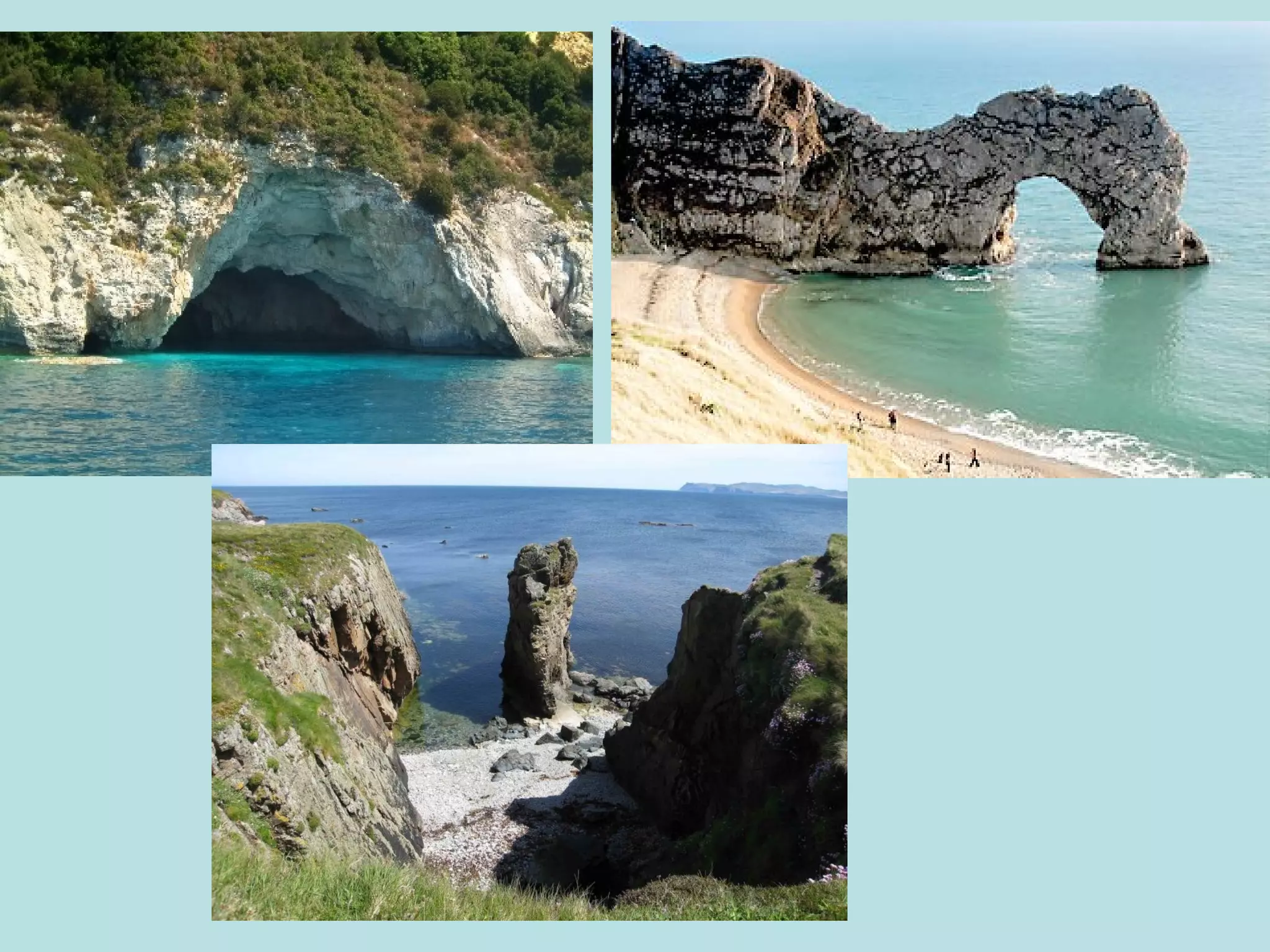
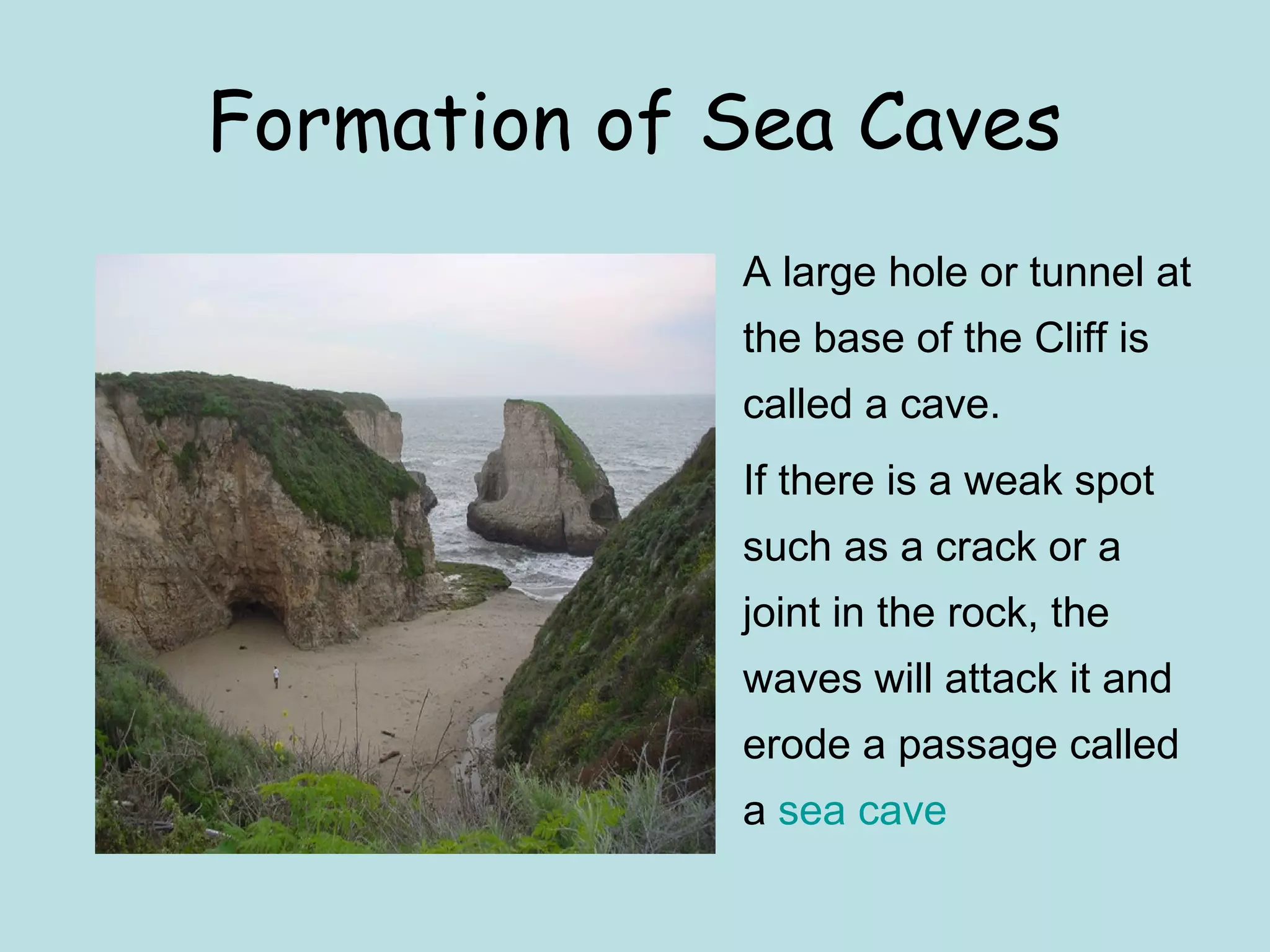
Formation of Sea Caves
• A large hole or tunnel at
the base of the Cliff is
called a cave.
• If there is a weak spot
such as a crack or a
joint in the rock, the
waves will attack it and
erode a passage called
a sea cave
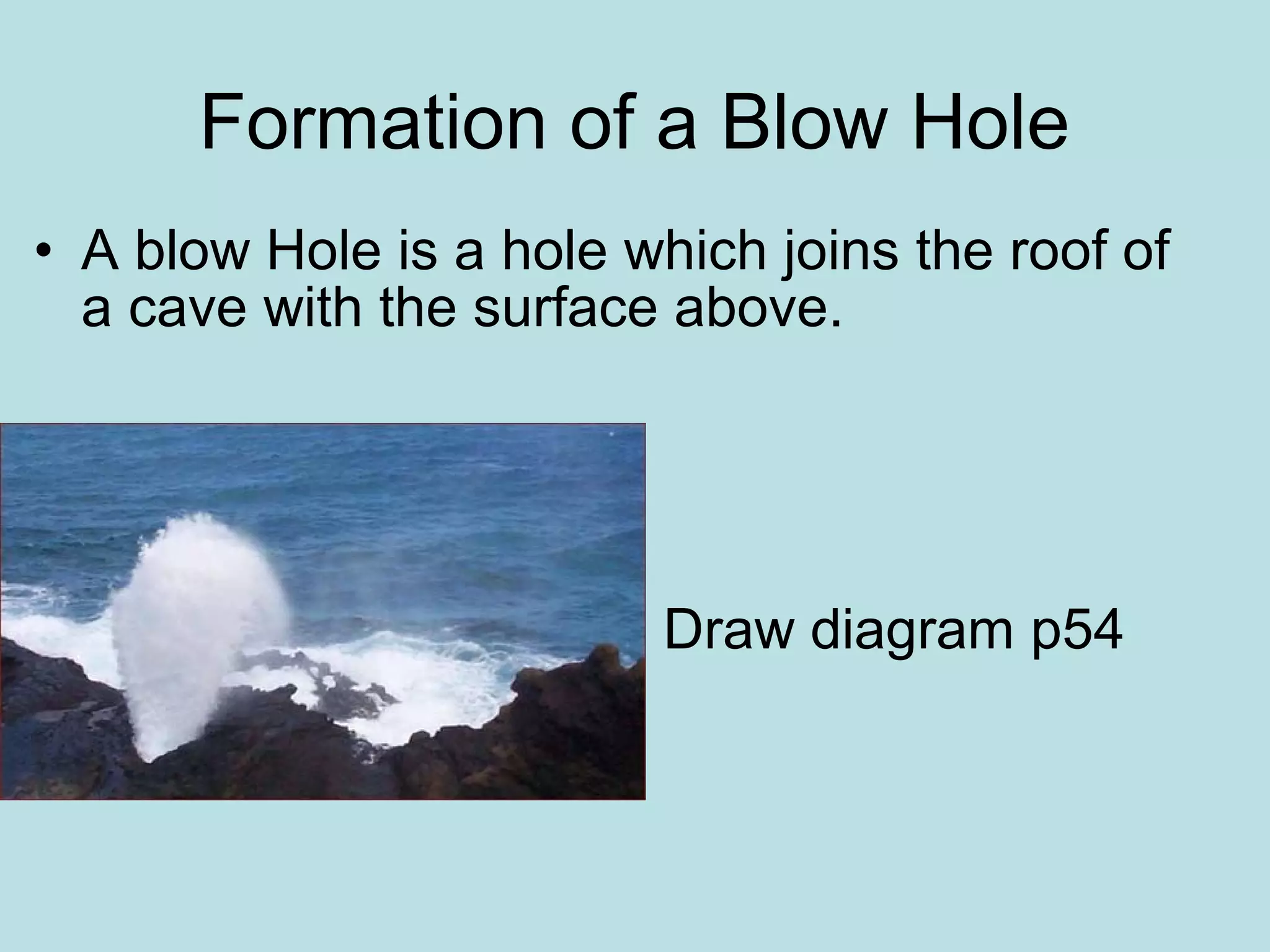
Formation of a Blow Hole
• Draw diagram p54
• A blow Hole is a hole which joins the roof of
a cave with the surface above.
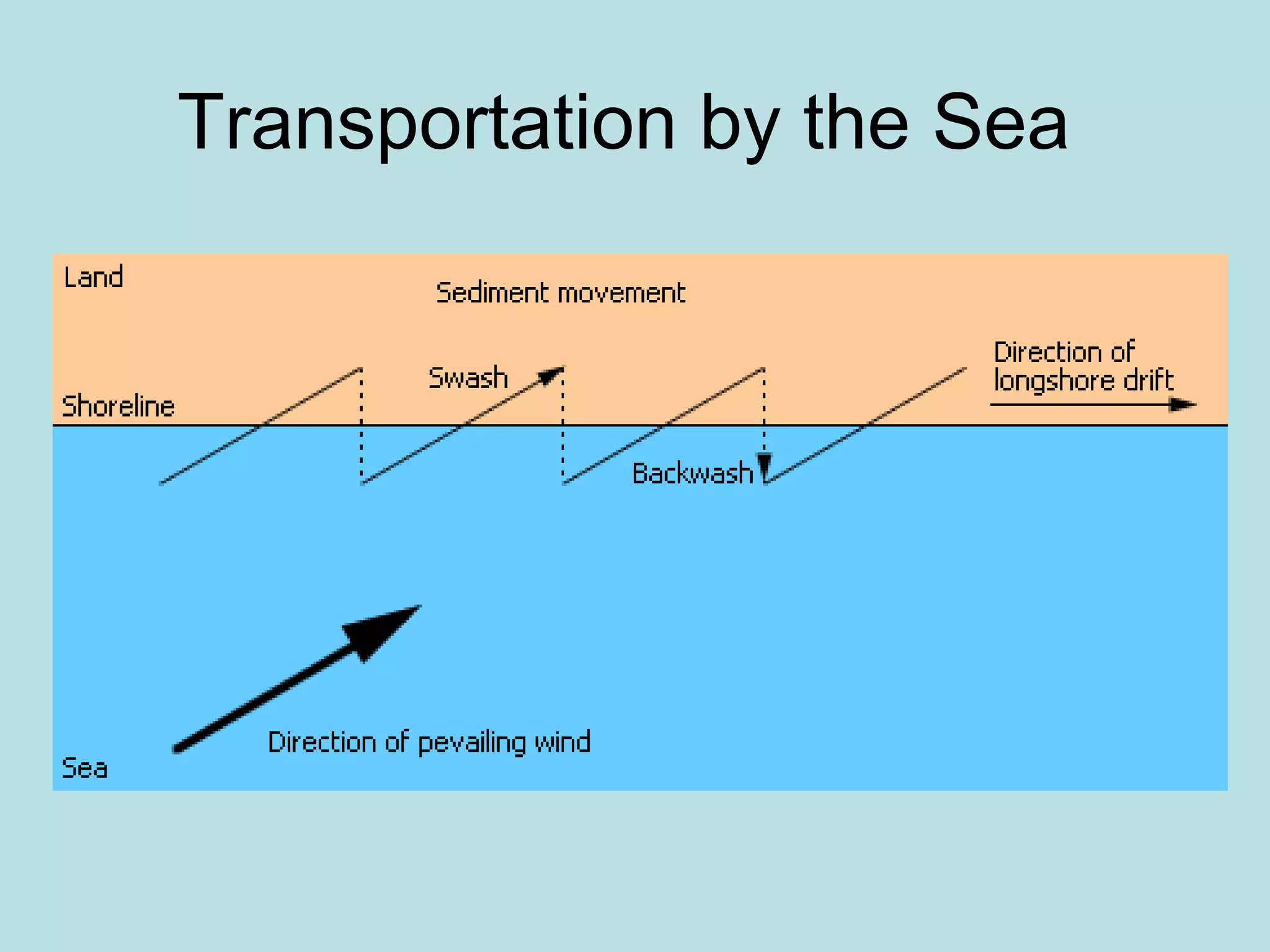
Transportation by the Sea
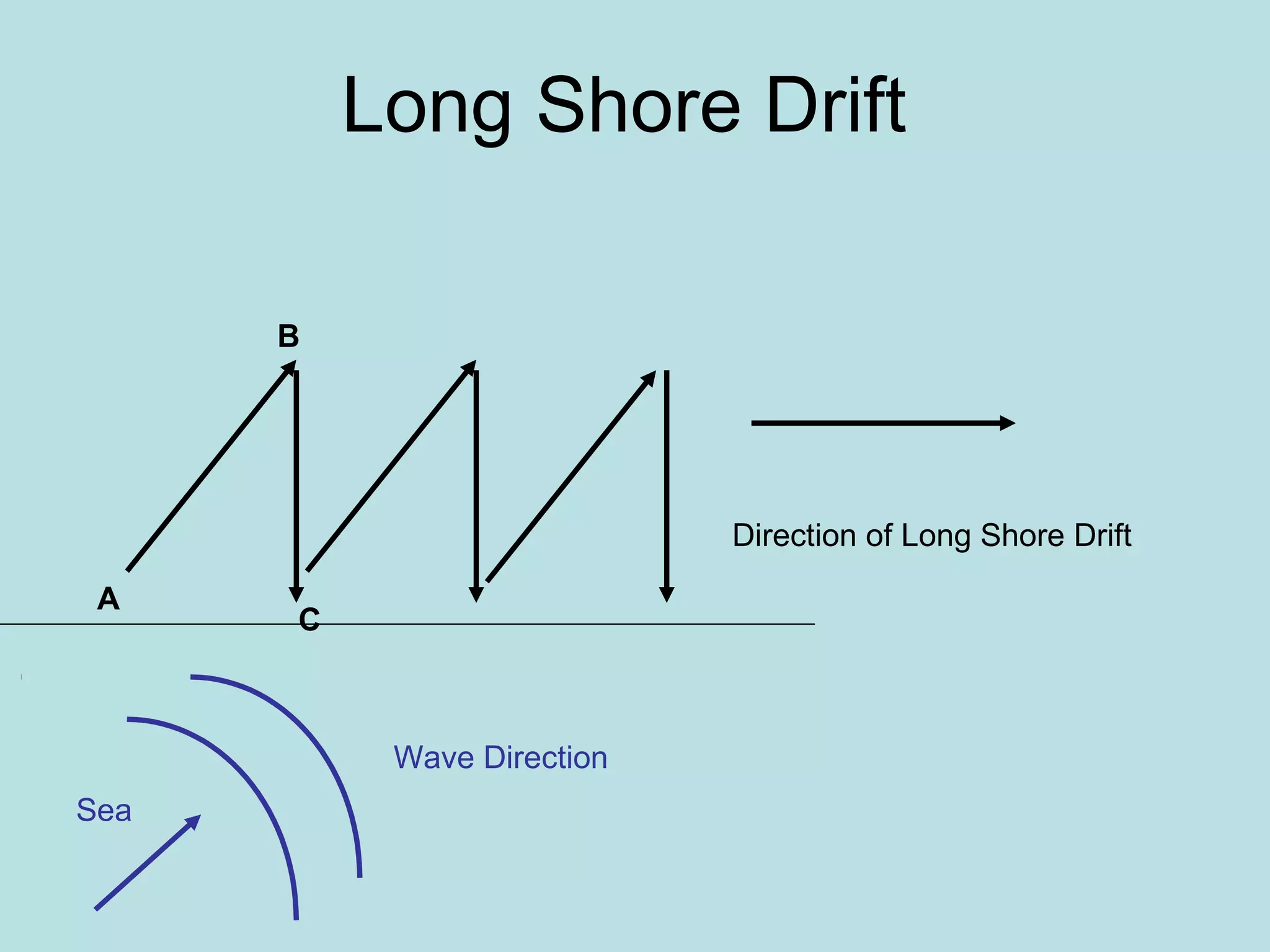
• Waves approach the shore at an angle.
• The swash of each wave pushes material up
the beach (A-B).
• Because of the slant the backwash drags
the material straight down (B-C)
• The process is repeated so the material is
transported (moved) along in a zig zag
pattern.
Long Shore Drift
Long Shore Drift
A
B
C
Direction of Long Shore Drift
Wave Direction
Sea
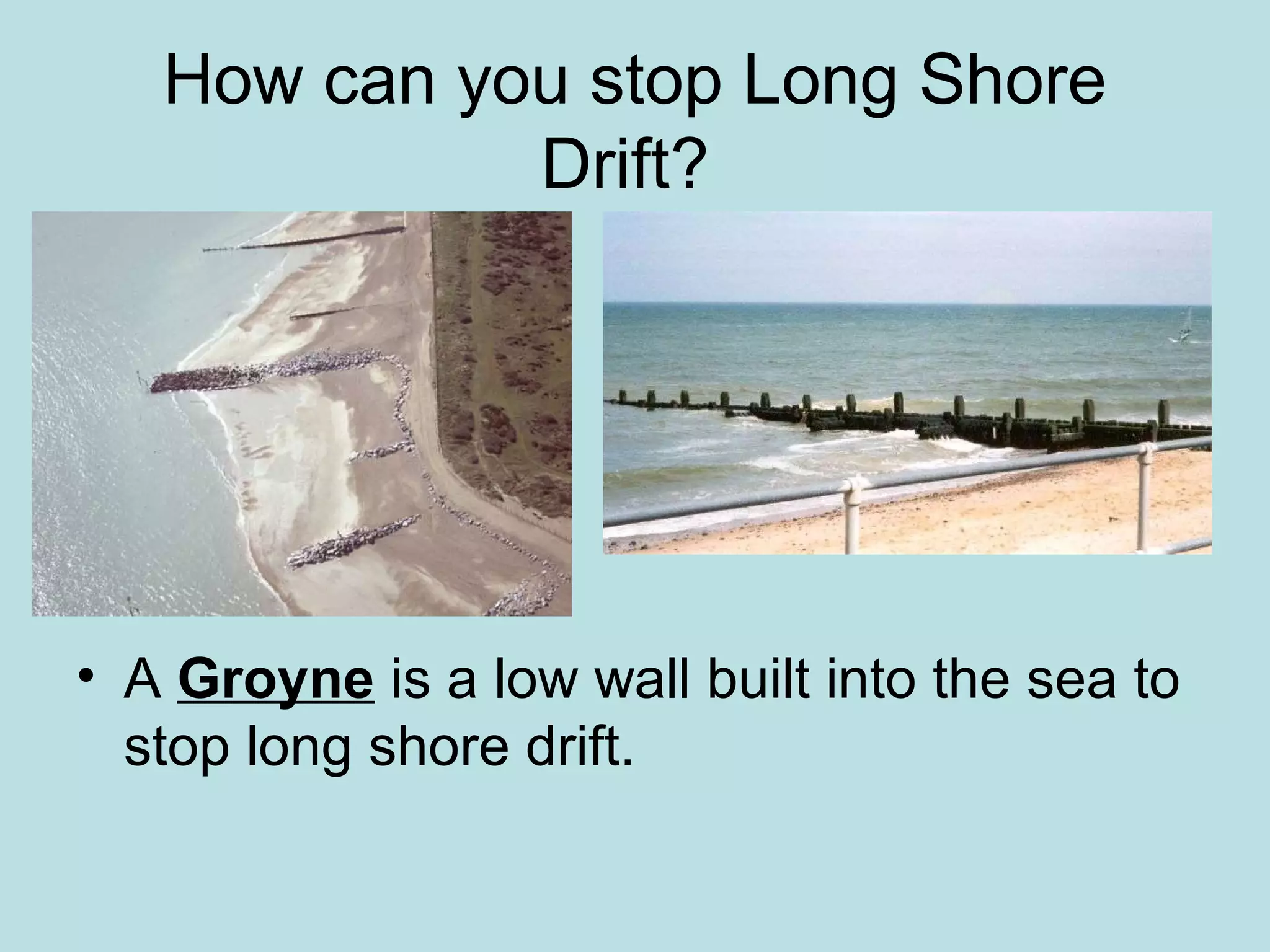
How can you stop Long Shore
Drift?
• A Groyne is a low wall built into the sea to
stop long shore drift.
Sea Deposition
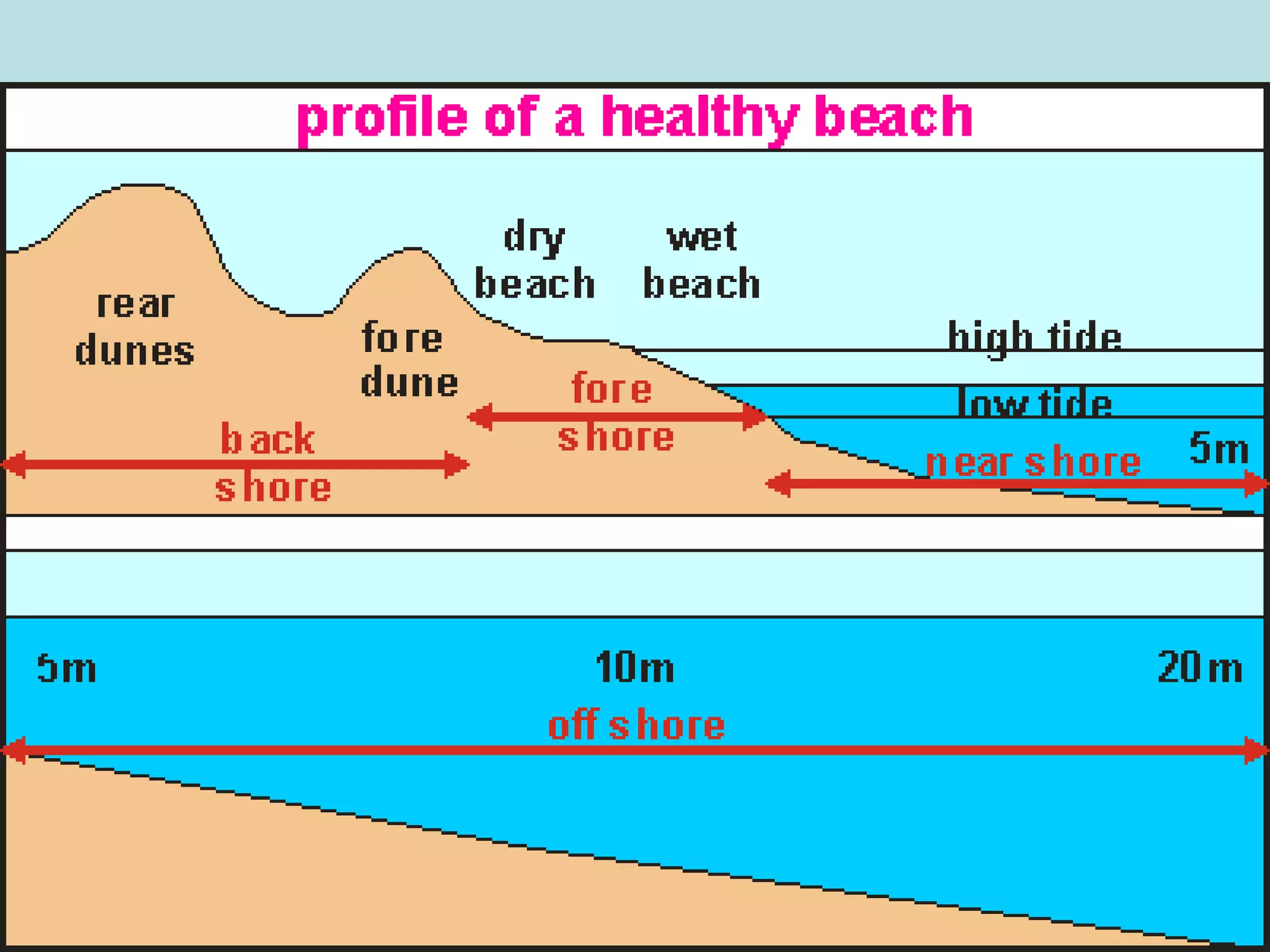
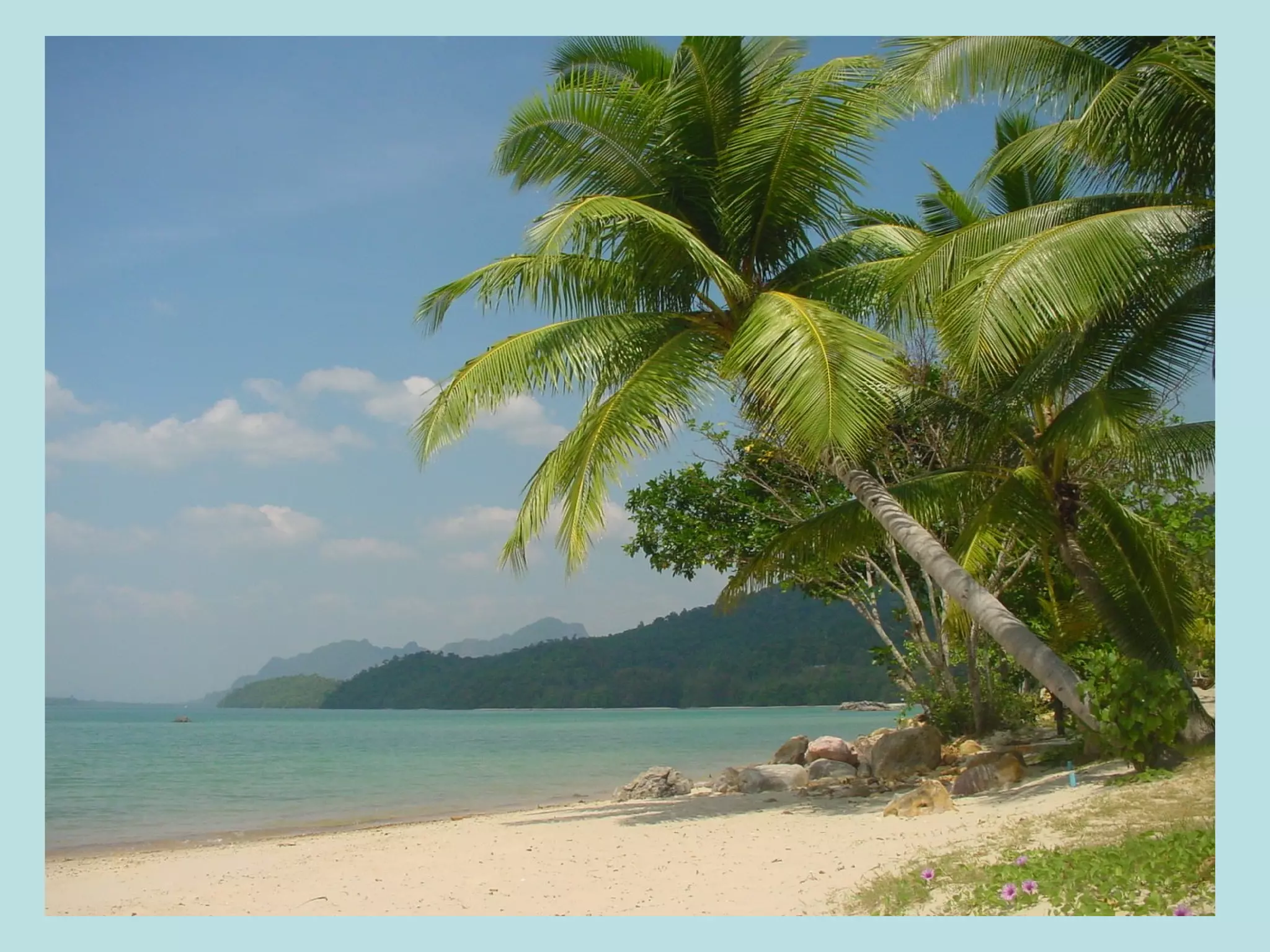
• A beach is a gently sloping area of sand,
pebbles or stones along the shore.
• It lies between the high-tide mark and
the low-tide mark.
• It is formed by the swash pushing
materials up the beach and the weaker
backwash pulls finer materials back down.
Formation of a Beach:
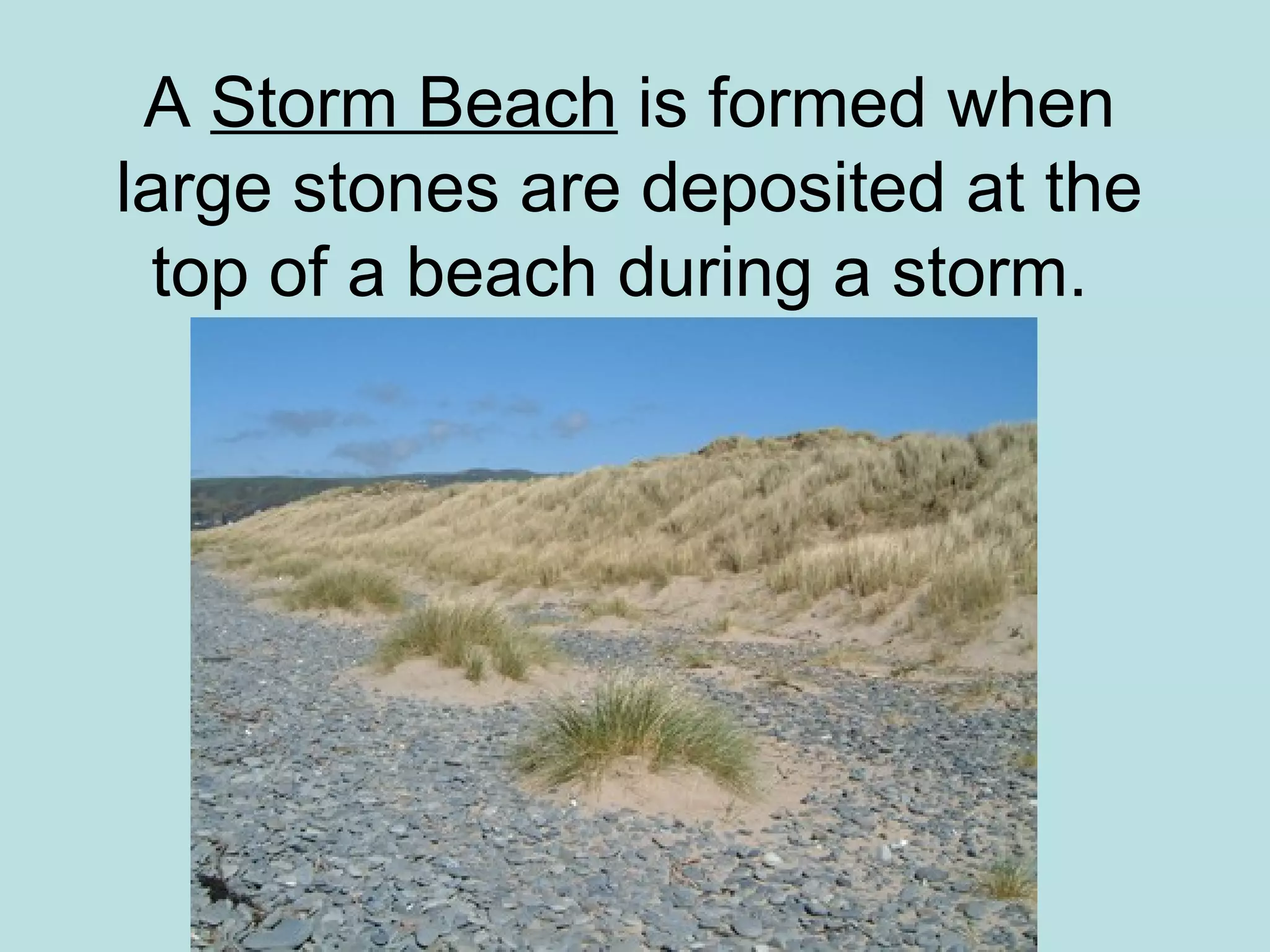
A Storm Beach is formed when
large stones are deposited at the
top of a beach during a storm.
Sand Dunes
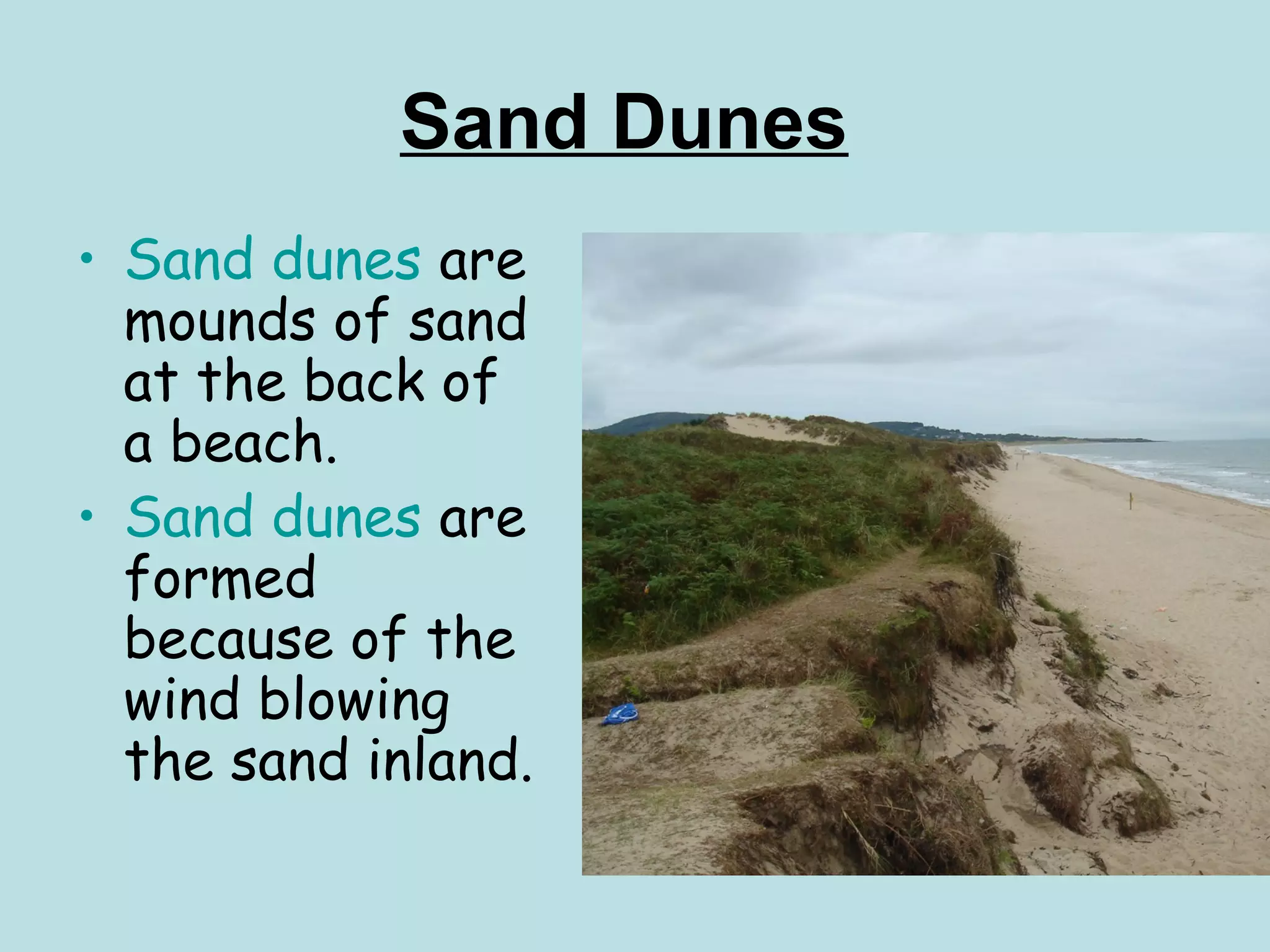
• Sand dunes are
mounds of sand
at the back of
a beach.
• Sand dunes are
formed
because of the
wind blowing
the sand inland.
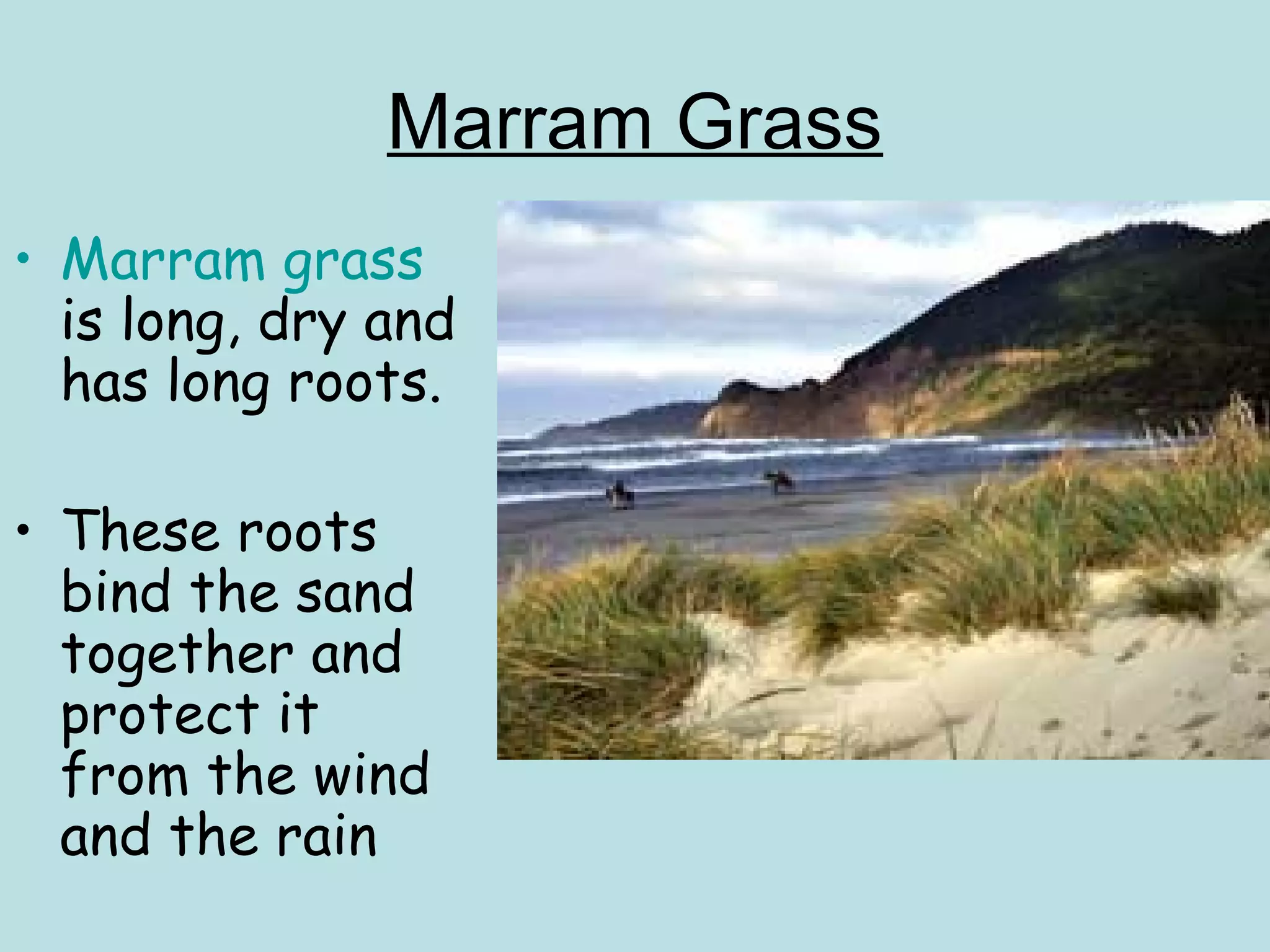
Marram Grass
• Marram grass
is long, dry and
has long roots.
• These roots
bind the sand
together and
protect it
from the wind
and the rain
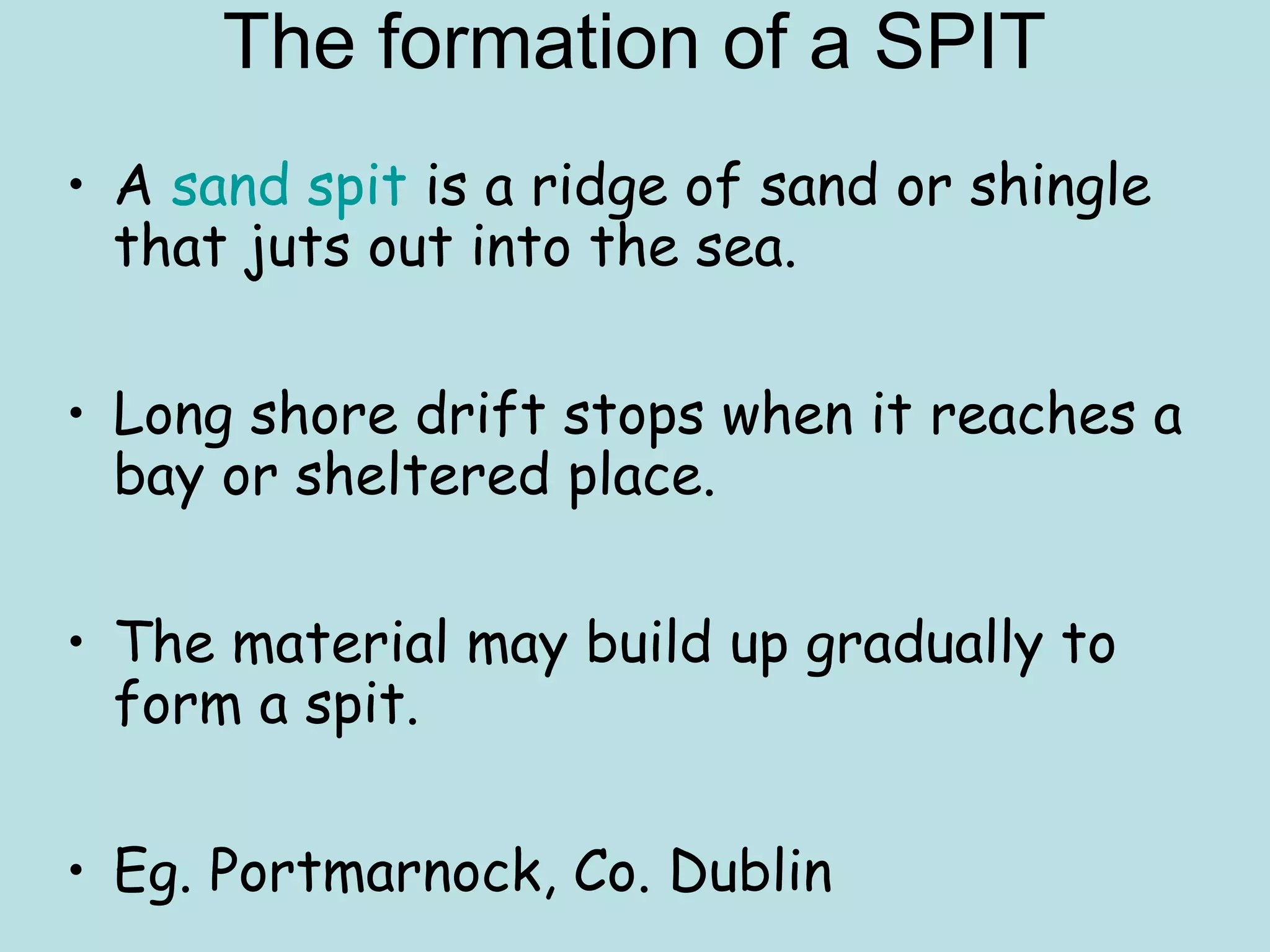
The Formation of a SPIT
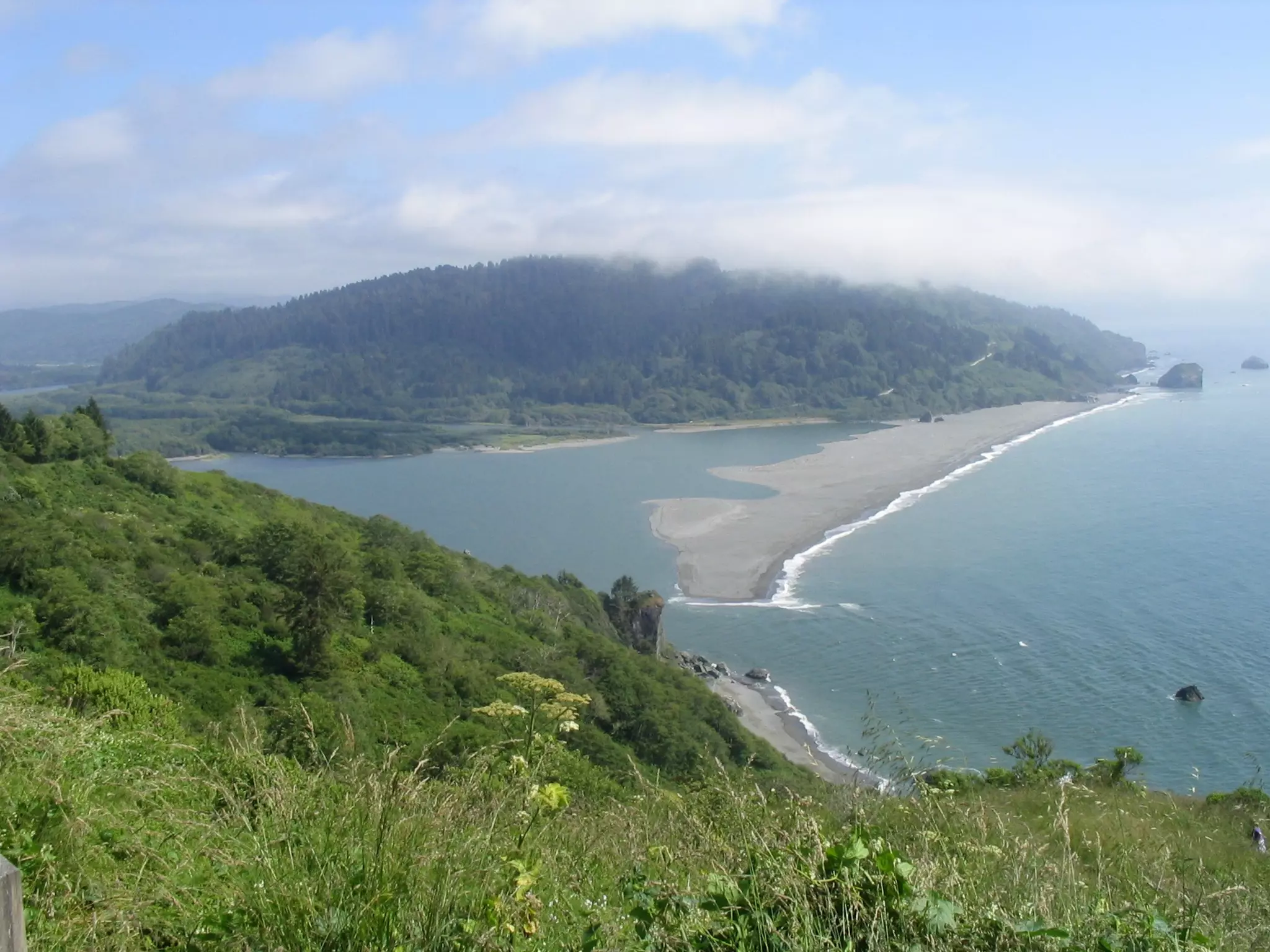
• A sand spit is a ridge of sand or shingle
that juts out into the sea.
• Long shore drift stops when it reaches a
bay or sheltered place.
• The material may build up gradually to
form a spit.
• Eg. Portmarnock, Co. Dublin
The formation of a SPIT
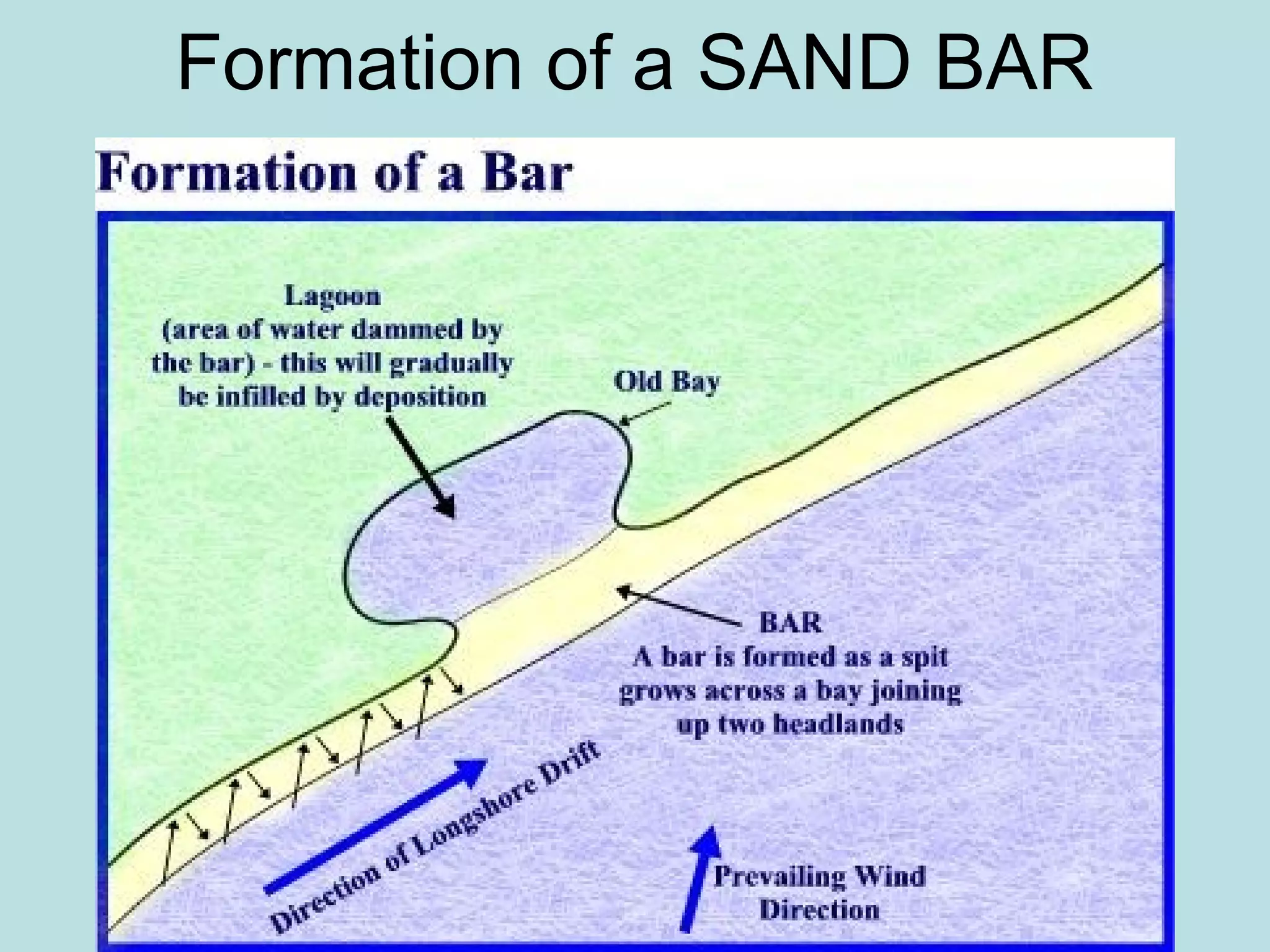
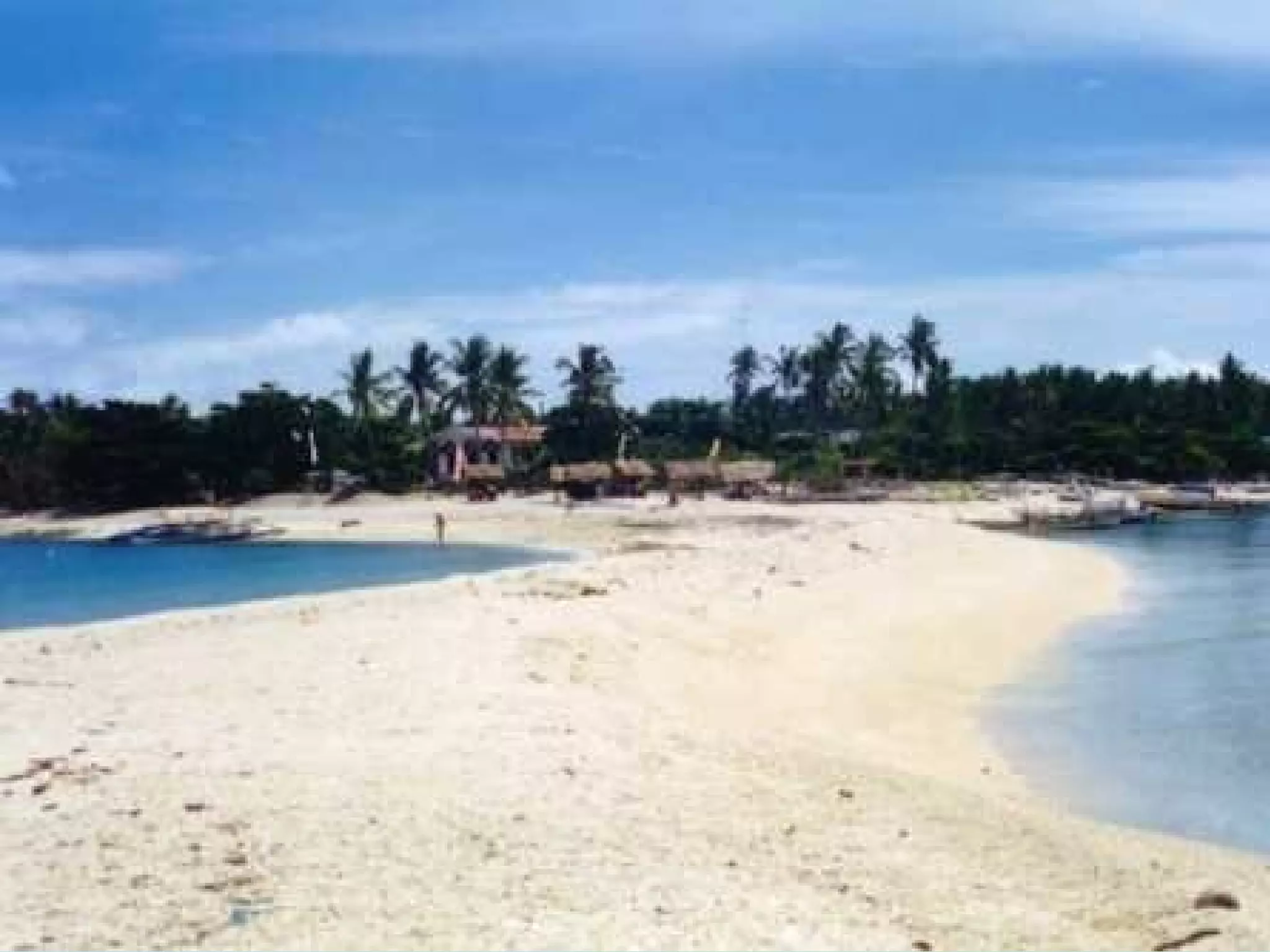
Formation of a SAND BAR
• A sand bar is a sand spit (explain
formation) that stretches across a bay
to connect the two sides of the bay.
• The lake behind the sand bar is called a
lagoon
• Example: Lady’s Island, Co. Wexford
Formation of a SAND BAR
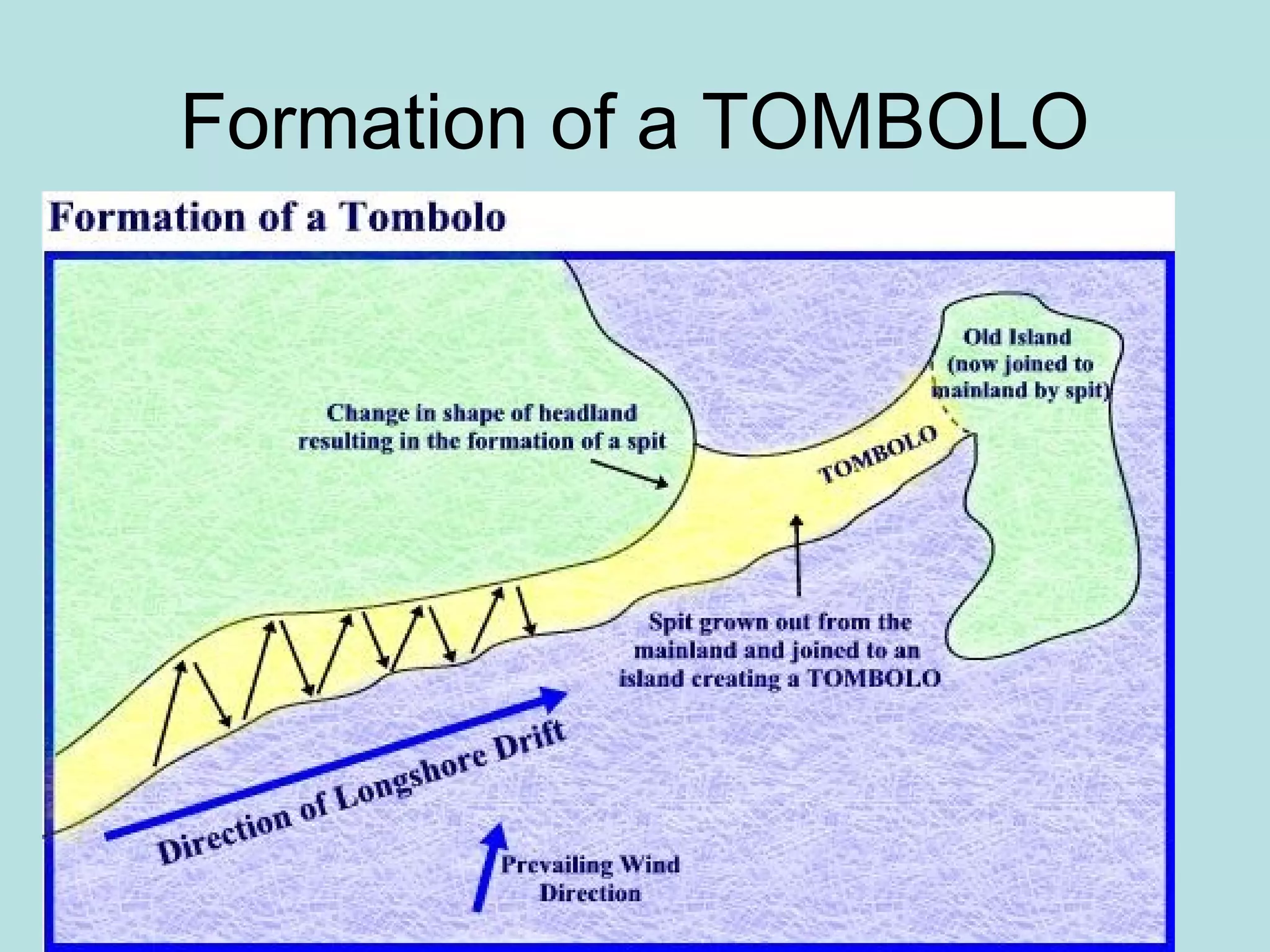
Formation of a TOMBOLO
• A tombolo is a ridge of sand or shingle
that joins an island to the mainland
• A tombolo forms when a sand spit juts
out into the sea and links with an island
• Example: Sutton, Co Dublin
Formation of a TOMBOLO
The work of the sea a.kearon

The work of the sea a.kearon

  • 1.
    The Work ofthe Sea •The sea erodes, transports and deposits material, thereby changing the shape of coast lines. Waves erode mainly by: 1.Hydraulic action (power of the water hitting the shore) 2. Abrasion (stones etc. bashed against the shore by the waves) 3. Solution (when certain rocks e.g. chalk are dissolved by the water) 4. Attrition – the rocks hitting off each other, becoming smooth and well rounded. 5. Compressed air – air and water gets trapped in cracks in rocks, expands and shatters the rock.
  • 3.
    Formation of abay • Coastlines consist of hard and soft rock • The soft rock erodes more quickly than the hard rock and a bay is formed.
  • 4.
    Formation of aHeadland • The hard rock in a coastline erodes more slowly than the soft rock • The hard rock that has not eroded, juts out to the sea, forms a headland
  • 5.
    CLIFFS • A cliffis a steep part of the coast
  • 6.
    Formation of Cliffs •A Cliff is formed when – Waves erode the coast and form a small notch. – The erosion continues until the notch gets bigger. – The section of rock above the notch cannot be supported anymore and collapses. – The slope becomes steeper – A cliff is formed. – The former base of the cliff remains as a wave cut platform.
  • 9.
    Formation of SeaCaves • A large hole or tunnel at the base of the Cliff is called a cave. • If there is a weak spot such as a crack or a joint in the rock, the waves will attack it and erode a passage called a sea cave
  • 10.
    Formation of aBlow Hole • Draw diagram p54 • A blow Hole is a hole which joins the roof of a cave with the surface above.
  • 11.
  • 12.
    • Waves approachthe shore at an angle. • The swash of each wave pushes material up the beach (A-B). • Because of the slant the backwash drags the material straight down (B-C) • The process is repeated so the material is transported (moved) along in a zig zag pattern. Long Shore Drift
  • 13.
    Long Shore Drift A B C Directionof Long Shore Drift Wave Direction Sea
  • 14.
    How can youstop Long Shore Drift? • A Groyne is a low wall built into the sea to stop long shore drift.
  • 15.
    Sea Deposition • Abeach is a gently sloping area of sand, pebbles or stones along the shore. • It lies between the high-tide mark and the low-tide mark. • It is formed by the swash pushing materials up the beach and the weaker backwash pulls finer materials back down. Formation of a Beach:
  • 19.
    A Storm Beachis formed when large stones are deposited at the top of a beach during a storm.
  • 20.
    Sand Dunes • Sanddunes are mounds of sand at the back of a beach. • Sand dunes are formed because of the wind blowing the sand inland.
  • 21.
    Marram Grass • Marramgrass is long, dry and has long roots. • These roots bind the sand together and protect it from the wind and the rain
  • 22.
  • 23.
    • A sandspit is a ridge of sand or shingle that juts out into the sea. • Long shore drift stops when it reaches a bay or sheltered place. • The material may build up gradually to form a spit. • Eg. Portmarnock, Co. Dublin The formation of a SPIT
  • 25.
  • 26.
    • A sandbar is a sand spit (explain formation) that stretches across a bay to connect the two sides of the bay. • The lake behind the sand bar is called a lagoon • Example: Lady’s Island, Co. Wexford Formation of a SAND BAR
  • 28.
  • 29.
    • A tombolois a ridge of sand or shingle that joins an island to the mainland • A tombolo forms when a sand spit juts out into the sea and links with an island • Example: Sutton, Co Dublin Formation of a TOMBOLO