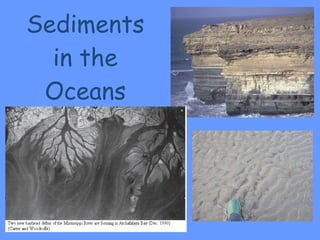
Sediments in the Oceans
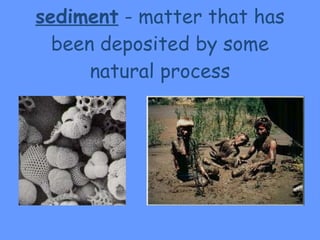
sediment  - matter that has been deposited by some natural process
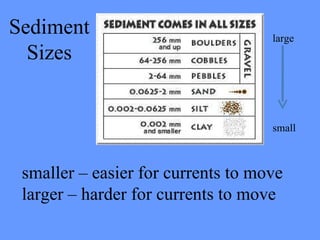
smaller – easier for currents to move larger – harder for currents to move Sediment Sizes large small
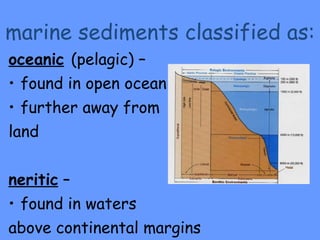
marine sediments classified as: oceanic   (pelagic) –  found in open ocean further away from land neritic  –  found in waters above continental margins  closer to land - coastal
sediment types *terrigenous  - derived from land *biogenous  - derived from plants and animals hydrogenous  (authigenic) – form from chemical reactions in the ocean cosmogenous  - from outer space *most common
derived from land rock fragments volcanic ash blown dust broken down by weathering (erosion) Terrigenous Sediment
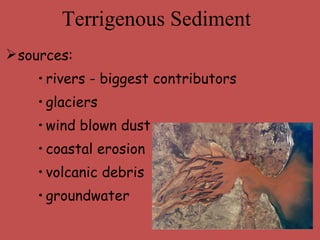
sources: rivers - biggest contributors glaciers wind blown dust coastal erosion volcanic debris groundwater Terrigenous Sediment
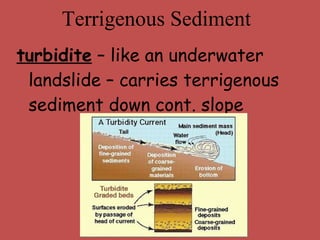
turbidite  – like an underwater  landslide – carries terrigenous  sediment down cont. slope Terrigenous Sediment
Terrigenous Sediment dust from the Sahara Desert
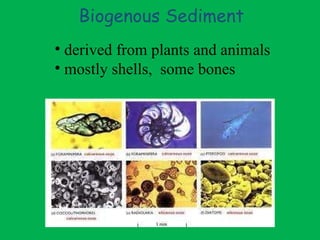
Biogenous Sediment derived from plants and animals mostly shells,  some bones
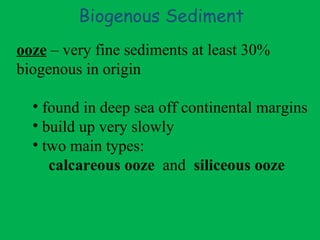
Biogenous Sediment ooze  – very fine sediments at least 30% biogenous in origin found in deep sea off continental margins build up very slowly two main types: calcareous ooze   and  siliceous ooze
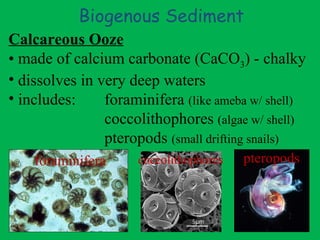
Biogenous Sediment Calcareous Ooze made of calcium carbonate (CaCO 3 ) - chalky dissolves in very deep waters includes:  foraminifera  (like ameba w/ shell) coccolithophores  (algae w/ shell) pteropods  (small drifting snails) foraminifera coccolithophores pteropods
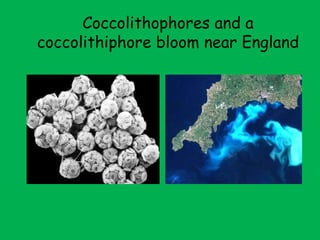
Coccolithophores and a coccolithiphore bloom near England
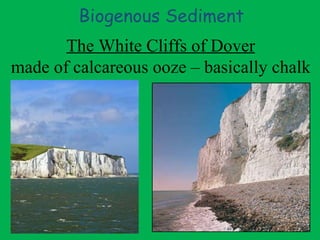
Biogenous Sediment The White Cliffs of Dover made of calcareous ooze – basically chalk
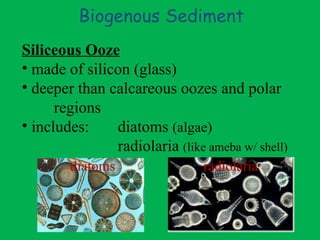
Biogenous Sediment Siliceous Ooze made of silicon (glass) deeper than calcareous oozes and polar  regions includes:  diatoms  (algae) radiolaria  (like ameba w/ shell) diatoms radiolaria
Hydrogenous Sediment also called authigenic sediments form from chemical reactions in the ocean very small percentage of ocean sediments
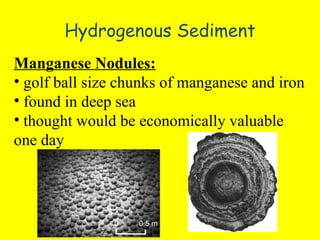
Hydrogenous Sediment Manganese Nodules: golf ball size chunks of manganese and iron found in deep sea thought would be economically valuable one day
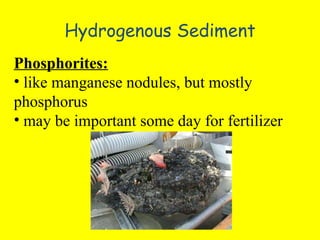
Hydrogenous Sediment Phosphorites: like manganese nodules, but mostly phosphorus may be important some day for fertilizer
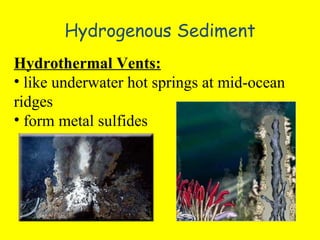
Hydrogenous Sediment Hydrothermal Vents: like underwater hot springs at mid-ocean ridges form metal sulfides
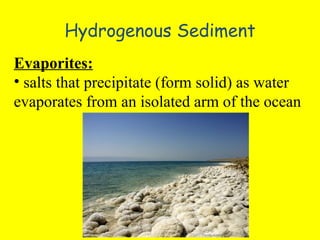
Hydrogenous Sediment Evaporites: salts that precipitate (form solid) as water evaporates from an isolated arm of the ocean
Cosmogenous Sediment from outer space found in trace amounts – least common examples: dust from outer space meteorite debris microtektites –  crustal material that exits earth’s atmosphere during meteor impact and then falls back to earth – melts forming glassy teardrops
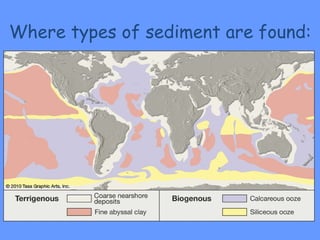
Where types of sediment are found:
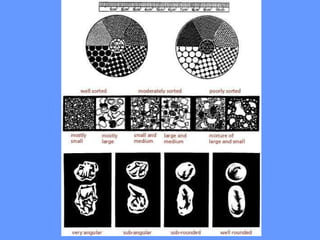
sediments can be: well sorted – all one size poorly sorted – many sizes together affects: amount of water between sediment grains oxygen level types of organisms that can live there
 

Sediments in the ocean powerpoint

  • 1.
  • 2.
    sediment -matter that has been deposited by some natural process
  • 3.
    smaller – easierfor currents to move larger – harder for currents to move Sediment Sizes large small
  • 4.
    marine sediments classifiedas: oceanic (pelagic) – found in open ocean further away from land neritic – found in waters above continental margins closer to land - coastal
  • 5.
    sediment types *terrigenous - derived from land *biogenous - derived from plants and animals hydrogenous (authigenic) – form from chemical reactions in the ocean cosmogenous - from outer space *most common
  • 6.
    derived from landrock fragments volcanic ash blown dust broken down by weathering (erosion) Terrigenous Sediment
  • 7.
    sources: rivers -biggest contributors glaciers wind blown dust coastal erosion volcanic debris groundwater Terrigenous Sediment
  • 8.
    turbidite –like an underwater landslide – carries terrigenous sediment down cont. slope Terrigenous Sediment
  • 9.
    Terrigenous Sediment dustfrom the Sahara Desert
  • 10.
    Biogenous Sediment derivedfrom plants and animals mostly shells, some bones
  • 11.
    Biogenous Sediment ooze – very fine sediments at least 30% biogenous in origin found in deep sea off continental margins build up very slowly two main types: calcareous ooze and siliceous ooze
  • 12.
    Biogenous Sediment CalcareousOoze made of calcium carbonate (CaCO 3 ) - chalky dissolves in very deep waters includes: foraminifera (like ameba w/ shell) coccolithophores (algae w/ shell) pteropods (small drifting snails) foraminifera coccolithophores pteropods
  • 13.
    Coccolithophores and acoccolithiphore bloom near England
  • 14.
    Biogenous Sediment TheWhite Cliffs of Dover made of calcareous ooze – basically chalk
  • 15.
    Biogenous Sediment SiliceousOoze made of silicon (glass) deeper than calcareous oozes and polar regions includes: diatoms (algae) radiolaria (like ameba w/ shell) diatoms radiolaria
  • 16.
    Hydrogenous Sediment alsocalled authigenic sediments form from chemical reactions in the ocean very small percentage of ocean sediments
  • 17.
    Hydrogenous Sediment ManganeseNodules: golf ball size chunks of manganese and iron found in deep sea thought would be economically valuable one day
  • 18.
    Hydrogenous Sediment Phosphorites:like manganese nodules, but mostly phosphorus may be important some day for fertilizer
  • 19.
    Hydrogenous Sediment HydrothermalVents: like underwater hot springs at mid-ocean ridges form metal sulfides
  • 20.
    Hydrogenous Sediment Evaporites:salts that precipitate (form solid) as water evaporates from an isolated arm of the ocean
  • 21.
    Cosmogenous Sediment fromouter space found in trace amounts – least common examples: dust from outer space meteorite debris microtektites – crustal material that exits earth’s atmosphere during meteor impact and then falls back to earth – melts forming glassy teardrops
  • 22.
    Where types ofsediment are found:
  • 23.
    sediments can be:well sorted – all one size poorly sorted – many sizes together affects: amount of water between sediment grains oxygen level types of organisms that can live there
  • 24.

Editor's Notes

  • #23 Distribution of pelagic sedimentDominant component Composition Atlantic Pacific IndianTotal % Foraminiferal ooze and nannofossil oozeCalcium carbonate65 365447Pteropod ooze Calcium carbonate20.1- 0.5Diatom oozeSilica (opal)71020 12Radiolarian oozeSilica (opal)-50.53Red (actually brown) clay K, FeAl silicate26492538
  • #24 Distribution of pelagic sedimentDominant component Composition Atlantic Pacific IndianTotal % Foraminiferal ooze and nannofossil oozeCalcium carbonate65 365447Pteropod ooze Calcium carbonate20.1- 0.5Diatom oozeSilica (opal)71020 12Radiolarian oozeSilica (opal)-50.53Red (actually brown) clay K, FeAl silicate26492538
  • #25 Distribution of pelagic sedimentDominant component Composition Atlantic Pacific IndianTotal % Foraminiferal ooze and nannofossil oozeCalcium carbonate65 365447Pteropod ooze Calcium carbonate20.1- 0.5Diatom oozeSilica (opal)71020 12Radiolarian oozeSilica (opal)-50.53Red (actually brown) clay K, FeAl silicate26492538