

OCEAN
 is a body of saline
water that composes
a large part of
a planet's
hydrosphere
A large ,vast
body of water
and large
expanse of sea
The oceans is a body of
saline water that
composes a large of
our planet
hydrosphere
 it refers to all major
division of the planets
world ocean.
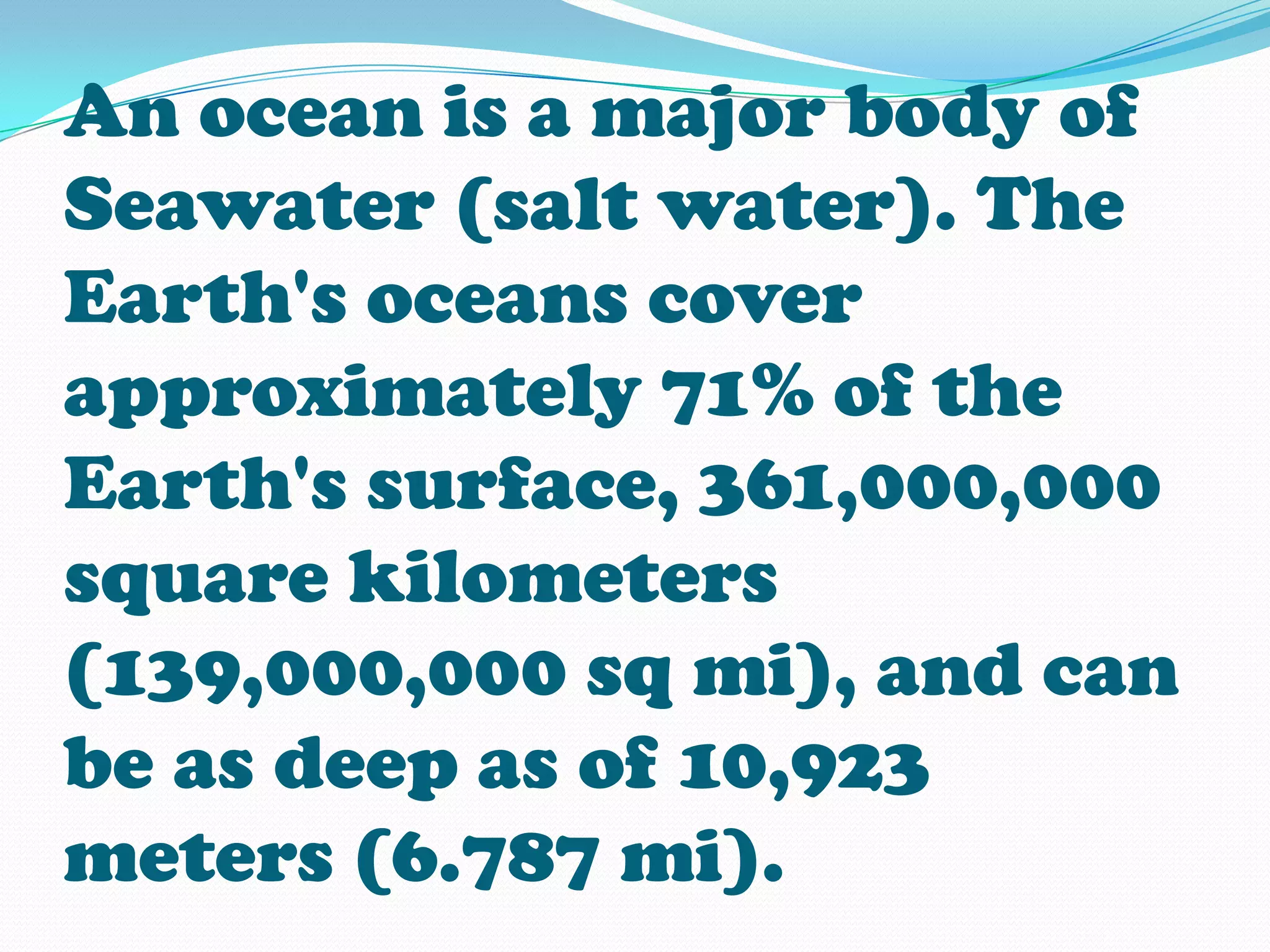
An ocean is a major body of
Seawater (salt water). The
Earth's oceans cover
approximately 71% of the
Earth's surface, 361,000,000
square kilometers
(139,000,000 sq mi), and can
be as deep as of 10,923
meters (6.787 mi).
The origin of Earth's
oceans is still unknown
though they are believed
to have first appeared in
the Hadean period and
may have been the point of
origin for the emergence
of life.
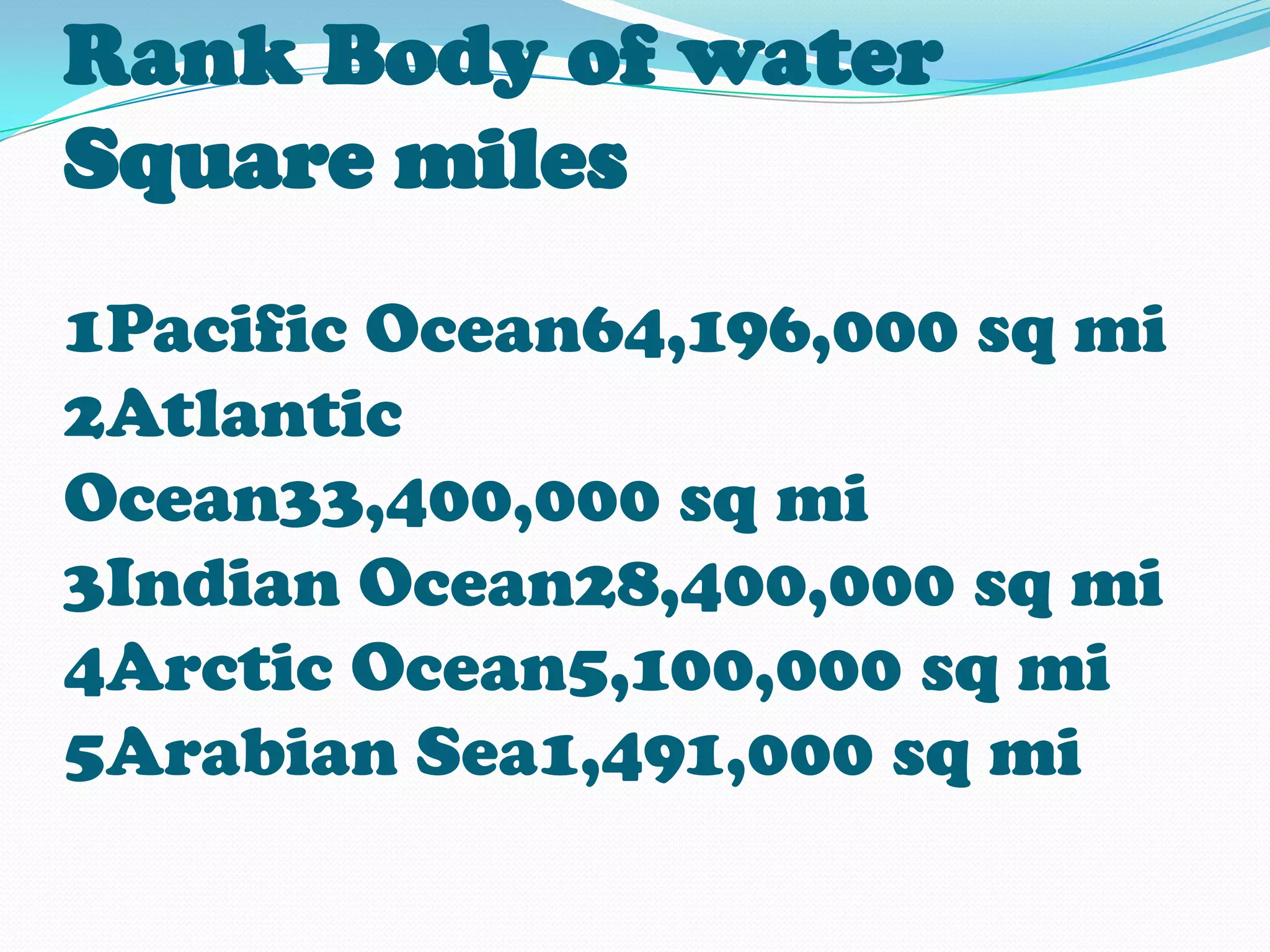
Rank Body of water
Square miles
1Pacific Ocean64,196,000 sq mi
2Atlantic
Ocean33,400,000 sq mi
3Indian Ocean28,400,000 sq mi
4Arctic Ocean5,100,000 sq mi
5Arabian Sea1,491,000 sq mi
SEAS
expanse
of salt water
covering most of
the earths surface.
It is a tract of water
within an ocean.
A large body of salt
water completely or
partially enclosed by
land.
AREAS
Philippine Sea(2M sq miles)
Coral Sea(1,850,000 sq miles)
Arabian Sea(1,491,130 sq miles)
South China Sea(1,351,936 sq
miles)
Middle Sea(1,081,548 sq miles)
Many people use the terms
"ocean" and "sea"
interchangeably when
speaking about the ocean,
but there is a difference
between the two terms when
speaking of geography (the
study of the Earth's surface).
Seas are partly
contiguous to a land
mass in our often in
land.
 Oceans are enormous
compared to any sea.
Oceans are much deeper
and support only very
basic life forms like
bacteria and shrimp this is
because no light reaches
there and the pressure
conceived that no life form
can survive.
Seas are smaller than
oceans and are usually
located where the land
and ocean meet.
Typically, seas are
partially enclosed by
land.
Is the ocean and seas
blue?
According to the
scientist the sun has
something to do with
the color of the ocean.
Because the sun
reflects on the oceans.
Thank you for
listening!!!!!

Ocean and Seas

  • 2.
    OCEAN  is abody of saline water that composes a large part of a planet's hydrosphere
  • 3.
    A large ,vast bodyof water and large expanse of sea
  • 4.
    The oceans isa body of saline water that composes a large of our planet hydrosphere it refers to all major division of the planets world ocean.
  • 5.
    An ocean isa major body of Seawater (salt water). The Earth's oceans cover approximately 71% of the Earth's surface, 361,000,000 square kilometers (139,000,000 sq mi), and can be as deep as of 10,923 meters (6.787 mi).
  • 6.
    The origin ofEarth's oceans is still unknown though they are believed to have first appeared in the Hadean period and may have been the point of origin for the emergence of life.
  • 7.
    Rank Body ofwater Square miles 1Pacific Ocean64,196,000 sq mi 2Atlantic Ocean33,400,000 sq mi 3Indian Ocean28,400,000 sq mi 4Arctic Ocean5,100,000 sq mi 5Arabian Sea1,491,000 sq mi
  • 8.
    SEAS expanse of salt water coveringmost of the earths surface.
  • 9.
    It is atract of water within an ocean. A large body of salt water completely or partially enclosed by land.
  • 10.
    AREAS Philippine Sea(2M sqmiles) Coral Sea(1,850,000 sq miles) Arabian Sea(1,491,130 sq miles) South China Sea(1,351,936 sq miles) Middle Sea(1,081,548 sq miles)
  • 12.
    Many people usethe terms "ocean" and "sea" interchangeably when speaking about the ocean, but there is a difference between the two terms when speaking of geography (the study of the Earth's surface).
  • 13.
    Seas are partly contiguousto a land mass in our often in land. Oceans are enormous compared to any sea.
  • 14.
    Oceans are muchdeeper and support only very basic life forms like bacteria and shrimp this is because no light reaches there and the pressure conceived that no life form can survive.
  • 15.
    Seas are smallerthan oceans and are usually located where the land and ocean meet. Typically, seas are partially enclosed by land.
  • 16.
    Is the oceanand seas blue?
  • 17.
    According to the scientistthe sun has something to do with the color of the ocean. Because the sun reflects on the oceans.
  • 18.