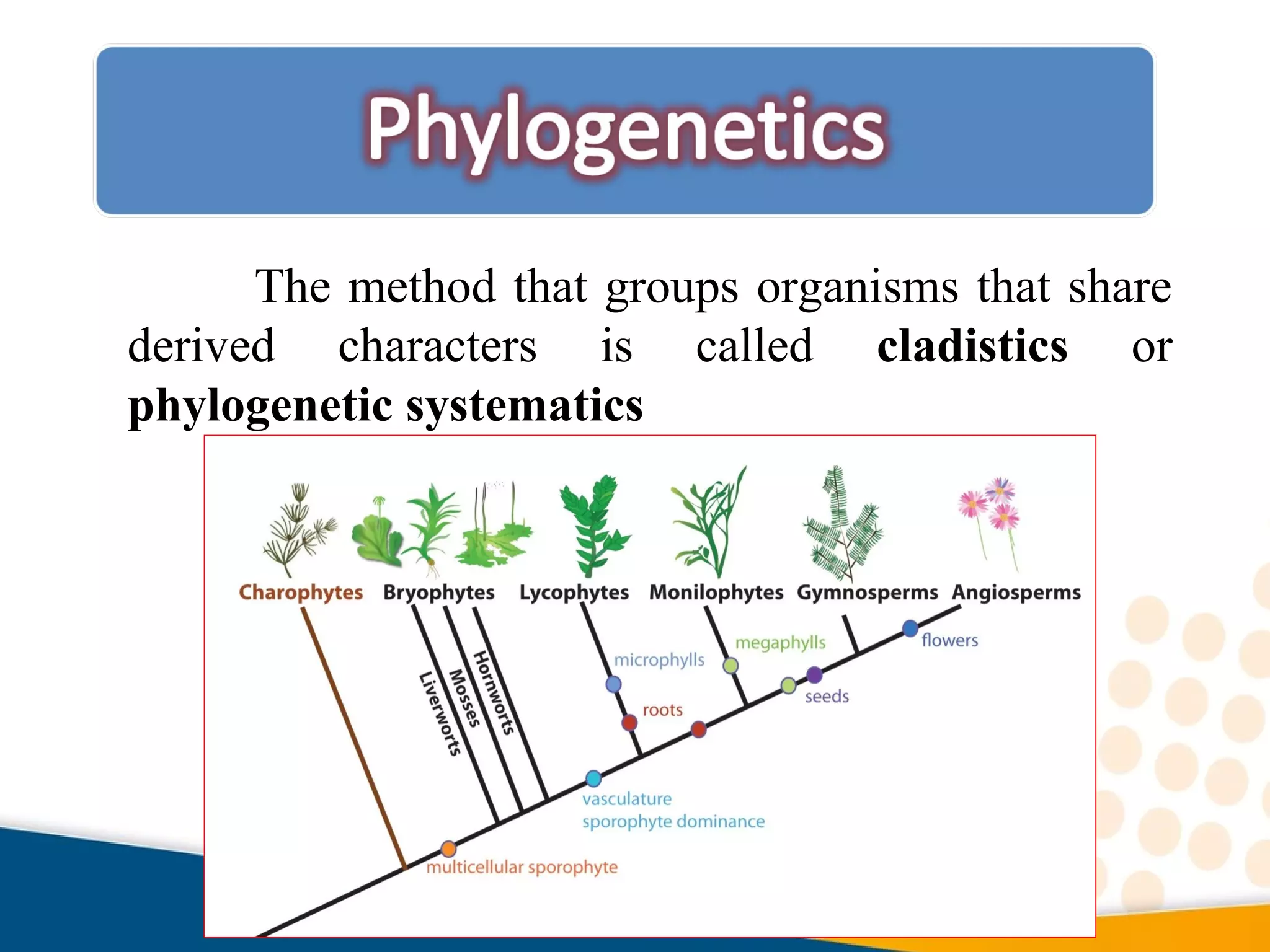
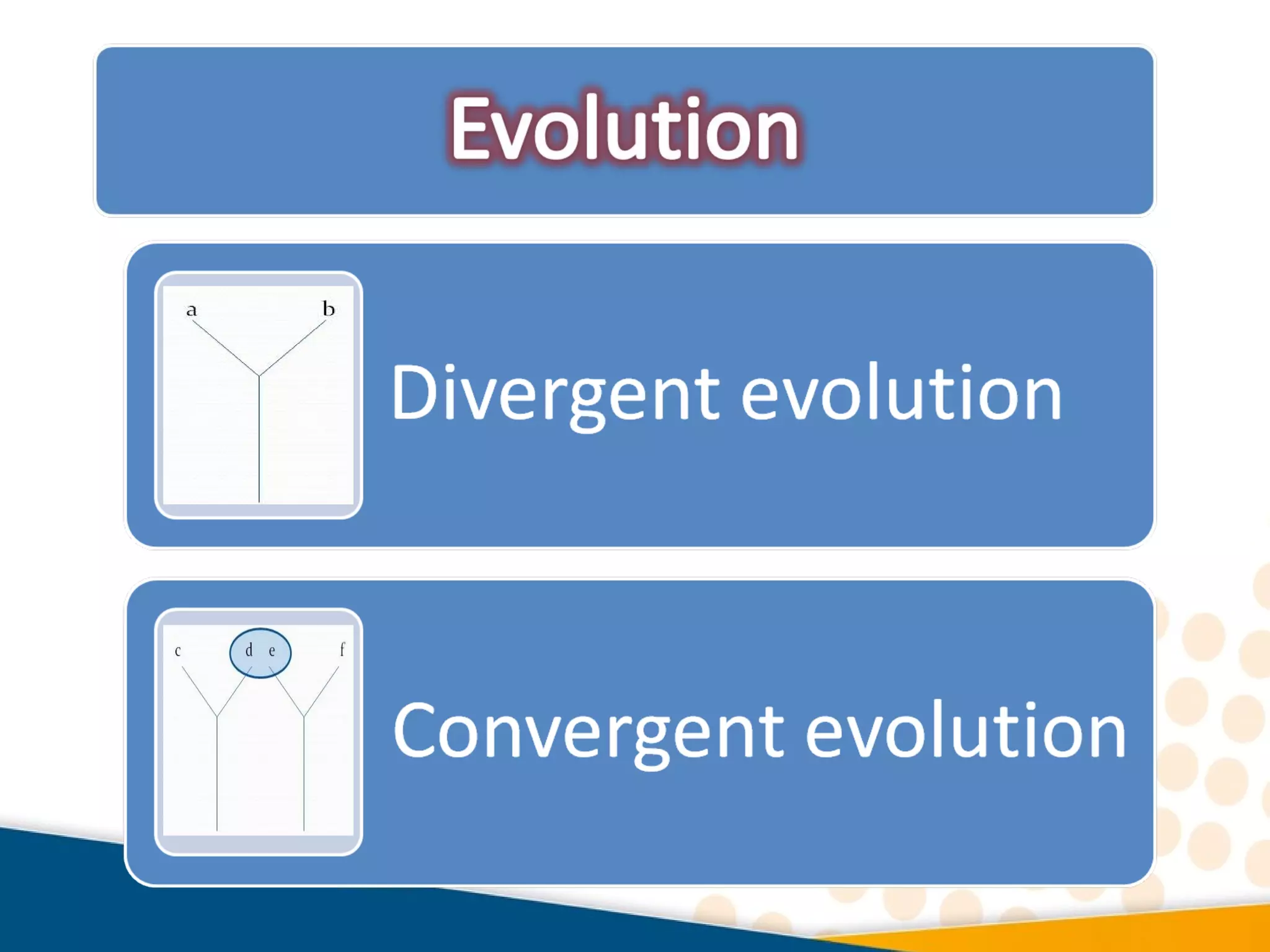
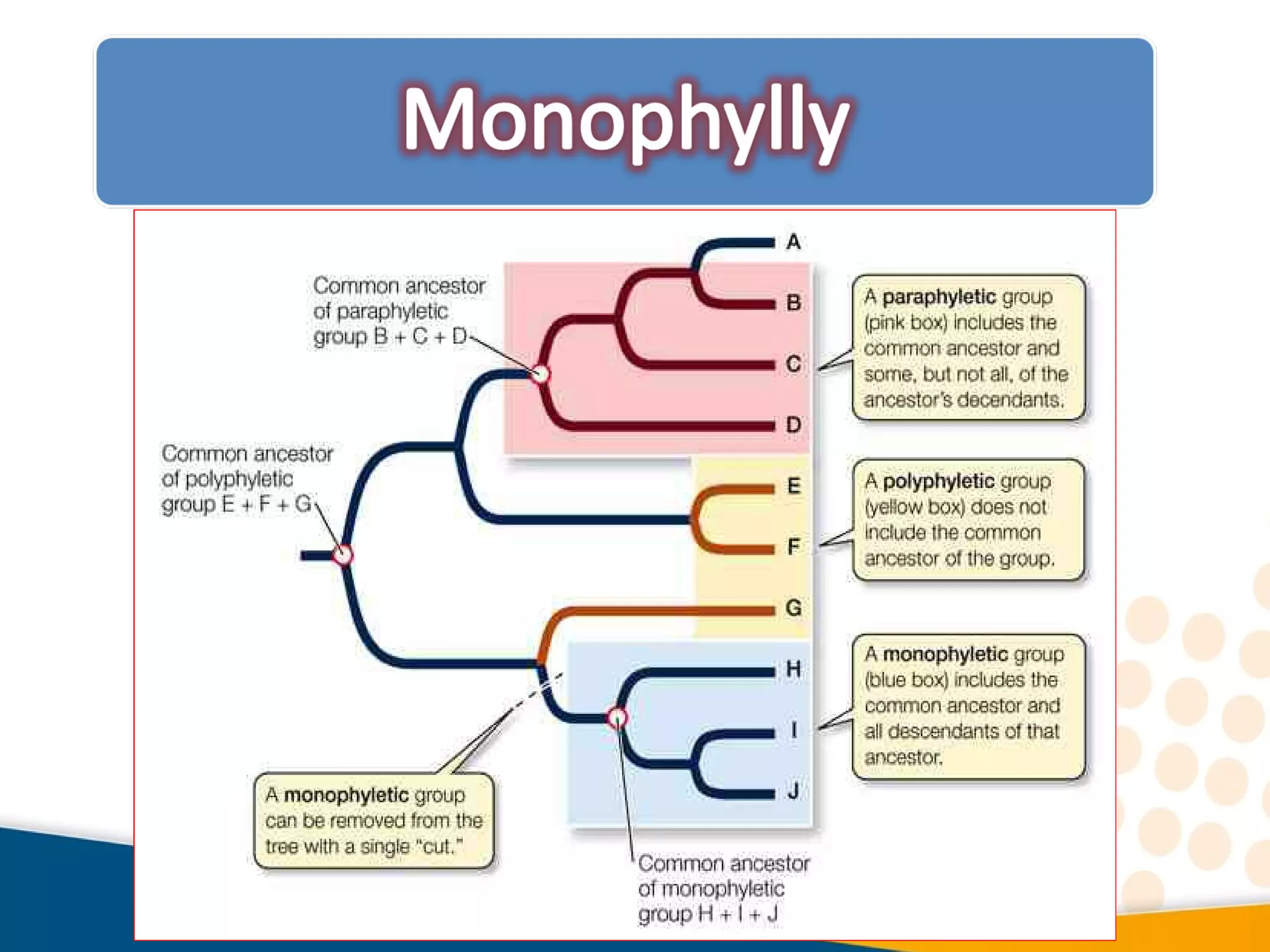
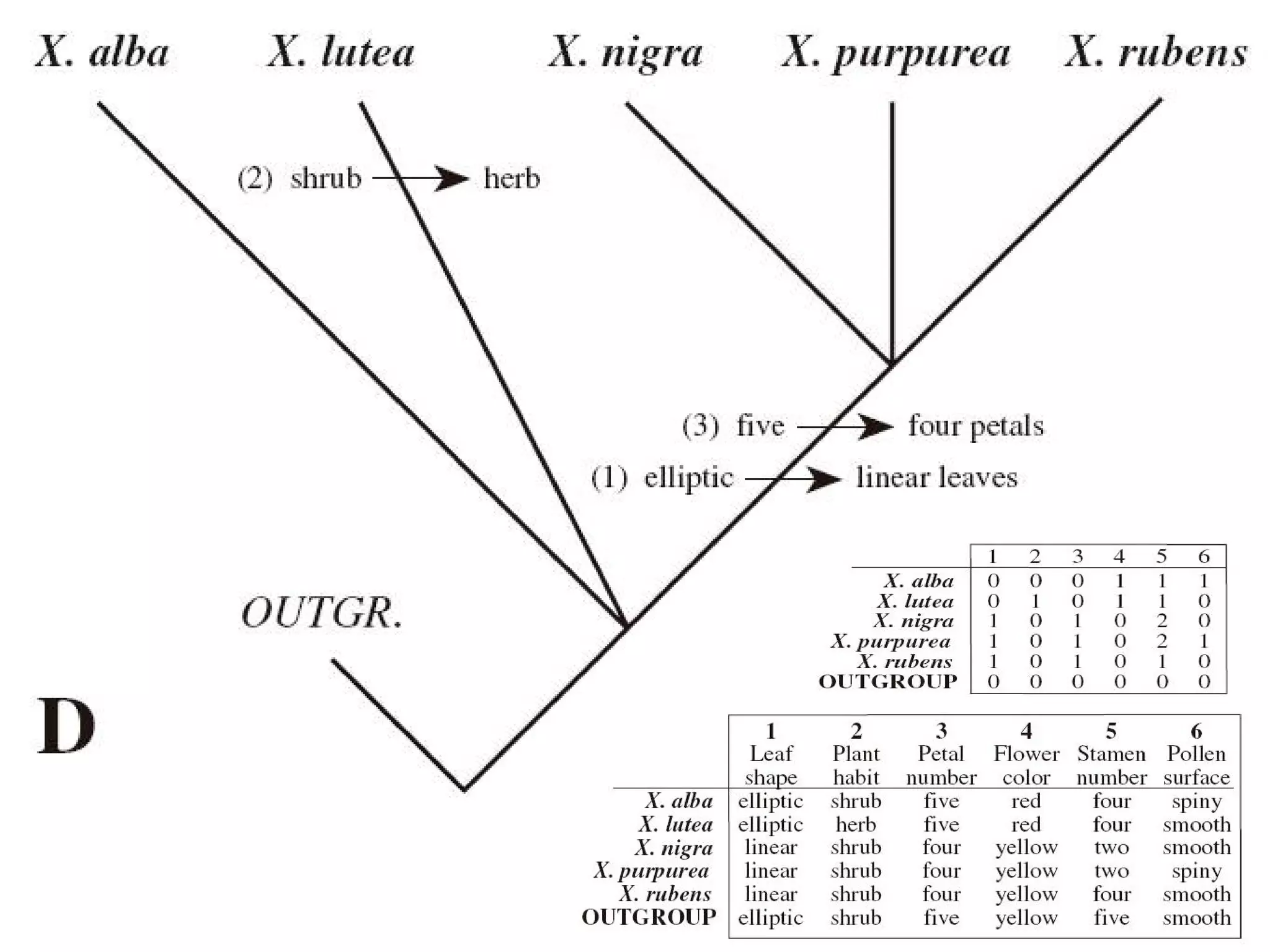
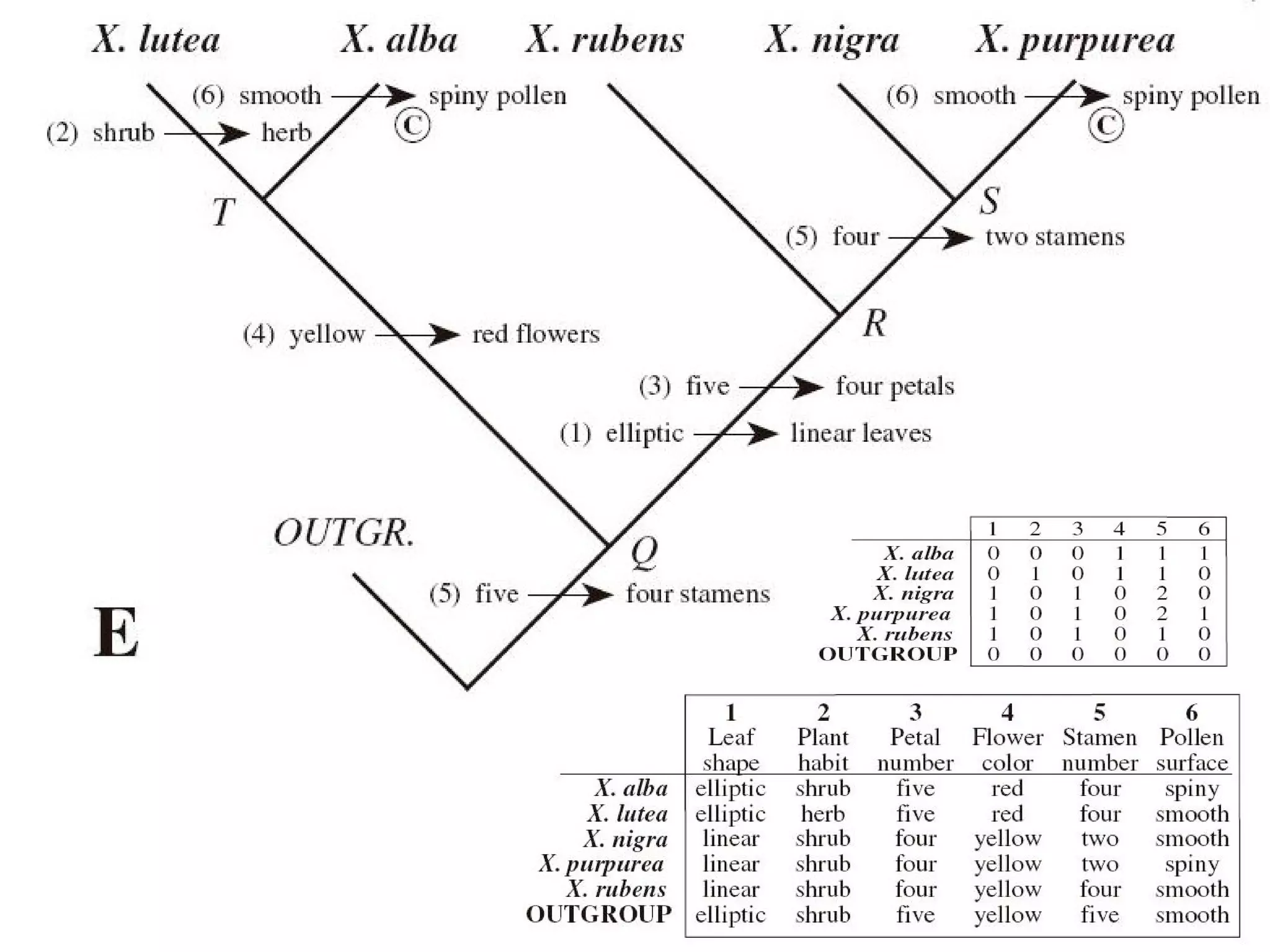
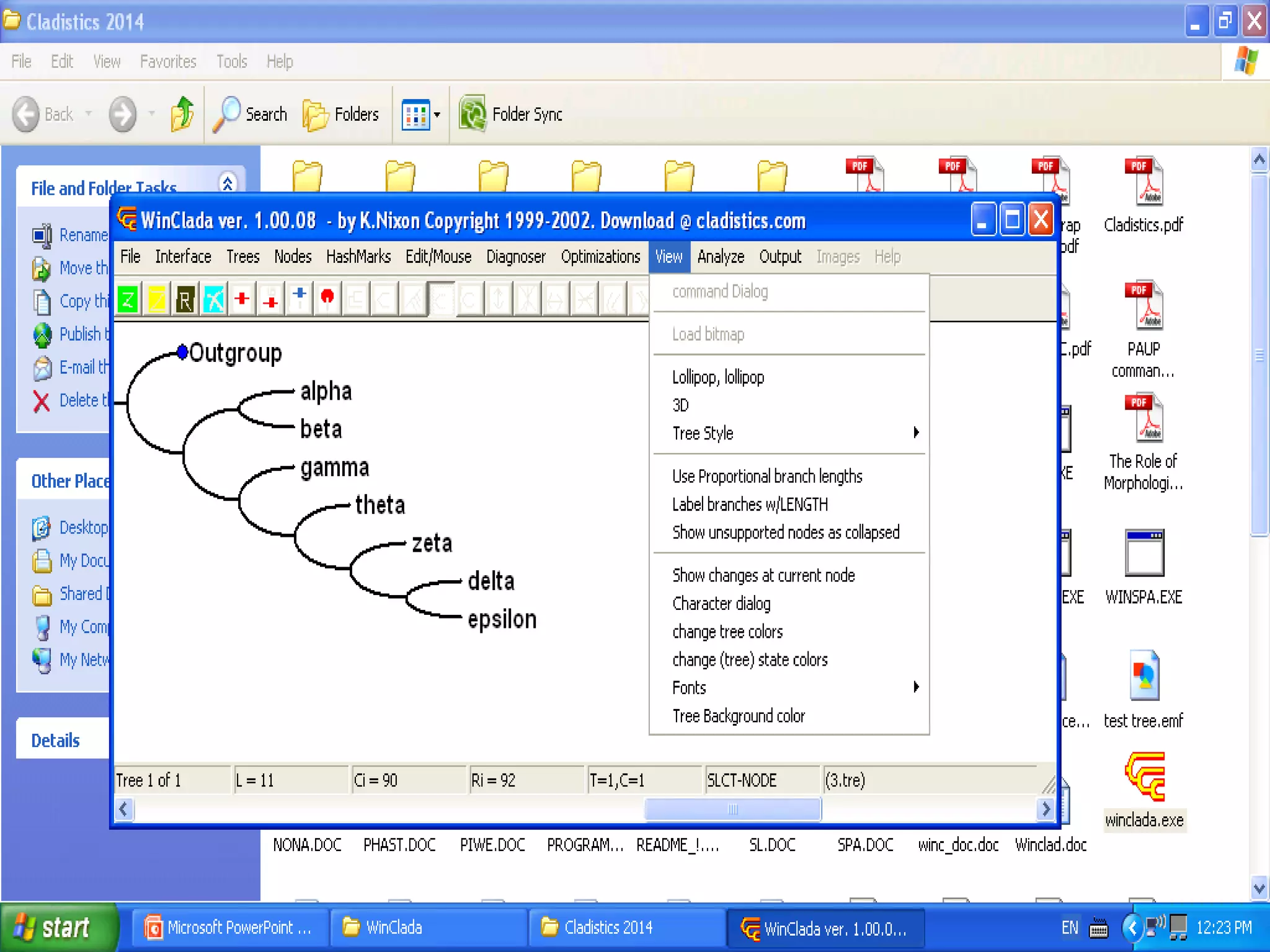
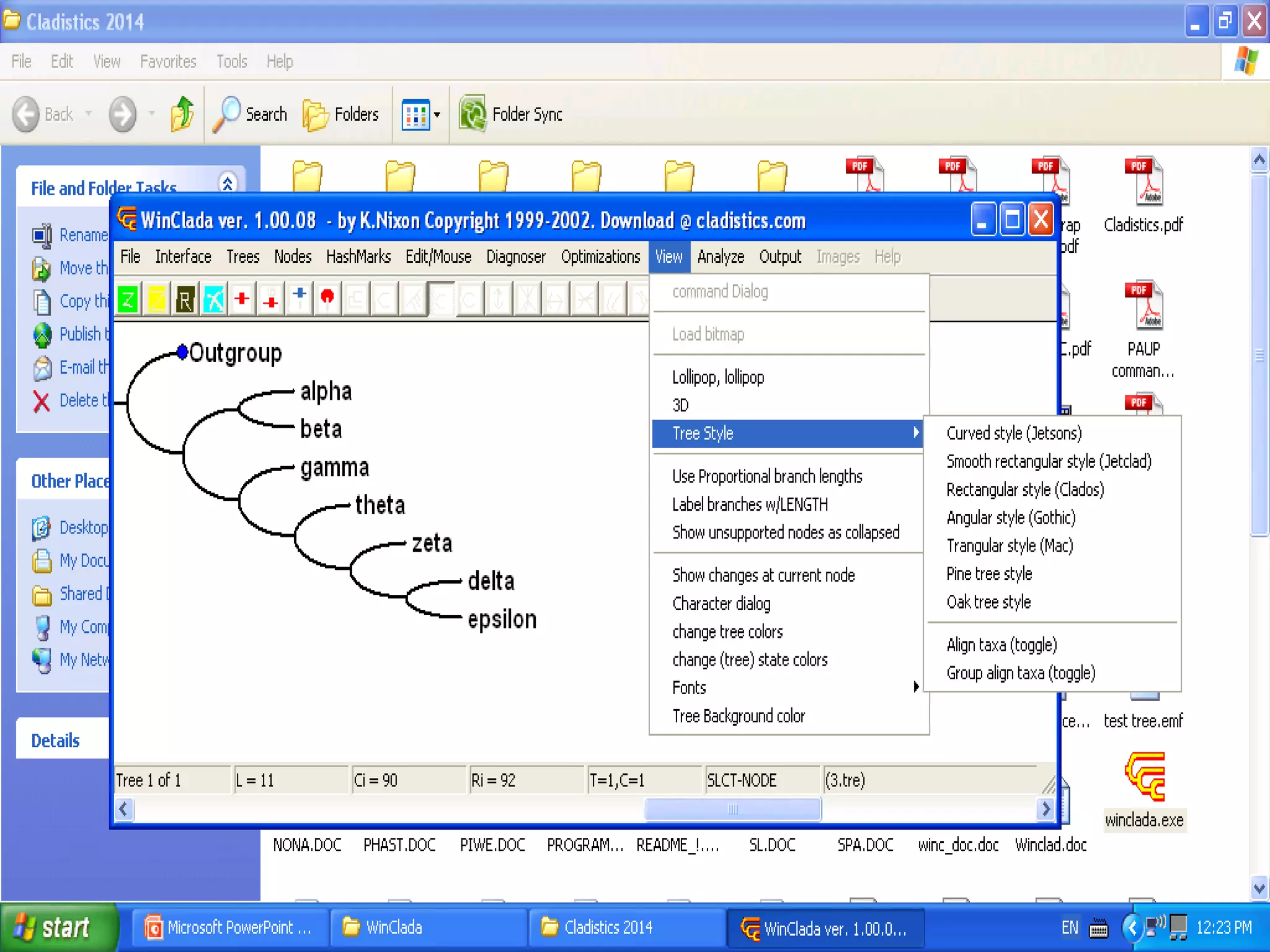
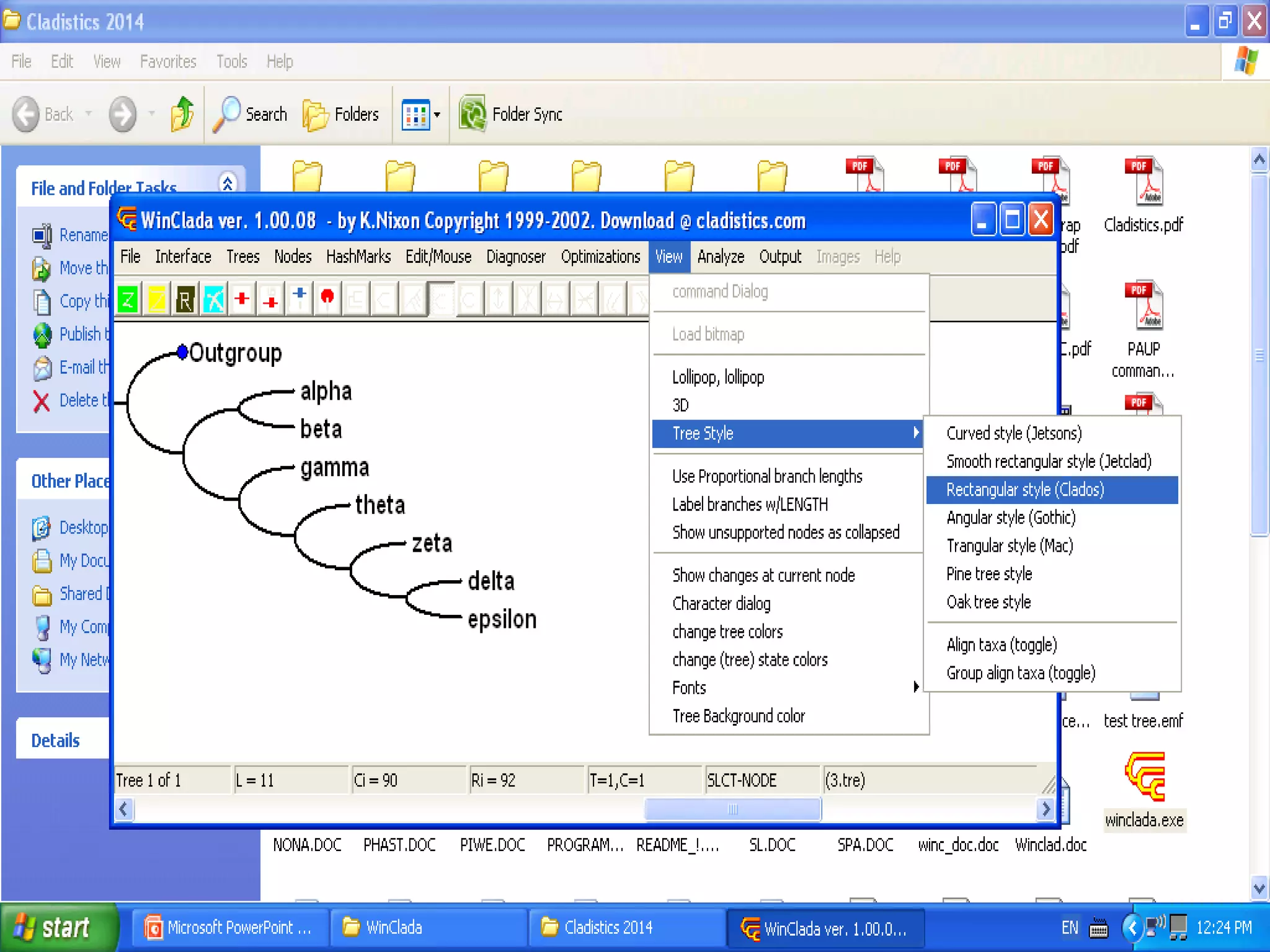
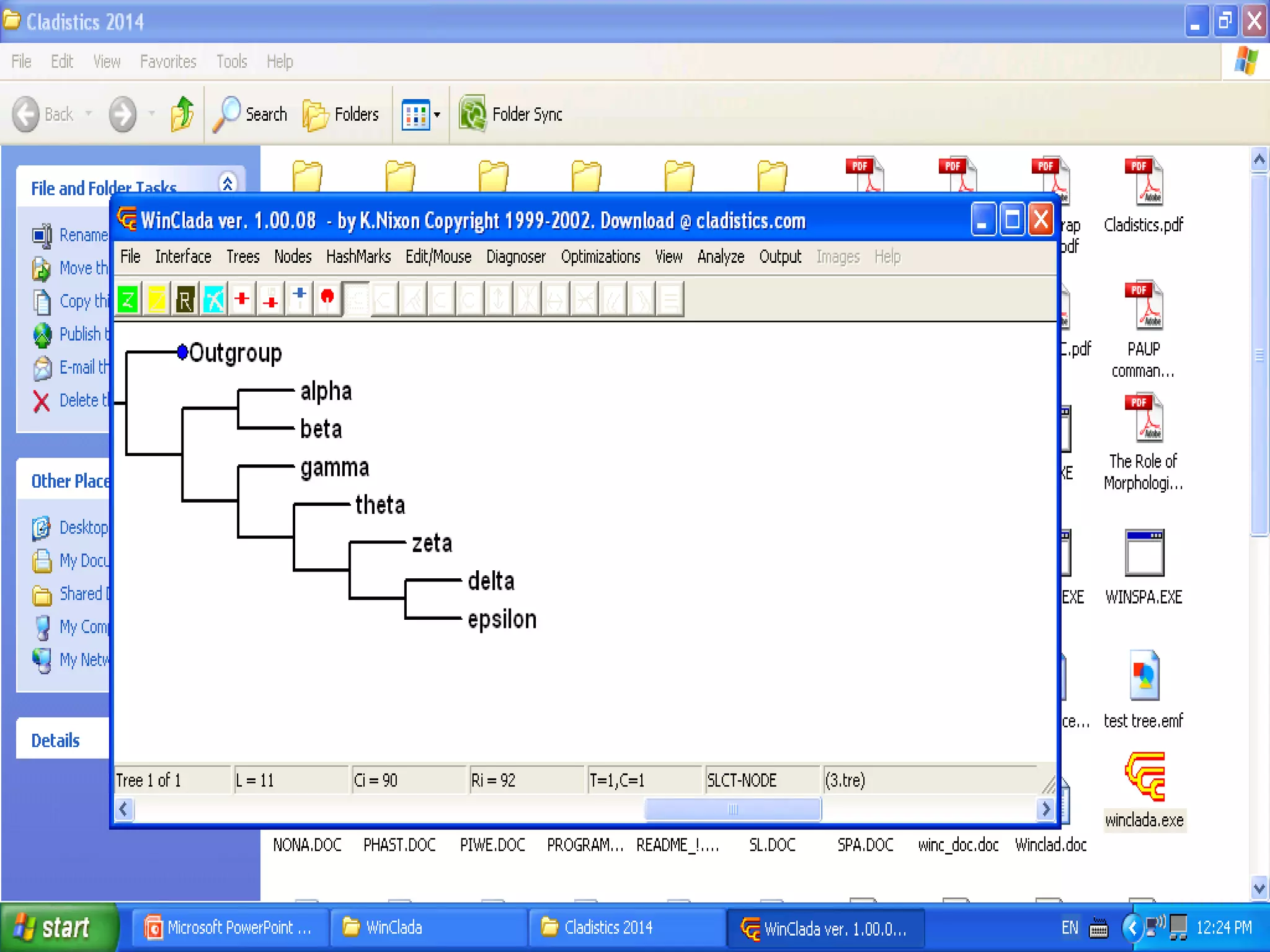
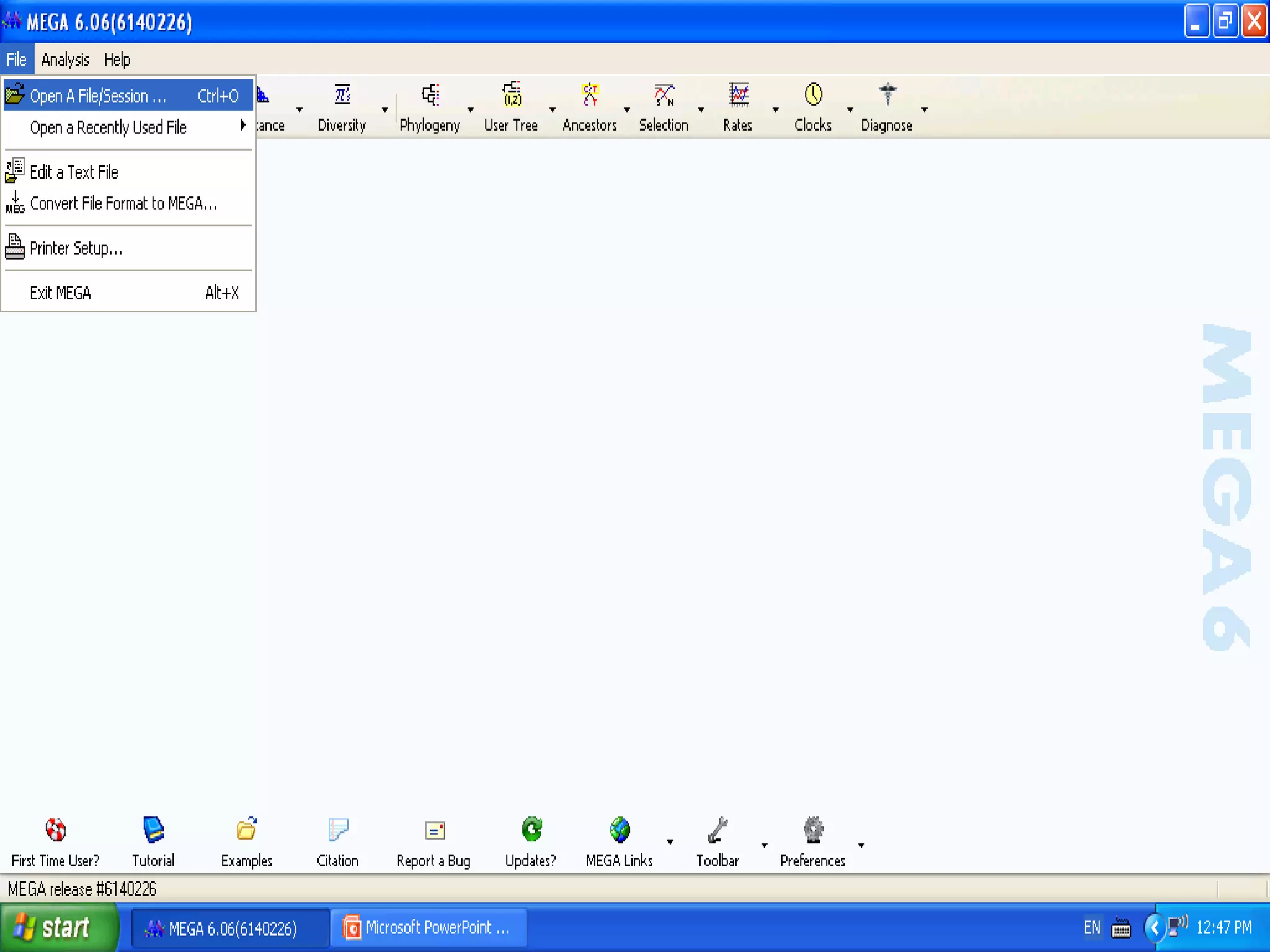
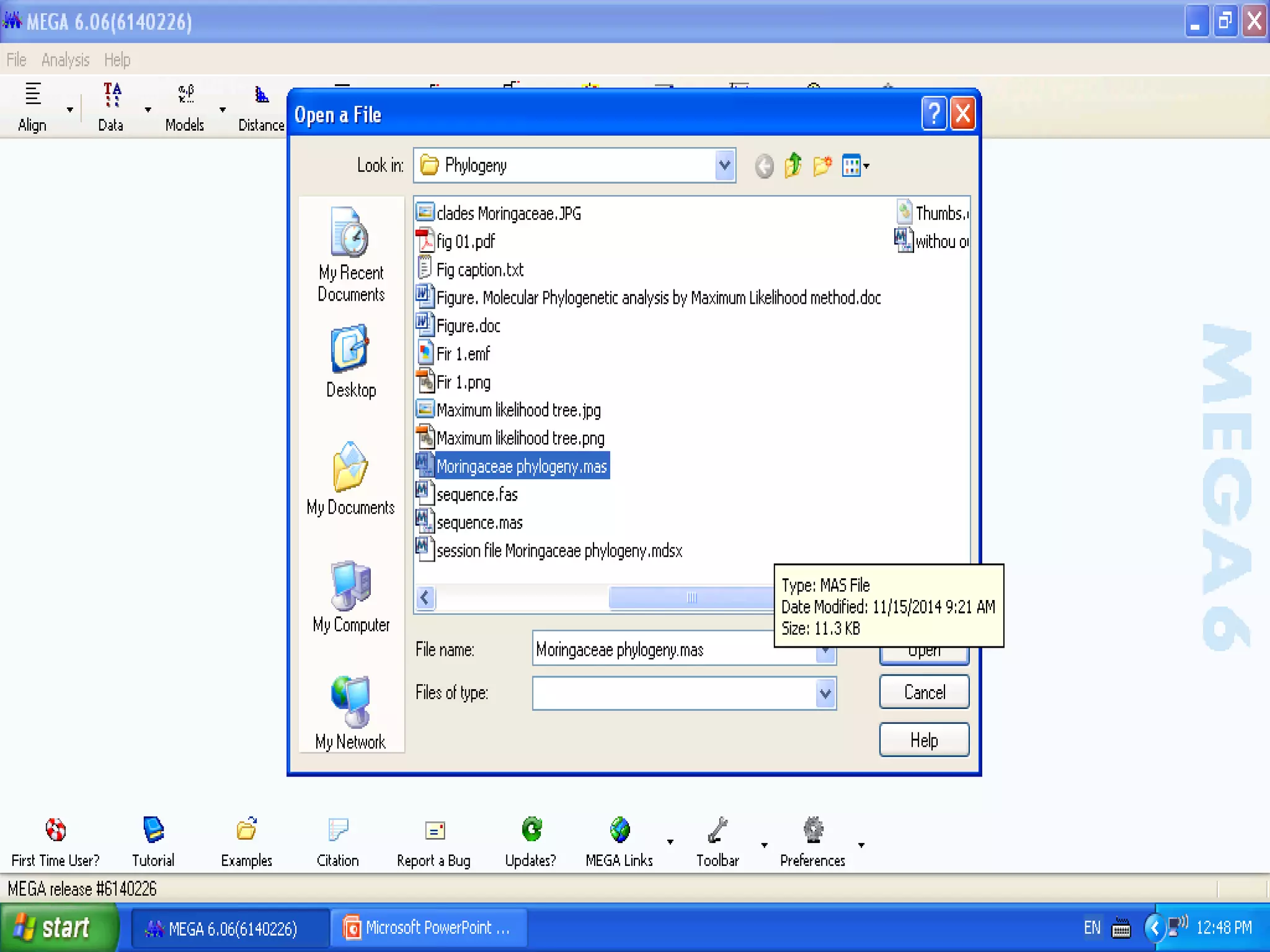
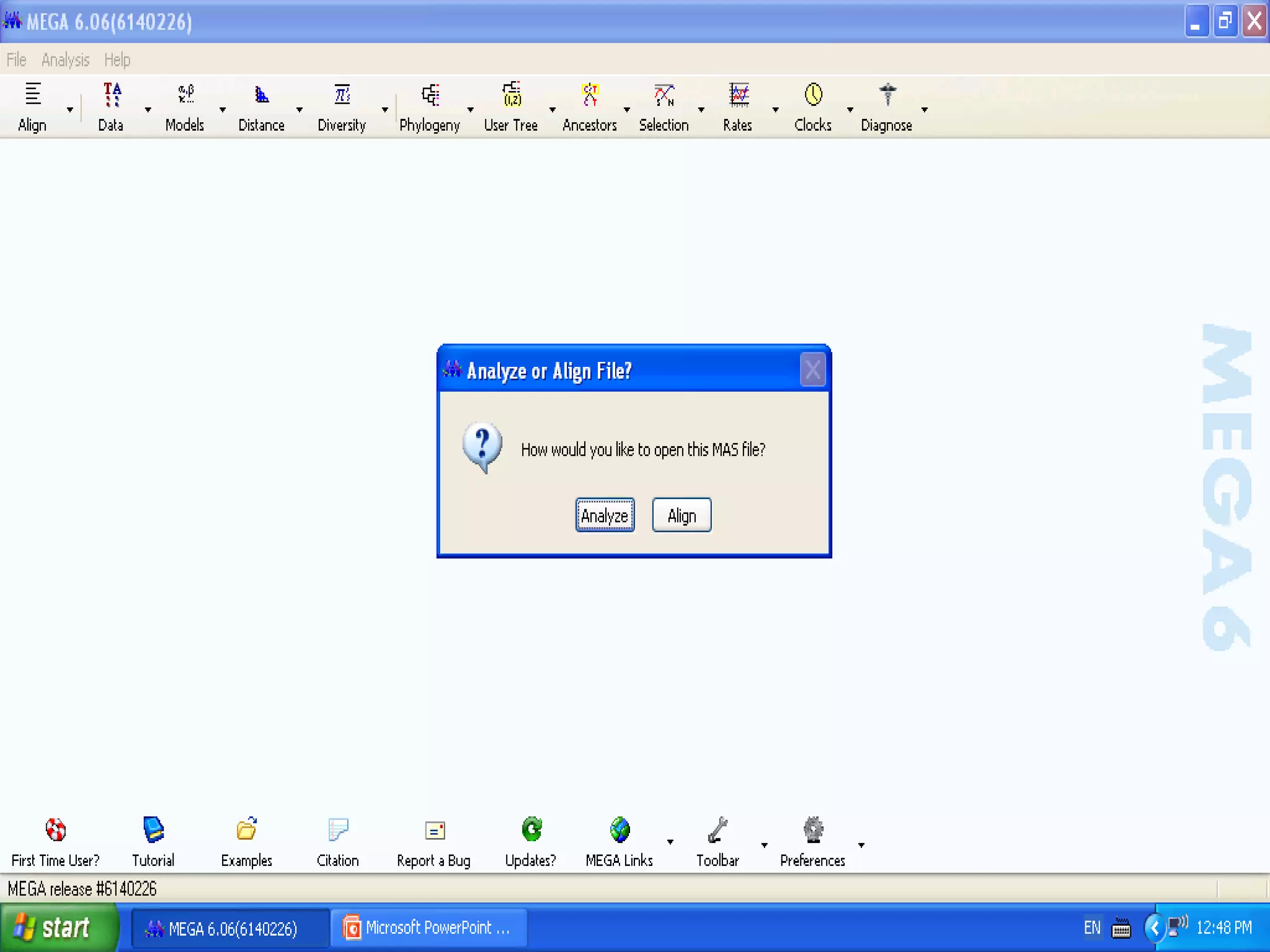
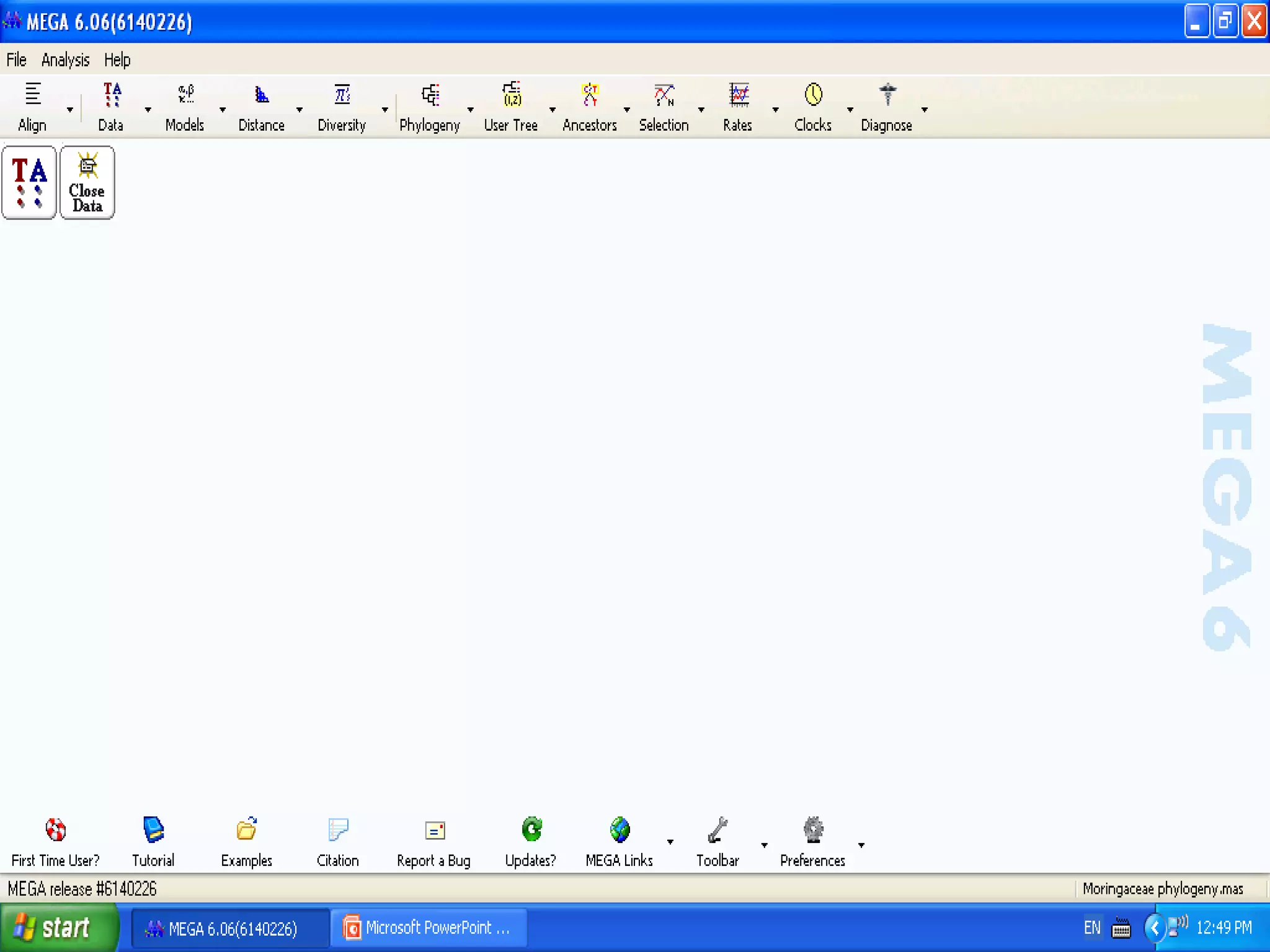
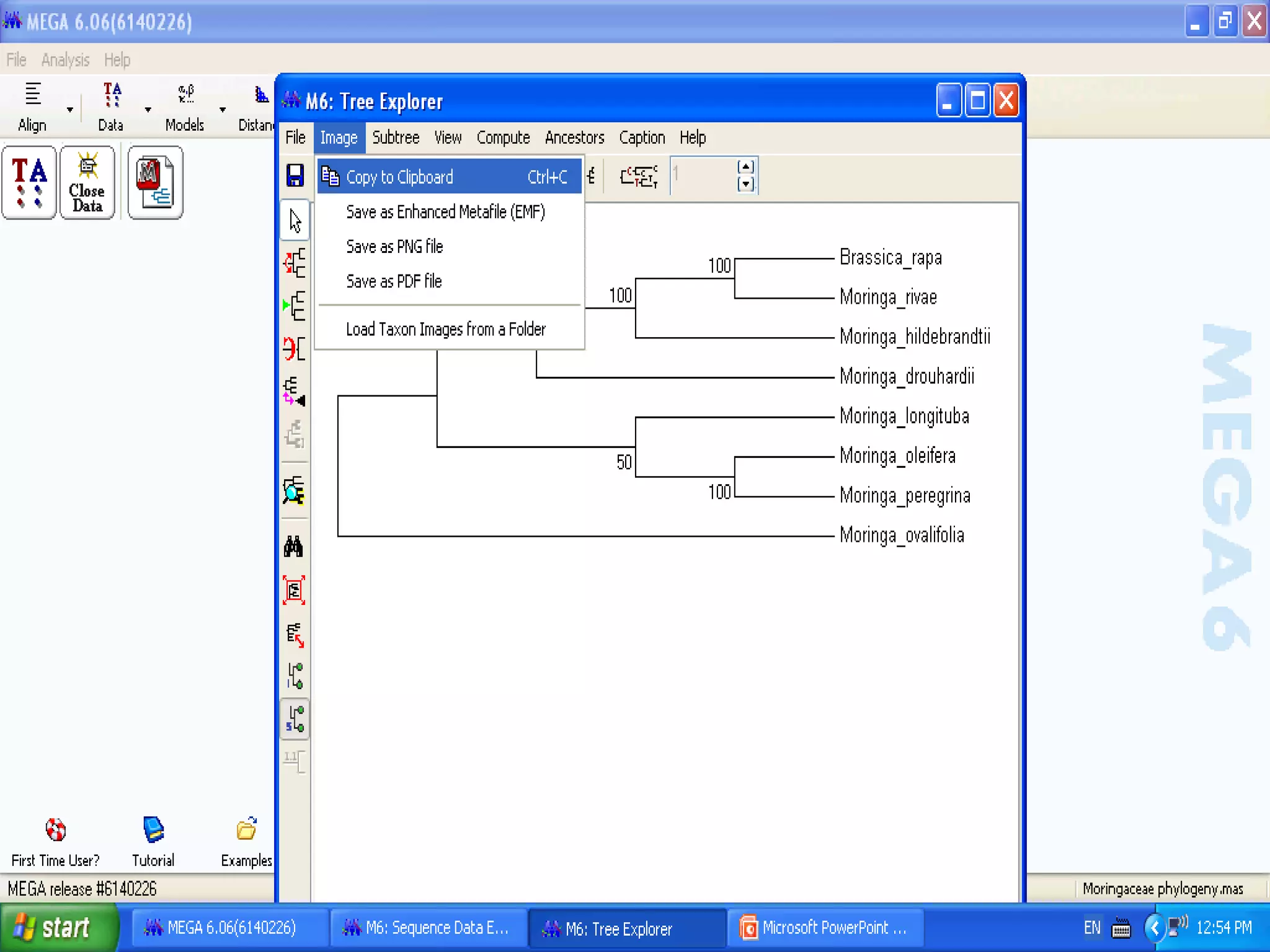
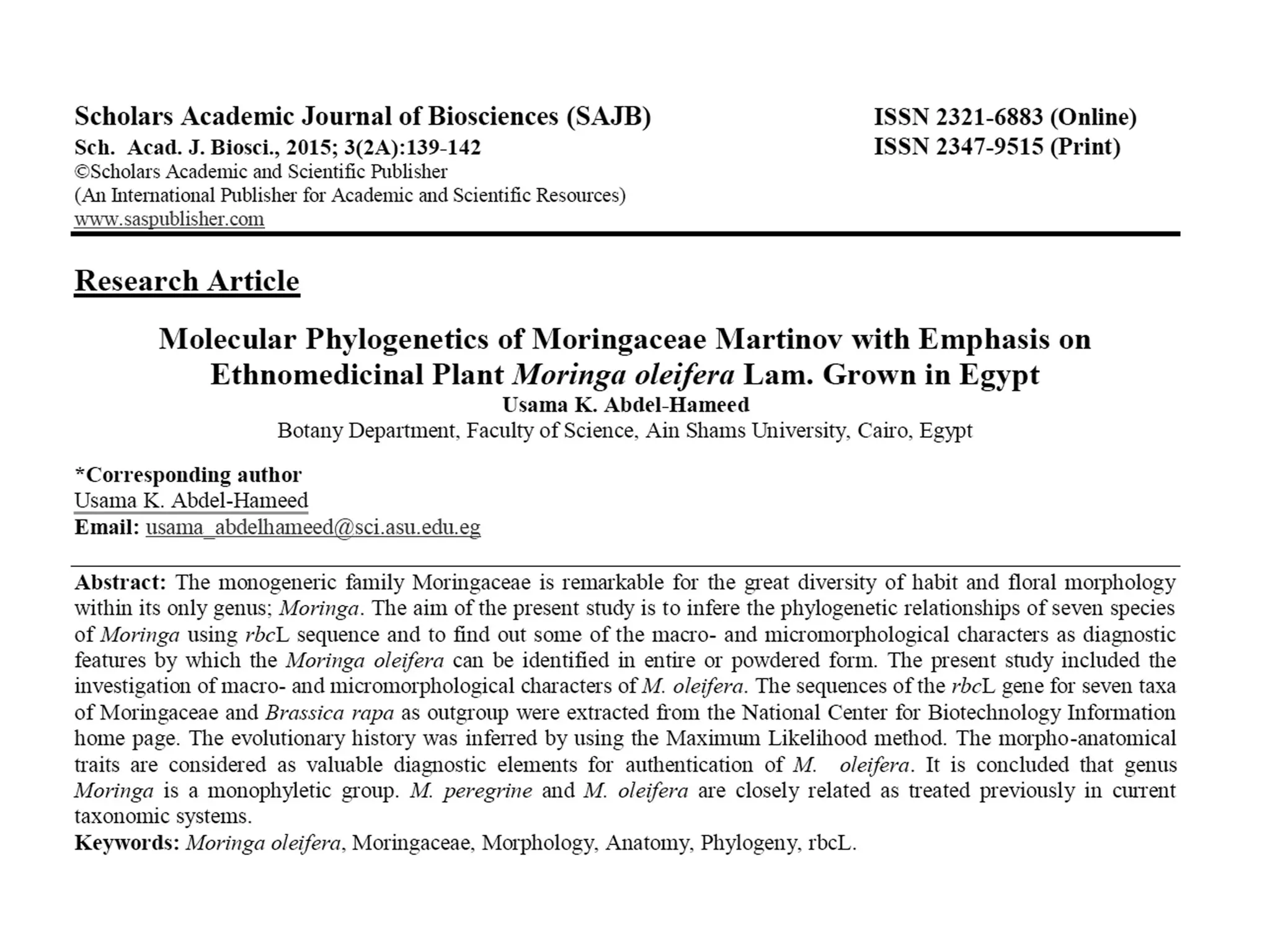
The method that groups organisms that share
derived characters is called cladistics or
phylogenetic systematics
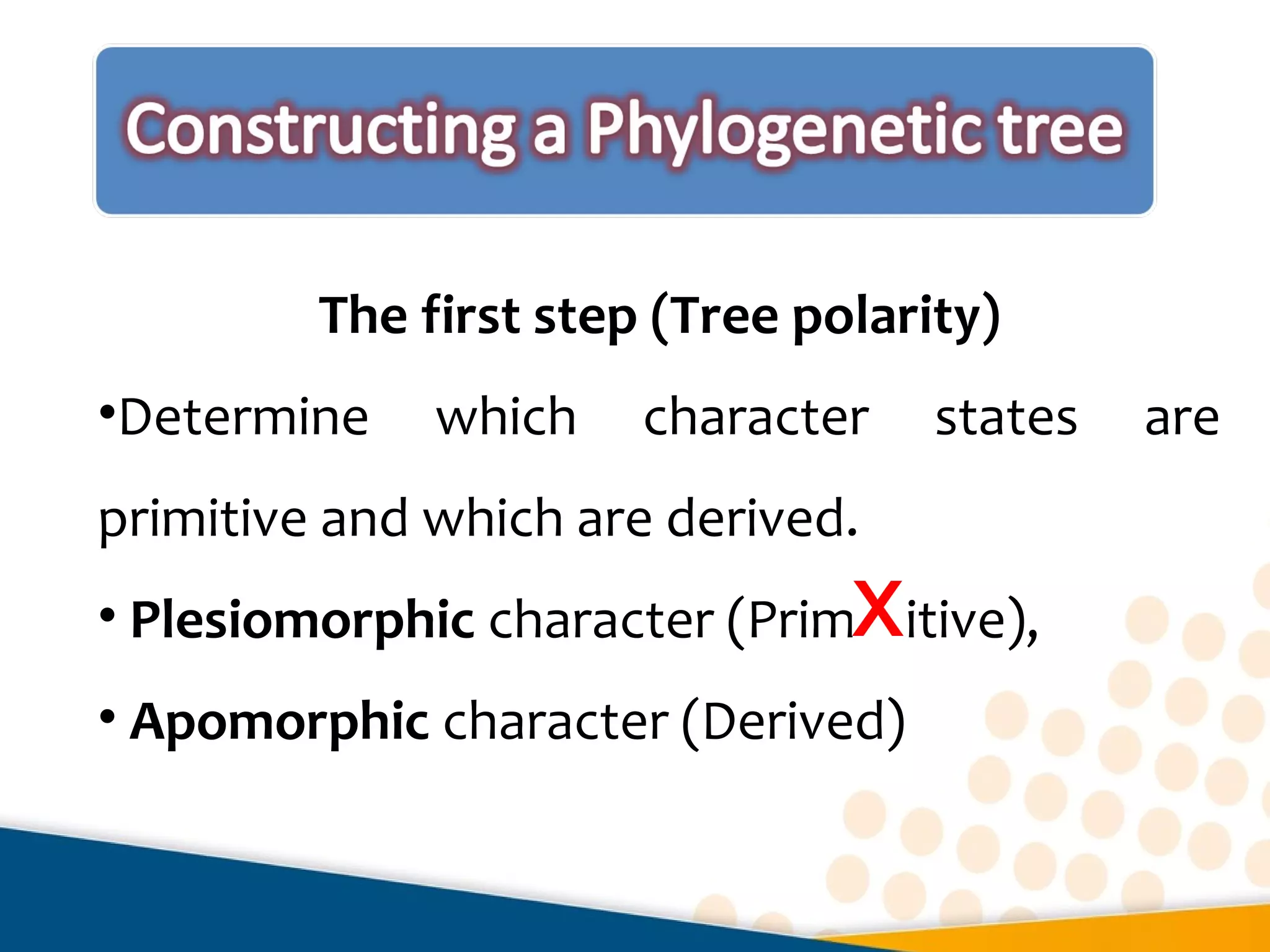
The first step (Tree polarity)
•Determine which character states are
primitive and which are derived.
• Plesiomorphic character (Prim itive),
• Apomorphic character (Derived)
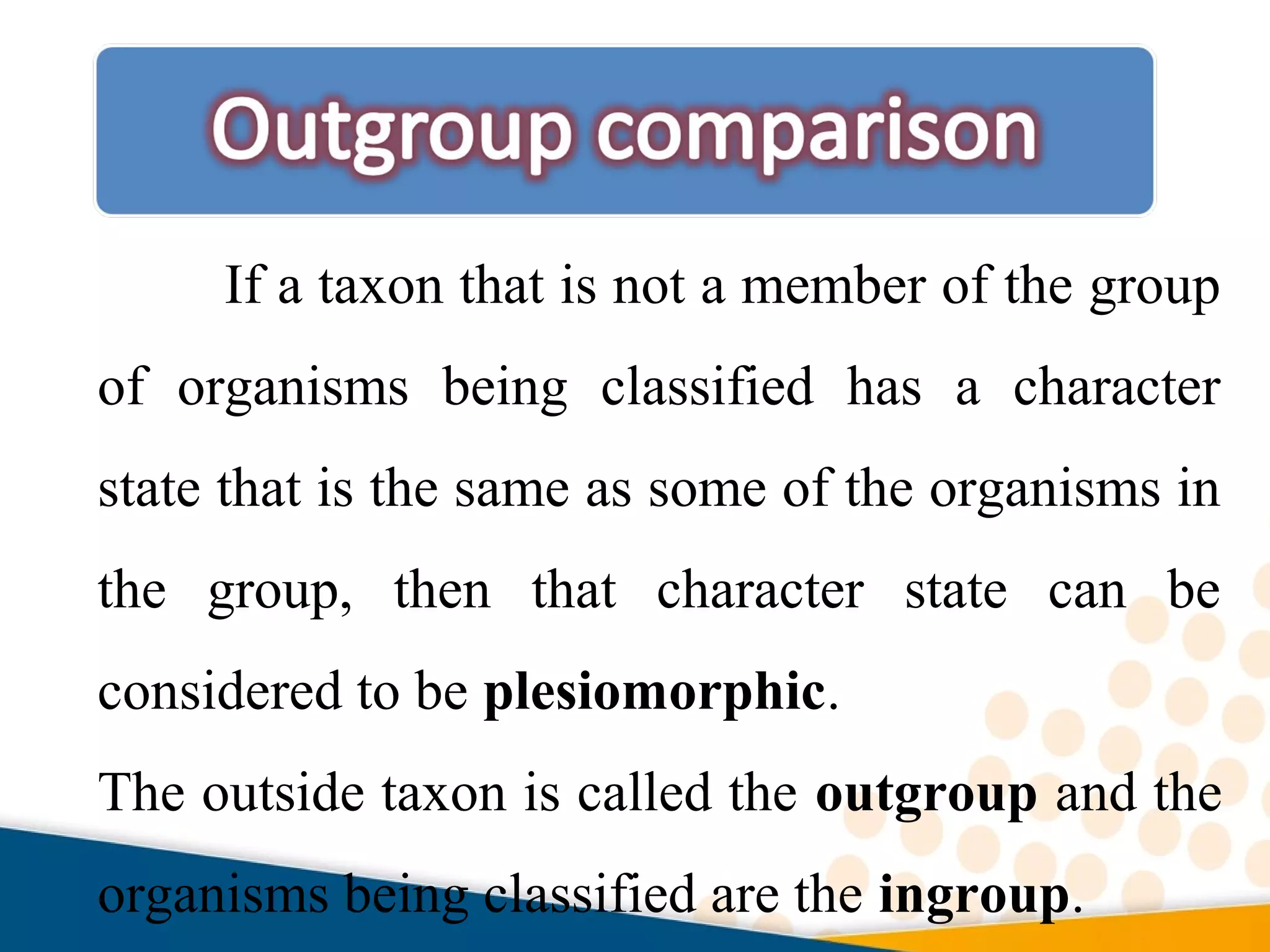
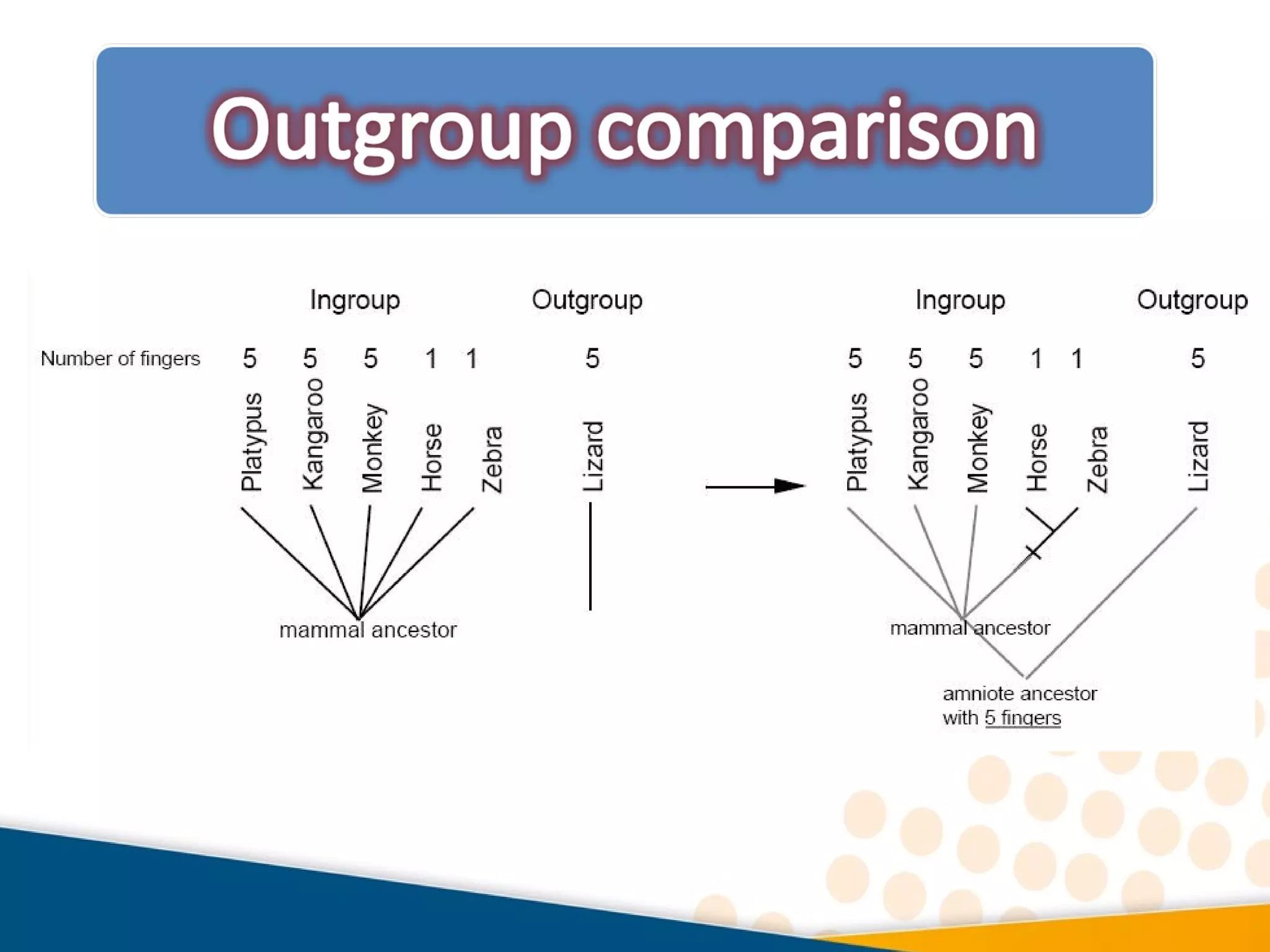
If a taxon that is not a member of the group
of organisms being classified has a character
state that is the same as some of the organisms in
the group, then that character state can be
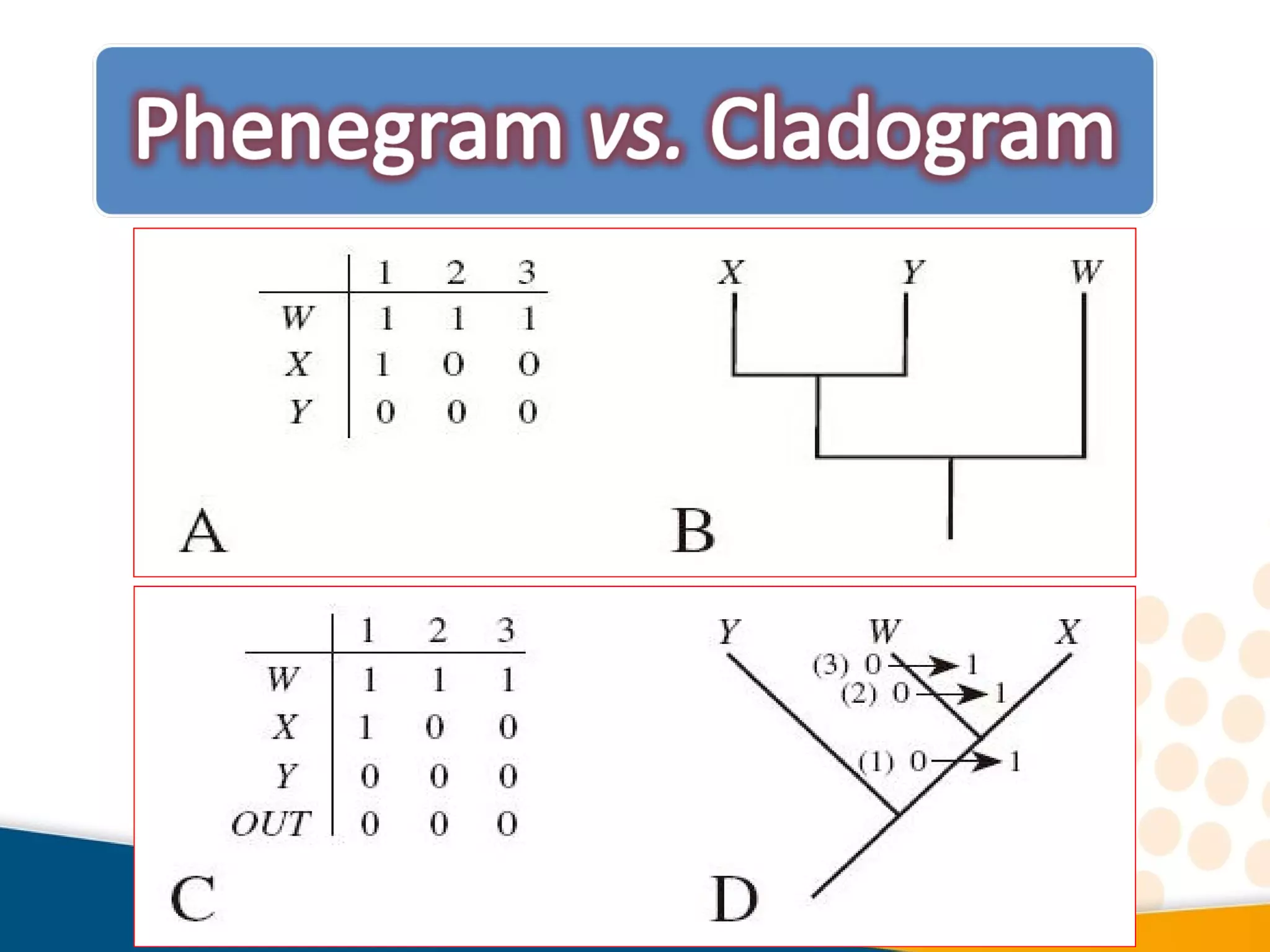
considered to be plesiomorphic.
The outside taxon is called the outgroup and the
organisms being classified are the ingroup.
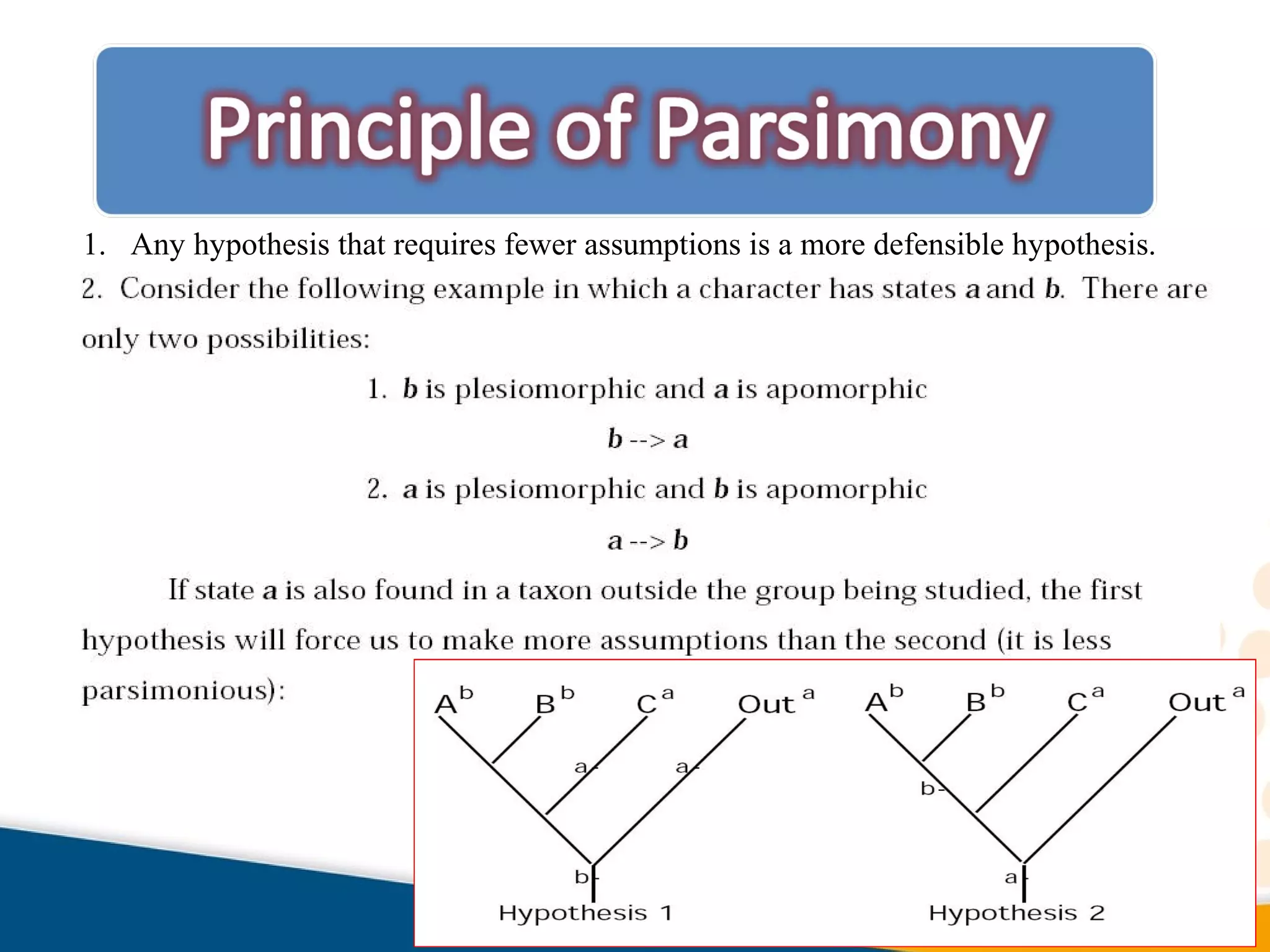
1. Any hypothesis that requires fewer assumptions is a more defensible hypothesis.
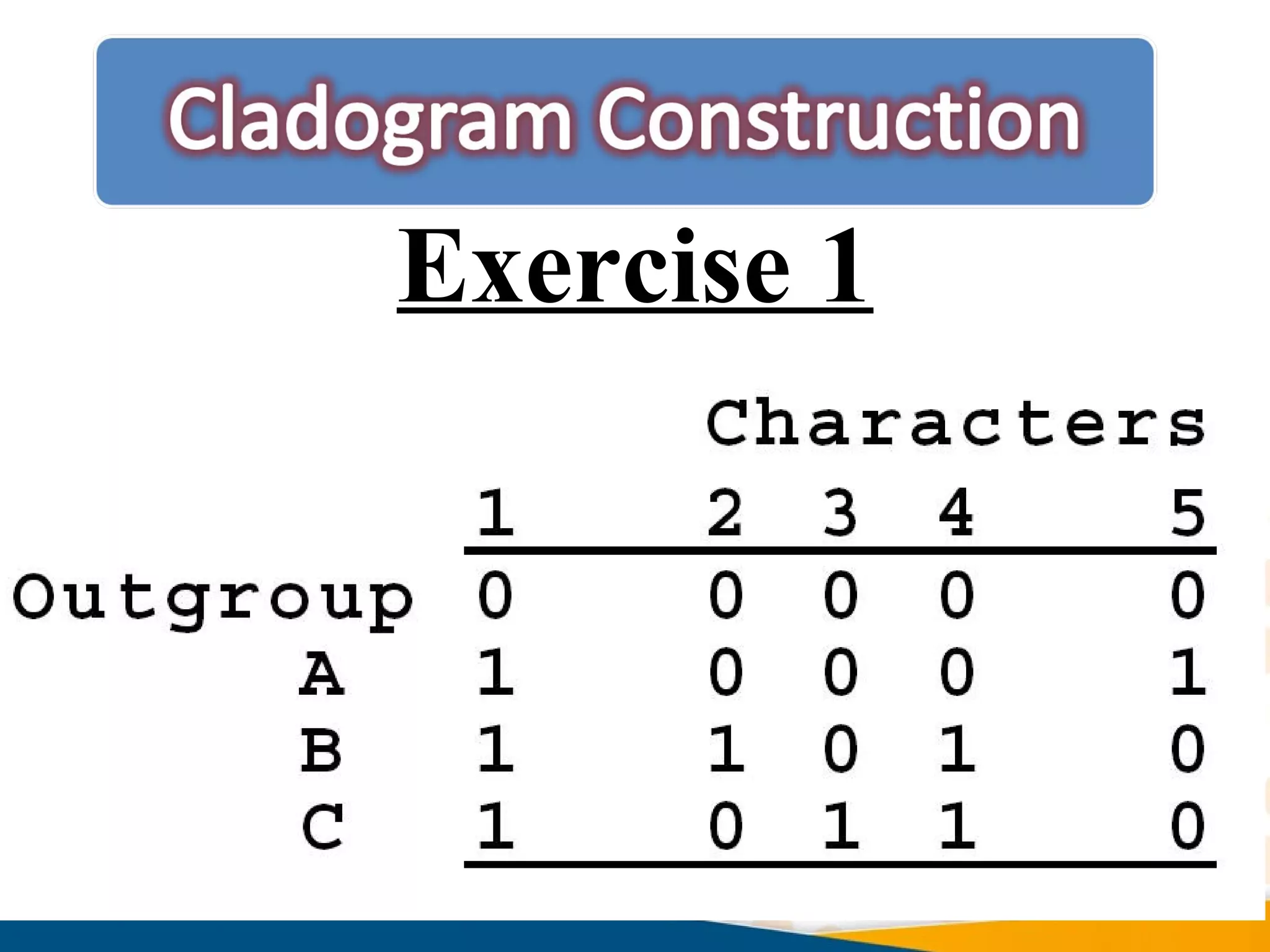
Exercise 1
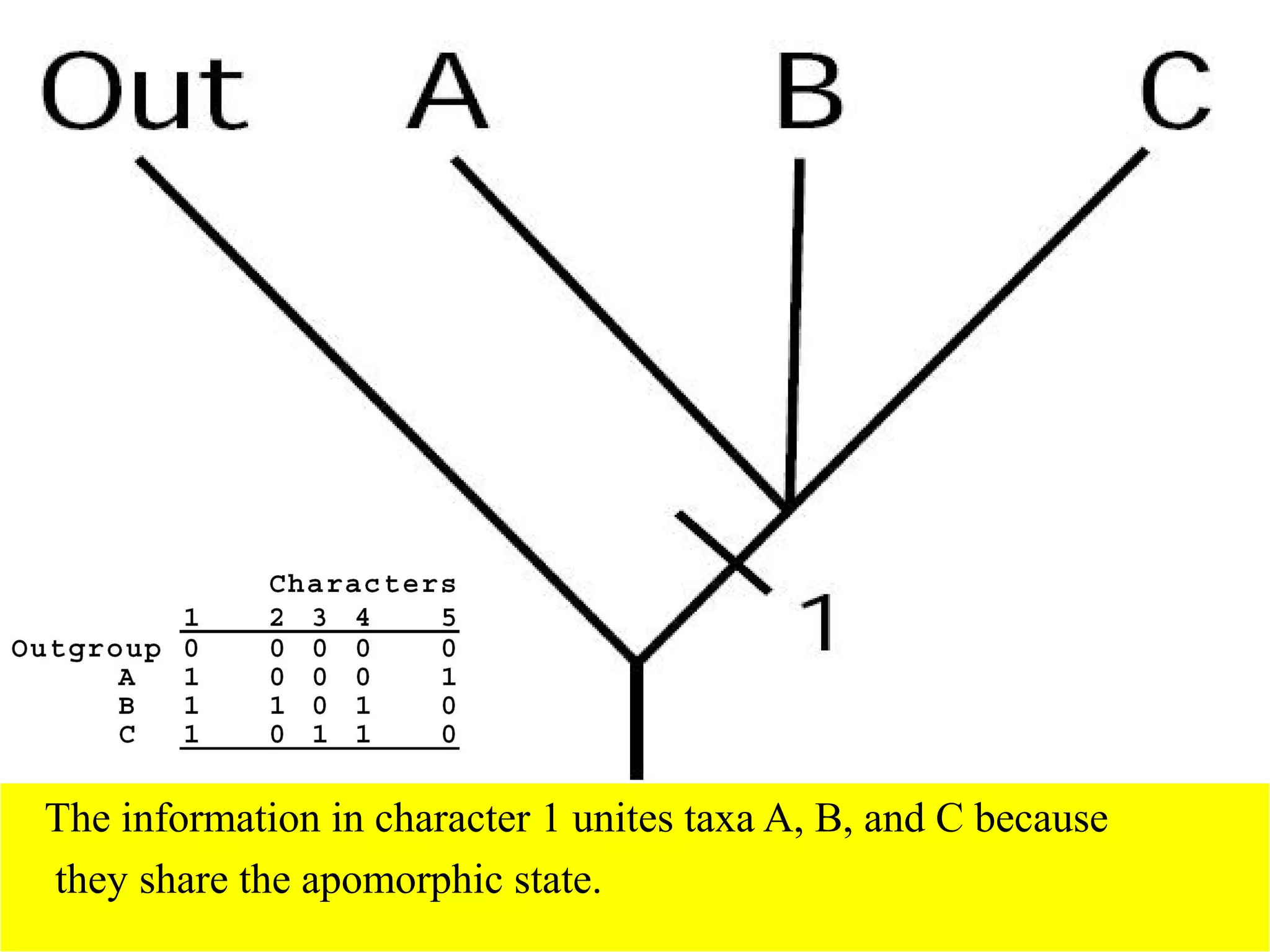
The information in character 1 unites taxa A, B, and C because
they share the apomorphic state.
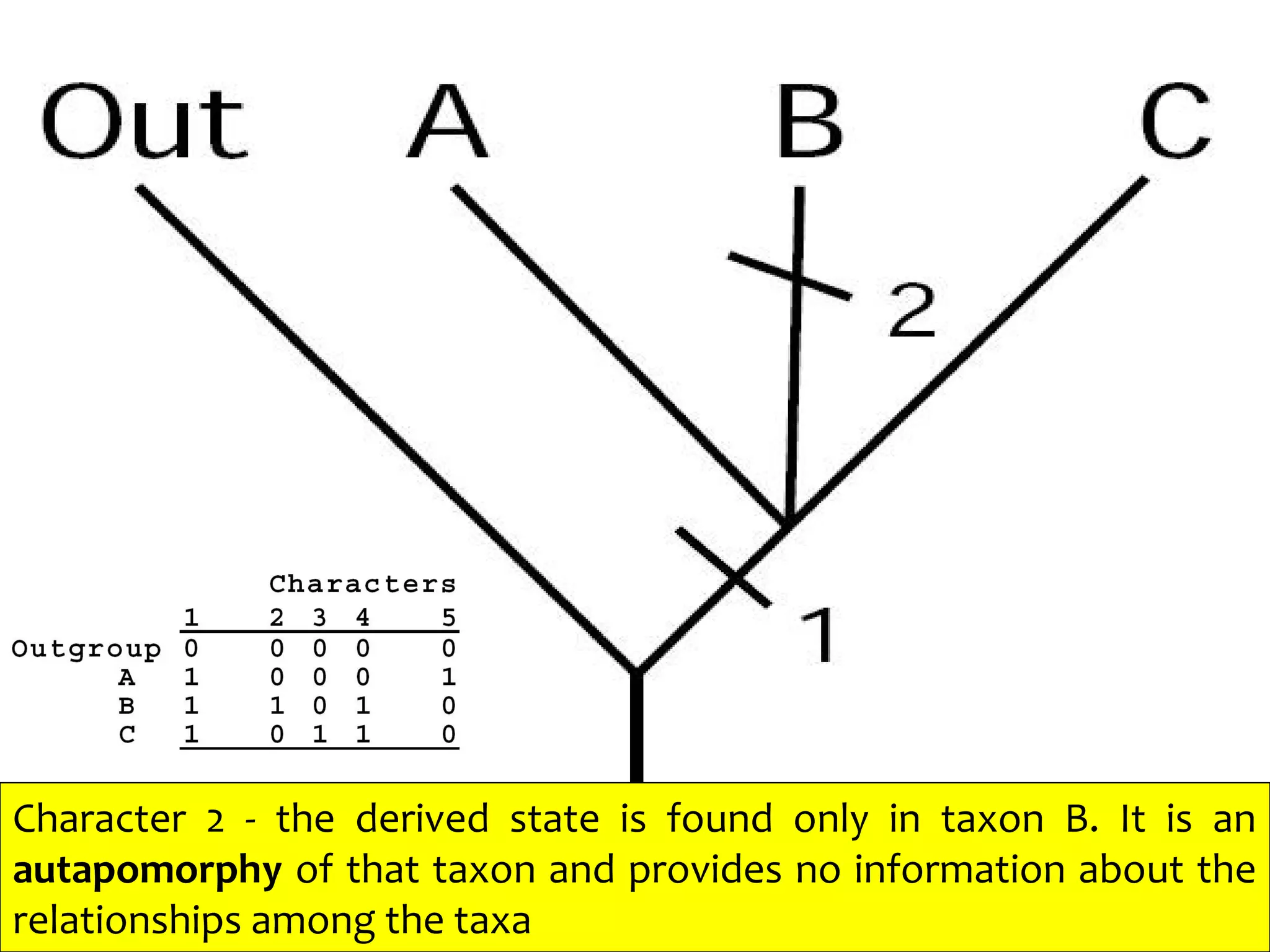
Character 2 - the derived state is found only in taxon B. It is an
autapomorphy of that taxon and provides no information about the
relationships among the taxa
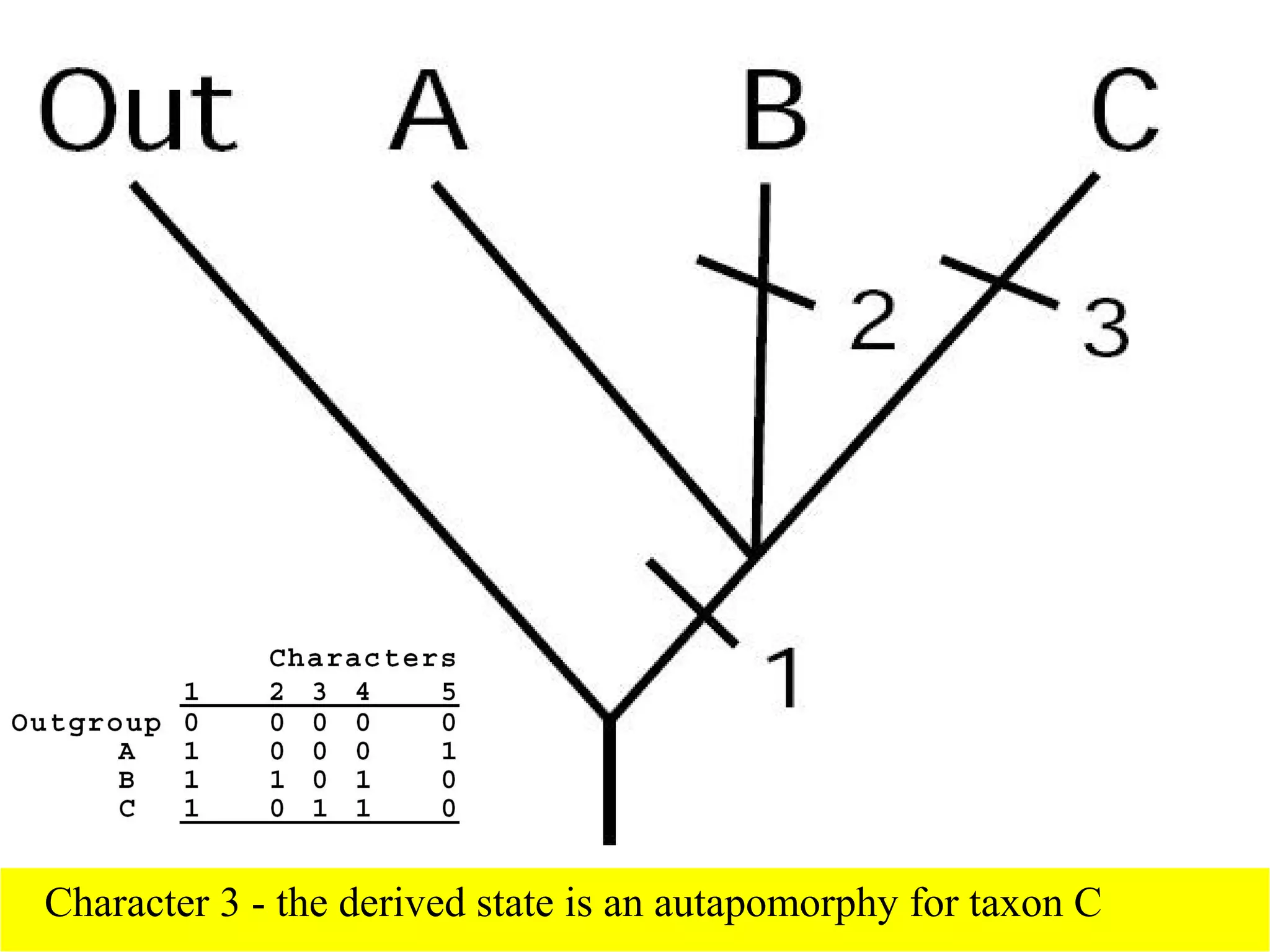
Character 3 - the derived state is an autapomorphy for taxon C
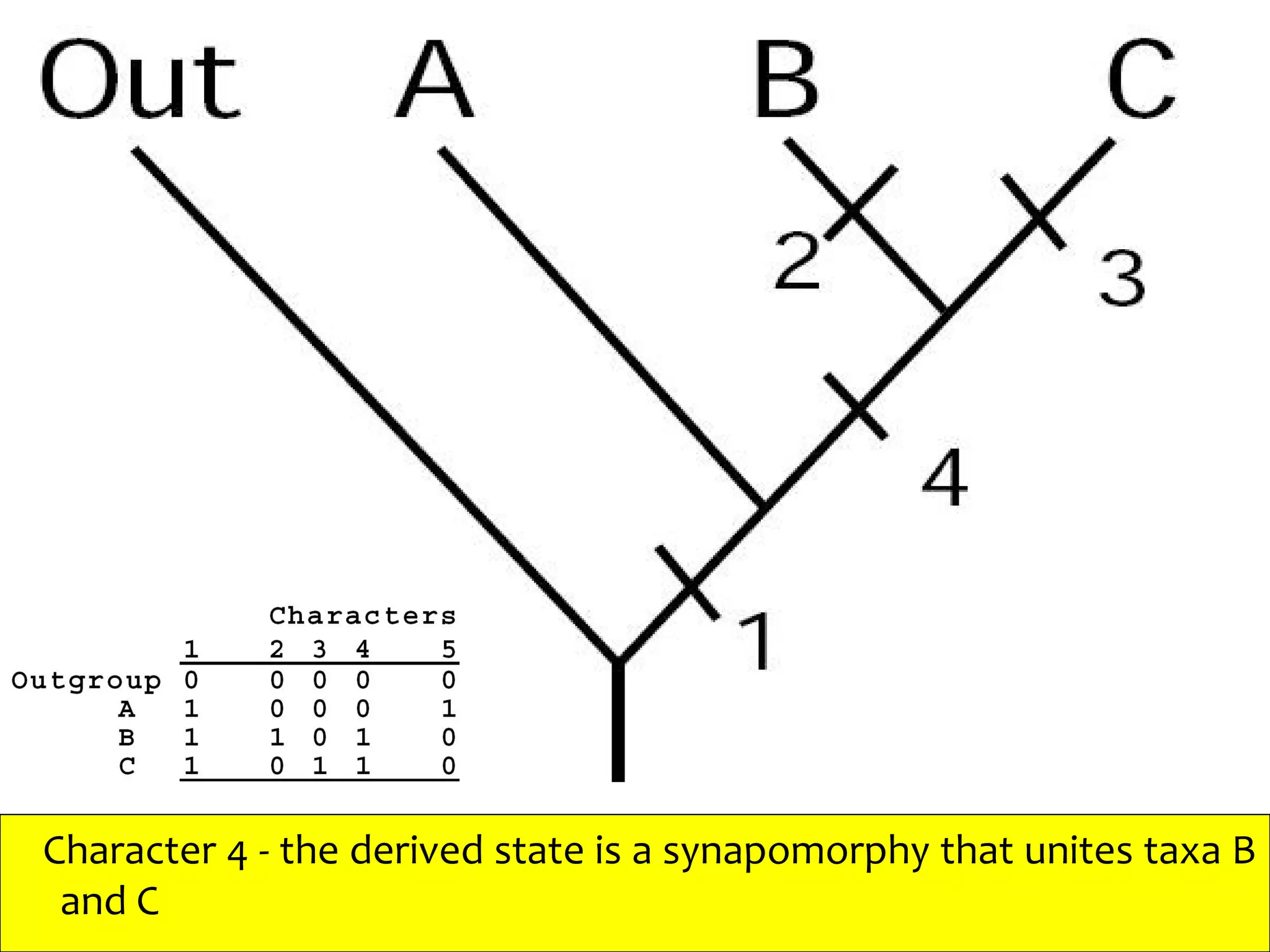
Character 4 - the derived state is a synapomorphy that unites taxa B
and C
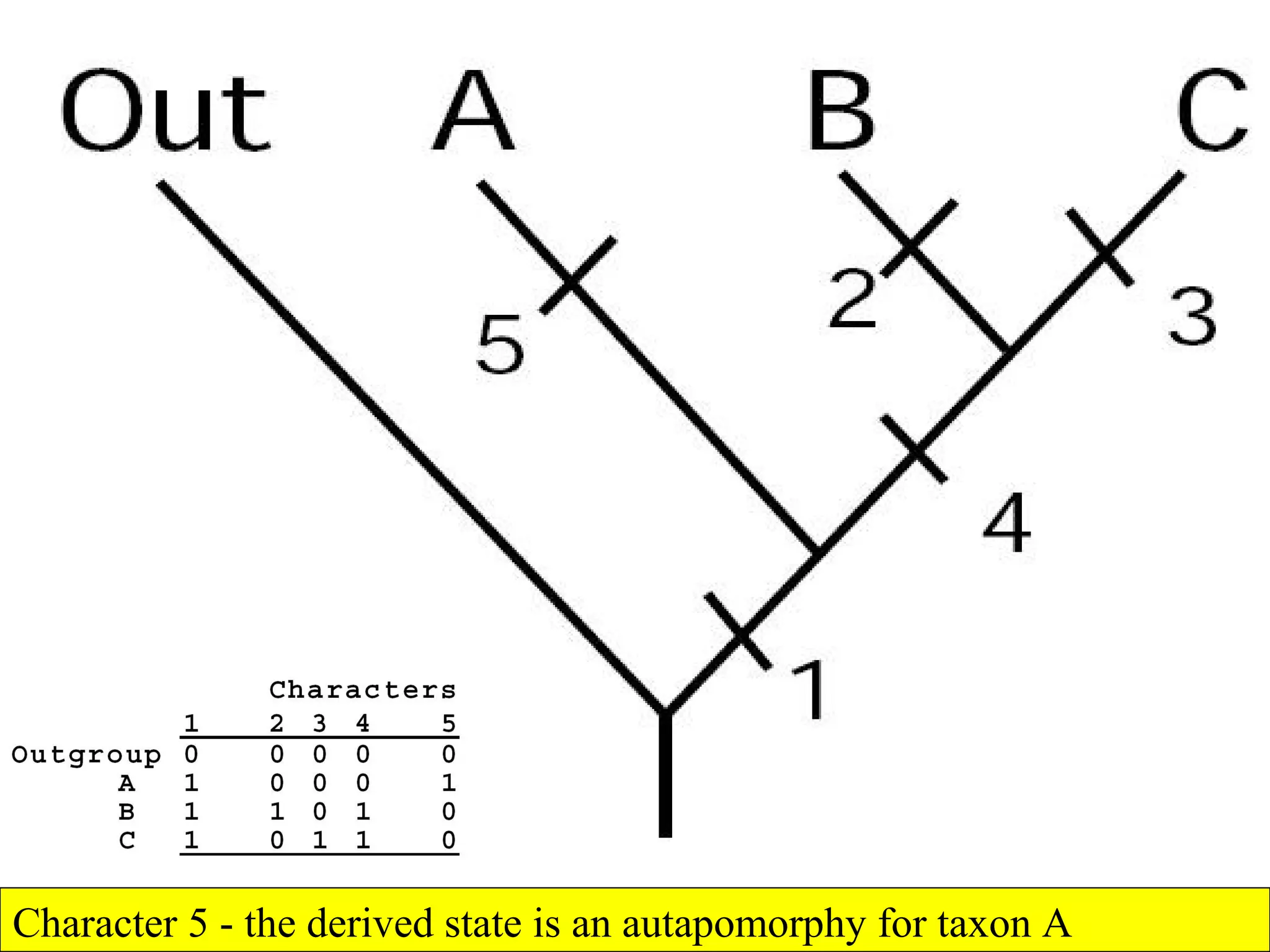
Character 5 - the derived state is an autapomorphy for taxon A
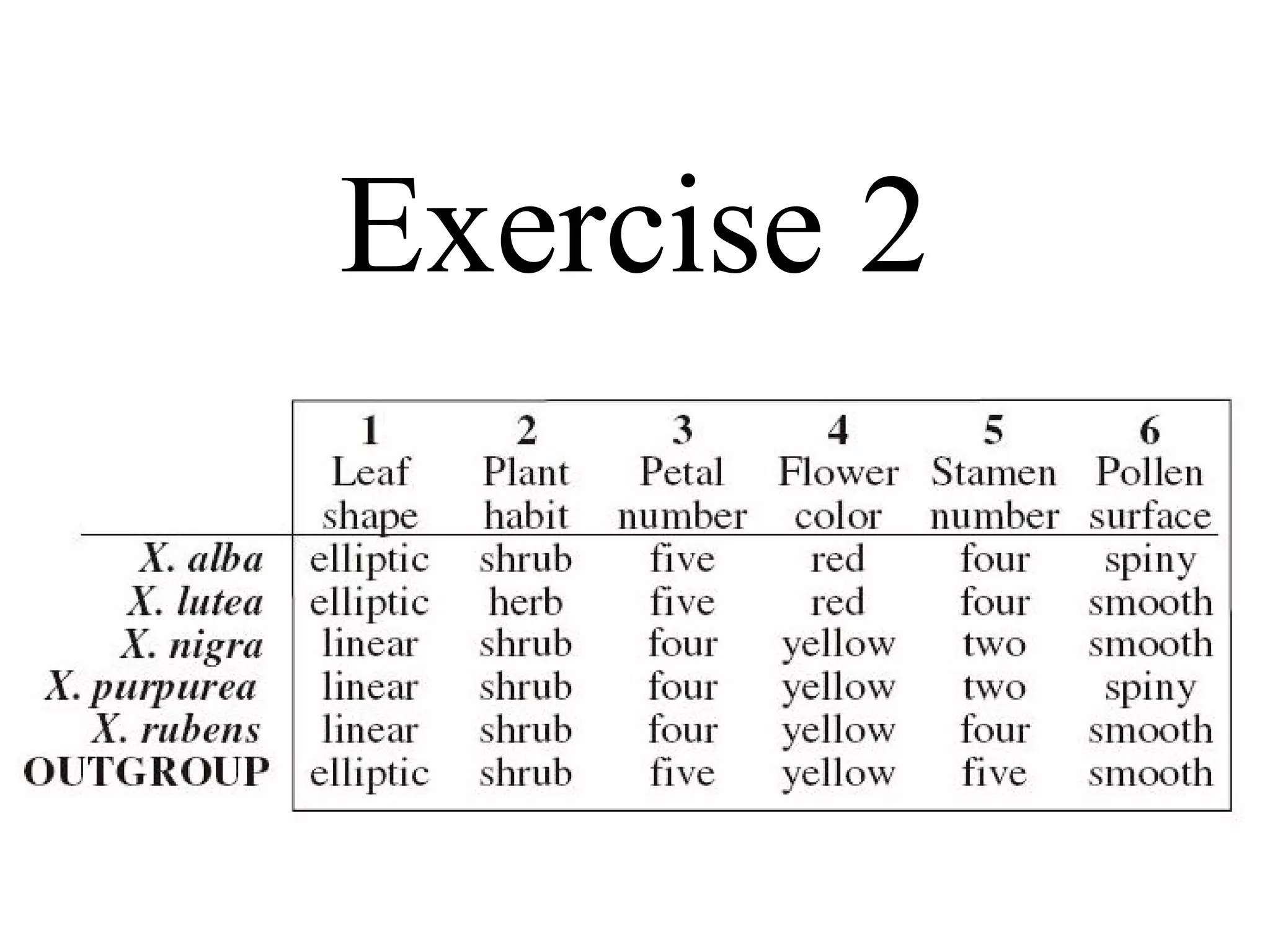
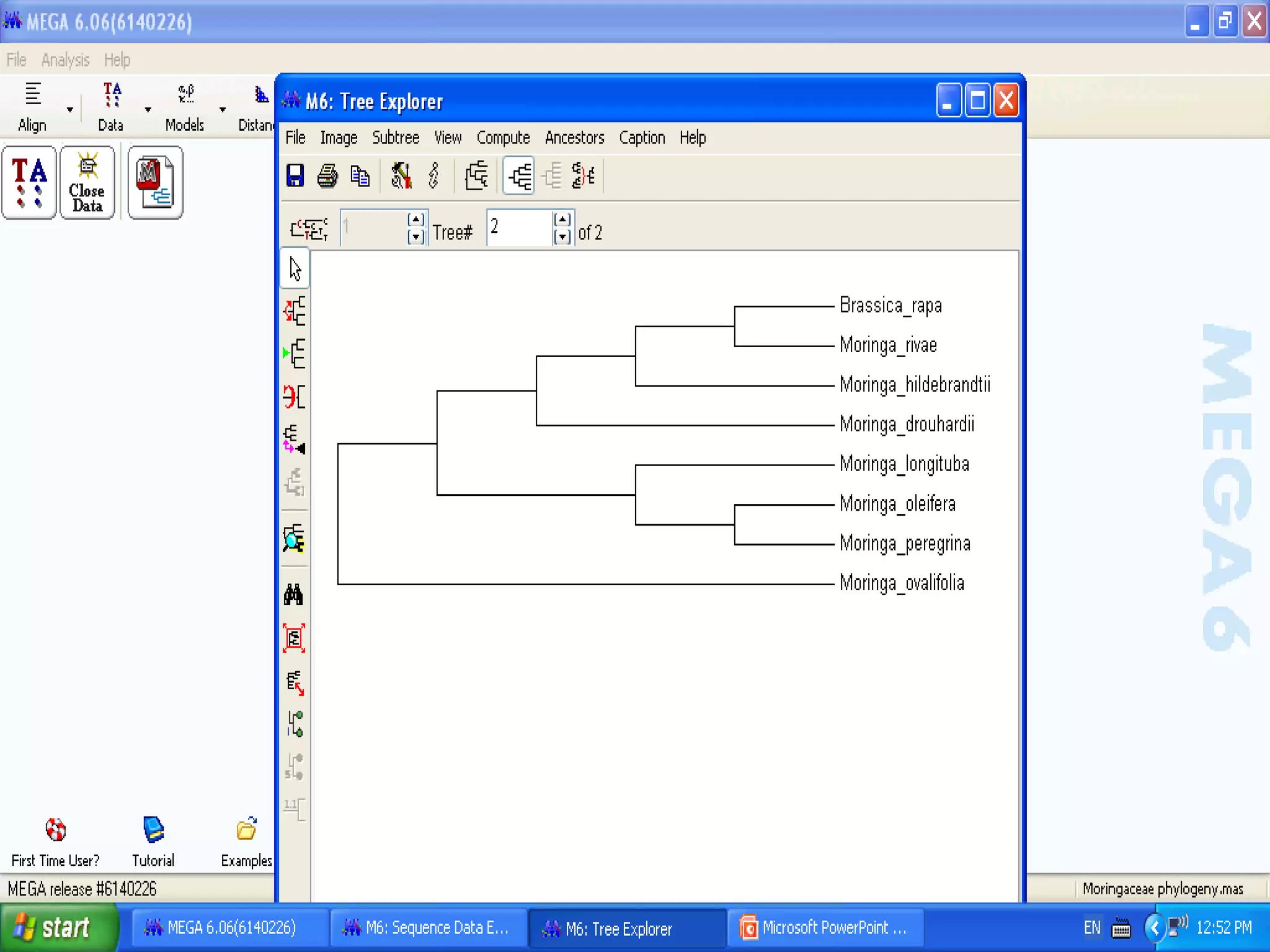
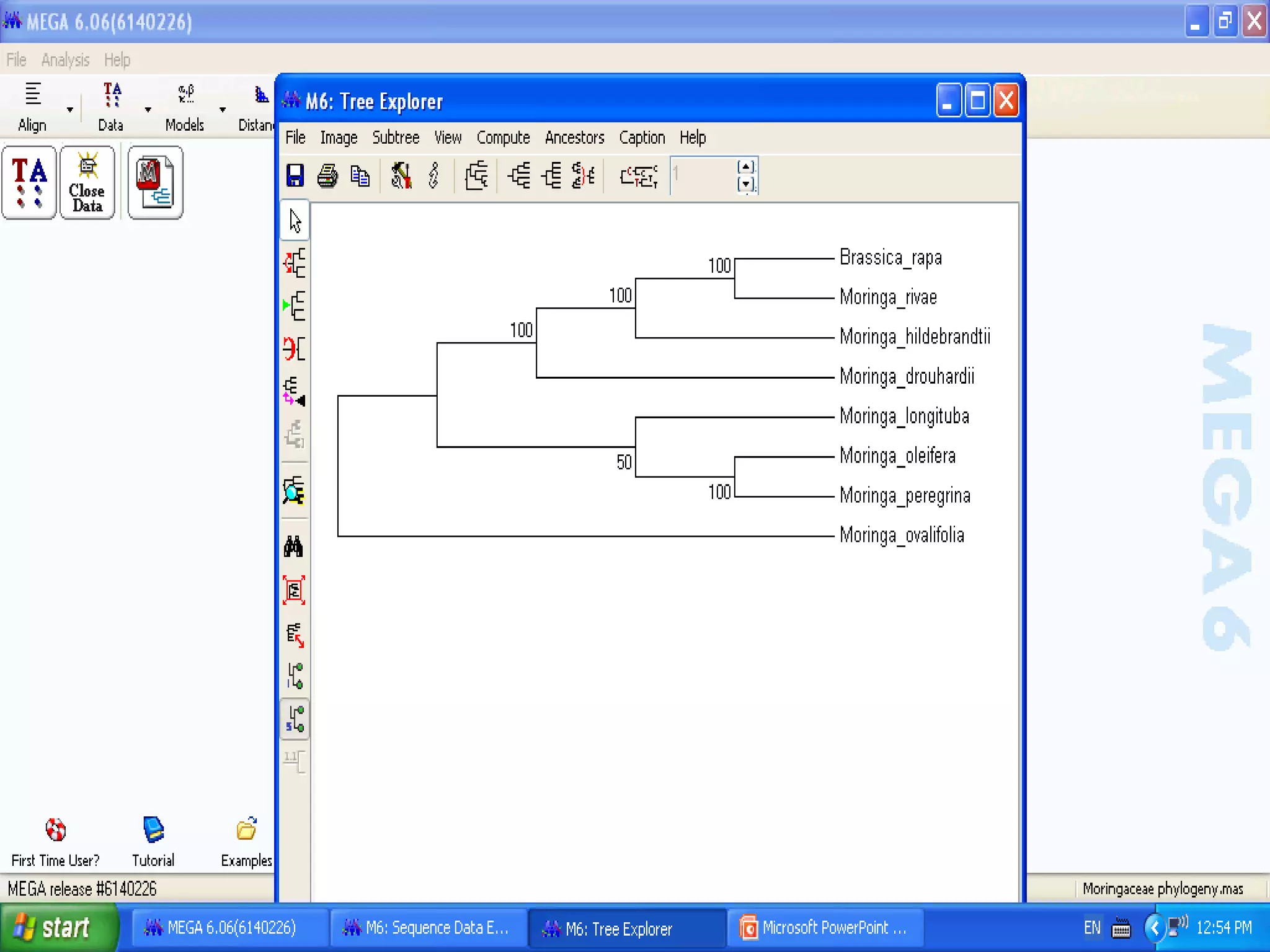
Construct a cladogram of the
provided data matrix
Five min.
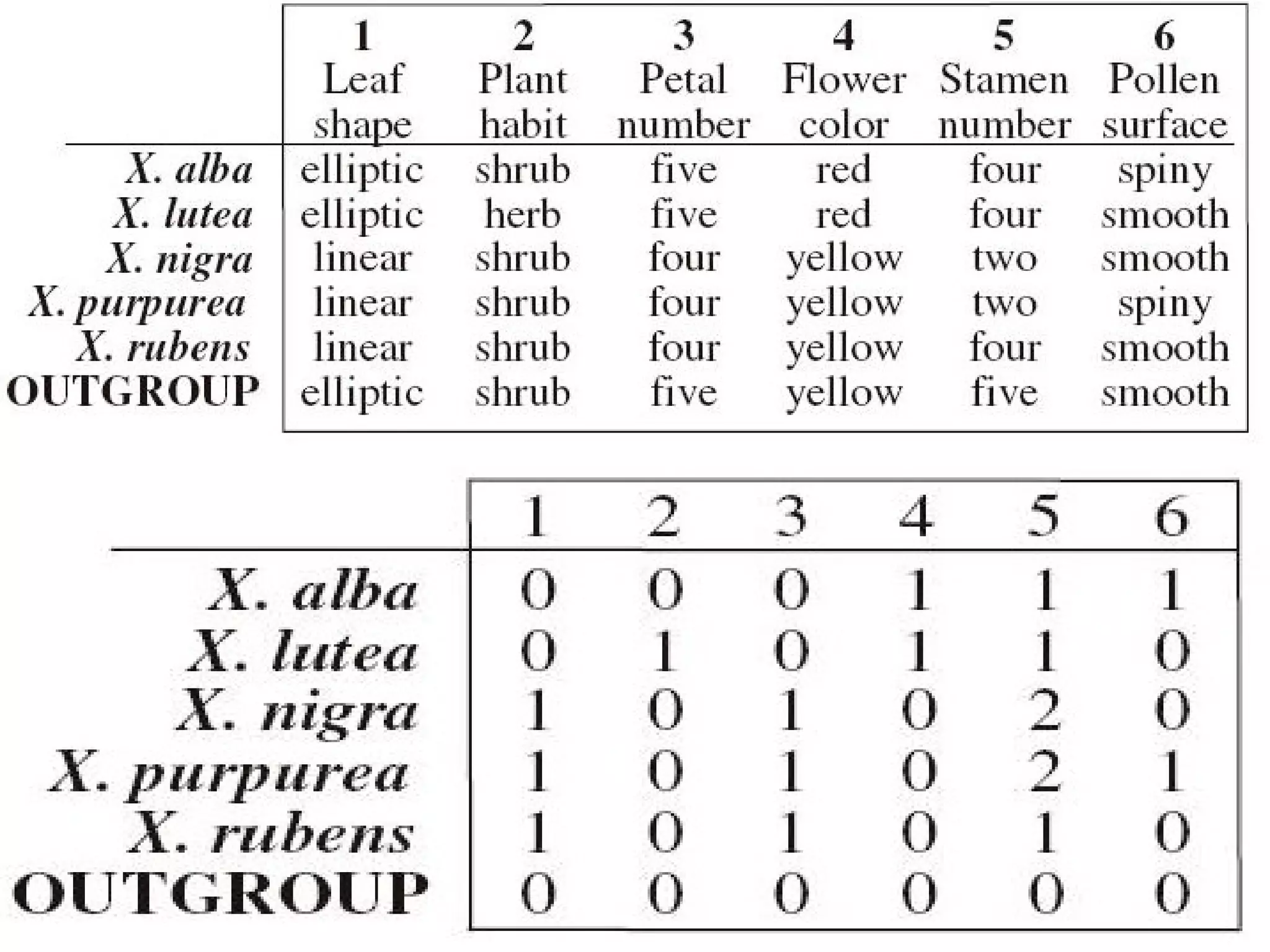
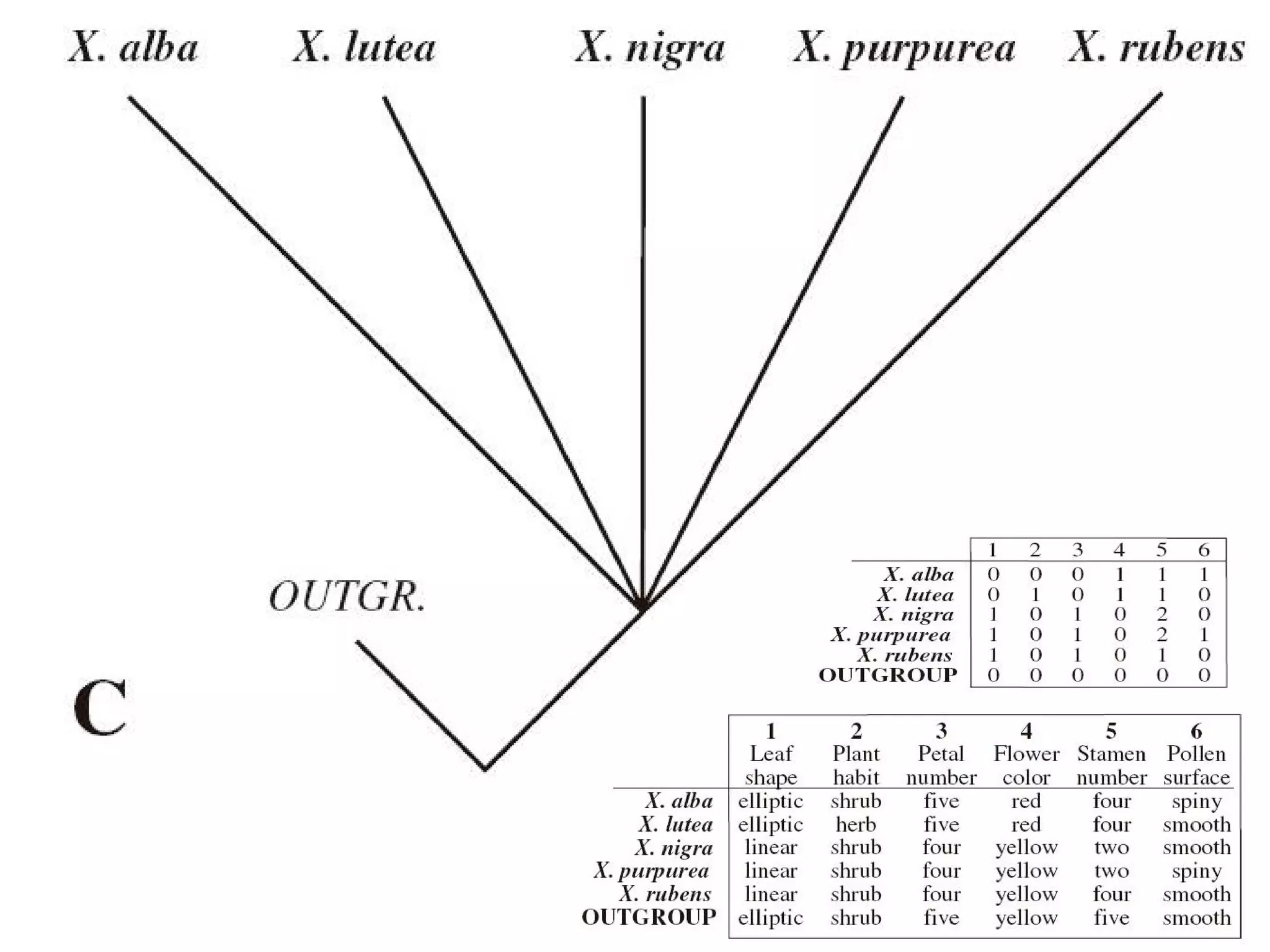
Exercise 2
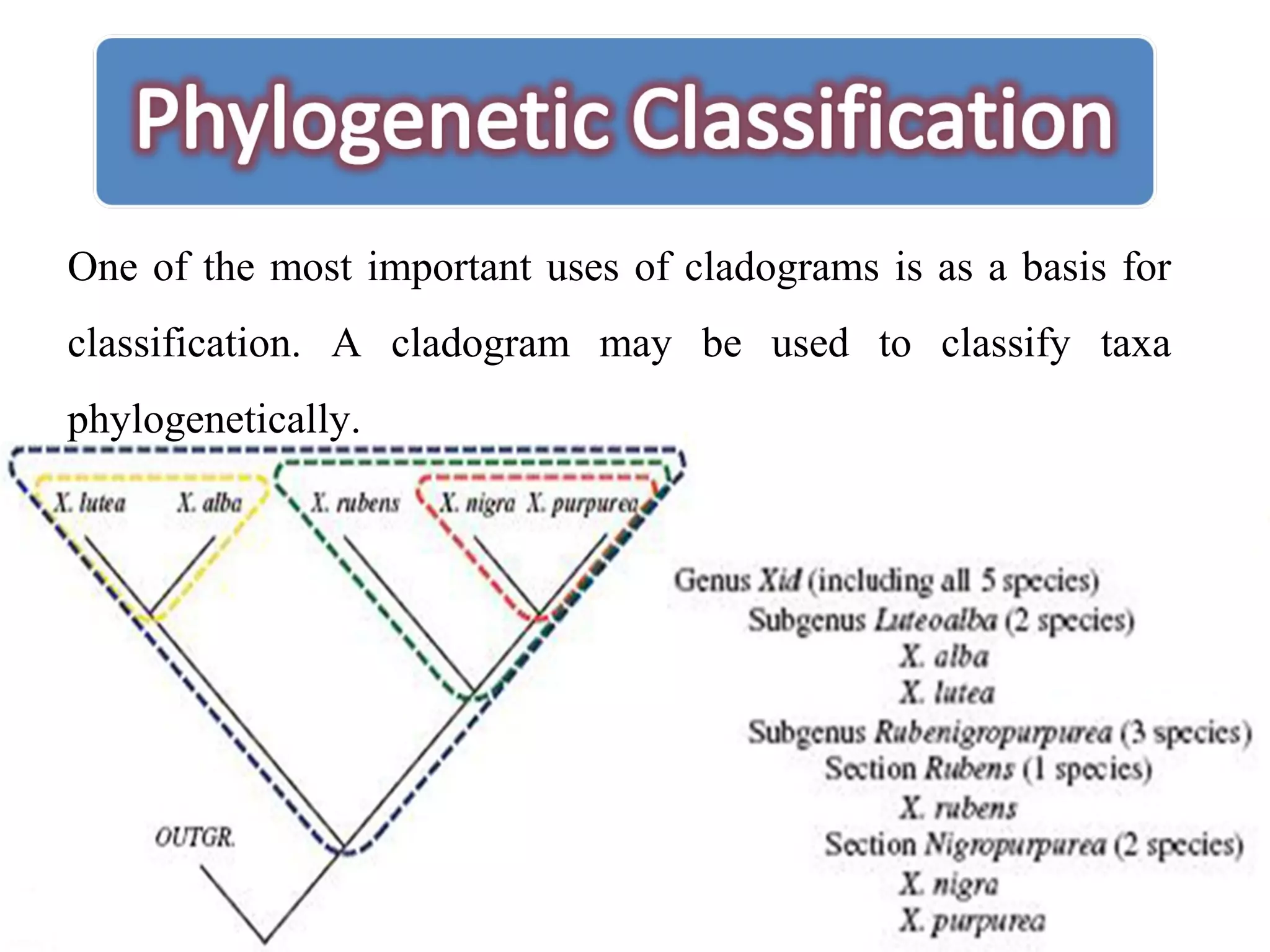
One of the most important uses of cladograms is as a basis for
classification. A cladogram may be used to classify taxa
phylogenetically.
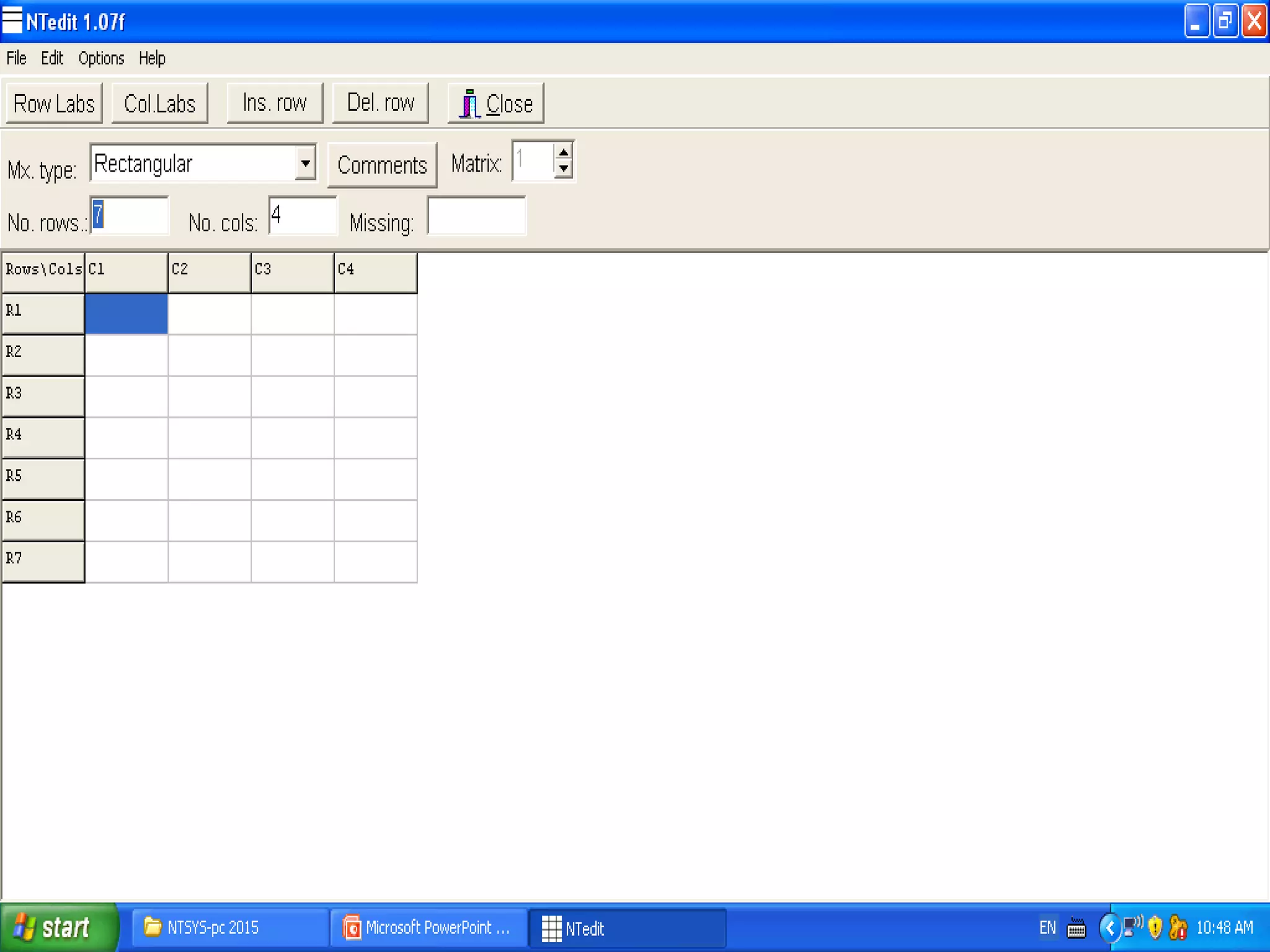
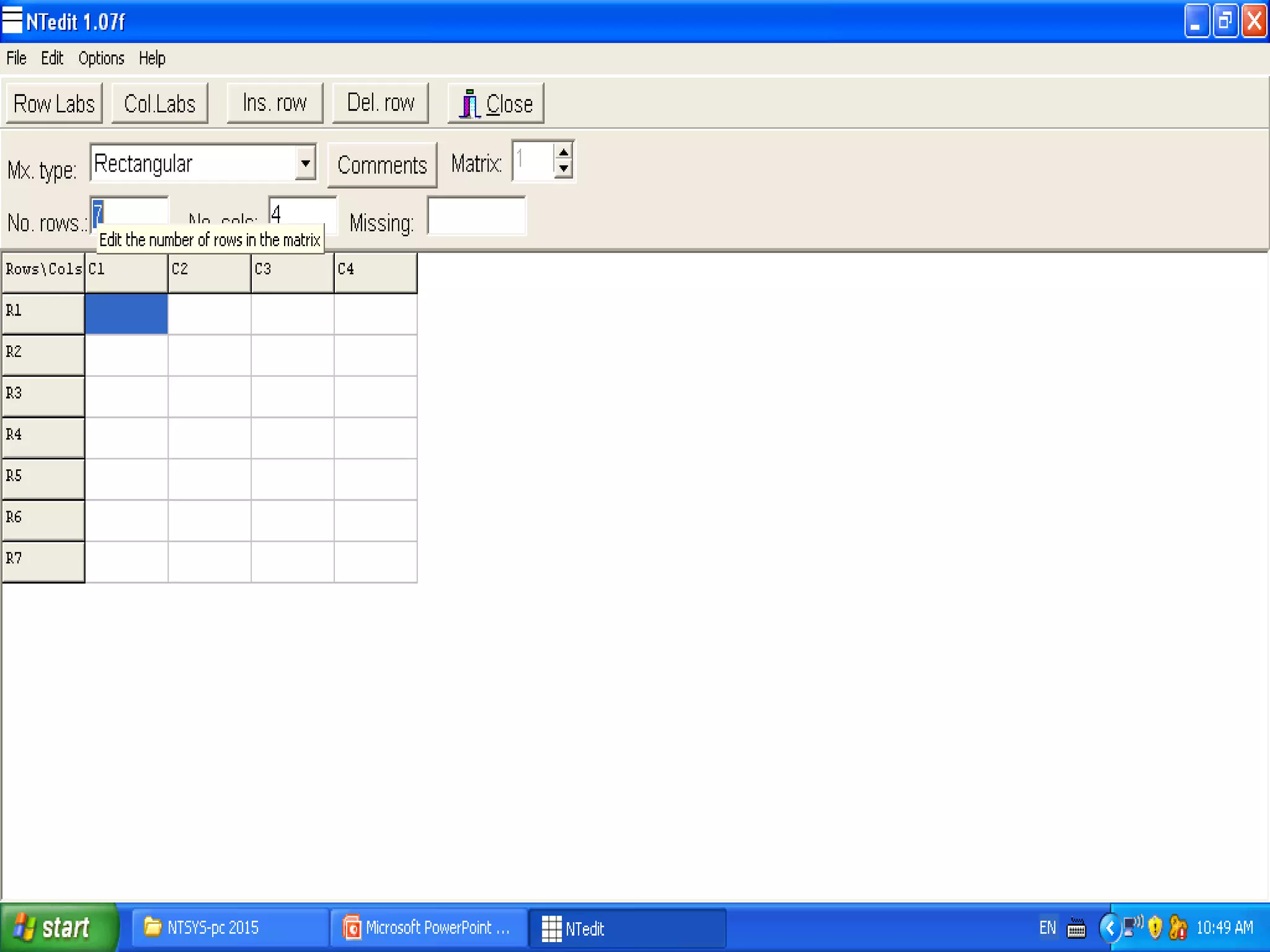
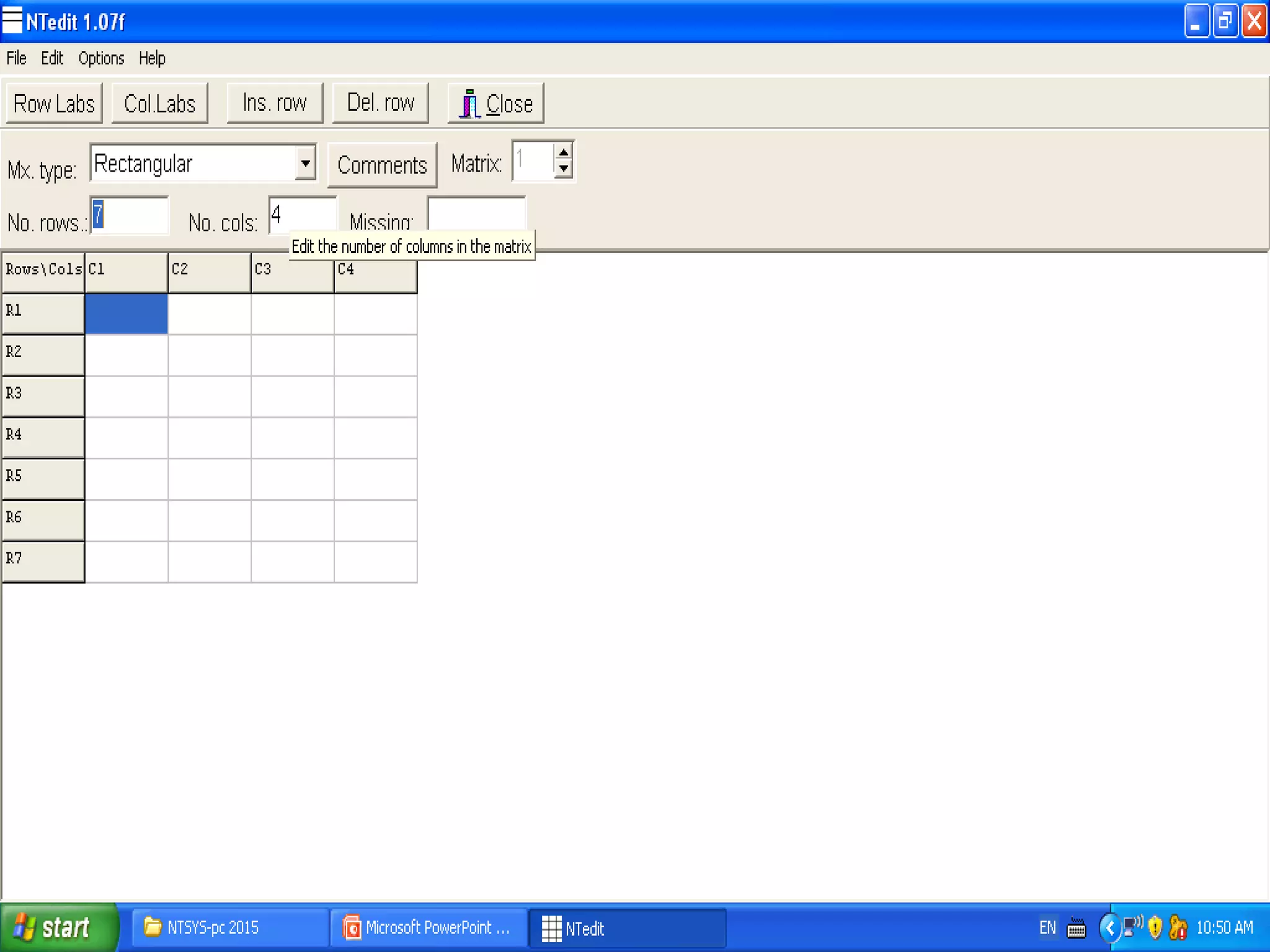
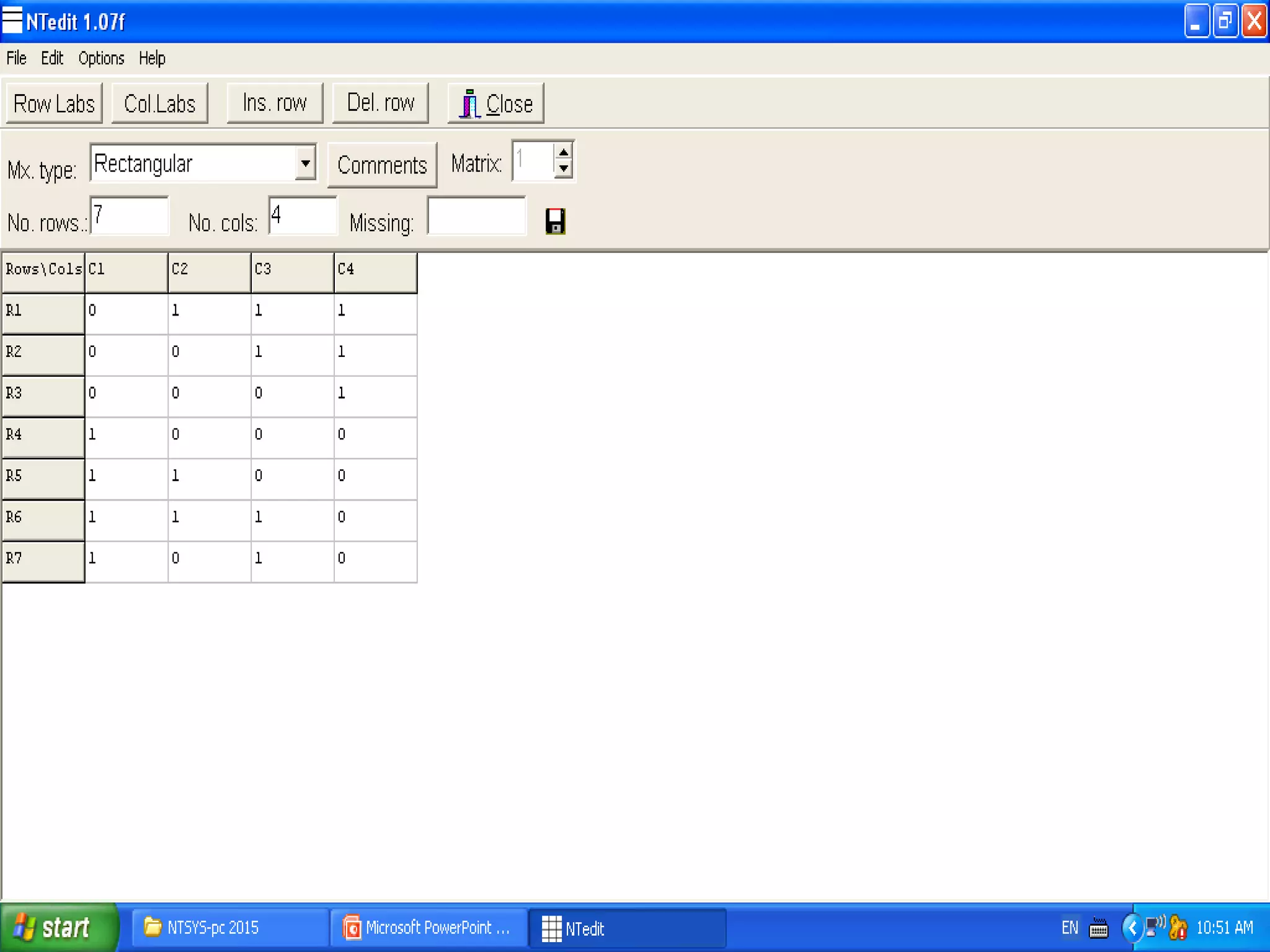
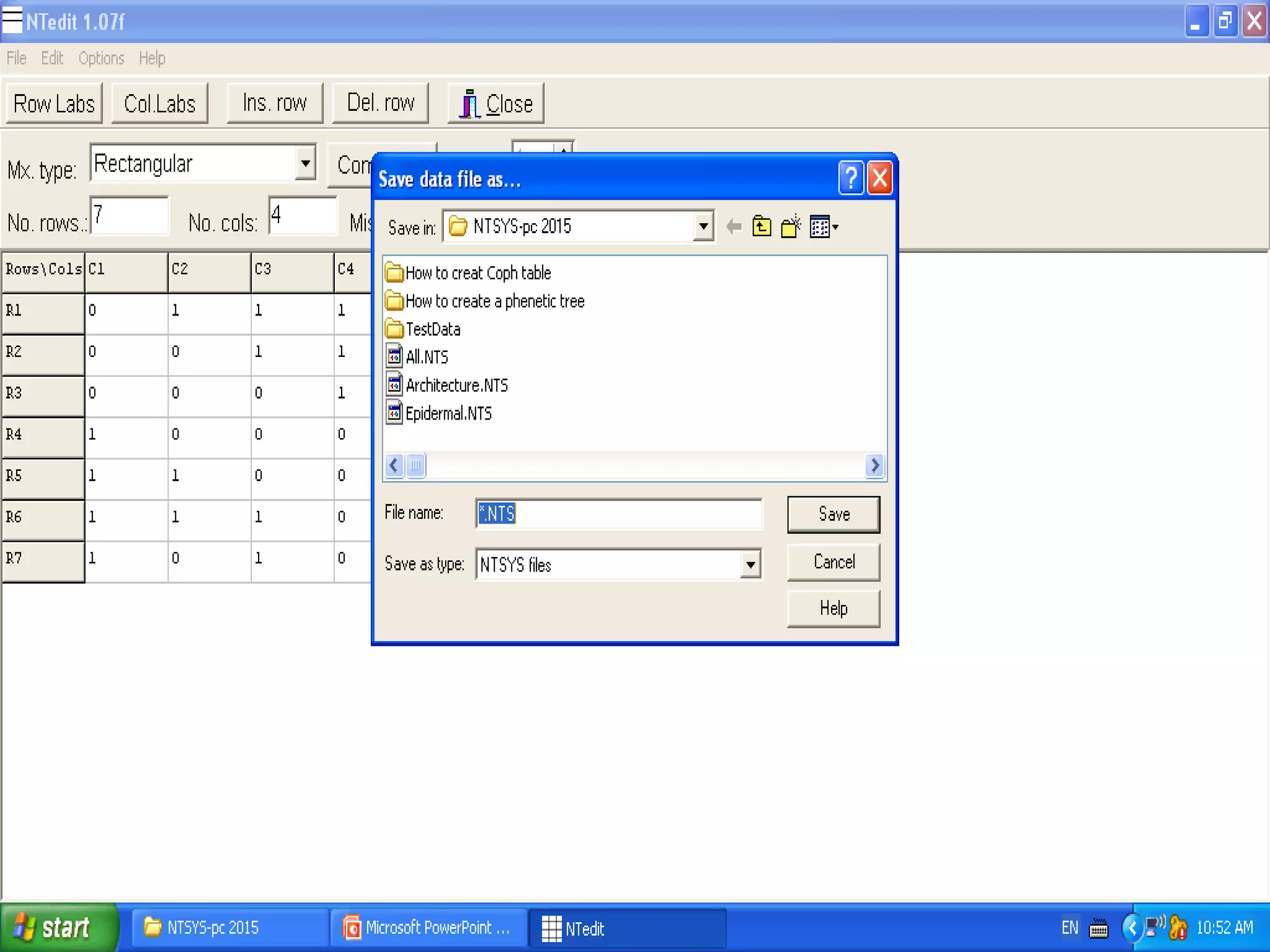
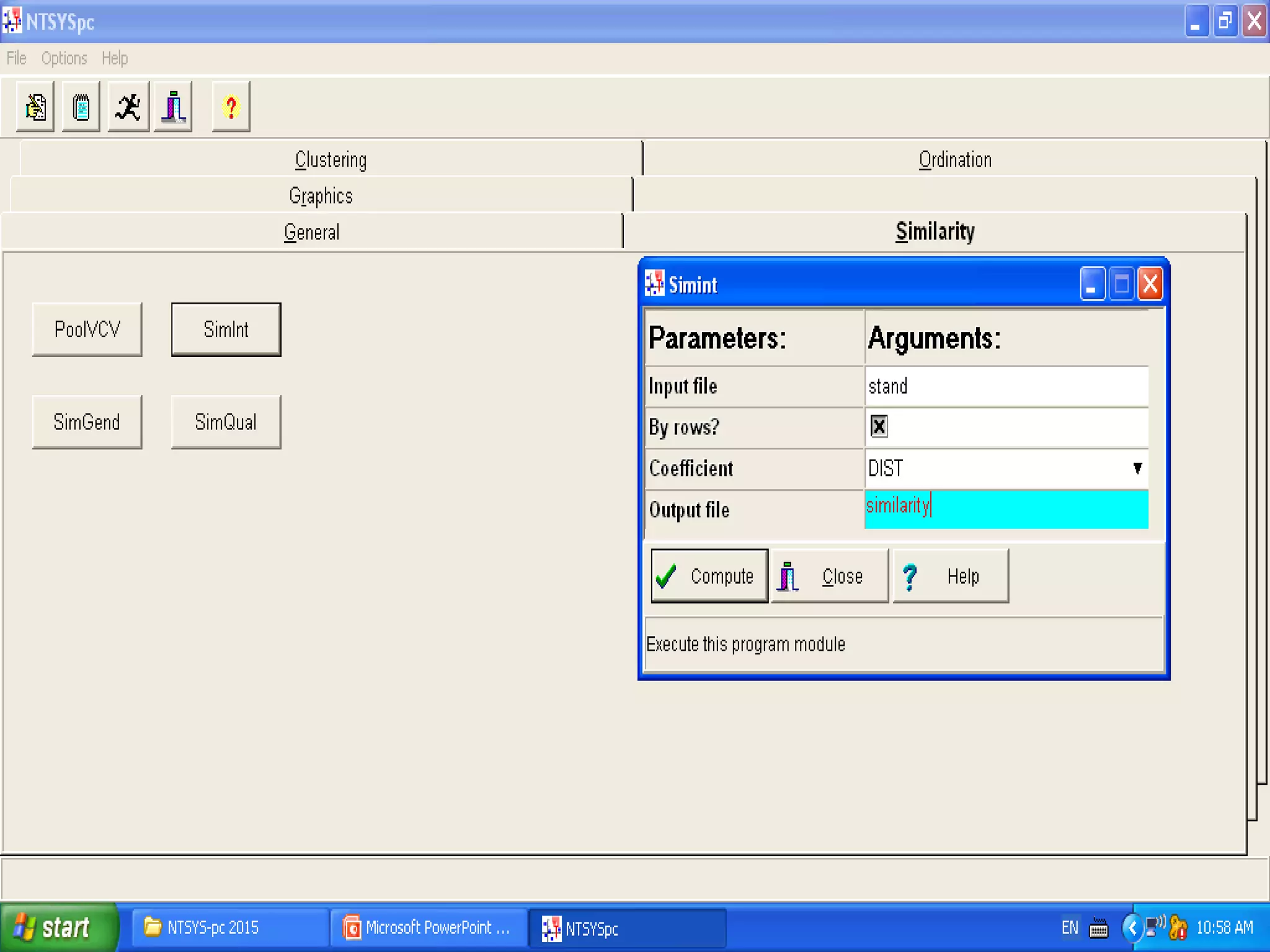
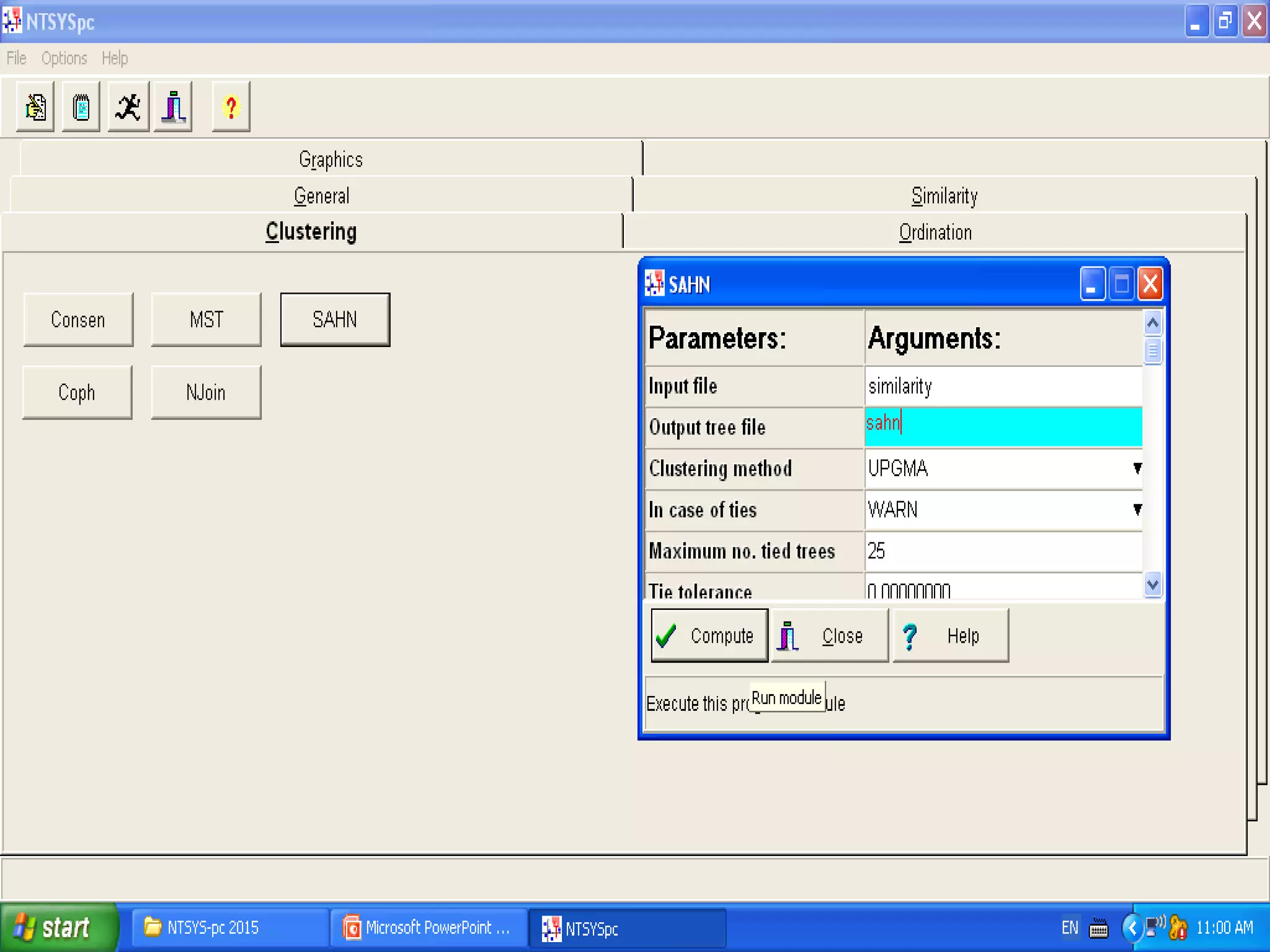
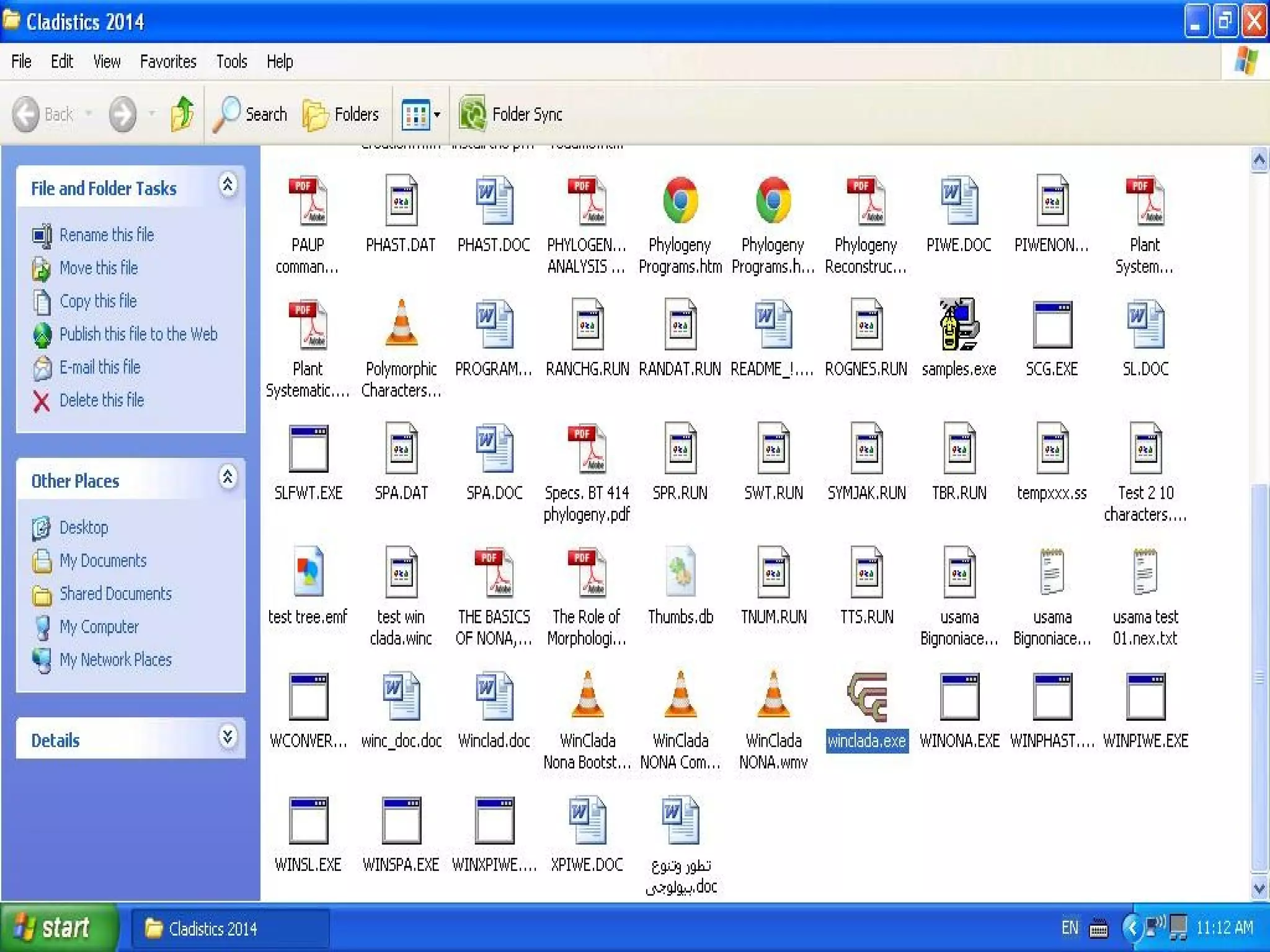
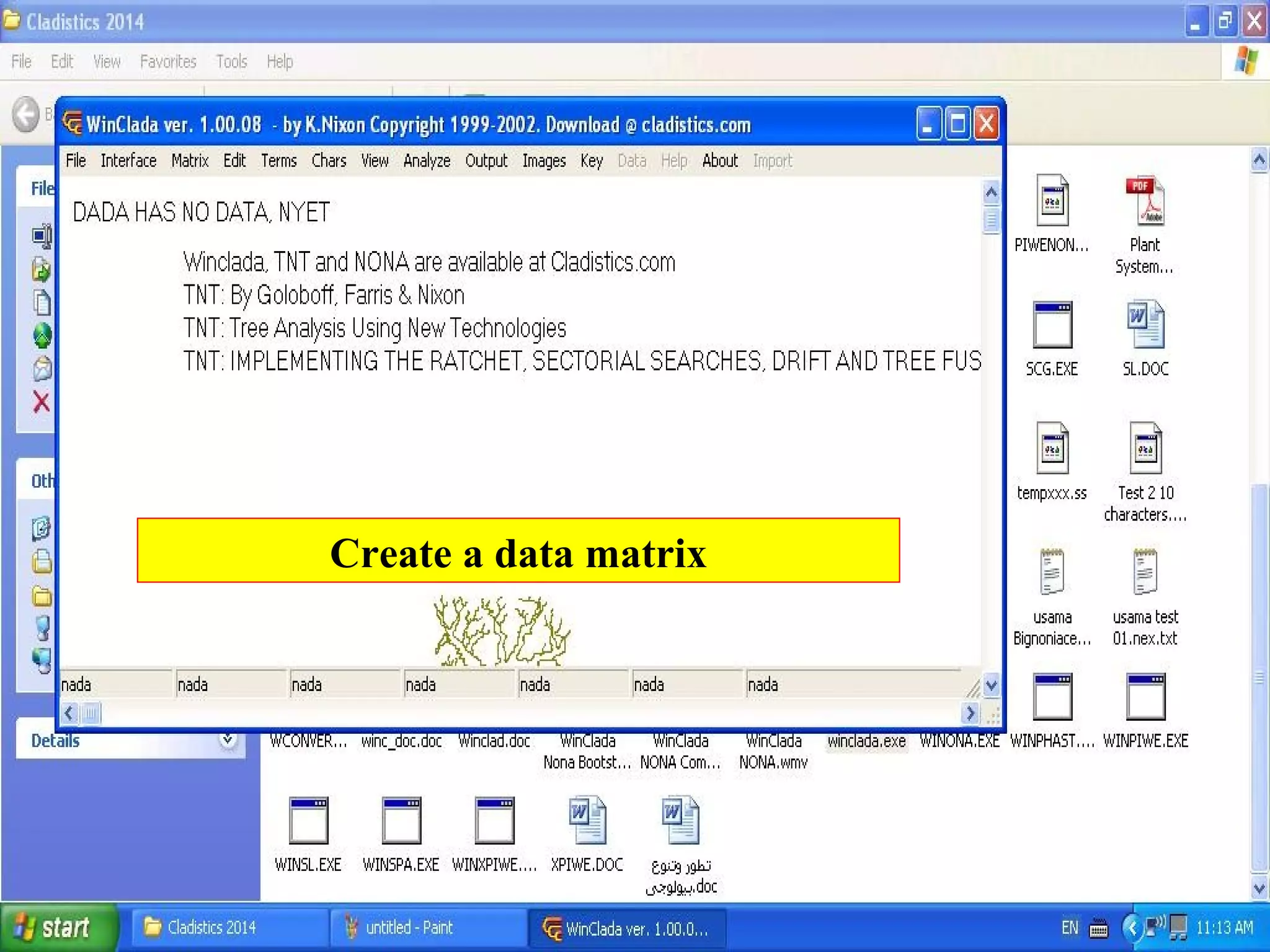
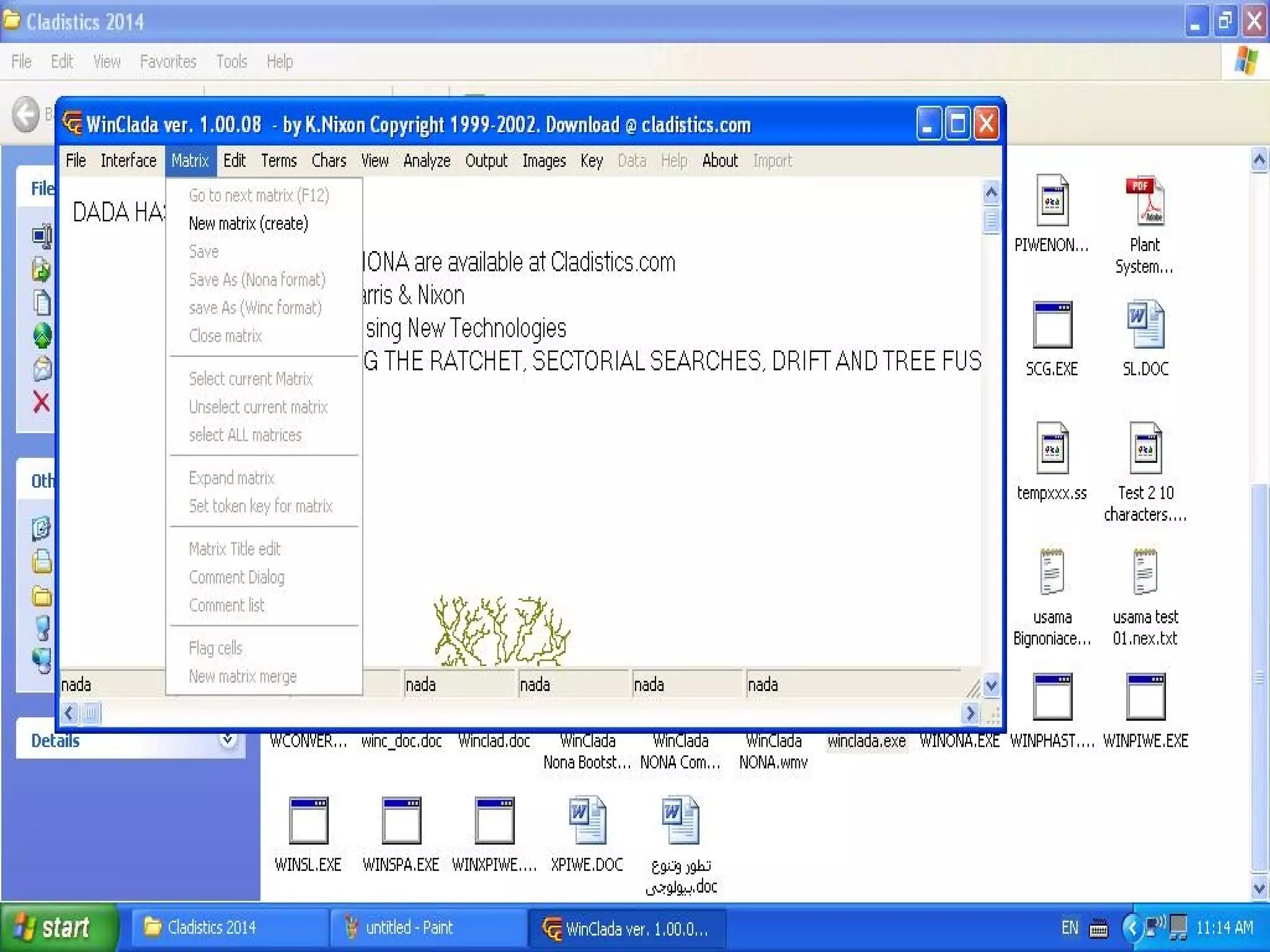
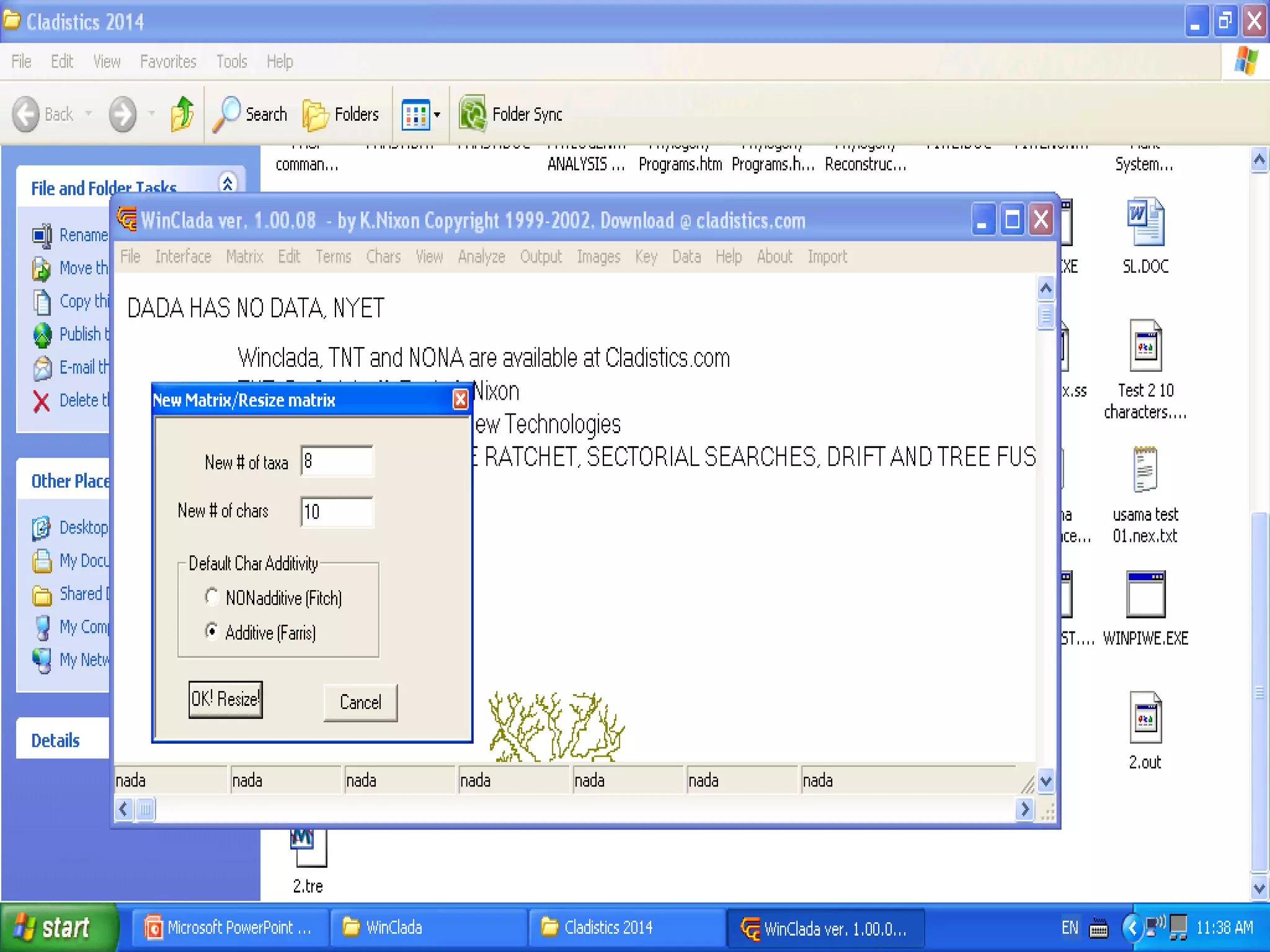
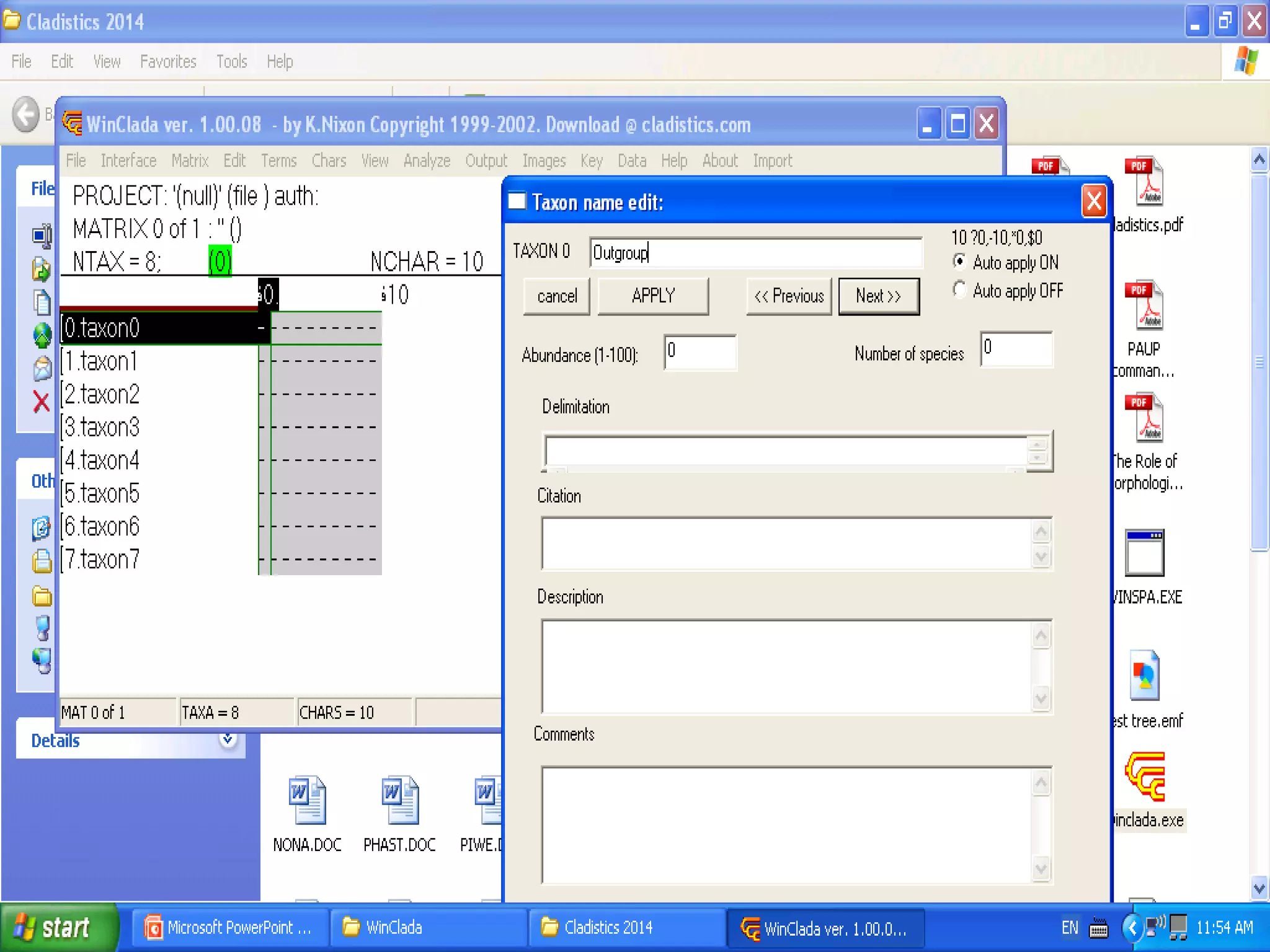
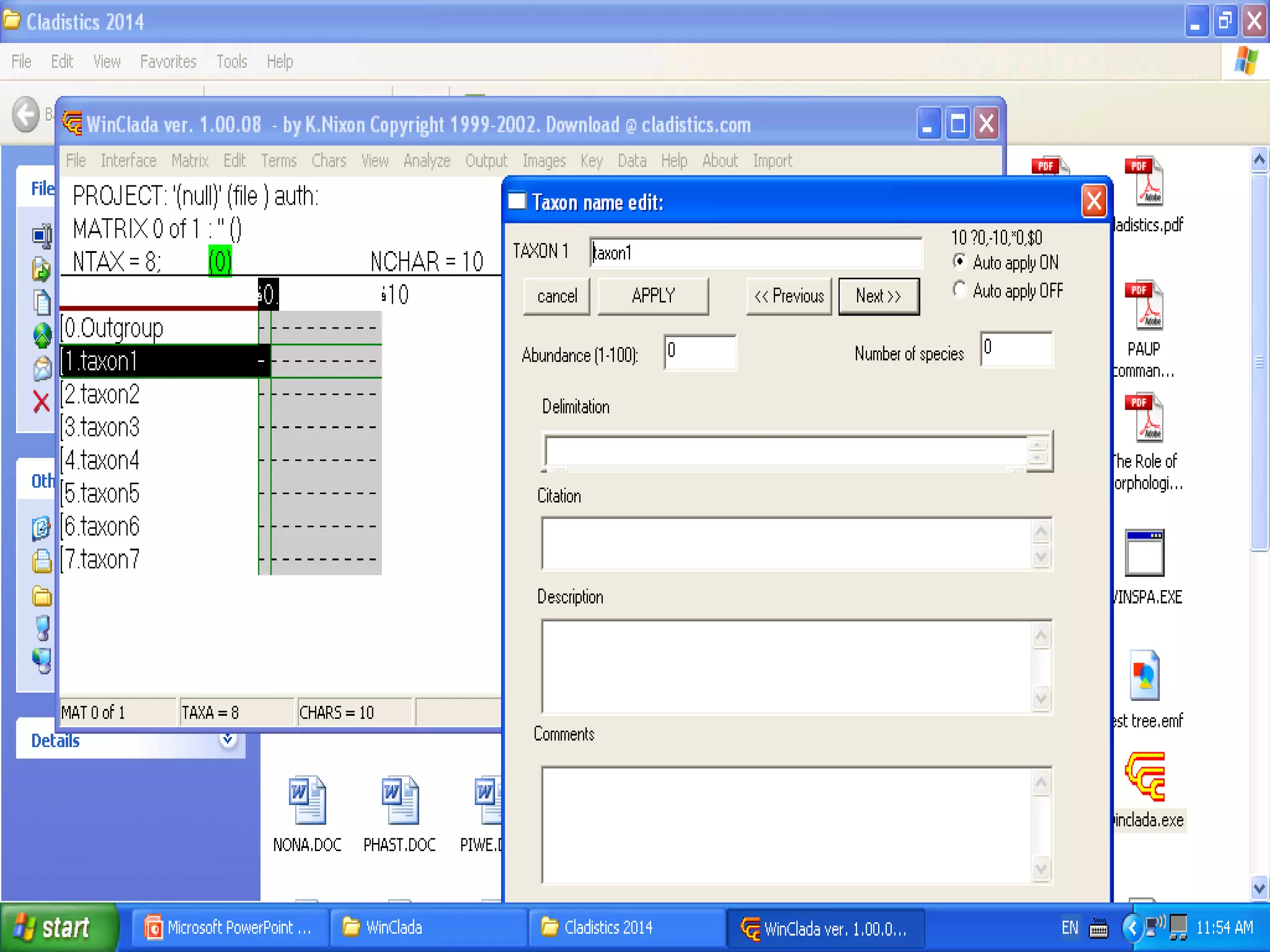
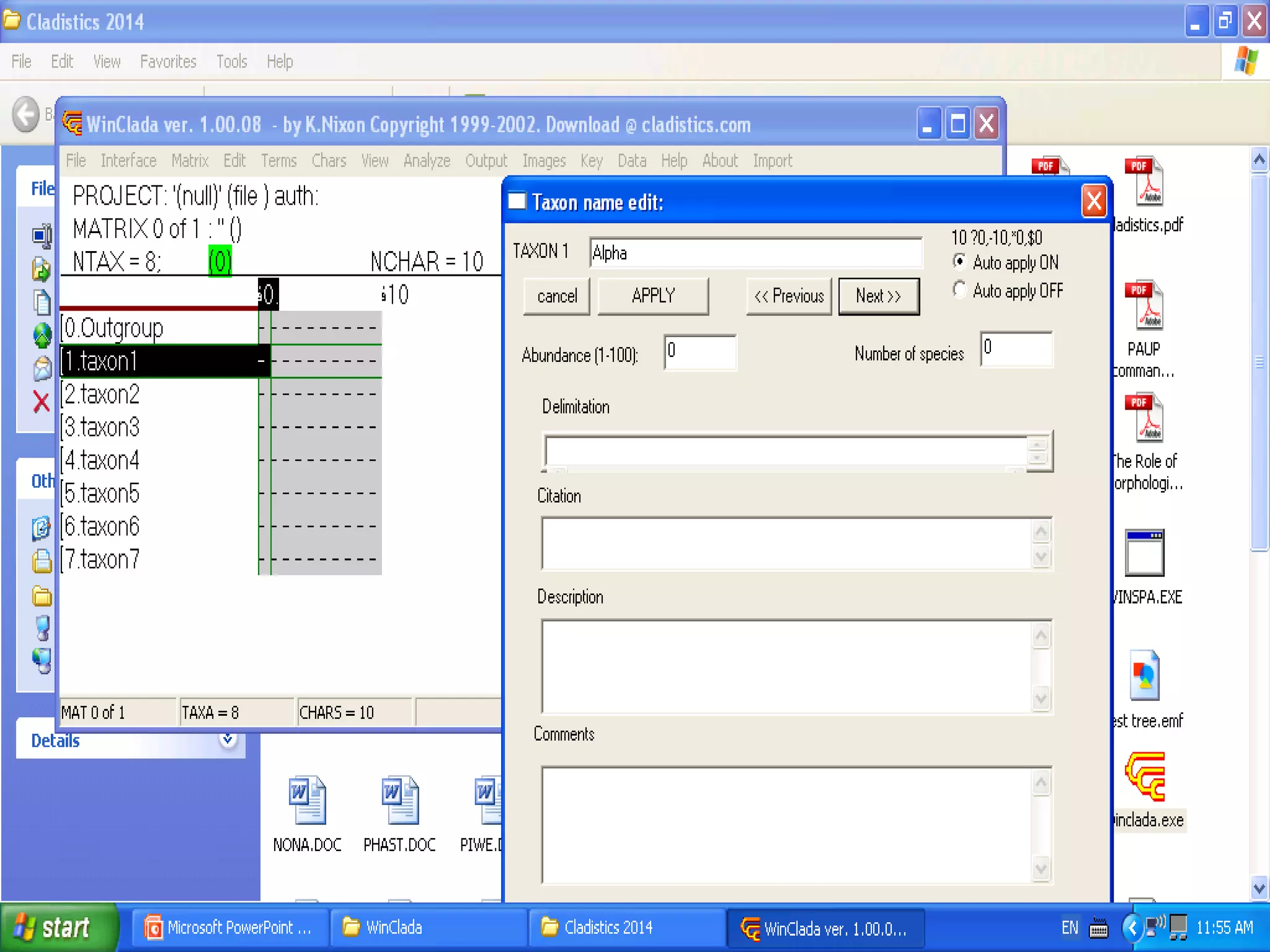
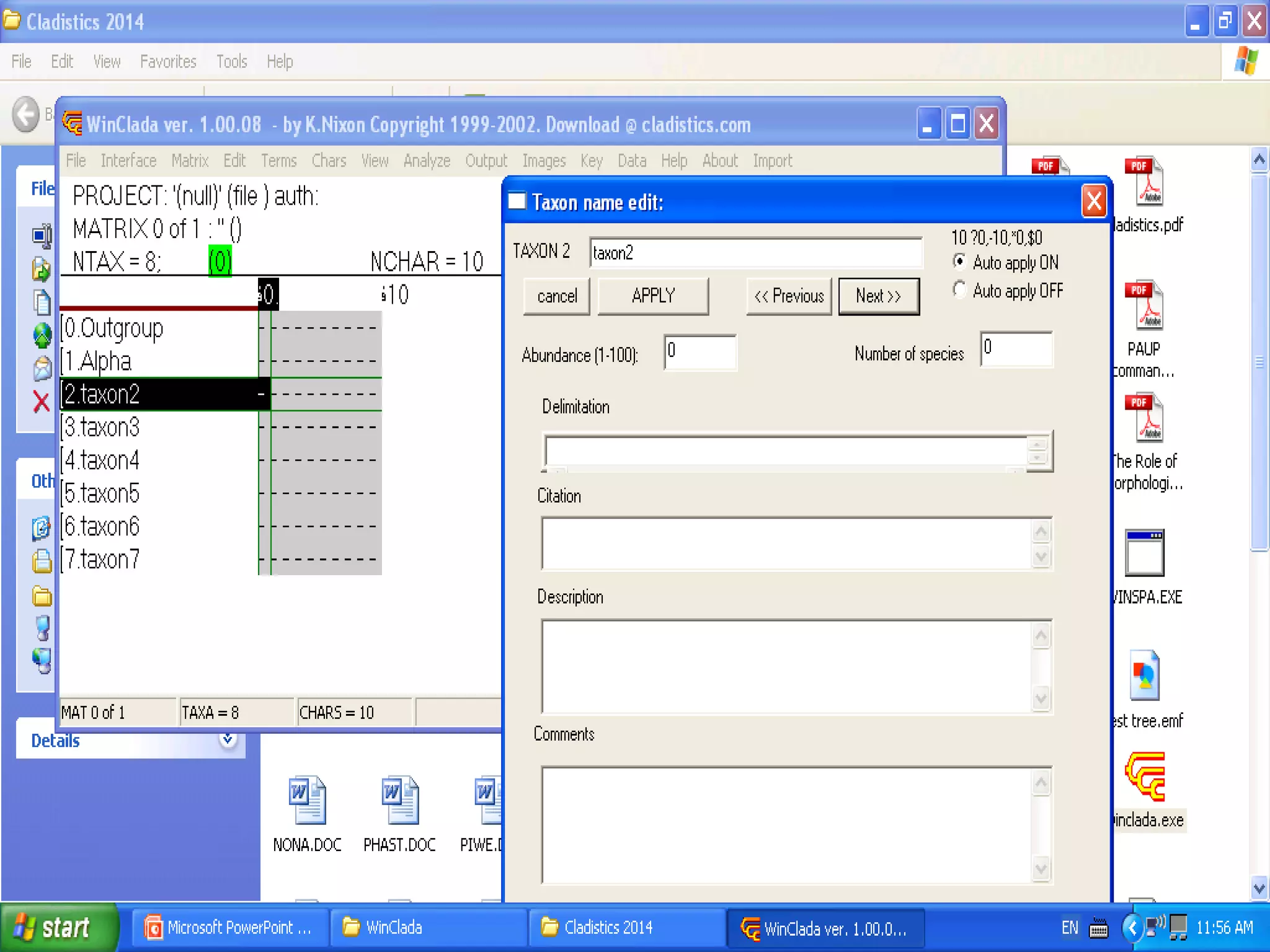
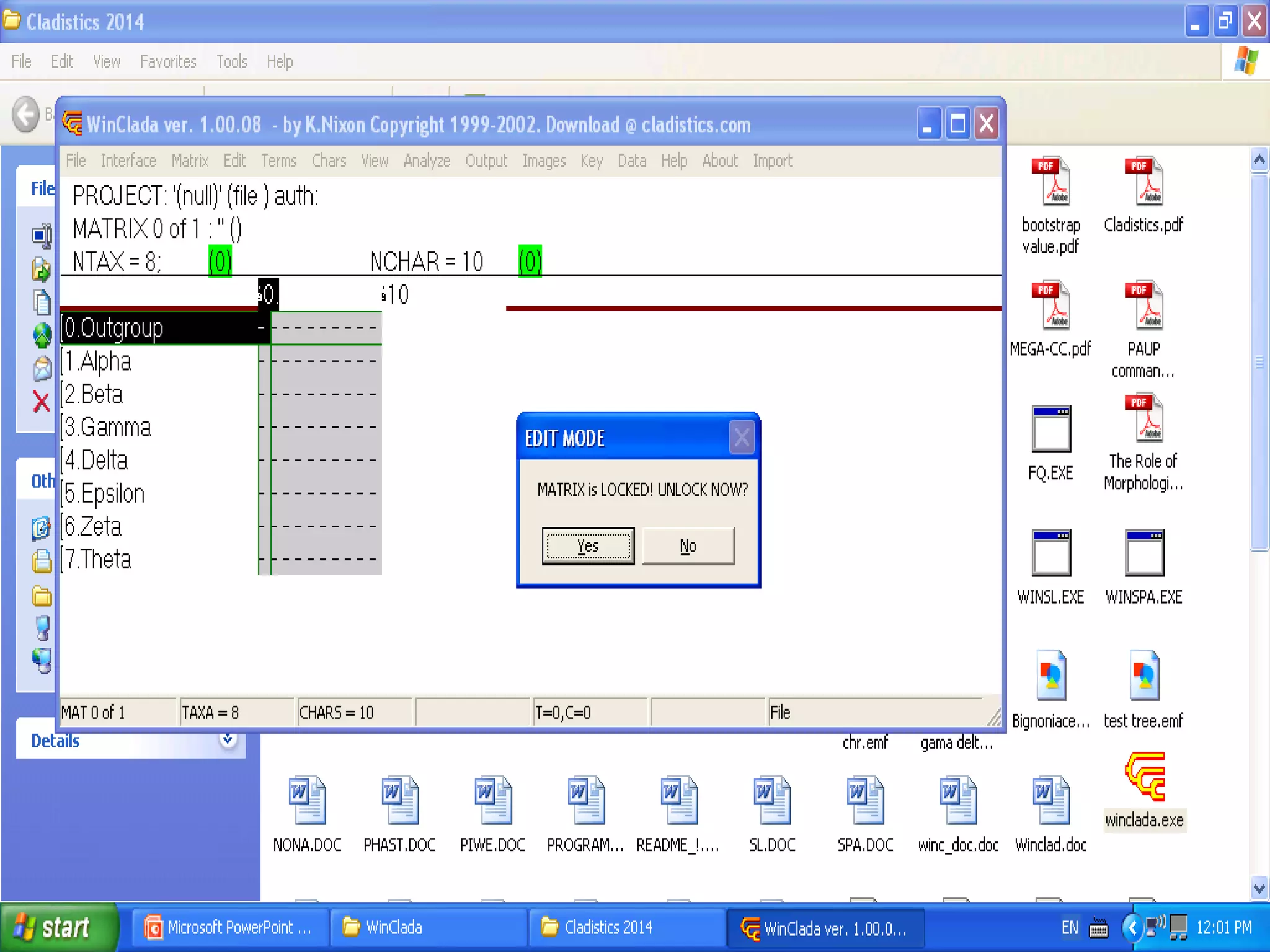
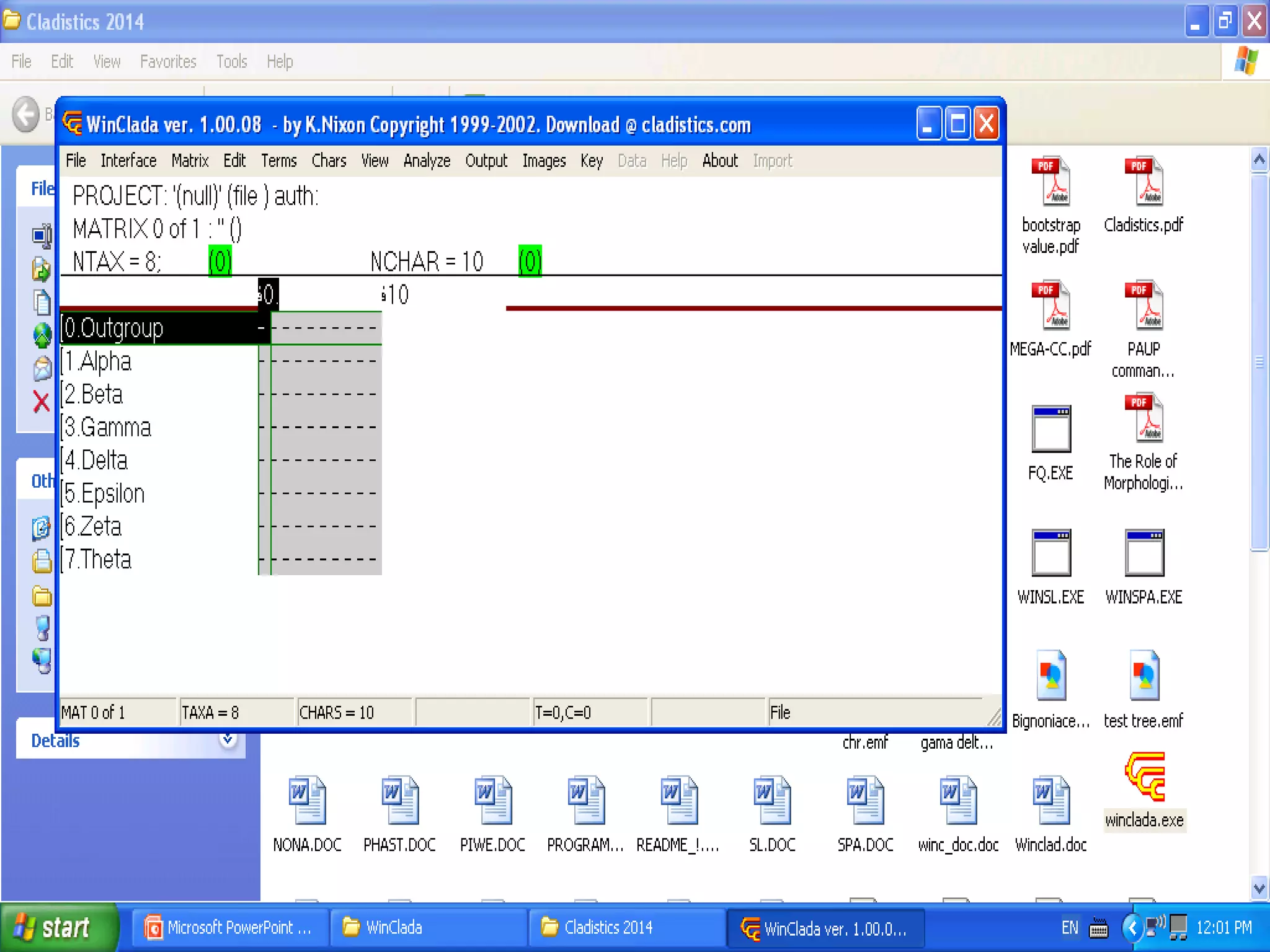
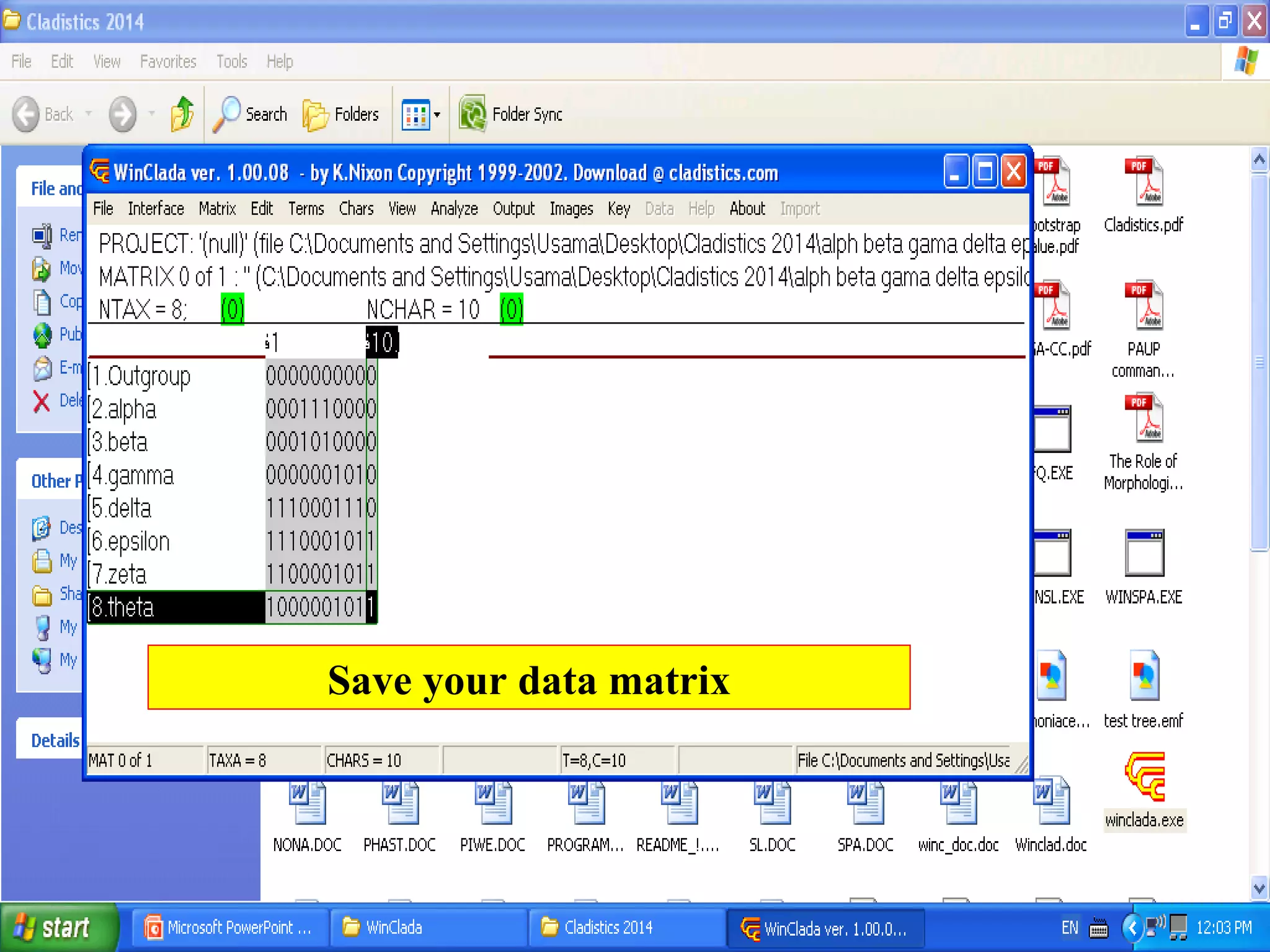
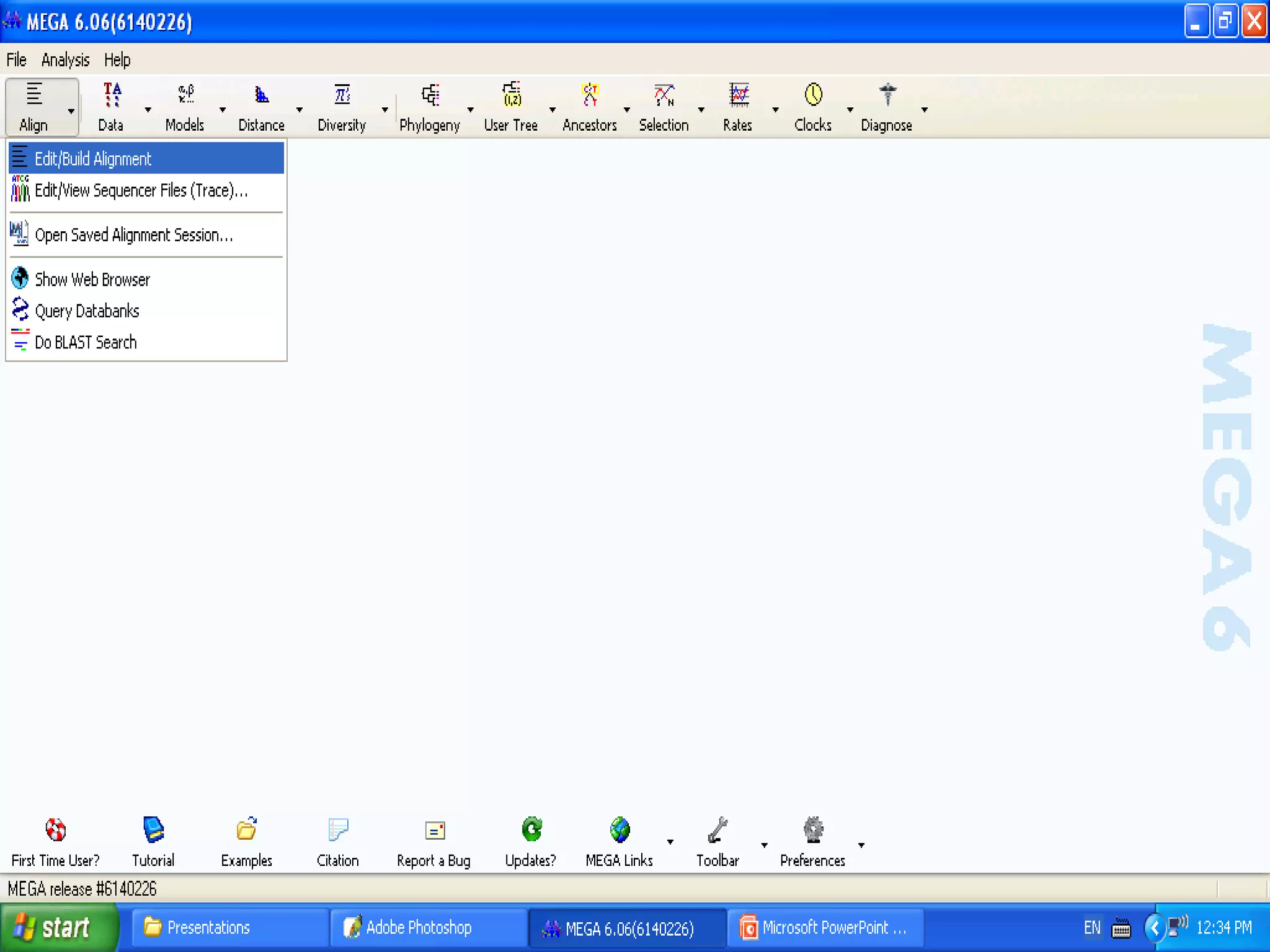
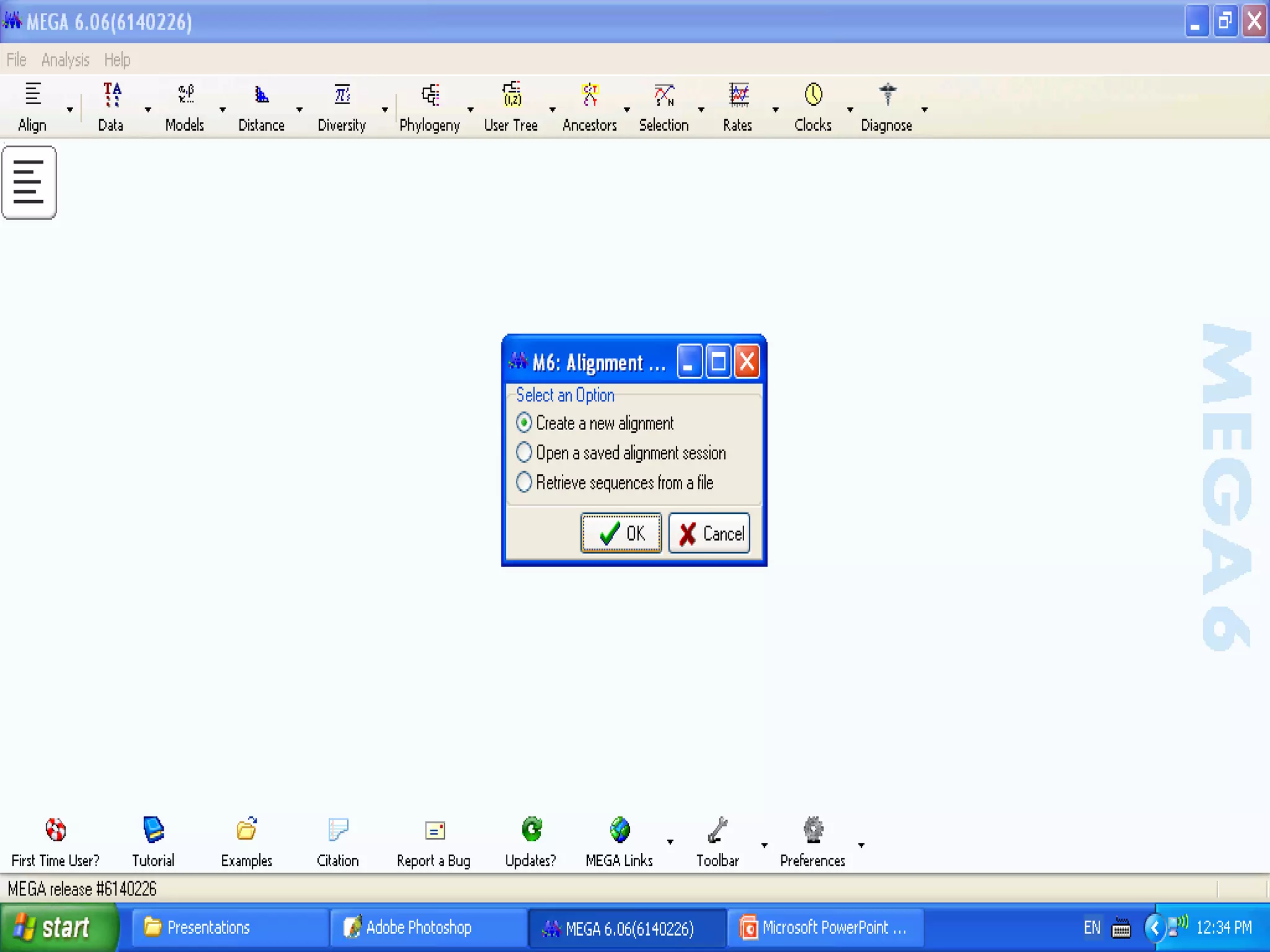
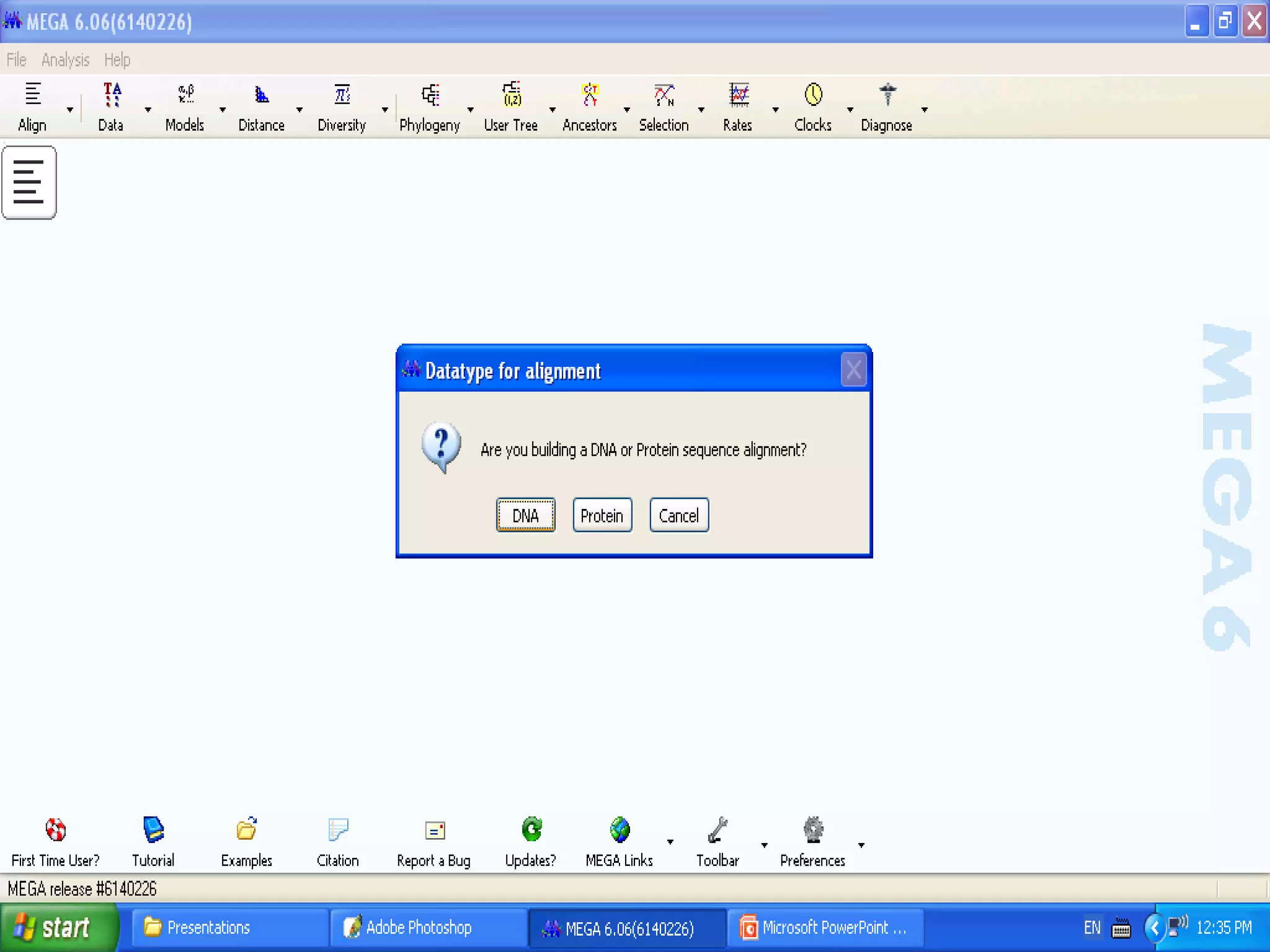
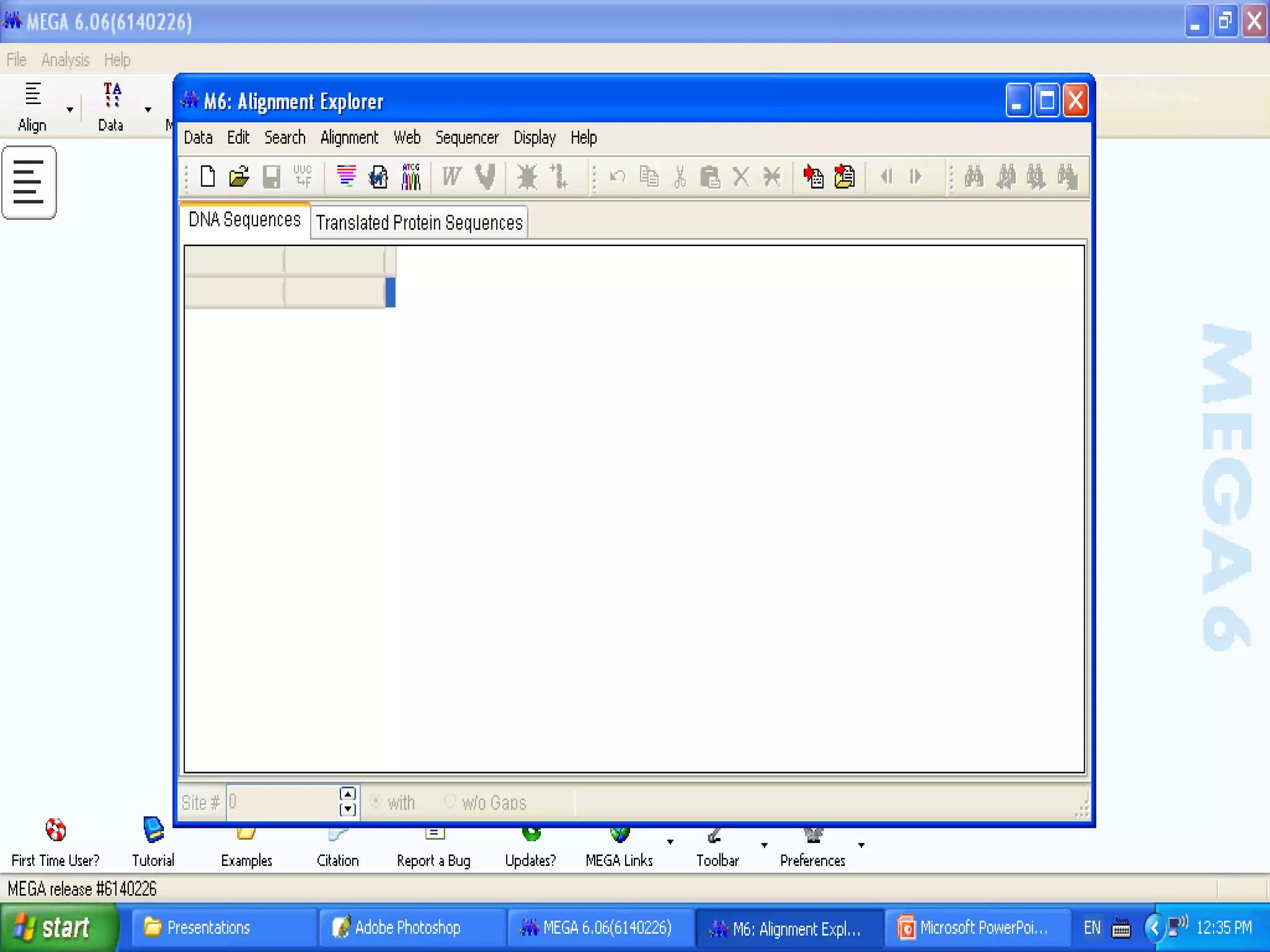
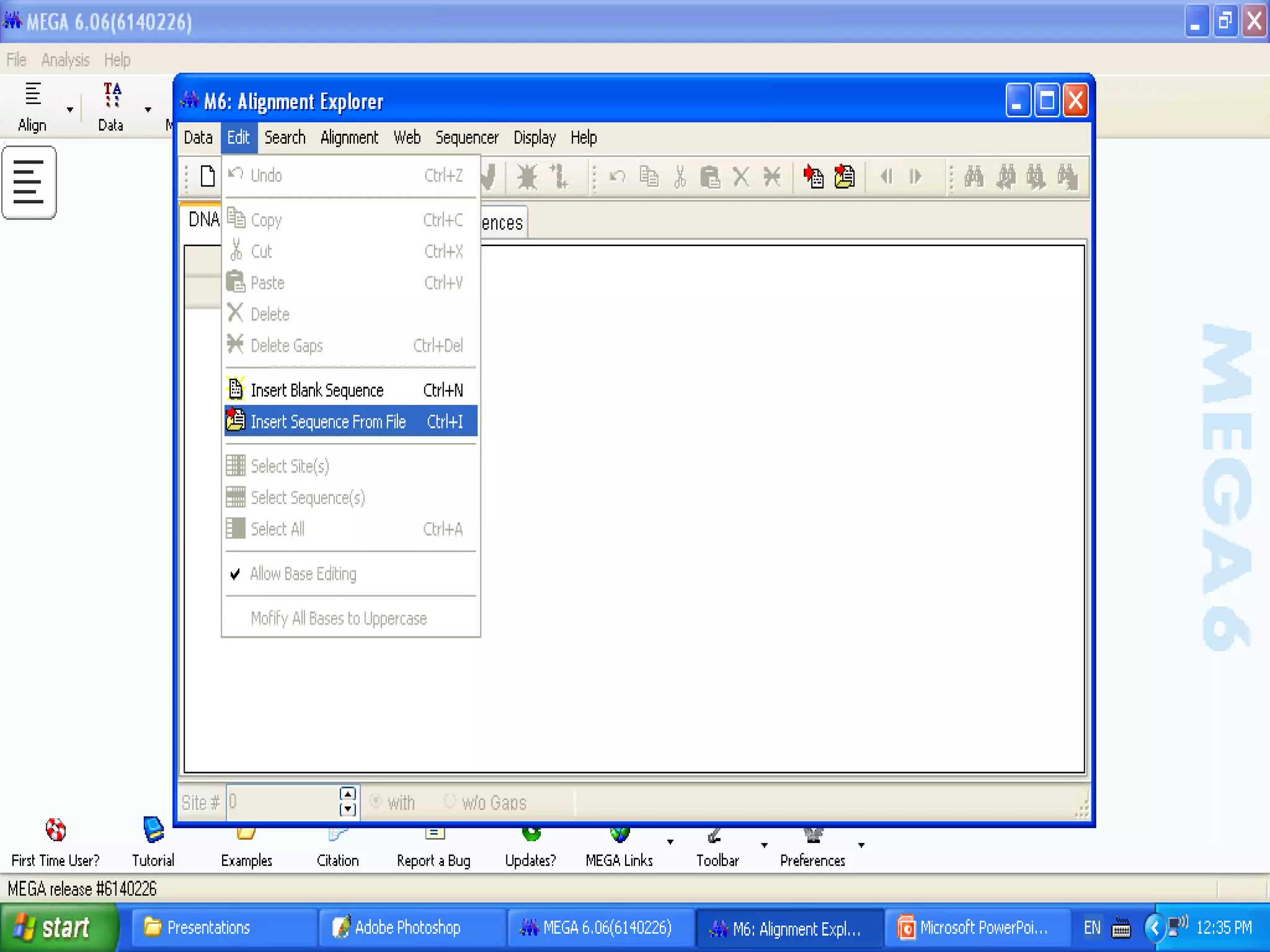
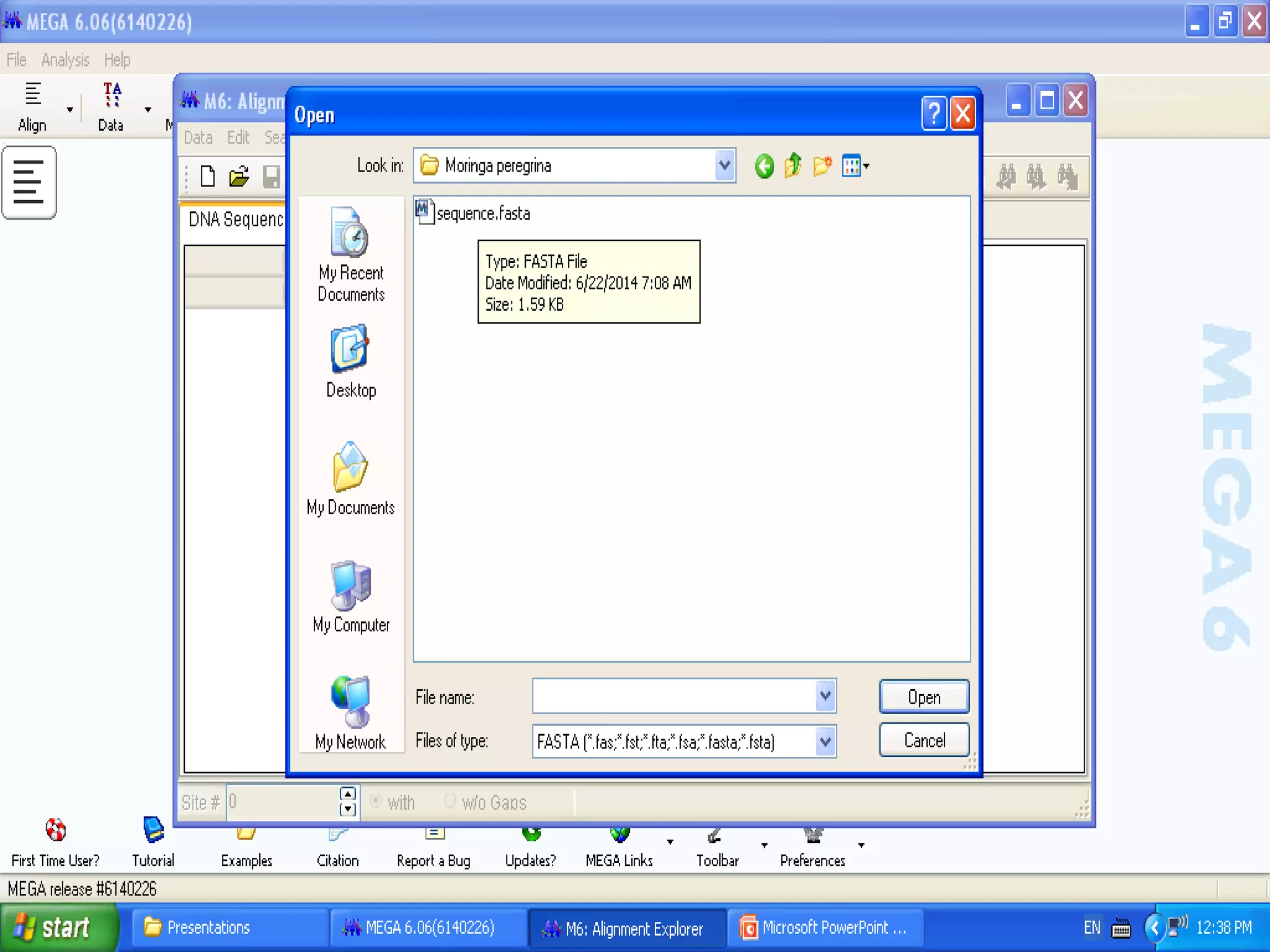
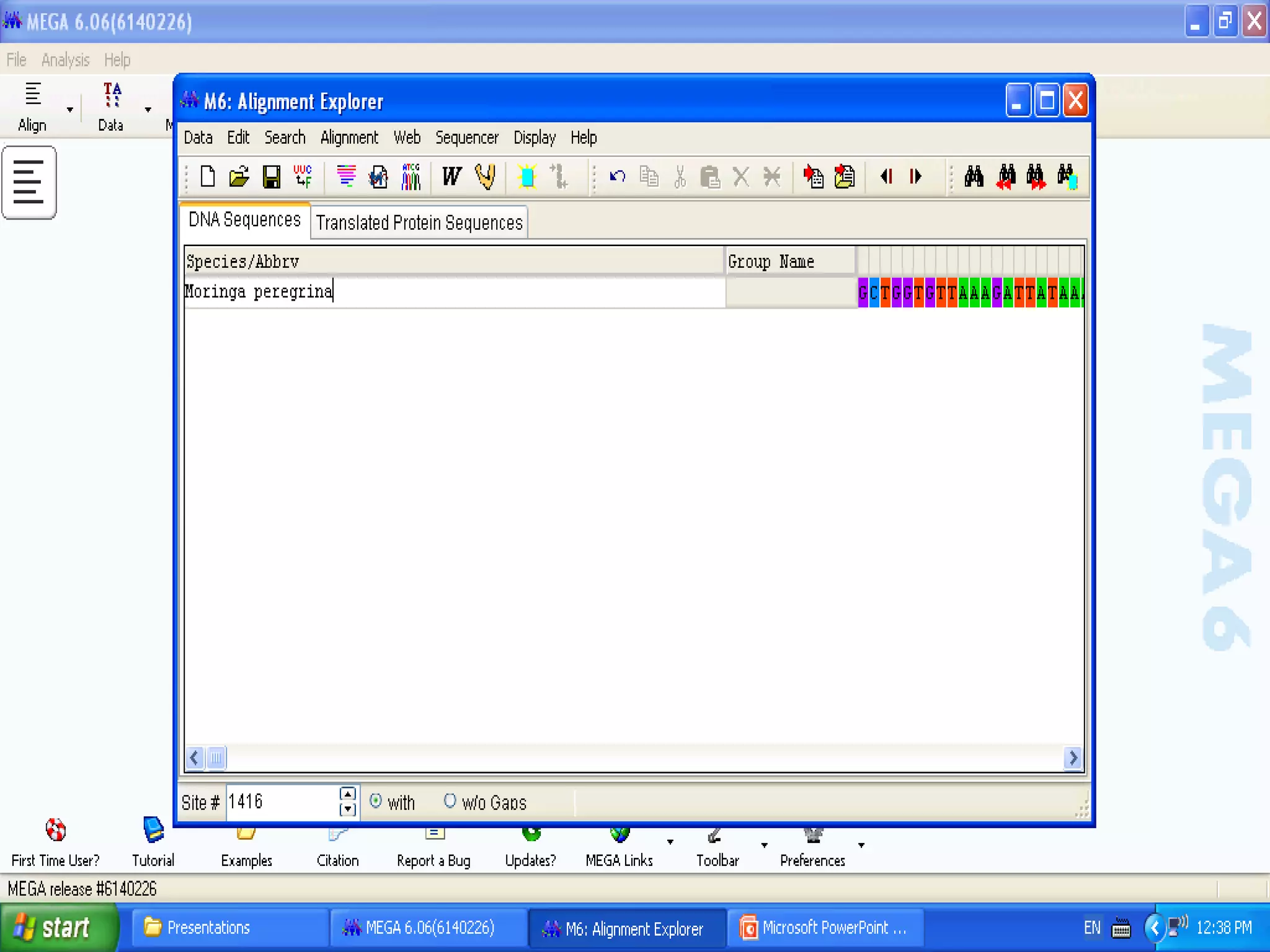
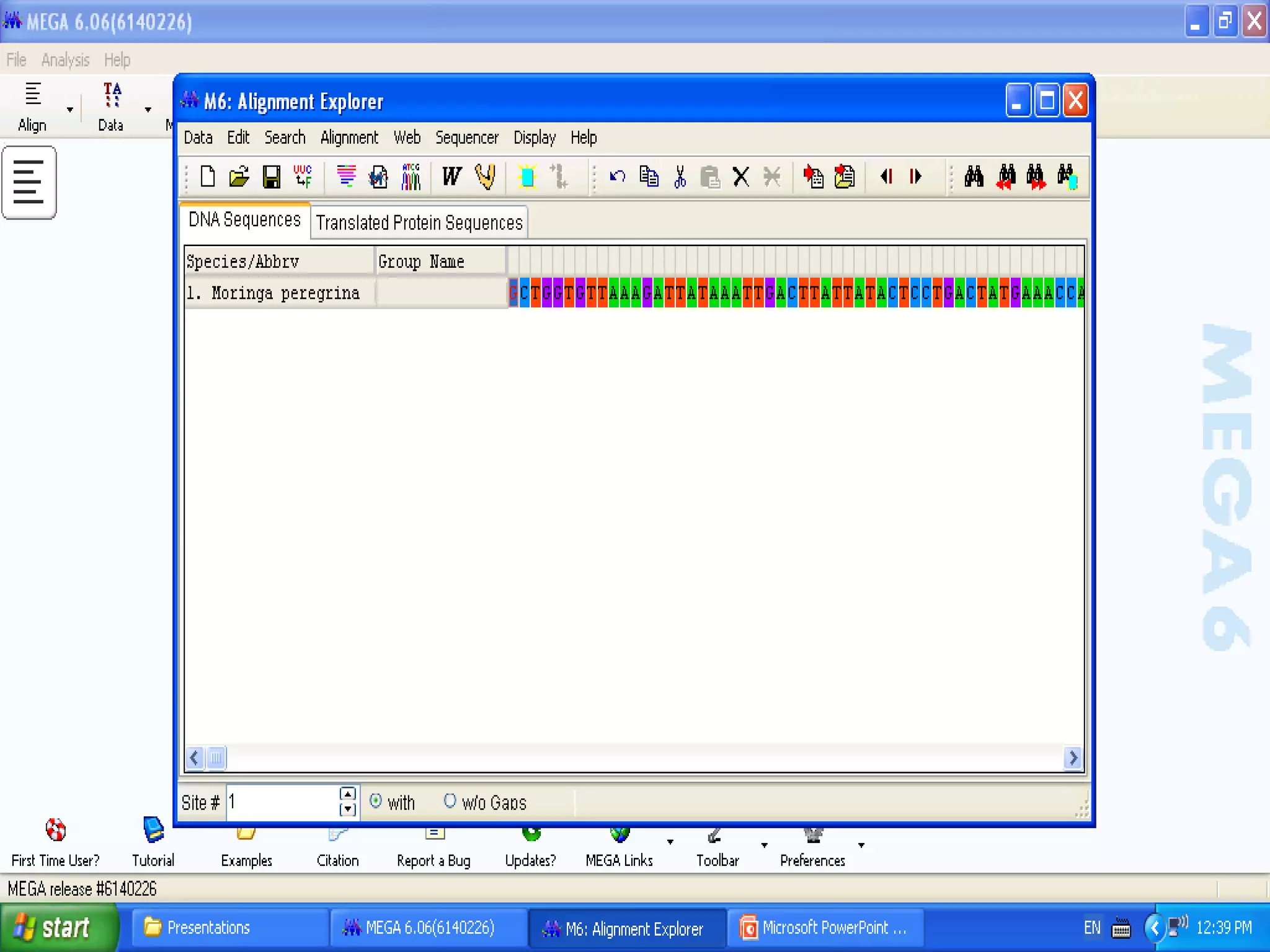
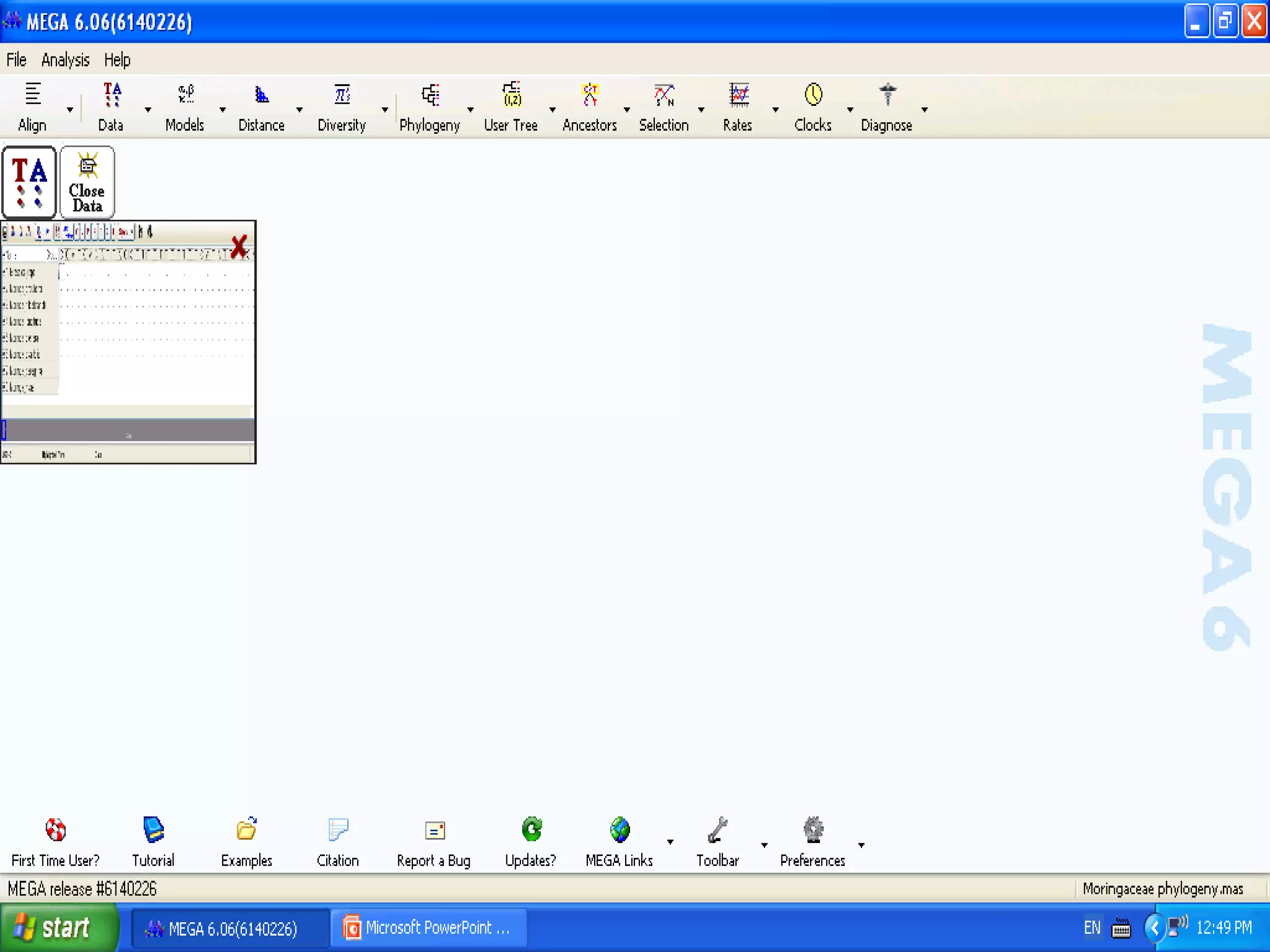
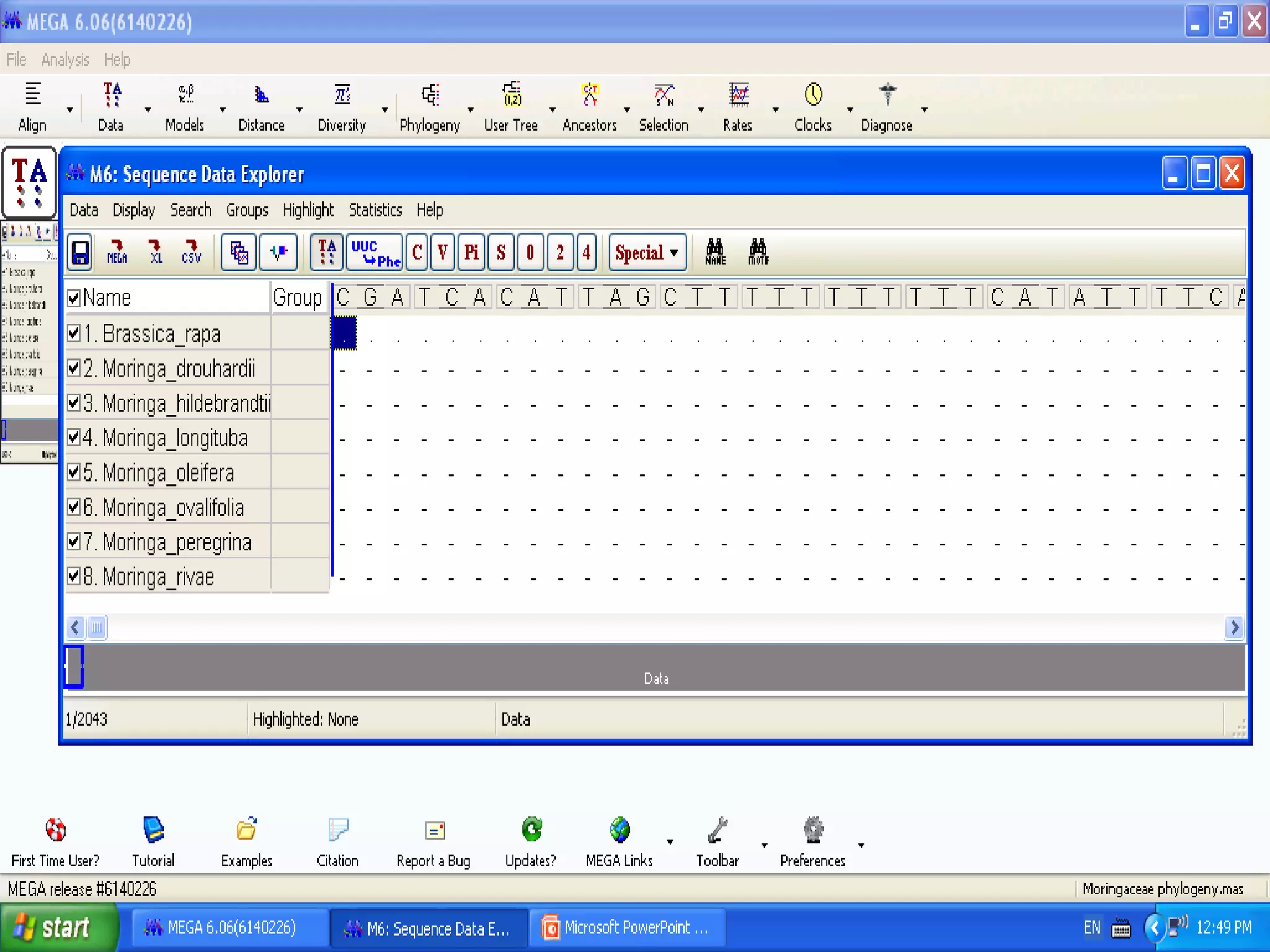
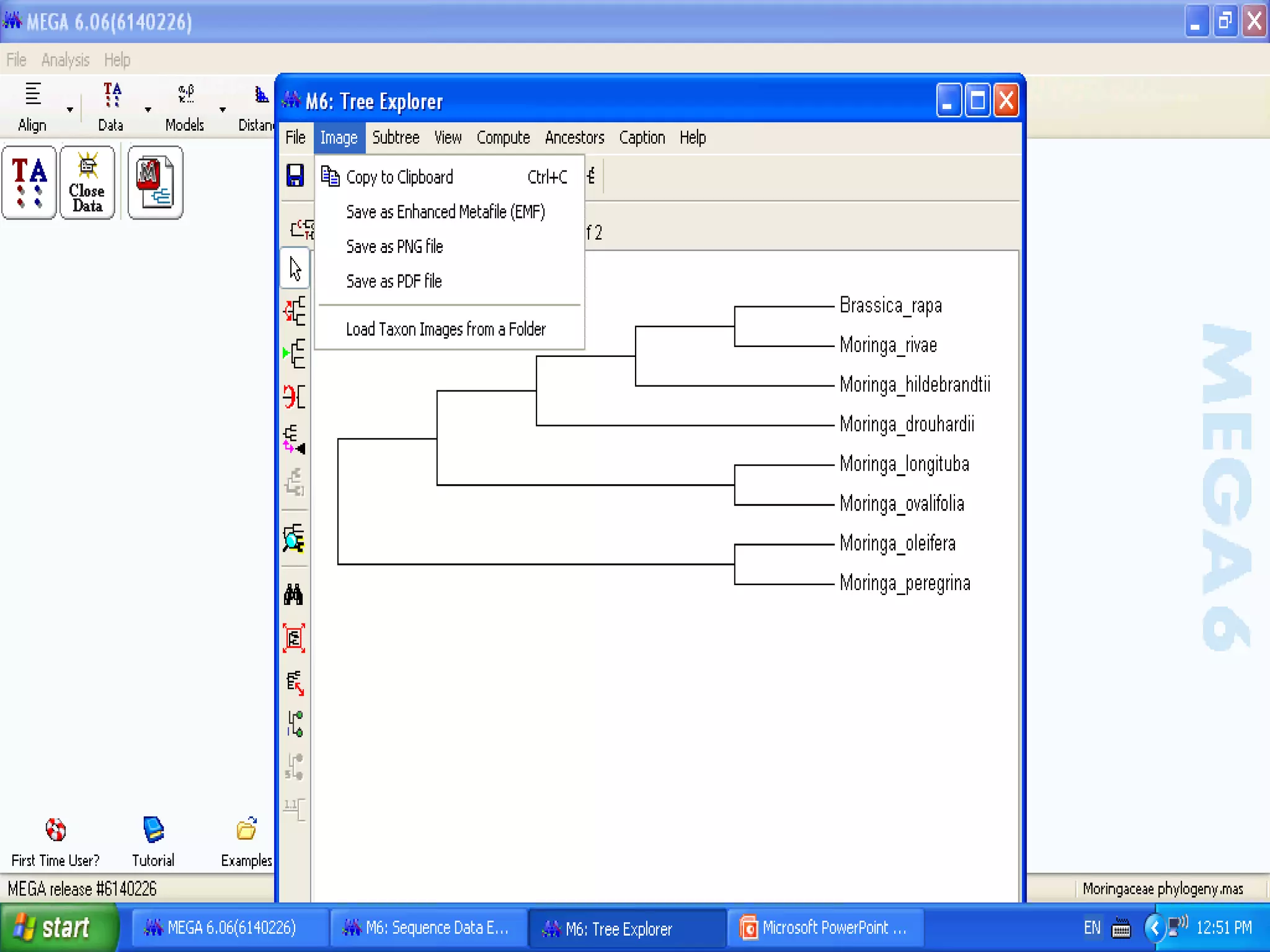
Create a data matrix
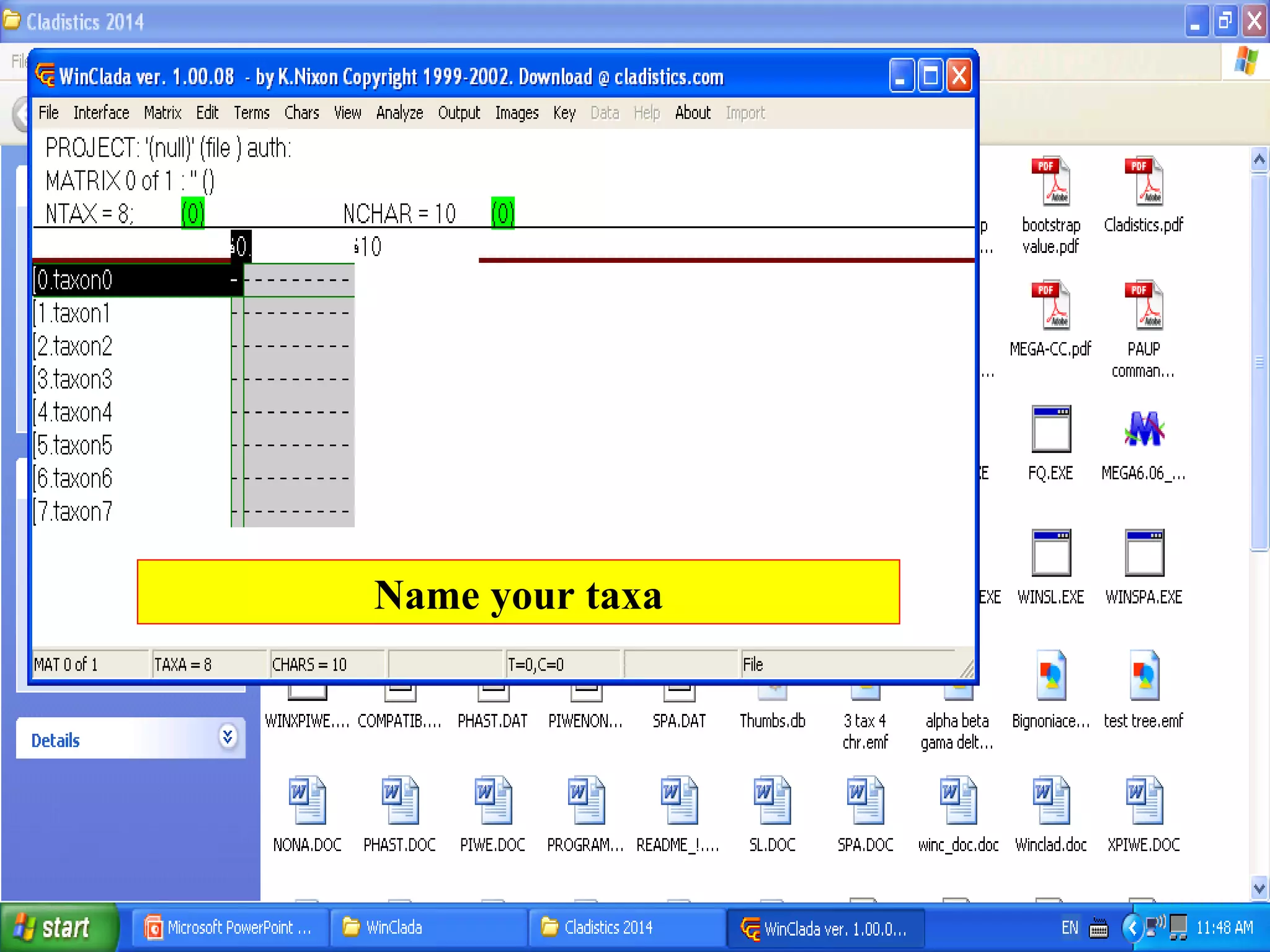
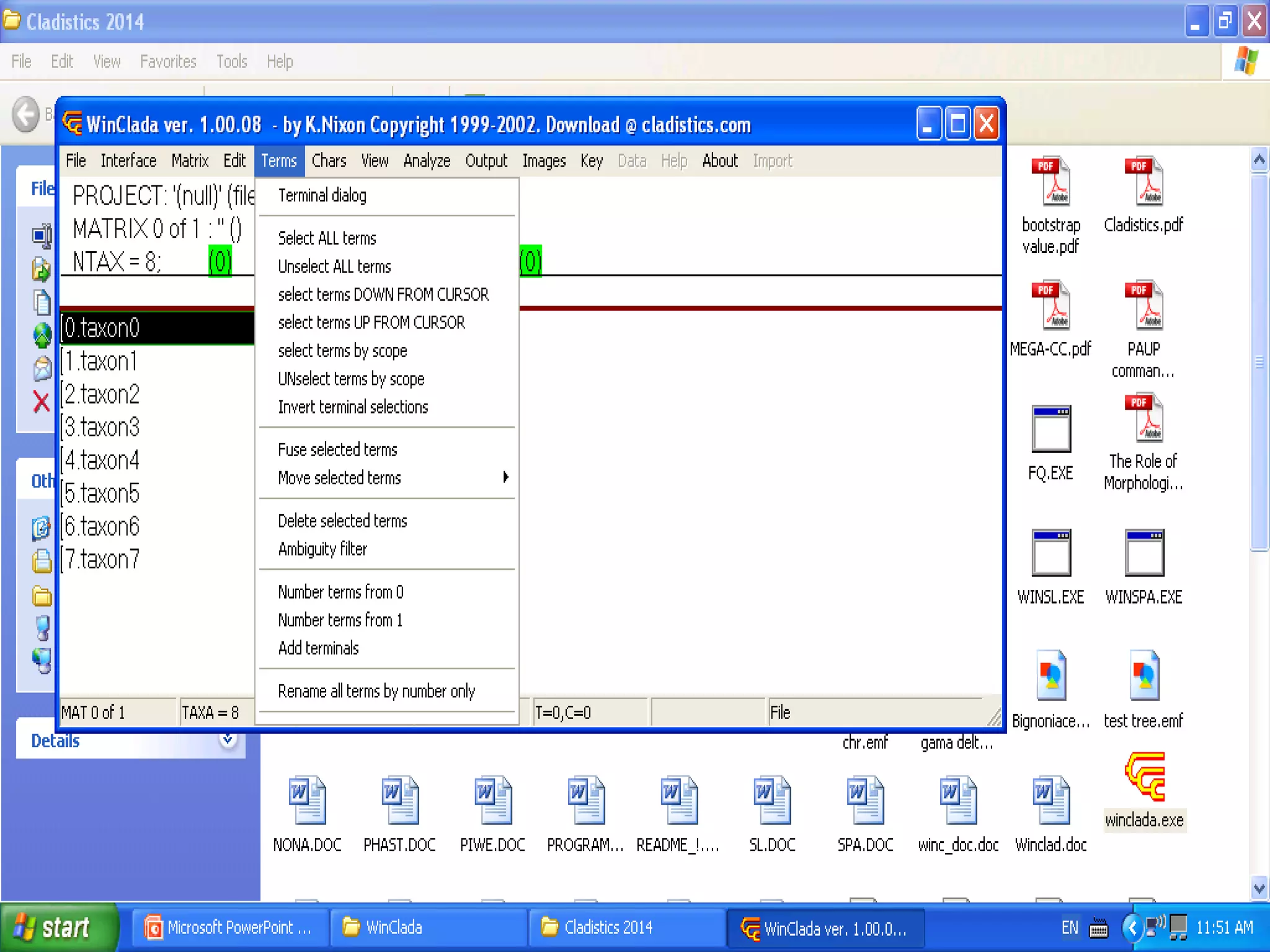
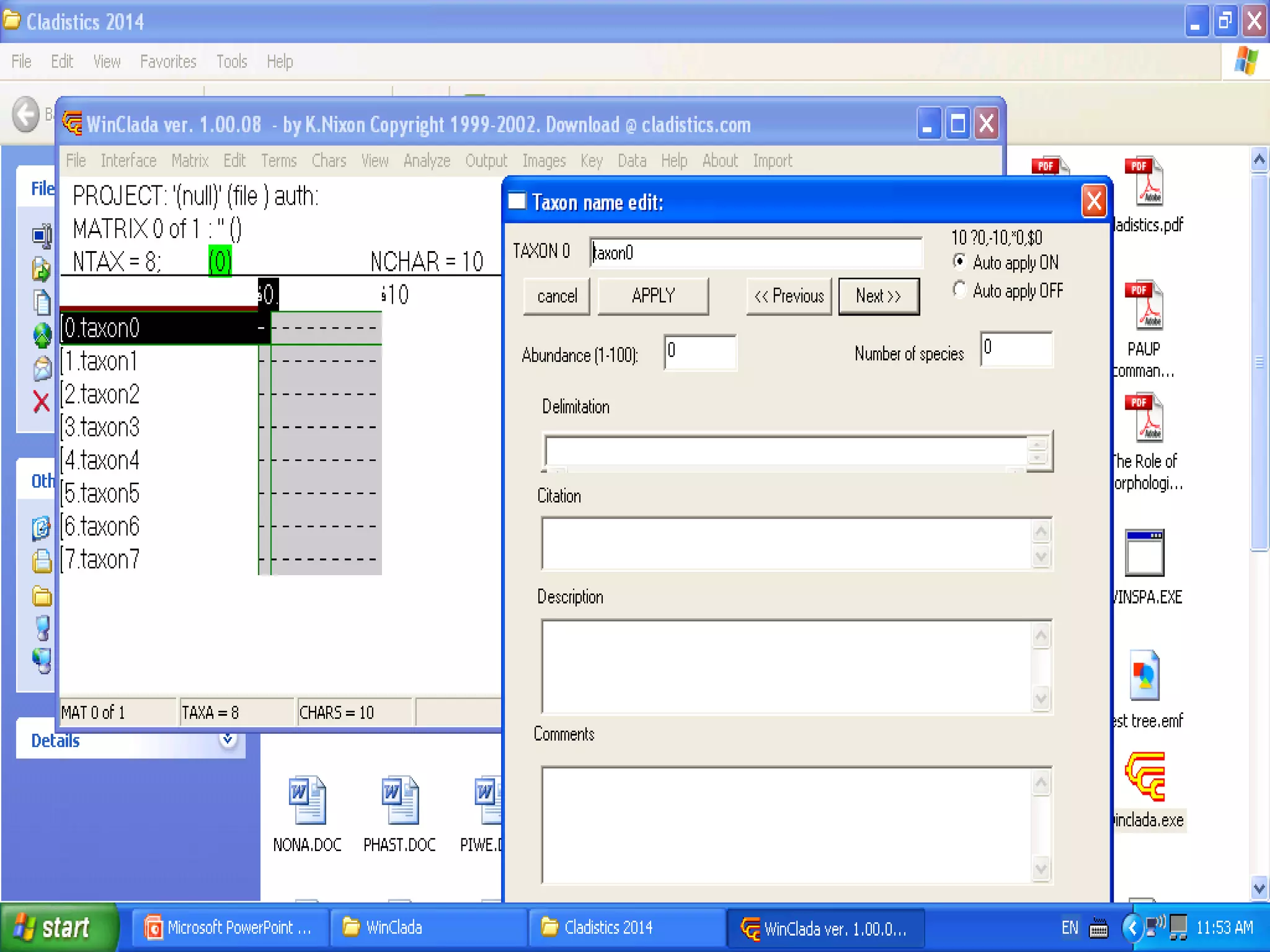
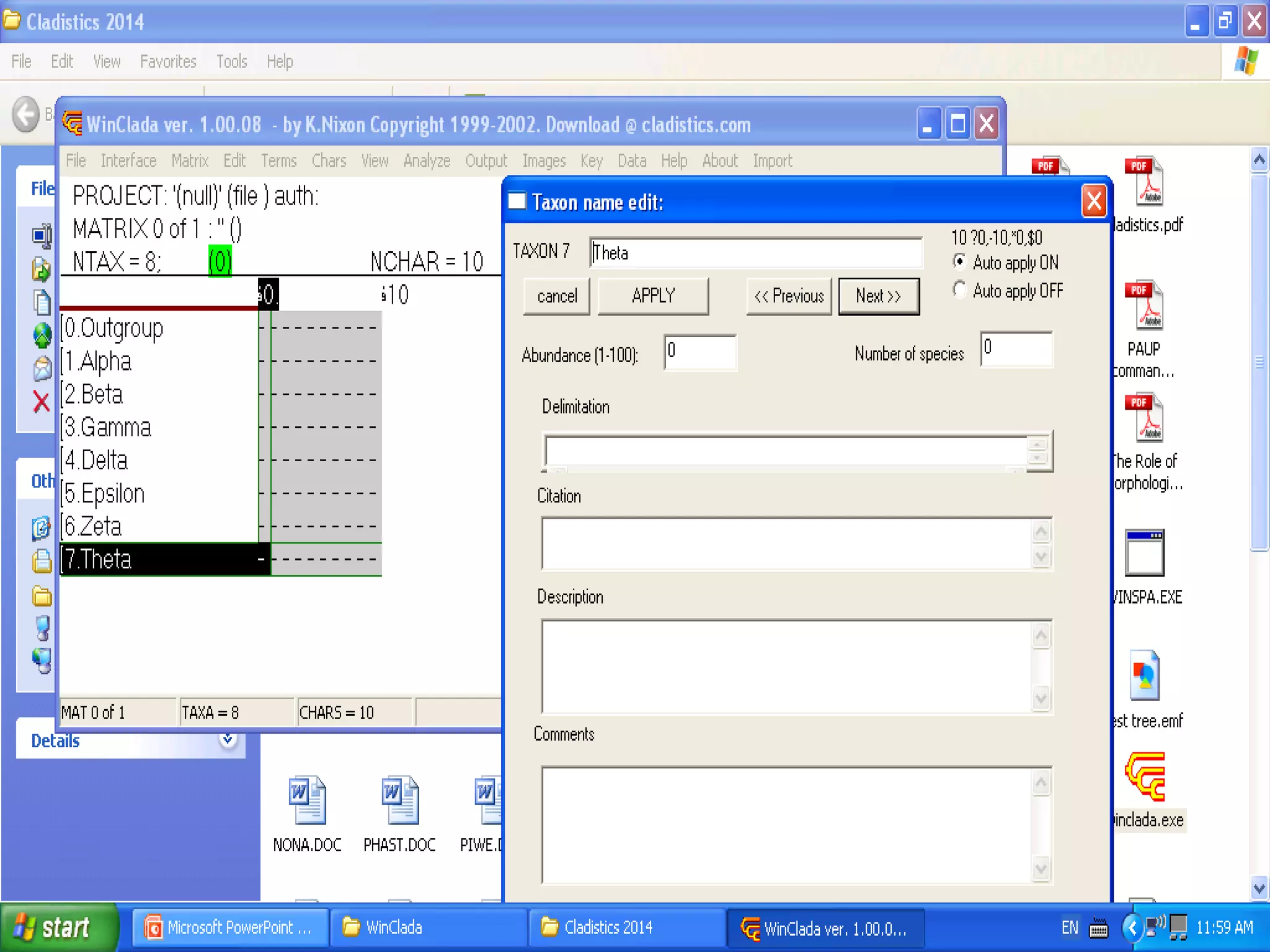
Name your taxa
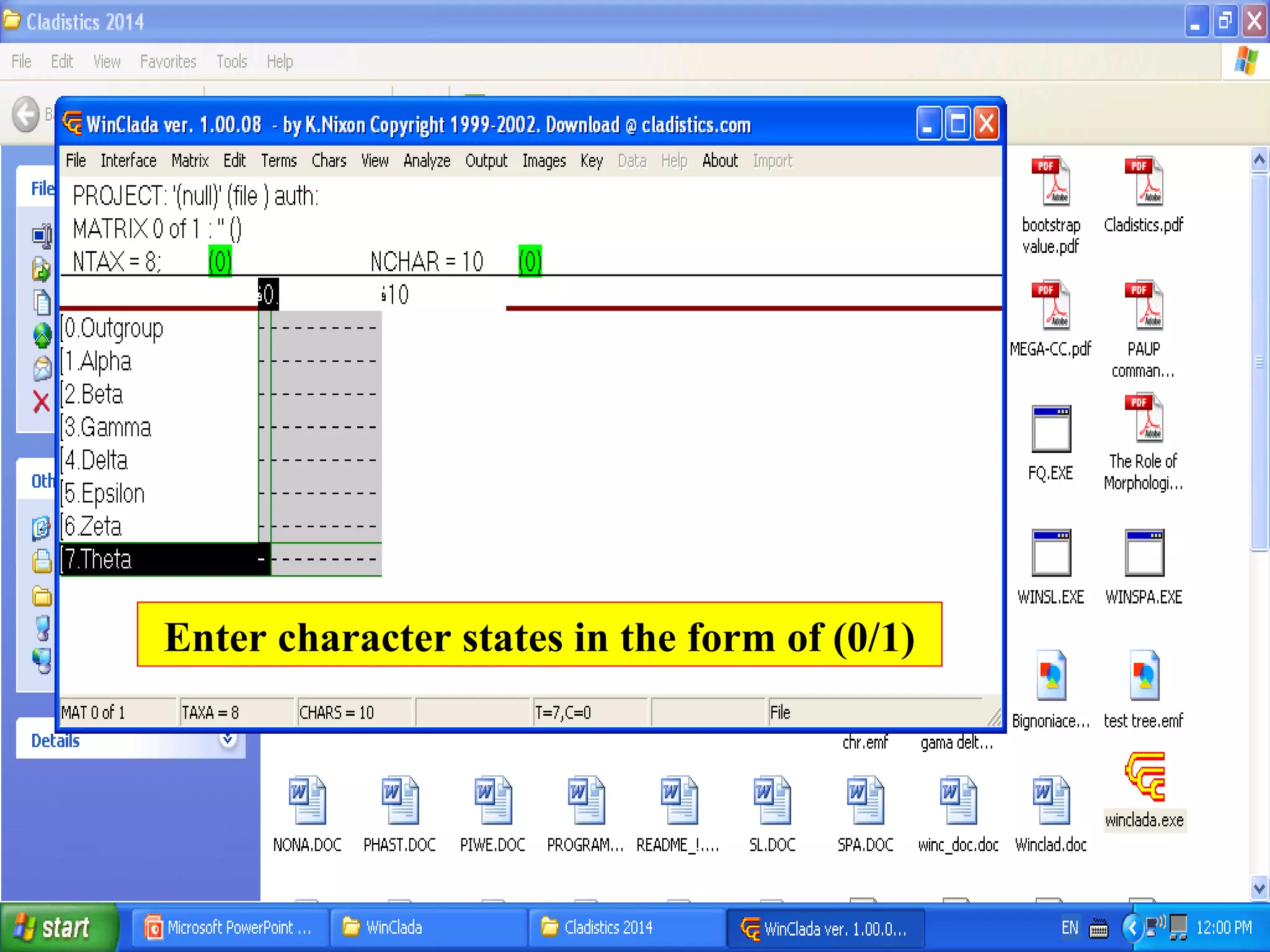
Enter character states in the form of (0/1)
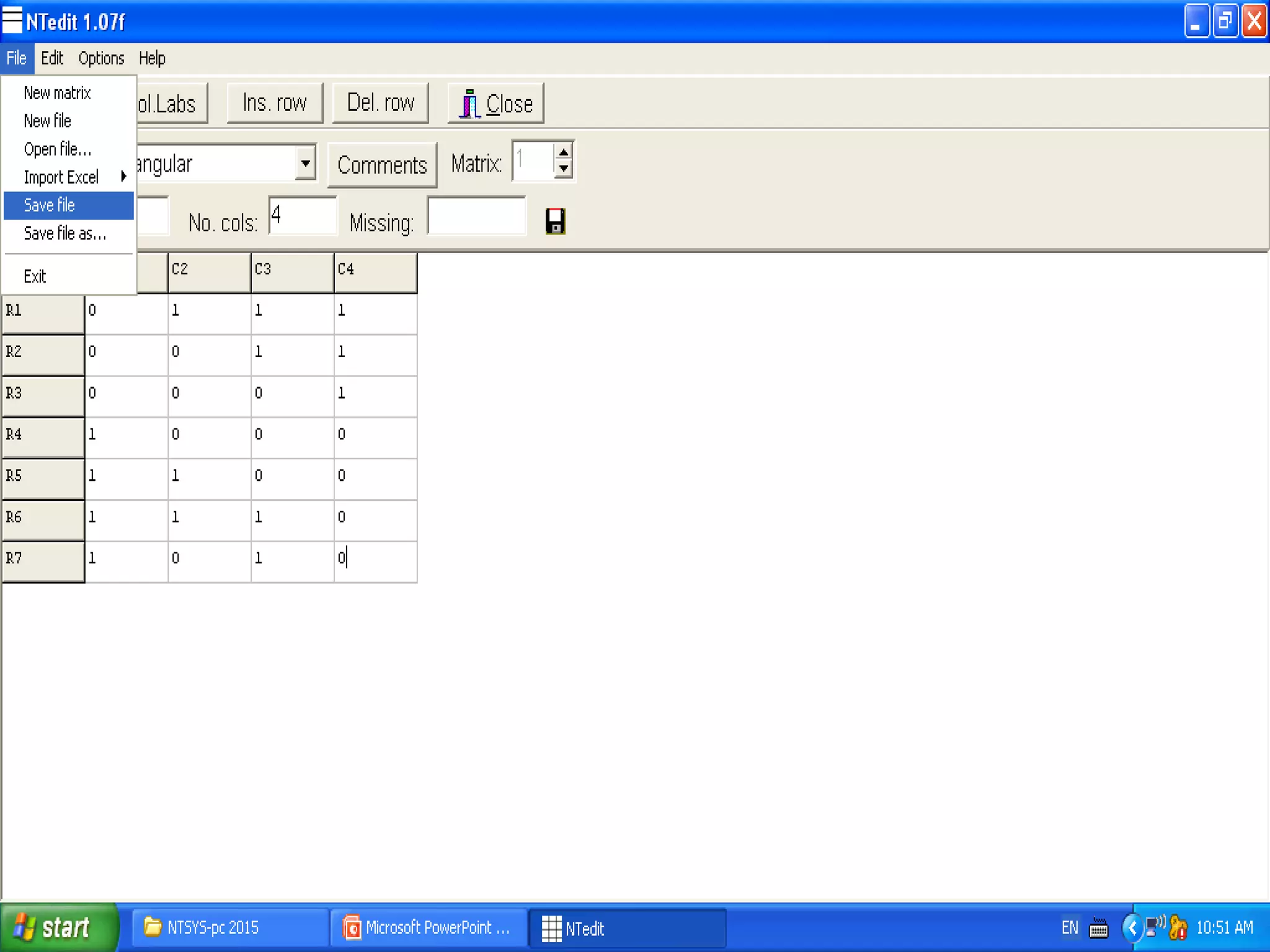
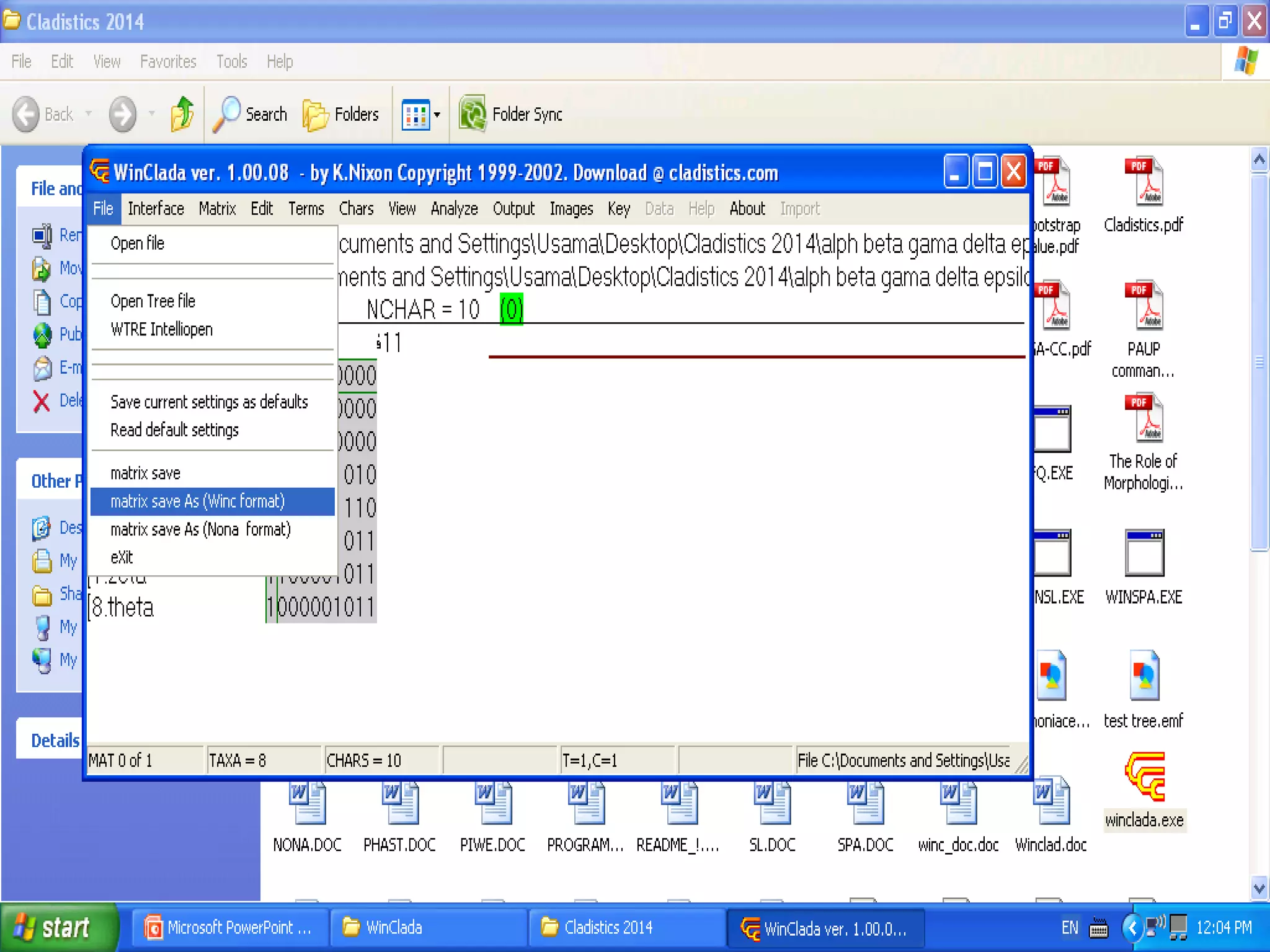
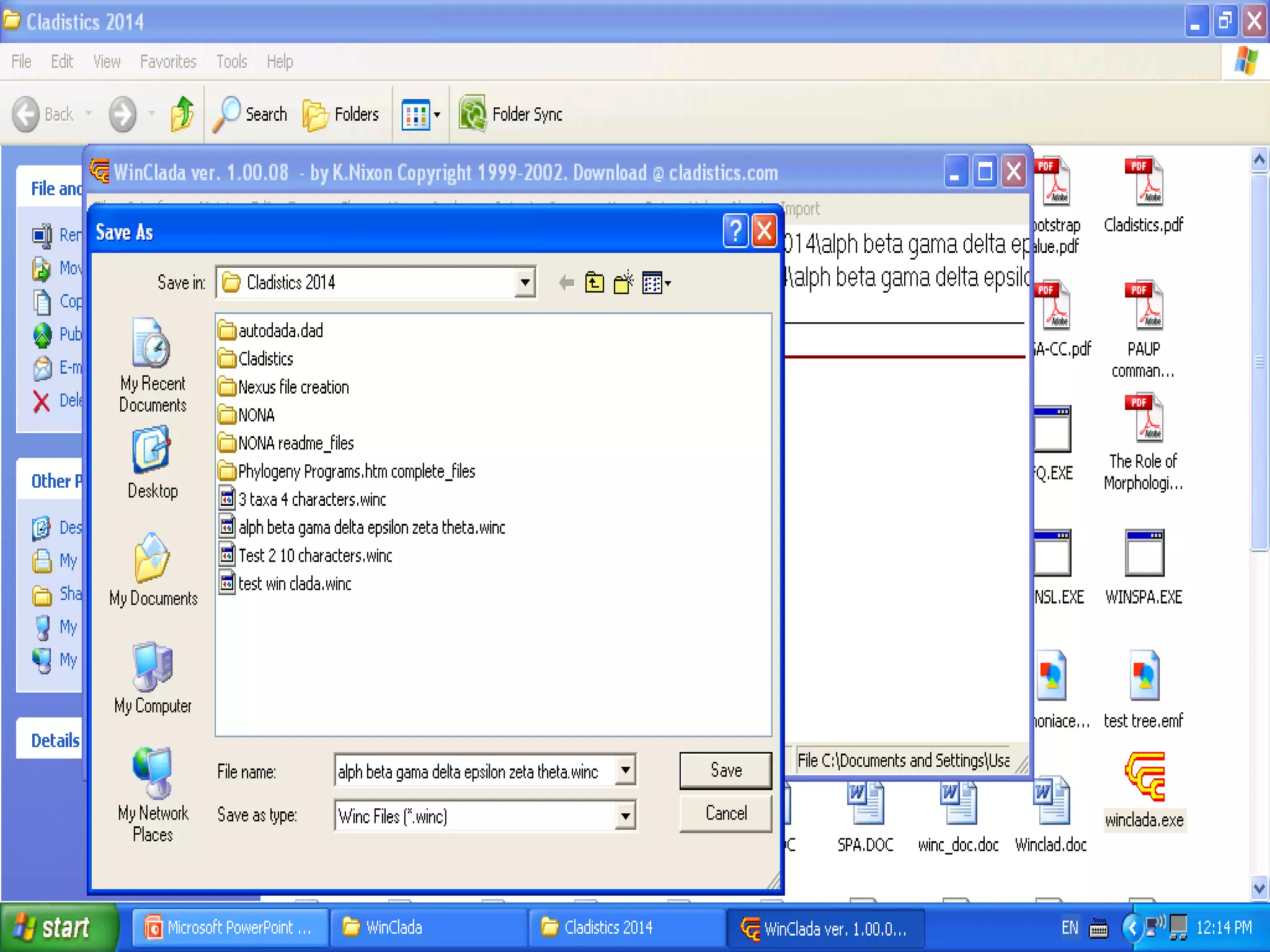
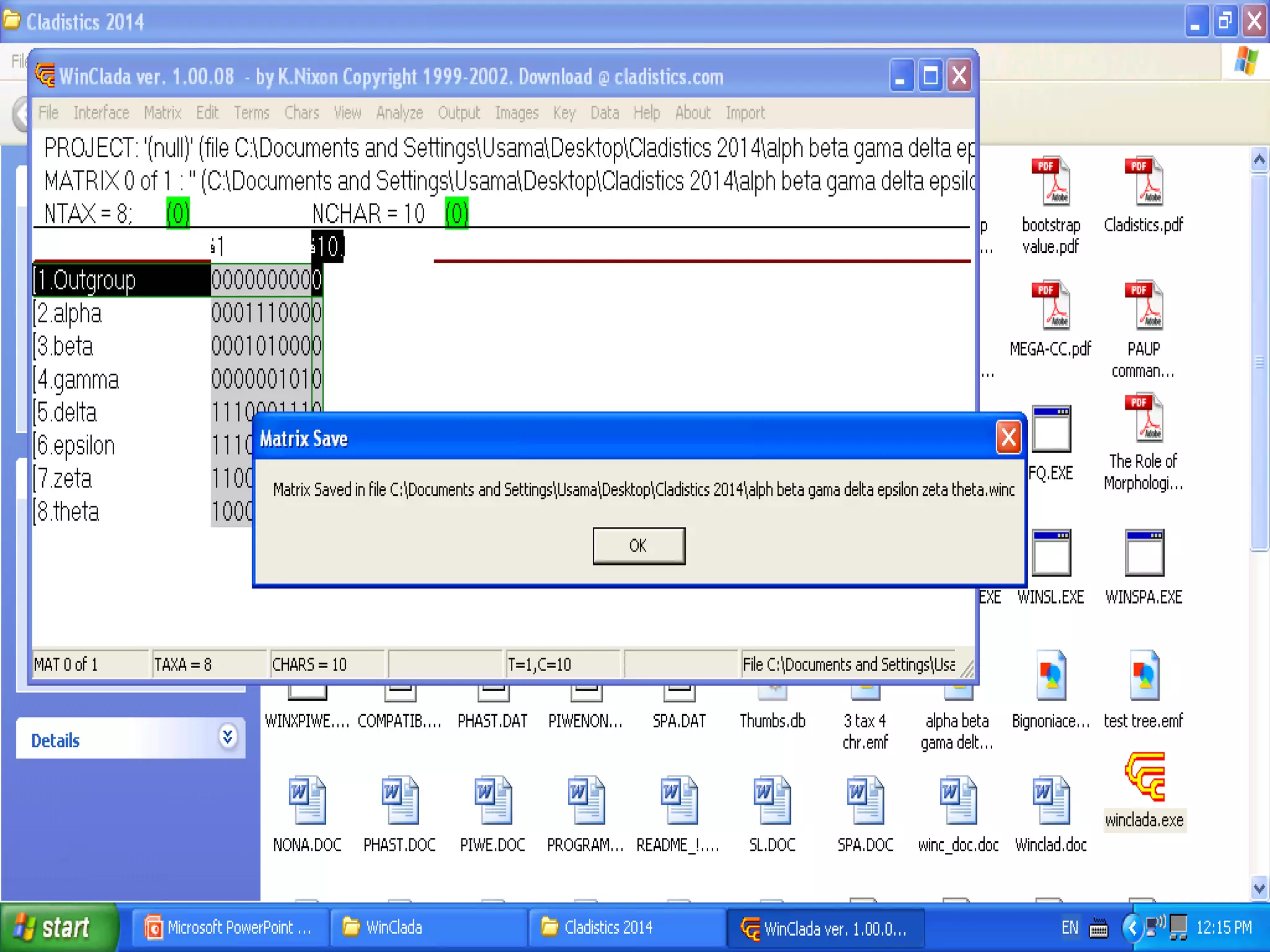
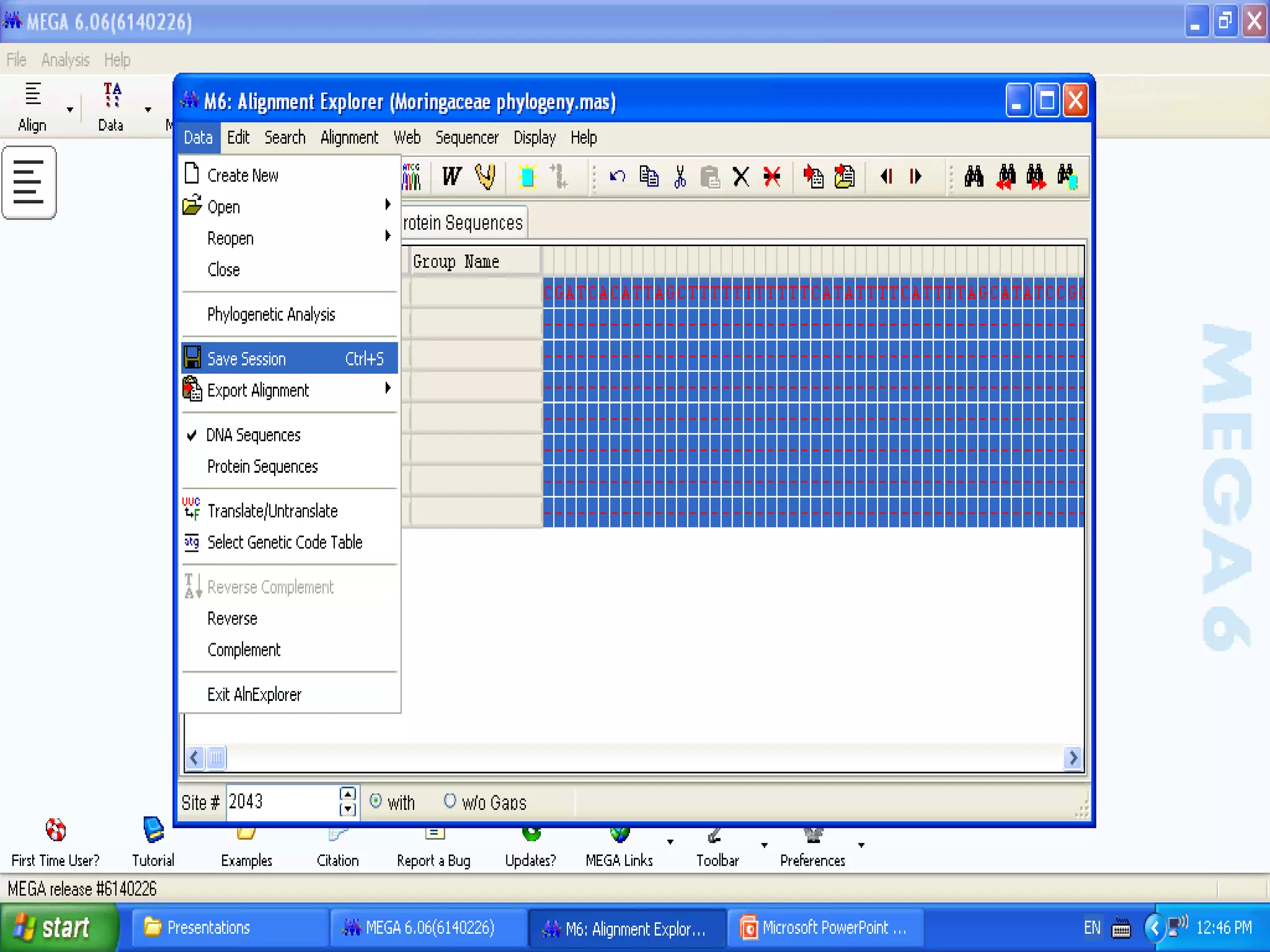
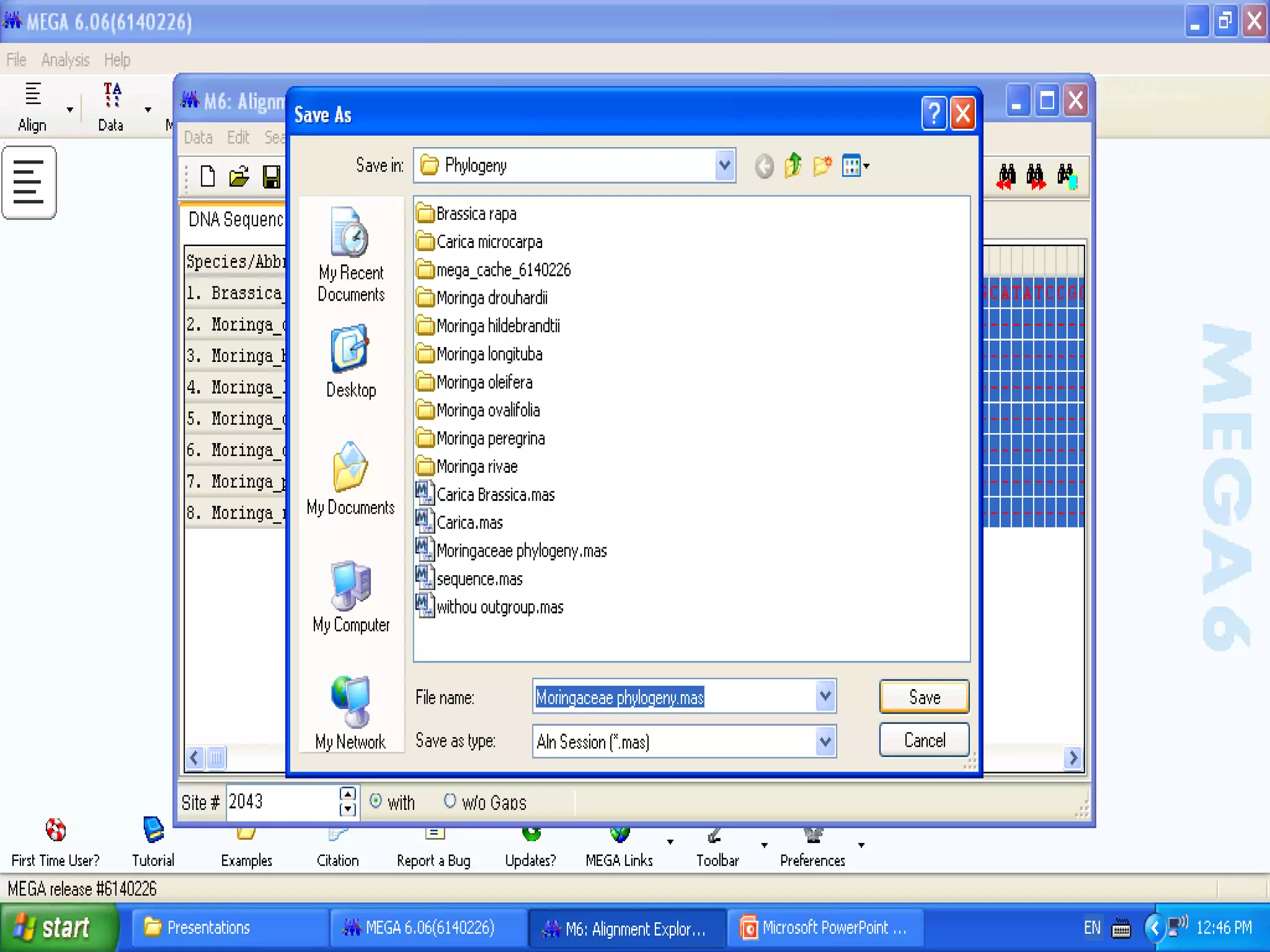
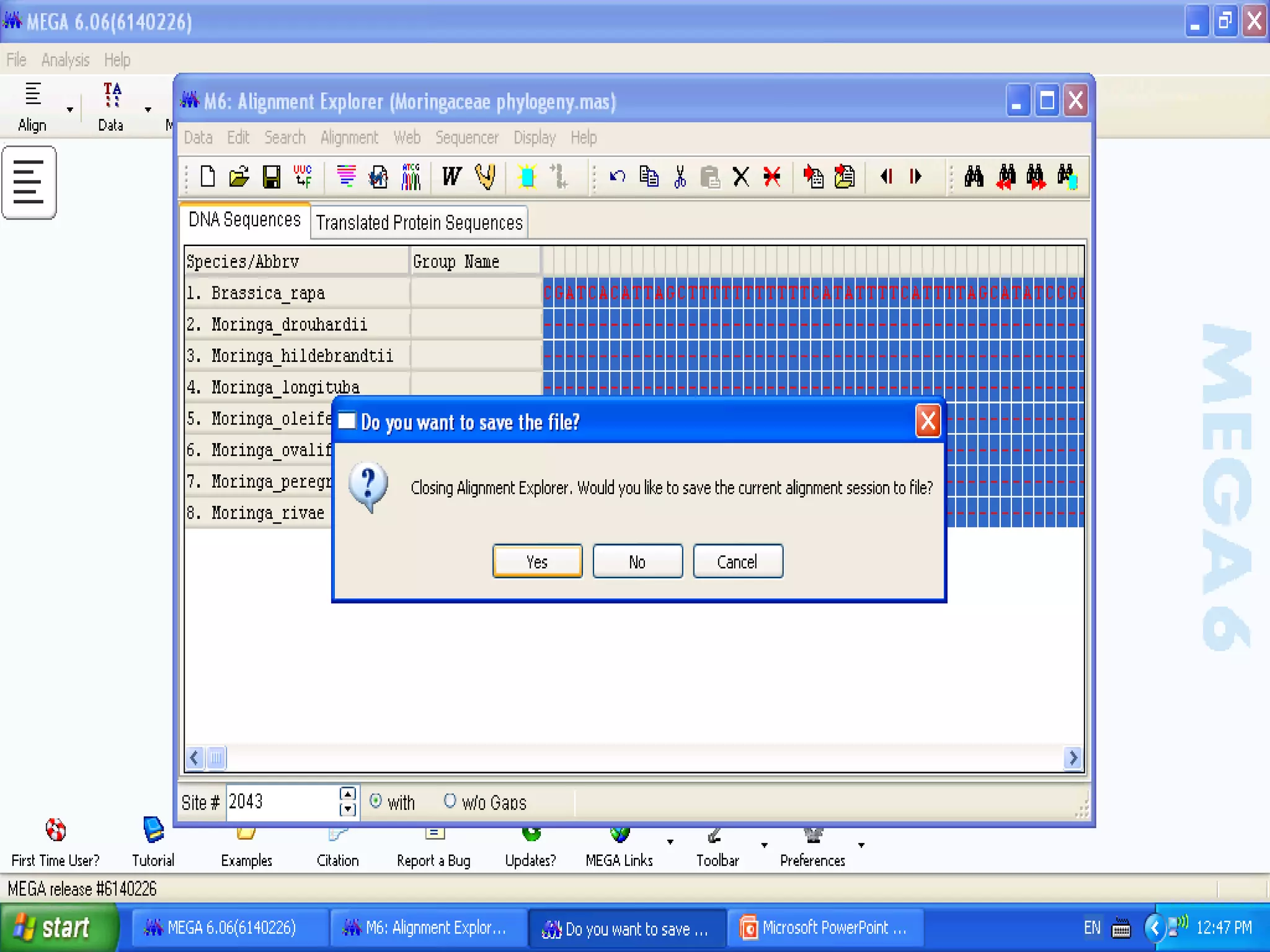
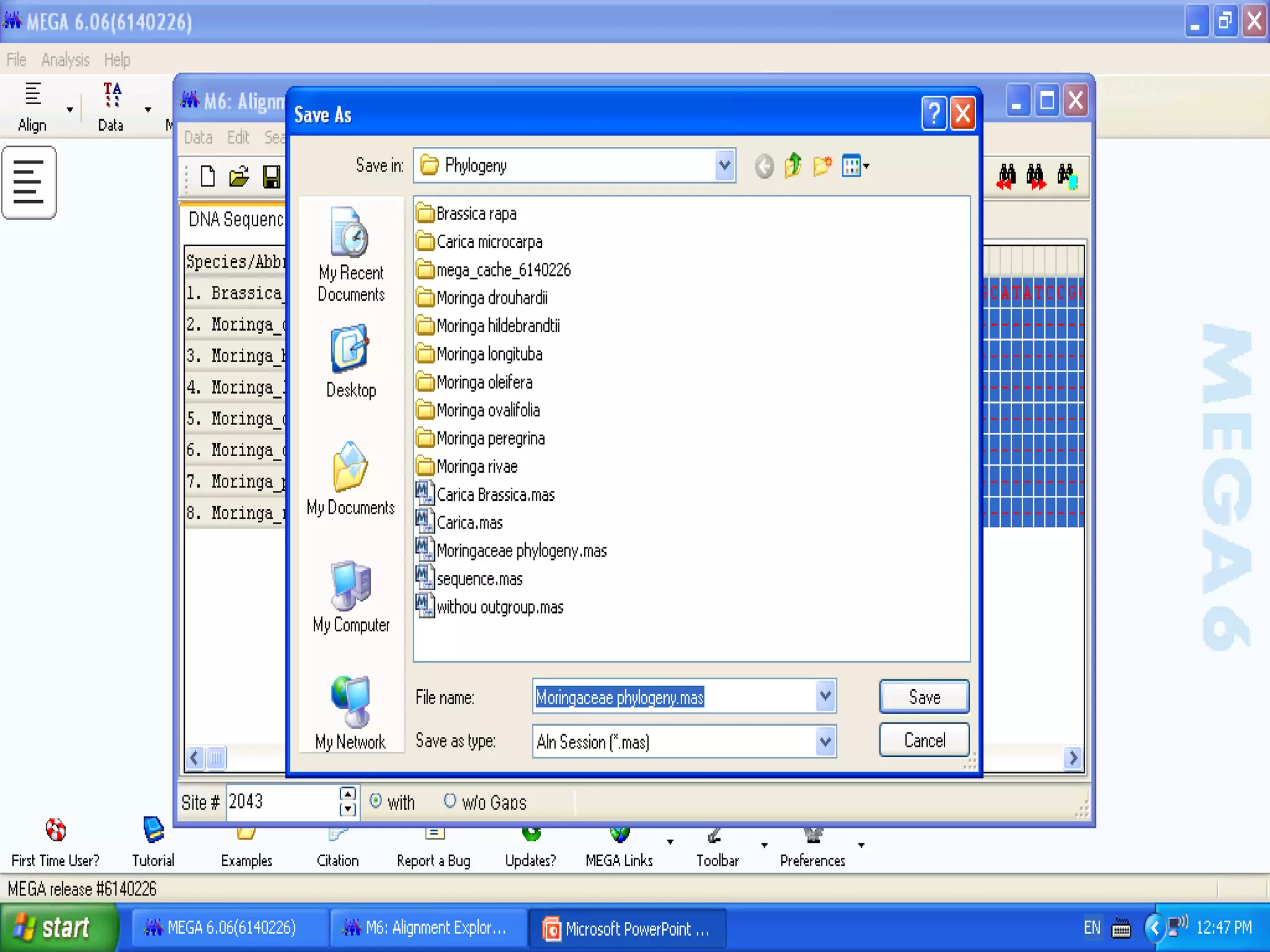
Save your data matrix
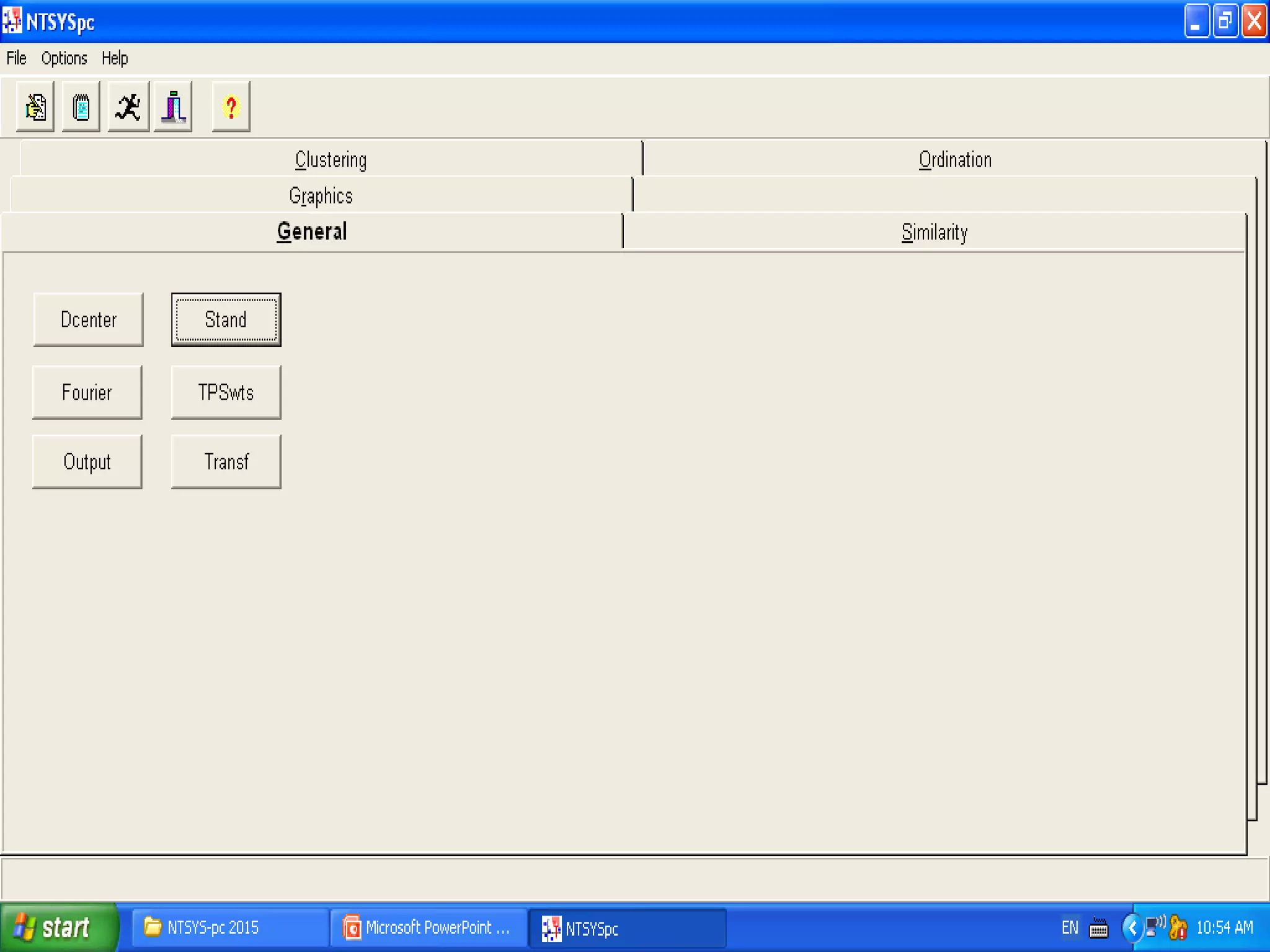
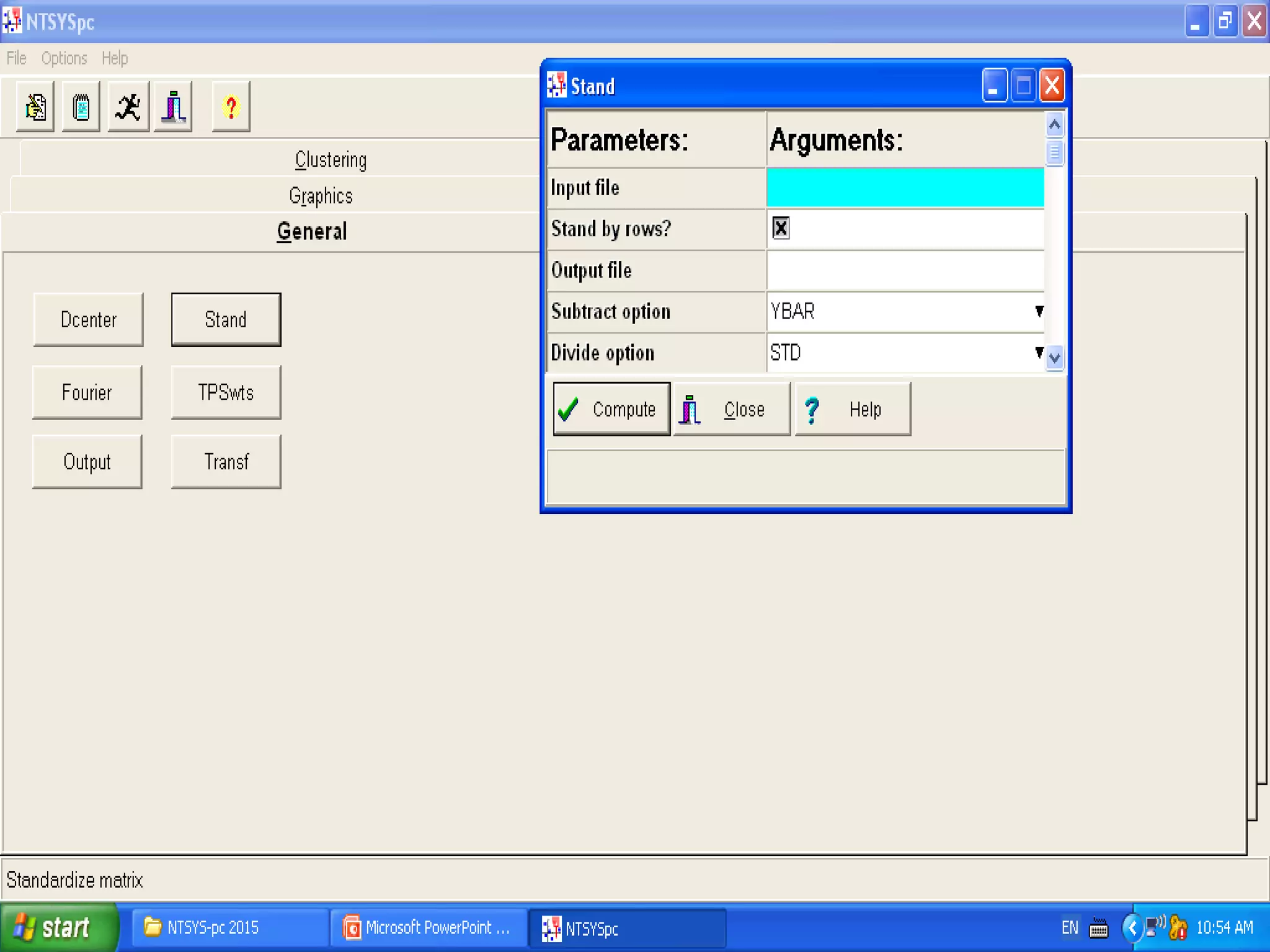
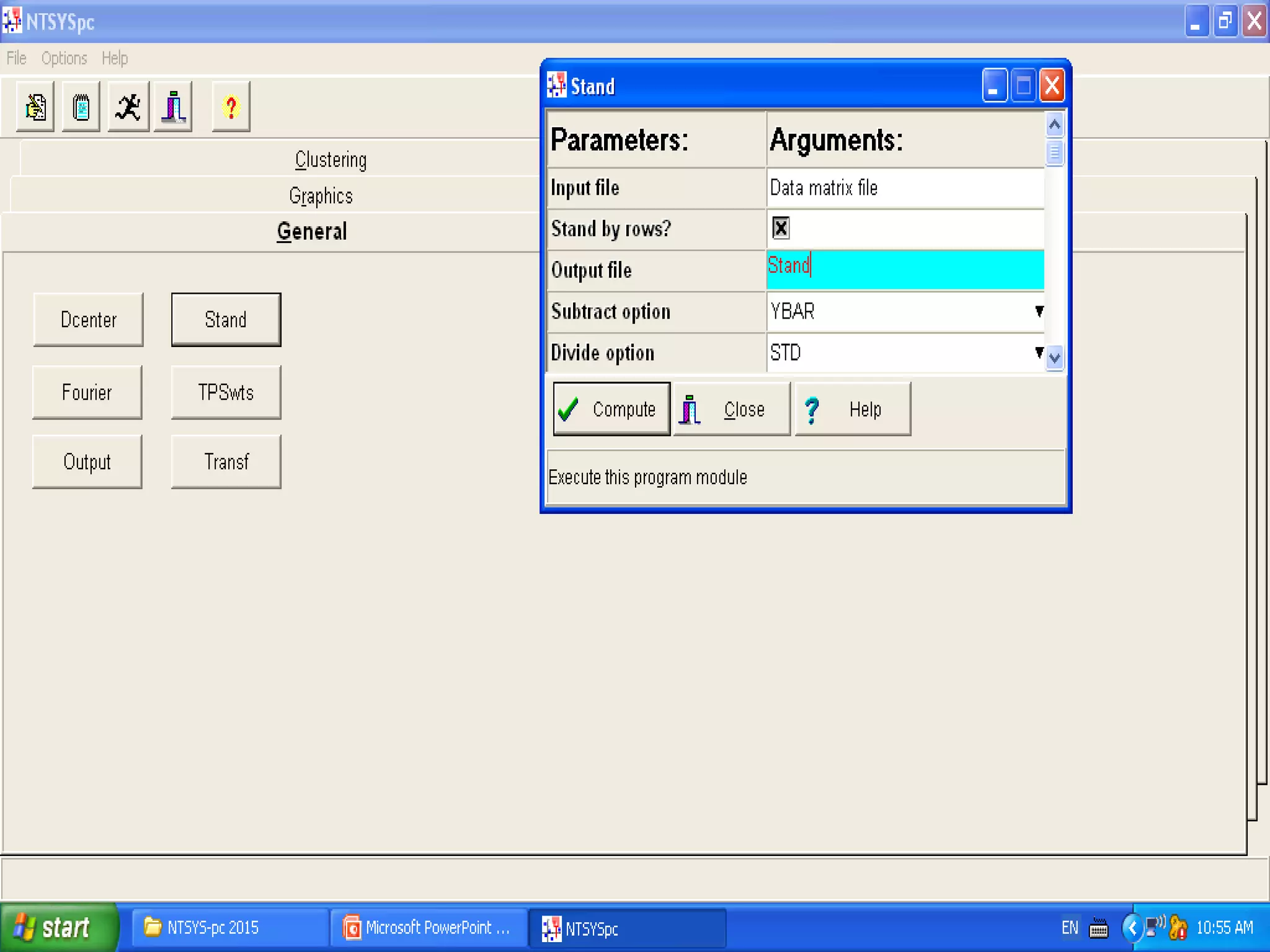
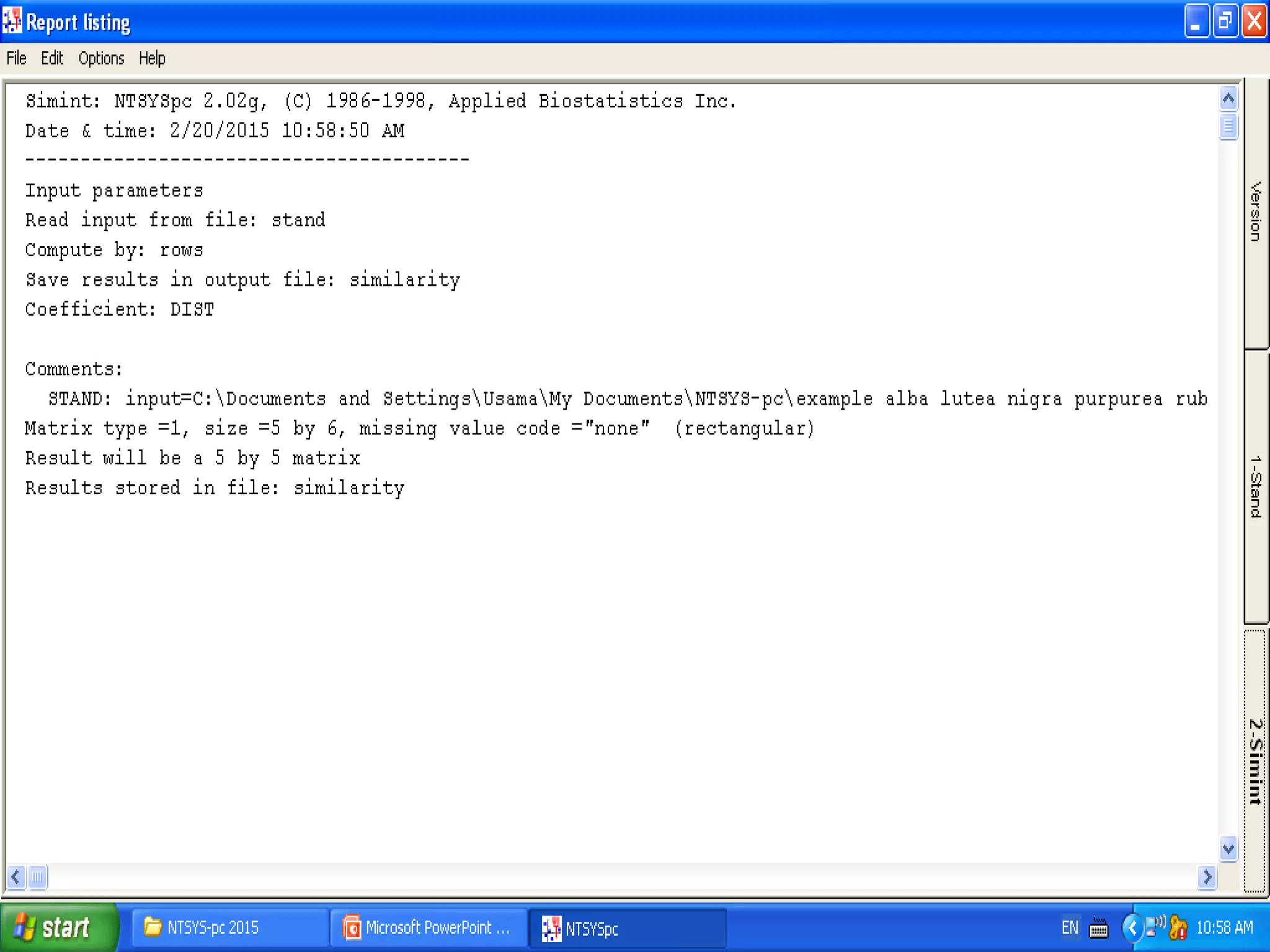
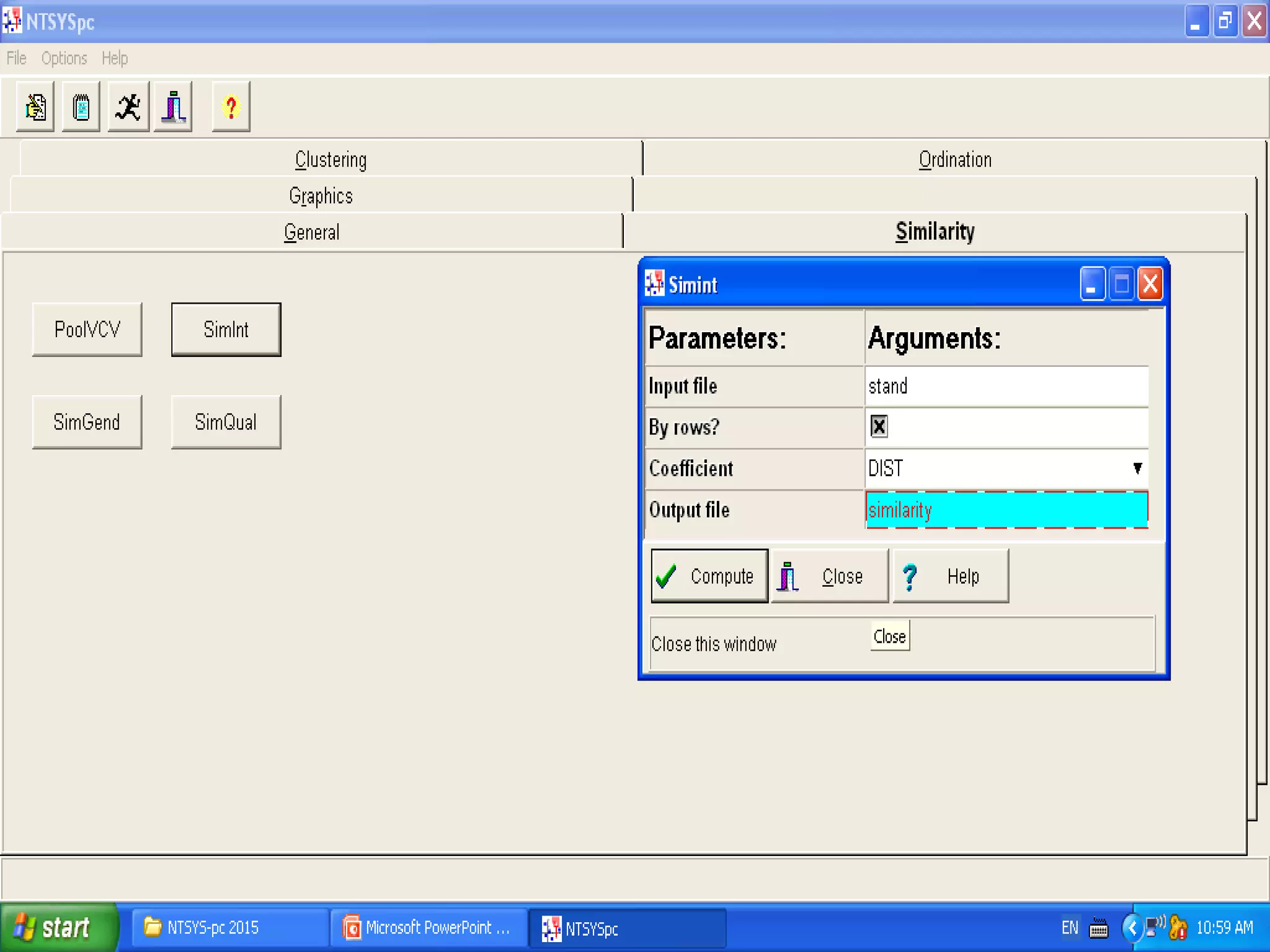
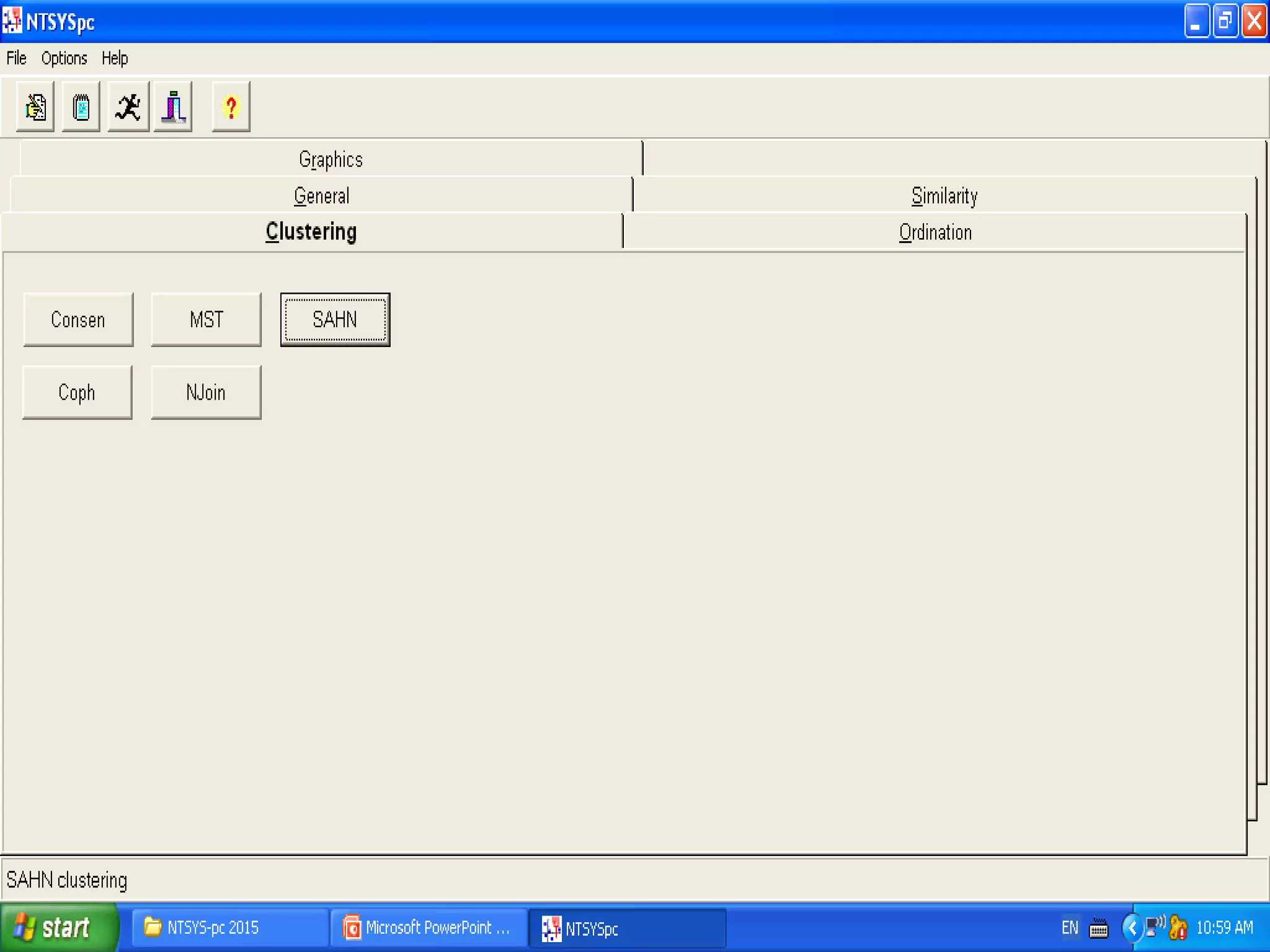
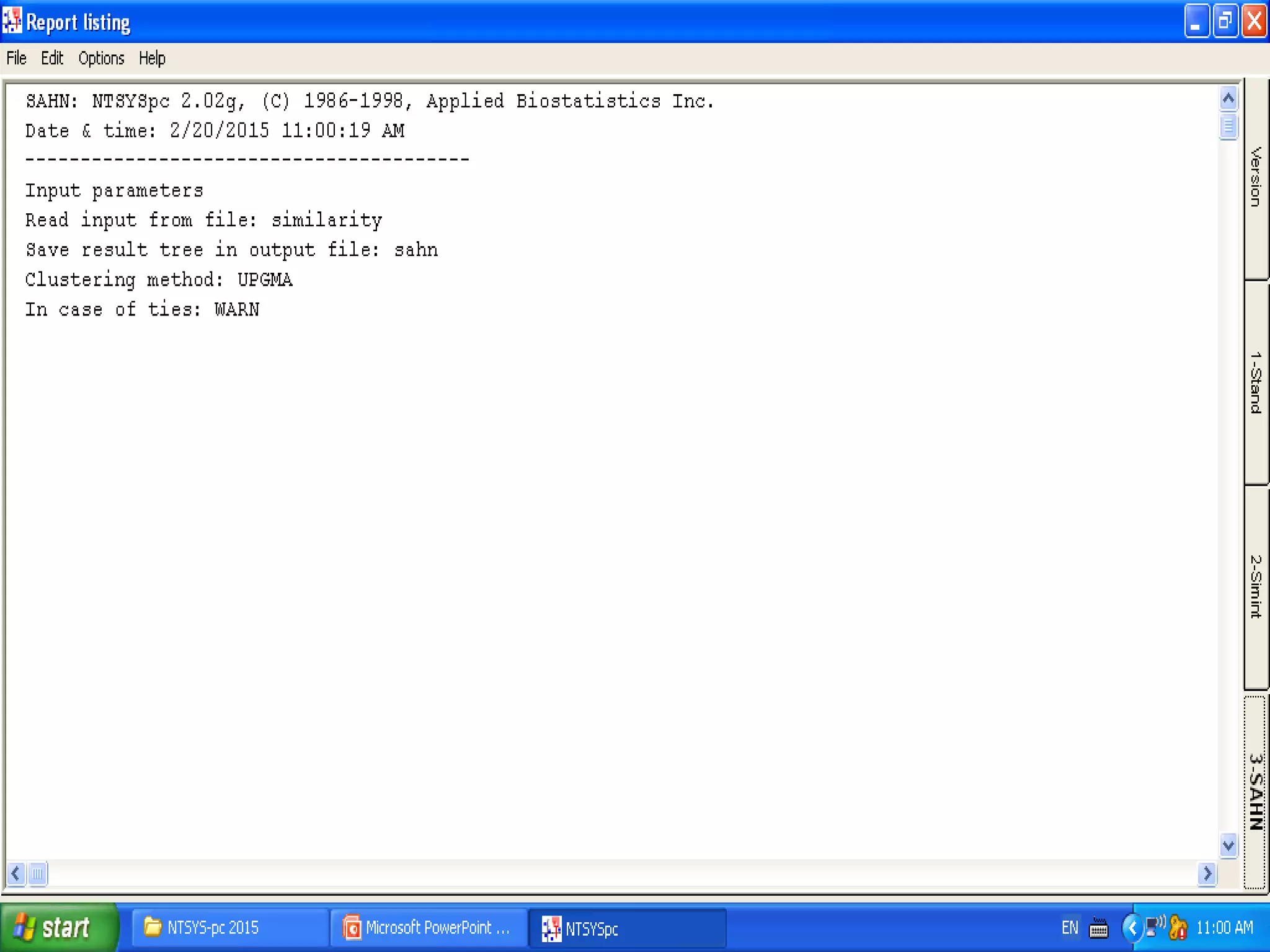
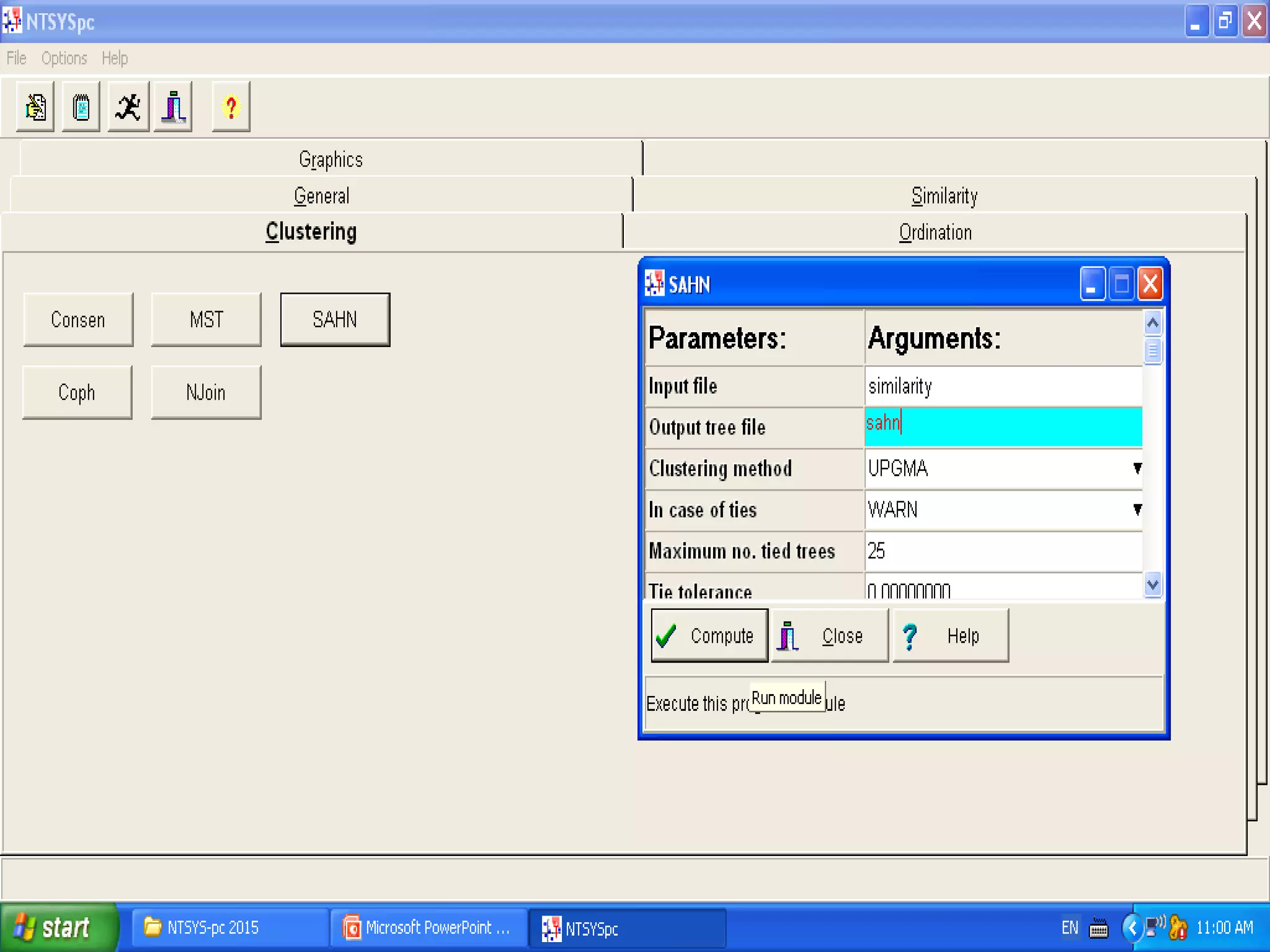
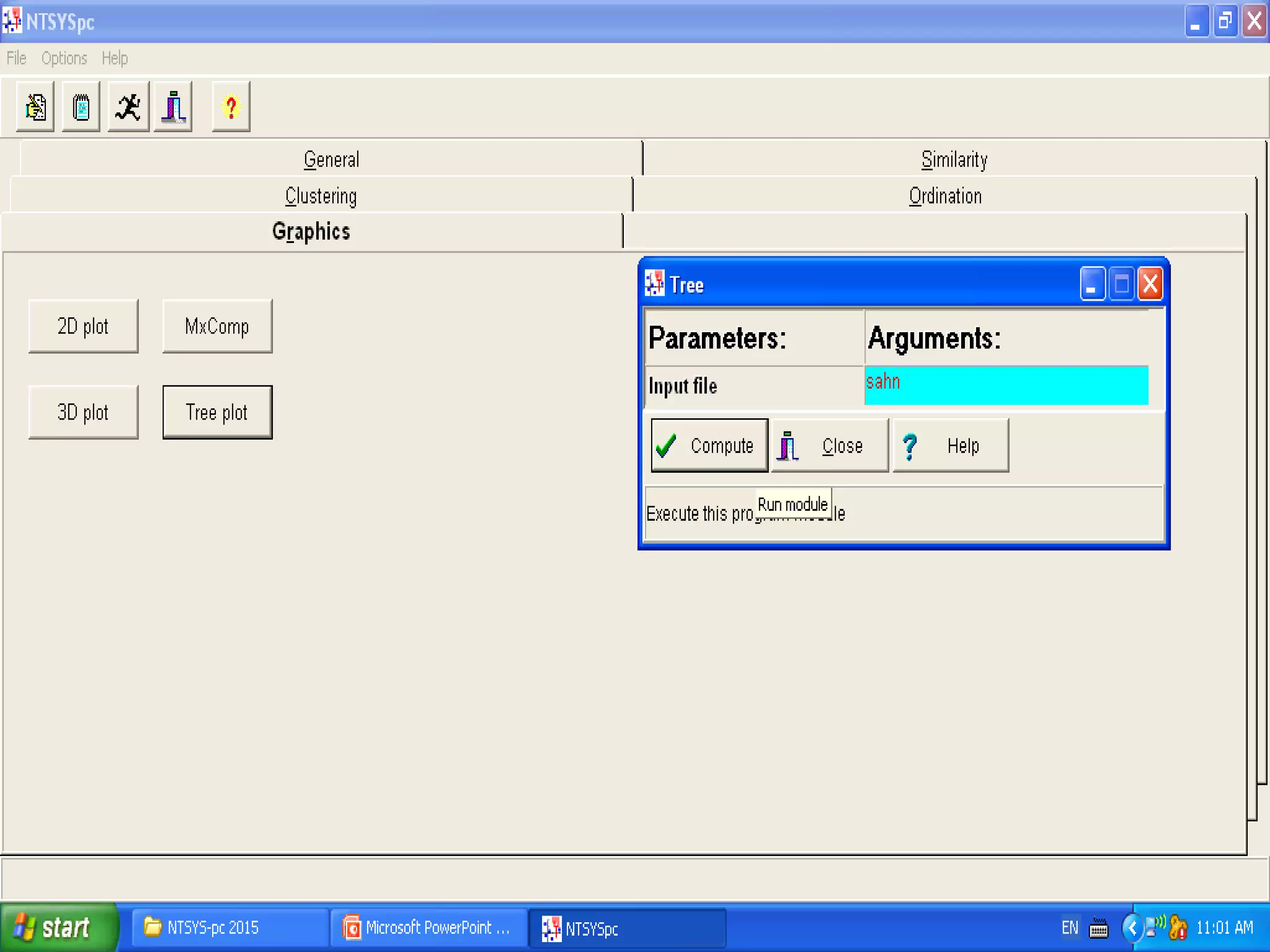
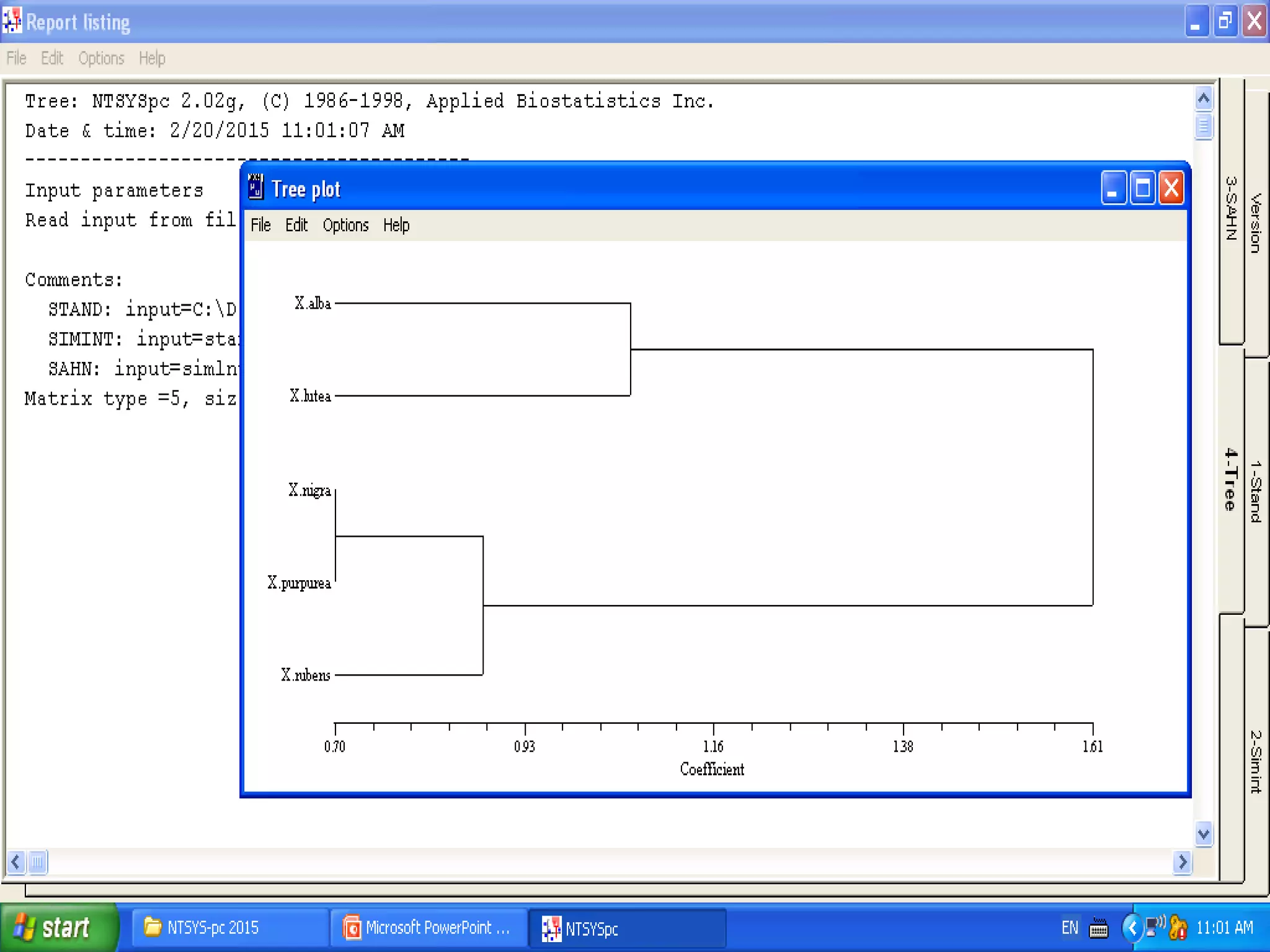
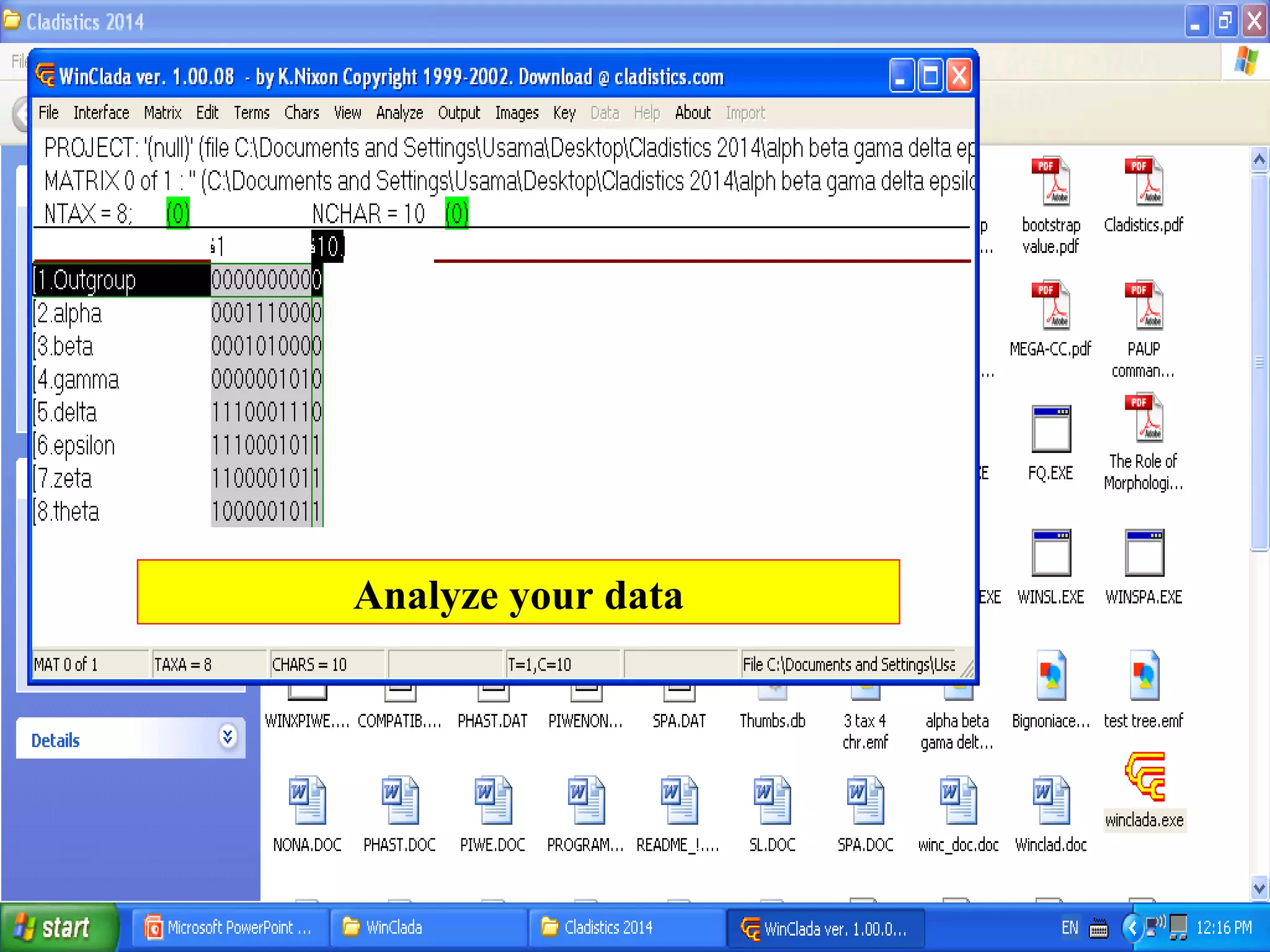
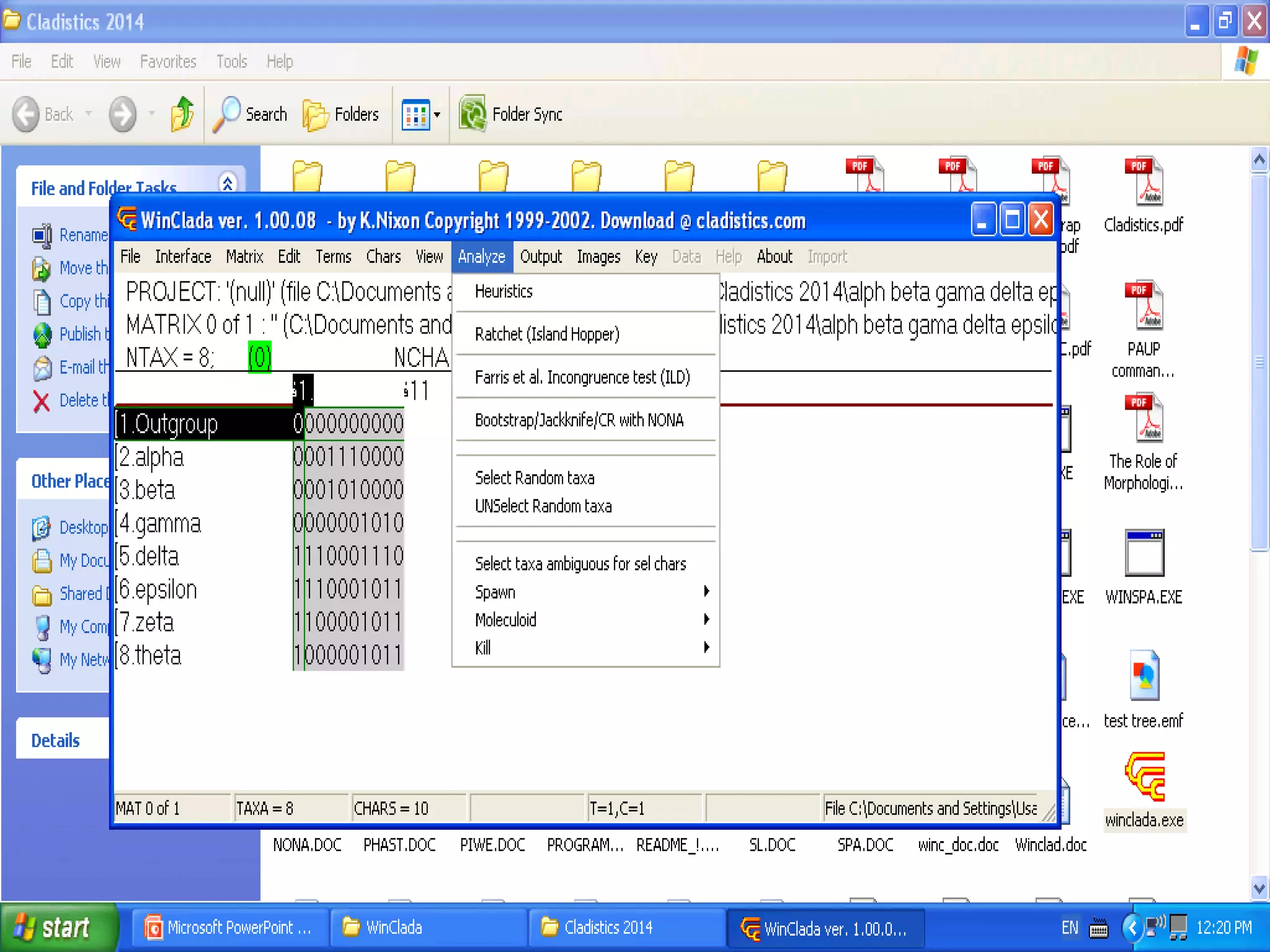
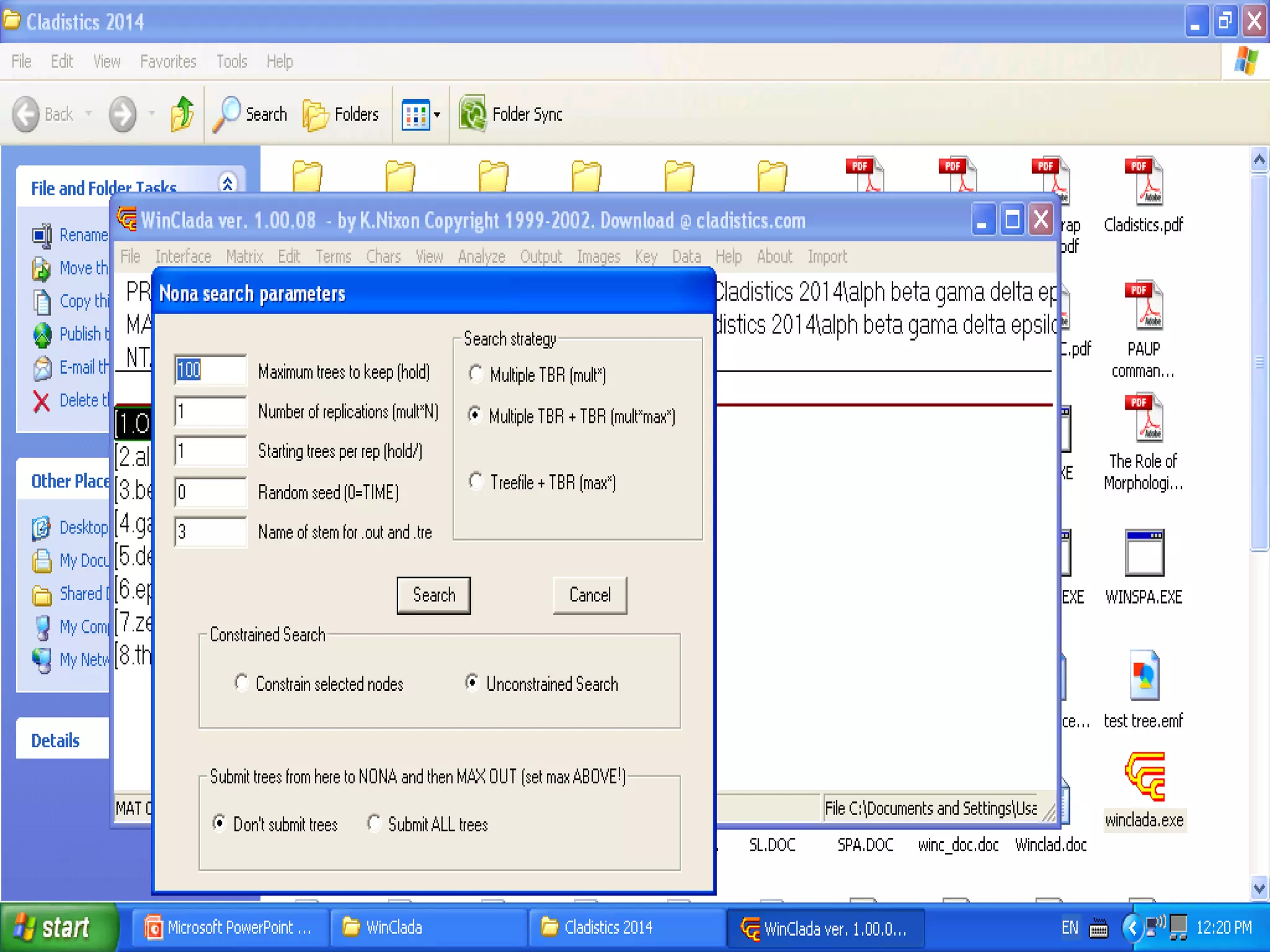
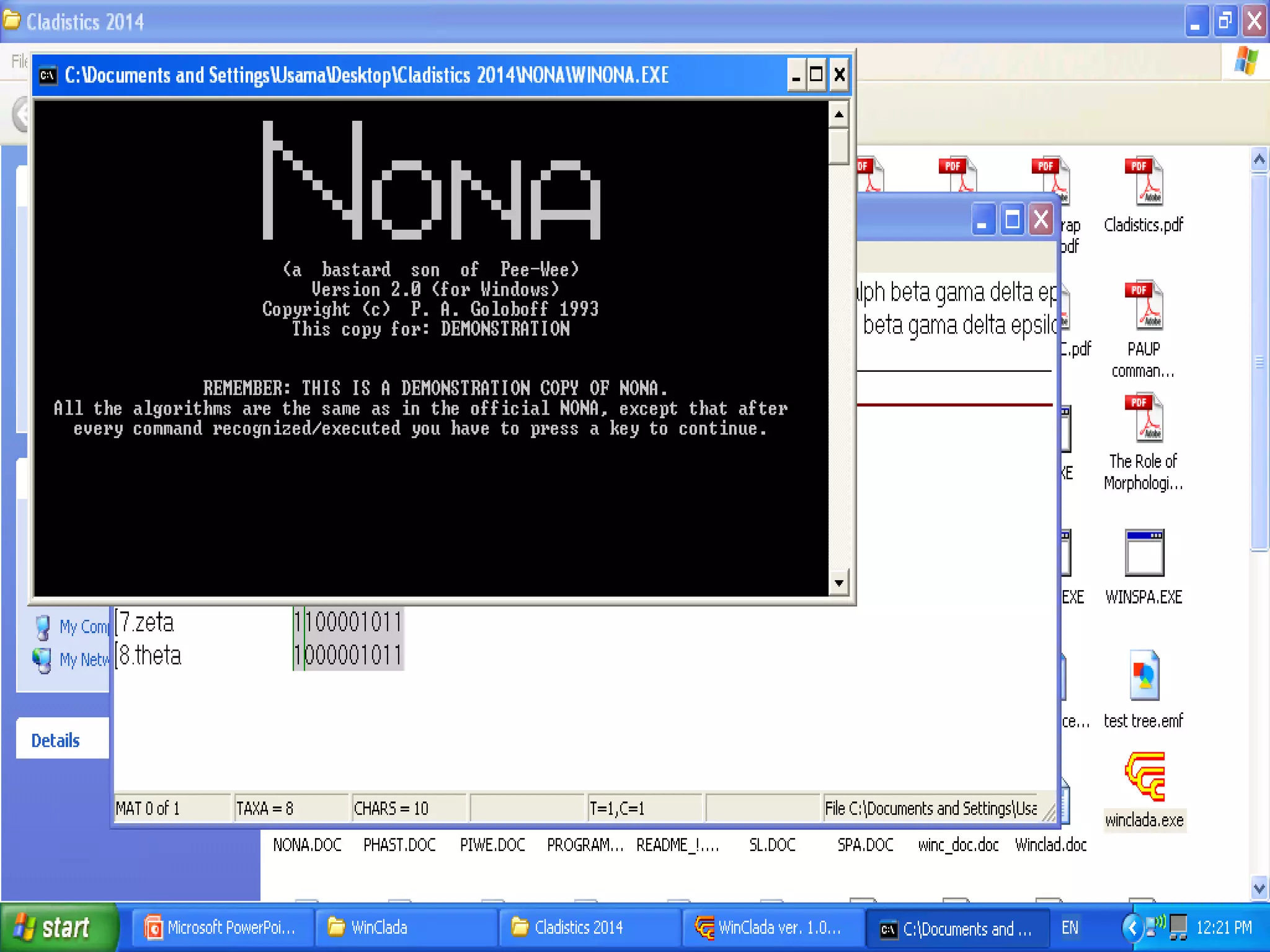
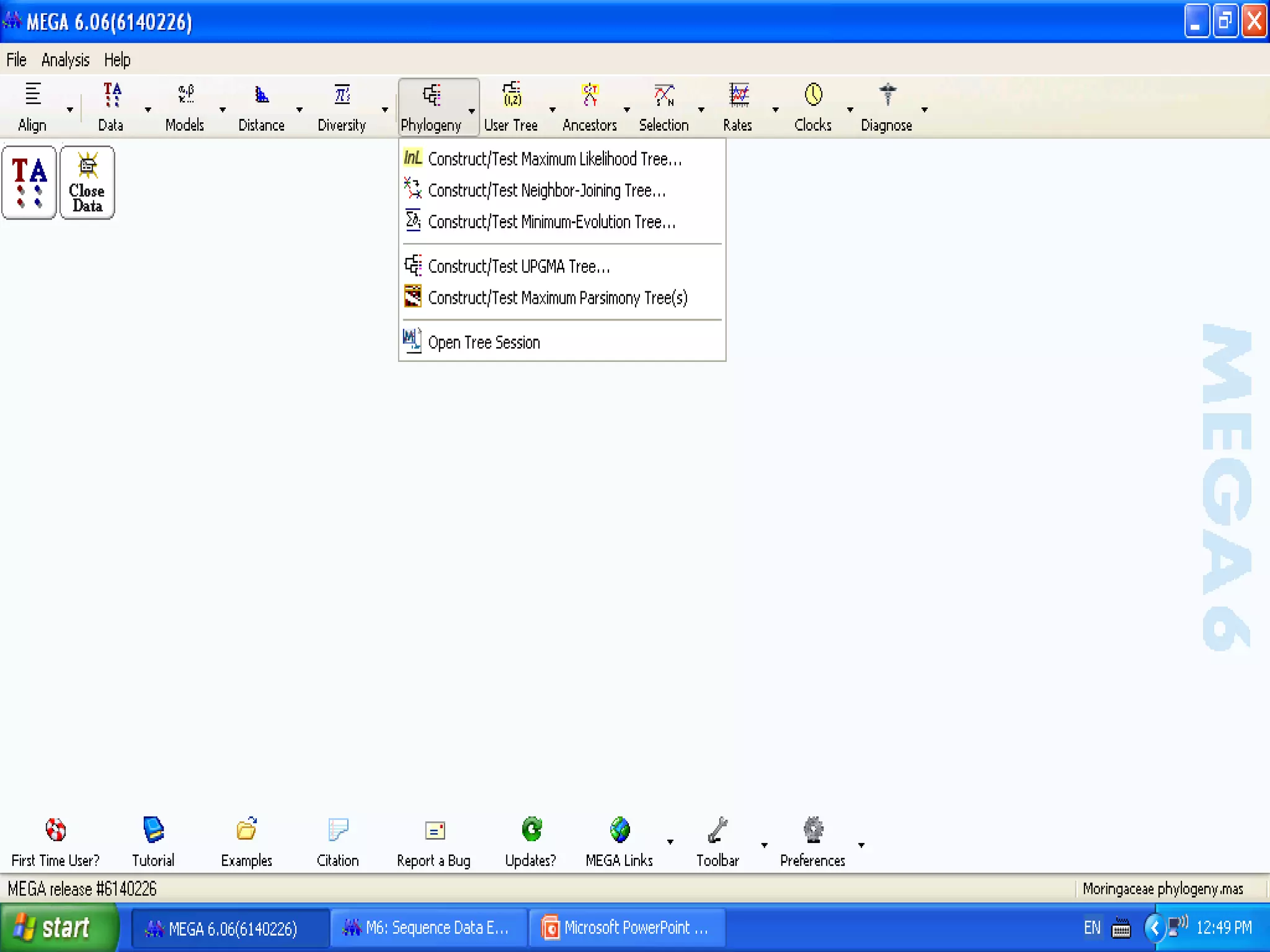
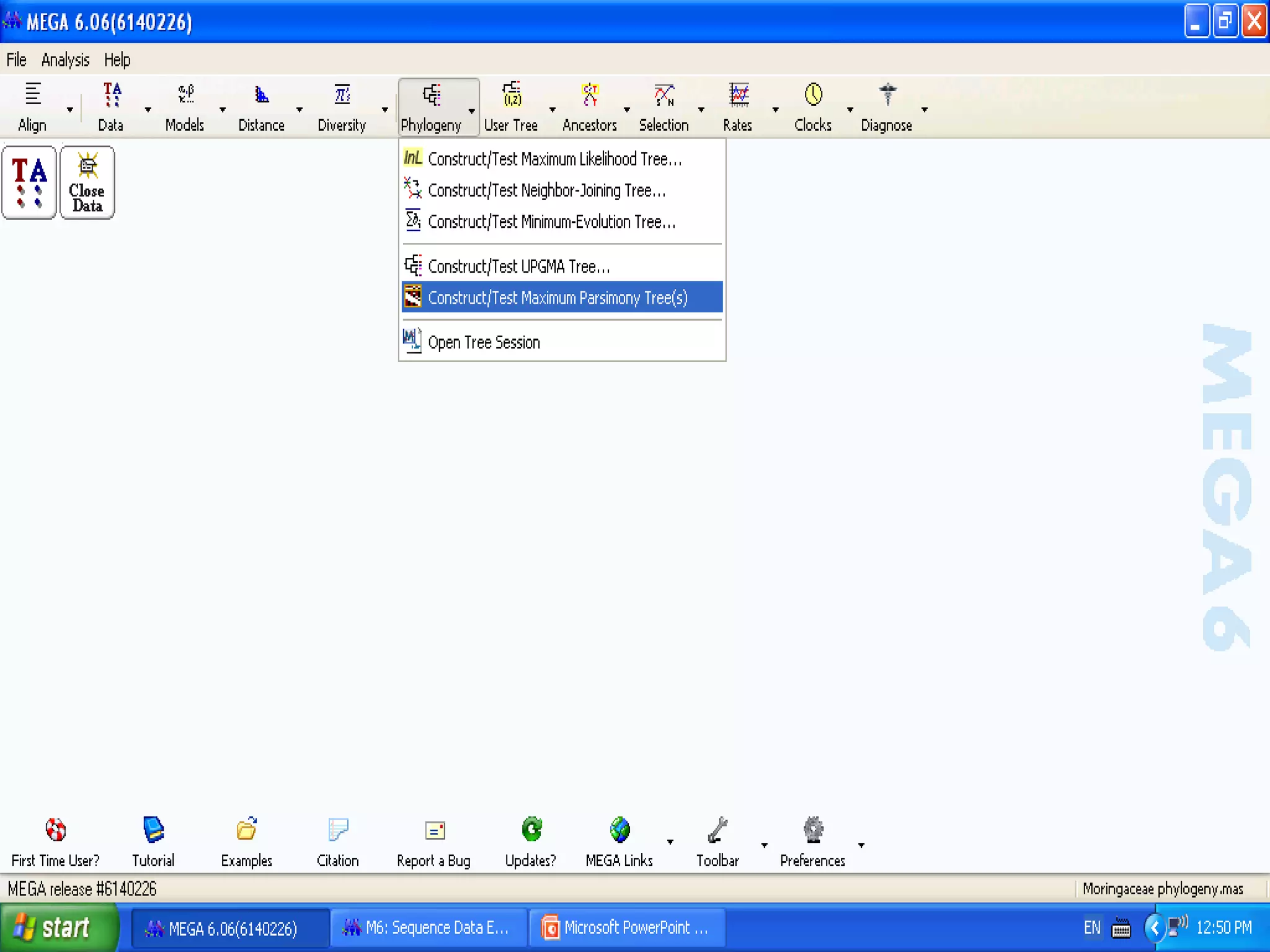
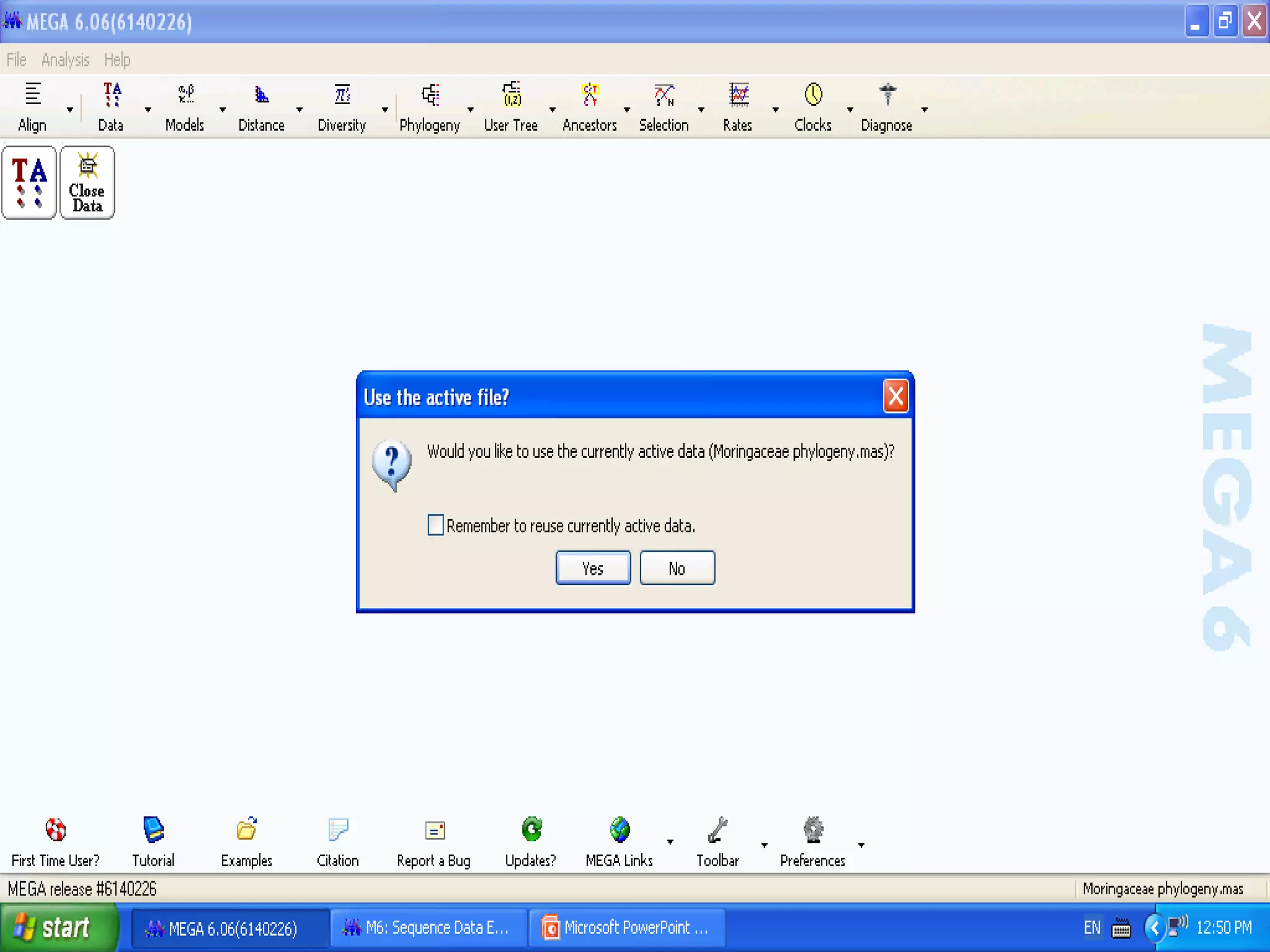
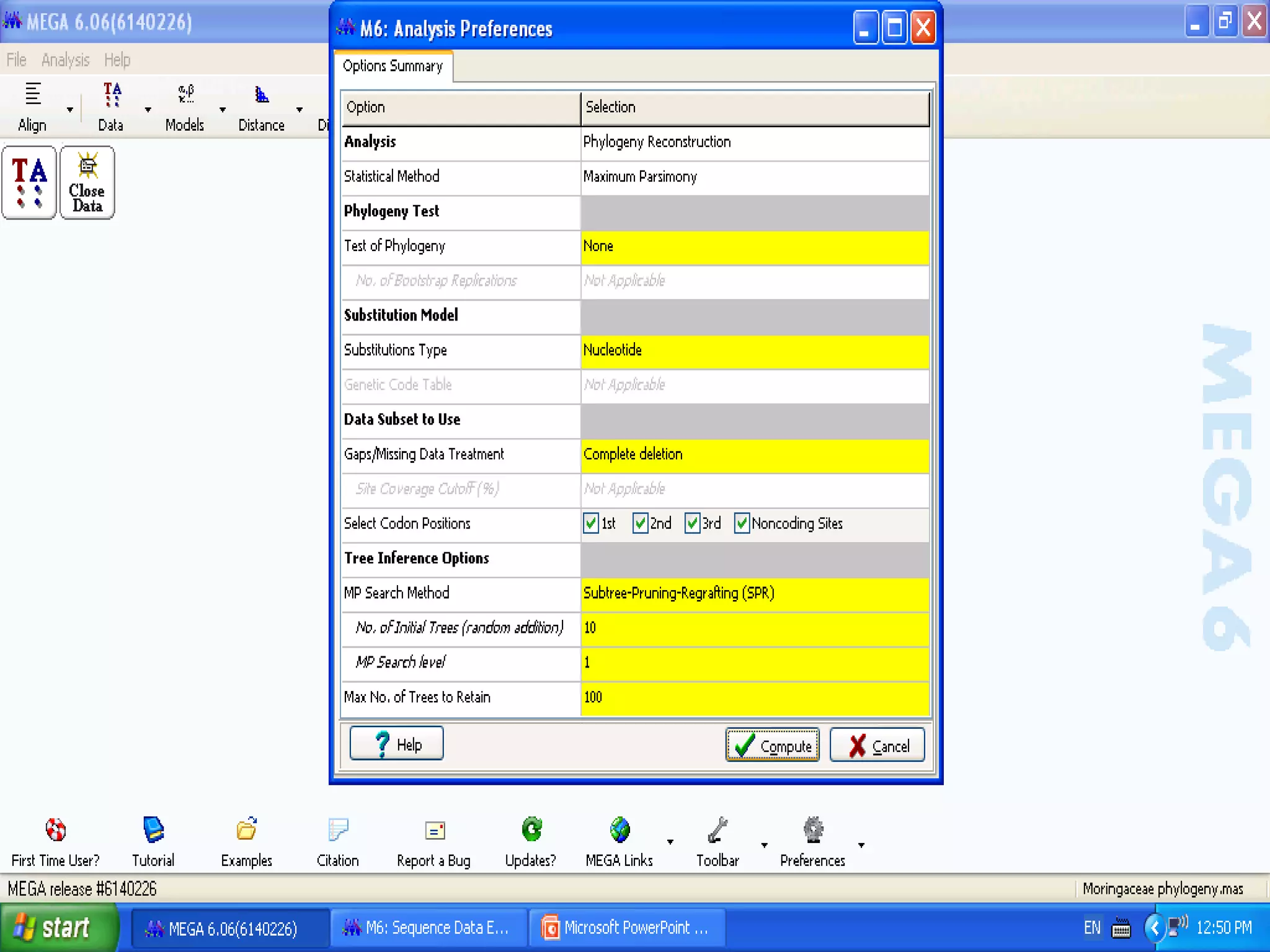
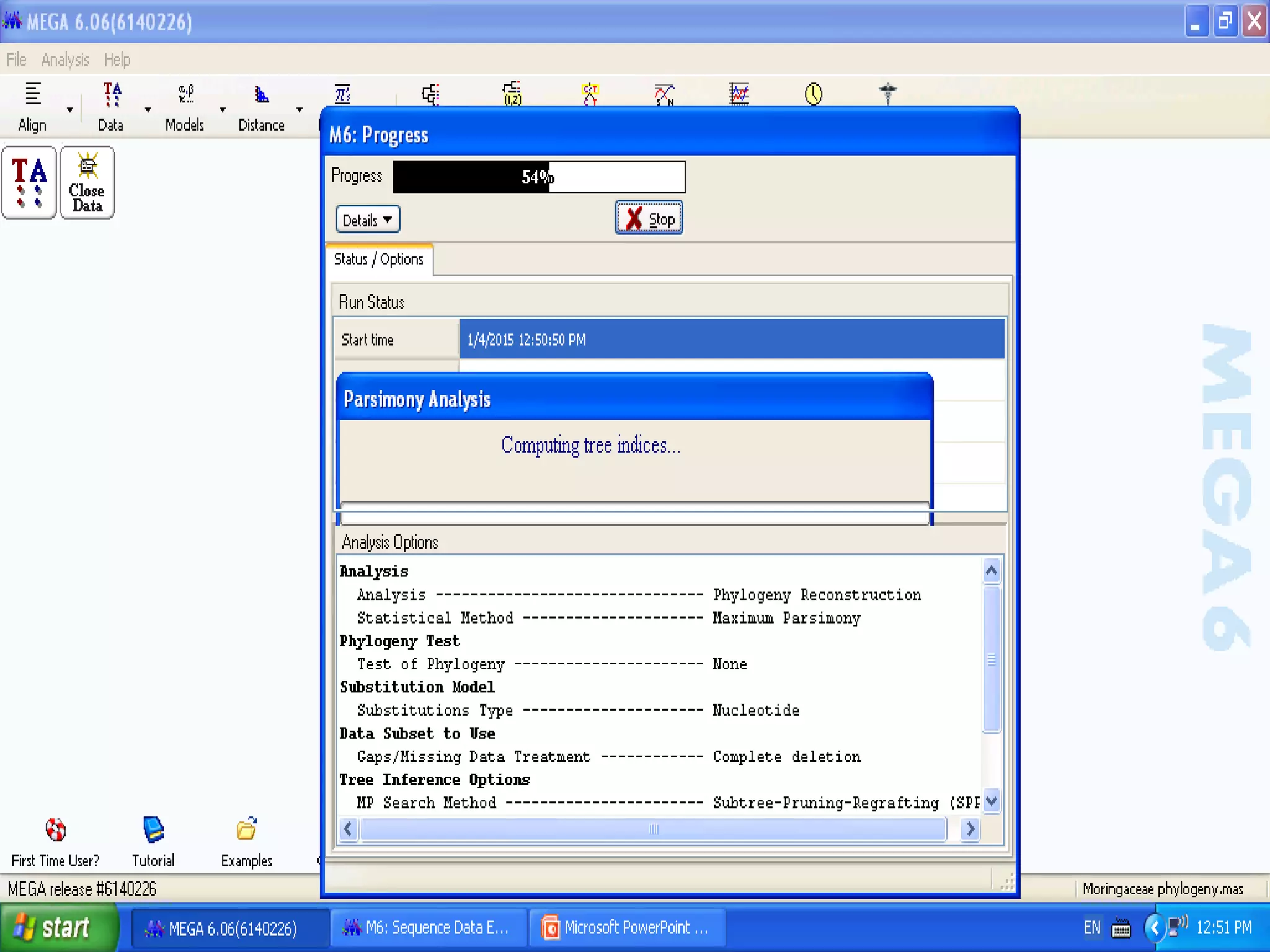
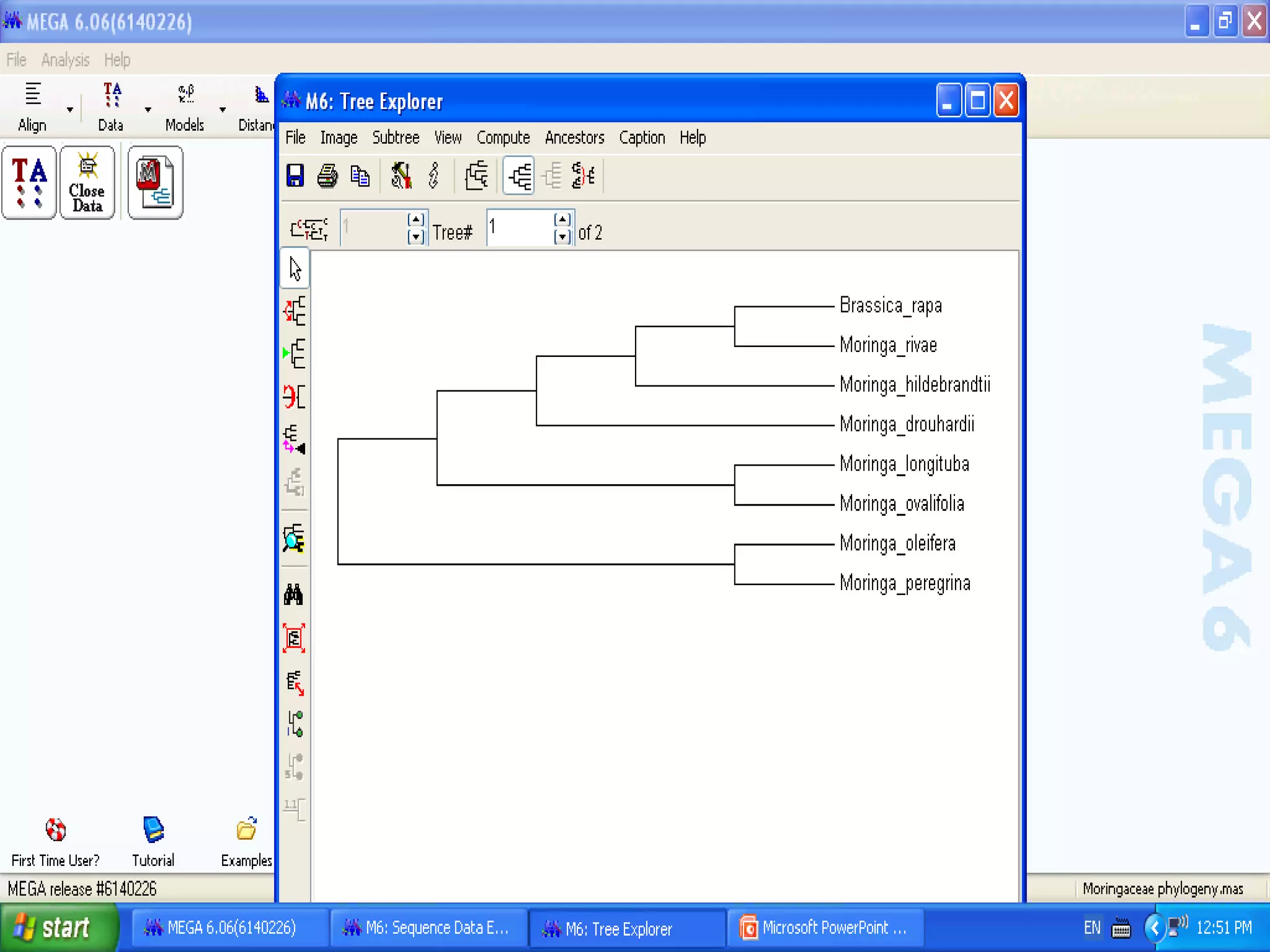
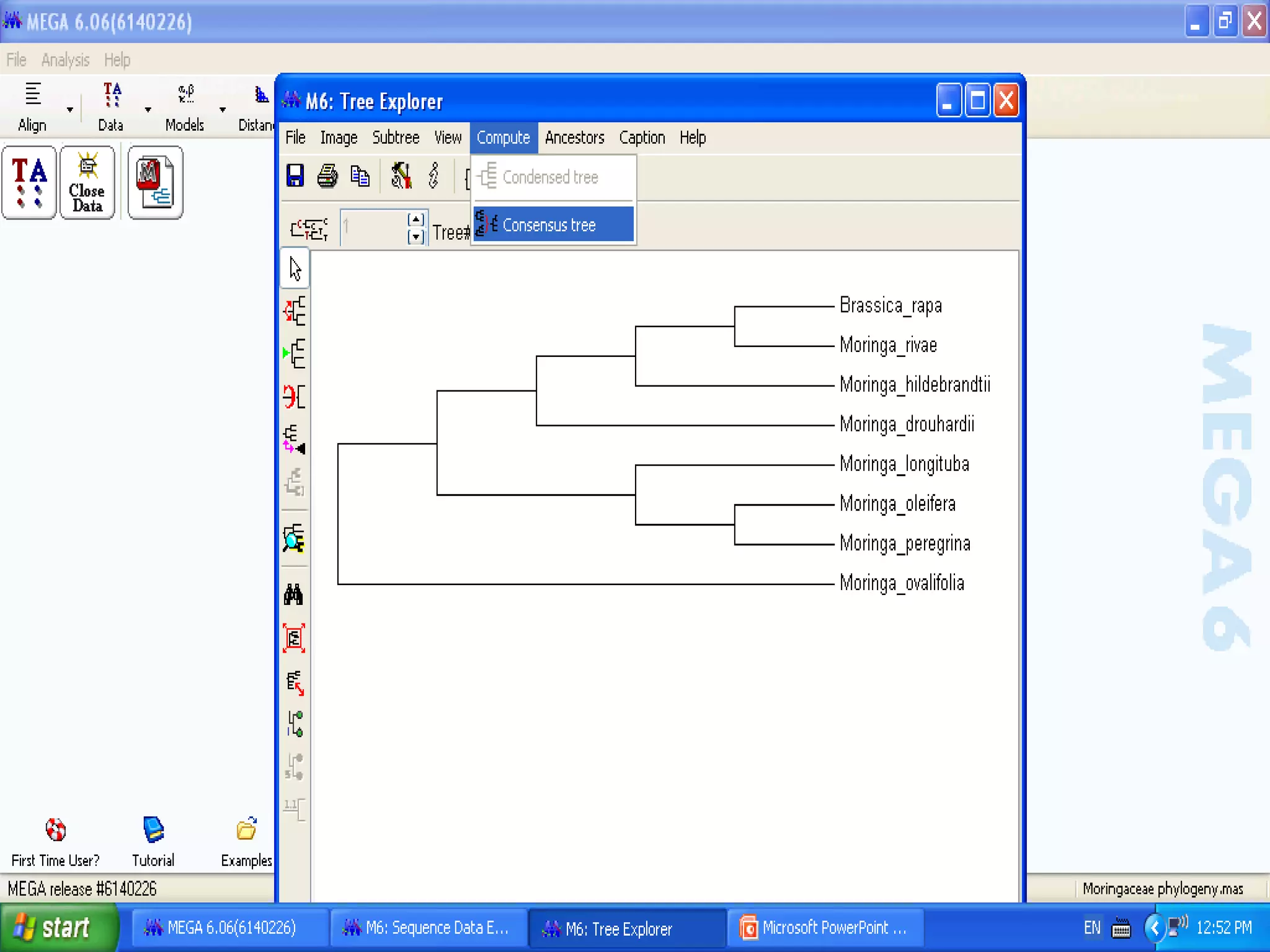
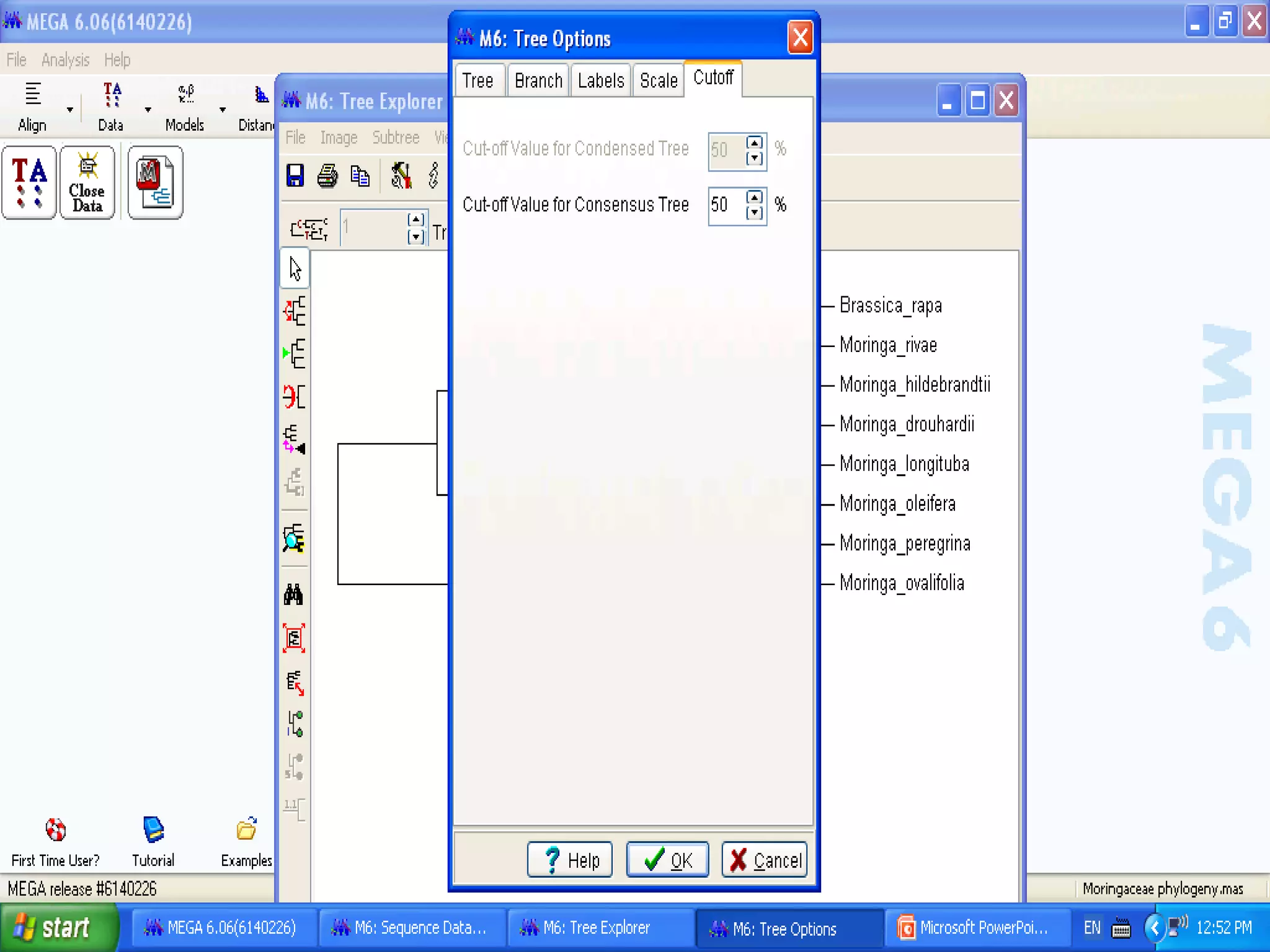
Analyze your data
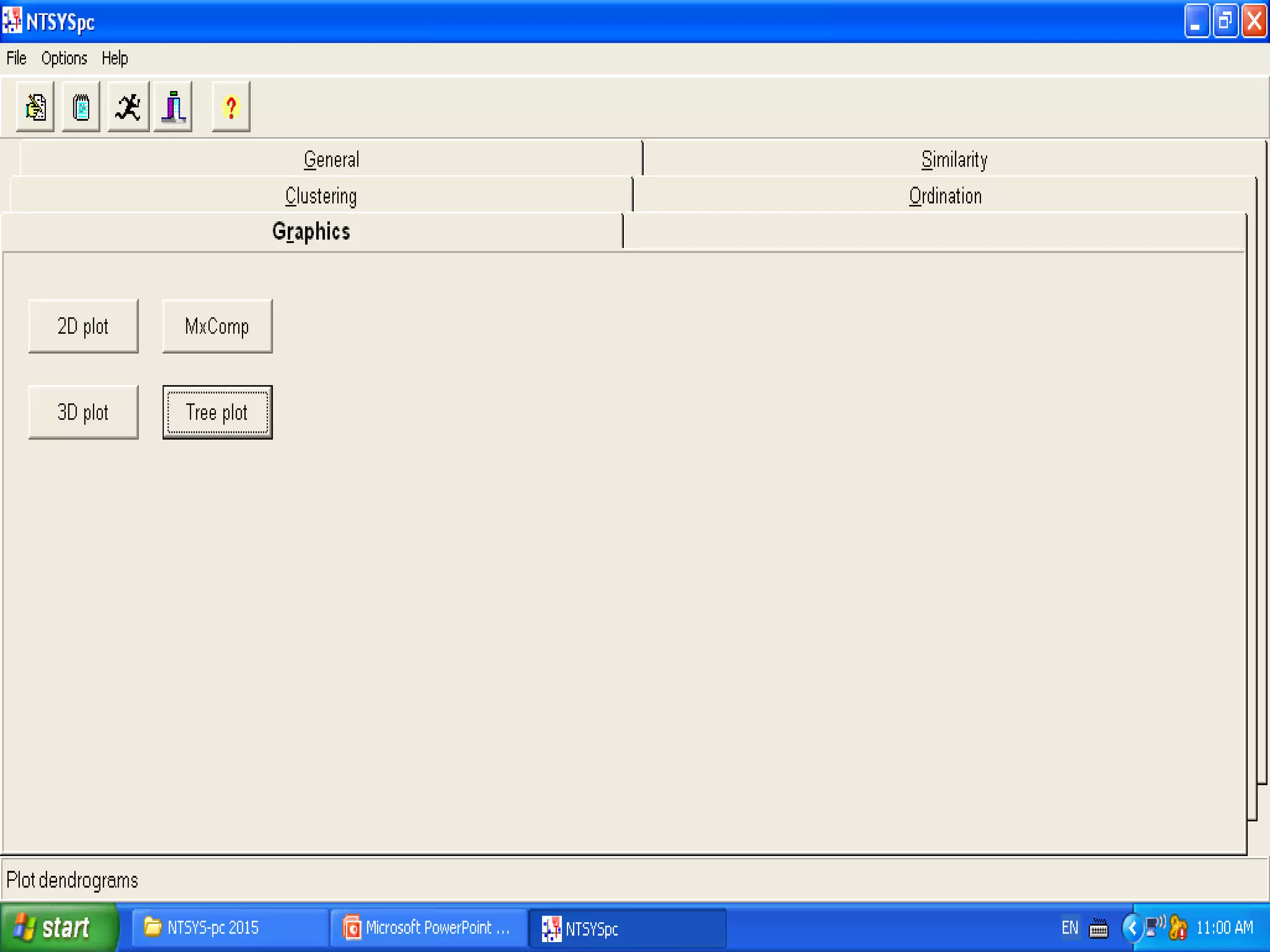
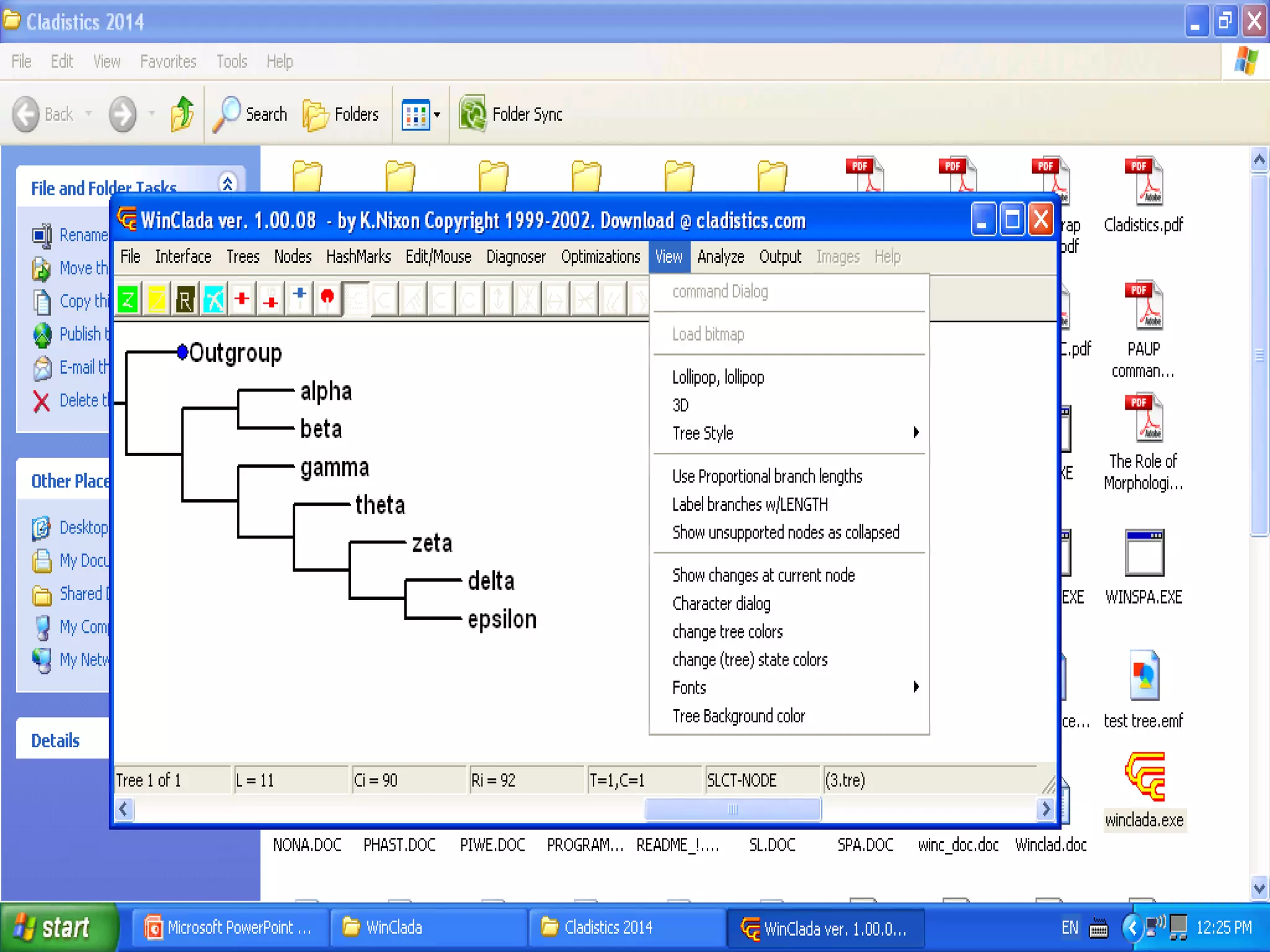
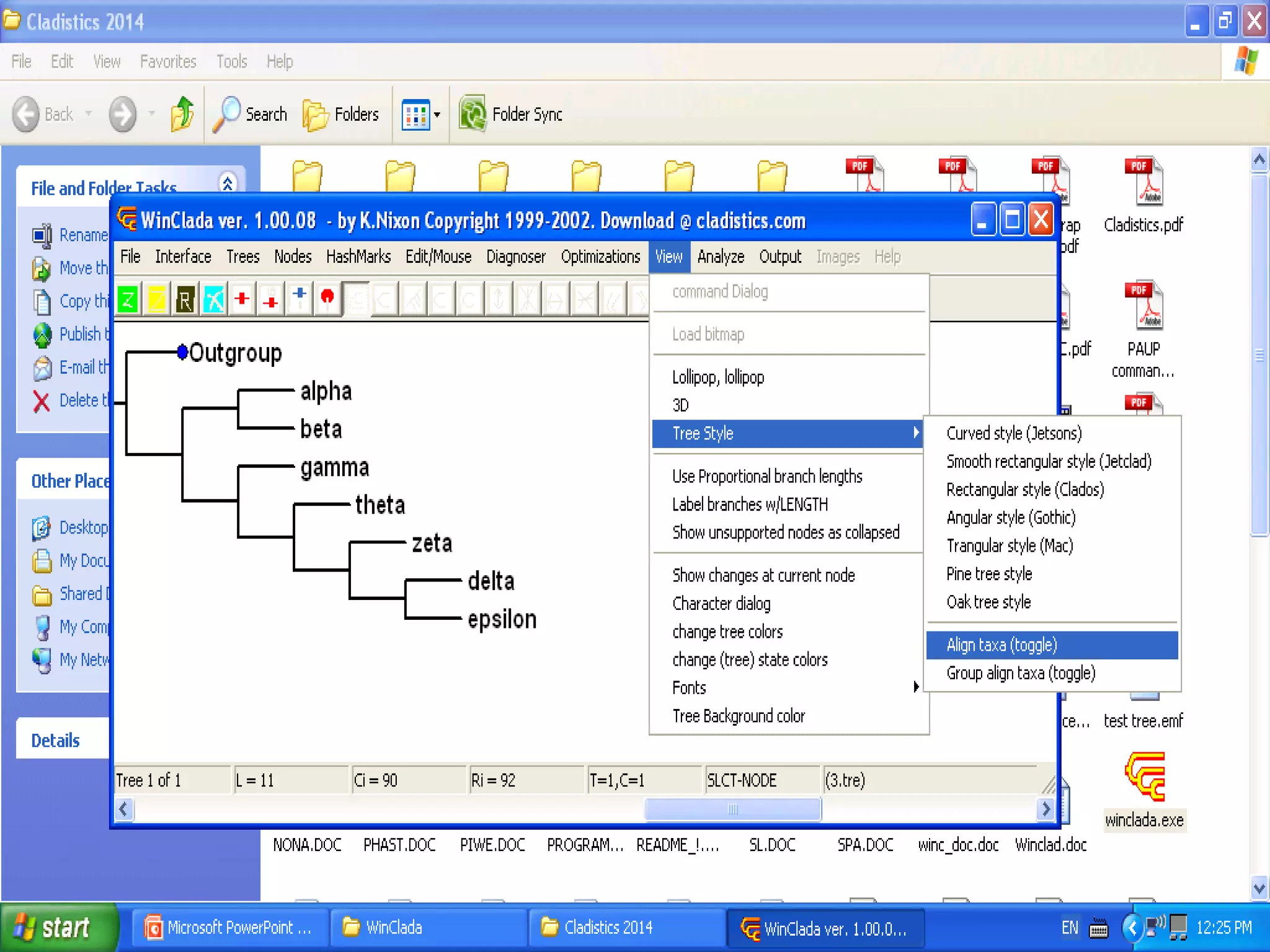
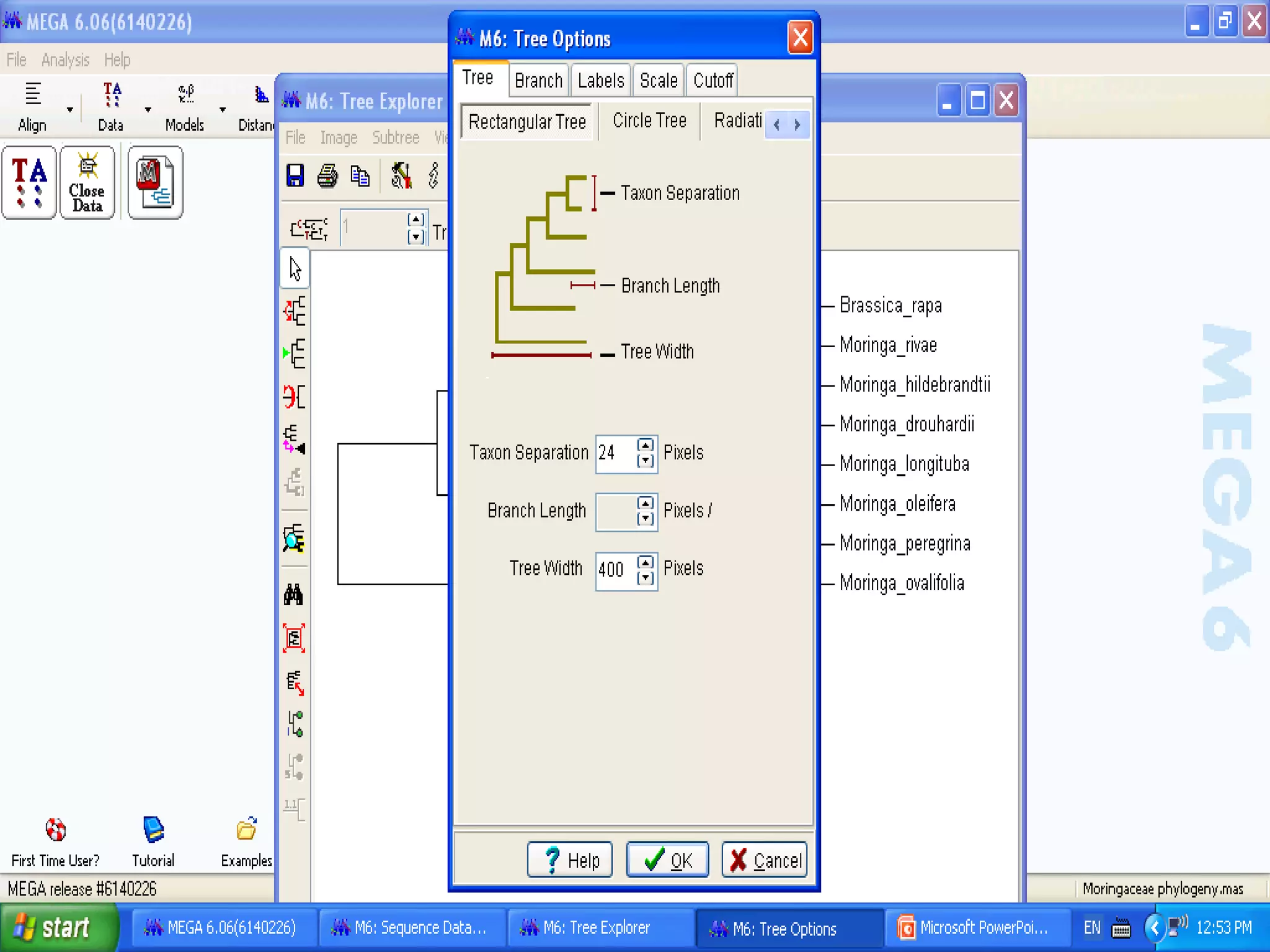
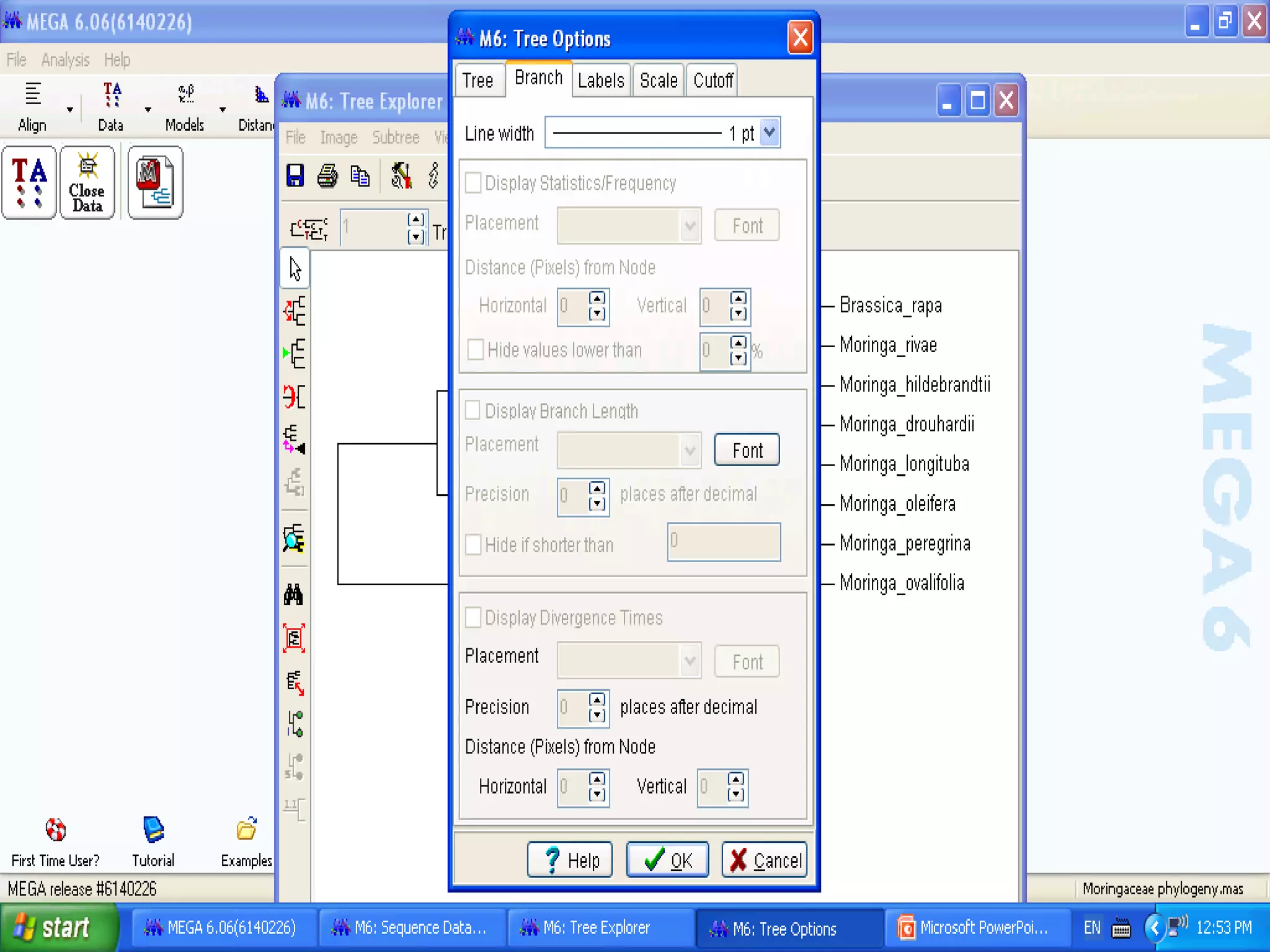
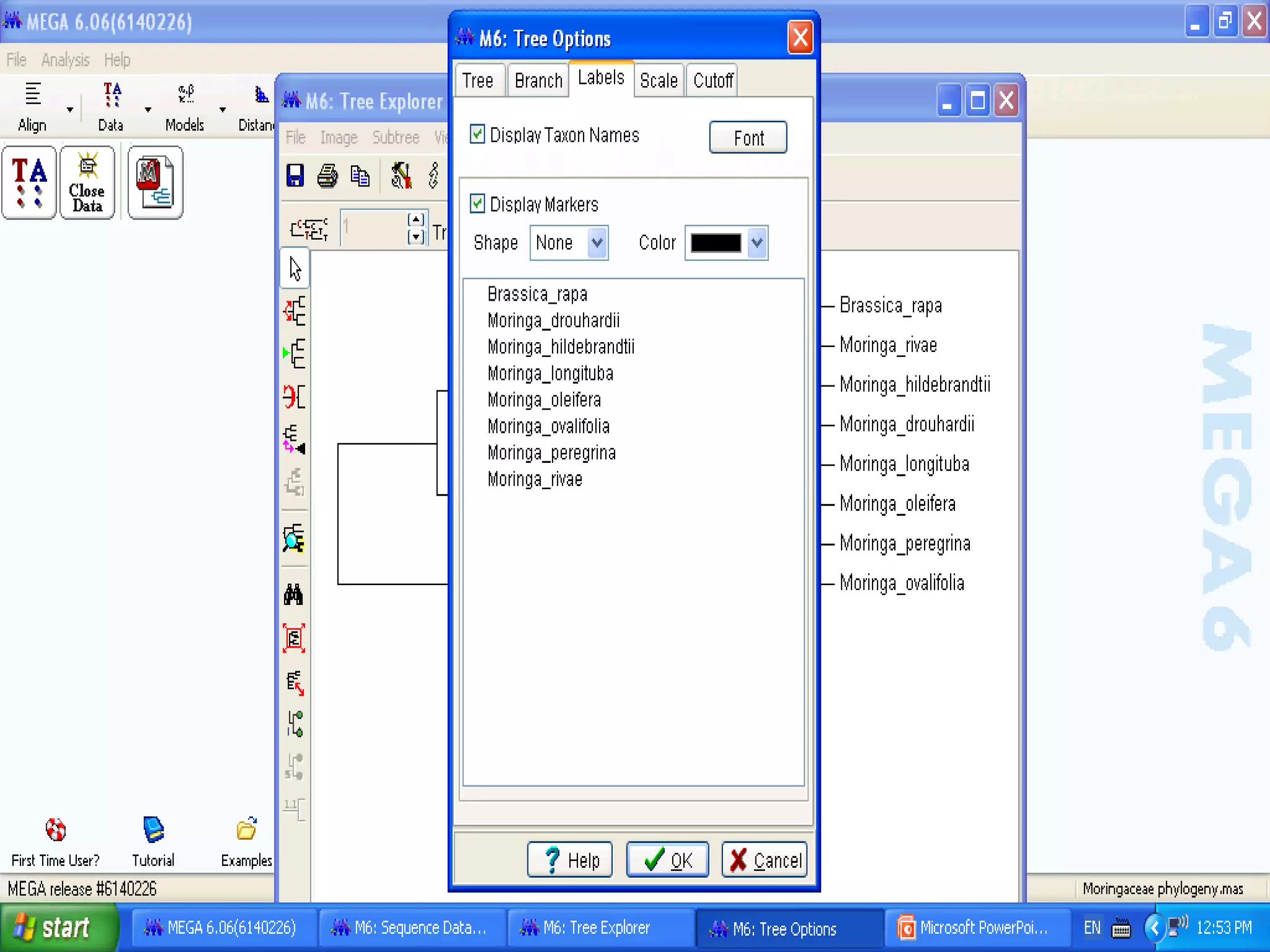
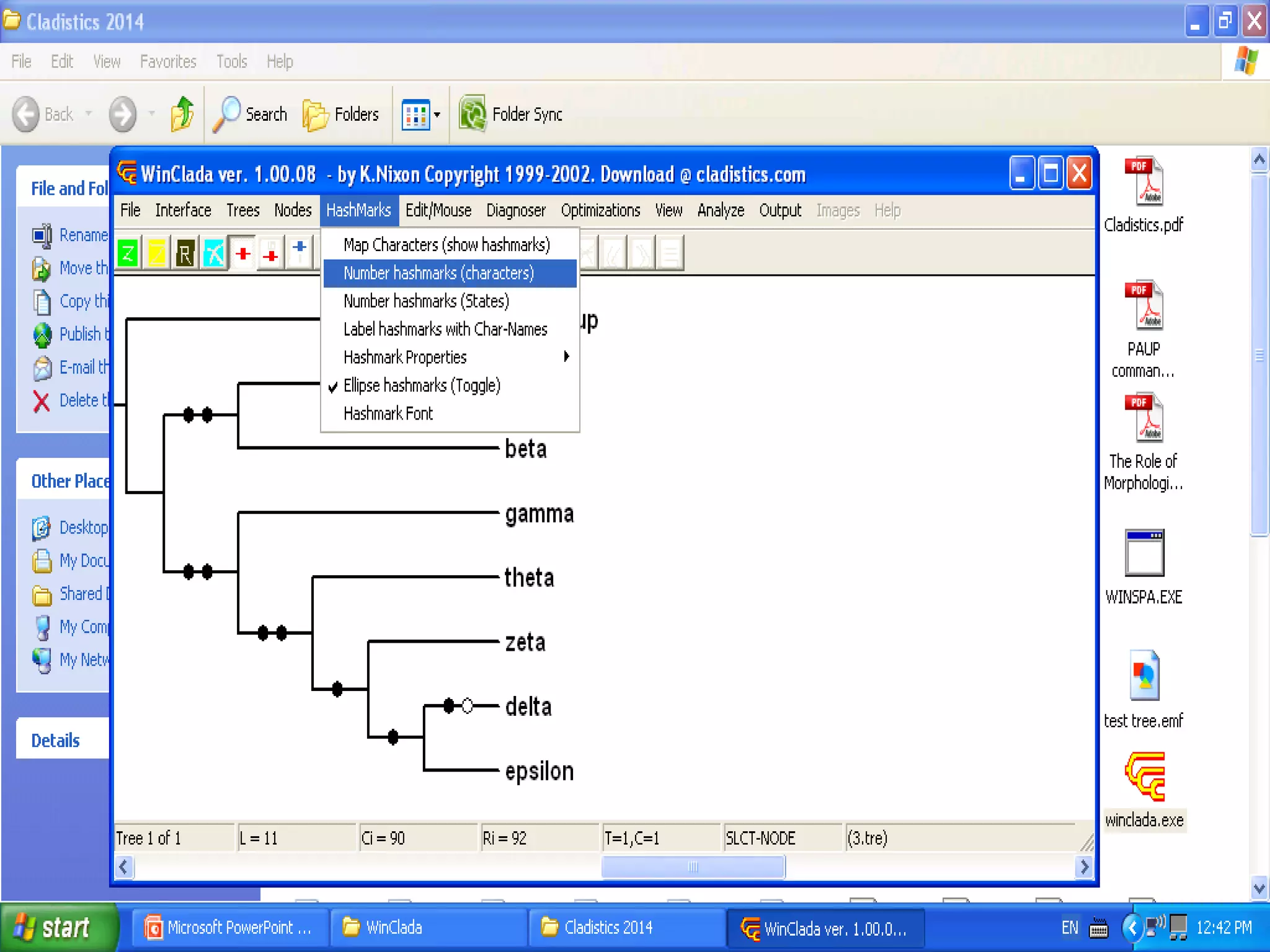
Edite your tree
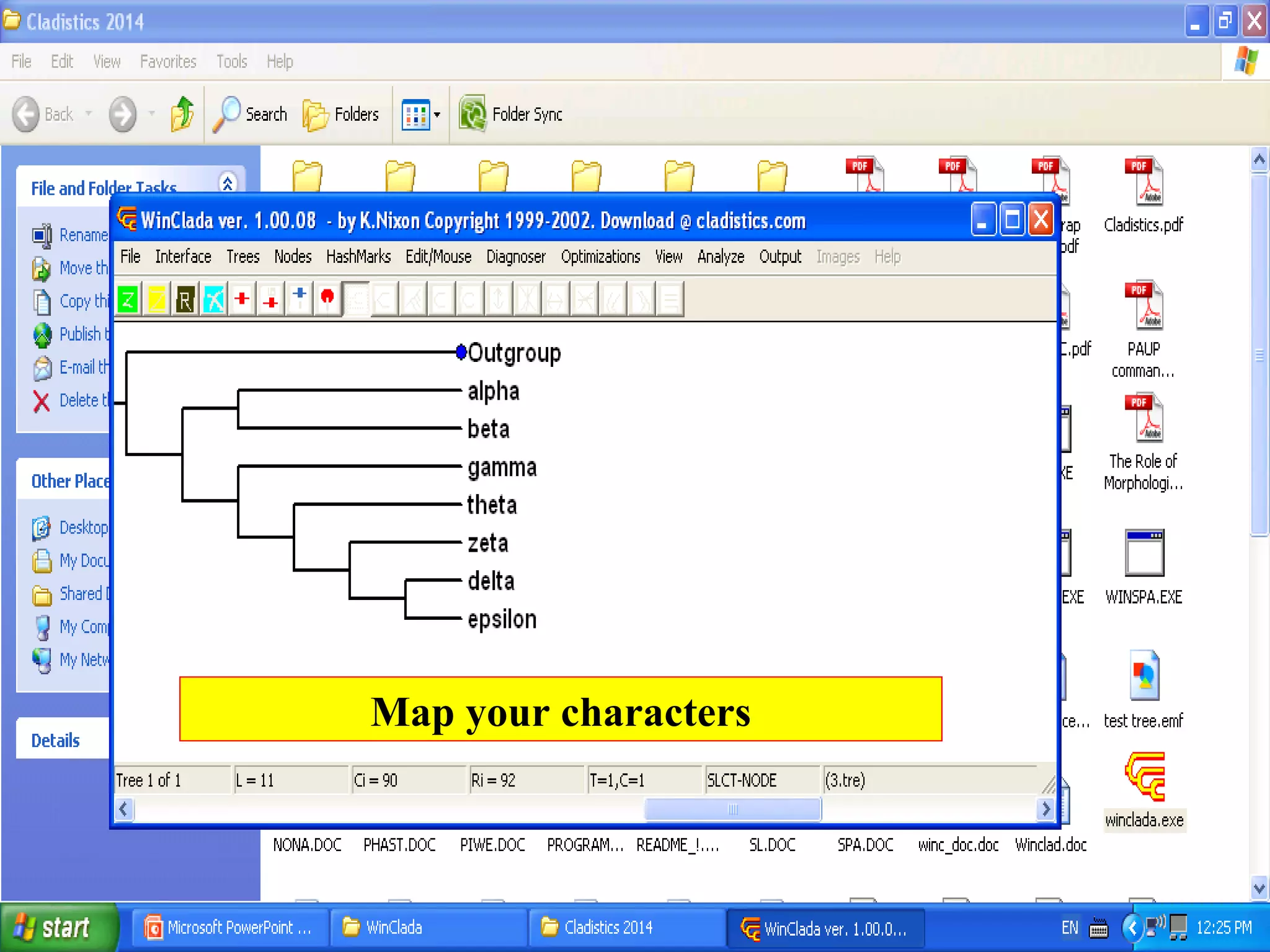
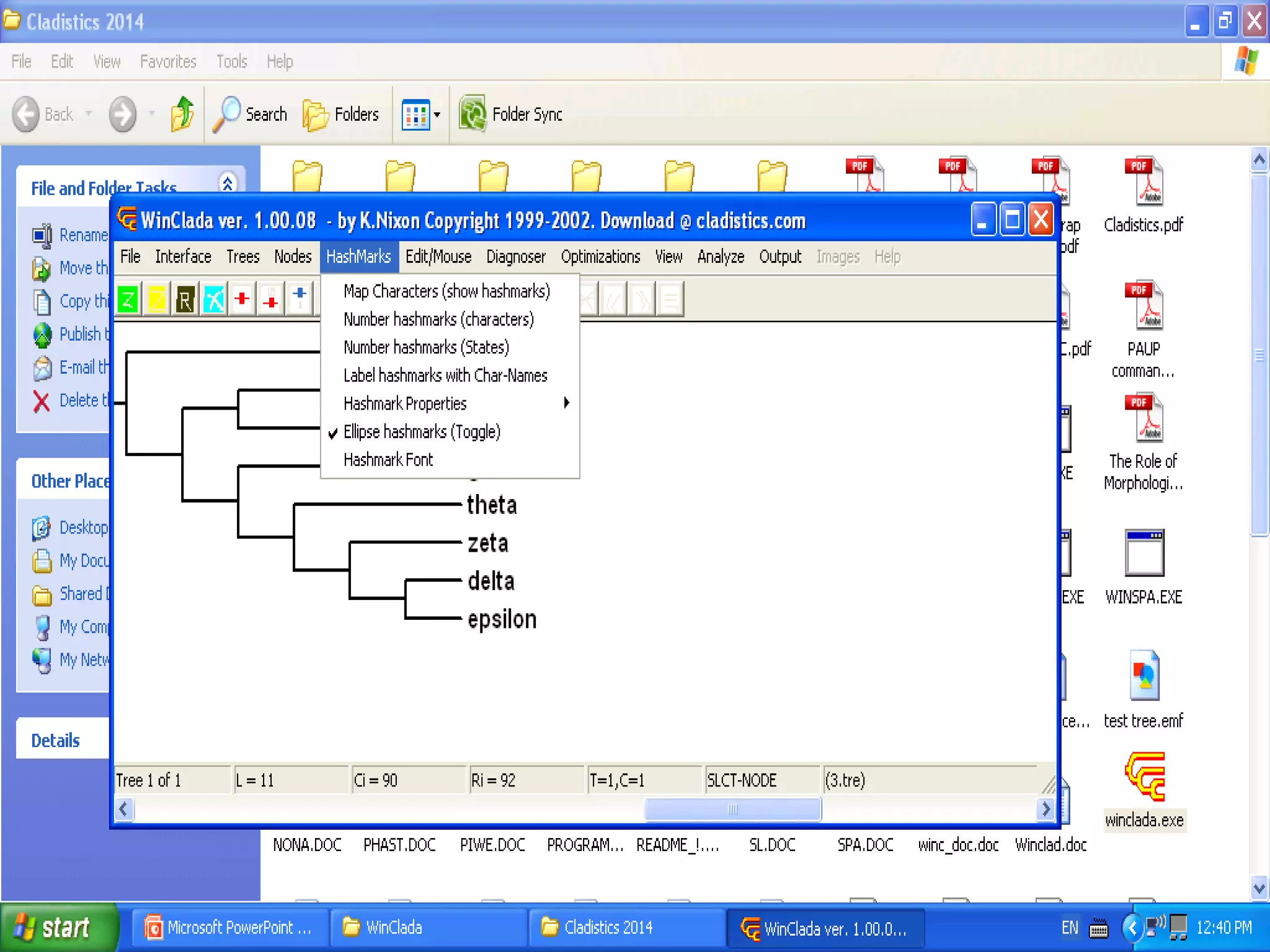
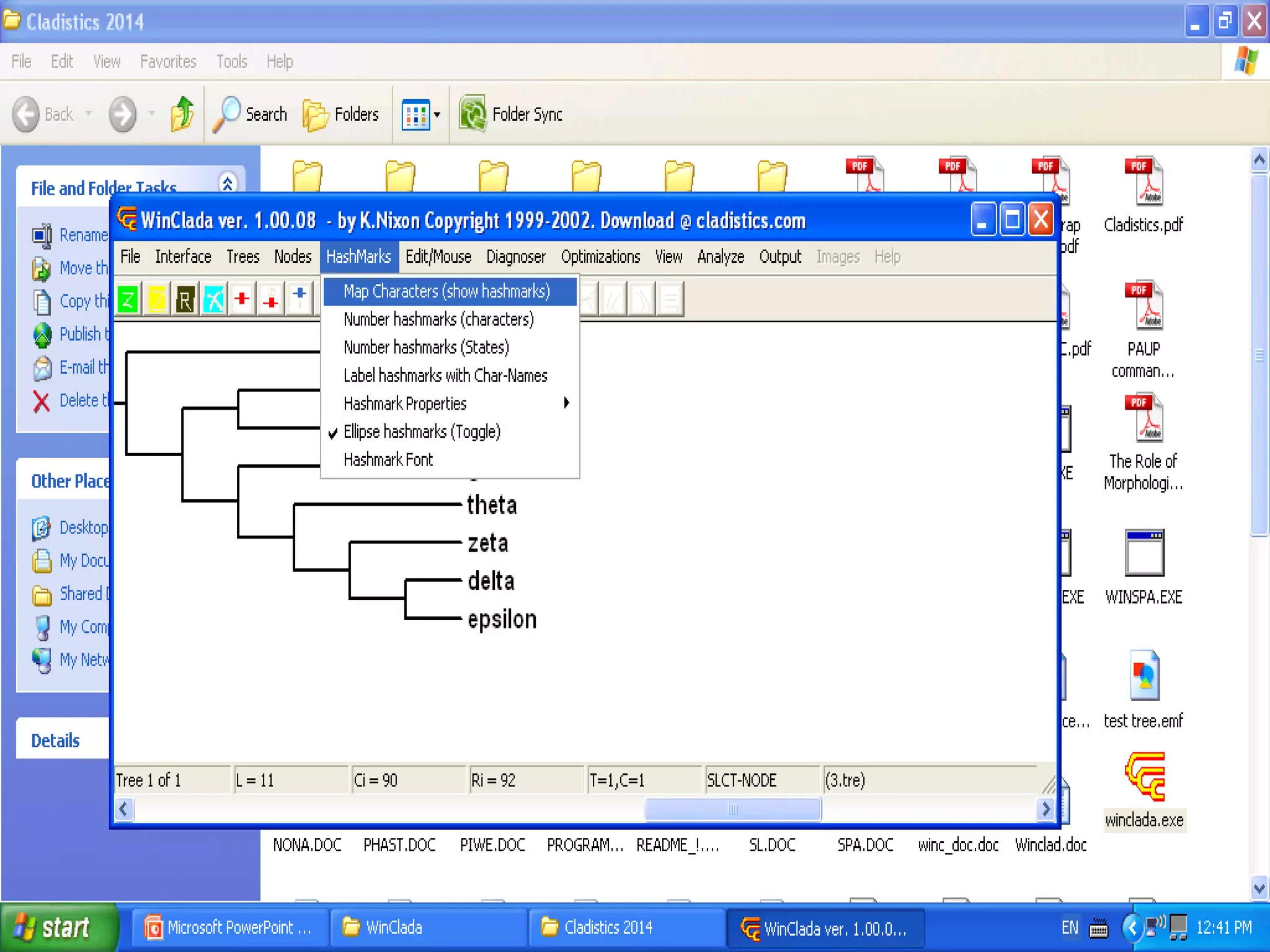
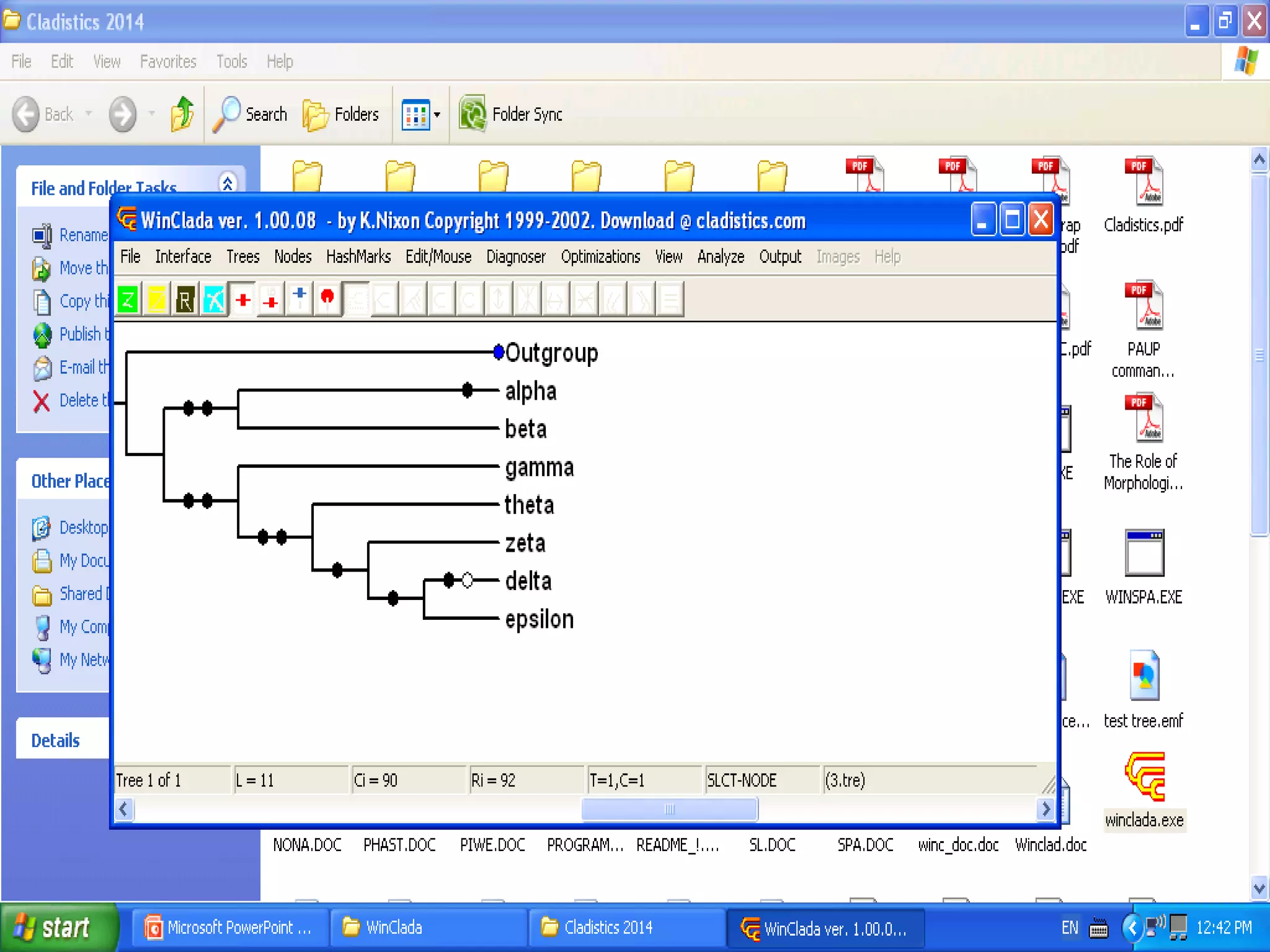
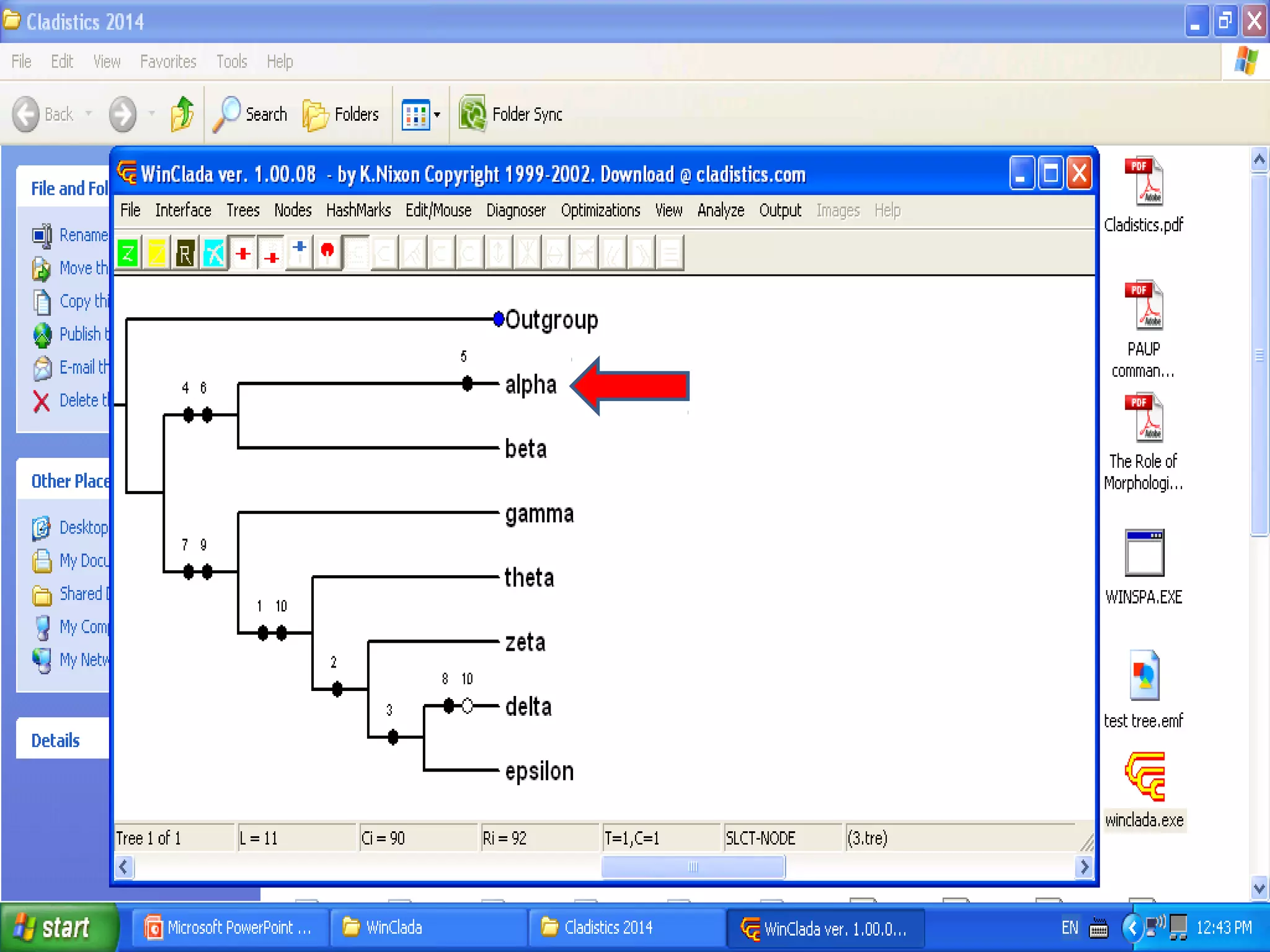
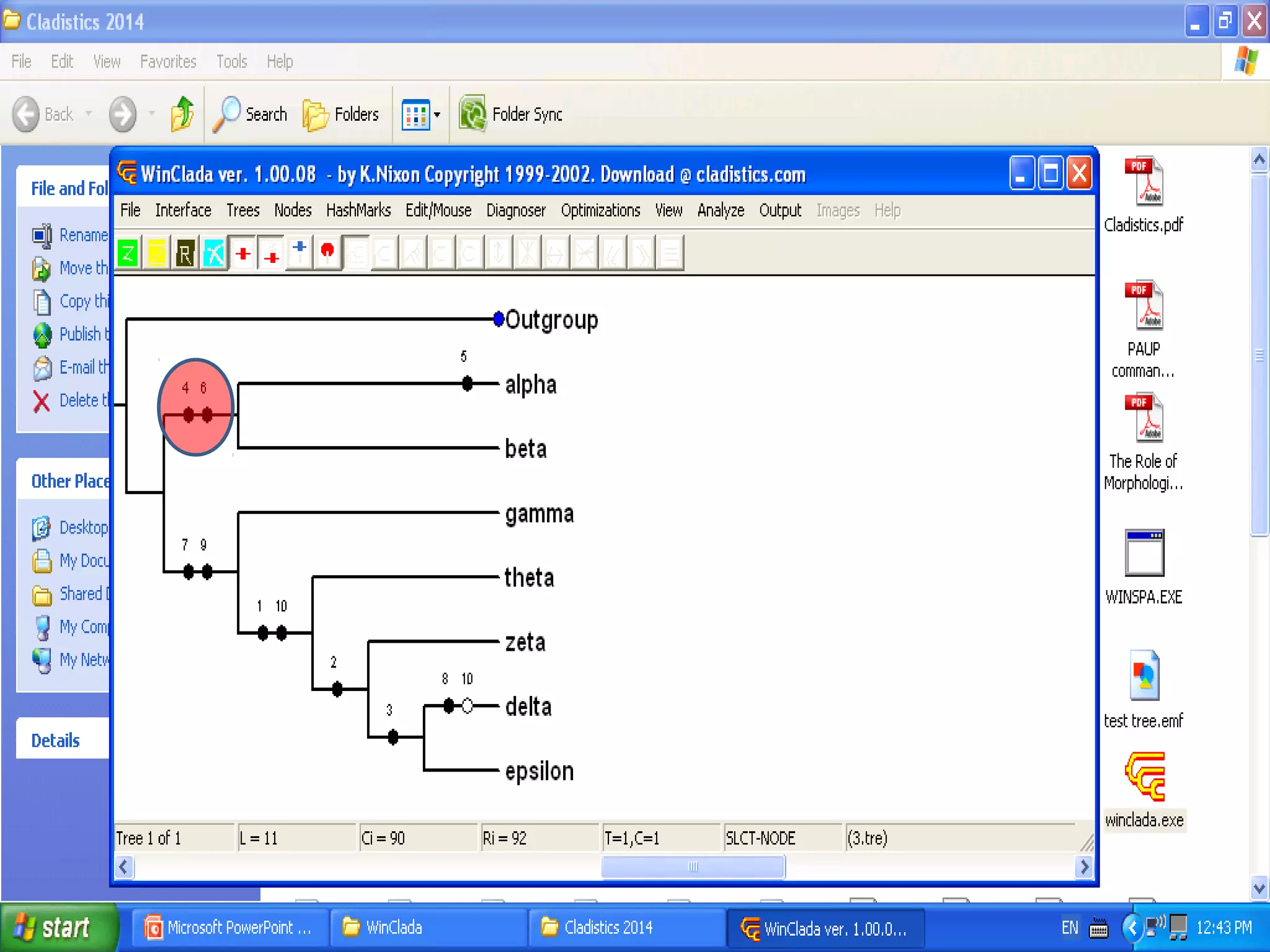
Map your characters
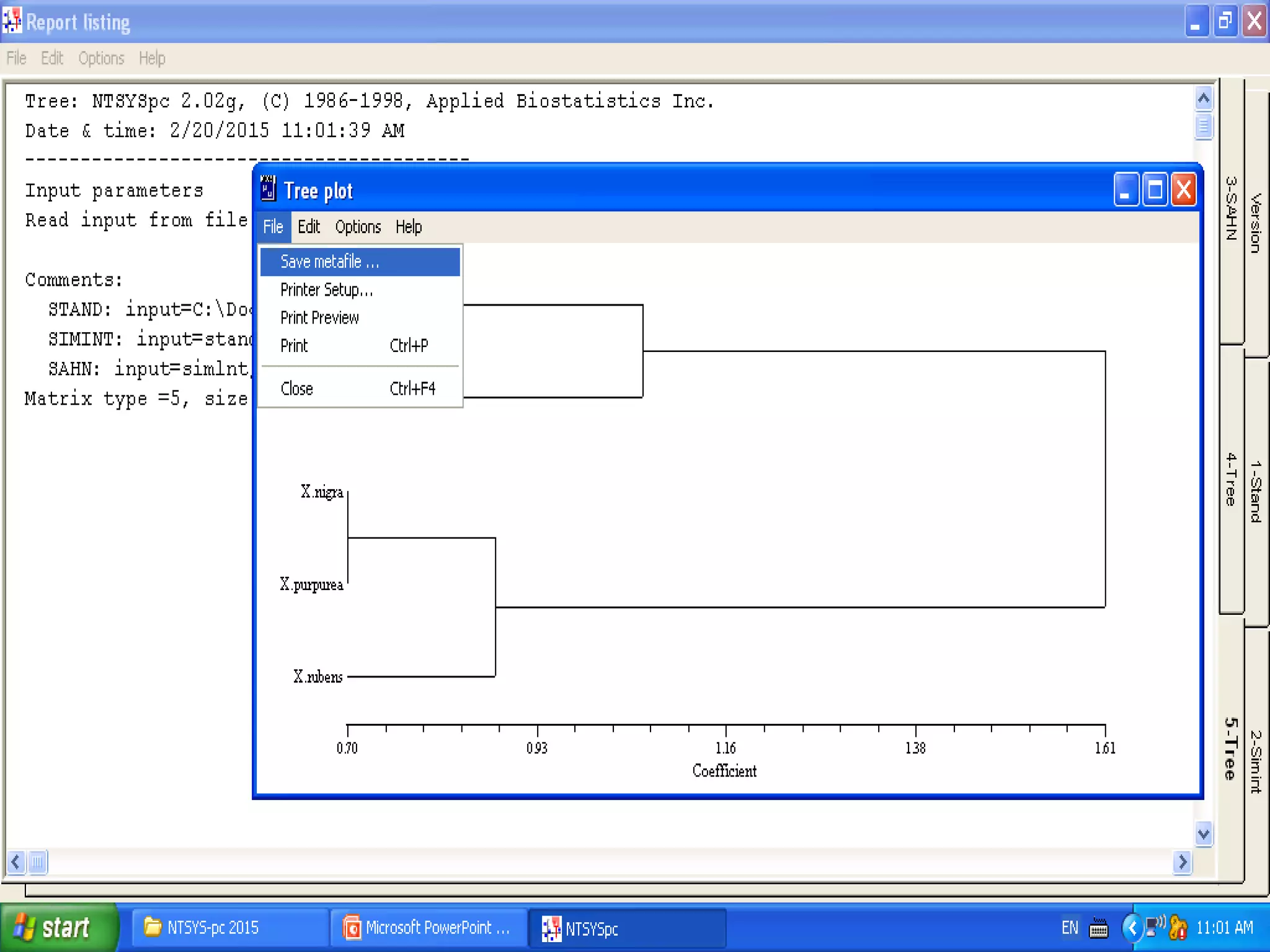
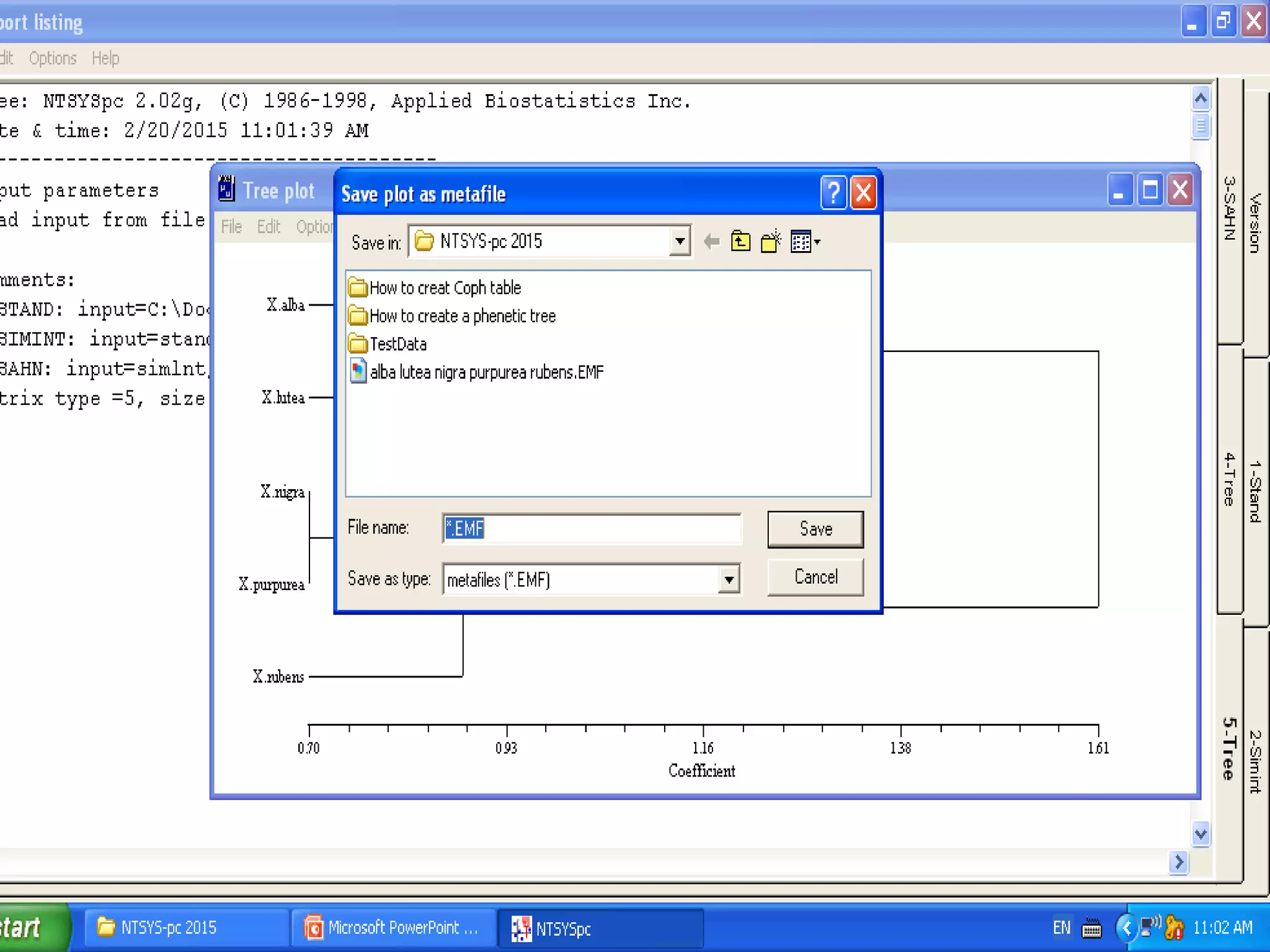
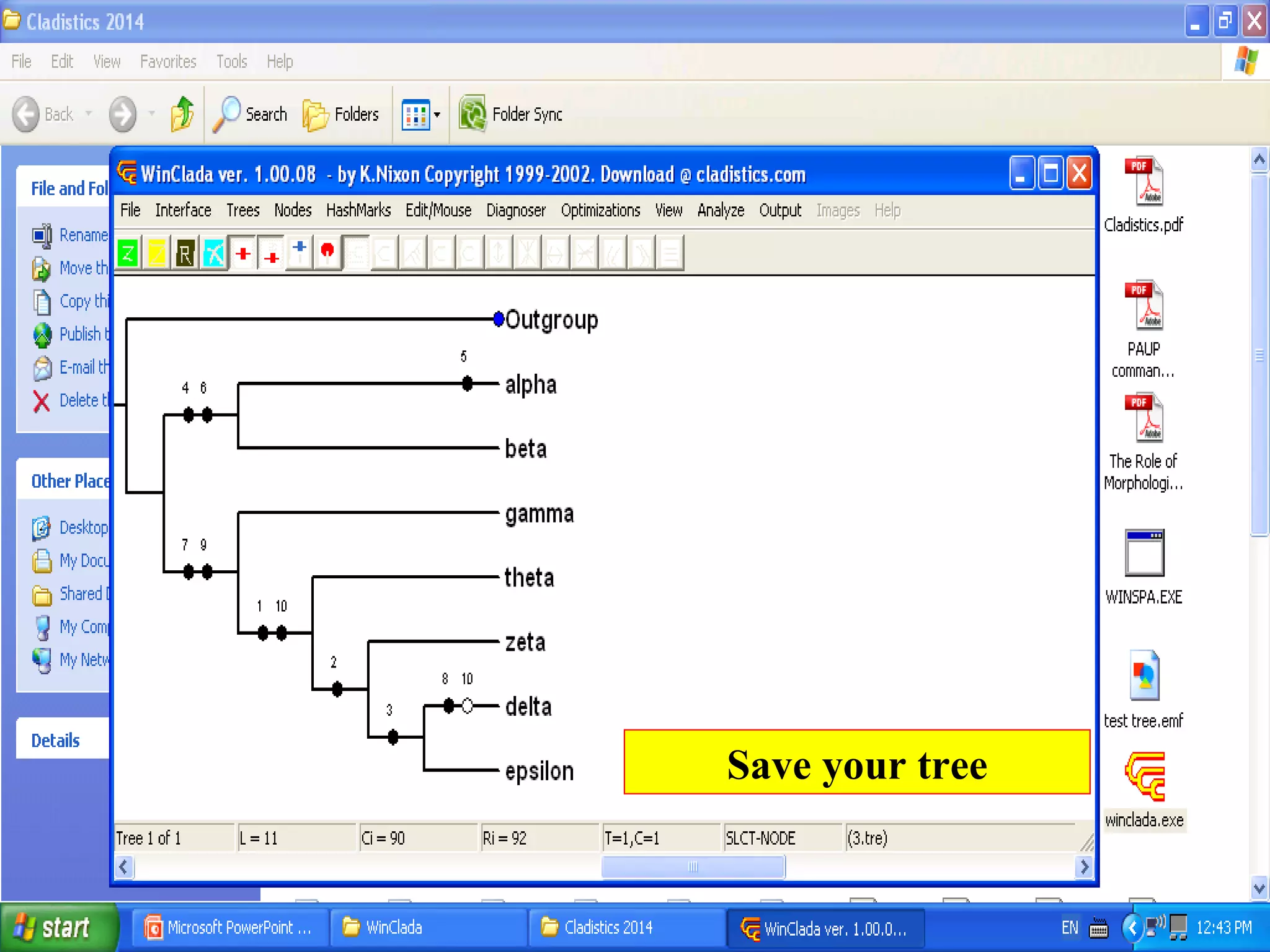
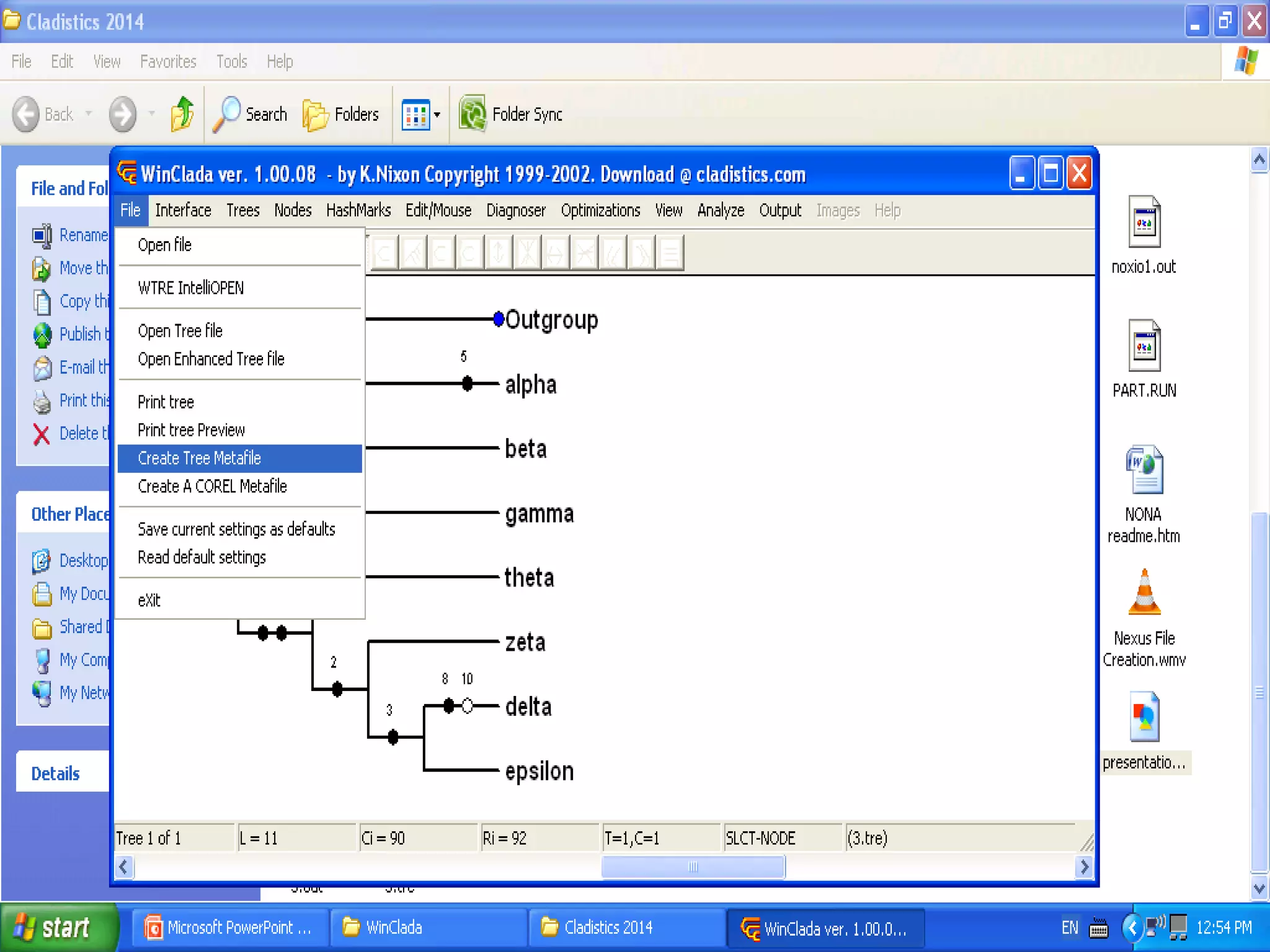
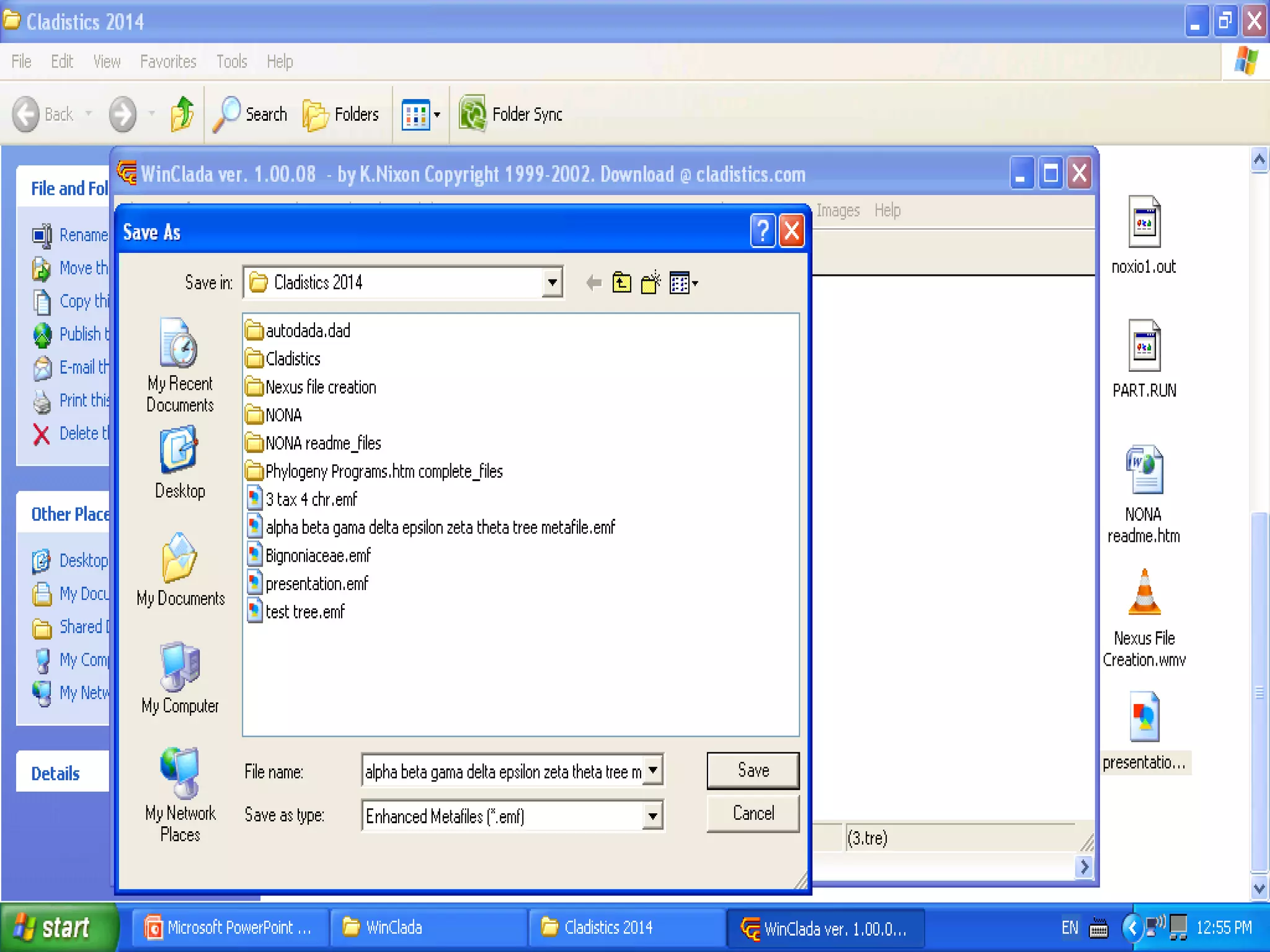
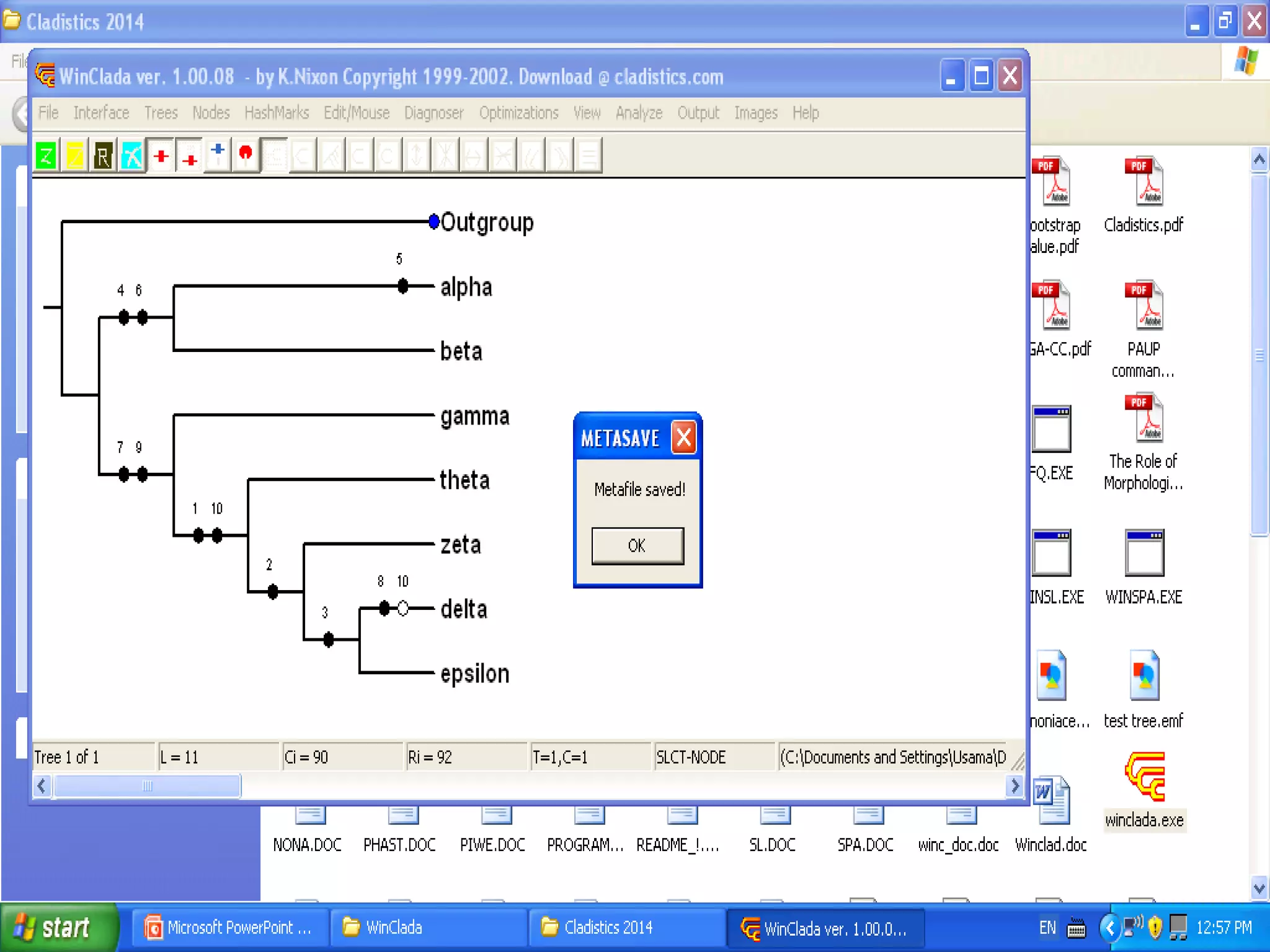
Save your tree
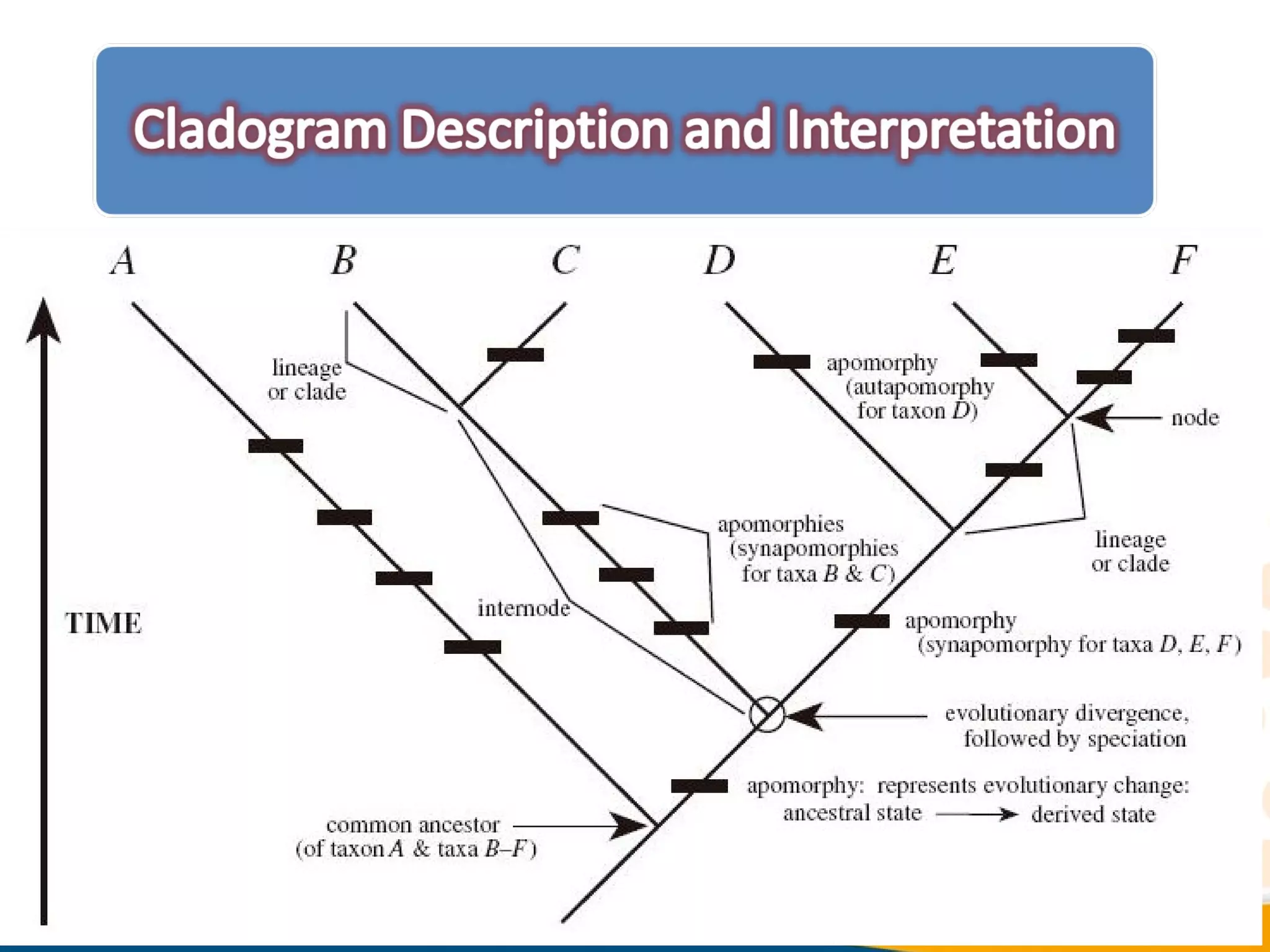
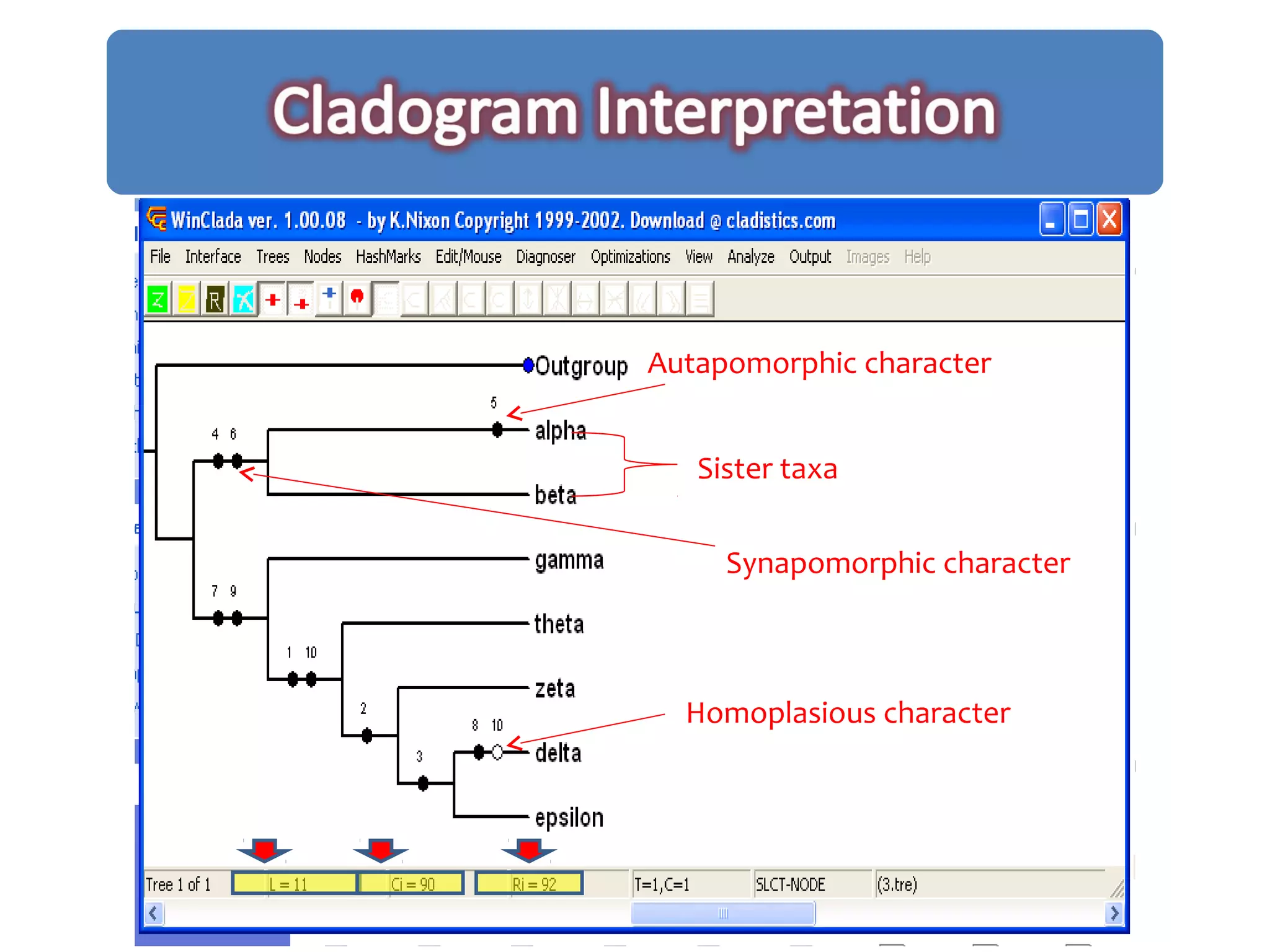
Autapomorphic character
Synapomorphic character
Sister taxa
Homoplasious character
Basics of Cladistic Analysis Workshop

Basics of Cladistic Analysis Workshop