.
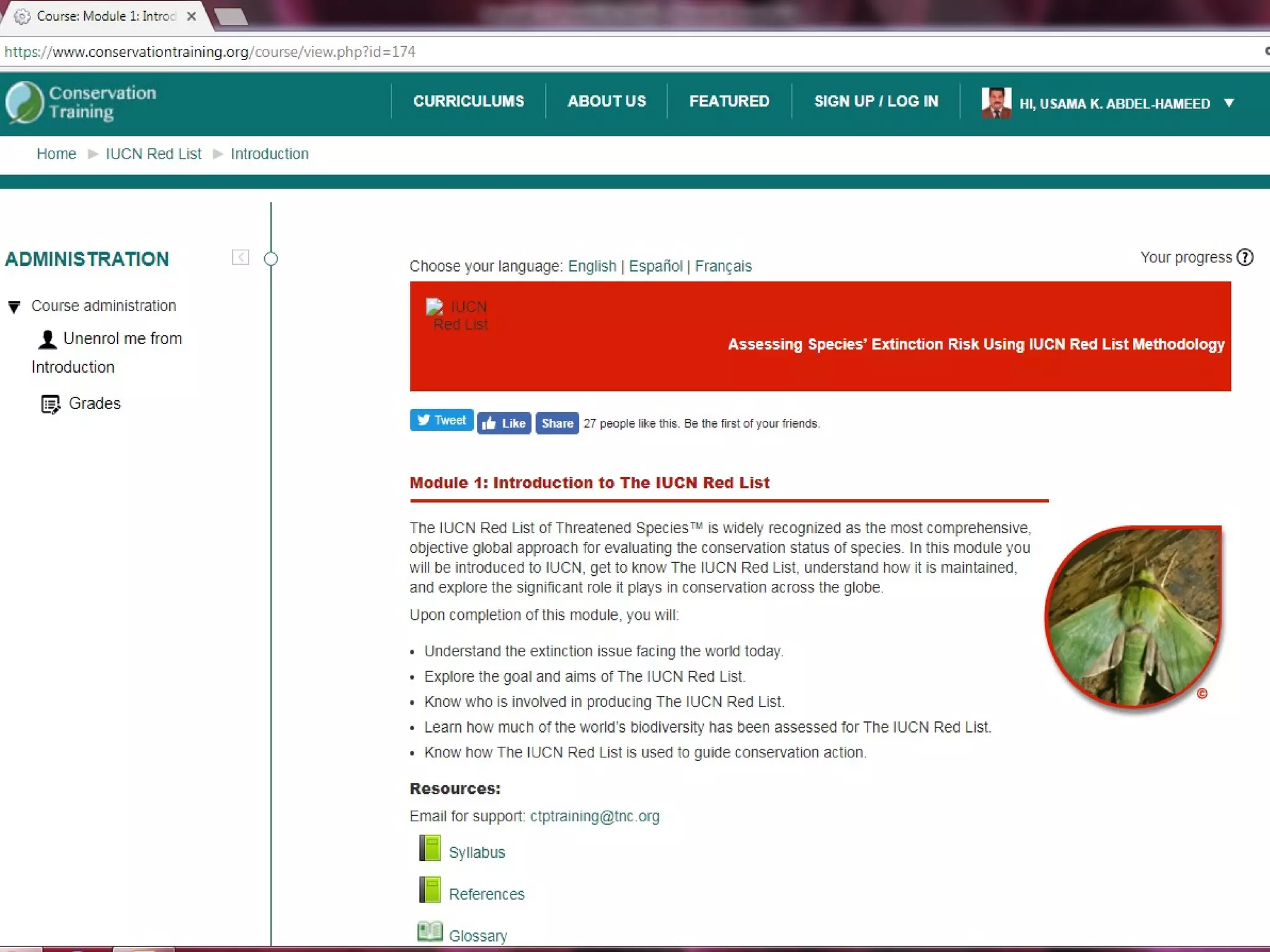
Upon completion of this module, you will:
Understand the endemism & extinction issue
facing the world today.
Explore the goal and aims of The IUCN Red List.
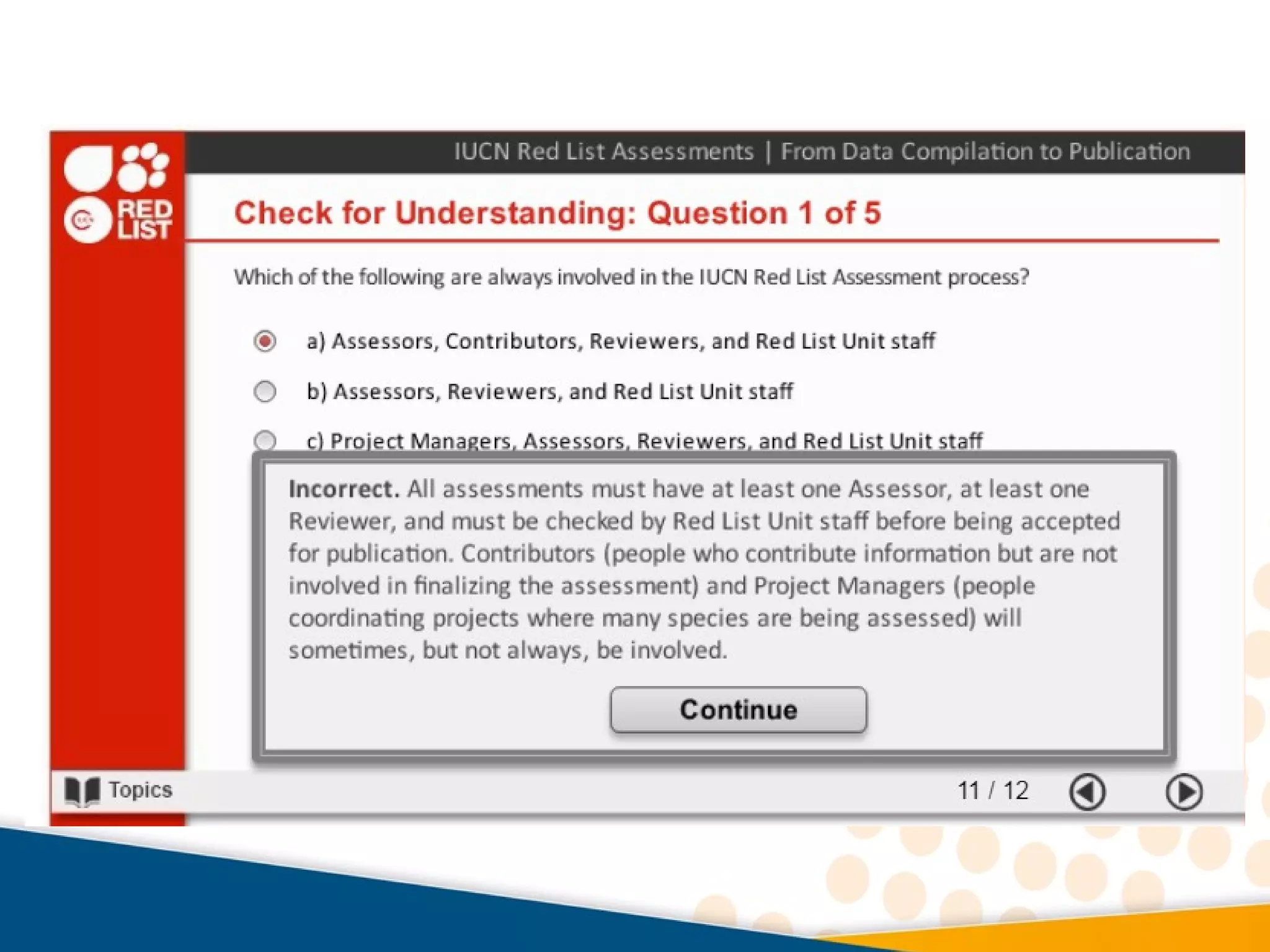
Know who is involved in producing The IUCN Red
List.
Learn how much of the world’s biodiversity has
been assessed for The IUCN Red List.
Know how The IUCN Red List is used to guide
conservation action.
Plan strategy for species conservation.
Appreciate the importance of biodiversity to
humanity.
A taxon whose distribution is confined to a
given area is said to be endemic to that area.
Endemic Species – The species that are found
exclusively in a particular area & are not found
anywhere else naturally.
• Allium asirense B. Mathew Alliaceae
• Aloe armatissima Lavr. & Colle. Aloaceae
• Aloe porphyrostachys Lar. & Colle. Aloaceae
• Aloe shadensis Lavr. & Colle. Aloaceae
• Aloe sheilae Lavr. Aloeaceae
• Anthemis dicksoniae A. Ghafoor Asteraceae
• Anthemis scrobicularis Hedge & Kit Tan Asteraceae
• Anthemis sheilae A. Ghafoor Asteraceae
• Astragalus collenettae I.C. Hedge & D. Podl. Papilionaceae
• Convolvulus asirensis Kotschy Convolvulaceae
• Convolvulus cephalopodus ssp. abhansis Alfarhan Convolvulaceae
• Delphinium sheilae Kit Tan Ranunculaceae
• Echinops abuzinadianus S. Chaudhary Asteraceae
The
International Union for Conservation of Nature
(IUCN) is a membership Union uniquely
composed of both government and civil
society organisations. It provides public,
private and non-governmental organisations
with the knowledge and tools that enable
human progress, economic development and
nature conservation to take place together.
40% world’s O2 comes from raifall.
50% of chemical medicines are based on nature.
100%of our food comes from nature.
IUCN= International Union for Conservation of Nature. Created in 1948.
IUCN working in 160 countries.
IUCN staff more than 1000 staff.
1200 member organization.
11000 volunteers (scientists and experts).
IUCN objectives are:
Assessing the status of species, Protecting natural wonders. Stop
extinction of plants and animals, Fight climate change, Restore natural
resources, Boost food security, Reduce poverty
IUCN Projects:
Managing water resources, Restoring forests, Protecting our coasts and
oceans, Helping companies improve their environmental performance.
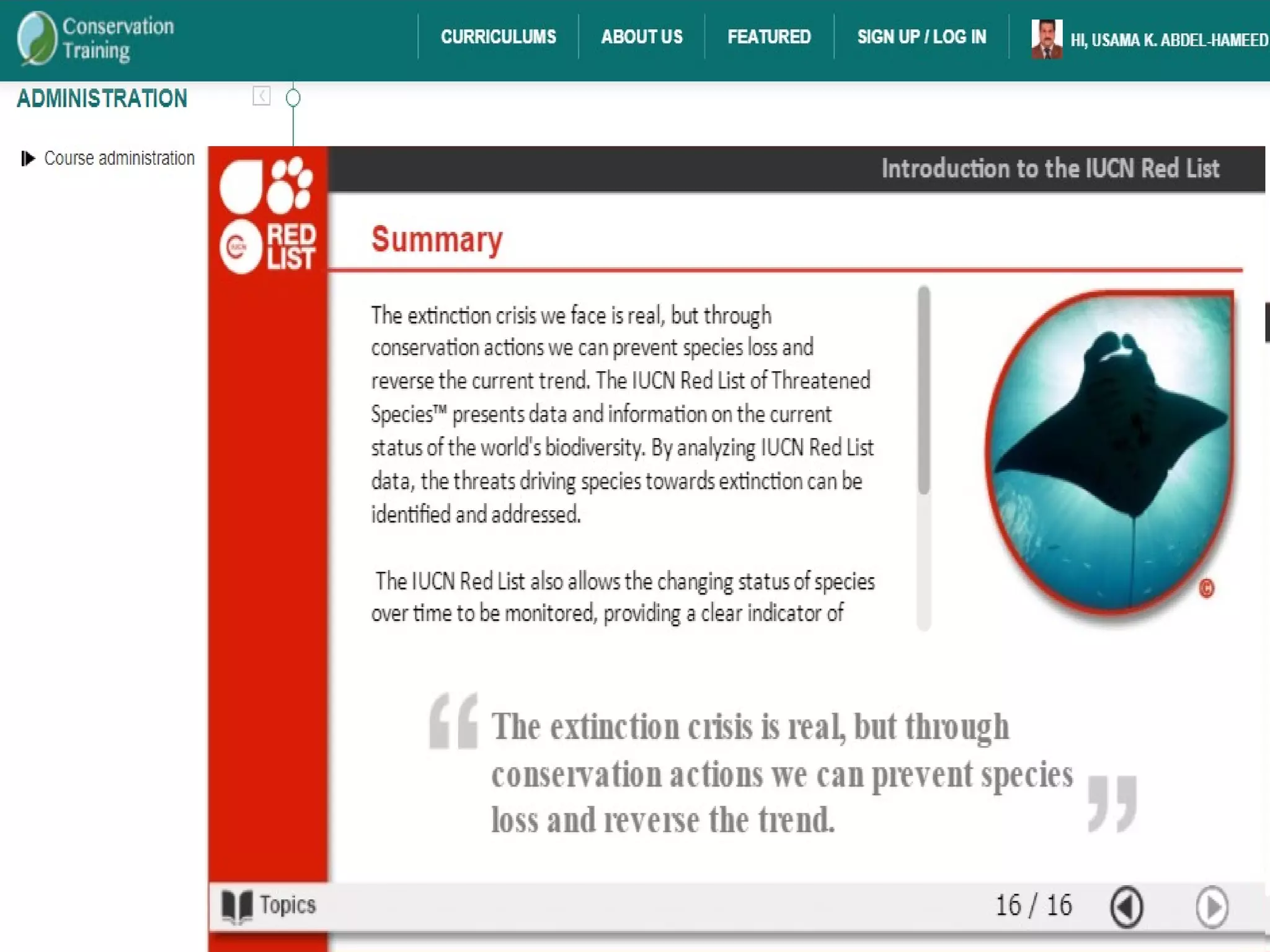
The IUCN Red List of Threatened Species is
widely recognized as the most
comprehensive, objective global approach for
evaluating the conservation status of species.
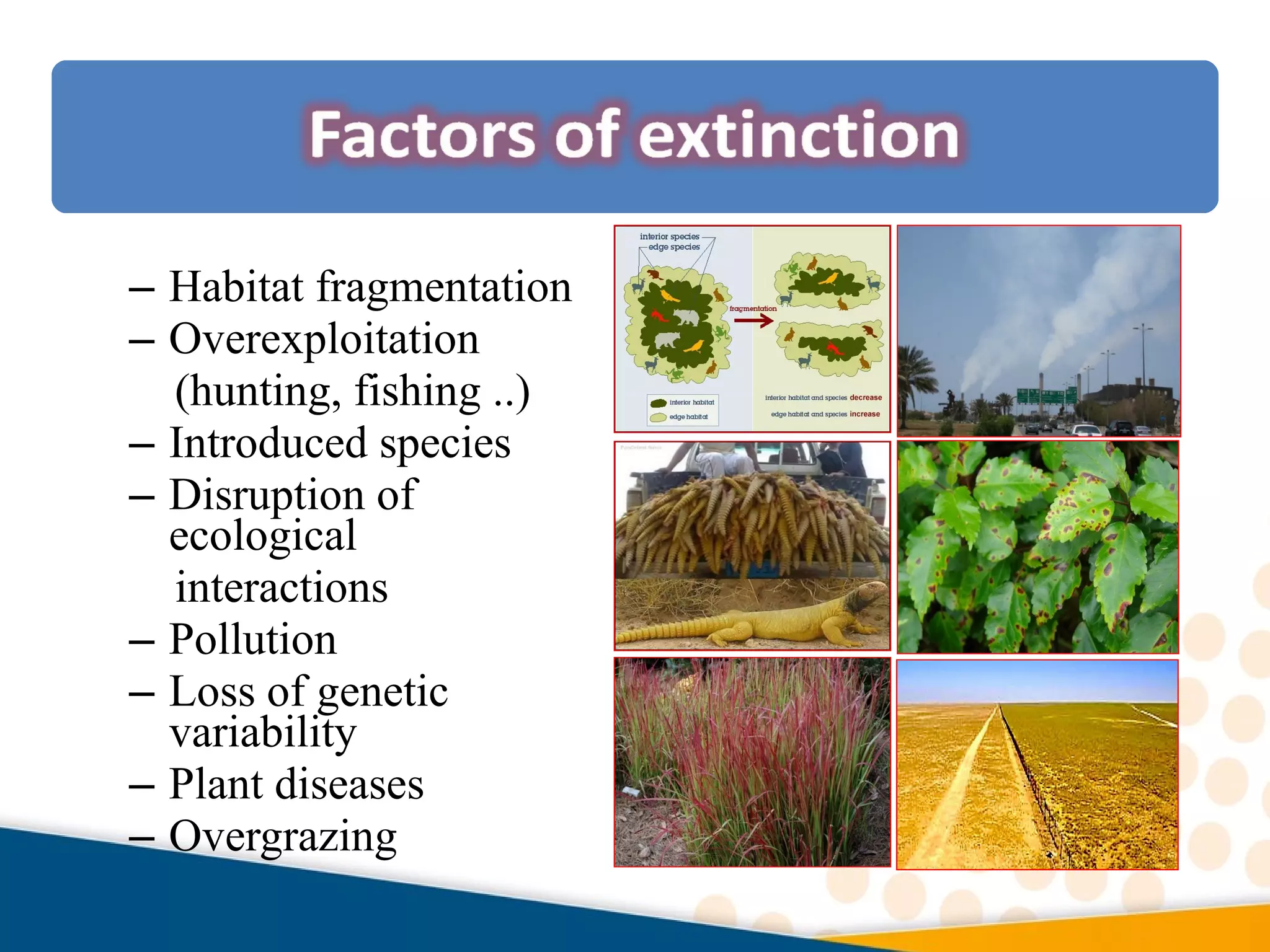
– Habitat fragmentation
– Overexploitation
(hunting, fishing ..)
– Introduced species
– Disruption of
ecological
interactions
– Pollution
– Loss of genetic
variability
– Plant diseases
– Overgrazing
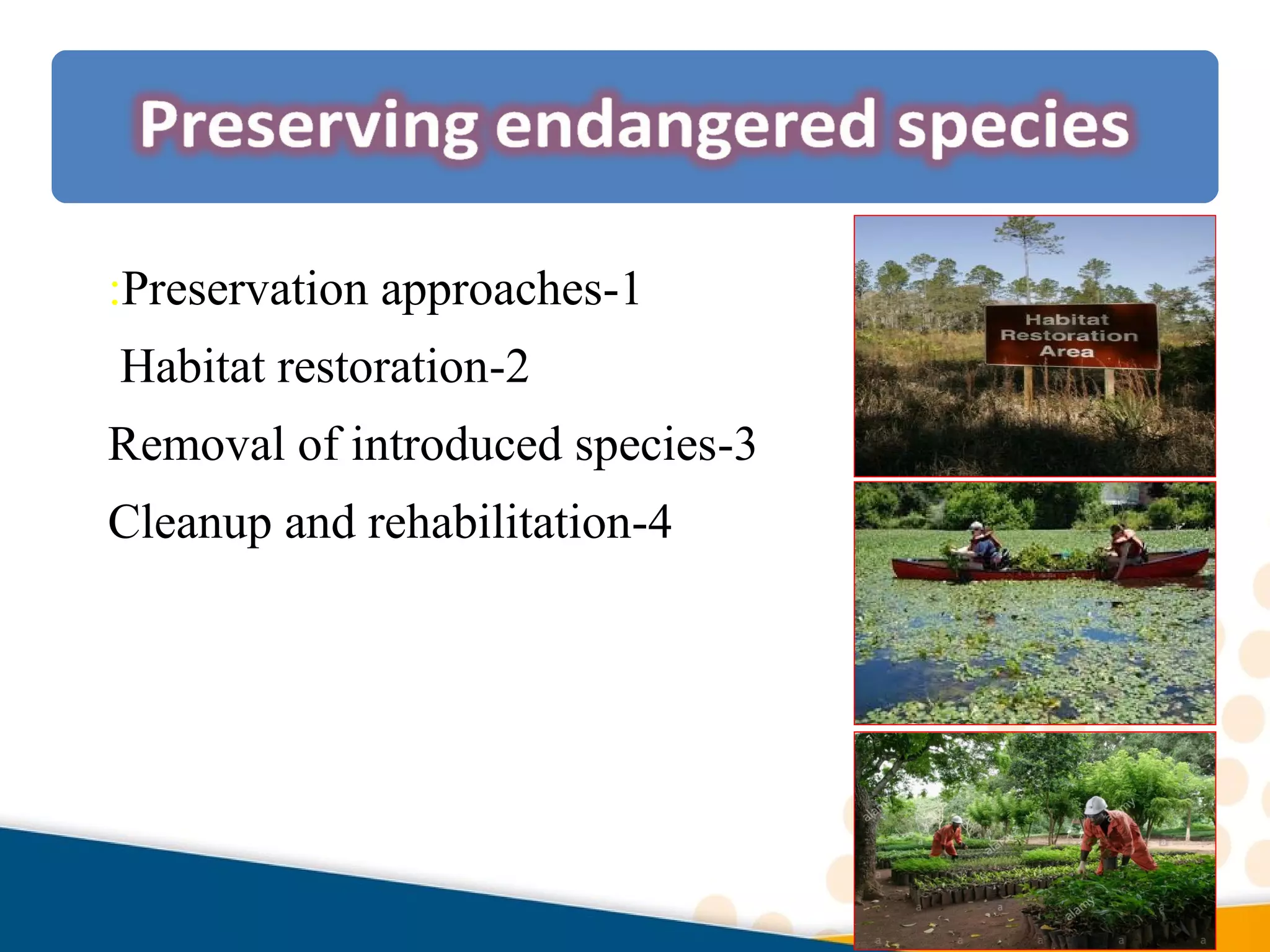
1-Preservation approaches:
2-Habitat restoration
3-Removal of introduced species
4-Cleanup and rehabilitation
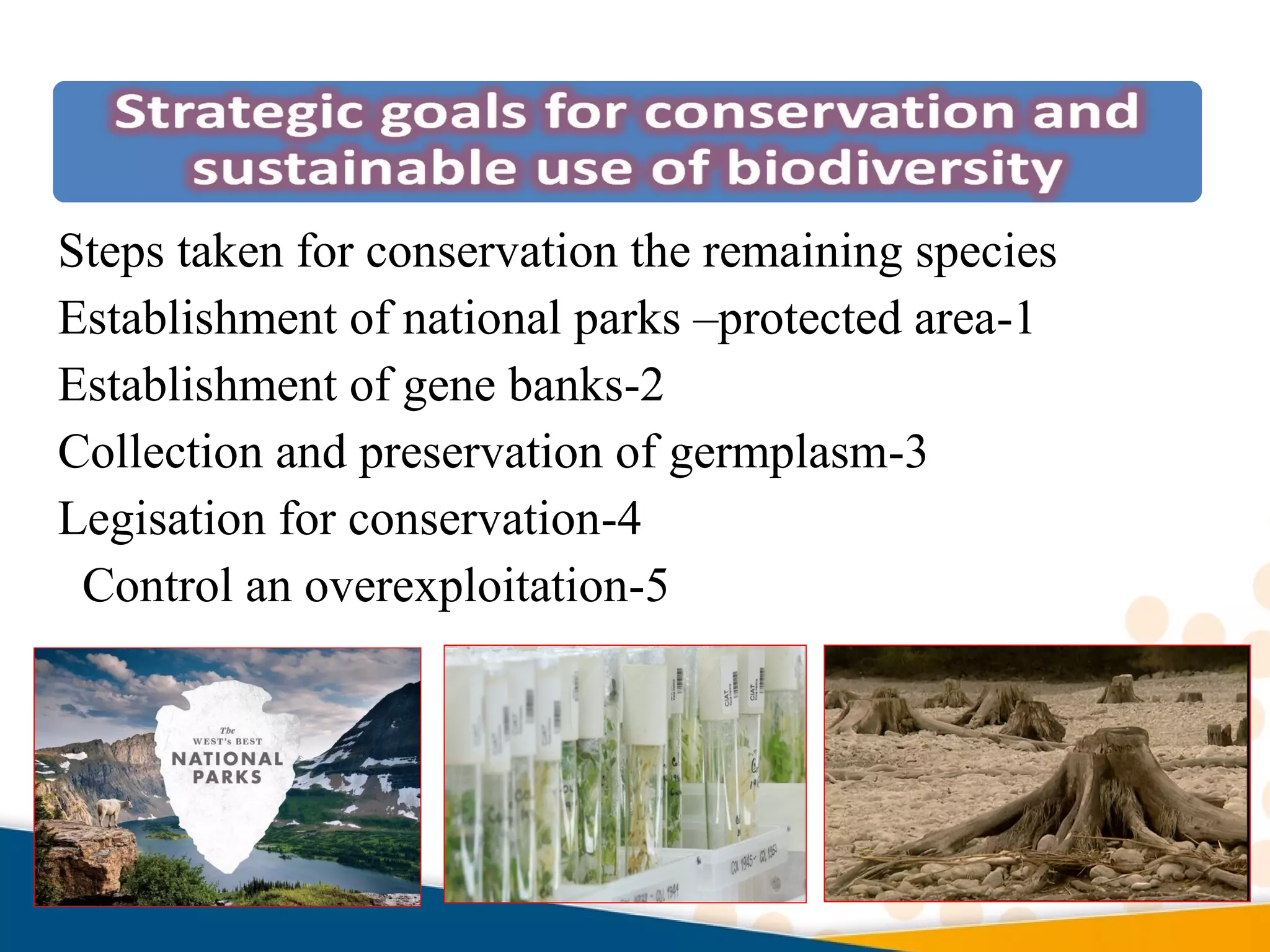
Steps taken for conservation the remaining species
1-Establishment of national parks –protected area
2-Establishment of gene banks
3-Collection and preservation of germplasm
4-Legisation for conservation
5-Control an overexploitation
At present, Saudi Arabia has 15 protected areas which cover
approximately 5% of the land area and conserve about 43%
of the country's flora.
Some of the protected areas of Saudi Arabia are listed below :
•Abu Duda
•Al Hair Wetland
•Al Wahbah Natural Monument
•Asir National Park
•Farasan Islands Protected Area
•Harrat al-Harrah Protected Area
•Harrat ar-Raha Nature Reserve
•13441373
1381
1423
1437
•32
1
2
3
4
5
6
7
8
9
Endemism and IUCN red list categories

Endemism and IUCN red list categories

  • 1.
    . Upon completion ofthis module, you will: Understand the endemism & extinction issue facing the world today. Explore the goal and aims of The IUCN Red List. Know who is involved in producing The IUCN Red List. Learn how much of the world’s biodiversity has been assessed for The IUCN Red List. Know how The IUCN Red List is used to guide conservation action. Plan strategy for species conservation. Appreciate the importance of biodiversity to humanity.
  • 2.
    A taxon whosedistribution is confined to a given area is said to be endemic to that area. Endemic Species – The species that are found exclusively in a particular area & are not found anywhere else naturally.
  • 3.
    • Allium asirenseB. Mathew Alliaceae • Aloe armatissima Lavr. & Colle. Aloaceae • Aloe porphyrostachys Lar. & Colle. Aloaceae • Aloe shadensis Lavr. & Colle. Aloaceae • Aloe sheilae Lavr. Aloeaceae • Anthemis dicksoniae A. Ghafoor Asteraceae • Anthemis scrobicularis Hedge & Kit Tan Asteraceae • Anthemis sheilae A. Ghafoor Asteraceae • Astragalus collenettae I.C. Hedge & D. Podl. Papilionaceae • Convolvulus asirensis Kotschy Convolvulaceae • Convolvulus cephalopodus ssp. abhansis Alfarhan Convolvulaceae • Delphinium sheilae Kit Tan Ranunculaceae • Echinops abuzinadianus S. Chaudhary Asteraceae
  • 4.
    The International Union forConservation of Nature (IUCN) is a membership Union uniquely composed of both government and civil society organisations. It provides public, private and non-governmental organisations with the knowledge and tools that enable human progress, economic development and nature conservation to take place together.
  • 5.
    40% world’s O2comes from raifall. 50% of chemical medicines are based on nature. 100%of our food comes from nature. IUCN= International Union for Conservation of Nature. Created in 1948. IUCN working in 160 countries. IUCN staff more than 1000 staff. 1200 member organization. 11000 volunteers (scientists and experts). IUCN objectives are: Assessing the status of species, Protecting natural wonders. Stop extinction of plants and animals, Fight climate change, Restore natural resources, Boost food security, Reduce poverty IUCN Projects: Managing water resources, Restoring forests, Protecting our coasts and oceans, Helping companies improve their environmental performance.
  • 6.
    The IUCN RedList of Threatened Species is widely recognized as the most comprehensive, objective global approach for evaluating the conservation status of species.
  • 11.
    – Habitat fragmentation –Overexploitation (hunting, fishing ..) – Introduced species – Disruption of ecological interactions – Pollution – Loss of genetic variability – Plant diseases – Overgrazing
  • 12.
    1-Preservation approaches: 2-Habitat restoration 3-Removalof introduced species 4-Cleanup and rehabilitation
  • 13.
    Steps taken forconservation the remaining species 1-Establishment of national parks –protected area 2-Establishment of gene banks 3-Collection and preservation of germplasm 4-Legisation for conservation 5-Control an overexploitation
  • 14.
    At present, SaudiArabia has 15 protected areas which cover approximately 5% of the land area and conserve about 43% of the country's flora. Some of the protected areas of Saudi Arabia are listed below : •Abu Duda •Al Hair Wetland •Al Wahbah Natural Monument •Asir National Park •Farasan Islands Protected Area •Harrat al-Harrah Protected Area •Harrat ar-Raha Nature Reserve
  • 15.
  • 16.