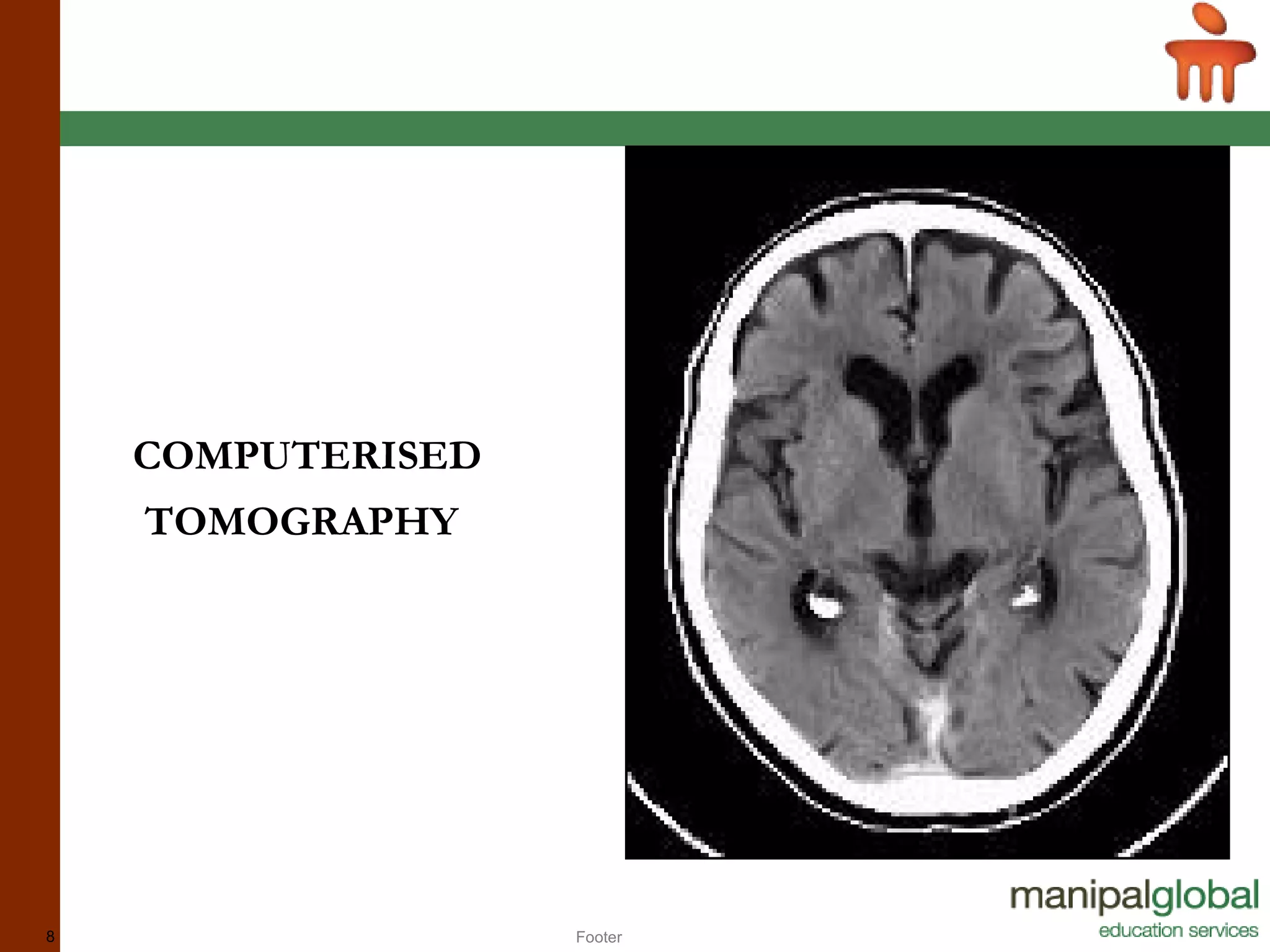
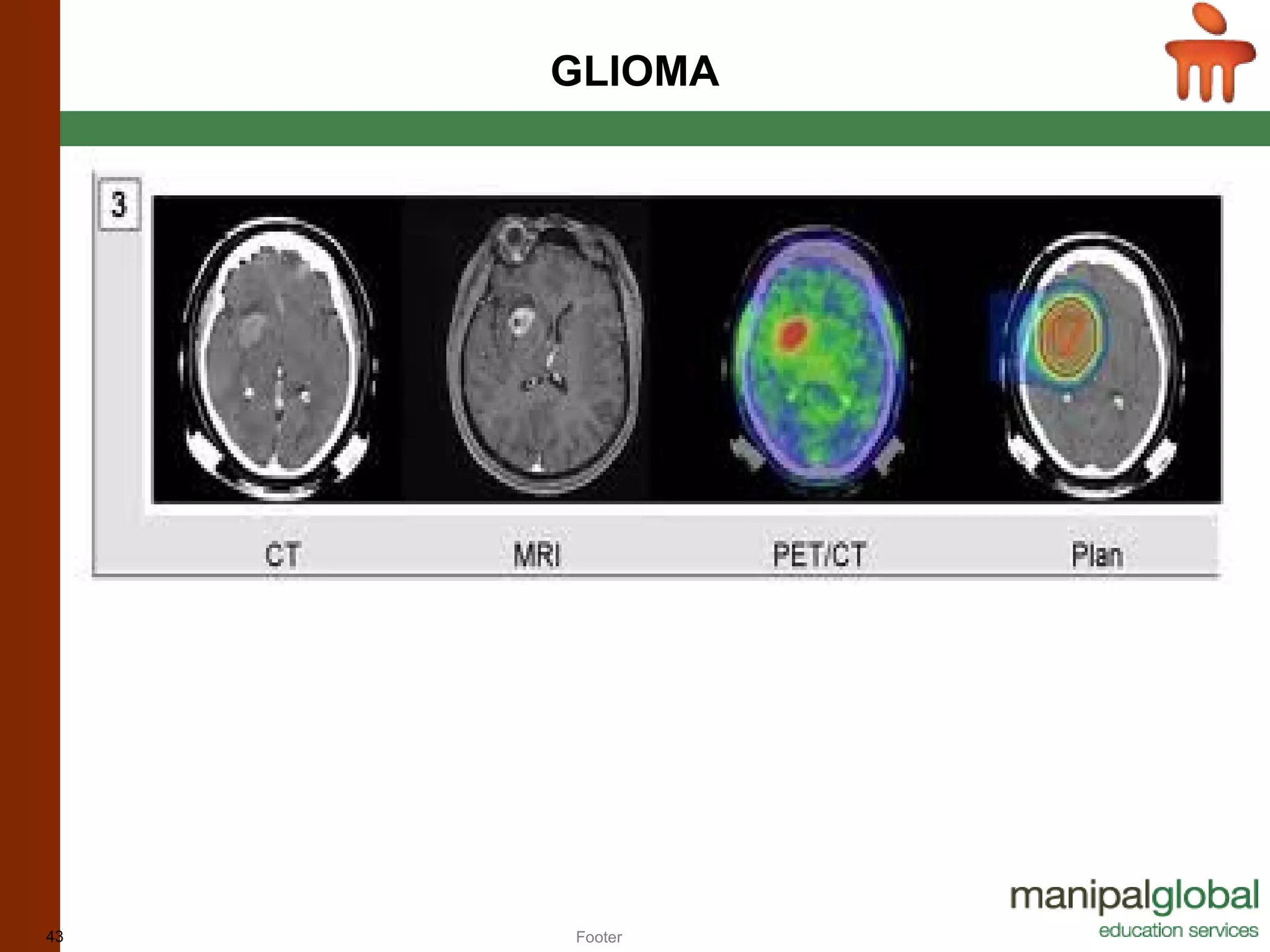
This document discusses the use of computerized tomography (CT) and positron emission tomography (PET) in evaluating the central nervous system. CT is useful for imaging many neurological conditions such as trauma, tumors, strokes, and infections. It provides anatomical details quickly and is widely available, but MRI generally provides better soft tissue contrast. PET combined with CT or MRI provides functional imaging of brain metabolism and is useful for conditions like Alzheimer's disease, Parkinson's disease, seizures, and cancers. Both CT and PET have advantages and limitations and are generally used together with other clinical information for diagnosis and management of neurological diseases.