Supervisory Ethics and
Issues
Beatriz Zayas
BSHS 335
Team A
Melissa Curiel
Celia Curiel
Blanca Perezarce
Table of Content
Legal aspects of supervision
 Multicultural issues in supervision
 Spiritual issues in supervision
 Multiple roles and relationships
 Styles of supervision
 Supervisor’s roles and responsibilities

Legal Aspect of Supervision


Direct and vicarious liability



Duty to warn



Dual relationship Informed Consent
Multicultural Issues in
Supervision


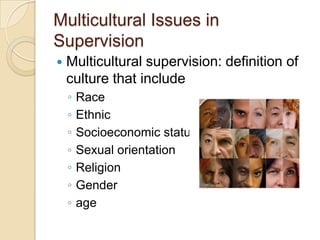
Multicultural supervision: definition of
culture that include
◦
◦
◦
◦
◦
◦
◦

Race
Ethnic
Socioeconomic status
Sexual orientation
Religion
Gender
age
Continued..


Some of the multicultural issues in supervision include:






Effort from subordinates
Involvement
Dedication
Knowledge
Understanding of actions

The supervision have the responsibility to be aware of
the complexities of the multicultural society
 In ethical and competent supervision involves
recognized and addressing the issues that apply to the
multicultural supervision.
 Racial and ethical issue the supervision don’t assist in
addressing racial and ethic issues. The client may be
denied to the opportunity to explore these issues and
also their therapy.

Multiple Roles and Relationships
In The Supervisory Process.


Multiple –role relationships in
supervision occur when a supervisor
has concurrent or consecutive
professional or non professional
relationship with a supervisee in
addition to the supervisor- supervisee
relationship.
Recommendations When
Dealing with Multiple
Relationships.


Supervisors should provide adequate
information.



Supervisees need to become informed
consumers of the supervision.



Both need to be Proactive.
5 Styles of Supervision


Laissez- faire- lacks direct supervision of employees and
fails to provide regular feedback
◦ Lack of control.
◦ Lack of increase costs



Autocratic-manager makes decisions alone without the input
of others
◦ Crushes creativity



Transactional- manager provide rewards or punishment to
the team members based on the performance result.
◦ Bonuses are the rewards that employees receive when they meet
the goals.



Transformational- this style depend on high levels of
communication in order to meet goals.
◦ Motivate team members and enhance productivity and also
efficiency because they are so involved.



Participative- manager values the input of his/her team
members and peer but she/he makes the final decision .
◦ Boots morale because employees feel their opinion matters.
Roles and Responsibilities of
Supervisor
Clinical
 Supportive
 Evaluative

Clinical
Evaluate clinical interactions
 Identify and reinforce effective actions
by the supervise
 Teach and demonstrate counseling
techniques
 Explain the rationale of strategies and
interventions
 Interpret significant events in the
counseling process

Supportive and Evaluative






Assist the supervise in recognizing their
personal limitations in order to protect
the welfare of both the client and
supervise
Interact with the supervise in a manner
that facilitates their self exploration,
problem solving ability and confidence.
Support the supervise’s well being
through being aware of and helping the
supervisee deal with such things as
stressful events, role ambiguity, career
development and skill use.
Evaluative
Assess the practitioner’s skills &
approach towards the
psychotherapeutic process with the
client
 Clarify performance standards to be
met
 Negotiate objectives for learning
 Utilize appropriate strategies to address
performance and skills deficits in the
supervisees approach with clients.

References
Corey, G., Schneider Corey, M., & Patrick, C. (2011). Issues and Ethics
in the Helping Professions (8th ed.). Retrieved from The University of
Phoenix eBook Collection database.
(Corey, "Chapter 11,Ethical Issues in Couples and Family
Therapy," 2011)
http://smallbusiness.chron.com/5-different-types-leadership-styles17584.html

(Corey, "Chapter 11,Ethical Issues in Couples and Family
Therapy," 2011)
: http://abelsvoice.files.wordpress.com/2012/07/multiculturalism1.jpg
: (Corey, "Chapter 11,Ethical Issues in Couples and Family
Therapy," 2011)
http://lutherthie.com/art/wordpress_art_2011/wpcontent/uploads/2012/09/lack-3234-detail_1024x768-700x500.jpg
(Corey, “Chapter 11,Ethical Issues in Couples and Family
Therapy," 2011)

Supervisory+ethics+and+issues

  • 1.
    Supervisory Ethics and Issues BeatrizZayas BSHS 335 Team A Melissa Curiel Celia Curiel Blanca Perezarce
  • 2.
    Table of Content Legalaspects of supervision  Multicultural issues in supervision  Spiritual issues in supervision  Multiple roles and relationships  Styles of supervision  Supervisor’s roles and responsibilities 
  • 3.
    Legal Aspect ofSupervision  Direct and vicarious liability  Duty to warn  Dual relationship Informed Consent
  • 4.
    Multicultural Issues in Supervision  Multiculturalsupervision: definition of culture that include ◦ ◦ ◦ ◦ ◦ ◦ ◦ Race Ethnic Socioeconomic status Sexual orientation Religion Gender age
  • 5.
    Continued..  Some of themulticultural issues in supervision include:      Effort from subordinates Involvement Dedication Knowledge Understanding of actions The supervision have the responsibility to be aware of the complexities of the multicultural society  In ethical and competent supervision involves recognized and addressing the issues that apply to the multicultural supervision.  Racial and ethical issue the supervision don’t assist in addressing racial and ethic issues. The client may be denied to the opportunity to explore these issues and also their therapy. 
  • 6.
    Multiple Roles andRelationships In The Supervisory Process.  Multiple –role relationships in supervision occur when a supervisor has concurrent or consecutive professional or non professional relationship with a supervisee in addition to the supervisor- supervisee relationship.
  • 7.
    Recommendations When Dealing withMultiple Relationships.  Supervisors should provide adequate information.  Supervisees need to become informed consumers of the supervision.  Both need to be Proactive.
  • 8.
    5 Styles ofSupervision  Laissez- faire- lacks direct supervision of employees and fails to provide regular feedback ◦ Lack of control. ◦ Lack of increase costs  Autocratic-manager makes decisions alone without the input of others ◦ Crushes creativity  Transactional- manager provide rewards or punishment to the team members based on the performance result. ◦ Bonuses are the rewards that employees receive when they meet the goals.  Transformational- this style depend on high levels of communication in order to meet goals. ◦ Motivate team members and enhance productivity and also efficiency because they are so involved.  Participative- manager values the input of his/her team members and peer but she/he makes the final decision . ◦ Boots morale because employees feel their opinion matters.
  • 9.
    Roles and Responsibilitiesof Supervisor Clinical  Supportive  Evaluative 
  • 10.
    Clinical Evaluate clinical interactions Identify and reinforce effective actions by the supervise  Teach and demonstrate counseling techniques  Explain the rationale of strategies and interventions  Interpret significant events in the counseling process 
  • 11.
    Supportive and Evaluative    Assistthe supervise in recognizing their personal limitations in order to protect the welfare of both the client and supervise Interact with the supervise in a manner that facilitates their self exploration, problem solving ability and confidence. Support the supervise’s well being through being aware of and helping the supervisee deal with such things as stressful events, role ambiguity, career development and skill use.
  • 12.
    Evaluative Assess the practitioner’sskills & approach towards the psychotherapeutic process with the client  Clarify performance standards to be met  Negotiate objectives for learning  Utilize appropriate strategies to address performance and skills deficits in the supervisees approach with clients. 
  • 13.
    References Corey, G., SchneiderCorey, M., & Patrick, C. (2011). Issues and Ethics in the Helping Professions (8th ed.). Retrieved from The University of Phoenix eBook Collection database. (Corey, "Chapter 11,Ethical Issues in Couples and Family Therapy," 2011) http://smallbusiness.chron.com/5-different-types-leadership-styles17584.html (Corey, "Chapter 11,Ethical Issues in Couples and Family Therapy," 2011) : http://abelsvoice.files.wordpress.com/2012/07/multiculturalism1.jpg : (Corey, "Chapter 11,Ethical Issues in Couples and Family Therapy," 2011) http://lutherthie.com/art/wordpress_art_2011/wpcontent/uploads/2012/09/lack-3234-detail_1024x768-700x500.jpg (Corey, “Chapter 11,Ethical Issues in Couples and Family Therapy," 2011)