By:
Pharm D
Spring 15
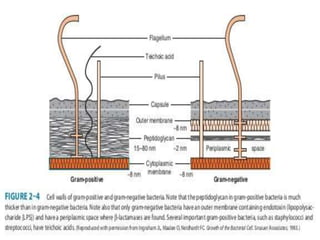
PEPTIDOGLYCAN:
• Term peptidoglycan is derived from peptides and the
sugars (glycans)that makeup the molecule.
• Synonyms are murein and mucopeptide.
• Complex interwoven network
• Surrounds entire cell composed of single covalently
linked macromolecule.
• Found only in bacterial cell wall
• Provides rigidity, shape of cell
• Allow cell to withstand media of osmotic pressure e.g.
water
LIPOPOLYSACCHARIDE (LPS):
• LPS of the outer membrane of cell wall of gram negative bacteria is
ENDOTOXIN
• It is called endotoxin because it is integral part of cell wall in contrast to
exotoxins actively secreted from bacteria.
• Severity of symptoms can differ greatly
• Responsible for many of diseases such as fever and shock(specially
hypotension)
• The LPS composed of three distinct units:
• 1)Phospholipids called lipid A which is responsible for the toxic effects
• 2)A core polysaccharide of five sugar linked through ketodeoxyoctulonate
(KDO) to lipid A.
• 3)outer polysaccharide consists of up to 25 repeating units of 3-5 sugars.
TEICHOIC ACID:
• Are fibers located in the outer layer of gram negative cell
wall and extend from it
• Composed of polymers of either glycerol phosphate or
ribitol phosphate.
• Some polymers of teichoic acid penetrate the
peptidoglycan layer and are covalently linked to the lipid
in cytoplasmic membrane so in this case they called as
lipoteichoic acid.
IMPORTANCE OF TEICHOIC ACID:
• They have ability to induce septic shock caused by gram
positive bacteria that is they activate same pathway as
does endotoxins LPS in gram negative bacteria.
• Also mediate attachment of staphylococci to mucosal
cells
• Gram negative bacteria do not have teichoic acid.
bacteria
bacteria

bacteria

  • 1.
  • 9.
    PEPTIDOGLYCAN: • Term peptidoglycanis derived from peptides and the sugars (glycans)that makeup the molecule. • Synonyms are murein and mucopeptide. • Complex interwoven network • Surrounds entire cell composed of single covalently linked macromolecule. • Found only in bacterial cell wall • Provides rigidity, shape of cell • Allow cell to withstand media of osmotic pressure e.g. water
  • 10.
    LIPOPOLYSACCHARIDE (LPS): • LPSof the outer membrane of cell wall of gram negative bacteria is ENDOTOXIN • It is called endotoxin because it is integral part of cell wall in contrast to exotoxins actively secreted from bacteria. • Severity of symptoms can differ greatly • Responsible for many of diseases such as fever and shock(specially hypotension) • The LPS composed of three distinct units: • 1)Phospholipids called lipid A which is responsible for the toxic effects • 2)A core polysaccharide of five sugar linked through ketodeoxyoctulonate (KDO) to lipid A. • 3)outer polysaccharide consists of up to 25 repeating units of 3-5 sugars.
  • 11.
    TEICHOIC ACID: • Arefibers located in the outer layer of gram negative cell wall and extend from it • Composed of polymers of either glycerol phosphate or ribitol phosphate. • Some polymers of teichoic acid penetrate the peptidoglycan layer and are covalently linked to the lipid in cytoplasmic membrane so in this case they called as lipoteichoic acid.
  • 12.
    IMPORTANCE OF TEICHOICACID: • They have ability to induce septic shock caused by gram positive bacteria that is they activate same pathway as does endotoxins LPS in gram negative bacteria. • Also mediate attachment of staphylococci to mucosal cells • Gram negative bacteria do not have teichoic acid.