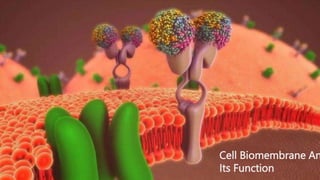
Cell Biomembrane An
Its Function
CELL
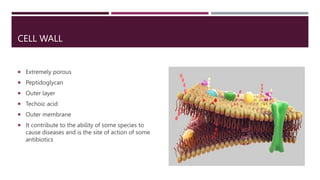
CELL WALL
 Extremely porous
 Peptidoglycan
 Outer layer
 Techoic acid
 Outer membrane
 It contribute to the ability of some species to
cause diseases and is the site of action of some
antibiotics
COMPOSITION OF CELL WALL
 Protein
 Teichoic acid
 Lipoteichoic acid
 Peptidoglycan
 Cell membrane
 porin
GRAM POSITIVE BACTERIA CELL WALL
GRAM NEGATIVE BACTERIA CELL WALL
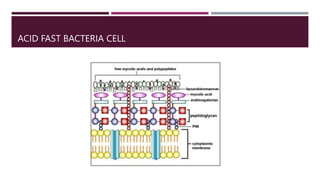
ACID FAST BACTERIA CELL
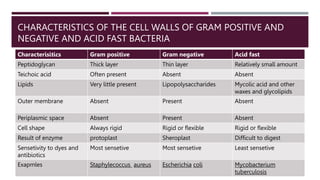
CHARACTERISTICS OF THE CELL WALLS OF GRAM POSITIVE AND
NEGATIVE AND ACID FAST BACTERIA
Characterisitics Gram positive Gram negative Acid fast
Peptidoglycan Thick layer Thin layer Relatively small amount
Teichoic acid Often present Absent Absent
Lipids Very little present Lipopolysaccharides Mycolic acid and other
waxes and glycolipids
Outer membrane Absent Present Absent
Periplasmic space Absent Present Absent
Cell shape Always rigid Rigid or flexible Rigid or flexible
Result of enzyme protoplast Sheroplast Difficult to digest
Sensetivity to dyes and
antibiotics
Most sensetive Most sensetive Least sensetive
Exapmles Staphylecoccus aureus Escherichia coli Mycobacterium
tuberculosis
PEPTIDOGLYCAN
 A rigid polyssacharides.
 It is composed of alternating reapets of two
modified glucose residues called N-
acetylglucosamine and N-acetylmuramic acid
along with a amino acids L-lanine, D-alanine, D-
glutamic acid, and either L-lysine or
diaminopimolic acid (DAP) (NAG) (NAM).
 Arranged in sheets individual sheets connected
by peptide cross link.
 Constituents are connected in an ordered way to
from the glycan tetrapeptide.
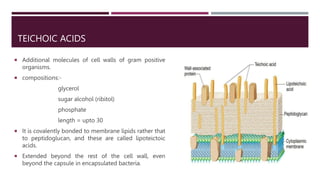
TEICHOIC ACIDS
 Additional molecules of cell walls of gram positive
organisms.
 compositions:-
glycerol
sugar alcohol (ribitol)
phosphate
length = upto 30
 It is covalently bonded to membrane lipids rather that
to peptidoglucan, and these are called lipoteictoic
acids.
 Extended beyond the rest of the cell wall, even
beyond the capsule in encapsulated bacteria.
FUNCTIONS OF TEICHOIC ACIDS
 Furnished attachment sites for bacteriophage.
 Probably serves as a passage way for movement of icons into and out of the cell.
OUTER MEMBRANE
 Found primarily in the gram negative bacteria
only a small amount of the toal cell consist of
peptidoglycan as most of thecell wall is
composed of the outer membrane.
 It is bilayer membrane.
 It is attached to the peptidoglycan by an almost
continous layer of small lipoprotein molecules.
 These large, complex molecules contain both
lipid and carbohydrates.
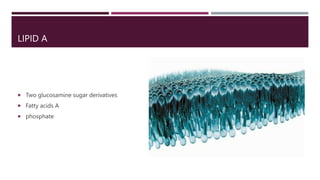
LIPID A
 Two glucosamine sugar derivatives
 Fatty acids A
 phosphate
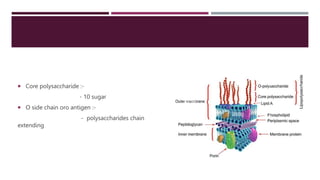
 Core polysaccharide :-
- 10 sugar
 O side chain oro antigen :-
- polysaccharides chain
extending
FUNCTION
 It contribute to the negative charge on the bacterial surface because the core polysaccharides usually
contains charged sugar and phosphate.
 It hepls create a permeability barries.

Cell Biomembrane

  • 1.
  • 3.
  • 4.
    CELL WALL  Extremelyporous  Peptidoglycan  Outer layer  Techoic acid  Outer membrane  It contribute to the ability of some species to cause diseases and is the site of action of some antibiotics
  • 5.
    COMPOSITION OF CELLWALL  Protein  Teichoic acid  Lipoteichoic acid  Peptidoglycan  Cell membrane  porin
  • 6.
  • 7.
  • 8.
  • 9.
    CHARACTERISTICS OF THECELL WALLS OF GRAM POSITIVE AND NEGATIVE AND ACID FAST BACTERIA Characterisitics Gram positive Gram negative Acid fast Peptidoglycan Thick layer Thin layer Relatively small amount Teichoic acid Often present Absent Absent Lipids Very little present Lipopolysaccharides Mycolic acid and other waxes and glycolipids Outer membrane Absent Present Absent Periplasmic space Absent Present Absent Cell shape Always rigid Rigid or flexible Rigid or flexible Result of enzyme protoplast Sheroplast Difficult to digest Sensetivity to dyes and antibiotics Most sensetive Most sensetive Least sensetive Exapmles Staphylecoccus aureus Escherichia coli Mycobacterium tuberculosis
  • 10.
    PEPTIDOGLYCAN  A rigidpolyssacharides.  It is composed of alternating reapets of two modified glucose residues called N- acetylglucosamine and N-acetylmuramic acid along with a amino acids L-lanine, D-alanine, D- glutamic acid, and either L-lysine or diaminopimolic acid (DAP) (NAG) (NAM).  Arranged in sheets individual sheets connected by peptide cross link.  Constituents are connected in an ordered way to from the glycan tetrapeptide.
  • 11.
    TEICHOIC ACIDS  Additionalmolecules of cell walls of gram positive organisms.  compositions:- glycerol sugar alcohol (ribitol) phosphate length = upto 30  It is covalently bonded to membrane lipids rather that to peptidoglucan, and these are called lipoteictoic acids.  Extended beyond the rest of the cell wall, even beyond the capsule in encapsulated bacteria.
  • 12.
    FUNCTIONS OF TEICHOICACIDS  Furnished attachment sites for bacteriophage.  Probably serves as a passage way for movement of icons into and out of the cell.
  • 13.
    OUTER MEMBRANE  Foundprimarily in the gram negative bacteria only a small amount of the toal cell consist of peptidoglycan as most of thecell wall is composed of the outer membrane.  It is bilayer membrane.  It is attached to the peptidoglycan by an almost continous layer of small lipoprotein molecules.  These large, complex molecules contain both lipid and carbohydrates.
  • 14.
    LIPID A  Twoglucosamine sugar derivatives  Fatty acids A  phosphate
  • 15.
     Core polysaccharide:- - 10 sugar  O side chain oro antigen :- - polysaccharides chain extending
  • 16.
    FUNCTION  It contributeto the negative charge on the bacterial surface because the core polysaccharides usually contains charged sugar and phosphate.  It hepls create a permeability barries.