By:
Pharm D
Spring 15
• Avian influenza is an infectious viral disease of birds (especially wild water
fowl such as ducks and geese).
• Causing no apparent signs of illness
• Sometimes spread to domestic poultry and cause large-scale outbreaks of
serious disease.
• Some of these AI viruses have also been reported to cross the species barrier
and cause disease in humans and other mammals.
HISTORY
• Avian influenza was first recorded in Italy in 1878.
• Originally known as Fowl Plague, continuously caused massive
outbreaks in poultry, including two outbreaks in the United States
(1924 and 1929).
• In 1955, it was discovered that the virus causing Fowl Plague was an
influenza virus.
• Influenza A/H5N1 was first isolated from a goose in China in 1996.
• Human infections were first reported in 1997 in Hong Kong.
ORTHOMYXOVIRIDAE:
The Orthomyxoviridae are a family of RNA viruses which infect
vertebrates. It includes those viruses which cause influenza. Viruses
of this family contain linear negative-sense single-stranded RNA.
Consists of 5 genera:
• Influenzavirus A
• Influenzavirus B
• Influenzavirus C
• Thogotovirus
• Isavirus
WHAT IS INFLUENZA VIRUS?
• Influenza type A viruses are categorized into subtypes.
• Based on the type of two proteins on the surface of the
viral envelope:
• H = hemagglutinin, a protein that causes red blood cells to
agglutinate.
• N = neuraminidase, an enzyme that cleaves the glycosidic bonds
of the monosaccharide, neuraminic acid
SUB-TYPES OF INFLUENZA VIRUS A:
• Influenza A viruses are significant for their potential for disease and
death in humans and other animals. Influenza A virus subtypes that have
been confirmed in humans, include:
H1N1
• Spanish flu
• human flu
• swine flu
H2N2
• Asian flu
H3N2
• Hong Kong flu
H5N1
• bird flu
OTHER SUB-TYPES INCLUDE:
• H7N7
• H1N2
• H9N2
• H7N2
• H7N3
• H10N7
• H7N9
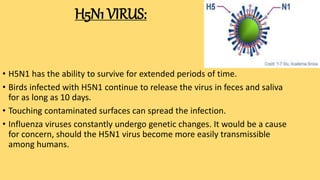
H5N1 VIRUS:
• H5N1 has the ability to survive for extended periods of time.
• Birds infected with H5N1 continue to release the virus in feces and saliva
for as long as 10 days.
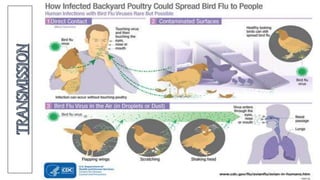
• Touching contaminated surfaces can spread the infection.
• Influenza viruses constantly undergo genetic changes. It would be a cause
for concern, should the H5N1 virus become more easily transmissible
among humans.
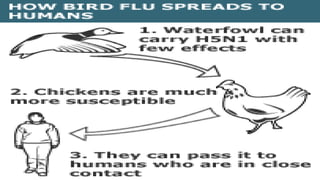
What Causes Bird Flu?
• H5N1 occurs naturally in wild waterfowl, but it can spread easily to
domestic poultry. The disease is transmitted to humans through
contact with infected bird feces, nasal secretions, or secretions from
the mouth or eyes.
• Consuming properly cooked poultry or eggs from infected birds does
not transmit the bird flu, but eggs should never be served runny.
Meat is considered safe if it has been cooked to an internal
temperature of 165ºF.
COMPLICATIONS:
• Some potential complications include:
• sepsis (a possibly fatal inflammatory response
to bacteria and other germs)
• pneumonia
• organ failure
• acute respiratory distress
What Are Bird Flu Risk Factors?
• You may have a greater risk of contracting H5N1 if you are:
• a poultry farmer
• a traveler visiting affected areas
• exposed to infected birds
• someone who eats undercooked poultry or eggs
• a healthcare worker caring for infected patients
• a household member of an infected person.
DIAGNOSTIC TESTS:
The U.S. Food and Drug Administration has approved a test designed to identify avian
influenza . However, the test isn’t widely available.
Following tests can be perform:
 auscultation (a test that detects abnormal breath sounds).
 white blood cell differential.
 nasopharyngeal culture.
 chest X-ray.
 Additional tests can be done to assess the functioning of your heart, kidneys, and liver.
• In most cases, treatment with antiviral medication such as
oseltamivir (Tamiflu) or zanamivir (Relenza) can help reduce
the severity of the disease. However, the medication must
be given within 48 hours after symptoms first appear.
• The virus that causes the human form of the flu can
develop resistance to the two most common forms of
antiviral medications, amantadine and rimantadine. These
medications shouldn’t be used to treat the disease.
Treatment:
How Is Bird Flu Prevented?
You can minimize your risk by avoiding:
• open air markets
• contact with infected birds
• undercooked poultry
• Be sure to practice good hygiene
• Wash your hands regularly.
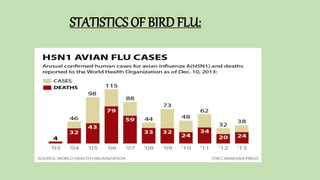
STATISTICS OF BIRD FLU:
bird flu

bird flu

  • 1.
  • 4.
    • Avian influenzais an infectious viral disease of birds (especially wild water fowl such as ducks and geese). • Causing no apparent signs of illness • Sometimes spread to domestic poultry and cause large-scale outbreaks of serious disease. • Some of these AI viruses have also been reported to cross the species barrier and cause disease in humans and other mammals.
  • 5.
    HISTORY • Avian influenzawas first recorded in Italy in 1878. • Originally known as Fowl Plague, continuously caused massive outbreaks in poultry, including two outbreaks in the United States (1924 and 1929). • In 1955, it was discovered that the virus causing Fowl Plague was an influenza virus. • Influenza A/H5N1 was first isolated from a goose in China in 1996. • Human infections were first reported in 1997 in Hong Kong.
  • 6.
    ORTHOMYXOVIRIDAE: The Orthomyxoviridae area family of RNA viruses which infect vertebrates. It includes those viruses which cause influenza. Viruses of this family contain linear negative-sense single-stranded RNA. Consists of 5 genera: • Influenzavirus A • Influenzavirus B • Influenzavirus C • Thogotovirus • Isavirus
  • 7.
    WHAT IS INFLUENZAVIRUS? • Influenza type A viruses are categorized into subtypes. • Based on the type of two proteins on the surface of the viral envelope: • H = hemagglutinin, a protein that causes red blood cells to agglutinate. • N = neuraminidase, an enzyme that cleaves the glycosidic bonds of the monosaccharide, neuraminic acid
  • 8.
    SUB-TYPES OF INFLUENZAVIRUS A: • Influenza A viruses are significant for their potential for disease and death in humans and other animals. Influenza A virus subtypes that have been confirmed in humans, include: H1N1 • Spanish flu • human flu • swine flu H2N2 • Asian flu H3N2 • Hong Kong flu H5N1 • bird flu
  • 9.
    OTHER SUB-TYPES INCLUDE: •H7N7 • H1N2 • H9N2 • H7N2 • H7N3 • H10N7 • H7N9
  • 10.
    H5N1 VIRUS: • H5N1has the ability to survive for extended periods of time. • Birds infected with H5N1 continue to release the virus in feces and saliva for as long as 10 days. • Touching contaminated surfaces can spread the infection. • Influenza viruses constantly undergo genetic changes. It would be a cause for concern, should the H5N1 virus become more easily transmissible among humans.
  • 12.
    What Causes BirdFlu? • H5N1 occurs naturally in wild waterfowl, but it can spread easily to domestic poultry. The disease is transmitted to humans through contact with infected bird feces, nasal secretions, or secretions from the mouth or eyes. • Consuming properly cooked poultry or eggs from infected birds does not transmit the bird flu, but eggs should never be served runny. Meat is considered safe if it has been cooked to an internal temperature of 165ºF.
  • 15.
    COMPLICATIONS: • Some potentialcomplications include: • sepsis (a possibly fatal inflammatory response to bacteria and other germs) • pneumonia • organ failure • acute respiratory distress
  • 16.
    What Are BirdFlu Risk Factors? • You may have a greater risk of contracting H5N1 if you are: • a poultry farmer • a traveler visiting affected areas • exposed to infected birds • someone who eats undercooked poultry or eggs • a healthcare worker caring for infected patients • a household member of an infected person.
  • 18.
    DIAGNOSTIC TESTS: The U.S.Food and Drug Administration has approved a test designed to identify avian influenza . However, the test isn’t widely available. Following tests can be perform:  auscultation (a test that detects abnormal breath sounds).  white blood cell differential.  nasopharyngeal culture.  chest X-ray.  Additional tests can be done to assess the functioning of your heart, kidneys, and liver.
  • 19.
    • In mostcases, treatment with antiviral medication such as oseltamivir (Tamiflu) or zanamivir (Relenza) can help reduce the severity of the disease. However, the medication must be given within 48 hours after symptoms first appear. • The virus that causes the human form of the flu can develop resistance to the two most common forms of antiviral medications, amantadine and rimantadine. These medications shouldn’t be used to treat the disease. Treatment:
  • 20.
    How Is BirdFlu Prevented? You can minimize your risk by avoiding: • open air markets • contact with infected birds • undercooked poultry • Be sure to practice good hygiene • Wash your hands regularly.
  • 21.