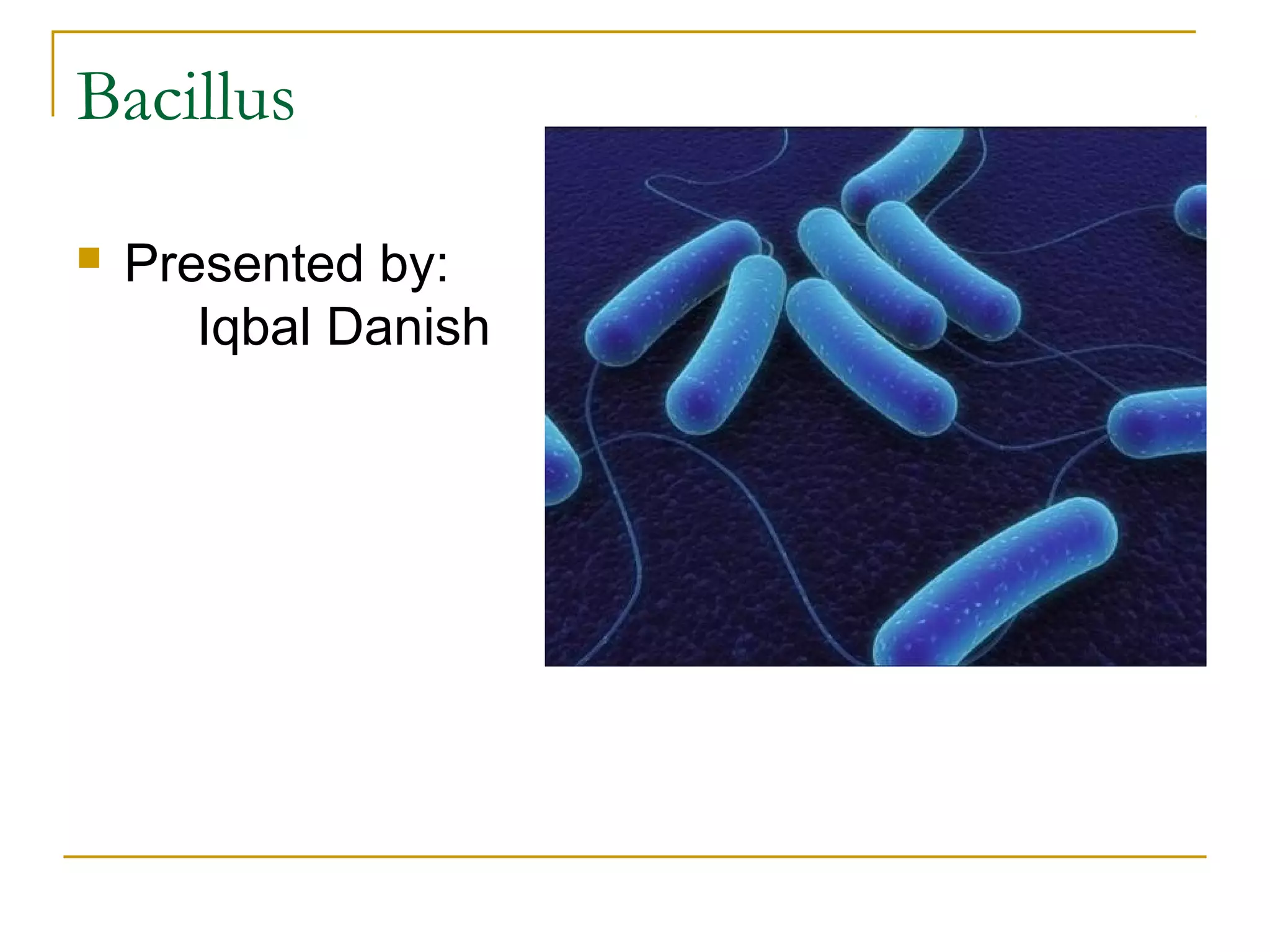
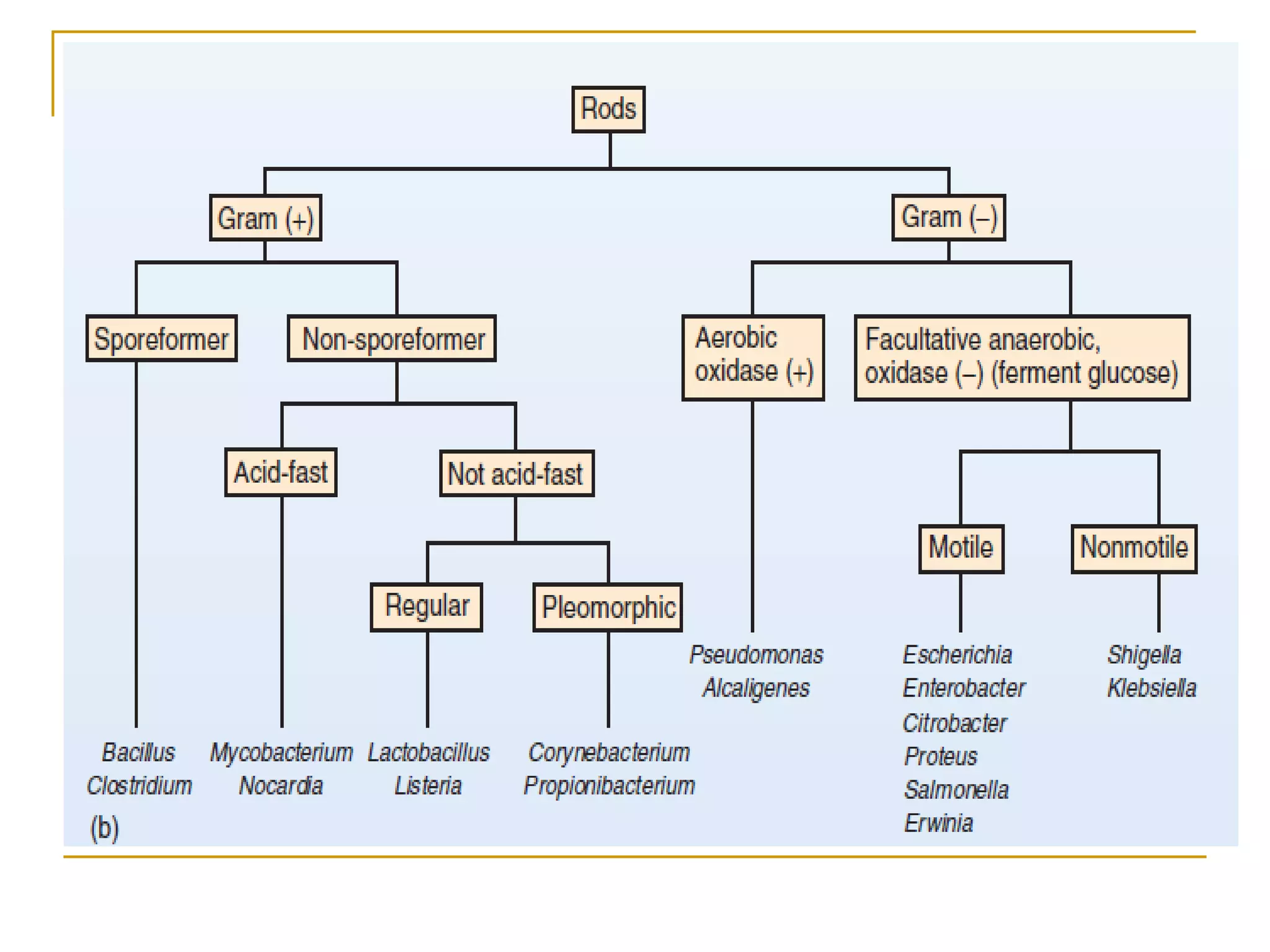
Bacillus
 Presented by:
Iqbal Danish
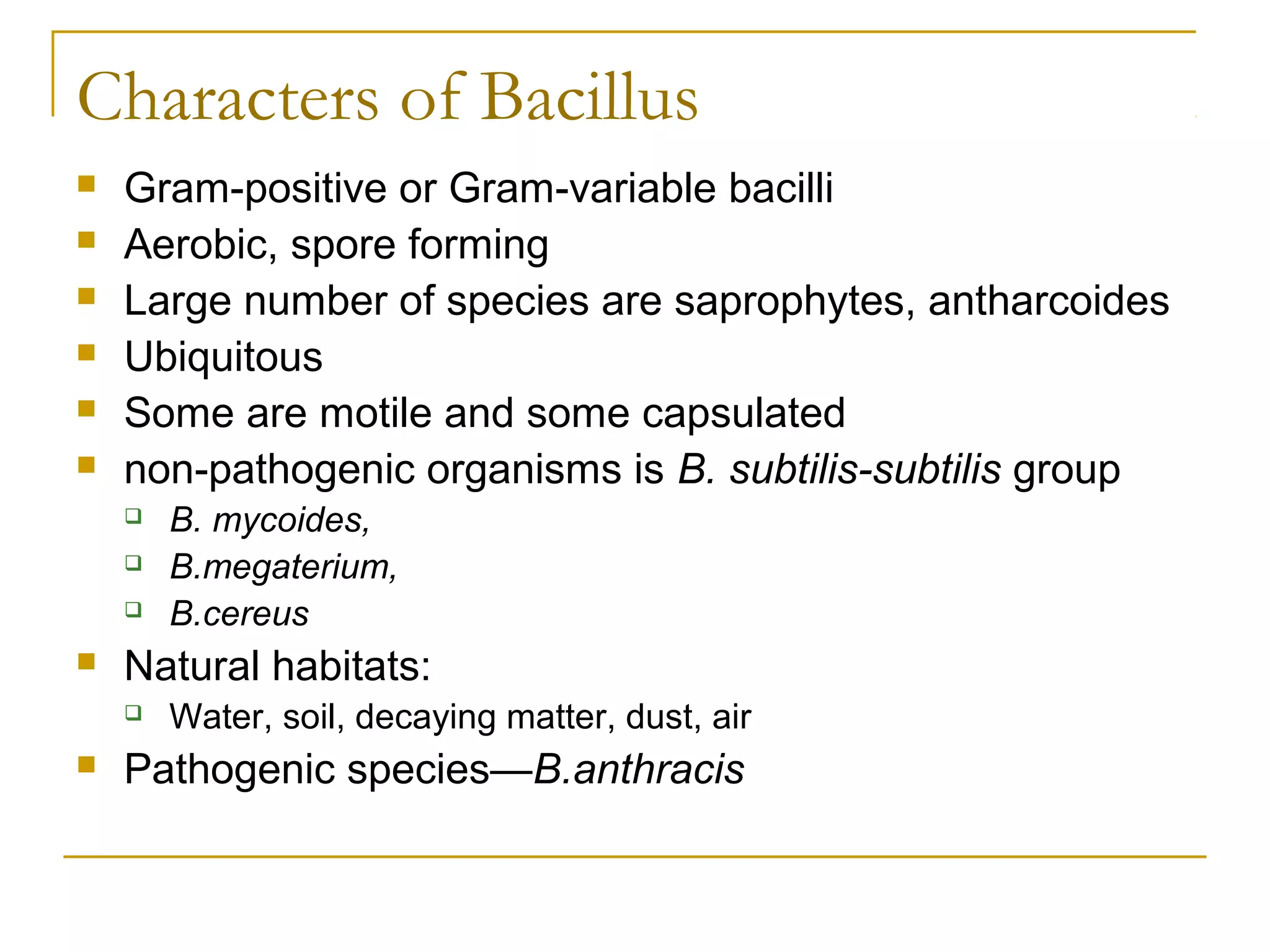
Characters of Bacillus
 Gram-positive or Gram-variable bacilli
 Aerobic, spore forming
 Large number of species are saprophytes, antharcoides
 Ubiquitous
 Some are motile and some capsulated
 non-pathogenic organisms is B. subtilis-subtilis group
 B. mycoides,
 B.megaterium,
 B.cereus
 Natural habitats:
 Water, soil, decaying matter, dust, air
 Pathogenic species—B.anthracis
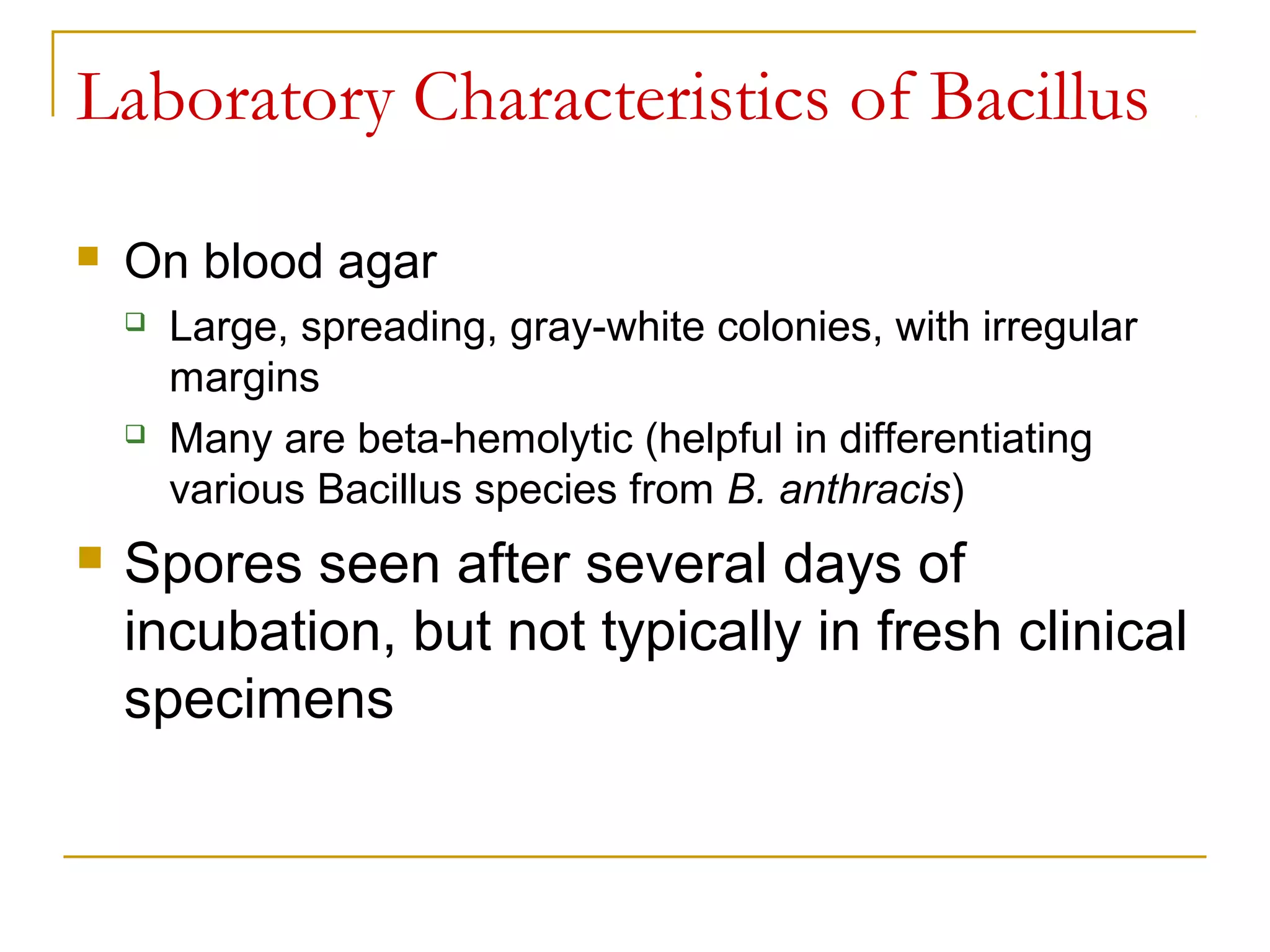
Laboratory Characteristics of Bacillus
 On blood agar
 Large, spreading, gray-white colonies, with irregular
margins
 Many are beta-hemolytic (helpful in differentiating
various Bacillus species from B. anthracis)
 Spores seen after several days of
incubation, but not typically in fresh clinical
specimens
Epidemiology of Bacillus anthracis
 Enzootic in certain countries (e.g., Turkey, Iran,
Pakistan and Sudan)
 Anthrax spores infectious for decades
 Biologic warfare experiments
 Primarily a disease of herbivorous animals
 Most commonly transmitted to humans by direct
contact with animal products (e.g., wool and hair)
 Also acquired via inhalation & ingestion
 Still poses a threat
 Importing materials
contaminated with
spores from these
countries (e.g., bones,
hides, and other
materials)
 Usually encountered as
an occupational
disease
 Veterinarians
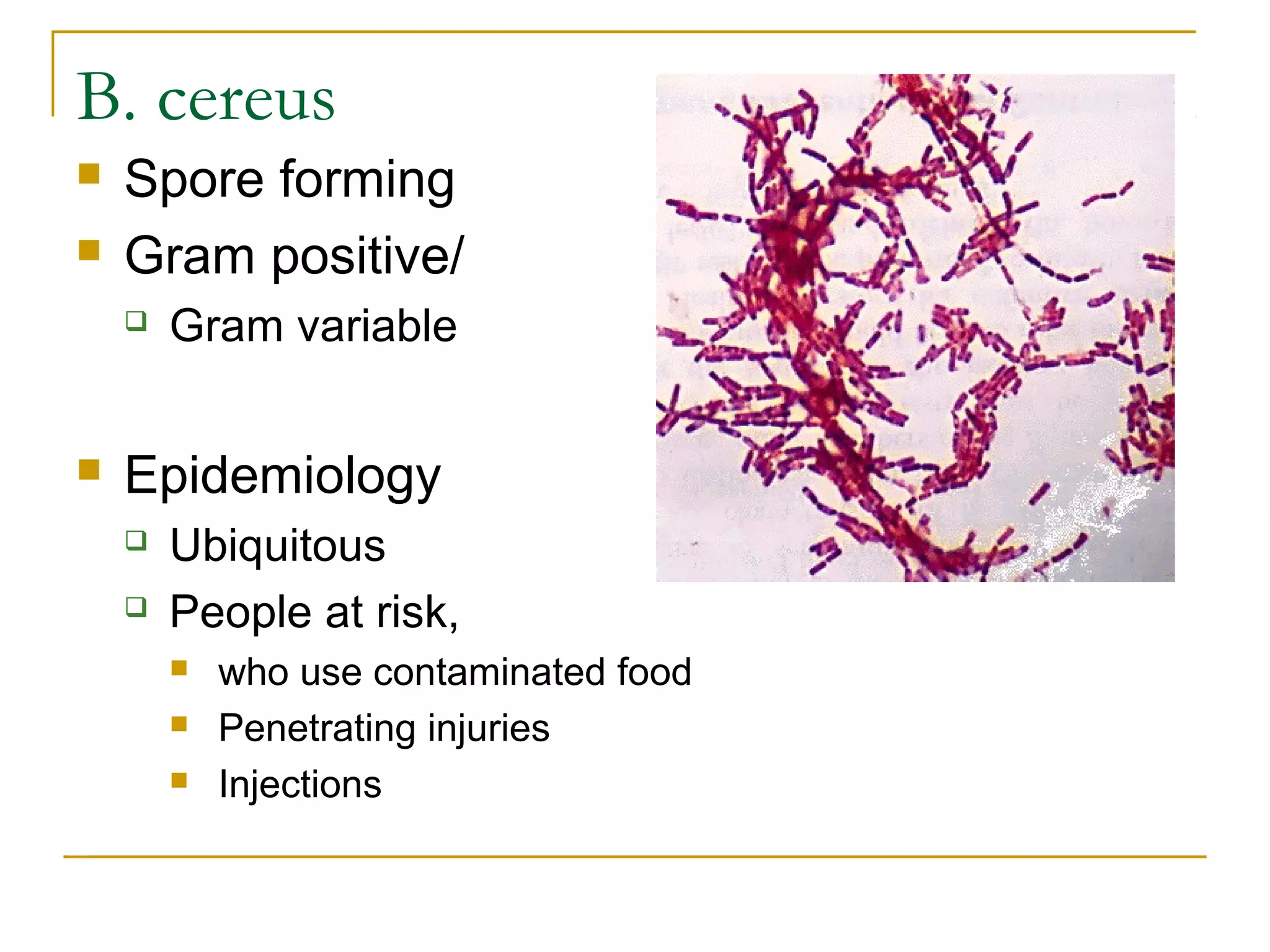
Cultural Characteristics
 Grows rapidly on ordinary
lab. Media
 Nutrient agar,
 blood agar,
 serum agar
 Aerobic
 Temp 35-37 O
C/24 h
 Sporulation under aerobic
conditions at 15-40O
C
 Pink—purple pigment
production in the medium
containing iron salts
 On NA, flat, frosted appearance colony
 Roughened edge (Medusa head)
 On serum agar; smooth, mucoid colonies
 In Nutrient broth; flocculent deposits of long
chains
 On blood agar; slight hemolysis
Biochemical Characters/ Reactions
 Acid without gas (glu, mal, Saccharose)
 Nitrate to nitrites
 Indole not produced
 VP +ve
 Resistance
 Vegetative killed at 600
C/ 30 minutes
 Spore resist
 Formaldehyde effective
Antigens and Toxins
 Capsular polypeptide, somatic protein and
somatic polysaccharide antigen
 Extra-cellular toxin composed of three
components;
 Factor I, II and III
 Oedema factor
 Protective factor
 Lethal factor, respectively)
 Protective antigen binds to cell surface and
functions as receptors for oedema factor and
lethal factor
Epidemiology and pathogenesis
 Anthrax disease (wool sorter’s disease)
 Pulmonary
 Skin form
 Incidence high in grazing animals, ingest
spores. Spores go to Lymphoid glands
(through any injury)
 Death due to shock, renal failure and terminal
anoxia
 Two forms
 Peracute
 Acute
 In peracute death in 1-2 hours without
symptoms
 In acute, eithir 48 hrs
 Important charc, tarry blood from natural
orifices (Nostrils, mouth, vagina and anus)
 No clotting of blood
 Absence of rigor mortis
 Splenomegaly
 Postmortem?
Clinical presentation of anthrax
 Cutaneous form
 95% human cases are cutaneous infections
 1 to 5 days after contact
 Small, pruritic, non-painful papule at inoculation site
 Papule develops into hemorrhagic vesicle & ruptures
 Slow-healing painless ulcer covered with black eschar
surrounded by edema
 Infection may spread to lymphatics w/ local
adenopathy
 Septicemia may develop
 20% mortality in untreated cutaneous anthrax
 Inhalation anthrax
 Virtually 100% fatal
(pneumonic)
 Meningitis may
complicate
cutaneous and
inhalation forms of
disease
 Pharyngeal anthrax
 Fever
 Pharyngitis
 neck swelling
 Ingestion anthrax
 Virtually 100% fatal
 Abdominal pain
 Hemorrhagic ascites
 Paracentesis fluid may reveal gram-positive
rods
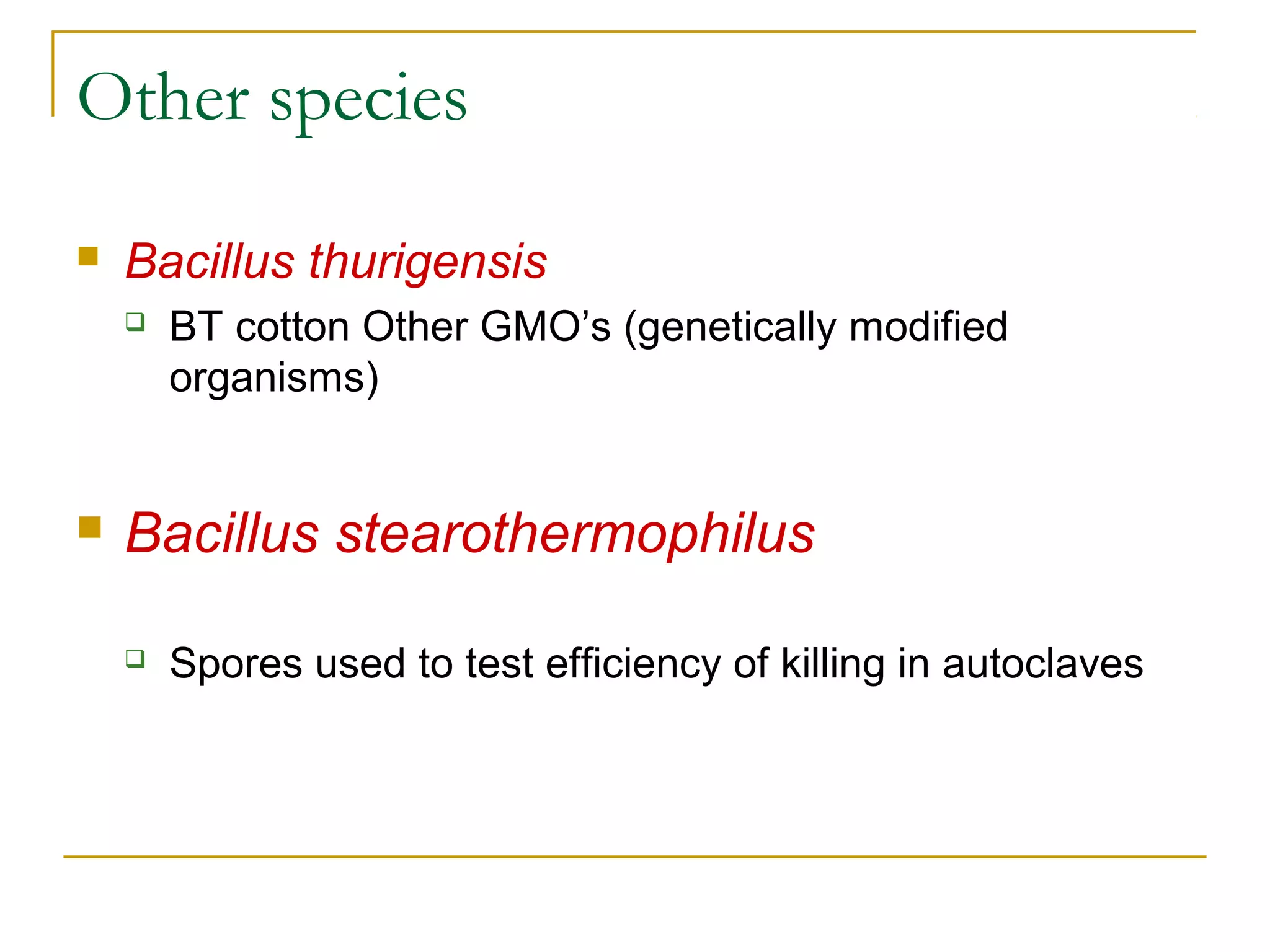
B. cereus
 Spore forming
 Gram positive/
 Gram variable
 Epidemiology
 Ubiquitous
 People at risk,
 who use contaminated food
 Penetrating injuries
 Injections
Virulence
 Heat stable enterotoxin
 Heat labile enterotoxin
 Spore survive in soil
 Tissue destruction by cytotoxic enzymes
 Cereolysin
 Phospholipase C
 Disease
 Gastroentritis
 Emetic
 Diarrhae
 Eye infection----trauma
 Opportunistic infection
Other species
 Bacillus thurigensis
 BT cotton Other GMO’s (genetically modified
organisms)
 Bacillus stearothermophilus
 Spores used to test efficiency of killing in autoclaves

Bacillus

  • 1.
  • 3.
    Characters of Bacillus Gram-positive or Gram-variable bacilli  Aerobic, spore forming  Large number of species are saprophytes, antharcoides  Ubiquitous  Some are motile and some capsulated  non-pathogenic organisms is B. subtilis-subtilis group  B. mycoides,  B.megaterium,  B.cereus  Natural habitats:  Water, soil, decaying matter, dust, air  Pathogenic species—B.anthracis
  • 4.
    Laboratory Characteristics ofBacillus  On blood agar  Large, spreading, gray-white colonies, with irregular margins  Many are beta-hemolytic (helpful in differentiating various Bacillus species from B. anthracis)  Spores seen after several days of incubation, but not typically in fresh clinical specimens
  • 5.
    Epidemiology of Bacillusanthracis  Enzootic in certain countries (e.g., Turkey, Iran, Pakistan and Sudan)  Anthrax spores infectious for decades  Biologic warfare experiments  Primarily a disease of herbivorous animals  Most commonly transmitted to humans by direct contact with animal products (e.g., wool and hair)  Also acquired via inhalation & ingestion
  • 6.
     Still posesa threat  Importing materials contaminated with spores from these countries (e.g., bones, hides, and other materials)  Usually encountered as an occupational disease  Veterinarians
  • 7.
    Cultural Characteristics  Growsrapidly on ordinary lab. Media  Nutrient agar,  blood agar,  serum agar  Aerobic  Temp 35-37 O C/24 h  Sporulation under aerobic conditions at 15-40O C  Pink—purple pigment production in the medium containing iron salts
  • 8.
     On NA,flat, frosted appearance colony  Roughened edge (Medusa head)  On serum agar; smooth, mucoid colonies  In Nutrient broth; flocculent deposits of long chains  On blood agar; slight hemolysis
  • 9.
    Biochemical Characters/ Reactions Acid without gas (glu, mal, Saccharose)  Nitrate to nitrites  Indole not produced  VP +ve  Resistance  Vegetative killed at 600 C/ 30 minutes  Spore resist  Formaldehyde effective
  • 10.
    Antigens and Toxins Capsular polypeptide, somatic protein and somatic polysaccharide antigen  Extra-cellular toxin composed of three components;  Factor I, II and III  Oedema factor  Protective factor  Lethal factor, respectively)  Protective antigen binds to cell surface and functions as receptors for oedema factor and lethal factor
  • 11.
    Epidemiology and pathogenesis Anthrax disease (wool sorter’s disease)  Pulmonary  Skin form  Incidence high in grazing animals, ingest spores. Spores go to Lymphoid glands (through any injury)  Death due to shock, renal failure and terminal anoxia  Two forms  Peracute  Acute
  • 12.
     In peracutedeath in 1-2 hours without symptoms  In acute, eithir 48 hrs  Important charc, tarry blood from natural orifices (Nostrils, mouth, vagina and anus)  No clotting of blood  Absence of rigor mortis  Splenomegaly  Postmortem?
  • 13.
    Clinical presentation ofanthrax  Cutaneous form  95% human cases are cutaneous infections  1 to 5 days after contact  Small, pruritic, non-painful papule at inoculation site  Papule develops into hemorrhagic vesicle & ruptures  Slow-healing painless ulcer covered with black eschar surrounded by edema  Infection may spread to lymphatics w/ local adenopathy  Septicemia may develop  20% mortality in untreated cutaneous anthrax
  • 14.
     Inhalation anthrax Virtually 100% fatal (pneumonic)  Meningitis may complicate cutaneous and inhalation forms of disease  Pharyngeal anthrax  Fever  Pharyngitis  neck swelling
  • 15.
     Ingestion anthrax Virtually 100% fatal  Abdominal pain  Hemorrhagic ascites  Paracentesis fluid may reveal gram-positive rods
  • 16.
    B. cereus  Sporeforming  Gram positive/  Gram variable  Epidemiology  Ubiquitous  People at risk,  who use contaminated food  Penetrating injuries  Injections
  • 17.
    Virulence  Heat stableenterotoxin  Heat labile enterotoxin  Spore survive in soil  Tissue destruction by cytotoxic enzymes  Cereolysin  Phospholipase C  Disease  Gastroentritis  Emetic  Diarrhae  Eye infection----trauma  Opportunistic infection
  • 18.
    Other species  Bacillusthurigensis  BT cotton Other GMO’s (genetically modified organisms)  Bacillus stearothermophilus  Spores used to test efficiency of killing in autoclaves