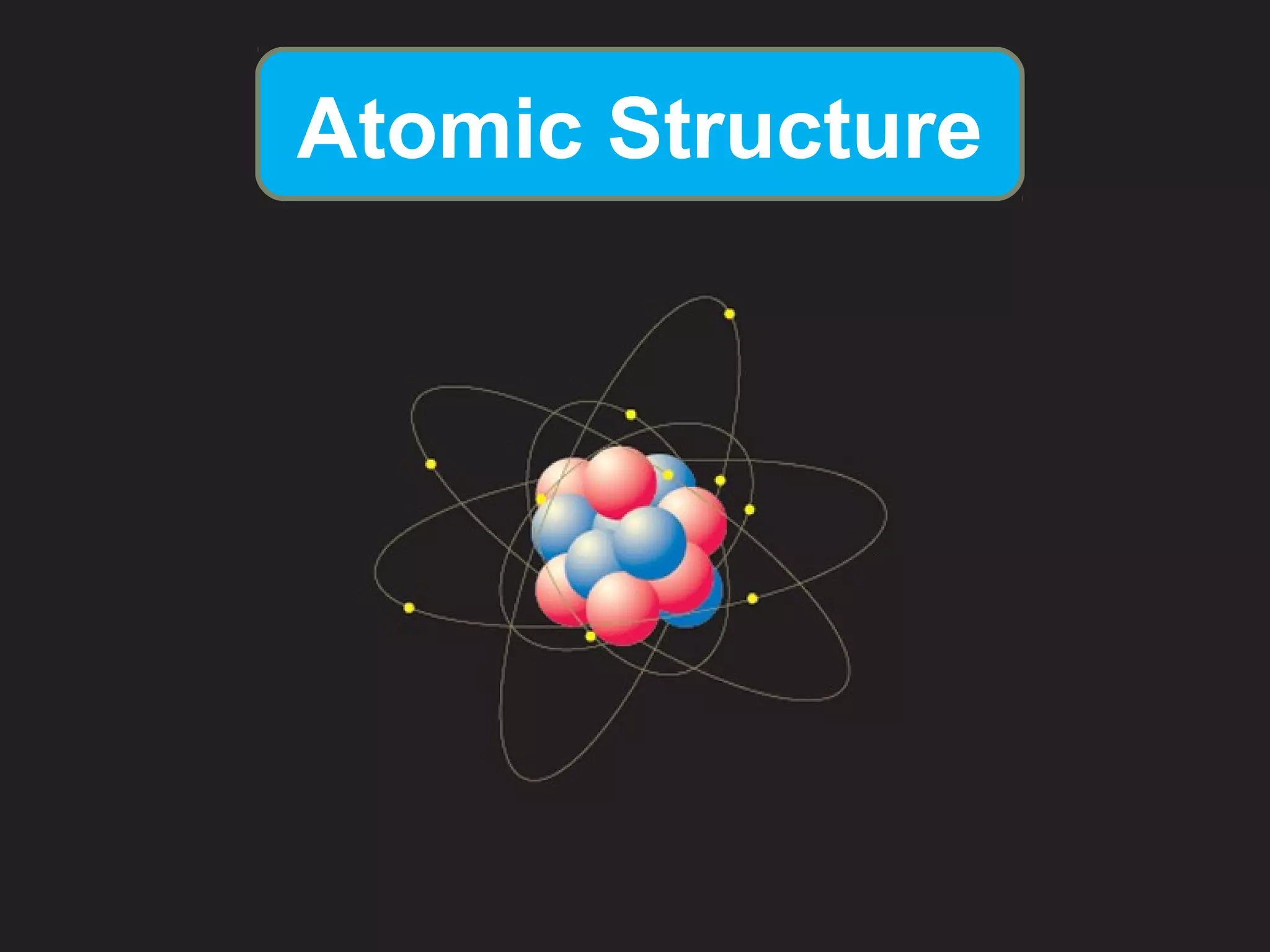
Atomic Structure
The structure of an atom
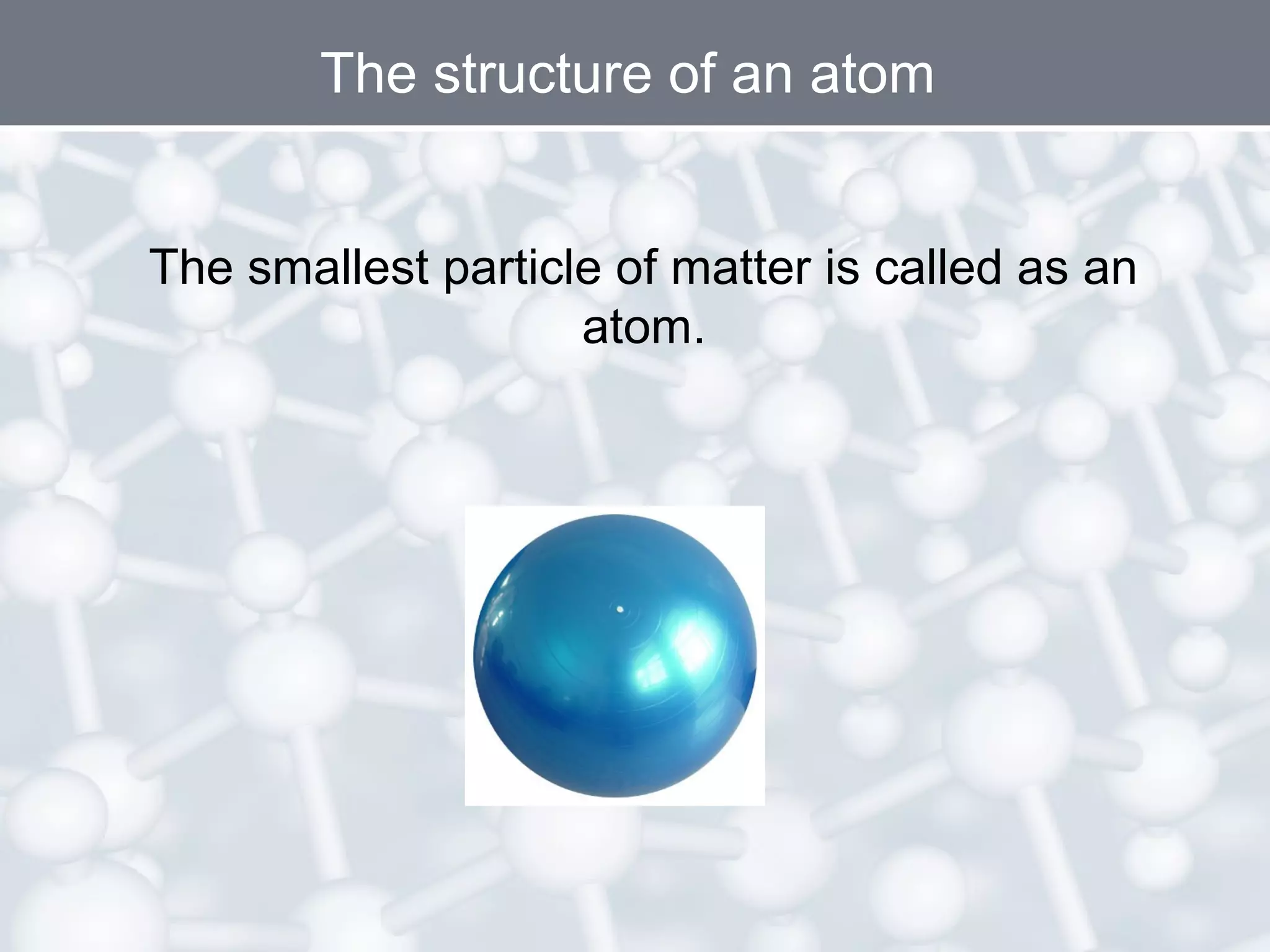
The smallest particle of matter is called as an
atom.
The structure of an atom
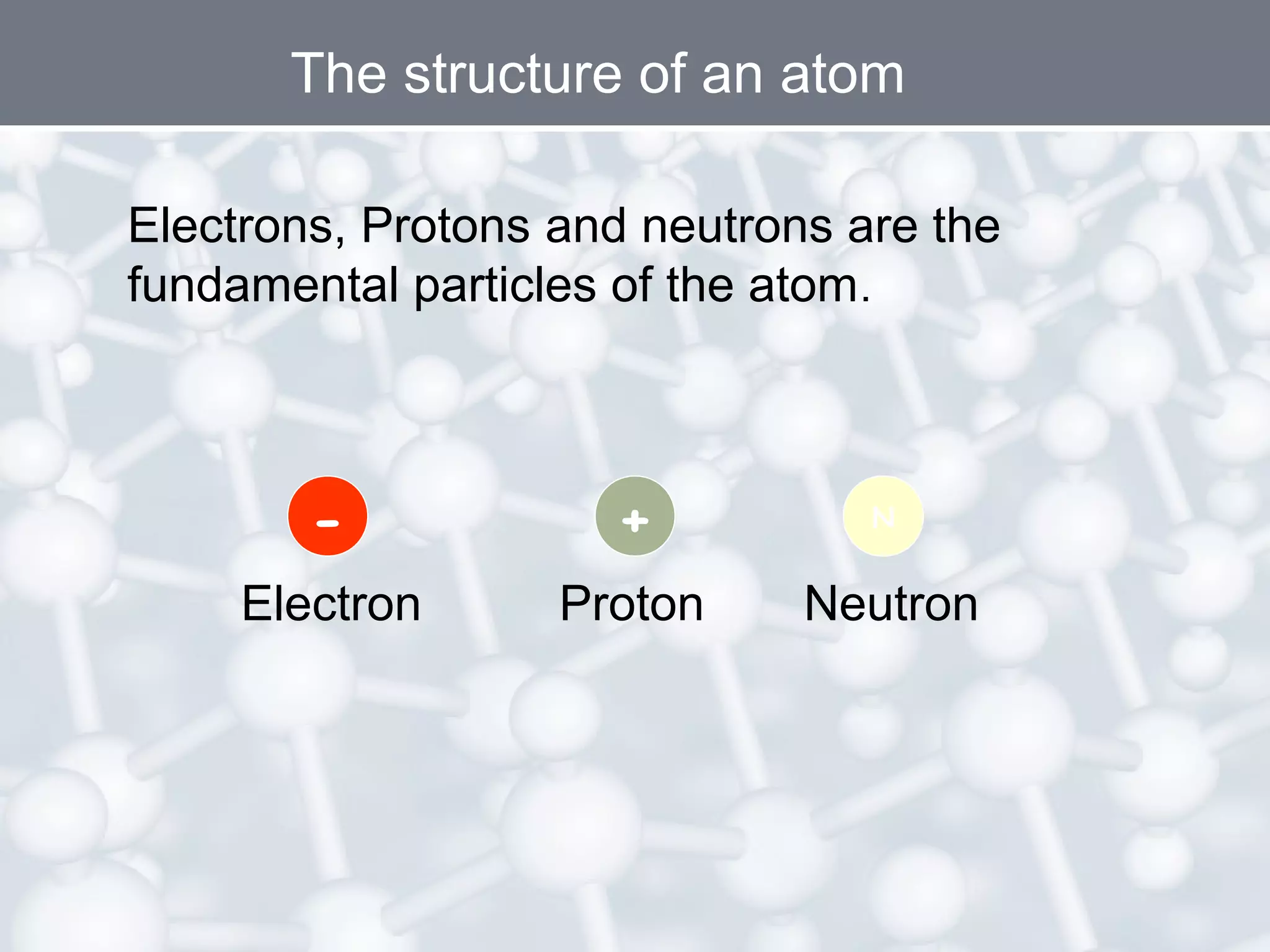
Electrons, Protons and neutrons are the
fundamental particles of the atom .

-

+

N

Electron

Proton

Neutron
The structure of an atom

Protons and neutrons ,the fundamental
particles of the atom are present in the
nucleus of an atom while the electrons
revolve around the nucleus in the outer
orbit. They revolve in different orbits.
The structure of an atom
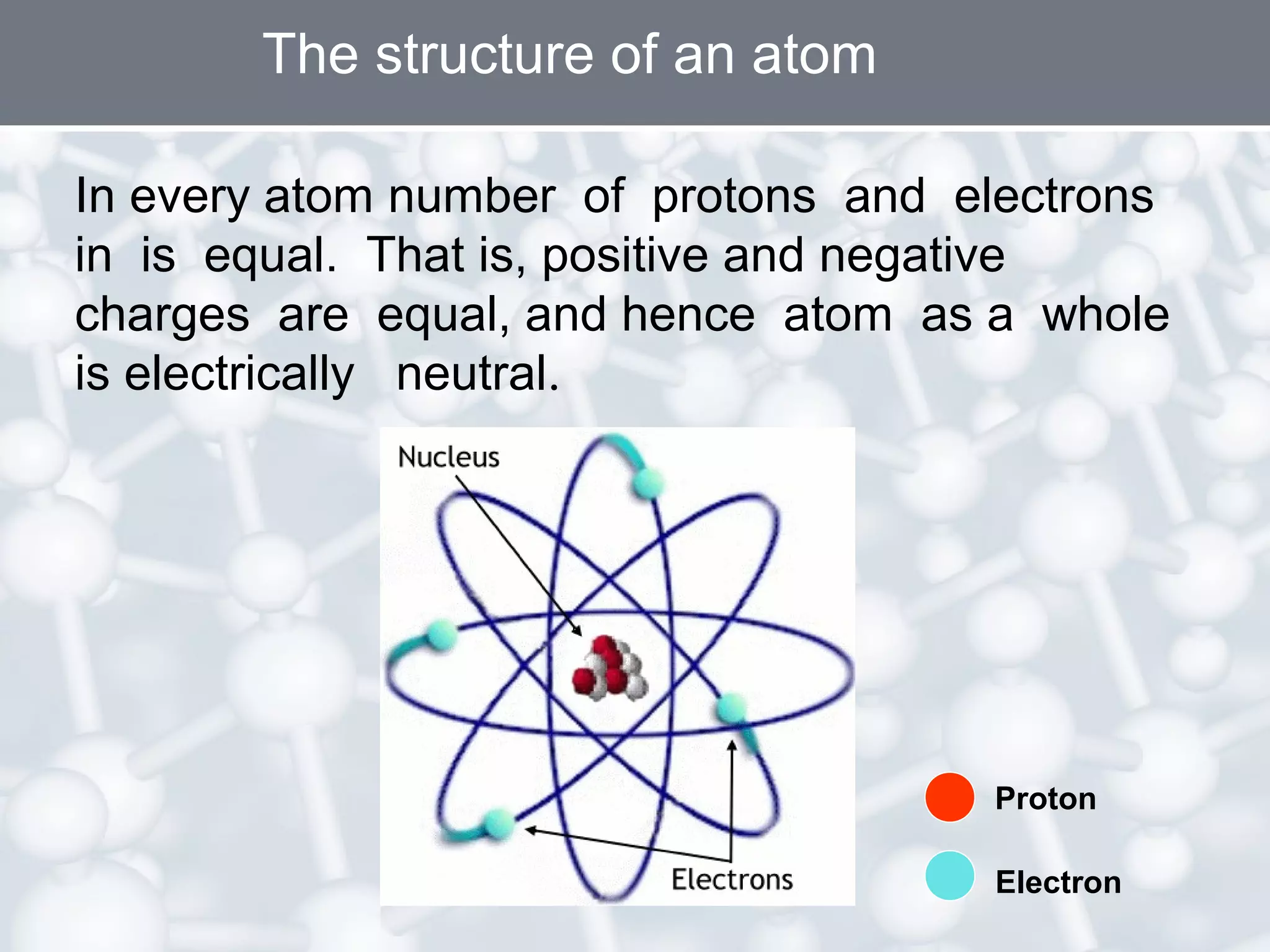
In every atom number of protons and electrons
in is equal. That is, positive and negative
charges are equal, and hence atom as a whole
is electrically neutral.

Proton
Electron
The structure of an atom
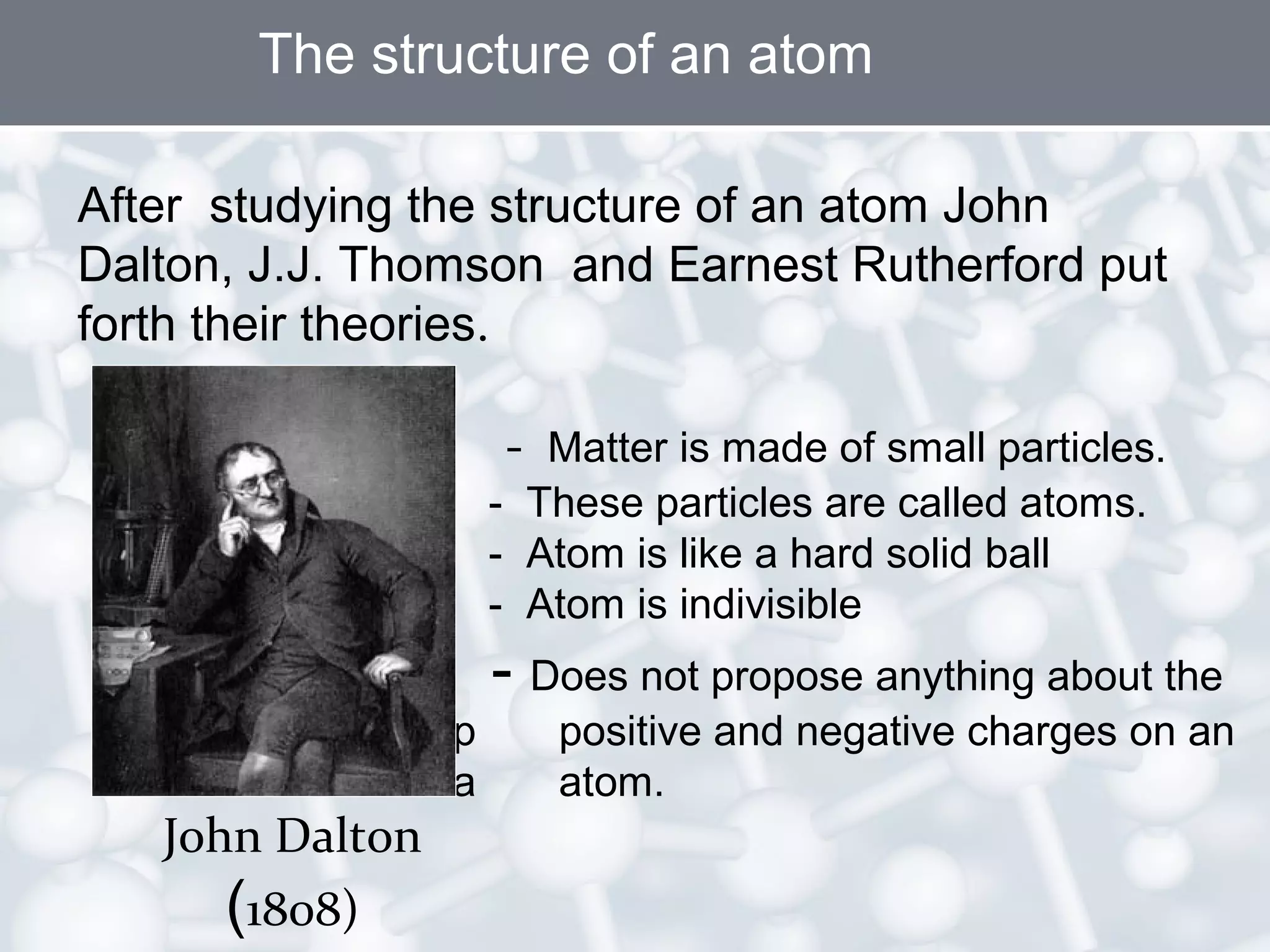
After studying the structure of an atom John
Dalton, J.J. Thomson and Earnest Rutherford put
forth their theories.
- Matter is made of small particles.
- These particles are called atoms.
- Atom is like a hard solid ball
- Atom is indivisible

- - Does not propose anything about the
John Dalton
(1808)

p
a

positive and negative charges on an
atom.
The structure of an atom
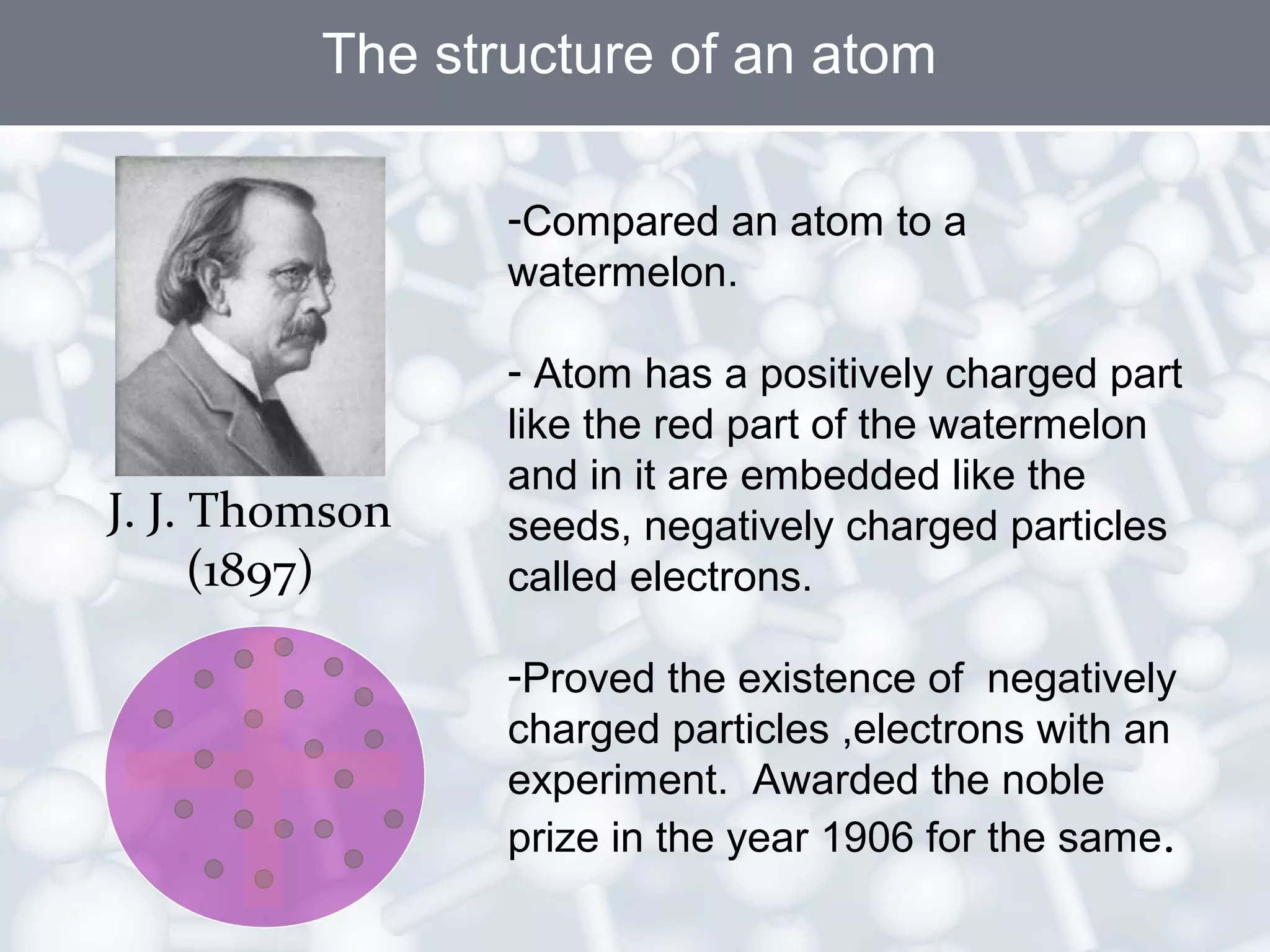
-Compared an atom to a
watermelon.

J. J. Thomson
(1897)

- Atom has a positively charged part
like the red part of the watermelon
and in it are embedded like the
seeds, negatively charged particles
called electrons.
-Proved the existence of negatively
charged particles ,electrons with an
experiment. Awarded the noble
prize in the year 1906 for the same.
The structure of an atom
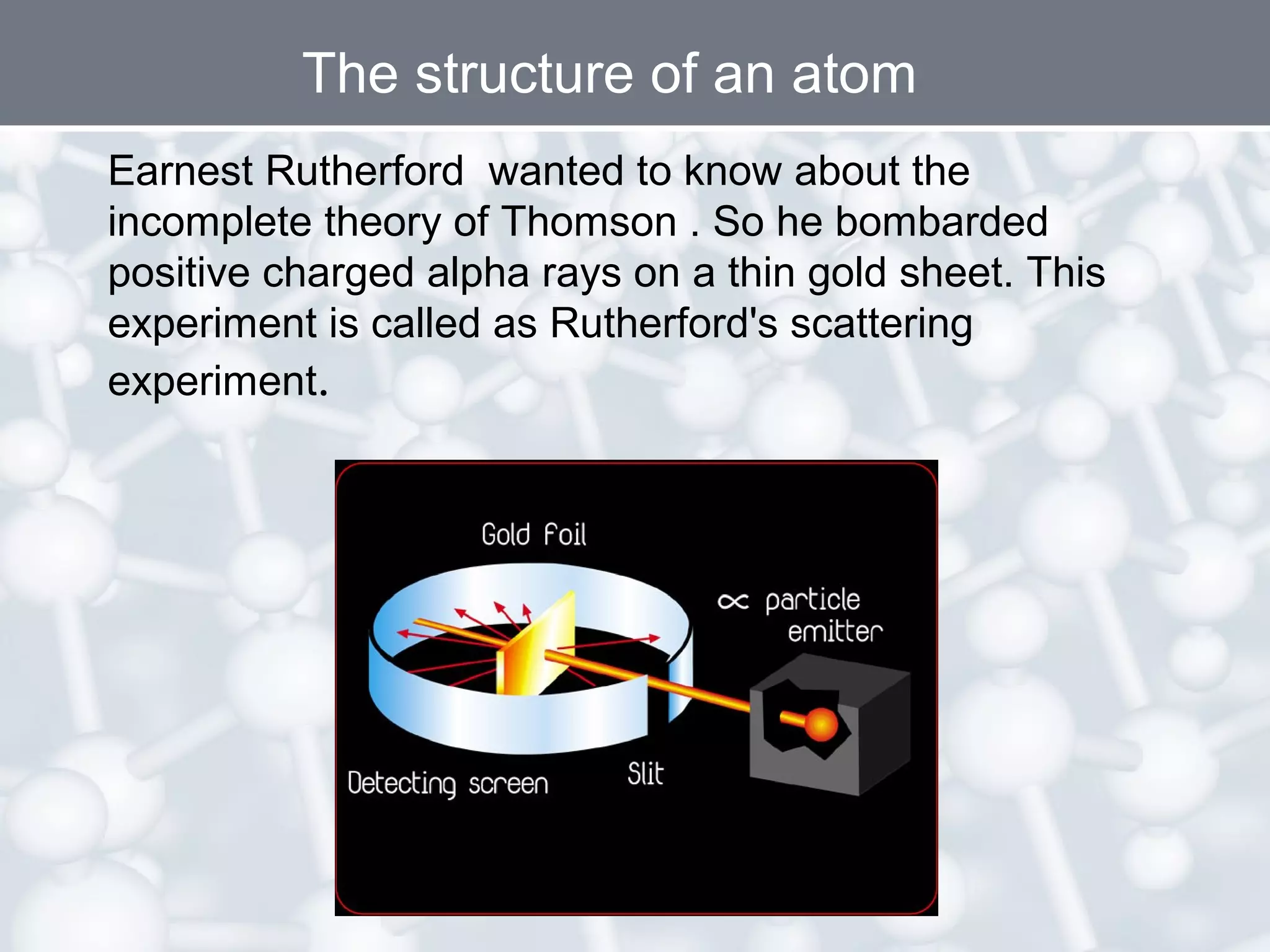
Earnest Rutherford wanted to know about the
incomplete theory of Thomson . So he bombarded
positive charged alpha rays on a thin gold sheet. This
experiment is called as Rutherford's scattering
experiment.
The structure of an atom
In this experiment Rutherford made following
observations :
- Most of the alpha particles passed straight
through the sheet without any obstacles.
- Some of the alpha particles turned back from
the gold sheet.
The structure of an atom
Based on this experiment Rutherford made
following inferences:

- The fact that most of the alpha particles pass through

gold sheet means that the atom consists mainly of empty
space.

- The part from which the positively charged particles are
turned back is positively charged but very small in size as
compared to the empty space .
The structure of an atom
From these inferences, Rutherford proposed his
theory of structure of atoms:

- The nucleus at the centre of the atom has the positive
charge. Most of the mass of the atom is concentrated in
the nucleus.

- The negatively charged electrons revolve around the
nucleus in specific orbits.

- In comparison with the size of the atom, the nucleus is
very very small.
The structure of an atom
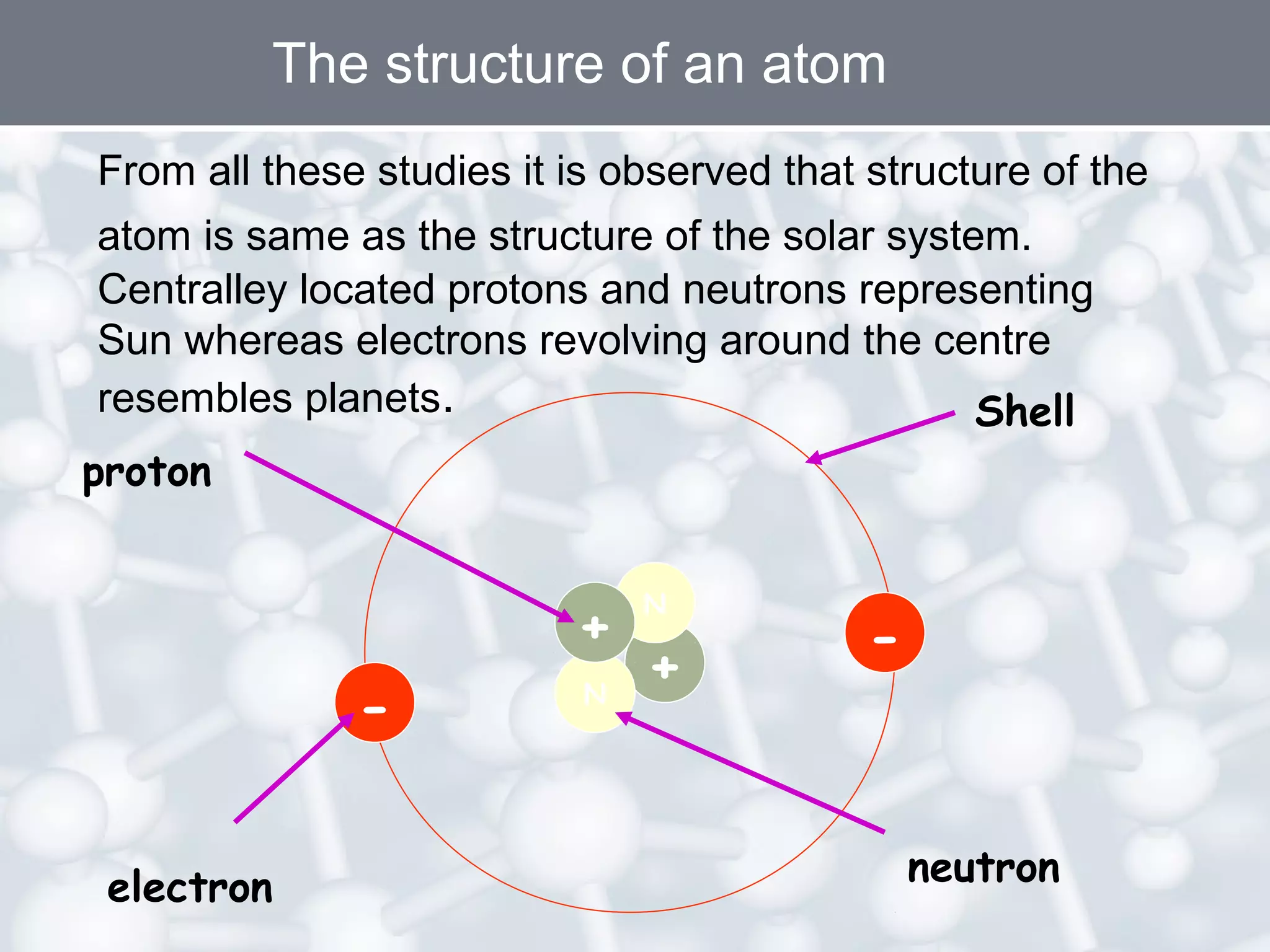
From all these studies it is observed that structure of the
atom is same as the structure of the solar system.
Centralley located protons and neutrons representing
Sun whereas electrons revolving around the centre
resembles planets.
Shell
proton

+
electron

N

N

+

-

neutron
The structure of an atom
Atomic number- The number of electrons or protons
in an atom is called it’s Atomic number.

- Every element has a different atomic number.
- All the atoms of certain element has same number of
electrons/protons.
The structure of an atom

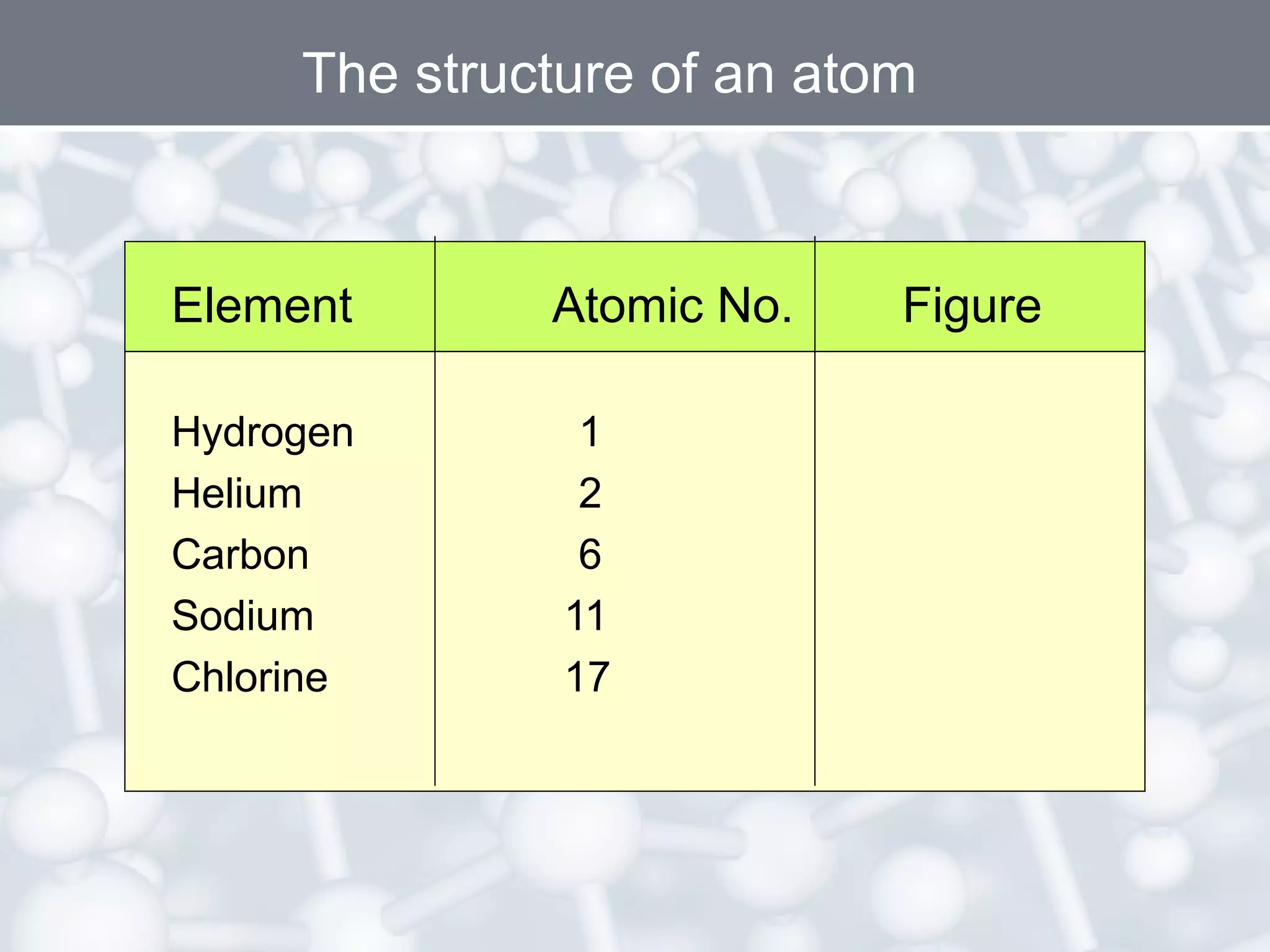
Element

Atomic No.

Hydrogen
Helium
Carbon
Sodium
Chlorine

1
2
6
11
17

Figure
The structure of an atom
The mass of an atom is concentrated in its
nucleus. Atomic mass number (A) is equal to the
sum of the number of protons (p) and neutrons (n)
in the nucleus.
Atomic mass number = No. of Protons + No. of
Neutrons
The structure of an atom
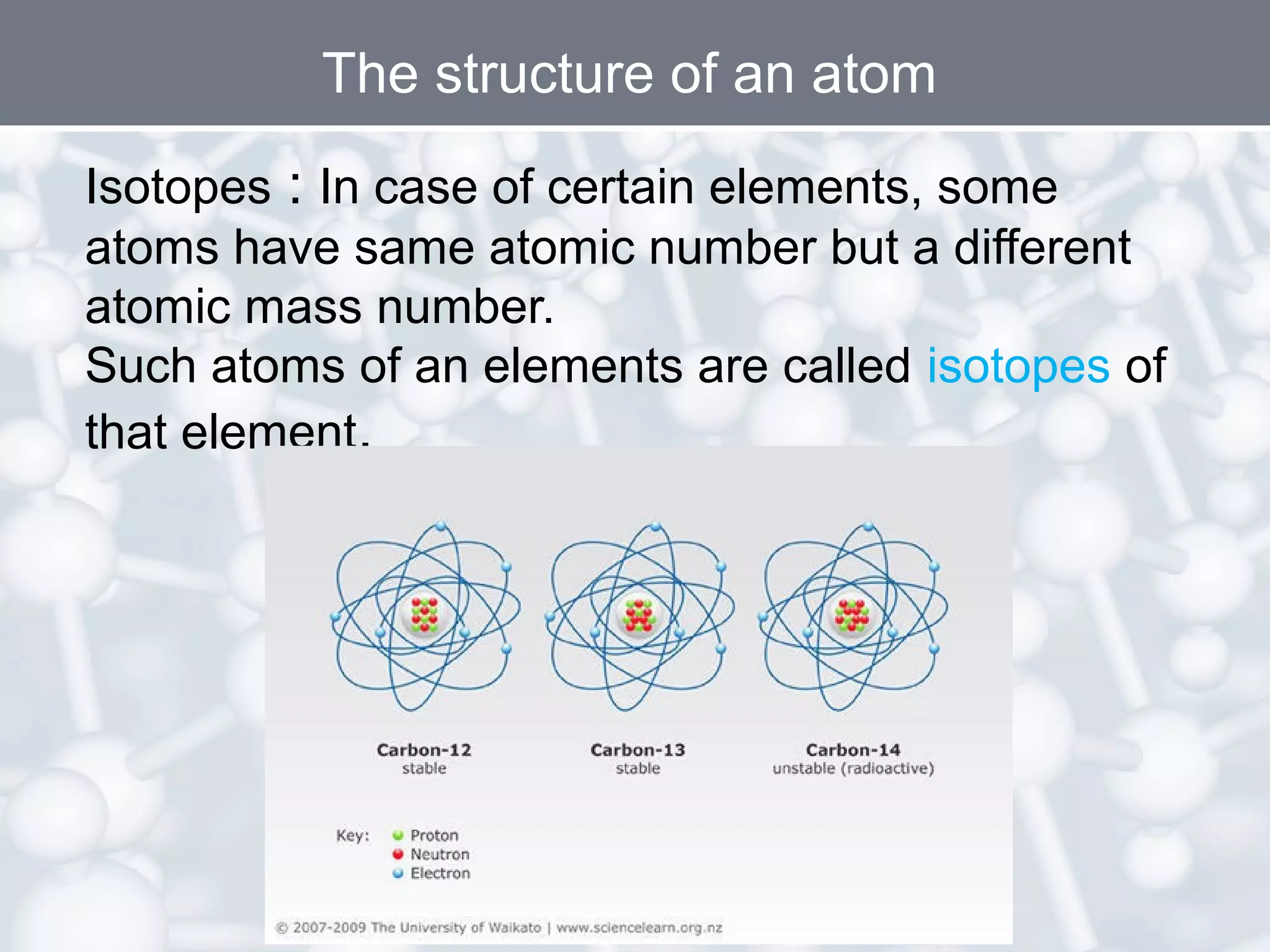
Isotopes : In case of certain elements, some
atoms have same atomic number but a different
atomic mass number.
Such atoms of an elements are called isotopes of
that element.
The structure of an atom
Applications of an isotopes

- Isotopes of uranium are used as a fuel in
atomic reactors.
- Isotopes of cobalt are used in the treatment
of cancer.
- Isotopes of iodine are used in the treatment of goitre .
The structure of an atom
In a chemical reaction different chemical
substances are formed. During this reaction some
element's atoms give their electrons to another
element. That means some elements tend to give
electrons and some elements tend to receive
electrons.
The structure of an atom

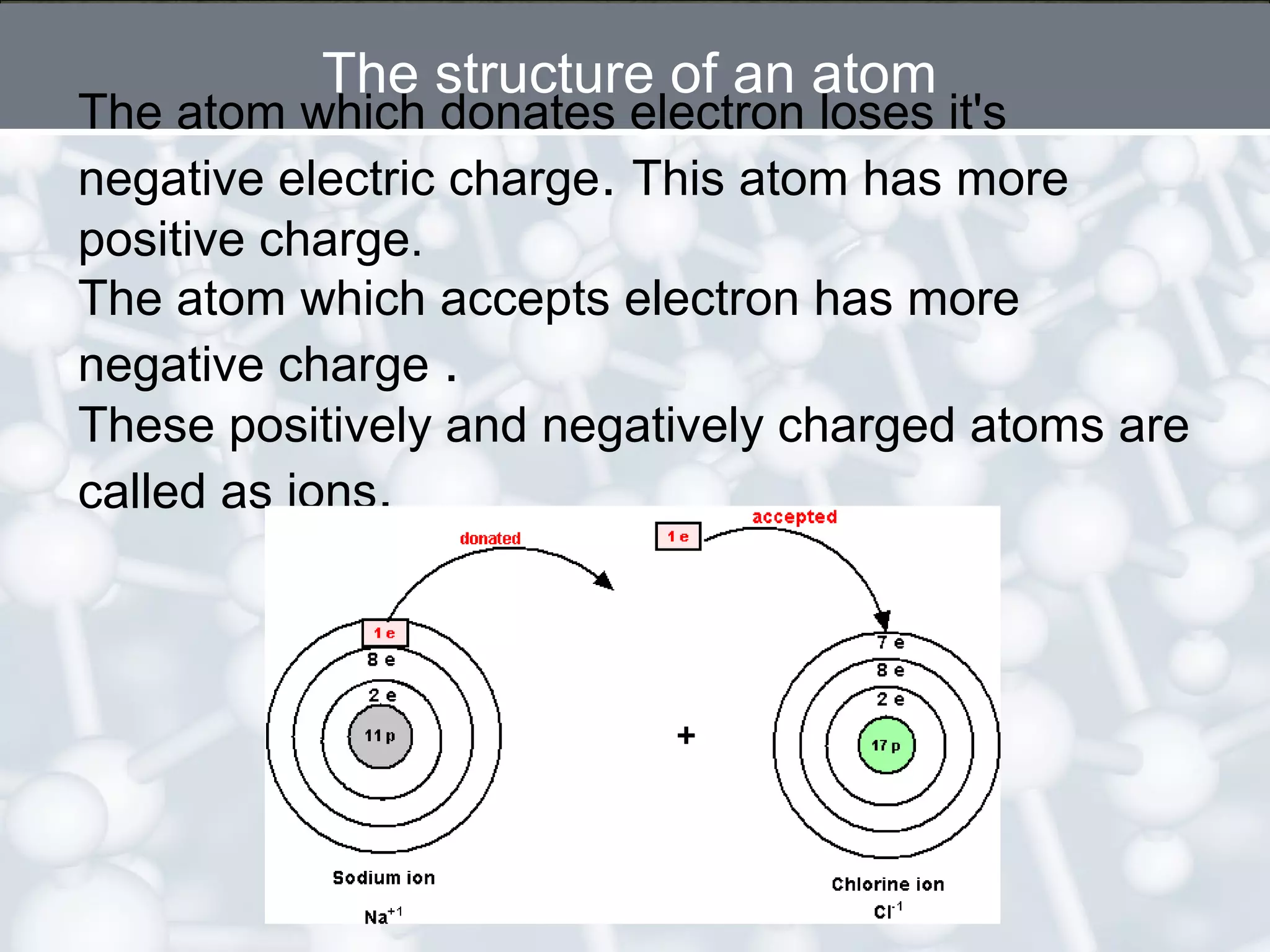
The atom which donates electron loses it's
negative electric charge. This atom has more
positive charge.
The atom which accepts electron has more
negative charge .
These positively and negatively charged atoms are
called as ions.
The structure of an atom
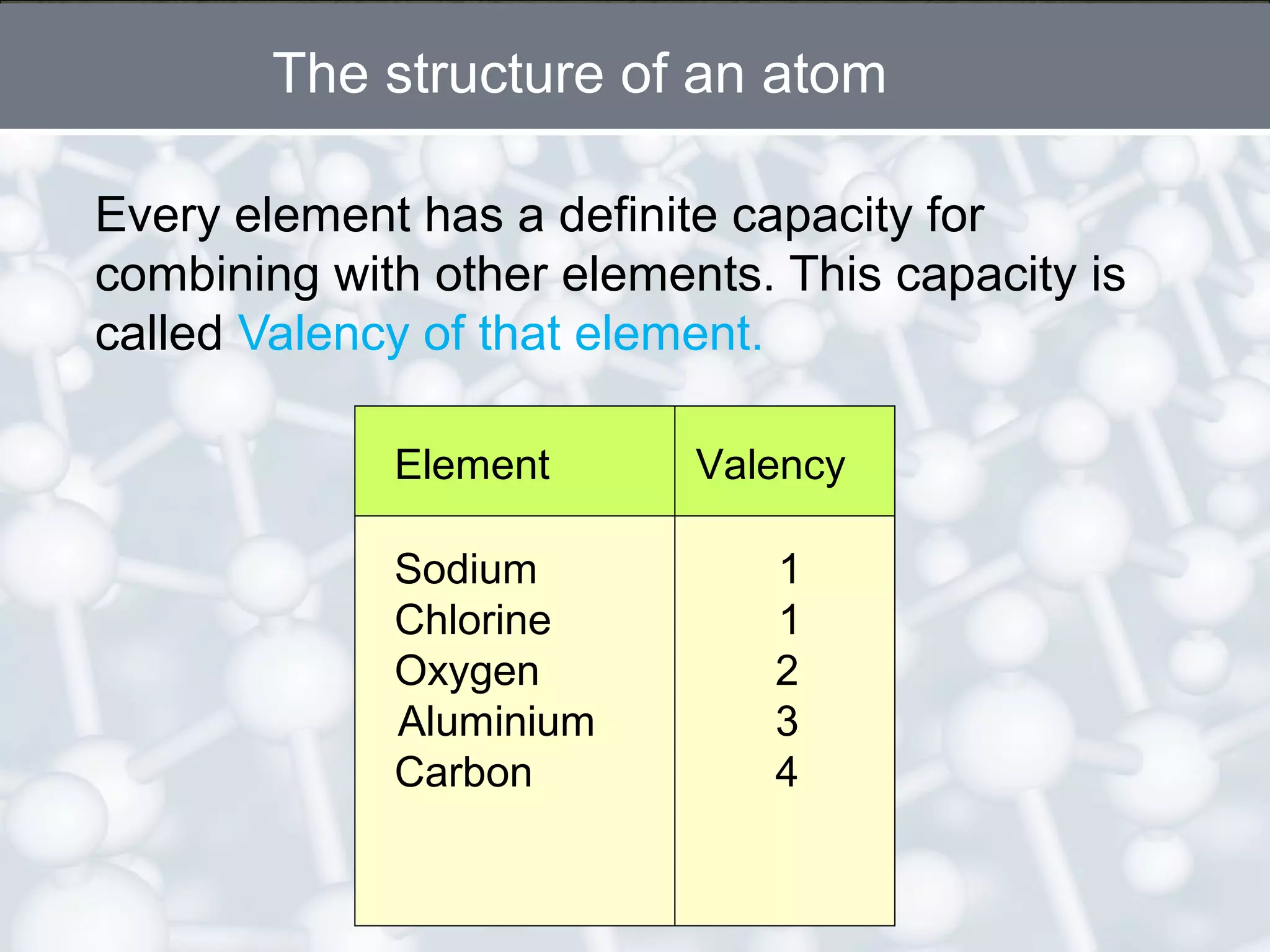
Every element has a definite capacity for
combining with other elements. This capacity is
called Valency of that element.
Element
Sodium
Chlorine
Oxygen
Aluminium
Carbon

Valency
1
1
2
3
4
The structure of an atom
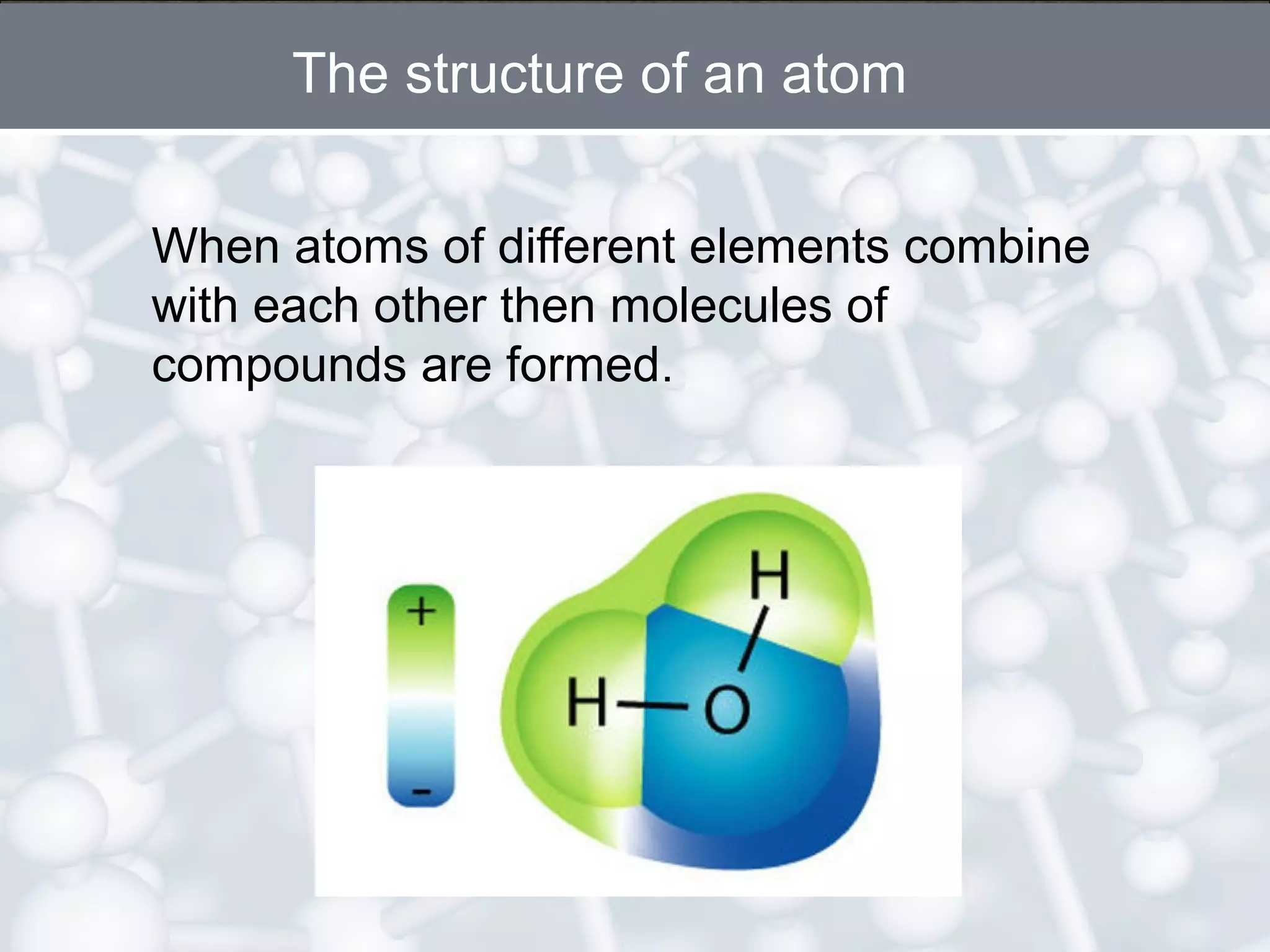
When atoms of different elements combine
with each other then molecules of
compounds are formed.

Automic structure

  • 1.
  • 2.
    The structure ofan atom The smallest particle of matter is called as an atom.
  • 3.
    The structure ofan atom Electrons, Protons and neutrons are the fundamental particles of the atom . - + N Electron Proton Neutron
  • 4.
    The structure ofan atom Protons and neutrons ,the fundamental particles of the atom are present in the nucleus of an atom while the electrons revolve around the nucleus in the outer orbit. They revolve in different orbits.
  • 5.
    The structure ofan atom In every atom number of protons and electrons in is equal. That is, positive and negative charges are equal, and hence atom as a whole is electrically neutral. Proton Electron
  • 6.
    The structure ofan atom After studying the structure of an atom John Dalton, J.J. Thomson and Earnest Rutherford put forth their theories. - Matter is made of small particles. - These particles are called atoms. - Atom is like a hard solid ball - Atom is indivisible - - Does not propose anything about the John Dalton (1808) p a positive and negative charges on an atom.
  • 7.
    The structure ofan atom -Compared an atom to a watermelon. J. J. Thomson (1897) - Atom has a positively charged part like the red part of the watermelon and in it are embedded like the seeds, negatively charged particles called electrons. -Proved the existence of negatively charged particles ,electrons with an experiment. Awarded the noble prize in the year 1906 for the same.
  • 8.
    The structure ofan atom Earnest Rutherford wanted to know about the incomplete theory of Thomson . So he bombarded positive charged alpha rays on a thin gold sheet. This experiment is called as Rutherford's scattering experiment.
  • 9.
    The structure ofan atom In this experiment Rutherford made following observations : - Most of the alpha particles passed straight through the sheet without any obstacles. - Some of the alpha particles turned back from the gold sheet.
  • 10.
    The structure ofan atom Based on this experiment Rutherford made following inferences: - The fact that most of the alpha particles pass through gold sheet means that the atom consists mainly of empty space. - The part from which the positively charged particles are turned back is positively charged but very small in size as compared to the empty space .
  • 11.
    The structure ofan atom From these inferences, Rutherford proposed his theory of structure of atoms: - The nucleus at the centre of the atom has the positive charge. Most of the mass of the atom is concentrated in the nucleus. - The negatively charged electrons revolve around the nucleus in specific orbits. - In comparison with the size of the atom, the nucleus is very very small.
  • 12.
    The structure ofan atom From all these studies it is observed that structure of the atom is same as the structure of the solar system. Centralley located protons and neutrons representing Sun whereas electrons revolving around the centre resembles planets. Shell proton + electron N N + - neutron
  • 13.
    The structure ofan atom Atomic number- The number of electrons or protons in an atom is called it’s Atomic number. - Every element has a different atomic number. - All the atoms of certain element has same number of electrons/protons.
  • 14.
    The structure ofan atom Element Atomic No. Hydrogen Helium Carbon Sodium Chlorine 1 2 6 11 17 Figure
  • 15.
    The structure ofan atom The mass of an atom is concentrated in its nucleus. Atomic mass number (A) is equal to the sum of the number of protons (p) and neutrons (n) in the nucleus. Atomic mass number = No. of Protons + No. of Neutrons
  • 16.
    The structure ofan atom Isotopes : In case of certain elements, some atoms have same atomic number but a different atomic mass number. Such atoms of an elements are called isotopes of that element.
  • 17.
    The structure ofan atom Applications of an isotopes - Isotopes of uranium are used as a fuel in atomic reactors. - Isotopes of cobalt are used in the treatment of cancer. - Isotopes of iodine are used in the treatment of goitre .
  • 18.
    The structure ofan atom In a chemical reaction different chemical substances are formed. During this reaction some element's atoms give their electrons to another element. That means some elements tend to give electrons and some elements tend to receive electrons.
  • 19.
    The structure ofan atom The atom which donates electron loses it's negative electric charge. This atom has more positive charge. The atom which accepts electron has more negative charge . These positively and negatively charged atoms are called as ions.
  • 20.
    The structure ofan atom Every element has a definite capacity for combining with other elements. This capacity is called Valency of that element. Element Sodium Chlorine Oxygen Aluminium Carbon Valency 1 1 2 3 4
  • 21.
    The structure ofan atom When atoms of different elements combine with each other then molecules of compounds are formed.