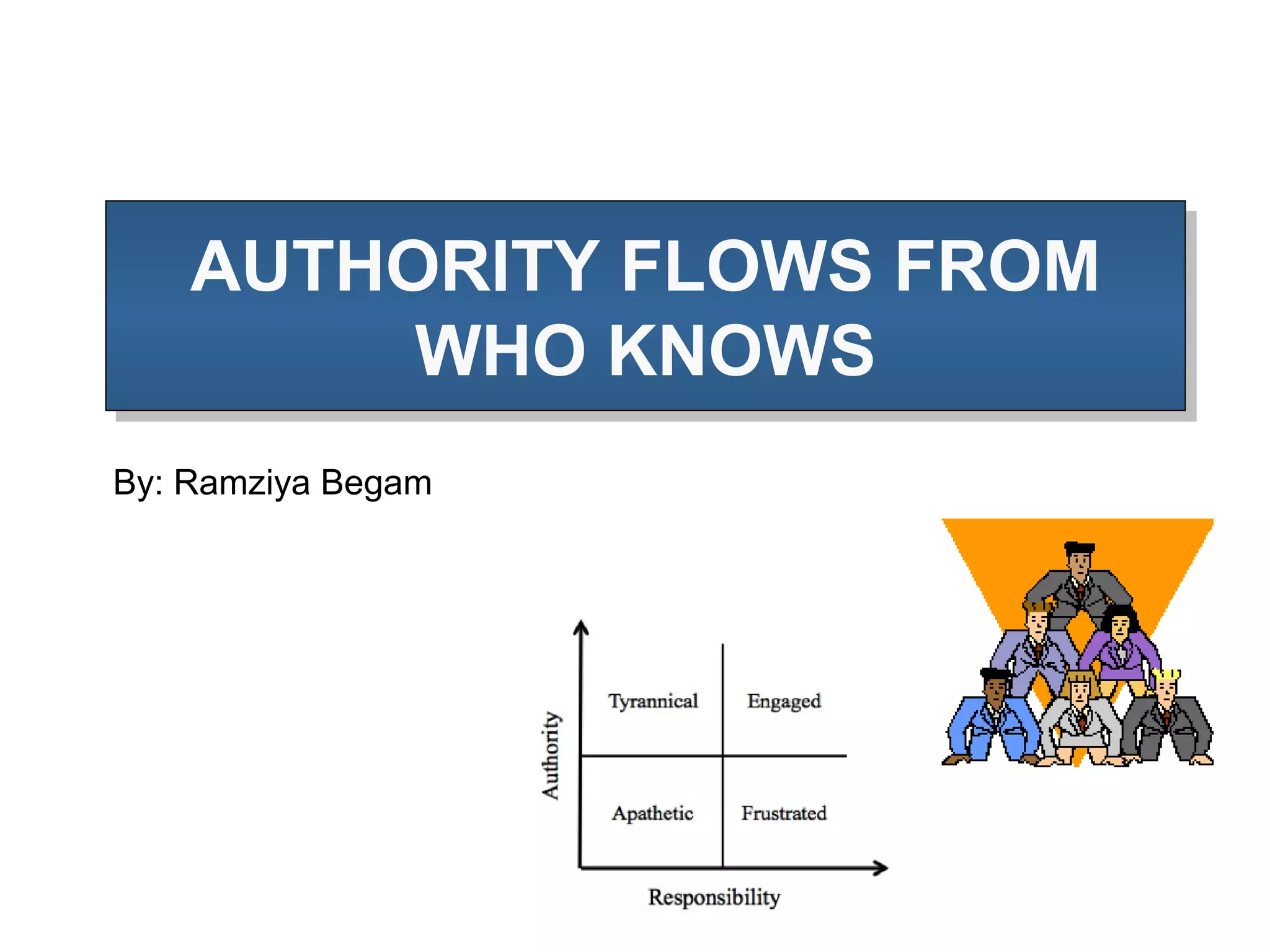
AUTHORITY FLOWS FROM
WHO KNOWS
AUTHORITY FLOWS FROM
WHO KNOWS
By: Ramziya Begam
Learning OutcomesLearning Outcomes
1. Describe the Authority
2. Differentiate authority and power
3. List and briefly explain the types of Authority.
4. Describe Delegation of Authority.
5. Explain what an organization chart is and list different
organization charts
AuthorityAuthority
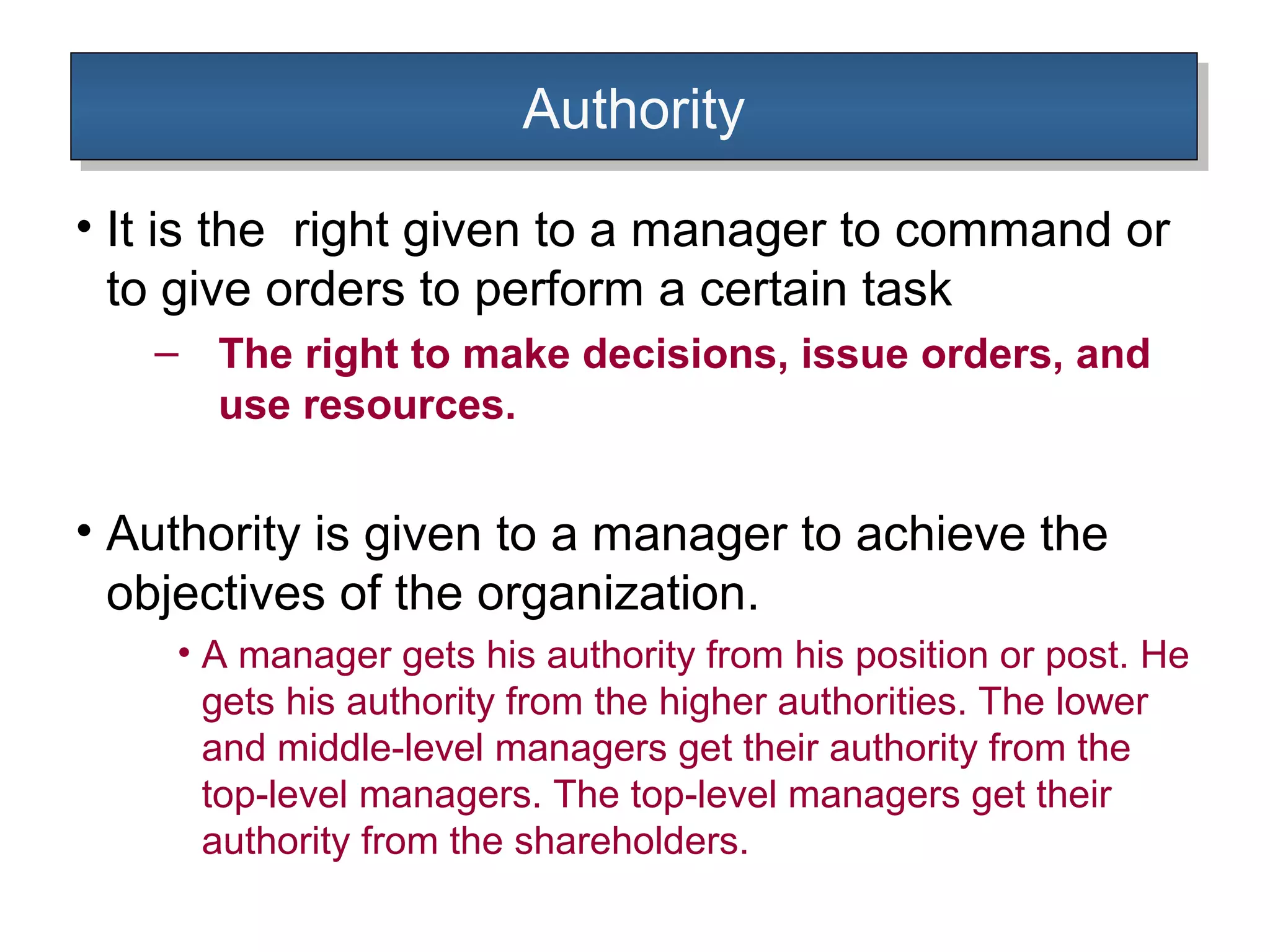
• It is the right given to a manager to command or
to give orders to perform a certain task
– The right to make decisions, issue orders, and
use resources.
• Authority is given to a manager to achieve the
objectives of the organization.
• A manager gets his authority from his position or post. He
gets his authority from the higher authorities. The lower
and middle-level managers get their authority from the
top-level managers. The top-level managers get their
authority from the shareholders.
AuthorityAuthority
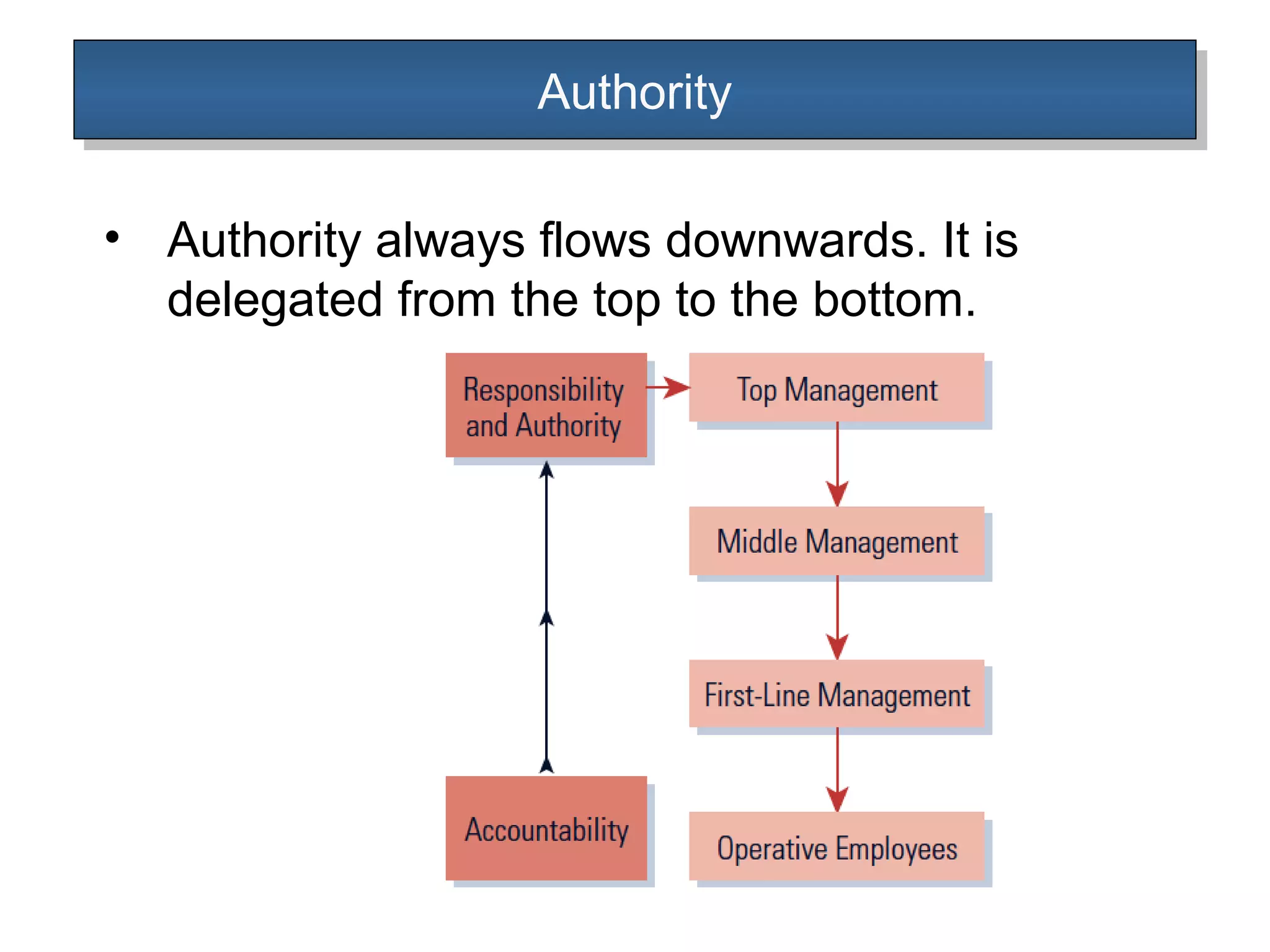
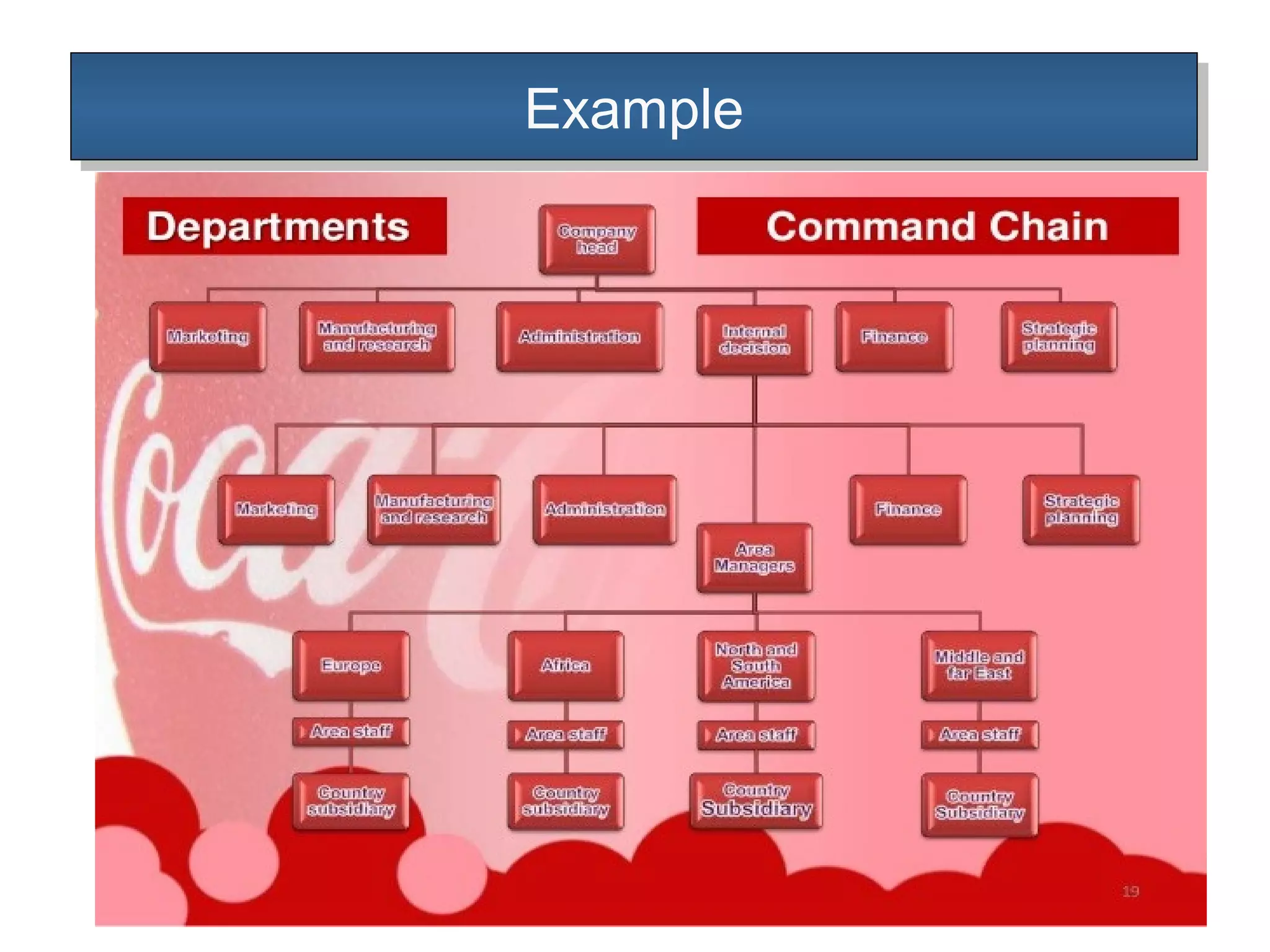
• Authority always flows downwards. It is
delegated from the top to the bottom.
ExampleExample
PowerPower
•It is a broader concept than authority.
• Power is the ability or potentials of a person to
influence another person or a group to perform
an act.
• Legitimate power
• Power of expertness
• Referent power
• Coercive power
• Reward power
Power (Cont’d)Power (Cont’d)
• Power can be personal power. A person gets his
personal power from his personality or from his
expert knowledge. Doctors, Lawyers, Engineers,
Programmers, etc. get their power from their expertise
and professional knowledge.
• Power can also be legitimate or official power. This
power comes from a higher authority
Difference Between Authority and PowerDifference Between Authority and Power
AUTHORITY POWER
•Authority is the formal right given to a
manager to make decisions or to
command.
•Power is the personal ability to
influence others or events
Authority flows downwards in the
organization. This is because it is
delegated by the superiors to the
subordinates.
Power can flow in any direction. Even
subordinates have power over their
superiors, if they can influence their
behavior. So power can flow upwards,
downwards or horizontally.
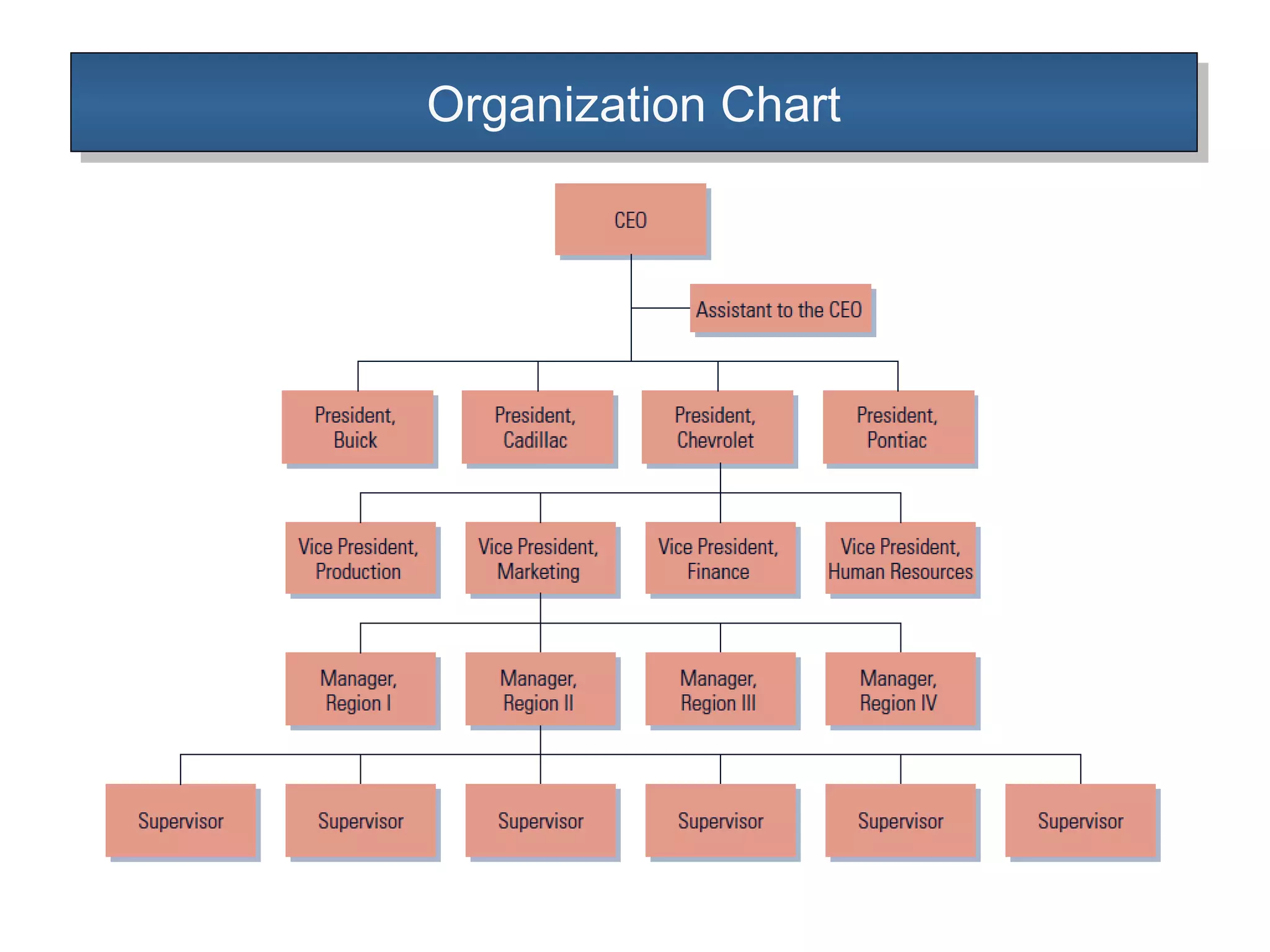
•Authority relationships (superior-
subordinate relationships) can be shown
in the organization charts.
•Power relationships cannot be shown
in organization charts
Authority is always official in nature.
So it is legitimate.
•Power need not be official in nature. So
it need not be legitimate.
Delegating Authority and ResponsibilityDelegating Authority and Responsibility
• Delegating
–Giving another person the authority and
responsibility to carry out a task
Steps of Delegation of authoritySteps of Delegation of authority
• Step 1 - Determination of expected results
• Step 2 - Assignment of job and duties to sub-
ordinates
• Step 3 - Delegation of Authority
• Step 4 - Fixation of Responsibility
• Step 5 - Evaluation of Performance
Centralized and Decentralized AuthorityCentralized and Decentralized Authority
• Centralized Authority
– Important decisions are made by top managers.
• Decentralized Authority
– Important decisions are made by middle and
first-line managers.
Benefits of DelegatingBenefits of Delegating
• A supervisor is evaluated according to the
achievements of the whole department.
• Delegating responsibility is the best way to
expand your personal authority.
• A supervisor who delegates also has more
time for the jobs only a supervisor can do,
such as planning and counseling.
• Delegation of work gives employees a chance
to develop their skills and their value to the
organization.
Organization ChartOrganization Chart
Types of DepartmentalizationTypes of Departmentalization
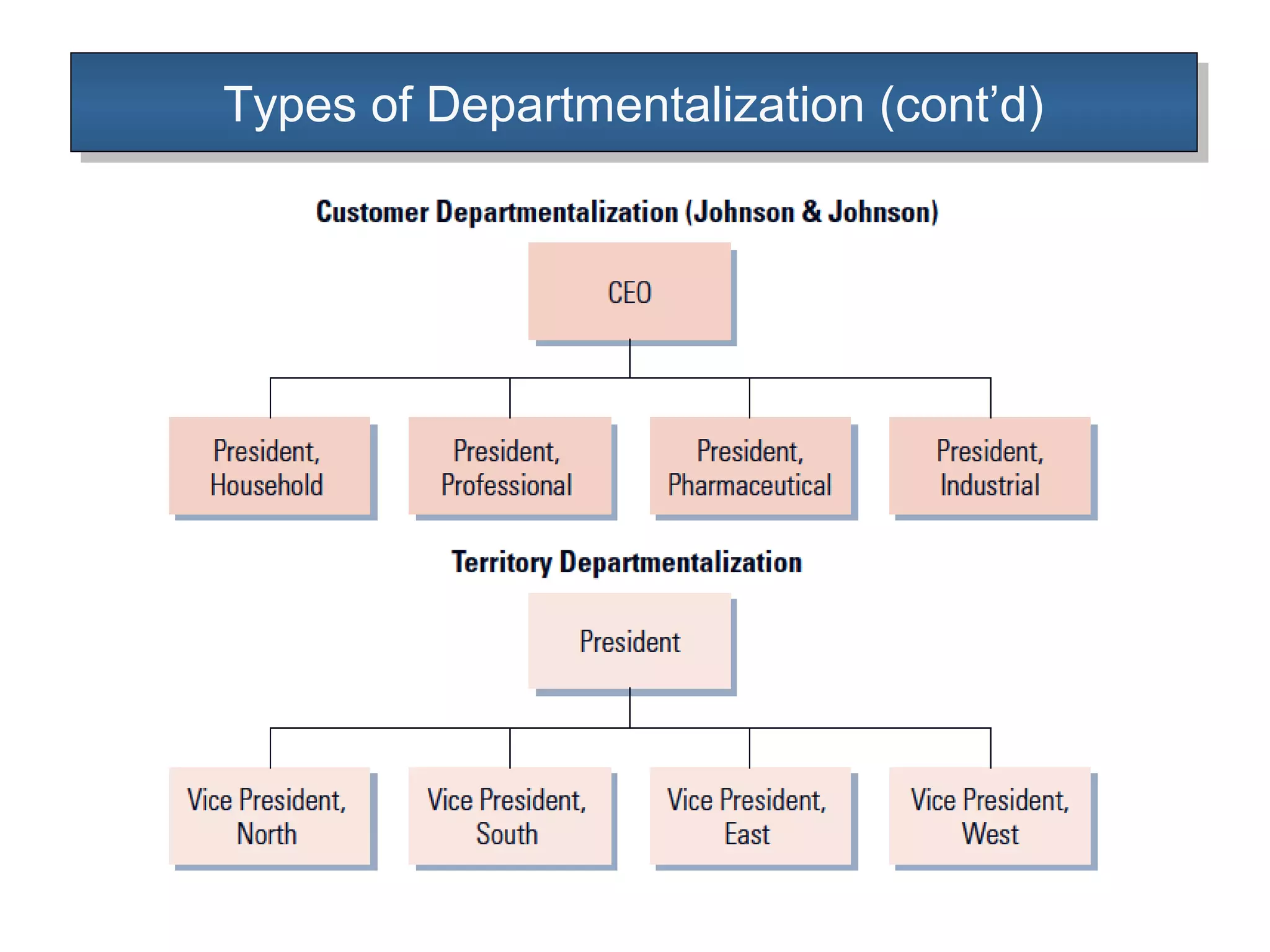
Types of Departmentalization (cont’d)Types of Departmentalization (cont’d)
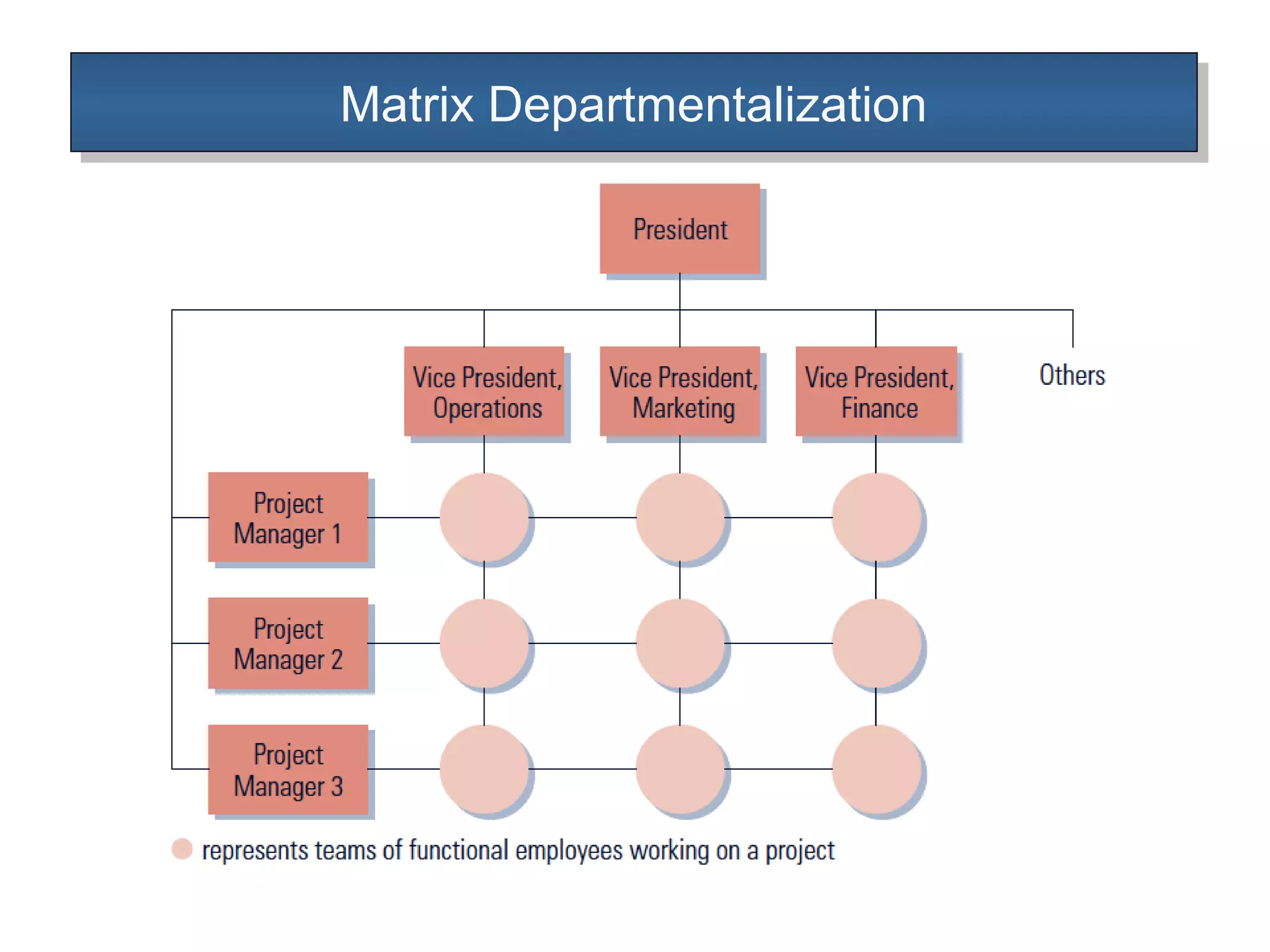
Matrix DepartmentalizationMatrix Departmentalization

Authority flows from who knows

  • 1.
    AUTHORITY FLOWS FROM WHOKNOWS AUTHORITY FLOWS FROM WHO KNOWS By: Ramziya Begam
  • 2.
    Learning OutcomesLearning Outcomes 1.Describe the Authority 2. Differentiate authority and power 3. List and briefly explain the types of Authority. 4. Describe Delegation of Authority. 5. Explain what an organization chart is and list different organization charts
  • 3.
    AuthorityAuthority • It isthe right given to a manager to command or to give orders to perform a certain task – The right to make decisions, issue orders, and use resources. • Authority is given to a manager to achieve the objectives of the organization. • A manager gets his authority from his position or post. He gets his authority from the higher authorities. The lower and middle-level managers get their authority from the top-level managers. The top-level managers get their authority from the shareholders.
  • 4.
    AuthorityAuthority • Authority alwaysflows downwards. It is delegated from the top to the bottom.
  • 5.
  • 6.
    PowerPower •It is abroader concept than authority. • Power is the ability or potentials of a person to influence another person or a group to perform an act. • Legitimate power • Power of expertness • Referent power • Coercive power • Reward power
  • 7.
    Power (Cont’d)Power (Cont’d) •Power can be personal power. A person gets his personal power from his personality or from his expert knowledge. Doctors, Lawyers, Engineers, Programmers, etc. get their power from their expertise and professional knowledge. • Power can also be legitimate or official power. This power comes from a higher authority
  • 8.
    Difference Between Authorityand PowerDifference Between Authority and Power AUTHORITY POWER •Authority is the formal right given to a manager to make decisions or to command. •Power is the personal ability to influence others or events Authority flows downwards in the organization. This is because it is delegated by the superiors to the subordinates. Power can flow in any direction. Even subordinates have power over their superiors, if they can influence their behavior. So power can flow upwards, downwards or horizontally. •Authority relationships (superior- subordinate relationships) can be shown in the organization charts. •Power relationships cannot be shown in organization charts Authority is always official in nature. So it is legitimate. •Power need not be official in nature. So it need not be legitimate.
  • 9.
    Delegating Authority andResponsibilityDelegating Authority and Responsibility • Delegating –Giving another person the authority and responsibility to carry out a task
  • 10.
    Steps of Delegationof authoritySteps of Delegation of authority • Step 1 - Determination of expected results • Step 2 - Assignment of job and duties to sub- ordinates • Step 3 - Delegation of Authority • Step 4 - Fixation of Responsibility • Step 5 - Evaluation of Performance
  • 11.
    Centralized and DecentralizedAuthorityCentralized and Decentralized Authority • Centralized Authority – Important decisions are made by top managers. • Decentralized Authority – Important decisions are made by middle and first-line managers.
  • 12.
    Benefits of DelegatingBenefitsof Delegating • A supervisor is evaluated according to the achievements of the whole department. • Delegating responsibility is the best way to expand your personal authority. • A supervisor who delegates also has more time for the jobs only a supervisor can do, such as planning and counseling. • Delegation of work gives employees a chance to develop their skills and their value to the organization.
  • 13.
  • 14.
    Types of DepartmentalizationTypesof Departmentalization
  • 15.
    Types of Departmentalization(cont’d)Types of Departmentalization (cont’d)
  • 16.