Attention-Deficit / Hyperactivity Disorder (ADHD)  Prof. Saad S Al Ani Senior Pediatric consultant  Head of pediatric Department  Khorfakkan Hospital  Sharjah ,UAE [email_address]
Attention-deficit/hyperactivity disorder (ADHD)  Is the Most common  neurobehavioral disorder of childhood ,  One of the  most prevalent  chronic health conditions affecting school-aged children The  most extensively studied  mental disorder of childhood.
The Characteristic of ADHD  ADHD Is characterized by: Inattention , including increased distractibility and difficulty sustaining attention Poor impulse control  and decreased self-inhibitory capacity Motor overactivity  and motor restlessness  Fourth edition of the American Psychiatric Association's Diagnostic and Statistical Manual (DSM-IV),
Types of ADHD Three types  of ADHD  are identified by DSM-IV :  1.  Predominantly hyperactive-impulsive symptoms type 2.  Predominantly inattentive symptoms type   3.  Combined type   Fourth edition of the American Psychiatric Association's Diagnostic and Statistical Manual (DSM-IV),
Problems experienced by ADHD child ► Affected children  commonly experience problems with :  Academic underachievement Interpersonal relationships with family members and peers low self-esteem .
ADHD  & associated disorders ►  ADHD frequently co-occurs with other: Emotional Behavioral Language  Learning   disorders
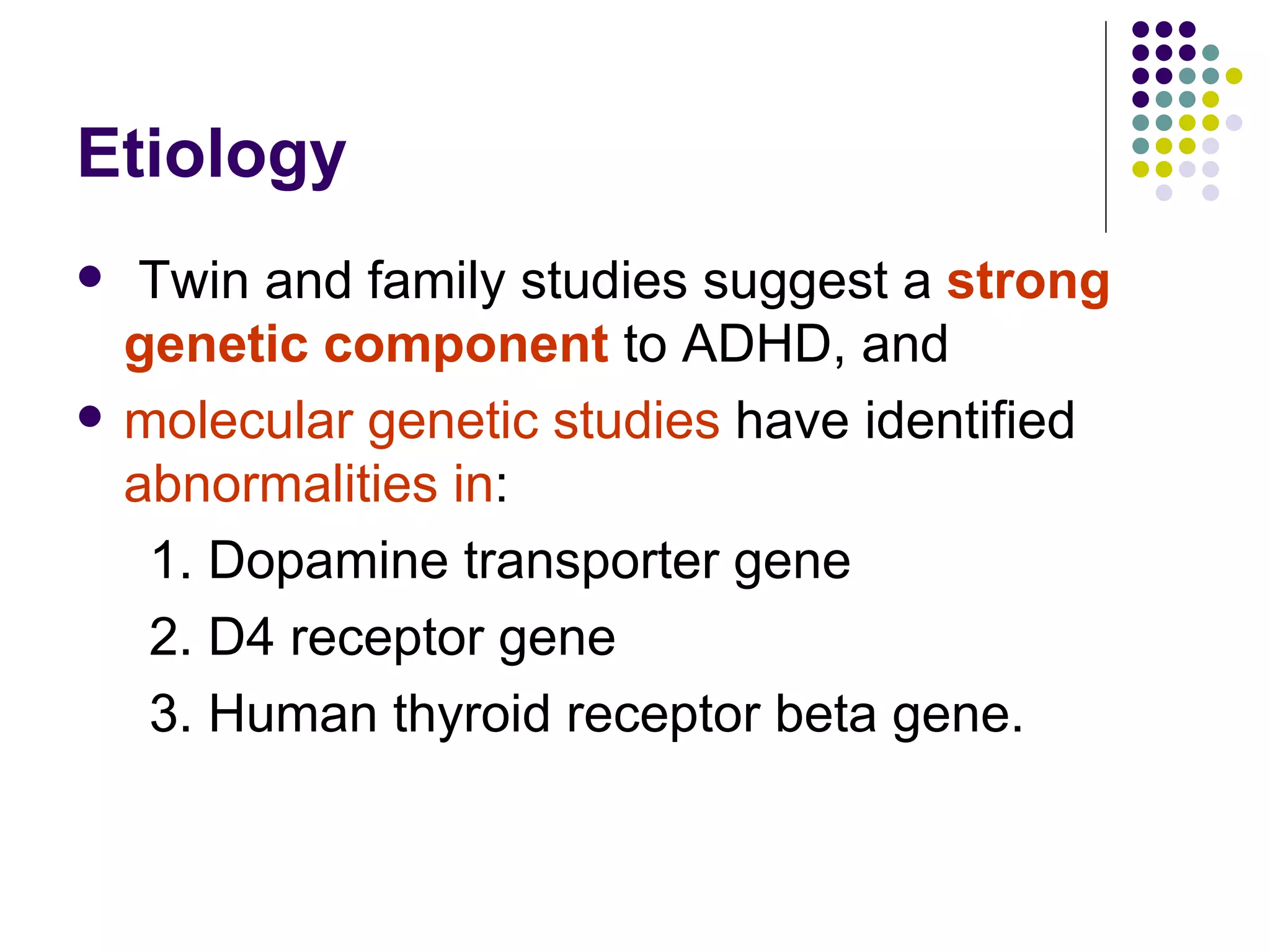
Etiology  ADHD is a  heterogeneous condition  for which  no single cause  has been identified.  Evidence suggests that  genetic   and  environmental factors  play a  significant role   during fetal and postnatal development  in the emergence of ADHD during early childhood.
Etiology  (cont.)   Both  morphologic and functional brain differences  have been identified, including  -  Moderate reduction in the size of   : 1. Corpus callosum 2. Basal ganglia 3. Frontal lobes  -  Hypoperfusion of the frontal-striatal dopamine pathways.
Etiology  (cont.)   ADHD   commonly occurs following  : 1.Damage to the CNS   (e.g., prematurity or traumatic brain injury) 2.Toxic exposure   (e.g., fetal alcohol syndrome or lead poisoning), 3.Maldevelopment (e.g., mental retardation syndromes),  4. Sequelae of infectious processes affecting the CNS .  ADHD also occurs in otherwise physically healthy children.
Etiology  Twin and family studies suggest a  strong genetic component  to ADHD, and  molecular genetic studies  have identified  abnormalities in : 1. Dopamine transporter gene  2. D4 receptor gene  3. Human thyroid receptor beta gene.
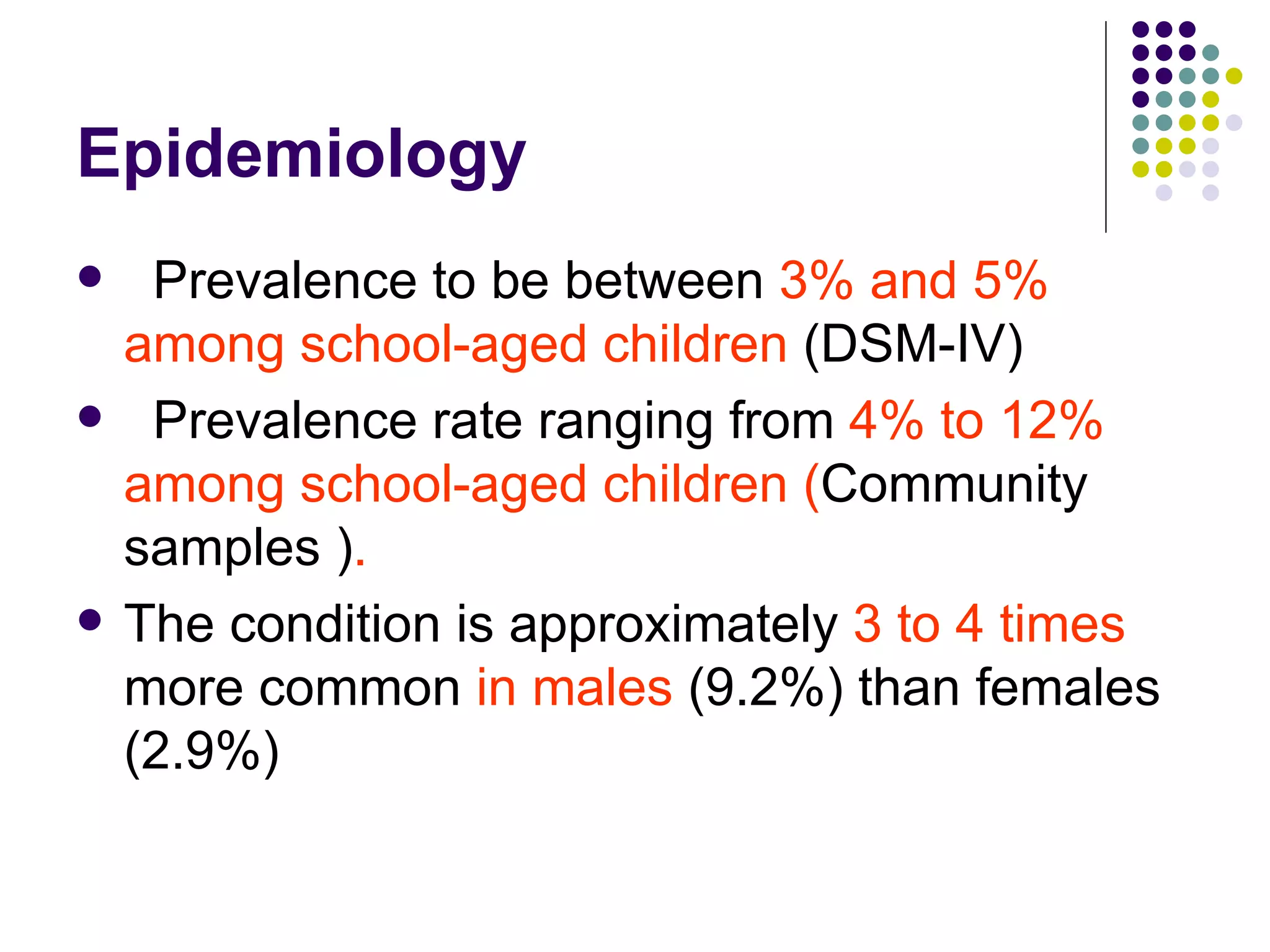
Epidemiology  Prevalence to be between  3% and 5% among school-aged children  (DSM-IV) Prevalence rate ranging from  4% to 12% among school-aged children   ( Community samples ) .   The condition is approximately  3 to 4 times  more common  in males  (9.2%) than females (2.9%)
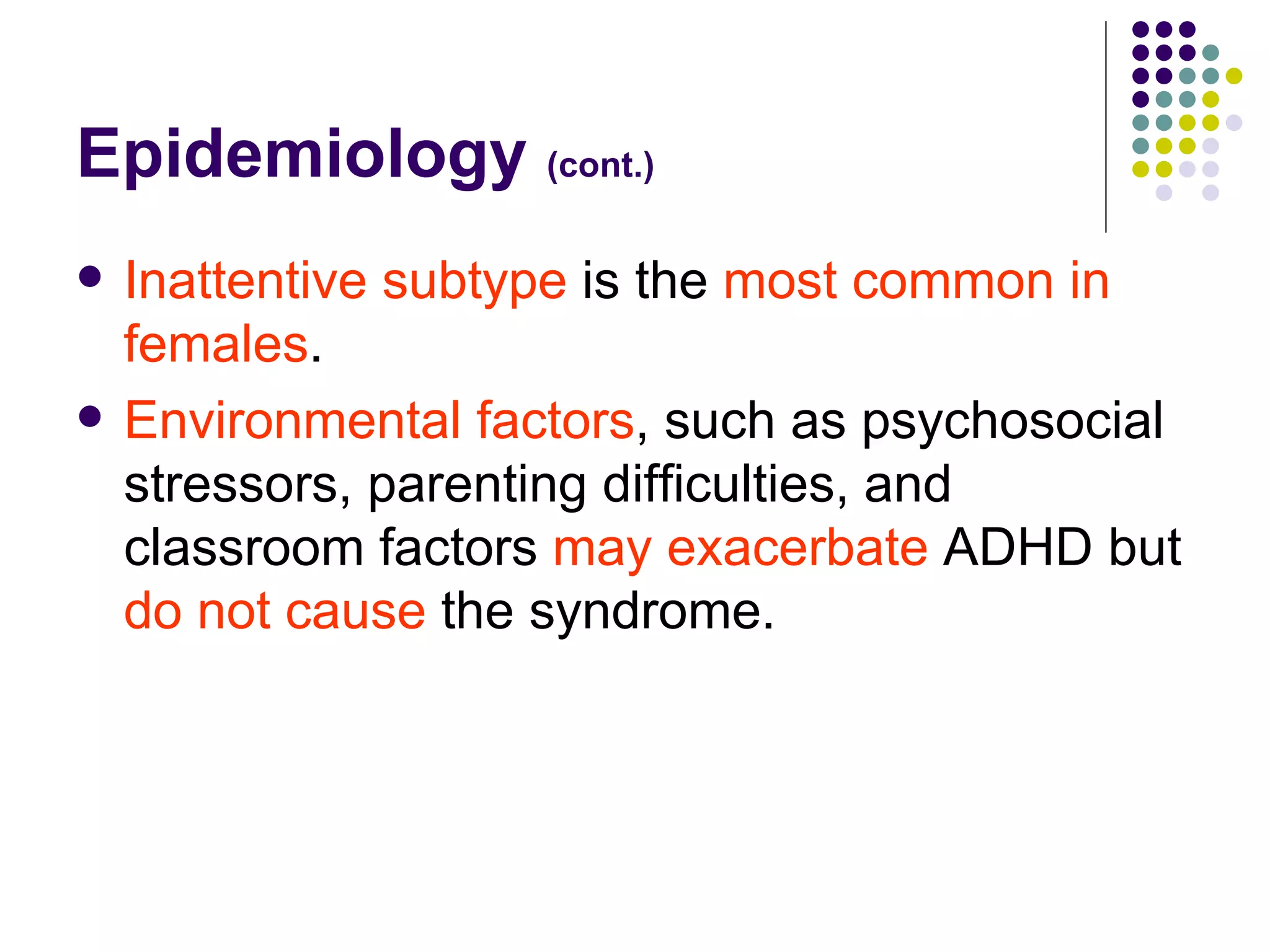
Epidemiology  (cont.)   Inattentive subtype  is the  most common in females .  Environmental factors , such as psychosocial stressors, parenting difficulties, and classroom factors  may exacerbate  ADHD but  do not cause  the syndrome.
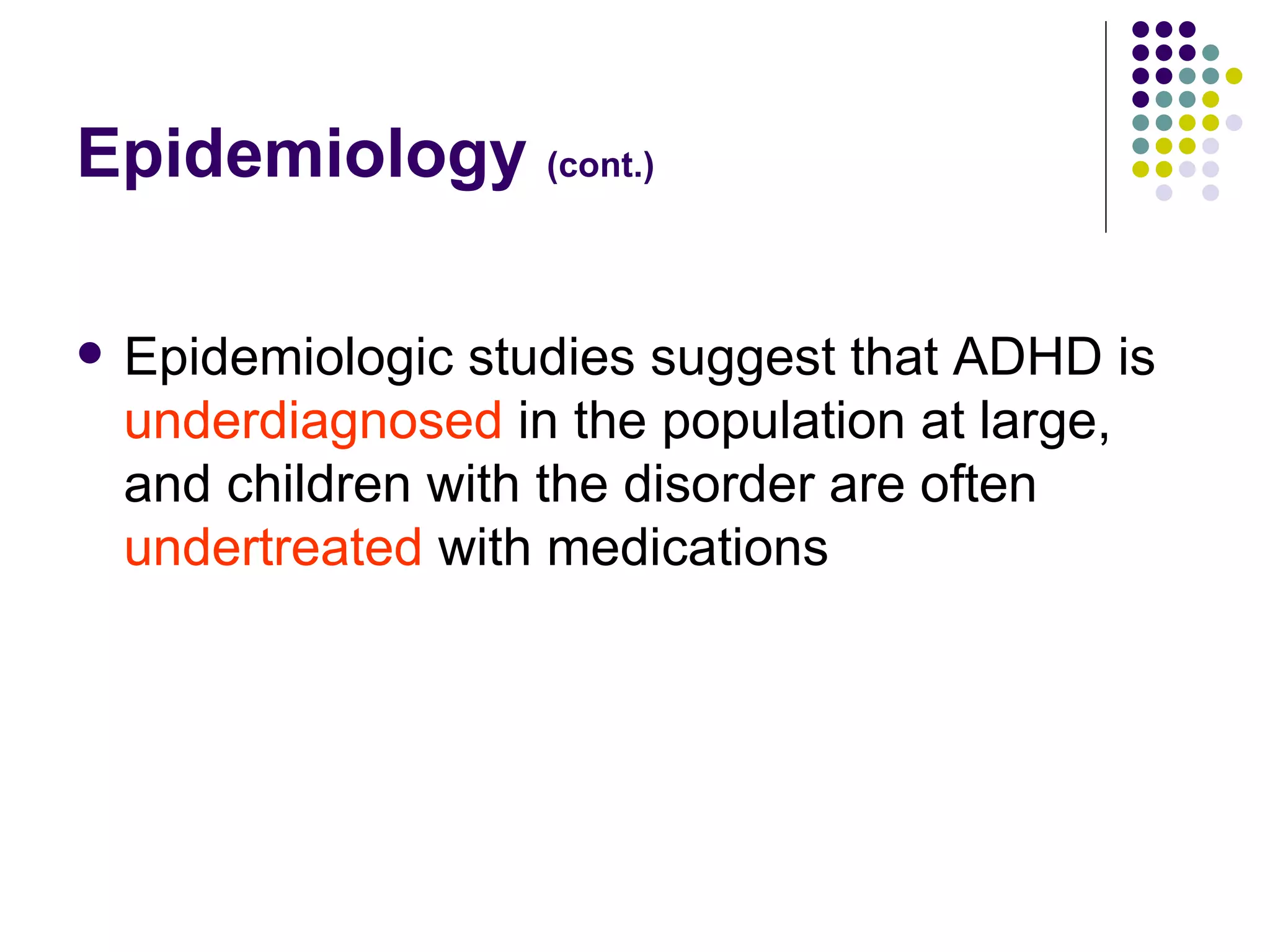
Epidemiology  (cont.)   Epidemiologic studies suggest that ADHD is  underdiagnosed  in the population at large, and children with the disorder are often  undertreated  with medications
Clinical Manifestations  DSM-IV criteria  were developed in field trials conducted mainly with children  5 to 12 yr of age .  These criteria emphasize  several factors .
DSM-IV criteria  (cont.)   Behaviors  must : 1.  Statistically abnormal  for the child's age and developmental  level  2. Begin  before the age of 7 yr 3. Present for  at least 6 mo .
DSM-IV criteria  (cont.)   Symptoms  must : 1.  Pervasive  in nature (present in at least two or more settings)  2.  Impair  the child's ability to function normally.  3.  Not be secondary  to another disorder.
DSM-IV criteria  (cont.)   A. Either 1 or 2   1.  Six  (or more) of the  symptoms of inattention  have persisted for  at least 6 mo  to a degree that is maladaptive and inconsistent with development level 2.  Six  (or more) of the  symptoms of hyperactivity-impulsivity  have persisted for  at least 6 mo  to a degree that is maladaptive and inconsistent with developmental level:
DSM-IV criteria  (cont.)   B.  Some hyperactive-impulsive or inattentive symptoms  that caused impairment were  present before 7 yr of age .  C.  Some impairment  from the symptoms is present in  2 or more settings  (e.g., at school [or work] or at home).
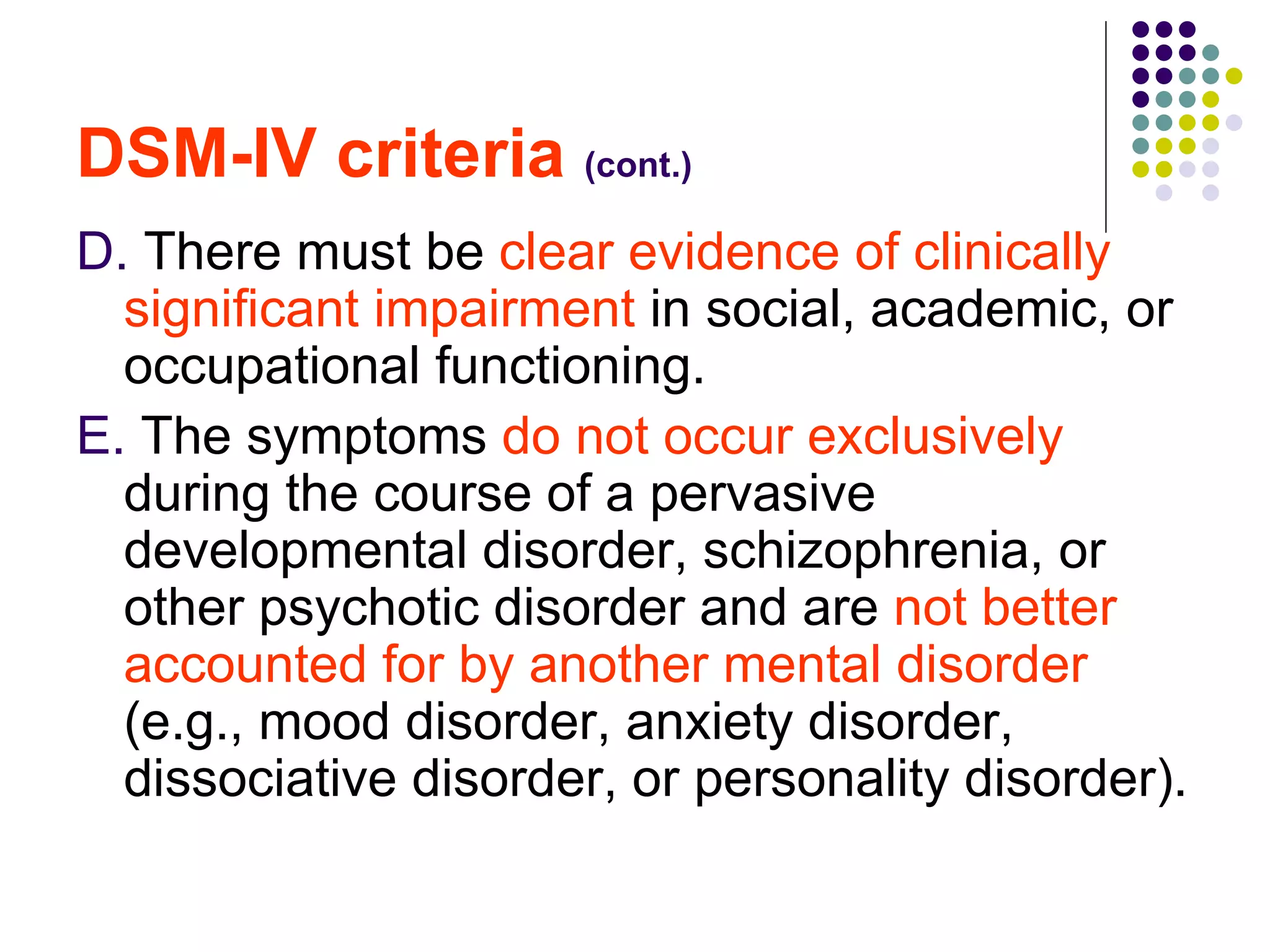
DSM-IV criteria  (cont.)   D.  There must be  clear evidence of clinically significant impairment  in social, academic, or occupational functioning.  E.  The symptoms  do not occur exclusively  during the course of a pervasive developmental disorder, schizophrenia, or other psychotic disorder and are  not better accounted for by another mental disorder  (e.g., mood disorder, anxiety disorder, dissociative disorder, or personality disorder).
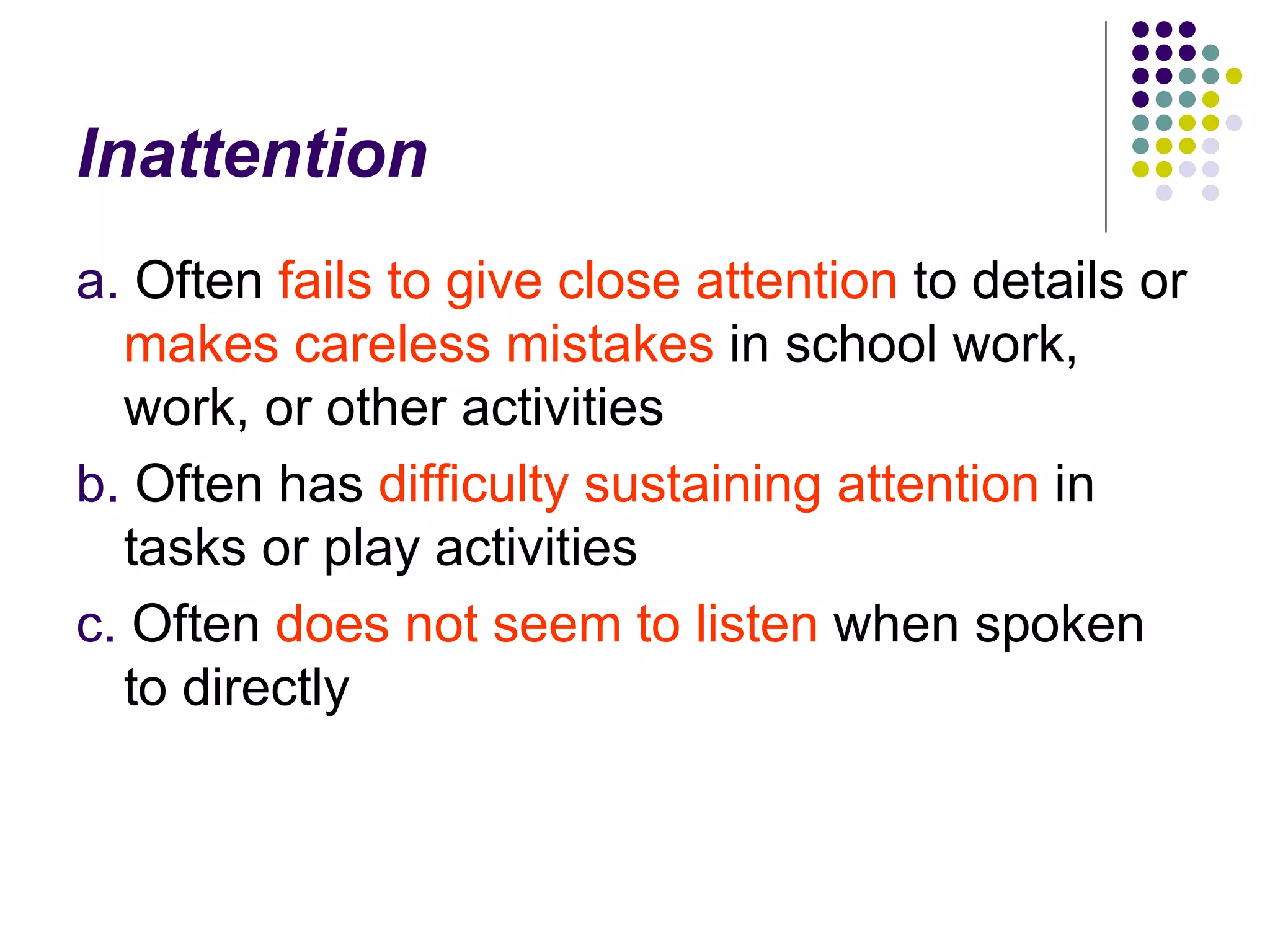
Inattention   a.  Often  fails to give close attention  to details or  makes careless mistakes  in school work, work, or other activities  b.  Often has  difficulty sustaining attention  in tasks or play activities  c.  Often  does not seem to listen  when spoken to directly
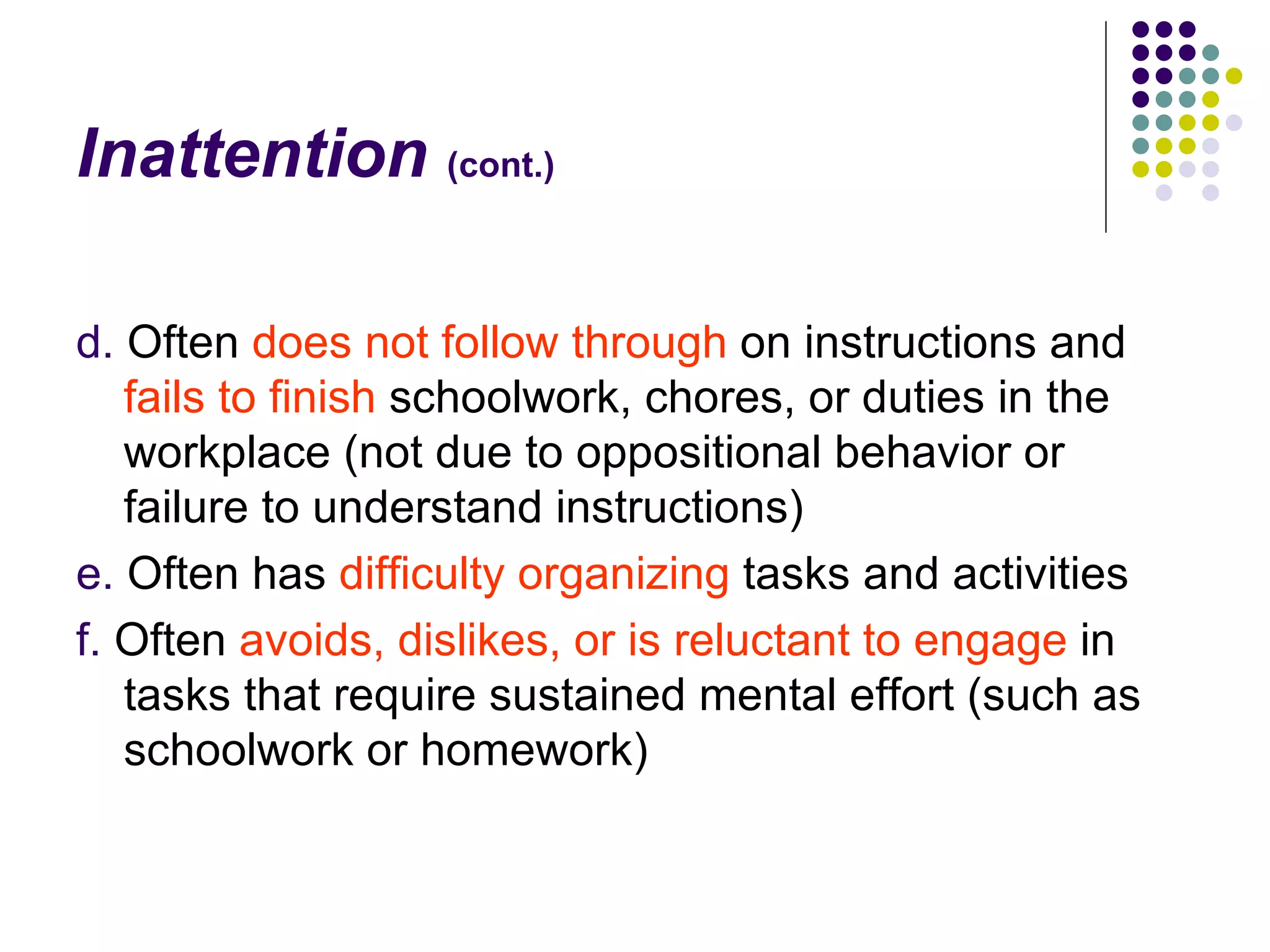
Inattention  (cont.)   d.  Often  does not follow through  on instructions and  fails to finish  schoolwork, chores, or duties in the workplace (not due to oppositional behavior or failure to understand instructions)  e.  Often has  difficulty organizing  tasks and activities  f.  Often  avoids, dislikes, or is reluctant to engage  in tasks that require sustained mental effort (such as schoolwork or homework)
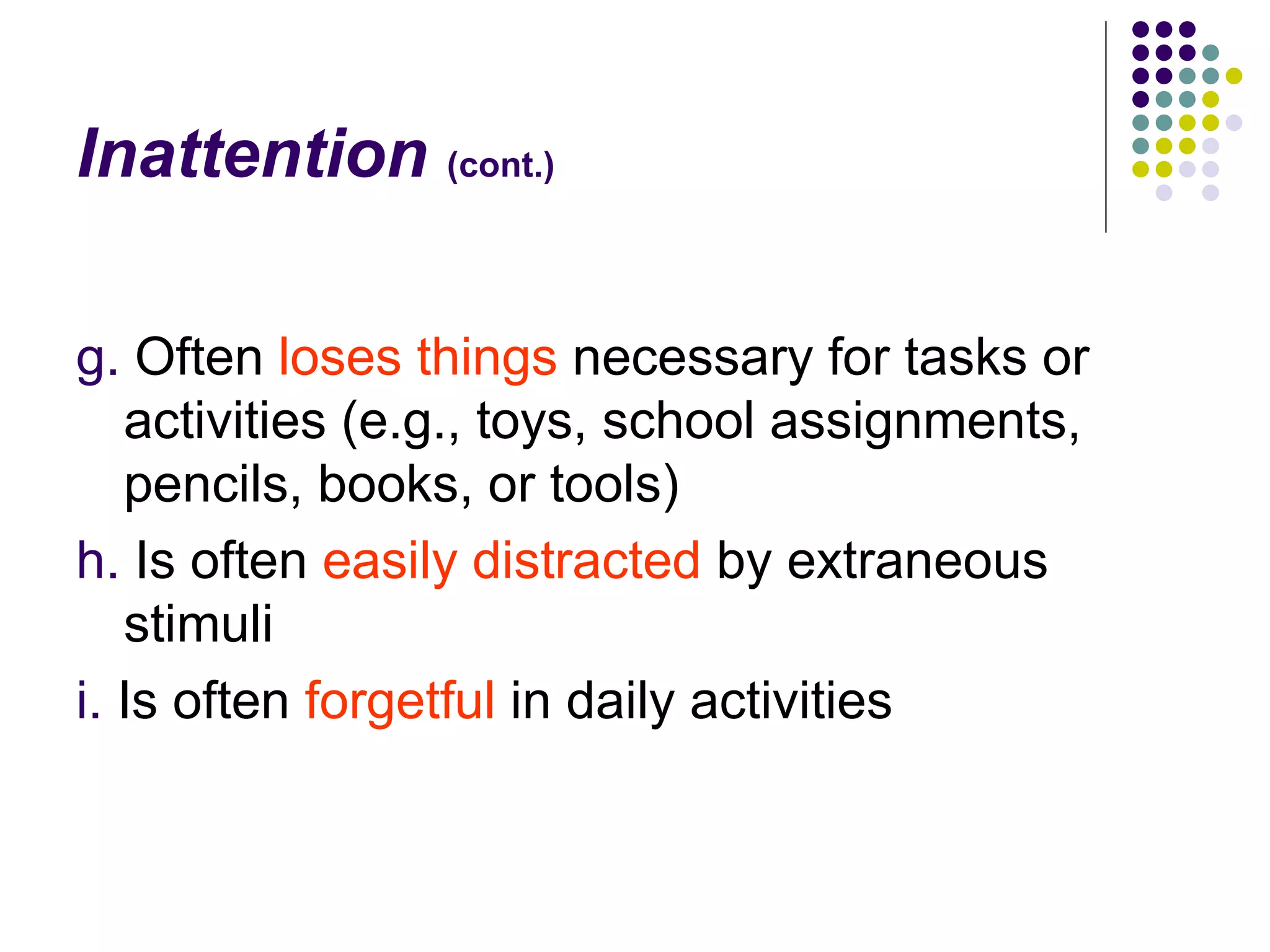
Inattention   (cont.)   g.  Often  loses things  necessary for tasks or activities (e.g., toys, school assignments, pencils, books, or tools)  h.  Is often  easily distracted  by extraneous stimuli  i.  Is often  forgetful  in daily activities
Hyperactivity   a.  Often  fidgets  with hands or feet or squirms in seat  b.  Often  leaves seat  in classroom or in other situations in which remaining seated is expected  c.  Often  runs about or climbs excessively  in situations  in which it is inappropriate (in adolescents or adults, may be limited to subjective feelings of restlessness)
Hyperactivity  (cont.)   d.  Often has  difficulty playing or engaging  in leisure activities quietly  e.  Is often  "on the go"  or often acts as if  "driven by a motor"  f.  Often  talks excessively
Impulsivity   g.  Often  blurts out answers before questions  have been completed  h. Often has  difficulty awaiting turn   i.  Often  interrupts or intrudes on others  (e.g., butts into conversations or games)
Clinical Manifestations  (cont.)   With increasing age,  clinical manifestations  may change   from predominantly motor  restlessness, aggressive, and disruptive behavior in preschool children  to disorganized, distractible, and inattentive  symptoms in older adolescents and adults.
Difficult to diagnose In preschool children , who normally tend to be active and restless. In children with cognitive disabilities , who often act in an immature fashion and whose intentions may be difficult to judge.
Diagnoses of ADHD Primarily on clinical grounds  after a thorough evaluation whose  components include  : 1.  Behavior rating scales 2.  Clinical interview 3.  Physical examination 4.  Neuropsychologic evaluation .
BEHAVIOR RATING SCALES  These scales are  useful in establishing the magnitude  and pervasiveness of the symptoms but are  not sufficient alone to make a diagnosis of ADHD   Several standardized behavior rating scales are widely available and perform well in  discriminating between children with ADHD and controls  (e.g.,  Conner's Rating Scale ;  ADHD Index ;)
BEHAVIOR RATING SCALES  (cont.)   Other  broad-band checklists , such as the Achenbach Child Behavior   Checklist (CBCL) are  useful in screening for co-occurring   problems in areas other than ADHD  (e.g.,   anxiety, depression, conduct problems, etc.).  It is important to  gather information from   a variety of sources  -typically parents, teachers, and, when appropriate, other caretakers-to determine pervasiveness of the symptoms.
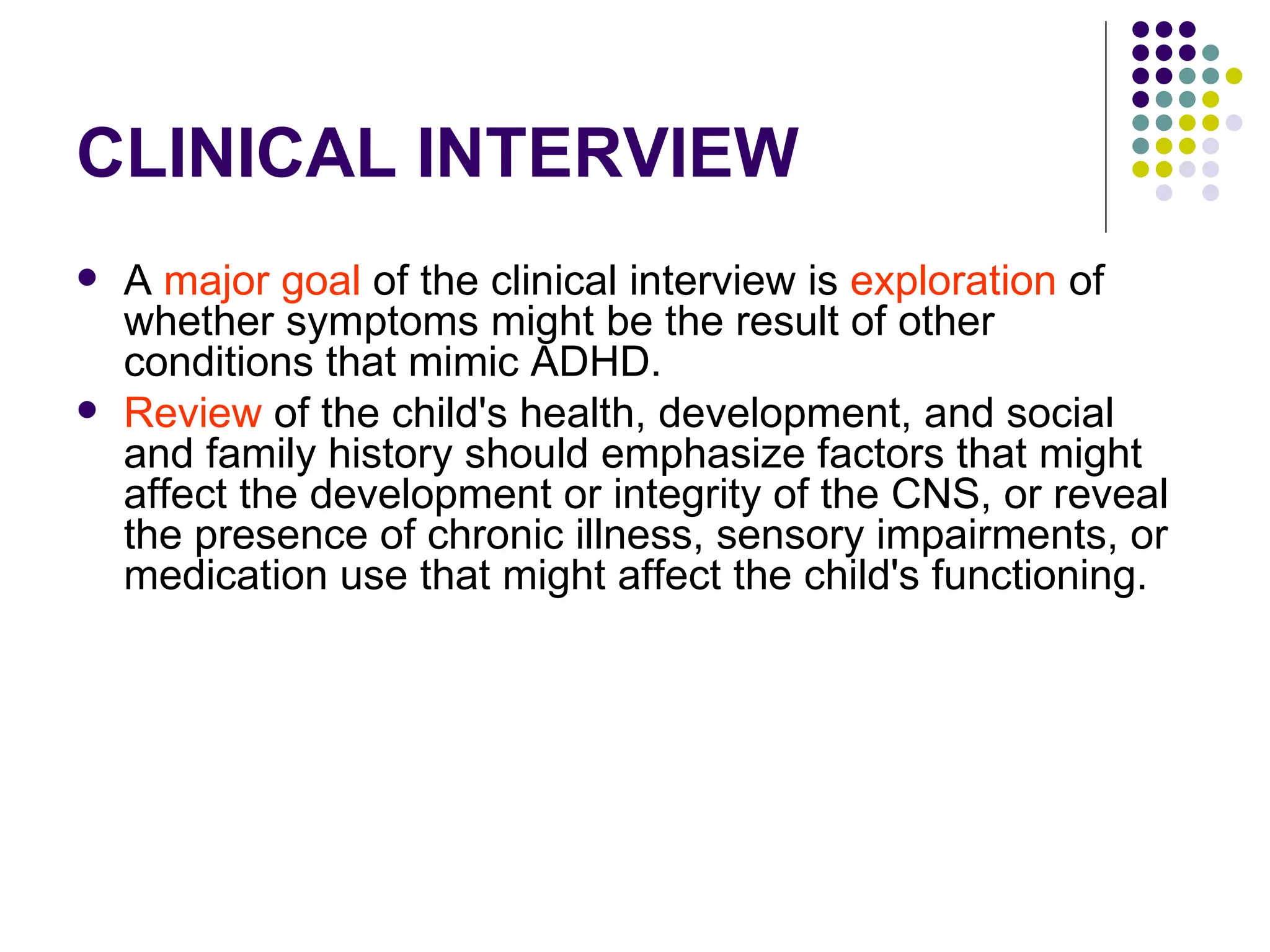
CLINICAL INTERVIEW  A  major goal  of the clinical interview is  exploration  of whether symptoms might be the result of other conditions that mimic ADHD.  Review  of the child's health, development, and social and family history should emphasize factors that might affect the development or integrity of the CNS, or reveal the presence of chronic illness, sensory impairments, or medication use that might affect the child's functioning.
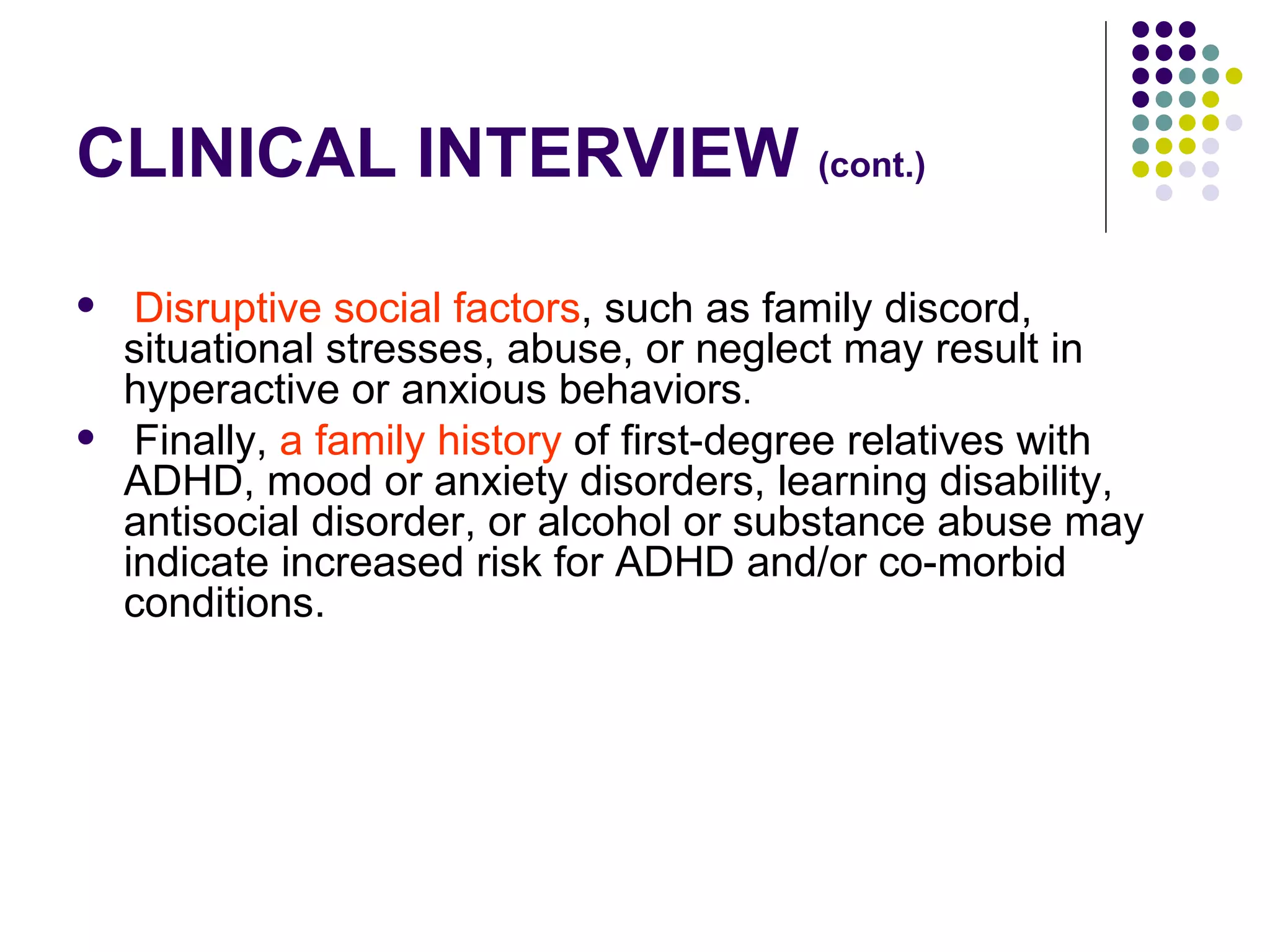
CLINICAL INTERVIEW  (cont.)   Disruptive social factors , such as family discord, situational stresses, abuse, or neglect may result in hyperactive or anxious behaviors . Finally,  a family history  of first-degree relatives with ADHD, mood or anxiety disorders, learning disability, antisocial disorder, or alcohol or substance abuse may indicate increased risk for ADHD and/or co-morbid conditions.
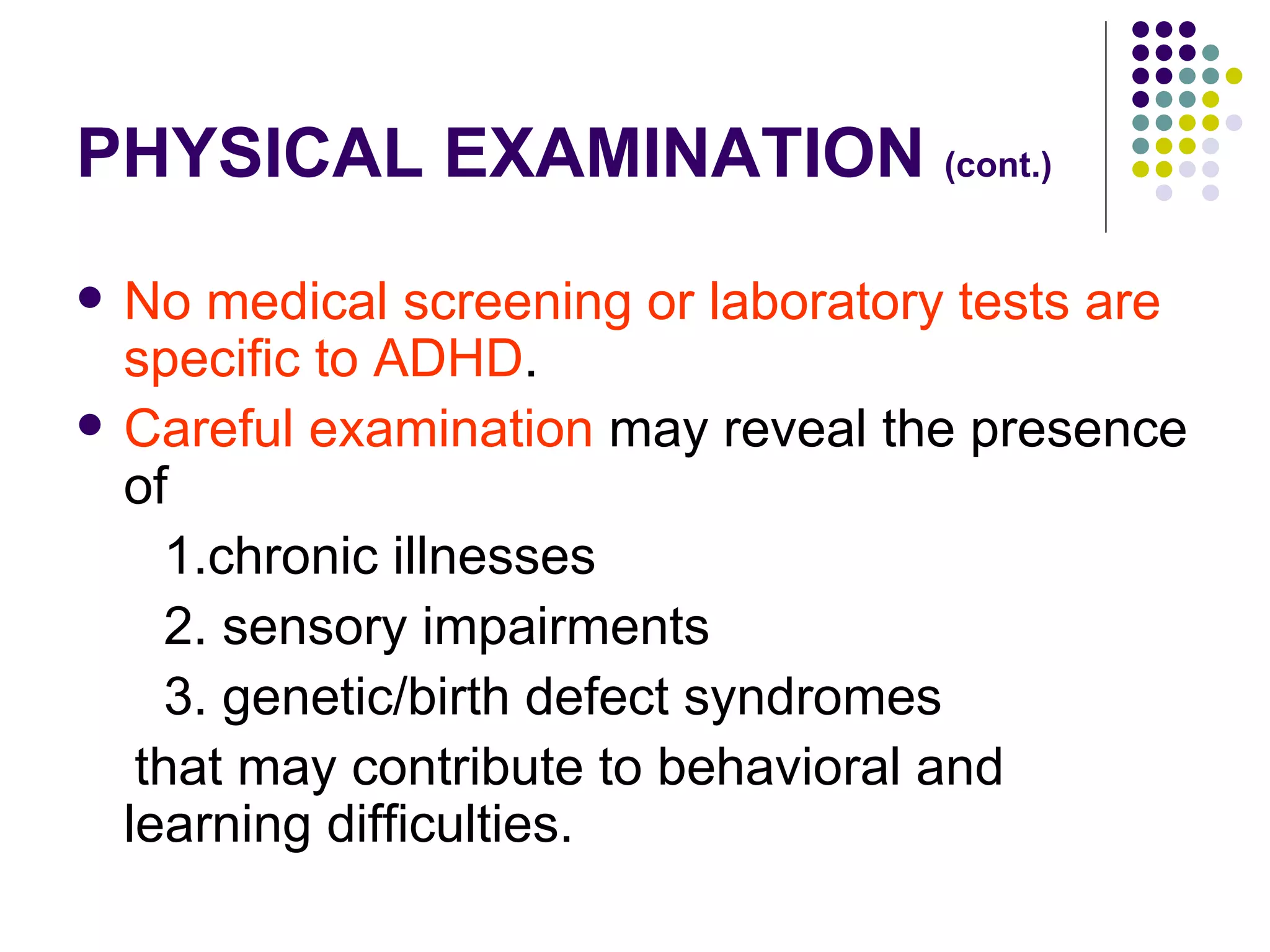
PHYSICAL EXAMINATION  (cont.)   No medical screening or laboratory tests are specific to ADHD .  Careful examination  may reveal the presence of  1.chronic illnesses 2. sensory impairments 3. genetic/birth defect syndromes  that may contribute to behavioral and learning difficulties.
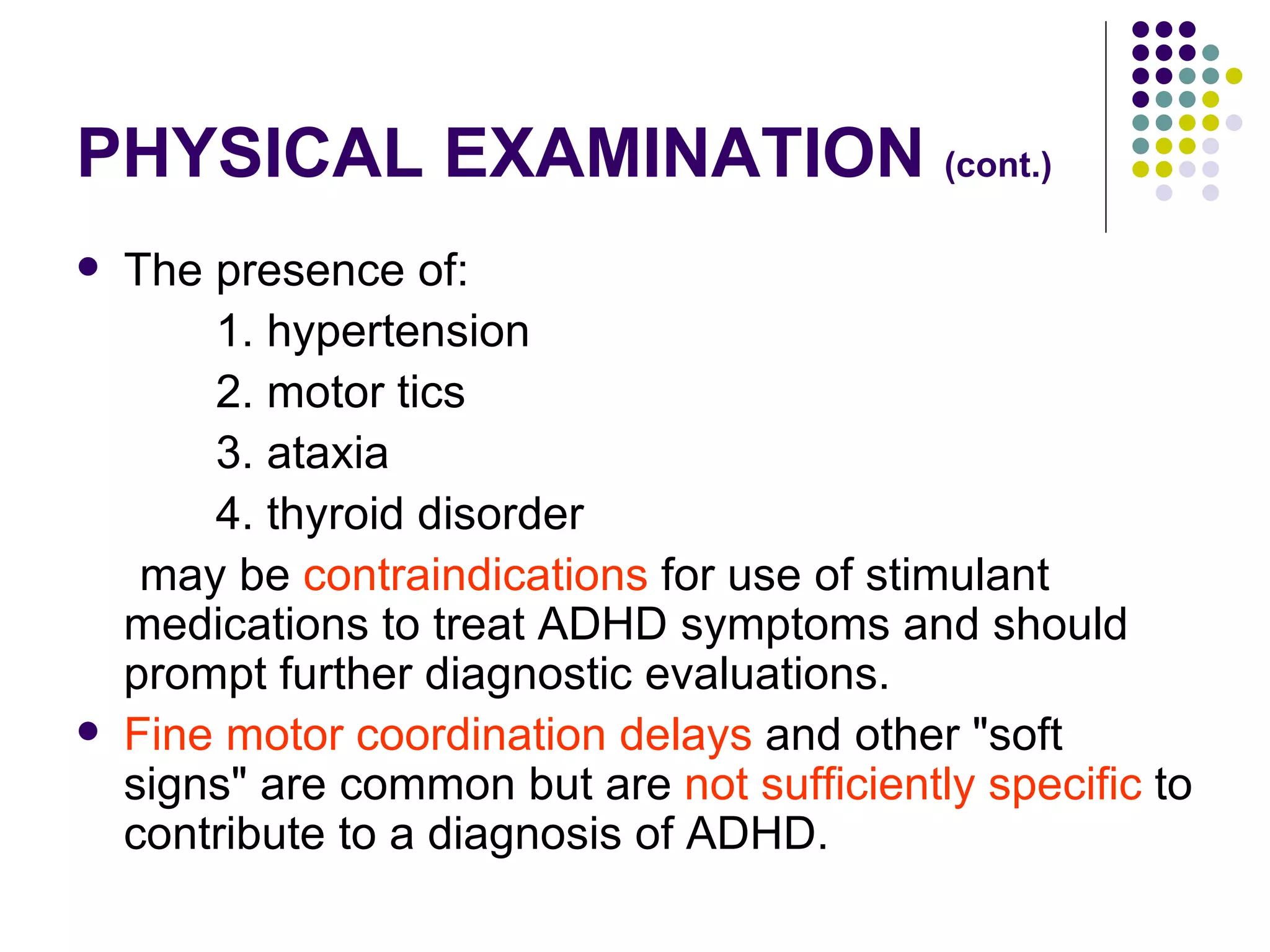
PHYSICAL EXAMINATION  (cont.)   The presence of: 1. hypertension  2. motor tics 3. ataxia 4. thyroid disorder may be  contraindications  for use of stimulant medications to treat ADHD symptoms and should prompt further diagnostic evaluations. Fine motor coordination delays  and other "soft signs" are common but are  not sufficiently specific  to contribute to a diagnosis of ADHD.
PHYSICAL EXAMINATION  (cont.)   It is important to note that  behavior in a highly structured or novel setting  may  not reflect  typical behavior at home or school.  Reliance on observed behavior in a physician's office may result in incorrect diagnosis .
NEUROPSYCHOLOGIC EXAMINATION  Standardized tests of general intelligence and educational achievement  may indicate the presence of mental retardation or specific learning disabilities. Incompatibility between classroom expectations and the child's ability  may result in inattentive or inappropriate behaviors.
NEUROPSYCHOLOGIC EXAMINATION  (cont.)   Tests of sustained attention-continuous performance tests   can help corroborate a diagnosis of ADHD but are  not adequate by themselves  to confirm or deny the diagnosis.
Differential Diagnosis  Chronic illnesses ►  affect up to 20% of children in the United States  ►  may impair children's attention and school performance (e.g., migraine headaches, absence seizures, asthma and allergies, hematologic disorders, juvenile diabetes, childhood cancer,  etc.),  either because of   the disease itself or medications used  to treat or control the underlying illness  (e.g., medications for  asthma, steroids, anticonvulsants, antihistamines). Substance abuse   ►  in older children and adolescents, may result in declining school performance and inattentive behavior.
Differential Diagnosis  Sleep disorders ►  including those secondary to chronic upper airway  obstruction from enlarged tonsils and adenoids, frequently result in  behavioral and emotional symptoms. Conversely, behavioral and emotional disorders may cause disrupted sleep patterns.  Depression and anxiety disorders   ►  may present many of the same symptoms as ADHD (e.g.,  inattention, restlessness, inability to focus and concentrate on work, poor organization, forgetfulness) and may be present as co-morbid conditions.
Differential Diagnosis  (cont.)   Obsessive-compulsive disorder  may mimic ADHD, particularly when recurrent and persistent thoughts, impulses, or images are intrusive and interfere with normal daily activities.  Adjustment disorders secondary to major life stresses  (e.g., death of a close family member, parental divorce, family violence, parental substance abuse, a move, etc.) or parent-child relationship disorders involving conflicts over discipline, overt child abuse and/or neglect, or overprotection, may result in symptoms similar to ADHD.
Treatment.  Include: 1.Psychosocial interventions 2. behavior management training 3. medication Which  are effective in treating the various components of ADHD.
Treatment.  (cont.)   * The effectiveness of  stimulant medication  in treating  core symptoms  of ADHD *  Psychosocial interventions and behavior  management training  were effective in treating   many  co-morbid disorders  frequently  seen in children with ADHD. National Institute of Mental Health Collaborative Multisite Multimodal Treatment Study of Children with Attention-Deficit/Hyperactivity Disorder (MTA study)
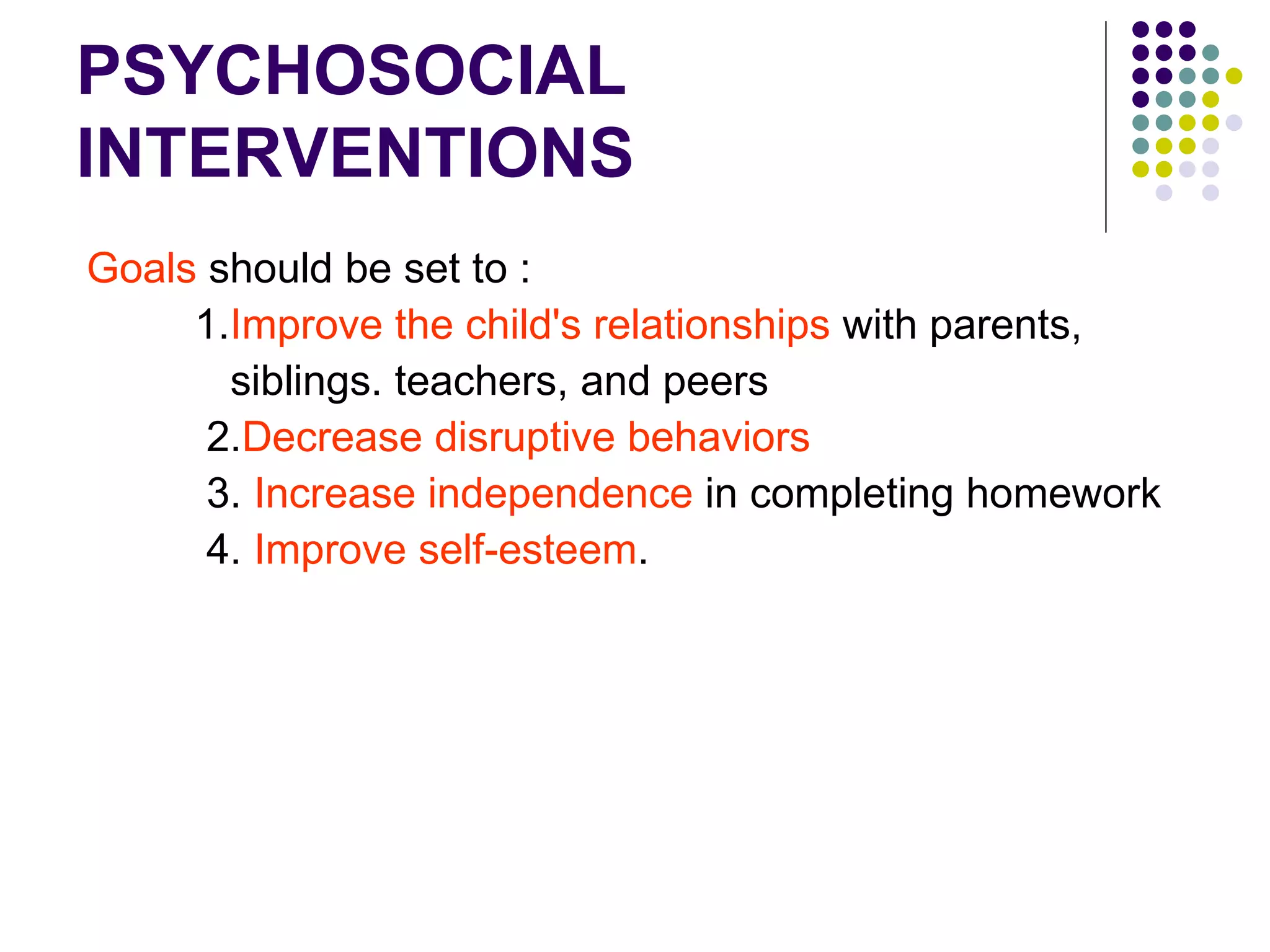
PSYCHOSOCIAL INTERVENTIONS Goals  should be set to : 1. Improve the child's relationships  with parents, siblings. teachers, and peers  2. Decrease disruptive behaviors   3.  Increase independence  in completing homework  4.  Improve self-esteem .
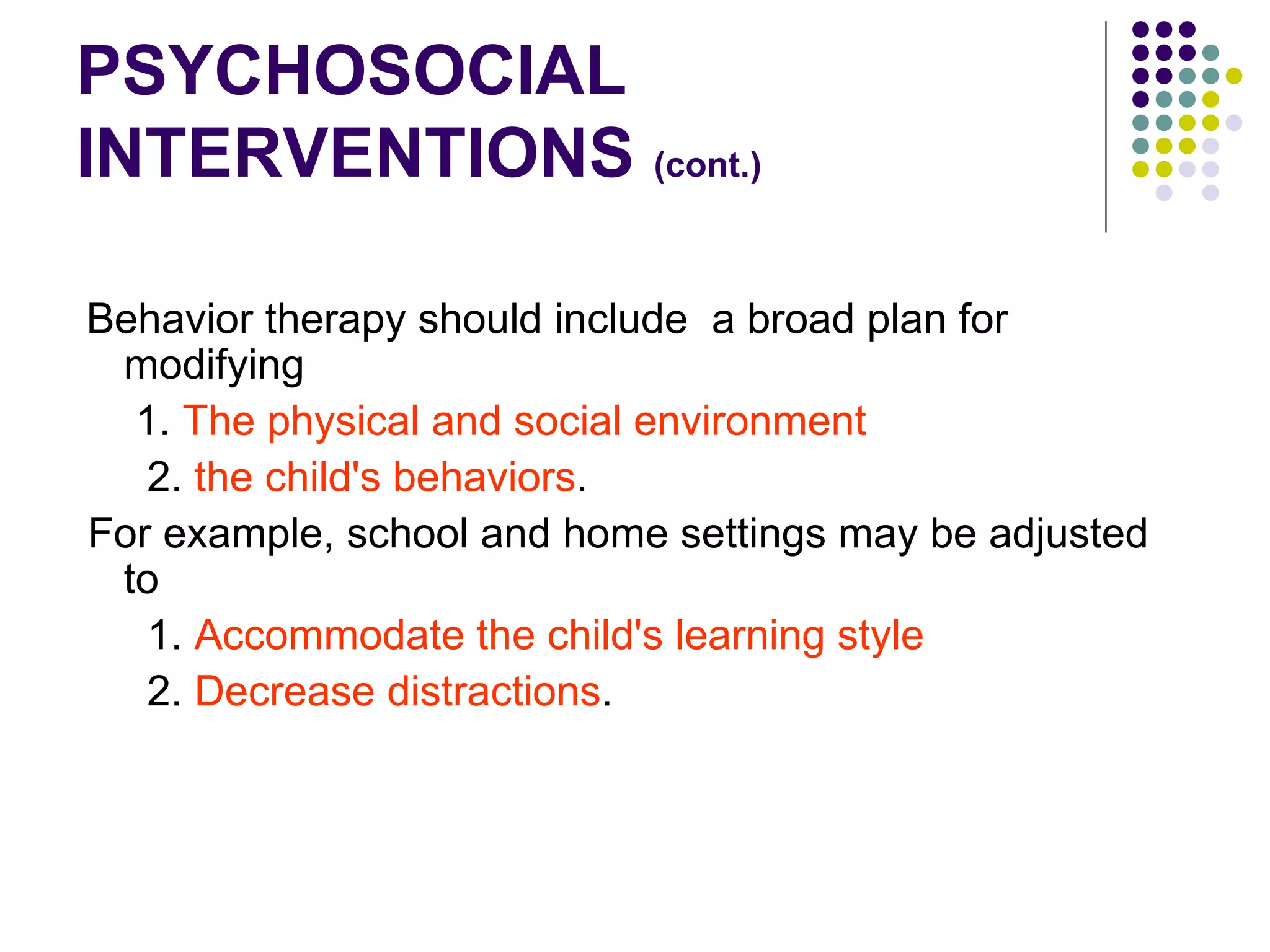
PSYCHOSOCIAL INTERVENTIONS  (cont.)   Behavior therapy should include  a broad plan for modifying 1.  The physical and social environment   2.  the child's behaviors . For example, school and home settings may be adjusted to  1.  Accommodate the child's learning style   2.  Decrease distractions .
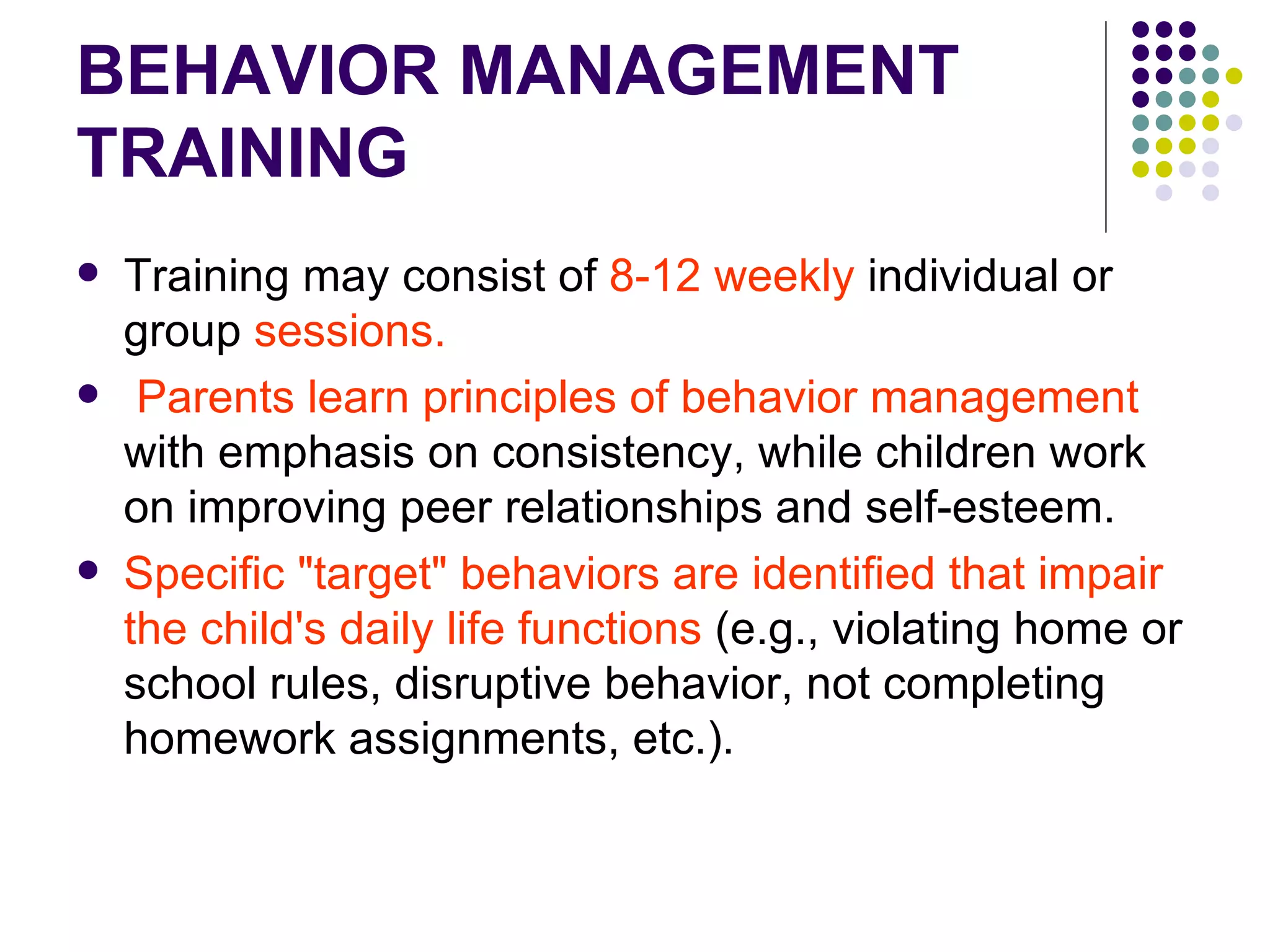
BEHAVIOR MANAGEMENT TRAINING Training may consist of  8-12 weekly  individual or group  sessions. Parents learn principles of behavior management  with emphasis on consistency, while children work on improving peer relationships and self-esteem.  Specific "target" behaviors are identified that impair the child's daily life functions  (e.g., violating home or school rules, disruptive behavior, not completing homework assignments, etc.).
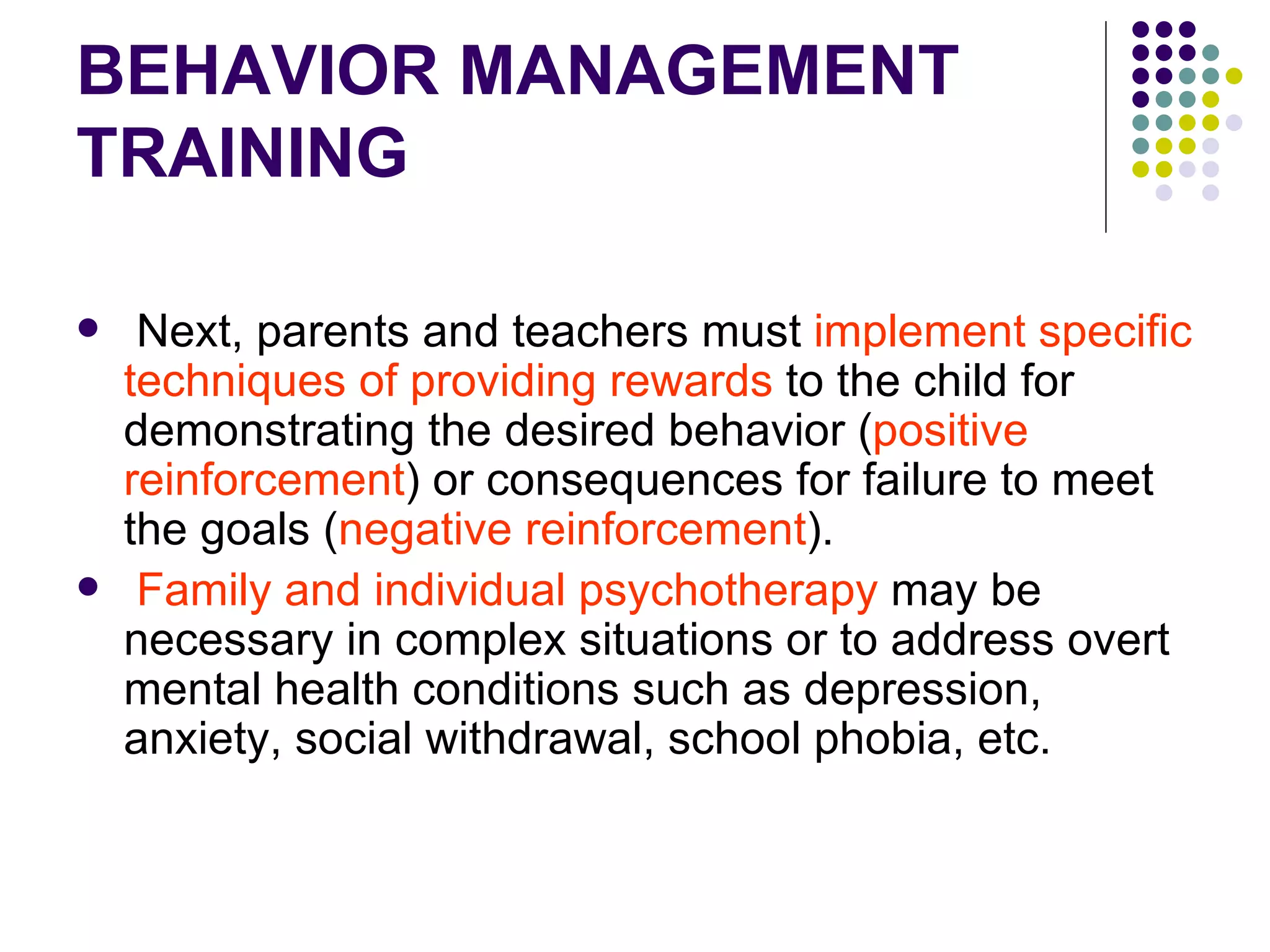
BEHAVIOR MANAGEMENT TRAINING Next, parents and teachers must  implement specific techniques of providing rewards  to the child for demonstrating the desired behavior ( positive reinforcement ) or consequences for failure to meet the goals ( negative reinforcement ). Family and individual psychotherapy  may be necessary in complex situations or to address overt mental health conditions such as depression, anxiety, social withdrawal, school phobia, etc.
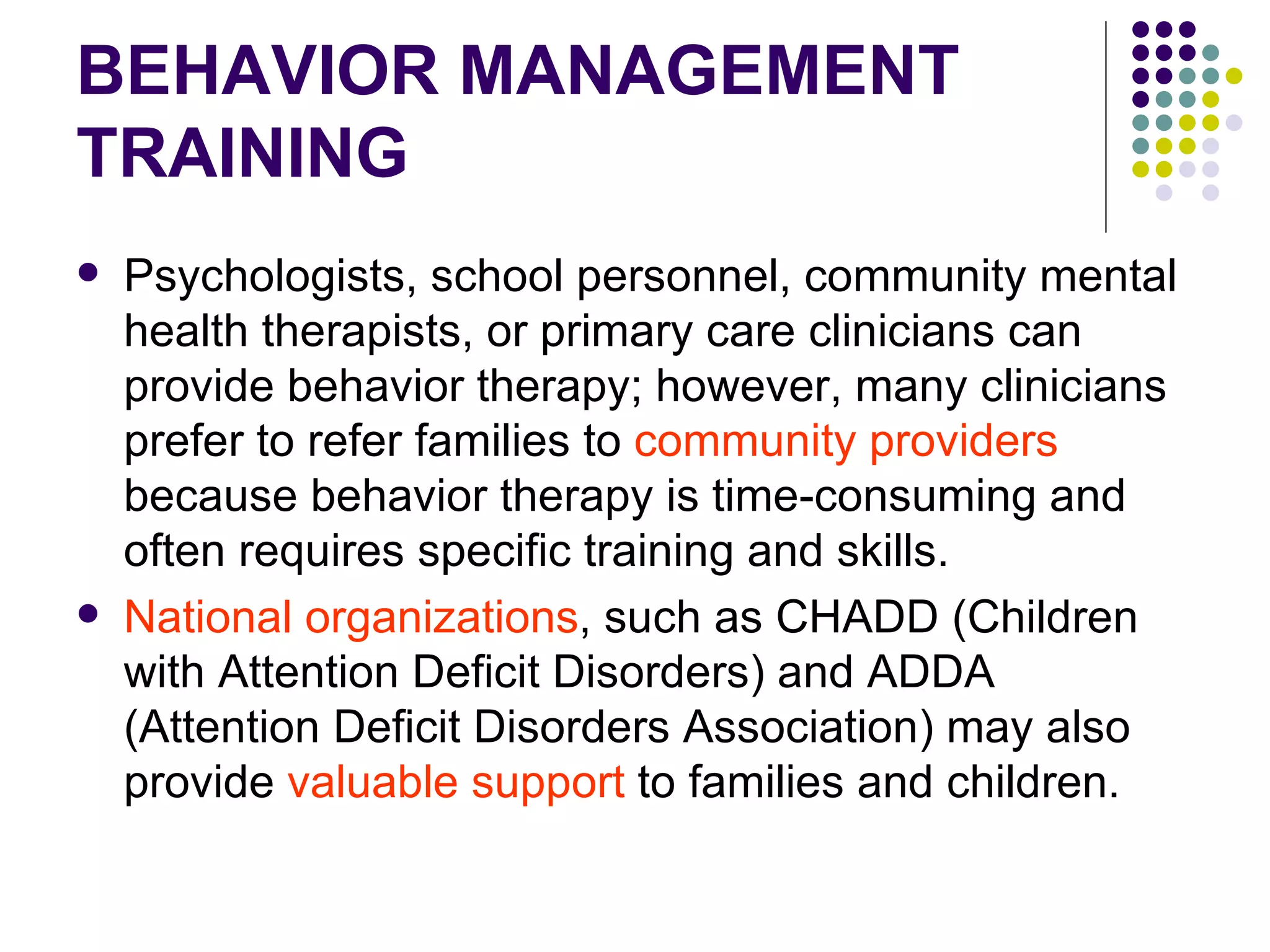
BEHAVIOR MANAGEMENT TRAINING Psychologists, school personnel, community mental health therapists, or primary care clinicians can provide behavior therapy; however, many clinicians prefer to refer families to  community providers  because behavior therapy is time-consuming and often requires specific training and skills.  National organizations , such as CHADD (Children with Attention Deficit Disorders) and ADDA (Attention Deficit Disorders Association) may also provide  valuable support  to families and children.
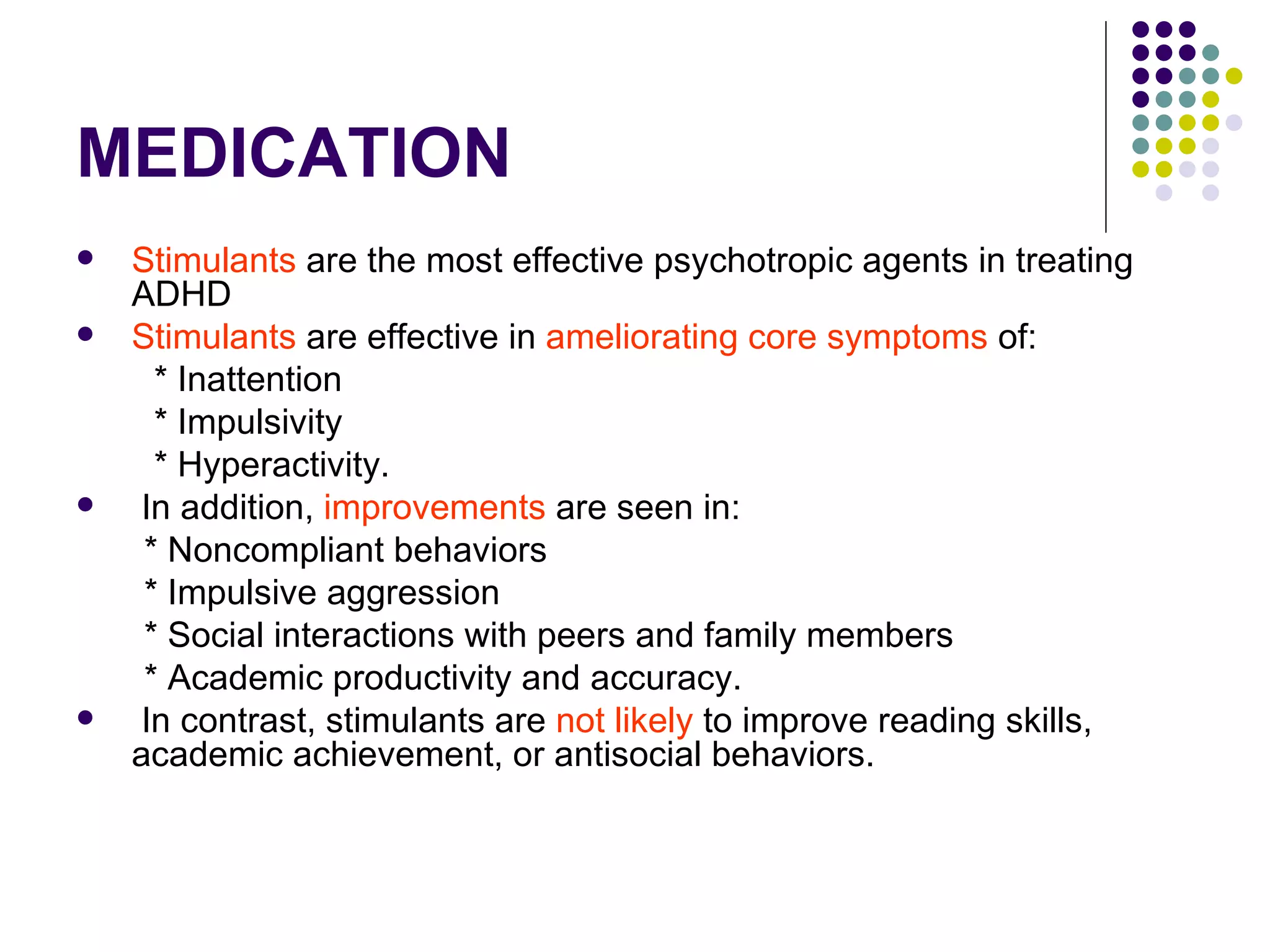
MEDICATION  Stimulants  are the most effective psychotropic agents in treating ADHD  Stimulants  are effective in  ameliorating core symptoms  of: * Inattention * Impulsivity * Hyperactivity. In addition,  improvements  are seen in: * Noncompliant behaviors * Impulsive aggression * Social interactions with peers and family members * Academic productivity and accuracy. In contrast, stimulants are  not likely  to improve reading skills, academic achievement, or antisocial behaviors.
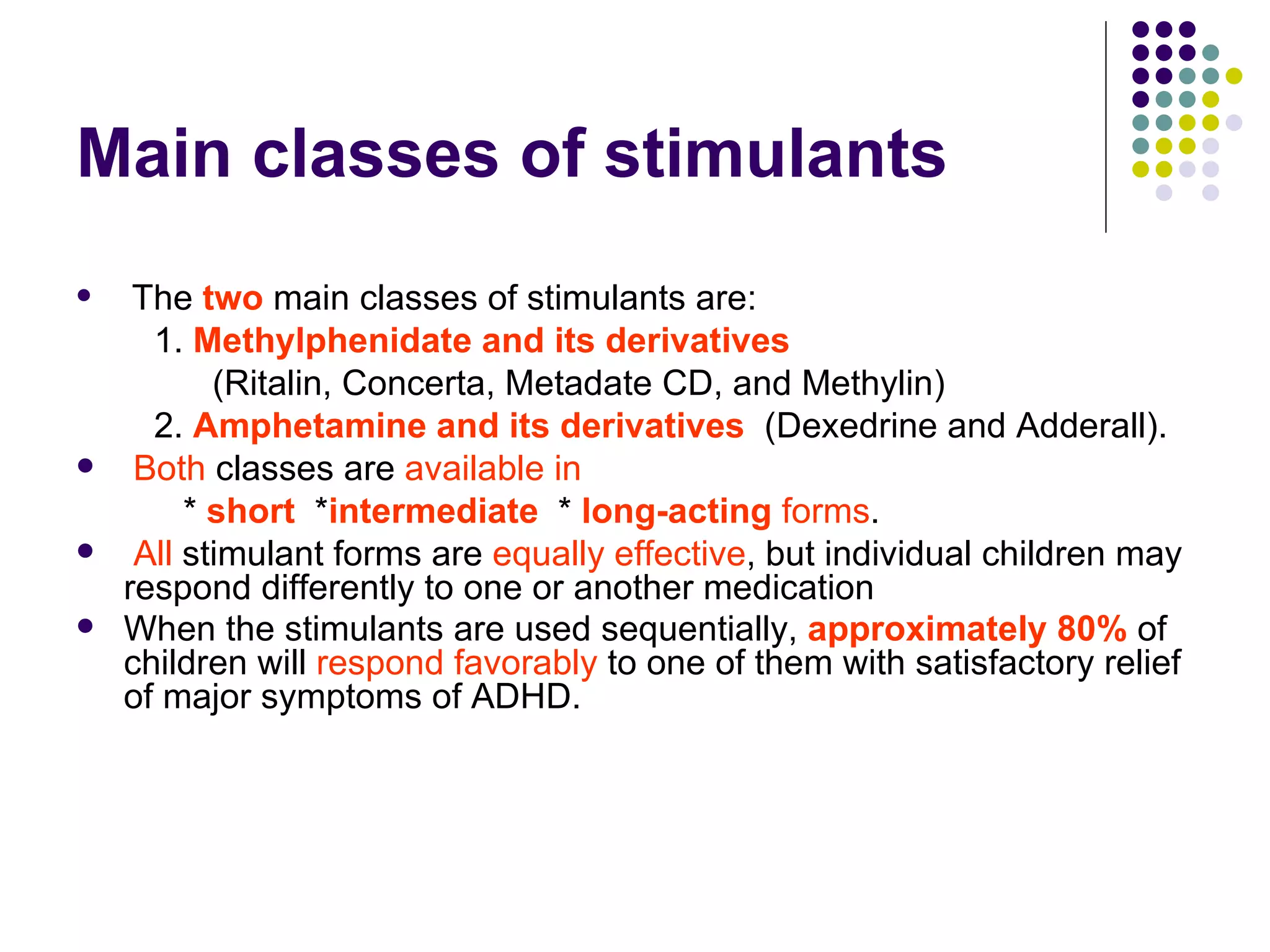
Main classes of stimulants The   two  main classes of stimulants are: 1.  Methylphenidate and its derivatives   (Ritalin, Concerta, Metadate CD, and Methylin) 2.  Amphetamine and its derivatives   (Dexedrine and Adderall). Both  classes are  available in *  short   * intermediate  *  long-acting  forms . All  stimulant forms are  equally effective , but individual children may respond differently to one or another medication  When the stimulants are used sequentially,  approximately 80%  of children will  respond favorably  to one of them with satisfactory relief of major symptoms of ADHD.
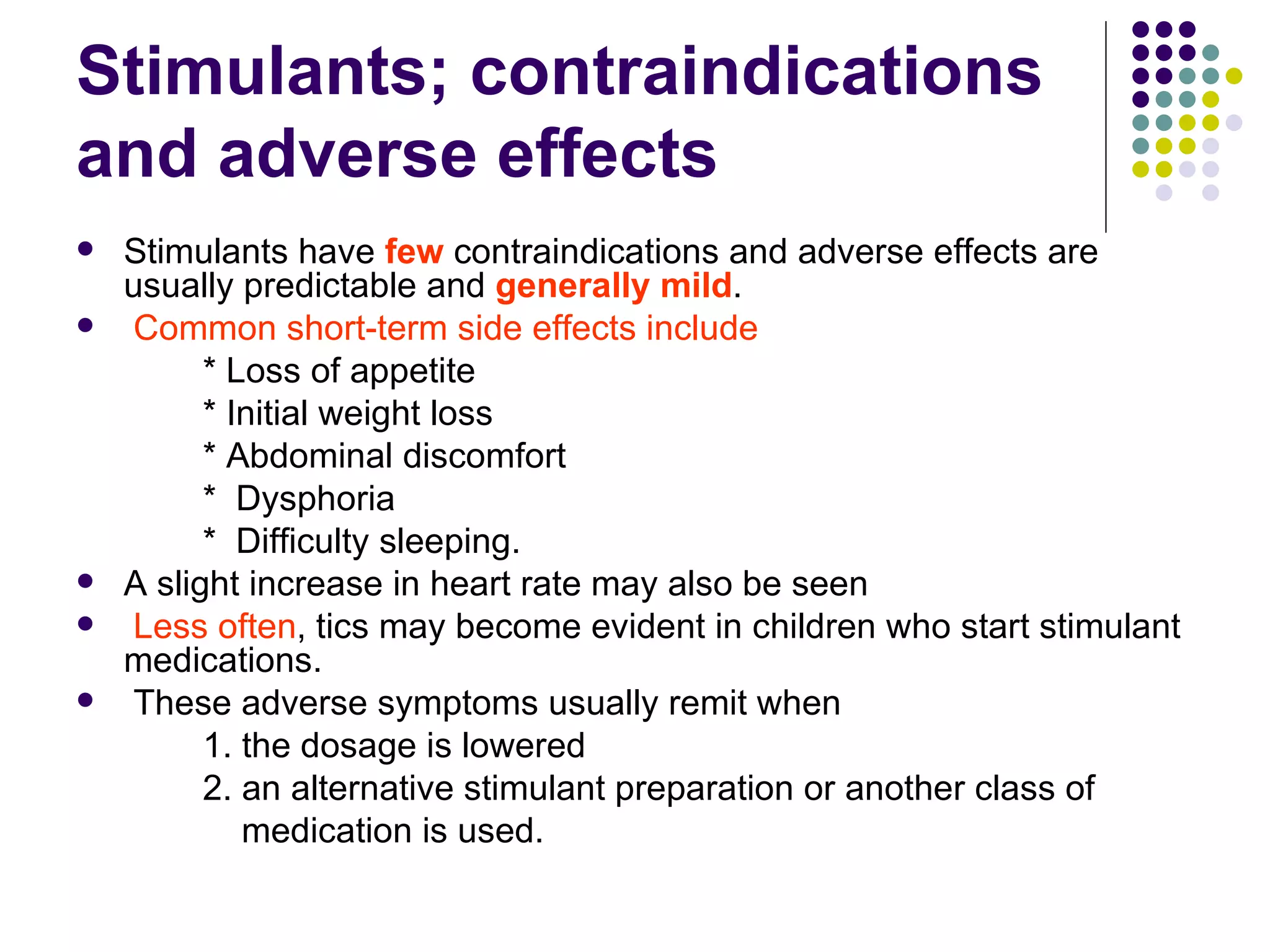
Stimulants; contraindications and adverse effects  Stimulants have  few  contraindications and adverse effects are usually predictable and  generally mild . Common short-term side effects include   * Loss of appetite * Initial weight loss * Abdominal discomfort *  Dysphoria *  Difficulty sleeping. A slight increase in heart rate may also be seen Less often , tics may become evident in children who start stimulant medications. These adverse symptoms usually remit when 1. the dosage is lowered 2. an alternative stimulant preparation or another class of medication is used.
Stimulants; contraindications and adverse effects  (cont.) long-term use of stimulants Does not result in addiction  (i.e., there is no development of tolerance, craving, or withdrawal) and is  unlikely to lead   to abuse drugs . Much lower incidence of illicit substance and alcohol abuse  than those who do not receive appropriate treatment.  Do not result  in aggressive or assaultive behavior,  do not increase  the risk of seizures,  are not a cause  of Tourette syndrome, and  do not exacerbate  anxiety disorders
Other  Medications  Other agents, such as  tricyclic antidepressants  (imipramine and desipramine) and  buproprion  (Wellbutrin) are considered  second-line agents  that have been shown to be effective in treating ADHD,  particularly in the presence of co-morbid depression.  Alpha-2 adrenergic blocker agents , such as clonidine (Catapres) and guanfacine (Tenex), are also effective and often used alone or in combination with stimulants.
Prognosis.  In at least  80%  of affected children, symptoms of ADHD  persist  into adolescence and adulthood.  With increasing age: *  Hyperactivity  tends to  decrease   *  inattention ,  impulsivity ,  disorganization , and relationship difficulties  often persist and become more prominent.
Prognosis  (cont.)   If not properly identified and treated , affected individuals across the age span are at risk for  a wide range of unfavorable health and psychosocial outcomes , including: * accidental injuries * educational underachievement * employment difficulties * risky sexual behavior * criminal activity. with  a combination of medication and psychosocial and behavioral interventions,  most  children's symptoms are  significantly ameliorated .
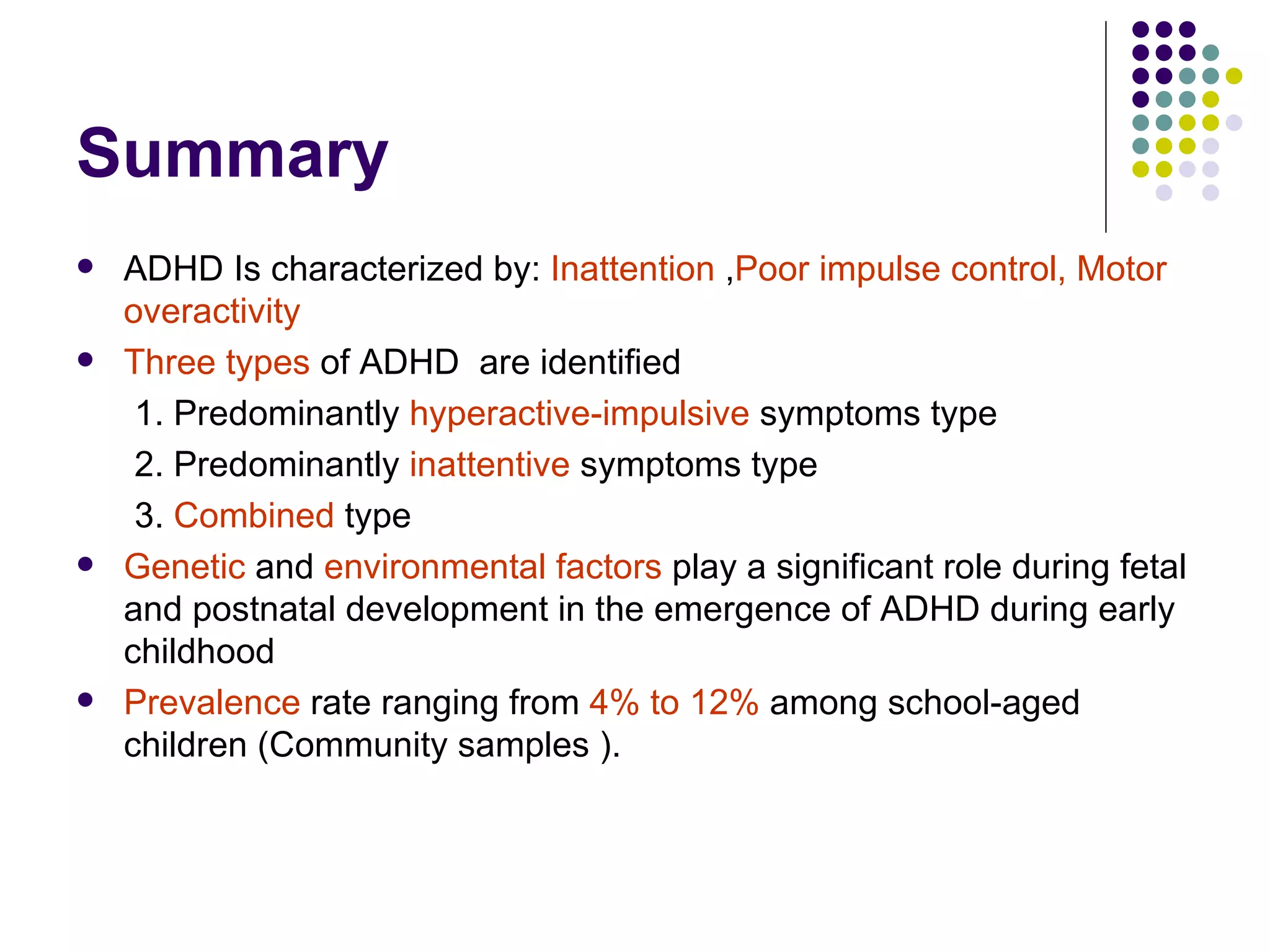
Summary  ADHD Is characterized by:  Inattention  , Poor impulse control, Motor overactivity Three types  of ADHD  are identified  1. Predominantly  hyperactive-impulsive  symptoms type 2. Predominantly  inattentive  symptoms type  3.  Combined  type  Genetic  and  environmental factors  play a significant role during fetal and postnatal development in the emergence of ADHD during early childhood  Prevalence  rate ranging from  4% to 12%  among school-aged children (Community samples ).
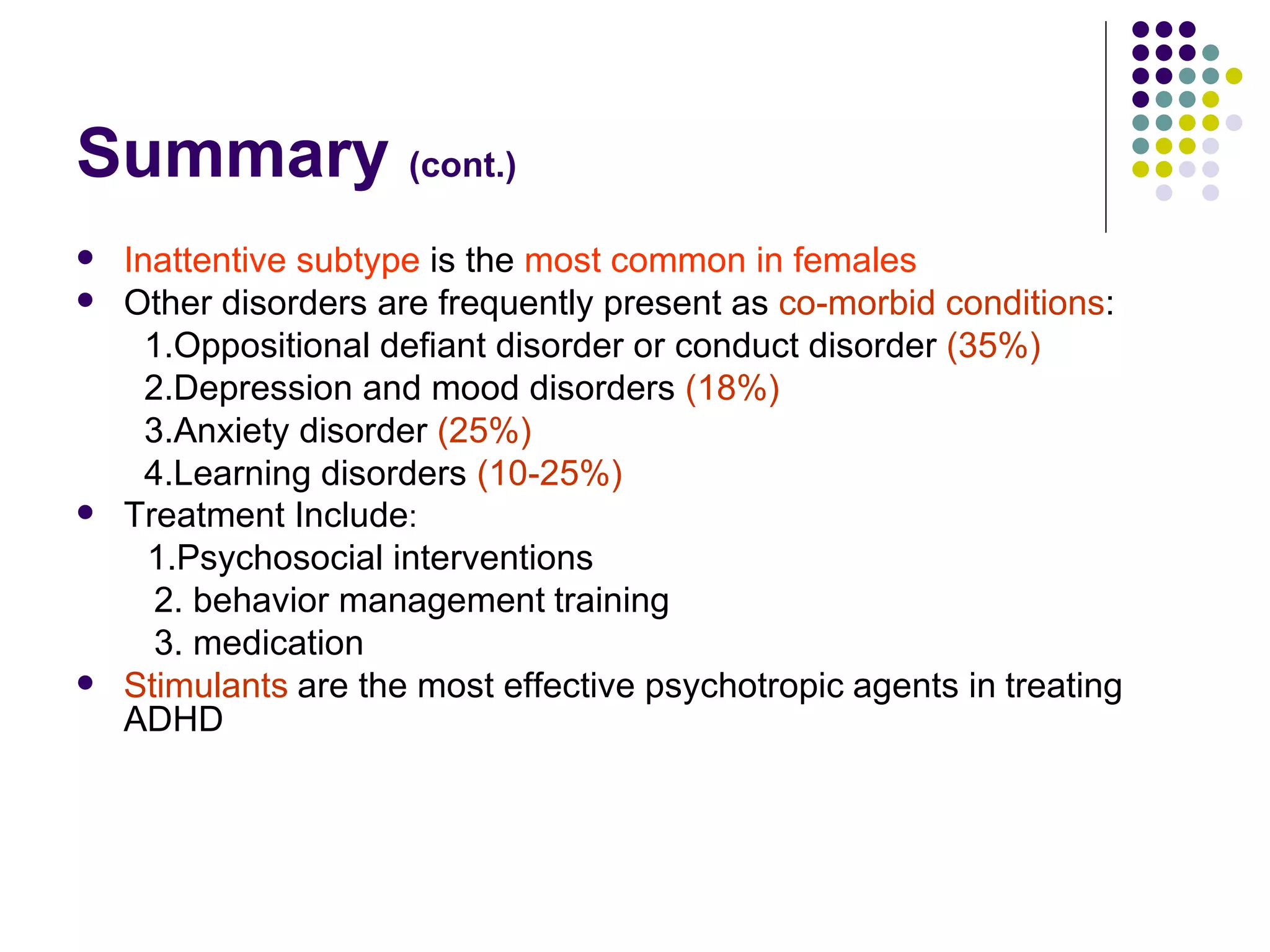
Summary  (cont.) Inattentive subtype  is the  most common in females   Other disorders are frequently present as  co-morbid conditions : 1.Oppositional defiant disorder or conduct disorder  (35%) 2.Depression and mood disorders  (18%) 3.Anxiety disorder  (25%)  4.Learning disorders  (10-25%)  Treatment Include : 1.Psychosocial interventions 2. behavior management   training 3. medication Stimulants   are the most effective psychotropic   agents in   treating ADHD
References American Academy of Child and Adolescent Psychiatry: Summary of the practice parameter for the use of stimulant medication in the treatment of children, adolescents, and adults.  J Am Acad Child Adolesc Psychiatry  2001;40:1352-5  American Academy of Pediatrics, Committee on Quality Improvement, Subcommittee on Attention-Deficit/Hyperactivity Disorder: Clinical practice guideline: Treatment of the school-aged child with Attention-Deficit/ Hyperactivity Disorder.  Pediatrics  2001;108:1033-44.  Pliszka SR, Greenhill LL, Crismon ML, et al: The Texas Children's Medication Algorithm Project: Report of the Texas consensus conference panel on medication treatment of childhood attention-deficit/hyperactivity disorder. Part II: Tactics.  J Am Acad Child Adolesc Psychiatry  2000;39:920-7.  Medline    Similar articles  Wolraich ML, Greenhill LL, Pelham W, et al: Randomized, controlled trial of OROS Methylphenidate once a day in children with Attention-Deficit/Hyperactivity Disorder.  Pediatrics  2001;108:883-92.  Medline    Similar articles

Attention Deficit Hyperactice Disorder

  • 1.
    Attention-Deficit / HyperactivityDisorder (ADHD) Prof. Saad S Al Ani Senior Pediatric consultant Head of pediatric Department Khorfakkan Hospital Sharjah ,UAE [email_address]
  • 2.
    Attention-deficit/hyperactivity disorder (ADHD) Is the Most common neurobehavioral disorder of childhood , One of the most prevalent chronic health conditions affecting school-aged children The most extensively studied mental disorder of childhood.
  • 3.
    The Characteristic ofADHD ADHD Is characterized by: Inattention , including increased distractibility and difficulty sustaining attention Poor impulse control and decreased self-inhibitory capacity Motor overactivity and motor restlessness Fourth edition of the American Psychiatric Association's Diagnostic and Statistical Manual (DSM-IV),
  • 4.
    Types of ADHDThree types of ADHD are identified by DSM-IV : 1. Predominantly hyperactive-impulsive symptoms type 2. Predominantly inattentive symptoms type 3. Combined type Fourth edition of the American Psychiatric Association's Diagnostic and Statistical Manual (DSM-IV),
  • 5.
    Problems experienced byADHD child ► Affected children commonly experience problems with : Academic underachievement Interpersonal relationships with family members and peers low self-esteem .
  • 6.
    ADHD &associated disorders ► ADHD frequently co-occurs with other: Emotional Behavioral Language Learning disorders
  • 7.
    Etiology ADHDis a heterogeneous condition for which no single cause has been identified. Evidence suggests that genetic and environmental factors play a significant role during fetal and postnatal development in the emergence of ADHD during early childhood.
  • 8.
    Etiology (cont.) Both morphologic and functional brain differences have been identified, including - Moderate reduction in the size of : 1. Corpus callosum 2. Basal ganglia 3. Frontal lobes - Hypoperfusion of the frontal-striatal dopamine pathways.
  • 9.
    Etiology (cont.) ADHD commonly occurs following : 1.Damage to the CNS (e.g., prematurity or traumatic brain injury) 2.Toxic exposure (e.g., fetal alcohol syndrome or lead poisoning), 3.Maldevelopment (e.g., mental retardation syndromes), 4. Sequelae of infectious processes affecting the CNS . ADHD also occurs in otherwise physically healthy children.
  • 10.
    Etiology Twinand family studies suggest a strong genetic component to ADHD, and molecular genetic studies have identified abnormalities in : 1. Dopamine transporter gene 2. D4 receptor gene 3. Human thyroid receptor beta gene.
  • 11.
    Epidemiology Prevalenceto be between 3% and 5% among school-aged children (DSM-IV) Prevalence rate ranging from 4% to 12% among school-aged children ( Community samples ) . The condition is approximately 3 to 4 times more common in males (9.2%) than females (2.9%)
  • 12.
    Epidemiology (cont.) Inattentive subtype is the most common in females . Environmental factors , such as psychosocial stressors, parenting difficulties, and classroom factors may exacerbate ADHD but do not cause the syndrome.
  • 13.
    Epidemiology (cont.) Epidemiologic studies suggest that ADHD is underdiagnosed in the population at large, and children with the disorder are often undertreated with medications
  • 14.
    Clinical Manifestations DSM-IV criteria were developed in field trials conducted mainly with children 5 to 12 yr of age . These criteria emphasize several factors .
  • 15.
    DSM-IV criteria (cont.) Behaviors must : 1. Statistically abnormal for the child's age and developmental level 2. Begin before the age of 7 yr 3. Present for at least 6 mo .
  • 16.
    DSM-IV criteria (cont.) Symptoms must : 1. Pervasive in nature (present in at least two or more settings) 2. Impair the child's ability to function normally. 3. Not be secondary to another disorder.
  • 17.
    DSM-IV criteria (cont.) A. Either 1 or 2 1. Six (or more) of the symptoms of inattention have persisted for at least 6 mo to a degree that is maladaptive and inconsistent with development level 2. Six (or more) of the symptoms of hyperactivity-impulsivity have persisted for at least 6 mo to a degree that is maladaptive and inconsistent with developmental level:
  • 18.
    DSM-IV criteria (cont.) B. Some hyperactive-impulsive or inattentive symptoms that caused impairment were present before 7 yr of age . C. Some impairment from the symptoms is present in 2 or more settings (e.g., at school [or work] or at home).
  • 19.
    DSM-IV criteria (cont.) D. There must be clear evidence of clinically significant impairment in social, academic, or occupational functioning. E. The symptoms do not occur exclusively during the course of a pervasive developmental disorder, schizophrenia, or other psychotic disorder and are not better accounted for by another mental disorder (e.g., mood disorder, anxiety disorder, dissociative disorder, or personality disorder).
  • 20.
    Inattention a. Often fails to give close attention to details or makes careless mistakes in school work, work, or other activities b. Often has difficulty sustaining attention in tasks or play activities c. Often does not seem to listen when spoken to directly
  • 21.
    Inattention (cont.) d. Often does not follow through on instructions and fails to finish schoolwork, chores, or duties in the workplace (not due to oppositional behavior or failure to understand instructions) e. Often has difficulty organizing tasks and activities f. Often avoids, dislikes, or is reluctant to engage in tasks that require sustained mental effort (such as schoolwork or homework)
  • 22.
    Inattention (cont.) g. Often loses things necessary for tasks or activities (e.g., toys, school assignments, pencils, books, or tools) h. Is often easily distracted by extraneous stimuli i. Is often forgetful in daily activities
  • 23.
    Hyperactivity a. Often fidgets with hands or feet or squirms in seat b. Often leaves seat in classroom or in other situations in which remaining seated is expected c. Often runs about or climbs excessively in situations in which it is inappropriate (in adolescents or adults, may be limited to subjective feelings of restlessness)
  • 24.
    Hyperactivity (cont.) d. Often has difficulty playing or engaging in leisure activities quietly e. Is often "on the go" or often acts as if "driven by a motor" f. Often talks excessively
  • 25.
    Impulsivity g. Often blurts out answers before questions have been completed h. Often has difficulty awaiting turn i. Often interrupts or intrudes on others (e.g., butts into conversations or games)
  • 26.
    Clinical Manifestations (cont.) With increasing age, clinical manifestations may change from predominantly motor restlessness, aggressive, and disruptive behavior in preschool children to disorganized, distractible, and inattentive symptoms in older adolescents and adults.
  • 27.
    Difficult to diagnoseIn preschool children , who normally tend to be active and restless. In children with cognitive disabilities , who often act in an immature fashion and whose intentions may be difficult to judge.
  • 28.
    Diagnoses of ADHDPrimarily on clinical grounds after a thorough evaluation whose components include : 1. Behavior rating scales 2. Clinical interview 3. Physical examination 4. Neuropsychologic evaluation .
  • 29.
    BEHAVIOR RATING SCALES These scales are useful in establishing the magnitude and pervasiveness of the symptoms but are not sufficient alone to make a diagnosis of ADHD Several standardized behavior rating scales are widely available and perform well in discriminating between children with ADHD and controls (e.g., Conner's Rating Scale ; ADHD Index ;)
  • 30.
    BEHAVIOR RATING SCALES (cont.) Other broad-band checklists , such as the Achenbach Child Behavior Checklist (CBCL) are useful in screening for co-occurring problems in areas other than ADHD (e.g., anxiety, depression, conduct problems, etc.). It is important to gather information from a variety of sources -typically parents, teachers, and, when appropriate, other caretakers-to determine pervasiveness of the symptoms.
  • 31.
    CLINICAL INTERVIEW A major goal of the clinical interview is exploration of whether symptoms might be the result of other conditions that mimic ADHD. Review of the child's health, development, and social and family history should emphasize factors that might affect the development or integrity of the CNS, or reveal the presence of chronic illness, sensory impairments, or medication use that might affect the child's functioning.
  • 32.
    CLINICAL INTERVIEW (cont.) Disruptive social factors , such as family discord, situational stresses, abuse, or neglect may result in hyperactive or anxious behaviors . Finally, a family history of first-degree relatives with ADHD, mood or anxiety disorders, learning disability, antisocial disorder, or alcohol or substance abuse may indicate increased risk for ADHD and/or co-morbid conditions.
  • 33.
    PHYSICAL EXAMINATION (cont.) No medical screening or laboratory tests are specific to ADHD . Careful examination may reveal the presence of 1.chronic illnesses 2. sensory impairments 3. genetic/birth defect syndromes that may contribute to behavioral and learning difficulties.
  • 34.
    PHYSICAL EXAMINATION (cont.) The presence of: 1. hypertension 2. motor tics 3. ataxia 4. thyroid disorder may be contraindications for use of stimulant medications to treat ADHD symptoms and should prompt further diagnostic evaluations. Fine motor coordination delays and other "soft signs" are common but are not sufficiently specific to contribute to a diagnosis of ADHD.
  • 35.
    PHYSICAL EXAMINATION (cont.) It is important to note that behavior in a highly structured or novel setting may not reflect typical behavior at home or school. Reliance on observed behavior in a physician's office may result in incorrect diagnosis .
  • 36.
    NEUROPSYCHOLOGIC EXAMINATION Standardized tests of general intelligence and educational achievement may indicate the presence of mental retardation or specific learning disabilities. Incompatibility between classroom expectations and the child's ability may result in inattentive or inappropriate behaviors.
  • 37.
    NEUROPSYCHOLOGIC EXAMINATION (cont.) Tests of sustained attention-continuous performance tests can help corroborate a diagnosis of ADHD but are not adequate by themselves to confirm or deny the diagnosis.
  • 38.
    Differential Diagnosis Chronic illnesses ► affect up to 20% of children in the United States ► may impair children's attention and school performance (e.g., migraine headaches, absence seizures, asthma and allergies, hematologic disorders, juvenile diabetes, childhood cancer, etc.), either because of the disease itself or medications used to treat or control the underlying illness (e.g., medications for asthma, steroids, anticonvulsants, antihistamines). Substance abuse ► in older children and adolescents, may result in declining school performance and inattentive behavior.
  • 39.
    Differential Diagnosis Sleep disorders ► including those secondary to chronic upper airway obstruction from enlarged tonsils and adenoids, frequently result in behavioral and emotional symptoms. Conversely, behavioral and emotional disorders may cause disrupted sleep patterns. Depression and anxiety disorders ► may present many of the same symptoms as ADHD (e.g., inattention, restlessness, inability to focus and concentrate on work, poor organization, forgetfulness) and may be present as co-morbid conditions.
  • 40.
    Differential Diagnosis (cont.) Obsessive-compulsive disorder may mimic ADHD, particularly when recurrent and persistent thoughts, impulses, or images are intrusive and interfere with normal daily activities. Adjustment disorders secondary to major life stresses (e.g., death of a close family member, parental divorce, family violence, parental substance abuse, a move, etc.) or parent-child relationship disorders involving conflicts over discipline, overt child abuse and/or neglect, or overprotection, may result in symptoms similar to ADHD.
  • 41.
    Treatment. Include:1.Psychosocial interventions 2. behavior management training 3. medication Which are effective in treating the various components of ADHD.
  • 42.
    Treatment. (cont.) * The effectiveness of stimulant medication in treating core symptoms of ADHD * Psychosocial interventions and behavior management training were effective in treating many co-morbid disorders frequently seen in children with ADHD. National Institute of Mental Health Collaborative Multisite Multimodal Treatment Study of Children with Attention-Deficit/Hyperactivity Disorder (MTA study)
  • 43.
    PSYCHOSOCIAL INTERVENTIONS Goals should be set to : 1. Improve the child's relationships with parents, siblings. teachers, and peers 2. Decrease disruptive behaviors 3. Increase independence in completing homework 4. Improve self-esteem .
  • 44.
    PSYCHOSOCIAL INTERVENTIONS (cont.) Behavior therapy should include a broad plan for modifying 1. The physical and social environment 2. the child's behaviors . For example, school and home settings may be adjusted to 1. Accommodate the child's learning style 2. Decrease distractions .
  • 45.
    BEHAVIOR MANAGEMENT TRAININGTraining may consist of 8-12 weekly individual or group sessions. Parents learn principles of behavior management with emphasis on consistency, while children work on improving peer relationships and self-esteem. Specific "target" behaviors are identified that impair the child's daily life functions (e.g., violating home or school rules, disruptive behavior, not completing homework assignments, etc.).
  • 46.
    BEHAVIOR MANAGEMENT TRAININGNext, parents and teachers must implement specific techniques of providing rewards to the child for demonstrating the desired behavior ( positive reinforcement ) or consequences for failure to meet the goals ( negative reinforcement ). Family and individual psychotherapy may be necessary in complex situations or to address overt mental health conditions such as depression, anxiety, social withdrawal, school phobia, etc.
  • 47.
    BEHAVIOR MANAGEMENT TRAININGPsychologists, school personnel, community mental health therapists, or primary care clinicians can provide behavior therapy; however, many clinicians prefer to refer families to community providers because behavior therapy is time-consuming and often requires specific training and skills. National organizations , such as CHADD (Children with Attention Deficit Disorders) and ADDA (Attention Deficit Disorders Association) may also provide valuable support to families and children.
  • 48.
    MEDICATION Stimulants are the most effective psychotropic agents in treating ADHD Stimulants are effective in ameliorating core symptoms of: * Inattention * Impulsivity * Hyperactivity. In addition, improvements are seen in: * Noncompliant behaviors * Impulsive aggression * Social interactions with peers and family members * Academic productivity and accuracy. In contrast, stimulants are not likely to improve reading skills, academic achievement, or antisocial behaviors.
  • 49.
    Main classes ofstimulants The two main classes of stimulants are: 1. Methylphenidate and its derivatives (Ritalin, Concerta, Metadate CD, and Methylin) 2. Amphetamine and its derivatives (Dexedrine and Adderall). Both classes are available in * short * intermediate * long-acting forms . All stimulant forms are equally effective , but individual children may respond differently to one or another medication When the stimulants are used sequentially, approximately 80% of children will respond favorably to one of them with satisfactory relief of major symptoms of ADHD.
  • 50.
    Stimulants; contraindications andadverse effects Stimulants have few contraindications and adverse effects are usually predictable and generally mild . Common short-term side effects include * Loss of appetite * Initial weight loss * Abdominal discomfort * Dysphoria * Difficulty sleeping. A slight increase in heart rate may also be seen Less often , tics may become evident in children who start stimulant medications. These adverse symptoms usually remit when 1. the dosage is lowered 2. an alternative stimulant preparation or another class of medication is used.
  • 51.
    Stimulants; contraindications andadverse effects (cont.) long-term use of stimulants Does not result in addiction (i.e., there is no development of tolerance, craving, or withdrawal) and is unlikely to lead to abuse drugs . Much lower incidence of illicit substance and alcohol abuse than those who do not receive appropriate treatment. Do not result in aggressive or assaultive behavior, do not increase the risk of seizures, are not a cause of Tourette syndrome, and do not exacerbate anxiety disorders
  • 52.
    Other Medications Other agents, such as tricyclic antidepressants (imipramine and desipramine) and buproprion (Wellbutrin) are considered second-line agents that have been shown to be effective in treating ADHD, particularly in the presence of co-morbid depression. Alpha-2 adrenergic blocker agents , such as clonidine (Catapres) and guanfacine (Tenex), are also effective and often used alone or in combination with stimulants.
  • 53.
    Prognosis. Inat least 80% of affected children, symptoms of ADHD persist into adolescence and adulthood. With increasing age: * Hyperactivity tends to decrease * inattention , impulsivity , disorganization , and relationship difficulties often persist and become more prominent.
  • 54.
    Prognosis (cont.) If not properly identified and treated , affected individuals across the age span are at risk for a wide range of unfavorable health and psychosocial outcomes , including: * accidental injuries * educational underachievement * employment difficulties * risky sexual behavior * criminal activity. with a combination of medication and psychosocial and behavioral interventions, most children's symptoms are significantly ameliorated .
  • 55.
    Summary ADHDIs characterized by: Inattention , Poor impulse control, Motor overactivity Three types of ADHD are identified 1. Predominantly hyperactive-impulsive symptoms type 2. Predominantly inattentive symptoms type 3. Combined type Genetic and environmental factors play a significant role during fetal and postnatal development in the emergence of ADHD during early childhood Prevalence rate ranging from 4% to 12% among school-aged children (Community samples ).
  • 56.
    Summary (cont.)Inattentive subtype is the most common in females Other disorders are frequently present as co-morbid conditions : 1.Oppositional defiant disorder or conduct disorder (35%) 2.Depression and mood disorders (18%) 3.Anxiety disorder (25%) 4.Learning disorders (10-25%) Treatment Include : 1.Psychosocial interventions 2. behavior management training 3. medication Stimulants are the most effective psychotropic agents in treating ADHD
  • 57.
    References American Academyof Child and Adolescent Psychiatry: Summary of the practice parameter for the use of stimulant medication in the treatment of children, adolescents, and adults. J Am Acad Child Adolesc Psychiatry 2001;40:1352-5 American Academy of Pediatrics, Committee on Quality Improvement, Subcommittee on Attention-Deficit/Hyperactivity Disorder: Clinical practice guideline: Treatment of the school-aged child with Attention-Deficit/ Hyperactivity Disorder. Pediatrics 2001;108:1033-44. Pliszka SR, Greenhill LL, Crismon ML, et al: The Texas Children's Medication Algorithm Project: Report of the Texas consensus conference panel on medication treatment of childhood attention-deficit/hyperactivity disorder. Part II: Tactics. J Am Acad Child Adolesc Psychiatry 2000;39:920-7. Medline Similar articles Wolraich ML, Greenhill LL, Pelham W, et al: Randomized, controlled trial of OROS Methylphenidate once a day in children with Attention-Deficit/Hyperactivity Disorder. Pediatrics 2001;108:883-92. Medline Similar articles