
The existence of atoms has been proposed since
the times of early Indian and greek phylosophers
around 400 b.C. An Indian phylosopher maharshi
kanad postulated that if we go on dividing matter
(padarth), we shall altimately get smallest
particle beyond which further divisions will not
possible. He named these particles as PARMANU.
Around same era, ancient greek phylosophers
democritus and leucippus suggested that if we go
on dividing matter, a stage will come when
particles obtained cannot be devided further.
However , all these ideas were based on
phylosophical considerations and not very
experimental .
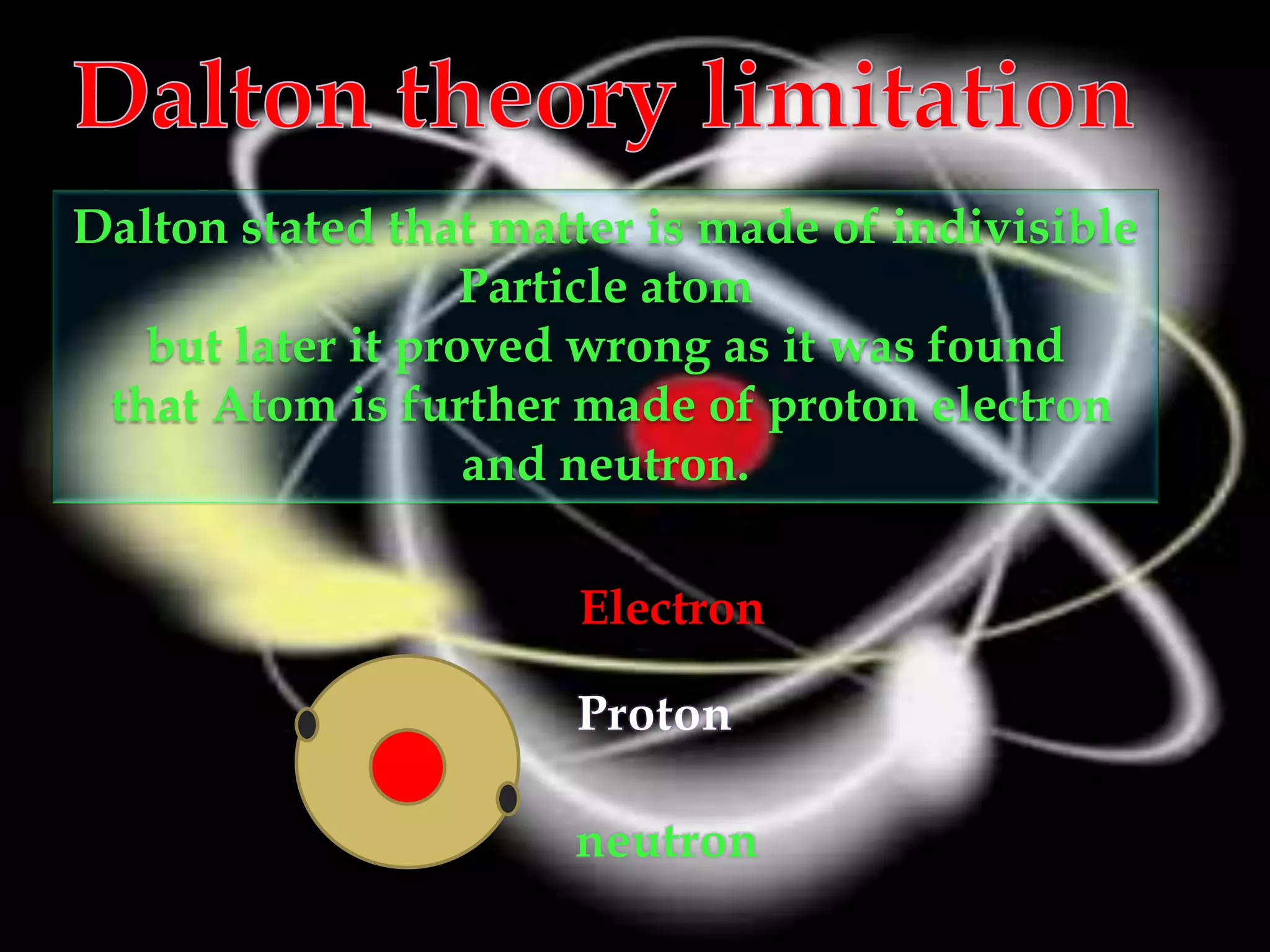
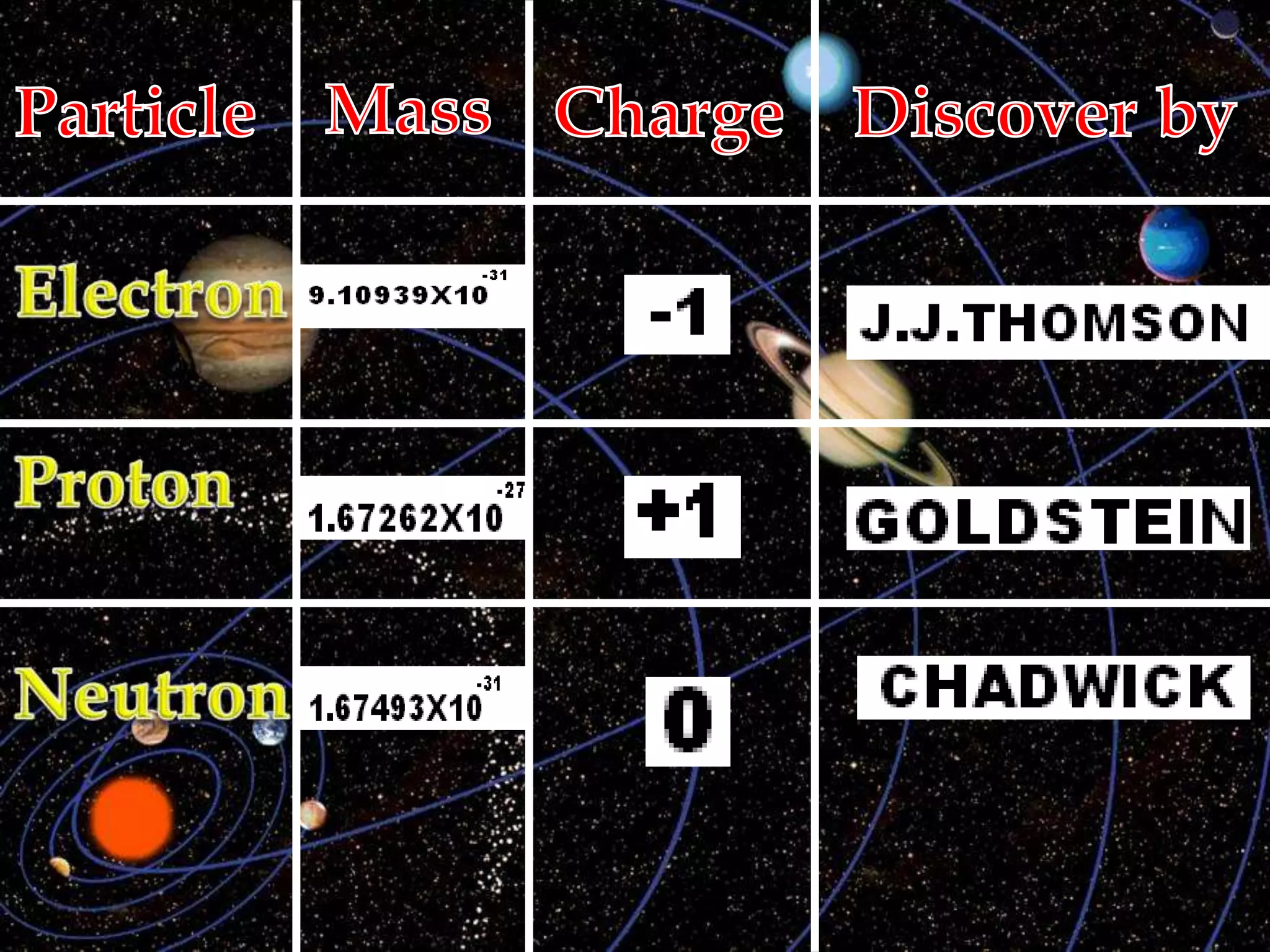
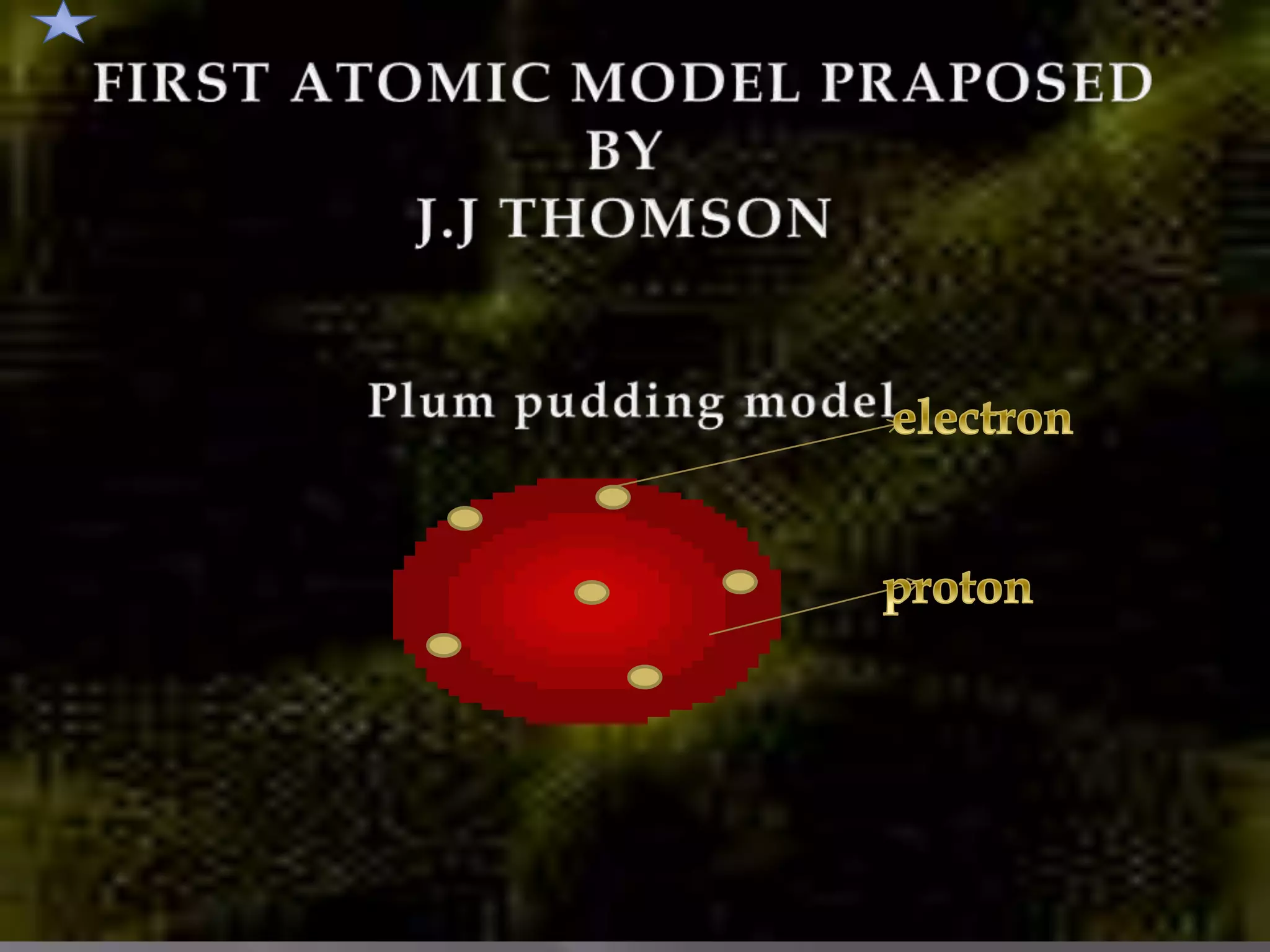
Dalton stated that matter is made of indivisible
Particle atom
but later it proved wrong as it was found
that Atom is further made of proton electron
and neutron.
Electron
neutron
Proton
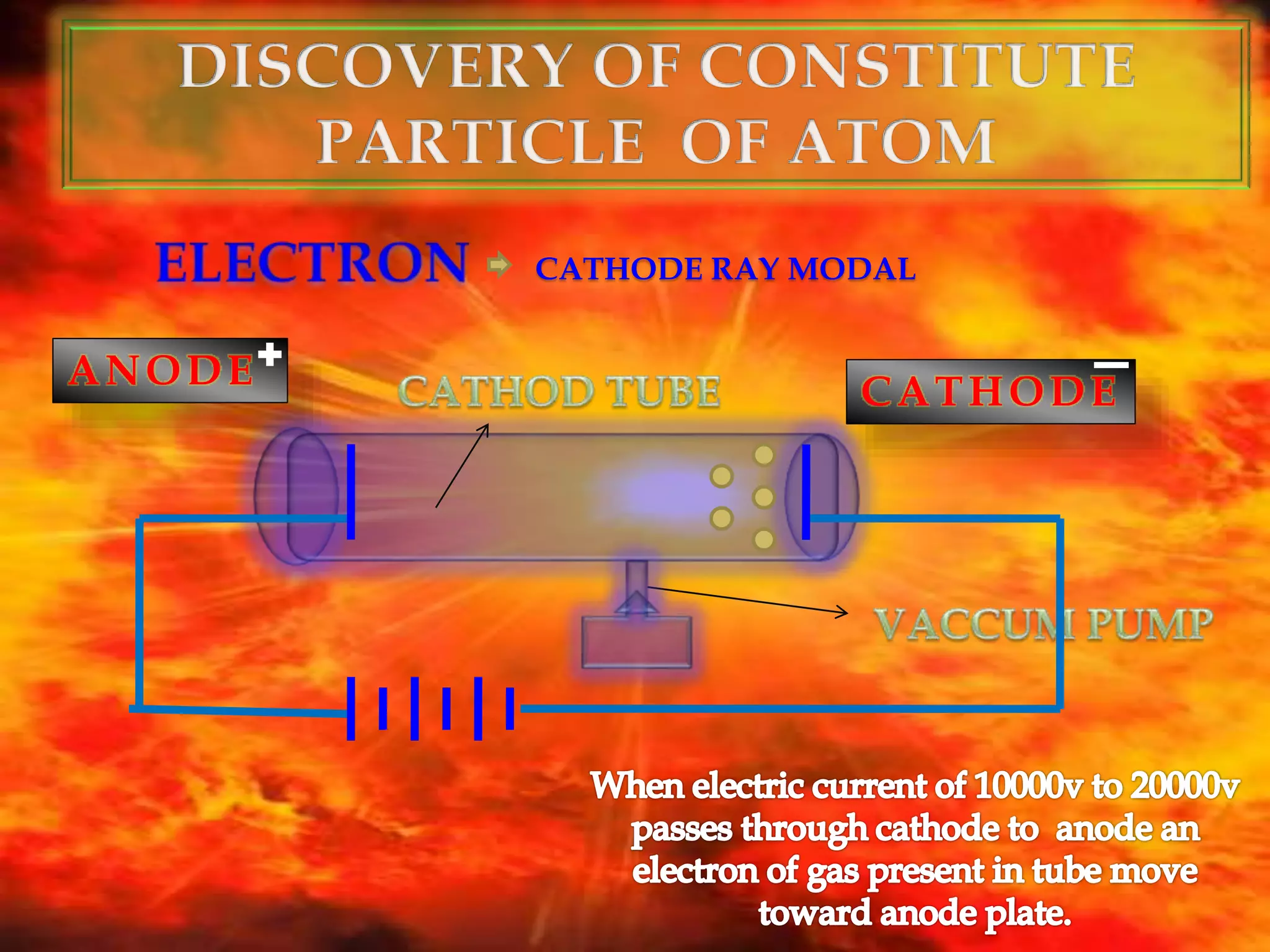
CATHODE RAY MODAL
CATHODE
ANODE
These rays
» originate from cathode
» travel in straight line
»exert mechanical pressure
» deflected by magnetic field
» carry negative charge
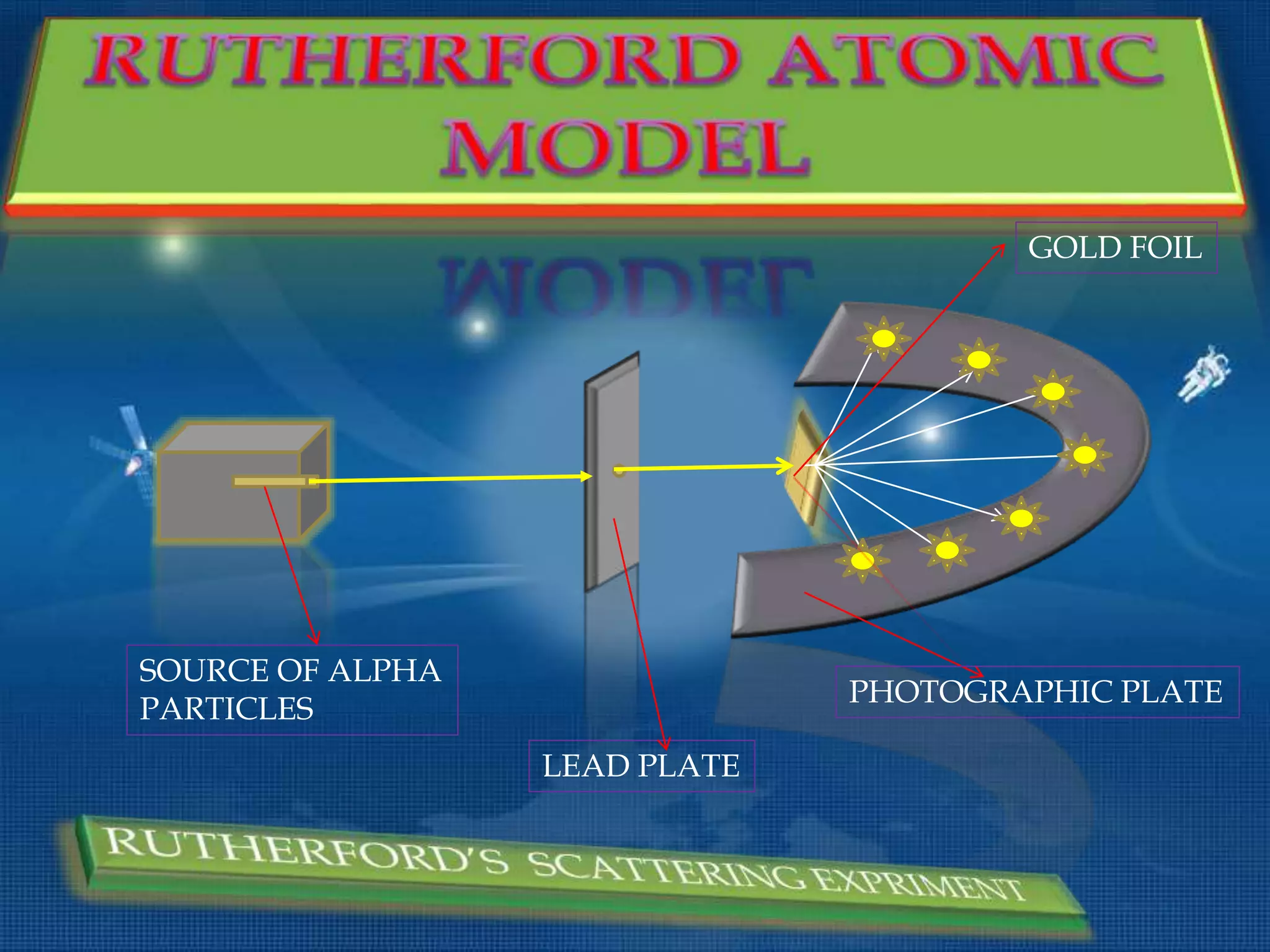
GOLD FOIL
PHOTOGRAPHIC PLATE
SOURCE OF ALPHA
PARTICLES
LEAD PLATE
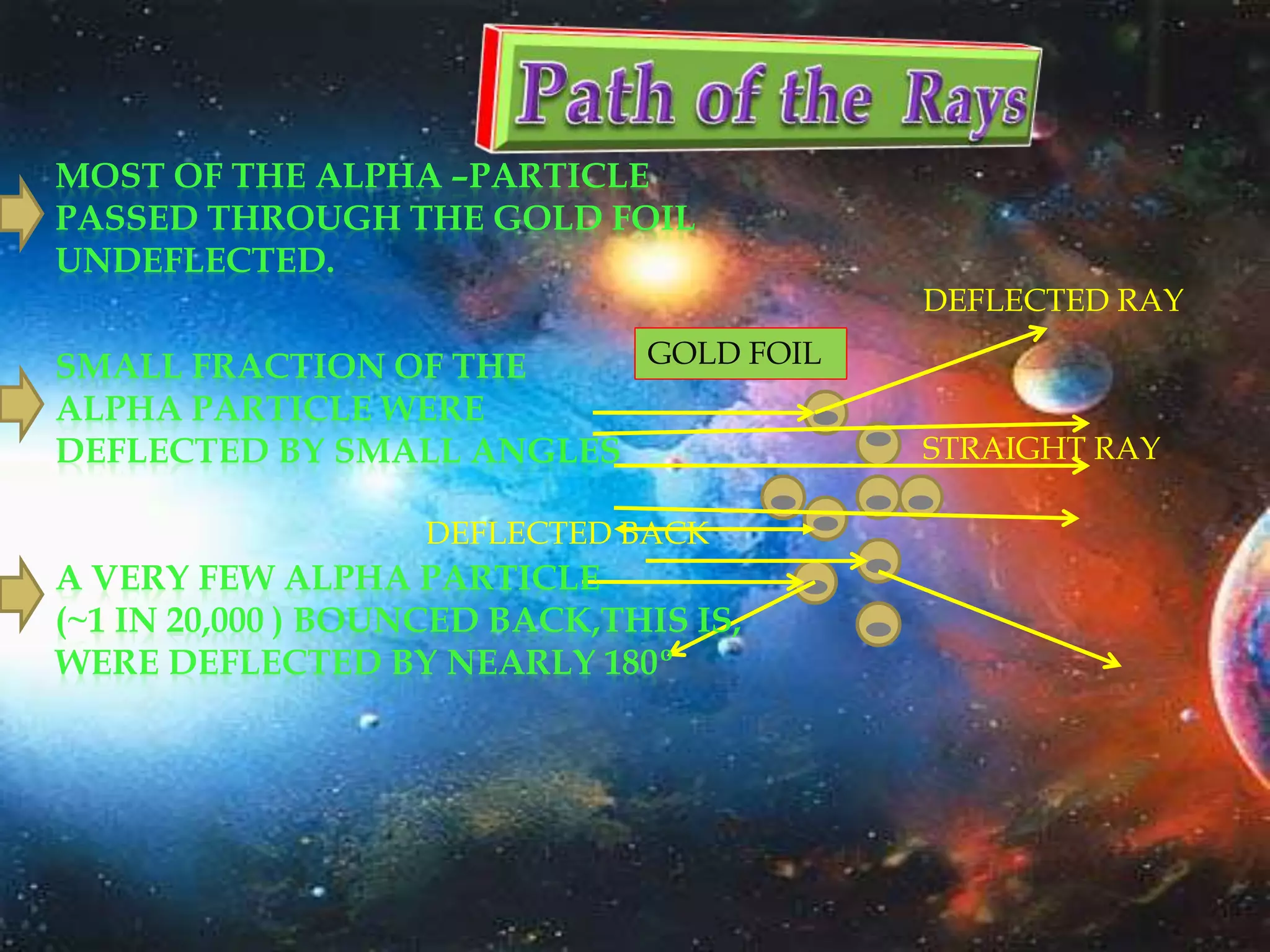
DEFLECTED RAY
STRAIGHT RAY
GOLD FOIL
MOST OF THE ALPHA –PARTICLE
PASSED THROUGH THE GOLD FOIL
UNDEFLECTED.
SMALL FRACTION OF THE
ALPHA PARTICLE WERE
DEFLECTED BY SMALL ANGLES
A VERY FEW ALPHA PARTICLE
(~1 IN 20,000 ) BOUNCED BACK,THIS IS,
WERE DEFLECTED BY NEARLY 180º
DEFLECTED BACK
ATOM HAS THREE FUNDAMMENTAL PART
ELECTRON, PROTON, NUTRON.
ELECTRON MOVE AROUND THE NUCLEUS.
HOLE MASS OF THE ATOM CONCENTRATED
IN THE CENTER OF NUCLEOUS.
NUCLEUS IS ABOUT 10 SMALLER
THEN ATOM.
NUCLEOUS IS POSITEVELY CHARGED.
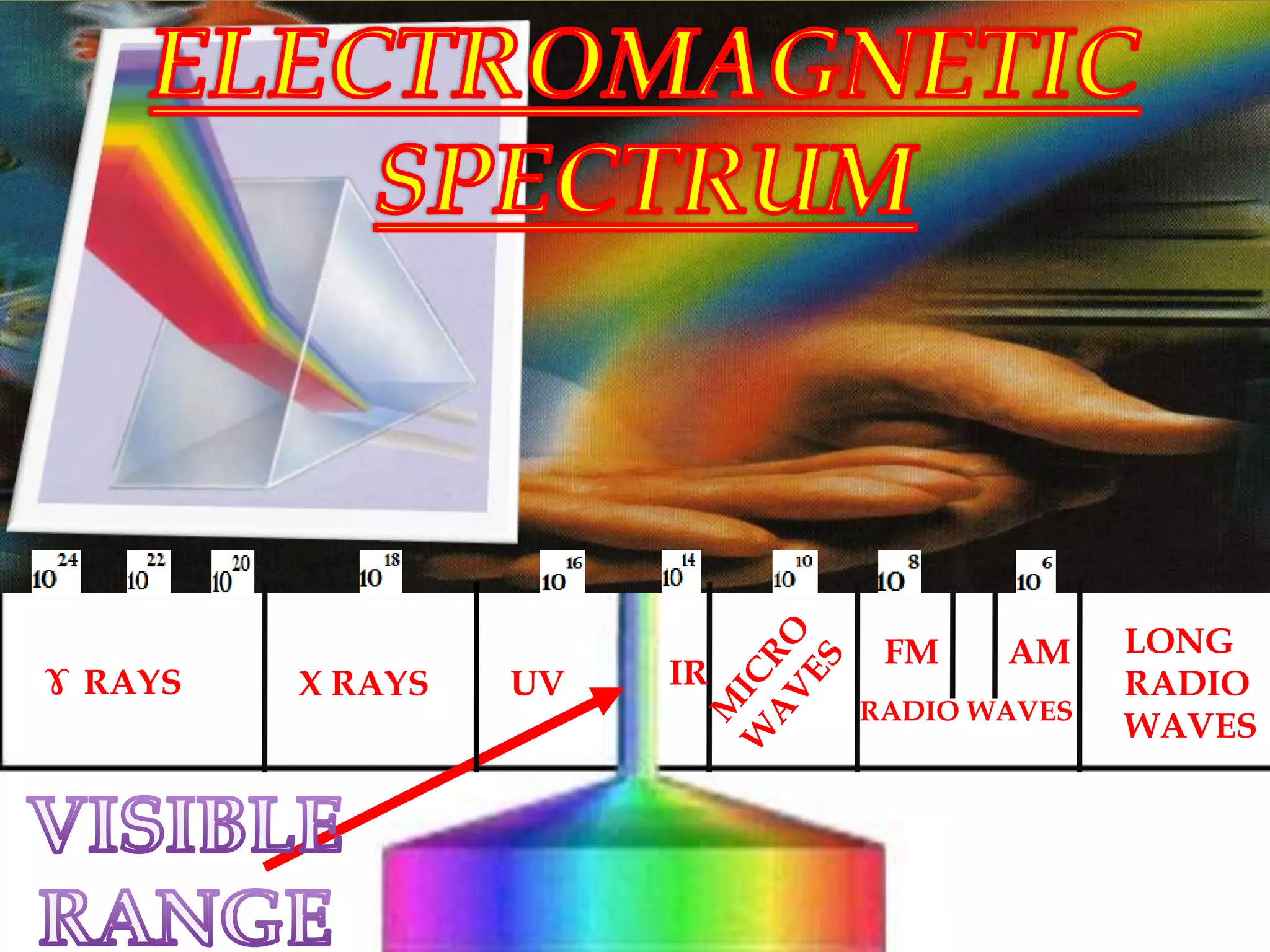
X RAYS UV IR
FM AM
RADIO WAVES
LONG
RADIO
WAVES
ɤ RAYS
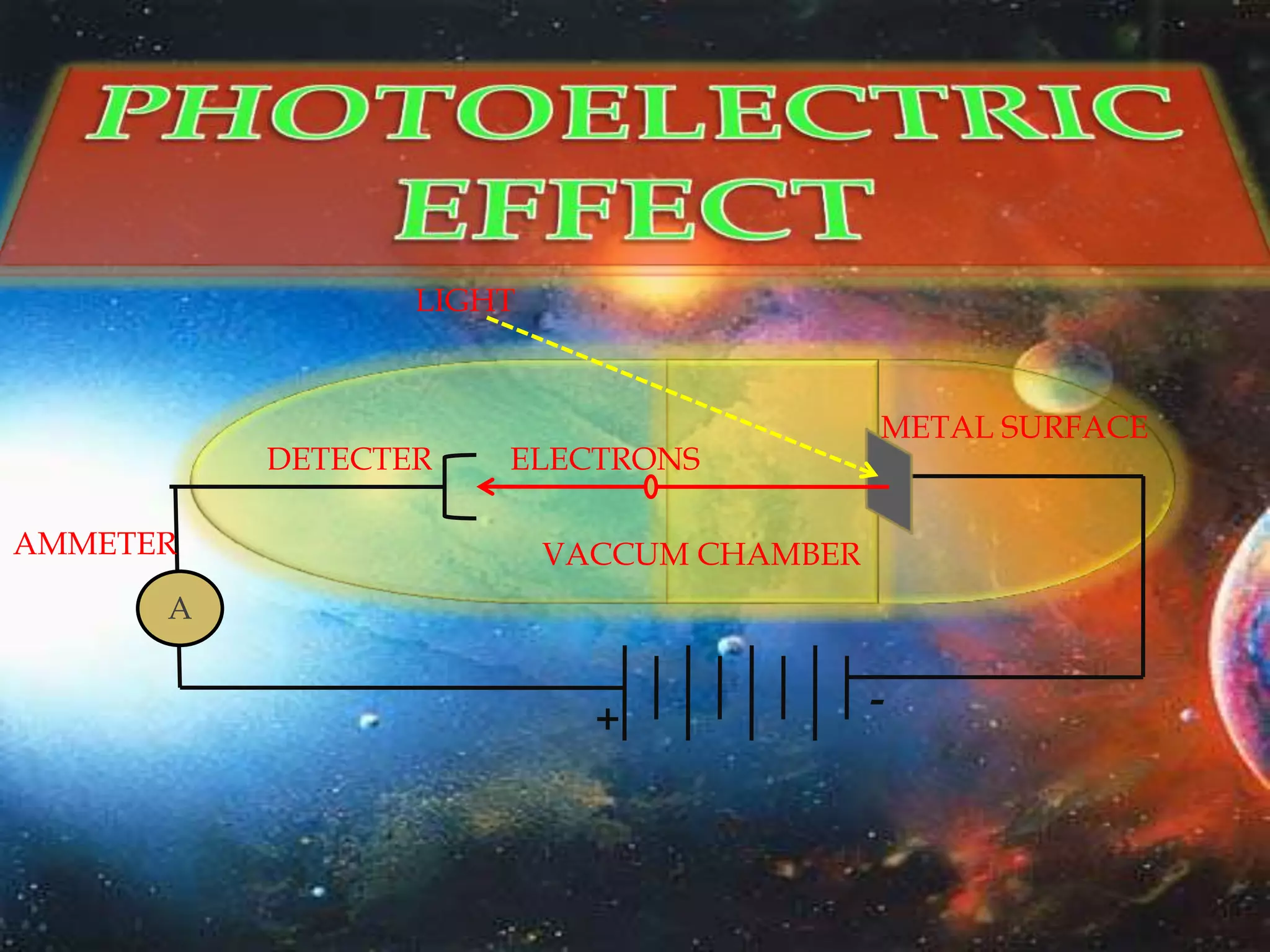
A
AMMETER VACCUM CHAMBER
ELECTRONS
LIGHT
METAL SURFACE
+
-
DETECTER
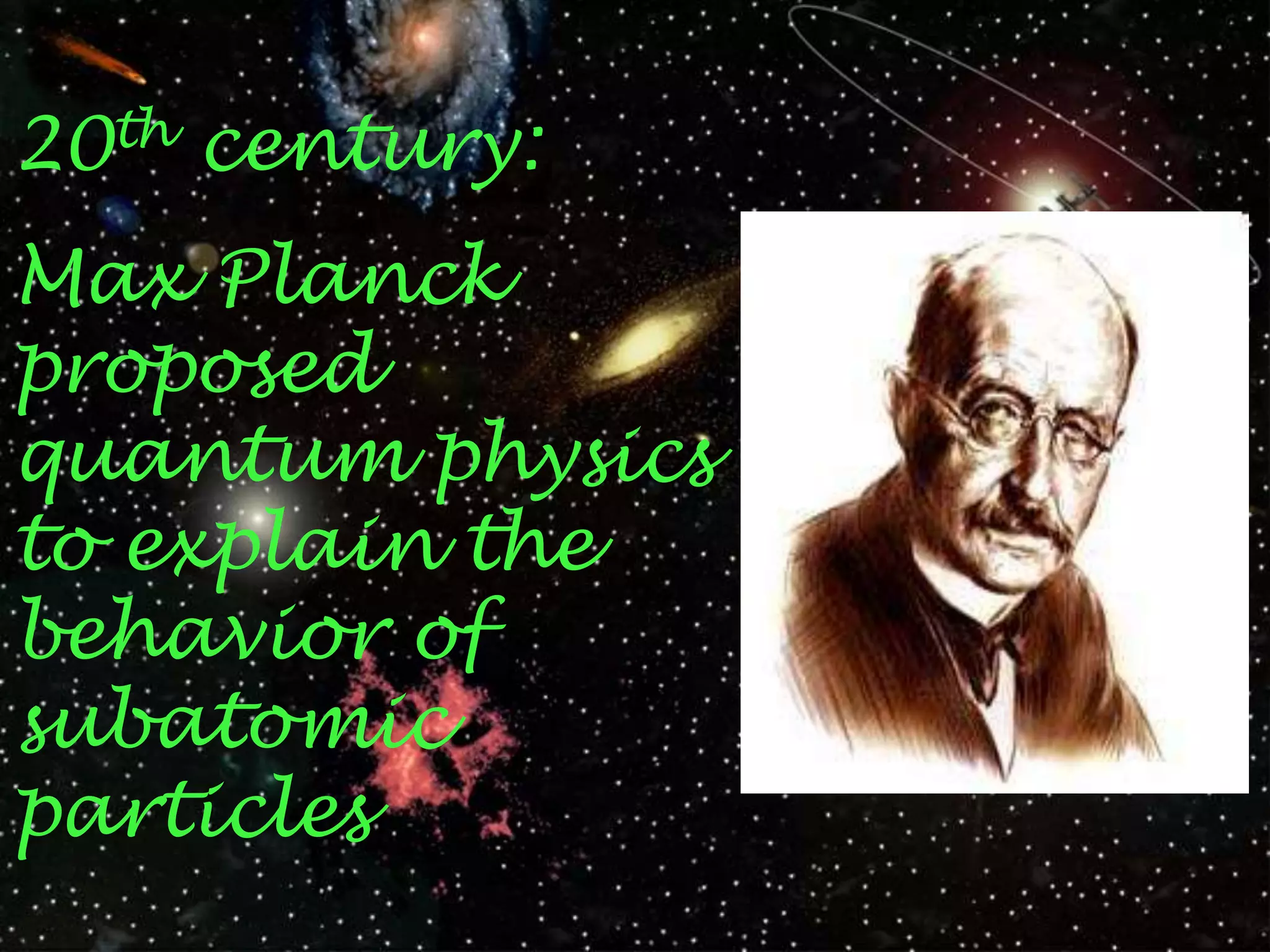
20th century:
Max Planck
proposed
quantum physics
to explain the
behavior of
subatomic
particles
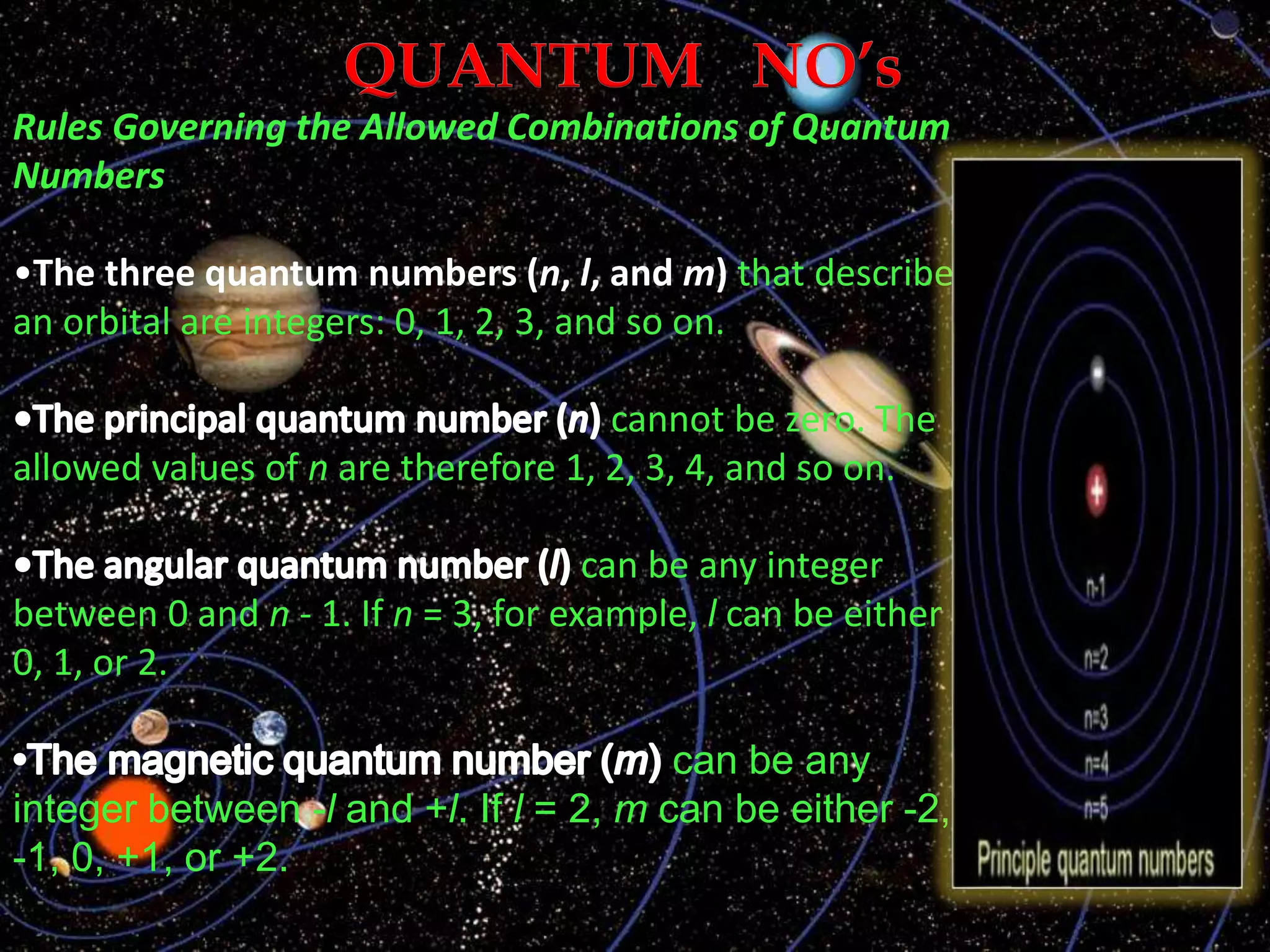
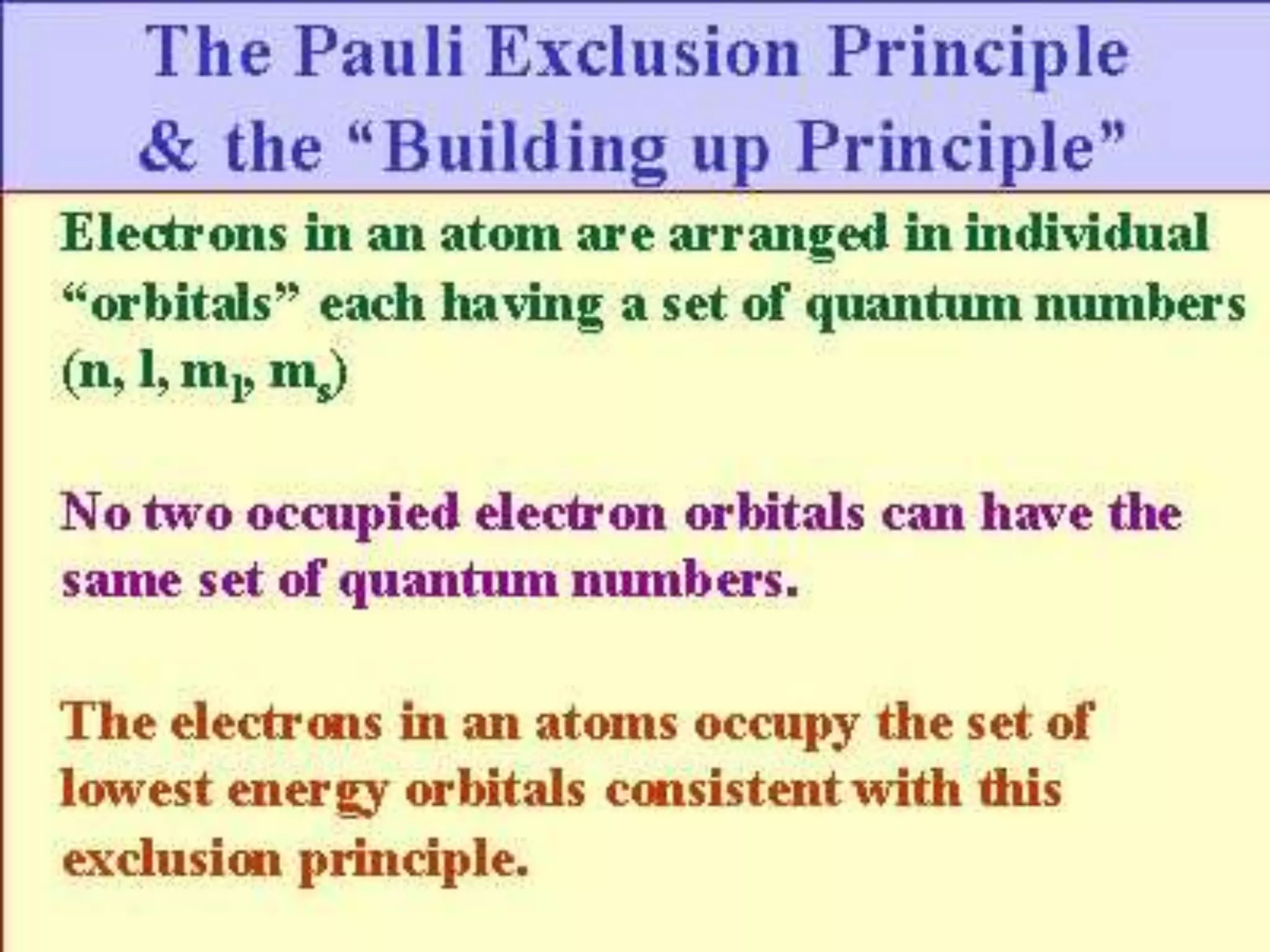
Rules Governing the Allowed Combinations of Quantum
Numbers
•The three quantum numbers (n, l, and m) that describe
an orbital are integers: 0, 1, 2, 3, and so on.
cannot be zero. The
allowed values of n are therefore 1, 2, 3, 4, and so on.
can be any integer
between 0 and n - 1. If n = 3, for example, l can be either
0, 1, or 2.
can be any
integer between -l and +l. If l = 2, m can be either -2,
-1, 0, +1, or +2.
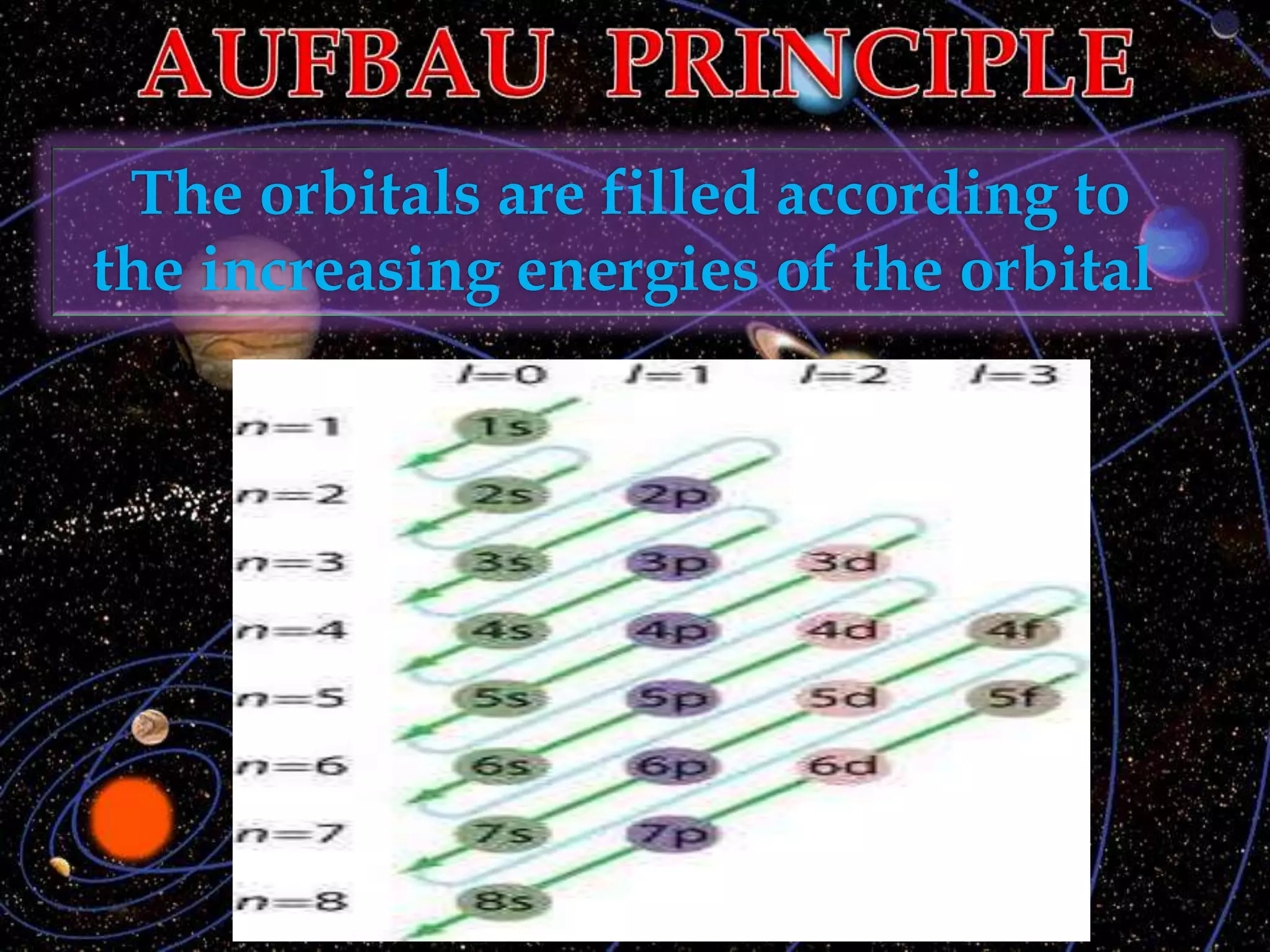
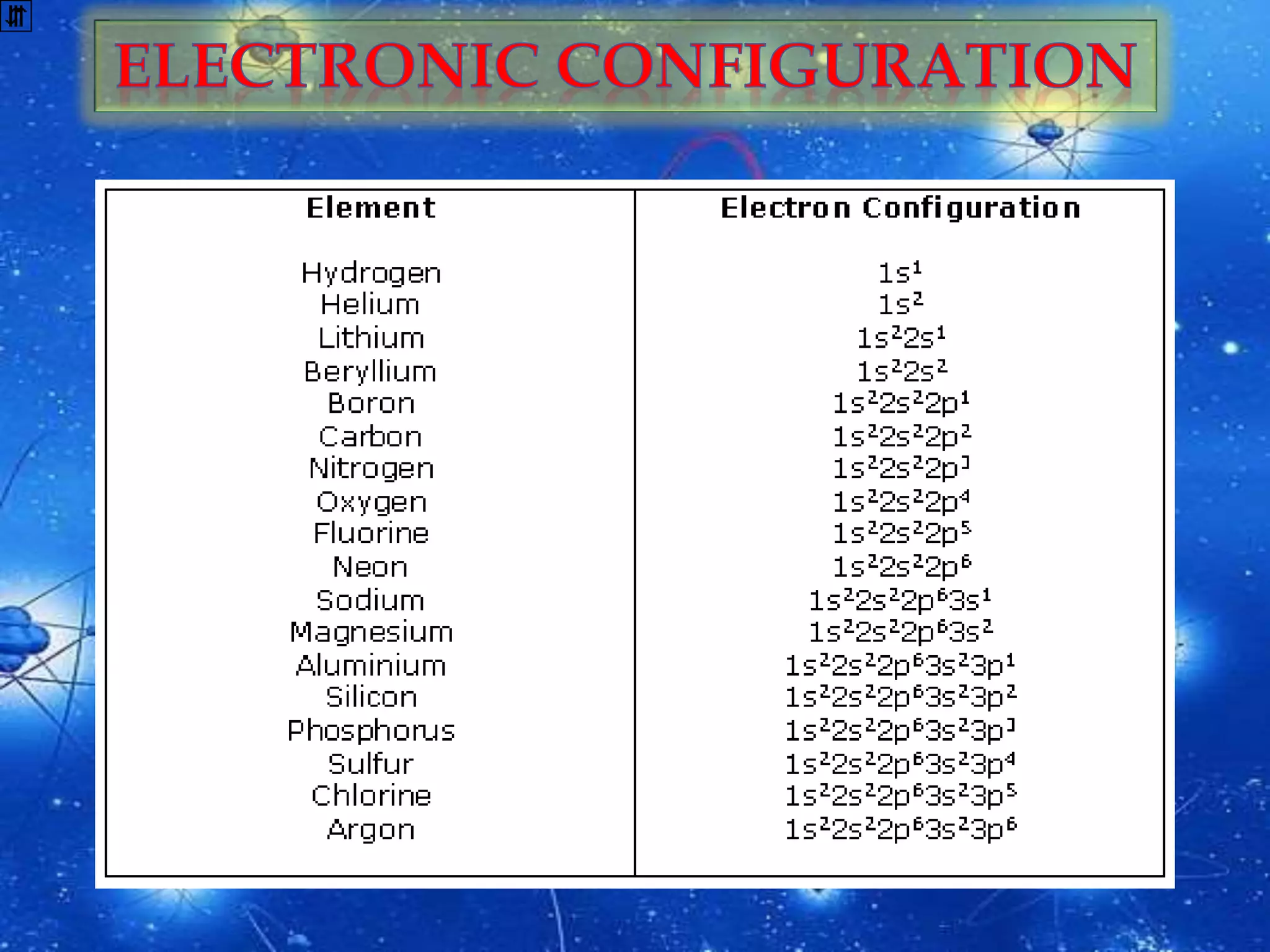
The orbitals are filled according to
the increasing energies of the orbital
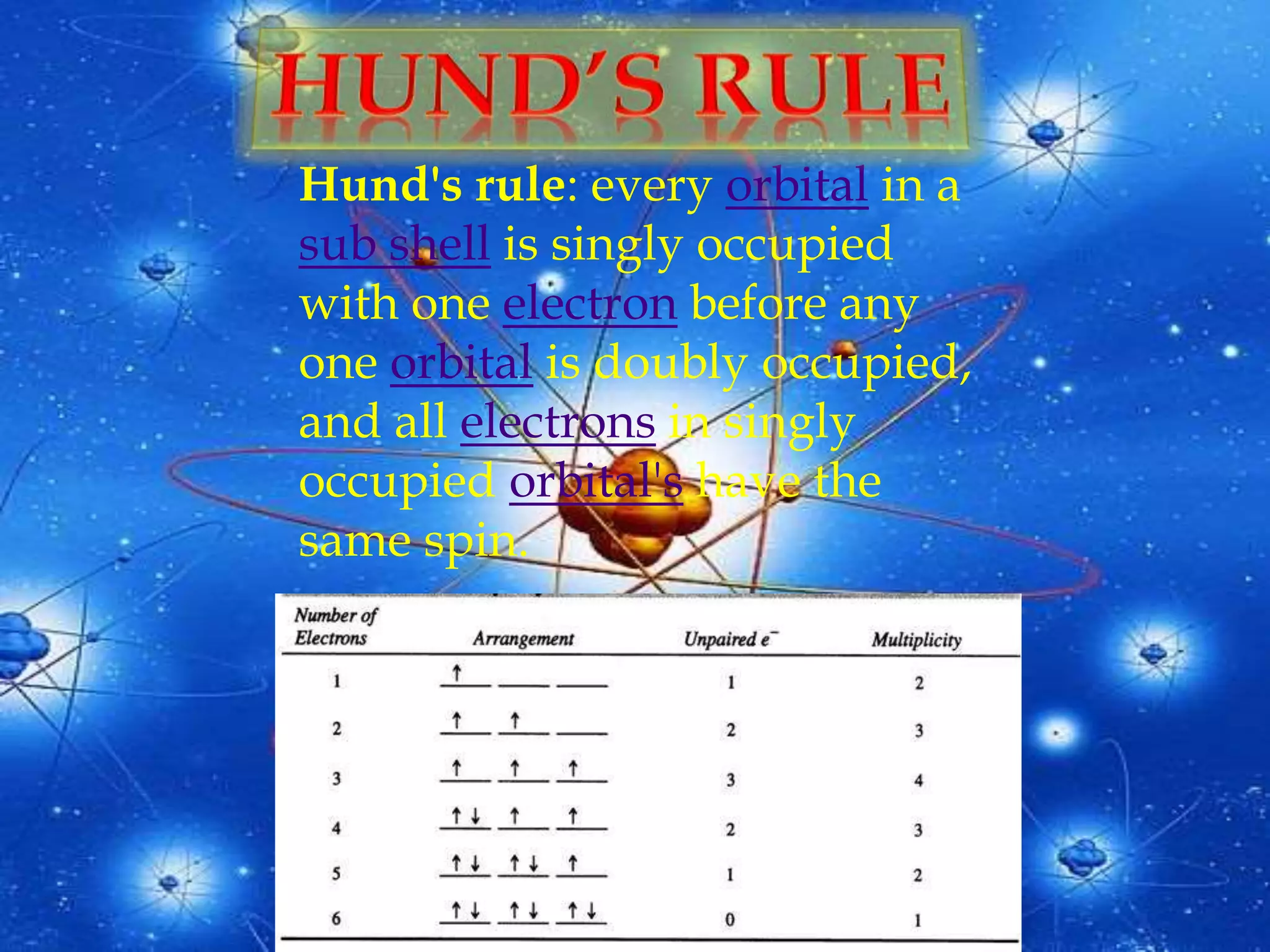
Hund's rule: every orbital in a
sub shell is singly occupied
with one electron before any
one orbital is doubly occupied,
and all electrons in singly
occupied orbital's have the
same spin.
Atomic structure
Atomic structure

Atomic structure

  • 2.
    The existence ofatoms has been proposed since the times of early Indian and greek phylosophers around 400 b.C. An Indian phylosopher maharshi kanad postulated that if we go on dividing matter (padarth), we shall altimately get smallest particle beyond which further divisions will not possible. He named these particles as PARMANU. Around same era, ancient greek phylosophers democritus and leucippus suggested that if we go on dividing matter, a stage will come when particles obtained cannot be devided further. However , all these ideas were based on phylosophical considerations and not very experimental .
  • 4.
    Dalton stated thatmatter is made of indivisible Particle atom but later it proved wrong as it was found that Atom is further made of proton electron and neutron. Electron neutron Proton
  • 5.
  • 6.
    These rays » originatefrom cathode » travel in straight line »exert mechanical pressure » deflected by magnetic field » carry negative charge
  • 11.
    GOLD FOIL PHOTOGRAPHIC PLATE SOURCEOF ALPHA PARTICLES LEAD PLATE
  • 12.
    DEFLECTED RAY STRAIGHT RAY GOLDFOIL MOST OF THE ALPHA –PARTICLE PASSED THROUGH THE GOLD FOIL UNDEFLECTED. SMALL FRACTION OF THE ALPHA PARTICLE WERE DEFLECTED BY SMALL ANGLES A VERY FEW ALPHA PARTICLE (~1 IN 20,000 ) BOUNCED BACK,THIS IS, WERE DEFLECTED BY NEARLY 180º DEFLECTED BACK
  • 13.
    ATOM HAS THREEFUNDAMMENTAL PART ELECTRON, PROTON, NUTRON. ELECTRON MOVE AROUND THE NUCLEUS. HOLE MASS OF THE ATOM CONCENTRATED IN THE CENTER OF NUCLEOUS. NUCLEUS IS ABOUT 10 SMALLER THEN ATOM. NUCLEOUS IS POSITEVELY CHARGED.
  • 16.
    X RAYS UVIR FM AM RADIO WAVES LONG RADIO WAVES ɤ RAYS
  • 17.
  • 18.
    20th century: Max Planck proposed quantumphysics to explain the behavior of subatomic particles
  • 19.
    Rules Governing theAllowed Combinations of Quantum Numbers •The three quantum numbers (n, l, and m) that describe an orbital are integers: 0, 1, 2, 3, and so on. cannot be zero. The allowed values of n are therefore 1, 2, 3, 4, and so on. can be any integer between 0 and n - 1. If n = 3, for example, l can be either 0, 1, or 2. can be any integer between -l and +l. If l = 2, m can be either -2, -1, 0, +1, or +2.
  • 20.
    The orbitals arefilled according to the increasing energies of the orbital
  • 22.
    Hund's rule: everyorbital in a sub shell is singly occupied with one electron before any one orbital is doubly occupied, and all electrons in singly occupied orbital's have the same spin.