ATOMIC ABSORPTION 
SPETROSCOPY 
ATOMIC ABSORPTION 
BY 
ABDUL QAYOOM MUGHERI 
M,phil scholar 
2
3 
Atomic Absorption Spectroscopy 
Introduction 
Atomic absorption spectroscopy is an analytical 
technique for determining the concentration 
of a particular metal element in a sample. 
This technique can be used to analyze the 
concentration of over 70 different metals in a 
solution.
4 
Background 
Atomic absorption spectrometry was first used 
as an analytical technique. 
It was established in the second half of the 
19th century. 
The modern form of AAS was largely 
developed during the 1950s by Sir 
Alan Walsh
Atomic Energy Level Diagrams 
we should be aware that only valence 
electrons are responsible for atomic 
spectra observed in a process of 
absorption or emission . Valence 
electrons in their ground states are 
assumed to have an energy equal to 
zero . As an electron is excited to a 
higher energy level, it will absorb energy 
exactly equal to the energy difference 
between the two states. 
5
6 
Atomic Emission and Absorption 
Spectra 
At room temperature, essentially all atoms 
are in the ground state. When they 
absorb energy they excited. Excited 
electrons will only spend a short time in 
the excited state an excited electron will 
emit a photon and return to the ground 
state.
7 
The Effect of Temperature on Atomic 
Spectra 
Atomic spectroscopic methods require 
the conversion of atoms to the 
gaseous state. This requires the use 
of high temperatures (in the range 
from 2000-6000 oC). The high 
temperature can be provided 
through a flame, electrical heating.
8 
The original 1954 AAS instrument 
11/21/14
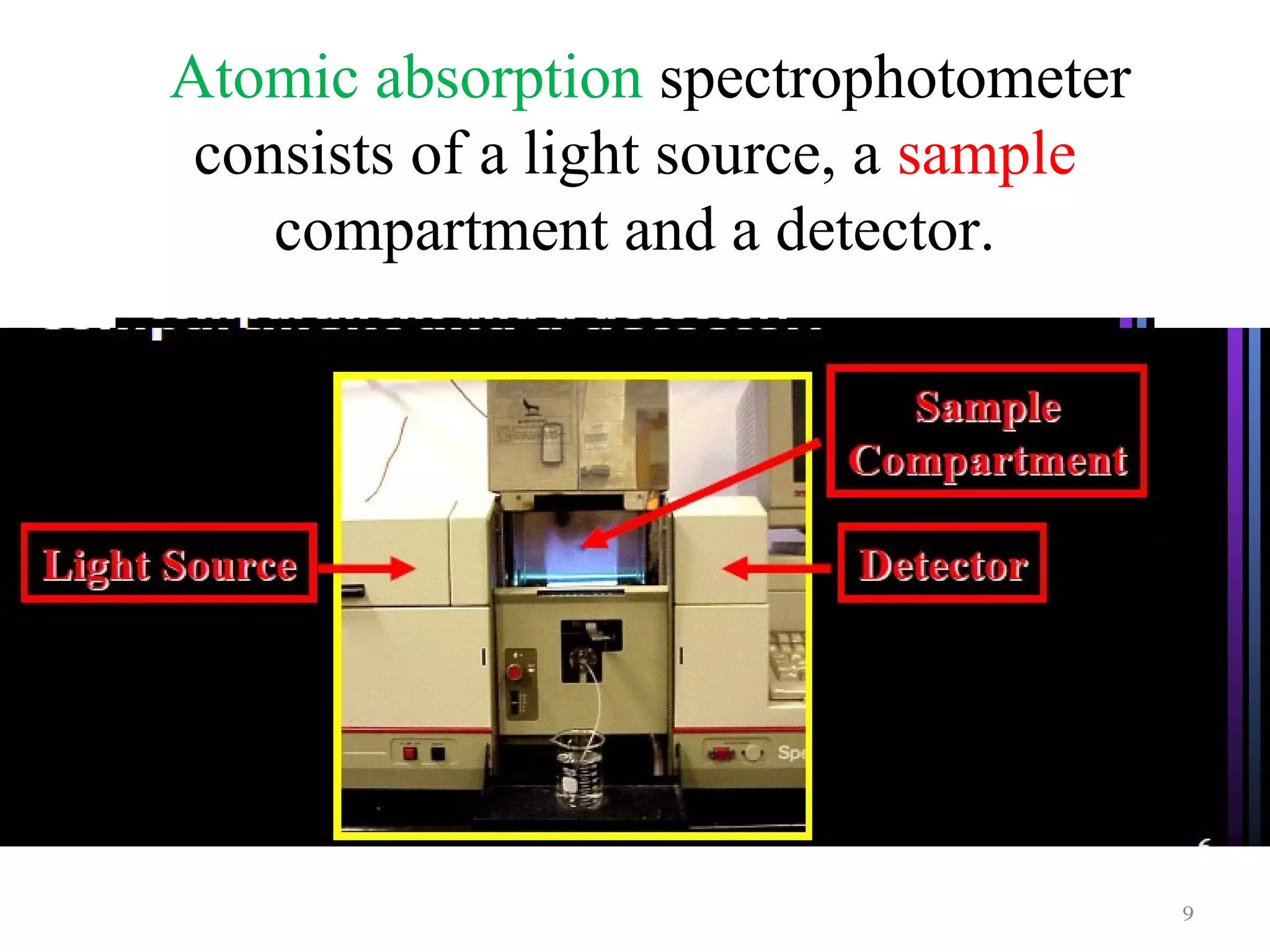
Atomic absorption spectrophotometer 
consists of a light source, a sample 
compartment and a detector. 
9
- Atomic absorption is a very common 
technique for detecting metals and 
metalloids in environmental samples. 
10
Elements detectable by atomic absorption are highlighted in pink in this periodic table 
11
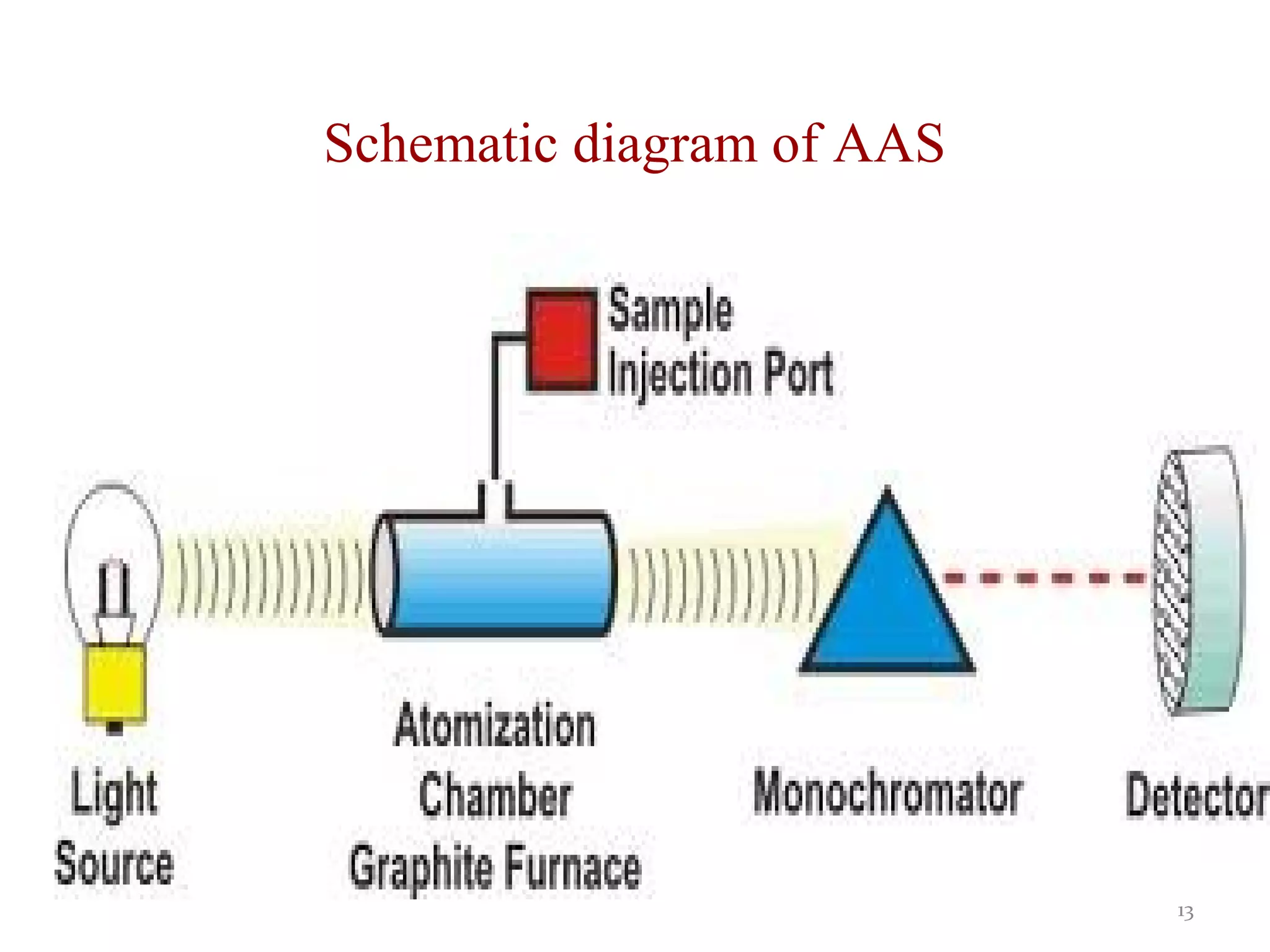
Atomic Absorption Spectrometer 
• Atomic absorption spectrometers have 4 
principal components 
1 - A light source ( usually a hollow cathode lamp ) 
2 – An atom cell ( atomizer ) 
3 - A monochromator 
4 - A detector , and read out device . 
12
Schematic diagram of AAS 
13
ATOMIZATION 
Elements to be analyzed needs to be in 
atomic state. 
Atomization is the separation of 
particles into individual molecules and 
breaking molecules into atoms .This is 
done by exposing the analyte to high 
temperature in a flame or graphite 
furnace . 
14
There are two types of atomization 
A. Flame B. Graphite furnace 
atomization . 
15
FLAME 
Flame AA can only analyze solutions , 
where 
path length, and therefore to increase the 
total absorbance . 
 Sample solutions are usually introduced 
into a nebuliser , which can be readily 
broken down in the flame. 
16
17
TYPES OF FLAME 
The common fuels and oxidants employed in flame spectroscopy and the 
approximate range of temperature realized with each of these mixtures. 
18
ABSORPTION SYSTEM 
The process by which the energy of the 
light (in the form of photons) is transferred 
to the atoms or molecules raising them 
from the ground state to an excited state 
,that absorbed radiations are 
characteristics for each element. 
19
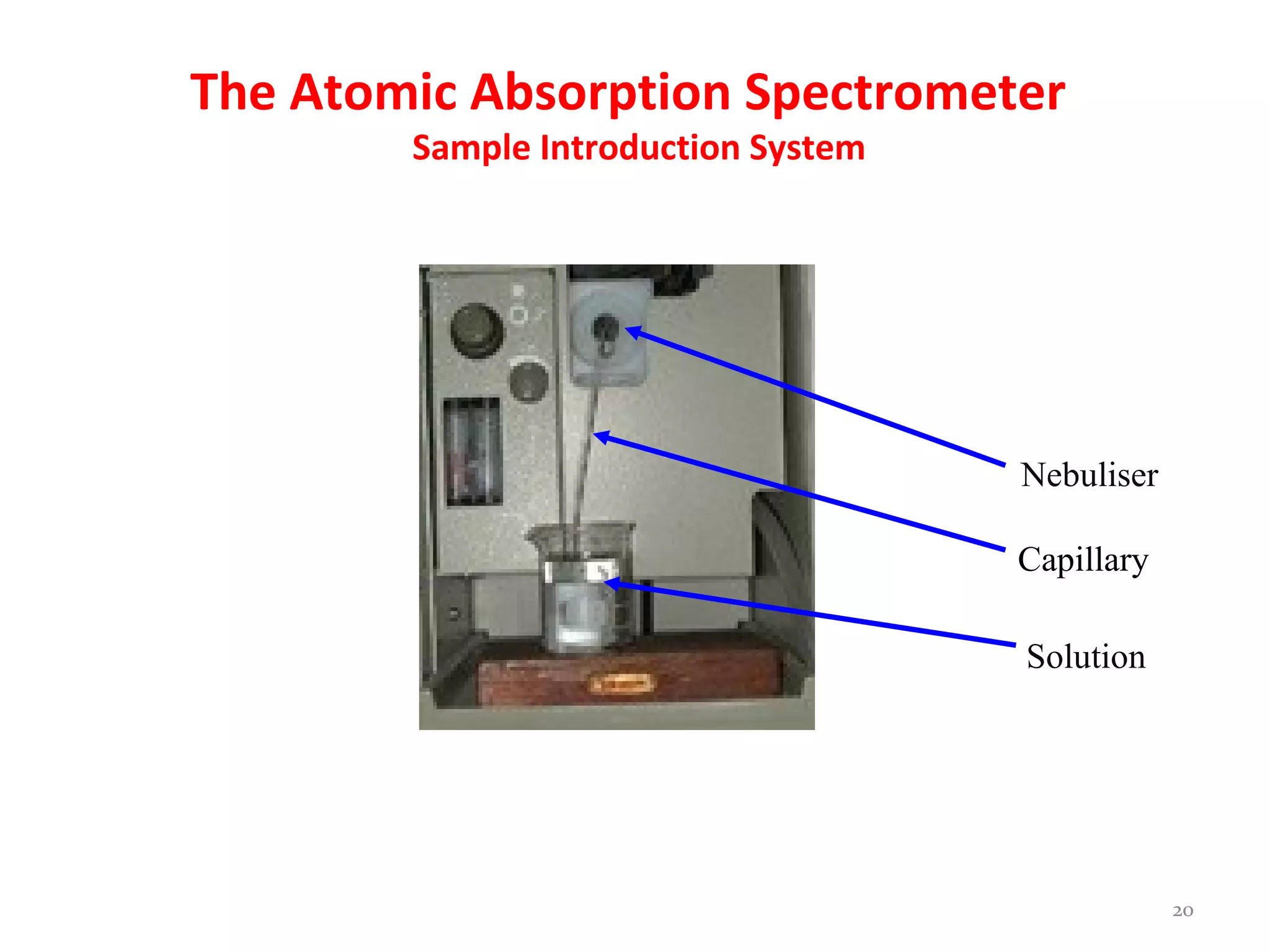
The Atomic Absorption Spectrometer 
Sample Introduction System 
20 
Nebuliser 
Capillary 
Solution
A mechanical device that burns a gas or liquid fuel into 
a flame in a controlled manner 
TYPES OF BURNER 
 Premix chamber burner 
 Total consumption burner 
21
PREMIX BURNER 
 Most commonly use premix burner 
the oxidant-sample mixture flows 
into a chamber located upstream 
from the flame, where the larger 
drops are separated from the mixture 
and discarded. 
22
Importance of Flame in 
Atomization 
 A Flame burning in air forms an ideal means for converting a 
Solution into the atomic vapor required for atomic absorption 
 A flame is simple, inexpensive & easy to use 
 A flame provides a remarkably stable environment for 
atomic absorption 
23
GRAPHITE FURNACE 
 The graphite furnace has several advantages 
over a flame. First it accept solutions or solid 
samples. 
 Samples are placed directly in the graphite 
furnace and the furnace is electrically heated 
in several steps to dry the sample, ash organic 
matter, and vaporize the analyte atoms. 
24
Advantages Over AAS 
 Solutions and solid samples can be analyzed. 
 Much more efficient atomization 
 Greater sensitivity 
 Smaller quantities of sample (typically 1- 
100μL) 
25
Disadvantages 
26 
 Expensive 
 low precision 
 low sample 
throughput 
 requires high level of 
operator skill
ACKNOWLEDGEMENT 
I am thankful to Almighty Allah, 
prof. Dr. Tasneem Gul kazi 
And also thankful to my classmates for wonderful 
cooperation. 
27
28

Atomic absorption

  • 2.
    ATOMIC ABSORPTION SPETROSCOPY ATOMIC ABSORPTION BY ABDUL QAYOOM MUGHERI M,phil scholar 2
  • 3.
    3 Atomic AbsorptionSpectroscopy Introduction Atomic absorption spectroscopy is an analytical technique for determining the concentration of a particular metal element in a sample. This technique can be used to analyze the concentration of over 70 different metals in a solution.
  • 4.
    4 Background Atomicabsorption spectrometry was first used as an analytical technique. It was established in the second half of the 19th century. The modern form of AAS was largely developed during the 1950s by Sir Alan Walsh
  • 5.
    Atomic Energy LevelDiagrams we should be aware that only valence electrons are responsible for atomic spectra observed in a process of absorption or emission . Valence electrons in their ground states are assumed to have an energy equal to zero . As an electron is excited to a higher energy level, it will absorb energy exactly equal to the energy difference between the two states. 5
  • 6.
    6 Atomic Emissionand Absorption Spectra At room temperature, essentially all atoms are in the ground state. When they absorb energy they excited. Excited electrons will only spend a short time in the excited state an excited electron will emit a photon and return to the ground state.
  • 7.
    7 The Effectof Temperature on Atomic Spectra Atomic spectroscopic methods require the conversion of atoms to the gaseous state. This requires the use of high temperatures (in the range from 2000-6000 oC). The high temperature can be provided through a flame, electrical heating.
  • 8.
    8 The original1954 AAS instrument 11/21/14
  • 9.
    Atomic absorption spectrophotometer consists of a light source, a sample compartment and a detector. 9
  • 10.
    - Atomic absorptionis a very common technique for detecting metals and metalloids in environmental samples. 10
  • 11.
    Elements detectable byatomic absorption are highlighted in pink in this periodic table 11
  • 12.
    Atomic Absorption Spectrometer • Atomic absorption spectrometers have 4 principal components 1 - A light source ( usually a hollow cathode lamp ) 2 – An atom cell ( atomizer ) 3 - A monochromator 4 - A detector , and read out device . 12
  • 13.
  • 14.
    ATOMIZATION Elements tobe analyzed needs to be in atomic state. Atomization is the separation of particles into individual molecules and breaking molecules into atoms .This is done by exposing the analyte to high temperature in a flame or graphite furnace . 14
  • 15.
    There are twotypes of atomization A. Flame B. Graphite furnace atomization . 15
  • 16.
    FLAME Flame AAcan only analyze solutions , where path length, and therefore to increase the total absorbance .  Sample solutions are usually introduced into a nebuliser , which can be readily broken down in the flame. 16
  • 17.
  • 18.
    TYPES OF FLAME The common fuels and oxidants employed in flame spectroscopy and the approximate range of temperature realized with each of these mixtures. 18
  • 19.
    ABSORPTION SYSTEM Theprocess by which the energy of the light (in the form of photons) is transferred to the atoms or molecules raising them from the ground state to an excited state ,that absorbed radiations are characteristics for each element. 19
  • 20.
    The Atomic AbsorptionSpectrometer Sample Introduction System 20 Nebuliser Capillary Solution
  • 21.
    A mechanical devicethat burns a gas or liquid fuel into a flame in a controlled manner TYPES OF BURNER  Premix chamber burner  Total consumption burner 21
  • 22.
    PREMIX BURNER Most commonly use premix burner the oxidant-sample mixture flows into a chamber located upstream from the flame, where the larger drops are separated from the mixture and discarded. 22
  • 23.
    Importance of Flamein Atomization  A Flame burning in air forms an ideal means for converting a Solution into the atomic vapor required for atomic absorption  A flame is simple, inexpensive & easy to use  A flame provides a remarkably stable environment for atomic absorption 23
  • 24.
    GRAPHITE FURNACE The graphite furnace has several advantages over a flame. First it accept solutions or solid samples.  Samples are placed directly in the graphite furnace and the furnace is electrically heated in several steps to dry the sample, ash organic matter, and vaporize the analyte atoms. 24
  • 25.
    Advantages Over AAS  Solutions and solid samples can be analyzed.  Much more efficient atomization  Greater sensitivity  Smaller quantities of sample (typically 1- 100μL) 25
  • 26.
    Disadvantages 26 Expensive  low precision  low sample throughput  requires high level of operator skill
  • 27.
    ACKNOWLEDGEMENT I amthankful to Almighty Allah, prof. Dr. Tasneem Gul kazi And also thankful to my classmates for wonderful cooperation. 27
  • 28.