










Slideshare.net/RonaldQuileste
rquileste@xu.edu.ph
before we proceed to the discussion…
let us talk about…
Assessments
Traditional
Assessments
Traditional
Assessments
Traditional
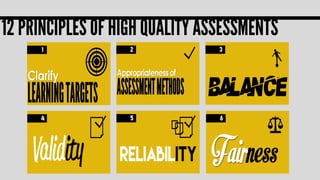
Clarify
should be clearly
stated, specified and
centered on what is
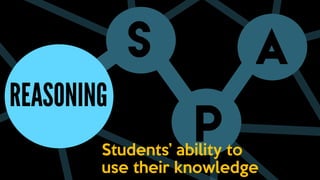
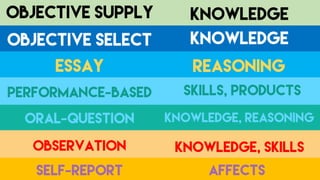
Students’ ability to
use their knowledge
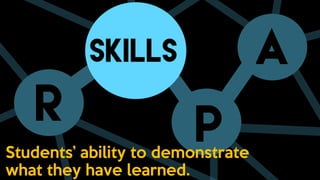
Students’ ability to demonstrate
what they have learned.
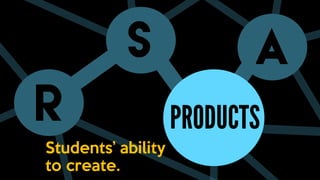
Students’ ability
to create.
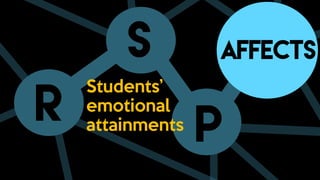
Students’
emotional
attainments
Appropriateness of
Match
the methods of
assessment to
learning targets
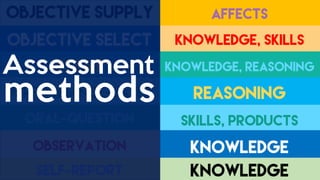
Assessment
methods
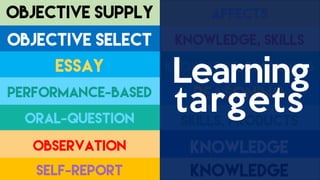
Learning
targets
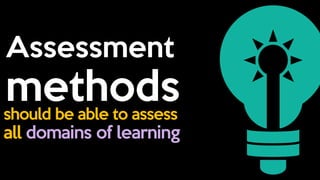
Assessment
methodsshould be able to assess
all domains of learning
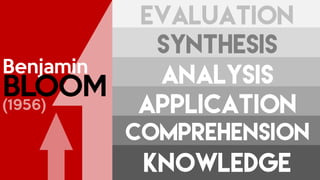
Benjamin
BLOOM
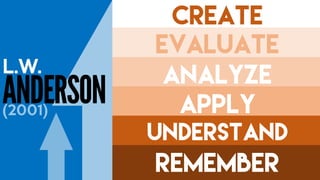
L.W.
Assessment
methodsshould be able to assess
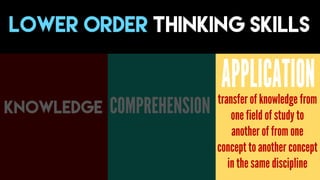
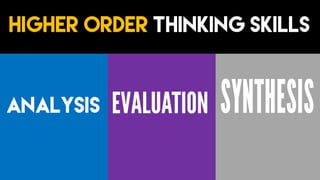
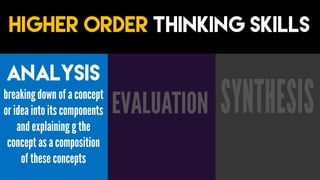
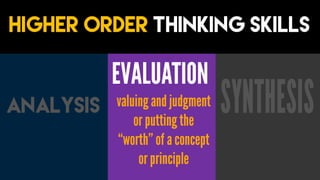
all hierarchy of objectives
Cognitive
Validityis the degree to which
a score-based inference
is appropriate, reasonable
and useful
Validityhas six types that has
to be established
V
A
L
I
D
I
T
Y
V
A
L
I
D
I
T
Y
V
A
L
I
D
I
T
Y
V
A
L
I
D
I
T
Y
Concurrent
V
A
L
I
D
I
T
Y
V
A
L
I
D
I
T
Y
V
A
L
I
D
I
T
Y
Assessment
should show consistent
and stable results
Reliability
can be measured
using some methods
–
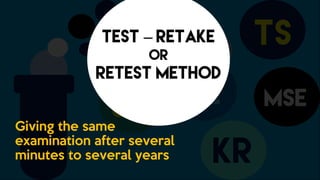
Giving the same
examination after several
minutes to several years
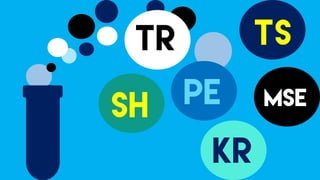
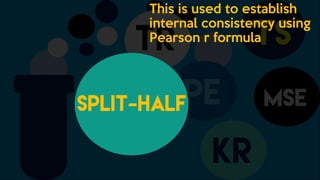
This is used to establish
internal consistency using
Pearson r formula
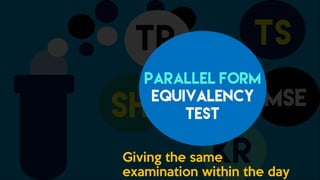
Giving the same
examination within the day
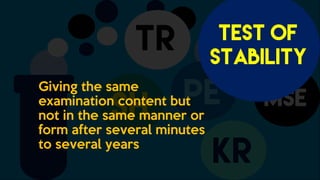
Giving the same
examination content but
not in the same manner or
form after several minutes
to several years
Giving the same
examination content but
not in the same manner or
form within the day
Establishing of
reliability using KR 21
and KR 20
formulas
Assessment
should give equal
opportunities for every
student.
should have no
of any kind
(racial, gender, age, etc.)
discrimination
Assessment
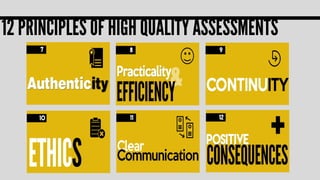
Authenticity
Assessment
should touch
real life
situations
Assessment
should emphasize
practicability
Practicality
Assessment
should save
time, money, etc.
Assessment
should be
resourceful
CONTINUITY
Assessment
is an integral part
of the teaching-learning
process, it should be
continuous
Assessment
is an integral part
of the teaching-learning
process, it should be
continuous
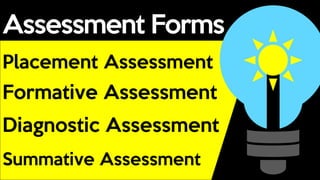
Assessment Forms
Formative Assessment
Diagnostic Assessment
Summative Assessment
Placement Assessment
Assessment Forms
Placement Assessment
Done before instruction to
assess the needs of the
learners to determine their
capacities and capabilities
Assessment Forms
Formative Assessment
Done during instruction to
monitor students’ progress
and reinforce learning
Assessment Forms
Diagnostic Assessment
Done to see the problems and
learning difficulties of the
students
Assessment Forms
Summative Assessment
Done after the instruction to
assess students’ achievement
and to see the result of the
teaching-learning process
Assessment
should not be used
to derogate the students
Assessment
confidentiality
is a given right
Clear
Communication
Assessment
results should be
communicated to
all people involved
Assessment
results can be
communicated by
pre-test and post-test
reviews
Assessment
should have a
positive
effect
Assessment
should motivate
students to learn
and do more
Assessment
should give way
to improve
the teacher’s
instruction
end
Thank You!
NAMASTE!!
Slideshare.net/RonaldQuileste
rquileste@xu.edu.ph
1. Duke Innovation Co-Lab, US
thenounproject.com/term/competency-based-assessment/27464/
2. Aha Soft
thenounproject.com/term/close-list/164384/
3. James Keuning
thenounproject.com/term/balance/11575/
4. Natasha Fedorova
thenounproject.com/search/?q=fair&i=22202
5. Hakan Yalcin
thenounproject.com/search/?q=authentic&i=150245
7. Martha Ormiston
thenounproject.com/search/?q=continue&i=111860
8. Creative Stall
thenounproject.com/search/?q=communication&i=110638
9. N.K. Narasimhan
thenounproject.com/search/
?q=author&i=114585
10. myfreetextures.com
11. lumos.edu
12. huffingtonpost.com
1. Mr. Eugene Cheng
Slideshare.net/itseugene
2. Mr.Jesse Desjardins
Slideshare.net/jessedee
3. Mr. Paul Brown
Slideshare.net/paulgordonbrown
12 Principles of High Quality Assessments (RE-UPLOADED)