Submitted by:
Rose Ann Montellano
BEED II-A

Submitted to:
Ms. Mary Gene Panes
Professor
Assessment in a
Constructivist, TechnologySupported Learning






memorize very much for the
test,
fit their style of test
preparation to the kind of
test and,

study only for passing score
and a passing grade.
In technologysupported classroom, the
student learns from and
with technology. Technology
is seen as a source of
information and the
students learn from in he
same way that you, the
teacher, are a source of
information.
When constructivist
assess students, they refer
to use methods that either
allow them to engage in
dialogue with the learner ,
or give them opportunities
to observe a student as he
or she develops knowledge.
Authentic Assessment
-measures collective
abilities written and oral
expression skills, analytical
skills (like computer skills)
integration, creativity, and
ability, and ability to work
collaboratively.
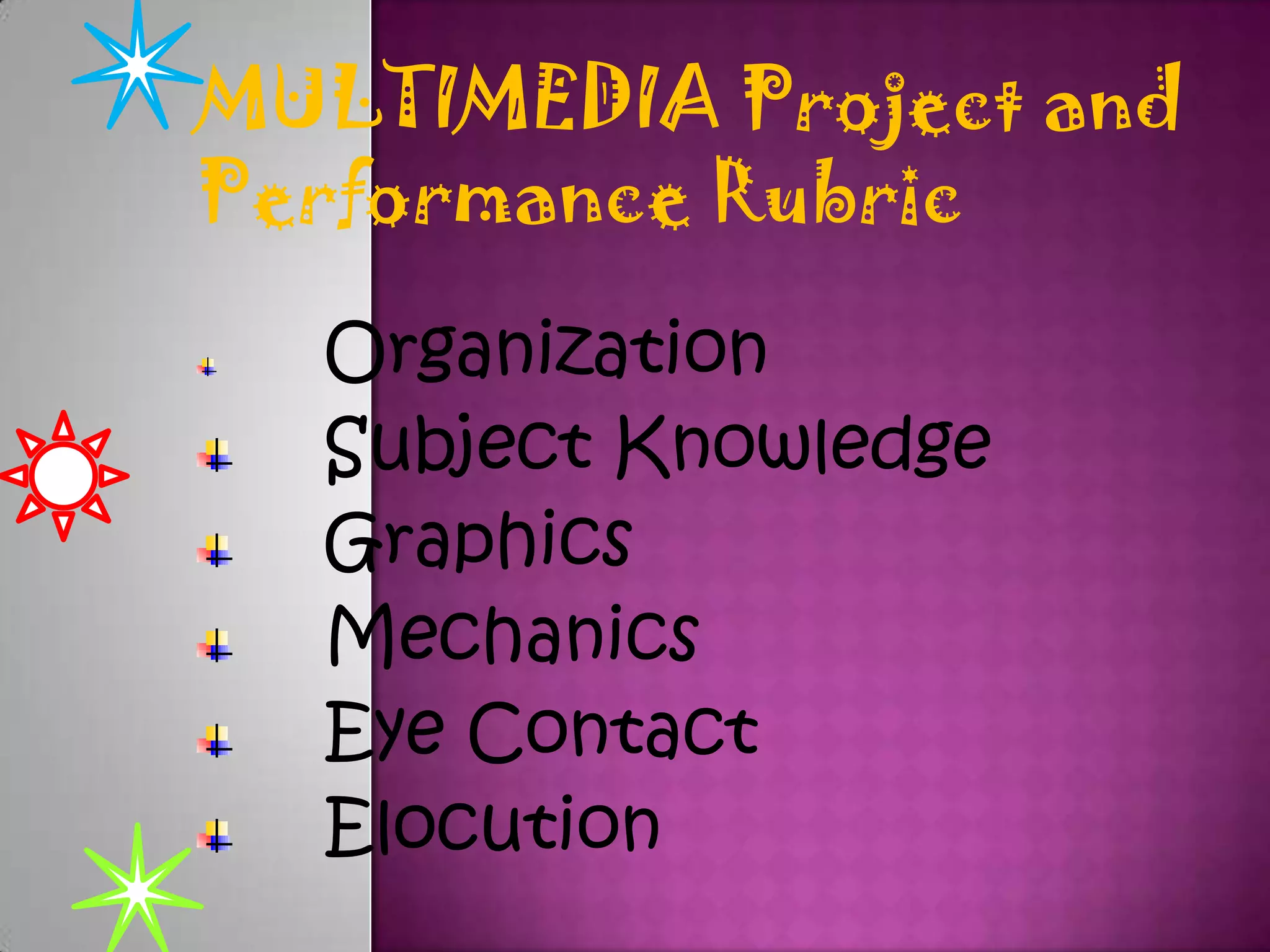
MULTIMEDIA Project and
Performance Rubric
Organization
Subject Knowledge
Graphics
Mechanics
Eye Contact
Elocution
Performance –based
Assessment or Product
Assessment
-it is a direct assessment.
Integrative skills are demonstrated
when students present answers they
have found to two or more assigned
problems or present the group
project they have work.
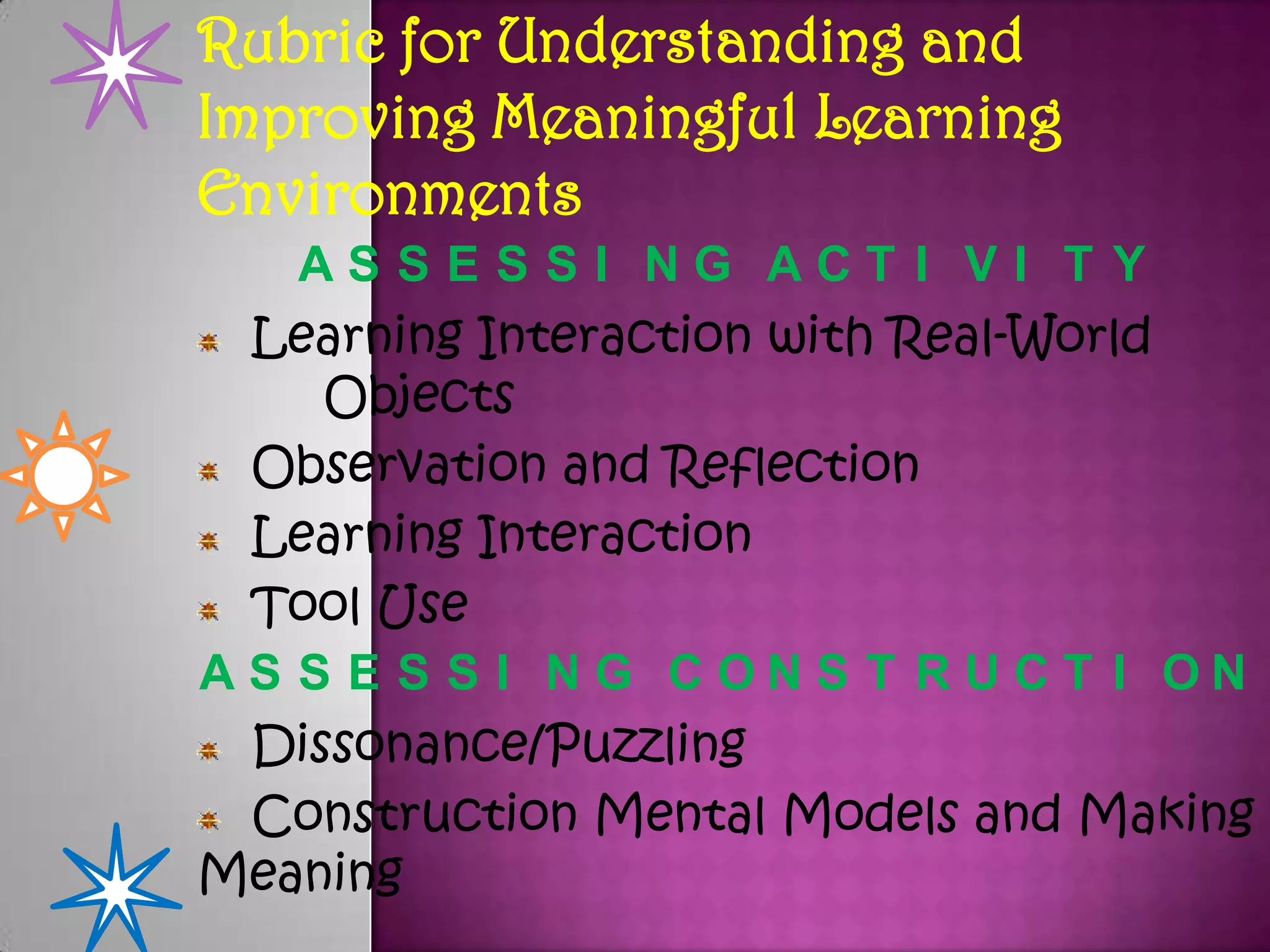
Rubric for Understanding and
Improving Meaningful Learning
Environments
ASSESSI NG ACT I VI T Y
Learning Interaction with Real-World
Objects
Observation and Reflection
Learning Interaction
Tool Use
AS S E S S I NG CONS T RUCT I ON
Dissonance/Puzzling
Construction Mental Models and Making
Meaning
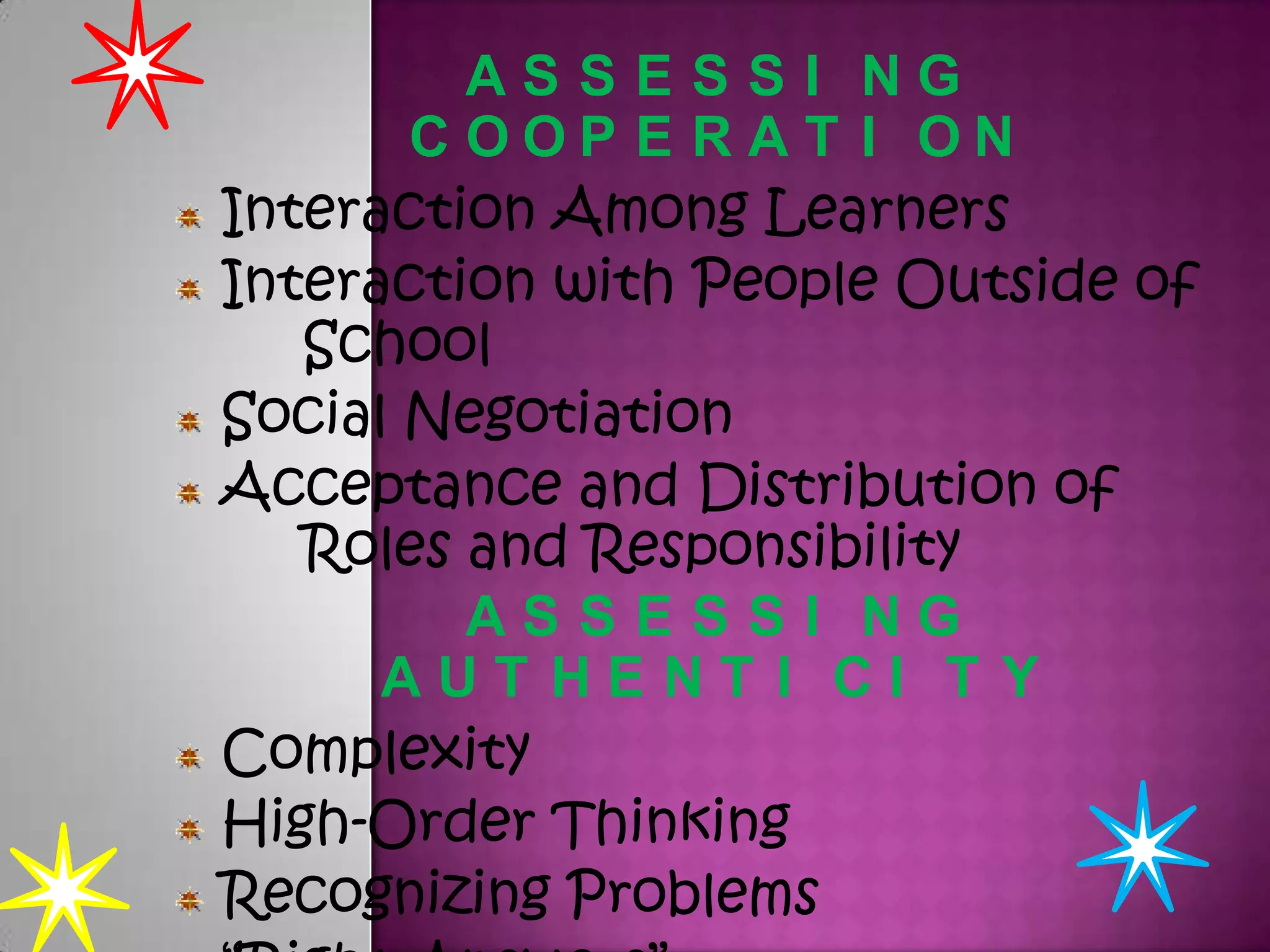
ASSESSI NG
COOP E RAT I ON
Interaction Among Learners
Interaction with People Outside of
School
Social Negotiation
Acceptance and Distribution of
Roles and Responsibility
ASSESSI NG
AUT HENT I CI T Y
Complexity
High-Order Thinking
Recognizing Problems
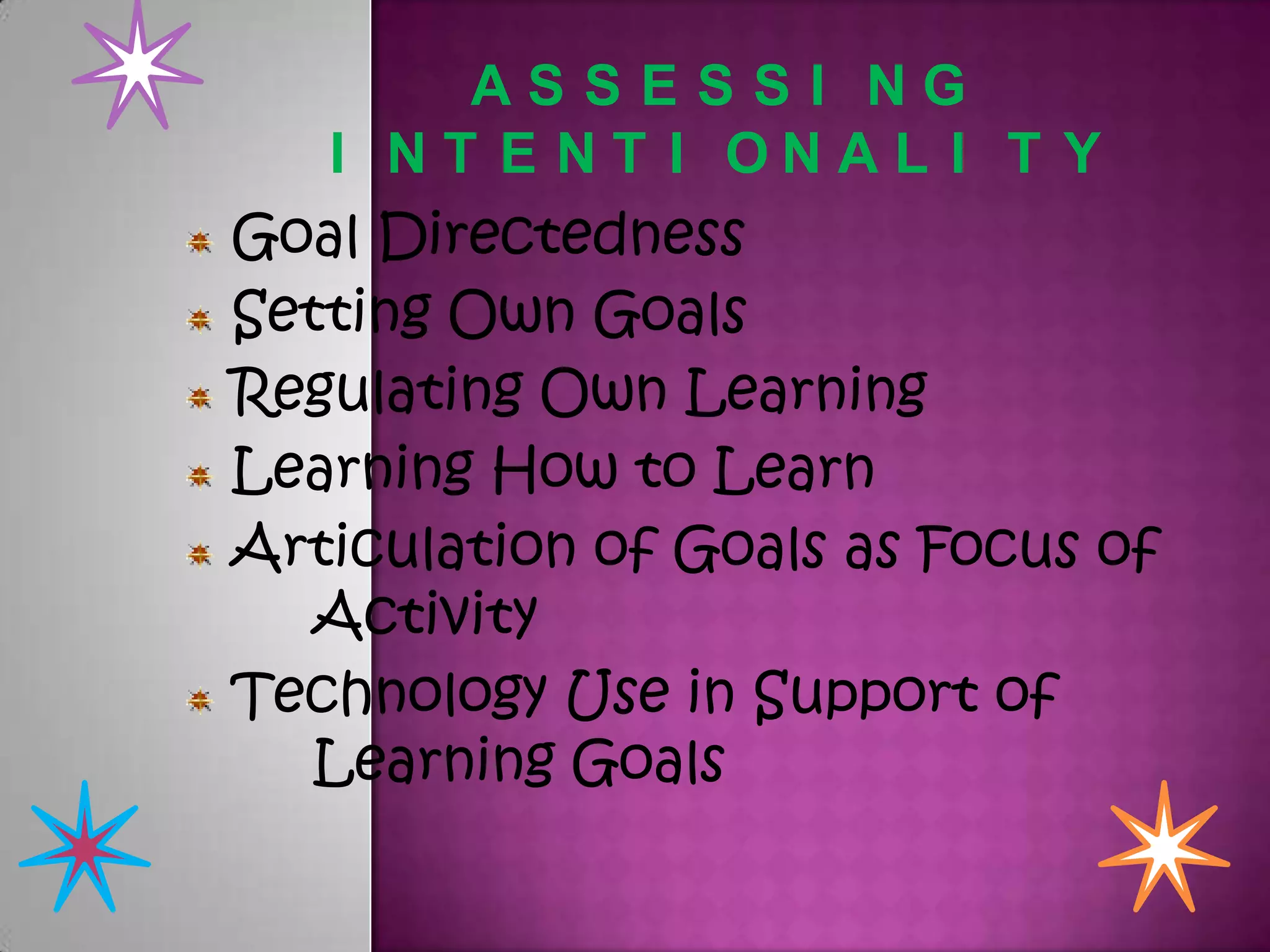
ASSESSI NG
I NT E NT I ONAL I T Y
Goal Directedness
Setting Own Goals
Regulating Own Learning
Learning How to Learn
Articulation of Goals as Focus of
Activity
Technology Use in Support of
Learning Goals

Assessment in a Constructivist, Technology-based Learning

  • 1.
    Submitted by: Rose AnnMontellano BEED II-A Submitted to: Ms. Mary Gene Panes Professor
  • 2.
    Assessment in a Constructivist,TechnologySupported Learning
  • 3.
       memorize very muchfor the test, fit their style of test preparation to the kind of test and, study only for passing score and a passing grade.
  • 4.
    In technologysupported classroom,the student learns from and with technology. Technology is seen as a source of information and the students learn from in he same way that you, the teacher, are a source of information.
  • 5.
    When constructivist assess students,they refer to use methods that either allow them to engage in dialogue with the learner , or give them opportunities to observe a student as he or she develops knowledge.
  • 6.
    Authentic Assessment -measures collective abilitieswritten and oral expression skills, analytical skills (like computer skills) integration, creativity, and ability, and ability to work collaboratively.
  • 7.
    MULTIMEDIA Project and PerformanceRubric Organization Subject Knowledge Graphics Mechanics Eye Contact Elocution
  • 8.
    Performance –based Assessment orProduct Assessment -it is a direct assessment. Integrative skills are demonstrated when students present answers they have found to two or more assigned problems or present the group project they have work.
  • 9.
    Rubric for Understandingand Improving Meaningful Learning Environments ASSESSI NG ACT I VI T Y Learning Interaction with Real-World Objects Observation and Reflection Learning Interaction Tool Use AS S E S S I NG CONS T RUCT I ON Dissonance/Puzzling Construction Mental Models and Making Meaning
  • 10.
    ASSESSI NG COOP ERAT I ON Interaction Among Learners Interaction with People Outside of School Social Negotiation Acceptance and Distribution of Roles and Responsibility ASSESSI NG AUT HENT I CI T Y Complexity High-Order Thinking Recognizing Problems
  • 11.
    ASSESSI NG I NTE NT I ONAL I T Y Goal Directedness Setting Own Goals Regulating Own Learning Learning How to Learn Articulation of Goals as Focus of Activity Technology Use in Support of Learning Goals