Prepared By:
Herli Ann R. Virador
Jomel Rey U. Vender
Assessment in a
Constructivist, Technology-
Supported Learning
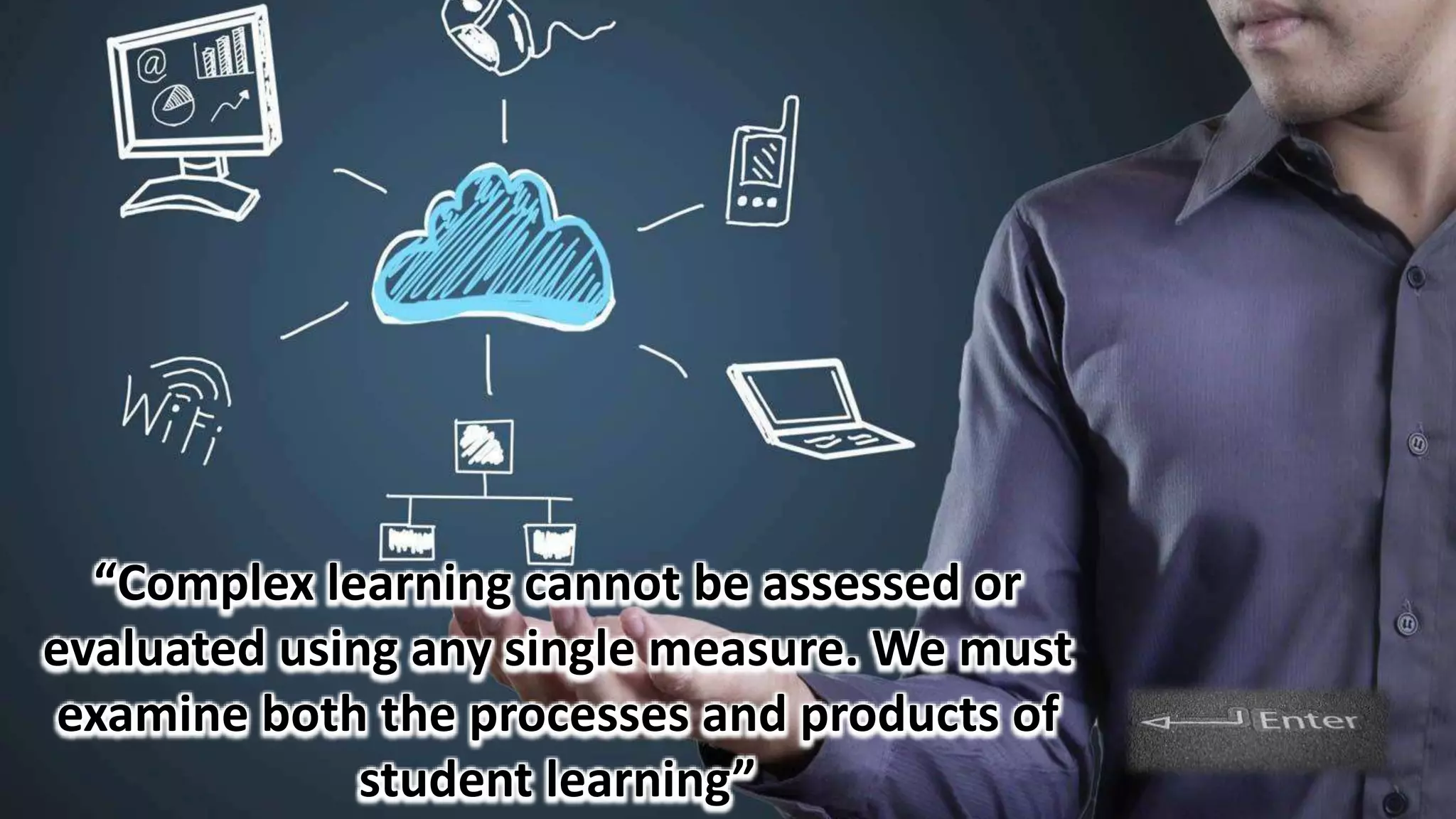
“Complex learning cannot be assessed or
evaluated using any single measure. We must
examine both the processes and products of
student learning”
TOPIC
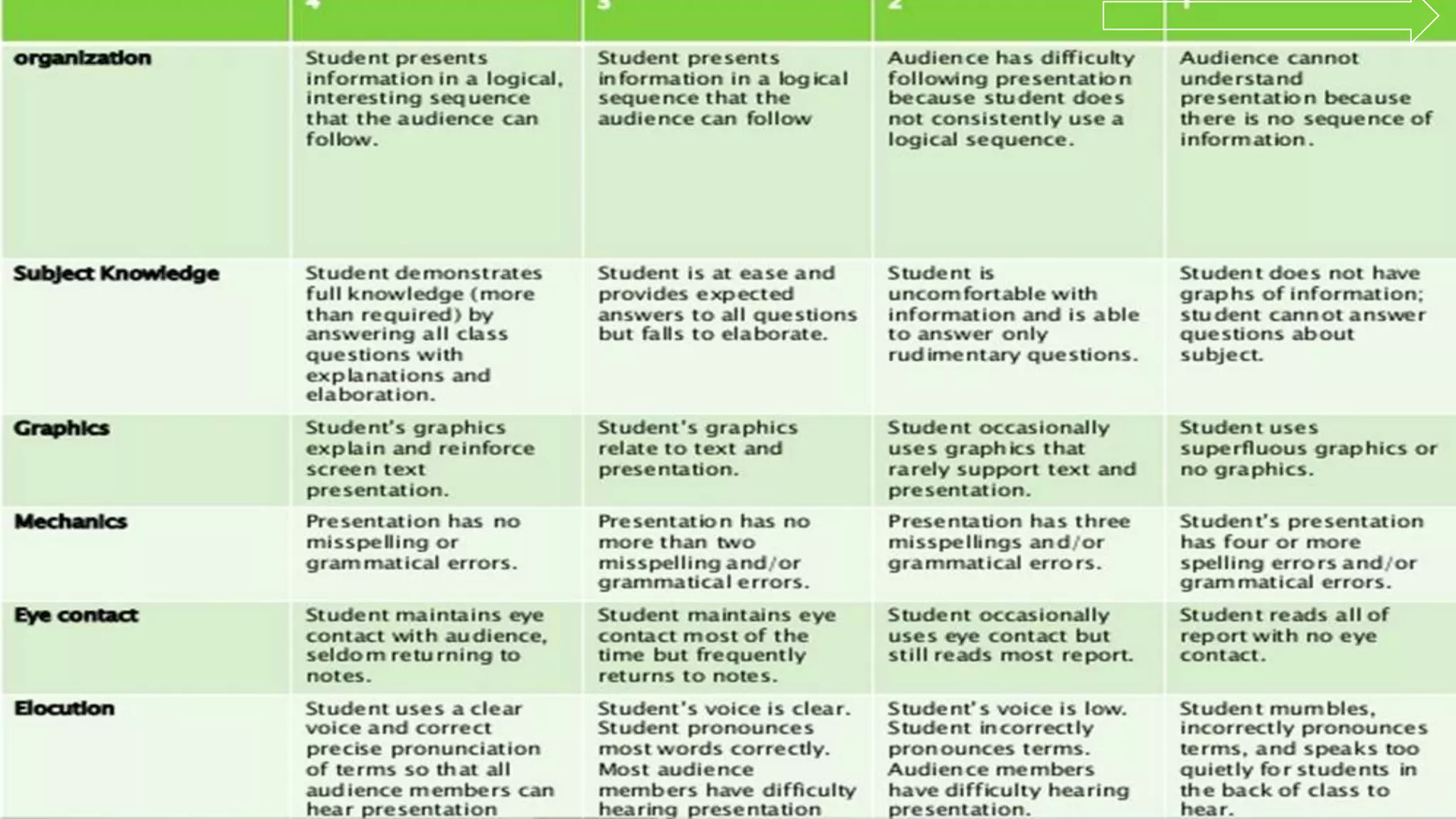
RUBRIC
ASSESSING
ACTIVITY
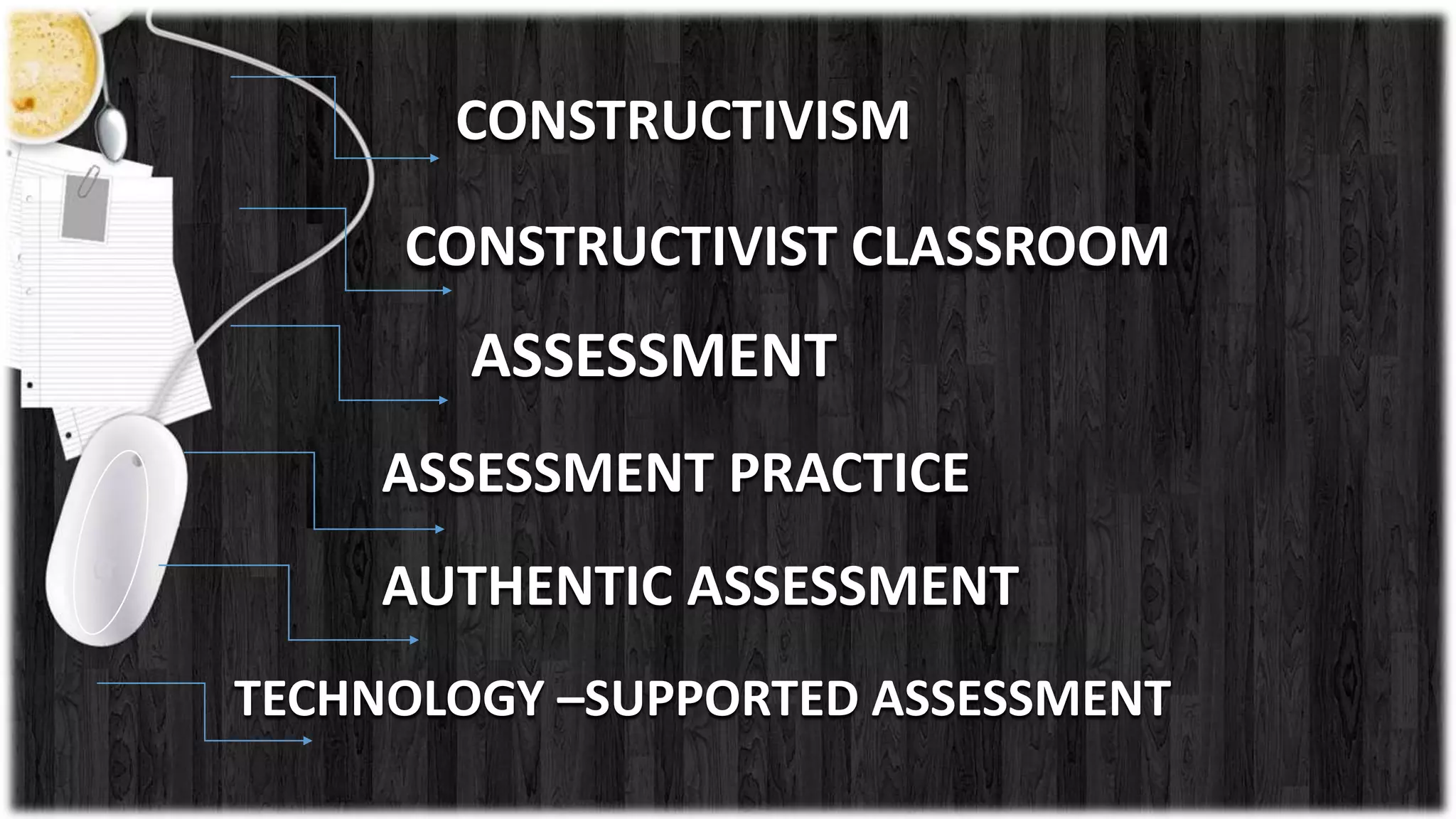
CONSTRUCTIVISM
CONSTRUCTIVIST CLASSROOM
ASSESSMENT
ASSESSMENT PRACTICE
AUTHENTIC ASSESSMENT
TECHNOLOGY –SUPPORTED ASSESSMENT
Is a theory of knowledge that argues
that humans generate knowledge and
meaning from an interaction between
their experiences and their ideas.
During infancy, it was an interaction
between human experiences and
their reflexes or behavior-patterns.
In it learning transcends memorization
of facts. It is putting these isolated facts
together, form concepts and make
meaning out of them. It is connecting
the integration of these facts and
concepts to daily life. It is seeing the
relevance of these facts and concepts to
what we value and treasure in life.
The term ‘assessment’
refers to all those activities
undertaken by teachers,
and by their students in
assessing themselves, which
provide information to be
used as feedback to modify
the teaching and learning
activities in which they are
engaged.
Higher level form of assessment that will require the
display of the basic skills of writing and speaking ,
computing and the more complex skills of applying
concepts learned, analyzing, critiquing and evaluating,
integrating and creating, and the social skill of working
with others. Such higher level form of assessment will
call for alternative forms of assessment.
Measures collective abilities, written and oral
expression skills, analytical skills, manipulative
skills, (like computer skills) integration,
creativity, and ability to work collaboratively.
1.
2.
3.
4.
5.
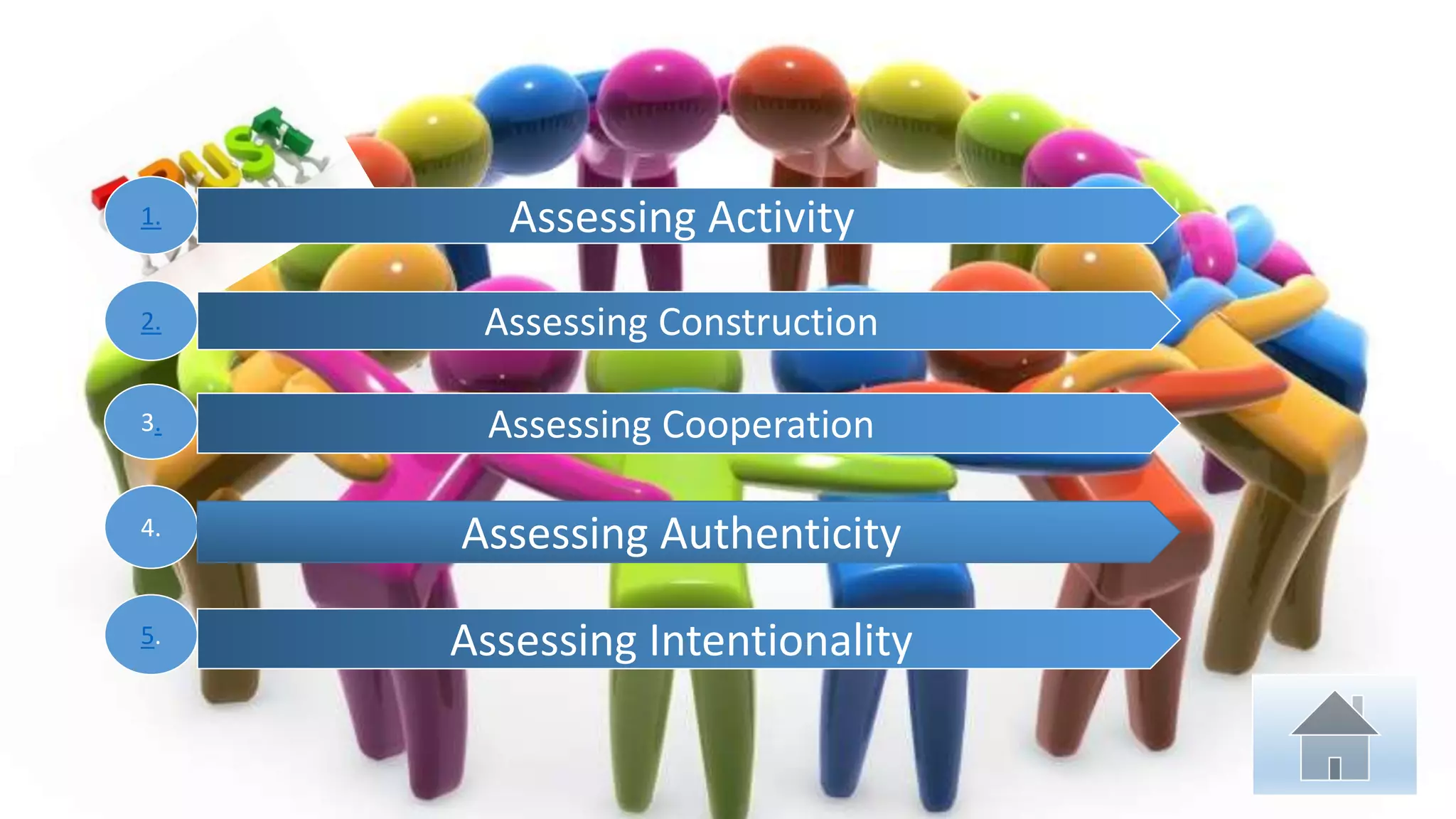
Assessing Activity
Assessing Construction
Assessing Cooperation
Assessing Authenticity
Assessing Intentionality
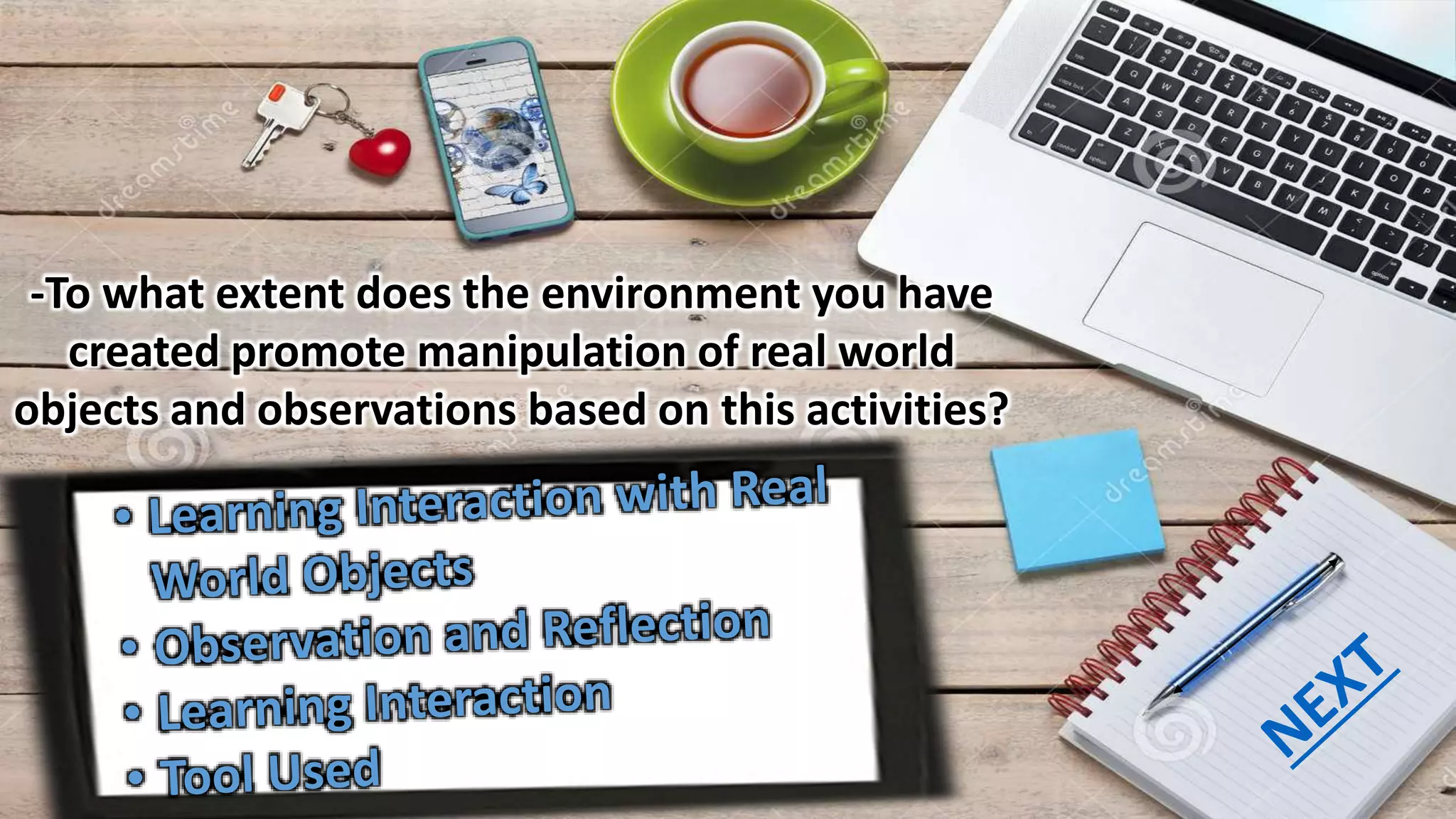
-To what extent does the environment you have
created promote manipulation of real world
objects and observations based on this activities?
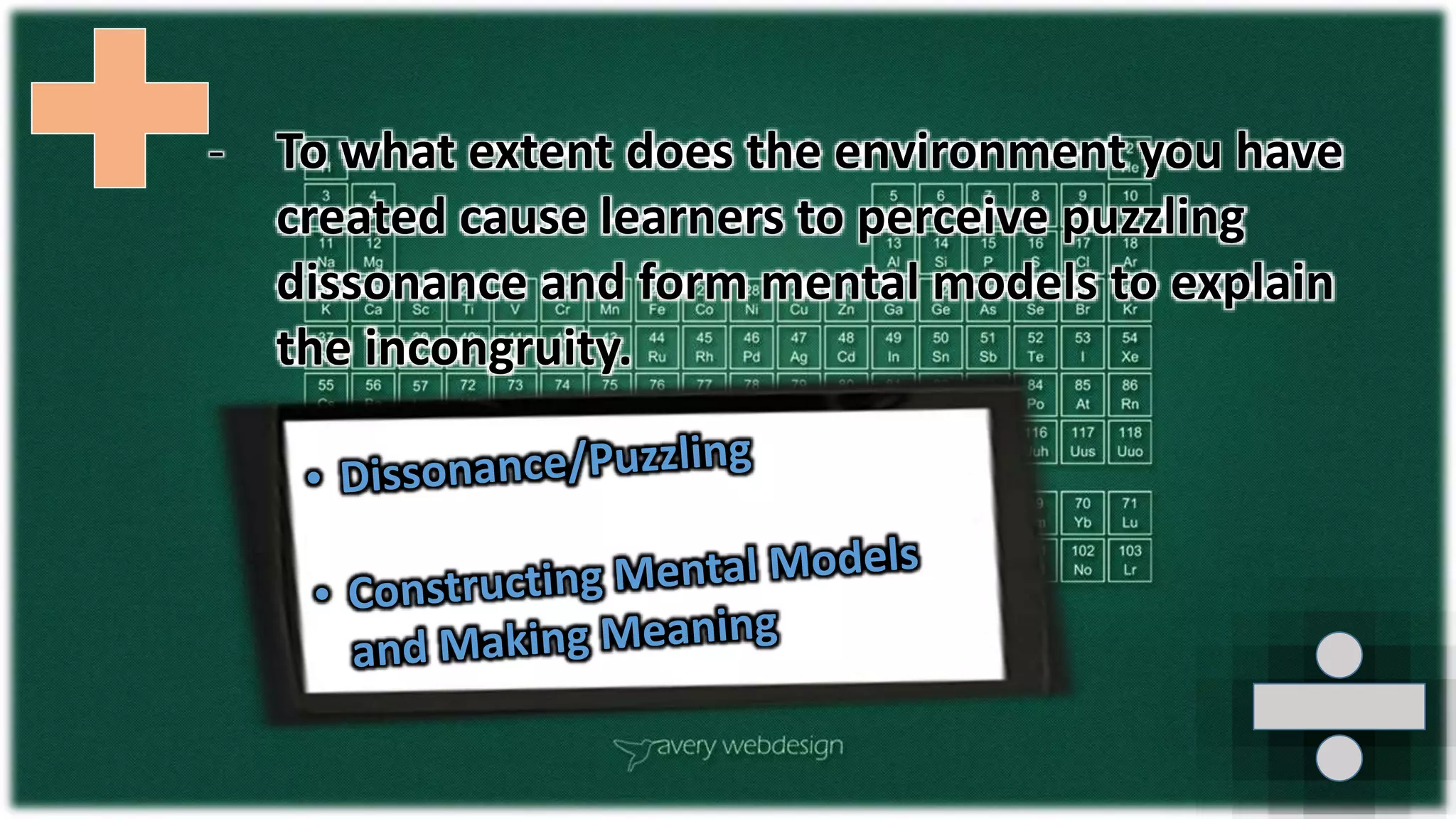
- To what extent does the environment you have
created cause learners to perceive puzzling
dissonance and form mental models to explain
the incongruity.
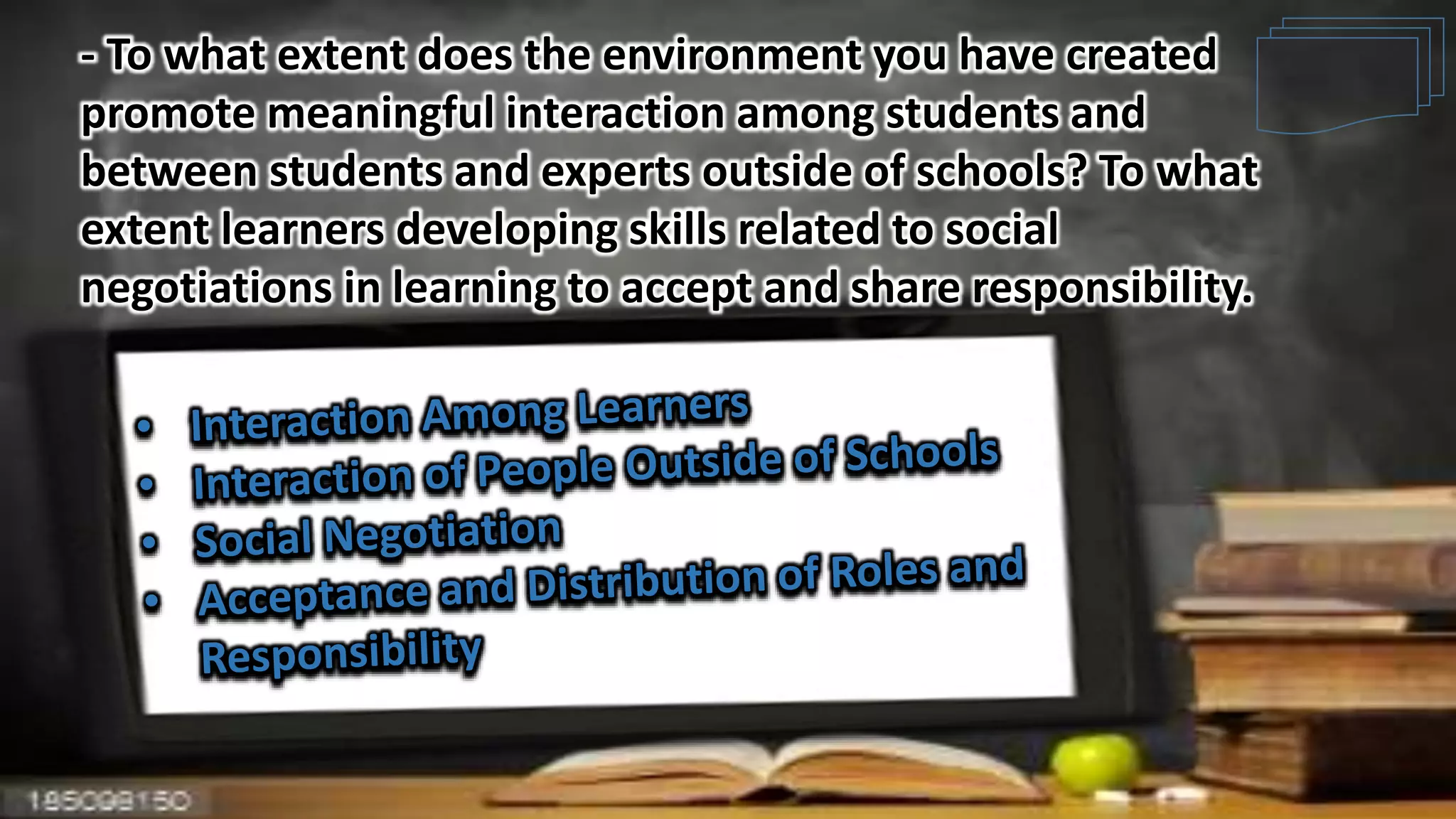
- To what extent does the environment you have created
promote meaningful interaction among students and
between students and experts outside of schools? To what
extent learners developing skills related to social
negotiations in learning to accept and share responsibility.
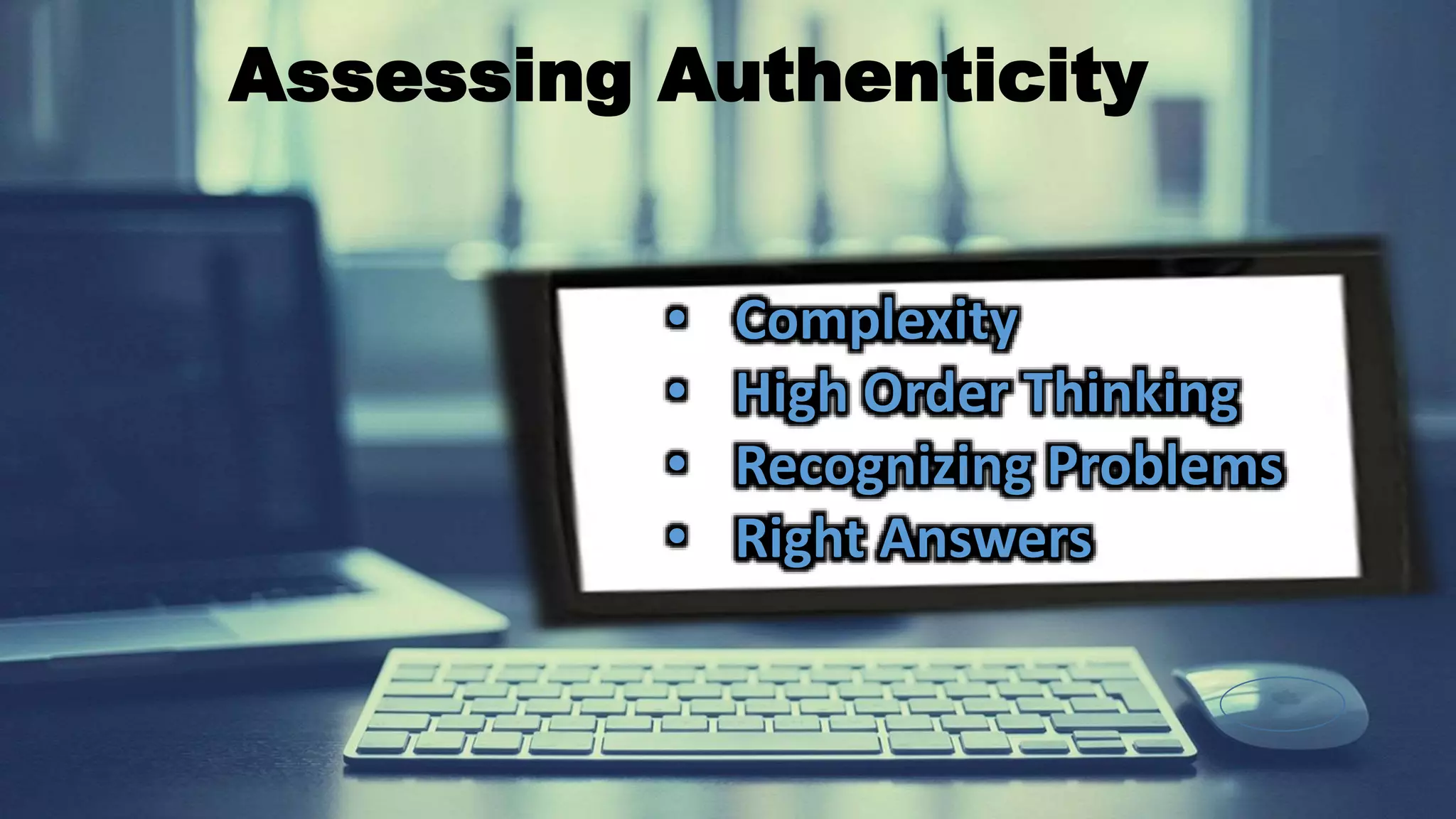
Assessing Authenticity
• Complexity
• High Order Thinking
• Recognizing Problems
• Right Answers
- To what extent does the environment you have created
cause learners to pursue important, well-articulated
goals to which they are intrinsically committed? To what
extent can learners explain their activities in terms of
how the activities related to the attainment of goals.
• Goals Directedness
• Setting on Goals
• Regulating on Learning
• Learning How to Learn
• Articulation of Goals as Focus of Activity
• Technology use in support of Learning
Goals
THANK YOU!!


Assessment in a Constructivist, Technology-Supported Learning

  • 1.
    Prepared By: Herli AnnR. Virador Jomel Rey U. Vender
  • 2.
    Assessment in a Constructivist,Technology- Supported Learning
  • 3.
    “Complex learning cannotbe assessed or evaluated using any single measure. We must examine both the processes and products of student learning”
  • 4.
  • 5.
  • 6.
    Is a theoryof knowledge that argues that humans generate knowledge and meaning from an interaction between their experiences and their ideas. During infancy, it was an interaction between human experiences and their reflexes or behavior-patterns.
  • 7.
    In it learningtranscends memorization of facts. It is putting these isolated facts together, form concepts and make meaning out of them. It is connecting the integration of these facts and concepts to daily life. It is seeing the relevance of these facts and concepts to what we value and treasure in life.
  • 8.
    The term ‘assessment’ refersto all those activities undertaken by teachers, and by their students in assessing themselves, which provide information to be used as feedback to modify the teaching and learning activities in which they are engaged.
  • 9.
    Higher level formof assessment that will require the display of the basic skills of writing and speaking , computing and the more complex skills of applying concepts learned, analyzing, critiquing and evaluating, integrating and creating, and the social skill of working with others. Such higher level form of assessment will call for alternative forms of assessment.
  • 10.
    Measures collective abilities,written and oral expression skills, analytical skills, manipulative skills, (like computer skills) integration, creativity, and ability to work collaboratively.
  • 14.
    1. 2. 3. 4. 5. Assessing Activity Assessing Construction AssessingCooperation Assessing Authenticity Assessing Intentionality
  • 15.
    -To what extentdoes the environment you have created promote manipulation of real world objects and observations based on this activities?
  • 16.
    - To whatextent does the environment you have created cause learners to perceive puzzling dissonance and form mental models to explain the incongruity.
  • 17.
    - To whatextent does the environment you have created promote meaningful interaction among students and between students and experts outside of schools? To what extent learners developing skills related to social negotiations in learning to accept and share responsibility.
  • 18.
    Assessing Authenticity • Complexity •High Order Thinking • Recognizing Problems • Right Answers
  • 19.
    - To whatextent does the environment you have created cause learners to pursue important, well-articulated goals to which they are intrinsically committed? To what extent can learners explain their activities in terms of how the activities related to the attainment of goals. • Goals Directedness • Setting on Goals • Regulating on Learning • Learning How to Learn • Articulation of Goals as Focus of Activity • Technology use in support of Learning Goals
  • 22.