Innovative
Technologies
for Assessment
Tasks in
Teaching and
Learning
Module 6
ICT and Assessment of Learning
Lesson 1
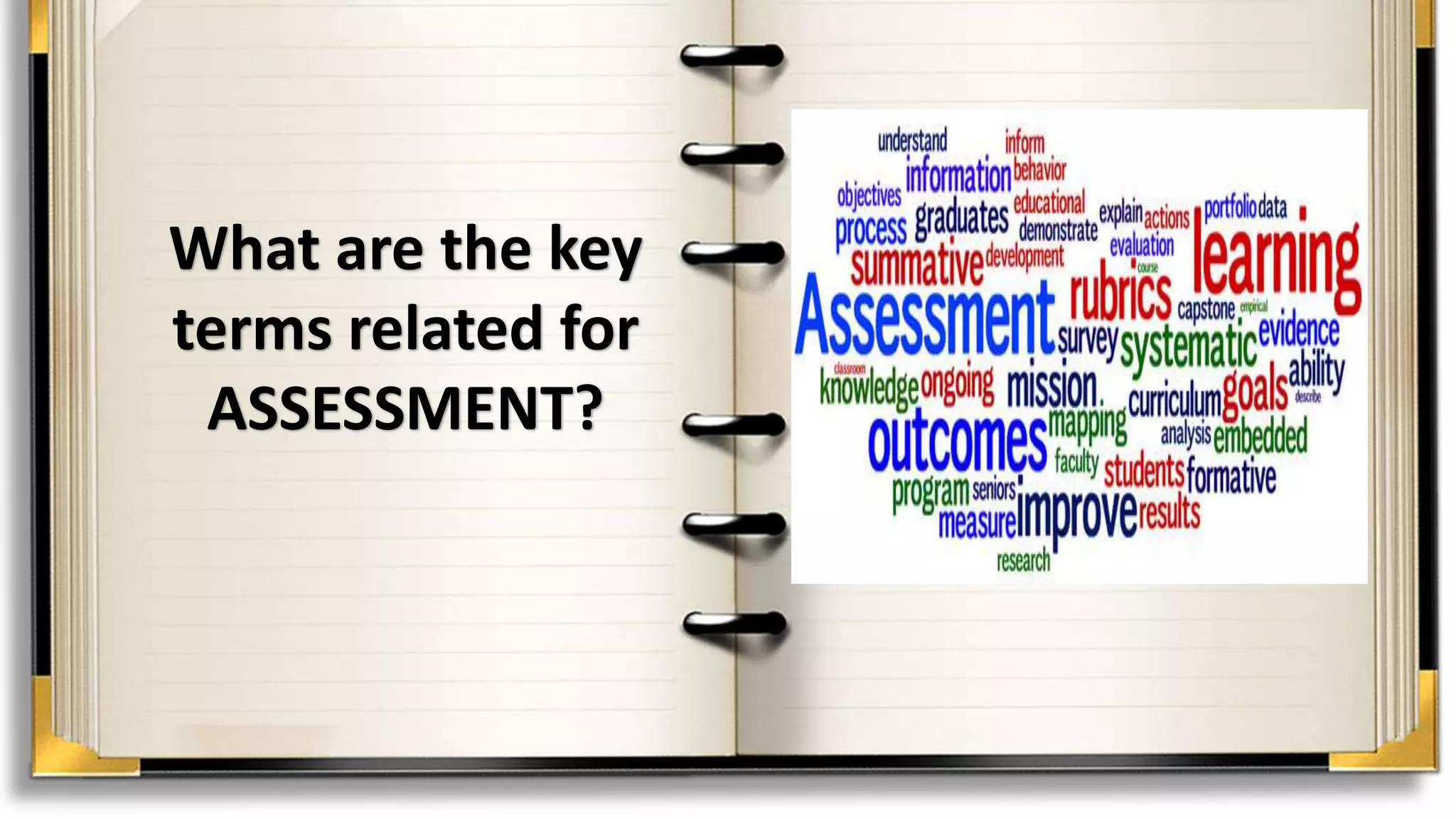
What are the key
terms related for
ASSESSMENT?
What is
ASSESSMENT?
Assessment is the
process of identifying,
gathering, and
interpreting
information students'
learning.
Types of Assessment
• Formative assessment - provides
feedback and information during the
instructional process, while learning is
taking place, and while learning is
occurring.
• Summative assessment - takes place
after the learning has been completed
occurring. and provides information
and feedback that sums up the
teaching and learning process.
• Diagnostic assessment - can help
you identify your students' current
knowledge of a subject, their skill
sets and capabilities, and to clarify
misconceptions before reaching
takes place. Knowing students'
strengths and can help you better
plan -what to teach and how to
teach it.
• Authentic assessment - describes
the multiple forms of assessment
on t reflect student learning,
achievement, motivation, and
attitudes that instructionally
relevant classroom activities.
What is the role of ICT in
Assessment in Learning?
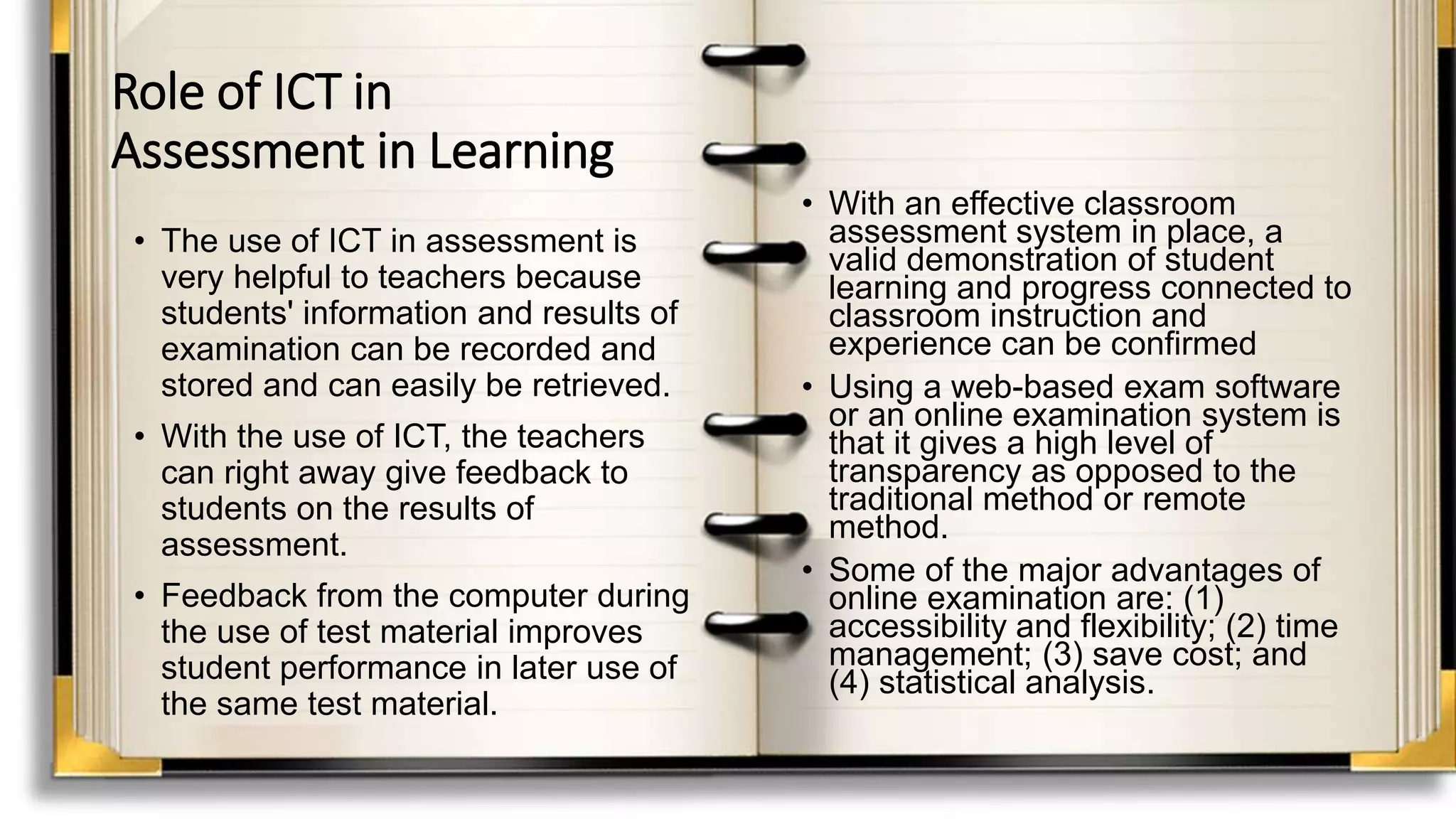
Role of ICT in
Assessment in Learning
• The use of ICT in assessment is
very helpful to teachers because
students' information and results of
examination can be recorded and
stored and can easily be retrieved.
• With the use of ICT, the teachers
can right away give feedback to
students on the results of
assessment.
• Feedback from the computer during
the use of test material improves
student performance in later use of
the same test material.
• With an effective classroom
assessment system in place, a
valid demonstration of student
learning and progress connected to
classroom instruction and
experience can be confirmed
• Using a web-based exam software
or an online examination system is
that it gives a high level of
transparency as opposed to the
traditional method or remote
method.
• Some of the major advantages of
online examination are: (1)
accessibility and flexibility; (2) time
management; (3) save cost; and
(4) statistical analysis.
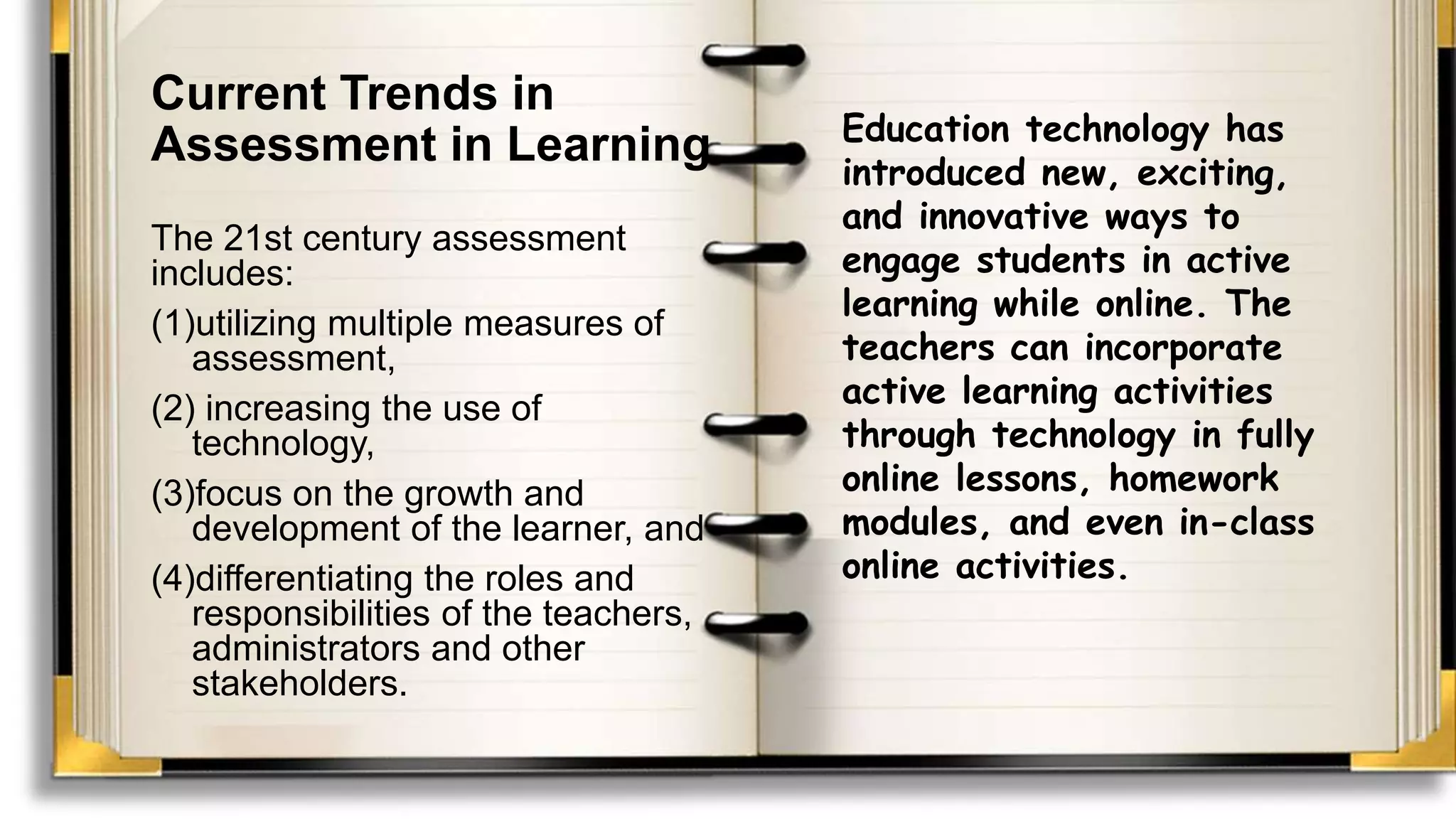
Current Trends in
Assessment in Learning
The 21st century assessment
includes:
(1)utilizing multiple measures of
assessment,
(2) increasing the use of
technology,
(3)focus on the growth and
development of the learner, and
(4)differentiating the roles and
responsibilities of the teachers,
administrators and other
stakeholders.
Education technology has
introduced new, exciting,
and innovative ways to
engage students in active
learning while online. The
teachers can incorporate
active learning activities
through technology in fully
online lessons, homework
modules, and even in-class
online activities.
Criteria in Choosing Appropriate
Assessment Tools
Lesson 2
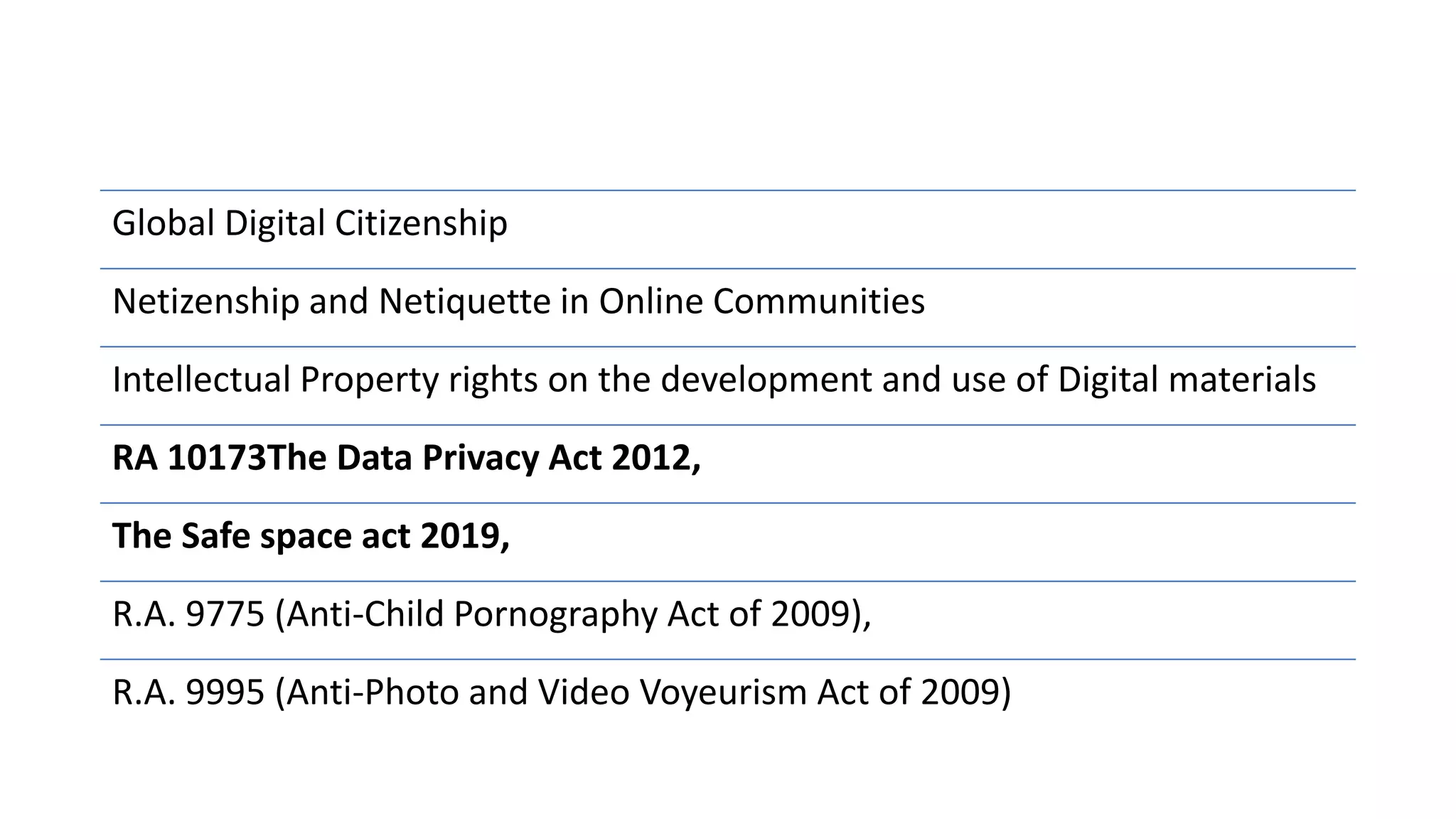
Global Digital Citizenship
Netizenship and Netiquette in Online Communities
Intellectual Property rights on the development and use of Digital materials
RA 10173The Data Privacy Act 2012,
The Safe space act 2019,
R.A. 9775 (Anti-Child Pornography Act of 2009),
R.A. 9995 (Anti-Photo and Video Voyeurism Act of 2009)

Module-6.pptx

  • 1.
  • 2.
    ICT and Assessmentof Learning Lesson 1
  • 3.
    What are thekey terms related for ASSESSMENT?
  • 4.
    What is ASSESSMENT? Assessment isthe process of identifying, gathering, and interpreting information students' learning.
  • 5.
    Types of Assessment •Formative assessment - provides feedback and information during the instructional process, while learning is taking place, and while learning is occurring. • Summative assessment - takes place after the learning has been completed occurring. and provides information and feedback that sums up the teaching and learning process. • Diagnostic assessment - can help you identify your students' current knowledge of a subject, their skill sets and capabilities, and to clarify misconceptions before reaching takes place. Knowing students' strengths and can help you better plan -what to teach and how to teach it. • Authentic assessment - describes the multiple forms of assessment on t reflect student learning, achievement, motivation, and attitudes that instructionally relevant classroom activities.
  • 6.
    What is therole of ICT in Assessment in Learning?
  • 7.
    Role of ICTin Assessment in Learning • The use of ICT in assessment is very helpful to teachers because students' information and results of examination can be recorded and stored and can easily be retrieved. • With the use of ICT, the teachers can right away give feedback to students on the results of assessment. • Feedback from the computer during the use of test material improves student performance in later use of the same test material. • With an effective classroom assessment system in place, a valid demonstration of student learning and progress connected to classroom instruction and experience can be confirmed • Using a web-based exam software or an online examination system is that it gives a high level of transparency as opposed to the traditional method or remote method. • Some of the major advantages of online examination are: (1) accessibility and flexibility; (2) time management; (3) save cost; and (4) statistical analysis.
  • 8.
    Current Trends in Assessmentin Learning The 21st century assessment includes: (1)utilizing multiple measures of assessment, (2) increasing the use of technology, (3)focus on the growth and development of the learner, and (4)differentiating the roles and responsibilities of the teachers, administrators and other stakeholders. Education technology has introduced new, exciting, and innovative ways to engage students in active learning while online. The teachers can incorporate active learning activities through technology in fully online lessons, homework modules, and even in-class online activities.
  • 9.
    Criteria in ChoosingAppropriate Assessment Tools Lesson 2
  • 10.
    Global Digital Citizenship Netizenshipand Netiquette in Online Communities Intellectual Property rights on the development and use of Digital materials RA 10173The Data Privacy Act 2012, The Safe space act 2019, R.A. 9775 (Anti-Child Pornography Act of 2009), R.A. 9995 (Anti-Photo and Video Voyeurism Act of 2009)