Dr.Ponnilavan
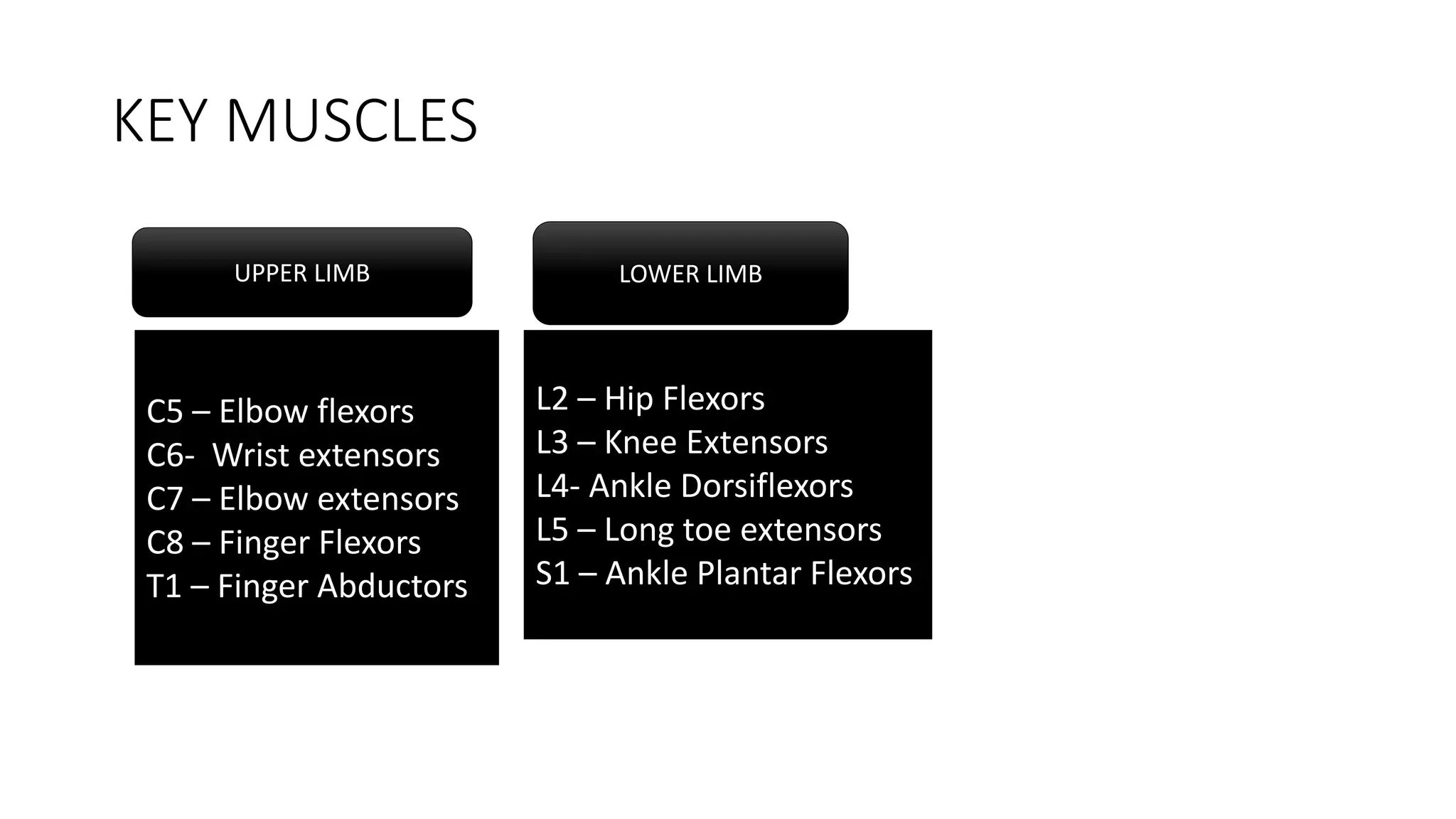
KEY MUSCLES
C5 – Elbow flexors
C6- Wrist extensors
C7 – Elbow extensors
C8 – Finger Flexors
T1 – Finger Abductors
UPPER LIMB
L2 – Hip Flexors
L3 – Knee Extensors
L4- Ankle Dorsiflexors
L5 – Long toe extensors
S1 – Ankle Plantar Flexors
LOWER LIMB
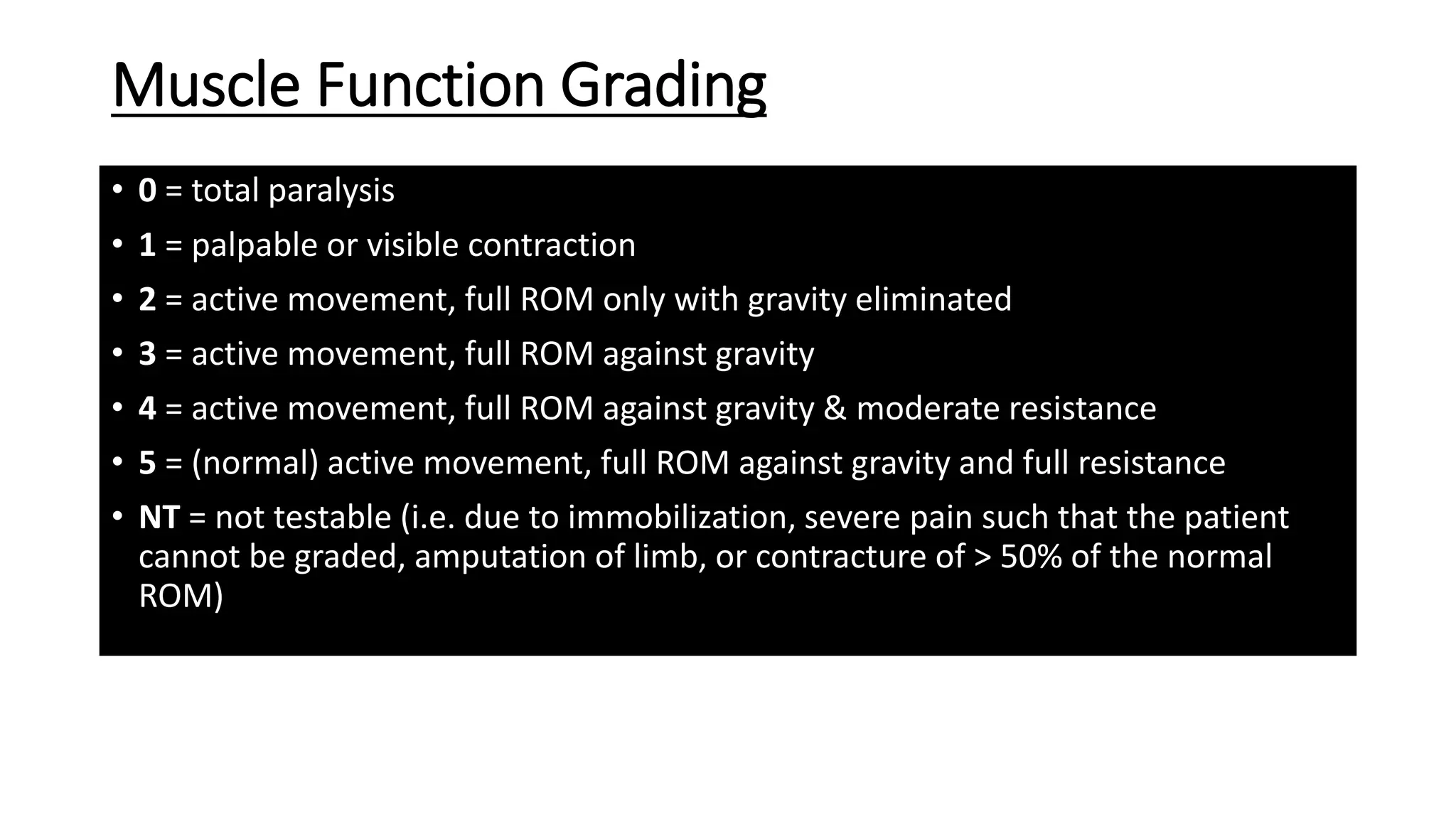
Muscle Function Grading
• 0 = total paralysis
• 1 = palpable or visible contraction
• 2 = active movement, full ROM only with gravity eliminated
• 3 = active movement, full ROM against gravity
• 4 = active movement, full ROM against gravity & moderate resistance
• 5 = (normal) active movement, full ROM against gravity and full resistance
• NT = not testable (i.e. due to immobilization, severe pain such that the patient
cannot be graded, amputation of limb, or contracture of > 50% of the normal
ROM)
Sensory Grading
• 0 = Absent
• 1 = Altered, either decreased/impaired sensation
• 2 = Normal
• NT = Not testable
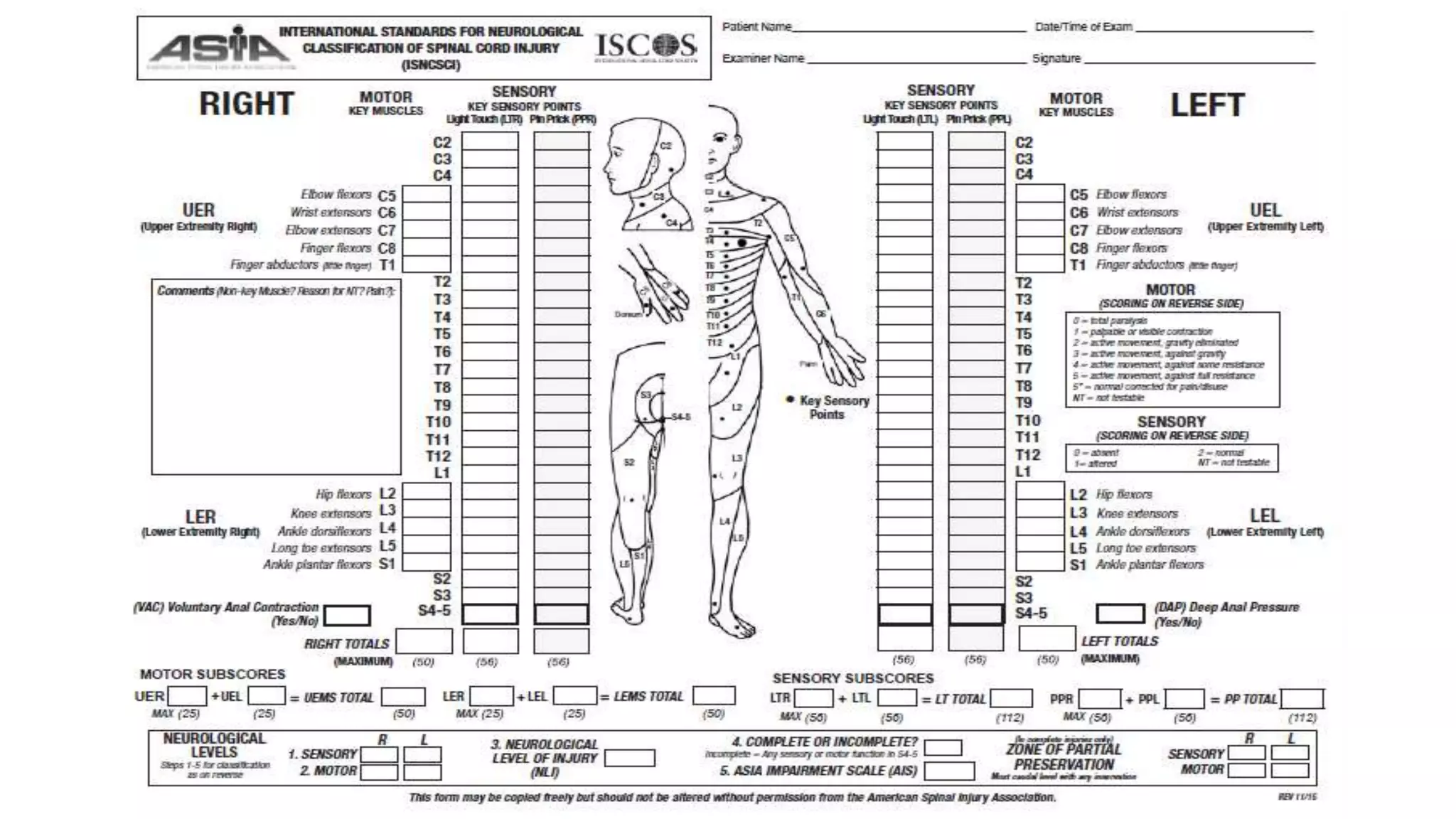
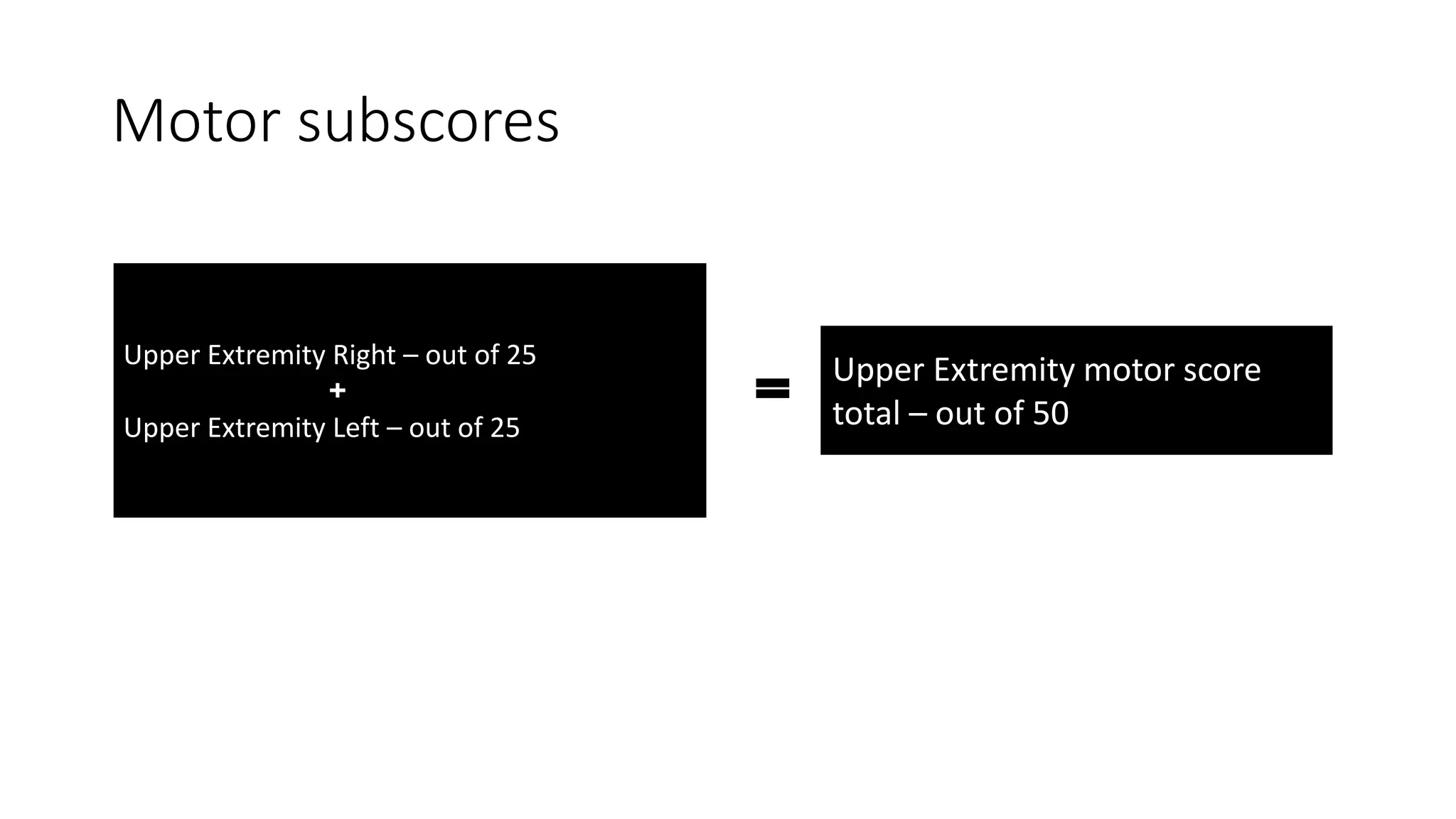
Motor subscores
Upper Extremity motor score
total – out of 50
Upper Extremity Right – out of 25
Upper Extremity Left – out of 25
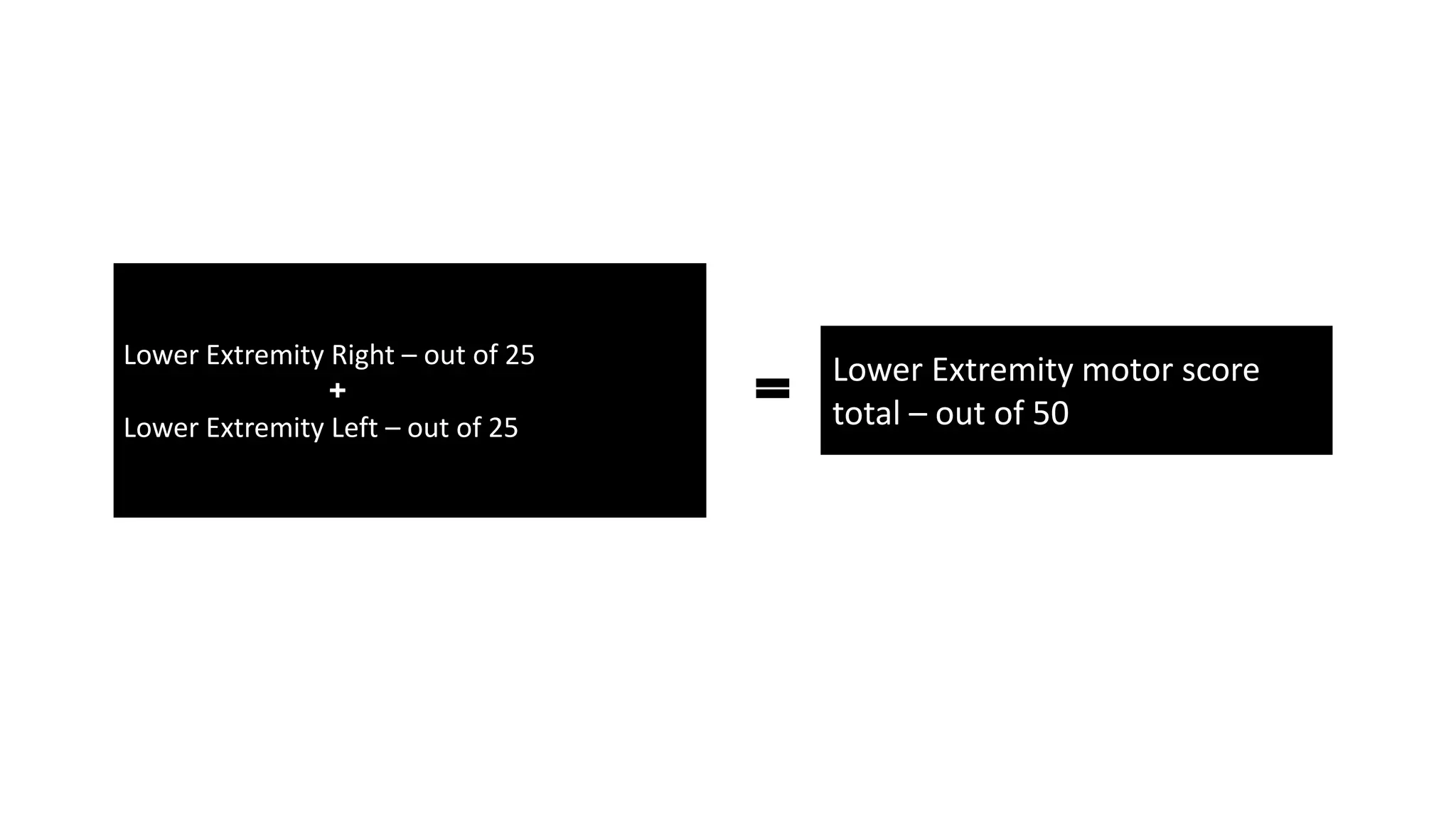
Lower Extremity motor score
total – out of 50
Lower Extremity Right – out of 25
Lower Extremity Left – out of 25
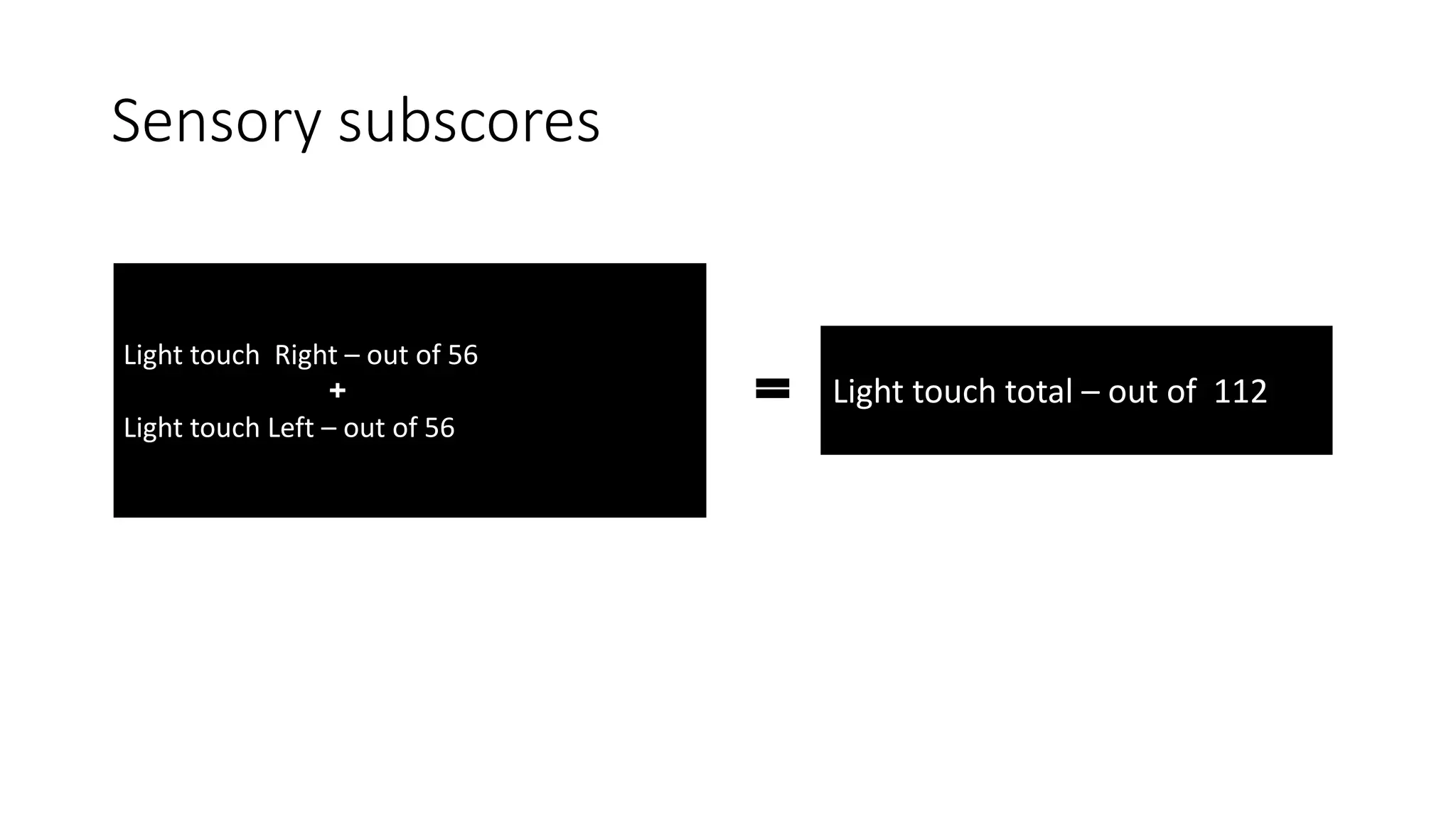
Sensory subscores
Light touch total – out of 112
Light touch Right – out of 56
Light touch Left – out of 56
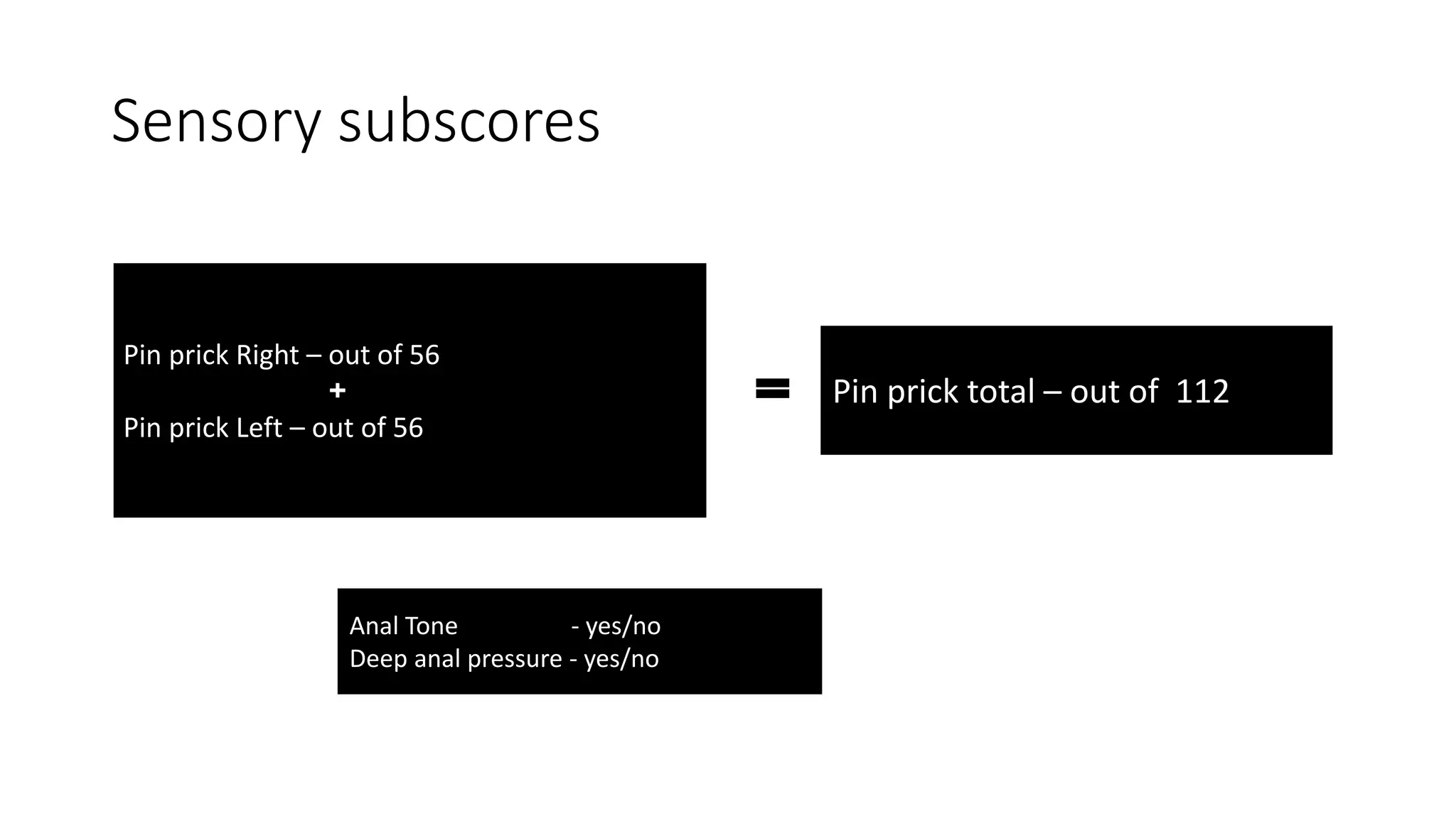
Sensory subscores
Pin prick total – out of 112
Pin prick Right – out of 56
Pin prick Left – out of 56
Anal Tone - yes/no
Deep anal pressure - yes/no
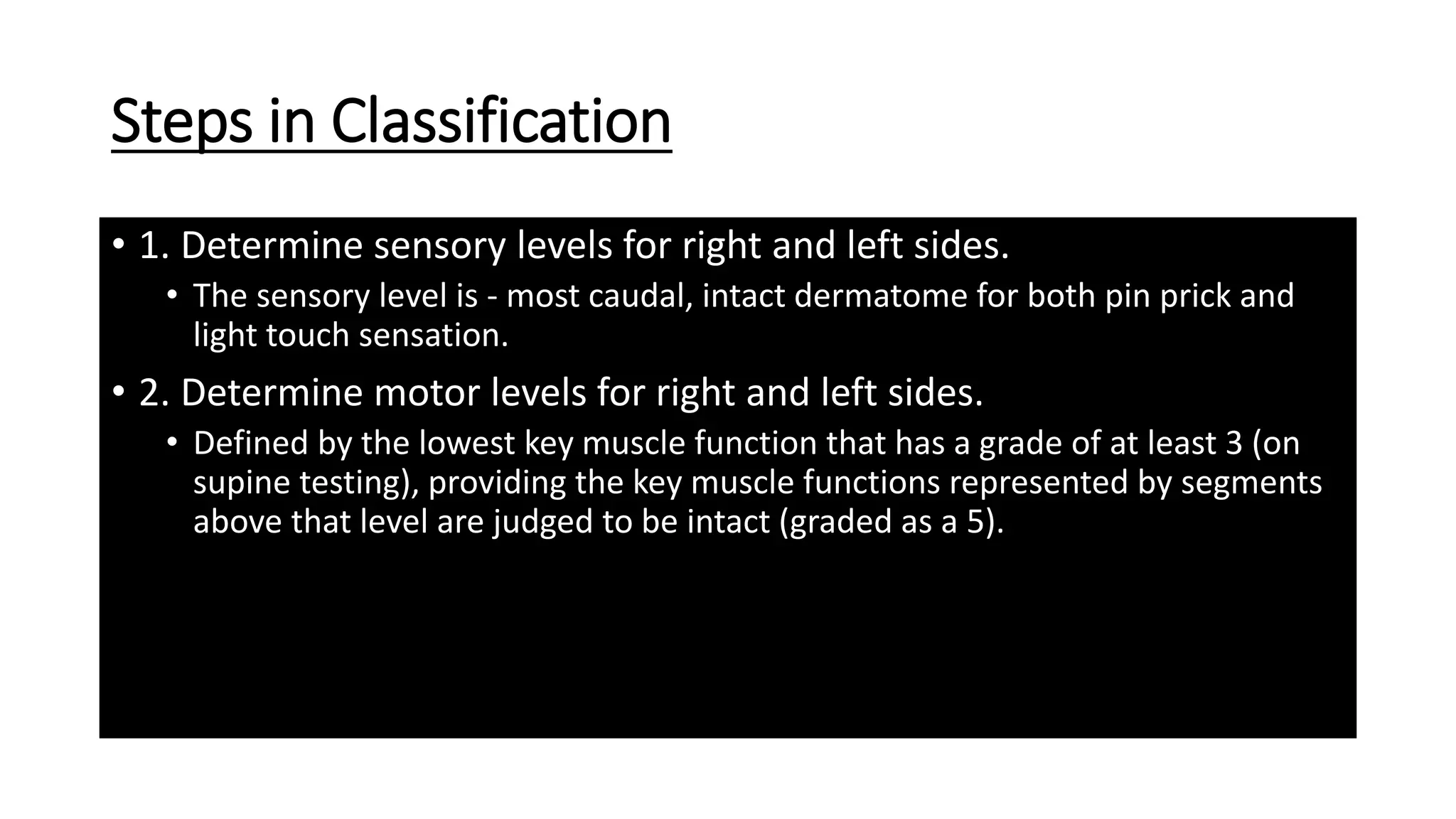
Steps in Classification
• 1. Determine sensory levels for right and left sides.
• The sensory level is - most caudal, intact dermatome for both pin prick and
light touch sensation.
• 2. Determine motor levels for right and left sides.
• Defined by the lowest key muscle function that has a grade of at least 3 (on
supine testing), providing the key muscle functions represented by segments
above that level are judged to be intact (graded as a 5).
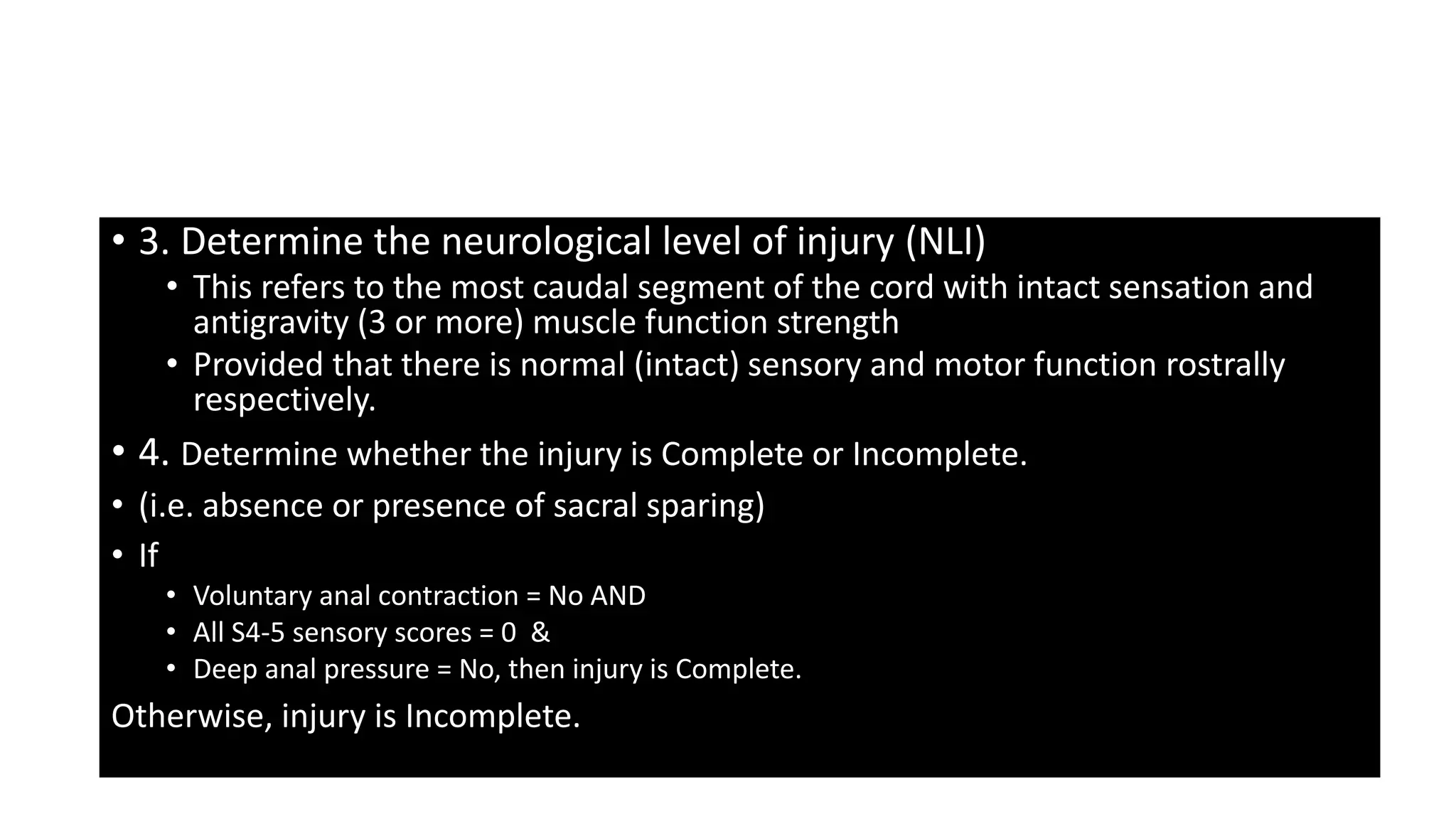
• 3. Determine the neurological level of injury (NLI)
• This refers to the most caudal segment of the cord with intact sensation and
antigravity (3 or more) muscle function strength
• Provided that there is normal (intact) sensory and motor function rostrally
respectively.
• 4. Determine whether the injury is Complete or Incomplete.
• (i.e. absence or presence of sacral sparing)
• If
• Voluntary anal contraction = No AND
• All S4-5 sensory scores = 0 &
• Deep anal pressure = No, then injury is Complete.
Otherwise, injury is Incomplete.
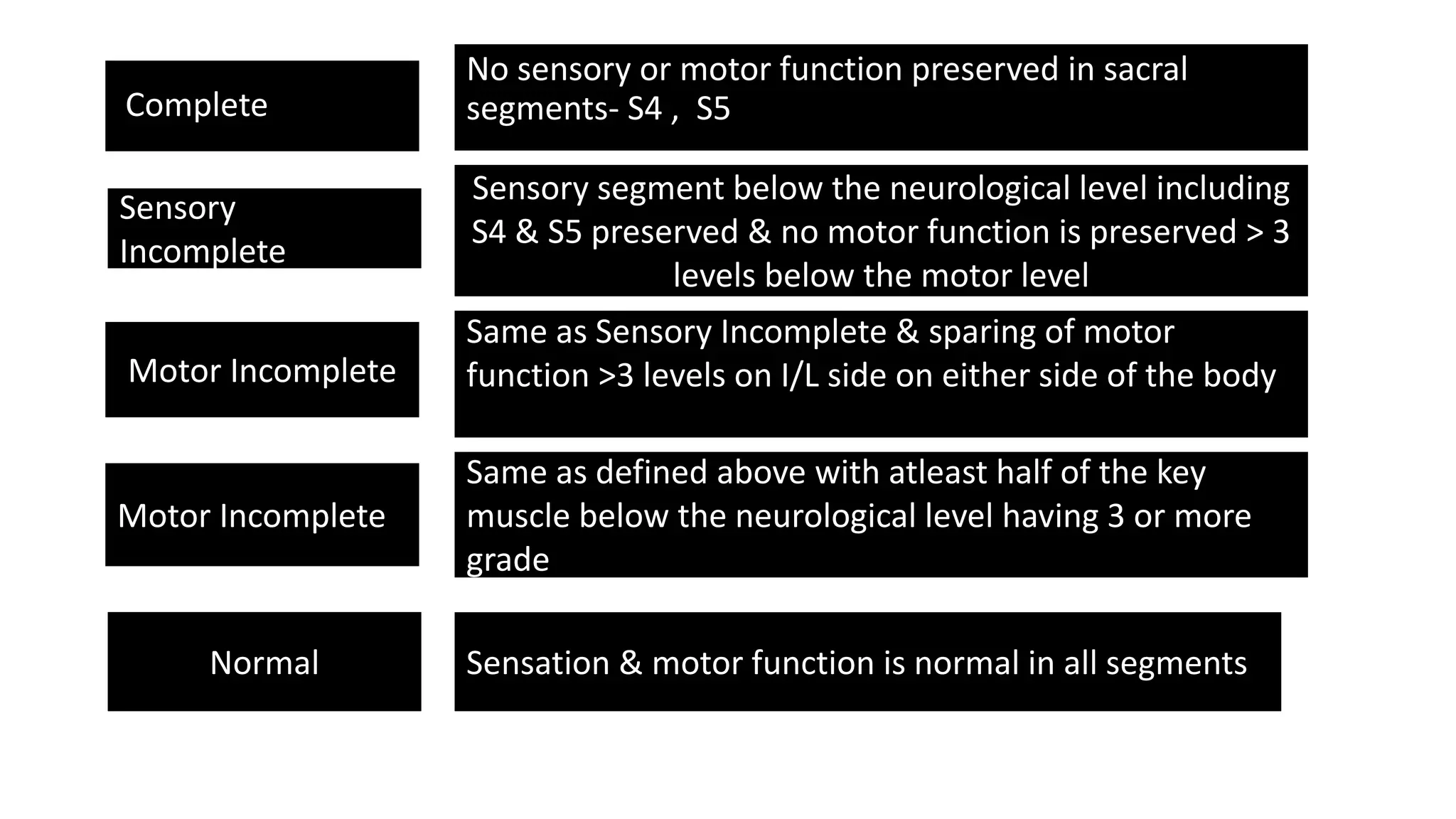
Complete
No sensory or motor function preserved in sacral
segments- S4 , S5
Sensory
Incomplete
Sensory segment below the neurological level including
S4 & S5 preserved & no motor function is preserved > 3
levels below the motor level
Motor Incomplete
Motor Incomplete
Normal
Same as Sensory Incomplete & sparing of motor
function >3 levels on I/L side on either side of the body
Same as defined above with atleast half of the key
muscle below the neurological level having 3 or more
grade
Sensation & motor function is normal in all segments
THANK U

Asia scoring for spine trauma

  • 1.
  • 3.
    KEY MUSCLES C5 –Elbow flexors C6- Wrist extensors C7 – Elbow extensors C8 – Finger Flexors T1 – Finger Abductors UPPER LIMB L2 – Hip Flexors L3 – Knee Extensors L4- Ankle Dorsiflexors L5 – Long toe extensors S1 – Ankle Plantar Flexors LOWER LIMB
  • 4.
    Muscle Function Grading •0 = total paralysis • 1 = palpable or visible contraction • 2 = active movement, full ROM only with gravity eliminated • 3 = active movement, full ROM against gravity • 4 = active movement, full ROM against gravity & moderate resistance • 5 = (normal) active movement, full ROM against gravity and full resistance • NT = not testable (i.e. due to immobilization, severe pain such that the patient cannot be graded, amputation of limb, or contracture of > 50% of the normal ROM)
  • 5.
    Sensory Grading • 0= Absent • 1 = Altered, either decreased/impaired sensation • 2 = Normal • NT = Not testable
  • 6.
    Motor subscores Upper Extremitymotor score total – out of 50 Upper Extremity Right – out of 25 Upper Extremity Left – out of 25
  • 7.
    Lower Extremity motorscore total – out of 50 Lower Extremity Right – out of 25 Lower Extremity Left – out of 25
  • 8.
    Sensory subscores Light touchtotal – out of 112 Light touch Right – out of 56 Light touch Left – out of 56
  • 9.
    Sensory subscores Pin pricktotal – out of 112 Pin prick Right – out of 56 Pin prick Left – out of 56 Anal Tone - yes/no Deep anal pressure - yes/no
  • 10.
    Steps in Classification •1. Determine sensory levels for right and left sides. • The sensory level is - most caudal, intact dermatome for both pin prick and light touch sensation. • 2. Determine motor levels for right and left sides. • Defined by the lowest key muscle function that has a grade of at least 3 (on supine testing), providing the key muscle functions represented by segments above that level are judged to be intact (graded as a 5).
  • 11.
    • 3. Determinethe neurological level of injury (NLI) • This refers to the most caudal segment of the cord with intact sensation and antigravity (3 or more) muscle function strength • Provided that there is normal (intact) sensory and motor function rostrally respectively. • 4. Determine whether the injury is Complete or Incomplete. • (i.e. absence or presence of sacral sparing) • If • Voluntary anal contraction = No AND • All S4-5 sensory scores = 0 & • Deep anal pressure = No, then injury is Complete. Otherwise, injury is Incomplete.
  • 12.
    Complete No sensory ormotor function preserved in sacral segments- S4 , S5 Sensory Incomplete Sensory segment below the neurological level including S4 & S5 preserved & no motor function is preserved > 3 levels below the motor level Motor Incomplete Motor Incomplete Normal Same as Sensory Incomplete & sparing of motor function >3 levels on I/L side on either side of the body Same as defined above with atleast half of the key muscle below the neurological level having 3 or more grade Sensation & motor function is normal in all segments
  • 13.