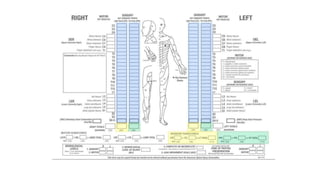
ASIA Scale
International Standards for Neurological Classification of Spinal Cord
Injury (ISNCSCI)
DR.SUSAN JOSE (PT)
Introduction
• The ISNCSCI provides a standardized examination method to
determine the extent of motor and sensory function loss after SCI.
• It is a universal classification tool for spinal cord injuries based on a
standardized sensory and motor assessment.
• The examination determines:
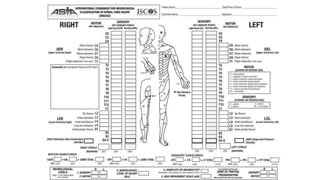
• the Sensory Level and Motor Level for each side of the body (Right and Left)
• Neurological Level of Injury (NLI)
• whether the injury is Complete or Incomplete.
Sensory examination
• Testing is done bilaterally using Light Touch (LT) and Pin-Prick
(PP) [sharp-dull discrimination].
• Items used:
• a cotton tip
• safety pin
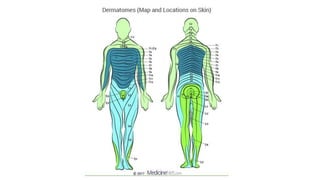
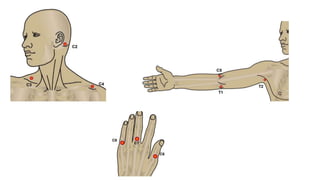
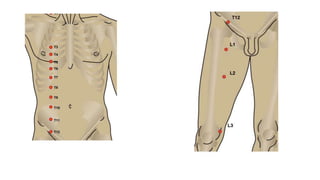
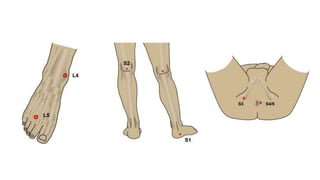
• We follow the dermatomal pattern for sensory assessment. The
sensory key points are used for standardized assessment technique.
• Comparison of the LT is done with the sensation on the patient’s
cheek.
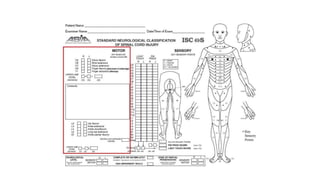
Motor examination
• Assessment follows the mytomal distribution.
• Key muscles are assessed for each myotome.
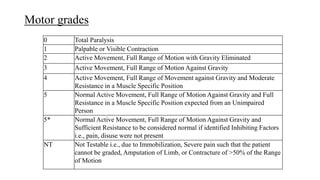
Motor grades
0 Total Paralysis
1 Palpable or Visible Contraction
2 Active Movement, Full Range of Motion with Gravity Eliminated
3 Active Movement, Full Range of Motion Against Gravity
4 Active Movement, Full Range of Movement against Gravity and Moderate
Resistance in a Muscle Specific Position
5 Normal Active Movement, Full Range of Motion Against Gravity and Full
Resistance in a Muscle Specific Position expected from an Unimpaired
Person
5* Normal Active Movement, Full Range of Motion Against Gravity and
Sufficient Resistance to be considered normal if identified Inhibiting Factors
i.e., pain, disuse were not present
NT Not Testable i.e., due to Immobilization, Severe pain such that the patient
cannot be graded, Amputation of Limb, or Contracture of >50% of the Range
of Motion
Note:
• In regions where there is no myotome that are clinically testable i.e.,
C1 to C4, T2 to L1, and S2 to S5, the Motor Level is presumed to be
the same as the Sensory Level
• Deep anal pressure -awareness is examined by insertion of the
examiner’s index finger and applying gentle pressure to the anorectal
wall.
• Voluntary Anal Contraction- is examined by asking the patient to
“squeeze the examiner’s finger as if to hold back a bowel movement.”
• Instruct the patient to not hold breath.
Interpretations:
• Sensory Level refers to the most caudal, intact dermatome for both light
touch and pin-prick sensation (Score = 2).
• Motor Level refers to the most caudal myotome with a key muscle
function of Grade 3 on Motor Examination.
• Neurological Level of Injury refers to the most caudal segment of the cord
with both intact sensation and antigravity muscle function strength
(Grade 3 or more) on both sides of the body.
• Zones of partial preservation: Documented only in Complete Injuries .
• Zones of partial preservation are dermatomes and myotomes below the neurological
level.
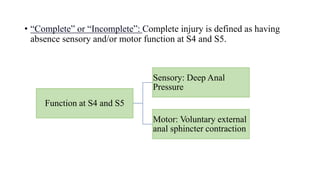
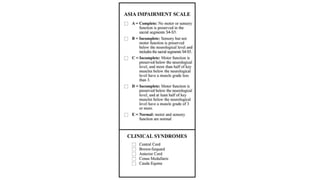
• “Complete” or “Incomplete”: Complete injury is defined as having
absence sensory and/or motor function at S4 and S5.
Function at S4 and S5
Sensory: Deep Anal
Pressure
Motor: Voluntary external
anal sphincter contraction
References
• Physical rehabilitation 0’Sullivan 6th edition
• International Standards for Neurological Classification of Spinal Cord
Injury: Assessment Forms
• ASIA Impairment Scale: International Standards for Neurological
Classification of Spinal Cord Injury (ISNCSCI) Assessment Form
• ASIA Impairment Scale: Autonomic Standards Assessment Form
• International Standards for Neurological Classification of Spinal Cord
Injury: Sensory and Motor Guides
• ASIA Impairment Scale: Key Sensory Points
• ASIA Impairment Scale: Motor Exam Guide
• ASIA E-Learning Centre InSTeP: International Standards
THANKYOU

ASIA Scale.pptx

  • 1.
    ASIA Scale International Standardsfor Neurological Classification of Spinal Cord Injury (ISNCSCI) DR.SUSAN JOSE (PT)
  • 2.
    Introduction • The ISNCSCIprovides a standardized examination method to determine the extent of motor and sensory function loss after SCI. • It is a universal classification tool for spinal cord injuries based on a standardized sensory and motor assessment. • The examination determines: • the Sensory Level and Motor Level for each side of the body (Right and Left) • Neurological Level of Injury (NLI) • whether the injury is Complete or Incomplete.
  • 4.
    Sensory examination • Testingis done bilaterally using Light Touch (LT) and Pin-Prick (PP) [sharp-dull discrimination]. • Items used: • a cotton tip • safety pin • We follow the dermatomal pattern for sensory assessment. The sensory key points are used for standardized assessment technique. • Comparison of the LT is done with the sensation on the patient’s cheek.
  • 10.
    Motor examination • Assessmentfollows the mytomal distribution. • Key muscles are assessed for each myotome.
  • 12.
    Motor grades 0 TotalParalysis 1 Palpable or Visible Contraction 2 Active Movement, Full Range of Motion with Gravity Eliminated 3 Active Movement, Full Range of Motion Against Gravity 4 Active Movement, Full Range of Movement against Gravity and Moderate Resistance in a Muscle Specific Position 5 Normal Active Movement, Full Range of Motion Against Gravity and Full Resistance in a Muscle Specific Position expected from an Unimpaired Person 5* Normal Active Movement, Full Range of Motion Against Gravity and Sufficient Resistance to be considered normal if identified Inhibiting Factors i.e., pain, disuse were not present NT Not Testable i.e., due to Immobilization, Severe pain such that the patient cannot be graded, Amputation of Limb, or Contracture of >50% of the Range of Motion
  • 13.
    Note: • In regionswhere there is no myotome that are clinically testable i.e., C1 to C4, T2 to L1, and S2 to S5, the Motor Level is presumed to be the same as the Sensory Level
  • 14.
    • Deep analpressure -awareness is examined by insertion of the examiner’s index finger and applying gentle pressure to the anorectal wall. • Voluntary Anal Contraction- is examined by asking the patient to “squeeze the examiner’s finger as if to hold back a bowel movement.” • Instruct the patient to not hold breath.
  • 15.
    Interpretations: • Sensory Levelrefers to the most caudal, intact dermatome for both light touch and pin-prick sensation (Score = 2). • Motor Level refers to the most caudal myotome with a key muscle function of Grade 3 on Motor Examination. • Neurological Level of Injury refers to the most caudal segment of the cord with both intact sensation and antigravity muscle function strength (Grade 3 or more) on both sides of the body. • Zones of partial preservation: Documented only in Complete Injuries . • Zones of partial preservation are dermatomes and myotomes below the neurological level.
  • 16.
    • “Complete” or“Incomplete”: Complete injury is defined as having absence sensory and/or motor function at S4 and S5. Function at S4 and S5 Sensory: Deep Anal Pressure Motor: Voluntary external anal sphincter contraction
  • 18.
    References • Physical rehabilitation0’Sullivan 6th edition • International Standards for Neurological Classification of Spinal Cord Injury: Assessment Forms • ASIA Impairment Scale: International Standards for Neurological Classification of Spinal Cord Injury (ISNCSCI) Assessment Form • ASIA Impairment Scale: Autonomic Standards Assessment Form • International Standards for Neurological Classification of Spinal Cord Injury: Sensory and Motor Guides • ASIA Impairment Scale: Key Sensory Points • ASIA Impairment Scale: Motor Exam Guide • ASIA E-Learning Centre InSTeP: International Standards
  • 19.