UPPER LIMB TENSION TEST
Dr Ankit Pachori
P.G Dept. of physiotherapy
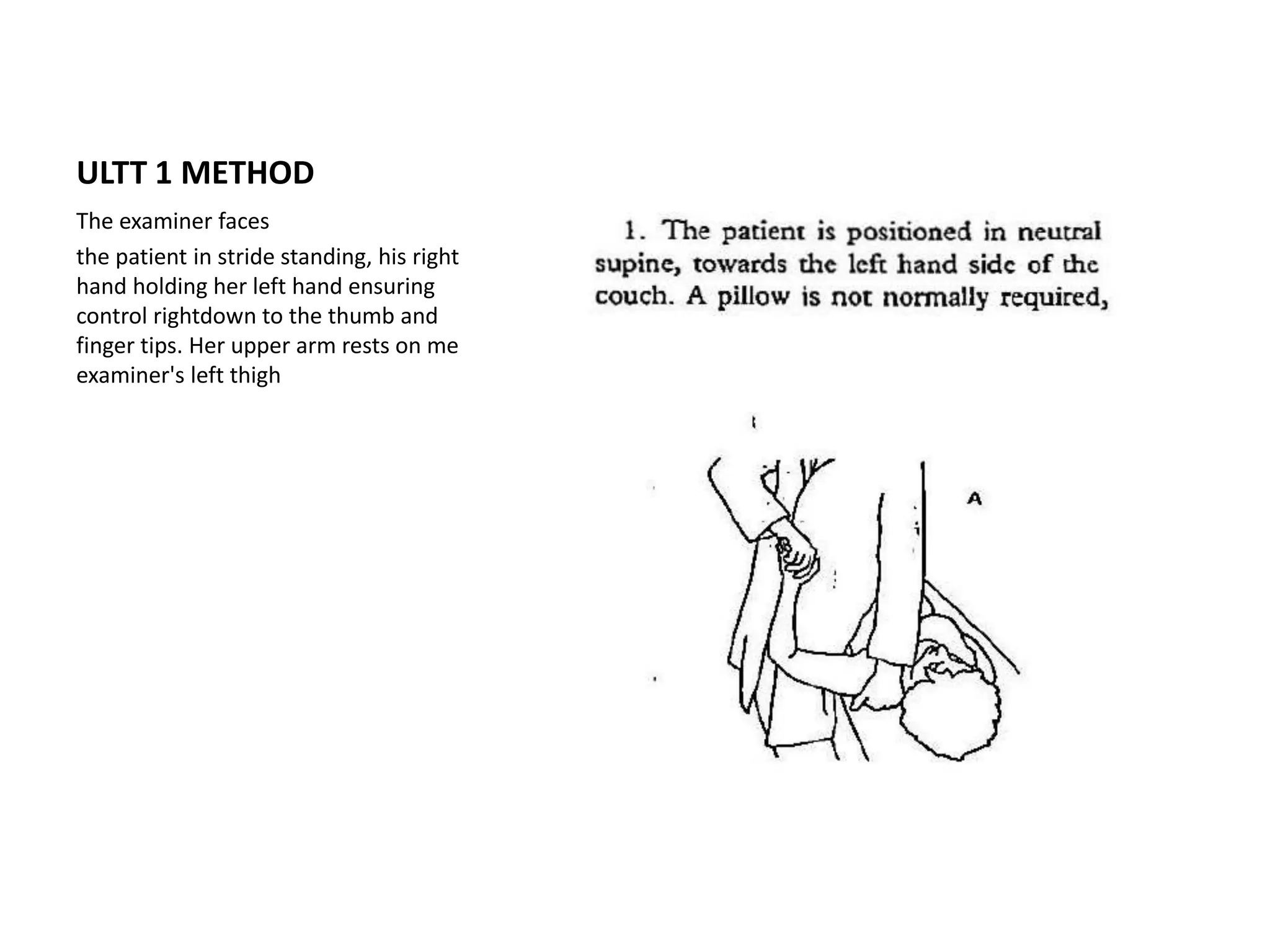
ULTT 1 METHOD
The examiner faces
the patient in stride standing, his right
hand holding her left hand ensuring
control rightdown to the thumb and
finger tips. Her upper arm rests on me
examiner's left thigh
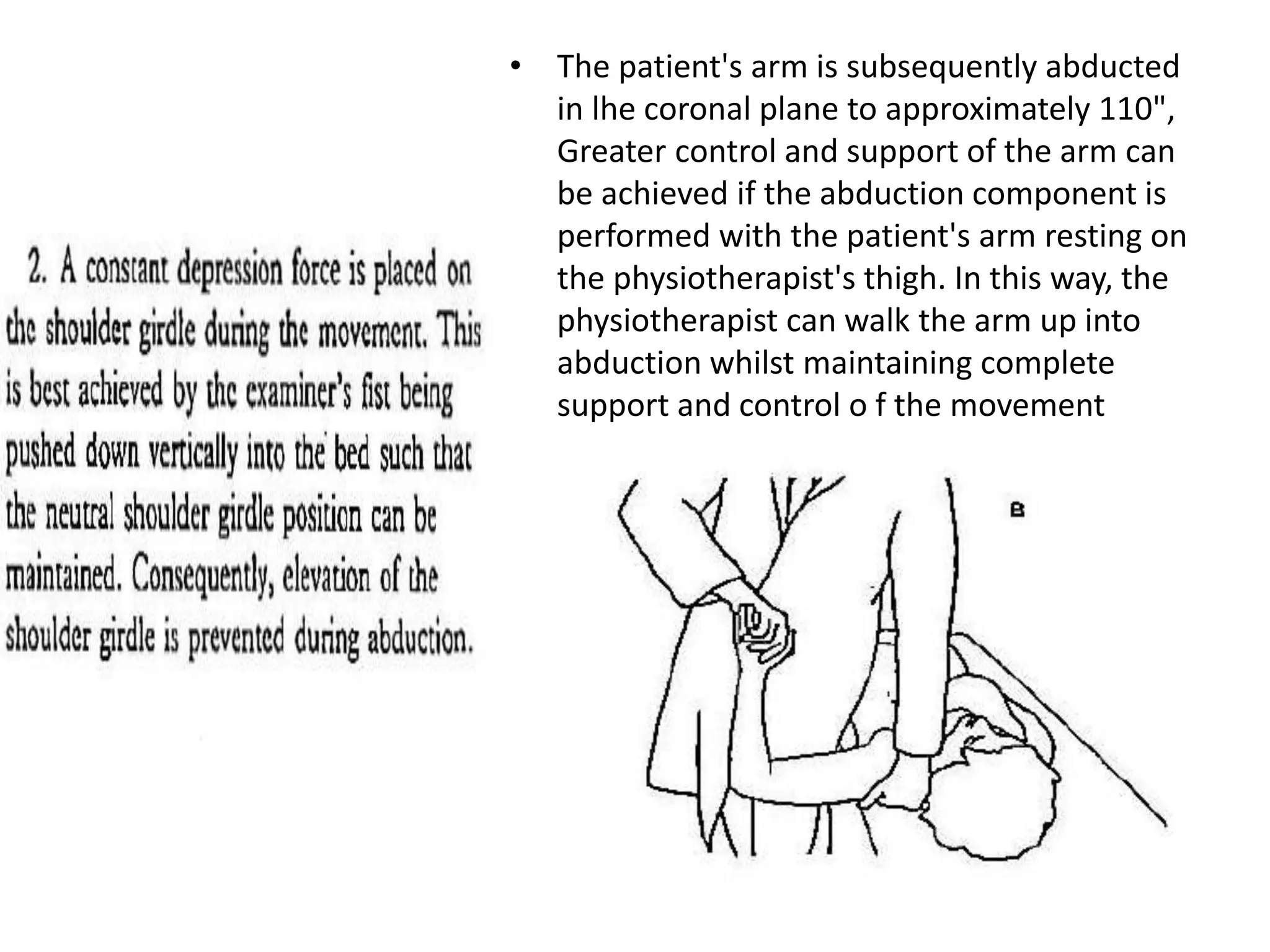
• The patient's arm is subsequently abducted
in lhe coronal plane to approximately 110",
Greater control and support of the arm can
be achieved if the abduction component is
performed with the patient's arm resting on
the physiotherapist's thigh. In this way, the
physiotherapist can walk the arm up into
abduction whilst maintaining complete
support and control o f the movement
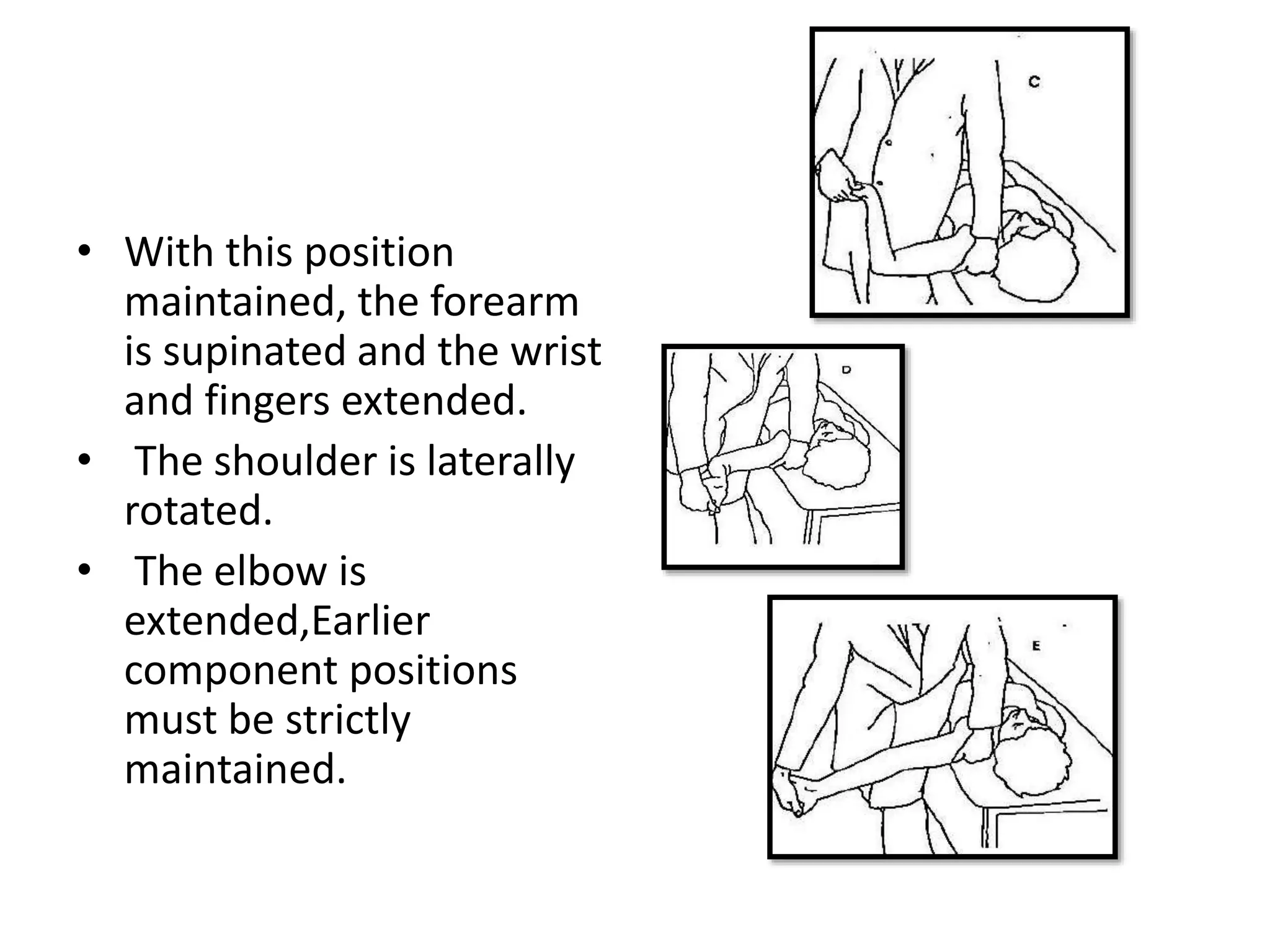
• With this position
maintained, the forearm
is supinated and the wrist
and fingers extended.
• The shoulder is laterally
rotated.
• The elbow is
extended,Earlier
component positions
must be strictly
maintained.
• With this position held,
cervical lateral flexion to the
left and then to the right arc
added. 'Keep looking at the
ceiling and take your car to
your shoulder' is a useful
command.
• The most important pan of the test, and
indeed of any tension test, is that once pan o f
the rest has been taken up. these positions
must be firmly maintained before the addition
of the next component. Symptoms and
symptom changes must be identified and
interpreted after each step.
• All alternative method of
handling
• In the second stage,
rather than maintaining
the shoulder girdle
depression by the
examiner's fist on the
bed. the physiotherapist
can place his left elbow
on the patient's shoulder
girdle with his forearm
along her upper ann.
Precautions
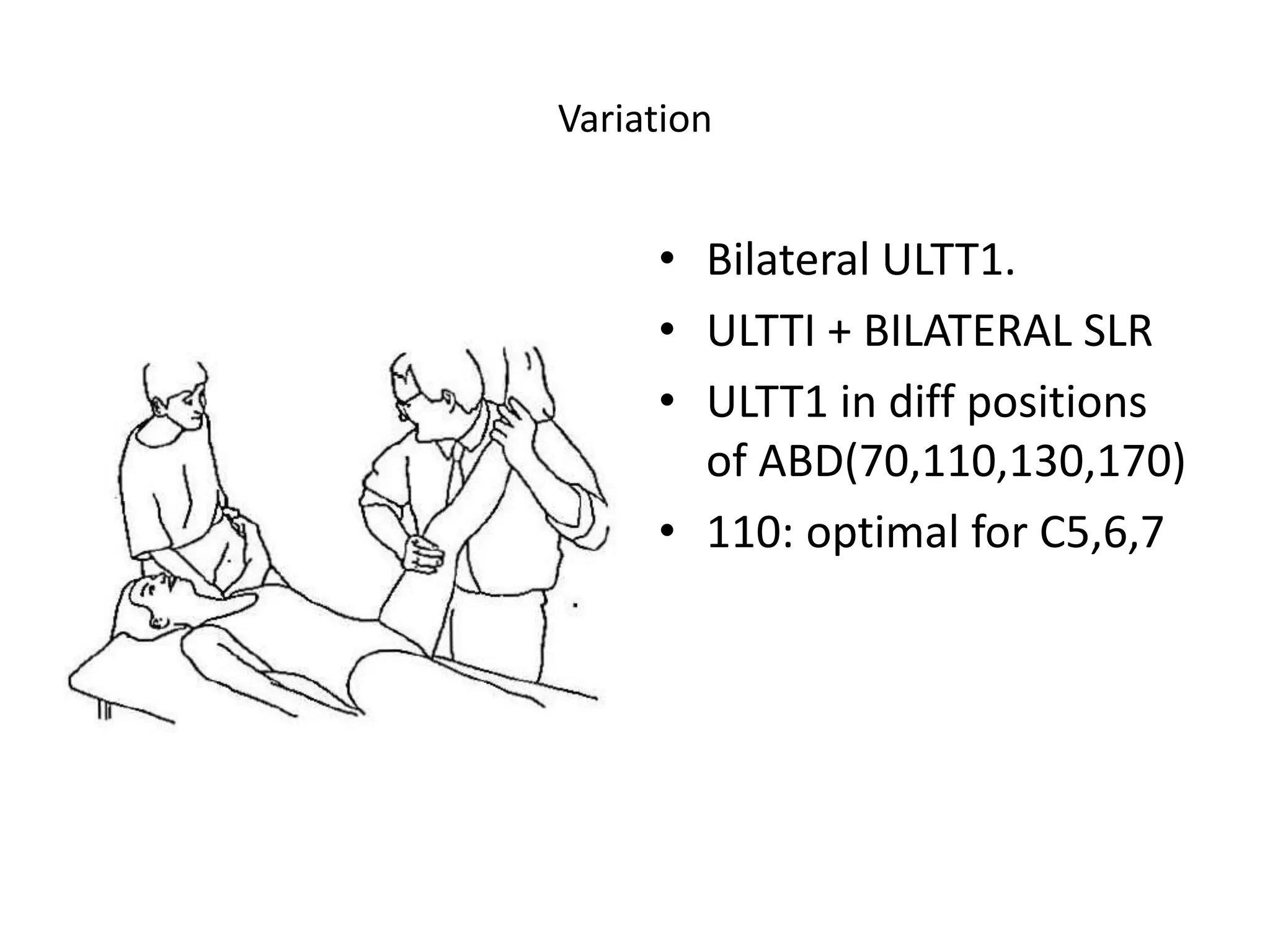
Variation
• Bilateral ULTT1.
• ULTTI + BILATERAL SLR
• ULTT1 in diff positions
of ABD(70,110,130,170)
• 110: optimal for C5,6,7
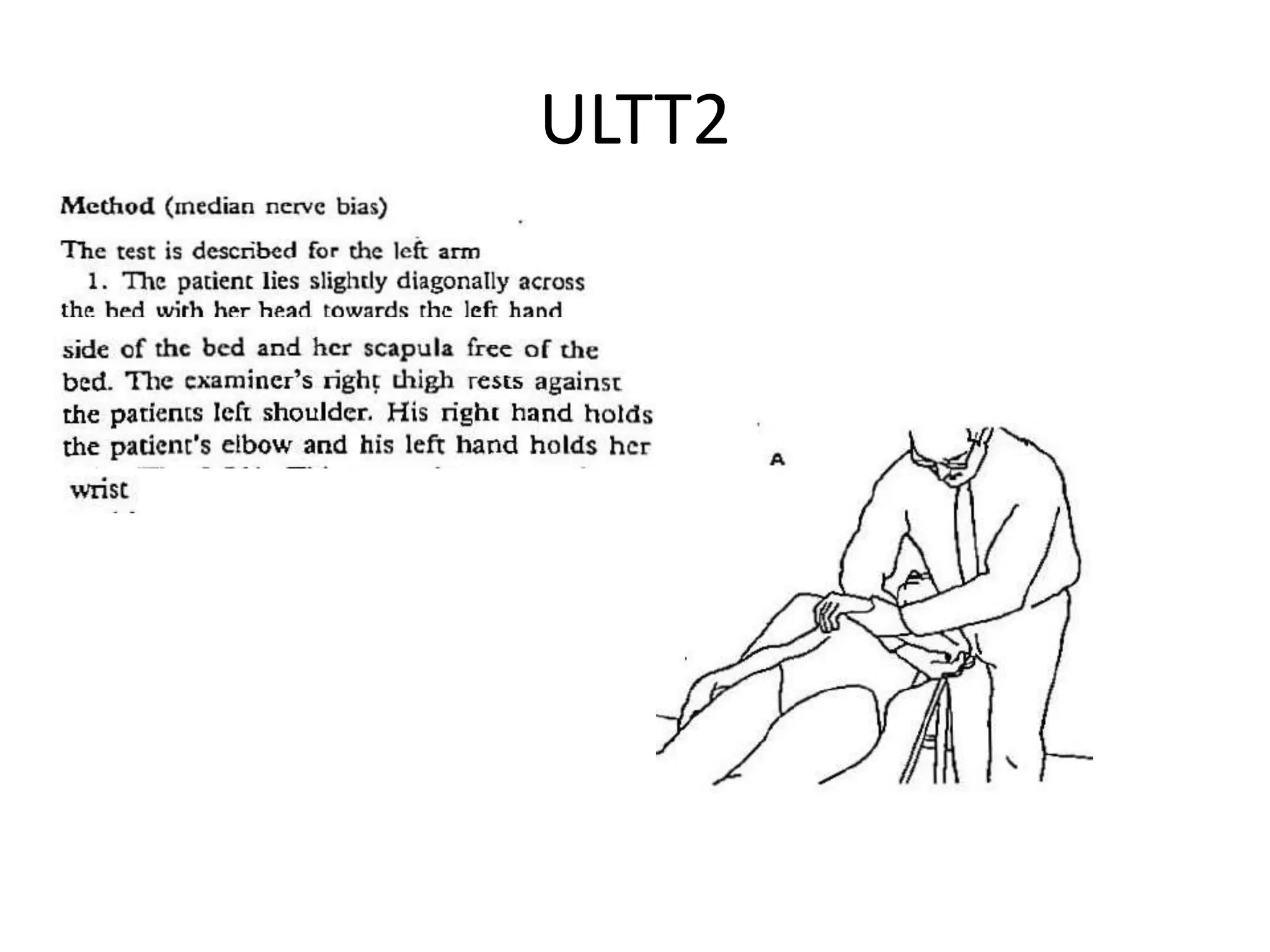
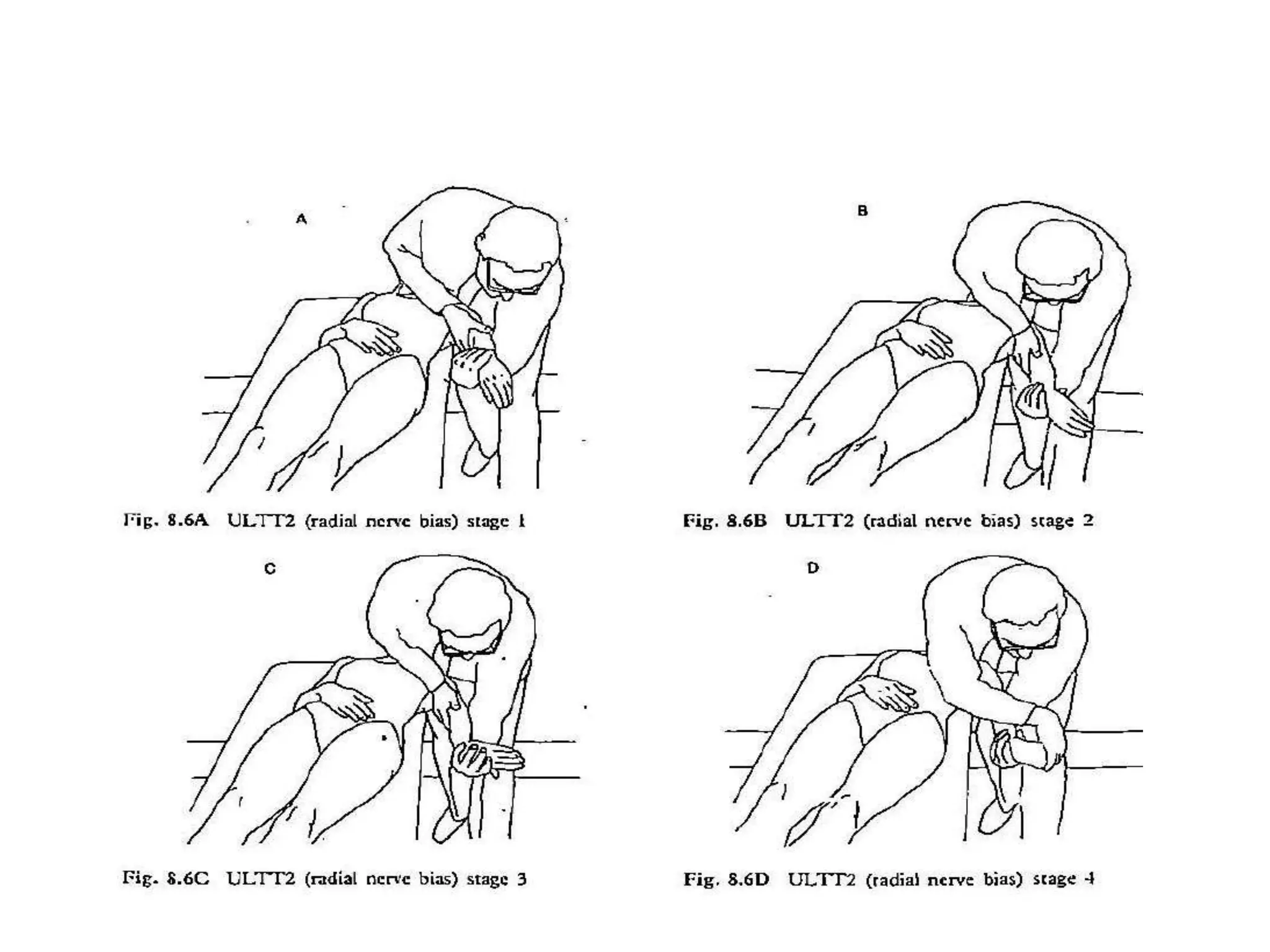
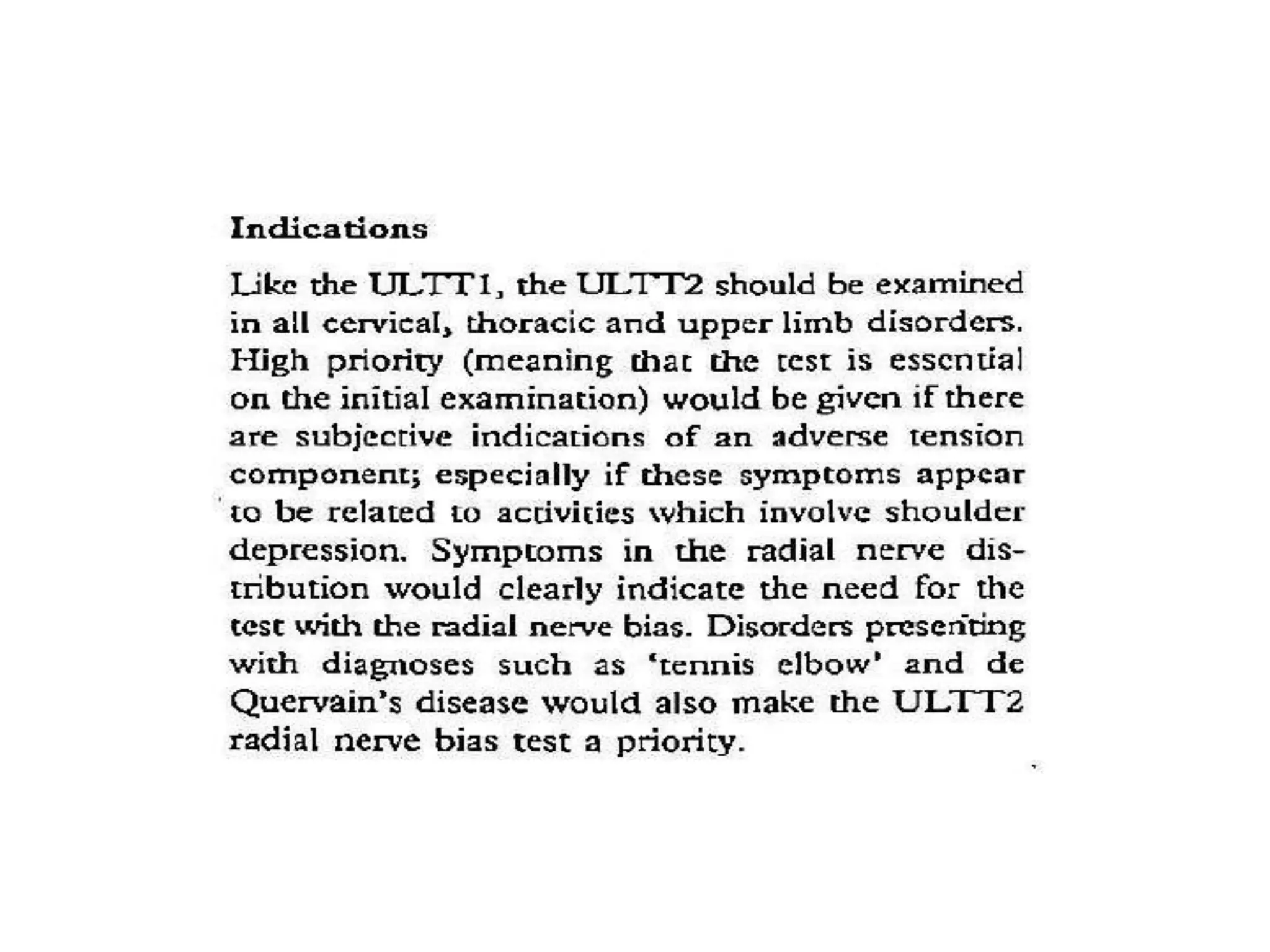
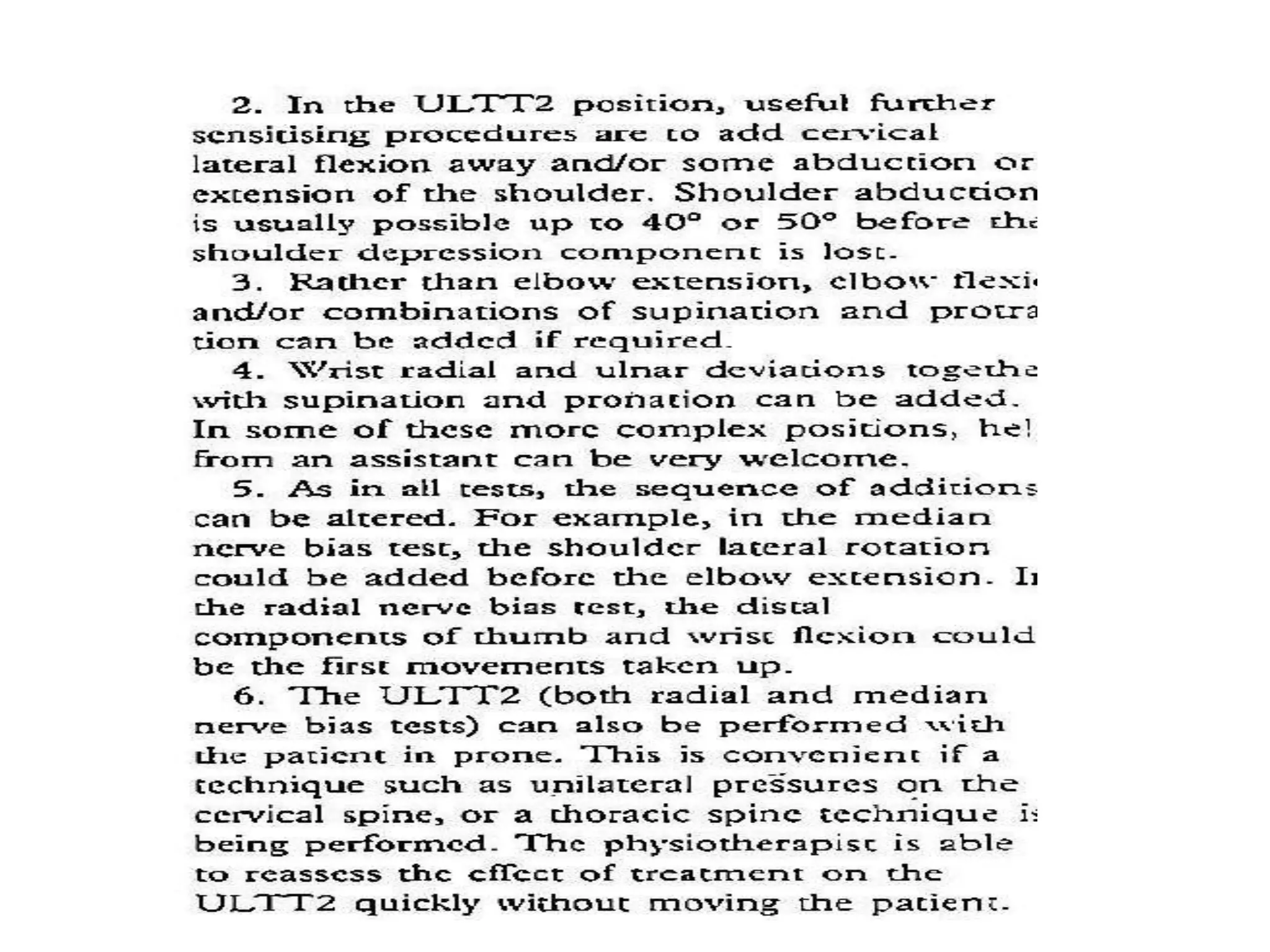
ULTT2
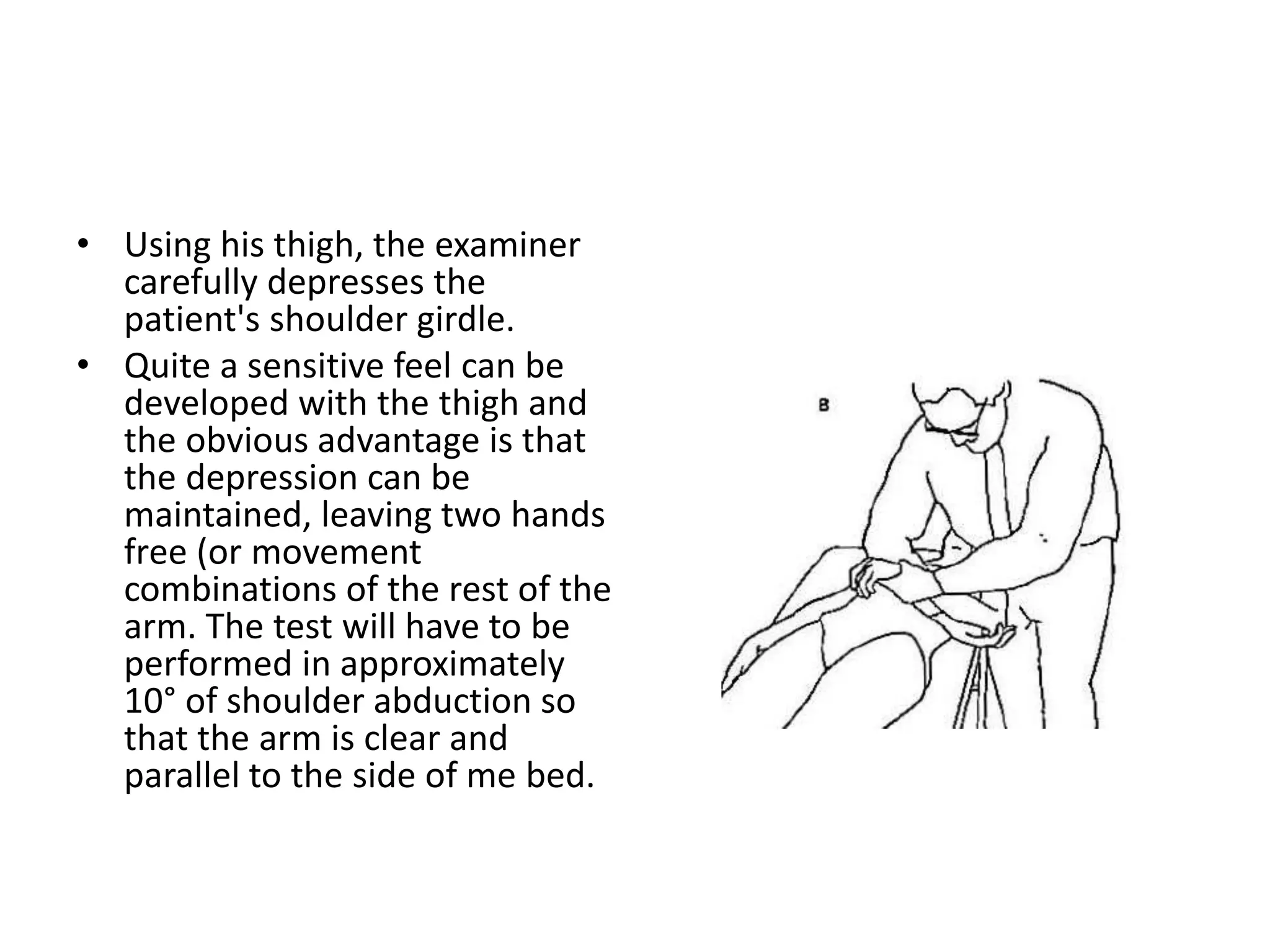
• Using his thigh, the examiner
carefully depresses the
patient's shoulder girdle.
• Quite a sensitive feel can be
developed with the thigh and
the obvious advantage is that
the depression can be
maintained, leaving two hands
free (or movement
combinations of the rest of the
arm. The test will have to be
performed in approximately
10° of shoulder abduction so
that the arm is clear and
parallel to the side of me bed.
• The shoulder depression
is maintained and then
the examiner
subsequently extends the
patient's elbow.
• The shoulder girdle
depression/elbow
extension position is
maintained and the
examiner, using both
arms; laterally rotates the
patient‘s whole arm
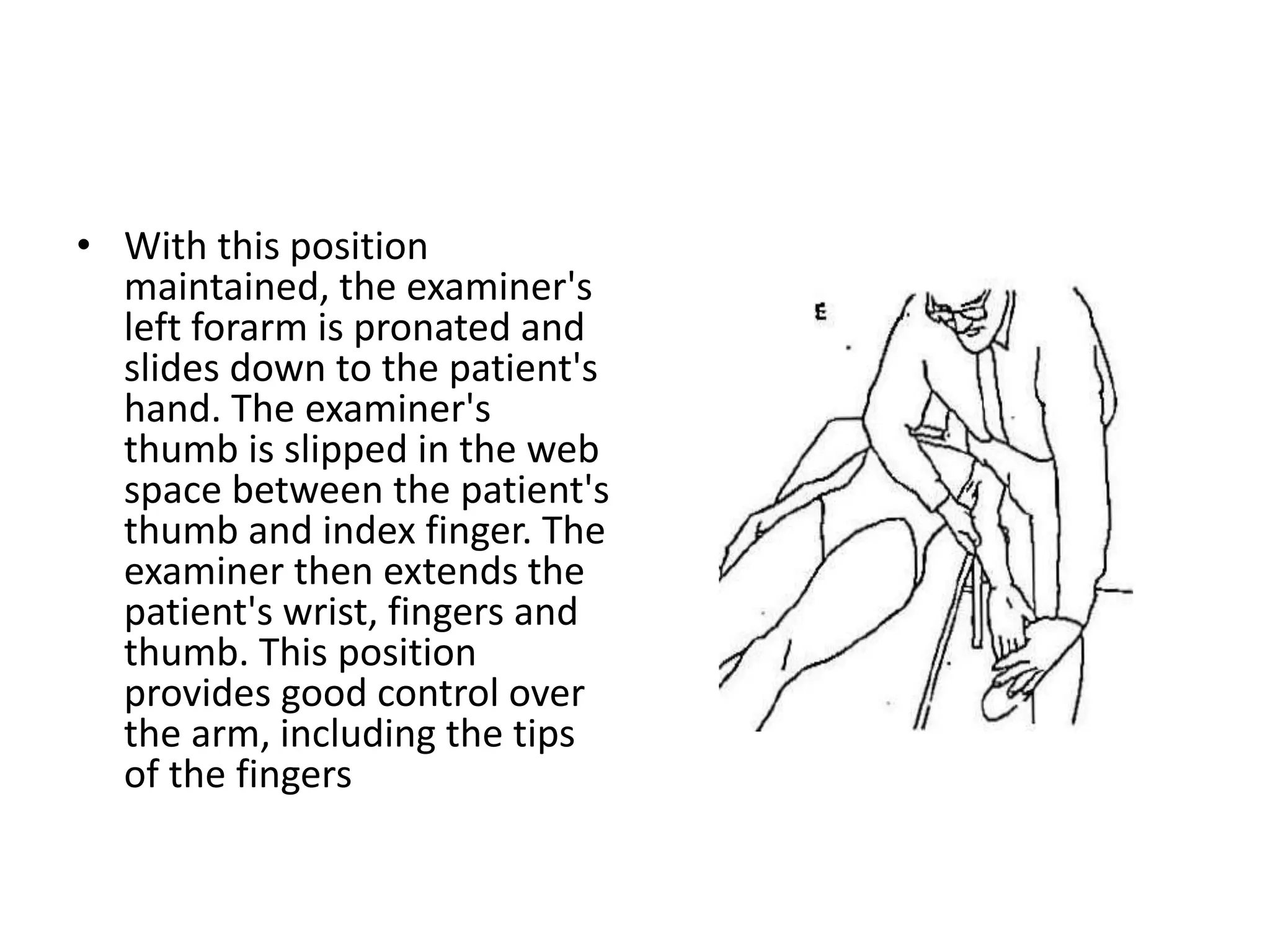
• With this position
maintained, the examiner's
left forarm is pronated and
slides down to the patient's
hand. The examiner's
thumb is slipped in the web
space between the patient's
thumb and index finger. The
examiner then extends the
patient's wrist, fingers and
thumb. This position
provides good control over
the arm, including the tips
of the fingers
• The most common
sensitising addition is
abduction of the
shoulder
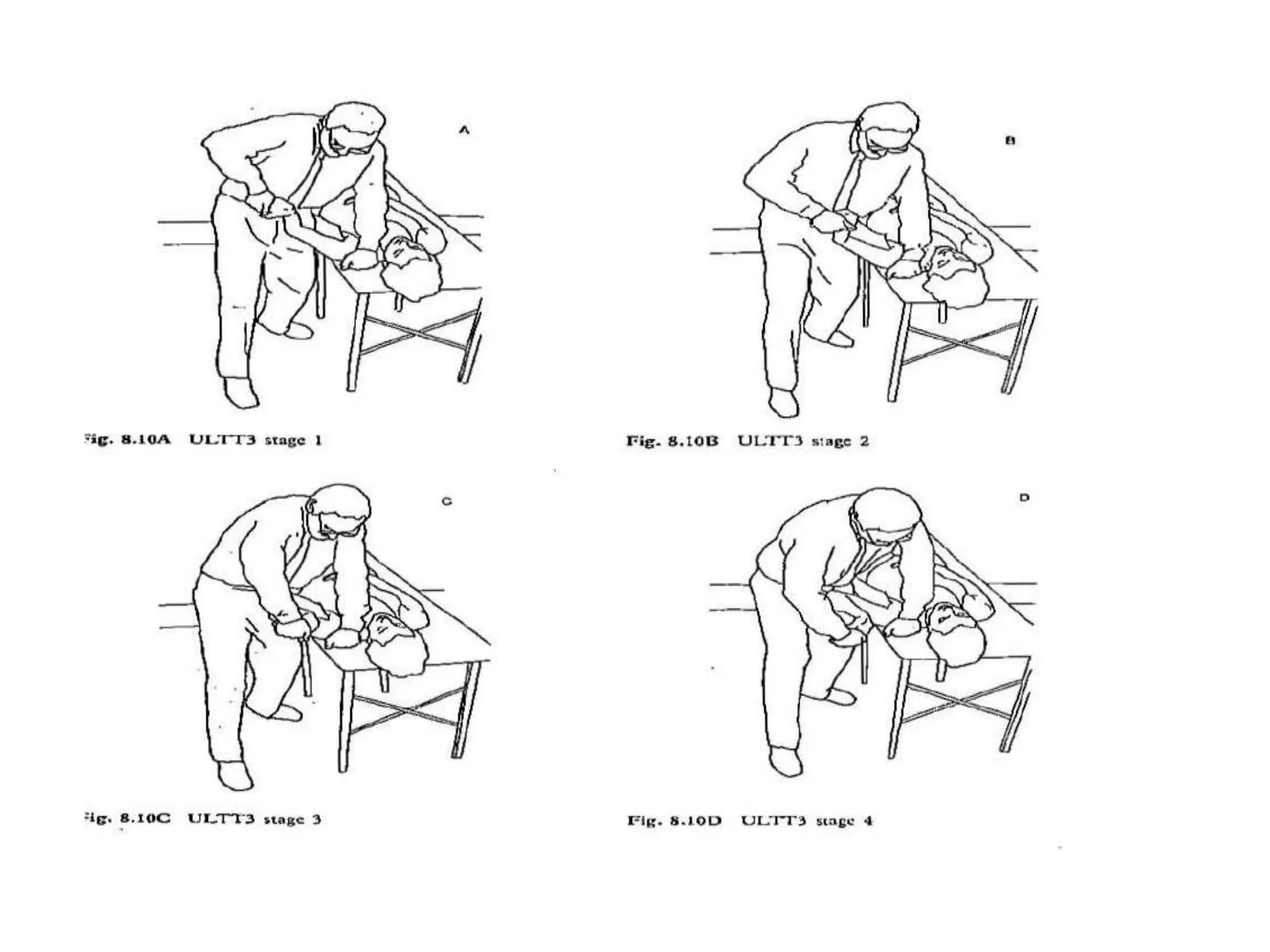
ULTT 3 (ULNAR NERVE BIAS)
• Method
• The patient and the physiotherapist are in me
same starring position as for ULTT. Note the
stride standing position of the physiotherapist,
such that the body can be used to make the
test a smooth flowing action with minimal
foot movements. The patient'S elbow is rested
just below the anterior superior iliac spine, in
the examiner's left groin
• ELBOW FLEXION TEST:
• Cubital tunnel
syndrome.

ULTT 26-03-2020.pptx

  • 1.
    UPPER LIMB TENSIONTEST Dr Ankit Pachori P.G Dept. of physiotherapy
  • 3.
    ULTT 1 METHOD Theexaminer faces the patient in stride standing, his right hand holding her left hand ensuring control rightdown to the thumb and finger tips. Her upper arm rests on me examiner's left thigh
  • 4.
    • The patient'sarm is subsequently abducted in lhe coronal plane to approximately 110", Greater control and support of the arm can be achieved if the abduction component is performed with the patient's arm resting on the physiotherapist's thigh. In this way, the physiotherapist can walk the arm up into abduction whilst maintaining complete support and control o f the movement
  • 5.
    • With thisposition maintained, the forearm is supinated and the wrist and fingers extended. • The shoulder is laterally rotated. • The elbow is extended,Earlier component positions must be strictly maintained.
  • 6.
    • With thisposition held, cervical lateral flexion to the left and then to the right arc added. 'Keep looking at the ceiling and take your car to your shoulder' is a useful command.
  • 7.
    • The mostimportant pan of the test, and indeed of any tension test, is that once pan o f the rest has been taken up. these positions must be firmly maintained before the addition of the next component. Symptoms and symptom changes must be identified and interpreted after each step.
  • 8.
    • All alternativemethod of handling • In the second stage, rather than maintaining the shoulder girdle depression by the examiner's fist on the bed. the physiotherapist can place his left elbow on the patient's shoulder girdle with his forearm along her upper ann.
  • 9.
  • 11.
    Variation • Bilateral ULTT1. •ULTTI + BILATERAL SLR • ULTT1 in diff positions of ABD(70,110,130,170) • 110: optimal for C5,6,7
  • 12.
  • 13.
    • Using histhigh, the examiner carefully depresses the patient's shoulder girdle. • Quite a sensitive feel can be developed with the thigh and the obvious advantage is that the depression can be maintained, leaving two hands free (or movement combinations of the rest of the arm. The test will have to be performed in approximately 10° of shoulder abduction so that the arm is clear and parallel to the side of me bed.
  • 14.
    • The shoulderdepression is maintained and then the examiner subsequently extends the patient's elbow. • The shoulder girdle depression/elbow extension position is maintained and the examiner, using both arms; laterally rotates the patient‘s whole arm
  • 15.
    • With thisposition maintained, the examiner's left forarm is pronated and slides down to the patient's hand. The examiner's thumb is slipped in the web space between the patient's thumb and index finger. The examiner then extends the patient's wrist, fingers and thumb. This position provides good control over the arm, including the tips of the fingers
  • 16.
    • The mostcommon sensitising addition is abduction of the shoulder
  • 21.
    ULTT 3 (ULNARNERVE BIAS) • Method • The patient and the physiotherapist are in me same starring position as for ULTT. Note the stride standing position of the physiotherapist, such that the body can be used to make the test a smooth flowing action with minimal foot movements. The patient'S elbow is rested just below the anterior superior iliac spine, in the examiner's left groin
  • 24.
    • ELBOW FLEXIONTEST: • Cubital tunnel syndrome.