Asexual vs. Sexual Reproduction
Asexual Reproduction A form of reproduction which does not involve meiosis or fertilization.  Involves one parent.  The primary form of reproduction for single-celled organisms such as archaea, bacteria, and protists. Many plants and fungi reproduce mostly asexually as well.
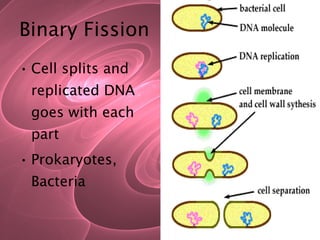
Binary Fission Cell splits and replicated DNA goes with each part Prokaryotes, Bacteria
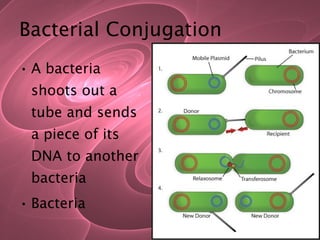
Bacterial Conjugation A bacteria shoots out a tube and sends a piece of its DNA to another bacteria Bacteria
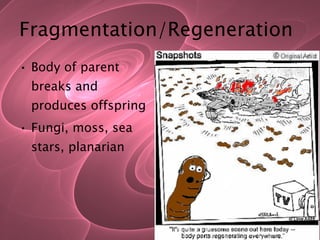
Fragmentation/Regeneration Body of parent breaks and produces offspring Fungi, moss, sea stars, planarian
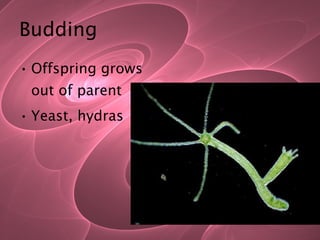
Budding Offspring grows out of parent Yeast, hydras
Sexual Reproduction Results in increasing genetic diversity of the offspring.  Characterized by two processes: meiosis, halving of the number of chromosomes fertilization, combination of two gametes and the restoration of the original number of chromosomes During meiosis, chromosomes usually cross over = genetic recombination. Primary method of reproduction for the vast majority of visible organisms, including almost all animals and plants.
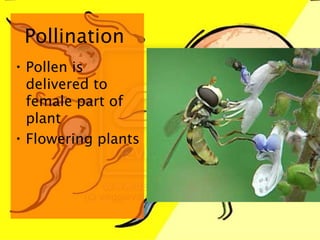
Pollination Pollen is delivered to female part of plant Flowering plants
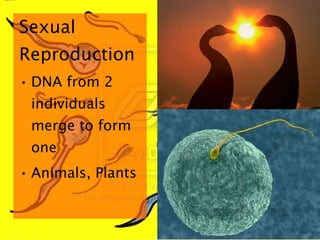
Sexual Reproduction DNA from 2 individuals merge to form one Animals, Plants
Mechanisms of Sexual Reproduction
External Fertilization Getting gametes together Eggs are shed by the female and fertilized by the male Requires an environment where an egg can develop without desiccation or heat stress    occurs almost exclusively in moist habitats Most fishes and amphibians
Internal Fertilization Getting gametes together Occurs when the sperm are deposited in (or nearby) the female reproductive tract; egg and sperm unite within the female’s body Requires cooperative behavior that makes copulation possible, as well as sophisticated reproductive systems
Protection of the Embryo External Fertilization Enormous numbers of zygotes produced; only a few survive Internal Fertilization Produces fewer zygotes wherein more survive Resistant eggs, development of embryo within the reproductive tract of female parent, parental protection of eggs

Asexual Vs Sexual Reproduction

  • 1.
    Asexual vs. SexualReproduction
  • 2.
    Asexual Reproduction Aform of reproduction which does not involve meiosis or fertilization. Involves one parent. The primary form of reproduction for single-celled organisms such as archaea, bacteria, and protists. Many plants and fungi reproduce mostly asexually as well.
  • 3.
    Binary Fission Cellsplits and replicated DNA goes with each part Prokaryotes, Bacteria
  • 4.
    Bacterial Conjugation Abacteria shoots out a tube and sends a piece of its DNA to another bacteria Bacteria
  • 5.
    Fragmentation/Regeneration Body ofparent breaks and produces offspring Fungi, moss, sea stars, planarian
  • 6.
    Budding Offspring growsout of parent Yeast, hydras
  • 7.
    Sexual Reproduction Resultsin increasing genetic diversity of the offspring. Characterized by two processes: meiosis, halving of the number of chromosomes fertilization, combination of two gametes and the restoration of the original number of chromosomes During meiosis, chromosomes usually cross over = genetic recombination. Primary method of reproduction for the vast majority of visible organisms, including almost all animals and plants.
  • 8.
    Pollination Pollen isdelivered to female part of plant Flowering plants
  • 9.
    Sexual Reproduction DNAfrom 2 individuals merge to form one Animals, Plants
  • 10.
  • 11.
    External Fertilization Gettinggametes together Eggs are shed by the female and fertilized by the male Requires an environment where an egg can develop without desiccation or heat stress  occurs almost exclusively in moist habitats Most fishes and amphibians
  • 12.
    Internal Fertilization Gettinggametes together Occurs when the sperm are deposited in (or nearby) the female reproductive tract; egg and sperm unite within the female’s body Requires cooperative behavior that makes copulation possible, as well as sophisticated reproductive systems
  • 13.
    Protection of theEmbryo External Fertilization Enormous numbers of zygotes produced; only a few survive Internal Fertilization Produces fewer zygotes wherein more survive Resistant eggs, development of embryo within the reproductive tract of female parent, parental protection of eggs