REPRODUCTION: THE
CONTINUITY OF LIFE
LET’S ASSESS
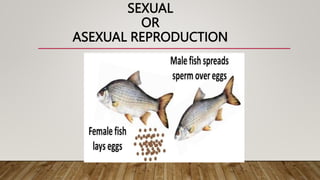
SEXUAL
OR
ASEXUAL REPRODUCTION
SEXUAL
OR
ASEXUAL REPRODUCTION
SEXUAL
OR
ASEXUAL REPRODUCTION
SEXUAL
OR
ASEXUAL REPRODUCTION
Follow-up questions:
1.Do all Living things reproduce?
2. Why is reproduction important?
Activity Time
OBJECTIVES:
•Differentiate asexual from sexual reproduction in
terms of:
1.Number of individuals involved
2.Similarities of offspring to parents.
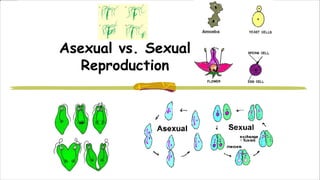
Asexual vs. Sexual
Reproduction
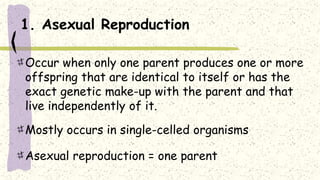
Occur when only one parent produces one or more
offspring that are identical to itself or has the
exact genetic make-up with the parent and that
live independently of it.
Mostly occurs in single-celled organisms
Asexual reproduction = one parent
1. Asexual Reproduction
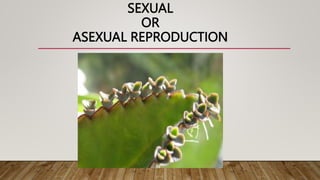
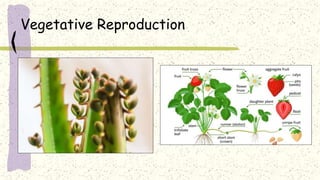
Vegetative Reproduction
A. Vegetative Reproduction
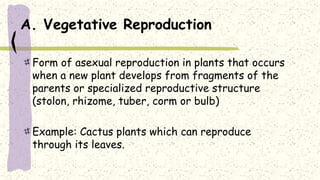
Form of asexual reproduction in plants that occurs
when a new plant develops from fragments of the
parents or specialized reproductive structure
(stolon, rhizome, tuber, corm or bulb)
Example: Cactus plants which can reproduce
through its leaves.
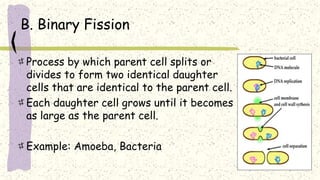
B. Binary Fission
Process by which parent cell splits or
divides to form two identical daughter
cells that are identical to the parent cell.
Each daughter cell grows until it becomes
as large as the parent cell.
Example: Amoeba, Bacteria
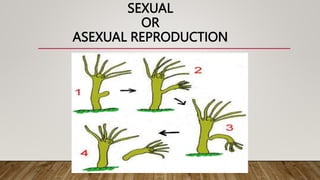
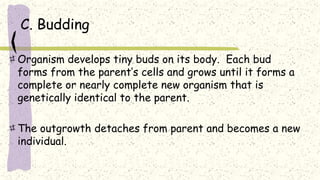
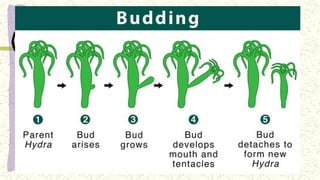
C. Budding
Organism develops tiny buds on its body. Each bud
forms from the parent’s cells and grows until it forms a
complete or nearly complete new organism that is
genetically identical to the parent.
The outgrowth detaches from parent and becomes a new
individual.
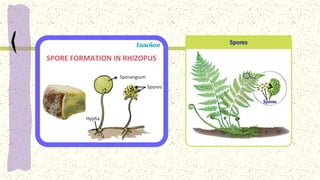
D. Spore Formation
Spores are stored in sacs called sporangia.
When sporangia burst open; minute single-celled
structures called spores are released.
Under favorable conditions, these spores develop
into new identical organism.
Example: Bread Mold
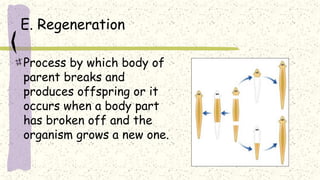
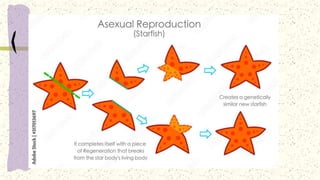
E. Regeneration
Process by which body of
parent breaks and
produces offspring or it
occurs when a body part
has broken off and the
organism grows a new one.
2. Sexual Reproduction
Involves the merging of genetic
information from two individual
parents to produce a new organism
that is a combination of both
parents.
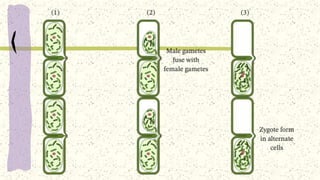
A. Conjugation
This type of sexual reproduction occurs when two
organisms of the same species temporarily unite
to merge one organism’s contents, along with its
genetic material, with the other.
One organism is left with an empty shell while the
other becomes a new individual.
Example: Spirogyra (green alga)
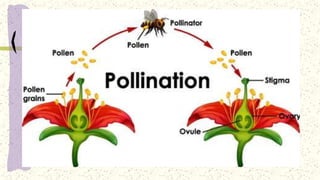
B. Pollination
Combines the male and female gametes of a
flower and it happens when a pollen grain of the
right kind lands on the stigma of the pistil.
Example: bees transfer pollen of a male flower
to the female flower.
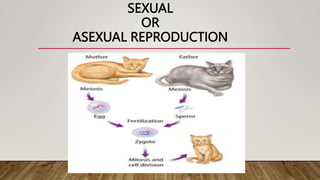
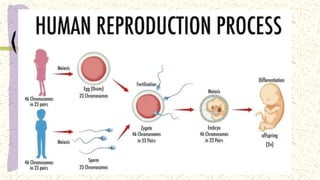
C. Fertilization
A type of sexual reproduction that combines the
male and female gametes of an organism to form a
zygote.
Example: Humans reproduce through
fertilization.
asexual Reproduction.pptx

asexual Reproduction.pptx

  • 1.
  • 2.
  • 3.
  • 4.
  • 5.
  • 6.
  • 7.
    Follow-up questions: 1.Do allLiving things reproduce? 2. Why is reproduction important?
  • 8.
  • 9.
    OBJECTIVES: •Differentiate asexual fromsexual reproduction in terms of: 1.Number of individuals involved 2.Similarities of offspring to parents.
  • 10.
  • 11.
    Occur when onlyone parent produces one or more offspring that are identical to itself or has the exact genetic make-up with the parent and that live independently of it. Mostly occurs in single-celled organisms Asexual reproduction = one parent 1. Asexual Reproduction
  • 12.
  • 13.
    A. Vegetative Reproduction Formof asexual reproduction in plants that occurs when a new plant develops from fragments of the parents or specialized reproductive structure (stolon, rhizome, tuber, corm or bulb) Example: Cactus plants which can reproduce through its leaves.
  • 14.
    B. Binary Fission Processby which parent cell splits or divides to form two identical daughter cells that are identical to the parent cell. Each daughter cell grows until it becomes as large as the parent cell. Example: Amoeba, Bacteria
  • 15.
    C. Budding Organism developstiny buds on its body. Each bud forms from the parent’s cells and grows until it forms a complete or nearly complete new organism that is genetically identical to the parent. The outgrowth detaches from parent and becomes a new individual.
  • 18.
    D. Spore Formation Sporesare stored in sacs called sporangia. When sporangia burst open; minute single-celled structures called spores are released. Under favorable conditions, these spores develop into new identical organism. Example: Bread Mold
  • 19.
    E. Regeneration Process bywhich body of parent breaks and produces offspring or it occurs when a body part has broken off and the organism grows a new one.
  • 21.
    2. Sexual Reproduction Involvesthe merging of genetic information from two individual parents to produce a new organism that is a combination of both parents.
  • 22.
    A. Conjugation This typeof sexual reproduction occurs when two organisms of the same species temporarily unite to merge one organism’s contents, along with its genetic material, with the other. One organism is left with an empty shell while the other becomes a new individual. Example: Spirogyra (green alga)
  • 24.
    B. Pollination Combines themale and female gametes of a flower and it happens when a pollen grain of the right kind lands on the stigma of the pistil. Example: bees transfer pollen of a male flower to the female flower.
  • 26.
    C. Fertilization A typeof sexual reproduction that combines the male and female gametes of an organism to form a zygote. Example: Humans reproduce through fertilization.