
Artificial Intelligence (AI) and Ethics
Dr. A. Prabaharan
Professor & Research Director,
Public Action
www.indopraba.blogspot.com
AI & Ethics
AI and ethics intersect in
numerous ways, raising
profound questions about
values, morals, and
societal norms.
Here are several key
aspects of the relationship
between AI and ethics
www.indopraba.blogspot.com
Bias and Fairness
AI systems can exhibit biases, reflecting
and sometimes exacerbating existing
societal prejudices present in the data
used to train them.
 Addressing bias and ensuring fairness in
AI algorithms is essential to prevent
discrimination and promote equity and
justice in decision-making processes.
www.indopraba.blogspot.com
Transparency and Accountability
 AI systems often operate as black boxes,
making it challenging to understand their
decision-making processes and hold them
accountable for their actions.
 Ensuring transparency and accountability in
AI systems is critical for fostering trust,
enabling oversight, and mitigating potential
harms arising from AI-driven decisions.
www.indopraba.blogspot.com
Privacy and Data Protection
 AI technologies rely on vast amounts of
data, raising concerns about data privacy,
consent, and security.
 Respecting individuals' privacy rights and
protecting sensitive information from
unauthorized access or misuse is essential
to build trust and maintain ethical
standards in AI applications
www.indopraba.blogspot.com
Autonomy and Human Agency
 AI systems can influence and shape human
behavior, raising questions about autonomy, free
will, and human agency.
 Ensuring that AI technologies respect and
empower individuals' autonomy, rather than
undermining it, is crucial for preserving human
dignity and moral responsibility in AI-driven
environments.
www.indopraba.blogspot.com
Safety and Risk Management
AI technologies pose safety and security risks,
including the potential for accidents, errors,
and unintended consequences.
Managing risks associated with AI deployment
requires ethical considerations, risk
assessments, and safeguards to protect
individuals, communities, and the
environment from harm.
www.indopraba.blogspot.com
Accountability and Legal Liability
 Determining accountability and legal liability
for AI-related harms is challenging due to
complex supply chains, decentralized
decision-making, and unclear legal
responsibilities.
 Establishing clear lines of accountability and
legal frameworks for AI-related liabilities is
essential to ensure that those responsible for
AI systems' actions are held accountable for
their consequences.
www.indopraba.blogspot.com
Equity and Social Justice
 AI technologies have the potential to
exacerbate existing inequalities and social
injustices, particularly if deployed without
careful consideration of their societal
impacts.
 Promoting equity and social justice in AI
development and deployment requires
proactive measures to address systemic
biases, ensure inclusivity, and mitigate
disparities in access to AI benefits.
www.indopraba.blogspot.com
Human-Centric Design and Value Alignment
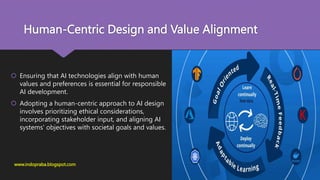
 Ensuring that AI technologies align with human
values and preferences is essential for responsible
AI development.
 Adopting a human-centric approach to AI design
involves prioritizing ethical considerations,
incorporating stakeholder input, and aligning AI
systems' objectives with societal goals and values.
www.indopraba.blogspot.com
End Note
 Overall, addressing ethical considerations
in AI requires interdisciplinary
collaboration, stakeholder engagement,
and ongoing dialogue to navigate complex
moral dilemmas, promote ethical behavior,
and ensure that AI technologies serve the
common good and contribute to human
flourishing.
www.indopraba.blogspot.com

Artificial Intelligence (AI) and Ethics.pptx

  • 1.
    Artificial Intelligence (AI)and Ethics Dr. A. Prabaharan Professor & Research Director, Public Action www.indopraba.blogspot.com
  • 2.
    AI & Ethics AIand ethics intersect in numerous ways, raising profound questions about values, morals, and societal norms. Here are several key aspects of the relationship between AI and ethics www.indopraba.blogspot.com
  • 3.
    Bias and Fairness AIsystems can exhibit biases, reflecting and sometimes exacerbating existing societal prejudices present in the data used to train them.  Addressing bias and ensuring fairness in AI algorithms is essential to prevent discrimination and promote equity and justice in decision-making processes. www.indopraba.blogspot.com
  • 4.
    Transparency and Accountability AI systems often operate as black boxes, making it challenging to understand their decision-making processes and hold them accountable for their actions.  Ensuring transparency and accountability in AI systems is critical for fostering trust, enabling oversight, and mitigating potential harms arising from AI-driven decisions. www.indopraba.blogspot.com
  • 5.
    Privacy and DataProtection  AI technologies rely on vast amounts of data, raising concerns about data privacy, consent, and security.  Respecting individuals' privacy rights and protecting sensitive information from unauthorized access or misuse is essential to build trust and maintain ethical standards in AI applications www.indopraba.blogspot.com
  • 6.
    Autonomy and HumanAgency  AI systems can influence and shape human behavior, raising questions about autonomy, free will, and human agency.  Ensuring that AI technologies respect and empower individuals' autonomy, rather than undermining it, is crucial for preserving human dignity and moral responsibility in AI-driven environments. www.indopraba.blogspot.com
  • 7.
    Safety and RiskManagement AI technologies pose safety and security risks, including the potential for accidents, errors, and unintended consequences. Managing risks associated with AI deployment requires ethical considerations, risk assessments, and safeguards to protect individuals, communities, and the environment from harm. www.indopraba.blogspot.com
  • 8.
    Accountability and LegalLiability  Determining accountability and legal liability for AI-related harms is challenging due to complex supply chains, decentralized decision-making, and unclear legal responsibilities.  Establishing clear lines of accountability and legal frameworks for AI-related liabilities is essential to ensure that those responsible for AI systems' actions are held accountable for their consequences. www.indopraba.blogspot.com
  • 9.
    Equity and SocialJustice  AI technologies have the potential to exacerbate existing inequalities and social injustices, particularly if deployed without careful consideration of their societal impacts.  Promoting equity and social justice in AI development and deployment requires proactive measures to address systemic biases, ensure inclusivity, and mitigate disparities in access to AI benefits. www.indopraba.blogspot.com
  • 10.
    Human-Centric Design andValue Alignment  Ensuring that AI technologies align with human values and preferences is essential for responsible AI development.  Adopting a human-centric approach to AI design involves prioritizing ethical considerations, incorporating stakeholder input, and aligning AI systems' objectives with societal goals and values. www.indopraba.blogspot.com
  • 11.
    End Note  Overall,addressing ethical considerations in AI requires interdisciplinary collaboration, stakeholder engagement, and ongoing dialogue to navigate complex moral dilemmas, promote ethical behavior, and ensure that AI technologies serve the common good and contribute to human flourishing.
  • 12.