



Artificial Intelligence (AI) & Ethics
DR. A. PRABAHARAN
PROFESSOR & RESEARCH DIRECTOR
PUBLIC ACTION
AI & Ethics
 The ethical considerations surrounding
the development, deployment, and use
of Artificial Intelligence (AI) are critical to
ensuring that AI technologies benefit
society responsibly and without causing
harm.
 Here are key aspects of AI and ethics
www.indopraba.blogspot.com
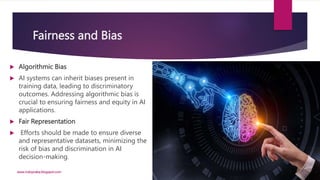
Fairness and Bias
 Algorithmic Bias
 AI systems can inherit biases present in
training data, leading to discriminatory
outcomes. Addressing algorithmic bias is
crucial to ensuring fairness and equity in AI
applications.
 Fair Representation
 Efforts should be made to ensure diverse
and representative datasets, minimizing the
risk of bias and discrimination in AI
decision-making.
www.indopraba.blogspot.com
Transparency and Explainability
 Explainable AI (XAI)
 The opacity of many AI algorithms raises concerns
about accountability. Efforts are underway to
develop AI systems that are more transparent and
capable of explaining their decisions in a human-
understandable manner.
 Understanding AI Decisions
 Ensuring that individuals and stakeholders can
understand how AI systems reach specific decisions
is important for accountability and trust.
www.indopraba.blogspot.com
Privacy and Data Protection
 Informed Consent
Obtaining informed consent from individuals before
collecting and processing their data is a fundamental
ethical principle. Users should be aware of how their
data will be used in AI applications.
 Secure Handling of Data
AI developers and organizations must prioritize the
secure handling and storage of data, protecting user
privacy throughout the AI lifecycle.
www.indopraba.blogspot.com
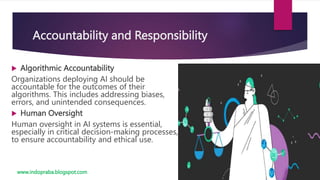
Accountability and Responsibility
 Algorithmic Accountability
Organizations deploying AI should be
accountable for the outcomes of their
algorithms. This includes addressing biases,
errors, and unintended consequences.
 Human Oversight
Human oversight in AI systems is essential,
especially in critical decision-making processes,
to ensure accountability and ethical use.
www.indopraba.blogspot.com
Robustness and Safety
 Ethical Design Principles
AI systems should be designed with a focus on safety
and robustness to prevent unintended consequences
or malicious use. Ethical considerations should be
integrated into the design process.
 Risk Assessment
Assessing the potential risks and impacts of AI
systems, including their effects on society and
individuals, is essential for responsible deployment.
www.indopraba.blogspot.com
Collaboration and Interdisciplinary Approaches
 Multi-Stakeholder Collaboration
Ethical AI development requires collaboration
among technologists, ethicists, policymakers, and
other stakeholders. A multidisciplinary approach
helps address diverse perspectives and concerns.
 Ethics Committees
Organizations may establish ethics committees or
boards to provide guidance on ethical
considerations and ensure responsible AI practices.
www.indopraba.blogspot.com
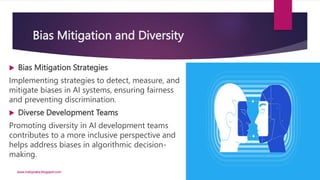
Bias Mitigation and Diversity
 Bias Mitigation Strategies
Implementing strategies to detect, measure, and
mitigate biases in AI systems, ensuring fairness
and preventing discrimination.
 Diverse Development Teams
Promoting diversity in AI development teams
contributes to a more inclusive perspective and
helps address biases in algorithmic decision-
making.
www.indopraba.blogspot.com
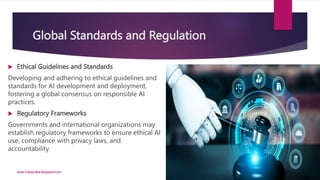
Global Standards and Regulation
 Ethical Guidelines and Standards
Developing and adhering to ethical guidelines and
standards for AI development and deployment,
fostering a global consensus on responsible AI
practices.
 Regulatory Frameworks
Governments and international organizations may
establish regulatory frameworks to ensure ethical AI
use, compliance with privacy laws, and
accountability.
www.indopraba.blogspot.com
Future Trends
 Continued Ethical Education
Ongoing education and awareness initiatives to promote ethical
considerations in AI development and use.
 Ethical AI Certification
The emergence of ethical AI certification or labeling programs to
identify AI systems that adhere to established ethical standards.
 Integration of Values in AI Design
A focus on integrating human values and ethical principles into
the design process of AI systems from the outset.
www.indopraba.blogspot.com
End Note
 The ethical considerations in AI are dynamic and
evolving, requiring ongoing attention and
collaboration to navigate the ethical challenges and
opportunities presented by artificial intelligence.
 Addressing these ethical concerns is fundamental to
fostering trust, ensuring responsible AI
development, and maximizing the positive impact
of AI on society.
www.indopraba.blogspot.com

Artificial Intelligence (AI) & Ethics.pptx

  • 1.
    Artificial Intelligence (AI)& Ethics DR. A. PRABAHARAN PROFESSOR & RESEARCH DIRECTOR PUBLIC ACTION
  • 2.
    AI & Ethics The ethical considerations surrounding the development, deployment, and use of Artificial Intelligence (AI) are critical to ensuring that AI technologies benefit society responsibly and without causing harm.  Here are key aspects of AI and ethics www.indopraba.blogspot.com
  • 3.
    Fairness and Bias Algorithmic Bias  AI systems can inherit biases present in training data, leading to discriminatory outcomes. Addressing algorithmic bias is crucial to ensuring fairness and equity in AI applications.  Fair Representation  Efforts should be made to ensure diverse and representative datasets, minimizing the risk of bias and discrimination in AI decision-making. www.indopraba.blogspot.com
  • 4.
    Transparency and Explainability Explainable AI (XAI)  The opacity of many AI algorithms raises concerns about accountability. Efforts are underway to develop AI systems that are more transparent and capable of explaining their decisions in a human- understandable manner.  Understanding AI Decisions  Ensuring that individuals and stakeholders can understand how AI systems reach specific decisions is important for accountability and trust. www.indopraba.blogspot.com
  • 5.
    Privacy and DataProtection  Informed Consent Obtaining informed consent from individuals before collecting and processing their data is a fundamental ethical principle. Users should be aware of how their data will be used in AI applications.  Secure Handling of Data AI developers and organizations must prioritize the secure handling and storage of data, protecting user privacy throughout the AI lifecycle. www.indopraba.blogspot.com
  • 6.
    Accountability and Responsibility Algorithmic Accountability Organizations deploying AI should be accountable for the outcomes of their algorithms. This includes addressing biases, errors, and unintended consequences.  Human Oversight Human oversight in AI systems is essential, especially in critical decision-making processes, to ensure accountability and ethical use. www.indopraba.blogspot.com
  • 7.
    Robustness and Safety Ethical Design Principles AI systems should be designed with a focus on safety and robustness to prevent unintended consequences or malicious use. Ethical considerations should be integrated into the design process.  Risk Assessment Assessing the potential risks and impacts of AI systems, including their effects on society and individuals, is essential for responsible deployment. www.indopraba.blogspot.com
  • 8.
    Collaboration and InterdisciplinaryApproaches  Multi-Stakeholder Collaboration Ethical AI development requires collaboration among technologists, ethicists, policymakers, and other stakeholders. A multidisciplinary approach helps address diverse perspectives and concerns.  Ethics Committees Organizations may establish ethics committees or boards to provide guidance on ethical considerations and ensure responsible AI practices. www.indopraba.blogspot.com
  • 9.
    Bias Mitigation andDiversity  Bias Mitigation Strategies Implementing strategies to detect, measure, and mitigate biases in AI systems, ensuring fairness and preventing discrimination.  Diverse Development Teams Promoting diversity in AI development teams contributes to a more inclusive perspective and helps address biases in algorithmic decision- making. www.indopraba.blogspot.com
  • 10.
    Global Standards andRegulation  Ethical Guidelines and Standards Developing and adhering to ethical guidelines and standards for AI development and deployment, fostering a global consensus on responsible AI practices.  Regulatory Frameworks Governments and international organizations may establish regulatory frameworks to ensure ethical AI use, compliance with privacy laws, and accountability. www.indopraba.blogspot.com
  • 11.
    Future Trends  ContinuedEthical Education Ongoing education and awareness initiatives to promote ethical considerations in AI development and use.  Ethical AI Certification The emergence of ethical AI certification or labeling programs to identify AI systems that adhere to established ethical standards.  Integration of Values in AI Design A focus on integrating human values and ethical principles into the design process of AI systems from the outset. www.indopraba.blogspot.com
  • 12.
    End Note  Theethical considerations in AI are dynamic and evolving, requiring ongoing attention and collaboration to navigate the ethical challenges and opportunities presented by artificial intelligence.  Addressing these ethical concerns is fundamental to fostering trust, ensuring responsible AI development, and maximizing the positive impact of AI on society. www.indopraba.blogspot.com