How An Artwork Is Built Chapter 3
From Toolbox to Creation How does an artist use the visual tools in their toolbox to create an artwork? They organize these tools into compositions, also called design We’ll be looking at the basic design principles: Unity and variety Balance Emphasis and subordination Contrast Repetition and rhythm Scale and proportion
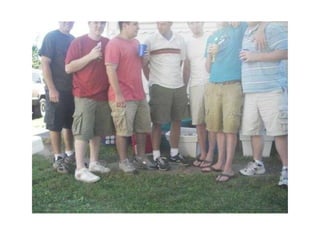
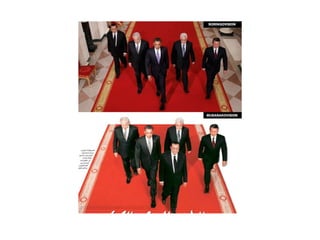
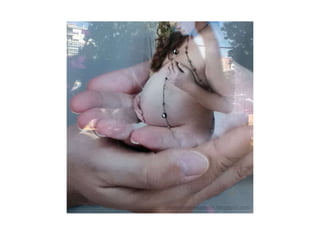
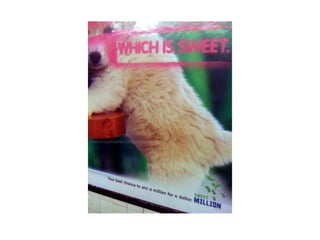
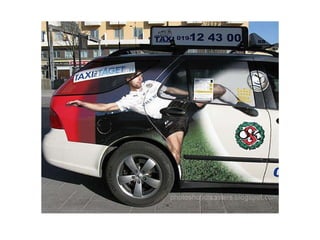
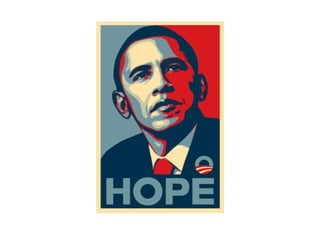
Bad Design Even those without formal art training can see when bad design is at work


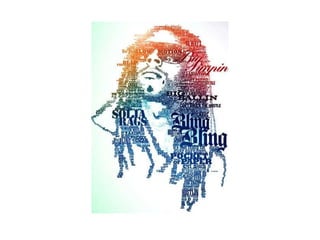
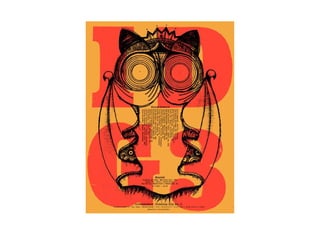
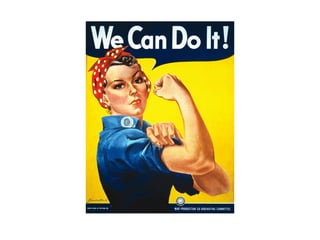
Good Design It’s Easy to Spot


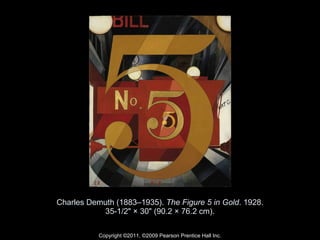
Charles Demuth (1883–1935).  The Figure 5 in Gold . 1928. 35-1/2" × 30" (90.2 × 76.2 cm). Copyright ©2011, ©2009 Pearson Prentice Hall Inc.
Unity and Variety Unity-the appearance of oneness The feeling that the design is complete and all elements are working together Variety-diversity Most artists try to find a balance
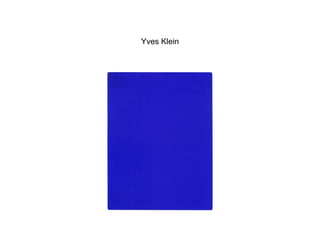
Yves Klein
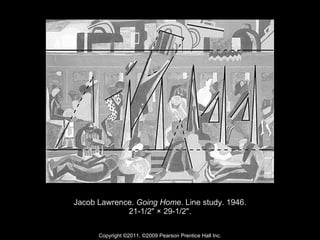
Jacob Lawrence.  Going Home . Line study. 1946. 21-1/2" × 29-1/2". Copyright ©2011, ©2009 Pearson Prentice Hall Inc.
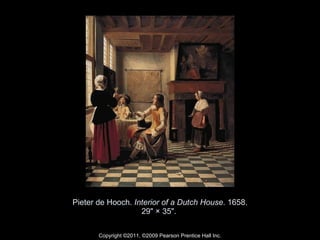
Pieter de Hooch.  Interior of a Dutch House . 1658. 29" × 35".  Copyright ©2011, ©2009 Pearson Prentice Hall Inc.
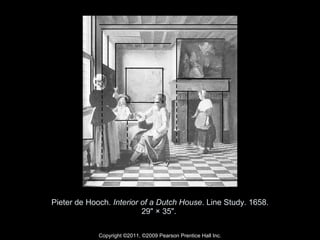
Pieter de Hooch.  Interior of a Dutch House . Line Study. 1658. 29" × 35".  Copyright ©2011, ©2009 Pearson Prentice Hall Inc.
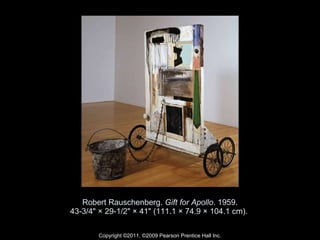
Robert Rauschenberg.  Gift for Apollo . 1959. 43-3/4" × 29-1/2" × 41" (111.1 × 74.9 × 104.1 cm).  Copyright ©2011, ©2009 Pearson Prentice Hall Inc.
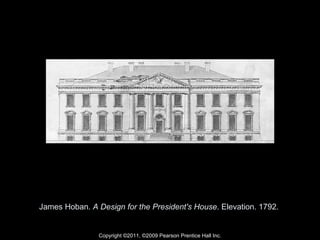
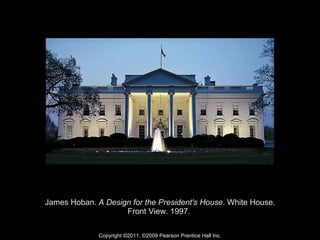
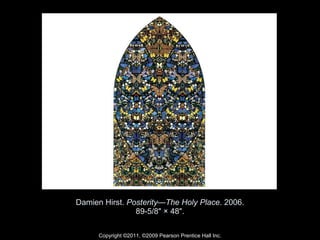
Balance Balance-equilibrium Symmetrical Balance-left and right are near or exactly match each other
James Hoban.  A Design for the President's House . Elevation. 1792.  Copyright ©2011, ©2009 Pearson Prentice Hall Inc.
James Hoban.  A Design for the President's House . White House. Front View. 1997.  Copyright ©2011, ©2009 Pearson Prentice Hall Inc.
Damien Hirst.  Posterity—The Holy Place . 2006. 89-5/8" × 48". Copyright ©2011, ©2009 Pearson Prentice Hall Inc.
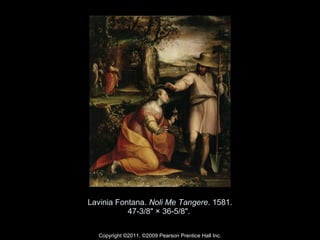
Asymmetrical Balance Asymmetrical balance-the left and right sides are not the same Instead, balance is achieved through the size and meaning of the elements
Lavinia Fontana.  Noli Me Tangere . 1581. 47-3/8" × 36-5/8".  Copyright ©2011, ©2009 Pearson Prentice Hall Inc.
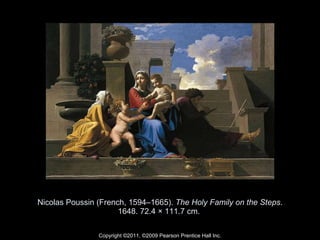
Visual Weight A large form is heavier than a small one A form close to the edge of the frame is heavier A complex form is heavier than a simple one Warm colors are heavier and advance toward the viewer Intense colors are heavier The weight of a color increases as the background approaches its complementary hue
Nicolas Poussin (French, 1594–1665).  The Holy Family on the Steps . 1648. 72.4 × 111.7 cm.  Copyright ©2011, ©2009 Pearson Prentice Hall Inc.
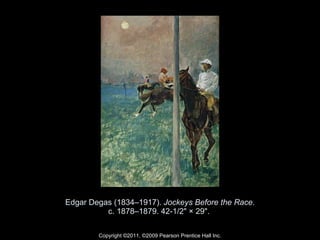
Edgar Degas (1834–1917).  Jockeys Before the Race . c. 1878–1879. 42-1/2" × 29".  Copyright ©2011, ©2009 Pearson Prentice Hall Inc.
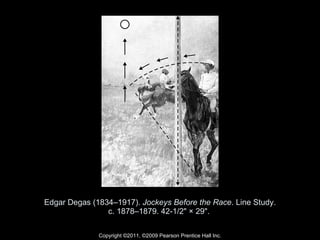
Edgar Degas (1834–1917).  Jockeys Before the Race . Line Study. c. 1878–1879. 42-1/2" × 29".  Copyright ©2011, ©2009 Pearson Prentice Hall Inc.
Emphasis and Subordination Emphasis-used to draw the attention of the viewer Subordination-used to create areas of lesser interest By using these two principles the artist shows the viewer where to look
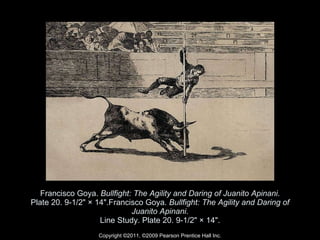
Directional Forces Like emphasis and subordination, directional forces tell the viewer where to look Directional forces have the added advantage of showing the viewer where to look next.
Francisco Goya.  Bullfight: The Agility and Daring of Juanito Apinani . Plate 20. 9-1/2" × 14".Francisco Goya.  Bullfight: The Agility and Daring of Juanito Apinani . Line Study. Plate 20. 9-1/2" × 14". Copyright ©2011, ©2009 Pearson Prentice Hall Inc.
 
 
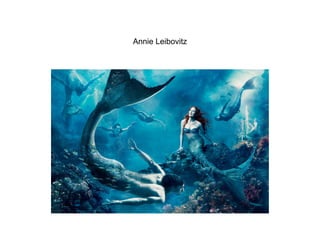
Annie Leibovitz
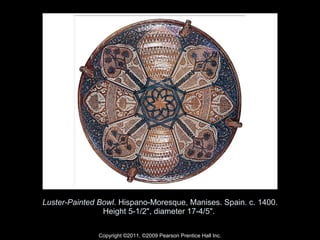
Contrast Contrast-opposing elements Dark vs. light Large vs. small Thick vs. thin
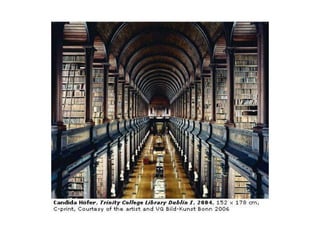
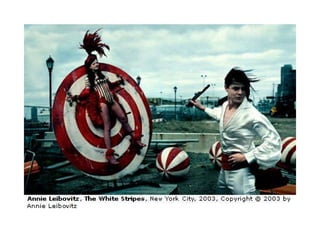
Luster-Painted Bowl . Hispano-Moresque, Manises. Spain. c. 1400. Height 5-1/2", diameter 17-4/5".  Copyright ©2011, ©2009 Pearson Prentice Hall Inc.
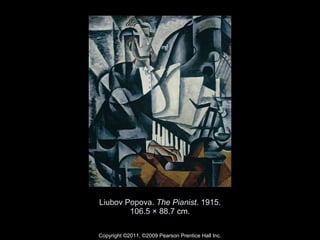
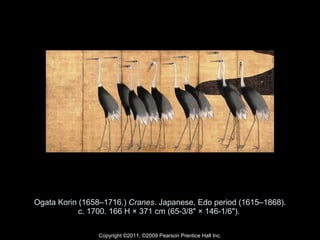
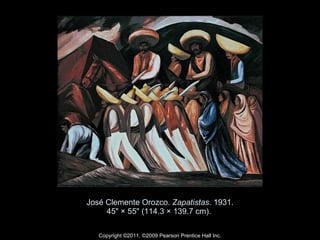
Repetition and Rhythm Repition-repeating elements Rhythm-regular repeating elements
Liubov Popova.  The Pianist . 1915. 106.5 × 88.7 cm. Copyright ©2011, ©2009 Pearson Prentice Hall Inc.
Ogata Korin (1658–1716.)  Cranes . Japanese, Edo period (1615–1868). c. 1700. 166 H × 371 cm (65-3/8" × 146-1/6").  Copyright ©2011, ©2009 Pearson Prentice Hall Inc.
José Clemente Orozco.  Zapatistas . 1931. 45" × 55" (114.3 × 139.7 cm).  Copyright ©2011, ©2009 Pearson Prentice Hall Inc.
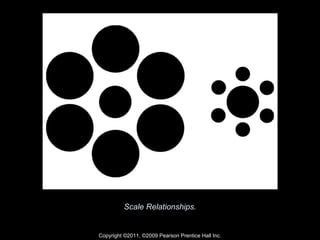
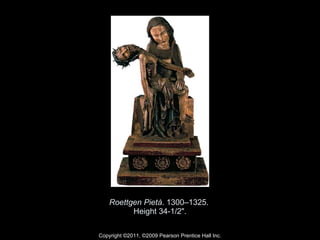
Scale and Proportion Scale-the size of one thing in relation to another Proportion-size relationship of the parts that make up a whole
Scale Relationships. Copyright ©2011, ©2009 Pearson Prentice Hall Inc.
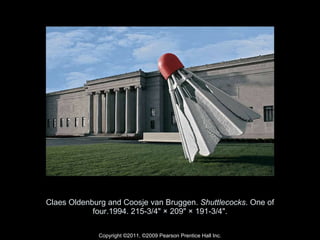
Claes Oldenburg and Coosje van Bruggen.  Shuttlecocks . One of four.1994. 215-3/4" × 209" × 191-3/4". Copyright ©2011, ©2009 Pearson Prentice Hall Inc.
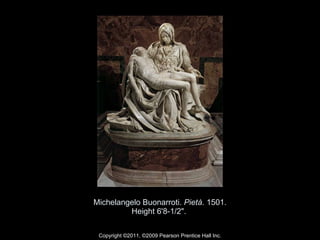
Michelangelo Buonarroti.  Pietà.  1501. Height 6'8-1/2".  Copyright ©2011, ©2009 Pearson Prentice Hall Inc.
Roettgen Pietà . 1300–1325.  Height 34-1/2". Copyright ©2011, ©2009 Pearson Prentice Hall Inc.

Art Appreciation-Chapter3

  • 1.
    How An ArtworkIs Built Chapter 3
  • 2.
    From Toolbox toCreation How does an artist use the visual tools in their toolbox to create an artwork? They organize these tools into compositions, also called design We’ll be looking at the basic design principles: Unity and variety Balance Emphasis and subordination Contrast Repetition and rhythm Scale and proportion
  • 3.
    Bad Design Eventhose without formal art training can see when bad design is at work
  • 4.
  • 5.
  • 6.
  • 7.
  • 8.
  • 9.
  • 10.
  • 11.
  • 12.
  • 13.
    Good Design It’sEasy to Spot
  • 14.
  • 15.
  • 16.
  • 17.
  • 18.
    Charles Demuth (1883–1935). The Figure 5 in Gold . 1928. 35-1/2" × 30" (90.2 × 76.2 cm). Copyright ©2011, ©2009 Pearson Prentice Hall Inc.
  • 19.
    Unity and VarietyUnity-the appearance of oneness The feeling that the design is complete and all elements are working together Variety-diversity Most artists try to find a balance
  • 20.
  • 21.
    Jacob Lawrence. Going Home . Line study. 1946. 21-1/2" × 29-1/2". Copyright ©2011, ©2009 Pearson Prentice Hall Inc.
  • 22.
    Pieter de Hooch. Interior of a Dutch House . 1658. 29" × 35". Copyright ©2011, ©2009 Pearson Prentice Hall Inc.
  • 23.
    Pieter de Hooch. Interior of a Dutch House . Line Study. 1658. 29" × 35". Copyright ©2011, ©2009 Pearson Prentice Hall Inc.
  • 24.
    Robert Rauschenberg. Gift for Apollo . 1959. 43-3/4" × 29-1/2" × 41" (111.1 × 74.9 × 104.1 cm). Copyright ©2011, ©2009 Pearson Prentice Hall Inc.
  • 25.
    Balance Balance-equilibrium SymmetricalBalance-left and right are near or exactly match each other
  • 26.
    James Hoban. A Design for the President's House . Elevation. 1792. Copyright ©2011, ©2009 Pearson Prentice Hall Inc.
  • 27.
    James Hoban. A Design for the President's House . White House. Front View. 1997. Copyright ©2011, ©2009 Pearson Prentice Hall Inc.
  • 28.
    Damien Hirst. Posterity—The Holy Place . 2006. 89-5/8" × 48". Copyright ©2011, ©2009 Pearson Prentice Hall Inc.
  • 29.
    Asymmetrical Balance Asymmetricalbalance-the left and right sides are not the same Instead, balance is achieved through the size and meaning of the elements
  • 30.
    Lavinia Fontana. Noli Me Tangere . 1581. 47-3/8" × 36-5/8". Copyright ©2011, ©2009 Pearson Prentice Hall Inc.
  • 31.
    Visual Weight Alarge form is heavier than a small one A form close to the edge of the frame is heavier A complex form is heavier than a simple one Warm colors are heavier and advance toward the viewer Intense colors are heavier The weight of a color increases as the background approaches its complementary hue
  • 32.
    Nicolas Poussin (French,1594–1665). The Holy Family on the Steps . 1648. 72.4 × 111.7 cm. Copyright ©2011, ©2009 Pearson Prentice Hall Inc.
  • 33.
    Edgar Degas (1834–1917). Jockeys Before the Race . c. 1878–1879. 42-1/2" × 29". Copyright ©2011, ©2009 Pearson Prentice Hall Inc.
  • 34.
    Edgar Degas (1834–1917). Jockeys Before the Race . Line Study. c. 1878–1879. 42-1/2" × 29". Copyright ©2011, ©2009 Pearson Prentice Hall Inc.
  • 35.
    Emphasis and SubordinationEmphasis-used to draw the attention of the viewer Subordination-used to create areas of lesser interest By using these two principles the artist shows the viewer where to look
  • 36.
    Directional Forces Likeemphasis and subordination, directional forces tell the viewer where to look Directional forces have the added advantage of showing the viewer where to look next.
  • 37.
    Francisco Goya. Bullfight: The Agility and Daring of Juanito Apinani . Plate 20. 9-1/2" × 14".Francisco Goya. Bullfight: The Agility and Daring of Juanito Apinani . Line Study. Plate 20. 9-1/2" × 14". Copyright ©2011, ©2009 Pearson Prentice Hall Inc.
  • 38.
  • 39.
  • 40.
  • 41.
    Contrast Contrast-opposing elementsDark vs. light Large vs. small Thick vs. thin
  • 42.
    Luster-Painted Bowl .Hispano-Moresque, Manises. Spain. c. 1400. Height 5-1/2", diameter 17-4/5". Copyright ©2011, ©2009 Pearson Prentice Hall Inc.
  • 43.
    Repetition and RhythmRepition-repeating elements Rhythm-regular repeating elements
  • 44.
    Liubov Popova. The Pianist . 1915. 106.5 × 88.7 cm. Copyright ©2011, ©2009 Pearson Prentice Hall Inc.
  • 45.
    Ogata Korin (1658–1716.) Cranes . Japanese, Edo period (1615–1868). c. 1700. 166 H × 371 cm (65-3/8" × 146-1/6"). Copyright ©2011, ©2009 Pearson Prentice Hall Inc.
  • 46.
    José Clemente Orozco. Zapatistas . 1931. 45" × 55" (114.3 × 139.7 cm). Copyright ©2011, ©2009 Pearson Prentice Hall Inc.
  • 47.
    Scale and ProportionScale-the size of one thing in relation to another Proportion-size relationship of the parts that make up a whole
  • 48.
    Scale Relationships. Copyright©2011, ©2009 Pearson Prentice Hall Inc.
  • 49.
    Claes Oldenburg andCoosje van Bruggen. Shuttlecocks . One of four.1994. 215-3/4" × 209" × 191-3/4". Copyright ©2011, ©2009 Pearson Prentice Hall Inc.
  • 50.
    Michelangelo Buonarroti. Pietà. 1501. Height 6'8-1/2". Copyright ©2011, ©2009 Pearson Prentice Hall Inc.
  • 51.
    Roettgen Pietà .1300–1325. Height 34-1/2". Copyright ©2011, ©2009 Pearson Prentice Hall Inc.

Editor's Notes

  • #19 Oil on cardboard. 35-1⁄2" × 30" (90.2 × 76.2 cm). Alfred Stieglitz Collection, 1949 (49.59.1). The Metropolitan Museum of Art, New York, NY, U.S.A. Image copyright © The Metropolitan Museum of Art/Art Resource, NY.
  • #22 Private collection, courtesy of DC Moore Gallery, New York. ©2010 The Jacob and Gwendolyn Lawrence Foundation, Seattle/Artists Rights Society (ARS), New York.
  • #23 National Gallery, London.
  • #24 National Gallery, London.
  • #25 The Museum of Contemporary Art, Los Angeles. The Panza Collection. Art © Estate of Robert Rauschenberg/Licensed by VAGA, New York, NY.
  • #27 Maryland Historical Society, Baltimore.
  • #28 Photograph: Antonio M. Rosario/Getty Images Inc. – Image Bank.
  • #29 © Damien Hirst. Courtesy of Gagosian Gallery. Photograph: Purcence Cuming Associates, Inc. © 2010 Hirst Holdings Limited and Damien Hirst. All rights reserved, ARS, New York/DACS, London.
  • #31 Erich Lessing/Art Resource, NY.
  • #33 © The Cleveland Museum of Art, 2001, Leonard C. Hanna, Jr., Fund, 1981.18.
  • #34 The Barber Institute of Fine Arts, University of Birmingham. Bridgeman Art Library.
  • #35 The Barber Institute of Fine Arts, University of Birmingham. Bridgeman Art Library.
  • #38 Ashmolean Museum, Oxford, England, UK.
  • #43 Courtesy of The Hispanic Society of America, New York.
  • #45 National Gallery of Canada, Ottawa. Photo: © NGC.
  • #46 Freer Gallery of Art, Smithsonian Institution, Washington, DC: Purchase, F1956.20.
  • #47 The Museum of Modern Art, New York. Given Anonymously. Photograph © 2002 The Museum of Modern Art, New York. © Clemente V. Orozco. Reproduction authorized by the Instituto Nacional de Bellas Artes.
  • #50 North facade of The Nelson-Atkins Museum of Art, Kansas City, Missouri including one of four "Shuttlecocks," 1994, by Claes Oldenburg and Coosje van Bruggen. Purchase; acquired through the generosity of the Sosland Family. © Claes Oldenburg and Coosje van Bruggen. F94-1/1 Photograph by Jamison Miller.
  • #51 Canali Photobank.
  • #52 LVR-Landesmuseum Bonn.