Between World Wars

                        2   2
                 t   er
             p
      C   ha
DADA
•    Began as a protest to the horrors of WWI
    • Dadaists believed that the horrors of war were caused by traditional values
•    Dada was a nonsense word that became a rallying cry with an
     ambiguous meaning
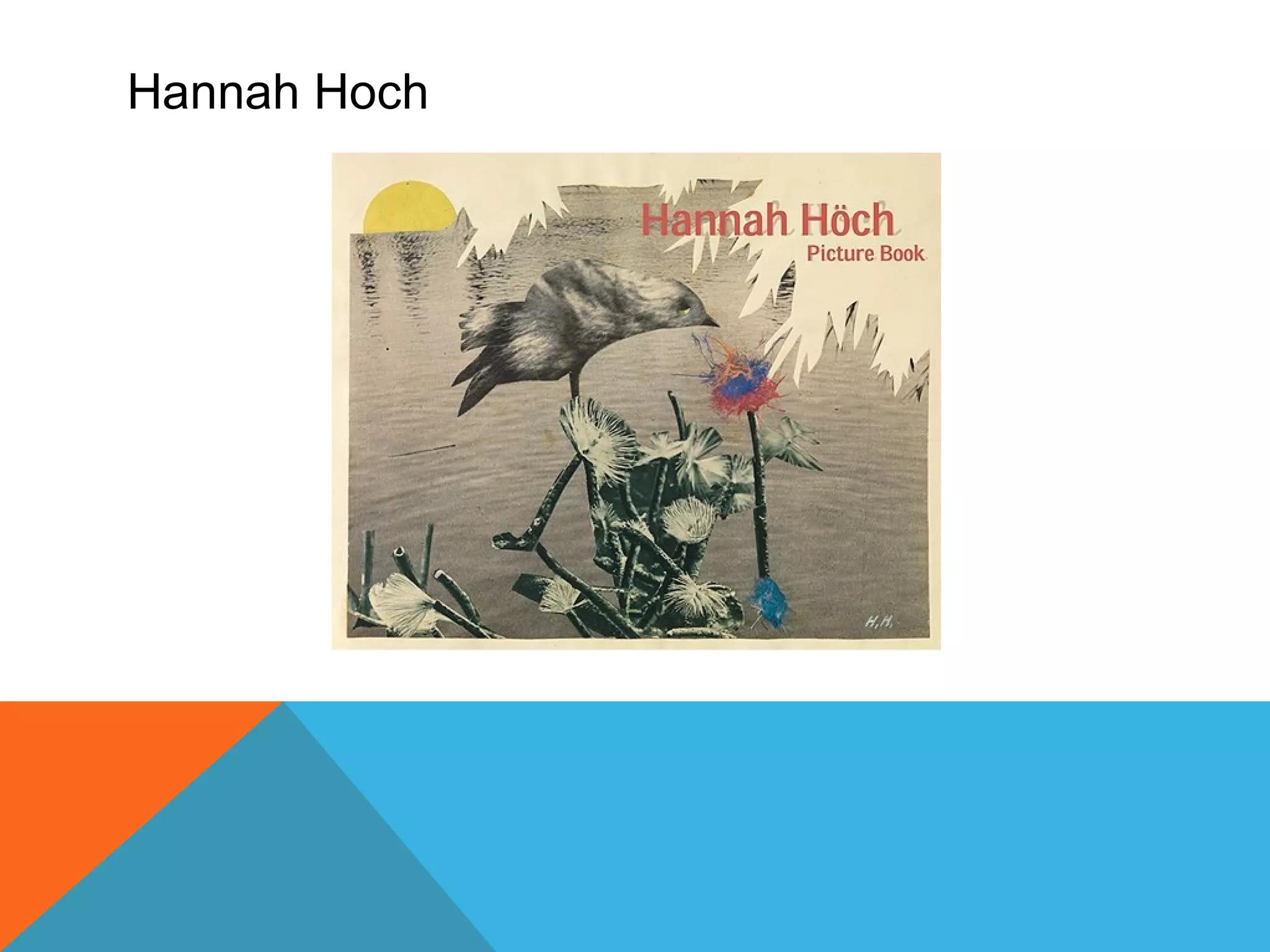
Hannah Hoch
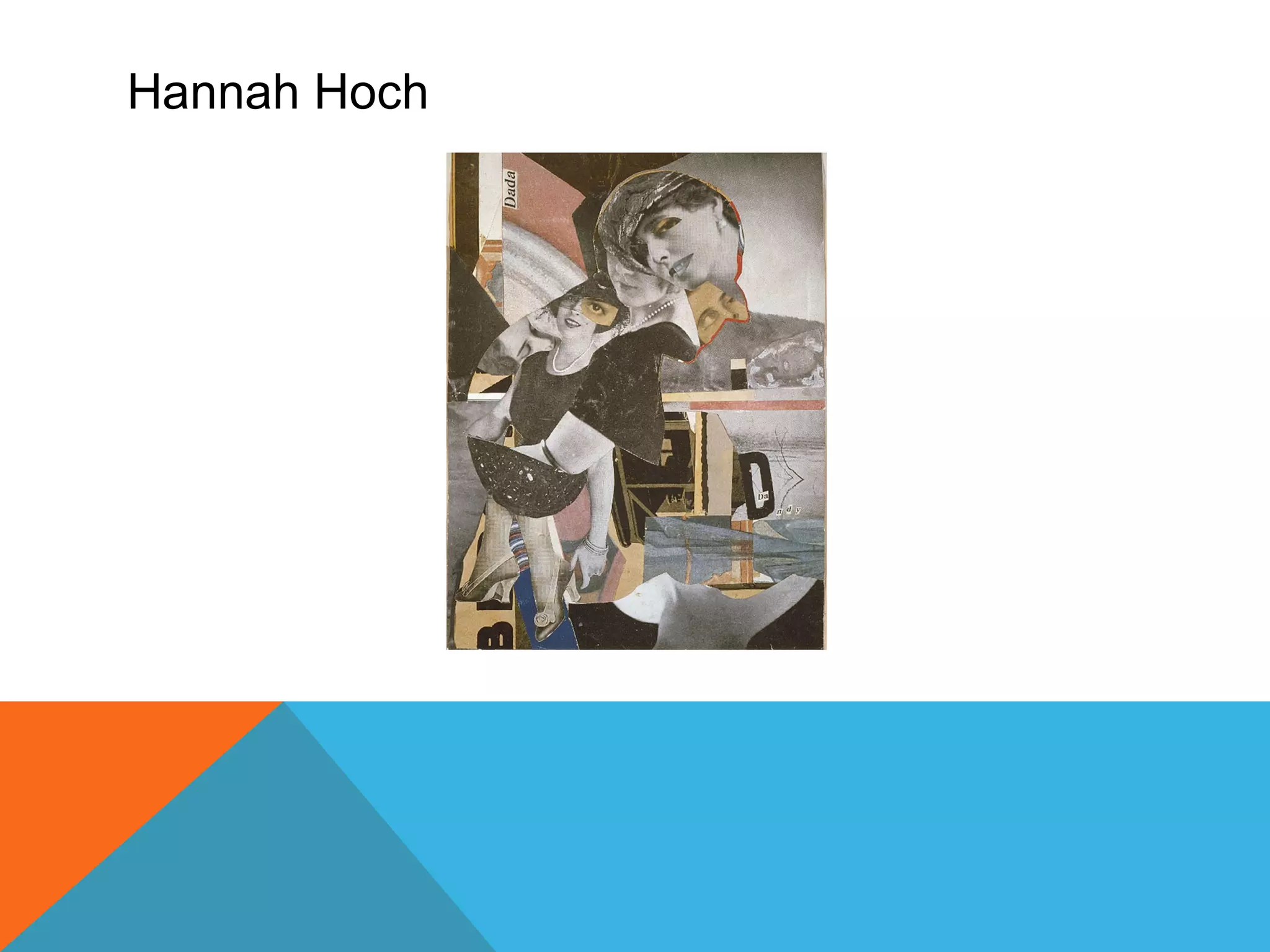
Hannah Hoch
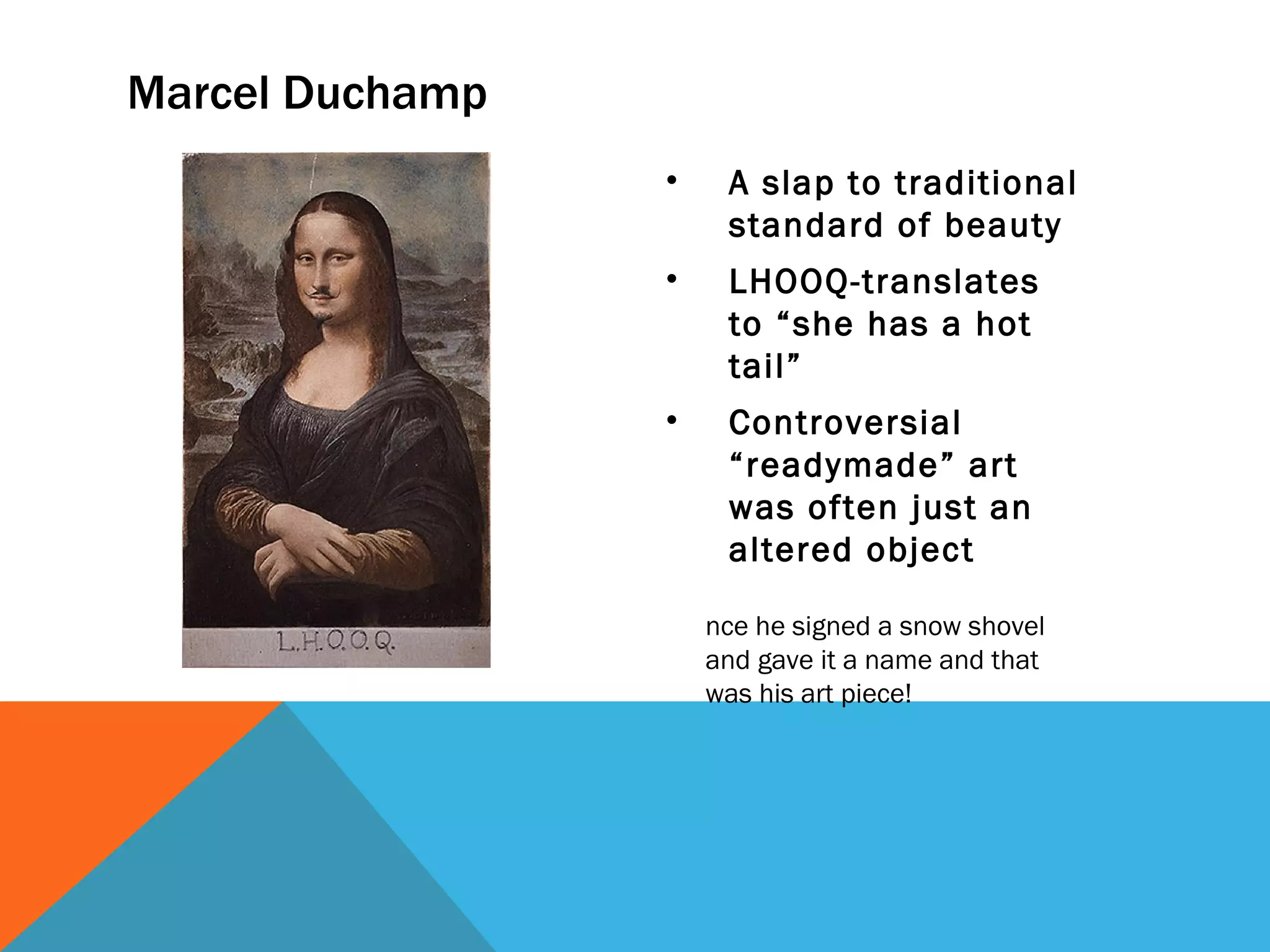
Marcel Duchamp
                 •    A slap to traditional
                      standard of beauty
                 •    LHOOQ-translates
                      to “she has a hot
                      tail”
                 •    Controversial
                      “readymade” art
                      was often just an
                      altered object

                     nce he signed a snow shovel
                     and gave it a name and that
                     was his art piece!
Surrealism
•   These artist did not like the modern reliance on science
•   They focused on the importance of dreams, fantasies, and
    hallucinations
•   They were also heavily influenced by the psychology of Sigmund Freud
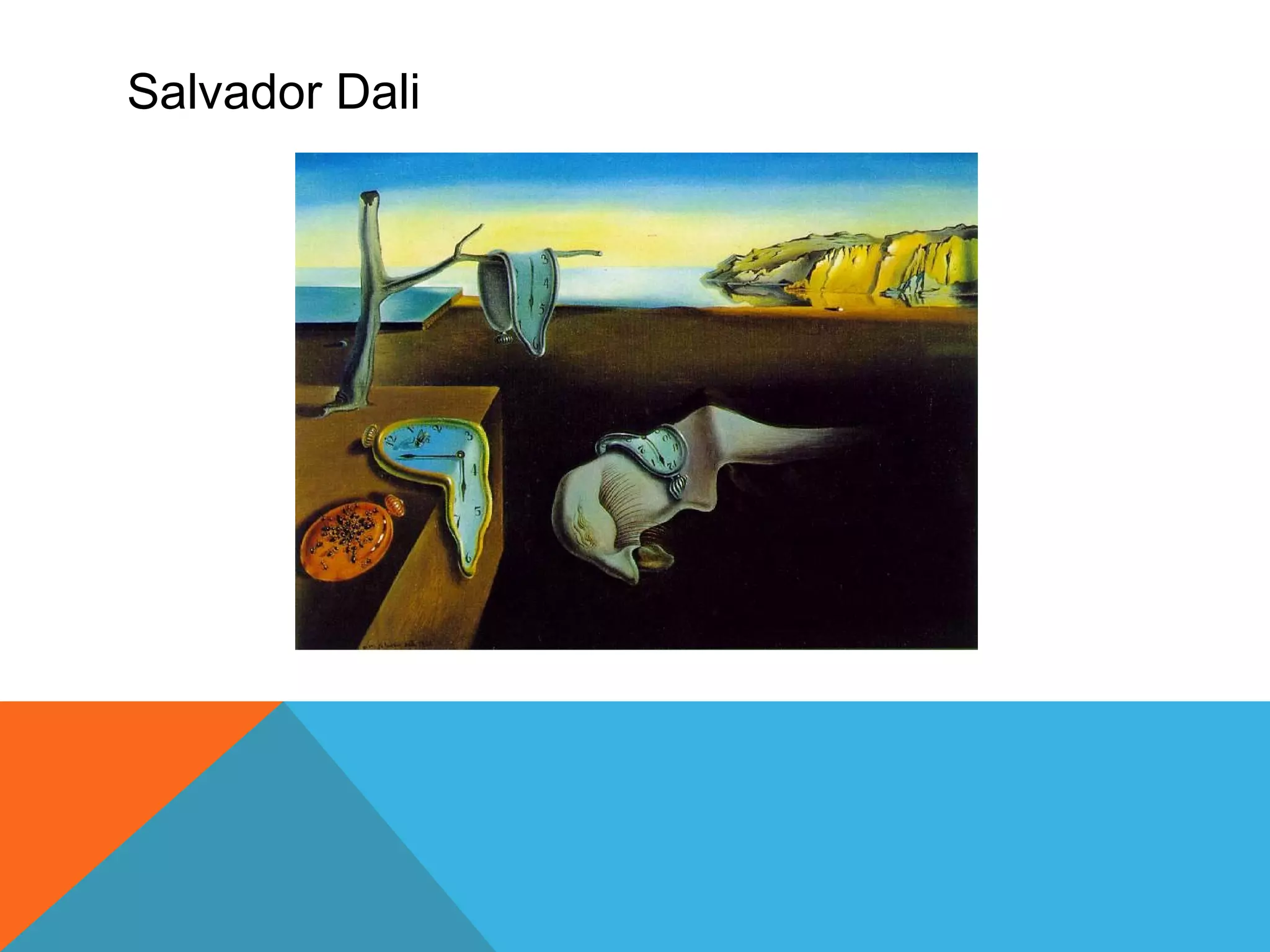
Salvador Dali
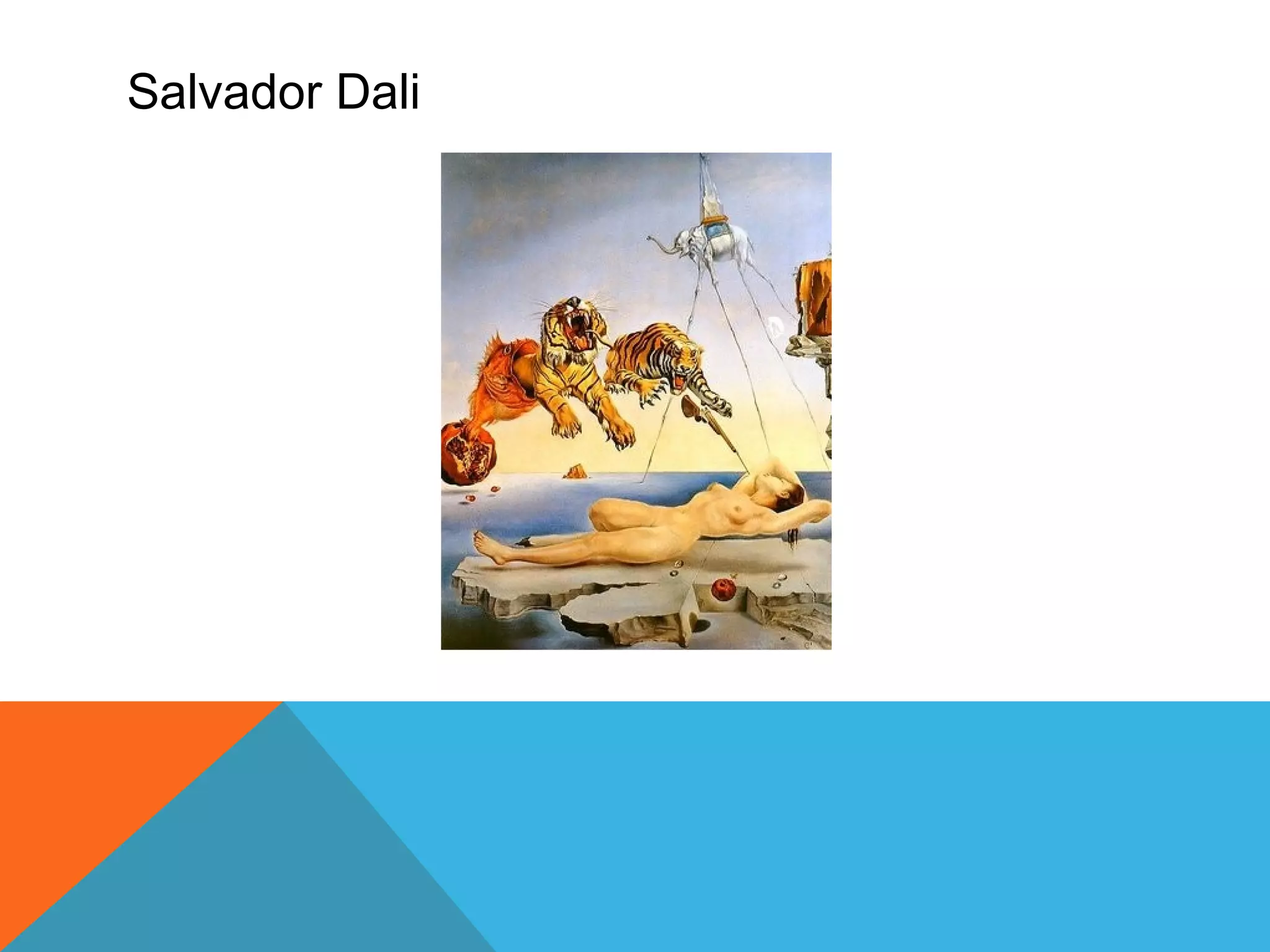
Salvador Dali
Salvador Dali
•   Painted his nightmares
•   Highly realistic yet improbable
•   Extremely high academic technique of untraditional subject matter
•   It is said that Salvador Dali would sleep holding a spoon over a pan and
    when he would inevitably drop the spoon, he would wake up mid dream
    and be able to use those images in his paintings
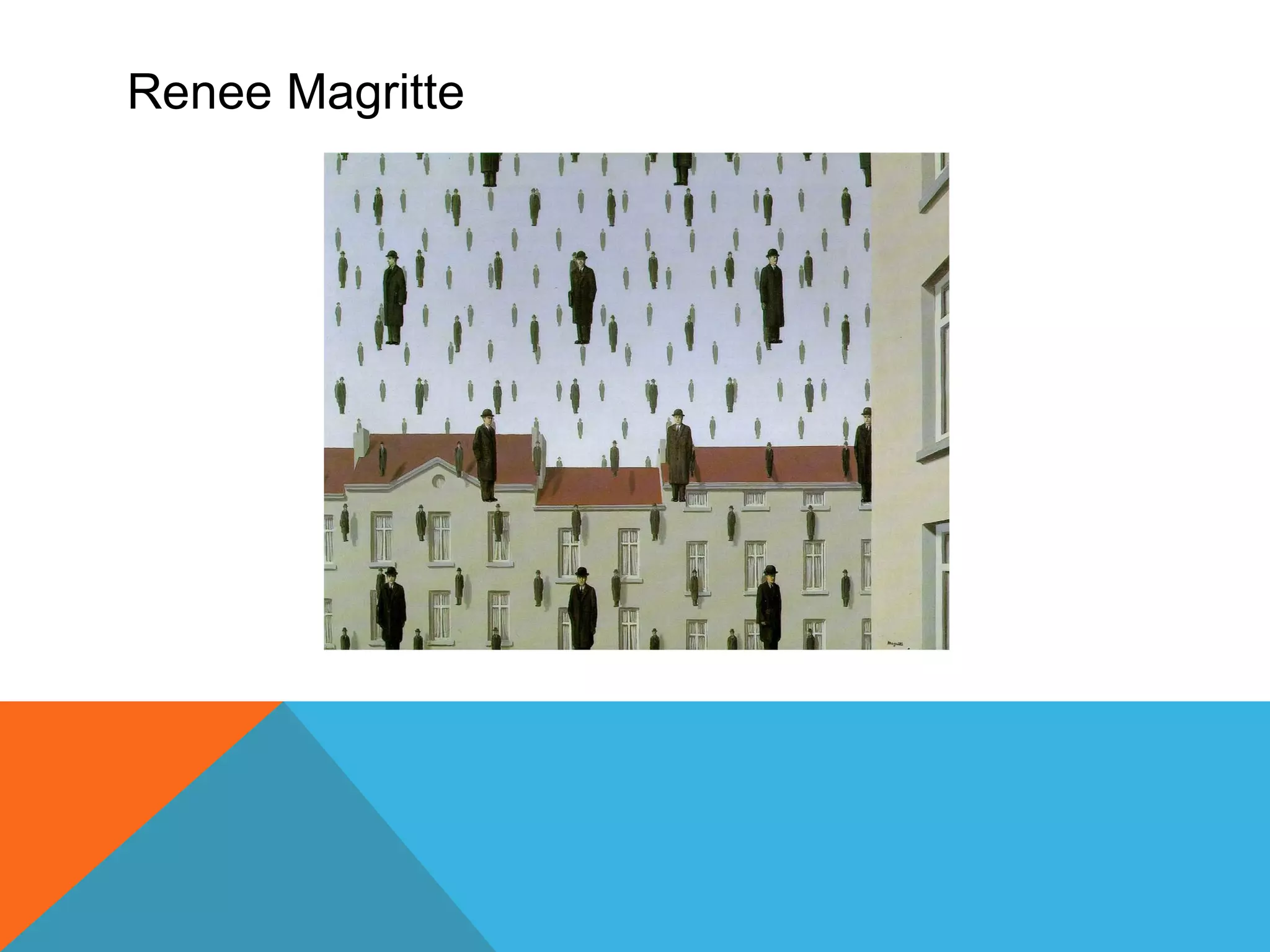
Renee Magritte
Renee Magritte
Latin Amercian Modernism
•   Art began to reflect Afro-Brazilian traditions, Cubism, abstraction,
    and there was often interdisciplinary art form combined
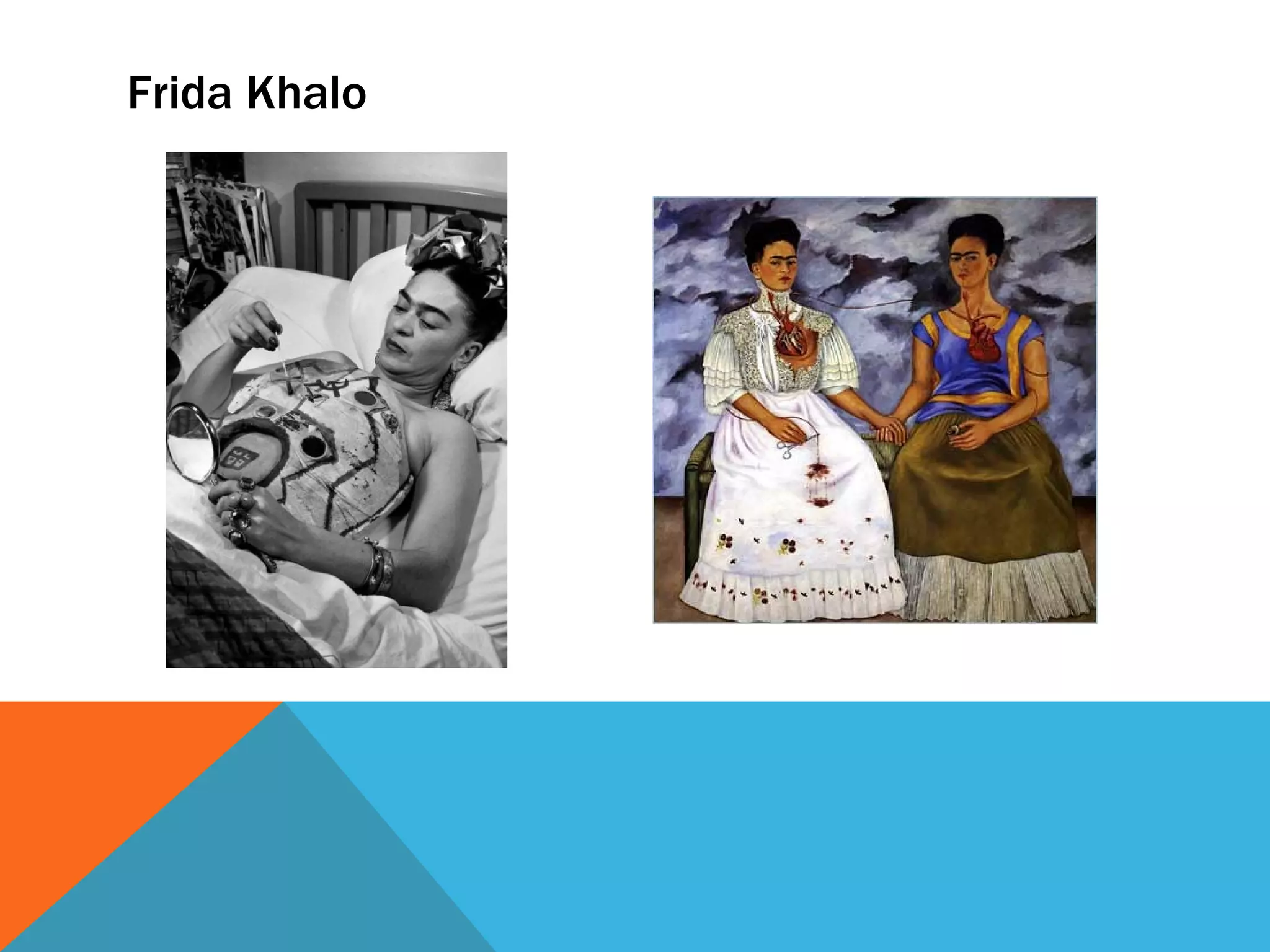
• Frida Khalo
• Was adopted by the surrealists
• Her style was surreal, but had strong roots in the Folk art of Mexico
Frida Khalo
American Regionalism
• Coincided with the depression era
• People were relatively indifferent to art at this time
• Local subject matter
• These artists were using everyday people and places as their subject matter
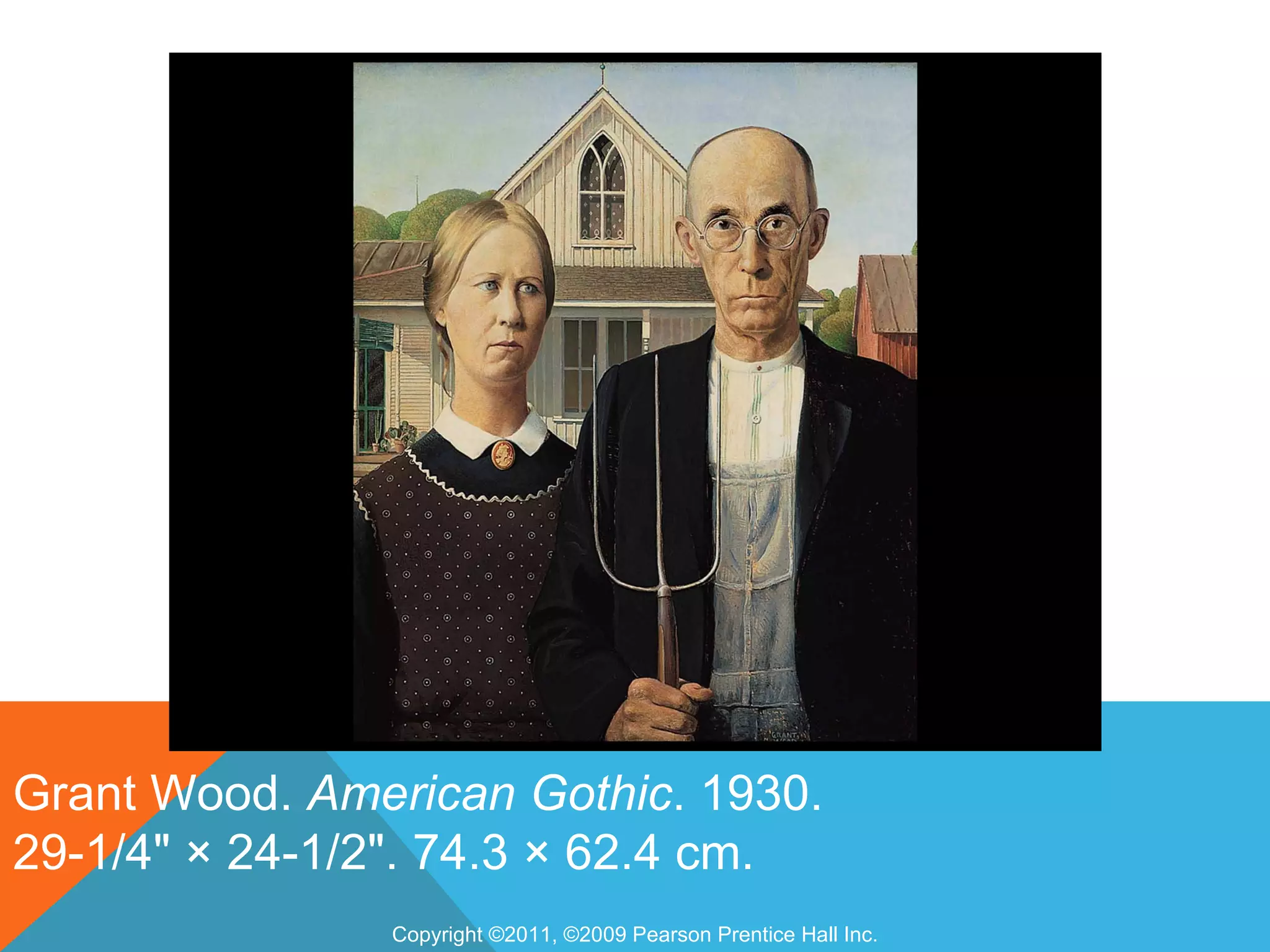
Grant Wood. American Gothic. 1930.
29-1/4" × 24-1/2". 74.3 × 62.4 cm.
               Copyright ©2011, ©2009 Pearson Prentice Hall Inc.
American Gothic
•   Crisp and realistic in style
•   Grant Wood was having little success in Paris as a painter, so he
    returned to his hometown in Midwest America
•   He wanted to capture the unique character of the people and land and
    how they lived
•   Inspired by a house built by a local carpenter in what he thought was a
    rendition of Gothic architecture

Chapter22-Art Appreciation

  • 1.
    Between World Wars 2 2 t er p C ha
  • 2.
    DADA • Began as a protest to the horrors of WWI • Dadaists believed that the horrors of war were caused by traditional values • Dada was a nonsense word that became a rallying cry with an ambiguous meaning
  • 3.
  • 4.
  • 5.
    Marcel Duchamp • A slap to traditional standard of beauty • LHOOQ-translates to “she has a hot tail” • Controversial “readymade” art was often just an altered object nce he signed a snow shovel and gave it a name and that was his art piece!
  • 6.
    Surrealism • These artist did not like the modern reliance on science • They focused on the importance of dreams, fantasies, and hallucinations • They were also heavily influenced by the psychology of Sigmund Freud
  • 7.
  • 8.
  • 9.
    Salvador Dali • Painted his nightmares • Highly realistic yet improbable • Extremely high academic technique of untraditional subject matter • It is said that Salvador Dali would sleep holding a spoon over a pan and when he would inevitably drop the spoon, he would wake up mid dream and be able to use those images in his paintings
  • 10.
  • 11.
  • 12.
    Latin Amercian Modernism • Art began to reflect Afro-Brazilian traditions, Cubism, abstraction, and there was often interdisciplinary art form combined • Frida Khalo • Was adopted by the surrealists • Her style was surreal, but had strong roots in the Folk art of Mexico
  • 13.
  • 14.
    American Regionalism • Coincidedwith the depression era • People were relatively indifferent to art at this time • Local subject matter • These artists were using everyday people and places as their subject matter
  • 15.
    Grant Wood. AmericanGothic. 1930. 29-1/4" × 24-1/2". 74.3 × 62.4 cm. Copyright ©2011, ©2009 Pearson Prentice Hall Inc.
  • 16.
    American Gothic • Crisp and realistic in style • Grant Wood was having little success in Paris as a painter, so he returned to his hometown in Midwest America • He wanted to capture the unique character of the people and land and how they lived • Inspired by a house built by a local carpenter in what he thought was a rendition of Gothic architecture

Editor's Notes

  • #16 Friends of American Art Collection. 1930.934. © The Art Institute of Chicago/© Figge Art Museum, successors to the Estate of Nan Wood Graham/Licensed by VAGA, New York, NY.