Intent

Chapter 5
Intent
• First you need to decide how much you want
  to adhere to what the viewer expects to see.
• You may want to keep to the rules if you need
  to show something clearly or make it look
  attractive
• The next question we have to ask is how far
  do you want to go against tradition without it
  looking forced
conventional
Ansel Adams
Brigitte Locombe
challenging
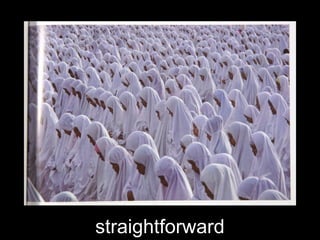
straightforward
different
unusual
Reactive or Planned
• You have two more choices of intent
• Reactive- a shot that relies on your
  observational skills
• Planned- organized by the
  photographer
reactive
reactive
predictable
planning
Robert Frank
Robert Frank
Philip-Lorca diCorcia
Documentary or Expressive
• Documentary-to see the world, to
  eyewitness great events…
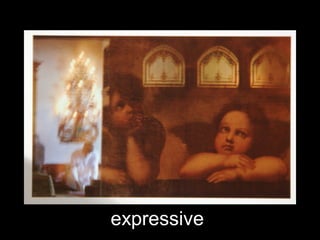
• Expressive-something untried and
  unique
documentary
Eugene Richards
Eugene Richards
expressive
expressive
Simple or Complex
• Simple-most real life scenes can be
  overcrowded and messy. With simplicity, you
  give the scene an order or graphic
  organization by cropping out unnecessary
  mess, changing viewpoint, and imposing
  structure.
  – Simplification as abstraction-moving away from
    representation and into purely graphic imagery
     • Architecture lends itself to abstraction
     • Closing in on details also lends itself to abstraction
     • Patterns also…
simple
Simple or Complex
• Complex-more points of interest,
  layered objects
  – After adding many more points of interest ,
    the image can move back into simplicity
complex
Clear or Ambiguous
• How obvious should an image be?
• A shot that says it all can be very powerful,
  like Life Magazine, but it doesn’t make the
  viewer work very hard
• Clear-obvious what the photograph is trying
  to say
• Ambiguous-takes the viewer more time to
  discover what is in the photograph and what it
  means
clear
ambiguous
ambiguous
ambiguous
ambiguous
needed captions
ominous
Delay
• Delay-to keep the viewer engaged for longer.
  – Embed a key element in such a way that it is not
    closed in on to quickly
• Spatial Reorganization-the critical subject is
  made smaller or less central in the
  composition
• Reverse tactics reversing any of the tactics
  that we have reviewed on how to draw the
  viewer’s eye to the subject
• Point outside the frame-literally pointing to,
  reacting to, shadow of…something outside of
  the frame
• Surprise-unexpected phenomena
delay
delay
delay
delay
Style and Fashion
• Past styles
  – Pictorialism, Linked Ring, Photo-Sucession, Neue
    Sachlichkeit (New Objectivty), Straight
    Photography, Modernism, Constructivist,
    Minimalism, Color Formalism, Post-modern new
    realism, surrealism
• What is accepted as beautiful for now.
  Usually you take a chance on something
  different to see if it takes off.
Neue Sachichkeit
straight
Contructivist
Surrealism
fashion
Fashion/Flare
Fashion/Anti Photo
Two Styles to Focus On
          Minimalism
• Minimalism-the art of less
  – Reduce the number of values, shapes, lines, and
    textures to the bare minimum
  – Make your subject the strongest point in your
    photograph even though it might only take up a
    small portion of your image your subject the
    strongest point of your photo even though it might
    take up only a small part of the overall
    image モ Read more: "Minimalism in Photograph
minimalism
minimalism
Sugimoto
Two Style to Focus On
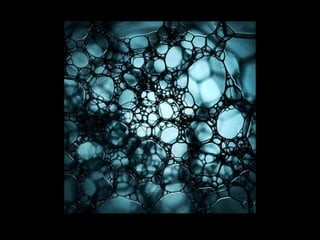
           Abstract
• A different perspective
• Your subject is taken out of context and
  no longer represents an object
• The object is no longer recognizable
  – The viewer is seeing texture, shape, color,
    line, etc.
Photo Design-Chapter 5-Intent

Photo Design-Chapter 5-Intent

  • 1.
  • 2.
    Intent • First youneed to decide how much you want to adhere to what the viewer expects to see. • You may want to keep to the rules if you need to show something clearly or make it look attractive • The next question we have to ask is how far do you want to go against tradition without it looking forced
  • 3.
  • 4.
  • 5.
  • 6.
  • 7.
  • 8.
  • 9.
  • 10.
    Reactive or Planned •You have two more choices of intent • Reactive- a shot that relies on your observational skills • Planned- organized by the photographer
  • 11.
  • 12.
  • 13.
  • 14.
  • 15.
  • 16.
  • 17.
  • 18.
  • 19.
    Documentary or Expressive •Documentary-to see the world, to eyewitness great events… • Expressive-something untried and unique
  • 20.
  • 21.
  • 22.
  • 23.
  • 24.
  • 25.
    Simple or Complex •Simple-most real life scenes can be overcrowded and messy. With simplicity, you give the scene an order or graphic organization by cropping out unnecessary mess, changing viewpoint, and imposing structure. – Simplification as abstraction-moving away from representation and into purely graphic imagery • Architecture lends itself to abstraction • Closing in on details also lends itself to abstraction • Patterns also…
  • 26.
  • 27.
    Simple or Complex •Complex-more points of interest, layered objects – After adding many more points of interest , the image can move back into simplicity
  • 28.
  • 29.
    Clear or Ambiguous •How obvious should an image be? • A shot that says it all can be very powerful, like Life Magazine, but it doesn’t make the viewer work very hard • Clear-obvious what the photograph is trying to say • Ambiguous-takes the viewer more time to discover what is in the photograph and what it means
  • 30.
  • 31.
  • 32.
  • 33.
  • 34.
  • 35.
  • 36.
  • 37.
    Delay • Delay-to keepthe viewer engaged for longer. – Embed a key element in such a way that it is not closed in on to quickly • Spatial Reorganization-the critical subject is made smaller or less central in the composition • Reverse tactics reversing any of the tactics that we have reviewed on how to draw the viewer’s eye to the subject • Point outside the frame-literally pointing to, reacting to, shadow of…something outside of the frame • Surprise-unexpected phenomena
  • 38.
  • 39.
  • 40.
  • 41.
  • 42.
    Style and Fashion •Past styles – Pictorialism, Linked Ring, Photo-Sucession, Neue Sachlichkeit (New Objectivty), Straight Photography, Modernism, Constructivist, Minimalism, Color Formalism, Post-modern new realism, surrealism • What is accepted as beautiful for now. Usually you take a chance on something different to see if it takes off.
  • 43.
  • 44.
  • 45.
  • 46.
  • 47.
  • 48.
  • 49.
  • 50.
    Two Styles toFocus On Minimalism • Minimalism-the art of less – Reduce the number of values, shapes, lines, and textures to the bare minimum – Make your subject the strongest point in your photograph even though it might only take up a small portion of your image your subject the strongest point of your photo even though it might take up only a small part of the overall image モ Read more: "Minimalism in Photograph
  • 51.
  • 52.
  • 56.
  • 63.
    Two Style toFocus On Abstract • A different perspective • Your subject is taken out of context and no longer represents an object • The object is no longer recognizable – The viewer is seeing texture, shape, color, line, etc.