Optics and Depth of Field
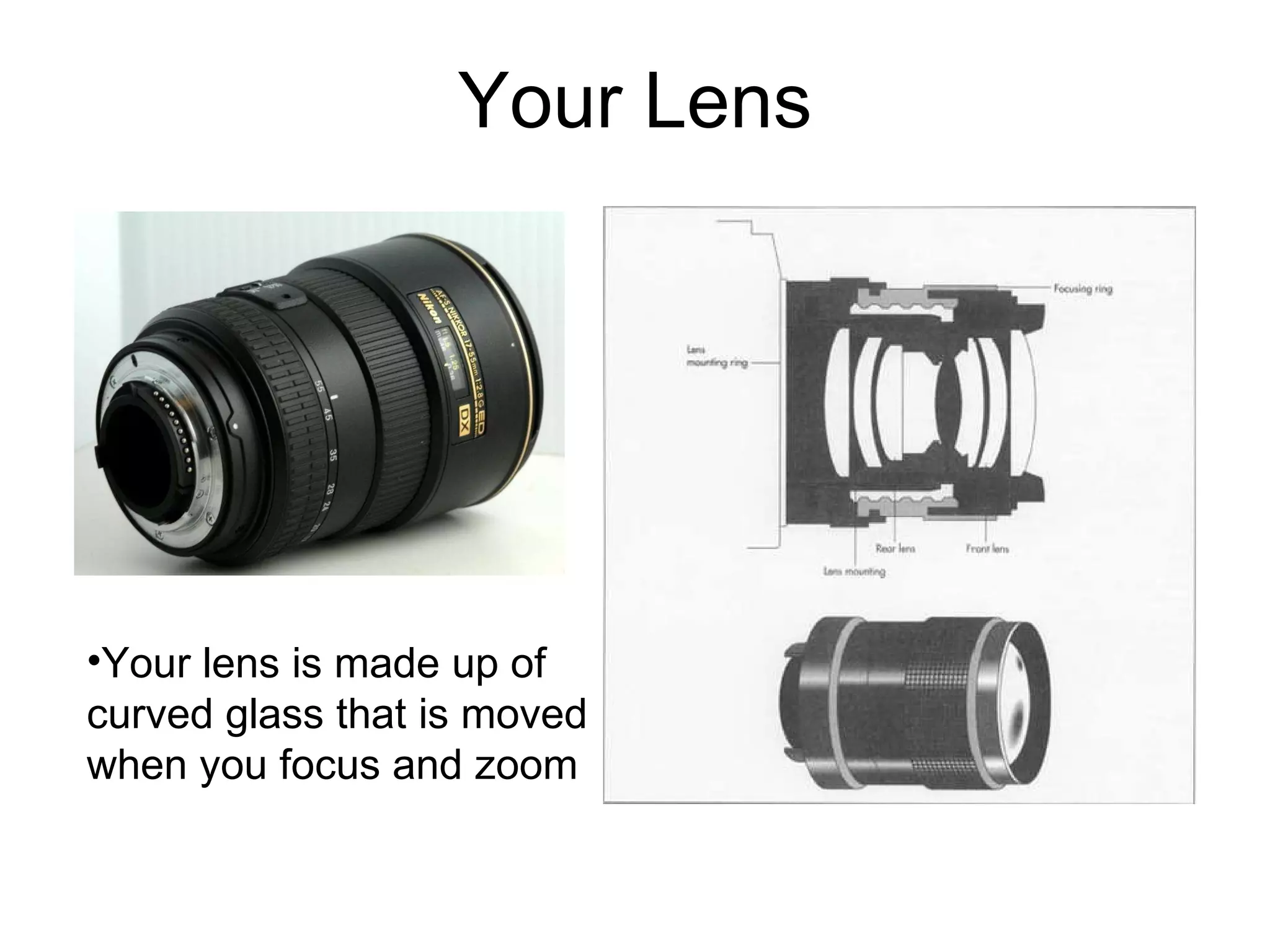
Your Lens Your lens is made up of curved glass that is moved when you focus and zoom
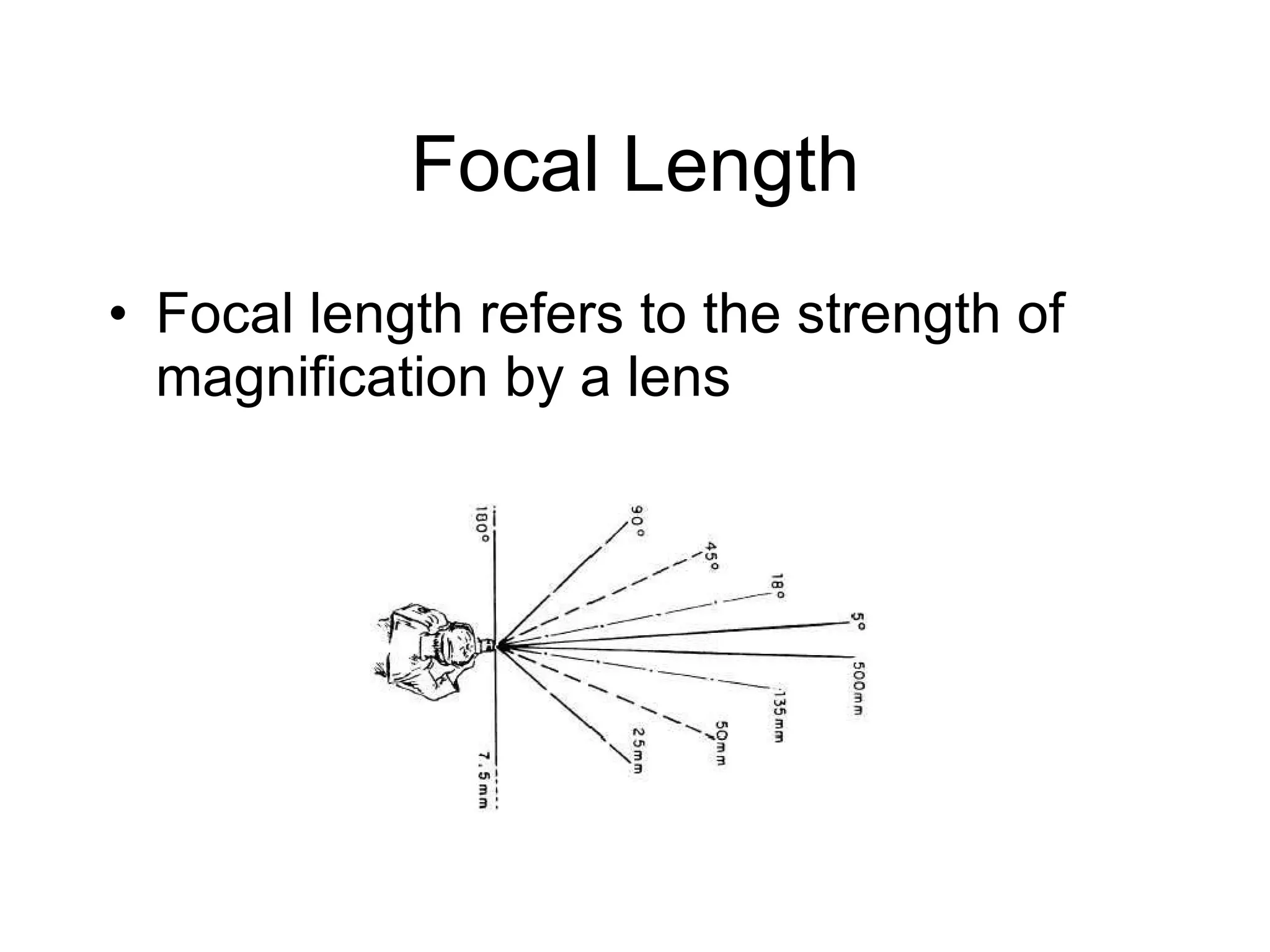
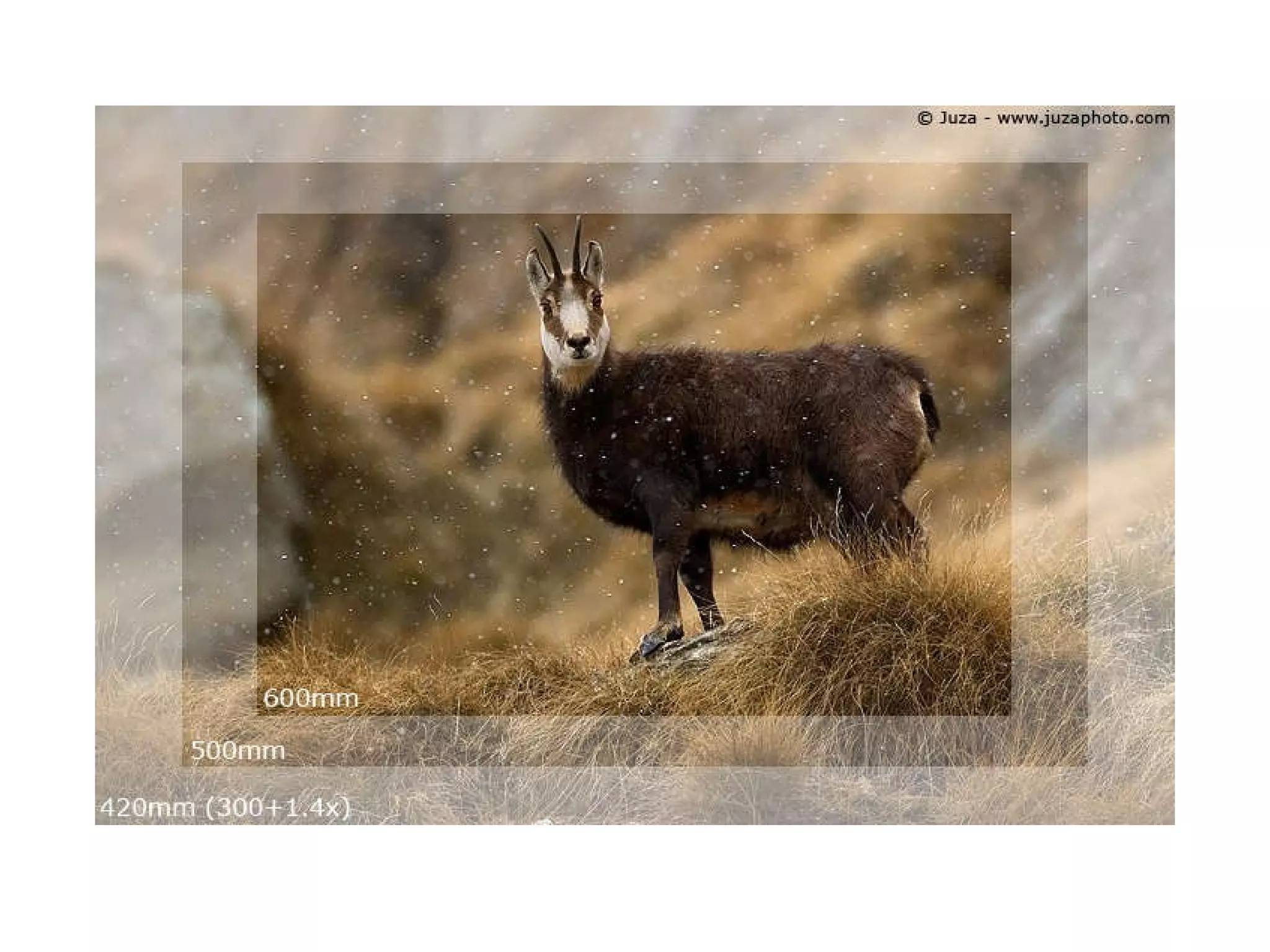
Focal Length Focal length refers to the strength of magnification by a lens
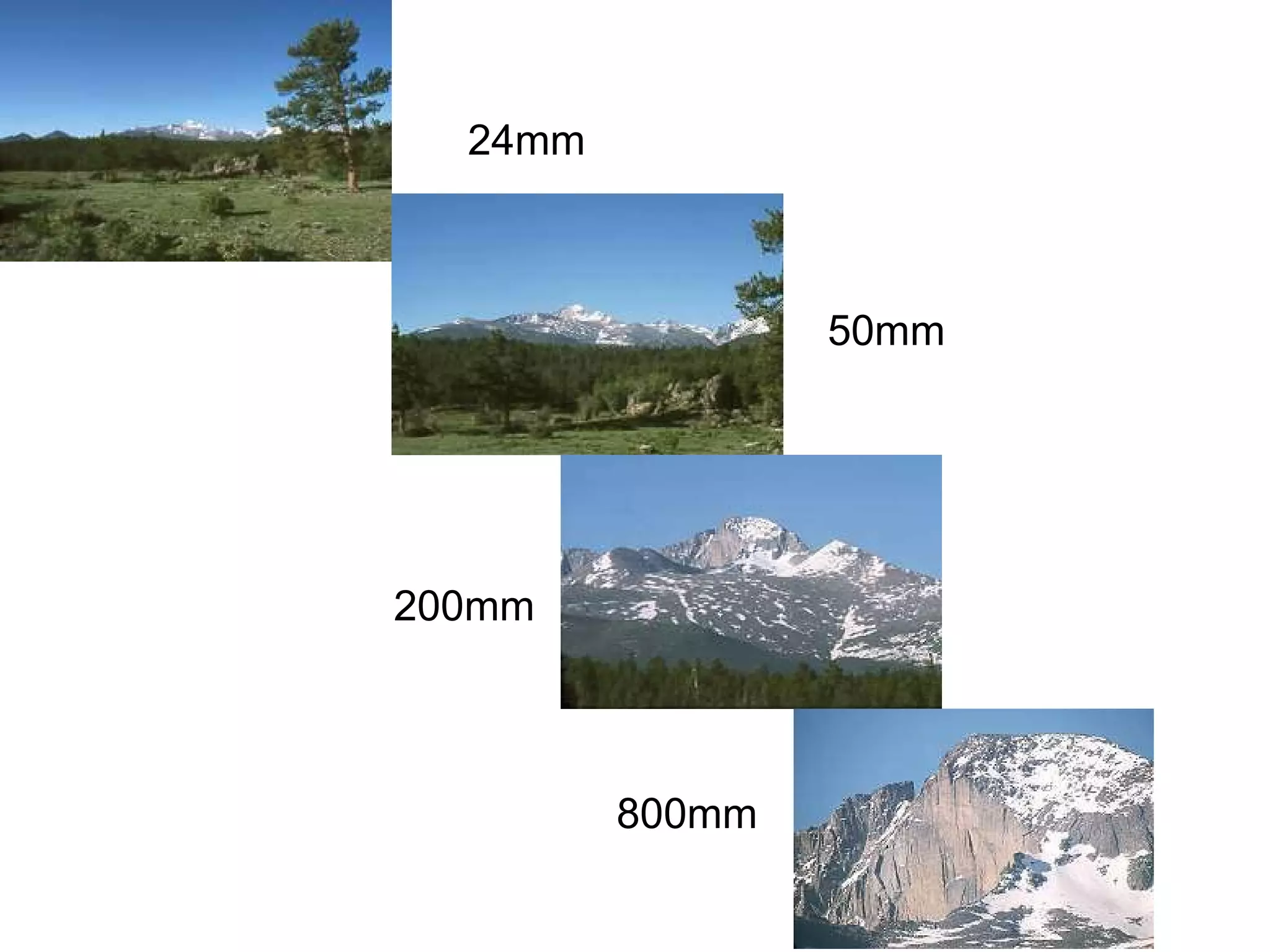
24mm 50mm 200mm 800mm
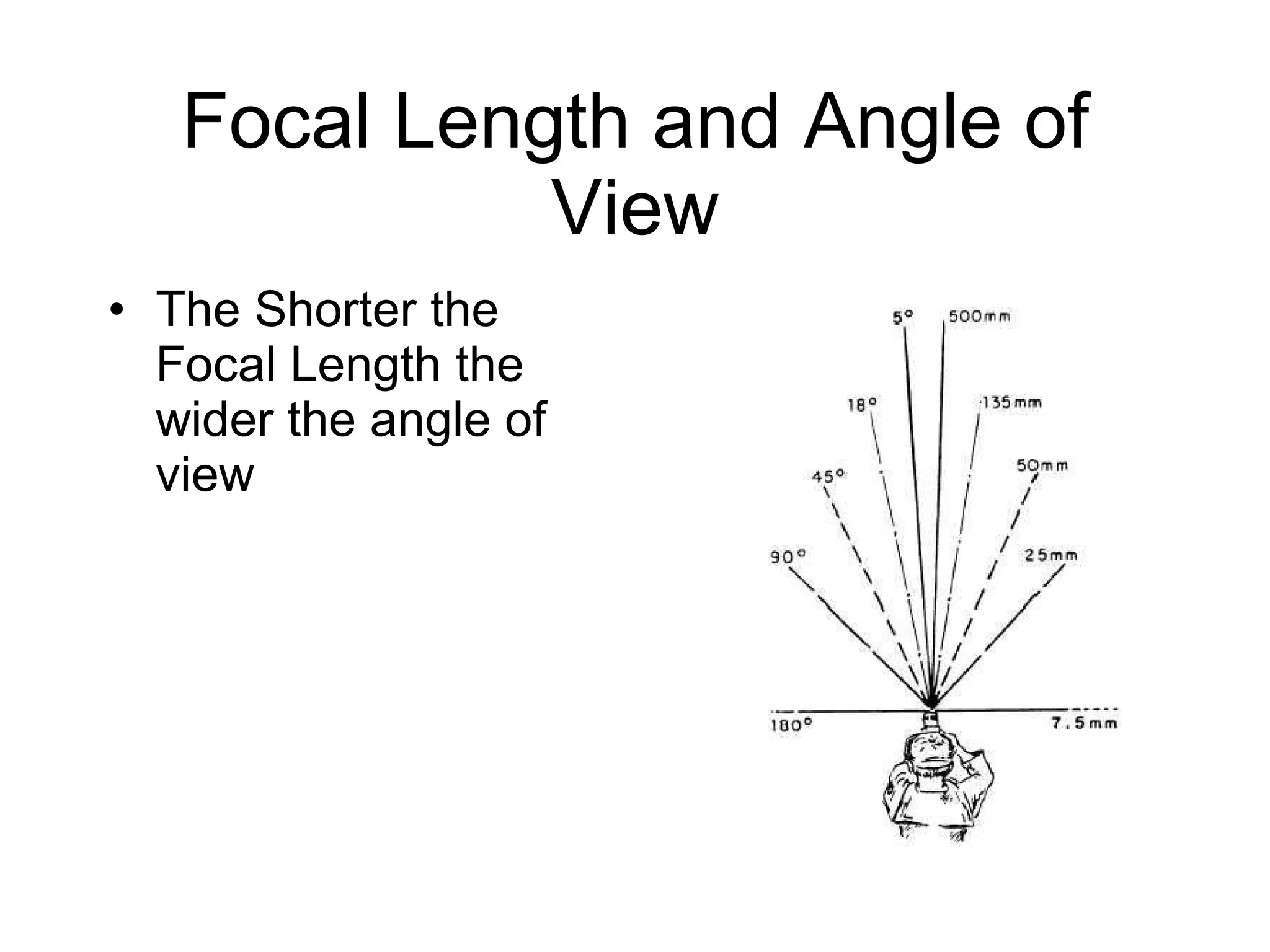
Focal Length and Angle of View The Shorter the Focal Length the wider the angle of view
 
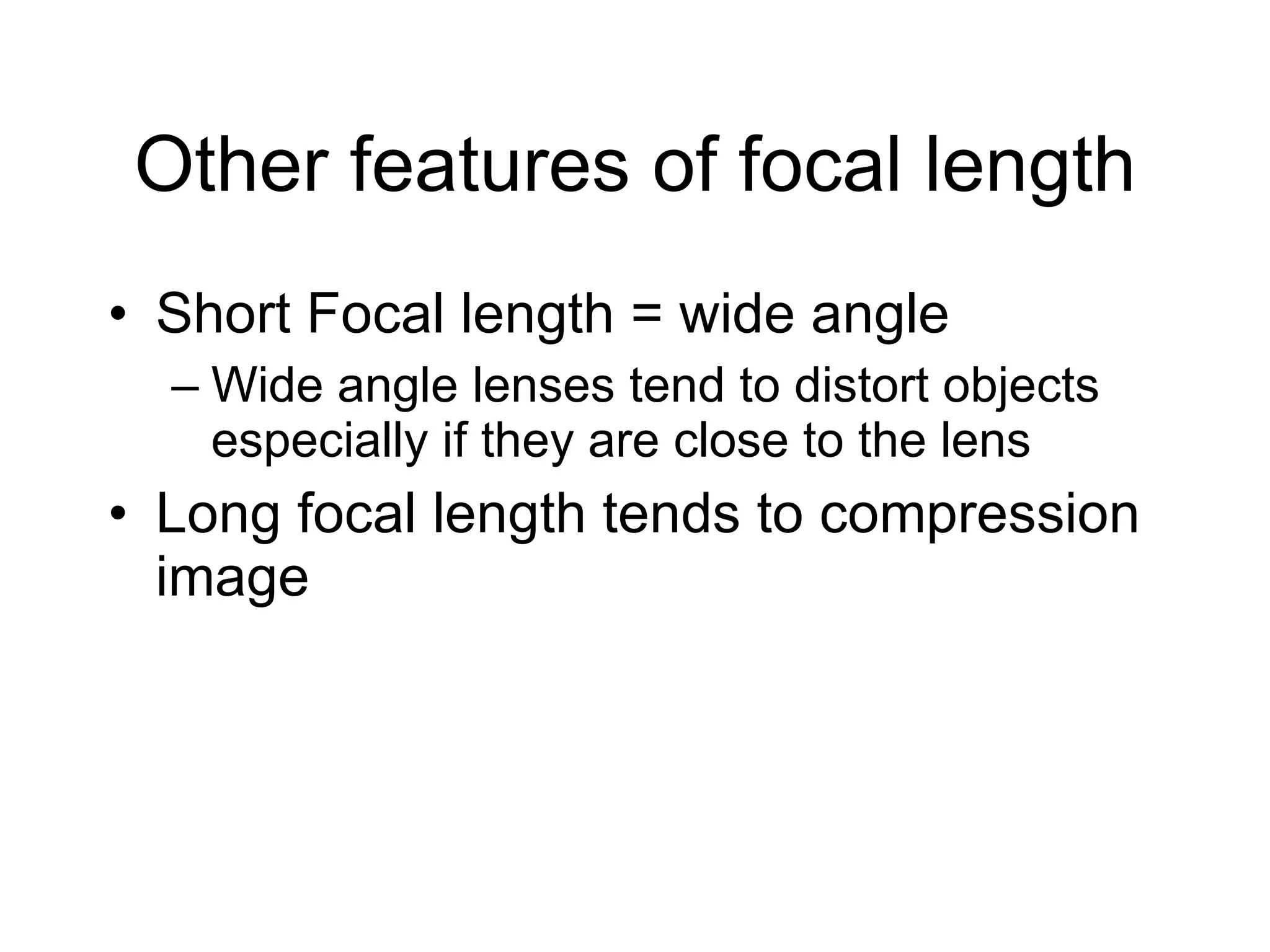
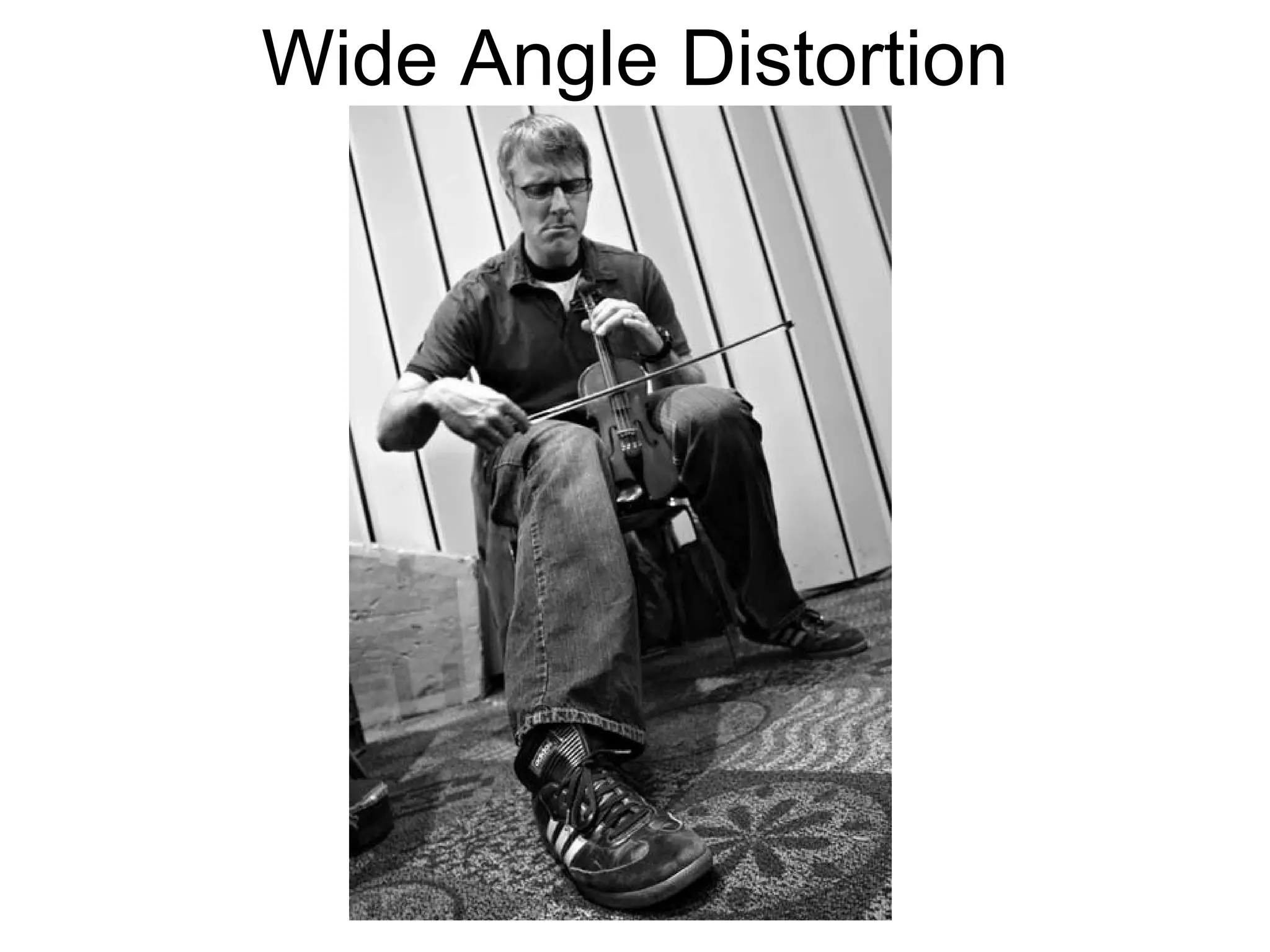
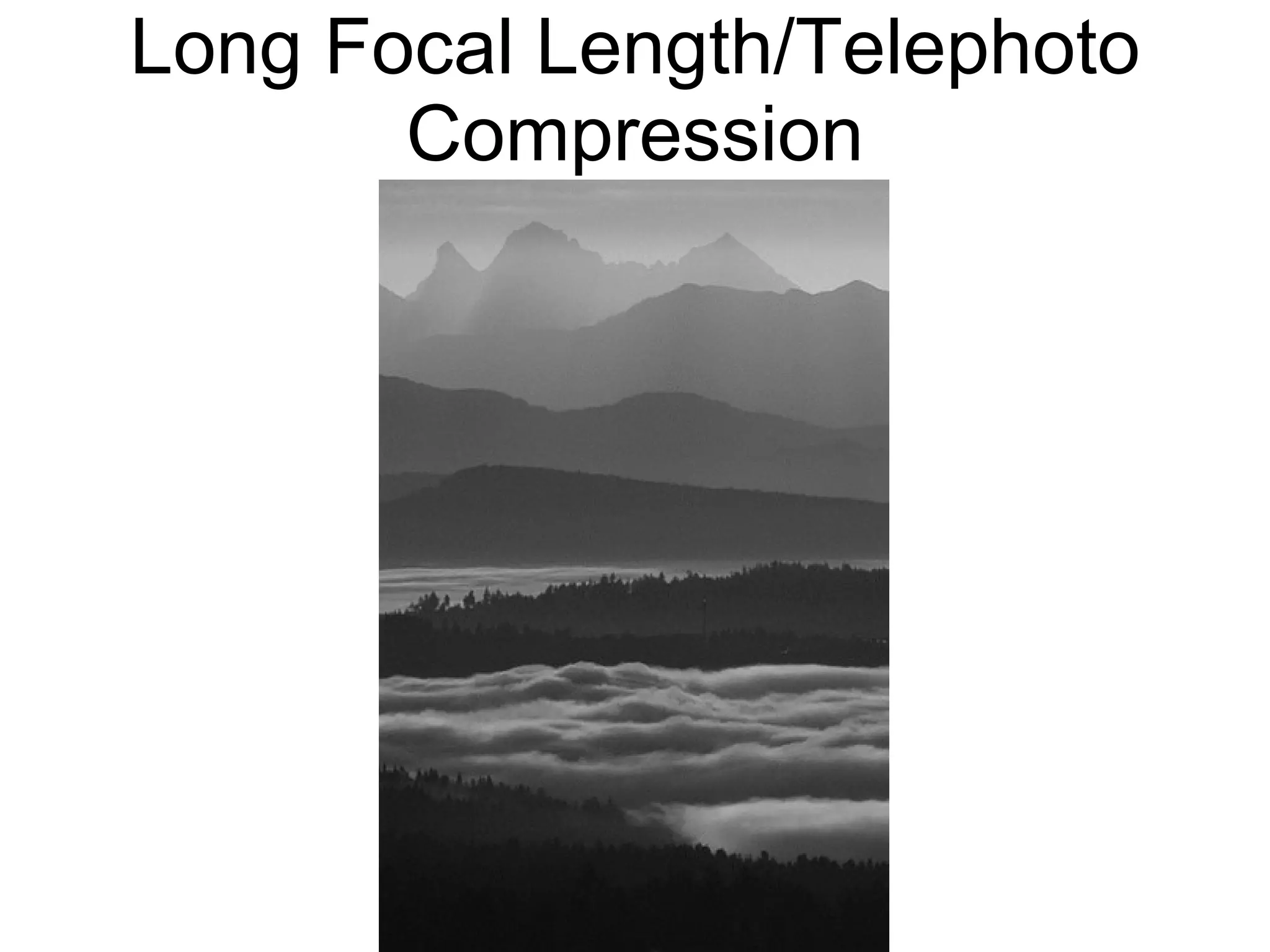
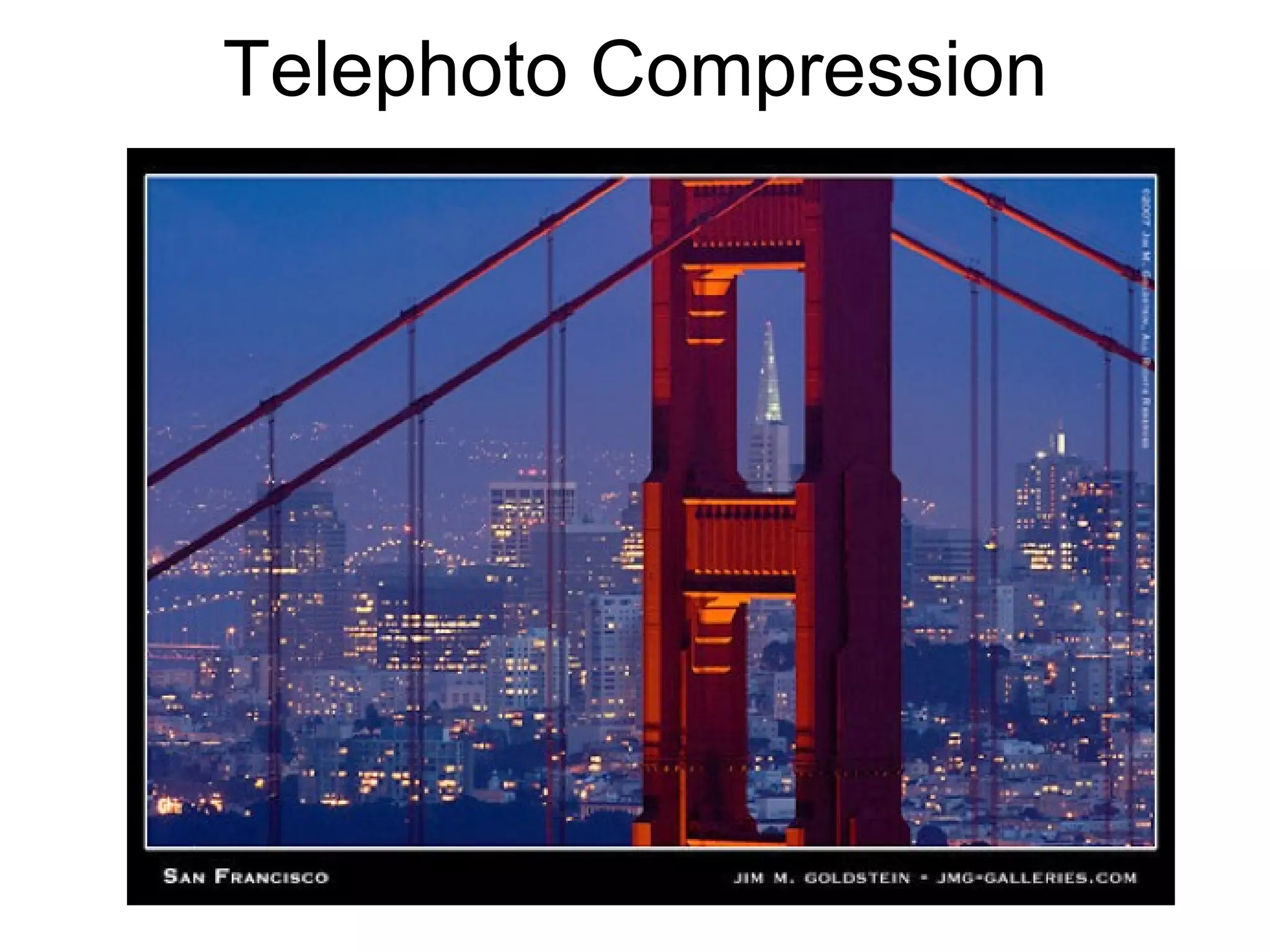
Other features of focal length Short Focal length = wide angle Wide angle lenses tend to distort objects especially if they are close to the lens Long focal length tends to compression image
Wide Angle Distortion
Long Focal Length/Telephoto Compression
Telephoto Compression
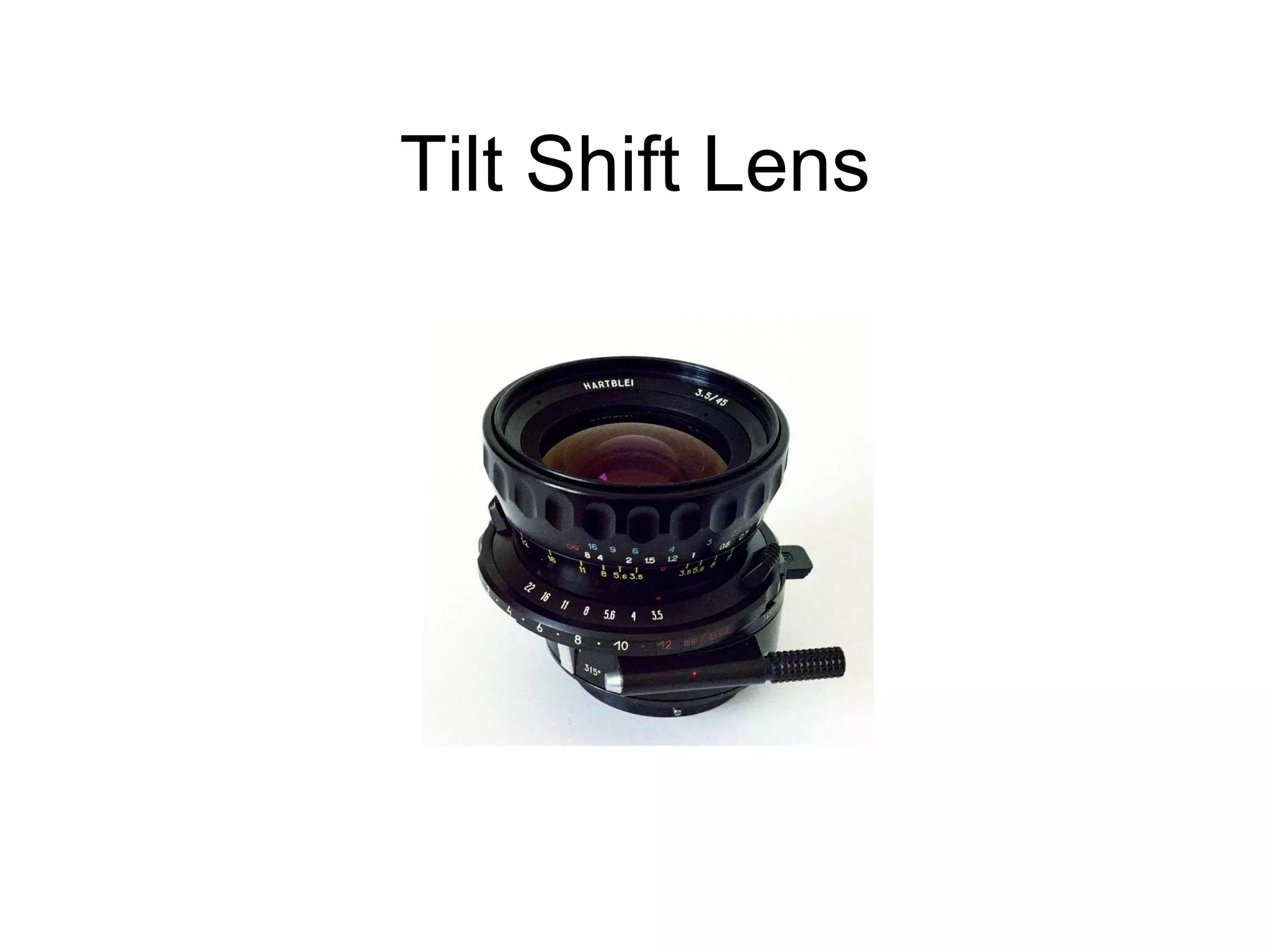
Special Lenses
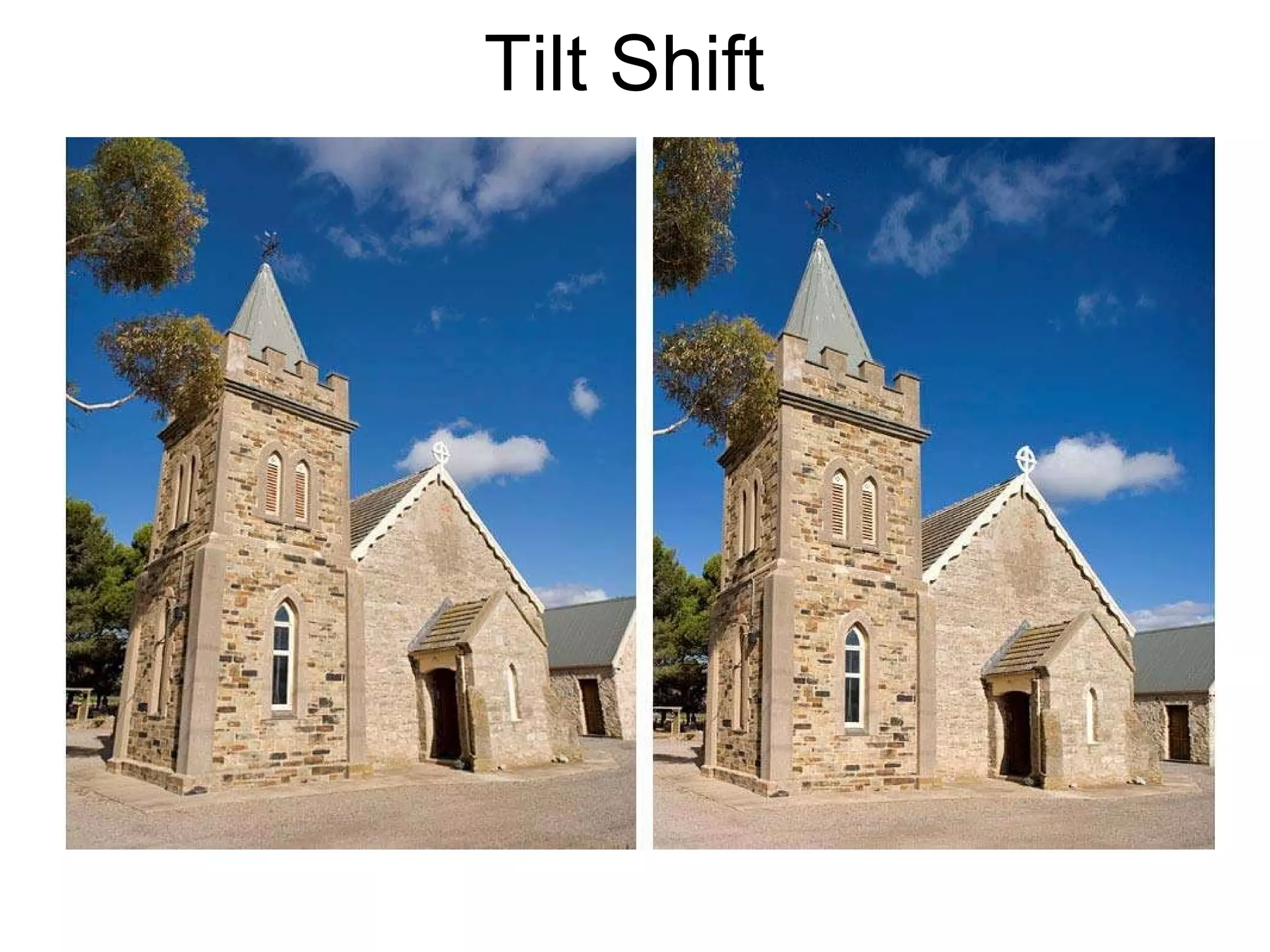
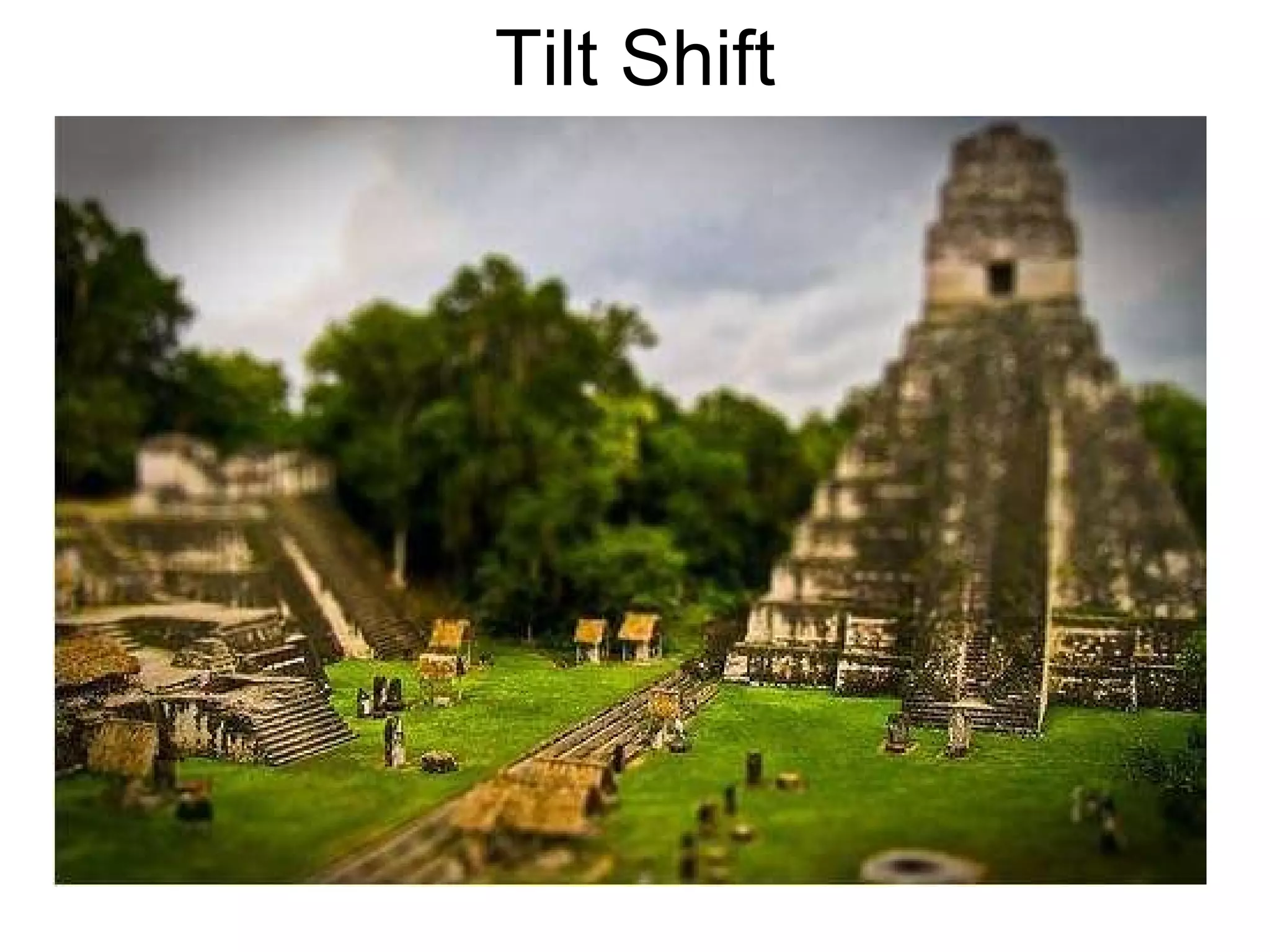
Tilt Shift Lens
Tilt Shift
Tilt Shift
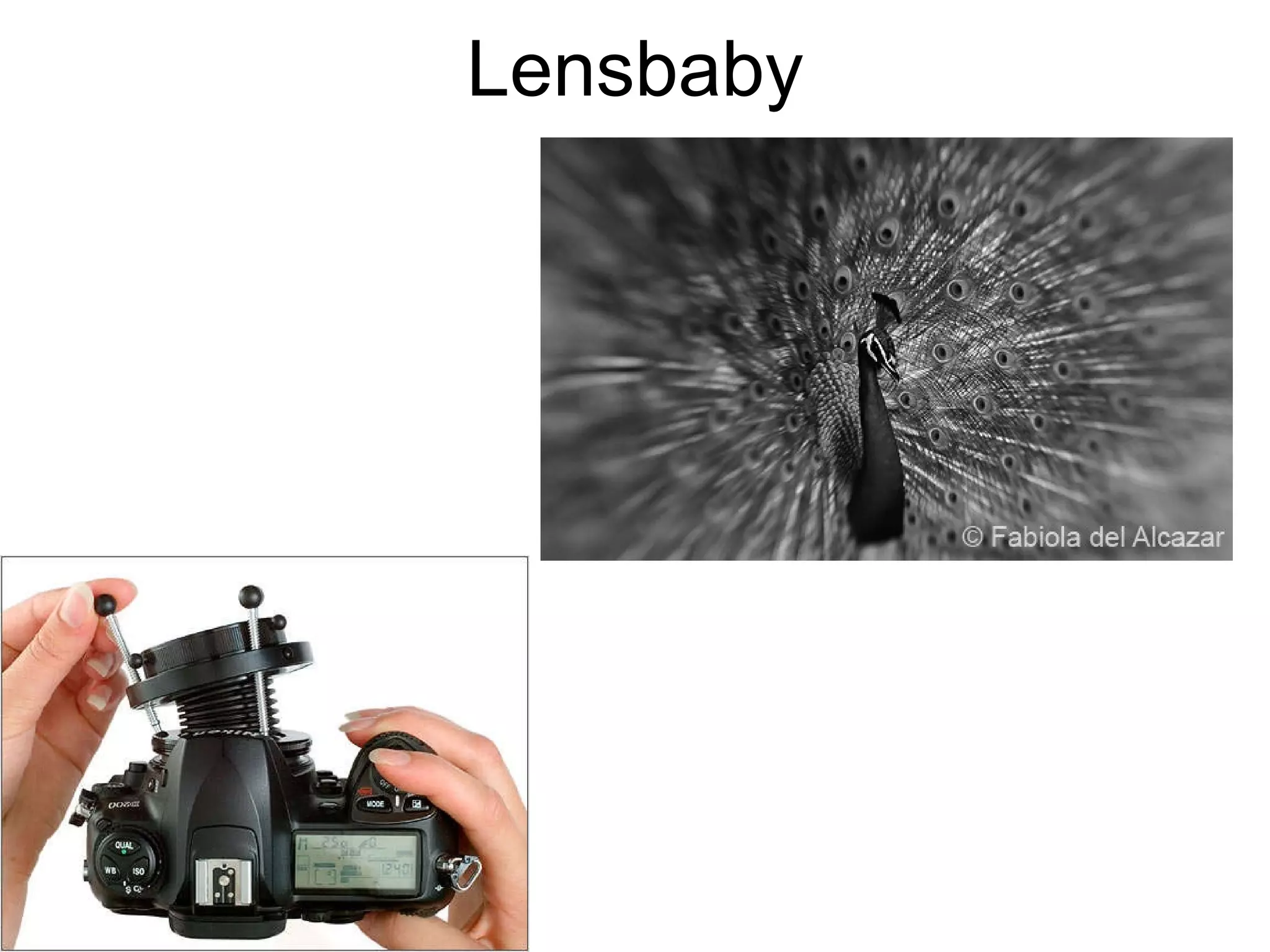
Lensbaby
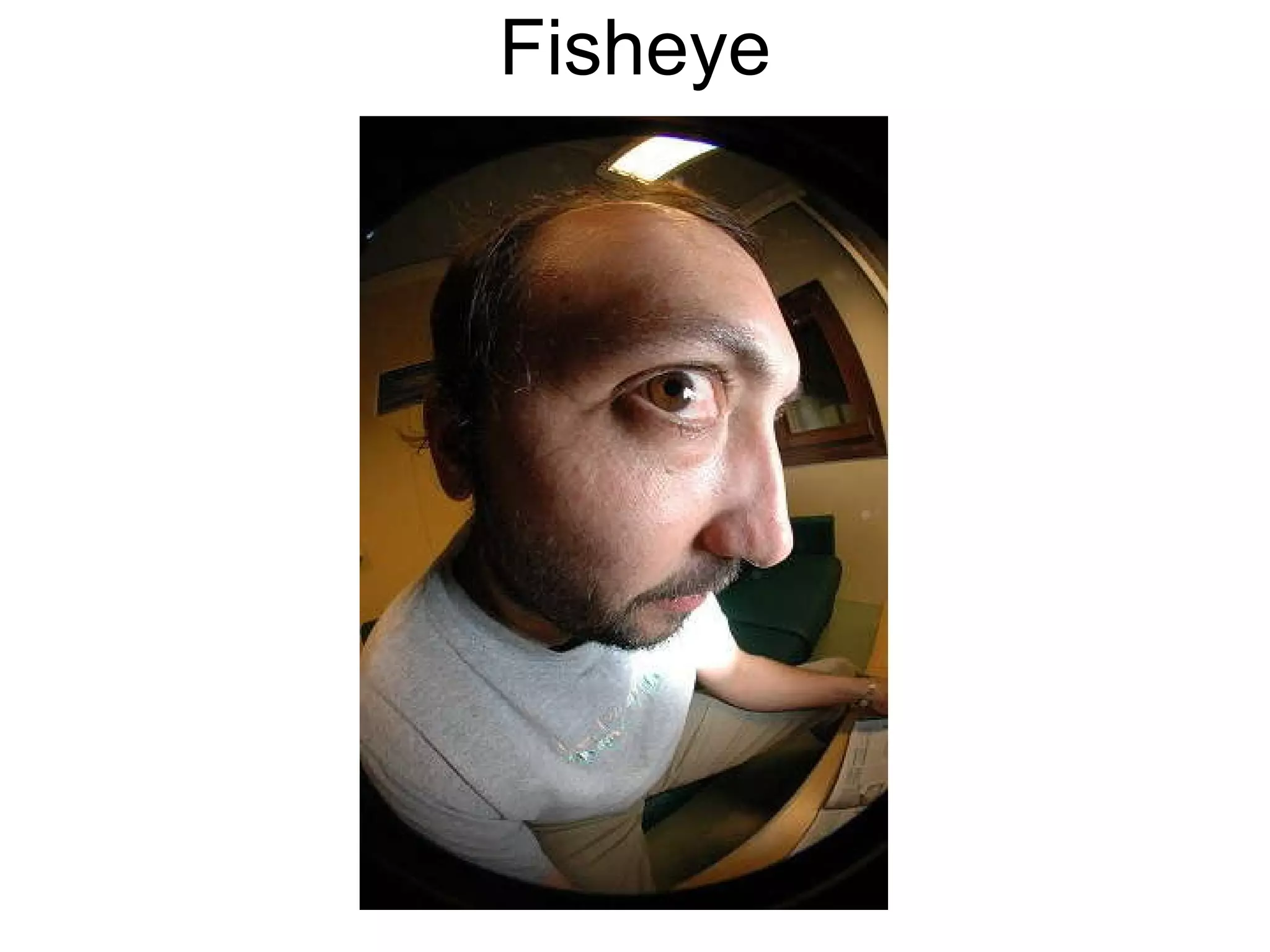
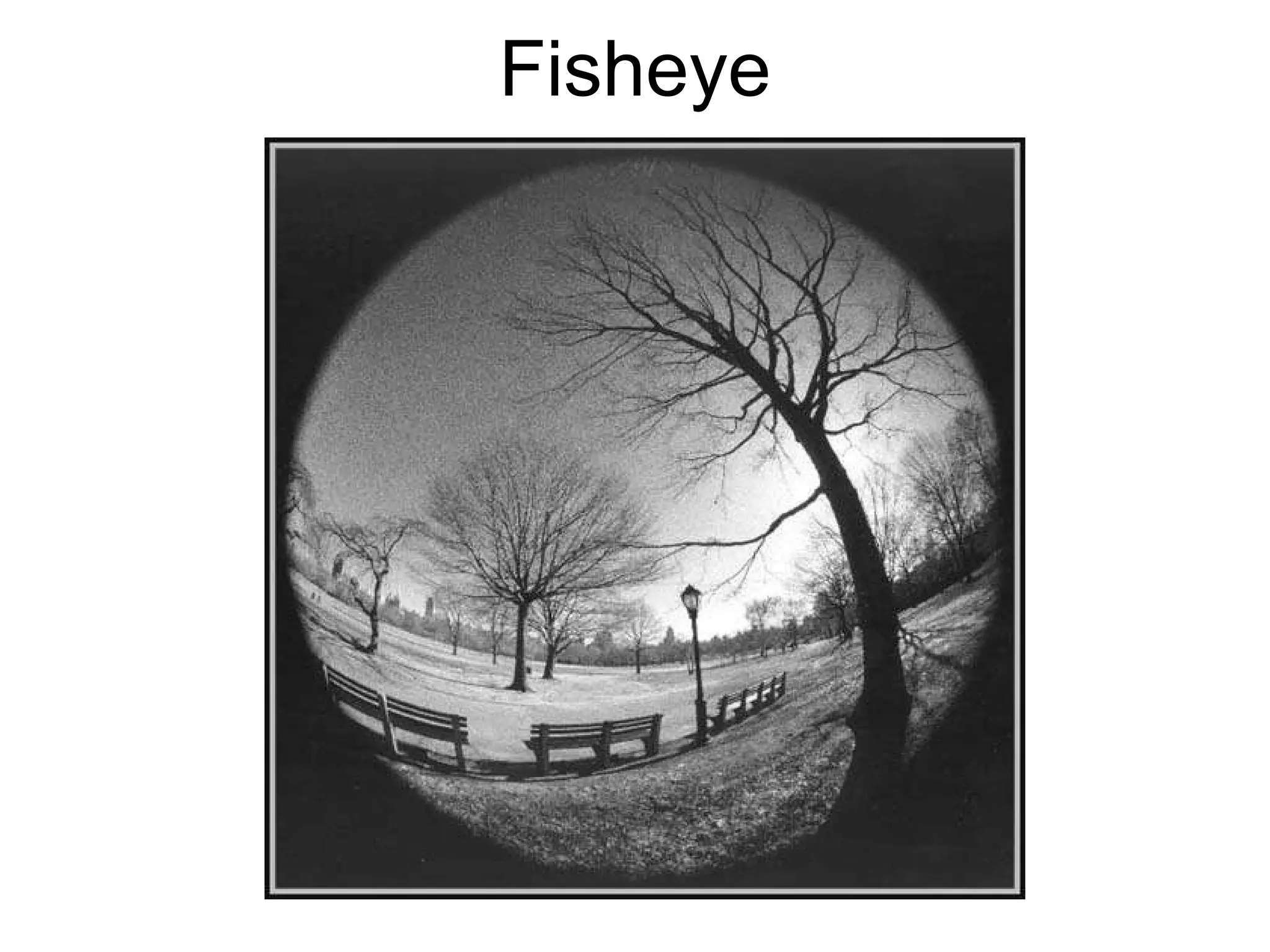
Fisheye
Fisheye
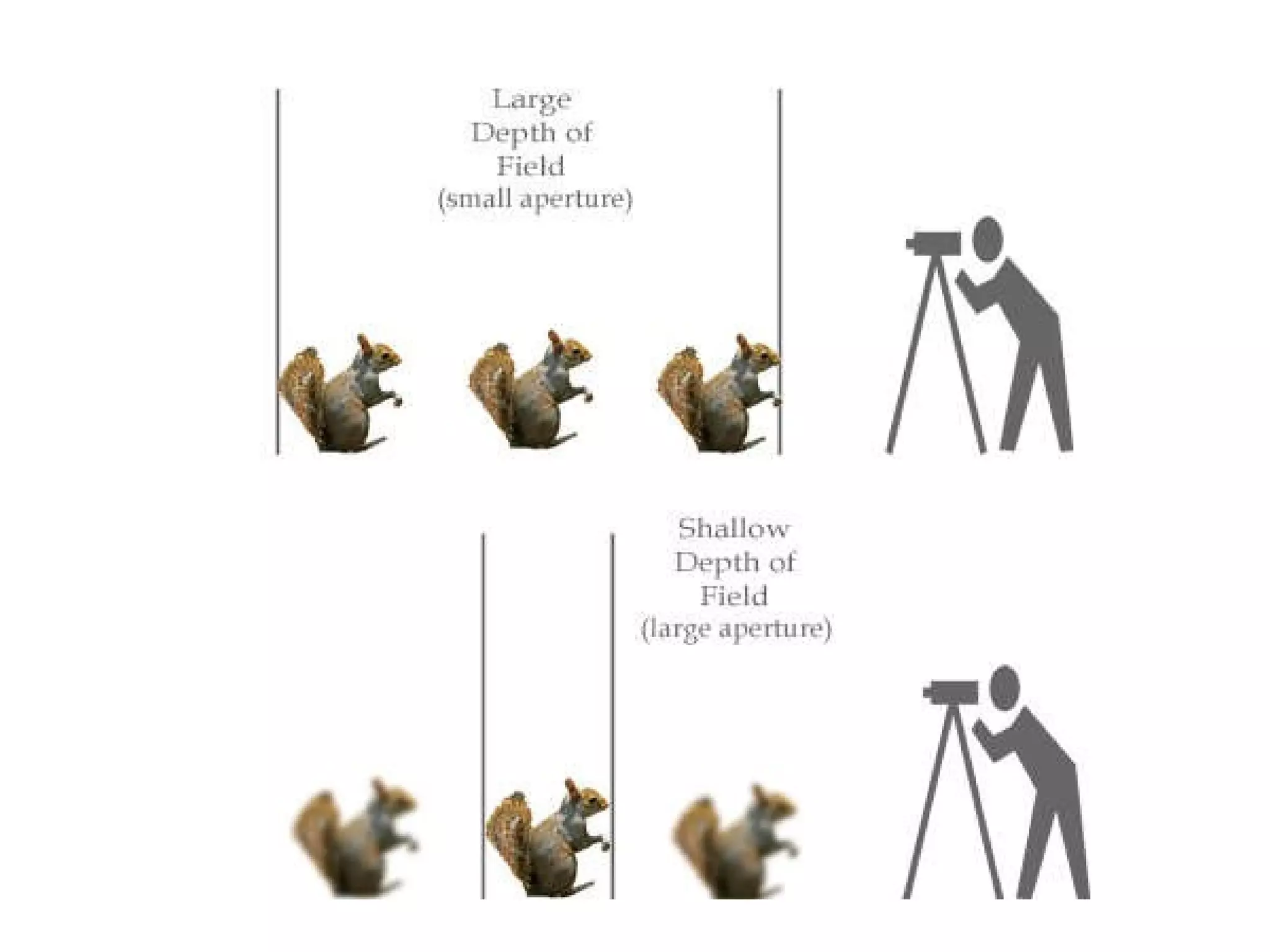
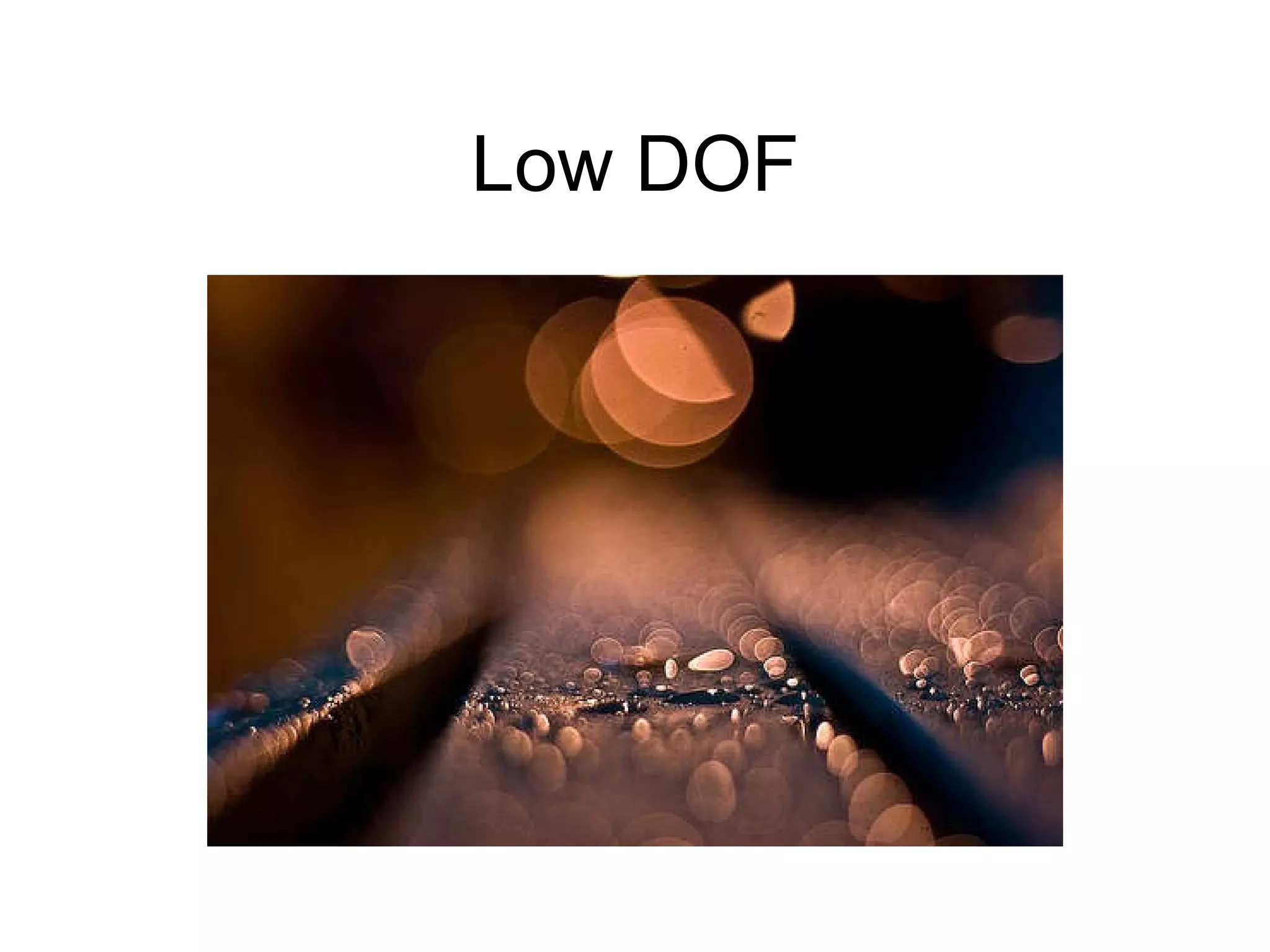
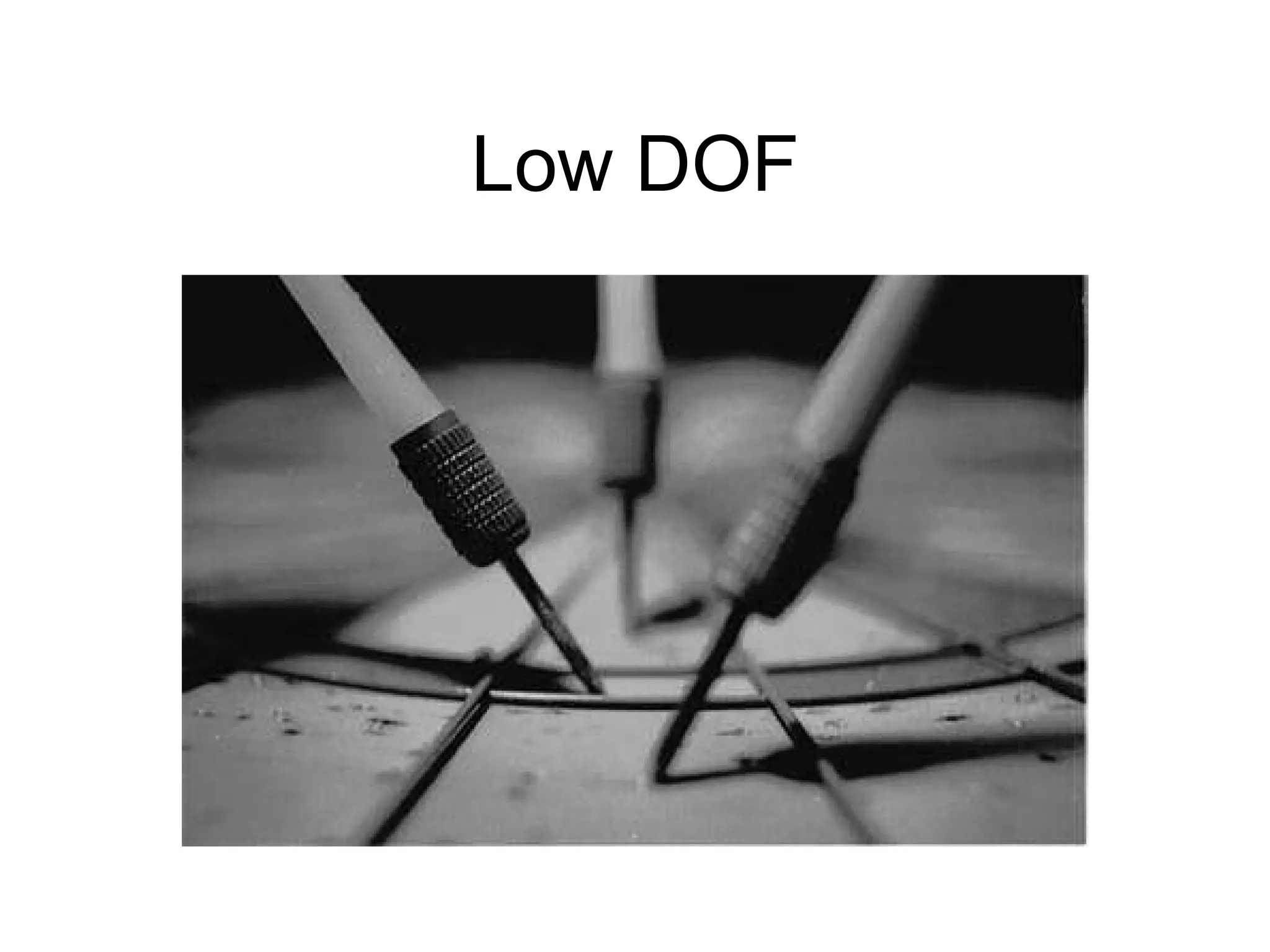
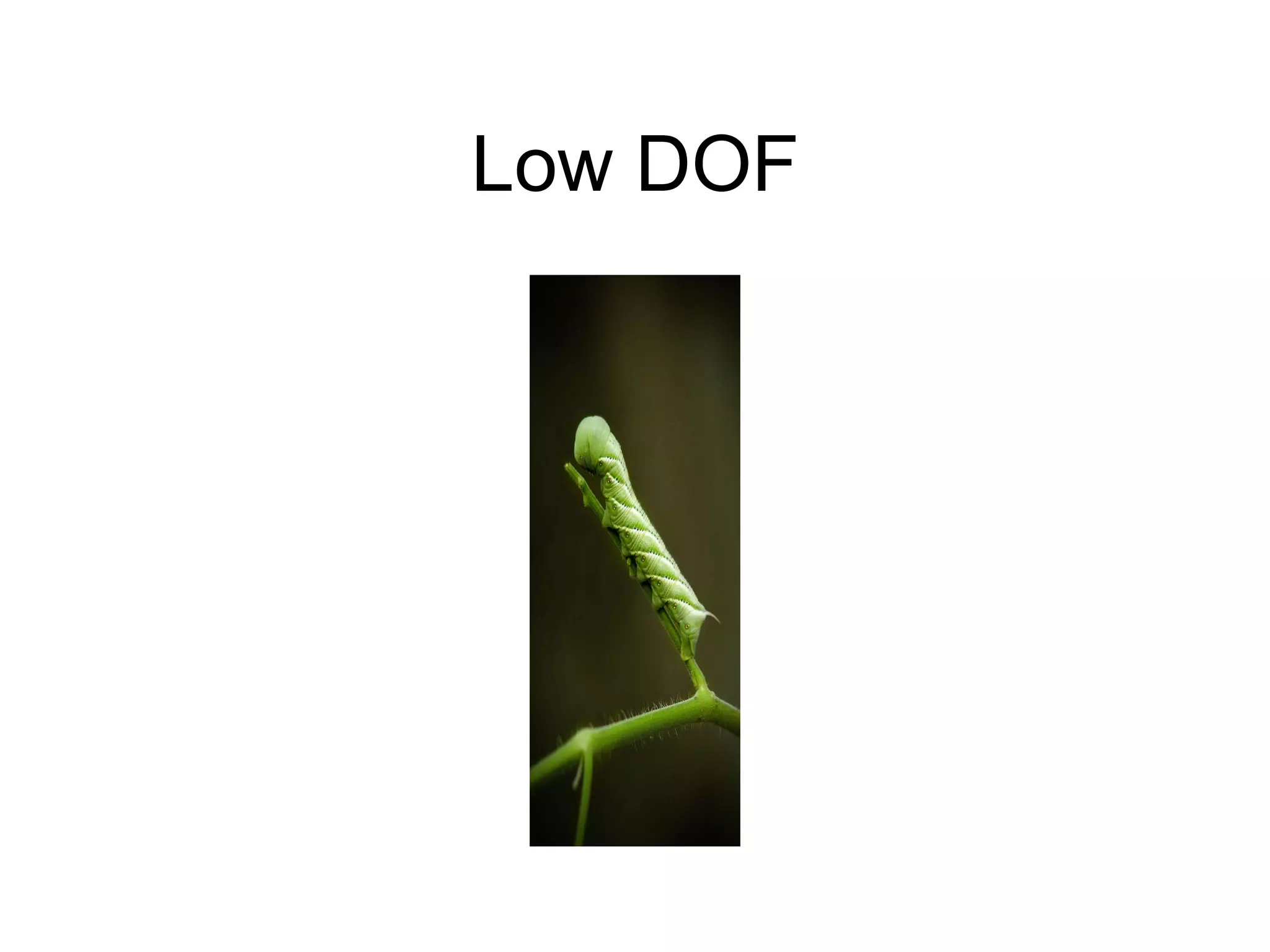
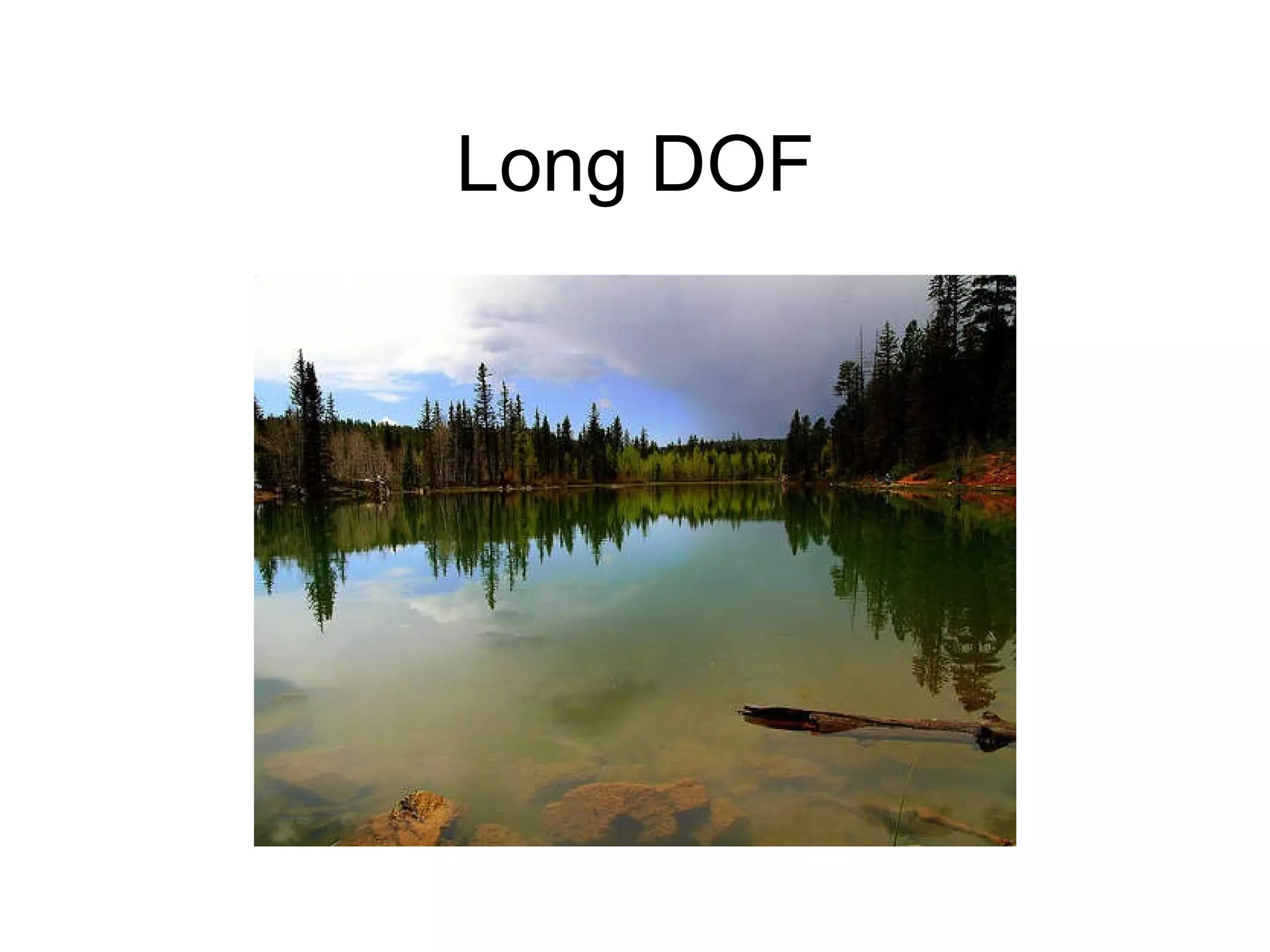
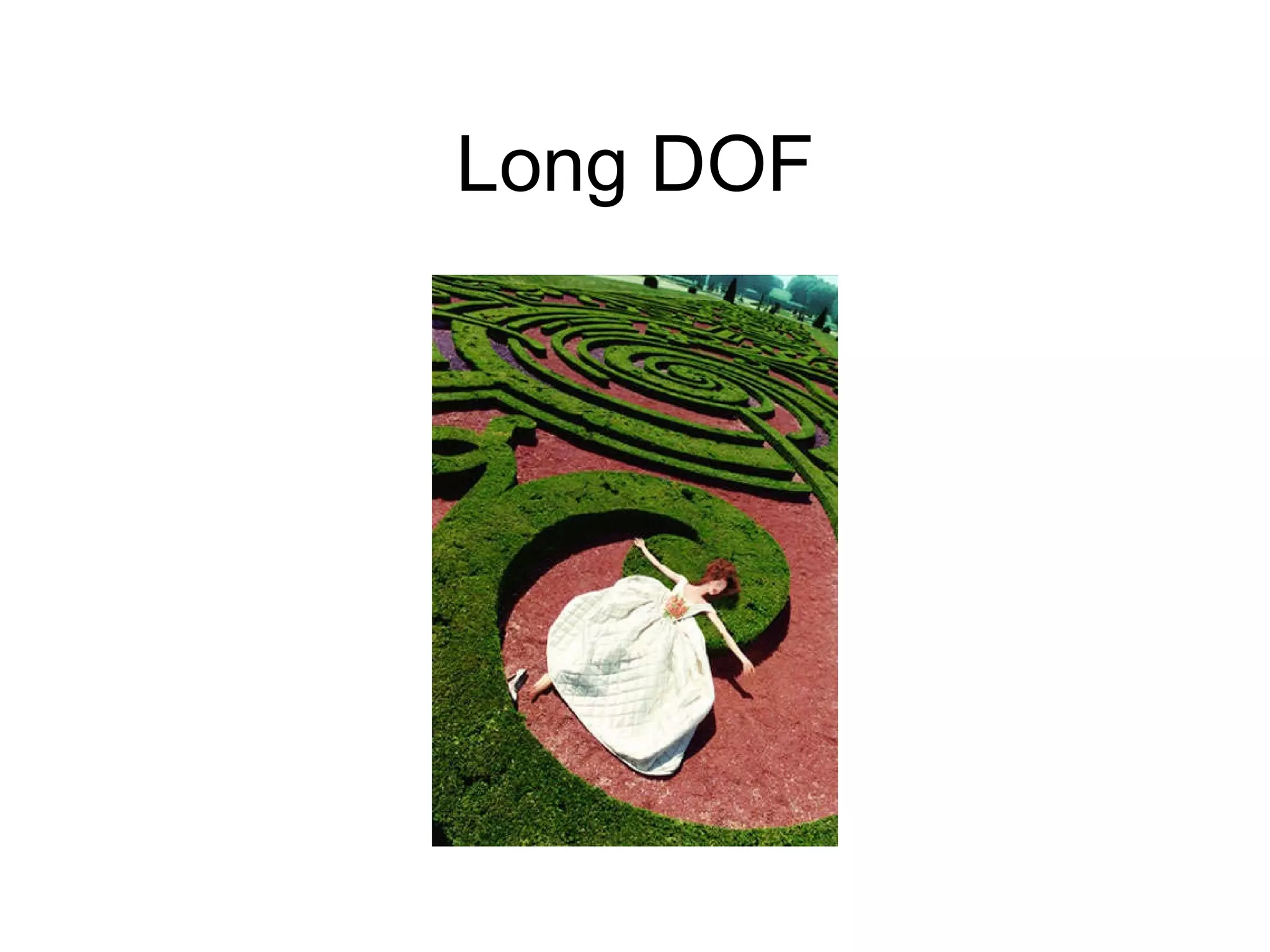
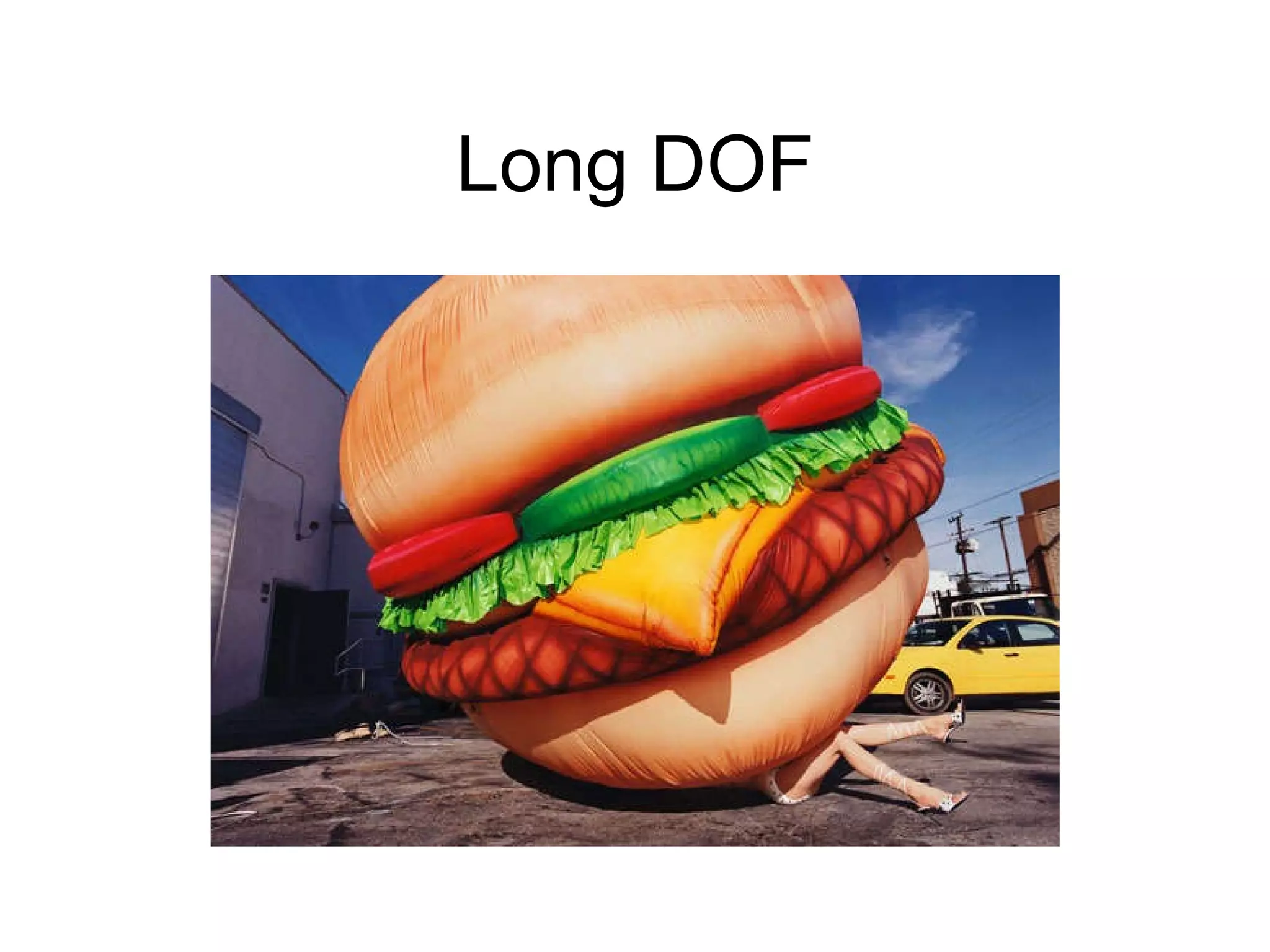
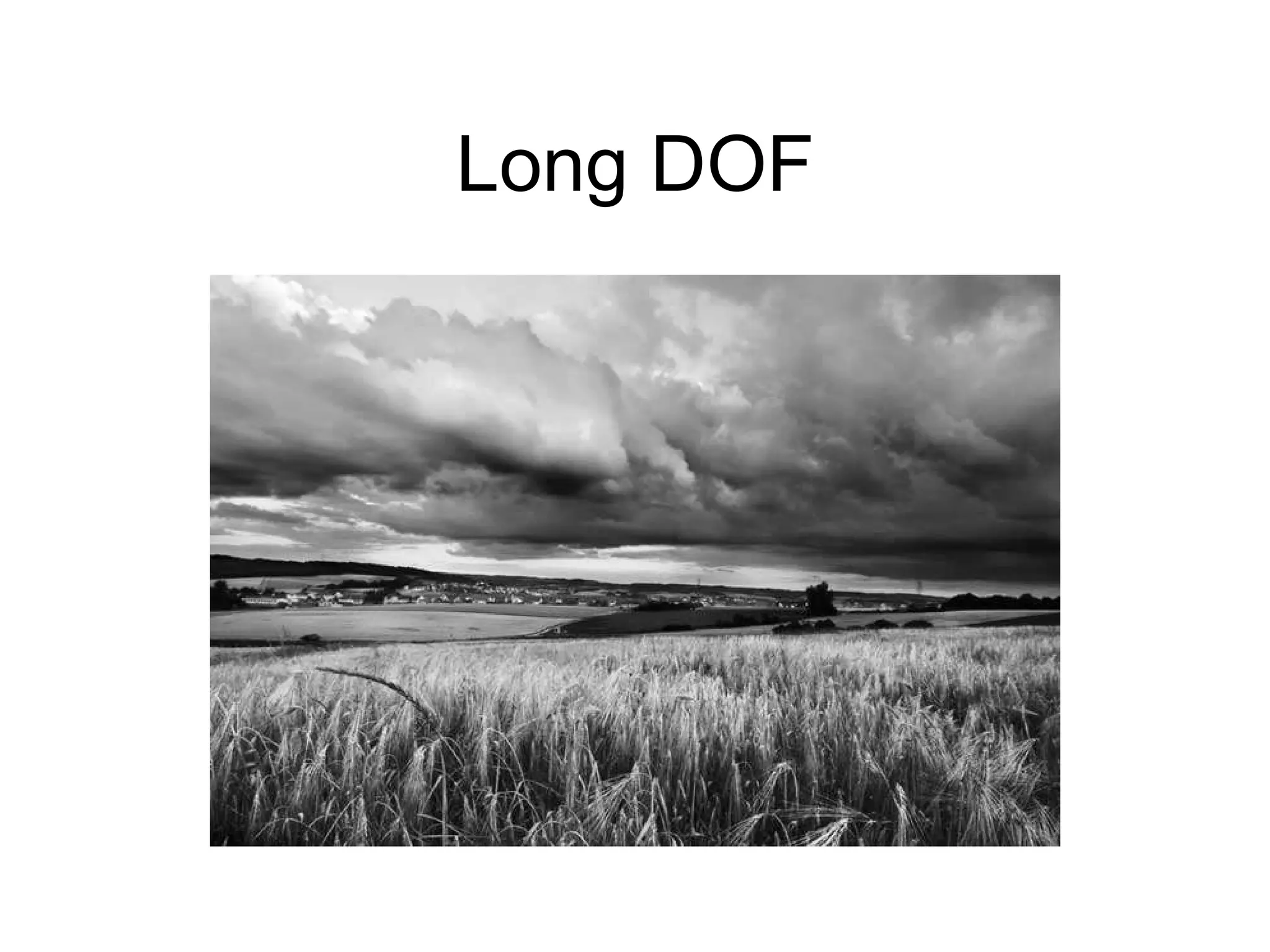
Depth of Field The portion of a scene that appears sharp in the image A lens can precisely focus at only one distance, but the decrease in sharpness is gradual on either side of the focused distance Not easily perceived by the human eye
 
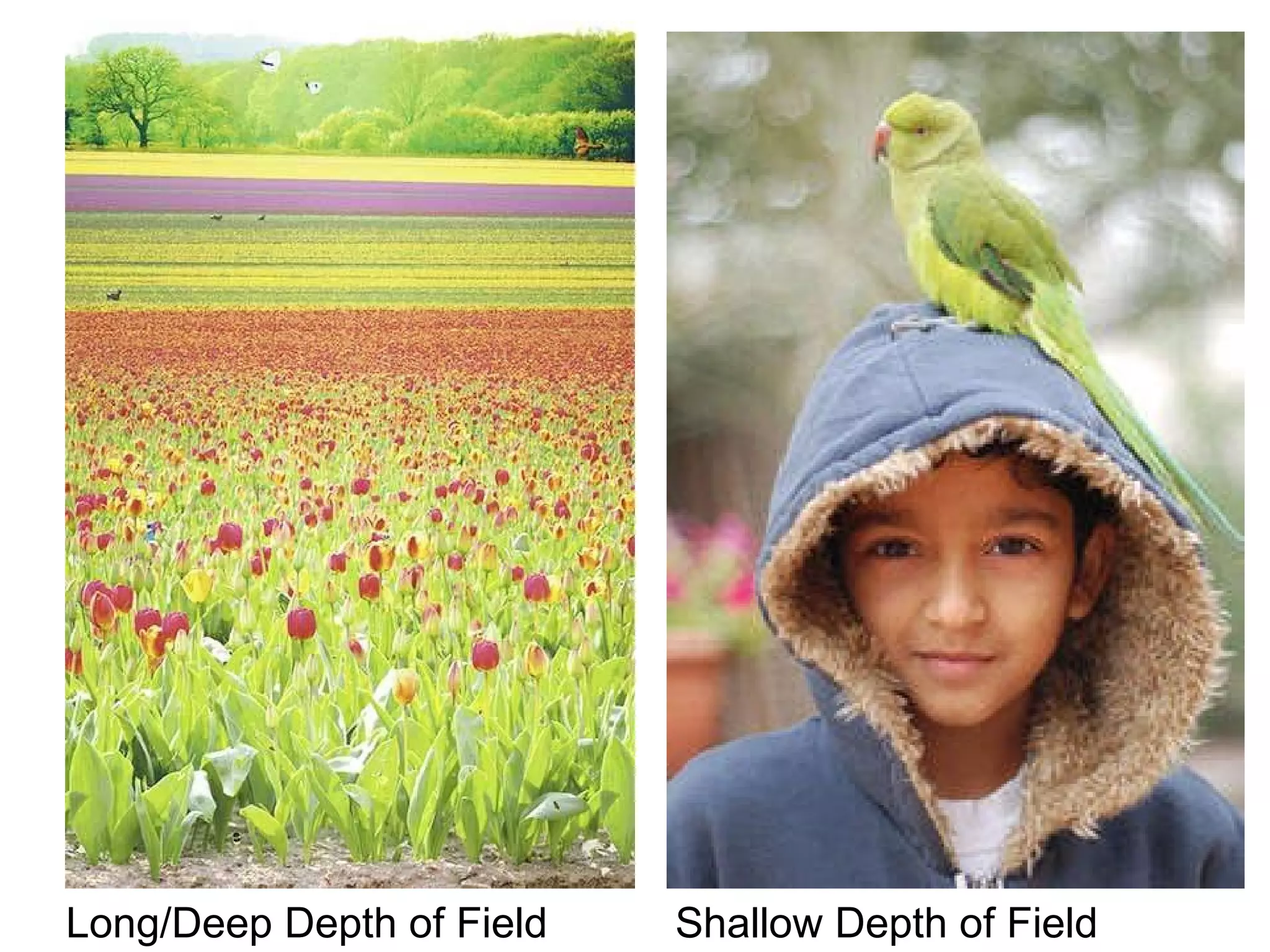
Long/Deep Depth of Field Shallow Depth of Field
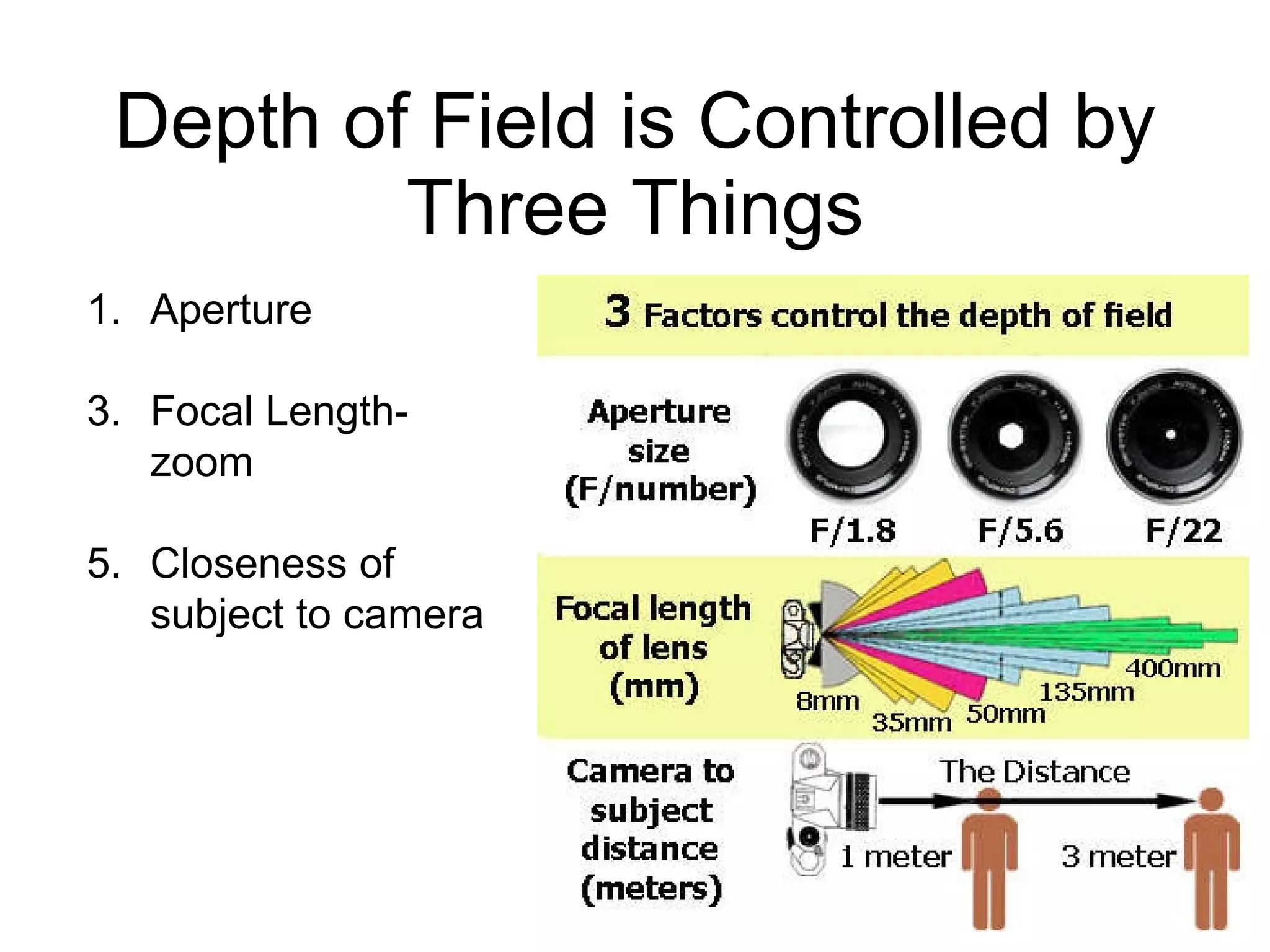
Depth of Field is Controlled by Three Things Aperture Focal Length-zoom Closeness of subject to camera
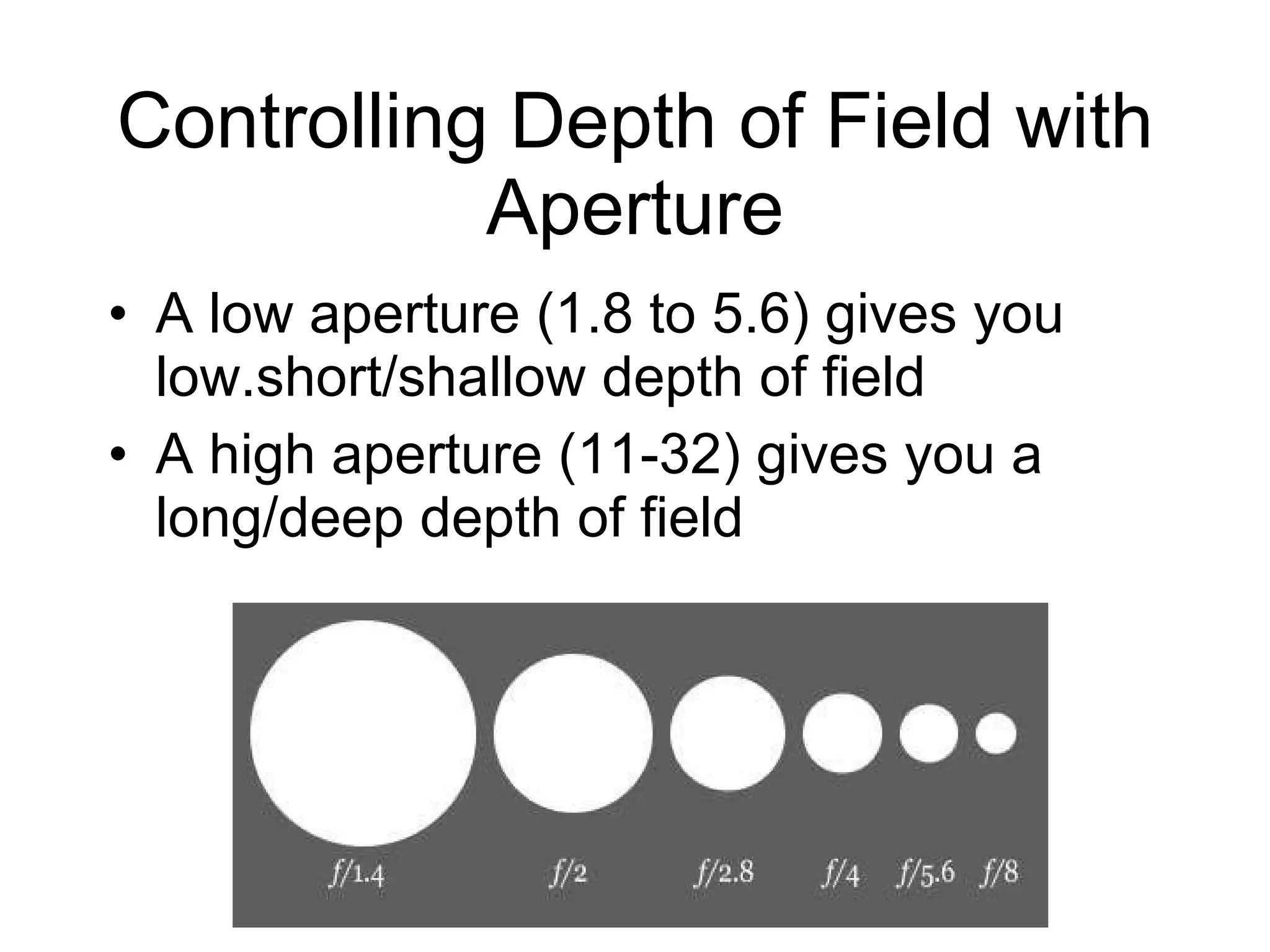
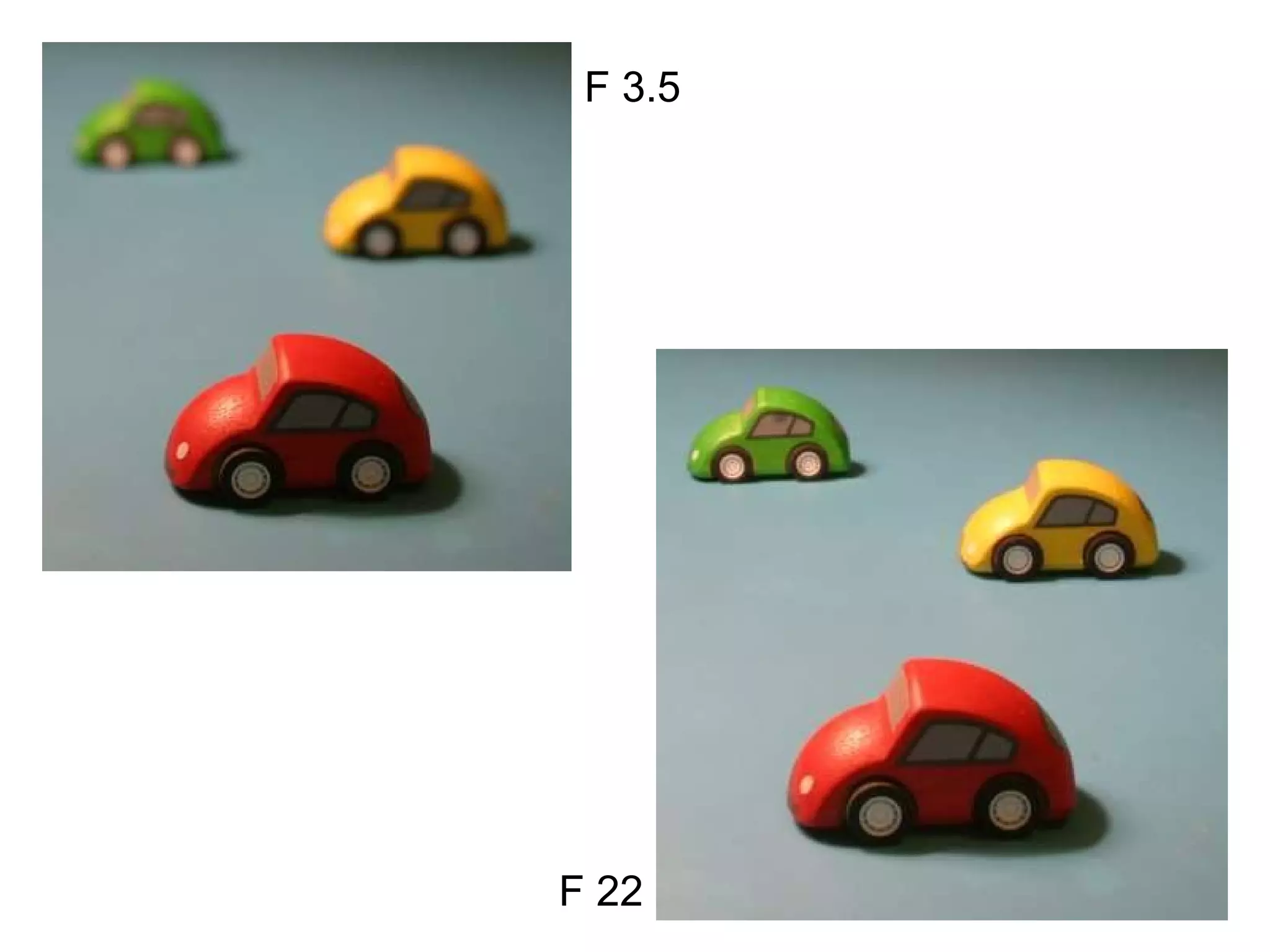
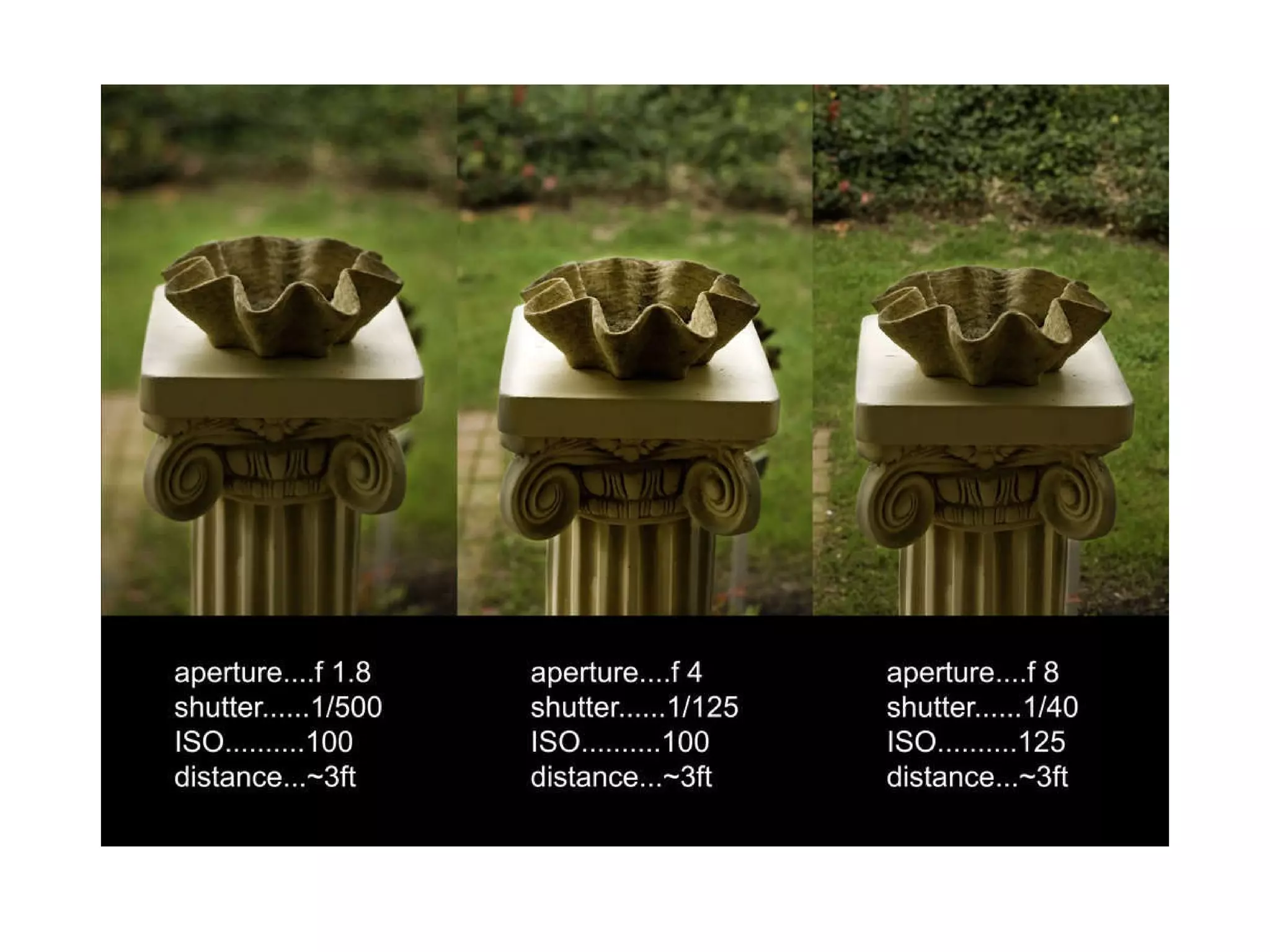
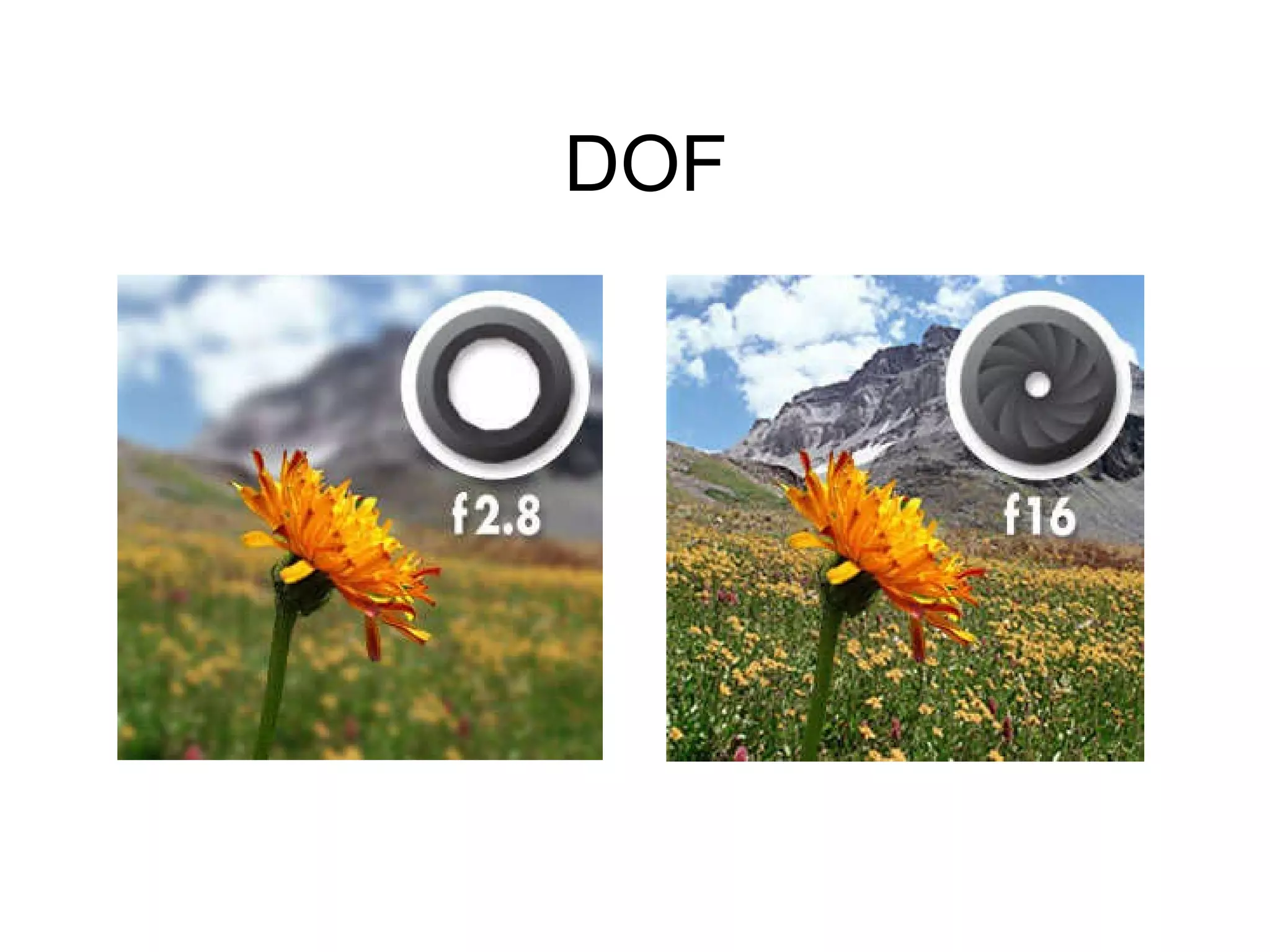
Controlling Depth of Field with Aperture A low aperture (1.8 to 5.6) gives you low.short/shallow depth of field A high aperture (11-32) gives you a long/deep depth of field
F 3.5 F 22
 
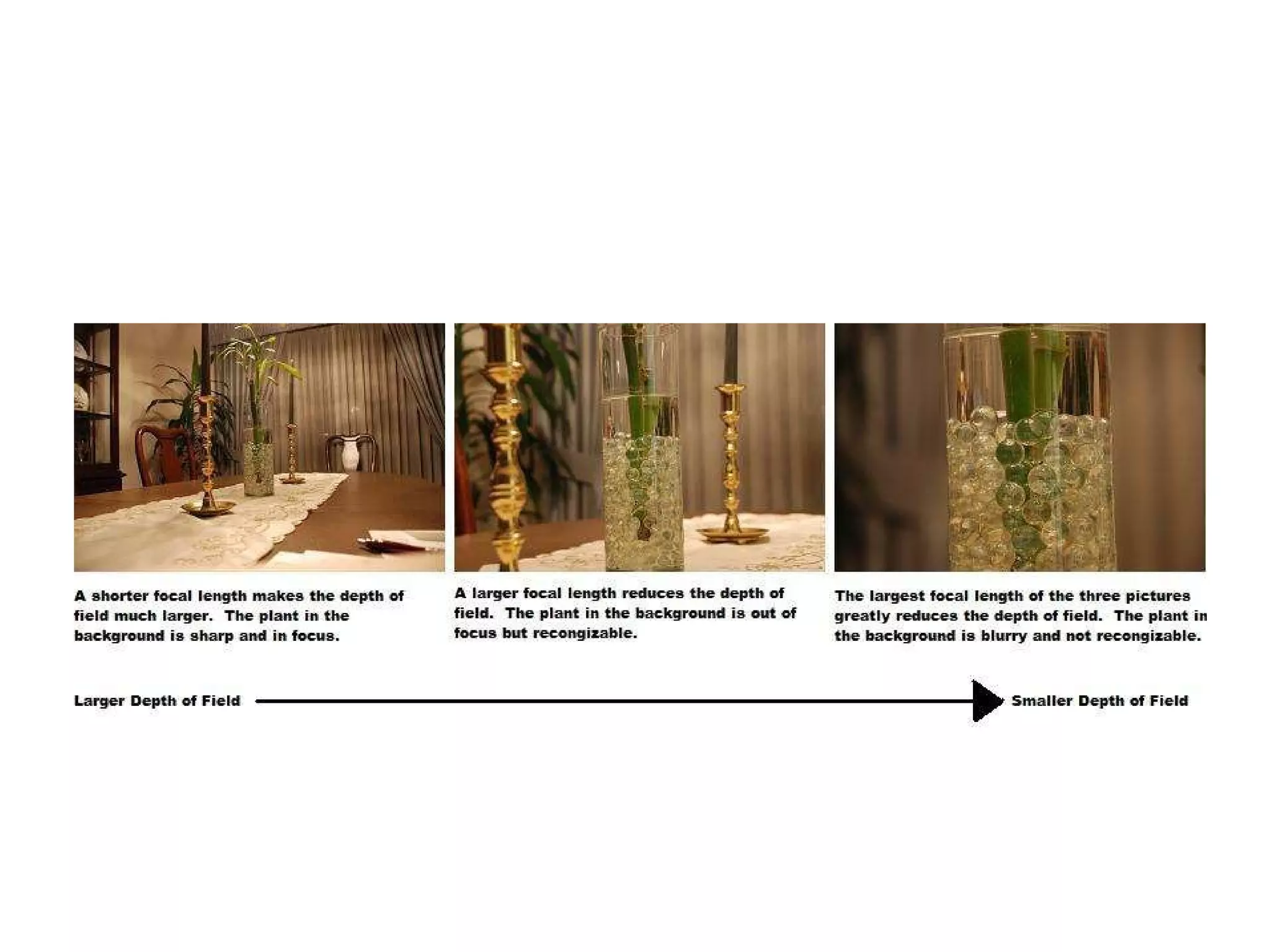
Controlling Depth of Field with Focal Length Longer lenses tend to give you a shorter depth of field resulting in blurrier backgrounds Wider lenses are better at keeping more depth in focus
 
Controlling Depth of Field with Proximity to Subject Similarly, the closer you are to the object the less depth of field will be present This is the same idea as focal length
More Examples
DOF
Low DOF
Low DOF
Low DOF
Low DOF
Low DOF
Long DOF
Long DOF
Long DOF
Long DOF
Long DOF

film-Depth of Field