Buoyancy
Water exerts a force called a buoyant force that
acts on a submerged object.
The buoyant force acts in the upward direction,
against the force of gravity, so it makes an
object feel lighter.
Buoyancy
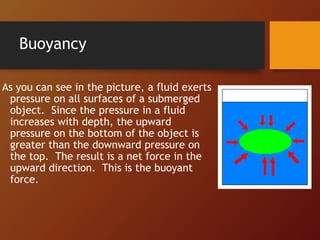
As you can see in the picture, a fluid exerts
pressure on all surfaces of a submerged
object. Since the pressure in a fluid
increases with depth, the upward
pressure on the bottom of the object is
greater than the downward pressure on
the top. The result is a net force in the
upward direction. This is the buoyant
force.
Submerged Objects
Submerged objects take the place of a
volume of fluid equal to its own
volume.
Objects that float on top of the water
only take the place of the volume of
fluid equal to the volume of the
amount of the object in the fluid.
Archimedes’s Principle
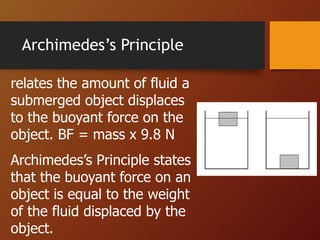
relates the amount of fluid a
submerged object displaces
to the buoyant force on the
object. BF = mass x 9.8 N
Archimedes’s Principle states
that the buoyant force on an
object is equal to the weight
of the fluid displaced by the
object.
Floating and Sinking
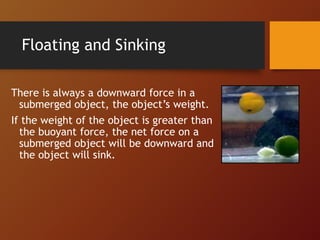
There is always a downward force in a
submerged object, the object’s weight.
If the weight of the object is greater than
the buoyant force, the net force on a
submerged object will be downward and
the object will sink.
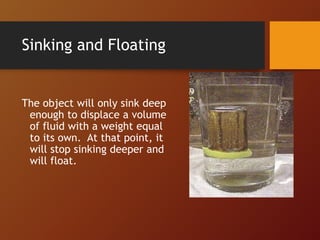
Sinking and Floating
The object will only sink deep
enough to displace a volume
of fluid with a weight equal
to its own. At that point, it
will stop sinking deeper and
will float.
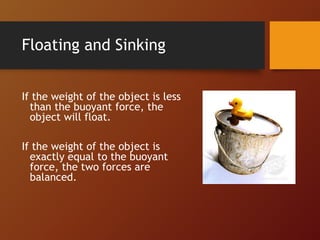
Floating and Sinking
If the weight of the object is less
than the buoyant force, the
object will float.
If the weight of the object is
exactly equal to the buoyant
force, the two forces are
balanced.
Density
The density of a substance is its mass per unit volume.
Density = Mass
Volume
An object that is more dense than the fluid in which it is
immersed sinks. An object that is less dense than the
fluid in which it is immersed floats to the surface.
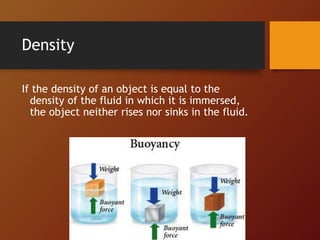
Density
If the density of an object is equal to the
density of the fluid in which it is immersed,
the object neither rises nor sinks in the fluid.
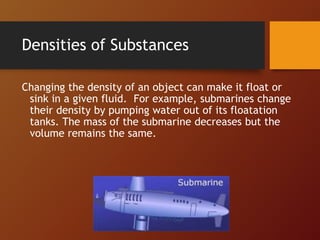
Densities of Substances
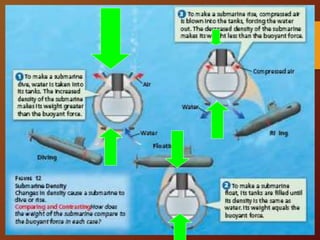
Changing the density of an object can make it float or
sink in a given fluid. For example, submarines change
their density by pumping water out of its floatation
tanks. The mass of the submarine decreases but the
volume remains the same.
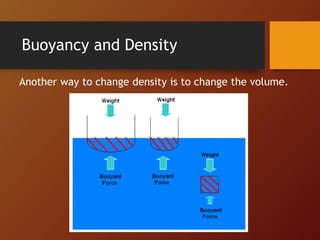
Buoyancy and Density
Another way to change density is to change the volume.
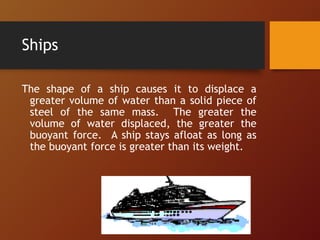
Ships
The shape of a ship causes it to displace a
greater volume of water than a solid piece of
steel of the same mass. The greater the
volume of water displaced, the greater the
buoyant force. A ship stays afloat as long as
the buoyant force is greater than its weight.
Module-4.1_Bouyancy.ppt prevents from float

Module-4.1_Bouyancy.ppt prevents from float

  • 1.
    Buoyancy Water exerts aforce called a buoyant force that acts on a submerged object. The buoyant force acts in the upward direction, against the force of gravity, so it makes an object feel lighter.
  • 2.
    Buoyancy As you cansee in the picture, a fluid exerts pressure on all surfaces of a submerged object. Since the pressure in a fluid increases with depth, the upward pressure on the bottom of the object is greater than the downward pressure on the top. The result is a net force in the upward direction. This is the buoyant force.
  • 3.
    Submerged Objects Submerged objectstake the place of a volume of fluid equal to its own volume. Objects that float on top of the water only take the place of the volume of fluid equal to the volume of the amount of the object in the fluid.
  • 4.
    Archimedes’s Principle relates theamount of fluid a submerged object displaces to the buoyant force on the object. BF = mass x 9.8 N Archimedes’s Principle states that the buoyant force on an object is equal to the weight of the fluid displaced by the object.
  • 5.
    Floating and Sinking Thereis always a downward force in a submerged object, the object’s weight. If the weight of the object is greater than the buoyant force, the net force on a submerged object will be downward and the object will sink.
  • 6.
    Sinking and Floating Theobject will only sink deep enough to displace a volume of fluid with a weight equal to its own. At that point, it will stop sinking deeper and will float.
  • 7.
    Floating and Sinking Ifthe weight of the object is less than the buoyant force, the object will float. If the weight of the object is exactly equal to the buoyant force, the two forces are balanced.
  • 8.
    Density The density ofa substance is its mass per unit volume. Density = Mass Volume An object that is more dense than the fluid in which it is immersed sinks. An object that is less dense than the fluid in which it is immersed floats to the surface.
  • 9.
    Density If the densityof an object is equal to the density of the fluid in which it is immersed, the object neither rises nor sinks in the fluid.
  • 10.
  • 11.
    Densities of Substances Changingthe density of an object can make it float or sink in a given fluid. For example, submarines change their density by pumping water out of its floatation tanks. The mass of the submarine decreases but the volume remains the same.
  • 12.
    Buoyancy and Density Anotherway to change density is to change the volume.
  • 13.
    Ships The shape ofa ship causes it to displace a greater volume of water than a solid piece of steel of the same mass. The greater the volume of water displaced, the greater the buoyant force. A ship stays afloat as long as the buoyant force is greater than its weight.