APPROACH TO
DISTURBANCE OF
CONSCIOUSNESS
Osama Ragab
M.D Neurology
Consciousness
■ consciousness encompasses two main components: arousal and
awareness.
■ Arousal is mainly supported by the brain stem and the thalami.
■ Awareness refers to conscious perception which includes
cognition, experiences from the past and the present, and
intentions. Is supported by the cerebral cortex.
■ Awareness can be further divided into awareness of the
environment and self.
■ Awareness of the environment can be defined as the
conscious perception of one’s environment through the
sensory modalities, also refers to the knowledge of our own
social and cultural history .
■ Awareness of self is a mental process that does not require
external stimuli .
Consciousness
Consciousness
■ If you are awake and aware of external and internal stimuli
so you can respond appropriately to these stimuli ( fronto-
parietal function).
■ So to be conscious= awake + aware + respond
appropriately .
■ The Content of consciousness is a term used to define
awareness.
Consciousness
Please define coma?
Terminology
■ Coma is un-arousable unresponsiveness state in which the
patient lies with the eyes closed( no level no content ).
■ Stupor is defined as unresponsiveness from which the
subject can be aroused only by vigorous and repeated
stimuli. ( minimal level no content ).
■ Drowsy refers to a mild depression in consciousness that
can be aroused to full wakefulness through voice.( assisted
good level and content ).
■ Delirium: acute onset of abnormal mental state, with
disturbed consciousness, disorientation, severe motor
restlessness, fear, irritability, visual hallucinations.
■ There may be lucid periods with hyperactivity during
which the patient is agitated, talkative and irritable.
■ There are also hypoactive periods with hypersomnolence
and sleep–wake inversion ( mid level abnormal content).
Terminology
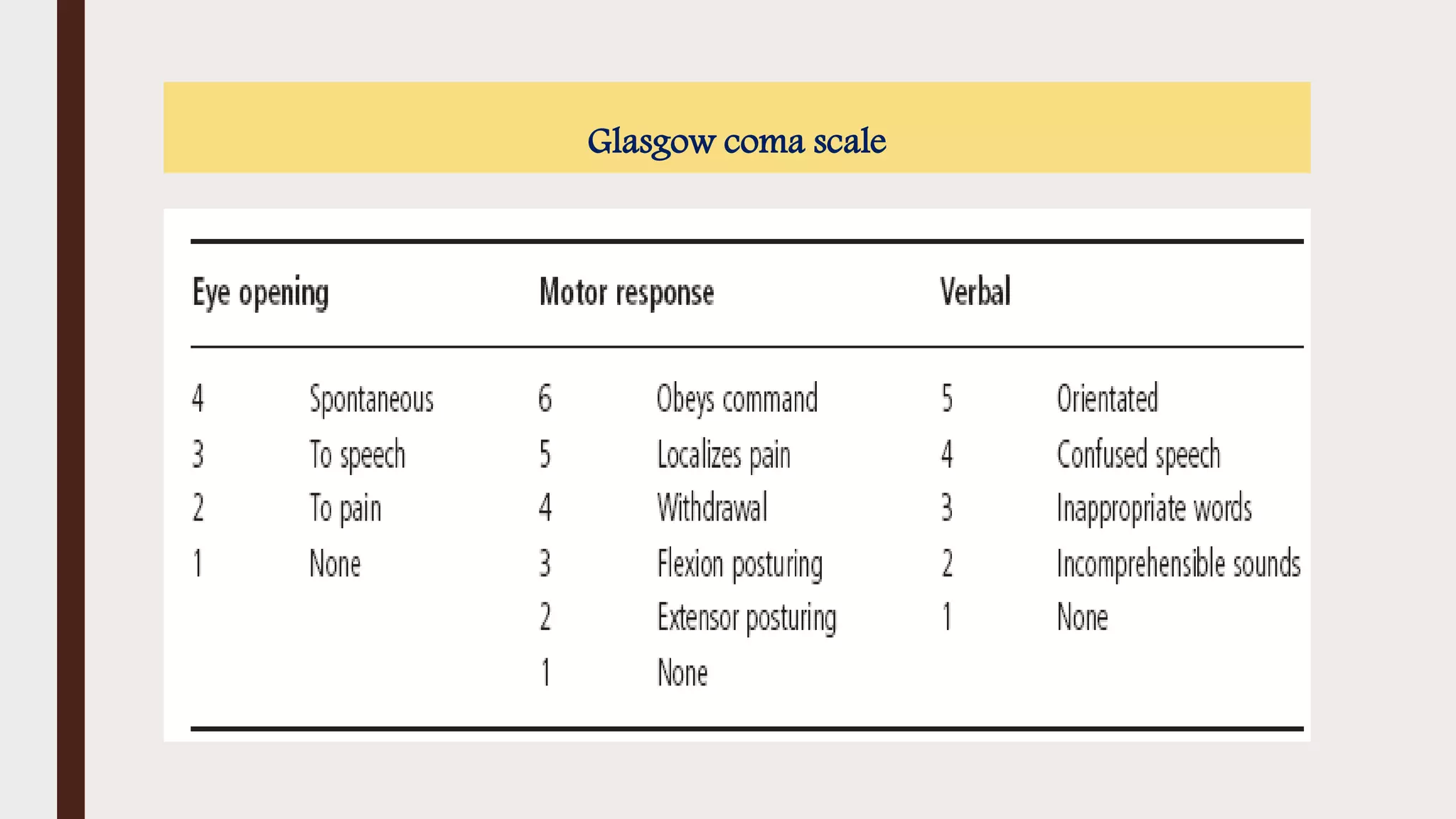
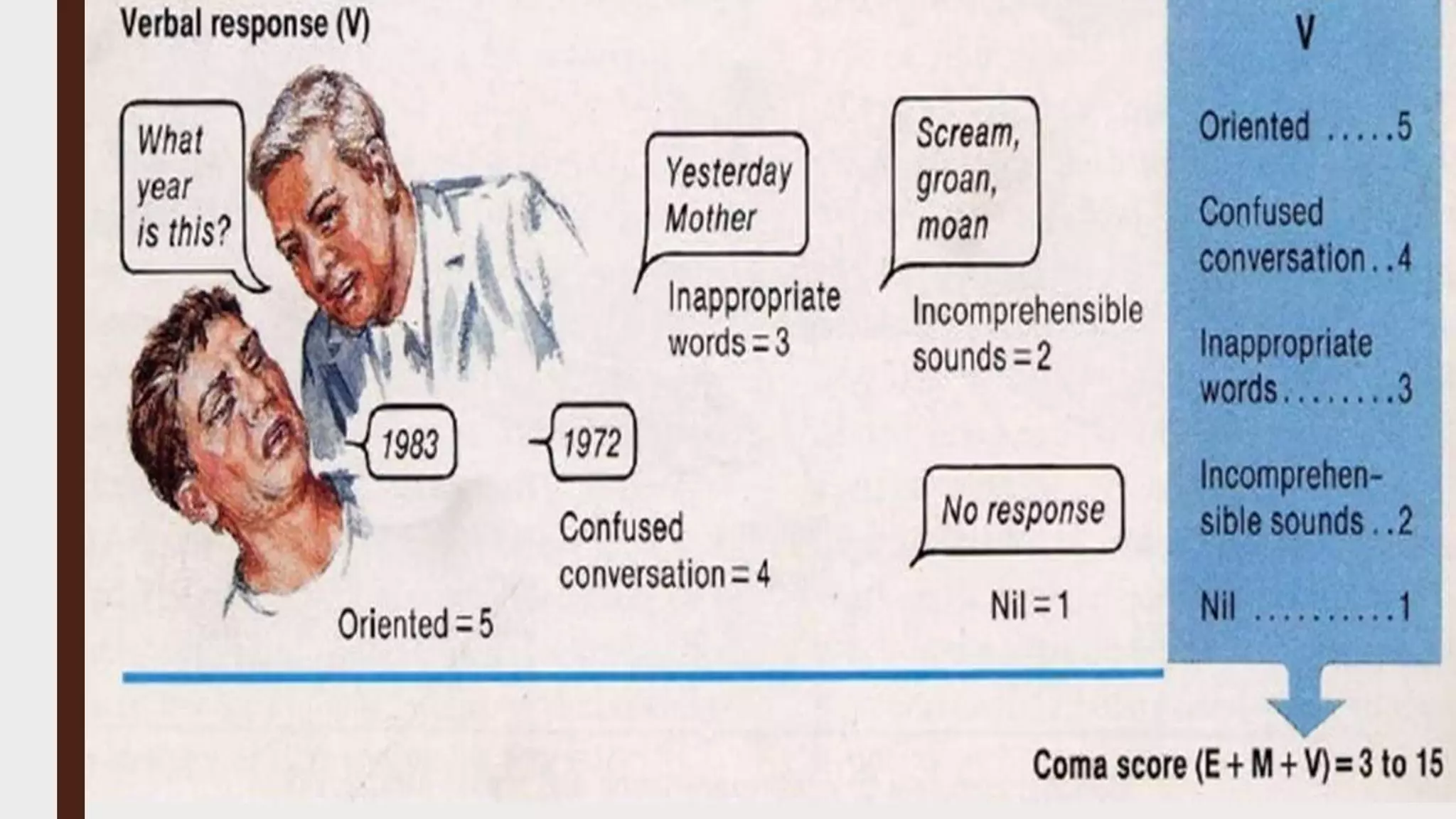
Glasgow coma scale
FOUR score (Full Outline of Unresponsiveness).
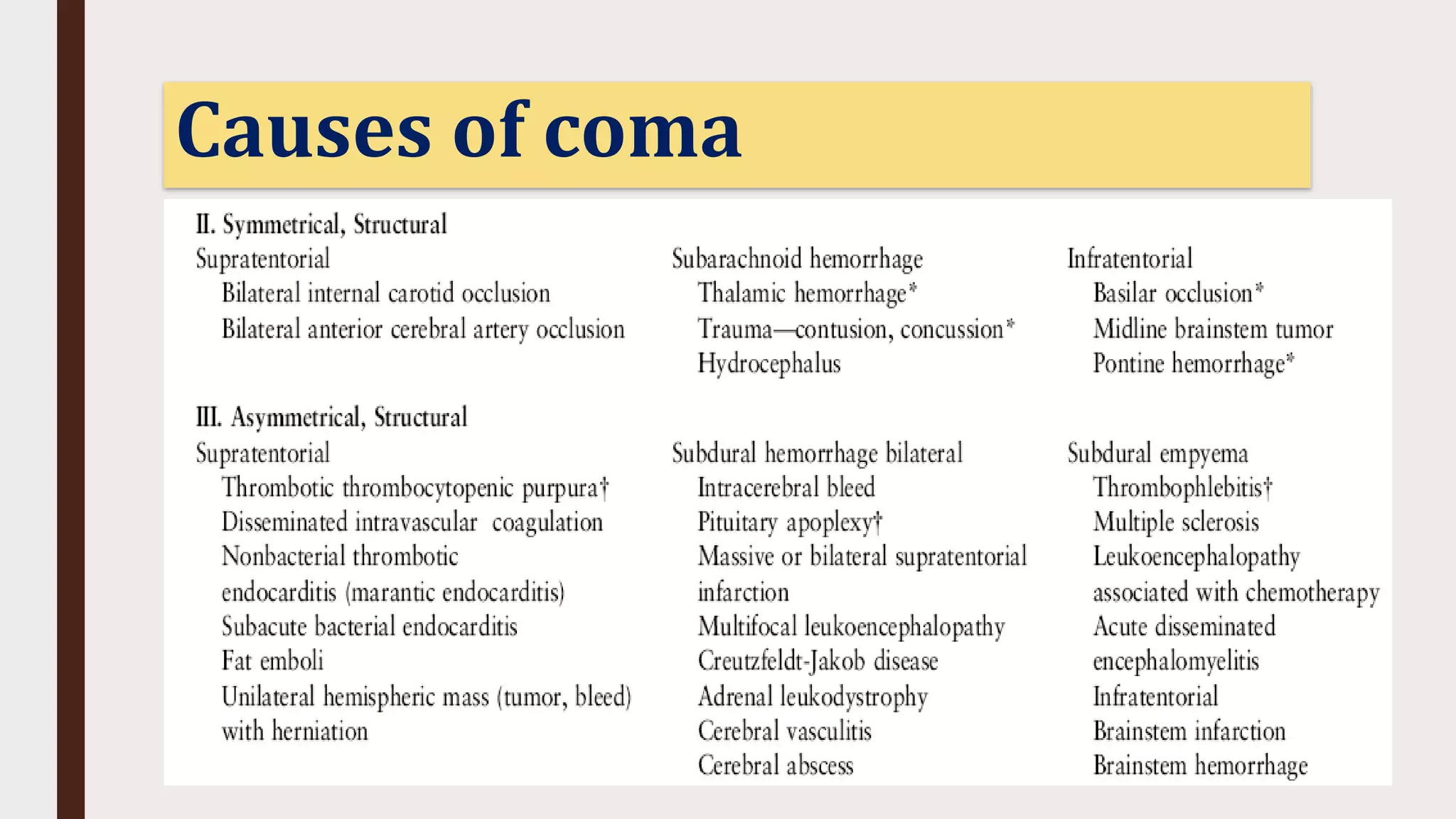
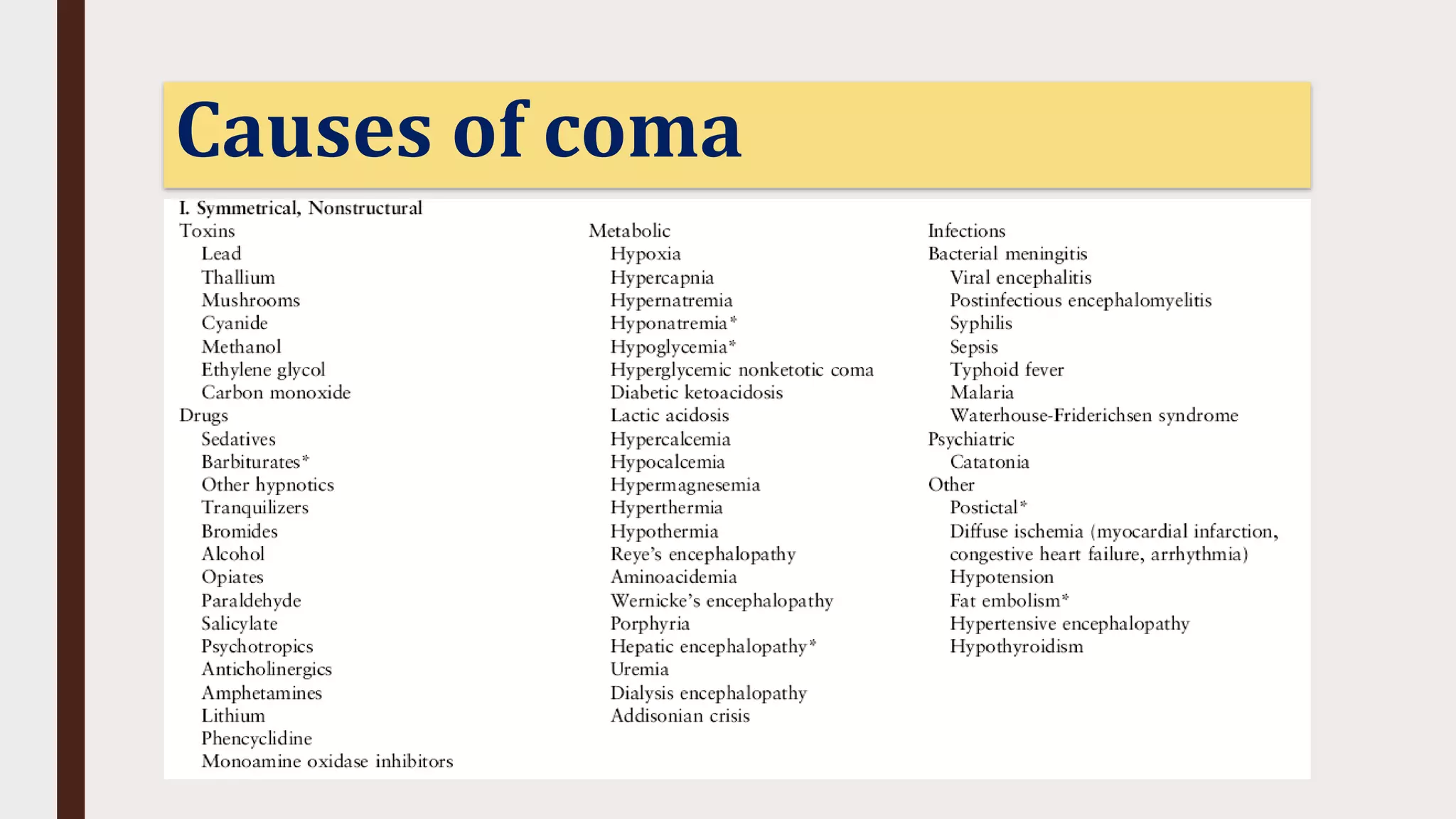
■Causes of coma?
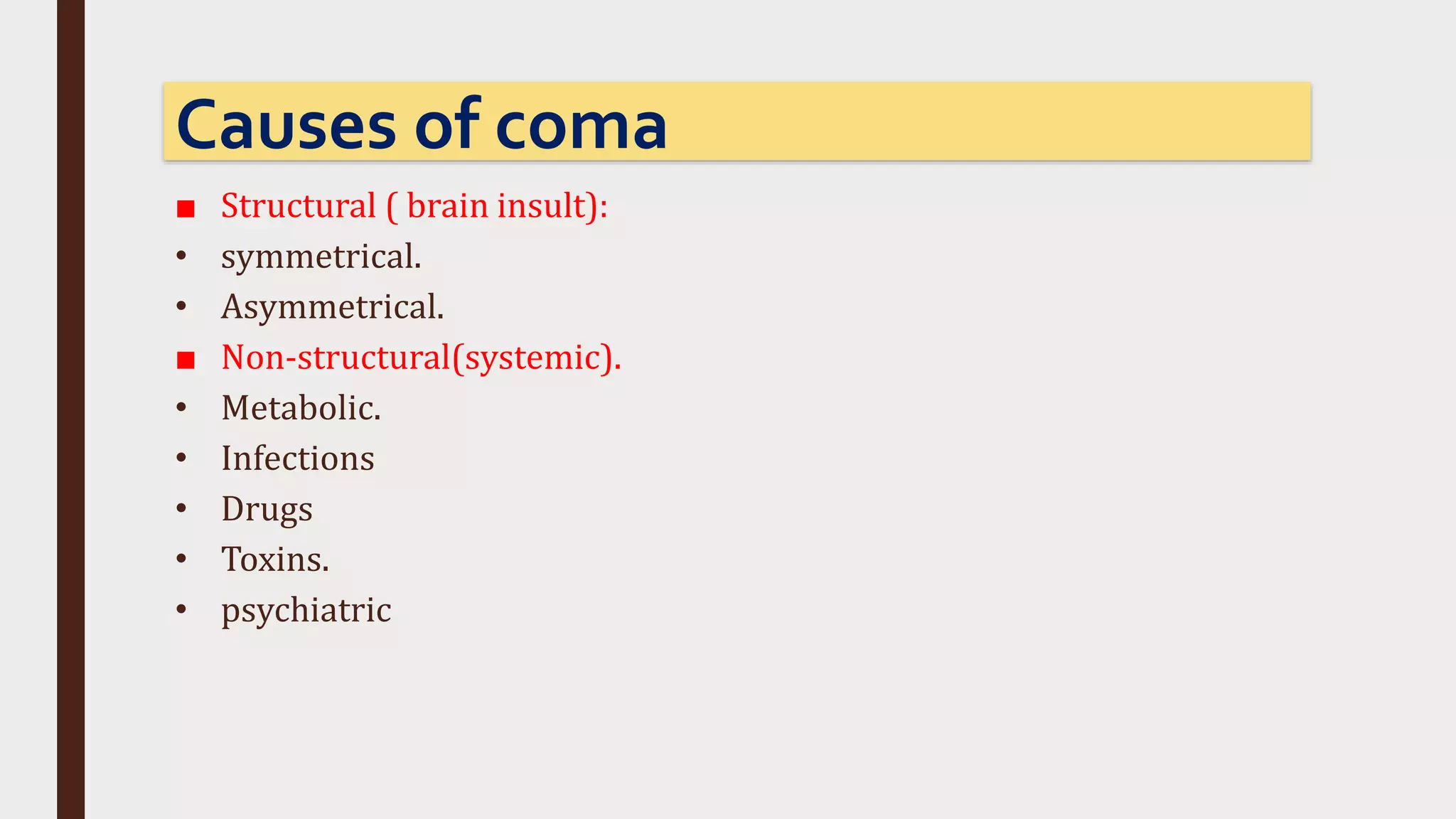
■ Structural ( brain insult):
• symmetrical.
• Asymmetrical.
■ Non-structural(systemic).
• Metabolic.
• Infections
• Drugs
• Toxins.
• psychiatric
Causes of coma
Causes of coma
Causes of coma
Clinical approach to Comatose patient
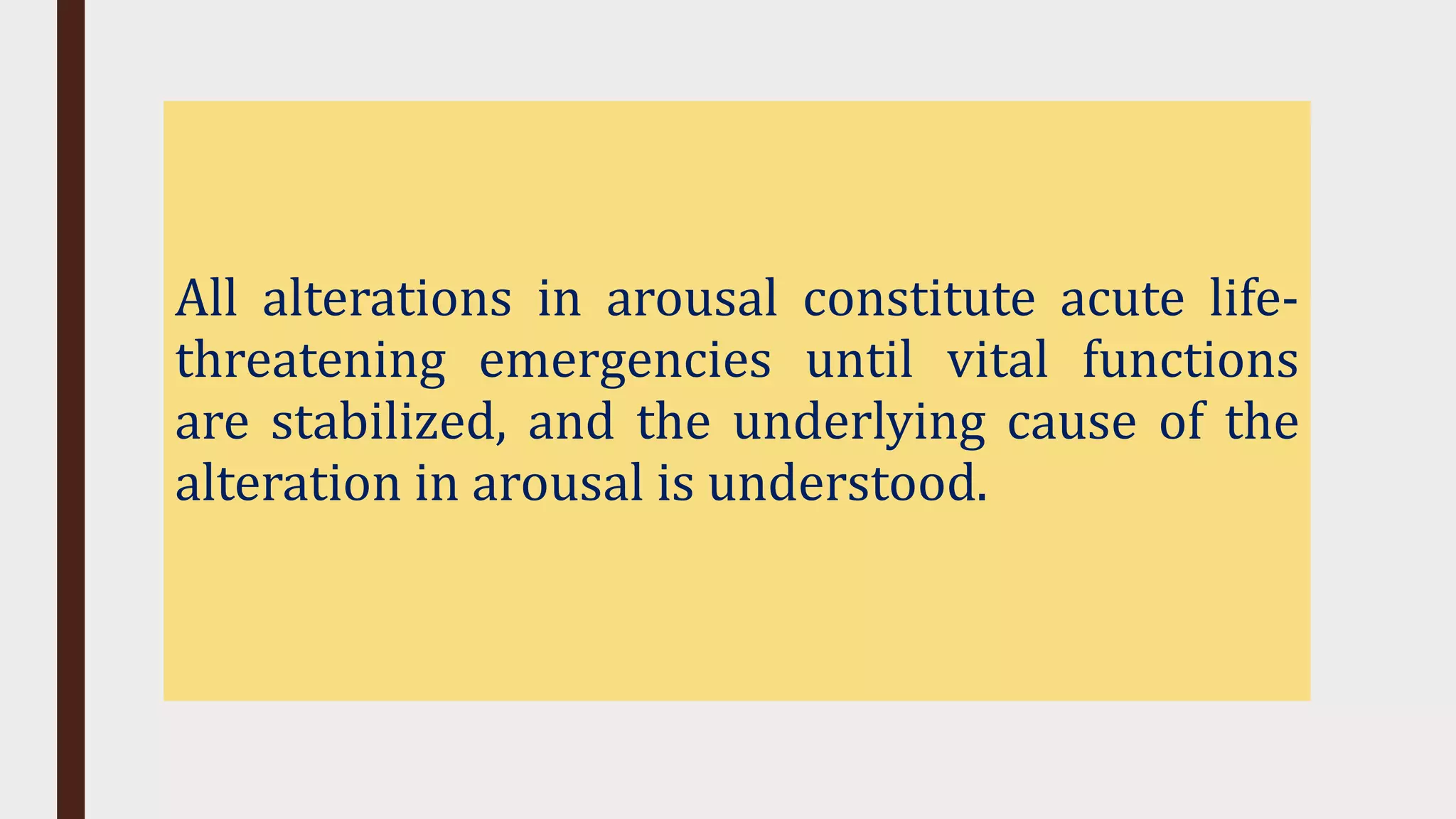
All alterations in arousal constitute acute life-
threatening emergencies until vital functions
are stabilized, and the underlying cause of the
alteration in arousal is understood.
On arrival to ER immediate attention to:
• Airway
• Breathing
• Circulation
• establishing IV access
• Blood should be withdrawn: estimation of glucose #
other biochemical parameters # drug screening
Clinical approach to Comatose patient
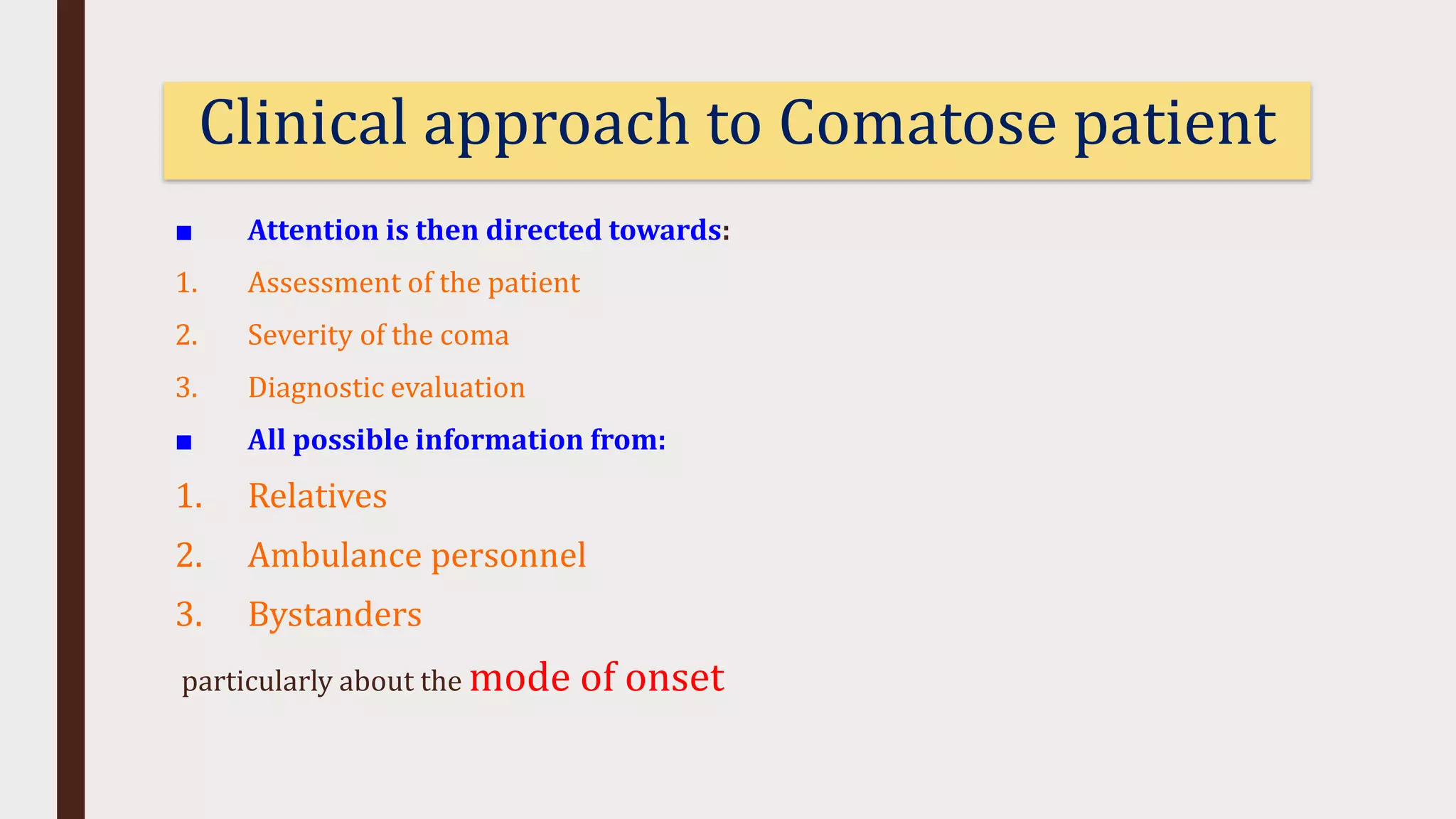
■ Attention is then directed towards:
1. Assessment of the patient
2. Severity of the coma
3. Diagnostic evaluation
■ All possible information from:
1. Relatives
2. Ambulance personnel
3. Bystanders
particularly about the mode of onset
Clinical approach to Comatose patient
■ Urgent and sometimes empirical therapy is given to
prevent further brain damage.
■ Potential immediate metabolic needs of the brain are
supplied by empirical use of supplemental oxygen,
intravenous (IV) thiamine (at least 100 mg), and IV 50%
dextrose in water (25 g).
■ A baseline serum glucose level should be obtained before
glucose administration.
Clinical approach to Comatose patient
■ Clinically recommend empirical glucose administration
when the cause of coma is unknown. There are two reasons
for this approach:
(1) the frequent occurrence of alterations in arousal due to
hypoglycemia and the relatively good prognosis for coma.
(2) the potentially permanent consequences if it is not
treated.
■ Naloxone hydrochloride may be given parenterally,
preferably IV, in doses of 0.4 to 2 mg if opiate overdose is
the suspected cause of coma.
General Examination
Blood Pressure Evaluation
Hypotension
Massive external or internal
hemorrhage.
MI, cardiac tamponade, dissecting
aortic aneurysm,
intoxication with alcohol or other
drugs (especially barbiturates),
Addison disease
Hypertension
Hypertension is the cause of alterations
in arousal in hypertensive
subarachnoid hemorrhage
brainstem infarctions
The Kocher-Cushing (or Claude
Bernard) reflex is the development of
hypertension associated with
bradycardia and respiratory
irregularity due to increased ICP.
General Examination
Heart Rate
Bradycardia can result from
myocardial conduction
blocks, with certain
poisonings, and from effects
of drugs such as the beta-
blockers.
Tachycardia is a result of
hypovolemia, hyperthyroidism,
fever, anemia, and certain toxins
and drugs including cocaine,
atropine, and other
anticholinergic medications.
General Examination
Respiration
causes of decreased respiratory
rate are toxic, such as carbon
dioxide narcosis or drug overdose
with central nervous system
(CNS) depressants.
Increased respiratory rate can
result from hypoxia, hypercapnia,
acidosis, hyperthermia, hepatic
disease, toxins or drugs
(salicylates), sepsis, pulmonary
embolism and sometimes is seen
in psychogenic unresponsiveness.
General Examination
Temperature
measured with a rectal probe in a comatose patient.
Any evidence of fever in a comatose patient warrants strong
consideration of LP.
Absence of an elevated temperature does not rule out infection.
Pure neurogenic hyperthermia is rare and usually is due to
subarachnoid hemorrhage or diencephalic (hypothalamus)
lesions.
A clue to brainstem origin is shivering without sweating
particularly when unilateral in nature.
General Examination
Temperature
measured with a rectal probe in a comatose patient.
Hypothermia regardless of cause is anticipated to lead to
altered consciousness.
Hypothermia associated with coma are hypothyroid coma,
hypopituitarism, Wernicke encephalopathy, cold
exposure, drugs (barbiturates).
Central lesions causing hypothermia are found in the
posterior hypothalamus.
General Examination
General appearance
Vomiting may be a sign of increased ICP, drug overdose, or
metabolic or other toxic cause.
Urinary or fecal incontinence indicates an epileptic seizure or may
result from a generalized autonomic discharge
Cachexia suggests cancer, chronic inflammatory disorders,
Addison disease, hypothyroid coma, or hyperthyroid crisis.
Gynecomastia, spider nevi, testicular atrophy, and decreased
axillary and pubic hair are common in the alcoholic with cirrhosis.
General Examination
Head and Neck Examination
The head and neck must be carefully examined for signs of trauma. Raccoon
eyes and Battle sign.
Meningismus neck stiffness may be a sign of infectious or carcinomatous
meningitis, subarachnoid hemorrhage, or central or tonsillar herniation.
General Examination
Eye examination
Edema of the conjunctiva and eyelids may occur in congestive heart failure.
Scleral icterus
Kayser- Fleischer rings Subhyaloid hemorrhage
Papilledema results.
General Examination
Ear examination
Hemotympanum or CSF otorrhea from a basilar skull fracture involving the
petrous ridge, as well as infection of the middle ear.
Infections of the middle ear, mastoid, and paranasal sinuses constitute the
most common source of underlying infection in brain abscess.
General Examination
Oral examination
Alcohol intoxication, diabetic ketoacidosis (acetone odor), uremia, and
hepatic encephalopathy (musty odor of fetor hepaticus) may be suspected
from the odor of the breath.
Pustules on the nose or upper lip may seed the cavernous sinus with bacteria
by way of the angular vein.
Lacerations on the tongue, whether old or new, suggest seizure disorder.
Herpetic vesicle.
General Examination
Skin examination
Hot, dry skin is a feature of heatstroke.
Sweaty skin is seen with hypotension or hypoglycemia.
Bullous skin lesions most often are a result of barbiturates but also
may be caused by imipramine, phenothiazine, and carbon
monoxide.
Kaposi sarcoma, anogenital herpetic lesions, or oral candidiasis
should suggest the acquired immunodeficiency syndrome (AIDS),
with its plethora of CNS abnormalities.
General Examination
Cardiac examination
Abdominal examination
Neurological Examination
State of consciousness
The examiner should start with verbal stimuli, softly and then
more loudly.
If there is no significant response, more threatening stimuli such
as taking the patient’s hand and advancing it toward the patient’s
face are applied
Finally, painful stimuli may be needed to arouse the patient.
Neurological Examination
Respiration
Neurological Examination
Pupil Size and Reactivity
Neurological Examination
Ocular motility
Evaluation of ocular motility consists of
(1) observation of the resting position of the eyes, including eye
deviation.
(2) spontaneous eye movements.
(3) testing of reflex ocular movements.
Neurological Examination
Ocular motility
(1)observation of the resting position
Conjugate lateral eye deviation .
Dysconjugate lateral eye movement may result from a sixth nerve
palsy in the abducting eye, a third nerve palsy in the adducting eye,
or an internuclear ophthalmoplegia.
Neurological Examination
Ocular motility
(1)observation of the resting position
Thalamic and subthalamic lesions produce downward and inward
deviation of the eyes.
Vermal Hemorrhage and brainstem cause upward eye deviation.
Skew deviation usually indicates a posterior fossa lesion.
Neurological Examination
Ocular motility
Spontaneous Eye Movements
Roving eye movements are slow, conjugate, lateral to-and-fro
movements is due to a metabolic or toxic cause or bilateral lesions
above the brainstem.
Nystagmus occurring in comatose patients suggests an irritative
or epileptogenic supratentorial focus.
Neurological Examination
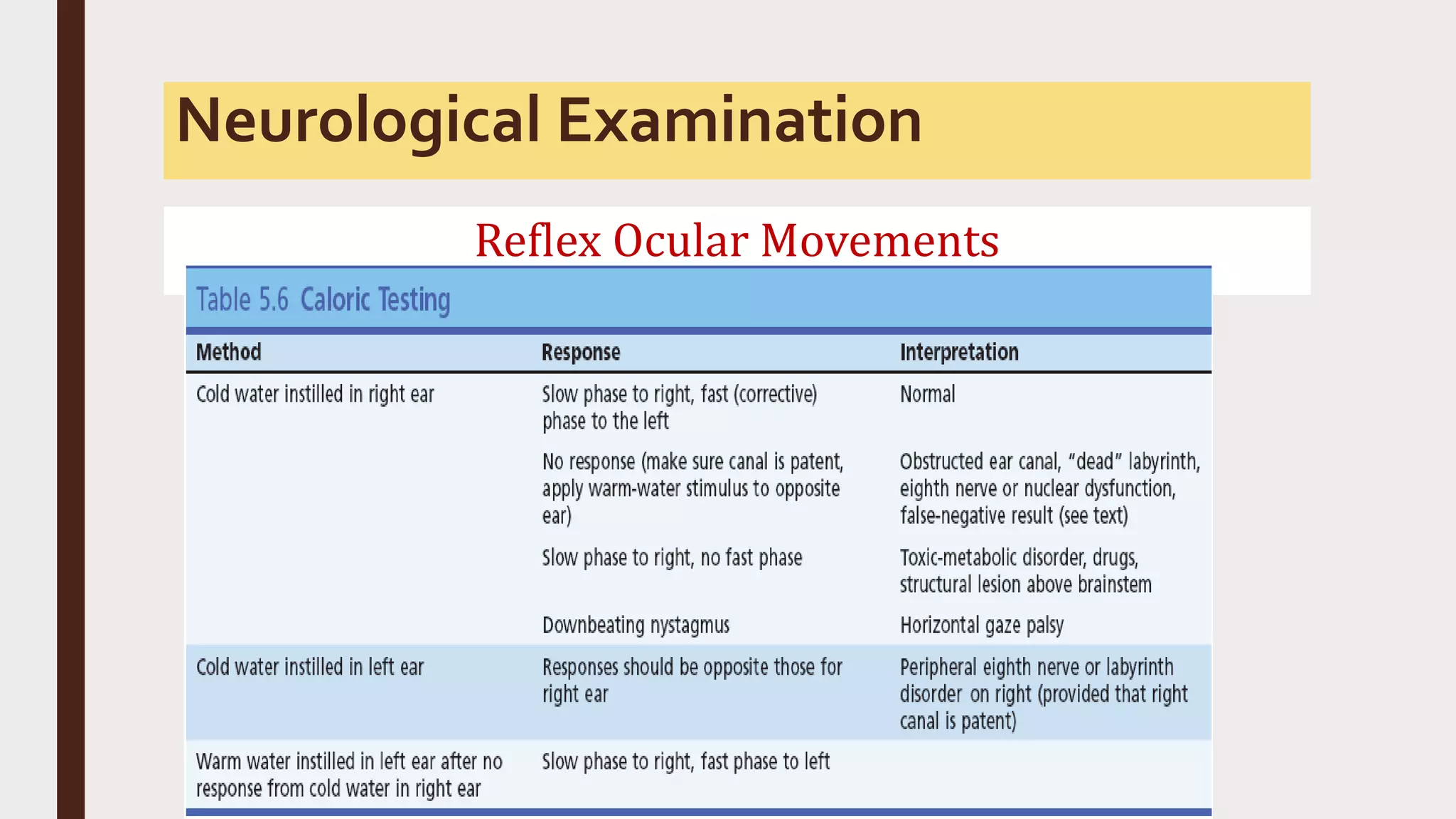
Reflex Ocular Movements
Neurological Examination
Reflex Ocular Movements
Neurological Examination
Reflex Ocular Movements
Neurological Examination
Motor System
postures
Decerebrate
Bilateral midbrain and deep metabolic encephalopathies
responsible for decerebrate posturing.
Decorticate
it may result from lesions in many locations, although usually
above the brainstem.
Distinction of toxic and metabolic coma
from structural coma
■ History (onset and course).
■ Lateralizing signs.
■ Occular movement.
■ Pupil reaction.
■ involuntary limb movements.
■ There is always exceptions.
Lateralizing signs
■ Unequal pupils
■ Deviation of the eyes to one side
■ Facial asymmetry
■ Turning of the head to one side
■ Unilateral hypo-hypertonia
■ Asymmetric deep reflexes
■ Unilateral extensor plantar response (Babinski)
■ Unilateral focal or Jacksonian fits
Remember
. ABCs: maintain airway, breathing, circulation
.Thorough general and neurologic examination
. Intravenous fluids: normal saline.
. Manage hypoglycemia with 50 mL of 50% glucose IV. Consider thiamine 100 mg IV before
glucose.
. Consider naloxone 0.4 to 2.0 mg IV for opiate overdose.
. Consider flumazenil 0.2 mg IV for benzodiazepine overdose.
. Blood tests: arterial blood gases, glucose, electrolytes, calcium, magnesium, phosphorus,
blood urea nitrogen (BUN), creatinine, liver enzymes, ammonia, complete blood cell count,
urinalysis, blood and urine toxicology screens, thyroid function (TSH).
. If focal neurologic signs, deep coma, or history of head trauma, consider therapy for
elevated ICP with hyperventilation and mannitol.
. Emergency brain imaging: typically unenhanced cranial computed tomography (CT)
. Consider lumbar puncture (LP) if suspected central nervous system (CNS) infection or
suspected subarachnoid hemorrhage (SAH) with normal findings on CT.
. Electroencephalogram (EEG)
Approach to disturbance of consciousness

Approach to disturbance of consciousness

  • 1.
  • 2.
    Consciousness ■ consciousness encompassestwo main components: arousal and awareness. ■ Arousal is mainly supported by the brain stem and the thalami. ■ Awareness refers to conscious perception which includes cognition, experiences from the past and the present, and intentions. Is supported by the cerebral cortex. ■ Awareness can be further divided into awareness of the environment and self.
  • 3.
    ■ Awareness ofthe environment can be defined as the conscious perception of one’s environment through the sensory modalities, also refers to the knowledge of our own social and cultural history . ■ Awareness of self is a mental process that does not require external stimuli . Consciousness
  • 4.
    Consciousness ■ If youare awake and aware of external and internal stimuli so you can respond appropriately to these stimuli ( fronto- parietal function). ■ So to be conscious= awake + aware + respond appropriately . ■ The Content of consciousness is a term used to define awareness.
  • 5.
  • 6.
  • 7.
    Terminology ■ Coma isun-arousable unresponsiveness state in which the patient lies with the eyes closed( no level no content ). ■ Stupor is defined as unresponsiveness from which the subject can be aroused only by vigorous and repeated stimuli. ( minimal level no content ). ■ Drowsy refers to a mild depression in consciousness that can be aroused to full wakefulness through voice.( assisted good level and content ).
  • 8.
    ■ Delirium: acuteonset of abnormal mental state, with disturbed consciousness, disorientation, severe motor restlessness, fear, irritability, visual hallucinations. ■ There may be lucid periods with hyperactivity during which the patient is agitated, talkative and irritable. ■ There are also hypoactive periods with hypersomnolence and sleep–wake inversion ( mid level abnormal content). Terminology
  • 9.
  • 13.
    FOUR score (FullOutline of Unresponsiveness).
  • 14.
  • 15.
    ■ Structural (brain insult): • symmetrical. • Asymmetrical. ■ Non-structural(systemic). • Metabolic. • Infections • Drugs • Toxins. • psychiatric Causes of coma
  • 16.
  • 17.
  • 18.
    Clinical approach toComatose patient
  • 19.
    All alterations inarousal constitute acute life- threatening emergencies until vital functions are stabilized, and the underlying cause of the alteration in arousal is understood.
  • 20.
    On arrival toER immediate attention to: • Airway • Breathing • Circulation • establishing IV access • Blood should be withdrawn: estimation of glucose # other biochemical parameters # drug screening Clinical approach to Comatose patient
  • 21.
    ■ Attention isthen directed towards: 1. Assessment of the patient 2. Severity of the coma 3. Diagnostic evaluation ■ All possible information from: 1. Relatives 2. Ambulance personnel 3. Bystanders particularly about the mode of onset Clinical approach to Comatose patient
  • 22.
    ■ Urgent andsometimes empirical therapy is given to prevent further brain damage. ■ Potential immediate metabolic needs of the brain are supplied by empirical use of supplemental oxygen, intravenous (IV) thiamine (at least 100 mg), and IV 50% dextrose in water (25 g). ■ A baseline serum glucose level should be obtained before glucose administration. Clinical approach to Comatose patient
  • 23.
    Clinical approach toComatose patient ■ Clinically recommend empirical glucose administration when the cause of coma is unknown. There are two reasons for this approach: (1) the frequent occurrence of alterations in arousal due to hypoglycemia and the relatively good prognosis for coma. (2) the potentially permanent consequences if it is not treated. ■ Naloxone hydrochloride may be given parenterally, preferably IV, in doses of 0.4 to 2 mg if opiate overdose is the suspected cause of coma.
  • 24.
    General Examination Blood PressureEvaluation Hypotension Massive external or internal hemorrhage. MI, cardiac tamponade, dissecting aortic aneurysm, intoxication with alcohol or other drugs (especially barbiturates), Addison disease Hypertension Hypertension is the cause of alterations in arousal in hypertensive subarachnoid hemorrhage brainstem infarctions The Kocher-Cushing (or Claude Bernard) reflex is the development of hypertension associated with bradycardia and respiratory irregularity due to increased ICP.
  • 25.
    General Examination Heart Rate Bradycardiacan result from myocardial conduction blocks, with certain poisonings, and from effects of drugs such as the beta- blockers. Tachycardia is a result of hypovolemia, hyperthyroidism, fever, anemia, and certain toxins and drugs including cocaine, atropine, and other anticholinergic medications.
  • 26.
    General Examination Respiration causes ofdecreased respiratory rate are toxic, such as carbon dioxide narcosis or drug overdose with central nervous system (CNS) depressants. Increased respiratory rate can result from hypoxia, hypercapnia, acidosis, hyperthermia, hepatic disease, toxins or drugs (salicylates), sepsis, pulmonary embolism and sometimes is seen in psychogenic unresponsiveness.
  • 27.
    General Examination Temperature measured witha rectal probe in a comatose patient. Any evidence of fever in a comatose patient warrants strong consideration of LP. Absence of an elevated temperature does not rule out infection. Pure neurogenic hyperthermia is rare and usually is due to subarachnoid hemorrhage or diencephalic (hypothalamus) lesions. A clue to brainstem origin is shivering without sweating particularly when unilateral in nature.
  • 28.
    General Examination Temperature measured witha rectal probe in a comatose patient. Hypothermia regardless of cause is anticipated to lead to altered consciousness. Hypothermia associated with coma are hypothyroid coma, hypopituitarism, Wernicke encephalopathy, cold exposure, drugs (barbiturates). Central lesions causing hypothermia are found in the posterior hypothalamus.
  • 29.
    General Examination General appearance Vomitingmay be a sign of increased ICP, drug overdose, or metabolic or other toxic cause. Urinary or fecal incontinence indicates an epileptic seizure or may result from a generalized autonomic discharge Cachexia suggests cancer, chronic inflammatory disorders, Addison disease, hypothyroid coma, or hyperthyroid crisis. Gynecomastia, spider nevi, testicular atrophy, and decreased axillary and pubic hair are common in the alcoholic with cirrhosis.
  • 30.
    General Examination Head andNeck Examination The head and neck must be carefully examined for signs of trauma. Raccoon eyes and Battle sign. Meningismus neck stiffness may be a sign of infectious or carcinomatous meningitis, subarachnoid hemorrhage, or central or tonsillar herniation.
  • 31.
    General Examination Eye examination Edemaof the conjunctiva and eyelids may occur in congestive heart failure. Scleral icterus Kayser- Fleischer rings Subhyaloid hemorrhage Papilledema results.
  • 32.
    General Examination Ear examination Hemotympanumor CSF otorrhea from a basilar skull fracture involving the petrous ridge, as well as infection of the middle ear. Infections of the middle ear, mastoid, and paranasal sinuses constitute the most common source of underlying infection in brain abscess.
  • 33.
    General Examination Oral examination Alcoholintoxication, diabetic ketoacidosis (acetone odor), uremia, and hepatic encephalopathy (musty odor of fetor hepaticus) may be suspected from the odor of the breath. Pustules on the nose or upper lip may seed the cavernous sinus with bacteria by way of the angular vein. Lacerations on the tongue, whether old or new, suggest seizure disorder. Herpetic vesicle.
  • 34.
    General Examination Skin examination Hot,dry skin is a feature of heatstroke. Sweaty skin is seen with hypotension or hypoglycemia. Bullous skin lesions most often are a result of barbiturates but also may be caused by imipramine, phenothiazine, and carbon monoxide. Kaposi sarcoma, anogenital herpetic lesions, or oral candidiasis should suggest the acquired immunodeficiency syndrome (AIDS), with its plethora of CNS abnormalities.
  • 35.
  • 36.
  • 37.
    Neurological Examination State ofconsciousness The examiner should start with verbal stimuli, softly and then more loudly. If there is no significant response, more threatening stimuli such as taking the patient’s hand and advancing it toward the patient’s face are applied Finally, painful stimuli may be needed to arouse the patient.
  • 38.
  • 39.
  • 40.
    Neurological Examination Ocular motility Evaluationof ocular motility consists of (1) observation of the resting position of the eyes, including eye deviation. (2) spontaneous eye movements. (3) testing of reflex ocular movements.
  • 41.
    Neurological Examination Ocular motility (1)observationof the resting position Conjugate lateral eye deviation . Dysconjugate lateral eye movement may result from a sixth nerve palsy in the abducting eye, a third nerve palsy in the adducting eye, or an internuclear ophthalmoplegia.
  • 42.
    Neurological Examination Ocular motility (1)observationof the resting position Thalamic and subthalamic lesions produce downward and inward deviation of the eyes. Vermal Hemorrhage and brainstem cause upward eye deviation. Skew deviation usually indicates a posterior fossa lesion.
  • 43.
    Neurological Examination Ocular motility SpontaneousEye Movements Roving eye movements are slow, conjugate, lateral to-and-fro movements is due to a metabolic or toxic cause or bilateral lesions above the brainstem. Nystagmus occurring in comatose patients suggests an irritative or epileptogenic supratentorial focus.
  • 44.
  • 45.
  • 46.
  • 47.
    Neurological Examination Motor System postures Decerebrate Bilateralmidbrain and deep metabolic encephalopathies responsible for decerebrate posturing. Decorticate it may result from lesions in many locations, although usually above the brainstem.
  • 49.
    Distinction of toxicand metabolic coma from structural coma ■ History (onset and course). ■ Lateralizing signs. ■ Occular movement. ■ Pupil reaction. ■ involuntary limb movements. ■ There is always exceptions.
  • 50.
    Lateralizing signs ■ Unequalpupils ■ Deviation of the eyes to one side ■ Facial asymmetry ■ Turning of the head to one side ■ Unilateral hypo-hypertonia ■ Asymmetric deep reflexes ■ Unilateral extensor plantar response (Babinski) ■ Unilateral focal or Jacksonian fits
  • 51.
    Remember . ABCs: maintainairway, breathing, circulation .Thorough general and neurologic examination . Intravenous fluids: normal saline. . Manage hypoglycemia with 50 mL of 50% glucose IV. Consider thiamine 100 mg IV before glucose. . Consider naloxone 0.4 to 2.0 mg IV for opiate overdose. . Consider flumazenil 0.2 mg IV for benzodiazepine overdose. . Blood tests: arterial blood gases, glucose, electrolytes, calcium, magnesium, phosphorus, blood urea nitrogen (BUN), creatinine, liver enzymes, ammonia, complete blood cell count, urinalysis, blood and urine toxicology screens, thyroid function (TSH). . If focal neurologic signs, deep coma, or history of head trauma, consider therapy for elevated ICP with hyperventilation and mannitol. . Emergency brain imaging: typically unenhanced cranial computed tomography (CT) . Consider lumbar puncture (LP) if suspected central nervous system (CNS) infection or suspected subarachnoid hemorrhage (SAH) with normal findings on CT. . Electroencephalogram (EEG)