Osama Ragab 
Ass.lec of Neurology 
Faculty of Medicine 
Tanta University 
2013
Having a diagnosis of epilepsy can make you re-question 
your whole life plan 
Work / 
Finances 
Family / Home Social / Hobbies
Approximately one-half million women with 
epilepsy are of childbearing age. 
It has been estimated that3–5 births per 1000 will 
be to women with epilepsy. 
Women with epilepsy are at an increased risk of 
gestational hypertension, but not preeclampsia. 
There is a possible additive effect of epilepsy and 
smoking on the rates of preterm delivery.
Seizures, including status epilepticus, during 
pregnancy can be fatal to both mother and 
fetus. 
The overall likelihood of major congenital 
malformations in neonates exposed to any 
AED ranges from 2.2% up to 11%.
Infants born to women with epilepsy who are 
taking AEDs have twice the risk of being small 
for gestational age and low Apgar scores . 
AEDs have been associated with a higher rate of 
spontaneous abortion (2 times normal)
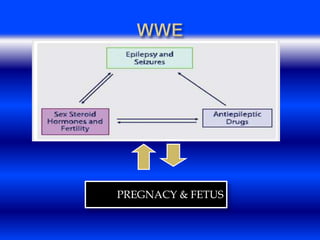
PREGNACY & FETUS
Neurons and glia are equipped for local de novo 
production of steroid hormones mainly in the 
hippocampus . 
Neurosteroids are known for their non-genomic acute 
effects by direct modulation of NMDA receptors 
and GABAA receptors. 
Neurosteroids are responsible mainly for “fine 
tuning” of neuronal excitability by acting at 
synaptic and extrasynaptic receptors.
Neurosteroids also play an important role in neuronal 
survival in developing as well as aging brain . 
Disturbances in the neurosteroid production have 
been detected in sclerotic hippocampal tissue from 
patients with temporal lobe epilepsy, and other 
neurodegenerative disorders (such as Alzheimer's 
disease or multiple sclerosis). 
Sex hormones are critical for regulating neuronal 
excitability and survival.
in some women with epilepsy, seizure exacerbation can 
be related to periodical hormonal fluctuations 
during the ovarian cycles. 
Seizures also often change pattern, expression or onset 
at the time of natural hormonal changes such as 
adolescence . pregnancy , and during the 
perimenopause and menopause .
Some epileptic syndromes may either remit (benign 
rolandic epilepsy, childhood absence) or have their 
onset (juvenile myoclonic epilepsy) in adolescence, 
indicating the likely influence of hormonal changes 
and maturation occurring around puberty. 
The dramatic irregular fluctuations in gonadal 
hormones during the onset of menopause 
(perimenopausal stage) and their loss at menopause 
are likely to influence seizure frequency.
Chronic administration of progesterone has anti-seizure 
effect related to its metabolite 
allopregnanolone which modulate GABAA 
receptors . 
chronic administration of allopregnanolone contributes 
to a paradoxical agrevate seizure by increasing the 
expression of α4 subunit of GABAA receptors. 
The agrevation could be related to progesterone-induced 
increase in dendritic spine density with 
mushroom like spines .
Estradiol has mixed effects when administered acutely 
ranging from no effect, mild anticonvulsant to 
proconvulsant effects depending whether physiological 
or supraphysiological doses have been used. 
Seizure limiting effects linked mainly to regulation of 
neuropeptide Y (NPY) in the hippocampus . (powerful 
inhibitory peptide) . 
The neuroprotective effects of estradiol on seizure-induced 
damage were linked to the regulation of NPY 
expression. 
Unlike estradiol, progesterone has only anticonvulsant but 
not neuroprotective effects.
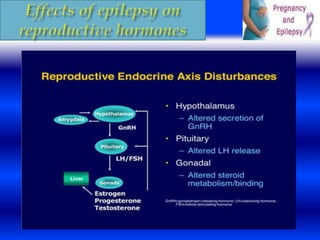
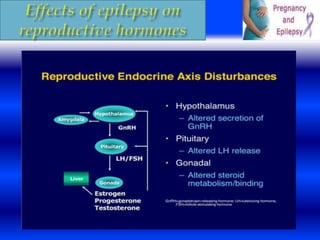
Effects of epilepsy on 
reproductive hormones
The hypothalamus receives many direct connections 
from parts of the temporal lobe that are involved in 
the generation of seizures. 
Increased frequency of pulsatile secretion of luteinizing 
hormone (LH) has been observed in women with 
epilepsy and may contribute greatly to alterations in 
ovarian cycle. 
Higher LH pulse frequencies positively correlate 
especially with localization of the focus in the left 
temporal lobe compared to lower LH pulse 
frequencies in patients with the right side foci .
A significant increase in allopregnanolone serum level 
was observed in both male and female prepubertal 
children, independent on the type of epilepsy, 
during the post-ictal phase but not during the inter-ictal 
phase. 
AEDs that induce hepatic microsomal enzymes 
(EIAEDs) also interact with hormonal 
contraceptives to increase estrogen’s metabolism 
and progesterone’s protein binding, thereby 
decreasing concentrations of both hormones and 
thus reducing contraceptive efficacy .
A large number of women with epilepsy have some 
degree of sexual and/or reproductive dysfunction . 
Sexual dysfunction may include difficulty with libido, 
arousal, and orgasm. 
Libido difficulties are reported more often in 
individuals with complex partial than generalized 
seizures. 
Some women report normal sexual desire but difficult 
or painful coitus (dyspareunia).
Some women report normal sexual desire but difficult 
or painful coitus (dyspareunia). 
Physiologically, the areas of the brain that mediate 
sexual behavior are the same areas that are involved 
in common forms of focal epilepsy.
A recent study found improvement in sexual function 
for both women and men associated with 
lamotrigine (LTG) therapy . 
Resective brain surgery as a treatment for medically 
refractory seizures has also been shown to restore 
sexual function. 
Sildenafil is also being studied to improve 
vasocongestion in women .
Women with epilepsy have a fertility rate 60–80% that 
of women without epilepsy. 
One-third to one-half of women with temporal lobe 
epilepsy report difficulties with their menstrual 
cycle, with 20% having amenorrhea , 
oligomenorrhea. Some women experience 
anovulatory cycles. 
Women with epilepsy are at risk for polycystic ovaries, 
a major contributor to infertility
The association between epilepsy and reproductive 
endocrine disorders is a matter of controversy. 
Epilepsy is associated with these disorders by itself. 
But AED therapy may have a greater effect on 
endocrine function. 
Women with epilepsy are eligible for fertility treatment 
whether or not they are taking AEDs.
An in-depth history should delineate the duration of 
epilepsy, frequency of seizures, the use of AEDs, 
their type, and the response to these medications. 
Attention should be given to past obstetrical history 
including maternal as well as neonatal outcomes, 
with stresses congenital anomalies. 
If the patient has been seizure free for more than one 
year, then discontinuation of AEDs can be 
considered. 
If the seizure-free interval is less than 1 year, 
monotherapy of the least teratogenic drug at the 
lowest effective dose is recommended.
Women who decide with their doctor to try 
tapering off AED therapy should begin at 
least 6 months prior to becoming pregnant. 
Changes in AEDs should also be made prior to 
a planned pregnancy to ensure seizure 
control. 
The adverse structural and functional effects of in 
utero exposure to AEDs are dose dependent. 
The lowest effective dose to control seizure 
activity should be used.
Anticonvulsant level, drawn prior to morning 
dose of AED, to identify the serum 
concentration at which seizures are maximally 
controlled. This level will then be used for 
future comparison during pregnancy. 
the American College of Obstetricians and 
Gynecologists recommends 4.0 mg of folic acid 
daily for women at risk of having offspring 
with neural tube defects (including women 
taking AEDs).
Pregnancy has a variable and unpredictable effect 
on epilepsy. 
It is difficult to predict the change in seizure 
frequency during pregnancy with the rate of 
seizures decreasing in 3–24% of patients, 
increasing in 14–32%, and unchanged in 54– 
80%. 
Remaining seizure free for at least nine months 
prior to conception is associated with greater 
likelihood (84–92%) of remaining seizure free 
during pregnancy.
Seizure frequency may increase: due to: 
-Enhanced metabolism & increased drug clearance associated with 
pregnancy can result in decreased serum drug concentration. 
-Increased volume of distribution of the AED. 
-Increased serum binding proteins. 
-Decreased or non-compliance with medication. 
-Sleep deprivation, hormonal changes of pregnancy and associated 
psychological and emotional stress of pregnancy: all lower 
threshold for seizures. 
-Nausea and vomiting.
If a patient presents to prenatal care and did not 
receive preconceptual drug therapy 
optimization, withdrawal of medication should 
not be attempted as this may provoke maternal 
seizures and possibly status epilepticus. 
In addition, changes in medication expose the 
fetus to polytherapy and thus increase the risk 
of malformations.
Maternal plasma drug levels should be monitored 
monthly and compared to pre-pregnancy 
levels, if possible . Medication dosage is then 
adjusted according to both plasma levels and 
seizure activity. 
Supplemental folic acid should be started prior to 
conception and then discontinued after twelve 
weeks of gestation
The pharmacokinetic and pharmacodynamic effects of 
all AEDs can change during pregnancy . 
Throughout pregnancy, the plasma volume increases 
which will change the drug distribution. Cardiac 
output and renal blood flow increase, thus 
increasing renal clearance of medications. 
Pregnancy induces the cytochrome p450 (CYP 450) 
super-families in the liver, thus liver metabolism of 
certain drugs increases.
Conversely, fat storage increases thus fat-soluble drug 
elimination slows down. 
Total drug levels may decrease due to a decrease in 
AED transporters including albumin and alpha1- 
acid glycoproteins, but the unbound concentration 
does not change. 
The unbound form of the drug determines the 
therapeutic, toxic, and teratogenic effects.
 Among the AEDs, there is no single best choice for 
treatment of seizures. 
 The drug with the lowest risk of teratogenesis in 
combination with the ability to control seizures with 
the lowest dose and monotherapy form is ideal.
primarily metabolized in the liver by the CYP450 enzyme. 
The rate of major congenital malformations with 
phenytoin monotherapy use ranges 0.7–7.4%. 
The Fetal Hydantoin Syndrome ,hypoplasia and irregular 
ossification of the distal phalanges, facial dysmorphism 
epicanthal folds, hypertelorism, broad and depressed 
nasal bridge, an upturned nasal tips,intrauterine 
growth restriction, and intellectual disability. 
The free plasma concentration varies significantly during 
the second and third trimesters.
Metabolism urs predominantly in the liver by the 
cytochrome p450 superfamily. 
The free plasma concentration of carbamazepine 
increases in a non-significant manner during 
pregnancy. Monthly monitoring of carbamazepine 
levels is not recommended. 
The rate of congenital malformations with 
carbamazepine monotherapy use ranges 2.2–6.3%. 
The specific congenital malformation associated with in 
utero carbamazepine use cardiac malformations and 
oral clefts
 Valproate exposure is associated with a 1–2% risk of 
neural tube defects (i.e. a 10–20-fold increase over the 
general population), an increased risk of 
neurodevelopmental deficits. 
 The most common birth defects with valproate use, 
orofacial clefts, congenital heart defects, hypospadias, 
and skeletal abnormalities, reduced verbal abilities, and 
lower IQ. 
 In comparison to other AEDs, valproate has the highest 
risk of major congenital malformations. 
 Valproic Acid use in pregnancy should be avoided if 
possible.
Metabolism of lamotrigine occurs through 
glucuronidation in the liver. 
Several studies suggest that lamotrigine clearance 
increases by about 65–94% and therefore should be 
monitored frequently during the second and third 
trimesters. 
The prevalence of fetal congenital malformations with 
in utero exposure to lamotrigine is 2–3%, with the 
most common malformation being cleft lip/palate.
Excreted primarily through the kidneys. 
Pregnancy appears to enhance the elimination of 
levetiracetam resulting in marked decline in plasma 
concentration, which suggests that therapeutic 
monitoring may be of value. 
Rate of major congenital malformation of 0.70%. 
Cognitive defects have not been seen in children 
exposed to levetiracetam or lamotrigine.
 Plasma concentrations of topiramate vary greatly 
during pregnancy, therefore it is necessary to 
carefully monitor serum levels. 
 The rate of major congenital malformations with 
topiramate monotherapy ranges 2–3.8%, with cleft 
lip and palate occurring most frequently.
Gabapentin It is renally excreted. 
There is no data that describes the pharmacokinetics of 
gabapentin during pregnancy, thus obtaining 
monthly serum levels may be of benefit. 
Data regarding the teratogenic effects of gabapentin is 
very limited and inconclusive, with rates of major 
congenital malformation uncertain (0–6%).
Seizures can lead to reduced placental circulation and 
secondary ischemia in the fetus. 
Optimal reperfusion after the circulation is restored 
can lead t o increased oxidative stress, which in 
turn could exert teratogenic effects. 
AED usage may lead to folate deficiency which in 
turn may predispose to neural tube defects. 
AEDs increase the levels of arene oxides as a 
byproduct of its metabolism. Arene oxide is a 
potent teratogen. 
Alteration in the homeobox (HOX) genes, retinoic 
acid signaling pathways, histone deacetylators and 
polymorphisms involving AED transporters.
 Neural tube closure occurs at about Day 26 of 
pregnancy, often before a woman is aware that she is 
pregnant. Neural tube and cardiac defects occur in 
the first 28 days following conception, so folate 
supplementation should begin before conception is 
attempted and continue throughout the pregnancy. 
If the folate supplement is begun more than 30 days 
after conception, it will not provide protection 
against a NTD.
Current recommendations For any sexually active 
woman of childbearing potential, recommended 
daily allowances of folic acid have been increased to 
400 μg/day for nonpregnant women, 600 μg/day for 
pregnant women and 500 μg/day for lactating 
women. 
Many epileptologists recommend higher doses (800 μg 
to 4 mg/day) for women with epilepsy.
The reported frequency of status epilepticus in pregnant 
women with epilepsy ranges from 0% to 1.8%. 
The aim of management in status epilepticus is to achieve 
control of the seizures as rapidly as possible. 
There are four main categories of drugs that are used to 
treat status epilepticus: benzodiazepines, phenytoin (or 
fosphenytoin), barbiturates, and propofol. 
Benzodiazepines are the first-line treatment of status 
epilepticus due to their fast onset of action. Lorazepam 
(0.02–0.03 mg/kg IV) is the initial drug of choice.
Women with generalized epilepsy are more at risk for 
seizures during delivery than are those with partial 
epilepsy . 
It is important to remind women with epilepsy to bring 
their AEDs to the hospital during labor and to take 
regular doses during this period under the 
supervision of hospital staff. 
Intravenous (Phenobarbital [PB], VPA, LEV) 
administration may be needed if the woman is not 
able to keep down oral medication.
Hyperventilation and maternal exhaustion should be 
avoided 
Generalised tonic clonic seizures are associated with 
hypoxia, and continuous CTG tracing is 
recommended in the event of a seizure 
An intravenous benzodiazapene (e.g. lorazepam or 
diazepam) is recommended to terminate the seizure 
Women should deliver in a centre with adequate 
facilities for maternal and neonatal resuscitation
Emergency C.S. should be performed when repeated 
GTCSs cannot be controlled during labor . 
Obstetric analgesia may be used to allow for rest before 
delivery. 
Pethidine should never be used because it is metabolised to 
norpethidine, which is epileptogenic. Diamorphine is an 
option. 
Few cases of postpartum seizures were reported following 
epidural analgesia.
It is suggested that oral vitamin K supplementation at 10– 
20 mg/day be prescribed during the last month of 
pregnancy and 0.5 mg administered intramuscularly 
immediately after delivery. 
This is particularly important for women taking EIAEDs 
associated with alterations in vitamin K metabolism. 
Vitamin K is recommended for all neonates at birth; 
however, neonates born to women with epilepsy should 
be monitored for bleeding. 
The recommended dosage for neonates is 1 mg 
intramuscularly or intravenously at birth.
AED therapy should be continued postpartum. 
For most AEDs, the pharmacokinetics in the mother 
will return to pre-pregnancy levels within 10–14 
days after delivery. 
Regardless of the AED, patients should be monitored 
for signs/symptoms of toxicity closely and dose 
adjustments to pre-pregnancy levels are likely.
Lamotrigine clearance decreases quickly in the first 
week postpartum, and dose adjustments should be 
made sooner. 
The dose incrementally reduced at postpartum days 3, 
7, and 10, with return to preconception dose or 
preconception dose plus 50 mg to help counteract 
the effects of sleep deprivation.
Patients must be advised of the importance of adequate 
rest, sleep, and compliance with drug therapy. 
Precautions must be taken to protect the infant in the 
event the mother has a seizure. 
Patients should not bathe their child while they are 
home alone, they need to avoid climbing stairs while 
carrying baby.
All of the AEDs are measurable in breast milk. The 
reported percentage of maternal plasma levels in 
breast milk varies depending on the drug. 
Lamotrigine, one of the newer AEDs, is excreted 
extensively in breast milk. No adverse events in 
these infants exposed to lamotrigine during 
lactation were observed in the first postnatal year. 
n.
Small studies of levetiracetam, topiramate, and 
gabapentin have found that while present in breast 
milk in concentrations similar to maternal plasma, 
the concentrations in infant plasma were low, 
suggesting rapid eliminatio 
Most experts believe that taking AEDs does not 
generally contradict breastfeeding. 
Infant serum anticonvulsant levels should be 
monitored if acute changes in behavior occur.
It has been estimated that more than 40% of women 
with epilepsy have unplanned pregnancies . 
Most hormonal OCs combine synthetic estrogen and 
progesterone. 
In fact, most studies have shown that estrogen-based 
contraceptives do not affect seizure frequency
Some first- and second-generation AEDs induce 
hepatic cytochrome P450 enzyme activity and 
increase the metabolism of both estrogen and 
progesterone. 
Women taking hepatic microsomal EIAEDs may have 
as much as a five- to six fold increase in the COC 
failure rate. 
Most drugs that inhibit or have no effect on the 
cytochrome P450 enzyme system do not affect the 
efficacy of hormonal contraception .
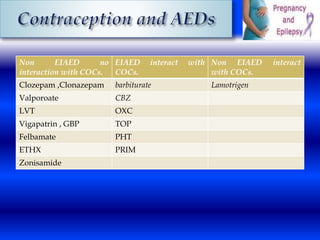
LTG is the exception; though it is not an EIAED, it is 
reported to interact with COCs and may reduce 
contraceptive effectiveness, and the contraceptive 
may interfere with seizure control by reducing the 
LTG blood level by as much as 40–60% .
Fully effective contraception cannot be guaranteed 
with either LTG or topiramate (TPM) (>200 
mg/day). 
One suggestion for patients taking AEDs that interfere 
with COCs is to use a barrier method of 
contraception, such as a condom, the diaphragm, or 
the cervical cap, in addition to the COC.
Non EIAED no 
interaction with COCs. 
Clozepam ,Clonazepam barbiturate Lamotrigen 
Valporoate CBZ 
LVT OXC 
Vigapatrin , GBP TOP 
Felbamate PHT 
ETHX PRIM 
Zonisamide 
Non EIAED interact 
with COCs. 
EIAED interact with 
COCs.
It is recommended that injections be administered 
every 10 weeks (and some clinicians prefer every 6– 
8 weeks) rather than the usual 12 weeks for women 
with epilepsy. 
Intrauterine devices (IUDs) that secrete progestin may 
be used by women with epilepsy and does not appear 
to be affected by EIAEDs . A copper IUD, is also 
effective for women with epilepsy taking EIAEDs. 
EIAEDs appear to reduce the effectiveness of the patch 
because of the low progestin dose and increased 
metabolism of the steroid components.
Combined OCs can increase the elimination of drugs 
that are metabolised by glucuronidation. 
Among AEDs, this metabolic pathway has been 
studied most intensively for lamotrigine. 
The metabolism of lamotrigine is accelerated 
approximately 50% by co-treatment with combined 
OCs . 
A drop in the plasma level of the AED following 
initiation of OCs may lead to increased seizure 
activity
epilepsy and pregnancy

epilepsy and pregnancy

  • 2.
    Osama Ragab Ass.lecof Neurology Faculty of Medicine Tanta University 2013
  • 4.
    Having a diagnosisof epilepsy can make you re-question your whole life plan Work / Finances Family / Home Social / Hobbies
  • 5.
    Approximately one-half millionwomen with epilepsy are of childbearing age. It has been estimated that3–5 births per 1000 will be to women with epilepsy. Women with epilepsy are at an increased risk of gestational hypertension, but not preeclampsia. There is a possible additive effect of epilepsy and smoking on the rates of preterm delivery.
  • 6.
    Seizures, including statusepilepticus, during pregnancy can be fatal to both mother and fetus. The overall likelihood of major congenital malformations in neonates exposed to any AED ranges from 2.2% up to 11%.
  • 7.
    Infants born towomen with epilepsy who are taking AEDs have twice the risk of being small for gestational age and low Apgar scores . AEDs have been associated with a higher rate of spontaneous abortion (2 times normal)
  • 8.
  • 10.
    Neurons and gliaare equipped for local de novo production of steroid hormones mainly in the hippocampus . Neurosteroids are known for their non-genomic acute effects by direct modulation of NMDA receptors and GABAA receptors. Neurosteroids are responsible mainly for “fine tuning” of neuronal excitability by acting at synaptic and extrasynaptic receptors.
  • 11.
    Neurosteroids also playan important role in neuronal survival in developing as well as aging brain . Disturbances in the neurosteroid production have been detected in sclerotic hippocampal tissue from patients with temporal lobe epilepsy, and other neurodegenerative disorders (such as Alzheimer's disease or multiple sclerosis). Sex hormones are critical for regulating neuronal excitability and survival.
  • 12.
    in some womenwith epilepsy, seizure exacerbation can be related to periodical hormonal fluctuations during the ovarian cycles. Seizures also often change pattern, expression or onset at the time of natural hormonal changes such as adolescence . pregnancy , and during the perimenopause and menopause .
  • 13.
    Some epileptic syndromesmay either remit (benign rolandic epilepsy, childhood absence) or have their onset (juvenile myoclonic epilepsy) in adolescence, indicating the likely influence of hormonal changes and maturation occurring around puberty. The dramatic irregular fluctuations in gonadal hormones during the onset of menopause (perimenopausal stage) and their loss at menopause are likely to influence seizure frequency.
  • 14.
    Chronic administration ofprogesterone has anti-seizure effect related to its metabolite allopregnanolone which modulate GABAA receptors . chronic administration of allopregnanolone contributes to a paradoxical agrevate seizure by increasing the expression of α4 subunit of GABAA receptors. The agrevation could be related to progesterone-induced increase in dendritic spine density with mushroom like spines .
  • 15.
    Estradiol has mixedeffects when administered acutely ranging from no effect, mild anticonvulsant to proconvulsant effects depending whether physiological or supraphysiological doses have been used. Seizure limiting effects linked mainly to regulation of neuropeptide Y (NPY) in the hippocampus . (powerful inhibitory peptide) . The neuroprotective effects of estradiol on seizure-induced damage were linked to the regulation of NPY expression. Unlike estradiol, progesterone has only anticonvulsant but not neuroprotective effects.
  • 16.
    Effects of epilepsyon reproductive hormones
  • 18.
    The hypothalamus receivesmany direct connections from parts of the temporal lobe that are involved in the generation of seizures. Increased frequency of pulsatile secretion of luteinizing hormone (LH) has been observed in women with epilepsy and may contribute greatly to alterations in ovarian cycle. Higher LH pulse frequencies positively correlate especially with localization of the focus in the left temporal lobe compared to lower LH pulse frequencies in patients with the right side foci .
  • 19.
    A significant increasein allopregnanolone serum level was observed in both male and female prepubertal children, independent on the type of epilepsy, during the post-ictal phase but not during the inter-ictal phase. AEDs that induce hepatic microsomal enzymes (EIAEDs) also interact with hormonal contraceptives to increase estrogen’s metabolism and progesterone’s protein binding, thereby decreasing concentrations of both hormones and thus reducing contraceptive efficacy .



  • 23.
    A large numberof women with epilepsy have some degree of sexual and/or reproductive dysfunction . Sexual dysfunction may include difficulty with libido, arousal, and orgasm. Libido difficulties are reported more often in individuals with complex partial than generalized seizures. Some women report normal sexual desire but difficult or painful coitus (dyspareunia).
  • 24.
    Some women reportnormal sexual desire but difficult or painful coitus (dyspareunia). Physiologically, the areas of the brain that mediate sexual behavior are the same areas that are involved in common forms of focal epilepsy.
  • 25.
    A recent studyfound improvement in sexual function for both women and men associated with lamotrigine (LTG) therapy . Resective brain surgery as a treatment for medically refractory seizures has also been shown to restore sexual function. Sildenafil is also being studied to improve vasocongestion in women .
  • 26.
    Women with epilepsyhave a fertility rate 60–80% that of women without epilepsy. One-third to one-half of women with temporal lobe epilepsy report difficulties with their menstrual cycle, with 20% having amenorrhea , oligomenorrhea. Some women experience anovulatory cycles. Women with epilepsy are at risk for polycystic ovaries, a major contributor to infertility
  • 27.
    The association betweenepilepsy and reproductive endocrine disorders is a matter of controversy. Epilepsy is associated with these disorders by itself. But AED therapy may have a greater effect on endocrine function. Women with epilepsy are eligible for fertility treatment whether or not they are taking AEDs.
  • 29.
    An in-depth historyshould delineate the duration of epilepsy, frequency of seizures, the use of AEDs, their type, and the response to these medications. Attention should be given to past obstetrical history including maternal as well as neonatal outcomes, with stresses congenital anomalies. If the patient has been seizure free for more than one year, then discontinuation of AEDs can be considered. If the seizure-free interval is less than 1 year, monotherapy of the least teratogenic drug at the lowest effective dose is recommended.
  • 30.
    Women who decidewith their doctor to try tapering off AED therapy should begin at least 6 months prior to becoming pregnant. Changes in AEDs should also be made prior to a planned pregnancy to ensure seizure control. The adverse structural and functional effects of in utero exposure to AEDs are dose dependent. The lowest effective dose to control seizure activity should be used.
  • 31.
    Anticonvulsant level, drawnprior to morning dose of AED, to identify the serum concentration at which seizures are maximally controlled. This level will then be used for future comparison during pregnancy. the American College of Obstetricians and Gynecologists recommends 4.0 mg of folic acid daily for women at risk of having offspring with neural tube defects (including women taking AEDs).
  • 33.
    Pregnancy has avariable and unpredictable effect on epilepsy. It is difficult to predict the change in seizure frequency during pregnancy with the rate of seizures decreasing in 3–24% of patients, increasing in 14–32%, and unchanged in 54– 80%. Remaining seizure free for at least nine months prior to conception is associated with greater likelihood (84–92%) of remaining seizure free during pregnancy.
  • 34.
    Seizure frequency mayincrease: due to: -Enhanced metabolism & increased drug clearance associated with pregnancy can result in decreased serum drug concentration. -Increased volume of distribution of the AED. -Increased serum binding proteins. -Decreased or non-compliance with medication. -Sleep deprivation, hormonal changes of pregnancy and associated psychological and emotional stress of pregnancy: all lower threshold for seizures. -Nausea and vomiting.
  • 35.
    If a patientpresents to prenatal care and did not receive preconceptual drug therapy optimization, withdrawal of medication should not be attempted as this may provoke maternal seizures and possibly status epilepticus. In addition, changes in medication expose the fetus to polytherapy and thus increase the risk of malformations.
  • 36.
    Maternal plasma druglevels should be monitored monthly and compared to pre-pregnancy levels, if possible . Medication dosage is then adjusted according to both plasma levels and seizure activity. Supplemental folic acid should be started prior to conception and then discontinued after twelve weeks of gestation
  • 38.
    The pharmacokinetic andpharmacodynamic effects of all AEDs can change during pregnancy . Throughout pregnancy, the plasma volume increases which will change the drug distribution. Cardiac output and renal blood flow increase, thus increasing renal clearance of medications. Pregnancy induces the cytochrome p450 (CYP 450) super-families in the liver, thus liver metabolism of certain drugs increases.
  • 39.
    Conversely, fat storageincreases thus fat-soluble drug elimination slows down. Total drug levels may decrease due to a decrease in AED transporters including albumin and alpha1- acid glycoproteins, but the unbound concentration does not change. The unbound form of the drug determines the therapeutic, toxic, and teratogenic effects.
  • 40.
     Among theAEDs, there is no single best choice for treatment of seizures.  The drug with the lowest risk of teratogenesis in combination with the ability to control seizures with the lowest dose and monotherapy form is ideal.
  • 41.
    primarily metabolized inthe liver by the CYP450 enzyme. The rate of major congenital malformations with phenytoin monotherapy use ranges 0.7–7.4%. The Fetal Hydantoin Syndrome ,hypoplasia and irregular ossification of the distal phalanges, facial dysmorphism epicanthal folds, hypertelorism, broad and depressed nasal bridge, an upturned nasal tips,intrauterine growth restriction, and intellectual disability. The free plasma concentration varies significantly during the second and third trimesters.
  • 42.
    Metabolism urs predominantlyin the liver by the cytochrome p450 superfamily. The free plasma concentration of carbamazepine increases in a non-significant manner during pregnancy. Monthly monitoring of carbamazepine levels is not recommended. The rate of congenital malformations with carbamazepine monotherapy use ranges 2.2–6.3%. The specific congenital malformation associated with in utero carbamazepine use cardiac malformations and oral clefts
  • 43.
     Valproate exposureis associated with a 1–2% risk of neural tube defects (i.e. a 10–20-fold increase over the general population), an increased risk of neurodevelopmental deficits.  The most common birth defects with valproate use, orofacial clefts, congenital heart defects, hypospadias, and skeletal abnormalities, reduced verbal abilities, and lower IQ.  In comparison to other AEDs, valproate has the highest risk of major congenital malformations.  Valproic Acid use in pregnancy should be avoided if possible.
  • 44.
    Metabolism of lamotrigineoccurs through glucuronidation in the liver. Several studies suggest that lamotrigine clearance increases by about 65–94% and therefore should be monitored frequently during the second and third trimesters. The prevalence of fetal congenital malformations with in utero exposure to lamotrigine is 2–3%, with the most common malformation being cleft lip/palate.
  • 45.
    Excreted primarily throughthe kidneys. Pregnancy appears to enhance the elimination of levetiracetam resulting in marked decline in plasma concentration, which suggests that therapeutic monitoring may be of value. Rate of major congenital malformation of 0.70%. Cognitive defects have not been seen in children exposed to levetiracetam or lamotrigine.
  • 46.
     Plasma concentrationsof topiramate vary greatly during pregnancy, therefore it is necessary to carefully monitor serum levels.  The rate of major congenital malformations with topiramate monotherapy ranges 2–3.8%, with cleft lip and palate occurring most frequently.
  • 47.
    Gabapentin It isrenally excreted. There is no data that describes the pharmacokinetics of gabapentin during pregnancy, thus obtaining monthly serum levels may be of benefit. Data regarding the teratogenic effects of gabapentin is very limited and inconclusive, with rates of major congenital malformation uncertain (0–6%).
  • 48.
    Seizures can leadto reduced placental circulation and secondary ischemia in the fetus. Optimal reperfusion after the circulation is restored can lead t o increased oxidative stress, which in turn could exert teratogenic effects. AED usage may lead to folate deficiency which in turn may predispose to neural tube defects. AEDs increase the levels of arene oxides as a byproduct of its metabolism. Arene oxide is a potent teratogen. Alteration in the homeobox (HOX) genes, retinoic acid signaling pathways, histone deacetylators and polymorphisms involving AED transporters.
  • 49.
     Neural tubeclosure occurs at about Day 26 of pregnancy, often before a woman is aware that she is pregnant. Neural tube and cardiac defects occur in the first 28 days following conception, so folate supplementation should begin before conception is attempted and continue throughout the pregnancy. If the folate supplement is begun more than 30 days after conception, it will not provide protection against a NTD.
  • 50.
    Current recommendations Forany sexually active woman of childbearing potential, recommended daily allowances of folic acid have been increased to 400 μg/day for nonpregnant women, 600 μg/day for pregnant women and 500 μg/day for lactating women. Many epileptologists recommend higher doses (800 μg to 4 mg/day) for women with epilepsy.
  • 51.
    The reported frequencyof status epilepticus in pregnant women with epilepsy ranges from 0% to 1.8%. The aim of management in status epilepticus is to achieve control of the seizures as rapidly as possible. There are four main categories of drugs that are used to treat status epilepticus: benzodiazepines, phenytoin (or fosphenytoin), barbiturates, and propofol. Benzodiazepines are the first-line treatment of status epilepticus due to their fast onset of action. Lorazepam (0.02–0.03 mg/kg IV) is the initial drug of choice.
  • 53.
    Women with generalizedepilepsy are more at risk for seizures during delivery than are those with partial epilepsy . It is important to remind women with epilepsy to bring their AEDs to the hospital during labor and to take regular doses during this period under the supervision of hospital staff. Intravenous (Phenobarbital [PB], VPA, LEV) administration may be needed if the woman is not able to keep down oral medication.
  • 54.
    Hyperventilation and maternalexhaustion should be avoided Generalised tonic clonic seizures are associated with hypoxia, and continuous CTG tracing is recommended in the event of a seizure An intravenous benzodiazapene (e.g. lorazepam or diazepam) is recommended to terminate the seizure Women should deliver in a centre with adequate facilities for maternal and neonatal resuscitation
  • 55.
    Emergency C.S. shouldbe performed when repeated GTCSs cannot be controlled during labor . Obstetric analgesia may be used to allow for rest before delivery. Pethidine should never be used because it is metabolised to norpethidine, which is epileptogenic. Diamorphine is an option. Few cases of postpartum seizures were reported following epidural analgesia.
  • 56.
    It is suggestedthat oral vitamin K supplementation at 10– 20 mg/day be prescribed during the last month of pregnancy and 0.5 mg administered intramuscularly immediately after delivery. This is particularly important for women taking EIAEDs associated with alterations in vitamin K metabolism. Vitamin K is recommended for all neonates at birth; however, neonates born to women with epilepsy should be monitored for bleeding. The recommended dosage for neonates is 1 mg intramuscularly or intravenously at birth.
  • 58.
    AED therapy shouldbe continued postpartum. For most AEDs, the pharmacokinetics in the mother will return to pre-pregnancy levels within 10–14 days after delivery. Regardless of the AED, patients should be monitored for signs/symptoms of toxicity closely and dose adjustments to pre-pregnancy levels are likely.
  • 59.
    Lamotrigine clearance decreasesquickly in the first week postpartum, and dose adjustments should be made sooner. The dose incrementally reduced at postpartum days 3, 7, and 10, with return to preconception dose or preconception dose plus 50 mg to help counteract the effects of sleep deprivation.
  • 60.
    Patients must beadvised of the importance of adequate rest, sleep, and compliance with drug therapy. Precautions must be taken to protect the infant in the event the mother has a seizure. Patients should not bathe their child while they are home alone, they need to avoid climbing stairs while carrying baby.
  • 61.
    All of theAEDs are measurable in breast milk. The reported percentage of maternal plasma levels in breast milk varies depending on the drug. Lamotrigine, one of the newer AEDs, is excreted extensively in breast milk. No adverse events in these infants exposed to lamotrigine during lactation were observed in the first postnatal year. n.
  • 62.
    Small studies oflevetiracetam, topiramate, and gabapentin have found that while present in breast milk in concentrations similar to maternal plasma, the concentrations in infant plasma were low, suggesting rapid eliminatio Most experts believe that taking AEDs does not generally contradict breastfeeding. Infant serum anticonvulsant levels should be monitored if acute changes in behavior occur.
  • 64.
    It has beenestimated that more than 40% of women with epilepsy have unplanned pregnancies . Most hormonal OCs combine synthetic estrogen and progesterone. In fact, most studies have shown that estrogen-based contraceptives do not affect seizure frequency
  • 65.
    Some first- andsecond-generation AEDs induce hepatic cytochrome P450 enzyme activity and increase the metabolism of both estrogen and progesterone. Women taking hepatic microsomal EIAEDs may have as much as a five- to six fold increase in the COC failure rate. Most drugs that inhibit or have no effect on the cytochrome P450 enzyme system do not affect the efficacy of hormonal contraception .
  • 66.
    LTG is theexception; though it is not an EIAED, it is reported to interact with COCs and may reduce contraceptive effectiveness, and the contraceptive may interfere with seizure control by reducing the LTG blood level by as much as 40–60% .
  • 67.
    Fully effective contraceptioncannot be guaranteed with either LTG or topiramate (TPM) (>200 mg/day). One suggestion for patients taking AEDs that interfere with COCs is to use a barrier method of contraception, such as a condom, the diaphragm, or the cervical cap, in addition to the COC.
  • 68.
    Non EIAED no interaction with COCs. Clozepam ,Clonazepam barbiturate Lamotrigen Valporoate CBZ LVT OXC Vigapatrin , GBP TOP Felbamate PHT ETHX PRIM Zonisamide Non EIAED interact with COCs. EIAED interact with COCs.
  • 69.
    It is recommendedthat injections be administered every 10 weeks (and some clinicians prefer every 6– 8 weeks) rather than the usual 12 weeks for women with epilepsy. Intrauterine devices (IUDs) that secrete progestin may be used by women with epilepsy and does not appear to be affected by EIAEDs . A copper IUD, is also effective for women with epilepsy taking EIAEDs. EIAEDs appear to reduce the effectiveness of the patch because of the low progestin dose and increased metabolism of the steroid components.
  • 70.
    Combined OCs canincrease the elimination of drugs that are metabolised by glucuronidation. Among AEDs, this metabolic pathway has been studied most intensively for lamotrigine. The metabolism of lamotrigine is accelerated approximately 50% by co-treatment with combined OCs . A drop in the plasma level of the AED following initiation of OCs may lead to increased seizure activity