DISORDER OF CONSCIOUSNESS
DR. SREEMAYEE KUNDU
MD Paediatrics
• Consciousness is the state of awareness of self
and environment.
• Dimensions:
a) Wakefulness
b) Awareness
• Clouding of consciousness: Minimal
reduction of wakefulness or awareness-main
difficulty attention.
• Confusion: State of impaired ability to think
and reason clearly at a developmentally and
intellectually appropriate level.
• Sleep: Biologically active state with
identifiable behavioral and EEG stages, with
appropriate stimulus intensity and duration
sleeping person can be aroused to a normal
state of consciousness.
• Coma and other states of consciousness
warrant medical emergency.
Pathophysiology
Pathophysiology
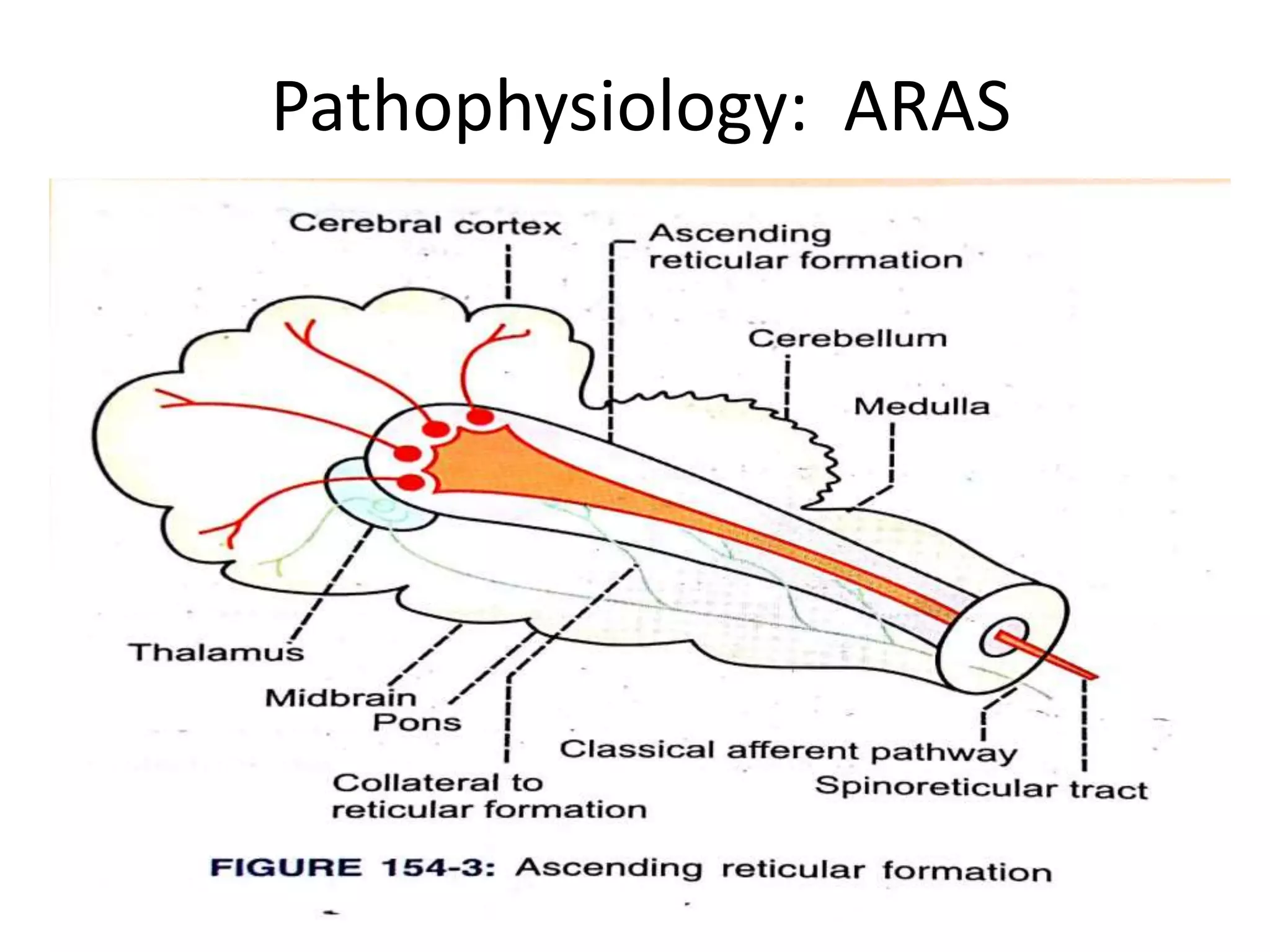
Integral Consciousness requires an intact -
1) Ascending reticular activating system,
2) Cerebral cortex,
3) Healthy projections between the two
systems.
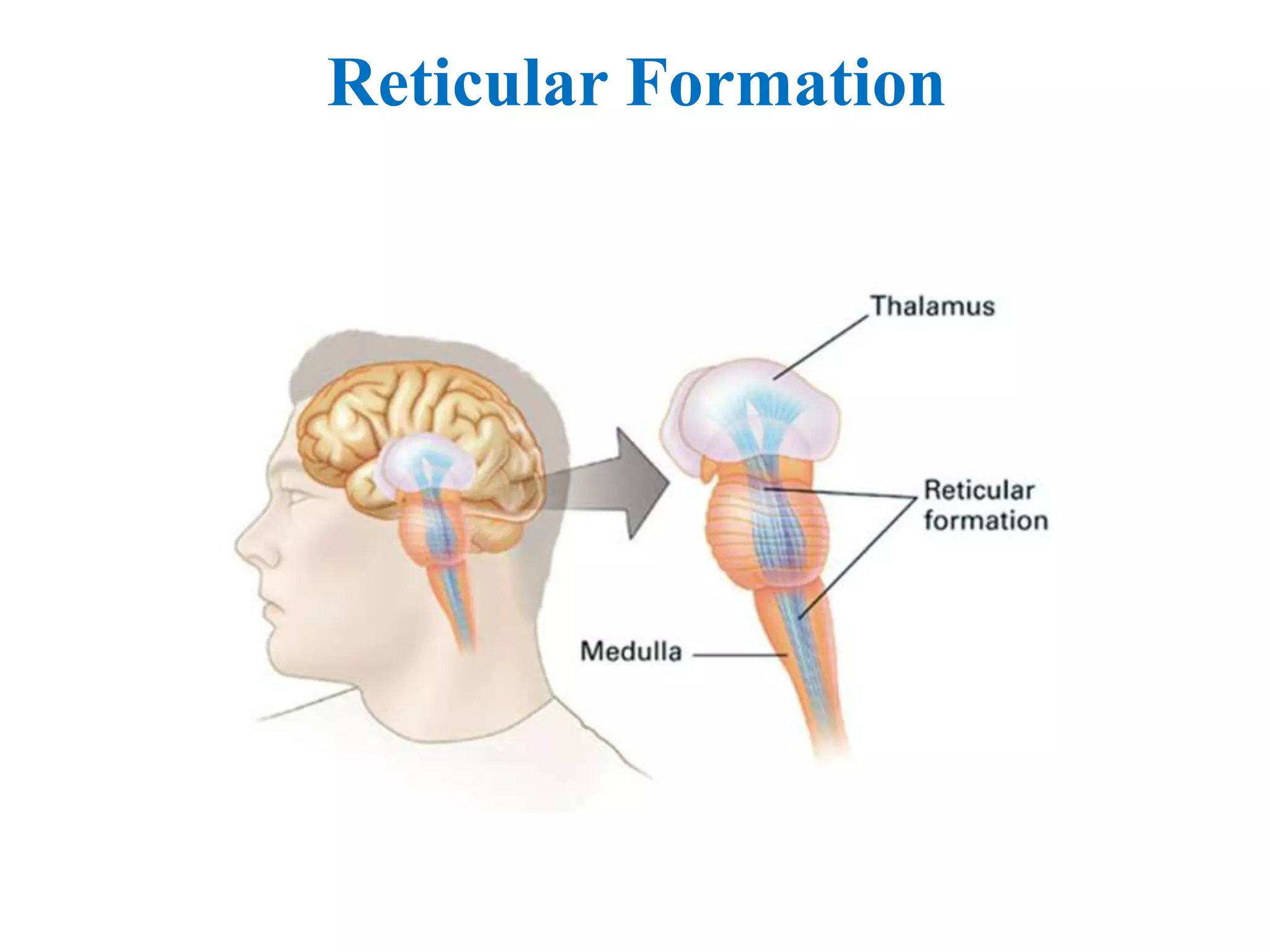
Reticular Formation
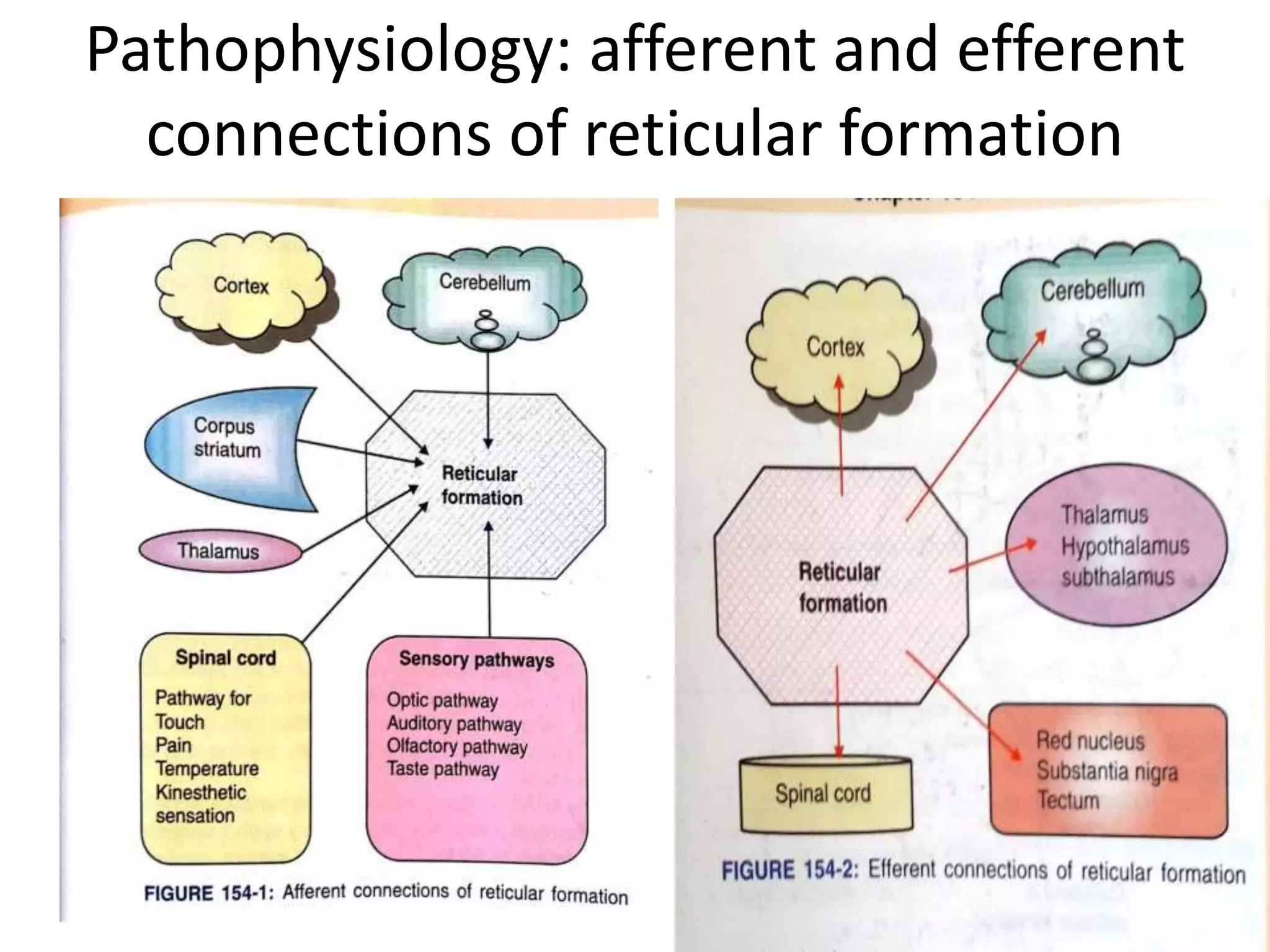
Pathophysiology: afferent and efferent
connections of reticular formation
Pathophysiology: ARAS
• Begins in the lower brainstem and extends
upward through pons, midbrain, thalamus
• Finally project throughout cerebral cortex-
into two pathways
a) through subthalamus
b) through thalamus
Pathophysiology
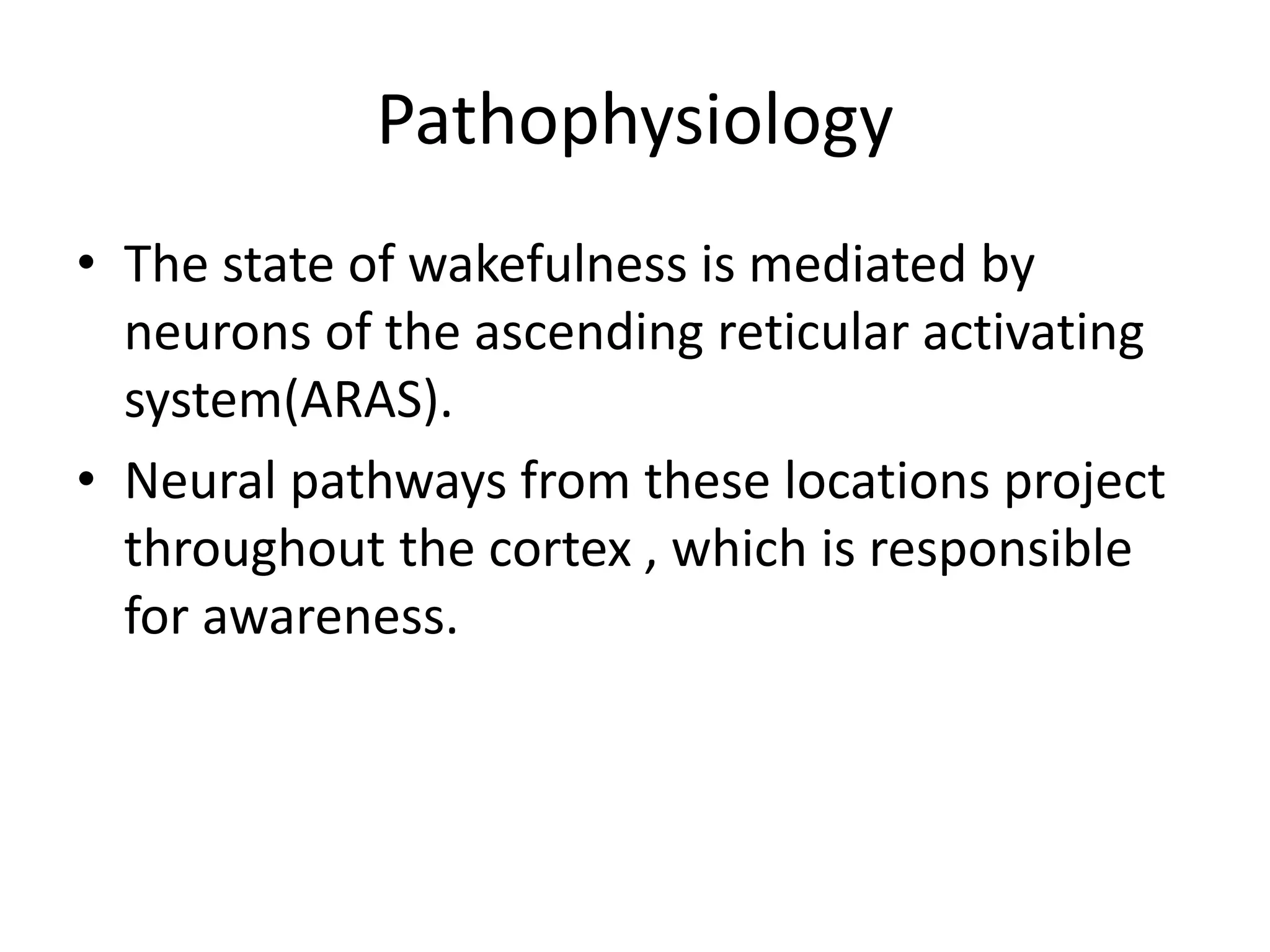
• The state of wakefulness is mediated by
neurons of the ascending reticular activating
system(ARAS).
• Neural pathways from these locations project
throughout the cortex , which is responsible
for awareness.
Loss of consciousness will result if
• The function of ARAS neurons compromised
or
• Both cerebral hemisphere are sufficiently
affected by disease.
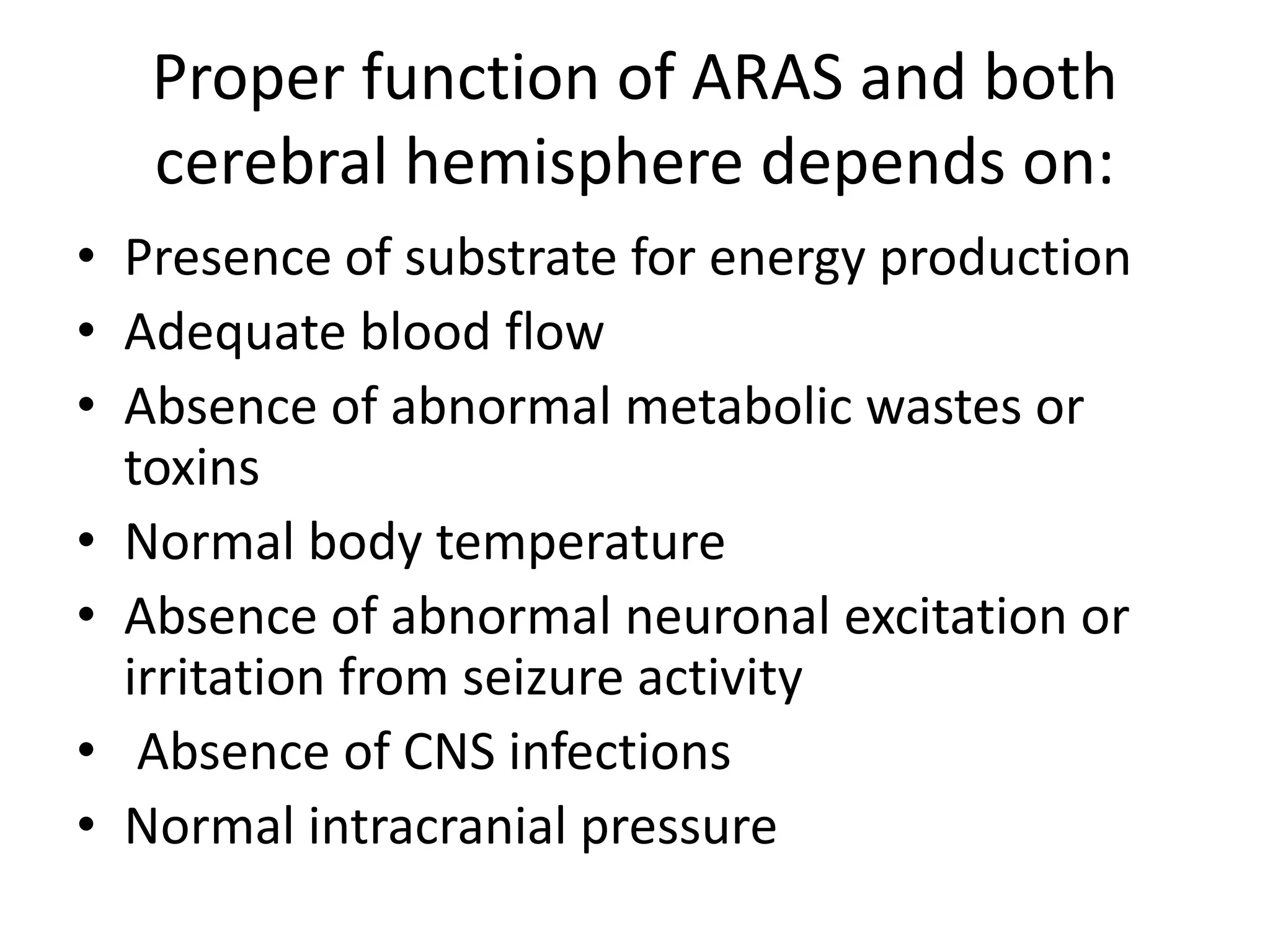
Proper function of ARAS and both
cerebral hemisphere depends on:
• Presence of substrate for energy production
• Adequate blood flow
• Absence of abnormal metabolic wastes or
toxins
• Normal body temperature
• Absence of abnormal neuronal excitation or
irritation from seizure activity
• Absence of CNS infections
• Normal intracranial pressure
Etiology of impaired consciousness
and coma
• Infectious or inflammatory
• Structural
• Metabolic, Nutritional, Toxic
Etiologies of Impaired Consciousness
and Coma
1.Infectious or Inflammatory
A. Infectious
• Bacterial meningitis
• Viral encephalitis
• Rickettsial infection
• Protozoan infection
• Helminth infestation
B. Inflammatory
• Sepsis-associated encephalopathy
• Vasculitis, collagen vascular disorders
• Demyelination
• Acute disseminated encephalomyelitis
• Multiple sclerosis
Etiology –cont.
2. Structural
A. Traumatic
 Concussion
 Cerebral contusion
 Epidural hematoma or
effusion
 Intracerebral hematoma
 Diffuse axonal injury
 Abusive head trauma
B. Neoplasms
C. Focal Infection
• Abscess
• Cerebritis
D. Hydrocephalus
E.Vascular Disease
• Cerebral infarction
 Thrombosis
 Embolism
 Venous sinus thrombosis
• Cerebral hemorrhage
 Subarachnoid hemorrhage
 Arteriovenous malformation
 Aneurysm
• Congenital abnormality or
dysplasia of vascular supply
• Trauma to carotid or
vertebral arteries in the
neck
Etiology –cont.
3.Metabolic, Nutritional, or
Toxic
A. Hypoxic-Ischemic
Encephalopathy
 Shock
 Cardiac or pulmonary failure
 Near-drowning
 Carbon monoxide poisoning
 Cyanide poisoning
 Strangulation
B. Metabolic Disorders
 Sarcoidosis
 Hypoglycemia
 Fluid and electrolyte
imbalance
 Endocrine disorders
 With acidosis
 Diabetic ketoacidosis
 Aminoacidemias
 Organic acidemias
 With hyperammonemia
 Hepatic encephalopathy
 Urea cycle disorders
 Disorders of fatty acid
metabolism
 Reye’s syndrome
 Valproic acid encephalopathy
 Uremia
 Porphyria
 Mitochondrial disorders
 Leigh’s syndrome
Etiology -cont
C. Nutritional
 Thiamine deficiency
 Niacin or nicotinic acid
deficiency
 Pyridoxine dependency
 Folate and B12 deficiency
D. Exogenous Toxins and
Poisons
 Alcohol intoxication
 Over-the-counter
medications
 Prescription medications
(oral and ophthalmic)
 Herbal treatments
 Heavy-metal poisoning
 Mushroom and plant
intoxication
 Illegal drugs
 Industrial agents
E. Hypertensive
Encephalopathy
F. Burn Encephalopathy
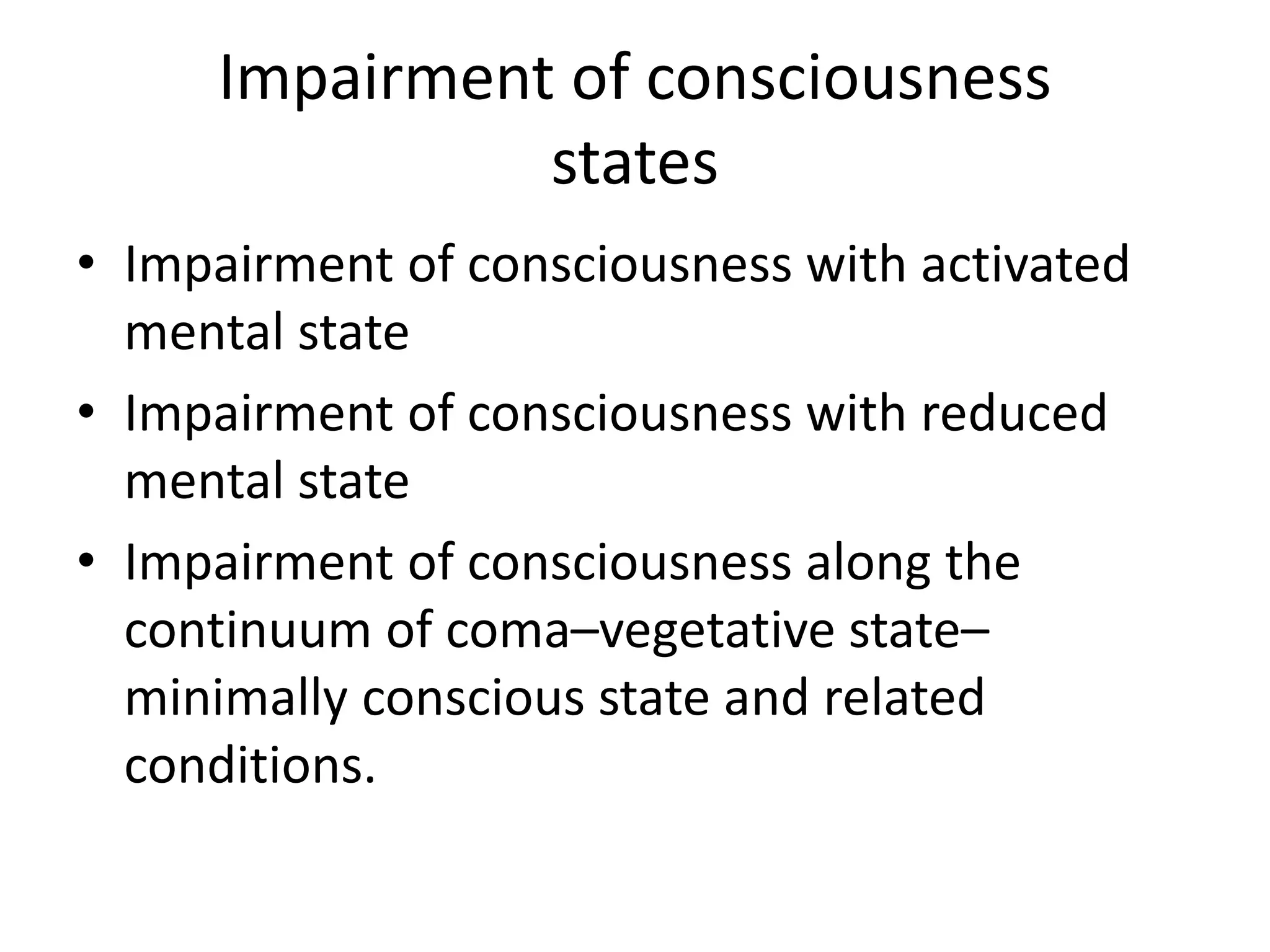
Impairment of consciousness
states
• Impairment of consciousness with activated
mental state
• Impairment of consciousness with reduced
mental state
• Impairment of consciousness along the
continuum of coma–vegetative state–
minimally conscious state and related
conditions.
1) Impairment of consciousness with
activated mental state
• Hallucination : Perception of sensory input
that are not present.
• Illusion : Misinterpretation of actual sensory
stimuli.
• Delusion : Incorrect thoughts or beliefs that
do not change when challenged by
contradictory evidence or logical reason.
• Delirium : Activated mental state that may
include disorientation, irritability, fearful-
responses, and sensory misperception.
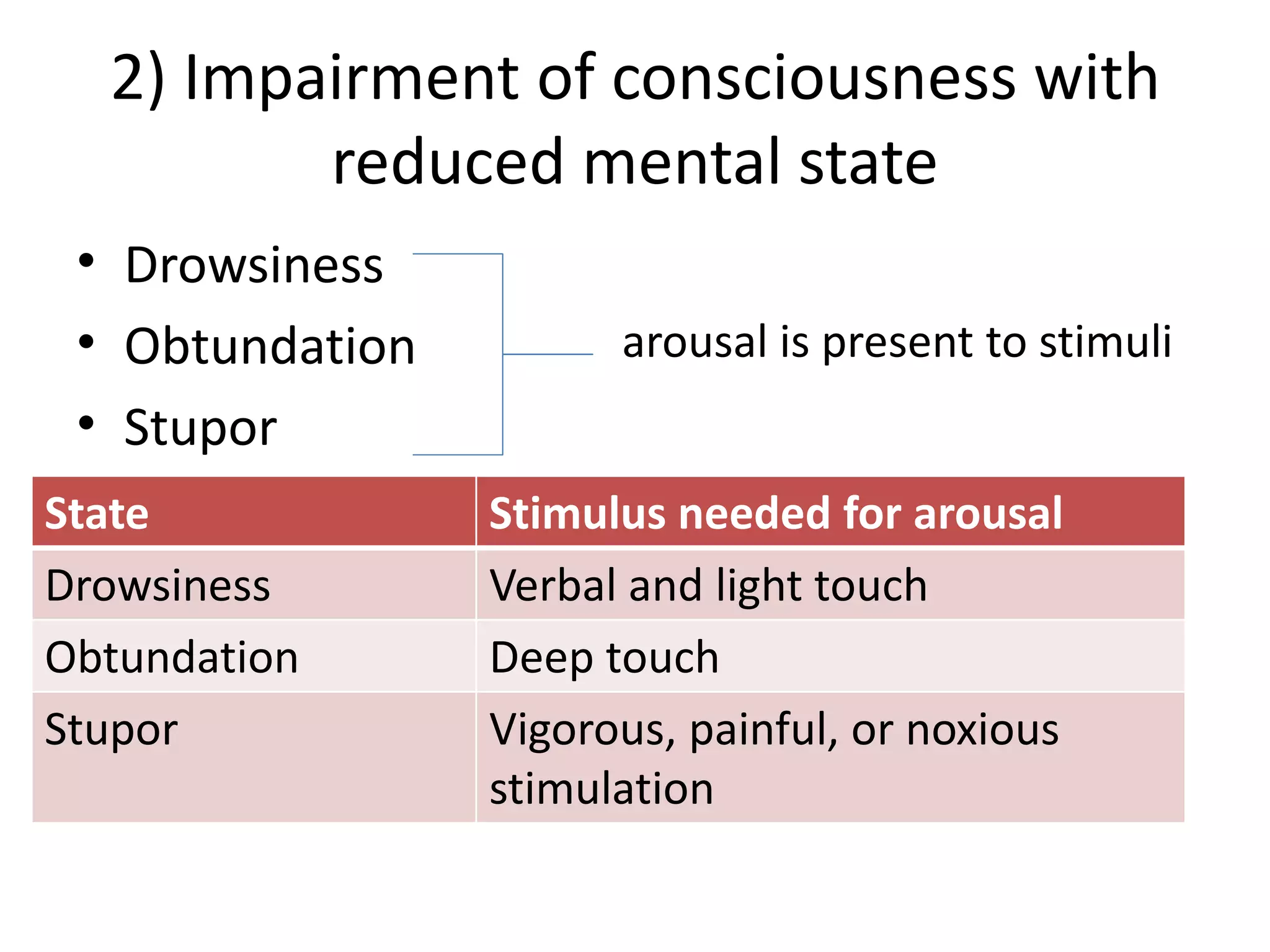
2) Impairment of consciousness with
reduced mental state
• Drowsiness
• Obtundation arousal is present to stimuli
• Stupor
State Stimulus needed for arousal
Drowsiness Verbal and light touch
Obtundation Deep touch
Stupor Vigorous, painful, or noxious
stimulation
3) Impairment of consciousness along
the continuum of coma–vegetative
state–minimally conscious state and
related conditions.
Coma
• State of deep, unarousable, sustained
pathologic unconsciousness with the eyes
closed that results from dysfunction of the
ascending reticular-activating system in the
brainstem or in both cerebral hemispheres.
• Patients in coma lack both wakefulness and
awareness.
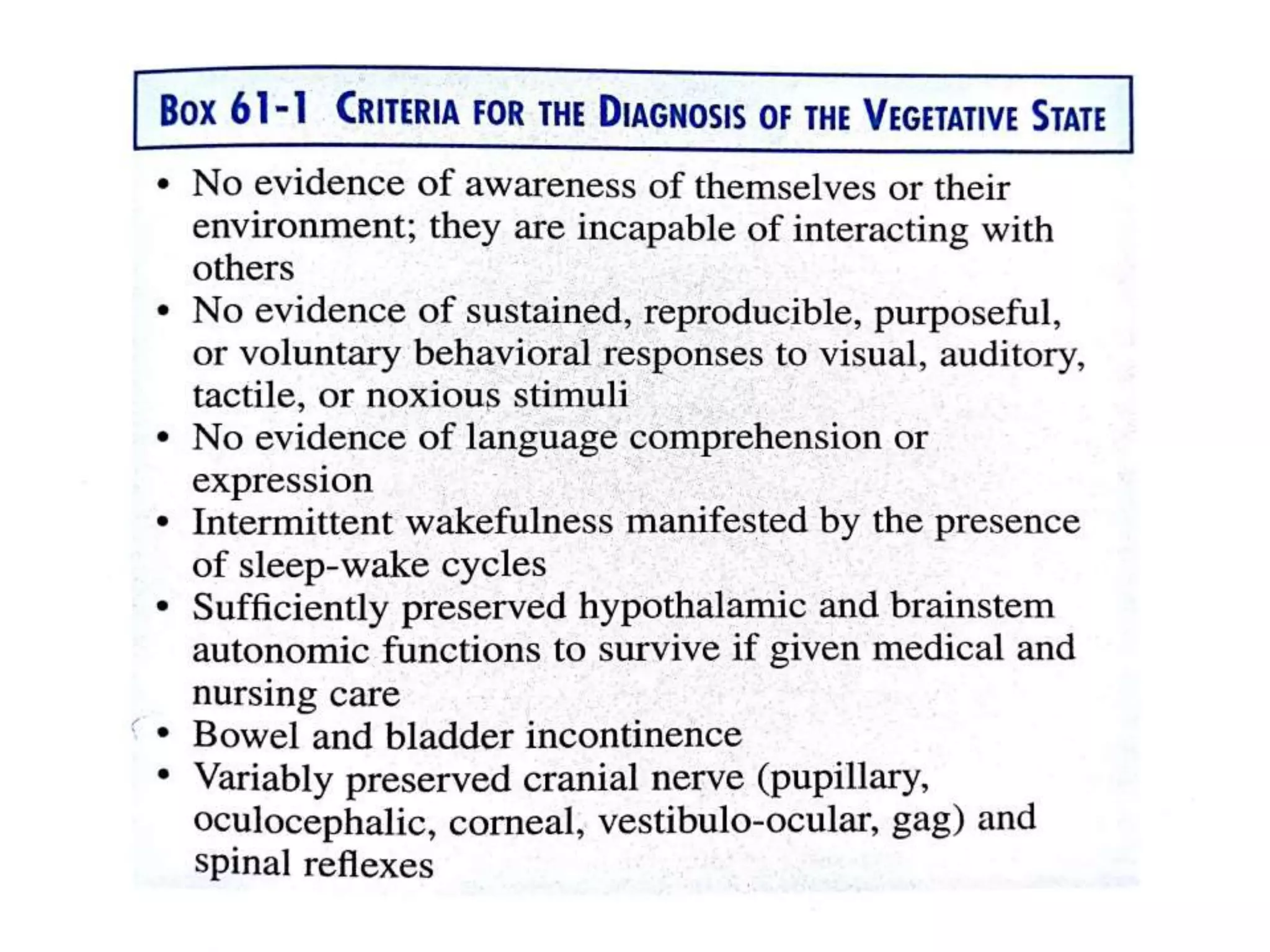
Vegetative state
• Complete unawareness of self & environment
accompanied by sleep-wake cycles with
complete/partial preservation of
hypothalamic and brainstem autonomic
function.
• Demonstrate : variety of sounds, emotional
expressions, body movements, smile/shed
tears.
• Lack of sustained visual fixation or tracking.
Clinical course of evolution to vegetative state-
• Acute injury Coma several days-week
appearance of sleep-wake cycle.
• Decorticate & decerebrate posturing, roving
eye movements, eye blinking appeared earlier.
• Diagnosis – Clinically mainly.
Minimally conscious state
• Severely alterered consciousness,
demonstrates minimal evidence of self /
environmental awareness.
• Neurologic recovery-better.
• Life expectancy- longer than vegetative state.
Locked-In Syndrome
• Retain consciousness & cognition but unable
to move or communicate because of paralysis.
• Involvement – Descending corticospinal &
corticobulbar pathways at or below Pons/
Peripheral nervous system.
• Rare in children.
• Communication – using eye movements.
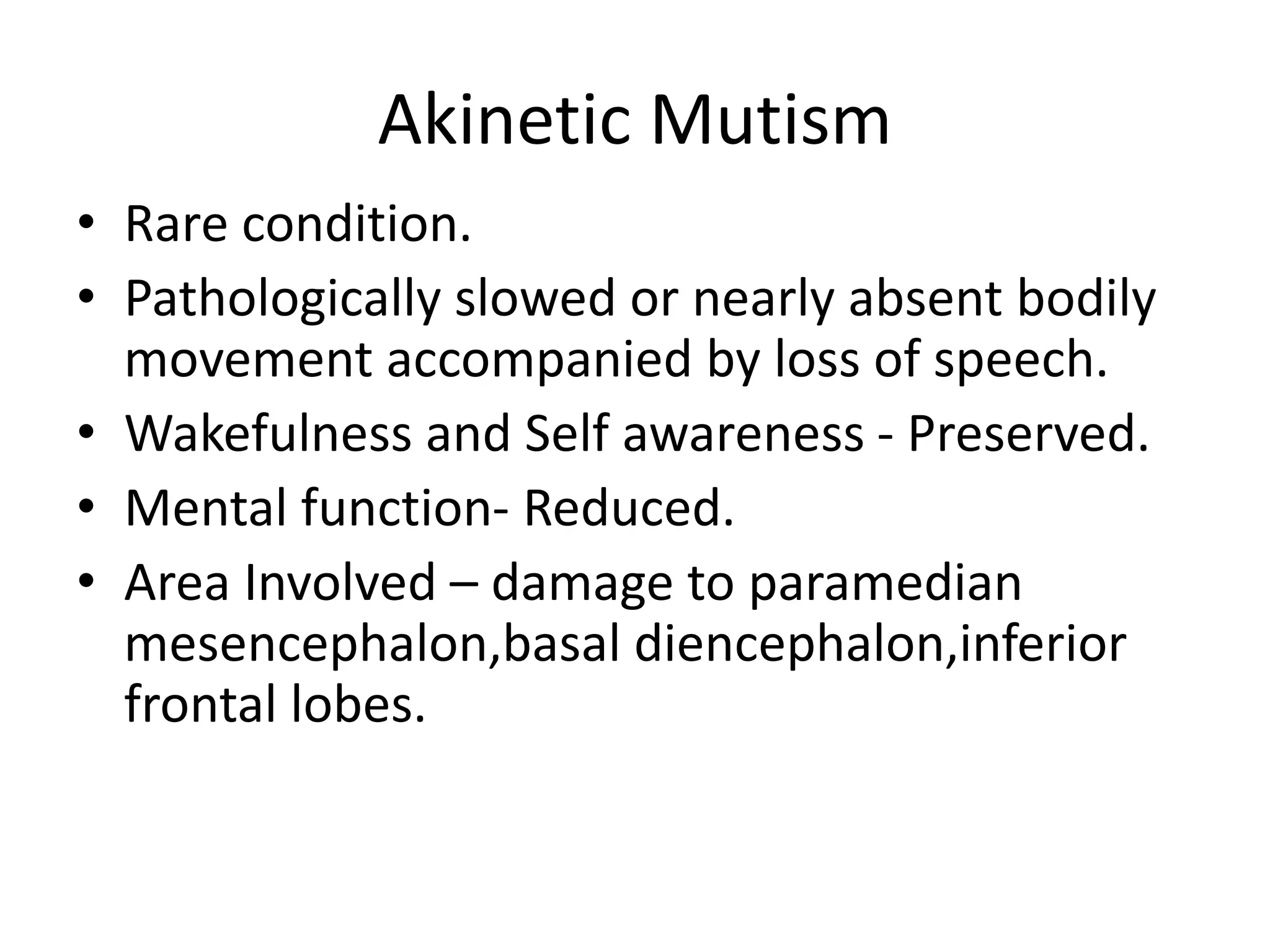
Akinetic Mutism
• Rare condition.
• Pathologically slowed or nearly absent bodily
movement accompanied by loss of speech.
• Wakefulness and Self awareness - Preserved.
• Mental function- Reduced.
• Area Involved – damage to paramedian
mesencephalon,basal diencephalon,inferior
frontal lobes.
Brain Death
• Irreversible cessation of all functions of entire
brain,including brainstem.
• Determination of death using neurologic
criteria.
• Legally accepted in US as equivalent of death.
• Universally not accepted.
• Clinical diagnosis- 3 key components-
Irreversible coma with a known cause,
Absence of brainstem reflexes and Apnea
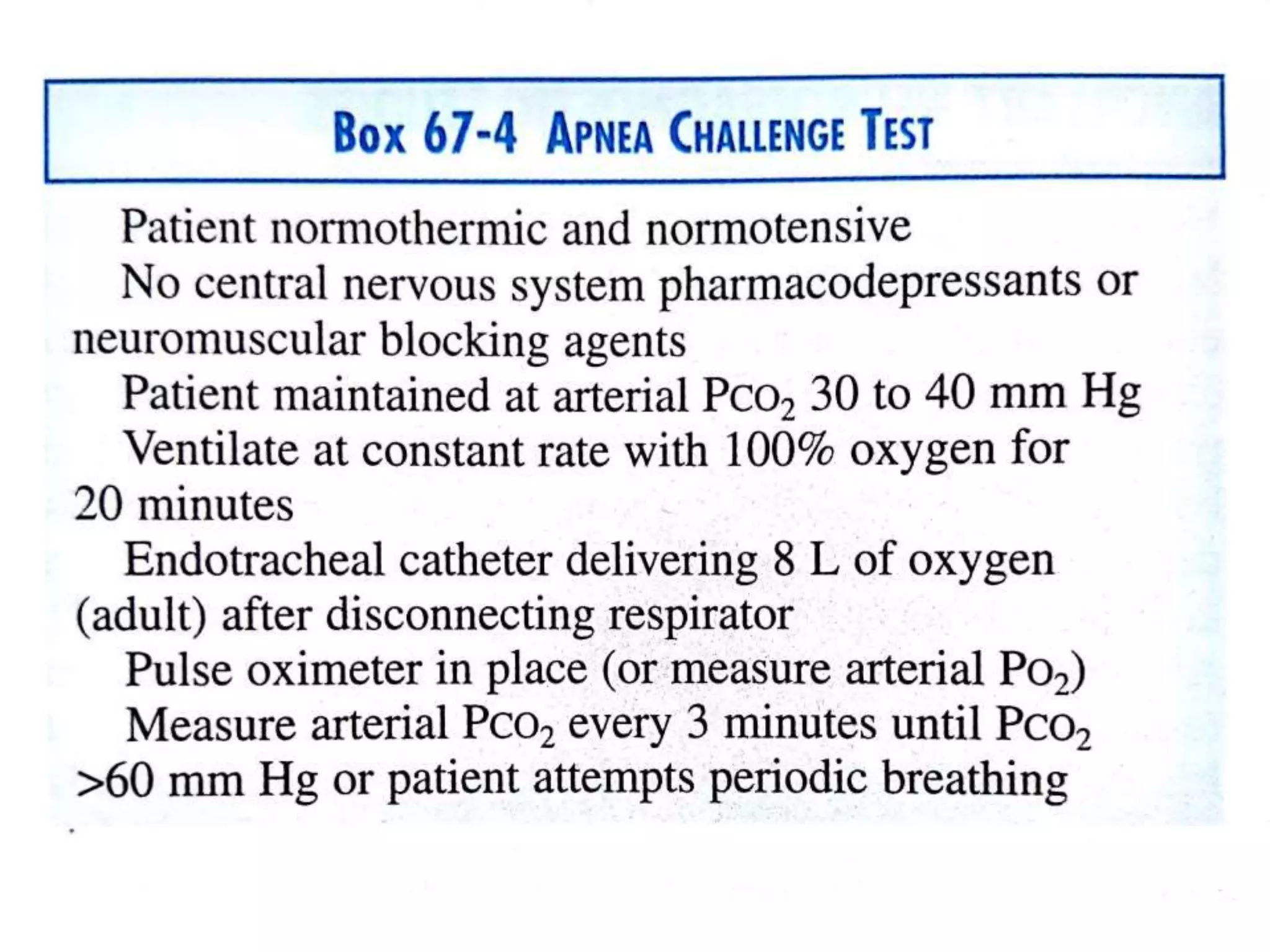
Apnea
• Absence of respiratory effort in response to
an adequate stimulus.
• Apnea Clinically confirmed by apnea test.
• Test is performed if first two criteria of brain
death are met.
• Absence of respiratory effort with pCO2 > 60
mm Hg and > 20 mm Hg above baseline then,
Apnea has been demonstrated, supporting the
diagnosis of brain death criteria.
Ancillary neurodiagnostic studies
• Electroencephalography- Absence cerebral
activity over 30 min recording.
• Radionuclide imaging – Absence of radionuclide
detection in brain parenchyma and large vessels.
• Cerebral angiography – Absence of intracranial
filling of large cerebral arteries & branches.
• Transcranial Doppler ultrasound- loss of diastolic
flow, systolic flow,flow reversal.
Observation period
Age 7 days to 2 months
Two examinations 48 hours apart and one EEG
Age 2 months-1 year
Two examinations 24 hours apart and one EEG
or perfusion scan
Age >1 year
Two examinations 12 to 24 hours apart.EEG and
isotope angiography optional
Severe Disorders of Consciousness
Condition Self-
Awareness
Pain and
Suffering
Sleep–
Wake
Cycles
Motor Function Respiratory
Function
Coma Absent No Absent No purposeful
movement
Variably
depressed
Vegetative
State
Absent No Intact No purposeful
movement
Normal
Minimally
conscious
State
Very
limited
Yes Intact Severe limitation
of movement
Variably
depressed
Locked-in-
syndrome
Present Yes Intact Quadriplegia,
Eye movements
+
Normal to
variably
depressed.
Brain
Death
Absent No Absent None Absent
Approach to a child with coma
• Incidence of non-traumatic coma is
30/100,000 children per yr & traumatic brain
injury is 670/100,000
• It is clinically useful to categorize the causes of
coma into:
1) Coma with focal signs
2) Coma without focal signs and with
meningeal irritation
3) Coma without focal signs and without
meningeal irritation
Etiology of coma
• Coma with focal signs
 Intracranial hemorrhage
 Stroke: Arterial ischemic or sinovenous
thrombosis
 Tumors
 Focal infections: Brain abscess
 Post seizure state: Todd’s paralysis
 Acute disseminated encephalomylelitis
Etiology: cont.
• Coma without focal signs and with meningeal
irritation:
 Meningitis
 Encephalitis
 Subarachnoid hemorrhage
• Coma without focal signs and without
meningial irritation:
• Hypoxic-ischemia: cardiac or pulmonary
failure,cardiac arrest, shock, near drowning
Etiology: cont.
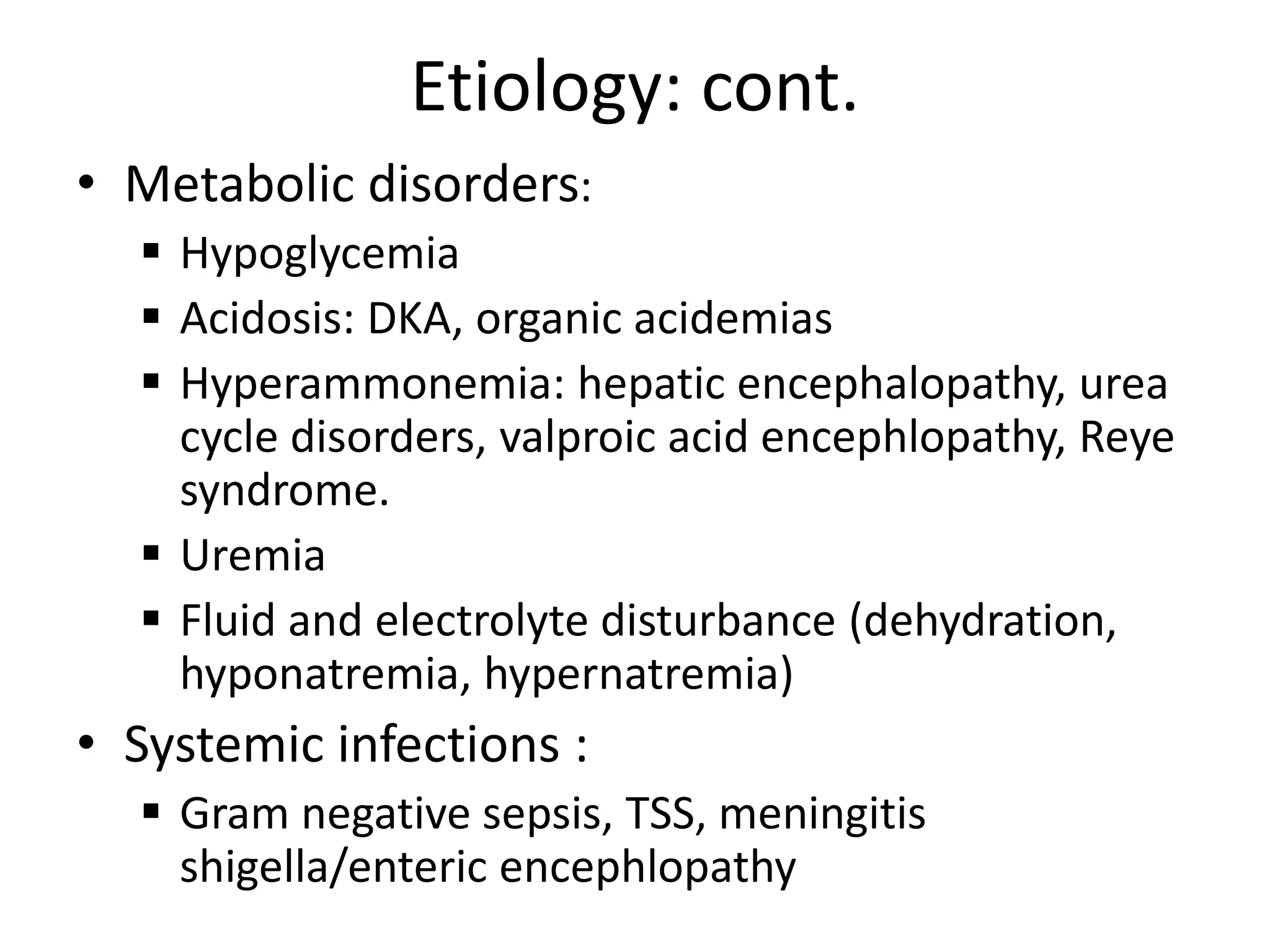
• Metabolic disorders:
 Hypoglycemia
 Acidosis: DKA, organic acidemias
 Hyperammonemia: hepatic encephalopathy, urea
cycle disorders, valproic acid encephlopathy, Reye
syndrome.
 Uremia
 Fluid and electrolyte disturbance (dehydration,
hyponatremia, hypernatremia)
• Systemic infections :
 Gram negative sepsis, TSS, meningitis
shigella/enteric encephlopathy
Etiology: cont.
• Post infectious disorders:
 Acute Disseminated Encephalomyelitis
 Acute necrotising encephalopathy
 Hemorrhagic shock and encephalopathy syndrome
• Post immunisation encephalopathy
 Whole cell pertusis vaccine
• Drugs and toxins
• Cerebral malaria
• Rickettsial : lyme disease, rocky mountain spotted fever
• Hypertensive encephalopathy
• Post seizure states
• Non-convulsive status epilepticus
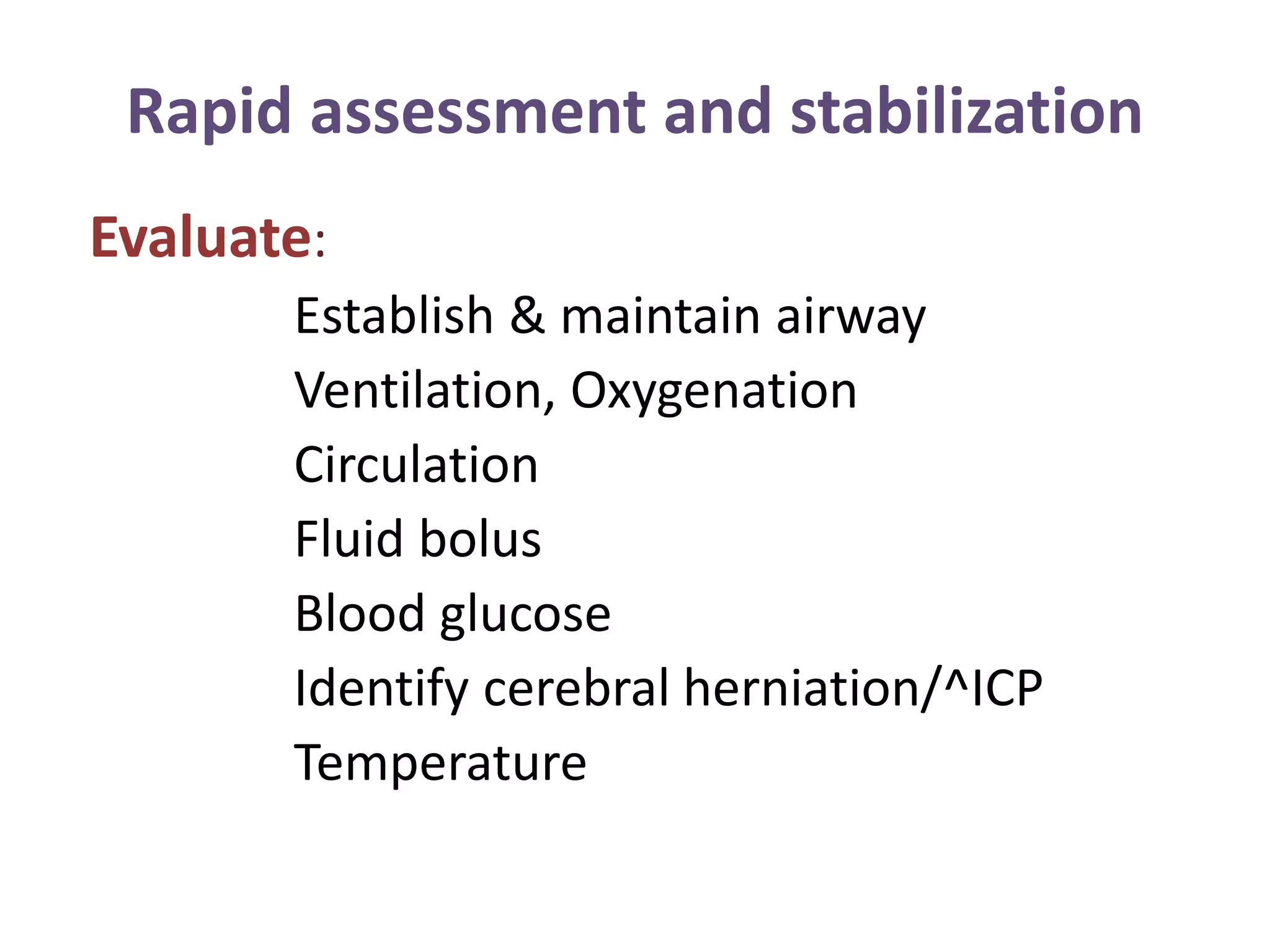
Rapid assessment and
stabilization
Rapid assessment and stabilization
• Establish and maintain airway: Intubate if
GCS<= 8 ,impaired airway reflexes, abnormal
breathing pattern, signs of raised ICT, oxygen
saturation<92% despite high flow oxygen,
fluid refractory shock
• Ventilation, Oxygenation
• Circulation: Establish IV access, take samples.
• Fluid bolus: In circulatory failure (20ml/kg NS),
inotropes if required
• Blood glucose : Strip testing , if <50mg/dl give
10% D , 2ml/kg.
• Identify signs of cerebral herniation or raised
ICP: ( if GCS<8,abnormal pupil size and reaction,
absent dolls eye movements, abnormal tone or
posturing, hypertension with bradycardia,
abnormal respiratory pattern)
Act immediately – Fluid restriction, Elevate the
Head end of bed at 30 degree, Intubate & short
term Hyperventilation,20% Mannitol (0.5-1g/kg)/
Furosemide /3% NS(if in shock), Sedation,
Barbiturate therapy, reduce fever, high dose of
corticosteroids, Decompressive craniectomy.
• Temperature : Treat fever and Hypothermia
• Acid-base and electrolyte imbalance: to be
corrected.
• Specific Antidotes: Naloxone - opiate
overdose, Flumazenil – benzodiazepine
overdose.
• Stop seizures: Specific treatment for status
epilecticus & other seizure emergencies. Give
IV lorazepam 0.1-0.2mg/kg , then phenytoin
20mg/kg loading.
• Treat infection: Appropriate
antibiotic/antiviral therapy to be started
• Manage agitation : May increase ICP, difficult
to control respiration under MV – Sedate.
History: Age
Infant Child Adolescent
CNS infection
(meningitis,encephalitis)
Ingestion Drug/Alcohol overdose
Systemic infection with shock CNS infection Intentional poisoning
Metabolic disorders Seizure Trauma, seizures
Abuse / Trauma, Abuse / Trauma CNS infection,
Inborn errors of
metabolism,seizures
DKA, Reye
syndrome
DKA, , Reye syndrome
Post immunisation
encephalopathy, hemorrhagic
shock and encephalopathy
syndrome
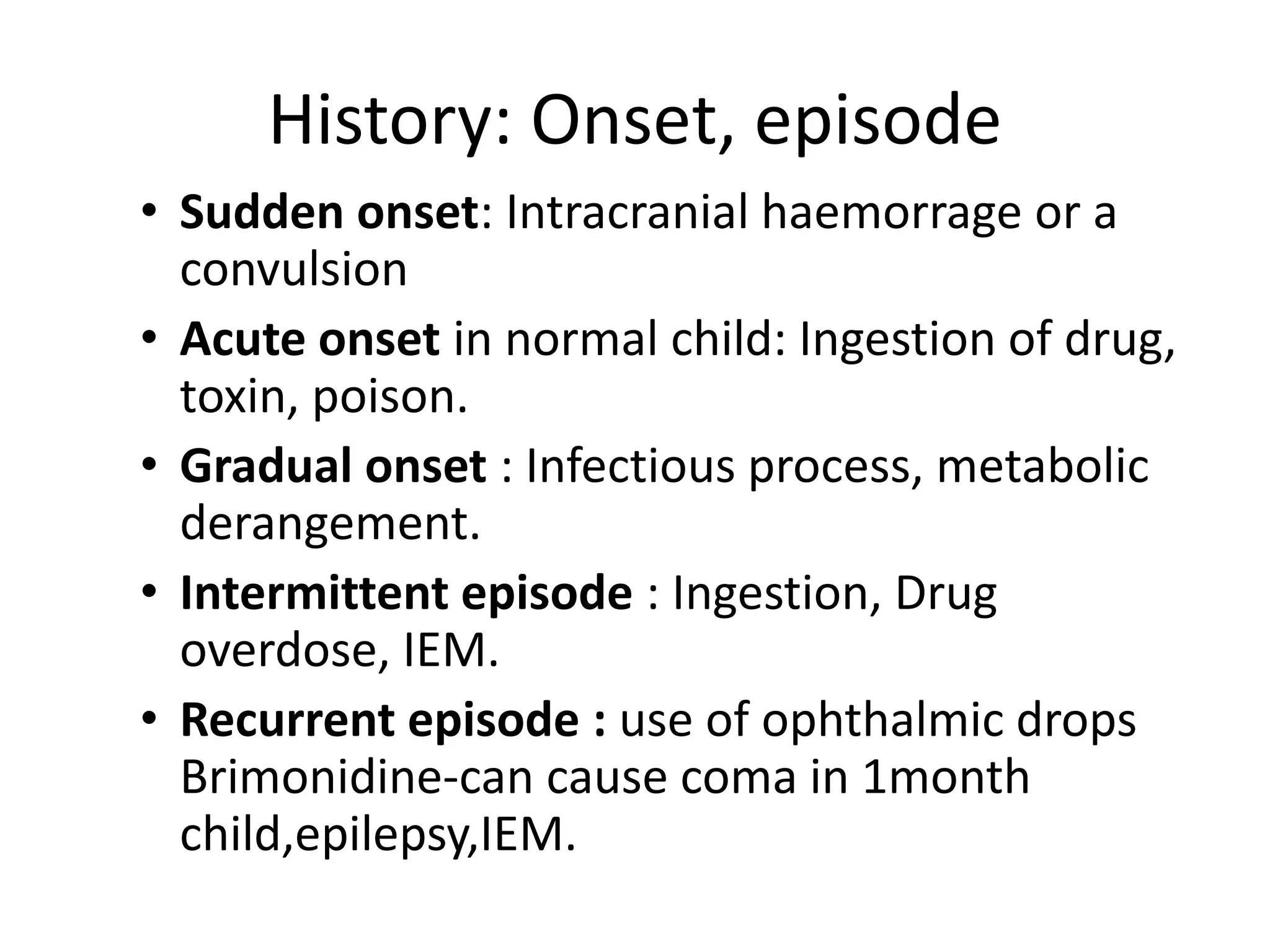
History: Onset, episode
• Sudden onset: Intracranial haemorrage or a
convulsion
• Acute onset in normal child: Ingestion of drug,
toxin, poison.
• Gradual onset : Infectious process, metabolic
derangement.
• Intermittent episode : Ingestion, Drug
overdose, IEM.
• Recurrent episode : use of ophthalmic drops
Brimonidine-can cause coma in 1month
child,epilepsy,IEM.
History: Associated symptoms
• Fever – Infections
• Headache, Vomiting, Diplopia – Increased
ICP
• Neck stiffness – Meningitis, SAH
• Rash - Meningococcemia
• H/o excess cry, irritability, enlarging head in
infants – Meningitis, Hydrocephalus
• Retinal hemorarhage,metaphyseal #, rib #,
subdural hge, Bleeding from ear/nose –
Traumatic brain injury
• Seizures – ICH, ICSOL, Epilepsy, Post-ictal
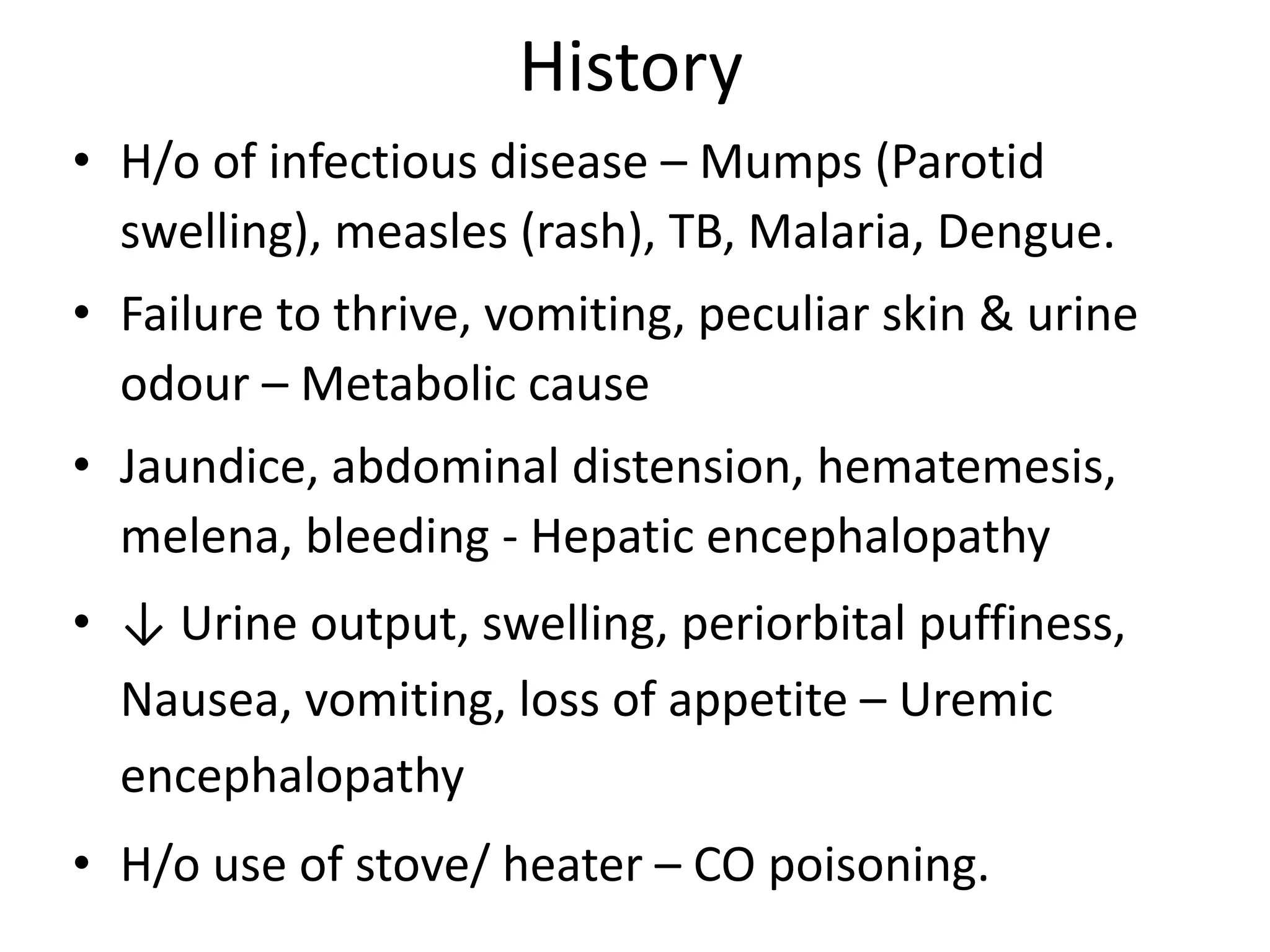
History
• H/o of infectious disease – Mumps (Parotid
swelling), measles (rash), TB, Malaria, Dengue.
• Failure to thrive, vomiting, peculiar skin & urine
odour – Metabolic cause
• Jaundice, abdominal distension, hematemesis,
melena, bleeding - Hepatic encephalopathy
• ↓ Urine output, swelling, periorbital puffiness,
Nausea, vomiting, loss of appetite – Uremic
encephalopathy
• H/o use of stove/ heater – CO poisoning.
History
• H/o loose stools- HUS, Hypovolemia,
Ingestion of toxins/poisons, medications
• H/o Diabetes – hypoglycemia / ketoacidosis
• H/o Congenital heart disease – brain Abcess/
infarction
• H/o Immunocompromised state, malignancy
• Family h/o TB, migraine, epilepsy
• Birth H/o: Birth asphyxia
• H/o envenomation
Clues to etiology of coma in general examination
Look for if present ,think of
Pallor Cerebral malaria, intracranial bleed, hemolytic uremic
syndrome
Icterus Hepatic encephalopathy, leptospirosis, complicated malaria
Rashes Meningococcemia, dengue , measles, rickettsial diseases,
arboviral diseases
Petechiae Dengue, meningococcemia , hemorrhagic fevers
Head and scalp
hematomas
Traumatic/ non accidental injury
Dysmorphism,
neurocutaneusmarkers
Possibility of seizures
Abnormal odour DKA, hepatic coma
Cyanosis Cyanotic congenital heart disease, Hypoxia
Oedema CHF, Renal failure
Dehydration Hypovolemic shock, HUS
Vital Signs
• Temp:
 Fever – Sepsis, pneumonia, meningitis, encephalitis,
intracranial abscess,empyema.
 Hypothermia - Sepsis, shock, alcohol, barbiturate
poisoning, hypoglycemia.
 Very high fever and dry skin – Heat stroke.
• HR:
 Bradycardia - ↑ ICT, myocardial injury due to
hypoxia, sepsis
 Tachycardia - Shock, Infections, Fever, Heart failure
 Irregular - Arrhythmia.
Vital Signs
• RR:
 Bradypnea/ Apnea - Drug intoxication, septicemia
 Tachypnea - Metabolic Acidosis, Pneumonia, Asthma,
Pulmonary embolism, Brainstem lesion.
 Cheyne-Stoke breathing - B/L cortical damage with
intact brainstem
 Irregular - medulla involved
 Slow periodic – raised ICP
• BP:
 HTN - ↑ICP or stroke, HTN encephalopathy
 Hypotension - Shock, sepsis, myocardial injury /
failure, drug ingestion , adrenal insufficiency.
• SPO2 monitoring:
Respiratory pattern
• Patient breathing pattern is also helpful in
localising area of CNS dysfunction. They are :
Cheyne-Stokes respiration
Biot’s breathing / Cluster breathing
Kussmaul’s breathing
Apneustic breathing
Ataxic breathing
Central neurogenic hyperventilation
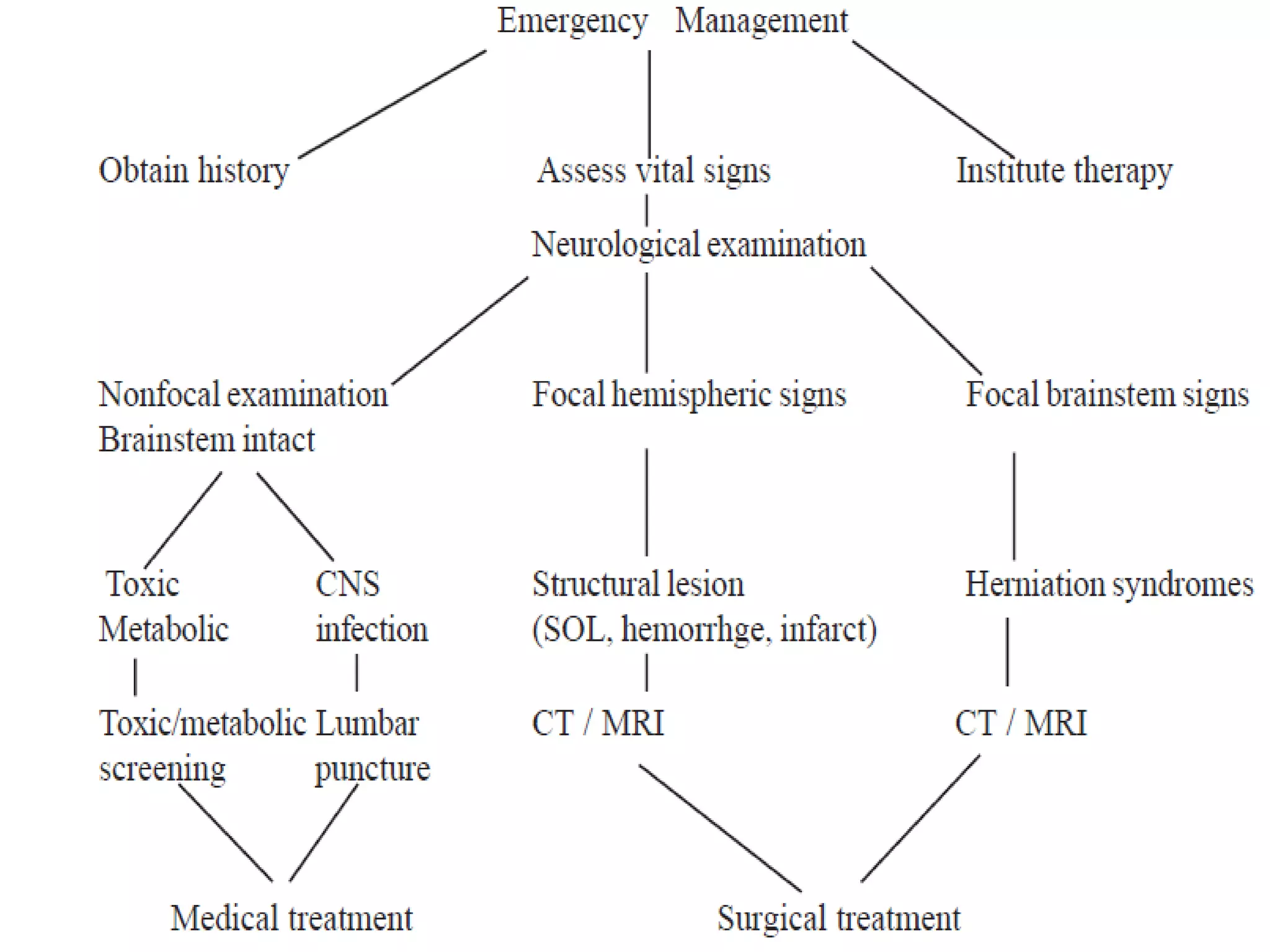
Neurogical Assesment
 Level of consciousness
 Pupillary responses
Brainstem function
 Motor response
 Other neurological findings
Herniation syndrome
A. Level of conciousness
• The level of conciousness must be recorded
in the form of an objective scale.
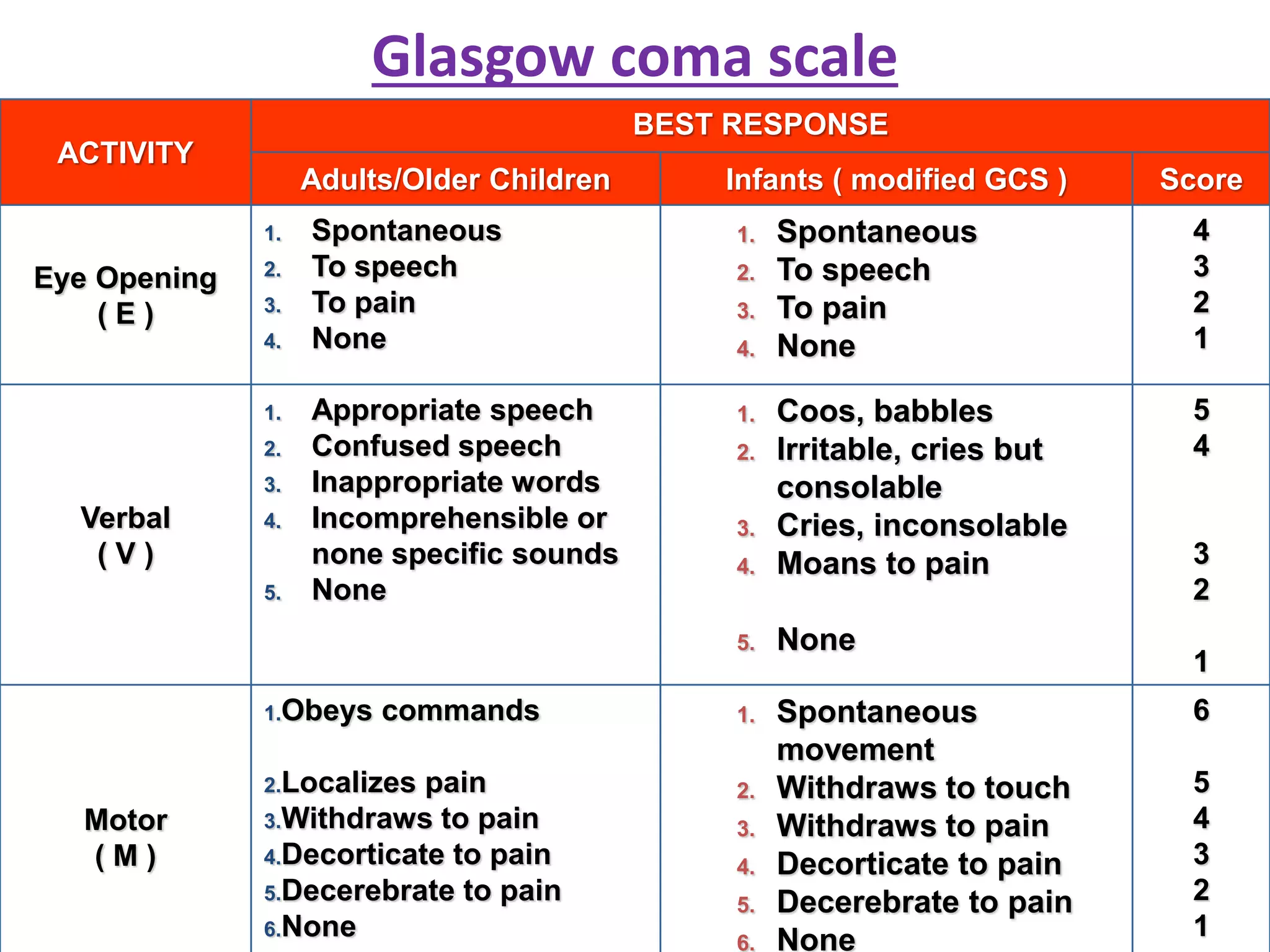
• The Glasgow coma scale is a useful tool for the
grading of the degree of altered consciousness
and the severity of CNS insult.
• Glasgow coma scale is used for adults and older
children and its modification is used in infants
and young children.
Glasgow coma scale
ACTIVITY
BEST RESPONSE
Adults/Older Children Infants ( modified GCS ) Score
Eye Opening
( E )
1. Spontaneous
2. To speech
3. To pain
4. None
1. Spontaneous
2. To speech
3. To pain
4. None
4
3
2
1
Verbal
( V )
1. Appropriate speech
2. Confused speech
3. Inappropriate words
4. Incomprehensible or
none specific sounds
5. None
1. Coos, babbles
2. Irritable, cries but
consolable
3. Cries, inconsolable
4. Moans to pain
5. None
5
4
3
2
1
Motor
( M )
1.Obeys commands
2.Localizes pain
3.Withdraws to pain
4.Decorticate to pain
5.Decerebrate to pain
6.None
1. Spontaneous
movement
2. Withdraws to touch
3. Withdraws to pain
4. Decorticate to pain
5. Decerebrate to pain
6. None
6
5
4
3
2
1
B. Size and reactivity of pupils
Pupils Lesion/Dysfunction
Pinpoint Pons, opiates, cholinergic intoxication
Mid position –
fixed or irregular
Midbrain lesion
Unilateral , dilated
and fixed
Uncal herniation
Bilateral , dilated
and fixed
Diffuse damage, central herniation, global
hypoxia ischemia, barbiturates, atropine
C. Brainstem function
1)Pupillary light reflex
2)Oculocephalic reflex (doll’s eye reflex)
3)Corneal reflex
4)Oculovestibular reflex (caloric reflex)
5)Gag and Cough reflex
Pupillary light reflex
• Area tested – CN II ,III,
midbrain.
• Midposition (4-6mm) or
fully dilated pupils,not
reactive to light –
consistent with brain
death.
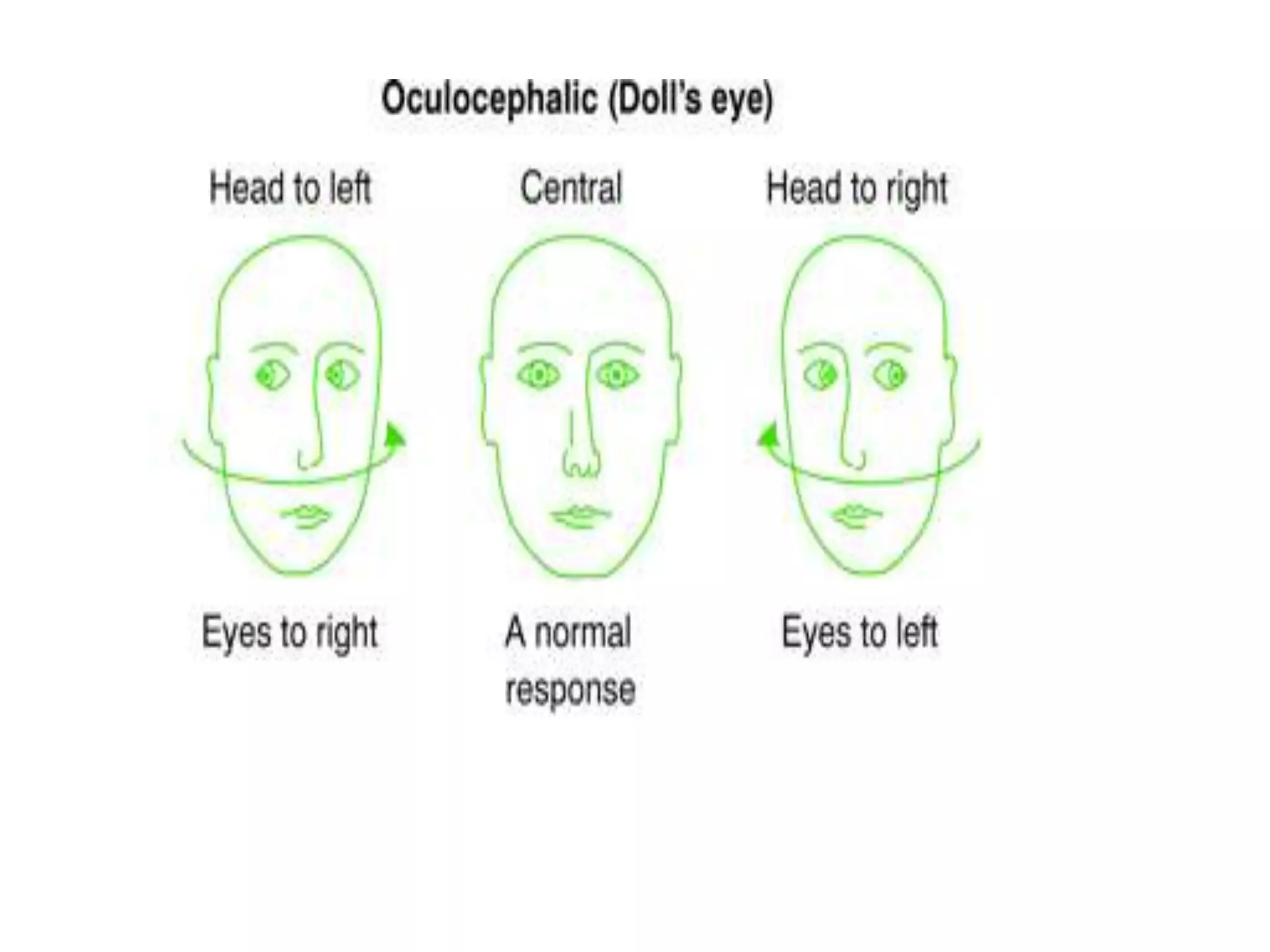
Oculocephalic reflex
• Area tested – CN III, VI and VIII, midbrain ,
pons.
• Should not be performed patient with
cervical injury.
• Intact patient – eyes remain fixed on a distant
spot as if maintaining eye contact.
• Brain death- eyes move with patient head
movement.
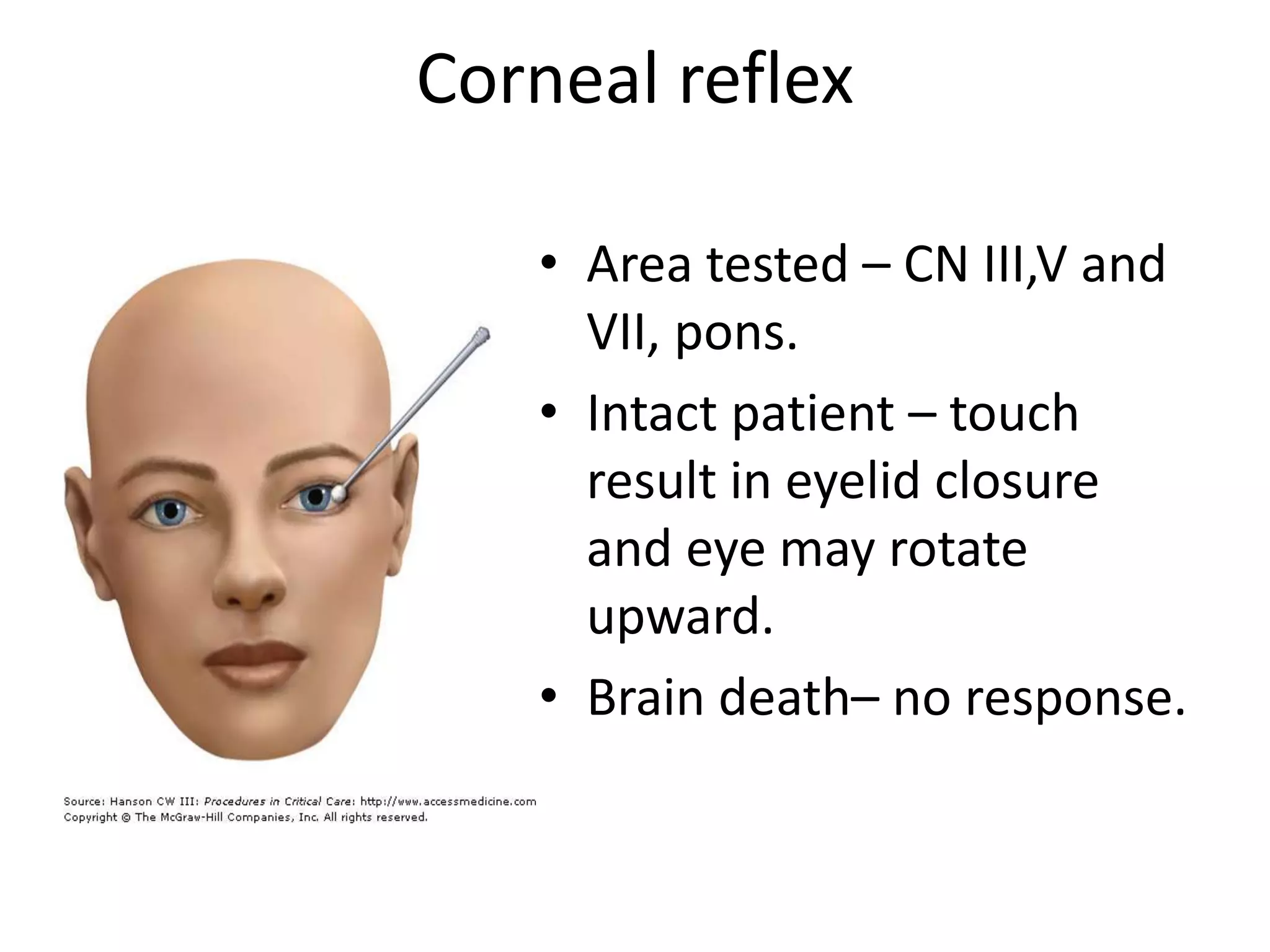
Corneal reflex
• Area tested – CN III,V and
VII, pons.
• Intact patient – touch
result in eyelid closure
and eye may rotate
upward.
• Brain death– no response.
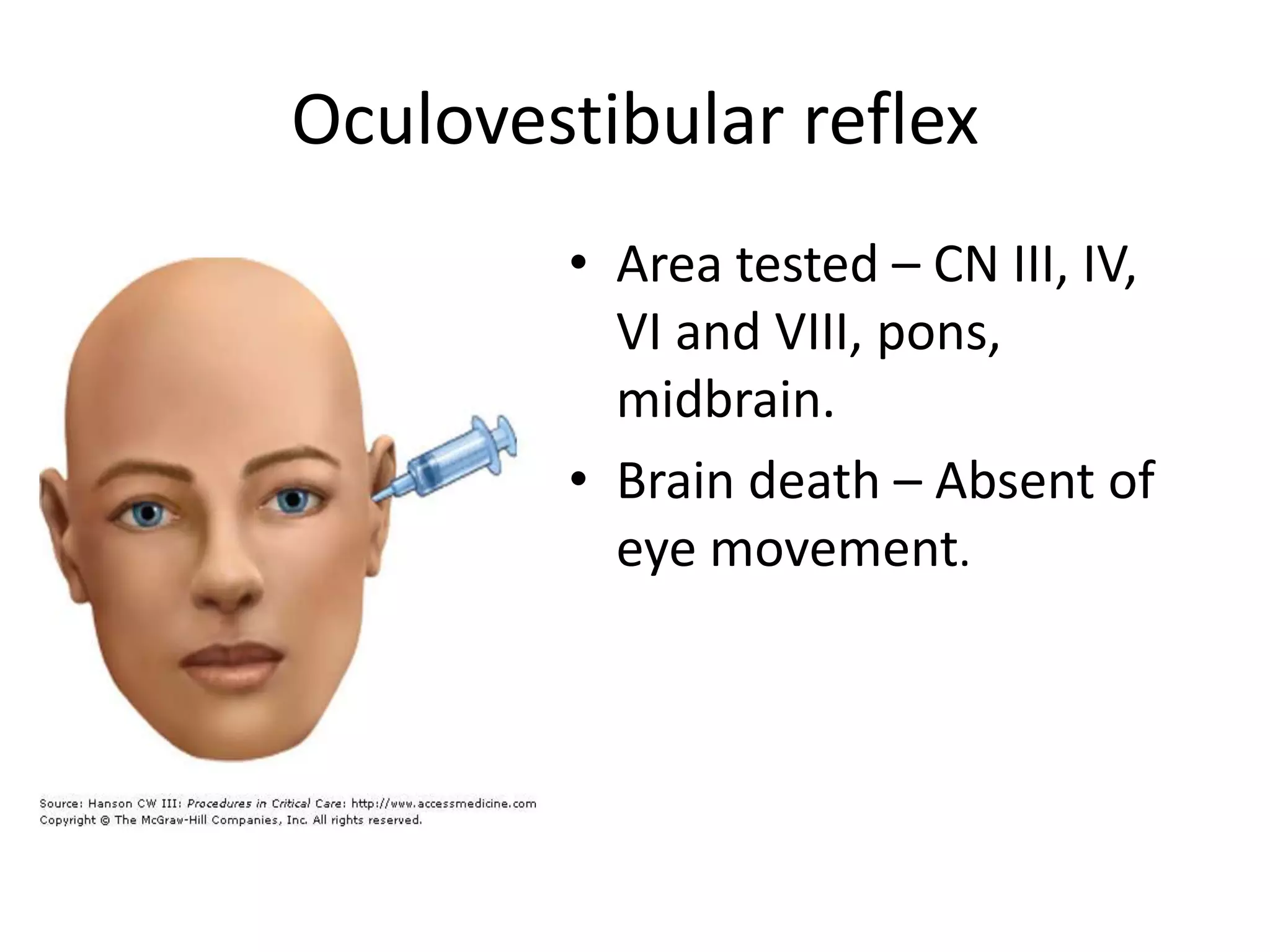
Oculovestibular reflex
• Area tested – CN III, IV,
VI and VIII, pons,
midbrain.
• Brain death – Absent of
eye movement.
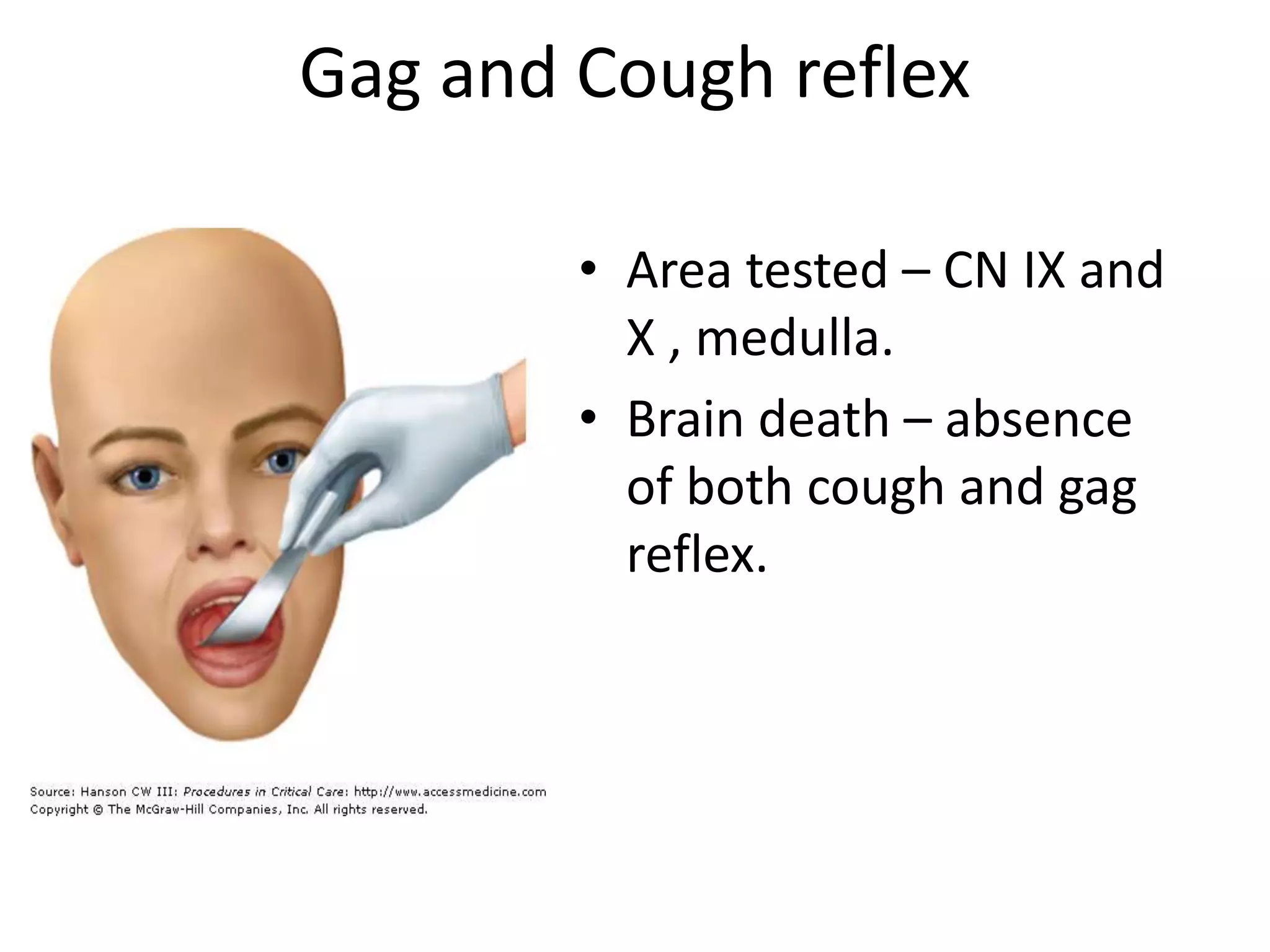
Gag and Cough reflex
• Area tested – CN IX and
X , medulla.
• Brain death – absence
of both cough and gag
reflex.
D. Motor response
• Single best indicator of the depth and severity
of coma
1. Spontaneous movements.
2. Tone and reflexes
3. Induced movements.
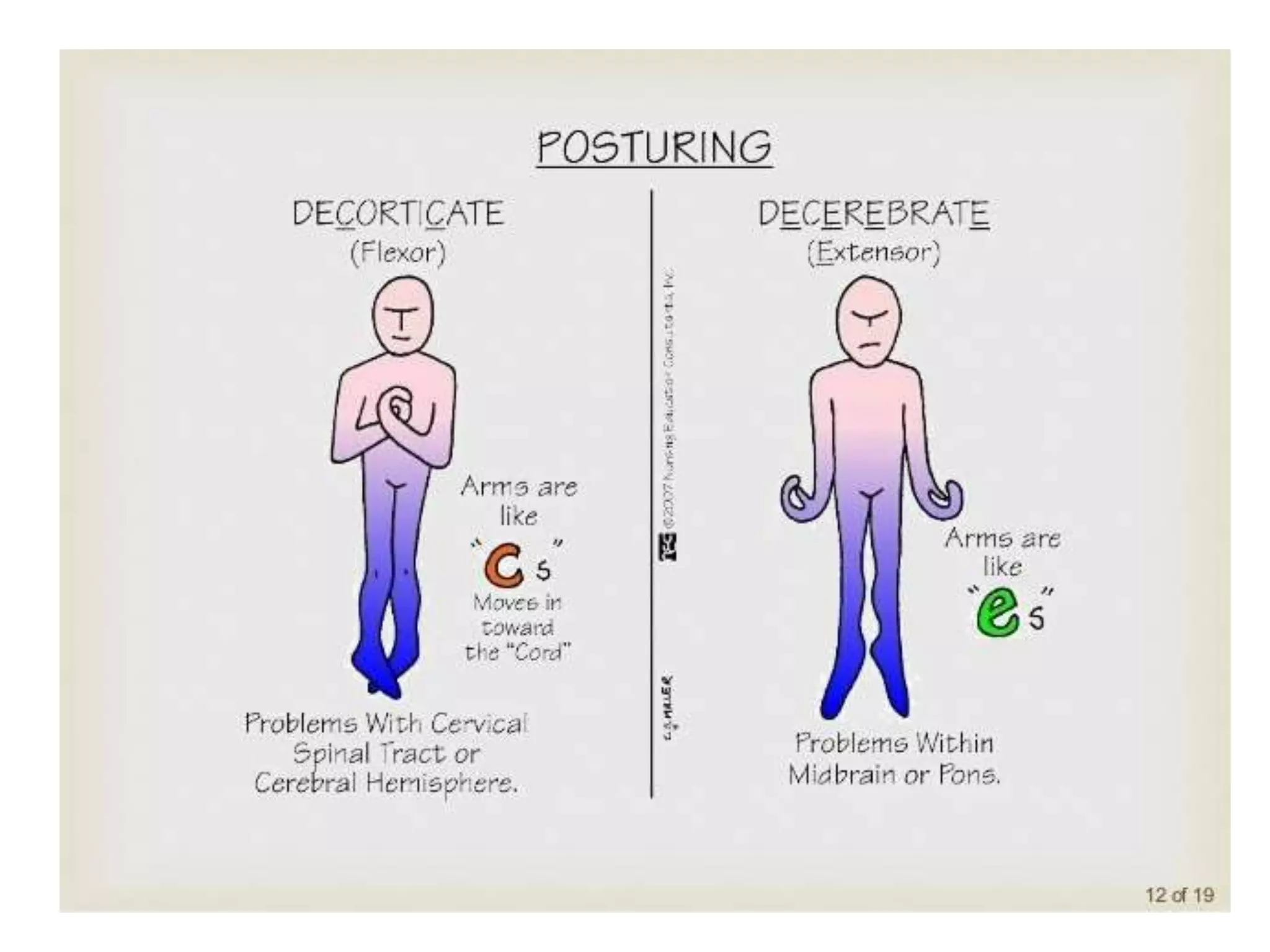
• Decorticate posturing with flexion of the
upper extremities and extension of the lower
extremities suggests involvement of the
cerebral cortex and preservation of brainstem
function.
• Decerebrate posturing with rigid extension of
the arms and legs is indicative of cortical and
brainstem damage.
• The flaccid patient with no response to
painful stimuli has the gravest prognosis with
injury sustained to deep brainstem lesions.
E. Other neurological findings
• Fundus examination : Papilloedema
Retinal hemorrhages
• Signs of meningeal irritation
• Cranial nerve Examination
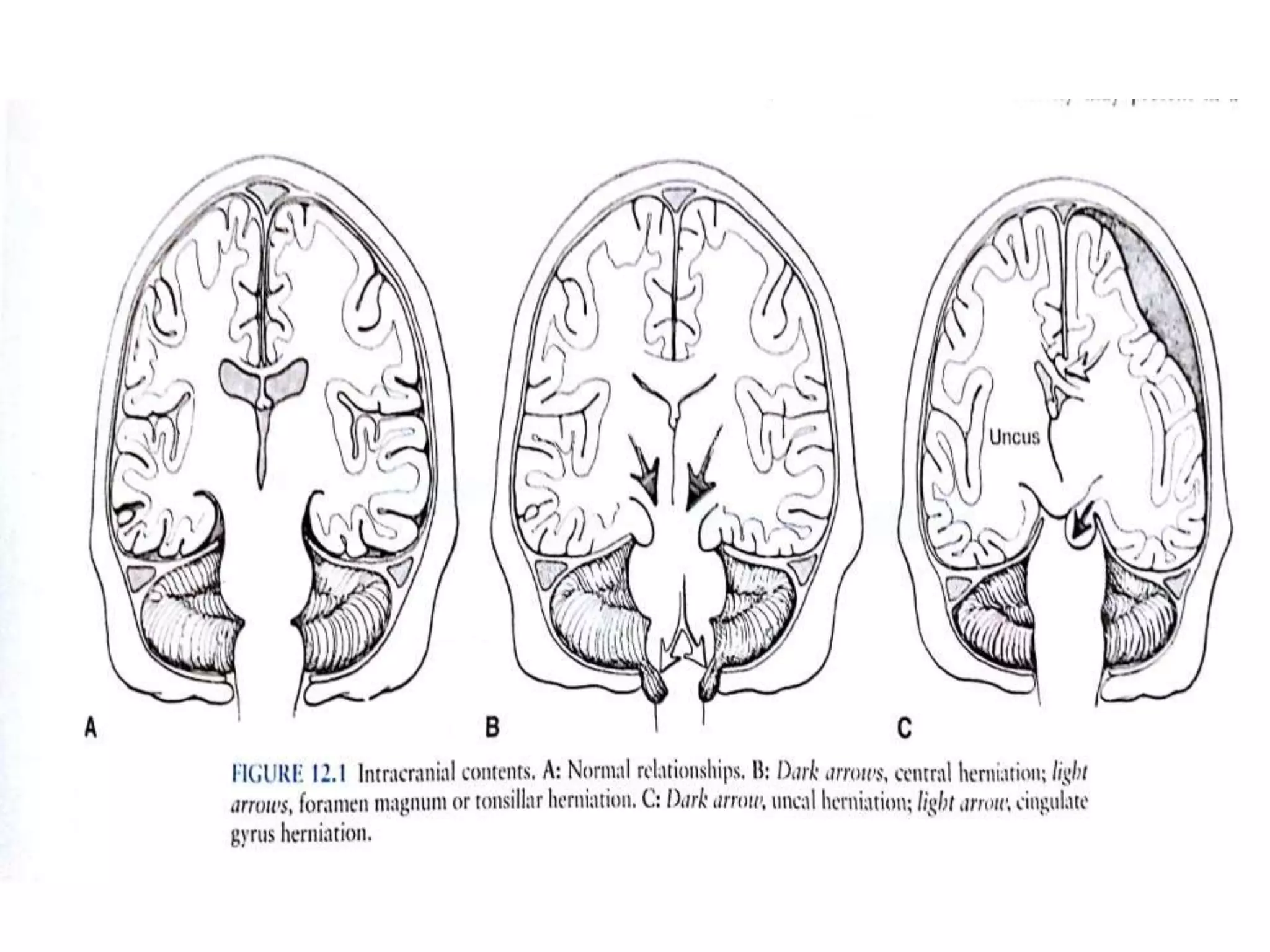
E. Herniation syndromes
• Brain tissue deforms intracranially and moves from
higher to low pressure when there is asymmetric,
unilateral or generalised increase in intracranial
pressure.
• Signs of cerebral herniation
1. Glasgow coma score <8
2. Abnormal pupil size and reaction (unilateral or bilateral)
3. Absent doll’s eye movements
4. Abnormal tone (decerebrate/decorticate posturing,
flaccidity)
5. Hypertension with bradycardia
6. Respiratory abnormalities (hyperventilation, Cheyne-
Stokes breathing, apnea, respiratory arrest)
7. Papilledema
Clinical features of herniation
syndrome
Types Clinical manifestation
Central herniation Impaired consciousness, abnormal respiration,
small reactive / midposition fixed pupil
decorticatea evolving to decerebrate posture
Uncal Herniation Impaired consciousness, abnormal
respirations,unilateral dilated pupil, ptosis,
unilateral hemiparesis
Foramen magnum or
Tonsillar herniation
Impaired consciousness, neck rigidity,
opisthotonus, decerebrate rigidity,
vomiting, irregular respirations, apnea,
bradycardia
Other Systemic Examination
• CVS : Arrhythmias, Murmurs (Congenital heart
disease, Infective endocarditis)
• RS : Signs of lung disease
• P/A : Tender hepatomegaly (Hepatitis, Sepsis),
Hepatosplenomegaly (malaria), palpable
abdominal mass (intussuception
encephalopathy)
Investigations
Neuroimaging:
• CT scan: Any comatose child or infant in whom
the neurological findings suggest a structural
lesion or in whom the clinical diagnosis is evasive,
done after stabilistion of a patient.
• Magnetic Resonance Imaging (MRI) of brain is
valuable in identifying evidence of herpes simplex
encephalitis or an acute demyelinating process,
such as acute disseminated encephalomyelitis.
Biochemical investigations
Other Investigations
Electroencephalography
EEG findings Interpretation
•High voltage slow waves
•Slowing of background
activity
•Triphasic waves
•PLEDS Periodic Lateralised
Epileptiform Discharges
•Underlying supratentorial
lesion
•Metabolic coma
•Hepatic coma
•Herpes encephalitis
EEG findings in coma
Rapid assessment and stabilization
Evaluate:
Establish & maintain airway
Ventilation, Oxygenation
Circulation
Fluid bolus
Blood glucose
Identify cerebral herniation/^ICP
Temperature
History
Examination
Neurological assessment
Investigate:
CT
CSF (suspected meningitis/ encephalitis)
Investigation as presentation
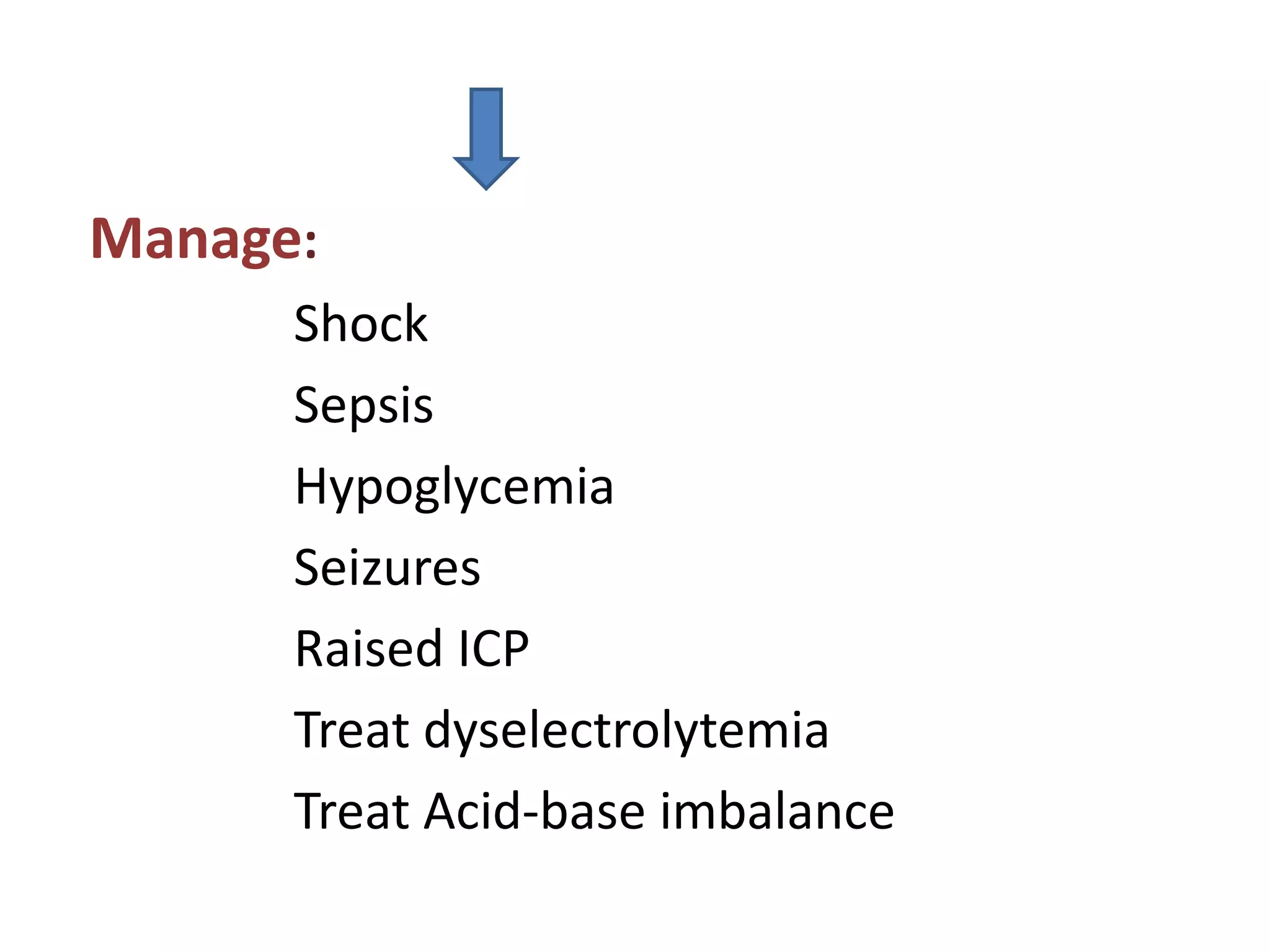
Manage:
Shock
Sepsis
Hypoglycemia
Seizures
Raised ICP
Treat dyselectrolytemia
Treat Acid-base imbalance
Specific management:
Acute febrile encephalopathy
(antibiotic,steroids)
Antimalarials
DKA
Hypertensive encephalopathy
Toxidrome
Envenomation
Second line investigation:
MRI
EEG
Drug levels
Metabolic work-up
Urine toxicology screen
ESR and autoimmune screen
Thyroid profile
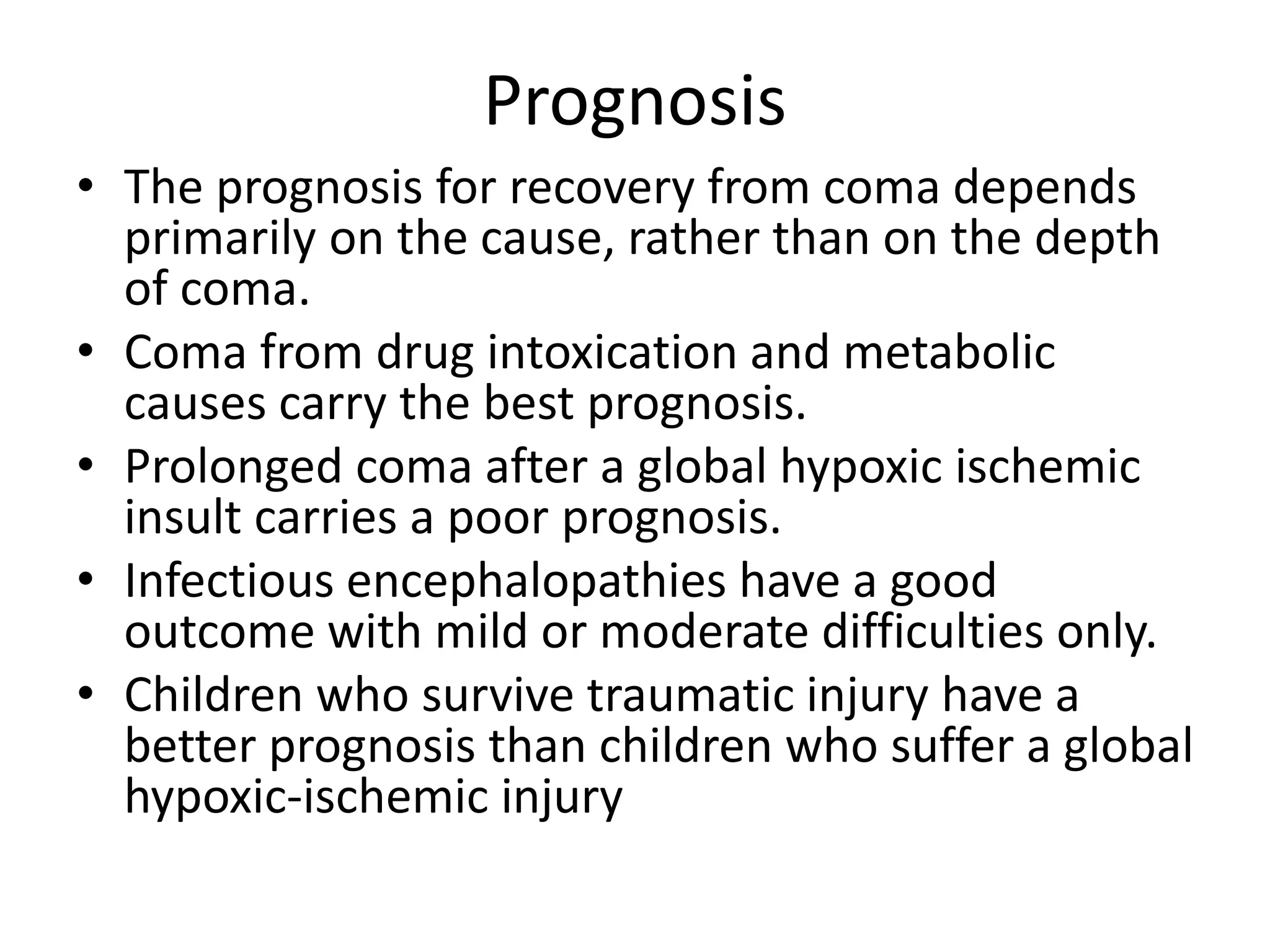
Prognosis
• The prognosis for recovery from coma depends
primarily on the cause, rather than on the depth
of coma.
• Coma from drug intoxication and metabolic
causes carry the best prognosis.
• Prolonged coma after a global hypoxic ischemic
insult carries a poor prognosis.
• Infectious encephalopathies have a good
outcome with mild or moderate difficulties only.
• Children who survive traumatic injury have a
better prognosis than children who suffer a global
hypoxic-ischemic injury
List of references
• Pediatric Neurology , fourth edition; Swaiman,
• Nelson Textbook of Pediatrics 20th Edition,
• Indian Journal of Pediatrics,
• Human Physiology C.C.Chatterjee,
• Ganong’s Review Of Medical Physiology
THANK
YOU

Disorder of consciousness

  • 1.
    DISORDER OF CONSCIOUSNESS DR.SREEMAYEE KUNDU MD Paediatrics
  • 2.
    • Consciousness isthe state of awareness of self and environment. • Dimensions: a) Wakefulness b) Awareness • Clouding of consciousness: Minimal reduction of wakefulness or awareness-main difficulty attention. • Confusion: State of impaired ability to think and reason clearly at a developmentally and intellectually appropriate level.
  • 3.
    • Sleep: Biologicallyactive state with identifiable behavioral and EEG stages, with appropriate stimulus intensity and duration sleeping person can be aroused to a normal state of consciousness. • Coma and other states of consciousness warrant medical emergency.
  • 4.
  • 5.
    Pathophysiology Integral Consciousness requiresan intact - 1) Ascending reticular activating system, 2) Cerebral cortex, 3) Healthy projections between the two systems.
  • 6.
  • 7.
    Pathophysiology: afferent andefferent connections of reticular formation
  • 8.
  • 9.
    Pathophysiology: ARAS • Beginsin the lower brainstem and extends upward through pons, midbrain, thalamus • Finally project throughout cerebral cortex- into two pathways a) through subthalamus b) through thalamus
  • 10.
    Pathophysiology • The stateof wakefulness is mediated by neurons of the ascending reticular activating system(ARAS). • Neural pathways from these locations project throughout the cortex , which is responsible for awareness.
  • 11.
    Loss of consciousnesswill result if • The function of ARAS neurons compromised or • Both cerebral hemisphere are sufficiently affected by disease.
  • 12.
    Proper function ofARAS and both cerebral hemisphere depends on: • Presence of substrate for energy production • Adequate blood flow • Absence of abnormal metabolic wastes or toxins • Normal body temperature • Absence of abnormal neuronal excitation or irritation from seizure activity • Absence of CNS infections • Normal intracranial pressure
  • 13.
    Etiology of impairedconsciousness and coma • Infectious or inflammatory • Structural • Metabolic, Nutritional, Toxic
  • 14.
    Etiologies of ImpairedConsciousness and Coma 1.Infectious or Inflammatory A. Infectious • Bacterial meningitis • Viral encephalitis • Rickettsial infection • Protozoan infection • Helminth infestation B. Inflammatory • Sepsis-associated encephalopathy • Vasculitis, collagen vascular disorders • Demyelination • Acute disseminated encephalomyelitis • Multiple sclerosis
  • 15.
    Etiology –cont. 2. Structural A.Traumatic  Concussion  Cerebral contusion  Epidural hematoma or effusion  Intracerebral hematoma  Diffuse axonal injury  Abusive head trauma B. Neoplasms C. Focal Infection • Abscess • Cerebritis D. Hydrocephalus E.Vascular Disease • Cerebral infarction  Thrombosis  Embolism  Venous sinus thrombosis • Cerebral hemorrhage  Subarachnoid hemorrhage  Arteriovenous malformation  Aneurysm • Congenital abnormality or dysplasia of vascular supply • Trauma to carotid or vertebral arteries in the neck
  • 16.
    Etiology –cont. 3.Metabolic, Nutritional,or Toxic A. Hypoxic-Ischemic Encephalopathy  Shock  Cardiac or pulmonary failure  Near-drowning  Carbon monoxide poisoning  Cyanide poisoning  Strangulation B. Metabolic Disorders  Sarcoidosis  Hypoglycemia  Fluid and electrolyte imbalance  Endocrine disorders  With acidosis  Diabetic ketoacidosis  Aminoacidemias  Organic acidemias  With hyperammonemia  Hepatic encephalopathy  Urea cycle disorders  Disorders of fatty acid metabolism  Reye’s syndrome  Valproic acid encephalopathy  Uremia  Porphyria  Mitochondrial disorders  Leigh’s syndrome
  • 17.
    Etiology -cont C. Nutritional Thiamine deficiency  Niacin or nicotinic acid deficiency  Pyridoxine dependency  Folate and B12 deficiency D. Exogenous Toxins and Poisons  Alcohol intoxication  Over-the-counter medications  Prescription medications (oral and ophthalmic)  Herbal treatments  Heavy-metal poisoning  Mushroom and plant intoxication  Illegal drugs  Industrial agents E. Hypertensive Encephalopathy F. Burn Encephalopathy
  • 18.
    Impairment of consciousness states •Impairment of consciousness with activated mental state • Impairment of consciousness with reduced mental state • Impairment of consciousness along the continuum of coma–vegetative state– minimally conscious state and related conditions.
  • 19.
    1) Impairment ofconsciousness with activated mental state • Hallucination : Perception of sensory input that are not present. • Illusion : Misinterpretation of actual sensory stimuli. • Delusion : Incorrect thoughts or beliefs that do not change when challenged by contradictory evidence or logical reason. • Delirium : Activated mental state that may include disorientation, irritability, fearful- responses, and sensory misperception.
  • 20.
    2) Impairment ofconsciousness with reduced mental state • Drowsiness • Obtundation arousal is present to stimuli • Stupor State Stimulus needed for arousal Drowsiness Verbal and light touch Obtundation Deep touch Stupor Vigorous, painful, or noxious stimulation
  • 21.
    3) Impairment ofconsciousness along the continuum of coma–vegetative state–minimally conscious state and related conditions.
  • 22.
    Coma • State ofdeep, unarousable, sustained pathologic unconsciousness with the eyes closed that results from dysfunction of the ascending reticular-activating system in the brainstem or in both cerebral hemispheres. • Patients in coma lack both wakefulness and awareness.
  • 23.
    Vegetative state • Completeunawareness of self & environment accompanied by sleep-wake cycles with complete/partial preservation of hypothalamic and brainstem autonomic function. • Demonstrate : variety of sounds, emotional expressions, body movements, smile/shed tears. • Lack of sustained visual fixation or tracking.
  • 25.
    Clinical course ofevolution to vegetative state- • Acute injury Coma several days-week appearance of sleep-wake cycle. • Decorticate & decerebrate posturing, roving eye movements, eye blinking appeared earlier. • Diagnosis – Clinically mainly.
  • 26.
    Minimally conscious state •Severely alterered consciousness, demonstrates minimal evidence of self / environmental awareness. • Neurologic recovery-better. • Life expectancy- longer than vegetative state.
  • 28.
    Locked-In Syndrome • Retainconsciousness & cognition but unable to move or communicate because of paralysis. • Involvement – Descending corticospinal & corticobulbar pathways at or below Pons/ Peripheral nervous system. • Rare in children. • Communication – using eye movements.
  • 29.
    Akinetic Mutism • Rarecondition. • Pathologically slowed or nearly absent bodily movement accompanied by loss of speech. • Wakefulness and Self awareness - Preserved. • Mental function- Reduced. • Area Involved – damage to paramedian mesencephalon,basal diencephalon,inferior frontal lobes.
  • 30.
    Brain Death • Irreversiblecessation of all functions of entire brain,including brainstem. • Determination of death using neurologic criteria. • Legally accepted in US as equivalent of death. • Universally not accepted. • Clinical diagnosis- 3 key components- Irreversible coma with a known cause, Absence of brainstem reflexes and Apnea
  • 31.
    Apnea • Absence ofrespiratory effort in response to an adequate stimulus. • Apnea Clinically confirmed by apnea test. • Test is performed if first two criteria of brain death are met.
  • 33.
    • Absence ofrespiratory effort with pCO2 > 60 mm Hg and > 20 mm Hg above baseline then, Apnea has been demonstrated, supporting the diagnosis of brain death criteria.
  • 34.
    Ancillary neurodiagnostic studies •Electroencephalography- Absence cerebral activity over 30 min recording. • Radionuclide imaging – Absence of radionuclide detection in brain parenchyma and large vessels. • Cerebral angiography – Absence of intracranial filling of large cerebral arteries & branches. • Transcranial Doppler ultrasound- loss of diastolic flow, systolic flow,flow reversal.
  • 35.
    Observation period Age 7days to 2 months Two examinations 48 hours apart and one EEG Age 2 months-1 year Two examinations 24 hours apart and one EEG or perfusion scan Age >1 year Two examinations 12 to 24 hours apart.EEG and isotope angiography optional
  • 36.
    Severe Disorders ofConsciousness Condition Self- Awareness Pain and Suffering Sleep– Wake Cycles Motor Function Respiratory Function Coma Absent No Absent No purposeful movement Variably depressed Vegetative State Absent No Intact No purposeful movement Normal Minimally conscious State Very limited Yes Intact Severe limitation of movement Variably depressed Locked-in- syndrome Present Yes Intact Quadriplegia, Eye movements + Normal to variably depressed. Brain Death Absent No Absent None Absent
  • 37.
    Approach to achild with coma
  • 38.
    • Incidence ofnon-traumatic coma is 30/100,000 children per yr & traumatic brain injury is 670/100,000 • It is clinically useful to categorize the causes of coma into: 1) Coma with focal signs 2) Coma without focal signs and with meningeal irritation 3) Coma without focal signs and without meningeal irritation
  • 39.
    Etiology of coma •Coma with focal signs  Intracranial hemorrhage  Stroke: Arterial ischemic or sinovenous thrombosis  Tumors  Focal infections: Brain abscess  Post seizure state: Todd’s paralysis  Acute disseminated encephalomylelitis
  • 40.
    Etiology: cont. • Comawithout focal signs and with meningeal irritation:  Meningitis  Encephalitis  Subarachnoid hemorrhage • Coma without focal signs and without meningial irritation: • Hypoxic-ischemia: cardiac or pulmonary failure,cardiac arrest, shock, near drowning
  • 41.
    Etiology: cont. • Metabolicdisorders:  Hypoglycemia  Acidosis: DKA, organic acidemias  Hyperammonemia: hepatic encephalopathy, urea cycle disorders, valproic acid encephlopathy, Reye syndrome.  Uremia  Fluid and electrolyte disturbance (dehydration, hyponatremia, hypernatremia) • Systemic infections :  Gram negative sepsis, TSS, meningitis shigella/enteric encephlopathy
  • 42.
    Etiology: cont. • Postinfectious disorders:  Acute Disseminated Encephalomyelitis  Acute necrotising encephalopathy  Hemorrhagic shock and encephalopathy syndrome • Post immunisation encephalopathy  Whole cell pertusis vaccine • Drugs and toxins • Cerebral malaria • Rickettsial : lyme disease, rocky mountain spotted fever • Hypertensive encephalopathy • Post seizure states • Non-convulsive status epilepticus
  • 43.
  • 44.
    Rapid assessment andstabilization • Establish and maintain airway: Intubate if GCS<= 8 ,impaired airway reflexes, abnormal breathing pattern, signs of raised ICT, oxygen saturation<92% despite high flow oxygen, fluid refractory shock • Ventilation, Oxygenation • Circulation: Establish IV access, take samples. • Fluid bolus: In circulatory failure (20ml/kg NS), inotropes if required • Blood glucose : Strip testing , if <50mg/dl give 10% D , 2ml/kg.
  • 45.
    • Identify signsof cerebral herniation or raised ICP: ( if GCS<8,abnormal pupil size and reaction, absent dolls eye movements, abnormal tone or posturing, hypertension with bradycardia, abnormal respiratory pattern) Act immediately – Fluid restriction, Elevate the Head end of bed at 30 degree, Intubate & short term Hyperventilation,20% Mannitol (0.5-1g/kg)/ Furosemide /3% NS(if in shock), Sedation, Barbiturate therapy, reduce fever, high dose of corticosteroids, Decompressive craniectomy.
  • 46.
    • Temperature :Treat fever and Hypothermia • Acid-base and electrolyte imbalance: to be corrected. • Specific Antidotes: Naloxone - opiate overdose, Flumazenil – benzodiazepine overdose. • Stop seizures: Specific treatment for status epilecticus & other seizure emergencies. Give IV lorazepam 0.1-0.2mg/kg , then phenytoin 20mg/kg loading.
  • 47.
    • Treat infection:Appropriate antibiotic/antiviral therapy to be started • Manage agitation : May increase ICP, difficult to control respiration under MV – Sedate.
  • 48.
    History: Age Infant ChildAdolescent CNS infection (meningitis,encephalitis) Ingestion Drug/Alcohol overdose Systemic infection with shock CNS infection Intentional poisoning Metabolic disorders Seizure Trauma, seizures Abuse / Trauma, Abuse / Trauma CNS infection, Inborn errors of metabolism,seizures DKA, Reye syndrome DKA, , Reye syndrome Post immunisation encephalopathy, hemorrhagic shock and encephalopathy syndrome
  • 49.
    History: Onset, episode •Sudden onset: Intracranial haemorrage or a convulsion • Acute onset in normal child: Ingestion of drug, toxin, poison. • Gradual onset : Infectious process, metabolic derangement. • Intermittent episode : Ingestion, Drug overdose, IEM. • Recurrent episode : use of ophthalmic drops Brimonidine-can cause coma in 1month child,epilepsy,IEM.
  • 50.
    History: Associated symptoms •Fever – Infections • Headache, Vomiting, Diplopia – Increased ICP • Neck stiffness – Meningitis, SAH • Rash - Meningococcemia • H/o excess cry, irritability, enlarging head in infants – Meningitis, Hydrocephalus • Retinal hemorarhage,metaphyseal #, rib #, subdural hge, Bleeding from ear/nose – Traumatic brain injury • Seizures – ICH, ICSOL, Epilepsy, Post-ictal
  • 51.
    History • H/o ofinfectious disease – Mumps (Parotid swelling), measles (rash), TB, Malaria, Dengue. • Failure to thrive, vomiting, peculiar skin & urine odour – Metabolic cause • Jaundice, abdominal distension, hematemesis, melena, bleeding - Hepatic encephalopathy • ↓ Urine output, swelling, periorbital puffiness, Nausea, vomiting, loss of appetite – Uremic encephalopathy • H/o use of stove/ heater – CO poisoning.
  • 52.
    History • H/o loosestools- HUS, Hypovolemia, Ingestion of toxins/poisons, medications • H/o Diabetes – hypoglycemia / ketoacidosis • H/o Congenital heart disease – brain Abcess/ infarction • H/o Immunocompromised state, malignancy • Family h/o TB, migraine, epilepsy • Birth H/o: Birth asphyxia • H/o envenomation
  • 53.
    Clues to etiologyof coma in general examination Look for if present ,think of Pallor Cerebral malaria, intracranial bleed, hemolytic uremic syndrome Icterus Hepatic encephalopathy, leptospirosis, complicated malaria Rashes Meningococcemia, dengue , measles, rickettsial diseases, arboviral diseases Petechiae Dengue, meningococcemia , hemorrhagic fevers Head and scalp hematomas Traumatic/ non accidental injury Dysmorphism, neurocutaneusmarkers Possibility of seizures Abnormal odour DKA, hepatic coma Cyanosis Cyanotic congenital heart disease, Hypoxia Oedema CHF, Renal failure Dehydration Hypovolemic shock, HUS
  • 54.
    Vital Signs • Temp: Fever – Sepsis, pneumonia, meningitis, encephalitis, intracranial abscess,empyema.  Hypothermia - Sepsis, shock, alcohol, barbiturate poisoning, hypoglycemia.  Very high fever and dry skin – Heat stroke. • HR:  Bradycardia - ↑ ICT, myocardial injury due to hypoxia, sepsis  Tachycardia - Shock, Infections, Fever, Heart failure  Irregular - Arrhythmia.
  • 55.
    Vital Signs • RR: Bradypnea/ Apnea - Drug intoxication, septicemia  Tachypnea - Metabolic Acidosis, Pneumonia, Asthma, Pulmonary embolism, Brainstem lesion.  Cheyne-Stoke breathing - B/L cortical damage with intact brainstem  Irregular - medulla involved  Slow periodic – raised ICP • BP:  HTN - ↑ICP or stroke, HTN encephalopathy  Hypotension - Shock, sepsis, myocardial injury / failure, drug ingestion , adrenal insufficiency. • SPO2 monitoring:
  • 56.
    Respiratory pattern • Patientbreathing pattern is also helpful in localising area of CNS dysfunction. They are : Cheyne-Stokes respiration Biot’s breathing / Cluster breathing Kussmaul’s breathing Apneustic breathing Ataxic breathing Central neurogenic hyperventilation
  • 59.
    Neurogical Assesment  Levelof consciousness  Pupillary responses Brainstem function  Motor response  Other neurological findings Herniation syndrome
  • 60.
    A. Level ofconciousness • The level of conciousness must be recorded in the form of an objective scale. • The Glasgow coma scale is a useful tool for the grading of the degree of altered consciousness and the severity of CNS insult. • Glasgow coma scale is used for adults and older children and its modification is used in infants and young children.
  • 61.
    Glasgow coma scale ACTIVITY BESTRESPONSE Adults/Older Children Infants ( modified GCS ) Score Eye Opening ( E ) 1. Spontaneous 2. To speech 3. To pain 4. None 1. Spontaneous 2. To speech 3. To pain 4. None 4 3 2 1 Verbal ( V ) 1. Appropriate speech 2. Confused speech 3. Inappropriate words 4. Incomprehensible or none specific sounds 5. None 1. Coos, babbles 2. Irritable, cries but consolable 3. Cries, inconsolable 4. Moans to pain 5. None 5 4 3 2 1 Motor ( M ) 1.Obeys commands 2.Localizes pain 3.Withdraws to pain 4.Decorticate to pain 5.Decerebrate to pain 6.None 1. Spontaneous movement 2. Withdraws to touch 3. Withdraws to pain 4. Decorticate to pain 5. Decerebrate to pain 6. None 6 5 4 3 2 1
  • 63.
    B. Size andreactivity of pupils Pupils Lesion/Dysfunction Pinpoint Pons, opiates, cholinergic intoxication Mid position – fixed or irregular Midbrain lesion Unilateral , dilated and fixed Uncal herniation Bilateral , dilated and fixed Diffuse damage, central herniation, global hypoxia ischemia, barbiturates, atropine
  • 64.
    C. Brainstem function 1)Pupillarylight reflex 2)Oculocephalic reflex (doll’s eye reflex) 3)Corneal reflex 4)Oculovestibular reflex (caloric reflex) 5)Gag and Cough reflex
  • 65.
    Pupillary light reflex •Area tested – CN II ,III, midbrain. • Midposition (4-6mm) or fully dilated pupils,not reactive to light – consistent with brain death.
  • 66.
    Oculocephalic reflex • Areatested – CN III, VI and VIII, midbrain , pons. • Should not be performed patient with cervical injury. • Intact patient – eyes remain fixed on a distant spot as if maintaining eye contact. • Brain death- eyes move with patient head movement.
  • 68.
    Corneal reflex • Areatested – CN III,V and VII, pons. • Intact patient – touch result in eyelid closure and eye may rotate upward. • Brain death– no response.
  • 69.
    Oculovestibular reflex • Areatested – CN III, IV, VI and VIII, pons, midbrain. • Brain death – Absent of eye movement.
  • 70.
    Gag and Coughreflex • Area tested – CN IX and X , medulla. • Brain death – absence of both cough and gag reflex.
  • 71.
    D. Motor response •Single best indicator of the depth and severity of coma 1. Spontaneous movements. 2. Tone and reflexes 3. Induced movements.
  • 72.
    • Decorticate posturingwith flexion of the upper extremities and extension of the lower extremities suggests involvement of the cerebral cortex and preservation of brainstem function. • Decerebrate posturing with rigid extension of the arms and legs is indicative of cortical and brainstem damage. • The flaccid patient with no response to painful stimuli has the gravest prognosis with injury sustained to deep brainstem lesions.
  • 74.
    E. Other neurologicalfindings • Fundus examination : Papilloedema Retinal hemorrhages • Signs of meningeal irritation • Cranial nerve Examination
  • 75.
    E. Herniation syndromes •Brain tissue deforms intracranially and moves from higher to low pressure when there is asymmetric, unilateral or generalised increase in intracranial pressure. • Signs of cerebral herniation 1. Glasgow coma score <8 2. Abnormal pupil size and reaction (unilateral or bilateral) 3. Absent doll’s eye movements 4. Abnormal tone (decerebrate/decorticate posturing, flaccidity) 5. Hypertension with bradycardia 6. Respiratory abnormalities (hyperventilation, Cheyne- Stokes breathing, apnea, respiratory arrest) 7. Papilledema
  • 77.
    Clinical features ofherniation syndrome Types Clinical manifestation Central herniation Impaired consciousness, abnormal respiration, small reactive / midposition fixed pupil decorticatea evolving to decerebrate posture Uncal Herniation Impaired consciousness, abnormal respirations,unilateral dilated pupil, ptosis, unilateral hemiparesis Foramen magnum or Tonsillar herniation Impaired consciousness, neck rigidity, opisthotonus, decerebrate rigidity, vomiting, irregular respirations, apnea, bradycardia
  • 78.
    Other Systemic Examination •CVS : Arrhythmias, Murmurs (Congenital heart disease, Infective endocarditis) • RS : Signs of lung disease • P/A : Tender hepatomegaly (Hepatitis, Sepsis), Hepatosplenomegaly (malaria), palpable abdominal mass (intussuception encephalopathy)
  • 79.
    Investigations Neuroimaging: • CT scan:Any comatose child or infant in whom the neurological findings suggest a structural lesion or in whom the clinical diagnosis is evasive, done after stabilistion of a patient. • Magnetic Resonance Imaging (MRI) of brain is valuable in identifying evidence of herpes simplex encephalitis or an acute demyelinating process, such as acute disseminated encephalomyelitis.
  • 80.
  • 81.
  • 82.
    Electroencephalography EEG findings Interpretation •Highvoltage slow waves •Slowing of background activity •Triphasic waves •PLEDS Periodic Lateralised Epileptiform Discharges •Underlying supratentorial lesion •Metabolic coma •Hepatic coma •Herpes encephalitis EEG findings in coma
  • 83.
    Rapid assessment andstabilization Evaluate: Establish & maintain airway Ventilation, Oxygenation Circulation Fluid bolus Blood glucose Identify cerebral herniation/^ICP Temperature
  • 84.
    History Examination Neurological assessment Investigate: CT CSF (suspectedmeningitis/ encephalitis) Investigation as presentation
  • 85.
  • 86.
    Specific management: Acute febrileencephalopathy (antibiotic,steroids) Antimalarials DKA Hypertensive encephalopathy Toxidrome Envenomation
  • 87.
    Second line investigation: MRI EEG Druglevels Metabolic work-up Urine toxicology screen ESR and autoimmune screen Thyroid profile
  • 89.
    Prognosis • The prognosisfor recovery from coma depends primarily on the cause, rather than on the depth of coma. • Coma from drug intoxication and metabolic causes carry the best prognosis. • Prolonged coma after a global hypoxic ischemic insult carries a poor prognosis. • Infectious encephalopathies have a good outcome with mild or moderate difficulties only. • Children who survive traumatic injury have a better prognosis than children who suffer a global hypoxic-ischemic injury
  • 90.
    List of references •Pediatric Neurology , fourth edition; Swaiman, • Nelson Textbook of Pediatrics 20th Edition, • Indian Journal of Pediatrics, • Human Physiology C.C.Chatterjee, • Ganong’s Review Of Medical Physiology
  • 91.

Editor's Notes

  • #7 Diffuse illdefined mass of nerve cells and fibers forming a meshwork or reticulum in the central portion of the brainstem.extended downwards into spinalcord and upwards in thalamus n subthalamus.
  • #9 DRAS – MAINTAINS TONE, POSTURE, REFLEXES, VOLUNATARY MOVEMENTS, AUTONOMIC FUNCTIONS LIKE HR, BP, RR, TEMP.
  • #20 Delirium-hyperactive,^ sym tone,involve both hemisphere.intoxication,infection,fever,metabolic disorder,epilepsy.
  • #23 Coma requires period of unconsciousness atleast 1hr to distinguish 4m syncope,concussion,transient unconsciousness
  • #27 Were in coma or vegetve state b4
  • #30 Few cases reported.
  • #44 Evaluation and treatment have to proceed simultaneously
  • #45 Essential source of atp for cerebral energy metabolism.all other therapies are superfluous if 02 and other metabolic substrate are not delivered to neurons and toxic metabolites not removed.
  • #50 Aalpha 2 adrenergic agonist
  • #56 barbiturates
  • #66 Shine a light into the eyes from side, one at a time, closely observing pupillary size Aff optic eff- occulomotor n
  • #67 Test-manually rotate patient head side to side and watch position of eyes.
  • #69 Lightly touch the lateral edge of cornea & adjoining conjunctival margin with whisp of cotton Aff– trigeminal eff --facial
  • #70 Irrigate tympanic membrane with iced water or saline and look for eye movement.
  • #71 Touch postr pharynx tounge deppr or cotton tiped swab-stimulate gag. Suction catheter thrug endotracheal tube to carina to stimulate cough.
  • #79 Cvs- CHD IE –source of intracranial abscess.